You May Know Him as a Ghoul ~ A Short Story

You May Know Him as a Ghoul image 2
You May Know Him as a Ghoul
~ A Short Story by Allen Kopp ~

(This story has been published in The Literary Hatchet.)

Blaise DeBeulah awoke to the rising of the sun and switched on the radio beside his bed. Dark Eyes by the Vincent Lopez Orchestra was playing. The beautiful melody brought a smile to his face, making him forget for the moment that had to get out of bed, get dressed, and face another distasteful day. He was just drifting off to a warm, intoxicating dreamland awash in saxophones and violins, when Bertha DeBeulah came bursting into the room.

“Get out of that bed, you lazy slug!” she commanded. “Do you think the world owes you a life of comfort and ease?”

“No, mother. The world doesn’t owe me anything. I’m getting up now.”

“Your brothers and sisters are hungry! They want fresh meat! Now!

“I’m doing the best I can, mother. I’m not feeling very well.”

“Well, isn’t that just too bad?

“I was out last night until dawn. Fresh meat isn’t so easy to come by anymore.”

“I don’t want to hear any of your feeble excuses! And when I say fresh meat, I mean fresh! The longer a body has been buried, the worse it tastes! After a body has been dead three or four days, the embalming fluid ruins the taste! The ones you’ve been dragging home have been anything but fresh!”

“I know mother. I’m doing the best I can. I hang around the cemetery all day long, waiting for a funeral, but they have been few and far between.”

“I told you I don’t want to hear any lame excuses! If there haven’t been any funerals, you have to do the killing yourself! How about some nice, juicy, muscular gravediggers?”

“Would those be for you to eat, or for the brothers and sisters, mother?”

“Don’t you get fresh with me! I’ll tell your papa, Benedictus DeBeulah, you smarted out to me and he’ll knock your block off!”

“Yes, I know, mother. I know. He has knocked my block off so many times that my head no longer sits straight on my shoulders.”

“Well, it serves you right! And if you don’t bring home some fresh meat—and I mean fresh—I’ll let the brothers and sisters eat you!”

“I’m not exactly fresh, mother. I’m two hundred and thirty-seven years old.”

“You don’t have to tell me how old you are, Mr. Smarty Britches! I brought you into this world and I can take you out of it any time I choose!”

“Yes, mother, I know. You’d be doing me a blessing.”

“What was that?”

“I said I’ll be on my way as soon as I find my shoes.”

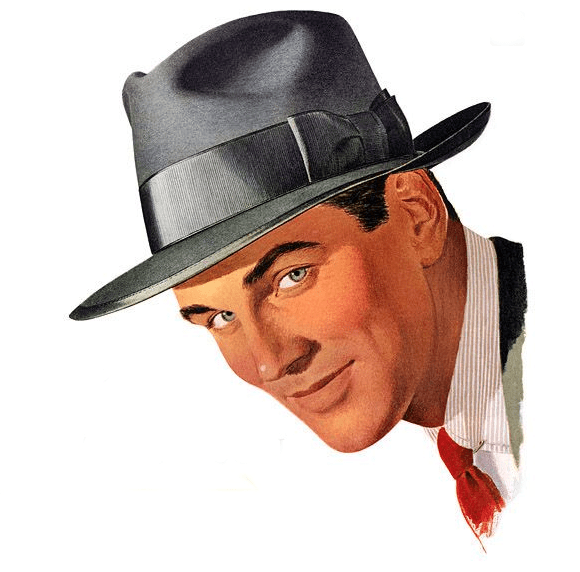
Though he was two hundred and thirty-seven years old, Blaise DeBeulah could pass for nineteen whenever he wanted to. He wrapped himself in a long trench coat and a scarf that, thanks to the icy wind, allowed him to cover the lower part of his face. He topped off the invisible man look with a broad-brimmed hat worn low over the eyes. Dressed in this way, he could pass for anybody, anywhere, without attracting any particular kind of attention.

To get to the cemetery, he had to pass through downtown. Since it was a college town, there were always lots of interesting people around his own age (not two hundred and thirty-seven, but nineteen), and he enjoyed seeing them and walking among them. He might even pass for one of them: a tall, well-dressed, rather stately young man, dignified and poised, aloof and intriguing.

He liked to linger outside a malt shop where people his age gathered. It had a red-and-white awning and exuded attractive smells such as cinnamon, chocolate and peppermint. The thing that attracted him most, though, was the music that was piped out to the sidewalk: the romantic dance bands and orchestras, the velvet-voiced crooners, the bouncy girl singers, the snappy dance numbers. It was like nothing he had heard before in his two hundred and thirty-seven years of a ghoul’s life.

He longed to go inside the malt shop, to sit at the counter and order a drink, maybe strike up a conversation with someone and end up slow-dancing on the dance floor with everyone watching. It was not going to happen, though. He had a ghoul’s hands and a ghoul’s legs. When people saw his face, they would know it was a ghoul’s face and they would run screaming from the place in terror. He would be more embarrassed than he could possibly imagine. Somebody would call the police and they would come and take him away and lock him up. He couldn’t let that happen.

With a lump of regret in his throat, he passed on to the cemetery, the music sounding in his head long after he could still hear it.

One small, poor-looking funeral was in progress on a hillside. A dozen or so black-garbed mourners gathered around an open grave. A priest said a prayer and when he was finished the mourners dispersed and a man standing by with a shovel began filling in the grave.

Blaise moved on. He wasn’t going to dig in the dirt with his hands just to get a freshly buried body. It would taste like embalming fluid, anyway, he was sure, and the brothers and sisters would gag. They could always tell a body that had been embalmed from one that hadn’t. He’d have to look elsewhere.

He knew that if he didn’t find a really fresh corpse he’d have to kill a man or a woman, or maybe a child, on his own. He hated the killing; he didn’t even like killing animals. He’d almost rather die himself.

He came to another funeral, a much larger one this time. A prominent man, a person of some fame, had died. There were maybe two hundred mourners on their feet around a dark-wood casket that gleamed in the sun. Some of the mourners cried and some smiled and laughed as if they were at a cocktail party. A holy man gestured over the casket with his arms and when the service was finished the people let out a gasp of relief like children released from school. They moved away quickly, some of them lighting cigarettes, toward cars dispersed along a scenic hillside.

Blaise stood behind a tree and watched. After a few minutes, all the mourners were gone and the casket was left unattended in the sun. The gravediggers hadn’t appeared yet to finish their job. The funeral director was nowhere to be seen; he was off someplace, probably having a cigarette or a nip from a bottle.

Without thinking what he was doing, Blaise approached the casket and lifted the lid. The deceased was an old man with a mottled face and a bald head. He appeared to have been ninety years old or older.

He scooped the old man up in his arms and, balancing the body against his right shoulder, managed to reclose the lid with his left hand. If all went well, the gravediggers would come and bury the empty casket, never suspecting that the body inside had been purloined.

He couldn’t exactly walk back through the streets of the town carrying a dead body, so he took it to the designated hiding place, a scooped-out trench along the north wall, hidden behind some bushes. He covered the body with dead leaves as an extra precaution and when he was finished he left the cemetery.

From a payphone downtown he called Daedalus, Bertha DeBeulah’s factotum, with his usual message in code: Some lovely peaches are to be had at the north wall. Daedalus would go and collect the body as soon as it was safe, take it back to the house and drop it down the meat chute in the kitchen wall, to the brothers and sisters who dwelt below.

Blaise walked the rest of the way home, then, relieved that he had delivered a body without having to kill it on his own and relieved, also, that he wouldn’t have another confrontation with Bertha DeBeulah at least for a day or two. Maybe something cataclysmic would happen in the meantime, such as a meteor colliding with earth.

He spent the rest of the day locked in his room, catching up on his sleep and dreaming about what his life might have been like if he had been born into a real family instead of a family of ghouls. He might have been one of those sleek college boys popping up soda pop rickeys to his heart’s delight. He might have driven a car and carried books under his arm.

About nine o’clock that night, he was listening to music on the radio when he heard a terrible commotion downstairs. He went to the top of the banister and looked down. Bertha DeBeulah and Benedictus DeBeulah were fighting, yelling at each other, throwing objects across the room. It was nothing new. He went back to his room and shut the door.

The fighting was not to be ignored, though. Bertha DeBeulah and Benedictus DeBeulah were engaged in all-out war, causing the old house to quake on its foundations. Blaise went downstairs, thinking to separate them and get them to stop fighting, but he could see it was no use. They were mad with rage. When he tried to get between them to pull them apart, Benedictus DeBeulah pushed him so hard against the wall that he went through to the next room.

“Stop it!” Blaise cried. “If you don’t stop it, I’m going to call the people from the insane asylum to come and get you and lock you up, where you belong! Then where would the brothers and sisters be?”

“I’m sick and tired of her!” Benedictus DeBeulah roared. “I’m going to kill the evil old bitch once and for all! Satan will be happy when she finally arrives in hell!”

“Kill me?” Bertha DeBeulah screeched. “I don’t think so! Not if I kill you first!”

Blaise could see they meant to do each other seriously bodily harm. He was going to run to the neighbors for help, but then he remembered they lived in a swamp and there weren’t any neighbors for miles.

Bertha DeBeulah and Benedictus DeBeulah had each other around the neck. There is nothing on earth like two old ghouls fighting to the death. They may destroy the earth, but one of them will live and the other one die.

Benedictus DeBeulah’s strength proved superior in the end, however. He pried Bertha DeBeulah’s fingers from around his neck and reared back and knocked her block off with so much force that her head flew off her shoulders and hit the wall like a bloody cabbage.

Bertha DeBeulah wasn’t finished yet, though. Her headless body rose up from the floor and produced from the air a ball of flame, a gift from her beloved Satan. She directed the ball squarely at the midsection of Benedictus DeBeulah and he became the ball of flame. He ran through the house, arms flailing, but he wasn’t able to extinguish the flames that engulfed him. He grabbed the dining room curtains and pulled them down on top of him. The curtains helped to extinguish the flames and keep the rest of the house from catching on fire, but they were of no use to Benedictus DeBeulah. He was not only clearly dead, but really most sincerely dead.

When it was all over, Blaise gathered up the charred remains of Benedictus DeBeulah and the headless remains of Bertha DeBeulah and dragged them into the kitchen and threw them down the meat chute. The brothers and sisters wouldn’t know that they were eating their own mother and father, but if they did know they wouldn’t care. Fresh meat is fresh meat.

After Blaise rested and had a cooling drink of water and some onions and herbs (he was trying to take up a vegetarian diet), he became fully aware of his good fortune. For the first time in his life, he was free of family exigencies, free to do as he pleased rather than as he was told.

He would buy a phonograph and all the latest recordings. He would buy a car and learn to drive and find the best tailor in town and have some stylish suits made to order. He would get to know some of those young college students and invite them to parties. He would tell them of his experiences in some of the bloodiest battles of the Civil War. They would love him. They would find him fascinating.

Just as he was contemplating his life to be, he heard the brothers and sisters howling below-stairs like the wild animals they were. They were well-fed, so what was wrong with them now? He would just ignore them and tomorrow, or maybe the next day, he would have a special treat for them.

Copyright © 2023 by Allen Kopp

It’s Not My Fault She Wasn’t Dead ~ A Short Story


It's Not My Fault She Wasn't Dead
It’s Not My Fault She Wasn’t Dead
~ A Short Story by Allen Kopp ~

(This short story has been published in The Literary Hatchet.)

It was eleven o’clock Saturday night. I had spent a strenuous day doing next to nothing, laying around my apartment reading Dostoevsky, and was ready to go to sleep, when the telephone rang. I was going to let it ring, but I figured it had to be Mr. Ludwig. Nobody else would call at that hour.

 “Got a little job for you,” the voice on the telephone said.

“Mr. Ludwig!” I said. “How happy I am to hear from you!”

 “You alone?”

 “Yes, I am. I was about to go to bed, though.”

“I can always get somebody else if you’re indisposed.”

“Just kidding! I would never pass up the chance to do you a service!”

“A doctor had somebody die in his office. A woman. He wants her removed before morning.”

“What did he do to her?”

“Never mind. The doctor has a problem and is paying us plenty to remove it for him.”

“I’ll wear my Boris Karloff disguise.”

“I don’t care what you wear. Just get the job done.”

He gave me the address and I wrote it down on the inside of a match book.

“There’s a dead-end alley that runs behind the doctor’s building,” he said. “Pull in there. The doctor will be waiting for you.”

“Sounds like a cakewalk.”

“Put the deceased in your car and bring her to me.”

“I won’t exactly be taking her out for a night on the town.”

“And make sure nobody sees you!”

I found the address easily enough. As expected, the doctor was waiting. Dressed all in white, he looked like a ghost.

“You the man Ludwig sent?” he asked.

“Yeah.”

“Turn off those headlights!”

“No need to be so jittery,” I said.

“Did anybody see you?”

“There’s nobody around this time of night.”

“Nobody but the police,” he said.

He pulled the door back and pointed down. He had the woman in a body bag right inside the door.

“You sure she’s dead?” I asked.

“I strangled her.”

“Charming.”

She was so light I thought she must only be a child. I was glad I didn’t have to see her face. I put her in the trunk and turned to bid the doctor farewell.

“You have a wonderful evening, now,” I said.

“You were never here!” he said, slamming the door.

Mr. Ludwig lived twelve miles outside of town in a hundred-year-old house. He probably built it himself, he was so old. He was a doctor but I didn’t know what kind. I didn’t ask questions.

The road to Mr. Ludwig’s house was hilly, curvy, and dark with that special kind of lonely darkness that exists only in the country. I hardly ever met any other cars out there and if I did I figured they were driven by lost souls who couldn’t find their way.

I made sure I didn’t exceed the speed limit—I couldn’t afford to be stopped with a corpse in my trunk—and I got to Mr. Ludwig’s place a little before one o’clock. The big iron gate opened for me as if by magic and I drove through, up to the big house and around to the back.

I stopped the car and got out. I stood there beside the car, looking up at the silent hulk of the house and listening to the crickets. In a couple of minutes Mr. Ludwig came out the door with one of his goons, a muscle boy named Kurt.

“Any problems?” Mr. Ludwig asked.

“No,” I said.

“Nobody saw you turn in here?”

“Only a couple of owls.”

“Well, bring her on inside then.”

I opened the trunk and Kurt lifted the bundle like a sack of feathers and carried it inside. Mr. Ludwig motioned for me to follow him so we could sit down in his study and complete the transaction and, I hoped, call it a night.

 “Would you like a drink?” he asked as I sat down on his expensive leather sofa.

“No, thanks,” I said. “It’s late and I just want my money.”

“Stay and have a drink with me,” he said. “I hardly ever have a chance for intelligent conversation.”

“What makes you think you’ll get it from me?”

“I know you. How long have you been working for me now?”

“About a year, I guess.”

“Just have one little drink to be friendly,” he said.

“All right. Just one.”

He poured some scotch, which I hated, into a glass and handed it to me. He was a tall man, slightly stooped in the shoulders, wearing an expensive-looking robe of some soft material like cashmere. It made him look like an enormous brown bear.

“How has the world been treating you?” he asked.

I sighed, in no mood for small talk. “I can’t complain,” I said.

“You like working for me, don’t you?”

“Sure.”

“You like working at night.”

“I guess so.”

“Everything is more interesting at night, don’t you agree?”

I would have agreed to anything that would bring the conversation to an end. “Yes, sir,” I said.

“There are infinite possibilities lurking in the dark.”

“If you say so.”

“Of course, the kind of work we do has to be done at night.”

“Uh-huh.”

“I thought I’d give you a little extra this time for your trouble, since it was a spur-of-the-moment thing. Say six-fifty instead of the usual five hundred.”

“Thanks,” I said. “I appreciate that.”

“Don’t thank me. Thank Dr. Broyles. He’ll be picking up the tab.”

“I don’t want to know his name.”

“You met him when you picked up the girl?”

“Yeah,” I said. “He was a very charming fellow.”

“Did he say she bled to death, or what?”

“He said he strangled her.”

Mr. Ludwig laughed so that his jowls quivered like jelly. “That’s a good one!” he said. “An odd choice of words but, then, he’s an odd character.”

“He a friend of yours?” I asked.

“I’ve known him all of thirty years.”

I looked over at the clock and cleared my throat. I was tired and had a headache. “Well, Mr. Ludwig,” I said. “If you don’t mind, sir, I’d like to get my money and go home now.”

Kurt came into the room and Mr. Ludwig and I both turned and looked at him.

“What is it now?” Mr. Ludwig asked.

“I think you need to see this,” Kurt said.

“What is it?”

“It’s the girl in the bag.”

Mr. Ludwig left with Kurt and in a couple of minutes he came back into the room. His jovial manner had vanished. The corners of his mouth turned down as if his face was made of dough.

“Anything the matter?” I asked.

“She’s not dead,” Mr. Ludwig said.

“What?”

“I said she isn’t dead.”

“What are you going to do now?” I asked.

“You’ll have to kill her.”

“What? I’ll have to kill her?”

“Do you want her identifying you to the police?”

“She hasn’t seen me.”

He took a gun out of his desk and pushed it toward me.

“I’m not going to kill her,” I said. “Get Kurt to do it. I think he’d enjoy killing a woman.”

“Kurt’s no killer.”

“Neither am I.”

“I thought you were courageous.”

“Up to a point I am, but nobody said anything about killing a dame.”

“You were hired to bring a dead body to me,” he said. “You brought me a live one. It’s not quite the same thing, is it? Your job isn’t finished until you give me what I’m paying you for.”

“Why should I do it? You’re a doctor. Can’t you just chloroform her or something?”

He smiled as if we were talking about pulling a kite out of a tree. “All you have to do is take the gun, point it at her head and pull the trigger. It’s all so simple.”

“I’ve never killed anybody before!” I said, and I hoped the logic of that statement would carry me through.

“Once you’ve done it, you’ll see how easy it is.”

“How about if I take her back to town and drop her off at the nearest hospital? An anonymous drop-off. No questions asked and none answered. She hasn’t seen you or Kurt. She hasn’t seen me. She hasn’t seen any of us. She doesn’t know where she is. She was in my trunk inside a bag all the way out here.”

“When they see the state she’s in, they’ll call the police and the first thing she’ll do is put the finger on Dr. Broyles. I must do what I can to protect my old friend.”

“Maybe I can talk to her and make her promise not to say a word to anybody.”

“My goodness, you are naïve, aren’t you?” he laughed.

“Killing is not in my line,” I said. “I’ll bet you have half a dozen others on your payroll who specialize in that sort of thing.”

“None of them are here, though. You are.”

He stood up, walked around the desk and placed the gun in my hand.

“I don’t want to shoot her,” I said. “Maybe I’ll hold a pillow over face until she stops breathing.”

He took a three-foot length of rope out of his desk and tossed it to me. “Use whatever method you prefer. Just do it.”

“And what will you do with her after I kill her?” I asked.

“You don’t have to worry about that. I know how to make dead bodies disappear.”

“Sounds delightful.”

“You’re a doer, not a thinker. Just do it and don’t think so much about it.”

“Yeah, I’m a doer,” I said.

He held the door for me to go into the room where the girl was who was supposed to be dead but wasn’t and closed the door behind me. There was just enough light in the room for me to see the light switch. I couldn’t kill anybody that I couldn’t see, so I turned on the light.

The empty body bag was on the table but the girl was gone.

I opened the door again and said to Mr. Ludwig, sitting at his desk, “What’s the gag? There’s nobody here.”

Mr. Ludwig came rushing into the room and when he saw the girl wasn’t there he yelled for Kurt, who immediately appeared from another part of the house.

“She’s gone, you idiot!” Mr. Ludwig said. “Why didn’t you watch her?”

“She was here just a minute ago!” Kurt said.

“Find her!”

The two of them seemed to forget about me while they looked behind the curtains, in the closet, in the bathroom—any place a person might hide.

“Maybe she went upstairs,” I said, pointing up the dark staircase with the gun.

“Go check and see if she’s upstairs!” Mr. Ludwig said to Kurt.

Mr. Ludwig was red in the face. I thought he might pop a blood vessel right before my eyes.

While Mr. Ludwig and Kurt were searching frantically for the girl, upstairs and down, I thought of the simple expedient of checking the back door.

The door was partly open and a rug in front of the door was kicked up, so I figured the girl had run out into the night. There was no place for her to run to out there, but at least she could get away.

I sat down on the sofa and took a deep breath, listening to the sounds of Mr. Ludwig and Kurt scrambling around upstairs. When Mr. Ludwig came down again, I smiled.

“She flew the coop!” I said.

“She what?”

“She ran out the back door.”

“Don’t just sit there, you idiot! Go find her!”

“It’s not my job to find her,” I said, “and I’d be careful who you’re calling an idiot, if I were you.”

He went straight to the phone and called “some people” to come out from town and comb the woods and the grounds surrounding the house to try to find her.

When he hung up the phone, he rubbed his forehead as if he was kneading bread. “They’ll be here as quick as they can,” he said, “but in the meantime, I want you and Kurt to go outside and see if you can find her.”

I was on the point of refusing when he handed me a flashlight and another one to Kurt and hustled us out of the house.

“You’d better not let her get away again!” he said threateningly as he slammed the door.

Kurt and I stood there in the dark at the back of the house, listening to the crickets. He was smoking a cigarette and didn’t seem in any hurry.

“He’s crazy, you know,” he said.

“I suspected it,” I said. “Why do you work for him?”

“He likes to have a well-built young man around.”

“Are you saying Mr. Ludwig is queer?”

He shrugged. “Call it whatever you want.”

“What do you get out of it?”

“He pays me plenty.”

I looked up at the moonless sky. “It’s too dark tonight to see anything.”

“Yeah, I know, but we can go through the motions, can’t we?”

“You look on that side of the house and I’ll look on this side,” I said.

There were twelve acres surrounding the house. The carefully tended lawn ended where the woods began. I figured the girl, if she had any sense at all, would hide herself in the woods until morning and then try to find somebody to help her.

I spent an hour or more going over the lawn with the flashlight. I saw a possum and a couple raccoons but that’s all. I was about to go back inside and tell Mr. Ludwig it was hopeless, when I heard a snap over to my left beyond the boundary of the lawn.

I shone my light where the sound came from. All I saw were trees and brush, but then a person materialized out of the dark.

“Don’t shoot me!” a female voice said.

“Who’s there?” I said.

She stood up then out of the brush, her hands in the air. She wasn’t more than twenty years old. “Please don’t shoot me!” she said.

“I’m not going to shoot you!” I said.

“What is this place?” she asked.

“It’s the home of a mad scientist, twelve miles from town on a very lonely road.”

“How did I get here?”

“Never mind that now. If you value your life, you’d better get away from this place as quick as you can. There are people coming out to look for you and they mean business.”

“Can you help me?”

“No. I’m supposed to find you and take you to him.”

“Take me to who?”

“It wouldn’t help you if I told you his name.”

“I’m so scared!” she said, starting to cry. “I don’t remember anything that happened.”

“Do you remember a doctor? Being in his office?”

“Oh, yeah. Him.”

“He thought he strangled you. He thought you were dead.”

“Oh, yeah.” She touched her throat and winced.

“Parked behind the house is a black car,” I said. “That’s my car. After Kurt and I go back inside the house, go around to the side of the car away from the house and get in on the floor in the back seat. Close the door as quietly as you can. There’s an old army blanket on the floor in the back that you can use to cover up with. I’ll be going back to town as soon as I can get away from here and I’ll drop you off and then I’m finished with this whole thing.”

“Who’s Kurt?”

“You don’t want to know. If you want to go on living, just do as I say. And if they find you in my car, I had nothing to do with it.”

“Okay.”

I circled around the front and met up with Kurt on the other side of the house.

“Any luck?” I asked.

“No. I didn’t see anything.”

“Me either.”

“The boss is not going to like it,” he said.

“Maybe his people will find her.”

When we went back inside, Mr. Ludwig had settled himself down with a bottle of whiskey. He smiled when he saw us.

“Did you find her?” he asked.

“No,” Kurt said. “She’s nowhere around the house.”

“Did you look everywhere?”

“As well as we could in the dark.”

“She probably went out to the road and flagged down a car,” I said. “Somebody to give her a ride to town.”

“She’d better keep her big trap shut,” Mr. Ludwig said, “or she won’t live long.”

“If she has any sense at all, she’ll know that,” I said.

“With people like that, you can never be sure of anything.”

“People like what?” I asked.

“She’s a doper. A heroin addict. So is the doctor. He was giving her what she needed. Something went wrong, I imagine, and then he had to strangle her.”

“Maybe she refused to pay him,” Kurt said helpfully. “Drug dealers get awfully touchy about that.”

“Shut up, Kurt!” Mr. Ludwig said. “Go on and go to bed now!”

After Kurt was gone and I was left alone with Mr. Ludwig, I asked him again for the money he owed me.

He looked at me sadly and shook his head. “I don’t pay for sloppy work,” he said.

I couldn’t keep from laughing. “It’s not my fault she wasn’t dead. If there’s any blame to be allocated, I think it belongs to the doctor.”

“He won’t see it that way. When he finds out she wasn’t dead, he won’t pay me and I can’t pay you. That’s the way the world of business works.”

“I have no appreciation for the world of business,” I said.

“You can go now,” Mr. Ludwig said. “You’ll be hearing from me soon. Good night.”

“It’s almost four o’clock. It’s good morning now instead of good night.”

When I went out to get into my car to go home, Mr. Ludwig’s people were out in full force looking for the girl. I was sure some of them weren’t happy at being yanked out of bed in the middle of the night, but I knew they were being well paid for their efforts.

 The girl didn’t make a sound all the way back to town. I dropped her off at the hospital but wouldn’t let her get out of the car until I gave her some advice.

“You don’t know anything,” I said. “You don’t know how you got here. You don’t know where you’ve been. You’ve been with some bad people, that’s all. If you’re thinking of getting revenge on that doctor, he’ll kill you. If he doesn’t, somebody else will.”

“Uh-huh,” she said.

“I’m not fooling, now. This is serious business. Do not say a word about anything that happened if you want to go on living.”

“I got it.”

She got out of the car and began walking across the parking lot toward the emergency-room door. Before going inside, she turned and gave me a little wave.

The sun was just starting to come up when I got home, but for me the day was ending instead of beginning. I had a hot shower, closed the curtains and fell into bed. Before I went to sleep, though, I took the phone off the hook. I figured I deserved that, at least.

Copyright © 2023 by Allen Kopp

Everybody Else Went On Ahead ~ A Short Story

Everybody Else Went On Ahead image 5
Everybody Else Went On Ahead
~ A Short Story by Allen Kopp ~

(This story has been published in The Literary Hatchet.)

I had known Weston Bicket since we were both five years old, in kindergarten. If I had anything like a best friend, he was it. Some people didn’t like him because he was different from everybody else and he had a bad leg that made him limp and kept him from playing basketball and other stupid games we were made to play. I sometimes envied him because he wasn’t made to take P.E. (For those unfamiliar with the term, “P.E.” means “physical education.”) He had an extra study hall while the rest of us were being humiliated in front of the whole class by our lack of athletic ability.

Weston lived in a big house that had seen better days on the edge of town, behind the railroad depot. (The town wasn’t big enough for a “train station,” so we just had a tiny railroad depot that looked unused and haunted.) He had no brothers and sisters; his parents went off and left him on his own a lot. His father ran around with other women (according to the gossip that my own mother was all too willing to spread), and his mother was an unrepentant floozy who spent a lot of time drinking beer and smoking cigarettes in taverns and bowling alleys. (Weston’s parents’ philosophy of parenting seemed to be: “Let the child raise himself. That’s what we did and look at us!”)

Weston didn’t like to talk about his bum leg, but one Friday evening during summer vacation when we were alone at his house, I asked him how it came to be the way it was.

“I was a breached birth,” he said.

“What does that mean?”

“I came out feet first.”

“Came out where?”

“You know. You saw the pictures in the biology book.”

“Oh, yeah!” I said. “Disgusting!”

“Yes, it’s disgusting. The whole thing is disgusting.”

“So what happened with your leg?”

“I was stuck in there. The doctor pulled too hard on my leg and broke it and dislocated it.”

“Didn’t that hurt?”

“They thought I might never walk, so I guess I’m lucky to be walking at all.”

“You’re lucky in other ways, too. You don’t have to take P.E.”

“Yes, I am blessed in that regard.”

About nine o’clock that night a big thunderstorm blew up out of the southwest, which was where most scary storms came from. Weston’s parents were gone for the weekend and he didn’t know when they’d be back. He asked me if I’d spend the night. I never knew before that he was scared of thunder and lightning.  I thought it would be fun to spend the night in his upstairs bedroom with just the two of us, with plenty of cookies and potato chips, but when I called my mother and asked for permission to spend the night, she told me to shag my cowboy ass home without further delay, storm or no storm. She always knew how to spoil a good time; she did it effortlessly.

We were thirteen and in the eighth grade. While most of us were growing taller and “filling out,” Weston remained tiny. The eighth grade wasn’t kind to Weston. One day he fell on the stairs going from one class to another and broke his ankle. He had to stay at home for two weeks “recuperating,” and when he came back to school he had a heavy cast on his leg and a pair of crutches. “I was the class lame-o before!” he said proudly. “Now I’m the lame-o for the whole school!”

Not long after his cast was removed, Weston was caught smoking a cigarette in the boys’ restroom with two other boys and all three of them were suspended for three days. Getting suspended from school was about the worst thing that could happen to any of us. To be readmitted, he had to have his mother bring him for a closed-door meeting with the principal in his office. His mother wasn’t exactly the comforting or motherly type. She was a large woman with a deep voice, always smoking a cigarette, always scowling. She scared me just by looking at me without saying anything.

And that wasn’t all. When we got our once-in-a-lifetime smallpox vaccinations, Weston had a “bad reaction.” His arm swelled up to twice its normal size and he became sick and had to see a doctor. The doctor said it was a “very rare” and “most unusual” side-effect of the smallpox vaccine that occurred in about one in a million people. “Did you ever see anybody so damn lucky?” Weston exclaimed. Everybody wanted Weston to roll up his sleeve and show them his arm, which looked like something out of a horror movie. I knew he was pleased by the attention.

Because he was so small, Weston was often the target of bullies. One Saturday afternoon when the two of us were on our way downtown, we met the ugly, sadistic goon, Freddy Sharples, on East Main.

“Well, look who’s here!” Freddy sneered, showing his rotting teeth. “I thought I smelled turds!”

Our plan was just to ignore Freddy; we were going to go around him, but he blocked our way.

“Just where do you two little bitches think you’re going?” Freddy said.

“None of your business!” Weston said.

“I’ll bet you’re going to the store to buy some emergency feminine napkins, aren’t you?”

“That’s stupid,” Weston said, “because we know you already bought them all!”

“Oh, funny!” Freddy said. “You ought to be on TV!”

“We just met a big gorilla up the street. She was looking for you. I think she was your mother.”

“You know what happens to little bitches with smart mouths? They get their teeth knocked out!”

“I dare you to knock my teeth out!” Weston said. “I’ll call the police and they’ll come and pick you up and drop you off at the monkey house at the zoo with the rest of your family, where you belong!”

“If you don’t shut your mouth, you little creep, and show some respect, I’ll shut it for you!”

“I’d rather be a creep than a psycho, Freddy! That’s what you are! You might as well face it. Nobody likes you! People are afraid of you!”

Freddy jumped at Weston then and got him in a headlock. Weston struggled but couldn’t get loose.

“Let me go!” Weston said. “You’re hurting me!”

“That’s the point, shit-face!” Freddy said.

“Leave him alone, Freddy!” I said.

“Oh, you want some too, mama’s boy?”

He let go of Weston and came toward me and raised his dirt-encrusted knuckles in my face as if to hit me. I didn’t flinch.

“We’re not bothering you!” I said. “Just let us pass.”

“And miss all the fun?”No fun here,” I said.

“No?” Freddy asked. “I always think it’s fun beating the shit out of little kids.”

“If you want to beat the shit out of somebody, why don’t you beat the shit out of somebody your own size?”

“Well, that’s just no fun at all!”

“I’ve been meaning to ask you, Freddy,” Weston said. “Just how many years did you spend in third grade?”

“I’ve been meaning to ask you,” Freddy said. “What’s it like to be a cripple?”

“I’m not a cripple,” Weston said.

“You look like a cripple! You walk like a cripple! Yes, I’d definitely say you’re a cripple!”

“You’re a no-good, smelly, cootie-infested piece of retarded shit!” Weston shrieked. “Your whole family is shit! You live in a junkyard! You have so many brothers and sisters you don’t know how many there are! Your brother went to prison for knocking an old lady in the head and nearly killing her! Your sister had a baby when she was fourteen!”

“You leave my family out of it!” Freddy said.

He hit Weston on the side of the head with his fist. The blow knocked Weston all the way off the sidewalk into the street. I could see right away that his eyes were closed and he wasn’t moving. I thought he was dead.

“Look what you did!” I yelled at Freddy.

“Serves him right for disrespecting my family!”

Freddy ran off up the street, like the coward he was. He was trying to laugh, but I could tell he was scared.

I couldn’t leave Weston lying there in the street. He really was knocked out. I had never seen anybody knocked out before. He wasn’t faking it, either. When they got him to the hospital, they found he had a brain concussion and a fractured jaw.

I went to visit him in his room at the hospital one day after school. I had never seen him look so bad. He wasn’t supposed to get out of bed. He couldn’t move around much because he was dizzy.

He wanted to hear what was going on at school. I didn’t have any good gossip to tell him except that we had the Constitution test in American history and Tallulah Midget, a seventh-grade girl, had hepatitis.

“Is it catching?” he asked.

“I think so, if you drink from the water fountain after her.”

“I’ll probably get it then.”

Finally the conversation came around to Freddy Sharples.

“Did you tell everybody how that son-of-a-bitch hit me in the head with his fist, just like Popeye?” Weston asked.

“I told them everything,” I said. “A policeman came by my house and wanted me to tell him what happened and then the next day at school the principal and the school nurse asked me a lot of questions. I just told them what I saw.”

“And that it was all Freddy’s fault?”

“Sure.”

“I didn’t do anything.”

“They know that.”

“Are they going to put Freddy in jail for practically killing me?”

“There’s a rumor going around that he’s on his way to reform school.”

“Good! I want to be there when they come and take him away. I bet he’ll scream and cry like a little baby.”

“He’s headed for the pen. You can be sure of that. One day they’ll fry his ass in the electric chair.”

“I’d give a million dollars to see him burn!”

Weston was out of school for three weeks with his concussion. When he came back, he couldn’t remember anything. He couldn’t even remember what classes he was supposed to go to. He wanted to quit school but everybody told him he’d be a bum all his life, so his pride made him change his mind. He wouldn’t be able to quit, anyway, until he was sixteen. The law said so.

When the school year finally ended, Weston wasn’t passed on to the ninth grade. He was going to have to start over in the eighth grade again when the new school term started. He would start back at square one. It would be as if his bad year never happened.

I was little sad that Weston and I would no longer be in the same grade and have all our classes together. We would still see each other every day and could always eat lunch together, but it would never be the same. He’d find a new best friend and so would I. He’d have a whole bunch of younger children to choose from, whereas I would be with the same old bunch I had always known.

Copyright © 2023 by Allen Kopp

The Errant Husband ~ A Short Story

The Errant Husband image 5
The Errant Husband
~ A Short Story by Allen Kopp ~  

(This short story has been published in The Literary Hatchet.)

Verna Donlen was forty-four but when she looked in the mirror she saw the face of a much younger, still-attractive woman. It’s true she was overweight and she had genetically thinning hair, but she had bought two expensive mail-order wigs—one ash blonde and the other henna—and they looked just as good as her real hair.

She always believed in fixing herself up when she went out. She wore good clothes and when she saw women dressed in what looked like ugly castoffs, she felt sorry for them and was glad she wasn’t that sort. She believed in dignity, if nobody else did, and she thought that appropriateness in attire was more important than comfort. When you’re at home, you can be comfortable. When you’re out among people, you need to look as good as you can.

Her husband always looked good because he was a salesman; looking his best was part of the job. He had a whole closet full of sports jackets, suits, shirts, ties and expensive shoes. He had all these things, that is, before he moved out and took everything with him. She hadn’t seen him for six months, going on a year. Sometimes she went into his bedroom and looked in the empty closet and at the blankness where his bed and dresser used to be and she wondered where he was and what he was doing.

He had thinning hair too, but when he was in his late thirties he spent a lot of money on a toupee. After he had worn the toupee for a while, he found it satisfactory enough to buy another one in a different style, and then another one. It was the toupees, Verna speculated, that made him irresistible to women and led to his finding the “other woman” that he wanted to spend his old age with. Her name was Linda and she had two teen boys and very large breasts.

It was Thursday afternoon and Verna was going downtown to do some shopping. She wore a two-piece, heather-green wool suit and brown, low-heeled, dressy shoes that were comfortable for walking, and carried the purse to match. She also wore the henna-colored wig, which she always wore in the daytime, saving the ash blonde wig for more formal, nighttime occasions.

The first stop was the supermarket. The parking lot was crowded, as usual, but she found a good spot close to the front that somebody had just vacated. She went inside, feeling a little intimidated, as always, by the vastness of the store and the number of people, but she took a deep breath, got her shopping cart and forged ahead.

Since she only had herself to shop for now, she was never sure what to buy. She was a little too fond of bread and desserts for her own good, so she veered away from them, toward the canned vegetables, meat and fresh produce. She bought a few fresh vegetables and a small cut of beef for a stew, a pound of bacon, some cans of corn and beets, and before she was finished she stopped by the bakery department and bought a half-dozen donuts and a loaf of wheat bread for toast.

When she finished shopping, she took her place in line behind all the other people at the checkout, and that’s when she saw them come into the supermarket: her husband, Gerald, and his big-breasted girlfriend, Linda. They had their arms around each other’s waists. They were smiling and looked happy. Gerald was wearing the slick toupee that made him look ten years younger. He looked slimmer, somehow, and healthy. Linda was good for him.

They took a cart and melded into the crowd.

Verna felt her heart give a lurch at seeing the two of them together and looking good. She thought she was completely over Gerald, but her hands were shaking and her mouth dry. She hoped she would be able to get out of the store before Gerald and Linda saw her. She was the spurned wife, the laughable fool, the fodder for jokes and innuendo. She felt exposed, vulnerable, as if she might start crying uncontrollably.

One comforting thought came to her while she waited in line to pay, and that was that Gerald and Linda wouldn’t be able to marry as long as Gerald was married to her. Gerald had never asked her for a divorce. He had never attempted to contact her since they had separated. She didn’t matter, she supposed. Gerald and Linda had both decided she was completely inconsequential. They could go ahead with their plans, whatever they might be, despite her.

Finally her turn came at the cash register. She moved her items from the cart to the conveyor belt without any sensation in her arms. She wondered if she would be able to pay and get out of the store before she was sick or before she passed out on the floor. She looked behind her nervously to see if she could spot Gerald and Linda in line. If they were there, she would pretend she hadn’t seen them and would get out of the store as fast as she could.

She was glad to see that her favorite bagboy, the one named Jeffrey, was working. He had the sweetest smile and was never sullen the way some of the young ones were. He seemed to genuinely like his job, which in itself was unusual.

He bagged up her groceries expertly and put the bags in the cart.

“How are you today, Jeffrey?” she asked, not certain if her voice sounded the way it was supposed to.

“I’m just fine, Mrs. Donlen! How are you?”

She knew his name from his name tag, but she didn’t know how he knew hers.

“I’m fine, too,” she said.

She walked behind him, out of the store to the parking lot, admiring his straight, youthful body and his rounded, high buttocks and broad shoulders.

She came to her car and unlocked the trunk and stood back and watched as he transferred the bags from the shopping cart to her car.

“Do you have an exciting weekend planned, Jeffrey?” she asked.

“Oh, no. I have to work Saturday and Sunday, but I’ll have the next weekend off. We live for those days off, don’t we?”

She laughed appreciatively. “I’ll bet you have lots of friends, don’t you?”

“Sure.”

“Still live with your parents?”

“Oh, no. I’m twenty-two now. Time to be out on my own. I have my own apartment in the city.”

“Good for you!”

“Well, if there’s nothing else, Mrs. Donlen, I have to get back inside.” He swung the shopping cart around deftly with one hand.

“Just a minute, Jeffrey.” She reached into her purse and pulled out a five-dollar-bill and handed it to him.

“Oh, no, ma’am!” he said. “I can’t take that! I’m only doing my job.”

“But you do it so well I want to give you a tip.”

“Well, I do thank you, ma’am, but it’s not necessary.”

He blushed becomingly and hurried back inside.

As Verna left the supermarket parking lot and entered the heavy flow of traffic on the street, her hands shook and she felt weak and disoriented. She wasn’t sure if she remembered how to get home. She wasn’t sure if she had her purse with her or if she had left it in the store.

While she was wondering whether she should go back and look for her purse, she ran through a red light at a busy intersection. Her car was struck by a pickup truck on the left front side; it went spinning around in the intersection and came to rest on the sidewalk. She never saw the truck that collided with her car.

She was unconscious for two days and when she regained consciousness in the hospital, she couldn’t remember the collision. She had neck and head injuries and her left arm was broken, but the doctors believed she would make a full recovery.

She lay on her back in her hospital bed, heavily medicated, barely able to move. It was morning, she could tell, from the light that came in at the window. There was usually a nurse or an attendant in the room with her, but she was aware of being alone when the door opened and two people came in, a man and a woman. She squinted toward them but they were just a blur.

When the man spoke to ask how she was feeling, she knew from his voice that it was Gerald. If it was Gerald, the woman with him had to be Linda As they came closer to the bed, she could see their inquiring eyes and the teeth in their smiling mouths. They had come to torment her and make trouble for her. They were devilish imps encircling her bed.

She turned her face away from them and closed her eyes and groaned.

“For God’s sake, go away and leave me alone!” she said. “I know what you’re going to say and I don’t want to hear it!”

Copyright © 2023 by Allen Kopp

It’s Not the Pale Moon That Excites Me ~ A Short Story

It's Not the Pale Moon That Excites Me image 4

It’s Not the Pale Moon That Excites Me
~ A Short Story by Allen Kopp ~

(This story was published in The Literary Hatchet.)

They sat on the front porch to catch the cooling breezes. Mrs. Llewellyn fanned herself with a cardboard fan courtesy of Benoist Funeral Home and took pulls on a bottle of “medicinal” whiskey she kept in her apron pocket. Miss Clemson, the nearest neighbor, sat on the steps close to Mrs. Llewellyn, holding her hands demurely around her ankles to keep her skirt in place.

“Gets mighty lonely over at my place sometimes,” Miss Clemson said. “Especially of an evening.”

“You should have found yourself a man to marry,” Mrs. Llewellyn said.

“I still might.”

“At your age?”

“I’m only fifty-four,” Miss Clemson said. “And, anyway, the world don’t revolve around no man. I know plenty of women manage just fine without a man orderin’ ‘em about the place.”

“Well, I’ve had four husbands and I can’t say I’d recommend it,” Mrs. Llewellyn said.

“There’s a rumor going around that you just received a proposal of marriage from a Mr. Chin. Is that right?”

“Yes, a Mr. Chin asked me to marry him,” Mrs. Llewellyn said, “but I turned him down.”

“Is he a Chinaman?”

“No, why would he be a Chinaman?”

“Well, that’s what the name sounds like.”

“No, he ain’t a Chinaman.”

“Well, what then?”

“I don’t know what he is, but he ain’t no Chinaman.”

“Why don’t you marry him if he wants to marry you?”

“Well, for one thing, he’s covered with scales.”

“You mean like a snake?”

“Exactly like a snake.”

“I guess a woman could get used to a few snake scales if the man was a good man,” Miss Clemson said.

“I don’t think I ever could. I’d have to turn away when he was gettin’ dressed, or at least turn the light off.”

“Maybe he’ll just shed them scales in the woods during moltin’ season and not have them anymore.”

“Why are you so interested in Mr. Chin’s scales?”

“Well, if he’s marriage-minded, maybe the two of us ought to meet. We might strike up a real lively friendship.”

“The next time I see him I’ll send him over your way,” Mrs. Llewellyn said.
“Will you really?”

“When you see them scales, you might change your mind.”

“Well, I really don’t think I’d mind the scales all that much as long as he keeps them hidden during the daytime when he’s dressed. The scales are not on his face, are they?”

“Not yet.”

“As long as they’re not on his face, I think we’d be all right, then.”

“The scales is not the only reason I don’t want to marry Mr. Chin,” Mrs. Llewellyn confided.

“What, then?”

“I don’t want him moonin’ around over my granddaughter Laura Louise all the time.”

“Oh, yes. I almost forgot about Laura Louise.”

“She lives with me, you know. I’m all the family she’s got left since her maw killed herself in the river.”

“Do you think Mr. Chin might be particularly drawn to her?”

“I think he’d never stop starin’ at her.”

“Well, if staring’s all he done, that wouldn’t be so bad.”

“Yeah, but the starin’ would lead to pawin’ and the pawin’ would lead to other things.”

“I think I see what you mean. She has turned into a right pretty little thing.”

“She’s got her womanly wiles. It’ll just take the right man to bring it out in her.”

“Do you think Mr. Chin might be the one to do that?”

“I think any man might do it, even one covered in scales.”

“Does she still go swimmin’ naked in the river?”

“I don’t think she swims naked no more, no. Not since she accepted the Lord Jesus Christ as her personal savior.”

“The Lord certainly works in mysterious ways His wonders to perform.”

“Don’t He, though?”

“There for a while she seemed headed down the road to damnation.”

“Most of that was rumor. You know what nasty tongues people have.”

“They said she was havin’ an affair with I-don’t-know-who-all, even Dr. Birke in town.”

“She went to him for a bladder infection. He treated her and she came home and that’s all there was to it.”

“That’s not what people says.”

“Do you think I care what people says?”

“No, I know you don’t care.”

“But, I’ll tell you on the other hand. I didn’t definitely turn Mr. Chin down.”

“What? You think you still might marry him?”

“If that’s the way the chips fall.”

“What do you mean? What chips?”

“Well, since Laura Louise has got herself so keen on religion, she thinks she might want to dedicate her life to the spreading of the Gospel.”

“You mean as a lady preacher?”

“Well, something like that. She’s got it into her head that she wants to go to Darkest Africa and become a missionary.”

“Darkest Africa? What would she do there?”

“She’d teach them headhunters to put down their spears and accept the Lord Jesus Christ as their personal savior, same as she done.”

“Lord, I wouldn’t want to go to Darkest Africa!” Miss Clemson said. “I’d be scared out of my wits every minute!”

“That’s because you’re an ignorant woman. Them missionaries get training before they go. They learn how to deal with them natives and make their sit down and read the Bible and listen to hymns.”

“Well, it might be right for some people, but I don’t think I would ever choose that kind of life for myself.”

“Laura Louise is all the family I got left. All my children and grandchildren has died or run off and left me. Laura Louise is the only one left to sweep out the house and fetch me what I need and cook me a little supper of an evening. She’s the only one left to keep me company in my old age. And she’s the only one to see that I’m put into the ground proper when my time comes.”

“Oh, I think I see what you’re sayin’,” Miss Clemson said. “If Laura Louise goes off to Darkest Africa, you could still marry Mr. Chin and he could do all them things for you that Laura Louise does now.”

“You catch on quick.”

“But you’d only marry Mr. Chin if you don’t still have Laura Louise at home?”

“That’s right.”

“I’m sure the Lord will work it all out for you. He’ll come up with the solution that’s right for all parties concerned.”

“I guess so,” Mrs. Llewellyn said.

“I think I see somebody comin’ up the road now,” Miss Clemson said.

“That’ll be Laura Louise, come from service.”

“Good evening, Laura Louise, dear!” Miss Clemson said in a loud voice. “How are you? There’s going to be a lovely full moon tonight, did you know that? It kind of puts you in mind of romance, don’t it?”

“Hello,” Laura Louise said.

“Them services are gettin’ longer and longer, ain’t they?” Mrs. Llewellyn said. “I’ve been waitin’ for my supper.”

“Your supper will just have to wait, gran,” Laura Louise said. “I just got some good news at the end of service and I’ve just got to tell you what it is!”

“Whatever could it be?” Miss Clemson asked.

“I’ve been accepted in missionary school in Memphis, Tennessee! School starts in two weeks. It’ll last for two months and after that I’ll go over to Darkest Africa to do the Lord’s work!”

“My goodness!” Miss Clemson said. “That is excitin’ news, ain’t it?”

“How long will you be gone?” Mrs. Llewellyn asked.

“Oh, I don’t know! Years and years, I guess! Isn’t it wonderful? Brother Rabbit arranged the whole thing over the telephone. He told the people in Memphis what a good worker I am and how dedicated I am to the Lord. They told him to send me on up. They can’t wait for me to get started.”

“That’s fine,” Mrs. Llewellyn said, “but who’s goin’ to do your work around here while you’re gone?”

“What work?” Laura Louise asked.

“You would say that, wouldn’t you? That’s because you’re so selfish! What work do you suppose? Cleanin’ and cookin’ and washin’ and all the rest of the housework waitin’ to be done, that’s what work!”

“Why, I don’t know, gran. I guess you’ll have to get yourself a hired girl to help out, won’t you?”

“And just where am I goin’ to get the money for that?”

“The Lord will provide.”

“I think it’s just wonderful!” Miss Clemson said. “You were turnin’ out to be such a tramp around these parts, takin’ up with any man that would give you the time of day—including Dr. Birke in town—and now just look at you! The Lord has taken a-holt of you and turned you around into the kind of girl He always wanted you to be! Praise the Lord!”

“I’m just so excited about it I’m about to burst! I don’t think I’ll be able to sleep a wink tonight!”

“Well, just go on in now and get started on my supper now,” Mrs. Llewellyn said. “There’ll be plenty of time later to be excited.”

“Do you want to stay and eat supper with us, Miss Clemson?” Laura Louise asked.

“I don’t think so, honey, but thanks for askin’. I need to get myself on home.”

After Laura Louise went into the house to start cooking supper, Miss Clemson turned to Mrs. Llewellyn and said, “I think I hear wedding bells!”

“Whatever do you mean?”

“Well, now that Laura Louise is goin’ off to Darkest Africa to be a missionary, you’ll want to marry Mr. Chin as fast as you can so he can do all your work for you, won’t you?”

“Not so fast! She thinks right now that she’s goin’ to Darkest Africa to be a missionary, but what if I say she’s not?”

“You mean you gonna try to stop her?”

“I think I’m goin’ to pay a call on Brother Rabbit at the church tomorrow and tell him to stop meddlin’ in my affairs. Laura Louise ain’t nothin’ but a child and she’s almost feeble-minded to boot. She needs her grandma, her only living family, to look after her and keep her safe. She can’t be goin’ off on her own to no Darkest Africa to be no missionary. She’d be a babe in the woods. Why, they’d eat her alive!”

“Well, I don’t know,” Miss Clemson said. “It certainly seems the Lord is pointin’ her in that direction and if He’s decided it’s the right thing for her to do, then He’ll make it happen, no matter what.”

“Well, we’ll see about that.”

“Are you really goin’ to see Brother Rabbit tomorrow at the church?”

“I said I am, didn’t I?”

“Do you want me to go with you?”

“No, I’d rather go alone.”

“Well, good luck, but I don’t think you should go pokin’ your nose in. Laura Louise is a grown woman and if she’s decided she wants to go to Darkest Africa to be missionary, then I think you should just let it alone.”

“Do you have a granddaughter?”

“You know I ain’t. I ain’t ever even been married.”

“Well, until you have your own granddaughter, you can’t know what it’s like to have her leave you and go off to Darkest Africa to be a missionary.”

“Well, all right, then, honey. I won’t say another word about it.”

“Now, if you’ll excuse me, I think my supper is about ready and I’m hungry. I don’t like to be kept waitin’.”

“All right, honey. I’ll go on home now and eat my own lonely supper. And after I’m finished and all the dishes are washed up and put away, I’ll get into bed and look out the window at the big old sad yellow moon. It’ll remind me of all the things that might have been and never were.”

Copyright © 2023 by Allen Kopp

Good Fortune Comes Your Way ~ A Short Story

Good Fortune Comes Your Way image 1
Good Fortune Comes Your Way
~ A Short Story by Allen Kopp ~

(This story has been published in The Literary Hatchet.)

This morning I gave my seat on the bus to a lady midget without one. A seat, I mean. She was only about half as tall as anybody else and I felt sorry for her because people were ignoring her and she looked as if she might be crushed. When I caught her attention, I pointed to my seat to let her know that since I was sitting on it I owned it for the moment and I would gladly relinquish it to her if she wanted it.

She squeezed past the assholes over to where I was sitting and smiled up at me.  She had an oval head the shape of an enormous potato and what I think they call a beehive hairdo the color of honey. She wore a little yellow-and-white waitress’s uniform that looked like it might have been taken off a doll. The nametag on her chest told me that her name was Marlene. Marlene the Midget. I liked that.

After making sure that Marlene was ready to grab the seat as soon as I stood up, I lunged for the nearest unoccupied pole and grabbed onto it. I couldn’t keep from smiling to myself as I hung precariously onto my greasy pole because I had a done a “good thing” for someone less fortunate than myself. I looked over my shoulder at her one time with proprietary interest to make sure she was comfortable. Her eyes were closed and she was clutching her handbag to her chest like a life preserver. She got off in two stops and somebody else took the seat.

As soon as I got to the office, any happy feeling I might have derived from my good deed had vanished. I made my way to my desk, head down, trying not to attract attention. I didn’t want to give anybody the bright idea that I had just arrived at work and needed something to do. I took off my coat and hung it on the rack behind my desk, thinking about how many hours I had to get through before I could put it on again and leave.

I sat down at my desk and took out my yellow legal pad and a handful of pens and red pencils. I took out some papers and covered the desk with them to give the impression that I was working, when, in fact, I planned on doing nothing at all. I could usually go the entire day without doing anything, while giving the impression that I was deeply immersed in an important project for Mr. Junius “Groucho” Wexler, the business genius who started the company from nothing and turned it into the colossus it is today. The  best thing I could say about Mr. Wexler was that I hardly ever saw him.

I picked up my pen and made a few notes on the yellow legal pad. Sometimes when I was pretending to be busy, I wrote a couple paragraphs of my novel that would bring me literary fame and would make it possible for me to quit my job and never have to spend another day of my life cooped up in an office. (They want to turn my book into a movie? How thrilling!)

After a few minutes of pretending to be busy, I became terrifically sleepy. I might toss and turn in my bed half the night, but as soon as I arrive at work I feel like I’ve taken a powerful, sleep-inducing drug. I might try to lean my head on my hand and close my eyes and snatch a few seconds of sleep in the upright position, ever wary of approaching footsteps, but I’ve tried this and it doesn’t help. It somehow makes the desire for sleep even more powerful.

Besides being sleepy, I was also hungry, having skipped breakfast altogether. I went to the break room to see if anybody had brought in any donuts. There were no donuts but there was a pack of chocolate chip cookies on the table. I ate one and when I saw it wasn’t too stale I took two others and put them in my pants pocket before anybody saw me. (I had to remember to take them out of my pocket before I sat down again.) I wasn’t a coffee drinker so I fixed myself a cup of tea and stood looking out the window while the water heated.

With my tea and cookies, I returned to my desk, prepared to stay put until lunchtime, pretending to work, while my mind, every second, was on anything other than work.

Once when I was about five years old somebody gave me a helium balloon on a string. It was a novelty for me. I had never even seen a helium balloon before, let along being lucky enough to own one. While I was outside in the yard, admiring my balloon on the string, it somehow got away from me in a gust of wind. I stood there, watching it, feeling helpless that it was gone and I couldn’t get it back, no matter what I did. I watched the balloon rise in the air until it was just a tiny speck and then could no longer be seen at all. I had a hard time holding back the tears. I still think that balloon is somewhere up there in the sky waiting for me and I might one day get it back.

My mind was aswirl with these and other memories when I heard footsteps approaching my desk. I began to write furiously on my pad, copying meaningless phrases from an open book in front of me.

The footsteps belonged to Freda Himmler, general office manager.

“What are you working on, Elliott?” she asked.

This. I’m working on this.” I leaned back so she could see the papers on my desk.

“You shouldn’t be working on that,” she said. “That was finished two weeks ago. You need to be working on something more relevant.”

She wasn’t the boss, but she thought she was. She dropped out of the sky several times a day to check up on all of us and report back to Mr. Wexler. She was his eyes and ears.

Freda Himmler was a squat woman with broad shoulders and even broader hips. She was anywhere from fifty to a hundred years of age. She wore boxy, unattractive clothes forty years out of date. Her hair was pulled into a severe knot at the back of her head, so that her large ears were always prominently displayed. She had no eyebrows to speak of so she drew them on; they were never the same two days in a row. Her mouth was always slathered with blood-red lipstick, which sometimes overextended her lips in a clownish way. She had about her a peculiar smell that might have been formaldehyde or some other chemical used in embalming corpses.

Any time Freda Himmler came near me, I had to swallow my loathing before I could speak to her.

“This is what Mr. Wexler said he wanted,” I said lamely.

“You’ve been sadly misinformed!” she said. “Meet me in Miss Wexler’s office immediately about lunch! The three of us need to have a little talk!”

The “three of us” meant, of course, Freda and Mr. Wexler and me. I’d rather eat sand and wrestle an alligator than meet with those two for one of their little “meetings.”

Freda Himmler had interrupted my flow of work, so I figured it was time for a break. I stopped by the men’s room, took care of some business, and from there went on to the break room. My friend Lonnie Dove, kindred spirit, was standing at the sink washing his coffee cup.

“What day is it?” he asked. “Is it Friday yet?”

“Three days to go,” I said.

“Do you absolutely hate this place, or what?”

“I think I probably hate it every bit as much as you do.”

“Doesn’t it make you want to go up to the roof and jump off?”

“I wouldn’t want to give anybody here the satisfaction of knowing they had driven me to suicide,” I said.

Abhorring the thought of going back to my desk and risking another encounter with Freda Himmler, I got into the elevator and rode the six floors down to the lobby. I went outside and walked down to the corner and when I got to the corner I turned around and walked all the way back to the other corner. I had the feeling that Freda Himmler knew exactly what I was doing and was watching me out the window every second.

After another torturous hour-and-a-half spent at my desk pretending to be busy, it was time for lunch. I left as fast as I could before anybody spotted me. The trick was not to let anybody know what time you left, so then when you got back they wouldn’t know how long you had been gone.

I wanted something good for lunch so I walked a couple of blocks away to a little restaurant called Manny’s Fine Eats. I had been there before and I knew the food was good and the service excellent. I was gratified to see the place wasn’t crowded; I sat at a small table next to the window beside an enormous potted plant.

My waitress, I was surprised to see, was Marlene the Midget from the bus, in her little yellow-and-white uniform with the name tag. I smiled but I wasn’t sure if she recognized me from the bus. I ordered the spaghetti and meatballs. I didn’t have long to wait long before Marlene set the steaming plate of food down in front of me.

The spaghetti was delicious with just the right amount of garlic. When I finished, I was sorry there wasn’t more. I finished my iced tea and gestured for Marlene to bring me my check.

“Will there be anything else?” she asked.

When she handed me my change, she also handed me a single yellow carnation.

“Good fortune comes your way,” she said with a cheery smile.

I thanked her and before I had a chance to say anything else she was gone again. It was lunchtime and she was busy.

I walked all the way back to the office carrying the carnation in front of me like a charm to ward off evil. I dreaded my upcoming meeting with Mr. Wexler and Freda Himmler. I knew she would put me on the spot and make me feel like a fool in front of the boss. As I went up in the elevator, I felt a bad headache coming on and a sharp pain in my abdomen. I felt like I might be sick.

Getting off the elevator on the sixth floor, I met Lonnie Dove. He was smiling and obviously happy about something.

“Where have you been?” he asked.

“I was hungry, so I went out for lunch.”

“You missed all the excitement.”

“What happened?”

“Freda fell down the elevator shaft.”

“Oh, my gosh! Is she dead?”

“No, she only fell about twenty feet or so. They came and took her to the hospital. I didn’t see her after she fell, but they said she probably has some broken bones. Where’d you get your yellow flower?”

“A midget gave it to me,” I said.

“I think it’s our lucky day,” he said.

I put the carnation in a glass of water and set it on the edge of my desk where I would be able to see it. I sat down and picked up my pen and pretended to be working, but I knew there was no way I was going to get any work done for the rest of the day. A party atmosphere had taken over the entire office. Someone had a bottle of whiskey and was passing around drinks.

Ding-Dong, the witch is dead!” they all sang together. “Which old witch? You know which one!” 

I had a couple of drinks and then I sneaked out the back way and took the early bus home.

Copyright © 2023 by Allen Kopp

Out to Lunch ~ A Short Story

Out to Lunch image 1
Out to Lunch
~ A Short Story by Allen Kopp ~

On Friday morning I was about an hour late for work. I sat at my desk all morning, pretending to work but not doing much of anything except manicuring my nails and balancing my checkbook. Then I took an extra long lunch and when I got back Nipple Nose was waiting for me.

“I need to see you in my office right away, Aaron,” he said.

I hung up my coat, put on the best put-upon expression I could manage on such short notice, and went into his office.

“Sit down,” he said.

I sat in the smelly chair facing his desk and cleared my throat. “What is this about, Mr. Nipp?” I said defensively. “I have a pile of work to do.”

“You were late for work again this morning,” he said.

“I was up until two this morning watching the Joan Crawford festival on television and I couldn’t get up at the regular time. Have you ever seen The Damned Don’t Cry?”

“You were gone an hour and fifty-seven minutes for lunch.”

“You timed it?”

“Yesterday you were gone an hour and thirty-seven minutes for lunch and the day before an hour and fifty-one minutes.”

“You timed it!”

“This is a highly competitive business,” he said, “and we need to operate efficiently to maintain our standing in the industry. We can’t afford to employ slackers.”

“Slackers?” I said. “What exactly are you saying?”

“I’ve noticed—and others have noticed—that you don’t take your job seriously enough. We want people here who believe in what they are doing and who want to succeed for themselves and for the company. I’m afraid we’ve come to a parting of the ways. You’re all washed up here.”

“Do you mean you’re firing me?” I said.

“That’s exactly what I mean.”

“What if I told you I have a good reason for taking extra long lunches?”

“I’m afraid it wouldn’t make any difference. Mr. Miggles and I have discussed this matter. He has already signed off on it. I’m afraid his decisions in these matters are irreversible.”

“If you fire me, I’ll probably have grounds for a lawsuit.”

“I believe I’ve heard that one before,” he said with a little laugh to let me know he wasn’t to be bluffed.

“You think I won’t sue you?”

“I think you’ll do what you believe you must do.”

“You enjoy firing people, don’t you, Mr. Nipp?” I said.

“No, but it’s part of the life of an executive.”

“I’ll bet you belong to the country club, don’t you?”

He sighed and looked over my shoulder at the closed door. “What does that have to do with anything?”

“In all the time I’ve been here, you’ve fired a lot of people, haven’t you?”

“I don’t believe that’s any concern of yours.”

“You fired a single mother with two small children. You fired a man nearing retirement with a heart condition and a woman with a sick child who needed to take a lot of time off. You fired a young man just out of school for making a joke about your secretary’s falsies. I think you should reinstate all of them, or at least call them and make the offer, although I don’t know why anybody would want to come back to this place after they’ve left it.”

“You may collect your personal things from your desk and then I want you to leave. Remember I can always call security.”

“I need to speak to Mr. Miggles before I go,” I said.

“He isn’t in and, even if he was, he wouldn’t want to be disturbed.”

“I am in possession of some information that I’m sure he would want to be apprised of.”

He picked up the phone to make me think he was calling Big Shirley, the head of security, former lady wrestler and nightclub bouncer.

I looked across the desk at him with narrowed eyes. “Do you know there’s at least one embezzler in the company?”

He put the phone back and looked at me. “What? Just what are you implying?”

“May I speak candidly?” I asked.

“I don’t see that there’s anything to be candid about.”

“You’ve been skimming funds from the company for years, to put it politely. Small amounts, to be sure, but lots of them.”

“I don’t have time for your little games,” he said wearily, going to the door and pulling it open.

“If people start looking around,” I said, “you might have trouble explaining your Swiss bank account in your wife’s name.”

He reclosed the door and went and sat back down at his desk. “It’s not exactly a secret,” he said. “It’s my wife’s inheritance.”

“That would be easy for an investigator to prove or disprove.”

“I have nothing to hide.”

“I know where Mr. Miggles lives,” I said. “I’m sure he’ll be willing to speak to me when I tell him I have some information that’s vital to the well-being of his beloved company.”

I stood up to leave.

“Wait a minute!” he said. “I won’t let you go to Mr. Miggles with a story like that!”

“Why not?”

“For one thing, it’s not true!”

“Yes, it is true, Mr. Nipp. You know it’s true and I know it.”

“Mr. Miggles has a bad heart. You don’t want to get him upset by making these false allegations.”

“I think he would thank me a thousand times for telling him what’s been going on behind his back.”

“No, don’t go to Mr. Miggles! Please!

“You said you have nothing to hide.”

“I don’t! It’s just that Mr. Miggles is an important man with a thousand things on his mind. You don’t need to bother him with trivial matters.”

“I doubt he’d find the theft of half-a-million dollars trivial.”

“I tell you what I’ll do,” Mr. Nipp said. “I’ll bring the matter up at the next board meeting. We’ll discuss it and take a vote.”

“No! I’m not going to let you get away with that!”

“I just fired you! You’re not in a position to make demands!”

“All right, then. How about if I go see my lawyer? His office is just a couple of blocks from here. I’ll tell him the whole story and he’ll advise me what to do. I’ll let him inform Mr. Miggles of all the hanky-panky that’s been going on this office.”

Mr. Nipp lowered his head and blew out his breath. It was as close to a gesture of defeat as I could expect.

“Just what is it you want?” he asked.

“You know what I want. I want you to apologize for firing me and say you didn’t mean it.”

“All right, I apologize for firing you.”

“You don’t seem to really mean it, Mr. Nipp.”

“I mean it, Aaron. With all my heart.”

“And what else?”

“You’re not really fired. Go back to your desk as if nothing happened.”

“I’m also going to need an apology for the remark about being a slacker. That really hurt my feelings.”

“I’m sorry I called you a slacker.”

“Apology accepted. I’m going to need a raise, too, though.”

“I can’t give you a raise now, Aaron. It just isn’t going to happen.”

“I think fifteen percent to start. Don’t you think that’s reasonable?”

“I’ll have to pull some strings, Aaron. I’ll see what I can do.”

“I’m sure you can pull all the right strings, Mr. Nipp.”

“Before I do all these things for you, Aaron, you’ll have to promise me to never breathe a word of this to anyone.”

“A word of what, Mr. Nipp?”

“About the half-million dollars.”

“Do you mean the half-million you embezzled from the company?”

“Please don’t use that word! Do you want to go to prison?”

“I didn’t do anything, Mr. Nipp. If word gets out, you’ll be the one to go to prison.”

“Let’s just forget the whole matter. Shall we? None of it ever happened.”

“Well, we’ll see how good I am at forgetting things,” I said.

I gave Mr. Nipp a gracious smile as I went out his door. I went from his office down the hall to the men’s room. It was vacant, so I went into a stall and closed the door. The tiny tape recorder was still recording inside my pocket. I rewound the tape and listened to it from beginning to end. It was all there. Every word as clear as the nose on Mr. Nipp’s face.

Copyright © 2023 by Allen Kopp

Strange Innertube ~ A Short Story

The Lights Flickered and Went Out image 2
Strange Innertube
~ A Short Story by Allen Kopp ~

(This story has been published in The Literary Hatchet.)

Like the four points of a compass, they sat evenly spaced around the table. Miss St. Clare and Miss Wheaton were north and south; Mr. Faulkner and Mr. Dade east and west. When addressing each other, they never used first names, but were always Mr. and Miss. They clung to the old formalities.

No one had spoken for several minutes. Miss St. Clare made little clicking sounds with her knife and fork as she attempted to cut her meat. She lost control of her knife and dropped it. Mr. Faulkner had been nearly asleep but the sound of the knife hitting the floor brought him back.

“What was that?” he asked.

“Just somebody being clumsy,” Miss Wheaton said.

Mr. Dade laughed and stuck his fingers in his mouth to straighten his dentures.

“You know, this spring weather makes me want to go on a cruise,” Miss St. Clare said.

“Yes, let’s all go on a cruise,” Miss Wheaton said.

“Where shall we go?”

“I hear Havana is nice.”

“Farther than that. How about Rio?”

“Yes, I think Rio would be perfect.”

“I can’t go,” Mr. Dade said. “I get seasick.”

“Well, you fly down, then, and we’ll meet you there.”

“I’ve been to Rio,” Mr. Faulkner said. “If I was going on a cruise, it wouldn’t be South America.”

“Where, then?”

“I don’t know. Up the west coast to Alaska or up the east coast from Florida to New England.”

“A domestic cruise,” Miss Wheaton said.

“Oh, that sounds lovely,” Miss St. Clare said.

“None of us are going anywhere,” Mr. Dade said.

“What?”

“I said none of us are going anywhere.”

“That’s true,” Miss St. Clare said, “but it never hurts to indulge in a little fantasy.”

“To help get us through,” Miss Wheaton said.

“What is this meat?” Miss St. Clare asked.

“I think it’s veal,” Mr. Faulkner said.

“It doesn’t look like anything I ever saw before,” Mr. Dade said.

“I think it’s made from old innertubes.”

“It’s funny you should mention innertubes,” Mr. Faulkner said. “When I was three years old my grandfather took us swimming to a river in Ohio. I remember floating on an innertube. I thought it was the most fun in the world. And not only an innertube, but I was wearing water wings. When was the last time you saw water wings? Last night it all came back to me in a dream. I could see myself. I was three years old again.”

“I hate it when people talk about their dreams,” Mr. Dade said.

“He died not long after that,” Mr. Faulkner said. “My grandfather, I mean. He was only in his fifties. He was an alcoholic. We went out for his funeral. I was a little thing.”

“I don’t think young people even know what innertubes are anymore,” Miss St. Clare said. “You have to be our age.”

“What do you mean ‘our’ age?” Mr. Dade said. “You’re four years older than I am.”

“I think people make too much of age,” Miss Wheaton said. “It’s only a number. I think of myself as still young.”

“When was the last time you looked in the mirror?” Mr. Dade said.

“I avoid mirrors. They have no meaning for me. What matters is not on the outside but on the inside.”

“You know, I’ve had four husbands,” Miss St. Clare said, “but I think I’d get married again if I had the chance. I find Dr. Wolfe awfully attractive. He’s like a combination of Cary Grant and Burl Ives.”

“You’ll have to hit him over the head and drug him,” Mr. Dade said.

“Which one is Dr. Wolfe?” Miss Wheaton asked.

“He’s very distinguished, rather heavyset with graying temples and a big mole the size of a grape on his cheek. He’s about fifty, I think.”

“Oh, that one!” Mr. Dade said. “Haven’t you heard? There’s a rumor going around that he’s gay.”

“He is not!” Miss St. Clare said. “You’re just jealous because I said I find him attractive.”

“Have it your own way, lady,” Mr. Dade said. “Whatever makes you happy.”

“I’ve had two husbands,” Miss Wheaton said, “and two were enough for me. I wouldn’t get married again if Gary Cooper walked in here and got down on one knee and proposed to me.”

“Gary Cooper’s dead, but even if he wasn’t I don’t think he’d want to marry you.”

“You know what I mean! You don’t have to be so cynical all the time.”

“I was a newspaper reporter for thirty years. If that doesn’t make you cynical, nothing will.”

“What about you, Mr. Faulkner?” Miss St. Clare said. “What did you do in the world?”

“I was head of my own company. At one time, I employed as many as a hundred people.”

“What kind of company was it?”

“Wealth management. Securities, stocks and bonds.”

“Ever do any embezzling?” Mr. Dade asked.

“No, I never went in much for embezzling.”

“I hear embezzling’s the thing if you don’t get caught.”

“I knew some Faulkners once a long time ago,” Miss St. Clare said. Wasn’t your wife’s name Catherine or Margaret or something like that?”

“I never had a wife,” Mr. Faulkner said.

“What? You were never married?”

“Nope.”

“Didn’t you get awfully lonely, being alone?”

“I didn’t say I was alone. I said I wasn’t married.”

“You had a girlfriend?”

“No.”

“No wife and no girlfriend and you weren’t alone?”

“That’s what I said.”

“You must tell us all your secrets, Mr. Faulkner,” Miss Wheaton said. “We’ve told you ours.”

“I don’t think it’s any of your business, but if you must know, my partner in life was a man.”

“A man!” Miss St. Clare said.

“Well, I might have known!” Mr. Dade said. “I never would have guessed it, but I might have known.”

“Where is he now?” Miss Wheaton asked. “Is he still alive?”

“No, he died a number of years ago. His name was Patrick White. He and I had twenty-three wonderful years together. When I die…”

“Which might be any minute now,” Mr. Dade said.

“When I die, I’ll be buried right beside him.”

“That’s very sweet,” Miss Wheaton said.

“It’s kind of creepy if you ask me,” Mr. Dade said.

“Nobody did.”

“Well, we’ve learned a lot about you today, Mr. Faulkner,” Miss Wheaton said.

I had a wife,” Mr. Dade said, “and—believe me—she was a pain in my ass. She drank herself to death.”

“I can’t imagine why,” Miss St. Clare said.

“We had two daughters and—wouldn’t you know it?—they were both just like their mother.”

“Where are they now?”

“I don’t know. They never come and see me. When they found out I wasn’t leaving them any money, they dropped me like I had the plague. Family!

“We’re your family now, Mr. Dade,” Miss Wheaton said.

“All four of us sitting at this table,” Mr. Faulkner said. “We have nothing to live for. We have no one. There is absolutely no reason to go on another minute.”

“You never know what the day will bring,” Miss St. Clare said.

“Old reruns of Bonanza, unidentifiable food, enemas, bad days and worse nights.”

“When we’re finished with dinner, let’s play some cards,” Miss Wheaton said. “I think that will cheer us all up a little.”

“No! I hate cards!” Mr. Faulkner said. “I hate all the stupid games that people play!”

“Would you rather play charades?”

There was a flash of lightning, a rumble of thunder, and everybody looked toward the window.

“I think it’s going to rain,” Miss St. Clare said.

“Brilliant deduction,” Mr. Dade said.

“I like rain,” Miss Wheaton said. “I like to be inside when it’s raining and look out.”

“It got dark so quick,” Miss Wheaton said.

“That’s the way it is in the spring.”

“I like spring.”

“What month is it?” Mr. Dade asked.

“It’s April, I think. Or May.”

“No, I mean what time is it?”

“I don’t know. It was six o’clock about an hour ago.”

“What difference does it make what time it is?” Mr. Faulkner said. “We eat dinner, we sit around and watch some stupid shit on TV, and then we wait around until it’s time to go to bed. It’s the same thing every day. Every day. Every day until we die.”

The rain began to pummel the glass and Miss St. Clare got up from the table and ran to the window like a child.

“Oh, just look at it come down!” she said.

“I like storms,” Miss Wheaton said.

The next flash of lightning caused Miss St. Clare to suck in her breath and jump back from the window.

“That was close!” she said.

“That’d be a good way to die,” Mr. Faulkner said. “A bolt of lightning from the sky. Quick and painless.”

“How do you know it’s painless?” Mr. Dade asked.

“It would overpower you. You’d be dead before you feel anything.”

“You always get around to the subject of death, don’t you?” Miss St. Clare said.

“Do you know anything better to talk about?”

The storm gathered intensity. Lightning flashed. Thunder peeled. Wind howled. Rain fell in sheets. Windowpanes shook as though under siege. The storm seemed centered directly in the sky above their heads.

When the lights flickered and went out, Miss St. Clare screamed and grabbed her throat. Miss Wheaton patted her hand to comfort her.

Miss Wheaton stood up from the table. Seemingly able to see in the dark, she went to the sideboard and retrieved two candles in holders, lit them and set them in the middle of the table.

“Candlelight is so romantic,” Miss St. Clare said, having recovered her nerves.

“It transforms the room,” Miss Wheaton said. “Suddenly it’s 1816 and we’re in a medieval castle.”

“You’re a little off with your dates,” Mr. Dade said. “Eighteen-sixteen isn’t medieval.”

Miss St. Clare leaned back in her chair and cocked her head to the side. “Oh, listen!” she said. “Somebody’s playing the piano. Isn’t it lovely?”

“It’s Clair de Lune,” Mr. Faulkner said. “My brother and I used to play it for violin and piano when we were in high school.”

Miss Wheaton and Miss St. Clare stood up and began dancing together to the music. They danced around the table and then they moved farther away, to the middle of the room, where candlelight met shadows.

Mr. Dade leaned back in his chair and lit his postprandial cigar. Mr. Faulkner rolled his eyes and fanned his hand in front of his face.

“Look at those two old dames,” Mr. Dade said. “The candlelight makes them look young again.”

“No reruns of Gunsmoke tonight if the power doesn’t come back on,” Mr. Faulkner said. “The only thing to do is to go bed and listen to the rain.”

“You know,” Mr. Dade said. “I think I have something else to do.  I’m going to make love to both of them in my room. First one and then the other.”

“Who?”

“Miss Wheaton and Miss St. Clare.”

Mr. Faulkner laughed. “I don’t see that happening.”

The music continued. Miss Seaton and St. Clare kept dancing. Mr. Dade blew out a cloud of cigar smoke, which hovered around him like ectoplasm. Mr. Faulkner pinched his nostrils shut with his fingers. Rain lashed the windows. Lightning purpled the air. Thunder shook the trees to their roots. It was a ferocious display of nature. To anybody paying attention, it was a little bit like the end of the world.

Copyright © 2023 by Allen Kopp

Alligator Bag ~ A Short Story

Alligator Bag image
Alligator Bag
~ A Short Story by Allen Kopp ~

(This story has been published in The Literary Hatchet.)

Her name was Margaret Isabel Arlen, but nobody used her real name anymore. Her street name was Toots. Years earlier, after discovering alcohol, she took up residence on the streets and alleyways of the city, relinquishing her good name and any semblance of respectability: home, husband, children, church, bridge club. And then it was as if those things had never existed at all.

To live, as others of her kind did, she engaged in the ancient art of “panhandling” (persuading strangers on the street to part with their money by appealing to their sympathies) or by stealing. Panhandling was distasteful to her (a little matter of pride), but she considered herself a master thief: a snatcher and a grabber. And after she snatched or grabbed, she ran. She outran her pursuers more often than not. She stole a melon from an open-air fruit market, gloves and costume jewelry from a department store, a fifth of whisky from a package store, a loaf of bread from a delicatessen, a can of tuna, a jar of pickles, a quart of milk, a cheap coat from an inattentive diner at a lunch counter, a man’s hat from a barber shop, a sign from a restaurant window that said Open All Night, a fox fur coat from the balcony of a movie theatre, a box of bird seed from the pet store, a pair of shoe laces and several pencils from the blind man on the corner, a bottle of aspirin from the drugstore, a movie magazine, a bottle of perfume, a hot water bottle, a toothbrush, a card of bobby pins, a box of suppositories, a small box of Valentine candy. The list was without end and included anything she might reasonably lay her hands on and carry away. What she couldn’t eat, drink, or use herself, she sold or gave away to friends.

On a blustery afternoon in November, she stopped in at the municipal bus station to warm her hands and feet. After using the restroom facilities, she washed up at the sink: face, neck, arms and hands. Lovely hot water and even lovelier soap! As much as she wanted and nobody to say a word! She would have taken off all her clothes and washed all over if she could have.

After she dried her face and hands, her clothes were wet and she was feeling chilled, so she went into the women’s lounge and sat on one of the benches: lovely benches spaced all the way around the room. Ladies came in and deposited their packages and coats on the benches while they went into a restroom stall and did what ladies do.

The lounge was warm and, for the moment, quiet. Ladies came in, one or two at a time, and then left. Toots would have laid down on the bench and gone to sleep, but just as sure as she did, one of the bus station employees would come in and say in a rude voice: Hey, you! No sleeping!

 A tall woman with red hair came into the lounge and right away Toots recognized her as a woman of quality. She wore a fur coat and expensive-looking pumps. She held herself erect; her skirt swayed with every step. She took a comb out of her alligator bag and fussed with her hair in front of the mirror. After she put away the comb she applied lipstick and when she was finished she smiled at her image in the mirror, turning her head this way and that.

With Toots watching her, the red-haired woman sat down on the bench, slumped her shoulders and took a deep breath. She slipped off her shoes, first one and then the other, rubbed her toes, put the shoes back on. Standing up then, she took off the fur coat she was wearing, placed her bag on the bench and covered it up with the coat (as if that would protect the bag from theft), and then went into one of the restroom stalls and closed the door.

Toots eyed the fur coat with pleasure. It was so beautiful, the way the light shone on it. If it belonged to her, she would never want to take it off and winters would seem kinder. It would feel so good to turn the collar up when the north wind was doing its business. And wouldn’t she be the envy of all the other alley cats? She could just see their eyes popping out of their skulls.

The woman with red hair would be back any second. If Toots was going to snatch the coat and run, she couldn’t hesitate. He who hesitates is lost. She could be out the door with it in three or four seconds. Speed was of the essence.

No one else was in the lounge at the moment. There would be no one to see her. It would be so easy and in a few seconds she’d be outside, running down the street, blending in with the crowd. She could see herself standing on the corner, slipping the coat on over her shoulders. Whose coat do you have there, ma’am? Well, whose coat do you think it is? It’s mine, of course!

She stood up from the bench and, alert for any movement behind her, reached out her hands and put them on the coat. Just touching it was a pleasure; there was nothing else quite like it: soft, rich, luxurious.

But when she picked up the coat, she saw the even bigger prize underneath: the rich-looking alligator handbag with a gold clasp. Wouldn’t there almost certainly be a large stash of cash inside such a bag? The coat might be worth a lot, but there’s nothing like cash. Cash, enough of it, could buy multiple fur coats and anything else that madame desires.

After a quick glance over her shoulder, she grabbed the bag and slung the coat aside. With the bag clutched to her breast, she ran out of the lounge and, making a quick right turn, into the terminal itself and another fifty yards to the revolving door at the main entrance. Nobody tried to stop her; nobody noticed her.

She ran down the street, convinced someone was chasing her. She ran until she was gasping for breath and couldn’t go any farther. She ducked into an alleyway hidden from the street and, catching her breath, opened the alligator bag to see what was inside.

The first thing was the wallet, the most prized item in the bag. She opened it and looked at the woman’s driver’s license. Her name was Mrs. Melba LaForce, of 1506 Cordovan Place. She was forty years old, five feet, eight inches tall, with red hair and gray eyes.

There was also money in the wallet and that’s what mattered: twenties, tens, fives and some one-dollar bills. After counting the money twice with trembling fingers, she found she had scored two hundred and seventy-three dollars. Nothing to write home about but nothing to complain about either.

For the first time in a long time, she felt a glimmer of hope. She’d get herself a room and take a little vacation. She’d take a long soaking bath and when she was finished she’d take another one. She’d wash her hair and sleep in a real bed with sheets. She’d sleep until she woke up and when she woke up she’d go out to a restaurant of her choice and order anything on the menu. She’d have fried chicken or a steak or some Irish stew and cherry pie with ice cream on top. And maybe, just maybe, after she got herself cleaned up, she’d call her husband on the phone and see how he felt about a visit from her. She’d want to hear all about the kids, and she’d swear by all that’s holy that she had given up drink forever and ever.

Before she left the alleyway, she took the compact out of the alligator bag, along with a comb and lipstick. Opening the compact, she regarded her disreputable countenance in the little round mirror and gave a shudder. She combed her dreadful hair straight back from her forehead and, taking the dainty powder puff from the compact, powdered her forehead, nose, cheeks and chin. Then she outlined her lips with the blood-red lipstick and smacked them. When she was finished, she was certain she looked better than she had in a long time.

With the alligator bag over her arm, she left the alleyway and walked five or six blocks to Patsy’s Package Store, where she went inside and bought a big bottle of Canadian Club Rye Whisky. When she went to pay for it, she opened the alligator bag and counted out the money and handed it to the young clerk with a confident smile. When he handed her back her change, he expected her to carry the bottle away the way it was, but she insisted he put it in the paper bag, which was only proper for a lady.

From there, with the bottle tucked under her arm, she walked to the Knickerbocker Hotel, just on the edge of skid row. The Knickerbocker wasn’t the best hotel in the city, but it was far from being the worst. (My dear, where are you staying this visit? Why, darling, don’t you know? I’m stopping at the Knickerbocker!)

She would have paid for the room in advance, but when she signed the hotel register Mrs. Melba LaForce, the desk clerk handed her the key and told her she could go on up and let herself in. She was wearing lipstick, for God’s sake, and her hair was combed. Those things make a difference.

She had to climb up four flights of stairs, causing her legs to nearly fold on her, but by the time she found her room, it was with pleasure that she opened the door. She entered the room and, with a flourish, locked herself in. It would be her room for as long as she paid for it, and nobody else could come in unless she let them in.  

The first thing she did in her room was to open the alligator bag and dump it out on the bed. In the wallet, besides the money, there were also credit cards to some of the finest stores in the city. She would get herself a pair of shoes, a coat, a pair of gloves. The thing about stolen credit cards, though, is that they must be used quickly. After they’re reported stolen, they’re useless.

A bath was the first order of business, though, before any shopping. She filled the tub with scalding water and, removing her filthy clothes, immersed herself to the neck. She soaped all over and when the water was dirty, she let it out and started over again. She washed her hair with the tiny, complementary bottle of green shampoo provided by the hotel. The smell of the shampoo was so wonderful she ended up using the entire bottle.

After she was clean, she hated putting the old things on again, but it would just be for a little while. After a little shopping trip, she could put the old things in the trash, and once she was dressed in new clothes she’d feel like a new person. She would be a new person, with all the bad things behind her. No more stealing! No more running away! No more drinking!

But first a little drink.

When she first came into the room, she put her bottle of rye whisky on the dresser with the label facing out. It was just as pretty as a picture sitting there, with the afternoon sun catching it. It had to be one of the prettiest things in the world. She twisted off the cap and took a restorative swallow straight from the bottle. It burned her throat and made her eyes water, but—oh!—what a feeling it gave her! With the bath and the clean hair and the drink, she felt just like heaven!

But it was absolutely going to be her last bottle. Her farewell bottle. She would use this bottle to taper off and, once the bottle was empty, she’d never buy another. As God is my witness!

She hurried into her clothes, stepped into her shoes and ran the comb through her hair. She’d have just enough time to catch the uptown bus. Before she went out the door, she noticed in the mirror how smart she looked, clean as she was, with the alligator bag over her arm.

On her way down the stairs of the Knickerbocker Hotel, she had a bounce in her step. She felt better than she had felt in a long time, as long as she could remember. Life was beginning anew for her and she was going to take advantage of her good fortune and not let alcohol spoil her chances once again.

She gave the desk clerk a little smile and laid her key on the counter in front of him. It was a good feeling to know the key would waiting for her when she came back.

She went out the door into the bright sunshine and bent down to fix her shoe, which had been falling apart for weeks. When she stood up again and began walking down the stairs, she noticed a woman standing at the bottom of the stairs looking up at her. The woman had a familiar look. She had red hair and was wearing a fur coat. Where had she seen her in the last day or two? Standing behind her was a young police officer.

That’s her!” the woman in the fur coat screamed. “That’s the bitch that stole my purse! I’d know her anywhere!”

Surprised out of her wits, Toots was unable to think. One part of her wanted to run, but another part of her knew it was no use.

The young policeman approached Toots in a threatening manner, towering over her. “It this true?” he asked. “Did you steal this lady’s bag at the bus station?”

“Why, no!” Toots said. “I haven’t been…”

“She’s lying!” the woman in the fur coat said. “What else would you expect from her kind?”

Excuse me!” Toots said, once again finding her tongue. “You don’t even know me! I think you’d better be careful about who you’re accusing!”

You piece of filth!” the woman in the fur coat said. She reached around the officer and grabbed the alligator bag from Toots and held it up in front of his face. “This is it! This is my purse! What more do you need to know?”

“You’d better look inside and make sure it’s yours,” the officer said.

“I don’t have to look inside! I know it’s mine!”

“All right. Look inside anyway. I want you to show me your ID, so we can make sure the purse belongs to you.”

“It’s mine, all right! See? Here’s my driver’s license! What more do you need to know before you take this trashy bitch away and lock her up?”

She stepped forward and began pummeling Toots in the face and head with her fists, first with one hand and then with the other.

“All right!” the policeman said. “That’s enough of that!”

“Why do they let people like that out on the streets?”

“Why do some people have it all?” Toots said.

The woman in the fur coat hit her once again with her fist, just above the ear, nearly knocking her out.

The officer put the handcuffs on Toots and led her to the police car just around the corner of the Knickerbocker Hotel. He opened the back door and gently pushed her into the back seat, while the woman in the fur coat stood and watched with a satisfied smile.

A small crowd of bums had gathered at the side of the Knickerbocker to watch. A few of them waved to Toots and blew her kisses. A wino named Louie stepped out of the group and snapped a picture of her just as she was getting into the police car, using a camera he had stolen from a man in the park.

Copyright © 2023 by Allen Kopp