

My Father’s Pajamas ~ A Short Story

My Father’s Pajamas
~ A Short Story by Allen Kopp ~
Susan pulled into the driveway of a two-story house and turned off the engine. The man sitting beside her, whose name was Knox, rubbed his hands along his thighs and looked nervously over at the house.
“I’ll just leave,” he said. “I’m not going in there with you.”
“Don’t be silly,” Susan said. “My mother is probably watching us out the window this very minute. She’ll wonder who you are.”
When she saw he was still hesitating, she said, “It’s all right. You can leave whenever you want.”
She got out and motioned him to follow. She led him across the yard and up the front steps to the porch. Before she inserted her key into the lock, she turned to look at him to make sure he was still there.
“As you can see,” she said. “It’s a big house. There are four bedrooms upstairs and another bedroom off the kitchen. We have plenty of room for houseguests.”
“I don’t think I should…”
She plucked at his coat sleeve and pulled him inside behind her.
The house was overheated and had an old smell about it, as if to announce to anybody entering: Old people live here.
Knox stood inside the doorway awkwardly, his hands in the pockets of his coat. A very old woman entered from another room and stopped in midmotion when she saw Susan and Knox.
“It’s me, mother!” Susan said. “I’m back! And I’ve brought somebody with me this time.”
“Who is this?” the old woman asked. She had a great shock of white hair sticking out all over her head. The thick glasses she wore magnified her eyes many times, giving her a rather freakish look.
“His name is Knox,” Susan said. “I met him in the park. I invited him to come home with me and he very graciously accepted.”
“Who?” the old woman asked.
“Knox!” Susan said loudly. “His name is Knox! Don’t you think he’s nice-looking? That wasn’t why I chose him, of course, but I suppose it had something to do with it. He has blue eyes, mother. Same as you.”
“What?” the old woman said.
“And he’s just the right age. I don’t mean I know how old he is, but he looks the right age.”
“Hello,” Knox said to the old woman. “I’ll only stay a minute.”
“Well, why didn’t you say so?”
“I’ll show Knox upstairs to the guest bedroom,” Susan said. “He can take a shower or do whatever he wants while I fix dinner. I’ll get some of father’s clothes out of his closet for him to wear.”
“What?” the old woman said. “I don’t know what you’re talking about!”
“I know you heard every word I said, mother! There’s nothing wrong with your hearing!”
“You’ll have to excuse my mother,” Susan said to Knox when they were upstairs. “She’s a bit eccentric and she is old.”
The guest bedroom was commodious in every way, with its own bathroom, a huge walk-in closet and lots of natural light.
“I think you’ll like this room,” she said. “It’s always been my favorite room in the whole house.”
“I can’t stay here,” Knox said.
“Why not?”
“Does this look like the kind of room I belong in?”
Susan laughed. “You’re going to have to forget all that,” she said. “It might help to keep an open mind and be open to new experiences.”
“Your mother doesn’t like having me in her house and I can’t say I blame her,” Knox said.
“Don’t worry so much. I know how to get around her.”
She went to the closet and brought out a pair of pants, a shirt, a belt and a pullover cashmere sweater. She laid the things on the bed and then took some things out of the dresser drawer, which turned out to be a man’s underpants, an undershirt and a pair of black socks.
“These things belonged to my father,” Susan said. “He’s been dead for years. Wear them in good health.”
“I can’t wear your father’s clothes,” Knox said.
“Why not?”
“I shouldn’t even be here.”
“I’m going downstairs now to cook dinner. You can take a bath, a shower, or do whatever you want. I know you’re thinking you only want to leave, but I hope you’ll at least stay for dinner. I’m thawing out some trout that I bought and there’s a lot more than my mother and I can eat.”
“I don’t know,” he said. “None of this seems right.”
“Maybe you need to think of it as your lucky day. The day I found you in the park.”
“My lucky day.”
“In the bathroom beside the sink is a brand-new razor that’s never been used. There’s also a toothbrush, a washcloth, a towel and lots of soap and shampoo. I think that’s everything you need. I’m going back downstairs now. I’ll close the door so you can have your privacy. I know men like their privacy. You can lock the door from the inside if it makes you feel better.”
“I don’t think I should do this,” he said.
“Put these clothes on that I laid out for you. I’ll wash your old clothes, or we can put them in the trash if you want. I won’t insult you by telling you how awful they are. Now, if there’s anything else you need, just let me know. I’ll be in the kitchen. Oh, and tomorrow I’ll trim your hair if you’ll let me. But please wash it first.”
“Trim my hair.”
“Yes. I’ll let you know when dinner is ready.”
While she was in the kitchen, slicing potatoes, her mother came charging in with the crazed look in her eye.
“Who is that man?” she demanded.
“I told you, mother. His name is Knox.”
“What is he doing in my house?”
“I invited him.”
“How long is he going to stay?”
“As long as he wants. We haven’t discussed any long-term arrangement yet.”
“I’m going to call the sheriff.”
“Why?”
“There’s an intruder in my house and I want him removed!”
“He’s not an intruder if I invited him, now, is he?”
“What do you know about him?”
“Nothing.”
“Where does he come from?”
“I don’t know.”
“Who are his people? What does he do for a living?”
“I don’t know.”
“Are you going to wait for him to slit our throats?”
“He’s not going to do that!”
“We don’t know anything about him, so we have to assume the worst.”
“All you have to do is look at him to know he’s not that sort.”
“I’m going to call the sheriff.”
“You’re not calling anybody!” Susan said, turning to her mother with the knife in her hand. “I might slit your throat if you don’t stop being so silly!”
“As long as that man is here, I’m not staying in this house another minute! I’m going to go stay with my sister Edith.”
“Your sister Edith is dead.”
The old woman starting crying. “So, I guess that means I don’t have any place I can go!”
“You don’t need a place to go!”
“I don’t know how you can treat your mother this way!”
“This is not about you, mother!”
“What is it about, then? Are you starting to go through the change?”
“I want a friend, that’s all.”
“What about your Sunday school class?”
“They’re just a bunch of gossipy old women. I don’t have anything in common with them.”
“Maybe you should try harder.”
“Look, mother! I spend all my time in this house with you. You’re the only person I ever see or talk to.”
“That’s not true!”
“I cook your food and wash your clothes. I keep your house clean. Life is passing me by. Maybe I want more from life than being your nursemaid.”
“Well, what do you want?”
“I don’t know! I’m going to find out.”
“Are you going to marry that man?”
“I might. It’s too soon to know.”
“He might be a rapist!”
“He might be a lot of things. He might have a wife and eight children. You can’t go through life being afraid of everything and everybody.”
“What are you afraid of?”
“Nothing. Everything.”
“What kind of an answer is that? Are you sick? Do you need to see a doctor?”
“When I need to see a doctor, mother, I’ll let you know.”
“Is that man going to spend the night in this house?”
“I don’t know what he plans on doing. I want him to stay but I can’t force him.”
“Are you going to let him make love to you?”
“Of course not, mother! I don’t think you need to worry about that.”
“Well, I’m going to a hotel! Will you please call me a cab?”
“You know how to call a cab, mother. You’re just being melodramatic.”
“No, on second thought, I’m not going to a hotel and leave you alone in the house with that man! When there’s an unsavory character in my house, I want to know what he’s doing every minute.”
Dinner was uneventful. Knox ate the food that Susan put in front of him with his head down. She was gratified to see that he had put the clothes on that she laid out for him. He had taken a bath and washed his hair and he did look much improved. He still needed a haircut, though, and a manicure.
Susan’s mother sat with her arms close to her sides, feigning fear. She cried the entire time she ate and sniffled into her hanky for effect.
“How do you like the fried potatoes, mother?” Susan asked.
“Greasy. I can’t eat them. They give me heartburn.”
“Do you like the fish? It’s just the way you like it.”
“No, it tastes funny. I think it’s going to make me sick.”
“Would you like some salad?”
“No, I’ll just eat some of my candy before I retire for the night.”
“Too much candy isn’t good for you.”
“What do you care?”
She stood up then, nearly falling, and made her way out of the room.
“Your mother doesn’t like me,” Knox said.
“No matter,” Susan said. “She doesn’t like me, either. I’ve always been a disappointment to her.”
“I should go,” Knox said.
“Where?”
Once again he gestured over his shoulder with his thumb. “I don’t belong here.”
“It’s dark now and raining. Spend the night. You’ll have the guest room all to yourself. You won’t be bothered. There’s a lock on the door. You can lock yourself in.”
“I can’t pay you for any of this.”
“Tomorrow we’ll have a little talk while I’m trimming your hair. You can tell me about yourself, as much or as little as you want.”
“Maybe there’s nothing to tell.”
“Everybody has something to tell.”
“Maybe there’s nothing worth telling. I’m less than nothing. I’m nobody. I’m not worth mentioning. I’m not worth a second of your time.”
They sat for a while longer without saying anything. The house was quiet. Knox went to sleep sitting at the table. While he was sleeping, Susan looked at his hands and fingers, his face, his hair, his nose and mouth. If he knew she was scrutinizing him that way, he would have spoken sharply to her and walked out the door.
A crash of thunder woke him and he stood up from the table. Now is the moment of truth, Susan thought. Instead of leaving, though, he crept up the stairs and went into the guest room and locked the door. She hoped he would find the pajamas and dressing gown she left out for him. She wanted him to have all the good things she might give him.
Copyright © 2023 by Allen Kopp
Entre Nous ~ A Short Story

Entre Nous
~ A Short Story by Allen Kopp ~
She spotted him in the park. He was a man of indeterminate age, dressed in a tattered green overcoat, badly in need of a haircut and shave. When he knew she was following him, he stopped and looked at her. She smiled. She had so many things she wanted to say to him.
“How are you?” she asked.
He shook his head and started to walk away.
“I saw you and I wanted to speak to you.”
“If you’re from the mission…”
“No. I’m not,” she said. “I was wondering if we might sit and talk a while.”
“No!”
She took hold of his arm, gently. He let her pull him to a bench. She sat on the bench and he had no other choice but to sit beside her. He looked at her apprehensively.
“Don’t worry,” she said. “I’m not the police or anything, and I’m not from the mission.”
Now that she saw him up close, she saw he was younger than she at first thought. His eyes were a startling blue. He had tiny lines around them, but except for that his face was unlined. His hair was prematurely gray, in need of a trim. He smelled of tobacco and alcohol.
“Just on my way,” he said.
“Where?”
He gestured with his thumb over his shoulder.
“I’m not going to hurt you,” she said. “I only want to talk to you.”
“Why?”
She laughed and put her hands between her knees and looked up into the trees. “I guess you could say I’m a student of human nature.”
He shook his head and looked at his hands.
“What’s your name?” she asked.
“Knox.”
“Is that your first name or your last name?”
“Just Knox.”
“All right. My name is Susan Morehouse. I believe in laying all my cards on the table. I’m forty-seven years old and not the least bit sensitive about my age. I live with my mother on Independence Avenue. My mother was over forty years old when she had me, so you can imagine how old she is now. It’s just my mother and me. My father died at age sixty of cirrhosis of the liver.”
He started to stand. She put her hand on his arm. He remained.
“Do you have family?” she asked.
He shook his head, which she took to mean no.
“Are you a mental patient?”
He smiled, for the first time, and shook his head.
Are you a drug addict?”
A shake of the head.
“Alcoholic?”
Another shake of the head.
“I won’t ask how you come to be an aimless bum in the park. We’ll save that one for another time.”
“I have to go,” he said, gesturing with his thumb over his shoulder.
“Go where?”
He shrugged, meaning anywhere or nowhere.
“The truth is, I don’t think you have any place to go.”
“I don’t see it’s any of your business,” he said.
“Would you like to come home with me?”
“No!”
“I know it sounds terribly forward, but I don’t have a lot of time to waste on amenities.”
“No!”
“I wouldn’t expect anything of you. You wouldn’t have to do anything. You wouldn’t be bothered. Only my mother is there. She’s a very old lady, nearly ninety years old. You can stay as long as you want and leave whenever you say.”
“I can’t,” he said. “I’m not well.”
“Do you have anything contagious?”
He shrugged and looked up at the sound of a dog thrashing through the leaves, chasing another dog.
“I’ve never done this before, you know,” she said. “You’re the first man I’ve ever approached like this.”
“I don’t think so,” he said, but she could see he was softening.
“Nobody has to ever know about it. It’s just between you and me. Entre nous, as the saying goes.”
“No, I don’t want to go with you.”
“My car is just over the hill.”
He looked up the hill as if imagining the car on the other side.
“All you have to do is get in the car. I’ll drive. It’s just a few miles.”
“I’m not going with you,” he said.
He stood up when she did, though, and walked over the hill with her. She touched him on the arm and looked at him every few feet to encourage him. When they came to her car, she motioned for him to get into the passenger-side seat, reassuring him, once again, that she meant him no harm.
Copyright © 2023 by Allen Kopp
Since Anybody Lived Here ~ A Short Story

Since Anybody Lived Here
~ A Short Story by Allen Kopp ~
(This short story has been published in The Literary Hatchet.)
The Heaton house was down the street from the school, on a corner lot, high above the street. It was a big house, three stories, but the most interesting aspect of the house was that it was unoccupied; nobody had lived there for a long time.
The yard of the Heaton house was a mass of dead tangled weeds. A dead tree lay diagonally across the front yard, having pulled part of the front porch down with it. The house had once been painted white, but most of the paint had peeled off, revealing underneath the ugly gray of decaying wood. Windows on the first floor were boarded up, to discourage anybody from climbing through, but most of the higher-up windows still had glass in them, through which remnants of curtains, like ghostly apparitions, were visible from the street.
My friends and I passed the Heaton house going to and from school every day. We had heard the stories about the dead bodies in the house—some in coffins and some not—and about the old woman with the ax who would cut your head off if she got the chance; about the sounds of moans and clanking chains coming from the house late at night that nobody had actually heard but only claimed to have heard.
We longed to see the inside of the house, to see firsthand the dead bodies and whatever other horrors it held. It would be difficult to get inside, but not impossible. There’d be a certain amount of risk involved. We’d have to be careful and not get caught. If I got caught, I might go to jail but, worse than that, I’d be in all for all kinds of trouble at home, not the least of which would be months and maybe years of bitching and yelling.
On a gusty Saturday night in the middle of October, I told my mother that I was going to walk to the show downtown with my friend Alonzo Ficket. I had already seen the picture that was playing and knew all about it, so I was covered in case I was questioned about it later.
“Be home by eleven,” she said.
I met Alonzo on the corner by the church and we walked over to Carl Duffel’s house. Carl’s parents were gone for the weekend and he was left alone with Gwen, his older sister. She was a teenager, so she didn’t care what Carl did or how late he stayed out. Reggie Tolland was already at Carl’s house when we got there. Reggie didn’t have a father and his mother was always drunk, so he could stay out all night if he wanted to and nobody would even know it. We had all the bases covered.
After Carl showed us his small flashlight that fit into the palm of the hand and his pack of cigarettes and box of kitchen matches, the four of us set out for the Heaton house, about six blocks away.
Near the Heaton house, a dog started barking but, except for that, the neighborhood was quiet. The nearest streetlight was pretty far away, so it was dark enough where we were that any nosy neighbors wouldn’t see us from a distance and alert the police.
We walked all the way around the Heaton house two times, crunching leaves under our feet but trying to be as quiet as possible. There was only one small window on the ground floor that wasn’t boarded up. It was higher than our heads, but we figured that would be the best way to get inside.
We didn’t have anything as practical as a crowbar, but Reggie had a screwdriver in his coat pocket. Alonzo gave him a boost so that he could stick the screwdriver under the bottom of the window and try to pry it open.
He got the window up high enough with the screwdriver to be able to replace the screwdriver with his fingers and push up. It took a lot of effort and he was showered with old paint fragments, but he raised the window high enough to crawl through, which he did without hesitation. In two minutes we were all inside, standing in what had once been the kitchen.
Carl shone his flashlight around the large room. Against the wall were places where a refrigerator and a cook stove had been. The kitchen sink was pulled away from the wall and dangled at an inhuman angle a couple feet off the floor.
“I don’t like it in here,” Alonzo said. “It smells funny.”
“Go wait outside, then!” Reggie said.
“I think it’s interesting!” Carl said. “Let’s go this way!”
Carl had the light, so we all followed him into the next room, which would have been the dining room. The windows were boarded up from the outside, but there were still remnants of curtains hanging over the windows. From the middle of the ceiling hung part of a shattered chandelier suspended from a single wire.
“This must be where they had parties,” Carl said.
“I think I heard something!” Alonzo said, turning around quickly.
“It’s probably that old woman with the ax,” Reggie said. “She’ll come up behind you and cut your head off before you even see her!”
“Shut up! You’re not scaring me!”
“This way!” Carl said.
The next room was the front room, what would have been the living room. It was a long, rectangular room, with three large windows boarded over.
“Look!” Carl said. “There’s the stairs that go up!”
“Are we going up there?” Alonzo asked.
“Of course we are! Isn’t that what we broke in for? You can wait down here if you want to.”
Carl led the way with the light, fearlessly, and the rest of us followed.
Halfway up the stairs was a landing and then a turn to the left to go up the rest of the way.
“Don’t lean on the banister,” I said. “It’s coming loose in places.”
“The stairs are strong enough!” Carl said. “I like it here! I could live here!”
“That’s because you’re really a ghoul!” Alonzo said.
“Thanks! I like ghouls! I’d rather be a ghoul than a baby!”
“I’m not a baby. I’m not even all that scared.”
He may not have been scared, but he was holding on to the back of my jacket as if he was.
At the top of the stairs was a hallway with four doors leading to other rooms. Two of the doors were closed and the other two partly open. Carl shone his light on the walls in all the rooms, but there was nothing to see. One of the rooms was a bathroom from which the fixtures had been removed. In one of the rooms was a dusty pile of boards and a barrel with a rat’s skeleton in it. If we had been hoping to see skeletons hanging from their necks or ghosts or dead bodies, we were disappointed.
“This is so great!” Carl said. “I’ll bet there were lots of murders that happened here!”
We proceeded down the hallway cautiously, our footsteps resounding on the bare floor. We would have had to take our shoes off to be really quiet and I don’t think any of us wanted to do that.
At the other end of the hallway was another smaller stairway going up to the third floor.
“Are we going up there?” Alonzo said. “There’s no telling what might be up there!”
“If there’s anything good to see,” Reggie said, “we’ll see it.”
On the third floor were three small rooms without doors. In one of the rooms were dusty bookshelves, empty except for a beer bottle with a cigarette butt in it.
“Somebody’s been here!” Carl said.
“Yeah, that’s real scary!” I said.
“No dead bodies and no old woman with an ax,” Alonzo said. “It all turned out to be a hoax!”
“Hey, if we had some beer we could have a little party!” Carl said. “We’ve already got the cigarettes!”
He took his cigarettes and matches out of his pocket and, sitting down on the floor and leaning against the wall, lit up. The rest of us sat down, too. After Carl had his cigarette going, he generously passed around the pack and the matches and we all lit up. Soon we were all huffing in a cloud of smoke.
“Isn’t this great?” Carl said.
“This is the best thing we’ve done since summer,” Reggie said.
“If my mother knew I was smoking, she’d just die,” Alonzo said.
“You’d better not to go home tonight, then,” Carl said. “She’ll be able to smell it.”
“I don’t think so. She smokes herself, so she’s used to the smell.”
“If the police came in now, we’d all go to jail,” I said.
“That’s not going to happen,” Reggie said. “Nobody knows we’re here. If we died here, it would be a long time before they found our bodies. They’d have to call in the FBI.”
“How long has it been since the Heatons lived here?” I asked.
“A hundred years,” Reggie said.
“I don’t think it’s been that long,” I said.
“How do you know so much about it?” Carl asked.
“My grandma remembered the family. She said they were odd. One of them committed suicide.”
“In this house?” Carl said. “I’ll bet it was in this very room!”
“Another one went insane.”
“That one probably murdered the whole family.”
“You know,” I said, sucking on my cigarette like a grown man, “we can’t ever tell anybody about this, no matter how much we want to brag about.”
“Why not?”
“If we tell one person at school, before you know it everybody will know. You know what people are like.”
“I think he’s right,” Alonzo said.
“I won’t ever tell,” Carl said. “On my word of honor.”
“I won’t ever tell anybody,” Reggie said.
“You know I won’t ever tell anybody about it,” Alonzo said. “I don’t want to go to jail. It would just about kill my mother.”
We smoked three or four cigarettes each. While we smoked we sat around talking and laughing about some of the ridiculous people at school, forgetting for the moment that we were in an unlawfully breached house.
It was after ten-thirty, so we decided it was time to go home. We each of us slithered out the same small kitchen window by which we had entered.
“We’ll have to do this again sometime soon!” Carl said.
Walking home, we all felt smart and resourceful, that we were able to see the inside of the fabled Heaton house without anything bad happening to us. My mother asked me how the movie was. I said it was a good movie and I had a wonderful time.
The next day was Sunday. My mother asked me to go to church with her in the morning, but I said I was sick at my stomach and needed to work on a book report for English class, so she relented.
I spent most of the day in my room, listening to the radio, reading the book I was supposed to write the report on, and doing plenty of nothing. I took a nap in the afternoon and woke up right before dinner.
That evening we were sitting in front of the TV watching the usual Sunday night fare, when we heard sirens. Not just one, but many.
“What in the world is going on?” my mother said.
We went out on the front porch. There was the unmistakable smell of smoke in the air.
We went back into the house and mother went into the kitchen, where I could hear her babbling on the phone. I knew she’d call one of her gossipy old friends and get the scoop without too much difficulty.
When she came back into the front room, I asked her what was burning.
“It’s the old Heaton house,” she said. “It’s been empty for years. Just a matter of time.”
“Do they know what caused it?” I asked. “It must have been lightning.”
“It’s probably some old drunken bum that went in there and started a fire to get warm.”
“I hope so,” I said.
“What?”
“Nothing.”
That night I had trouble sleeping. All night long I could hear sirens and smell smoke. Every time I went to sleep, I woke up with a start, thinking I had to get up and put out the fire before anybody knew I was the cause of it.
In the morning I walked the long way around so I wouldn’t have to walk past the Heaton house. When I got to school, I saw Alonzo first thing. He had a worried look on his face.
“Did you hear the news?” he asked.
“Yeah.”
“Do you think they’ll know we did it?”
“Did what?”
“Caused the fire.”
“You have to stop thinking that way!” I said. “Maybe we didn’t cause it!”
“Of course we caused it! It was the smoking!”
“Don’t say that where anybody can hear you!” I said. “Do you want to go to jail?”
“No, I really don’t want to go to jail! It would absolutely kill my mother!”
“Then you don’t know anything! You didn’t see anything! You were nowhere near that house! Don’t even think about it! Got it?”
“I got it!
After lunch we saw Carl and Reggie and were able to have a private conversation with them outside the school building where nobody would hear us.
“I’m not worried,” Carl said. “Nobody saw us unless it was a ghost.”
“Nobody can prove anything,” Reggie said. “We didn’t do anything. The fire was caused by faulty wiring. It was just a coincidence that the fire started the day after we were in the house. We all know what a coincidence is, don’t we?”
“Sure, that’s a fourth grade word,” I said.
We all turned and looked at Alonzo, who looked not only doubtful but sick.
“Well, what are you looking at me for?” he said. “Do you think I’m going to tell?”
“No, you won’t tell,” I said. “Not if you know what’s good for you!”
“What are you going to do to me if I tell, huh? Kill me?”
“No, I won’t kill you, but if we go down, you go down, too.”
“Don’t worry so much! I’ve been stealing my mother’s tranquilizers. They make me forget things, but, more than that, they make it easier for me to lie.”
“Good boy!” I said.
“Can you steal some of those tranquilizers for the rest of us?” Carl asked.
Copyright © 2023 by Allen Kopp
Little More Than Bones ~ A Short Story
Little More Than Bones
~ A Short Story by Allen Kopp ~
(This short story has been published in The Literary Hatchet.)
On the edge of town an empty house known to the locals as the Archer house (so named because of its original owner) was being torn down. At one time the Archer house was a perfectly fine house but had fallen into disrepair through neglect. Nobody wanted the house, but somebody wanted the lot, which stood at the top of a secluded hill, reached by a winding road.
Workmen first removed the doors and windows, the bathroom fixtures and the kitchen sink. Anything that might be used was salvaged. Most of the wood in the house was rotten and wasn’t of any use, so the workmen threw it into a large dumpster in the front yard. When the dumpster was full, the workmen had it emptied and then began to fill it again.
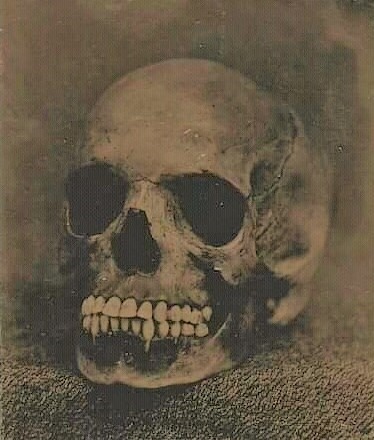
One of the main features of the Archer house was a large fireplace in the front room. A fireplace, of course, meant a chimney. The chimney was made of a light-colored stone and was largely intact. When the workmen began to dismantle the chimney, they expected to find old birds’ nests and other bird effluvia inside, but what they found instead was a dead body of indeterminate gender.
The workmen stopped what they were doing and called the police, believing they had unwittingly stumbled upon a crime scene.
To know whose body was in the chimney and how it came to be there, we must go back six years to a snowy Sunday in February.
Three miles from the Archer house, a young man named Perrin Borger lived with his mother and father. He had a job working in an office, but he despised his job and was generally unhappy with his life. He knew he should be living on his own away from his parents, but he somehow couldn’t make the move. He lacked motivation and ambition, and he believed he didn’t make enough money for a place of his own.
On this Sunday in February, Perrin Borger and his mother got into a fight—a small fight as fights go, but still a fight—and she threw him out of the house. When he told her he didn’t have any place to go, she told him she didn’t care; he could rot in hell as far as she was concerned. He threw a few things into a suitcase and got out of the house as fast as he could, hating her and not caring if he ever saw her again.
He drove around for a while, not knowing what to do with himself. The heater in his car didn’t work very well and the temperature was hovering around twelve degrees, so he wanted to get inside someplace where he could sit and think. He contemplated calling his mother and apologizing for the fight, but she was in the one in the wrong; she had started the fight and she ought to be the one apologizing to him. It would serve her right if he froze to death. He could see her standing over his casket at Foley brothers’ funeral home, putting on a good show of emotion as if she cared.
Feeling hungry—it was long past lunch time—he stopped at a pancake house and ate, voraciously, a plate of sausages and strawberry pancakes. After he paid for his lunch, he counted out his money to see if he had enough for a hotel room.
Wait a minute! Why should he spend all his money on a hotel room? Didn’t he have friends? He thought immediately of his friend Earl Declan. They had known each other since eighth grade and went all the way through high school together. They had a lot in common and had always been good friends. He knew Earl was renting the old house that people in the know called the Archer house. He figured that Earl would be happy to have a roommate, at least for a little while. They could share expenses; it sounded like a perfect arrangement. Nobody could say he wasn’t one to land on his feet when his mother or somebody else laid him low.
With a full stomach and a definite plan, he felt relieved and almost happy. He drove to Earl’s house and pulled into the leaf-strewn driveway and cut the engine. He leaned over the steering wheel and looked closely at the house but saw no signs of life. Could it be that Earl no longer lived there?
He climbed the steps to the front door and knocked several times until the knocking became pounding. When no answer was forthcoming, he called Earl’s name as loud as he dared without attracting unwanted attention, but still there was no response.
He walked around the house and knocked on the rough wood of the back door until his knuckles were raw, calling Earl’s name with each knock. He peered in the windows but wasn’t able to see much of anything except the leg of a table of a picture on the wall. It was obvious Earl wasn’t home.
On the verge of tears, he went back to his car and slumped down in the seat, trying to cocoon himself in his winter coat the best he could. He would wait until Earl came back from wherever he was. Maybe he only went to a movie or to do some grocery shopping. He would be home soon.
While sitting in his car facing the house, he began to look closely at the chimney. The chimney was big because the fireplace was big. Dropping down the chimney should be fairly easy for a person with narrow hips and shoulders. He would gain entry to the house that way and be waiting inside where it was warm when Earl came home. Earl wouldn’t mind. He’d be glad to see him. They’d have a lot of old times to talk over.
He walked all the way around the house to see how he might gain access to the roof without a ladder. He was able to shimmy onto the lowest point of the roof by the back porch, standing on a garbage can, and from there he climbed easily to the pinnacle where the chimney was.
Perched like a bird, he swung his feet into the dark hole of the chimney and lowered himself a few feet. It was smooth going at first, but the chimney narrowed unexpectedly, and he wasn’t able to go any farther. He couldn’t go down, and when he tried to go back up, he couldn’t do that, either. It was as if the chimney was gripping the lower part of his body. He struggled valiantly and said a prayer but wasn’t able to move. He rested for a few minutes and then tried again, but still wasn’t able to move an inch, up or down.
After struggling for what seemed like hours, he realized it was no use; he was not going to be able to free himself. His only hope was to yell until somebody heard him. When Earl came home, he’d hear him and get some help. The police and fire department would come and they’d lower a rope and extract him from the chimney like a cork from a wine bottle. He’d feel so stupid but also so glad to be free.
At about three in the morning, a drifter who was also a car thief happened along. He heard Perrin screaming inside the chimney, but he didn’t know where it was coming from, and if he had known he wouldn’t have cared. Since he was a thief, he easily opened the door of Perrin’s car and drove away stealthily in the night.
On Thursday after the Sunday that Perrin’s mother threw him out of the house, she began to have an uneasy feeling about him. She had expected him to come home, contrite, on Monday or Tuesday at the latest. She called the office where he worked and was told he wasn’t there. He hadn’t shown up for work all week and hadn’t bothered to call.
She immediately put in a call to the police and filed a missing persons report. A couple of officers came out to interview her, get a picture of Perrin and a physical description, and an account of the argument that prompted him to leave. The police began looking for him and his car.
Two weeks later his car was found in St. Joseph, Missouri, abandoned on a residential street. His suitcase was found inside the car with his pajamas, toothbrush, underwear and a change of clothes in it. There was no sign of violence or physical struggle.
Perrin survived in the chimney for thirty-six hours and then froze to death. No help was forthcoming. Right before he died, he saw his mother’s face and heard her voice; he hoped she wasn’t too mad at him.
She always believed he would someday come home. And, then, six years after he left, she received the unexpected phone call that revealed the truth at last.
Copyright © 2023 by Allen Kopp
The Literary Hatchet, Issue 35

The Literary Hatchet, Issue 35
The Literary Hatchet is an independent international journal devoted to emerging and established voices crafting provocative short fiction and thoughtful poetry and prose. Published three times a year! (Stefani Koorey, editor; Eugene Hosey, editor; Michael Brimbau, editor.)
Contributing writers and artists for issue 35 include: Jaya Anitha Abraham, Fadrian Bartley, Jeff Beyl, John Bohane, Nadine Buccilli, Tyree Campbell, Frank Coffman, Savannah Cooper, Jan Cronos, Michael Dittman, Nick Hart, Eugene Hosey, Michael Lee Johnson, Allen Kopp, Aurora Lewis, Christopher Locke, Goran Lowie, Fabiyas MV, J. Marquez Jr., Makena Metz, Ngo Binh Anh Khoa, Bob Nimmo, Paul R. Panossian, Kushal Poddar, Pramod Rastogi, Paddy Raghunathan, Nicholas Michael Ravnikar, Wayne Scheer, Ann Schwartz, Ellaura Shoop, Stuart Silverman, Stuart Stromin, Terry Trowbridge, Bill Thomas, Jim Windolf, and Todd Zack.
Available for purchase for $12 a copy at this link on Amazon:
*****
(I have three short stories published in Issue 35 of The Literary Hatchet: “Commitment Papers,” “Twenty-Four Graves,” “You Might Have Gone Far.”)
Standing at the Gate ~ A Short Story

Standing at the Gate
~ A Short Story by Allen Kopp ~
Harry Hawkins had not lived an exemplary life. He was frequently harsh and impatient with his wife and children, with the result that his wife was afraid of him and his two sons grew up hating him. He despised his wife’s mother and her other family members and was jealous of his wife’s devotion to them. He was intolerant of anybody whose political or religious views were different from his own. He complained and found fault with everything and everybody, nearly every minute of every day. In short, he was a joyless man who led a joyless life.
In the last few years of his life, with his health deteriorating, he was afraid of dying and going to hell. Believing that religion might save him, he joined a splinter religious group and believed everything that representatives of the group (essentially salesmen) told him. He was promised a place in heaven by these godless know-nothings, if only he would do as they told him to do for as long as he lived. Since he lived in a fine house and seemed to have enough money, they persuaded him the best thing was for him to donate, every month, a certain percentage of his income to the church. This he readily agreed to do, surprising his wife, his sons and anybody who knew of his parsimonious nature—he had always been known how to pinch a penny until it cried for mercy.
Every month at the first of the month he sat down at the kitchen table and wrote out a sizeable check (enough to support an ordinary family of four) to the church. He believed he was “storing up treasure in heaven.” (What the church did with the money was not known, but the church fathers were known for their penchant for little jaunts to Mexico.)
He attended every church service and was always on call when somebody from the church needed a service he might perform, such as a ride to the doctor or a few dollars for medicine or to pay the light bill. If a special kind of cake was needed for a church dinner, he didn’t mind going to the bakery and buying an elaborate and expensive cake made to order, which he paid for out of his own pocket. He never complained, never balked at anything the church asked him to do. If, however, his wife or one of his sons asked him to do something for them, he was always too tired or was running a fever and needed to be in bed.
For the first time in Harry Hawkins’ life, he was beloved. He wanted to love back, but he didn’t know how. It didn’t matter that he didn’t love, though; he was doing more than enough to get what he wanted.
Harry Hawkins suffered a heart attack and then another and then another. After he was discharged from the hospital and feeling much better, the church fathers paid him a call. He had never let them down. He had proven himself to them time after time. He might always be relied upon. They had decided to go one step farther and make him one of them. There was a special (secret) ordination ceremony in which he re-affirmed his unshakeable belief in the teachings of the church. After the ceremony was over, he believed he had done everything he needed to do. He would certainly be admitted into heaven. Easily.
After a few more months of precarious life, he succumbed to his various afflictions while a patient in the hospital. After a period of darkness (let’s say three days), he found himself standing outside the gate of heaven. He waited patiently with a forbearing smile for someone to come and let him in. From what he could see from where he stood, heaven was everything he expected: golden light, feathery clouds, celestial music.
Finally the gate keeper came out of hiding and peered at him through the golden bars of the gate.
“How may I help you?” the gate keeper said with a hint of impatience.
“Are you going to let me in?” Harry Hawkins asked.
“Are you sure you’re in the right place?”
“Of course, I’m in the right place! Open the gate and let me in!”
“People are sometimes misdirected, you see.”
“Well, I’m not!”
“How do you come to be here?”
“I died and then I came here. End of story. What more do you need to know?”
“Where is your spirit guide? Did he bring you here?”
“I don’t have a spirit guide! I don’t even know what a spirit guide is.”
“You shouldn’t have come here without being directed by your spirit guide.”
“Listen! Who are you anyway?”
“I’m the gate keeper.”
“I want to speak to your superior!”
“I’m afraid you’ll have to talk to me.”
“This is heaven, isn’t it? You have no right to tell me I can’t come in! You’re just a nobody!”
“I’m terribly sorry, sir, but I believe you’ve been misdirected. We’re expecting no new arrivals at this time.”
“If I could reach you through these bars, you ass, I’d push your face in! Open these doors right now and let me in!”
“I’m afraid I can’t do that, sir.”
“Why not?”
“You’re not supposed to be here, sir. You’ve been misdirected.”
Harry started stammering and was about to cry. “Now, listen, fella! I know you’re a right guy and I know I’m in the right place. I’ve known for years that I would go to heaven when I died. I was promised a place in heaven.”
“Who promised you?”
“Some very important people in my church, that’s who!”
“Oh, I think I’m beginning to understand! Was this promise somehow based on lucre?”
“What does lucre mean? You need to speak English here!”
“Was money involved? Were you promised a place in heaven depending on how much money you gave to the church?”
“Bingo! You’re not as dumb as you look, Jocko! You are absolutely correct! I gave mucho money to the church over the years! Look it up!”
“I don’t wish to be rude to you, sir, but you’re not supposed to be here. You’ve been misdirected.”
Harry covered his face with his hands and began crying. When he was able to speak again, he said, “So, what am I supposed to do, then? Am I supposed to stand here by this goddamn gate like a crazy person throughout all eternity?”
“No, sir. You don’t have to do that,” the gate keeper said. “Your bus will be along shortly.”
“Bus? You have buses here?”
“Yes, a bus will come along in a little while. All you need to do is get on the bus and it will take you where you belong.”
“Another part of heaven? Is that where the bus will take me?”
“Just get on the bus.”
Harry opened his mouth to ask another question, but the gate keeper was gone.
He wiped away his tears and composed himself, gratified at what the gate keeper had said. A bus would be along to take him where he needed to go. Another part of heaven, no doubt. What else could it be?
In a little while, an enormous bus parted the clouds and came roaring to a stop in front of the gate. With a smile and without a moment’s hesitation, he got on the bus, ready to be kind to everybody.
The other people on the bus were faceless nonentities, but he didn’t care. He didn’t feel like talking to anybody, anyway. He took a seat about halfway back and continued to smile, happy that his problems were over.
From where he sat, though, he could see the face of the driver in the mirror above the driver’s head. The driver, who seemed to be the only person on the bus with a face, was looking at him, watching him, in the mirror. The bus swerved to avoid hitting a porcupine and he was thrown a little off-balance. He caught himself on the back of the seat in front of him, and when he again looked at the driver’s face in the mirror he knew he had seen those eyes before: they were the eyes of his own father.
His father was a difficult and unlikeable man, dead for thirty years. It all came back to him, then: how he hated that man when he was growing up; how that man belittled him, called him names, and how he made him feel he was less than nothing.
He wasn’t looking only at his father, though. He was looking at himself, seeing himself, for the first time, as he really was.
“How cruel is life!” he said. “I never wanted to be like him! It wasn’t my fault!”
But the other passengers on the bus paid no attention. They all had problems of their own.
A sudden rain storm came up and the bus trundled on.
Copyright © 2023 by Allen Kopp
A Prayer for the Dying ~ A Capsule Book Review
A Prayer for the Dying
~ A Capsule Book Review by Allen Kopp ~
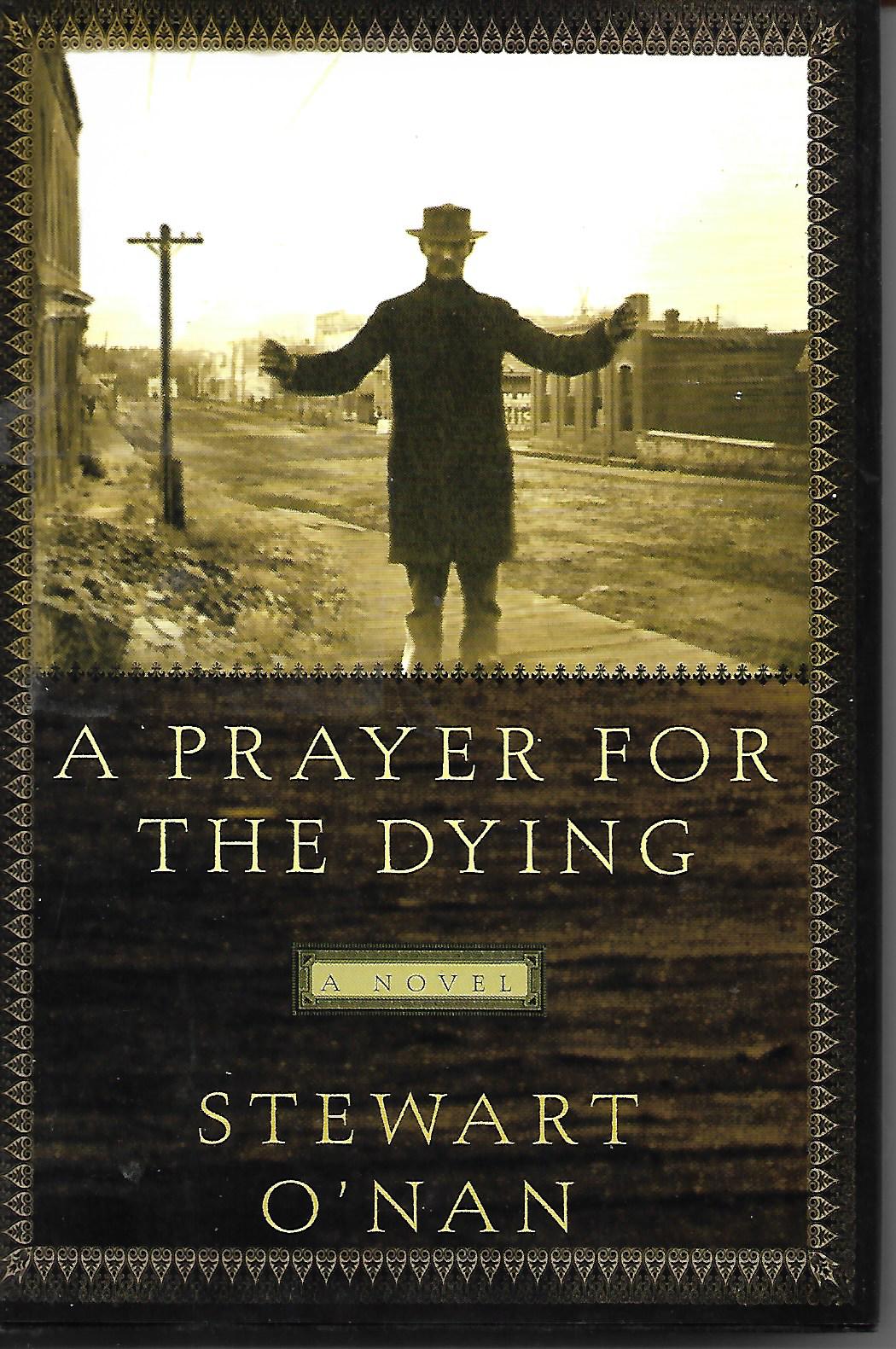
A Prayer for the Dying is a novel by American writer Stewart O’Nan. I met Stewart O’Nan at a book-signing event several years ago, when he was promoting his nonfiction book, The Circus Fire.
A Prayer for the Dying is set in the fictitious town of Friendship, Wisconsin. The time is about 1870. The principal character is a young man, age about thirty, named Jacob Hansen. He is a Civil War veteran and the town’s undertaker. Besides being the undertaker, he is also the sheriff and a minister. He is a good man and a just man. He has a wife, Marta, and an infant daughter, Amelia.
When a diphtheria epidemic strikes the town, Jacob Hansen is tested in a way he never believed possible. The disease spreads day to day. People in town begin dying in alarming numbers. An old man at the church tolls the church bell whenever another person dies, so the church bell is a constant accompaniment to everything that happens.
The people who don’t have the disease want to go to a safer place but aren’t allowed to leave because the town is under quarantine. This situation brings out a lot of ugly emotions in people. They just might kill anybody who won’t let them leave.
When Jacob’s baby daughter, Amelia, gets the disease, she soon dies. Since Jacob is the undertaker, he prepares her body for burial and buries her in his yard. He belives, for some reason, that he needs to keep her death a secret. When Jacob’s wife contracts the diease and dies within a few days, he embalms her body and keeps her in the house with him, pretending she is still alive.
Every day the disease gets worse and more people die. Could things be any worse? The answer is yes. An out-of-control forest fire threatens to consume the town. Several small towns have already been destroyed by the fire.
As a lawman and man of God, Jacob Hansen is torn between his duty to the sick people in the town who have the disease and the well people who want to escape. His own life has already been torn asunder. If he survives the ordeal and doesn’t get the disease, what does he have left to live for? His family is dead. The fire is going to destroy the town. He might as well lay down and die. Or, he can take action and try to help the few uninfected citizens of the town make their escape.
Copyright © 2023 by Allen Kopp
Each Dark Door ~ A Short Story
Each Dark Door
~ A Short Story by Allen Kopp ~
(This short story has been published in The Literary Hatchet.)
Mrs. Jasper owned a three-story apartment building downtown that her father owned before her. Every month on the first day of the month she visited the building and collected the rents due her. Most of the renters paid their rent on time, but always there was somebody who didn’t have the money and would hide when she knocked or would confront her with a sad story about being sick and not being able to work or having a sick baby who needed medicine. More often than not, they were the ones who spent all their money on drink, lost it in an impromptu poker game, or never had any to begin with, because, well, things hadn’t been going so well lately.
A first of the month came when Mrs. Jasper was laid up in bed with her gallbladder and wasn’t able to leave the house. Instead of worrying herself sick about collecting the rents on time, she sent her granddaughter Virginia to do it for her. Virginia was sixteen and it was her first time to collect the rents.
Armed with the money pouch (held firmly against her body with her hand through the strap), Virginia started with the first door on the left on the first floor and worked her way down the left side, and when she was finished on the left she moved over to the right.
The hallway was musty-smelling and dark at all hours and was in no way pleasing or inviting. There were twelve closed doors with each door seeming to hold the possibility of menace. Some of these people are trash, grandma said, but if they pay their rent on time I can tolerate them as long as they don’t carry diseases or have bugs. If anybody gives you any guff or is rude, you be sure and write down their names. They might find an eviction notice in their mailboxes one fine day.
Some didn’t answer their doors, as grandma had said, but were obviously there because Virginia could hear them moving around inside. Most of them were forthcoming, though, with their rent money. They invited her inside with a smile while they counted out the right amount or while they sat at the table and wrote out their check. They offered her things to eat and drink, including a vodka cocktail, which she politely declined.
At an apartment on the third floor, a blonde woman wearing a red-and-yellow kimono answered the door. She invited Virginia inside and asked her to sit down while she and her roommate, a dark-haired woman wearing men’s pajamas, got the rent together.
“We’ll have to pay you in small bills,” the blonde woman said. Her name was Lou-Anne and her roommate’s name was Clarisse.
“That’s all right,” Virginia said.
“We’ll need a receipt,” Clarisse said. “We don’t want anybody saying we didn’t pay up on time.”
They counted out the money and when they handed it to Virginia she put it in the canvas money pouch and wrote it down in the pay book and gave them a receipt.
“Would you like a cup of coffee or something?” Lou-Anne asked Virginia after the transaction was completed.
“I’d like a drink of water.”
“Well, come on into the kitchen.”
On the table were remnants of breakfast, even though it was past lunch time. Lou-Anne motioned for Virginia to sit at the table while she got a glass and filled it with water.
“The first of the month sure comes around fast,” Lou-Anne said. “Just when you’re thinking your rent is all paid up, here it is the first of the month again and you have to fork over more dough.”
“Yeah, ain’t life a bitch, though,” Clarisse said. “A bitch from beginning to end.”
“Life’s a bitch, so I became one!” Lou-Anne said, laughing and wiping her nose with her knuckles.
Virginia didn’t get the joke, but she tried to smile.
“When you knocked on the door, we were just finishing breakfast. If you had knocked a half-hour earlier, we wouldn’t have heard you because we were asleep.”
“Tell her the rest,” Clarisse said, “or she’ll think we sleep this late all the time because we’re lazy.”
“We work nights,” Lou-Anne said. “We don’t get off until two or three in the morning and sometimes later than that, so that’s why we sleep so late.”
“What kind of work do you do?”
“We’re hostesses at the Crescendo Club.”
“What does a hostess do?”
“We get all dolled up and dance and drink and pretend we’re having a good time. We cozy up to the men without dates and get them to stay longer and spend their money on drinks.”
“Sometimes we go to their hotel rooms with them,” Clarisse said, “if they’re not too repulsive.”
“You shouldn’t be telling her that!” Lou-Anne said. “She’s just an innocent young girl!”
“She has to learn some time, doesn’t she?”
“It’s all right,” Virginia said. “I’ve read Peyton Place. I know all about that stuff.”
“Your mother let you read a book like that?”
“She didn’t know I read it.”
“How old are you?”
“Sixteen.”
“Tenth grade?”
“Eleventh.”
“Do you have a boyfriend?”
“No. I’ve never even been out on a date.”
“So, you don’t know anything about men, do you?”
“No.”
“Well, don’t rush things.” Lou-Anne said. “You don’t want to end up like us.”
“And why is an innocent young girl like you collecting rent in a roach paradise like this?”
“I’m doing it for my grandma. She’s sick. She’s going to have her gallbladder out.”
“That old water buffalo that owns the building is your grandma?”
“That’s right.”
“You don’t look a thing like her!”
“She’s seventy-eight.”
“I’ll bet you have brothers and sisters, don’t you?”
“I have one brother. He goes to veterinarian school.”
“Is he good-looking?”
“No.”
“You’re not supposed to ask a girl a question like that about her own brother,” Clarisse said.
“Well, I had a brother and I always thought he was very good-looking,” Lou-Anne said.
“That’s because you’re twisted. Your whole family is twisted.”
“What about your mother and father?”
“What about them?”
“What do they do?”
“My father’s an accountant, I think, and my mother’s a housewife.”
“Does your pa go out drinking at night and slap your ma around when he comes home?”
“No, he mostly sleeps in the chair.”
“Is your ma pretty? Does she have lots of pretty clothes?”
“No, she’s tired all the time.”
“What do you want to be when you get through with school?”
“I don’t know. I don’t think about it. I always thought I’d like to be a writer, but I’ll probably end up being a housewife like my mother.”
“What’s your favorite subject in school?”
“I don’t know. English, I guess.”
“You don’t like math, do you?”
“How did you know?”
“You’re the artistic type, I can tell.”
“I guess so.”
“You have awfully pale skin,” Lou-Anne said. “Have you ever thought about wearing a little lipstick?”
“My mother doesn’t let me wear makeup.”
“Would you like to try a little lipstick and see how it looks? Your mother doesn’t have to know.”
“I guess so.”
She went into the bedroom and came back with a tube of lipstick and a little mirror. She titled Virginia’s head back and slathered the pinkish stuff on her mouth. When she was finished, she had her blot her lips with a Kleenex and take a look at herself in the mirror.
“See? Doesn’t that make a difference?”
“It makes me look like somebody else,” Virginia said.
“That tube is practically new. You can have it. I have a whole drawer full.”
“Thank you.”
Clarisse pulled Virginia’s hair to the back of her head. “Your hair is so lifeless,” she said. “You could use a good cut and some curl.”
“My mother cuts my hair.”
“What does she use? A steak knife?”
She twisted and pinned the hair so that it stayed up, exposing Virginia’s ears that stuck out too far
“What do you think?” she asked, holding the mirror up so Virginia could see herself.
“I think it makes me look like a boy,” Virginia said doubtfully.
“She looks like a regular debutante!” Lou-Anne said.
“You know, I have a daughter just a little younger than you,” Clarisse said, “but I haven’t seen her since she was seven. I have a son, too. He’s nine.”
“You’re not going to start bawling about them kids again, are you?” Lou-Anne said.
“No, I’ll save it for later.”
“Everybody’s always going on about kids! Why don’t people just have stop having them and then they won’t have to worry about them so much?”
“Well, if people stopped having kids, that’d be the end of the world!”
“No, it wouldn’t! The world would go on simply fine without people in it. There’d be lots of happy animals.”
“Can you imagine being the last person on earth to die? There’d be nobody to come to your funeral.”
Virginia stood up. “Well, thank you for the glass of water and the lipstick and everything and the advice about my hair, but I think I’d better be going now. Grandma will be wondering what happened to me.”
“So soon?” Clarisse said. “We don’t very often have company.”
“Wait a minute,” Lou-Anne said. She slipped a bracelet off her own wrist and put it on Virginia’s. It was a band of alternating red and yellow stones, like something out of an Egyptian tomb.
“Oh, it’s beautiful!” Virginia said.
“Wear it to remind yourself to come back and see us again real soon. Next time we’ll have a real party!”
When Virginia left Lou-Anne and Clarisse’s apartment, she walked down the three flights of stairs to the street, smelling the various smells of the building along the way, some good but mostly bad. She held the money pouch, much fatter than when she started, pressed tightly against her body the way grandma showed her, so nobody would come up behind her and grab it out of her hand. It would finish grandma off if anything happened to it. It would have to pay all the bills for the month.
The weather was fine and the park was close at hand. She decided to stop for a while before going on home. Grandma wouldn’t mind waiting a little longer for her money.
She sat on a bench in the sun, placing the money pouch firmly against her left hip where she could feel it without seeing it. She breathed deeply. The fresh air smelled good, of freshly cut grass and water from the fountain. Since it was Saturday, there were lots of people about: children playing games, men walking dogs, mothers airing their babies. In a little while a young man came along and sat down on the bench beside her.
“Hi there!” he said with a smile. He was older than she was, the kind of boy her mother would warn her to stay away from. “I don’t think I’ve seen you here before.”
She was thinking about getting up and walking away when he surprised her by offering her a cigarette. Without thinking, she accepted and waited for him to light it. She had never smoked before and was a little flattered that he would offer her one as though she were an adult instead of a child. For the first time in her life, she felt sophisticated and grown up. She could more than hold her own against any man in the park.
“Do you come to the park often?” he asked.
“You’re full of questions,” she said. “Don’t you know it’s not polite to ask strangers questions?”
“I didn’t mean any harm,” he said. “I’ll leave if you want me to.”
She smiled, liking him better than before. “It’s all right,” she said. “I don’t really mind.”
“My name’s Boyd Pitkin,” he said.
“Your name doesn’t really interest me.”
“What’s your name?”
“Rita Hayworth.”
“That’s a pretty name.”
“I think so.”
“Are those diamonds you’re wearing?” he asked, pointing at the red-and-yellow bracelet Lou-Anne had given her.
“No, silly! Diamonds are clear and sparkly, like little pieces of ice.”
“Well, how would I know? I’m not an expert on diamonds.”
“Well, now you know.”
“Would you like to go someplace else?”
“Where?”
“I don’t know. Someplace where we can be alone.”
“Why would I want to be alone with you?”
“Can you give me one good reason why not?”
“How do I know you’re not a murderer?”
“Do I really look like a murderer?”
She turned and looked at him closely. He needed a shave, but he looked clean and healthy. He wasn’t exactly handsome but his brown eyes were appealing and he had good teeth.
“Murderers don’t always look like murderers,” she said.
“I’ve got my car parked just over the hill,” he said. “Would you like to go for a drive?”
“I don’t believe you’ve got a car.”
He took keys out of his pocket and jingled them close to her face. “I’ll take you wherever you say.”
“No, thanks. I shouldn’t be talking to a strange man in the park. I have to go home now.”
“Well, it was lovely meeting you, Rita. Maybe we’ll meet again at some time in the distant future.”
“I doubt it,” she said with a saucy flip of her head to let him know she didn’t care one way or the other.
She was nearly home when she realized she didn’t have the money pouch. She ran breathlessly back to the park but, of course, the man she had been talking to was gone. Could the pouch have fallen to the ground? She fell to her knees and patted the ground all around the bench, moving all the loose leaves and dead grass out of the way, but the pouch was irrevocably gone and it was her fault! How could she go home and tell grandma how stupid and careless she had been? It would put her in her grave.
She looked around for someone who might help her, but there was no one. She had the idea that if she saw a policeman and told him what happened, he might chase that man through the park, tackle him, and get the pouch back for her, all the while beating him with his club. She knew that wasn’t going to happen, though. Things like that don’t happen, except maybe in the movies.
Not knowing what else to do, she sat down, leaned forward with her nose touching her knees, and wailed like a wild animal. A dog and a couple of old ladies looked at her questioningly and then looked away.
Copyright © 2023 by Allen Kopp

