

Fallen Angel ~ A Short Story

Fallen Angel
~ A Short Story by Allen Kopp ~
In 1948, Alonzo Goldsmith and Isabelle Bird were married in a modest service in a small country church. He was twenty and she was nineteen. Neither of them knew anything of the world.
In less than a year, they brought forth a baby, a boy they named Timothy. The next year, they had a girl, named Peggy. Alonzo knew that, with two babies in less than two years of marriage, life was always going to be a struggle for him. Ten months after Peggy was born came Jesse, a stolid, dark-haired boy. When Jesse was barely walking, there came another girl; this one they named Storm. With two boys and two girls in less than five years or marriage, Alonzo declared there would be no more. One more would upset the balance.
Alonzo was never blessed with intellectual curiosity or an abundance of learning. He had to make a living for himself and his brood of children the best way he knew how. He got a job on an assembly line in a shoe factory. He stayed for thirteen years until, one day, he was told he didn’t need to come back; the factory was closing its doors.
After his time in the factory, he painted houses, worked in a lead mine, drove a school bus, worked as a janitor in a church, clerked in a hardware store, did cleanup work in a cemetery, and even for a while worked as a trash collector. No work was beneath him as long as it paid the honest dollar.
The growing-up years of his quartet of children passed in a kind of blur. They were starting kindergarten and then, before Alonzo knew it, he was putting on his blue suit and going to their high school graduations. Peggy and Storm were both out of the house and married by the time they were twenty and started having babies of their own.
Timothy, never much interested in the girls, moved to Alaska with a couple of his friends and got a job there. He sent greeting cards to Alonzo and Isabelle on Christmas and birthdays, but he would never come back home, he said, not even for a visit. He was happy in Alaska and didn’t want to be reminded of his growing-up years.
As a child growing up, Jesse was unlike any other. He was stubborn and uncooperative. He refused to sit still in school. He was a bully with his classmates. He defaced the walls. He pulled fire extinguishers down from the wall to watch them spray. Several times he ran away from school and was found wandering the streets. His name came to by synonymous with misdeeds.
At home, if anybody ever crossed him, he picked up the nearest object and threw it. He broke windows, dishes and mirrors, not to mention all his toys. He played cruel tricks on his sisters, putting a dead skunk in their closet or taking their clothes and books out into the back yard and setting fire to them. He called his mother vile names and painted obscenities on the wall of his room in his own blood.
His high school years were tumultuous. He cheated on tests, stole money, engaged in fistfights, threatened to kill a teacher for correcting him in class, slashed the tires on a school bus. At night, he went out drinking, sometimes not getting home in time to go to school the next morning. He shoplifted cigarettes and small food items. He had been barred from every drug store in town because he roamed their aisles and pilfered drugs.
Finally, he graduated from high school. He had the lowest scholastic record in his class and the highest number of days missed, but still he was allowed to graduate. The entire family attended his graduation and were happy for him. The next day he attempted suicide by slashing his wrists. He spent four months in the state mental hospital, after which he was said to be cured of whatever had been wrong with him and sent home.
His mother knew he was an aberration. Something that happens in the world. For every good in the world, there is a bad something or other. He was no more responsible for his actions than a wild animal in the forest. She loved him as much as she loved her other children, if not more. He was her fallen angel. He would come to a bad end, she knew. She could only hope for a merciful one.
After his stay in the mental hospital, he got a job as an apprentice meat cutter for minimum wage. In the evenings, he would come home wearing his white apron covered with blood, in which he seemed to take pride. Sometimes he brandished a meat cleaver in his mother’s or his father’s face, but they could ignore these things as long as he was going to work every day and staying at home in the evenings and watching television and napping in the recliner.
He began dating a checker named Maureen in the supermarket where he worked. In a few weeks, they announced they were going to be married. Maureen was going to have a baby, but she hoped nobody would notice until after the wedding. They rented a small house a few blocks from the supermarket where they both worked and, seven months after they were married, Maureen gave birth to a son, Matthew.
In the year after Matthew’s birth, Jesse began going around with other women, sometimes women he picked up on the street. He stole money from Maureen’s purse and began staying out all night, sometimes being gone for two or three days at a time. When Maureen confronted him over the loss of the rent money, he hit her in the head with a bottle and tried to strangle her. As he held her down on the floor, she slashed him across the face with a piece of glass and got away. After that, she filed for divorce, quit her job and took Matthew and went back to her childhood home to live with her widowed mother.
Alonzo was now in his mid-sixties and, after forty-five years, he had to give up working. He had a heart murmur, a fatty liver, arthritis, asthma, and deteriorating disks in his spine. Every movement for him was painful. He and Isabelle, sitting at the kitchen table, figured they could get by on what little money they had, since they only had themselves to take care of and didn’t need anything in the way of luxuries.
Just when Alonzo was looking forward to a serene old age, fatherhood was once again thrust upon him. Jesse lost his job, his home and his wife, and had no place to lay his head. Alonzo and Isabelle had to give him one more chance. They allowed him to move into his old room, but only if he could be the kind of responsible adult they expected him to be. If he engaged in any more of his destructive behavior, he would have to find another place to stay.
Jesse found a job as counter man in an auto parts store. He went to work every day and straight home afterwards and didn’t go out again at night. After a month of this good behavior he was stretched to the limit of his endurance and reverted to his old ways. He stole Alonzo’s pain medication and took grocery money from his mother’s purse. He stayed out all night and slept all day, forfeiting his new job. He was dirty and sloppy and his mother had to pick up after him the same way she did when he was a child. When she tried to speak to him, he called her a meddling old bitch and threatened to kill her.
When he broke a glass in the kitchen and sliced Isabelle’s arm with it, Alonzo told him he had to get out before the end of the day. His mother and father could no longer be responsible for him and he was going to have to make his own way in the world.
He got his things together, but before he left he had a few choice words to impart. They had always been against him, he said; they had hurt him and held him back by not loving him enough. They hadn’t seen the last of him, though. He’d be back and when they saw him coming they’d better say their prayers.
The next day they changed the locks on the doors and Alonzo bought two handguns, one for him and one for Isabelle. They took lessons on gun safety and made sure they kept plenty of ammunition in the house.
Two weeks after Jesse left, Isabelle was alone in the house when she heard a car out front. When she looked out the window, she saw Jesse getting out of the car with a shotgun. She heard him try to open the door and, when he found that his old key wouldn’t work, he began shouting and swearing.
“Go on now, son!” she called to him. “We don’t want any more trouble with you!”
“Let me in!” he yelled.
“No! If you don’t go away and leave us alone, I’ll call the sheriff! I swear I will!”
He banged and kicked at the door and when she still didn’t open it, he broke the glass out with the butt of his shotgun and reached through and undid the lock.
When he came through the door, she was ready for him. She believed that when he saw her pointing a gun at him, he would desist, but still he advanced on her, pointing his gun at her middle. She would never forget the look of hatred on his face.
She believed in that moment without a doubt that he would kill her and then kill Alonzo when he came into the house. Without thinking about what she was doing, almost by reflex, she leveled her gun at him and, from eight feet away, pulled the trigger. One bullet was all it took. He fell dead at her feet.
She called the police and told them calmly what happened. Ten minutes later, Alonzo came home. The story was in the newspapers and on television: Rural Woman Kills Mentally Ill Son in Self-Defense. No Charges Filed.
Alonzo and Isabelle had Jesse’s body cremated. There was no religious service. People heard about it and were disappointed there would be no funeral for them to go to. How could a mother kill her own son, they asked. Well, he was going to kill her. It was one or the other. What do you know about that? It takes all kinds.
Copyright © 2023 by Allen Kopp
The New Ricky Ricardo ~ A Short Story

The New Ricky Ricardo
~ A Short Story by Allen Kopp ~
Ethel let herself in at the kitchen door and helped herself to a cup of coffee. She sat down at the table and began nibbling at the bacon that was left over from breakfast. When Lucy came in from the other room, she took one look at Ethel and began crying.
“What’s wrong, honey?” Ethel asked.
“Oh, Ethel, it’s just awful!” Lucy sobbed.
“What happened?”
“I’ve just been frantic since two this morning! I don’t know what to do!”
“You and Ricky have another fight?”
“I don’t know what’s got into him lately.”
“Well, pour yourself some coffee and sit down and tell me all about it.”
“Oh, Ethel, I hate to tell you what I’ve done!”
“It can’t be all that bad!”
“This time it is!”
“I’ll help you get it straightened out, whatever it is. What are best friends for?”
“Oh, Ethel, I don’t know how to tell you this!”
“Just say it. You’ll feel better.”
“I’ve killed Ricky!”
“What?”
“I said I’ve killed Ricky Ricardo. My husband. The famous bug-eyed Cuban bandleader known and loved by millions.”
“Oh, Lucy! You didn’t! I’m speechless!”
“I know! It’s terrible!”
“Are you sure he’s dead?”
“He’s dead, all right. He’s been dead since two this morning.”
“Well, get yourself calmed down and tell me all about it.”
“Well, he came home from the club about one-thirty and I noticed right away that he was acting sort of funny. He wouldn’t look me in the eye.”
“Oh, honey, that’s a very bad sign!” Ethel said, spraying crumbs out between her teeth.
“He took off his clothes and laid them on the chair next to the bed and went into the bathroom. I heard the water running, so I figured he was taking a bath. I gathered up his clothes for the laundry and you’ll never guess what I found!”
“What?”
“There was lipstick on the front of his shirt and, not only that, it reeked of perfume!”
“That doesn’t necessarily mean anything, honey! How do you know he didn’t just brush up against one of the chorus girls from the club?”
“Oh, he brushed up against her all right, and did a lot more than that, too!”
“Oh, honey! Now don’t start jumping to conclusions!”
“That isn’t all. When he came out of the bathroom in his bathrobe, I asked him if he had a pleasant evening at the club and he yelled at me.”
“Yelled at you? That doesn’t sound like Ricky!”
“He called me a meddling old bitch and said he was sick and tired of my nagging at him all the time.”
“Oh, Lucy! What did you do then?”
“I asked him if he had been seeing another woman and he broke down and began crying. He said he had been seeing a chorus girl named Delores for about two years and he couldn’t go on any longer with the deception. He and Delores are in love, he said, and he wanted me to divorce him so he could marry her!”
“Oh, Lucy! I can hardly believe it! I never would have suspected it in a million years!”
“I know! He’s been very good at concealing it, hasn’t he? The louse!”
“What did you do then?”
“Well, we began arguing, saying nasty things to each other. I called him a two-timing pig and he called me a henna-haired harridan. We became more and more angry. When he twisted my arm and tried to slap me in the face, I took a knife and stabbed him in the neck. It was a clear-cut case of self-defense.”
“Oh, Lucy! The neck?”
“I severed the jugular vein in one stroke!”
“Oh, honey! Wasn’t there an awful lot of blood?”
“There was, but I got it all cleaned up.”
“And where is he now?”
“He’s on the floor next to the bed. I have him wrapped up in two leak-proof sheets. There’s not a trace of blood left.”
“Oh, Lucy! I’m afraid you’re in for a lot of trouble!”
“I know! I’ve just been frantic trying to figure out what to do!”
“I think you should call the police and turn yourself in. Tell them Ricky came at you and you were only defending yourself. With a good lawyer, you might get off with a light sentence or maybe no sentence at all.”
“Oh, Ethel! I’ve thought about it from every angle! I want to call the police but I’m afraid they’ll be mean to me. They’re all men, aren’t they? Of course, they’ll take Ricky’s side and make me out to be the villain!”
“Oh, Lucy! What will people think when Ricky doesn’t show up at the club? You’ll have to tell them something!”
“I have a plan all worked out. I think it’ll work, but I’m going to need you and Fred to help me.”
“Oh, no! You’re not getting me mixed up in this!”
“Ethel, I thought you were my best friend!”
“I am, but I’m certainly not going to spend the next thirty years of my life in Sing-Sing in the name of friendship!”
“Oh, don’t be silly! Nobody’s going to jail!”
“But it’s murder, honey! It’s serious!”
“If you and Fred will just do what I say, everything will be all right.”
“Just how far do you think Fred and I are willing to go to help you after you’ve killed your husband?”
Ethel called Fred to come up to Ricky and Lucy’s apartment and, when they had him comfortably seated on the couch with a bottle of soda in his hand, he looked suspiciously from one to the other.
“What have you two dizzy dames got cooked up?” he asked.
“Are you going to tell him, or shall I?” Ethel asked.
“There’s no easy way to say it,” Lucy said.
“For heaven’s sake, just say it!” he said.
“Ricky and I had a terrible fight last night.”
“Yeah, what of it?”
“Well, I…”
“She severed Ricky’s jugular vein with a knife and killed him!” Ethel blurted.
“She what?”
“In the heat of the moment, I killed Ricky, Fred,” Lucy said. “That wasn’t really my intention, but it just happened.”
“Have you called the police?”
“Well, no, Fred. You see, I don’t think that’s necessary as long as you and Ethel help me.”
“Help you do what?”
“The furnace in the basement is really hot this time of year. I mean, there’s a big door and a big fire burning inside.”
“Oh, no! I’m not going to put Ricky’s body in the furnace!”
“With all three of us, it’ll be so easy!”
“No, I’m not getting mixed up in a crazy scheme like that! Do you think I want to spend my golden years behind bars?”
“If we do it right, Fred, nobody will ever know.”
“What do you say when people come looking for Ricky?”
“Well, I’ve thought of that, too. I’ll wait twenty-four hours and then I’ll file a missing persons report. After that it’ll be easy to make it seem that he’s run off.”
“He was cheating on her, Fred!” Ethel said.
“What?”
“Yeah, he had a girlfriend named Delores.”
“If we’re lucky,” Lucy said, “we can get the police to believe that tramp Delores had something to do with his disappearance.”
“No less than she deserves!” Ethel said.
“So Ricky was stepping out!” Fred said. “The old dog!”
“I just might kill him myself if Lucy hadn’t already done it,” Ethel said.
“Well, that sort of puts things in a different light, doesn’t it?” Fred said.
“Now are you willing to help me?” Lucy asked.
“On one condition.”
“What’s that?”
“You give me one-third interest in the club.”
“Fred! I can’t give you one-third interest in the club! I don’t own the club!”
“Freddy, for once in your life do something to help somebody else without calculating what you can get out of it,” Ethel said.
“Well, it was just a thought,” he said. “You can’t blame me for trying.”
“So, you’ll help me, then?” Lucy asked.
“Looks like I don’t have much choice.”
In the middle of the night, with everybody in the building asleep, the three of them loaded Ricky’s stiff body into a large trashcan on wheels and took it down to the basement on the elevator. Fred wheeled the trashcan up to the door of the furnace; he and Ethel hefted Ricky’s body out of the can and into the furnace while Lucy stood by and chewed her nails.
“How long do you think it’ll take to burn the bones and teeth and everything?” Lucy asked.
“We’ll give it until this time tomorrow,” Fred said. “I’ll come down every couple of hours and stoke the fire.”
Lucy called the police at the appropriate time and told them Ricky had disappeared, apparently run off. He had been despondent lately over money, she said, had even mentioned suicide, and there was another woman involved. The next day, all the newspapers ran the story: Bug-Eyed Cuban Bandleader Disappears—Foul Play Not Ruled Out.
Lucy began receiving condolences from friends and business associates of Ricky’s. The phone rang day and night and Ethel stayed with Lucy to keep newspaper reporters from bothering her with silly questions. Lucy’s mother saw the news on television and called Lucy long-distance from Jamestown, New York, imploring her to “come home.”
After weeks, the case was unresolved. Police could offer no clues. They concluded that Ricky had indeed run off. There were reports of witnesses seeing him board a plane for South America on the night he disappeared. At least two people claimed to have seen him on an ocean liner bound for Greece. Others claimed to have spotted him in other locations, including a racetrack in Kansas City and a brothel in Augusta, Georgia.
The club held auditions to find a replacement band leader for Ricky. One in particular, a man named Mickey Richards, stood out because he was so much like Ricky, not only in the way he looked, but in the way he sang, talked, and walked.
Mickey Richards was hired and took over as bandleader at the Copacabana. Lucy watched him with interest and was amazed at how much like Ricky he was. The management of the club even persuaded him to change his name to Ricky Ricardo. Out in front, the theatre-type marquee proclaimed: He’s Back! He Was Never Really Gone in the First Place!”
The club was more successful than ever before, with patrons being turned away every night. People soon forgot that the real Ricky had ever left because there was a new Ricky in their midst, and this one was even better than the original.
For her part, Lucy missed Ricky terribly and was sorry she had killed him. She cried herself to sleep at night, wishing she might undo what she had done. She began making little overtures to the new Ricky, inviting him to the apartment for dinner or to a Broadway opening. A couple of times she left anonymous love notes in his dressing room at the club. She imagined that the new Ricky would fill the void left by the departure of the old Ricky and that everything would be as it was before, in the old days before he grew tired of her and fell in love with that floozy Delores.
Alas, it was not to be. The new Ricky differed from the old Ricky in one very important respect: He didn’t like bottle redheads and in fact didn’t like women at all. Lucy toyed with the idea of killing him, too, but she was afraid she wouldn’t get away with it a second time. She would talk to Fred and Ethel and ask them what they thought about it.
Copyright © 2023 by Allen Kopp


The Spring He Built the Garage ~ A Short Story

The Spring He Built the Garage
~ A Short Story by Allen Kopp ~
(This short story has been published in The Literary Hatchet.)
Richard Eddington served in the navy in World War II. When the war ended and he received his discharge in 1945, he didn’t have much reason for wanting to go home. His mother and brother were both dead. His father moved to Texas to marry a woman he hardly knew. There was no other family. To make a fresh start for himself, Richard moved to a new town in a different state.
He had been a radio man in the navy. Radios were the big thing after the war. There was at least one radio in every home and the damn things were always breaking. People would pay good money to a repairman who could keep them in working order.
While readjusting to civilian life, Richard rented a room in a boarding house and landed a job in a shoe-company warehouse. It wasn’t much of a job, but it would keep him afloat while he took night classes in radio repair.
After a year of classes, he received his diploma. It meant more to him than his high school diploma because he put a lot more effort into it. When he went for his first job interview in a radio-repair shop, the old man who owned the place gave him a broken radio and told him to do what he could with it. He fixed the radio in just a few minutes and the old man offered him a job as counter man, meaning he had to wait on customers in addition to the repairs he did.
Business picked up at the radio shop. The old man increased Richard’s pay two times in a year. When the old man broke his hip and could no longer work and had to give up the business, he offered to sell the shop to Richard for three thousand dollars. Richard went to the bank and, because of his steady employment record and his honorable service in the navy, got a loan for enough money to buy the shop and also to buy a small, five-room, frame house on a pleasant street in town. He bought a used car with money from the nickel-and-dime bank account he had had since he was twelve years old, and soon he was a regular tax-paying, going-to-work-every-day, small-business-owner living in his own home.
He modernized the business, buying new fixtures, painting the walls and adding a line of big and small radios for sale. Business doubled and then tripled. Richard hired a full-time salesman, another repairman, and a girl to do the books and handle invoices. For the first time in his life he was somebody instead of nobody.
The girl was one Delores O’Dare. She smoked a lot of cigarettes and was quietly efficient, keeping to her work until time to go home. When any of the fellows around the shop tried to flirt with her, she gave them the brush-off.
Richard was shy and had never been much of a ladies’ man. He had a girlfriend or two in high school but could never be serious about them. They only wanted to get married and have babies, and that kind of responsibility scared him off. When he asked Delores O’Dare out to have a hamburger with him after work, he was surprised when she not only accepted but seemed pleased to be asked.
He told her about his time in the war, his family and his plans for the radio shop. She listened politely to everything he said without seeming bored or impatient. He found himself opening up to her in a way he had never done before with another person. Before he knew it, three hours had gone by. When it was time to leave, he offered to take her home, but she said she was fine on her own.
Richard and Delores began seeing each other regularly. She told him her secrets just as he had told her his. She was married at seventeen and divorced at eighteen. Her two brothers were both killed in the war; the younger brother was still missing in action and presumed dead. She lived with her parents to keep from living alone, but it wasn’t a happy situation. Her mother wasn’t right in the head and never had been. Her father was disabled and never stopped complaining because that’s about all he felt like doing. When Delores saved a little money, she planned on getting herself a little apartment and getting off by herself where she could have some peace and quiet.
After three months, Richard asked Delores to marry him and she surprised him by accepting. They obtained their license and were married by a justice of the peace a hundred miles away from home and spent a three-day honeymoon in a cabin at a lake resort. Neither of them fished or swam, so after they admired the scenery they were ready to go back home.
Delores brought with her to the little five-room house a double-bed, a dresser, a couch and a kitchen table and chairs. She hung curtains in every room, including the bathroom, and in a little while it seemed like a real home. Richard expected they would wait a few months and have a baby, but Delores told him she had had an infection when she was younger and was unable to bear children. He was a little disappointed that he would never be a father, but he thought they might consider adoption a little later on when they were more settled.
Richard and Delores went to work together every day and were together all day long in the shop. They went home together, ate dinner and slept together in the same bed. They were together every minute of every day and night. Richard accepted this as the natural order of things, but after a year Delores began to show signs of restlessness and moodiness. She began drinking to excess; she told Richard she didn’t like working in the shop anymore and wanted to quit. He’d need to hire himself another girl to keep the books.
He thought it best to indulge her, at least for the short term. Every morning when he left for work, she was still sleeping, having stayed up half the night sitting at the kitchen table, reading magazines, smoking cigarettes and listening to the radio. He would give her a month or so of doing what she wanted at home and then he was sure she would want to return to the shop.
The drinking became worse. On Saturday when they went to the store to buy food for the week, she loaded up the cart with beer, wine and whiskey. When he asked her why she drank so much, she said drinking was the only thing that calmed her nerves and made her feel like getting out of bed and putting one foot in front of the other.
“A person who drinks every day is an alcoholic,” he said.
“What of it?” she said. “I come from a long line of them.”
“I want you to see the doctor and tell him what’s going on with you.”
“I don’t need a doctor. I’m not sick. Maybe you’re the one that needs the doctor.”
“I didn’t know I was marrying a drunk.”
“There’s nothing wrong with drinking. If you weren’t such an old stick, you’d drink too. To keep me company.”
She began going out at night. After a hurried supper, she’d go into the bedroom and put on one of her best dresses, spend an hour or so in front of the mirror doing up her face and hair, and leave without a word. He never knew if she’d be back by morning. Some nights he had the feeling he’d never seen her again.
During one of her sober periods, he talked to her about adopting a baby, or maybe two, but she laughed and said it was the worst idea she ever heard. The last thing in the world she wanted was to raise somebody else’s brats.
He stopped sharing the bed with her and started sleeping in the back bedroom. He moved his clothes out of the closet and the drawers and lived as separate from her as he could in such a small house. He tried not to notice her comings and goings. When he heard her come in in the middle of the night or toward morning, he would refuse to look at the clock. He didn’t want to know what time it was. He told himself he didn’t care.
He thought about seeing a lawyer to file for divorce, but he could see she was on a downward spiral to her own destruction and he knew that he was the only person in the world who might help her, if only he knew how.
One Sunday morning after a late Saturday night, she cooked breakfast for him and sat down opposite him at the table while he ate it. The kitchen was full of her cigarette smoke and he could smell what she had been drinking the night before.
“I’m in love with someone else,” she said. “I want a divorce.”
“I don’t even know you,” he said.
“We need money so we can go away together.”
“If you leave, I want you to promise me you’ll never come back,” he said.
He gave her seventeen hundred dollars, which was all the money he had on hand. “That’s the last you’ll ever get from me,” he said.
He expected every day that she would leave, and would have been glad to see her go, but she didn’t go. Two weeks later she was still sleeping all day and staying away all night. One day when he came home from work in the middle of the afternoon, he heard her crying behind the closed bedroom door. He pushed open the door without knocking.
She was lying on the bed on her back in her slip. There was blood all over the bed and the floor.
“What’s this?” he said. “What’s happened?”
“Sit down,” she said.
“I don’t want to sit down! I want to know why you’re covered in blood!”
“I had an abortion.”
“You had a…”
“Something went wrong.”
“You’re bleeding to death! I’m calling an ambulance!”
“No! I don’t want anybody to know what I did!”
“I can’t just let you lie there and bleed to death!”
“No, it’s what I want. It’s what I’ve wanted for a long time.”
“To bleed to death?”
“Just sit and hold my hand.”
He sat down on the bed; she took his hand in hers and wouldn’t let go.
“I know I’ve been a terrible wife to you,” she said. “I’ve been so awful. So mean and unfair. I hope someday you’ll forgive me.”
“I don’t care about that,” he said. “I’m going to get some help.”
“No! I don’t want you to leave me!”
She drifted in and out of consciousness. Her breathing slowed and then stopped altogether. She died at ten o’clock that night in the middle of a thunderstorm.
Richard called the radio shop the next morning and told Vic, the salesman, that he was going to take the rest of the week off and they would have to manage the best they could without him.
“Everything here under control,” Vic said.
Richard wrapped Delores’s body in sheets and canvas and put it, temporarily, underneath the stairs in the cellar. The official story, if anybody asked, was that she went away to pursue a different kind of life. He didn’t know where she went or how to reach her. She didn’t want to be reached but wanted only to be left alone.
He called the police and filed a missing person’s report. A couple of officers came to the house and asked some questions. Was it a happy marriage? Did the wife show signs of discontent? Had she ever talked about leaving? Was there any reason to suspect foul play? The officers seemed satisfied with the answers they received and went on their way.
Richard had always wanted to build a garage in back of his house and now was the time. He went to city hall and got the building permit and then ordered the materials, which were promptly delivered. Doing all the work himself, he built a handsome brick garage with a thick concrete floor in about six weeks.
More than sixty years later, the little five-room house where Richard lived was torn down, as were all the surrounding houses, to make way for a new highway extension. While Richard’s garage was being dismantled, the skeletal remains of a female were found interred in the concrete floor. The police, naturally, wanted to know who the female was and how she came to be there. As the property owner, Richard would, of course, have been the person to answer these questions, but he had moved on to a happier existence and was no longer available for comment.
Copyright © 2023 by Allen Kopp
Somebody Somewhere ~ A Short Story
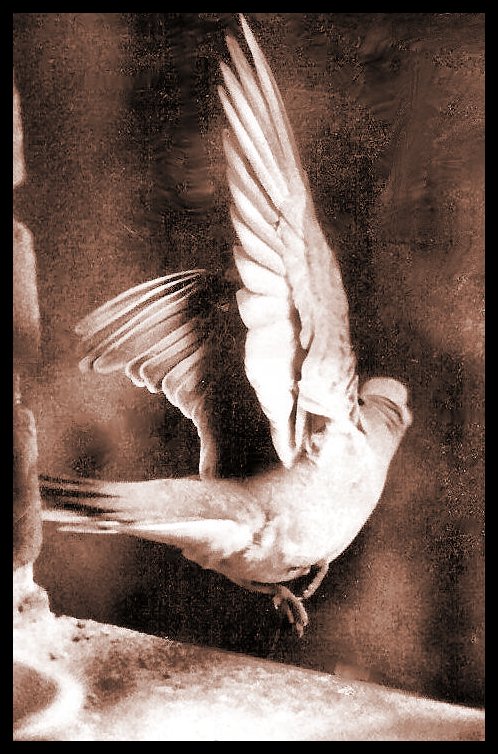
Somebody Somewhere
~ A Short Story by Allen Kopp ~
(This short story has been published in The Literary Hatchet.)
I was standing at the window. Inside it was still winter but outside it was spring. The sky was blue, trees and flowers were budding, the sun was shining and birds were singing. Miss Deloite, the woman with the delightful hanging mole on her upper lip, came up behind me. I heard her shoes squeaking on the floor and then smelled her particular sharp smell.
“You shouldn’t be wandering the halls,” she said.
I ignored her but as she walked away I turned and stuck out the tip of my tongue at her and she turned into a puff of blue smoke. You can’t know how satisfying it is to turn an annoying woman into a puff of blue smoke.
I went back to the room that I had come to identify as my own and lay on my back on the bed and looked up at the ceiling. I knew there was something wrong with me but I couldn’t remember what it was. I couldn’t even remember what place I was in. Oh, well. If it mattered at one time, it didn’t matter much any more.
I heard somebody coming and picked up a magazine and opened it and pretended to be reading. I wanted to look busy so nobody would ask me questions or try to engage me in conversation.
It was Theo, all dressed in white as usual. If I saw him in any other color, I wouldn’t recognize him.
“Where’s Miss Deloite?” he asked. “She said she was coming in here to help you with your bath.”
“I’m perfectly capable of taking a bath on my own without any female assistance,” I said, not looking up from the page.
I should probably have told him I just turned her into a puff of smoke but I would have to let him figure it out on his own. He should feel lucky that I didn’t do the same to him.
I crossed my ankles and wished I had a cigarette, and in came Louie from next door. He was wearing a lady’s red kimono with colorful dragons. I didn’t like Louie and I let him know it.
“What makes you think you can just barge into my room any time you feel like it, Louie? I’m supposed to be taking a bath.”
“I already took mine.”
“I’m so happy for you.”
“Do you have any candy?”
“If I did, I wouldn’t give it to you.”
“That’s not very nice.”
“Shouldn’t you be having your nails done or something?”
“I’m going to tell Miss Deloite you were snotty to me,” Louie said.
“You’ll be telling it to a puff of blue smoke.”
“What?”
Before Louie could annoy me any further, I raised my eyebrows and turned him into a little spider. I laughed as I watched him run on his touchingly small legs across the floor to the wall. He crawled up the wall to the ceiling and looked at me.
“You’re a medical phenomenon,” I said.
I was thinking about taking a nap, for lack of anything better to do, when Theo came back, bearing clean towels.
“Since Miss Deloite is temporarily not to be found,” he said, “I’m going to help you with your bath.”
“I already told you I don’t need help with a bath,” I said.
“Stand up now and take off your clothes, or I’ll do it for you.”
“I don’t want to take off my clothes for you any more than I do for Miss Deloite.”
“Do you want me to go get Stan and Sylvia?”
“Oh, please! Not Stan and Sylvia! I can’t tell them apart. Oh, I remember now. Sylvia’s the one with the mustache, isn’t she?”
“Cut the comedy now. Stand up.”
“Theo, I don’t like your tone of voice!” I said. “It’s not a polite way to speak to a man who isn’t well.”
He came at me with the intention of pulling me off the bed by my arm, but before he knew what was happening I raised my index finger at him and turned him into a blue jay.
Now, I had always thought the blue jay a most attractive bird, even though people said he was mean and liked to eat carrion.
Theo flapped his blue wings a couple of times and flew up to the ceiling and ate the tiny spider Louie in one gulp. Louie didn’t even have time to try to get away.
“Good bird!” I said.
He flew around the room a couple of times, bumping painfully into the walls until I stood up and opened the window for him. He didn’t have to be coaxed to fly out and then away over the treetops.
“Be well!” I called to him.
I lay down again. I did not want to take a bath and would be just as obstinate about it as I needed to be. I still believed the decision to take a bath should be mine alone. Crazy though I may be, I must have some rights left!
Before I had time to draw another breath, Nurse LaPeezy was upon me with my meds. I eyed the pills suspiciously.
“What if I don’t want to take that stuff?” I said.
“Doctor’s orders,” she said.
“So you’re saying I don’t have a choice?”
“I could call Stan and Sylvia if you like.”
“Oh, no! Not that!”
She handed me a cup of water and I pretended to take the pills. I put them in my mouth and swallowed but I held them under my tongue. When she bent over to pick something up off the floor, I spit them into my fist. The hand is quicker than the eye.
As Nurse LaPeezy was leaving I felt a strong dislike for her. I flicked the little finger on my right hand at her and she turned into a mouse. Realizing she was a mouse, she scurried across the floor the way mice do and disappeared into a conveniently placed mouse hole in the corner. I envied her because I knew she’d find her way to the kitchen where she’d have plenty to eat and find lots of other mice to keep her company. How sweet the life of a mouse must be! Much better than that of a nurse.
The next time somebody came in to help me take a bath, I was going to tell them I had already taken it while everybody was occupied elsewhere. I wanted them to know I had been taking a bath on my own since I was three years old and didn’t need help from anybody.
I was almost asleep when a slight change in the air currents around the bed made me open my eyes. Dr. Felix had come in silently and was standing at the foot of the bed looking at me.
“Sorry to wake you,” he said.
Dr. Felix wore glasses and looked like the movie actor Franchot Tone. His hands were folded in front of him. I looked at his hairy wrists and his expensive wrist watch so I wouldn’t have to look at his face.
“If you don’t mind, doctor,” I said. “I don’t really feel like talking to you today.”
“Anything wrong in particular?” he asked.
“No. It’s just that I’m here and I don’t know where here is.”
“Here is where you need to be at the moment.”
“I must have a home somewhere, even if I can’t remember it. I want to go home.”
“Everybody feels that way sometimes.”
“That’s comforting.”
“I’m going to increase your antidepressant medication again.”
“You doctors think drugs are the answer to everything, don’t you?”
“You’re spending far too much time alone. That’s not good. I’m going to assign you to some group activities.”
I groaned and closed my eyes. “Don’t trouble yourself,” I said. “I won’t be here that long.”
“Are you planning on going someplace?”
“Well, you never know,” I said.
He chuckled in his knowing way and turned to go. As he started to put his hand on the door to open it, I blew out a little puff of air in his direction and turned him into a cockroach. He ran under the door and out into the hallway. One of the nurses would see him and scream and step on him and then take a Kleenex out of the pocket of her uniform and pick him up and throw him in the trash can. How fitting is that for Dr. Felix?
Before anybody else had a chance to come in and annoy me further, I dressed in some clothes I had been hiding in the bottom of the closet. It was a uniform the maintenance men wore that I had stolen one day when I was exploring in the basement. In the uniform and with the brown cap pulled low over my eyes, nobody would recognize me. Also hidden away in the closet I had some ninety dollars and a pack of cigarettes, which I stuffed into the pants of the uniform.
I took a good look at myself in the mirror over the sink. I looked as much like a maintenance man as the real one did. Cautiously I went out into the hallway. Everything was quiet and nothing out of the ordinary. I made my way down the stairs to the main entrance.
The receptionist at the front desk looked up from the magazine she was reading and then looked away. I knew she didn’t know who I was. If she had known, she would have been screaming for help.
I walked out the door into the bright cool air and down the steps, wanting to run but not running because I didn’t want to draw attention to myself. I followed the concrete walk to the driveway and along the edge of the driveway a quarter-mile or so to the main gate. I saw nobody and nobody saw me.
I turned right at the gate out of the place, which seemed to me a better choice than going left, and began walking briskly. I walked for many blocks and saw nothing that looked familiar. I might have been in a foreign country or on another planet, for all I knew. Still, it felt good to be free and on my own.
Checking my pocket to make sure the ninety dollars was still there, I remembered the cigarettes and how long it had been since I had one. I lit one up and as I walked I puffed out a cloud of smoke behind me.
I stopped at a bar that looked inviting and had a beer and a hamburger and after that I kept walking deep into the city. It was a big city but I didn’t know what the name of it was and I didn’t know if I had ever been there before. I saw many people but they seemed to not see me, which altogether suited me.
After what seemed like hours of walking, I felt tired but pleasantly so, and I felt good about the distance I had put between myself and the place I had left behind. When I came to a faded old hotel with a sign that said Clean Rooms and Cheap, I decided that getting a room was the most logical thing I could do.
The desk clerk signed me in without asking for identification or money in advance. He gave me a key to a room on the tenth floor and I went up in a smelly elevator that must have been a hundred years old.
The room was clean, as advertised, and pleasant. There were two windows, a bed, desk, dresser with a large mirror, chair, closet and tiny bathroom. I liked the feeling of being up high. I opened the window a couple of inches to feel the air and to hear the traffic noises from the street, which at that distance I found soothing. After checking the door to make sure it was locked, I lay down on the bed and fell into a deep and restful sleep.
I spent two days and nights in the room, sleeping a lot during the day and walking around the city at night. Nobody ever approached me or bothered me or seemed to find my behavior in any way out of the ordinary. I couldn’t remember ever feeling so free and unencumbered.
More than anything I wanted to go home, but I didn’t know how that was ever going to be possible. I knew very little about myself, except for insignificant details like enjoying smoking and preferring tea instead of coffee. I could remember nothing of my past life. Where had I come from? Where was I going?
Did I come from a small town or a city like this one? Did I grow up in an apartment in the city or in a house in the wide-open spaces with a big yard and a view of the mountains? Wasn’t it likely that somebody was waiting for me somewhere, wondering if I was alive or dead or if I would ever come home again? A mother? A wife? A lover? A son or daughter? Whoever he or she was, I could feel them and I knew they could feel me.
When the people from the hospital I had just left realized I was gone, I knew they would come looking for me. I had done some very bad things, including turning my doctor into a bug and a nurse into a mouse, which I have already told you about. They would lock me up now and I would never go free again.
On my third day in my little hotel room high up, I had the window open as high as it would go to let in the warm breezes. At any one time, there were as many as five pigeons on the ledge outside the window. They cooed and danced and seemed happy. When I got close to them, they weren’t at all afraid of me. If I had had something to feed them, they would have eaten right out of my hand.
I sat on the bed, looking at myself in the round mirror on the dresser. Wait a minute, I thought. I don’t have to go back to that place or any other place like it. I can do to myself what I did to the others.
I pointed at my reflection in the mirror and turned myself into a pigeon. I flapped my wings on the bed to try them out. From the bed I jumped to the floor and then to the window ledge. There were three pigeons already there to greet me. They knew I was somebody they had never seen before, so they were curious about where I had come from. After introductions were made, they were all eager to show me around the city. They were extraordinarily accepting of me, even though I was a stranger. How happy I was to be welcomed by them. How fortunate to have made such delightful friends so fast.
Copyright © 2023 by Allen Kopp
Twenty-Minute Rest Stop ~ A Short Story

Twenty-Minute Rest Stop
~ A Short Story by Allen Kopp ~
(This short story has been published in The Literary Hatchet.)
Paul Penlow waited two hours for the bus and when it came he was the first to board. He took a seat in the back next to the window and watched the other passengers as they boarded and took their seats. When about half the seats were taken, the big-bellied driver got on, took a quick look behind him, and roared off the narrow parking lot onto the highway.
In the next small town, the bus stopped to take on more passengers. Three nearly identical old ladies with white hair boarded, moved slowly down the aisle, and surrounded Paul Penlow where he sat. Two sat in the seat in front of him and the other one took the aisle seat to his left.
He could have stood the intrusion of the trio into “his” space, but what he could not tolerate was the smell of their perfume. He would become ill if had to breathe it all the way to where he was going. He considered standing up and moving to another seat (there were plenty) but instead he opened the window a couple of inches and let the wind blow in his face.
“Do you mind, kiddo?” the old woman beside him said. “This is not a good day to be blown away.”
“I could move to another seat,” he said.
“Oh, please don’t do that! I want you to stay right where you are!”
“You could move to another seat.”
“Yes, but why would I do that? I just sat down and this is where I want to be.”
“I have asthma,” he said. “I need the window open to help me breathe.”
“Well, in that case let’s compromise. You keep the window open one inch instead of two and I’ll put on my headscarf.”
She took a lavender headscarf out of her purse, put in on her head and tied it under her chin.
“That’s better,” she said.
“Are you three sisters?” Paul asked.
They all three laughed the same musical laugh.
“Not only are we sisters but we’re triplets! It’s quite rare. I’ll bet you’ve never met any triplets before, have you?”
“No, I haven’t.”
“We were all born within one hour of each other on October the tenth. I won’t tell you what year because then you’d know how old we are! I’m Peg and these are my sisters Dot and Lou.”
“I’m Paul,” he said.
Dot and Lou turned around in their seats so they could shake his hand.
“We travel a lot, the three of us,” Peg said. “You meet some interesting people when you travel. Any time we take a bus trip, we always try to find a nice young person to sit with. It doesn’t matter if it’s a he or a she. If you strike up an interesting conversation with your seatmate, it makes the trip that much more enjoyable.”
Dot and Lou stayed turned around so they could join in the conversation.
“Everybody has a story,” Dot said, “and most of the stories are more interesting than you could ever imagine.”
“I have a story,” Paul said. “I’m going home. I haven’t been home for three years. I’ll bet you’d never guess where I’ve been.”
“At sea?” Lou asked.
“No. Guess again.”
“In jail?”
“No, but you’re getting warm.”
“I know where you’ve been,” Peg said. “You’ve been in a mental hospital.”
“That’s right! How did you know?”
“Oh, I know things about people.”
“She’s been doing it all her life,” Dot said. “She looks at people and knows things about them that nobody else knows.”
“What else do you know about me?” he asked.
“Well, let’s see,” Peg said. “You killed somebody but you didn’t mean to.”
“Why, that’s uncanny!” he said.
“Who did you kill?” Lou asked. “Was it your wife?”
“No, I never had a wife. It was my father.”
“Why did you kill him?” Peg asked.
“I had a mental disorder. I thought he was somebody other than who he was. I was afraid of him. I thought he was going to kill my mother and me, so I killed him first.”
“Who did you think he was?” Dot asked.
“I thought he was a demon like you see in a horror movie. The demon had killed the man who was really my father and taken over his body. He was just waiting until the time was right to kill me too.”
“Did the demon have horns?” Peg asked.
“Yes, horns, and eyes that glowed like coals.”
“How did you kill him? Did you shoot him?”
“No, I strangled him with a length of rope. It was so easy! I was so strong!”
“So what happened after that?” Lou asked.
“My mother found him dead in his bed the next morning with the rope still around his neck. She called the police. When they came, they knew right away I had done it, but of course I denied it.”
“Oh, that’s a sad story!” Peg said.
“Those are the best kind!” Dot said.
“They were going to lock me up in the penitentiary for the rest of my life, but psychiatrists examined me and said I had a textbook mental illness. I didn’t kill my father because I hated him or because he was mean to me or anything like that. I killed him, I believed, to save myself. They put me in a hospital for the dangerously insane. Now, after three years, they’re letting me go home. They say I’m cured. If you want to know the truth, I think they wanted my room to give to somebody else.”
“Are you cured?” Lou asked.
“No, I don’t think so. Not entirely, anyway. Do you know what I’m going to do when I get home?”
“No. What?”
“We live on a farm. Out back is an old barn. When I was little I liked to play in the barn to get away from my family and be alone. The barn has a hayloft and strong rafters. I’m going to climb up into the hayloft, tie a rope to one of the rafters with the other end around my neck, and jump off.”
“You’re going to kill yourself?”
“That’s right. I’ve been thinking about it for three years. It’s the only reason I’m going back home. There’s no other reason, really.”
“I won’t tell you you shouldn’t do it,” Peg said. “I’m sure you already know that.”
“I made up my mind a long time ago.”
“Well, if that’s what you want,” Peg said, “you’re a grown-up person.”
“C’est la vie!” Lou said.
“The world will go on without you,” Dot said.
“I sure would like to see my mother’s face when she finds me hanging there.”
“Won’t it be awfully upsetting for her?” Peg asked.
“I think she’ll be glad. She never really liked me.”
At the next twenty-minute rest stop, he got off the bus, while the triplet sisters stayed in their seats. He had to stand in line outside the door to the men’s room and when he was finished there, he had to stand in line to buy a Coke out of a vending machine.
He bought four Cokes. He thought the triplet sisters would appreciate a cold drink on a warm day. He had always been thoughtful that way; generous, you might say.
He had a little trouble carrying four Cokes in two hands, but he couldn’t keep from smiling as he re-boarded the bus. He stopped in the aisle, though, Cokes in hands, when he saw the triplet sisters were no longer there. He thought for a minute he was on the wrong bus, but, no, it was the same driver and the same passengers. It was the same bus, all right.
He drank all four Cokes and when he was finished he stowed the empty bottles under the seat. When he got home, he wouldn’t be hungry and wouldn’t need to eat before going to bed. His stomach was full of Coca-Cola.
His mother sure would be surprised he was home after all this time. He had been going to call her and tell her he was coming, but he somehow forgot.
Copyright © 2023 by Allen Kopp
June the Tenth (Not a Cloud in the Sky) ~ A Short Story

June the Tenth (Not a Cloud in the Sky)
~ A Short Story by Allen Kopp ~
(This short story has been published in The Literary Hatchet.)
Mother was sitting at the kitchen table working on her deviled eggs, nails red against the white of the eggs. Lex walked past her on his way to the sink to get a drink of water but she didn’t look up. He drank half a glass full and turned to face her.
“I don’t want to go on the picnic,” he said.
She laid down her knife and took a drag on her menthol cigarette. “Why not?”
“I’ve got a stomach ache.”
“What you need is a good bowel movement.”
“No, I don’t,” he said. “What I need is to stay home from the picnic.”
“By yourself?”
“I don’t mind.”
“I do mind,” she said.
“But why?” he whined, hating whining but not being able to help himself.
“Don’t you want to see your great-grandma turn ninety?”
“She can turn ninety without me.”
“No, you can’t stay home. I want you at the picnic with the rest of us like a normal person.”
“What difference does it make if I’m there or not?”
“Because it’s a family gathering and you’re a part of the family. If you’re not with us, everybody will wonder where you are.”
“Can’t you just tell them I’m sick?”
“Now, Lex,” she said, pointing the knife at him, “this discussion is at an end. You are thirteen years old and that’s old enough to understand the importance of attending family gatherings, especially since some in the family are getting older and won’t be around forever.”
“Oh, I hate family gatherings.”
“Now, I don’t want to hear any more complaining. Go get your swim trunks and wrap them in that big towel with the fish on it and brush your teeth and get ready to go in about fifteen minutes. As soon as I can finish these stupid eggs.”
“I don’t need to take my swim trunks,” he said. “I’m not going in swimming.”
“Why not?”
“I said I have a stomach ache. You’re not supposed to go in swimming with a stomach ache. You can drown.”
“That’s silly,” she said. “Nobody’s going to drown. And, anyway, your cousins will be disappointed if you don’t go in swimming with them.”
“No, they won’t. They don’t care about me.”
“Why are you being so negative today?”
“Because I’m sick and I don’t want to go on any stupid picnic.”
“It’ll be fun. You’ll enjoy it.”
“No, I won’t.”
“When you get with your cousins, you’ll feel much better and you’ll want to race them to see who gets to the pool first.”
“Nobody does that, mother.”
Mother sat on the front seat next to father, the Tupperware container of deviled eggs on her lap. While driving, father smoked one Chesterfield after another, searching for the ballgame on the radio and not being able to find it.
“What in the hell did they do with it?” he said, turning red in the face.
“I wanted you to wear the blue plaid shirt today,” mother said. “I laid it out on the bed for you.”
“What difference does it make what I wear?”
“I just want you to look nice, is all.”
“For your family? Why would I want to look nice for them? I’d rather have Chinese water torture than to spend the day with your family!”
“It won’t kill you to be nice.”
“It might. And why does everything have to be ‘nice’ all the time? I think it might be ‘nice’ for you to try to expand your vocabulary a little.”
“You don’t need to trouble yourself about my vocabulary.”
Lex sat in the back seat with Birdie and tried not to look at her. She was already wearing her swimsuit. It was yellow with big pads in front to hold up her nonexistent breasts. She looked like a stick-thin child in a lady’s swimsuit.
“You look so silly,” Lex said.
“Not any sillier than you do, you big baby!” Birdie said.
“Mother, did you know she’s wearing lipstick?”
“Hey!” father said, turning around to look at Birdie. “You’re fifteen years old! Who do you think you are? Jane Russell?”
“I thought a little bit of lipstick wouldn’t hurt,” mother said. “She’s so pale.”
“Well, she can stay pale! She’s not wearing any makeup until she’s considerably older.”
“It’ll come right off in the pool, anyway,” Birdie said.
“When people see you in that hideous bathing suit and with lipstick,” Lex said, “they’ll laugh themselves silly. Who do you think you are? Jane Russell?”
“Oh, shut up!” Birdie said. “You make me sick!”
A traffic jam slowed them down for about ten minutes, but when they got to the park they found the place easily enough where mother’s family was gathered. Father parked the car and turned off the engine.
“Let’s see if we can all get along today without any complaining or negative emotions,” mother said.
“That would be nice!” father said.
Father, mother, Lex and Birdie all got out of the car and greeted the family with kisses, handshakes, and clichéd greetings. Mother handed the deviled eggs to aunt Vivian, who always took charge of the food. Somebody gave father a beer and he sat on a camp stool ten feet away from everybody else and lit a cigarette.
“Did you have trouble getting here?” mother’s sister, Peggy, asked her.
“No,” mother said. “Why would we?”
“Everybody was here before you were.”
“How’s my favorite grandma?” mother screamed, brushing past Peggy.
Grandma Pearl was the guest of honor. It was her ninetieth birthday and she was the center of attention. She had her hair done the day before and had slept sitting up all night to keep from mashing down her cotton-candy curls. She was dressed in a new lavender pantsuit and slippers to match.
“I’d never believe she’s ninety years old,” uncle Mervyn said. “She don’t look a day over eighty-nine!”
Everybody laughed except grandma. She didn’t understand the joke at all and wasn’t sure she hadn’t been insulted.
“Pooh to you!” she said.
“He was just kidding you, grandma,” aunt Vivian said.
“We need to get this nonsense wrapped up and get back indoors,” grandma said. “It’s going to rain.”
“But there’s not a cloud in the sky, honey!”
“Well, the rain is coming, just over there, and I don’t want to get caught in it. It’s going to be a bad one.”
“Just relax and try to enjoy yourself and don’t worry about a thing.”
“I want some hot coffee!”
“We didn’t bring any coffee, honey. It’s too hot for coffee. How about some iced tea or some lemonade?”
“No, I want coffee!”
“One of us is going to have to go find some coffee and bring it to her,” aunt Vivian said.
“No!” aunt Linda said. “She’ll be as tyrannical as you allow her to be. Just give her some iced tea and tell her it’s coffee.”
“You all are going to try to kill me afterwards,” grandma said. “I know you are.”
“Sounds like grandma’s havin’ a good time,” uncle Lyle said.
The uncles focused their attention on Lex. He knew it was coming and dreaded it.
“How has the world been a-treatin’ you?” uncle Herm asked.
“All right,” Lex said.
“What are you a-gonna be when you grow up?”
“I don’t know. A circus clown, I guess.”
“Have you got a girlfriend?” uncle Mervyn asked.
“No.”
“Why not? You’re comin’ up to that age.”
“I stay away from them and they stay away from me.”
“Aw, you’ll change your mind, boy, after a couple years of puba-tery!” Haw-haw-haw!”
“What grade are you in now?” uncle Lyle asked.
“Eighth.”
“What sports are you going out for?”
“None.”
“None? Why the hell not?”
“I don’t feel like it.”
“All the boys in our family are good at sports. Just look at your cousin Virgil there! He’s on the track team and the basketball team. I think he’s even going to try out for the swim team.”
Lex looked over at Virgil to be polite. Virgil smirked back at him in a superior way. Virgil’s younger brother Vernon whispered something in Virgil’s ear and they both laughed.
“I think you should seriously consider going out for some sport,” uncle Lyle said. “It just don’t seem normal otherwise.”
“Other things are more important to him,” mother said.
“Like what?”
“Raising his grade-point average so he can get into a good college.”
“Oh, one of those! A college man who can look down on all the rest of us!”
Everybody laughed and Lex wished he had been able to vomit before he left home.
After the uncles were finished with Lex, they turned their attention to Birdie.
“How’s little Birdie girl?” uncle Herm asked.
“Fine.”
“When you gettin’ married?”
“After she finishes high school and college,” mother said.
“You got a boyfriend?” uncle Mervyn asked.
“Oh, no!” Birdie said. She giggled and blushed and her breast cups moved in the wind, showing there was nothing in them.
“Now that’s no way to be!” uncle Lyle said. “I’ll bet you’re a real heartbreaker!”
“There is one boy I kind of like, but he goes to Catholic school and he doesn’t even know I exist.”
“Uh-oh! A Catholic! You have to watch out for them Catholics!”
“I don’t see anything wrong with being a Catholic,” Birdie said, and the uncles laughed uproariously.
Grim-faced, Birdie stood up and went to join the girl cousins—Carline, Sharonda, Bertine and Maude—who were giggling and passing around a cigarette in a circle.
When it was time to eat, aunt Vivian and aunt Peggy sat on either side of grandma and after they filled up her plate with food, they began feeding her little bird bites. When they fed her too fast, she choked and turned red in the face.
“I can feed myself, damnit!” grandma said. “I’m not a helpless baby!”
“We don’t want you to spill anything on your beautiful new outfit,” aunt Peggy said.
“Oh, screw you!”
Father ate in silence, wincing when any of the uncles clapped him on the back or spoke to him.
“How’s work going, Theodore?” uncle Lyle asked him.
“Fine,” father said.
“How’s the fishin’ been for you this spring?”
“I never fish.”
“Read any good books lately?”
“Not that I care to discuss.”
He finished eating and pushed his plate away, lit a Chesterfield and stared off into the distance.
The girl cousins didn’t eat much because they were excited about going into the pool and believed they might die in the water if they overate. After a few bites, they each got up from the table, one at a time, and got into the back of uncle Herm’s roomy van and changed into their swimsuits, giggling all the time. When they were all changed, they stood around awkwardly, feeling exposed, not knowing what to do with themselves, their bone-white arms and legs on view for all to see. The boy cousins—Virgil, Vernon, Monte and Dickie—gaped at them and snickered. Vernon made howling sounds like a wolf baying at the moon, while pimply faced Dickie made pig snorts. Lex took one glance at them and looked away, finding the sight of them more than he could bear.
All the cousins were ready to go to the pool, but aunt Vivian wouldn’t let anybody go until after grandma’s cake had been cut. She brought the cake forward from the trunk of her car where she had been keeping it to keep the bugs off and set it on the table in front of grandma. There were nine candles, one for every decade of grandma’s life, but aunt Vivian was afraid to light them because the wind had suddenly become gusty and she was afraid that grandma might catch her hair on fire.
Uncle Herm went and got his camera. The four granddaughters stood beside grandma’s chair, two on each side, with grandma looking down at the blue-and-white cake with a look on her face that could only be described as one of horror.
After the picture was taken, aunt Vivian sliced the cake, putting the pieces on paper plates with a plastic fork on each plate. Vernon picked up a piece in his hand and stuffed it all into his mouth at once, causing the other boy cousins to do the same.
The girl cousins declined any cake. They had eaten too much already and were afraid of looking fat in their swimsuits. Aunt Vivian gave them all the go-ahead and they were all off to the pool.
Lex sat at the table, eating his cake methodically, watching the trees blowing, wishing he was at home by himself.
“Aren’t you going swimming with the other kids?” aunt Linda asked, giving him her fish-eyed stare.
“I didn’t bring my swim trunks,” he said.
“Oh, yes, you did!” mother said. “They’re in the car. Don’t you remember?”
“You’d better hurry up and catch up with the other kids,” aunt Linda said. “Kids love the pool.”
“Not all do,” Lex said, but aunt Linda didn’t hear him because a car was passing by and she was looking to see if the people in it were noticing her.
The wind picked up and the paper plates and napkins left on the table began to scatter. Mother and the aunts had to scramble to keep everything from blowing away. The uncles sat and laughed at them and drank their beer and smoked their cigarettes.
“It started out such a beautiful day and now it’s going to rain and spoil grandma’s birthday party,” mother said.
“I don’t mind!” grandma said. “You can take me back home any time!”
Dark clouds rolled in, blotting out the sun, with faraway flashes of lightning. The rain started light like fairy kisses but gradually grew in intensity.
“Not a good time for the kids to be in the pool,” aunt Vivian said.
Watching the sky, Lex smiled. He loved a good thunderstorm, the present one especially, because it reinforced his belief that the picnic was a bad idea in the first place. He was glad the day was spoiled. Even grandma was glad and the whole thing had been for her.
When the rain became a drenching downpour and the lightning became closer with every strike, aunt Vivian, with the help of uncle Herm, got grandma into the back of the van. She screamed with every lightning strike and pretended to be so scared, but Lex knew her and he knew she was enjoying every minute of it. She’d have something to tell her friends—her dramatic escape from a terrifying storm.
With grandma safely in the van, everybody else got into their cars to wait it out. With any luck, they said, it would only be five minutes or so.
“Do you think they’re safe in the pool?” mother asked.
“They’ll be all right,” father said.
“Lex, go get your sister and tell her we want to leave,” mother said.
“No! Do you think I want to get struck by lightning?”
Three lightning strikes in quick succession caused mother to yelp and duck.
“I’m going to get Birdie at the pool!” she said. “Lex, you come with me!”
She took Lex by the hand and they ran toward the pool. In a matter of seconds, they were drenched through to their skin. The rain now was an opaque curtain.
When they were close enough to the pool to see it, they saw people running toward them. Out of the crowd emerged Birdie. When she saw mother, she ran to her, sobbing and gasping.
“What’s the matter?” mother asked. “Are you all right?”
“Oh, mother, it’s awful!” Birdie said.
“What is it? Are you hurt?”
“Sharonda was struck by the lightning. I think she’s dead.”
Mother and Lex got Birdie back to the car. When father saw them coming, he jumped out and opened the door. Mother pushed Birdie into the back seat and got in behind her.
“Tell me what happened,” mother said, trying to wipe the water out of Birdie’s face.
“When the storm started,” Birdie said, “the lifeguards told everybody to get out of the pool, but a few stayed. They thought it was a lot of fun. Sharonda was one that stayed. There were about six others. She had just come up out of the water and was standing at the edge of the pool. I didn’t see the lightning that hit her but I saw the flash. After she was hit, she fell into the water. The lifeguard blew his whistle really loud to get everybody’s attention. A couple of boys got Sharonda out of the water and they started working over her, trying to resuscitate her, but I knew she wasn’t breathing. Somebody called an ambulance, but it hadn’t come yet. That’s when I left.”
“Do Lyle and Linda know?”
“I don’t think so. Nobody has told them yet.”
“I have to go tell them what’s happened.”
The ambulance came and loaded Sharonda into the back with hundreds of people standing in the rain watching. Uncle Lyle and aunt Linda followed behind in their own car to the hospital, where Sharonda, their only child, was pronounced dead.
On the way home, the rain continued unabated. Father drove with the headlights on, leaning forward, his face only a few inches from the windshield.
“This has been quite a storm!” he said. “The rivers are going to flood tonight.”
“Today of all days,” mother said. “Wouldn’t you just know it? On poor old grandma’s ninetieth birthday!”
“I knew somebody was going to die today,” Lex said. “Grandma knew it too.”
“Now we’ll have a funeral to go to,” mother said. “I hope you can still wear your blue suit.”
“No more family picnics for me,” father said.
Birdie sat on the seat beside Lex, sobbing quietly. It was going to take her a while to get over seeing Sharonda die. Lex would have felt sorry for her if she hadn’t looked so silly in her yellow lady’s swimsuit.
He turned away and put his fingertips on the window, the water only a scant fraction of an inch away—he could almost feel it. As the car moved slowly and cautiously through the deluge, it gave one the impression of traveling underwater in a tiny submarine. When the rain finally stopped, it was going to be a terrible disappointment.
Copyright 2023 by Allen Kopp

 Literary Fictions