

She Can Bake a Cherry Pie ~ A Short Story
She Can Bake a Cherry Pie
~ A Short Story by Allen Kopp ~
(This short story has been published in The Literary Hatchet.)
It was spring and company was coming for dinner. Joyce prepared all the food herself. She thought it important to show her domestic side on this particular occasion since the company was Stan Witter, a friend of her brother’s and a most eligible bachelor.
Joyce was twenty-three and unmarried. All her old friends from high school were already married and had drifted away. She was the only one left behind. She had set a goal for herself to be married by twenty-five and have a home of her own. It was a goal that didn’t seem impossible of fulfillment, especially if things went well with Stan.
Stan was twenty-four, what Joyce considered the perfect age. He lived in a twelve-room, two-story brick house in town that came to him after his grandmother died, and he lived there alone. He must naturally want a wife to live in the house with him. Joyce supposed he was rich by most standards without having to work for what he had, but she didn’t care so much about money and wasn’t interested in him for that.
She knew him slightly in high school. He was a grade ahead of her, so she hardly ever had a chance to speak to him. He always stood out from the crowd, though. He was coolly handsome, with his dark hair, pale skin and green eyes. He didn’t bother himself with all the silly goings-on in high school, such as dating and girlfriends. He was quiet and shy, and any time Joyce saw him he was usually alone, reading a book or looking at the sky or seemingly thinking about things that other people never bothered to think about.
She had managed to mostly put Stan Witter out of her mind until he and her brother, Curt, became best friends and Curt began mentioning Stan in conversation at the dinner table. They went to a football game together and a swim meet and then there were overnight trips to the lake or the city. Stan liked museums and plays and concerts. She didn’t understand why he would like Curt and would want to spend time with him—they were so different—but she figured there must be a side to Curt that she had never seen. Maybe Curt could come to like those things too.
Joyce left the hot kitchen—the ham was still in the oven and everything else was ready. All she had to do with change her clothes and comb her hair and put on a little makeup. She sat down in front of the mirror and regarded her reflection with hopelessness.
The thing about her that she believed held her back was her eyes. They didn’t work in concert. The left eye was all right, but the right eye moved about uncontrollably in its socket. Those who knew her hardly noticed the aberrant movement of the eyes, but to anybody else she looked slightly crazed or demonic. A boy at church said she was evil. She knew, or felt, that people were always looking at her and for that reason kept her eyes downcast.
When Stan arrived for dinner at the appointed hour and Joyce saw he was wearing a jacket and tie, she was glad she had taken the extra effort with her own appearance.
“Why so dressed up, cowboy?” Curt asked. “We’re strictly informal here!”
Mother greeted Stan effusively, taking his hand in both of hers. “I’m so glad that you and my son have become good friends,” she said. “I haven’t always approved of some of his friends in the past.”
“Mother!” Curt said. “I’m sure Stan doesn’t want to hear that! I know I don’t!”
Joyce passed around a tray containing little glasses of wine and after the wine had been drunk, it was time for dinner. Stan and Curt took their places at the table in the dining room and Joyce and mother brought the food in from the kitchen.
“This certainly looks wonderful!” Stan said.
“I hope you like ham,” Joyce said, speaking for the first time since he arrived.
“Of course I like ham.”
“I’m starved,” Curt said. “I haven’t eaten all day.”
“Whose fault is that but your own?” mother said.
After everybody had their plates filled, mother insisted on a little of word of grace: “Bless us, oh Lord, and these thy gifts which we are about to receive from thy bounty through Christ our Lord.”
“A-men!” Curt said.
“I hope you don’t mind the prayer,” mother said.
“Of course not,” Stan said.
“Some people are funny about those things.”
“Not me.”
“He’s a regular all-American guy!” Curt said.
“How do you like living way out here?” Stan asked. “Outside of town, I mean.”
“It’s quiet,” Curt said.
“It gets a little lonely sometime,” mother said, “especially since my husband died two years ago.”
“I’m sorry,” Stan said.
“On that cheerful note,” Curt said, “pass me some more of those sweet potatoes.”
During a lull in the conversation, Joyce cleared her throat and said, “When Curt mentioned that you were coming for dinner, I remembered that I had known you in high school.”
“That’s right!” Stan said. “I remember now.”
“All these years have passed.”
“Not so many. Seems like yesterday.”
“You graduated a year before I did, I believe.”
“Yeah, I guess I did.”
When Joyce saw that Stan was looking at her, she looked down and began rearranging the rolls on the plate. “Would anybody like anything else?” she asked.
“How about some dessert?” Curt said.
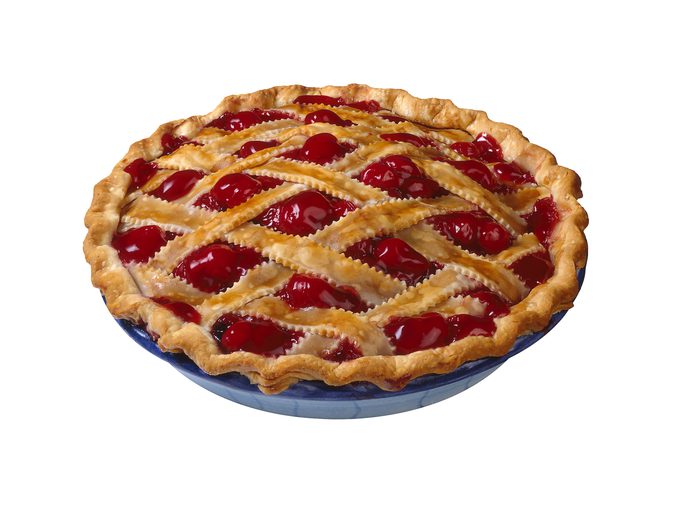
She went into the kitchen to get the cherry pie and when she came back, mother said, “We wouldn’t have had this lovely dinner if it hadn’t been for Joyce. She did the whole thing on her own.”
“She did?” Stan said, smiling. “Well, everything is just perfect. It couldn’t have been better.”
Joyce flushed with pleasure at the compliment and in the next moment she was afraid that Stan would notice her eyes and run screaming from the house.
After dinner, Joyce and mother began clearing the table, while Curt took Stan down to the barn to show him the horse he had bought. He paid less for it than it was worth, he said, and hoped to sell it at a profit.
“I think it went well, don’t you?” mother said while they were washing the dishes.
“I guess so,” Joyce said.
“I think he likes you.”
“Who does?”
“Stan.”
“What makes you think that?”
“The way he looked at you.”
“He looked at you the same way.”
“I think the next step is he’ll call you and ask you out on a date and if that goes well, we’ll have him out to dinner again, maybe a barbecue. Then the two of you can go on a picnic somewhere. Picnics are a good chance for young lovers to get better acquainted.”
“Let’s not get ahead of ourselves, mother.”
She couldn’t help feeling hopeful, though. Having him to dinner was a good way to remind him, without being too obvious about it, that the two of them had been in high school together. Mother was right, though. The next move, if there was one, was up to him.
Mother was putting the clean dishes away and Joyce was stowing the leftovers in the refrigerator when the phone rang. It was the man calling about the horse that Curt hoped to sell.
Joyce volunteered to run down to the barn to get him. It would give her another chance to spend a minute or two in Stan’s presence before he went home.
She crossed the back yard, trying to keep from stepping in the mud. At the point where the back yard ended, the barn was about five hundred yards farther on.
As she approached the barn and was for the moment blinded by the sun, she didn’t see either Curt or Stan. She crossed the threshold of the barn and, in the dimness, saw the whiteness of Stan’s shirt.
He had removed his jacket. His pants were down around his ankles. He was leaning into Curt pushed up against the wall and the two of them were kissing passionately. Curt was alternately clutching Stan’s shoulders and the back of his head and unbuttoning his shirt.
In one instant it all became clear. It had really been clear all along but she refused to see it. There had been so many signs: Curt’s indifference toward girls, his obvious adulation of Stan, the trips together, Curt’s overnight stays at Stan’s house in town.
She wanted to get away before they saw her. She turned and began running back toward the house.
In the back yard was a sycamore tree with a huge horizontal limb about five feet off the ground. She had been dodging the limb her whole life. Not seeing anything—only wanting to get away—she struck her forehead on the limb, knocking her out cold.
The next thing she knew she was lying on her back in the mud and mother was kneeling beside her, delivering little slaps to her cheeks.
“What happened, dear?” mother asked. “Are you all right?”
“I must have hit my head,” Joyce said.
“Can you get up off the ground?”
Mother helped her into the house to a chair in the kitchen.
“You have a big welt on your forehead, dear. It’s going to swell something terrible, I know. I’m going to call the doctor.”
“No, I’m all right,” Joyce said.
“Do you feel dizzy or anything?”
“My head hurts.”
“Well, let me at least wash the wound. That’s all I can do now. I think you do need to see the doctor, though.”
“No, I’m all right,” Joyce said. “I’m going to lie down for a little while until the pain in my head stops.”
“Do you want me to help you into your room?”
“No.”
“Isn’t there anything I can do?”
“You can leave me alone for once and stop your fussing! I said I’m all right!”
She stayed in her room for two hours and when she came out, mother was anxiously waiting to know how she was.
“I feel like I’ve been hit in the head with a sledgehammer,” she said.
“Stan was sorry he missed you,” mother said. “He wanted me to tell you how much he enjoyed your dinner. He said your cherry pie was the best he ever ate.”
“I don’t care what Stan thinks.”
“What?”
“Where’s Curt?”
“He left with Stan. They were going to see a movie in town. They’re spending the night together at Stan’s house.”
“Of course,” Joyce said. “How could I have been so stupid?”
Mother wasn’t hearing what Joyce was saying, though. She was looking closely at her face. She took her by the arm and led her into the kitchen where the light was stronger.
“Look at me,” mother said.
“Why?”
“Just look at me.”
She sat Joyce down in the chair and took her by the chin and tilted her head, first one way and then the other.
“I never thought it possible!” mother said.
“What?”
She gave Joyce the hand mirror and told her to take a good look at herself.
“Ugh!” Joyce said. “I’ve always wanted a lump right in the middle of my forehead. I wonder how long it’ll take to go away.”
“Not that,” mother said. “Look at your eyes.”
“What about my eyes?”
For the first time since she was eight years old, her right eye and her left eye worked in concert. She stood up and took a few steps, looking at her eyes in the mirror. She danced from the table to the refrigerator and over to the sink.
“My eyes are normal!” she said. “As normal as yours! As normal as Curt’s! As normal as anybody’s!”
“It’s a miracle,” mother said. “It was the blow to the head that did it.”
“I’d call and tell somebody if there was somebody to call.”
“The next time Stan comes for dinner,” mother said, “you won’t be self-conscious about looking him in the face.”
She continued to look at herself in the mirror. She wanted to surround herself with mirrors. Even the mention of Stan’s name wasn’t able to detract from the happiness she felt.
Copyright © 2023 by Allen Kopp
Sylvia Dell ~ A Short Story
Sylvia Dell
~ A Short Story by Allen Kopp ~
In 1926 Mrs. Bertha Indelicato of Burbank, California, took her son, Sidney Indelicato, to a movie studio to audition for a part in a motion picture. She dressed him up in a light-blue jumper and a yellow shirt, with pork-pie hat and strapped, patent leather shoes. With Sidney’s cherubic face and naturally curly blond hair, he looked as much like a girl as a boy.
At the audition the casting director, a man named Perkins Belmont Perkins, wearing knickers and argyle stockings, separated the boys from the girls so he could get a better look. When Sidney was herded in with the girls, Mrs. Indelicato didn’t dare object, afraid that doing so might cost him a part in the movie.
When Perkins Belmont Perkins, eyeing Sidney critically, asked for the name, Mrs. Bertha Indelicato stepped forward quickly and gave the name as “Sylvia” Indelicato.
“She’s rather fat,” Perkins Belmont Perkins said, “but I think she has the ‘look’ we’re looking for.”
“Oh, I’m so glad!” Bertha said.
“Have your daughter here at eight o’clock sharp on the fourteenth and I believe we’ll be able to use her.”
“Oh, thank you!” Bertha said. “We’ll be here! Of that you can be sure!”
After they left the studio, Bertha took Sidney to a drugstore down the street to get a banana split.
“Just think!” she said to him as he stuffed ice cream into his mouth. “We’re in!”
“In where, mama?” he asked.
“Why, didn’t you hear the nice man say they were giving you a part in the movie, honey?”
“What do I got to do?”
“Just look sweet and the director will tell you everything to do. Mama will be right beside you every step of the way.”
When Bertha’s husband, Buster Indelicato, came home from his job as a Ford salesman, Bertha told him the good news: Sidney landed a part in a movie.
“There’s just one thing,” she said. “They think Sidney is a girl.”
“What?”
“I had to think fast. I told them his name is ‘Sylvia’ Indelicato.”
“And they believed that?”
“Yes.”
“You always did dress him more like a girl than a boy.”
“If that’s the only way he can get a part in a movie, then a girl he will be!”
“Well, I always wanted a daughter, I guess,” Sidney said, reaching for a beer.
In the few days she had before the fourteenth, Bertha took Sidney shopping and outfitted him with complete feminine attire, down to the lacy bloomers. She fluffed out his hair and gave it some extra curl, insisting that she and Buster call him “Sylvia” at the dinner table and refer to him at all times as “she” and “her” instead of “he” and “him.”
“You’re going to confuse him,” Buster said, “and then we’ll have a mental case on our hands.”
“He’ll be fine,” Bertha said. “I guarantee it.”
“Why do I got to be a girl now?” Sidney asked.
“Because you are an actor,” Bertha said. “You will someday be a great actor. This will be your first acting lesson. Great actors pretend to be who and what they are not.”
“I don’t think I like being a girl.”
“Just remember that underneath the laces and frills you are still a boy. It’s only to the outside world that you are a girl.”
“If I’m an actor,” he said, “I want to be a cowboy.”
“That will come later, dear, after you are an established star.”
“What’s ‘established’ mean?”
On the morning of the fourteenth, Bertha had Sidney at the studio an hour early and was forced to wait nervously in an outer office to be called. Finally, when Sidney was called for a wardrobe fitting, Bertha was given a copy of the script. It was up to her to familiarize herself with the story and tell Sidney, as Sylvia, what he (she) was supposed to do.
The picture was called Baby Bountiful and starred that lovely young motion picture star, Arlette Joseph. She played a young mother who, when she loses her own baby to illness, goes with her handsome young husband to an orphanage to pick out another child. There are so many adorable children to choose from that the young couple can’t decide which one to take. That’s when the orphans show off their singing and dancing talents to help them make up her minds.
The young couple still can’t decide, so they go home, assuring the orphans they will return later and will, most assuredly, choose one of them to take home with them. That night, all the orphans dream of being the chosen one. The next day the young couple returns to the orphanage with some very exciting news. The young mother’s rich uncle has died and left her his millions. Since she will have all that money, she can take all the orphans and they will all live together on a fabulous Long Island estate with their new mommy and daddy.
Sidney was the orphan named Lulu. He wore a white dress and white stockings, a long wig with a large white bow. When the director told the orphans to jump up and down with excitement or to act sad, they did exactly as they were told.
Bertha stood behind the director and the camera, watching. She believed, of course, that Lulu stood out from the other orphans and that her acting was the most realistic. Her eyes brimmed with tears and her heart ached with pride. After all her years of dreaming, her own little Sidney was finally in motion pictures!
When filming was completed for Baby Bountiful, Arlette Joseph thanked all the children personally for playing orphans and everybody packed up to go home. A few days later Bertha received a fat check in the mail for Sidney’s appearance in the film. When she showed the check to Buster, he whistled and said, “That’s more than I make in a month!”
A week later the casting director from the studio called Bertha and asked if Sylvia was available to act in another picture. Bertha nearly dropped out her dentures on the kitchen floor in saying yes.
They hired Sylvia an agent, who promptly changed her name from Sylvia Indelicato to Sylvia Dell. The agent procured parts for her in five pictures the first year and seven the second year, with each part progressively larger than the one before it.
Buster quit his job and began staying home all the time, “seeing to things.” He managed Sylvia’s career from the sidelines with useless advice that nobody listened to. He began wearing double-breasted suits, smoking big cigars, and hosting luncheons at all the fancy restaurants around town.
Sidney, for his part, went along with what was expected of him. When he was at home he could be Sidney, but the minute he went outside the house he had to be Sylvia. Any time he became downhearted, Bertha presented him with a big bowl of ice cream and waved the most recent studio check in his face. When she went to the bank to cash his checks, she always took him along so he could see the big stacks of green and come to know how important they were to his family.
In 1929 the Hollywood studios stopped making silent films and converted to sound. Prepared as she was for any contingency, Bertha hired a diction coach to work with her Sidney. After all they had been through, she wasn’t going to let the advent of sound end her baby’s film career.
The diction coach, aware of how much money was to be made, declared Sylvia a “natural” after a few lessons. If he knew that Sylvia was really a boy instead of a girl, he never let on. He was accustomed to the ways of movie people and wasn’t squeamish about such things.
Sidney’s first sound picture was a big success. He had five lines, which he spoke with a convincing girlish intonation. After that, there were more offers for parts in other motion pictures. The money mounted up as Sylvia’s fame and popularity increased. Sylvia Dell fan clubs sprang up around the country. There were Sylvia Dell coloring books and dolls, an entire line of Sylvia Dell merchandise.
Sidney began to put on a lot of weight. The doctor advised Bertha to put him on a low-calorie diet, but she refused, certain the “pudginess” was part of his appeal. People had come to know him as fat and if he was no longer fat they would no longer know him.
When Sidney inevitably began to show outward signs of becoming an adult male, Bertha and Buster began to panic. They took him to a doctor and wanted to know if there was some way he, the doctor, could medically “alter” Sidney to enhance his feminine qualities and subvert the masculine ones.
“Are you suggesting I castrate him?” the doctor asked.
“If that’s what it takes,” Bertha said.
“Ask him if he wants to be castrated and I can almost assure you what his answer will be.”
“But he’s too young to know what’s best for him,” Bertha said. “He’s only a baby.”
“Good day to you!” the doctor said.
Luckily Sidney was fair-haired and the whiskers on his chin and cheeks could easily be covered up, but his deepening voice was more of a concern. Bertha began plying him with pills that she bought from a “medical consultant” and giving him cognac and whiskey toddies to “calm his nerves” and help him to sleep. In a few months he was a child alcoholic. He took to smoking prodigious numbers of cigarettes, even when he was in character as “Sylvia.” The sweet little girl had turned into a monster. The movie offers began to dry up.
Right before Sidney’s sixteenth birthday, he disappeared. Bertha believed he had been kidnapped and that soon the kidnappers would make their exorbitant demands for his return. She would pay any amount—every cent if she had to—for his return.
The police searched for Sidney but found no sign of him and after a year they gave up. They would keep his file on record, though, and if anything came up they would reopen the case. Bertha began walking the streets at night, looking for him in alleyways. She was certain he was all right and wasn’t very far away. All he needed was for her to find him.
Thirty years went by and Sidney didn’t return home. Bertha and Buster spent all the money and then there was no more. Buster died, leaving Bertha alone in her home with her memories. Her walls with lined with “stills” from Sylvia Dell movies. She never stopped thinking about Sidney.
Small packages began appearing on her doorstep, a packet with fifteen dollars in it and then one with twenty, a potted plant, a loaf of pumpernickel bread. She didn’t know who was leaving these little gifts, but when a box of chocolate-covered cherries appeared, she knew it had to Sidney. Only he would know that had always been her favorite kind of candy.
Copyright © 2023 by Allen Kopp
The Doctor Takes a Powder ~ A Short Story

The Doctor Takes a Powder
~ A Short Story by Allen Kopp ~
Irene Murrell arrived for her appointment with Dr. Fritz Hackles on time. She gave her name to the inscrutable Asian nurse and took a seat in the dreary waiting room where everything was gray—gray walls, gray floor, gray chairs. She hated her visits to the doctor, always made worse by having to wait. She would rather dig through a mountain of rusty tin cans than sit and wait her turn.
Underneath the No Smoking sign on the wall opposite, somebody had written, in large block letters, the word PUSSY. Irene’s eyes traveled from the obscene word to the faces of the only other two people in the room, a man and a woman, obviously a married couple. The woman had red hair—a particular shade not found anywhere in nature—and the man had a long neck and a large head, not unlike a ventriloquist’s dummy.
When Irene realized that the red-haired woman had spotted her and was probably going to engage in conversation, she picked up a fishing magazine, in which she had no interest, and began thumbing through it.
“Finally we have some company,” the red-haired woman said. “We’ve been sitting here for almost two hours and you’re the first person we’ve seen.”
Irene looked at the woman and gave her a reluctant smile.
“I’m Mitzi Knickerbocker and this is my husband, Chester,” the red-haired woman said. “We’re from out of town.”
“How do you do,” Chester said, standing partway up. “Nice to meet you.”
“Mrs. Murrell,” Irene said tersely.
“We’ve been sitting here almost two hours,” Mitzi said, “and in all that time there hasn’t been a single person go in or come out. You have to wonder what in the holy hell those people are doing back there!”
“Doctors have busy lifestyles,” Chester said.
“Oh, they make me sick! They should only do one thing at a time! The people sitting here waiting should come first!”
“You need to be patient.”
“Patience is something I ran out of a long time ago.”
“You’re not even the one waiting to see the doctor. I am.”
“Oh, excuse the hell out of me! If you’re the one waiting to see the doctor, then why am I here?”
“You can go any time you’re ready.”
Mitzi looked at Irene and stuck the tip of her tongue out and made a comical face. “Isn’t that just like a man?” she said. “He won’t go to the doctor unless I take him. You’d think he was five years old and I was his mommy!”
“Oh, shut up, you old hag! Nobody said any such a thing!”
“Do you want me to split your head wide open? Calling me an old hag in front of this nice lady!”
“She’s got eyes, don’t she? She can see you’re an old hag!”
“You can see plainly he’s not right in the head,” Mitzi said confidentially to Irene. “He’s like an adult-sized baby. I have to watch him every second the same as if he was three years old.”
“Oh, you’re a liar!” Chester said.
“A while back he started having blackout spells. The first time he did it we were having dinner and he pitched over in his chair onto the floor. He pulled half the dishes on the table down on top of his head. I thought he was trying to play a joke on me. I said ‘Get up from there, you big jackass! You’re not the least bit funny!’ Then when I saw his eyes were closed and he wasn’t moving, I thought he was dead.”
“I’m sure you wished I was,” the Man said.
“That was only the beginning,” Mitzi said. “Another time he blacked out in the grocery store. Can you imagine? He fell over into the meat counter and everybody thought he was dying.”
“I disappointed you again that time, too.”
“He can’t drive a car anymore or mow the lawn because he might have one of his spells at any time. I have to do everything myself!”
“That’s not true!”
“I even have to give him a bath because he might drown himself in the bathtub.”
“You’re full of it! You’ve never given me a bath in your life! I wouldn’t allow it!”
“I’m thinking about putting him in a nursing home and washing my hands of the whole deal.”
“You just try putting me in a nursing home! I’ll have you committed! I’ll slap your ass into a mental institution, which is where you’ve belonged for as long as I’ve known you!”
“I think his problems started as a small child. His mother was a terrible drunk. I think she dropped him on his head regularly when he was a baby. He hasn’t been right since.”
“Oh, how could you know anything about when I was a baby? You weren’t even born yet!”
Irene sighed and stood up and went over to the little sliding window to the receptionist’s area and rattled it to get the attention of the Dragon Lady on the other side.
“Yes?” the Dragon Lady said, sliding back the glass, obviously annoyed at being bothered.
“Where is Dr. Hackles?” Irene asked.
“He busy. What you think?”
“He’s been keeping me waiting for a long time.”
“Just sit and wait turn. He be with you before you say Jack Robinson.”
“I’ll only wait five more minutes and then I’m leaving and I’ll be finding myself another doctor.”
“Okay, lady! Don’t get panties in a bunch! Doctor be right with you!”
“These people sitting here are annoying me,” Irene said in a low voice meant only for the Dragon Lady. “I need to get away from them.”
The Dragon Lady craned her neck around to see who Irene was talking about. “They not bother,” she said. “Tell them no bother.”
“What did the Dragon Lady say?” Chester asked Irene when she sat back down.
“Nothing that helps.”
“Honestly!” Mitzi said. “I feel like sending them a bill for all the time they’ve wasted! My time is just as valuable as theirs!”
“I’m just on the verge of walking out the door and telling them to kiss my nether parts!” Chester said.
“We’ve waited this long,” Mitzi said. “Let’s give it a few more minutes.”
“Let’s set this place on fire!” Chester said.
“You can’t do that!” the Mitzi said. “There’s nothing here to burn.”
“There are plenty of old magazines!”
“And how long do you think it’d be before Dragon Lady calls the police and they come and take you away in handcuffs?”
“I’ll be gone by then.”
“See how crazy he is?” Mitzi said to Irene. “He thinks he can go around setting fires whenever he feels like it.”
“They need to be taught a lesson,” Chester said.
“Well, that’s not the way to do it!”
The man began gathering up the old magazines and piling them on the floor in the middle of the room. Some he ripped apart and others he opened up and tossed upside down so they would burn better. When he had a knee-high pile of magazines, he took out his cigarette lighter and set fire to them.
The fire was just beginning to burn efficiently when the Dragon Lady opened a door and stepped out into the waiting room.
“What going on here?” she said sternly. “No fire allow inside waiting room!”
“Just having a little fun!” Chester said, stomping out the flames. “Nothing to get excited about!”
“I have announcement about doctor,” the Dragon Lady said.
“Better spill it,” Chester said.
“Doctor leave! Big hurry! Terry-bull emergency at hospital! He go to hospital in big hurry to help those in distress!”
“Well, how do you like that?” Mitzi said. “We didn’t see him leave. Is he invisible?”
“Private entrance back of building.”
“I don’t think he was even here,” Chester said. “I think you’ve just been screwing with us.”
“Tell the doctor he’ll be getting a bill from me for all the time of mine he’s wasted today,” Mitzi said.
“Doctor say to please call again next week for reschedule appointment,” the Dragon Lady said. “Have nice day! Bye-bye!”
“Well, how do you like that?” Mitzi said. “We’ve been sitting here all this time and we never even laid eyes on the son of a bitch.”
“He needs to be taught some manners!” Chester said.
“Not by setting another fire!” Mitzi said. “That was a terrible idea!”
Irene wasted no time in getting out of the building, before Mitzi and Chester had a chance to speak to her again. She had a feeling all day long, ever since she woke up that morning, that everything would go wrong that day. She never cared for Dr. Hackles anyway. It was absolutely the last time she would ever go to him.
She was just getting into her car when Mitzi came up behind her suddenly, startling her.
“I wonder,” Mitzi said, “if you would give us a ride? Our car broke down and we’re just stuck here.”
“Where are you going?”
“Burkhardt.”
“I’m not going to Burkhardt,” Irene said. “That’s fifty miles the other way.”
“I know, but I just thought, since you seem like such a nice lady and you have such a new-looking car, that you wouldn’t mind taking us.”
“Can’t you call a taxi?”
“Do you know how much that would cost?”
“No, and I don’t care. I’m sorry for your troubles but we all have them.”
“Now, that just isn’t very nice at all,” Mitzi said.
Irene put her purse on the seat and started to get in when Mitzi grabbed her by the wrist and pointed a gun in her face.
“I’m sorry to do this,” Mitzi said, “but we’re taking your car.”
“You’re what?”
“I said we’re taking your car.”
“You’re stealing my car?”
“That’s what I said, bitch!”
“You’re not taking my car! How long do you think it’ll be before I call the police?”
“You’re not calling anybody, lady!”
Chester grabbed Irene by the arm and pulled her back and forth until she lost her balance and fell to the ground. When she tried to get up, Mitzi hit her in the head with the gun, stunning her. She was barely aware of what was happening when Mitzi and Chester both got into her car and drove away with a screech of tires.
As she fell back onto the blacktop, she felt that something inside her head was broken. She was too dizzy to stand up. She vomited, unable to turn her head to the side. After she vomited a second time, she lost consciousness.
Awaking to rain on her face, she swiveled her head as far as she could, trying to remember where she was and how she got there. She thought about trying to get to her car, but then she remembered something bad had happened to her car. Somebody took it, but who? Oh, yes, there was a woman with red hair and also a man.
Pulling herself to a sitting position, she was then able to stand up without falling over. She took a few tentative steps, stopped, leaned forward, hands on knees, and vomited again.
She began walking along the narrow shoulder of the highway. Off to the right she saw lights far away; if she walked long enough, she’d find somebody to help her. People honked because she was staggering and they thought she was drunk. One car swerved and narrowly avoided hitting her. Teenagers passed by in a pickup truck and screamed and laughed at her.
A police car came along, red lights blazing. The car stopped, barely off the road. A uniformed officer got out of the car and approached her.
“Have you been drinking, ma’am?” the officer asked.
“No, I don’t think so,” she said.
“Your head is bleeding. Did you have an accident?”
“I don’t know. I don’t seem to be able to remember.”
“Do you have any ID?”
“ID?”
“Identification.”
“No, I…”
He opened the back door of the police car and gestured for her to get in.
“Where are you taking me?” she asked.
“Just get in.”
The sudden jerk of the car gave her the feeling of being on a rocket ship propelled into space. Star-lights burst on the edge of her vision. She leaned forward and vomited on the floor between her feet.
The officer drove to the nearest hospital, stopped the car and went inside. In a few minutes, some people in white came out and removed Irene from the car and took her inside.
They left her alone in a tiny white room, reclining on a cot. She lay on her back with her eyes closed, hands folded across her chest. In a couple of minutes a nurse and a doctor came in. The nurse patted her on the shoulder, took her blood pressure and told her to open her eyes. The doctor held his finger in front of her face and told her to follow it with his eyes. It was then that she knew she had seen the doctor before. He had a long neck and a large head, not unlike a ventriloquist’s dummy.
When the nurse approached with a syringe and smiled at her, Irene knew she had also seen her before. She had flaming-red hair. A shade of red not seen anywhere in nature.
“What is this?” Irene said. “What’s going on here? I’m not going to let you touch me!”
“Take it easy,” the nurse said. “You just need to calm yourself down, honey. We’re only trying to help you.”
“You hit me in the head with a gun and left me lying on a parking lot in the rain.”
“Clearly delusional,” the doctor said pleasantly.
The nurse laughed a scoffing laugh and tied Irene’s wrists to the cot. The doctor sat down, his fleshy lips two inches from Irene’s mouth. She could see far into his mouth, all the way to his back teeth and his uvula.
“Now, then!” the doctor said, blowing out his foul breath, “suppose you tell me everything that happened. Start at the beginning and just take your time.”
Copyright © 2023 by Allen Kopp
From the Shallow to the Deep ~ A Short Story

From the Shallow to the Deep
~ A Short Story by Allen Kopp ~
The first lesson was a lecture in a small room that smelled like wet towels. Philip hated it already. He sat in the back of the room observing the fifteen or so other boys who were lucky enough to be learning how to swim. They were all gung-ho types, staunch little men; some were actually taking notes because they wanted to remember everything Boss said, get everything just right. They were excited; couldn’t wait to get their suits on and get into the water.
The swimming instructor insisted on being called Boss as if he had no other name. He was a short, swarthy man in his early forties with a face like a movie gangster. He wore a gray sweatshirt and black swim trunks with a whistle on a string around his neck. His legs were thick and short, disproportionate, covered with black hair. Philip wanted to laugh because he had more hair on his legs than he did on his head.
“Now, none of you are babies,” Boss barked, the gruff drill sergeant whipping the raw recruits into shape. “If there’s one thing I can’t stand, it’s a baby. Or a sissy. Sissies are even worse. So if there are any sissies or babies among you, you’re welcome to leave now.”
There was a murmur in the room as the boys all attested that they were manly enough for what was coming. Philip sighed loudly and wished he was some place else.
“Everybody must have his own suit and his own towel,” Boss said. “If you arrive for your lesson without either of these two items, you will not be allowed to participate. You will fall behind and end up failing the class and we don’t like failures. Now, do we have any failures here?”
“No!” the boys shouted.
“Good! Now, your suit may be any color you like. Except pink. I wouldn’t recommend pink.”
The boys laughed appreciatively.
“And it must be presentable.”
“What do you mean by ‘presentable’?” somebody asked.
“Well, you don’t want your balls or your ass hanging out, now, do you?” Boss said.
The boys laughed loud and long. Philip hated Boss for his crudity and hated everybody else for laughing.
“Now, we all know what horseplay is, don’t we?” Boss said. “That’s another thing that will not be tolerated here. You will have fun, of course, but you’ll have to follow instructions and do as you are told at all times or you will be sent home. Whenever you hear me blow my whistle, that means that you are to stop what you are doing, whether in or out of the water, and listen to what I’m about to say. The whistle is the signal for you to stop and listen. Is there anybody here who doesn’t understand this?”
“No!”
“All right, then! Over the next eight weeks each and every one of you will learn how to swim like a champion. Are we all champions?”
“Yes!”
“Is there any one of you who doesn’t firmly believe in his heart that he is a champion?”
Philip ached to raise his hand and dismiss himself, that he was sick or was expected somewhere else at that moment, but he was too embarrassed to speak up. They would all laugh at him and he was sure Boss would say something to make it worse.
“Now, at the end of your eight weeks,” Boss continued, “you will take a final exam.”
A collective groan went up.
“It’s not the kind of exam you take sitting at a desk with a pencil in your hand, though. It’s an exam that will consist of swimming the length of the pool, from the shallow to the deep, and back again. And that’s not all. Each of you will be required to dive at least once off the high dive.”
“How high?” somebody asked.
“Thirty feet.”
“What if we can’t do it?”
“Then you fail the class. You will have wasted your time and mine and made a complete ass of yourself in the bargain. Is there anybody here who thinks he can’t do it?”
“No, sir!”
“All right, then. Be here on Friday at two o’clock, suited up and ready to swim. And that doesn’t mean two minutes after two, either. It means two on the dot!”
“Yes, sir!”
After the others had left, Philip hung back to have a word with Boss.
“I won’t be here on Friday, sir,” he said. “Or any other day.”
Boss looked at him with distaste. “And why not, may I ask?”
“I’m not really a pool person. I don’t care for this whole scene.”
“Then why did you sign up?”
“I didn’t. My father signed me up without consulting me first.”
“You won’t get your money back.”
“I don’t care about that, sir.”
“And what’s your name?”
“Philip Jennings.”
“Philip Jennings what?”
“Philip Jennings. Sir!”
He marked Philip’s name off the class roll and left without another word.
That evening at the dinner table, Philip’s father asked, “Wasn’t today your first swim lesson?”
“Yes,” Philip said, looking down at his plate.
“How did it go?”
“I quit.”
“You what?”
“I said I quit the swimming class. I won’t be going back.”
“After the first lesson?”
“It wasn’t really a lesson. It was just talking.”
“I’m not going to let you quit.”
“I already have.”
“You can’t do that! Do you know how hard it was to get you in that class? They have a waiting list. I had to pull some strings to get your named moved up on the list.”
“They can let some other poor sucker take my place,” Philip said.
“Other boys your age would kill for the chance to learn how to swim!”
“I’m not like them, sir.”
“Sometimes I look at you and I wonder what’s wrong with you.”
“There’s nothing wrong with me, sir. I just don’t want to learn how to swim.”
“You’re a quitter. Just like your mother.”
“She would never have signed me up to do something she knew I would hate.”
“How do you know you hate it? You’ve never done it!”
“The pool scares me. I see myself dead in it.”
“Nobody is going to let you die!”
“No, sir, they won’t, because I’m not going to do it.”
“When I was fourteen years old, do you know what my father would have done if I had defied him the way you’re defying me now?”
“No, sir.”
“He would have knocked my head off my shoulders!”
“Rather extreme, don’t you think?”
“You’re the weirdest kid I’ve ever seen!”
“You haven’t seen many.”
“When is the next class?”
“Friday, but I won’t be there.”
“You’re going to go if I have to take you myself and stay there the whole time. Do you want the other kids to see what a big baby you are? That you have to have your father there to make sure you do what you’re supposed to do?”
“It couldn’t be any worse than it already is.”
“I think you should leave the table now! I don’t want to have to look at your face any more today.”
Philip stood up and carried his dishes to the sink. As he was scraping the plate under the faucet, he said, “Do you know that new thirty-story office building on the south side of the park?”
“I drive by it every now and then. Why?”
“They have an observation deck on the top floor. Open to the public.”
“So?”
“Anybody can go up there, even a kid. Even me.”
“What are you saying?”
“I’m not saying anything. Just that it’s a long way down, that’s all. Just saying.”
After stacking the dishes, Philip went upstairs to his room and locked himself in. He kicked off his shoes and lay on his back on the bed, tired from the awful day. He would take a nap until about dark and then get up and sit at his desk and read to try to keep from thinking about drowning in the pool.
Copyright © 2023 by Allen Kopp
By Appointment or By Chance ~ A Short Story
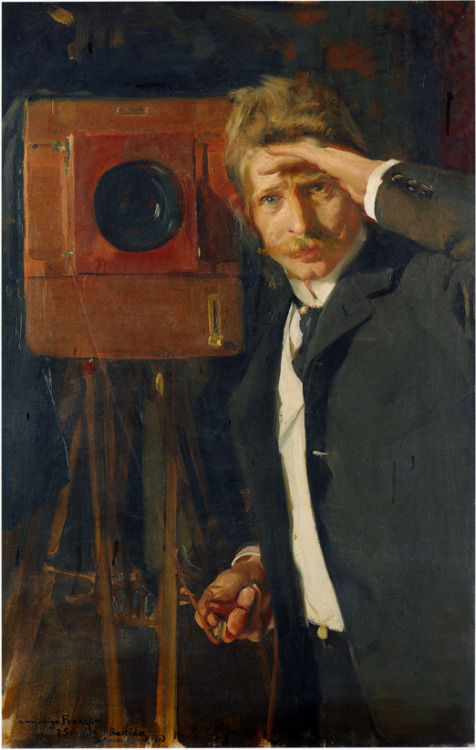
By Appointment or By Chance
~ A Short Story by Allen Kopp ~
(This short story has been published in The Literary Hatchet.)
The year was 1899. The old century was in its death spiral and a new century was about to be born. At this auspicious time of new beginning, I opened a business on Main Street in the town of Echo Bend.
I had worked as a teacher, editor at a small newspaper and clerk in a department store, but I dreamed of a profession where I was in sole command. I hated having to be accountable to anybody for anything. I wanted to be accountable only to myself.
I went to a demonstration of photography in a college lecture hall and, after sitting through a lecture and a practical demonstration, I was certain portrait photography was something at which I could make a living. I bought a couple of books and studied them, front to back, with interest. I took my savings and bought a camera and all the necessary equipment. In Echo Bend, I rented commercial space in the heart of the business district. I engaged a carpenter to construct a wall, so that the front part of the space would be public and the back part private. A professional sign painter painted my name across the window and underneath my name these words: Portrait Photographer, By Appointment or By Chance.
Photography had been around for a long time but to most people it was still a novelty. If you had the money to spend, it was all the rage to put on your glad rags and go and sit for your portrait. Then, no matter how poorly time treated you, no matter how ugly and corpulent you became, you would always have the photographic image of yourself to remind you of what you once looked like, when you were at your best. Your descendants would still have your photographic image in a quaint little frame decades after your death, and one day they would sit around and say to each other, “Now, just who was he?” or, “Didn’t she die of diphtheria when she was only about twenty-three?”
Families wanted their portraits taken as a group and then separately. Some families had as many as eight or ten children. Mothers wanted their children to sit for a portrait every year, traditionally on their birthdays. Mantelpieces and chairside tables abounded with portraits in frames. People gave them to relatives as gifts at Christmas. Photography as a business was a modest gold mine for the right sort of fellow.
And then, of course, there was death photography. People wanted portraits of their deceased family members, in a coffin or on a bed, sometimes sitting in a chair, oftentimes posed with the living members of the family or with the family dog. Some photographers painted eyes or rosy cheeks on the finished portraits, but I never employed that vulgar technique. I figured that once a person was dead, it was pointless to try to make him or her seem alive again.
While business was booming in town, I was willing, more often than not, to go out of town to take portraits of the deceased, since the deceased were by necessity bound to one spot. I could usually charge any amount for this service and people would pay it willingly because the resultant photo was a blessed remembrance of the departed loved one and money was, where the death sentiment was concerned, no object. This is not to say I cheated people; I charged them what I thought they could pay. If someone lived in a fine house with many rooms and beautiful furnishings, I had no qualms about charging top prices. If, however, they dressed in rags and lived in a falling-down shack, I did the work for practically nothing.
At this time I was still traveling by horse-drawn wagon. I had a specially made enclosed wagon to keep my equipment dry if it should happen to rain, and it rained most days at certain times of the year. Often I found myself slogging over unfamiliar country roads, looking for a place I wasn’t sure existed. Sometimes it took me all day to get to where I needed to go and I would end up staying the night. I wasn’t above bedding down inside my wagon if there was no other choice. I kept telling myself that next year, or maybe the year after, I’d hire an assistant to do the driving, carry the equipment and perform other trivial tasks. I might even train him to go on the out-of-town forays on his own.
Children died more often than adults. There was always a fever or an infection or pneumonia to carry them off. If you thought about it at all, you knew that a competent doctor might have fixed them up with a pill, a bottle of medicine, or just a word of advice, if only a doctor had been around when needed. I photographed dead babies in sateen-covered boxes in the family parlor, surrounded by sprays of forget-me-nots; babies in their mother’s arms, with a brood of older children looking on; babies just ready to go into their graves with smiles on their faces and a toy animal in their arms; twin babies in one tiny coffin with their arms entwined. Once I photographed a baby and a little brown-and-white dog side by side in a wooden box, ready to embark together on their journey through eternity.
Then there were the older children: the tiny six-year-old girl whose father accidentally shot her through the heart while cleaning a gun; the boy, eight years old, who didn’t get out of the way of the train fast enough; the girl, age ten, who died of heart failure when her mother locked her in a basement with rats to punish her. Most parents were good parents, though, and brokenhearted at the loss of a child. I provided them with the photographic remembrance that helped to ease their pain and made the child seem forever close and not so far away after all.
I was on my way back to town after one of these missions to photograph a ten-year-old boy who had fallen on a pitchfork when I saw a woman standing beside the road waving a handkerchief at me. I pulled up with impatience and stopped, ready to growl at her like an old bear.
“You’re the photography man?” she asked.
“I am,” I said. “What can I do for you?”
“I’m Mrs. Trenton Fairman. I live in that house over there.” She pointed and I looked at a large brick house set back about two hundred feet from the road.
“I’m just coming off a case,” I said. “I’m headed back to town.”
“Well, you might come back in the morning, if you’re agreeable.”
“I don’t think I can do that,” I said. “Just what is it you need?”
She sighed and wiped tears from her cheeks. “Death has paid a call at my house.”
“You want a photograph of the deceased?”
“Yes, but it’s more than that.”
“What, may I ask?”
“You look like a strong man,” she said, “and quite young.”
“Yes?”
“My husband, Trenton Fairman Senior, is lying in his coffin in the bay window between the parlor and the dining room. The sun shines on him most of the day. He hasn’t been embalmed and it’s been three days now.”
“Why don’t you go ahead and bury him?”
“Tomorrow, April twenty-third, would have been his fifty-seventh birthday. When he knew he was dying, he made me promise that I wouldn’t have him buried until that day. He was very superstitious. He studied numerology and he believed that nothing would ever go right for him in the afterlife or for his kinfolk still living on the earth if he did not go into the ground on the day he was born.”
“I don’t think I’ve ever heard of that superstition,” I said.
“So, if you could consent to take my dear husband’s photograph before he goes at last into the ground on his birthday, I will make it worth your while.”
“I couldn’t do it for less than fifty dollars,” I said, believing she would balk at the price and that would end the matter.
“All right, but we’ll negotiate terms later on. You see, there’s more to my request than I’ve stated.”
“I haven’t eaten since early this morning,” I said.
“I believe we might deign to find something suitable in the house for you to eat, sir.”
She instructed me to pull my wagon around to the side of the house where she was waiting for me. When she took me inside, there was the unmistakable stench of death.
“I know,” she said. “He’s starting to smell. Nature takes its course.”
I took my handkerchief out of my pocket and held it over my mouth and nose. It was probably a good thing I hadn’t eaten.
She instructed the housemaid, a large, ungainly girl named Myrtle, to fix me a sandwich but I said, “Never mind. A drink of water will do. Just show me where the deceased is and we’ll get this thing over with.”
He was lying in a mahogany casket, very expensive looking, suffused with milky light from a bay window. Enormous potted ferns lay at the head and foot of the casket. Smaller containers of flowers were ranged on the floor along the front.
“He loved the sunlight,” Mrs. Fairman said. “I just couldn’t see blocking out the light with heavy curtains. It’ll be the last earthly light that will ever shine on him.”
“All right,” I said. “I’ll bring my equipment in from the wagon and we’ll have this over in no time at all.”
While I got the camera set up and everything ready to take the picture, Mrs. Fairman and the housemaid, Myrtle, hovered in the background, watching my every move. I would have preferred that they go about their business, but they had never seen picture-taking before and were interested in how it worked.
I took two photographs of the deceased from different angles and then Mrs. Fairman wanted one with her standing next to the casket looking down into her husband’s face. When I was finished, I said, “That’ll be fifty dollars, ma’am, if you please. When your photographs are ready, I’ll send you a postcard and you can pick them up in town at your convenience.”
“I believe I mentioned there was something else,” Mrs. Fairman said.
“Yes?”
“My son, Trenton Fairman Junior, died a day and a half after his father. He is upstairs in his room, lying on his bed. He has been bathed and dressed for burial.”
“You want a photograph of him, too?” I asked.
“Yes, I do and then…”
“Then what, ma’am?”
“Myrtle and I are here alone. Neither one of us are very strong. After you take Junior’s picture, I would like to prevail upon you to pick him up and carry him downstairs and place him in the coffin with his father and then close the lid. The boys will be here early in the morning—on my husband’s fifty-seventh birthday, I believe I mentioned—to perform the burial.”
“How old is the boy?”
“He’s fifteen years old, sir, and not very big. I think he could not weigh more than a hundred pounds. I’ll pay you an extra twenty dollars to carry him downstairs and place him in the coffin beside his father and close the lid.”
“Are you sure they’ll both fit in the same coffin?”
“Oh, yes, sir! Comfortably, I think.”
“So, that’ll be fifty to photograph your husband, thirty to photograph your son, and twenty to carry the boy downstairs. That’s a hundred all together.”
“That seems fair, sir. I have the cash in the wall safe in my bedroom.”
“All right, let’s photograph the boy, then.”
Mrs. Fairman took me up a broad carpeted staircase, up one flight and then up another. We went down a hallway to a closed door, Mrs. Fairman first, then me, and then silent Myrtle. Mrs. Fairman turned to look at me before she opened the door.
“Why does God punish us so?” she said.
She opened the door and I saw the boy, Trenton Fairman Junior, lying on his back on the bed. He was a fine-looking boy, nothing like his hatchet-faced father, dressed in a dark suit with knickers, gray stockings and expensive-looking, high-top leather shoes. He wore a high collar with a cravat, just as a grown man would, with a diamond stickpin.
“He looks to be asleep,” I said.
Mrs. Fairman and Myrtle sobbed behind me.
“Maybe it would best if you leave me to my work,” I said.
They went out of the room and I went back downstairs to the parlor where the father lay and got my photographic equipment and carried it back up. I set up to take the picture and, as usual, I photographed the deceased from three different angles.
When I was finished, I carried my equipment back down, out the door, and loaded it into my wagon so I would be ready to leave as soon as Mrs. Fairman paid me the money she owed me.
Mrs. Fairman and Myrtle were waiting for me when I went back inside. Now it was time to carry the boy downstairs. The three of us went silently back up the stairs.
With Mrs. Fairman and Myrtle standing in the doorway, I approached the bed. Cautiously, I slipped my right arm under the boy’s back and my left arm under his knees. As I hefted him off the bed, I got the surprise of my life. His body went rigid, he opened his eyes and looked at me and gasped for air as if he had been under water.
“He’s not dead!” I said, laying him back down.
“Oh, oh, oh!” Mrs. Fairman said and Myrtle screamed.
“What made you think he was dead?” I said.
He continued to revive, moving his arms and legs, pulling at his clothes, as if he had suddenly become animated by the throwing of a switch. When I looked away from him over to Mrs. Fairman, I saw that she had collapsed on the floor. She convulsed violently and then stopped moving.
“Has she also been sick?” I asked Myrtle.
I approached the recumbent woman and took her hand in mine and began patting it because I didn’t know what else to do. I administered these little slaps to her hands and face and after a while I could see she wasn’t breathing. I put my ear to her chest and heard nothing.
“I’m afraid she’s dead,” I said. “The shock was too much for her.”
Myrtle gasped and ran from the room. I heard her shoes clomping all the way down the stairs.
I turned to the boy, Trenton Fairman Junior, sitting on the bed, feet on the floor. “Are you all right?” I asked him.
“I don’t know,” he said. “Who are you?”
“I photograph the dead. Your mother asked me to come up here and take your picture.”
“Why would she do that?”
“She believed you to be dead for the last day and half.”
“Oh, yes. That’s right.”
“You know your father is dead, lying downstairs in the parlor?”
“Yes, we were going to have a funeral.”
“I’m afraid your mother is dead, too.”
He looked over at her lying on the floor and shook his head.
“Where is the nearest doctor?” I asked.
“I don’t know. I’m not sure there is one.”
“What about that girl? Myrtle? Does she live in the house with the family?”
“I don’t know where she lives.”
“She’s the only one left.”
“She’s ignorant,” he said.
“Would she be able find a doctor?”
“She wouldn’t be able to find her bunghole with both hands.”
“I’m going back to town now,” I said. “I’ll go to the sheriff and tell him what happened. Do you want to stay here do you want to go with me?”
“I’ll go.”
“You don’t want to stay here with your mother?”
“She wasn’t my mother. She was only play-acting.”
He asked me to wait while he changed his clothes and got a drink of water. I went outside and leaned against a tree in the front yard. In five minutes he came out of the house wearing a dress suit, carrying a small valise. He locked the door and we departed in my carriage.
It was late afternoon and the sky was threatening rain. I didn’t like the way the day had turned out. On top of everything else, I hadn’t collected the hundred dollars that was owed me and there would be no way to get it now.
For the first couple of miles, Trenton Fairman Junior said nothing, so after a while I turned to him to see how he was faring. With both of his parents dead, I expected him at least to need a reassuring adult to speak to.
“Do you have any family in town?” I asked.
“I don’t think so,” he said.
“You’ll have to have somebody to stay with,” I said.
“After the dead bodies are removed from my house, I can stay there. The house belongs to me now.”
“I don’t think they’ll let you stay in that big house all by yourself without an adult present.”
“Why not?”
“You’re a minor.”
“What does that mean?”
“You’re underage. Still a child.”
“I’ll bet I’m more grown up than you.”
“It’s not a subject for argument. I’m just telling you the law won’t let you live in the house alone until you’re old enough.”
“I’d like to see them try and stop me.”
“Didn’t your father have a lawyer who handled his estate?”
“Yes, I think so. A lawyer in town. I think him name was Henry something.”
“Well, that’s a start. There can’t be that many lawyers in Echo Bend with Henry for a first name.”
He was silent then. He looked straight ahead as if I wasn’t even there.
“Your mother thought you were dead,” I said. “How’s that for irony?”
“She wasn’t my mother, I told you. She was my stepmother.”
“Well, whatever she was, she thought you were dead.”
“I was dead.”
“As you stated earlier. You were dead and then what happened? You just came back to life?”
“I don’t have any explanation for it, but that’s what happened. Not everything is explainable.”
“What happened while you were dead? Do you remember anything?”
“I saw God. He spoke to me.”
“What did he say?”
“I would expect you to ask a silly question like that.”
“Don’t you think anybody would want to know what God says when he speaks.”
“God is a compact man with thin lips and a small mustache, almost as if it had been drawn on. People think of him as being big and old and having a long white beard, but he isn’t any of those things.”
“I don’t think I would have known him,” I said.
“He wears a black dress suit with a gray cravat and a ruby stickpin. And a monocle in his right eye.”
“Don’t tell me God has an eye deficiency! Or is the monocle just more of an affectation?”
“Go ahead and make fun of me. I don’t care.”
“All right. What did God say to you?”
“He said the Saints are with him in heaven.”
“Is that all?”
“He told me to await further instructions.”
“What did He mean by that?”
“You tell me.”
I sighed. I was starting to get bored with the conversation. “You must be hungry,” I said for a change of subject.
“Why must I be hungry?” he asked.
“You were dead for a day and a half. Dead people don’t eat.”
“Yes, I suppose I’m hungry,” he said. “I could eat.”
“When we get to town, we’ll get you a good dinner.”
“In the morning I’ll go see Henry what’s-his-name and tell him my stepmother decided to die along with my father. He’ll advise me what to do.”
“You’ll need a place to stay tonight,” I said.
“I can manage.”
“We’ll get you a room in the hotel for tonight.”
“I don’t have any money. I know that she had money in the safe, my father’s money, but she never told me the combination.”
“I’ll advance you the money.”
“Forget it. I’ll just walk around until morning. I’ve done it before.”
“That doesn’t seem the right thing to do,” I said.
When we got back to town, I went straight to the sheriff’s office, went inside and told him what had happened at the Fairman place, that there were two dead bodies there and nobody to tend to them. He asked me a dozen questions, where I might be reached for further questioning, and then he told me I could go. I went back out to my carriage and drove to the hotel. I stabled my horse and locked my wagon so nobody would become curious about what might be inside worth stealing. These trivial matters tended to, Trenton Fairman Junior and I went into the crowded hotel dining room and sat at a round table in the middle of the room. After we placed our order, I noticed the people in the restaurant looking at us and then I realized they were looking at him.
“You see the way they’re looking at me?” he said.
“They’re not used to seeing a young fellow all dressed up in a dress suit. Not in this town. You look like you just got here from someplace else.”
“It isn’t what I’m wearing.”
“What is it then?”
“They know I’ve seen God and will see Him again.”
“They don’t know any such thing.”
The food came, huge amounts of beefsteak, fried potatoes, carrots and green beans. After we ate, the boy said he was tired and wanted to go to bed. I figured he must be upset at the strange turn of events his life had taken that day, but he seemed perfectly calm and unemotional.
After I paid for our meal, we went into the hotel, where I engaged a room for him for the night. I asked him if he was afraid to stay by himself in a strange hotel room and he laughed. “You can’t be serious,” he said. “I’ve always been by myself. Since the day I was born.”
He had such a grownup way about him that I sometimes forgot I was dealing with a child.
He signed his name in the hotel register and the clerk handed him the key. Before he went upstairs to his room, I put my hand on his shoulder and told him I’d come by in the morning at eight-thirty to take him to his father’s lawyer and for him to meet me in the lobby. He nodded and turned and went up the stairs.
When I got home, I took a hot bath and fell into bed and slept soundly until thunder woke me up at seven in the morning. I dressed and consumed a light breakfast and then I set out for the hotel. I was sitting in the lobby reading a newspaper at twenty minutes after eight. I expected Trenton Fairman Junior to come down the stairs at any moment.
At eight forty-five he still hadn’t made an appearance and at nine o’clock I was still sitting there holding the newspaper in my foolish hands. At ten minutes after nine, I went over to the desk and asked the clerk if he could check on the boy in room three-twelve for me. He had been supposed to meet me and he never appeared.
The clerk checked his book and looked up at me and said, “A boy, you say?”
“Yes, a boy,” I said.
“A small boy?”
“No, a big boy. Almost an adult.”
The clerk looked down and then looked back at me and sighed. “Room three-twelve has not been occupied for several days,” he said.
“Are you sure?”
“Yes, sir.”
“I was with the boy last night. I engaged the room for him to spend the night in and he was supposed to meet me here, in the lobby, this morning at eight-thirty.”
“Are you sure it was this hotel?” the clerk asked.
“Will you let me take the key and go up to room three-twelve and check for myself?”
“That would be against regulations, sir.”
“Then open the door yourself to make sure the boy is all right.”
The clerk went with me up to the third floor. We walked to the door of room three-twelve and he inserted the key into the lock and pushed the door open for me to enter. The bed was neatly made up. The window shades were drawn. It was clear the room had not been occupied the night before.
“He signed the register last night,” I said to the clerk. “I was with him. His name, Trenton Fairman Junior, will be there if you only bother yourself to look.”
We went back down to the lobby and the clerk checked the register from the night before. “No such name here,” he said.
“Can I look?”
He turned the register around and I read over the four or five names from the night before. The name Trenton Fairman Junior was indeed not there.
So much for Trenton Fairman Junior. I had no explanation for why his name wasn’t in the hotel register, but I figured he didn’t need or want my help any more and had gone to find his father’s lawyer on his own.
I thanked the clerk and went back out into the rain. I went to my photography studio and opened for business. It was a slow morning, so I had a chance to process my plates from the day before: two shots from different angles of the boy who died of the pitchfork wound through the stomach, two of Trenton Fairman Senior lying in his coffin, one of Mrs. Fairman standing next to her husband’s coffin. They all turned out beautifully.
When I processed the plates I had taken of Trenton Fairman Junior lying dead on his bed, I saw only a dim outline of a bed and that’s all. No Trenton Fairman Junior. Why would I have taken photographs of just a bed? I tried to recall the events of the day before to make some sense of it. I began to think I had experienced a kind of lapse while I was in the Fairman house. Had Trenton Fairman Junior even existed outside of my own mind? Was he a ghost? I couldn’t be sure. Not all things, as had recently been pointed out to me, are explainable.
After that I didn’t do any more work. I was beginning to feel tired and lightheaded so I closed the shop for the rest of the day and went home.
That night I was sick and was sure I was dying. I ached in every joint and was having trouble swallowing. I couldn’t keep anything on my stomach, not even a sip of water. I knew I had a fever.
When I was trying to think what might be the matter with me, the truth came to me as if spoken by a voice inside my head. I had failed to ask the reason for Trenton Fairman Senior’s death. He had obviously died of something catching and I had caught it. I had spent two hours at least inside a house breathing in disease germs and death.
I didn’t want to die alone and have my bloated body found only after the neighbors noticed the smell, so I checked myself into the nearest hospital. The doctor examined me briefly and put me in the isolation ward. I was sure I was going to die; if not that night, then very soon.
For two days and nights I passed in and out of consciousness. I was barely aware of anything but I knew there were other people moving at all hours around the bed on which I lay. I didn’t know who they were, or care: I only wanted them to go away and let me die in peace.
Hours passed, maybe days, but I had no real sense of time. The light at my window went from light to dark and back to light. I was aware of the sounds of rain and thunder, the perfect accompaniment, I thought, to dying.
Once when I woke up from one of my naps, Trenton Fairman Junior was standing at the foot of my bed, smiling at me.
“I wondered what happened to you!” I said. “I’m happy to know you made it all right.”
Then I realized that somebody else was standing beside Trenton Fairman Junior. He was a compact man with thin lips and a small mustache, almost as if it had been drawn on. He had a Continental air about him, rather than an American one.
“Who are you?” I asked.
He smiled and said, “It’s time for me to ask you a question.”
“What is it?”
“Do you want to go or do you want to stay?”
“What? Go where?”
“I asked you if you want to go or if you want to stay?”
“I think I’d like to stay if it’s all the same to you,” I said.
I must have drifted off to sleep after that because when I came to myself again, Trenton Fairman Junior and the man with the monocle were gone.
I was several more days in the hospital and then they said I was well enough to go home. As I was getting dressed to leave, one of the nurses told me how lucky I was to be alive because I had come so close to dying.
“I saw God,” I said. “He spoke to me.”
“What did he say?”
“He asked me if I wanted to go or if I wanted to stay.”
“What did you say?”
I thought it an unnecessary question, but I answered all the same.
“I said I wanted to stay.”
“You’re not usually given a choice, I believe,” she said.
After a few days at home by myself I felt almost well again. On Sunday morning I rode out to the Fairman place, for what reason I don’t know. It looked abandoned. Grass and weeds had grown up in the yard. The windows were shuttered. A large for-sale sign was placed so that people would see it coming from either direction on the road. Just being near the house made me start to feel ill again, so I left.
In a month or so I moved to the city. I borrowed some money from a bank and set up a photography studio in a fashionable location (fashionable meaning people with money). I did well and moved into expensive lodgings with maid service. I bought myself a motor car, something every man of means was doing. I paid back the money I borrowed and was as happy as I ever expected to be.
My photographic subjects now were all living. I wanted nothing more to do with death. My own would be coming for me soon enough.
Copyright © 2023 by Allen Kopp


 Literary Fictions