Ring the Night Bell ~ A Short Story

Ring the Night Bell image 3
Ring the Night Bell
~ A Short Story by Allen Kopp ~

(This short story has been published in the online publication Short-Story.Me with a different title.)

I knew Mrs. Beaufort on sight. She was a faded, middle-aged woman who had probably been pretty in her day, except that her day was past. I was surprised when she called me on the telephone and asked me to come out to her house. Strictly business, she said. I knew there would be money involved—quite a lot of money, I hoped—so I told her I’d be there at the time she indicated. I had experienced several reversals—failures, if you know what I mean—so I had been praying for just the kind of opportunity I hoped this would be: one that would pay me a maximum amount of money with a minimum amount of involvement and risk.

I had been doing some investigative work for years that allowed me to remain on the sidelines of the criminal underworld. I could go either way—I could tip off the police or I could perjure myself in court; I could provide a hiding place for somebody on the lam or help a murderer get across the border if there was enough in it for me. I had done some work for Mrs. Beaufort’s husband. Work he called “under the table” because it was work he didn’t want anybody to know about. That’s how Mrs. Beaufort knew about me and my reputation.

I had a feeling it would not be a good idea for people to see my car parked at Mrs. Beaufort’s house, so I took the bus out there and when I got off the bus I walked about four blocks to her place. It was raining but I was prepared for it; I was wearing a raincoat and a hat and carrying an umbrella. I looked as nondescript as I could.

The Beauforts lived in the biggest, fanciest house I had ever seen. It was like a house out of a dream, the kind of house that rich people in movies live in. There must have been thirty or forty rooms. When I rang the bell, I expected a butler to open the door, but Mrs. Beaufort opened it herself. She smiled at me and waved me in with the gracious air of a hostess. She took my coat and hat and ushered me into the most beautiful sitting room I had ever seen and pointed to a white sofa where she wanted me to sit. When I was comfortable, she offered me a glass of champagne. I had tasted champagne once or twice before in my life. She gave me the impression she had it every day of her life.

While sipping champagne—she made sure my glass stayed nearly full—we talked idly of this and that: the weather and the stock market, music and movies. I found her a smart and witty woman—a good companion on a rainy night when all you want is somebody to talk to. Pretty soon we were swapping stories of our childhoods and telling each other things we ordinarily would never tell anybody. She had been a tomboy who hated music lessons and briefly, in her youth, entertained the notion of becoming a nun. I told her the sad tale of my disadvantaged youth and how I had run away from home and lied about my age to get a job as a longshoreman. What I told her was mostly true but I wasn’t above adding a few embellishments.

After I had been sitting on the white sofa for an hour or so and the big grandfather clock chimed, reminding me of the passage of time, I suddenly remembered I was there for a reason other than reminiscing about my past. I asked Mrs. Beaufort what it was she had wanted to see me about.

She became serious and sat down beside me. She said she liked me and trusted me. She told me her husband had spoken well of me on several occasions and had found me reliable and amenable. I thanked her for the compliment and set my glass on the side table.

She and her husband had been married nearly twenty-five years, she said. They had had two daughters, one of whom died in an automobile accident at the age of seventeen. They owned six food processing plants and were about to open two more. Business had never been better. Money was pouring in every second of the day.

“That’s fine,” I said, “but what does it have to do with me?”

Her husband, she continued, had told her he wanted a divorce. He had started seeing a younger woman and had found that, even at his advanced age (he was fifty-two) he was still capable of feeling emotion.

“Isn’t that ridiculous?” Mrs. Beaufort asked, looking me steadily in the eye. “Feeling emotion? It sounds like an impressionable schoolgirl.”

“It takes all kinds,” I said.

“I don’t want to divorce my husband,” Mrs. Beaufort said. “A divorce would be ruinous to my business that I’ve built up over all these years and also ruinous to my family. I have to consider my only surviving daughter and her future happiness. I don’t want her to have the stigma of divorced parents hanging over her head.”

“Yes, I can see that,” I said.

“Since you are a reliable and a discreet man and you have a reputation for getting a job done, I was hoping you would be able to put me onto someone who could put my husband out of the way.”

“What do you mean ‘put out of the way’?”

“I mean exactly what you think I mean, Mr. Tyler.”

“Wait a minute,” I said, suddenly on my feet. “That’s way out of my line. I may be willing to bend the law one way or another to suit the situation but I don’t go in for that sort of thing. Do you think I want to spend the rest of my life in prison?”

“Of course not, Mr. Tyler. Nobody wants that. If a thing were to be done properly, there would be no fear of going to prison.”

“I really think I ought to be going,” I said. “It’s been, uh, interesting, but when you start talking about something as serious as—”

Mrs. Beaufort laughed. “You should hear yourself,” she said. “You sound like a silly naïf.”

“Like a what?”

“Here, have another glass of champagne and we’ll talk over my proposition.”

Mrs. Beaufort was willing to pay upwards of fifty thousand dollars to have her husband and his mistress killed. Ideally, she wanted it to look like a murder-suicide. The jealous older man discovers his paramour has been maintaining an open-door policy where old boyfriends are concerned. He flies into a rage and shoots said paramour in the head while she is sleeping and then turns the gun on himself—as simple as that. There would be no one to blame because both parties involved would be dead; no one snooping around asking questions.

If I could connect Mrs. Beaufort with someone who would do the job, she would pay me ten thousand dollars; forty thousand would go to the trigger man. If, on the other hand, I decided I was capable of doing the job myself, the entire fifty thousand would be mine. She hoped I would do the job myself, because, well, it just seemed better not to involve another party if we didn’t have to.

I told her I would think over the proposition. Fifty thousand was certainly an attractive sum and would give me the chance to get away and start afresh in a new locale, but I had to admit I didn’t relish the idea of killing two innocent people in cold blood.

Not innocent,” she said. “And think of it as just another job, a job for which you will be handsomely rewarded.”

After a couple more glasses of champagne, I said that, yes, of course, I would be happy to do the job myself. I didn’t see how I could turn down fifty thousand dollars.

“Oh, I’m so glad!” she said, clasping her hands together like a schoolgirl. She poured her own glass full and proposed a toast. “To the success of our little venture,” she said. We clicked glasses and laughed.

When I left Mrs. Beaufort’s house that night, we were both happy and giddy. She was about to be relieved of a philandering husband who was all too willing to wreck her business and her life—also her daughter’s life—and I was about to make the biggest score of my life. I saw dollar signs before my eyes.

She told me to do nothing until I heard from her; she would know when the time was right to proceed. I waited almost two weeks and was starting to think the deal was off when she called me up late one night and woke me out of a sound sleep. She asked me if I could meet her the next evening at the Embassy Club at eight o’clock. I told her I’d be there at whatever time she said and then I rang off and went back to sleep.

The reason we were meeting at the Embassy Club, I discovered that next night, was because that’s where Mrs. Beaufort’s husband’s paramour (or mistress, whatever you want to call her) worked as a singer. Her name was Adele Kluge. Mrs. Beaufort wanted me to get a good look at her.

At the Embassy Club we were all smiles. We sat at a cozy little booth and made small talk and drank martinis like they were going out of style. We had dinner and then the floorshow began. The small orchestra came out and warmed up with a couple of mellow numbers and then the lights went down and the featured singer came out onto the little stage and waited for her musical intro.

When the lights came up enough for me to get a good look at Adele Kluge, I had to admit that Mr. Beaufort had good taste in dames. She was smart and elegant-looking, not cheap or flashy. She was maybe thirty-eight or forty years old, a mature woman and not a flighty young girl. She had chestnut-colored hair and looked stunning in a tasteful black-and-white gown. Her voice was polished and mellow and the orchestra was good too.

During Adele’s act Mrs. Beaufort was ill at ease; she wouldn’t look directly at Adele. She stared hard at the table or looked off to the side where the waiters came and went. When Adele was finished and left the stage to politely enthusiastic applause, Mrs. Beaufort was her old smiling self again.

“She’s good,” I said. I couldn’t resist.

“Do you think you’ll know her when you see her again?” Mrs. Beaufort asked me.

“Of course,” I said.

When we left the Embassy Club, Mrs. Beaufort asked me to drive her home. I pulled into her driveway and stopped at the front door, expecting her to get out, but she put her hand on the door handle and looked over at me and smiled sweetly.

“Would you mind coming in?” she asked. “I don’t feel like being alone.”

As we went up the steps in the dark to her front door, she held on to my arm a little more than was necessary. I could tell right away that she was putting on the helpless female act. I was determined to maintain my professional demeanor. She was just a person I was doing some work for; I wasn’t interested in more than that.

Once we were cozily inside with all the lights on, Mrs. Beaufort made some coffee and showed me a picture of her daughter that had been taken two years earlier. Stephanie was a pretty girl in an ordinary way. She had dark hair and a pleasing face with a hint of sadness around the eyes that told me she was something more than just a rich man’s spoiled daughter. I could tell that all Mrs. Beaufort’s hopes were riding on Stephanie.

After that, our conversation took a more serious tone. Mrs. Beaufort had decided that a week from Friday, the twenty-first, was when she wanted the murders to take place. That was only a week and a half away. Friday night was Mr. Beaufort’s night for recreation away from business. He would play poker with his poker club until midnight or so, and then he would go to Adele Kluge’s apartment on the eighteenth floor of the Marquand apartment building.

This was the way Mrs. Beaufort had it planned: I was to go to Adele Kluge’s apartment at around eleven-thirty and shoot her in the head while she slept in her bed. Then I would wait in the dark until Mr. Beaufort arrived and when he did I would kill him before he discovered Adele’s body. The best part of the plan, according to Mrs. Beaufort, was that I would kill them both with Mr. Beaufort’s own gun, which would be certain to be covered with his own fingerprints because it was his favorite gun and he was known to carry it with him on business trips for protection. When I asked Mrs. Beaufort how I was to acquire this gun, she went into another room and came back carrying a leather holster with the gun in it. I unfastened the holster to get a look at the gun; she warned me against touching it with my bare hands.

I was starting to get a sick feeling about killing Mr. Beaufort and Adele Kluge. When Mrs. Beaufort and I had talked about it earlier, it didn’t seem real to me, but now, since we had settled on a date, it was too real for comfort and I was thinking that I was probably too squeamish to pull that kind of a job—fifty thousand dollars notwithstanding. I kept my I-don’t-think-I-can-do-it thoughts to myself, though, and after a while I was comforted by the thought of the money I was going to get.

I didn’t know how I was going to break into Adele Kluge’s apartment without being seen or heard, but Mrs. Beaufort told me not to worry; she had a key to Adele’s door. When I looked at her with wonder and asked her how she came to have a key, she just laughed and told me it was one of her secrets that she didn’t care to divulge.

I told Mrs. Beaufort I was going to need some money in advance for a job that difficult and she didn’t give me any argument. She said she would have twenty-five thousand dollars in cash delivered to me before the twenty-first, and she would pay me the rest of the money after the job was done. She didn’t say how she would have the money delivered, but she seemed to have thought of everything so I let it go at that.

That night I spent a nearly sleepless night. I kept seeing Adele Kluge on that stage singing her songs; I hated to be the one to bring down the final curtain on her act.

True to her word, Mrs. Beaufort had twenty-five thousand dollars delivered to me on Thursday the twentieth in a neatly wrapped parcel. I knew the delivery boy didn’t have any idea what was in the package. I took it from him and ran into the bedroom and closed the door, even though I was alone, and pulled down the curtain and ripped the package open. I had never seen that much green before. It was the most beautiful salad I had ever laid my eyes on. And it was only half of what I was going to get.

The next day I was calmer than I thought I would be. I slept away half the morning and when I got up I walked to a café down the street and had eggs and ham. When I left the café, I knew I would be restless if I went back home, so I went to an early matinee and sat in the balcony and completely lost myself in the picture.

After that I went to a quiet little bar and had a couple of beers. The beers made me sleepy, so I went home and went to sleep on the couch. When I woke up, it was after dark and raining again and I had the jitters. I felt the way an actor must feel before he goes on the stage for the first time. I hoped I could keep from getting rattled and remember what I was supposed to do.

About ten o’clock I started getting ready. I dressed all in black, including black sneakers. I put the gun in the holster in my pants pocket and the key to Adele’s apartment in my other pocket. I rolled my gloves together with my ski mask and put them in the pocket of my raincoat. I put on my hat and looked all around my apartment—I don’t know what I was looking for—and turned off the lights and went out the door.

I walked down the street a couple of blocks to a cab stand where I got a cab and took it to the neighborhood of the Marquand apartments. I knew better than to have the driver let me out right in front of the building, so I got off at a drugstore a couple of streets over. I cut through a connecting alley and approached the Marquand building from the rear.

I went into the lobby breezily as if I belonged there. As I walked past the sleepy night watchman sitting behind a desk, he gave me a glance but I was careful not to look directly at him. I went to the elevator and up to the eighteenth floor.

At this point I told myself I could still cancel the operation if things didn’t look good; for example, if somebody was standing waiting for the elevator and got a good look at my face. I saw no one, though, and as I padded down the carpeted hallway looking for apartment 1806, I didn’t hear a sound.

When I found the door to Adele’s apartment, I stood there for a moment breathing deeply, trying to slow down the beating of my heart. I slipped on the gloves, took off my hat and pulled the ski mask over my face, put my hat back on, and pulled the gun out of its holster. Before I put the key into the lock to open the door, I glanced at my watch—it was exactly eleven-thirty.

The door opened effortlessly and I stepped out of the half-light of the hallway into the darkness of Adele’s apartment. I closed the door silently and returned the key to my pocket before I lost track of it and dropped it. I waited a couple of minutes for my eyes to adjust before I proceeded down the hallway to the right.

I came to a door that was partway closed—obviously the bedroom where Adele lay sleeping—and pushed the door opened with my left hand, holding on to the gun in my right hand.

There was just enough light in the room for me to be able to see the bed and Adele lying in it. She lay on her back with her arms outstretched; it was so quiet in the room I could hear the sound of her breathing, almost like a dainty little snore. I approached the bed from the left. She was lying toward the right side, with her head canted slightly toward the wall. I leaned over the side of the bed and put the gun within two inches of her head and pulled the trigger; she was dead instantly as the bullet entered her brain. I knew from the expression on her face that she felt nothing and knew nothing. That knowledge would comfort me in the days to come.

As I looked around the room for a place to hide, I told myself I was halfway home and this would soon be over. I was afraid that a neighbor might have heard the gunshot and would come running or, worse, call the police, but nothing happened; everything was as quiet as before.

On the other side of the room opposite the bed I saw a door that was obviously a closet. I crossed the room and opened the door and stepped inside and pulled the door closed, but still opened enough that I could see out into the bedroom. I felt oddly secure inside the closet, as if this was all in the past and I was only remembering it.

I waited inside the closet for maybe a half-hour, with only the sound of my own breathing, when I heard the door to the apartment open and close softly. I knew it was Mr. Beaufort and he was exactly at the time I expected. When he came into the bedroom, he didn’t turn on a light—another lucky break for me—and I could tell he was trying to keep from waking Adele.

He went into the bathroom and closed the door and turned on the bathroom light. I could hear the toilet flush and water running in the sink. In a minute he came out of the bathroom and stood beside the bed looking down at Adele. I thought he must know that something was amiss with her, but he turned his back to the bed and began unbuttoning his shirt. He removed his shirt first and then his shoes and pants and then he moved to the bureau and opened the drawer and took out a pair of pajamas. He was partway bent over from the waist when I moved up behind him like a disembodied spirit and shot him in the right temple. I knew he was dead right away, probably before he hit the floor.

With Mr. Beaufort dead at my feet and Adele Kluge dead in the bed, I let out my breath, not realizing until that moment that I had been holding it in. I took off my hat just long enough to take the ski mask off, put my hat back on, rolled up the ski mask and put it in my pocket. I bent over Mr. Beaufort’s body and pressed the gun into his right hand, molding his fingers around it.

“It’s nothing personal,” I whispered into his right ear.

I took a quick look around the room to make sure I hadn’t forgotten anything and then I moved through the dark apartment back to the door. I listened at the door for a moment and, hearing nothing, opened it and moved out into the hallway. As I closed the door, I made sure it locked.

Walking back up the hallway to the elevator, I took off the gloves and stuffed them into the pocket of my coat and ran my fingers through my hair. If I met anybody, I didn’t want to look disheveled. I didn’t want anybody to be taking a second look at me for any reason.

When I got off the elevator in the lobby, the night watchman was asleep in his chair and didn’t see me. I went out the door, took a deep breath of the night air, and began walking down the street. I had the sensation of being alive and that there was nothing better. I walked for several blocks through the deserted streets. I just wanted to keep moving. I didn’t feel like being still.

When I came to a phone booth at an intersection, I called Mrs. Beaufort, as we had planned. She answered the phone on the first ring.

“Hello,” she said in her quiet voice.

“The day is done,” I said.

She said nothing. All I heard was the click as she hung up the phone.

I was feeling hungry—I felt like I hadn’t eaten in days—so I stopped at a greasy-spoon diner and wolfed down a couple of hamburgers. After I left the diner, I walked and walked through unfamiliar streets until about two-thirty in the morning. When I spotted a cab, I flagged it down and went back to my apartment.

The next day I was asleep when the morning editions of the newspapers came out, but there was plenty of coverage in the afternoon editions. Millionaire businessman Everett Beaufort was found slain, along with a female companion, in a luxury apartment belonging to the female companion. There was no sign of forced entry, no sign of a struggle. Nothing was stolen from the apartment. Police were investigating the crime but so far had no leads and no suspects. One police detective at the scene, when interviewed, said it appeared the male victim had shot the female victim in the head and then killed himself. It was too early in the investigation, however, to know for sure exactly what happened.

About six in the evening when I was dressing to go out, there was a knock at my door. It was the same delivery boy as before with a parcel identical to the one he had delivered two days earlier. It was the other half of my fifty thousand dollars. I was happy to be able to mark the account “paid in full” and to be finished with Mrs. Beaufort forever.

Mrs. Beaufort wasn’t finished with me, though. She called me every day for two weeks, sometimes two or three times a day. She had taken to calling me in the middle of the night. She was distraught and said she couldn’t live with what she had done. She was going to go to the police and tell them everything. She was gong to commit suicide.

I tried to be patient with her, but I had to admit my patience was running thin. I tried to give her the old pep talk. I told her to think of her daughter’s future happiness. I told her the news reports of the incident looked good, very much in our favor, and she had nothing to worry about. And, anyway, I said, we shouldn’t be talking about this on the phone. We shouldn’t even be talking at all. We didn’t want the police to connect the two of us in any way. It was safer for both of us if we just went our separate ways.

One Sunday evening when I was planning on staying at home and going to bed early, she called me and told me she had to see me, she had to talk to me. I could tell from the sound of her voice that she had been drinking heavily. I drove out to her place and parked on the street a couple of blocks over and walked the rest of the way.

She was in a terrible state when I got there, crying and very drunk. I told her she was staying at home too much alone; she needed to get out and have some fun. She had most of the money in the world and she could do whatever she wanted, go anyplace, buy anything. She had every reason to be happy.

She said she was going to the police the next day; she planned on telling them everything. It was the only way out. They would come and pick me up unless I left town; she wanted to warn me.

I slipped a bottle of pills out of my pocket that I had brought with me. I hadn’t been sure if I was going to use them, but I brought them with me anyway. It was a powerful sedative; there was a warning on the bottle not to take them while drinking alcohol.

I gave her the bottle of pills and told her they would make her feel better, much better than alcohol. They would help her to sleep and make her forget all her troubles. She was grateful; she took two or three of the pills at first and washed them down with her vodka martini.

I stayed with her for several more hours. She talked and swilled liquor; I remained sober and listened. Occasionally she took a couple more of the pills, as if she didn’t know what she was doing or had forgotten how many she had already taken. By four in the morning she had taken almost all the pills and was unconscious. I figured that with the pills and the alcohol she would be dead by the time the sun was up.

The next day the story was all over the papers. The bereaved widow of Everett Beaufort had been found unconscious by her maid at around eight o’clock in the morning. By the time a doctor was summoned, Mrs. Beaufort was dead. All indications were that she had committed suicide. A daughter, Stephanie Beaufort, age nineteen, was the only surviving member of the Beaufort family.

I had my fifty thousand dollars and could take it easy for a while. I planned on going out West—possibly to San Francisco—and starting my own private detective agency, but I decided for the time being I would stay put. Stephanie Beaufort interested me. She was one of the richest girls in the country and was all alone. I watched the newspapers for any news of her. I had even spotted her a few times. She looked better in person than she did in her pictures. One day soon I planned on approaching her on the street and introducing myself. She would be hostile at first, thinking I was a reporter, but I would tell her I knew her parents; I would extend my condolences and offer my services. She was sure to warm up to me in time.

Copyright © 2023 by Allen Kopp

Pay Phone ~ A Short Story


Pay Phone
Pay Phone
~ A Short Story by Allen Kopp ~ 

(This short story has been published in The Literary Hatchet.)

While Charles was in the doctor’s office, his sister Vivienne insisted on waiting for him in the car on the parking lot, even though she might have easily waited inside.

“I hate doctors’ offices,” she said. “They’re full of sick people.”

“Suit yourself,” he said.

Charles was fourteen, too young to drive himself for his quarterly checkups. His mother usually drove him, but today she had to go a funeral out of town, so his sister Vivienne was pressed into service.

He had to wait in the doctor’s office much longer than usual. When he was finished and finally ready to go, Vivienne was standing by the front fender of the car smoking a cigarette.

“I thought maybe you died in there,” she said, flipping her butt away. “I was about ready to leave without you.”

“I could have walked home,” Charles  said. “It’s only about ten miles.”

“What is it with doctors?” she said. “They think their time is so precious, but your time means nothing at all.”

“I don’t think they ever think about it,” Charles  said.

“They’re all jerks, if you ask me!”

Vivienne was seven years older than Charles. She had always resented his existence. She always thought of him as unnecessary and something of an embarrassment. If she could have flipped a switch and snuffed out his life, she would gladly have done so.

“Mother shouldn’t ask me to do errands for her when I’m so busy,” Vivienne said. “I have a wedding gift to shop for and I still have to get my hair done. You’re her child, not mine!”

“Don’t tell me.

“I don’t ever want any children!”

“Fine by me.”

“They’re always wanting something and they make you old before your time. Ask any person who has children. If they had it to do all over again, they all say they would have remained childless.”

“Sounds like a wise decision,” Charles  said. “Say, I missed lunch today and I’m hungry. Let’s stop somewhere and get a hamburger.”

“No! There isn’t time. I’m late as it is.”

“Late for what?”

“Kenny is picking me up at six. We’re going to have supper at that new bistro and then we’re going to the theatre.”

“You mean a movie?”

“No, dumbbell. A movie is a movie. When you say, ‘the theatre’, you mean a play with living people acting on a stage.”

“Oh, right. I’ve seen plays before.”

“Where.”

“At school.”

“I’m not talking about that junk they put on at school. I’m talking about a professional play with professional actors in it. People who have trained for years to be able to do what they do.”

“I’m still hungry.”

“When mother practically begged me to take you for your doctor’s appointment, I didn’t imagine it would take all afternoon! I thought there’d be plenty of time.”

“Oh, try not to get your panties all in a bunch.”

She looked at him with disbelief. “What did you just say to me?”

“I said, ‘don’t get your panties all in a bunch’.”

She slapped at his shoulder with her right hand. “Where do you hear that kind of language?”

“I don’t know!” he said. “I hear it all the time!”

“I’m going to tell mother what you said.”

“I don’t care.”

“You know she doesn’t tolerate vulgar language.”

“What she doesn’t know won’t hurt her.”

“She’ll know soon enough because I’m going to tell her.”

“I believe I said earlier I don’t care.”

“It’s time you started acting your age.”

“Why don’t you act your age?”

“You have a very smart mouth, you know that? If you were my child, I’d smack you in the mouth every time you made a snotty remark.”

He mimed being smacked in the mouth and being knocked out.

“That’s not funny!” Vivienne said. “You still act like kindergarten.”

“Well, I know I don’t ever want to act the way you act! You’re a big phony and nobody likes you.”

“That’s not true! Lots of people like me!”

“Who?”

“Kenny likes me. He’s asked me to marry him.”

“Oh, boy! He doesn’t know what he’s in for if you ever say yes.”

“I’m very seriously considering marrying him!”

“Go ahead and marry him, then, so I can have your room.”

“I don’t think so, mister! That room is mine!”

“If you marry Kenny, you won’t need it anymore. You’ll be living someplace else.”

“We’ve going to live with my folks after we’re married so we can save enough money to buy a house. I think that makes a lot of sense.”

Hah-hah! I don’t think so! I don’t think mother would ever go along with that.”

“Why not?”

“Well, for one thing, she doesn’t like Kenny.”

“She does so like Kenny. She loves Kenny. She told me so.”

“That’s not what she says when you’re not around.”

“What does she say?”

“She says, ‘I hope Vivienne never gets it into her head to marry ‘that Kenny’. That’s what calls him: that Kenny!

“She doesn’t!”

“She doesn’t like his hairdo. She says it makes him look like a woman. I don’t like his hairdo, either.”

“Well, isn’t that just too bad! I’m sure Kenny will be absolutely crushed to hear you don’t like his hair.”

“Do you really want to be married to a man who looks like a woman? If you ever have any kids, they’ll be mutants!

“Do you mean like you? You’re the mutant! As soon as I laid eyes on you when mother brought you home from the hospital, I knew there was something terribly wrong with you. I think aliens from outer space dropped you off at the hospital and mother was just unlucky enough to get stuck with you!”

“I hope that’s true,” Charles  said. “Because if it is, it means I’m not related to you in any way!”

“If you insult me one more time, I’m going to stop the car and you’re going to walk the rest of the way home.”

“Oh, what do I care?”

In another mile, the traffic slowed and then came to a standstill.

“That’s the thing about being out this time of the day,” Vivienne said. “Traffic is just too heavy!”

“What am I supposed to do?” Charles  said. “Bust into tears?”

“I hear sirens. That means there’s a wreck up there somewhere.”

“We might be stuck here for hours.”

“Go find a phone and call Kenny!”

“Are you crazy? I won’t do it!”

“Call him and tell him I’m stuck in traffic and I’ll be a little late.”

“I said no!”

“You might need me to do something for you some time.”

“I doubt it.”

“If you want my room, you can have it when I marry Kenny and move out of the house.”

“If you move out of the house, you won’t have anything to say about your room.”

“There’s a police officer over there! Go ask him what’s causing the delay!”

“Are you crazy? Do you think I want to get hit by a car?”

“Cars aren’t moving. We’re all just sitting here. Oh, this is maddening! This is the last time I will ever take you to the doctor!”

“Oh, you make me sick!”

Finally the police officer came closer to the car and Vivienne motioned him to her window.

“What’s the problem, officer?” she asked.

“Multi-car pileup about a mile ahead.”

“I’m in a hurry terrible!”

“Everybody’s in a hurry, ma’am! I’m afraid you’ll just have to wait it out. Nothing to be done until the wreck’s cleared away.”

After the officer was gone, Vivienne covered her face with her hands and began crying.

“Is your date with Kenny really that important?” Charles asked.

She reached into her purse and handed Charles her change purse.

“Here, take this!” she said. “Go and find a pay phone and call Kenny and after you’ve done that, have yourself a hamburger. On me.”

“And then what? I’m supposed to walk home?”

“Call yourself a cab. Pay for it out of my money. Mother can pay me back later.”

“Oh, all right! But you are a lunatic! You know that, don’t you?”

He put the change purse in his pocket and walked four or five blocks in the direction away from the logjam of stopped cars and angry drivers.

He didn’t see a pay phone, but he did see a restaurant and was instantly captivated by its smells of cooking food. He went inside, sat at a booth, and ordered from the elderly waiter a deluxe cheeseburger with everything on it and a chocolate milkshake.

When his food arrived, he ate quickly, not because he was in a hurry but because he hadn’t eaten since breakfast. The cheeseburger was the best he had ever tasted and he wanted another one, but he didn’t want to press his luck. He was supposed to call somebody, wasn’t he? Oh, yes, he was supposed to call Kenny and deliver a message from his sister, who might still be stuck in traffic.

While he was paying his check, he asked the cashier the whereabouts of the nearest pay phone.

“There’s a booth up the street about three blocks on the corner,” she said. “You can’t miss it.”

He thanked the woman and went back outside into the cool evening air.

He was walking along, thinking how carefree he felt and how grown up he must look to the casual observer, when a boy not much older than he was approached him from an alleyway.

“Hey buddy, can you give me a dollah?” the boy asked.

Before he had a chance to respond, the boy put out his hands and pushed him over backwards with unexpected force. He lost his balance and fell easily.

While he was on his back on the sidewalk, too stunned to move, two other boys rifled his pockets and took Vivienne’s change purse with her money in it. After they had what they wanted, they ran off laughing.

“That was too easy!” one of them yelled.

He groaned and tried to stand up, finding that his head hurt terribly and his elbow might be broken.

“I want to go home!” he said piteously, but only to himself, because nobody else was around.

Copyright © 2023 by Allen Kopp

Hazel McCreary ~ A Short Story

Hazel McCreary image 5
Hazel McCreary
~ A Short Story by Allen Kopp ~

(This short story has been published in Dew on the Kudzu: A Journal of Southern Writing.)

We were lost again. We had a map but didn’t know how to use it. I had been driving earlier but now Drusus was driving. His wife, Alma, sat between us, and I sat next to the window. Mama and Chickie were in the back.

The seat wasn’t long enough for mama to stretch out all the way so when she needed to lie down she used Chickie’s lap as a pillow. We were all a little worried about mama. She was so thin and now a little stoop-shouldered as if she didn’t have the strength to stand up straight anymore. We had to stop every now and then for her to get out of the car and walk around. She was car sick and sometimes she vomited. I couldn’t help but notice one time that there was some blood coming up.

“Sing to me, honey,” mama said.

“Oh, mama, I don’t want to sing now,” Chickie said. “I’m supposed to be resting my voice anyhow.”

“Are you nervous about the radio contest?” Alma asked.

“A little jittery,” Chickie said. “I’m trying not to think too much about it.”

“I just know you’re going to win with your lovely voice.”

“I wouldn’t be so sure,” Drusus said. “There’s thirty or forty other people think they’re going to win, too.”

“I’ll do my best,” Chickie said. “That’s all I can do.”

The old woman giving Chickie singing lessons had taught her some opera from a piece called Madame Butterfly, but she was best at singing popular tunes like “Pennies from Heaven” and “Ten Cents a Dance.” She could sing anything, though, even church music; that’s the kind of voice she had.

“And I just know that doctor at the clinic is going to make you well again, Mrs. McCreary,” Alma said.

“I’m not sure he’ll even see me,” mama said. “We leave it in the hands of the Lord.”

“We’re praying for you and Chickie both.”

“He’ll see you, mama!” Drusus said. “We’ll make him see you.”

“How you gonna do that, son?”

“I don’t know. We’ll think of something. Rough him up a little bit, if we have to.”

We all laughed but mama groaned. “He’ll think you’re a bunch of ruffians,” she said.

“We are a bunch of ruffians.”

We came to a tiny town with a cutoff to a different highway. Drusus took the cutoff a little too fast. Mama almost fell to the floor and gave a little yelp. Alma fell over against me and pulled herself away as if I was poison to the touch.

“We’re not in no race, honey!” she said to Drusus.

“Well, this is it!” Drusus said. “This is the right way now. I just know it. We are officially not lost anymore. We are found!”

Happy days are here again,” sang Chickie. “The skies above are clear again. So let us sing a song of cheer again. Happy days are here again!”

We passed a sign then that told how far it was to the city. “Only two hundred and thirty-seven more miles,” I said.

“I don’t know if I can last that long,” Chickie said. “Seems like we’ve already gone about a thousand miles.

“We’re doing it all for you,” Drusus said.

“I know,” Chickie said. “I didn’t mean it that way.”

“How about you, Wynn?” Drusus asked me. “Do you want to drive for a while?”

“No thanks,” I said. “You’re doing fine.”

I went to sleep with my head against the door and woke up when we had a blowout and Drusus pulled off the highway to change the tire.

We all got out of the car, including mama. She took a few steps and smoked a cigarette and said she was feeling a little better. She wanted to know what state we were in. When I told her I wasn’t sure, she laughed.

We took advantage of the unscheduled stop to have a drink of water and a bite to eat. We still had some bread left over, Vienna sausages, fruit, cookies and other stuff. Mama didn’t want anything to eat but she drank a little water. Alma spread a blanket on the ground for her and Chickie to sit on. Mama sat for a while and then lay down and looked up into the trees.

“This is nice,” she said, “laying on the ground and not having no tires turning underneath me.”

“I think mama’s sicker than she lets on,” I said to Drusus when we were changing the tire.

“The doctor in the city will fix her up,” he said.

“She’s trying to put a good face on it for Chickie’s sake. She doesn’t want to spoil her chance of singing on the radio.”

“Everything will be all right,” he said. “Don’t worry so much.”

Mama went to sleep on the blanket and we had to wake her up to get her back in the car. I took over driving from there, even though I liked it better when Drusus drove and I could just sit and watch the scenery and think.

We were all tired and we knew we were going to have to stop someplace for the night. We hadn’t made very good time, what with our getting lost and mama being sick and all.

At dusk we stopped at an auto court where, according to the sign, the cabins were clean and cheap. I went into the little office in the front and engaged our room and then we drove around to our cabin, number twelve in the back. With the shade trees, the two rows of trim white cabins, and the azalea bushes everywhere, it was a pretty place and plenty inviting.

We tried to get mama to eat some supper, but she just wanted to go to bed. Alma and Chickie helped to get her out of her clothes and into bed while Drusus and I sat on the front step and smoked.

“If Chickie wins the prize money,” Drusus said, “we can pay back Uncle Beezer the money he advanced us for this trip.”

“We can’t expect her to give up the prize money for that,” I said. “If she wins, I hope she’ll use it to advance her singin’.”

“Advance her singin’ how?”

“Go to the city and live there and meet the right people in the music business, agents and promoters and people like that. She could get a real singing career going for herself.”

“Do you really think she has a chance?”

“You’ve heard her sing,” I said. “Isn’t she as good as anybody you’ve ever heard?”

“Yeah, she’s good,” he said.

“If she wins the money, it’s hers. We can’t touch it.”

“Okay, but maybe she’ll offer part of it to help pay for this little trip.”

“We wouldn’t take it,” I said.

After a couple of minutes in which neither of us spoke, Drusus said, “Alma thinks she’s going to have a baby.”

“A baby!” I said. “You’ve only been married a month!”

“The curse of the married man,” he said.

“What do you mean? Don’t you want it?”

“We’re poor,” he said. “We don’t have anything. Even the car I’m driving belongs to somebody else. If we start off married life havin’ babies left and right, we’ll always be poor. Just like mama and papa.”

“There’s things even poor people can do, I guess, to keep from havin’ so many.”

“I’m not ready to be anybody’s daddy yet. I’m still young.”

I laughed at that line of reasoning. “People are gonna have babies, I guess, no matter what.”

“That’s a lot of comfort.”

“You’re not sorry you married Alma, are you?” I asked.

“Well, no. Not exactly. I probably wouldn’t do it again, though, if I had it to do over.”

“I’ll be sure and tell Alma you said that.”

“Don’t tell anybody about this,” he said. “She doesn’t want anybody to know about the baby just yet, because it makes it look like we had a shotgun wedding. I swear the baby wasn’t on the way yet when we got married.”

“You don’t have to convince me of anything,” I said.

“Not a word to mama or Chickie yet. Alma wants to make sure about the baby before she tells anybody.”

“I won’t breathe a word of it,” I said.

The women took the beds, so Drusus and I had to sleep on the floor of the cabin but I didn’t mind. I was just glad to be able to stretch out and rest my weary bones. I laid down near the screen door where I could feel a cool breeze and hear the trees rustling. After being on the dusty road all day, it felt like heaven.

As I drifted off to sleep, I could hear Chickie softly singing to mama her favorite song: “Deep night, stars in the sky above. Moonlight, lighting our place of love. Night winds seem to have gone to rest. Two eyes, brightly with love are gleaming. Come to my arms, my darling, my sweetheart, my own. Vow that you’ll love me always, be mine alone. Deep night, whispering trees above. Kind night, bringing you nearer, dearer and dearer. Deep night, deep in the arms of love...”

I slept all night long without waking up a single time and woke up at seven in the morning to the sound of the birds singing. I stood up from my makeshift bed on the floor to slip into my shirt and pants and that’s when I saw Chickie and Alma sitting quietly at the foot of the bed where mama lay. Alma was smoking a cigarette and I could tell Chickie had been crying, I knew her so well.

“What’s the matter?” I asked.

“We can’t wake mama,” Chickie said.

“Is she breathing?”

“I don’t think so.”

“We’d better get a doctor,” I said.

Alma looked at me and shook her head and that’s when I knew mama was dead.

I shook Drusus by the shoulder to wake him up. When I told him what had happened, he had to see for himself. He went over to the bed and put his ear to mama’s chest and then he took Alma’s makeup mirror and held it to mama’s nose. He looked at the mirror and threw it down on the bed like a child with a toy that no longer works.

“What should we do?” I asked.

“I don’t want to go another mile from home,” Chickie said.

“We’d better call somebody and tell them what happened,” Alma said.

“No!” Drusus said. “We’re not calling nobody! They’ll ask us a lot of nosy questions. They won’t believe the truth about what really happened, that mama was sick a long time and we were on our way to the city to take her to a clinic. They’ll keep us here and make Chickie miss her chance to sing on the radio.”

“I think he’s right,” I said.

“We can’t go off and leave mama here,” Chickie said.

“Of course not,” Drusus said. “We’re taking her with us.”

After Chickie and Alma got mama dressed, Drusus carried her out to the car across his arms. I opened the door for him and he slid mama into the corner of the back seat with her head resting against the seat back. He then took a length of rope and tied it around mama’s chest so she would stay upright and not fall over from the movement of the car. Chickie gave mama’s dark glasses to Drusus to put on her and we found a straw hat that belonged to Uncle Beezer in the trunk and put it on her head. With the hat and the glasses and in her regular clothes, she didn’t look like a dead person.

We all got into the car and Drusus started her up. As we were pulling out of the place, the manager stopped us and leaned in at the window and said he was glad to have had us stay in his establishment and he hoped we had a pleasant journey, wherever we were going. He never noticed or suspected anything unusual about mama.

“I’m glad she died in a pretty place like this instead of on the road,” I said.

“She went quick and peaceful,” Drusus said. “That’s about as much as anybody can expect.

“We have a lot to be thankful for,” Alma said.

Drusus turned around in the seat and said to Chickie, “You’ve got to win the radio contest now. Not for fame or fortune, but for mama’s sake.

When we were on the highway again, going at full speed, Chickie began singing mama’s favorite hymn: “O Lord, my God, when I in awesome wonder, consider all the works Thy hand hath made, I see the stars, I hear the mighty thunder, Thy power throughout the universe displayed. When through the woods and forest glades I wander I hear the birds sing sweetly in the trees. When I look down from lofty mountain grandeur and hear the brook and feel the gentle breeze, then sings my soul, my savior God, to Thee, how great Thou art! How great Thou art! Then sings my soul, my savior God, to Thee, how great Thou art! How great Thou art!

“I felt the baby stir in my womb just then,” Alma said.

Drusus groaned. “I could sure use some ham and eggs,” he said, turning and looking at some cows standing alongside the road.

Nobody said anything after that. Nobody needed to. We all felt good, though, even though everything didn’t work out as planned. We had the feeling, or at least I did, that nothing was going to stop us now. That old car of ours was sure burning up the miles.

Copyright © 2023 by Allen Kopp

A Clown First and a Doctor Second ~ A Short Story

A Clown First and a Doctor Second image 3
A Clown First and a Doctor Second
~ A Short Story by Allen Kopp ~

I was born in a hospital. My parents didn’t want me. They told the hospital people to drop me off at the nearest orphanage—or smother me with a pillow, whichever was most convenient. I was a healthy, sturdy, good-looking boy, but unwanted. I didn’t even have a name. With my profusion of white-blond hair and prominent baby nose, somebody on the hospital staff suggested I looked like the schoolroom pictures of George Washington, so my first name became George. A nurse who was eating her lunch was given thirty seconds to come up with a last name for me, so she said Pickles. From that moment on my name became George Pickles.

The question for the hospital people was what should be done with me since I didn’t have a home or a family. The nurses in the baby ward took care of me the same as they took care of the other newborns, but that couldn’t go on forever. I would grow and soon it would become apparent that I was a reject left behind.

The hospital people thought I might make an excellent janitor when I was old enough to use a mop or a broom, or, failing that, my organs might be used for a dying patient who needed a new liver, lung, kidney or heart right away. Of course, if my organs were used in this way, my own life would come to any end. This is undoubtedly one of the hazards of being unwanted.

At the age of three, I remained at the hospital and still nobody had decided what was to be done with me. Some of the doctors and nurses took a real liking to me; I became a sort of mascot. I was good-natured, easy to please, and not temperamental or fussy. Why somebody hadn’t taken me home and adopted me, I cannot imagine.

I could no longer stay in the baby ward for obvious reasons, so some of the doctors cleared out an unused room in the basement for me to stay in. They put me in a sort of baby bed on wheels that I liked because it was high and, out the tiny window over my head, I could see the sky. When I saw a bird fly past, I cooed in excitement. The nurses took turns taking care of me, feeding me and doing what else needed to be done, throughout the day and night. Some of the doctors would stop by just to pick me up and tickle me in the ribs so they could hear me laugh. Even though I didn’t have a real home or a mother and father, I lacked for nothing.

When I became a little older, the baby bed on wheels was swapped out for a regular bed. The nurses dressed me up in clothes from the charity box and fed me food from the hospital kitchen. They fixed up my room the way a little boy’s room would be in a real home, with stuffed animals, building blocks, tiny cars to roll around on the floor, and pictures on the wall of clowns and horses.

At five years old, I began to learn to read. At first one of the doctors would sit with me and patiently teach me the letters of the alphabet, but in no time I was reading on my own with little effort. Soon everybody started bringing me books because books were the things I liked best: colorful books with pictures of animals and simple texts and, later, young adult fiction. A couple years after that I was reading at an eighth or ninth grade level and, from there, I graduated to Mark Twain and the less-tedious classics of American literature.

As I was reading so well, somebody suggested that I should be in school with other children my own age. “It’s no need,” I told them. “I can learn everything I need to know right here on my own and learn it much more efficiently than I would in a public school.” The hospital psychiatrist was asked to give me an intelligence and reading comprehension test, whereupon he decided that my education was in no way lacking and was, in fact, far superior to what I would have received in the real world.

Besides the books people brought me, I had access to all the books in the hospital library, as well as the doctors’ closed-to-the-public medical library. I was reading novels and short stories, books on history, paleontology, archeology, ornithology, clowns, anatomy, physics, sociology…whatever the subject, I was reading it.

You’ll notice that in the preceding paragraph, I stated that one of my interests was clowns. I first became fascinated by clowns from the pictures on the wall in my room in the basement of the hospital. When I evinced an interest in knowing more about them, a particular friend of mine, Dr. Moorehead, brought me a book called The Big Book of Clowns, which contained many fascinating, colorful pictures and stories about real-life and fictional clowns.

After I read Dr. Moorehead’s book from cover to cover, I told him I wanted to be a clown; the next day he brought me a clown suit with clown shoes, clown makeup and a large red clown nose. The next time I saw Dr. Moorehead I was a clown. After that, I wanted to be a clown all the time, but the head nurse, a woman named Vera Ralston, told me it just wasn’t practical in the real world unless I joined a circus and she didn’t think I would ever want to do that.

Wearing my very own clown clothes, nose and makeup, I taught myself such clown tricks as juggling oranges, pie throwing and seltzer-water squirting; also some “physical” tricks like crumpling up when I got hit on top of the head with a rubber chicken, tightrope walking. and sliding on the floor without getting floor burns.

When people asked me why I was so interested in clowndom and in everything having to do with clowns, I told them I didn’t know, but that I believed somehow clowning was my destiny, that it played some role in who and what I was. One boy is interested in dinosaurs, one in racing cars and another in being the best at throwing a ball. My interest was clowns. How can we know where these things come from?

Somebody who felt sorry for me gave me some professional clowning attire with floppy shoes, wig, and a one-piece suit with plenty of padding, ruffled collar and cuffs. In this get-up I entertained at hospital staff parties. Sometimes I would go to the children’s ward and, despite my innate shyness, entertain the small patients there until I was exhausted. They especially liked me because they knew I was a child just like them.

As I got older, I knew I couldn’t be a clown forever. I needed to cultivate some additional interests. Dr. Moorehead, Nurse Ralston, and other people on the hospital staff asked me if I had any interest in becoming a doctor. When I told them I thought I might make as good a doctor as anybody else, they began bringing me books they thought might interest me—books on simple anatomy, the circulatory, respiratory and reproductive systems, and a book just about blood.

I had what’s known as a photographic memory. I could read one page and then put the book down and recite the page verbatim without any trouble at all. I absorbed medical knowledge like a sponge. I began working with some of the doctors as they went on their rounds. (I wasn’t allowed to see patients as a clown, though. I was instructed to wear a white coat so I looked like all the other doctors, which meant no rubber chickens, no red wig and no pies in the face.) In a couple of years I was ready to take my exams to qualify as a fully certified doctor.

Something was still bothering me, though. I wanted to know about my real parents: what they were like, where they lived, and why they didn’t want me when I was born. It’s natural for a person to want to know these things.

When I learned that the name and identify of my parents were in a confidential file in the hospital, I began trying to figure out how I might see this file, which, of course, was supposed to be strictly off limits. Nurse Ralston, Dr. Moorehead, and everybody else told me I was better off not knowing what was in the file. Still, they provided me with information that allowed me to find the file and read it at two in the morning when the hospital was sleeping.

There wasn’t much information in it other than the names of my real parents—Otto and Minnie Gruenwald—and their address, which I knew to be in a dreaded neighborhood downtown, a place people referred to as Skid Row. Telling Nurse Ralston I was going to an afternoon movie, I took a cab to the address and discovered it was a stricken residential hotel, midway along a boulevard of broken dreams.

The handful of people didn’t look at me as I entered the lobby. It occurred to me for the first time that a lot of years had gone by and my parents probably no longer lived there. Living in this place had probably killed them.

A desk clerk sitting behind a grubby pain of glass looked at me disinterestedly and expelled smoke from his nostrils. I told him who I was looking for and the corners of his mouth turned down into a reverse smile.

“What do you want to see them for?” he asked.

“It’s private,” I said.

“Are you a process server?”

“No.”

“Bill collector?”

“No.”

“A police officer sworn to uphold and protect the law?”

“No. I think I might be related to them.”

“You have my sympathy. The elevator don’t work. Take the stairs up to the fourth floor, if you’ve got the wind. They’re in room four thirty-one.”

As I knocked on the door of room four thirty-one, my mouth was dry. I realized I hadn’t thought beforehand what I was going to say.

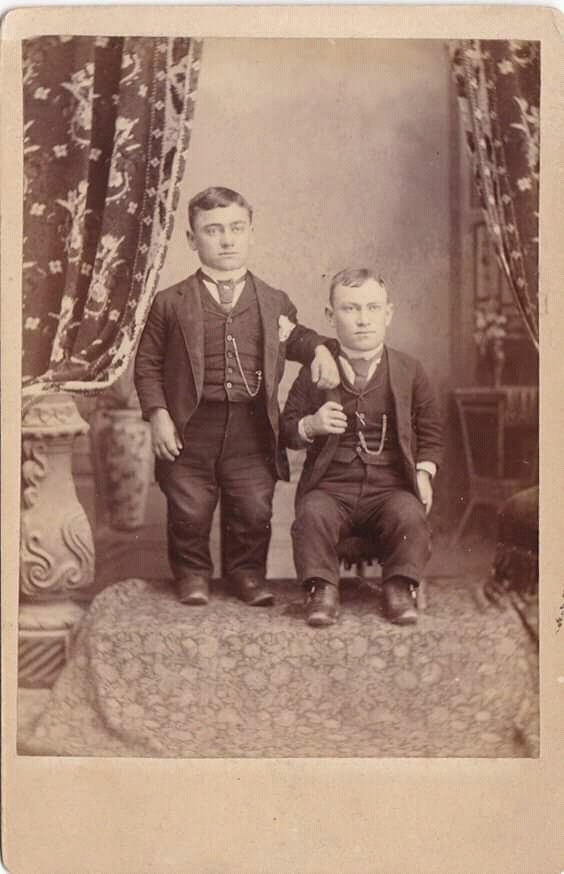
A tiny woman, a midget, opened the door and looked up at me. Her face was covered with wrinkles and she had a cigarette hanging from the corner of her mouth. Her reddish hair looked burned, bitten off.

“Are you Mrs. Minnie Gruenwald?” I asked.

“Whatever you’re selling I don’t want it!” she said.

“I’m not selling anything. I’d like to have a word with you and your husband if it’s convenient.”

“If this is about his gambling debts,” she said, “you’re out of luck. He died a month ago.”

“He’s dead?”

“That’s what I said, isn’t it?”

“Is it all right if I come in?”

“If you’re selling insurance or cemetery plots, I can tell you right now I don’t want any.”

“I’m not selling anything.”

“You’re not going to knock me in the head and take all my money, are you?”

“No.”

“All right, then,” she said with a sigh, “but make it quick.”

She let me into her tiny suite of three rooms. I looked around quickly, seeing piles of clutter, clothes, papers, and magazines on every surface. She pushed a stack of newspapers off a wooden chair and gestured I might sit down if I was so inclined.

I sat down and I knew she was looking at my clothes and shoes, my haircut. “You don’t belong here,” she said. “I hope you make it out of the neighborhood alive.”

I thought she was making a joke, but when I looked at her and smiled I knew she was in earnest.

“This is an interesting old hotel,” I said, trying to find an opening to what I wanted to say.

“No, it’s not,” she said. “It’s a rat hole. The city is about to condemn it.”

“I’m sorry. I suppose that means you’ll have to move.”

“Cut the palaver and tell me why you’re here.”

“You said your husband died?”

“Yeah, what of it?”

“His name was Otto Gruenwald?”

“It was, unless he had some other name that I didn’t know about.”

“Do you mind telling me how he died?”

“He had alcoholics’ disease, his liver was shot, he had diabetes, emphysema from too many cigarettes and he was insane. Are those good enough reasons to die?”

“Did you and your husband have any children?” I asked, trying to keep from sounding nervous.

“I’m not answering any more of your questions until you tell me who you are and what you want!”

“My name is George Pickles,” I said. “I’m a doctor or soon will be.”

“Did county welfare send you?”

“Nobody sent me.”

“If you don’t tell me what you’re doing here, I’m going to call that little punk at the desk downstairs and have him send up a couple of goons to eject you!”

“You were in the circus?” I asked, pointing at a faded poster on the wall.

“Yeah, what of it?”

“Were you and your husband by any chance clowns?”

“My husband was a clown. People loved midget clowns. He was like me, only a couple of inches shorter. I was a bareback rider and acrobat. I could do all kinds of shit while standing on the back of a moving horse. But why am I telling you all this? It’s none of your business. You still haven’t told me what your business is.”

“Was he always a clown?”

“He was a clown until he broke his back and had to quit. He was a clown, his father was a clown and his grandfather, going all the way back to the beginning of time.”

“So that’s where it comes from!” I said, excitedly.

“Where what comes from?”

“Nothing,” I said. “I was just thinking out loud.”

“I’m going to have to cut this little tête-à-tête short,” she said. “I’m a very busy woman and I’ve got things to do.”

 “Do you mind telling me if you and your husband had any children?” I asked.

“What do you want to know that for? I don’t think it’s any of your business.”

“I want to know for my own information. I’m interested in knowing about clown life.”

“Why?”

“I don’t know. Maybe I’m writing a book.”

“About clowns?”

“Yes.”

“You won’t use my name, will you?”

“Of course not.”

She was silent while she got a cigarette going. “Well, it’s like this,” she said, letting a stream of smoke escape from her mouth. “I did have a baby once, but I had to give it up for adoption.”

“Why?”

“I’ve never talked about this before with anybody.”

“Strictly entre-nous, I promise.”

“The circus was no place for a baby. The life was hard.”

“I’m sure other people managed it.”

“They did, but they weren’t freaks like us. I only saw the baby one time but I knew he wasn’t a freak and that he wouldn’t have any kind of a life with us. My husband was always a heavy drinker and unreliable. No kind of a father. He even went around with other women, if you can believe that. He didn’t want the kid from the very beginning.”

“But you wanted him?”

“I knew I made the right decision for all of us, but especially for the baby.”

“Don’t you ever wonder about him? How he fared in the world?”

“Sure, I wonder about it all the time. I always hoped he was adopted into a nice family and grew up into a happy, successful, good-looking man.”

“If you knew how to find him, would you ever like to meet him?”

“Oh, no! I wouldn’t want him to see the trash he came from! He’s better off not knowing.”

“Maybe he’d like meeting you.”

“No, I want to keep things the way they are, with him not knowing anything about me and his father. And, anyway, I’m going away and I don’t know yet where I’ll end up. I don’t have any family or friends anymore. I might just get on a plane and fly around the world and choose a spot where freaks are welcome.”

“You shouldn’t think of yourself as a freak,” I said, standing up.

“It’s what I am,” she said. “Like it or not.”

After I took my exams and passed them to become a full-fledged doctor, I packed my bags and left the hospital. The people there were my family and, of course, they wanted to know where I was going. I told them I’d be back one day, but first I had something I had to do. I was a clown first and a doctor second.

Copyright © 2023 by Allen Kopp

My Father’s Pajamas ~ A Short Story

My Father's Pajamas image 2
My Father’s Pajamas
~ A Short Story by Allen Kopp ~

Susan pulled into the driveway of a two-story house and turned off the engine. The man sitting beside her, whose name was Knox, rubbed his hands along his thighs and looked nervously over at the house.

“I’ll just leave,” he said. “I’m not going in there with you.”

“Don’t be silly,” Susan said. “My mother is probably watching us out the window this very minute. She’ll wonder who you are.”

When she saw he was still hesitating, she said, “It’s all right. You can leave whenever you want.”

She got out and motioned him to follow. She led him across the yard and up the front steps to the porch. Before she inserted her key into the lock, she turned to look at him to make sure he was still there.

“As you can see,” she said. “It’s a big house. There are four bedrooms upstairs and another bedroom off the kitchen. We have plenty of room for houseguests.”

“I don’t think I should…”

She plucked at his coat sleeve and pulled him inside behind her.

The house was overheated and had an old smell about it, as if to announce to anybody entering: Old people live here.

Knox stood inside the doorway awkwardly, his hands in the pockets of his coat. A very old woman entered from another room and stopped in midmotion when she saw Susan and Knox.

“It’s me, mother!” Susan said. “I’m back! And I’ve brought somebody with me this time.”

“Who is this?” the old woman asked. She had a great shock of white hair sticking out all over her head. The thick glasses she wore magnified her eyes many times, giving her a rather freakish look.

“His name is Knox,” Susan said. “I met him in the park. I invited him to come home with me and he very graciously accepted.”

Who?” the old woman asked.

“Knox!” Susan said loudly. “His name is Knox! Don’t you think he’s nice-looking? That wasn’t why I chose him, of course, but I suppose it had something to do with it. He has blue eyes, mother. Same as you.”

What?” the old woman said.

“And he’s just the right age. I don’t mean I know how old he is, but he looks the right age.”

“Hello,” Knox said to the old woman. “I’ll only stay a minute.”

“Well, why didn’t you say so?”

“I’ll show Knox upstairs to the guest bedroom,” Susan said. “He can take a shower or do whatever he wants while I fix dinner. I’ll get some of father’s clothes out of his closet for him to wear.”

“What?” the old woman said. “I don’t know what you’re talking about!”

“I know you heard every word I said, mother! There’s nothing wrong with your hearing!”

“You’ll have to excuse my mother,” Susan said to Knox when they were upstairs. “She’s a bit eccentric and she is old.”

The guest bedroom was commodious in every way, with its own bathroom, a huge walk-in closet and lots of natural light.

“I think you’ll like this room,” she said. “It’s always been my favorite room in the whole house.”

“I can’t stay here,” Knox said.

“Why not?”

“Does this look like the kind of room I belong in?”

Susan laughed. “You’re going to have to forget all that,” she said. “It might help to keep an open mind and be open to new experiences.”

“Your mother doesn’t like having me in her house and I can’t say I blame her,” Knox said.

“Don’t worry so much. I know how to get around her.”

She went to the closet and brought out a pair of pants, a shirt, a belt and a pullover cashmere sweater. She laid the things on the bed and then took some things out of the dresser drawer, which turned out to be a man’s underpants, an undershirt and a pair of black socks.

“These things belonged to my father,” Susan said. “He’s been dead for years. Wear them in good health.”

“I can’t wear your father’s clothes,” Knox said.

“Why not?”

“I shouldn’t even be here.”

“I’m going downstairs now to cook dinner. You can take a bath, a shower, or do whatever you want. I know you’re thinking you only want to leave, but I hope you’ll at least stay for dinner. I’m thawing out some trout that I bought and there’s a lot more than my mother and I can eat.”

“I don’t know,” he said. “None of this seems right.”

“Maybe you need to think of it as your lucky day. The day I found you in the park.”

“My lucky day.”

“In the bathroom beside the sink is a brand-new razor that’s never been used. There’s also a toothbrush, a washcloth, a towel and lots of soap and shampoo. I think that’s everything you need. I’m going back downstairs now. I’ll close the door so you can have your privacy. I know men like their privacy. You can lock the door from the inside if it makes you feel better.”

“I don’t think I should do this,” he said.

“Put these clothes on that I laid out for you. I’ll wash your old clothes, or we can put them in the trash if you want. I won’t insult you by telling you how awful they are. Now, if there’s anything else you need, just let me know. I’ll be in the kitchen. Oh, and tomorrow I’ll trim your hair if you’ll let me. But please wash it first.”

“Trim my hair.”

“Yes. I’ll let you know when dinner is ready.”

While she was in the kitchen, slicing potatoes, her mother came charging in with the crazed look in her eye.

“Who is that man?” she demanded.

“I told you, mother. His name is Knox.”

“What is he doing in my house?”

“I invited him.”

“How long is he going to stay?”

“As long as he wants. We haven’t discussed any long-term arrangement yet.”

“I’m going to call the sheriff.”

“Why?”

“There’s an intruder in my house and I want him removed!”

“He’s not an intruder if I invited him, now, is he?”

“What do you know about him?”

“Nothing.”

“Where does he come from?”

“I don’t know.”

“Who are his people? What does he do for a living?”

“I don’t know.”

“Are you going to wait for him to slit our throats?”

“He’s not going to do that!”

“We don’t know anything about him, so we have to assume the worst.”

“All you have to do is look at him to know he’s not that sort.”

“I’m going to call the sheriff.”

“You’re not calling anybody!” Susan said, turning to her mother with the knife in her hand. “I might slit your throat if you don’t stop being so silly!”

“As long as that man is here, I’m not staying in this house another minute! I’m going to go stay with my sister Edith.”

“Your sister Edith is dead.”

The old woman starting crying. “So, I guess that means I don’t have any place I can go!”

“You don’t need a place to go!”

“I don’t know how you can treat your mother this way!”

“This is not about you, mother!”

“What is it about, then? Are you starting to go through the change?”

“I want a friend, that’s all.”

“What about your Sunday school class?”

“They’re just a bunch of gossipy old women. I don’t have anything in common with them.”

“Maybe you should try harder.”

“Look, mother! I spend all my time in this house with you. You’re the only person I ever see or talk to.”

“That’s not true!”

“I cook your food and wash your clothes. I keep your house clean. Life is passing me by. Maybe I want more from life than being your nursemaid.”

“Well, what do you want?”

“I don’t know! I’m going to find out.”

“Are you going to marry that man?”

“I might. It’s too soon to know.”

“He might be a rapist!”

“He might be a lot of things. He might have a wife and eight children. You can’t go through life being afraid of everything and everybody.”

“What are you afraid of?”

“Nothing. Everything.”

“What kind of an answer is that? Are you sick? Do you need to see a doctor?”

“When I need to see a doctor, mother, I’ll let you know.”

“Is that man going to spend the night in this house?”

“I don’t know what he plans on doing. I want him to stay but I can’t force him.”

“Are you going to let him make love to you?”

“Of course not, mother! I don’t think you need to worry about that.”

“Well, I’m going to a hotel! Will you please call me a cab?”

“You know how to call a cab, mother. You’re just being melodramatic.”

“No, on second thought, I’m not going to a hotel and leave you alone in the house with that man! When there’s an unsavory character in my house, I want to know what he’s doing every minute.”

Dinner was uneventful. Knox ate the food that Susan put in front of him with his head down. She was gratified to see that he had put the clothes on that she laid out for him. He had taken a bath and washed his hair and he did look much improved. He still needed a haircut, though, and a manicure.

Susan’s mother sat with her arms close to her sides, feigning fear. She cried the entire time she ate and sniffled into her hanky for effect.

“How do you like the fried potatoes, mother?” Susan asked.

“Greasy. I can’t eat them. They give me heartburn.”

“Do you like the fish? It’s just the way you like it.”

“No, it tastes funny. I think it’s going to make me sick.”

“Would you like some salad?”

“No, I’ll just eat some of my candy before I retire for the night.”

“Too much candy isn’t good for you.”

“What do you care?”

She stood up then, nearly falling, and made her way out of the room.

“Your mother doesn’t like me,” Knox said.

“No matter,” Susan said. “She doesn’t like me, either. I’ve always been a disappointment to her.”

“I should go,” Knox said.

“Where?”

Once again he gestured over his shoulder with his thumb. “I don’t belong here.”

“It’s dark now and raining. Spend the night. You’ll have the guest room all to yourself. You won’t be bothered. There’s a lock on the door. You can lock yourself in.”

“I can’t pay you for any of this.”

“Tomorrow we’ll have a little talk while I’m trimming your hair. You can tell me about yourself, as much or as little as you want.”

“Maybe there’s nothing to tell.”

“Everybody has something to tell.”

“Maybe there’s nothing worth telling. I’m less than nothing. I’m nobody. I’m not worth mentioning. I’m not worth a second of your time.”

They sat for a while longer without saying anything. The house was quiet. Knox went to sleep sitting at the table. While he was sleeping, Susan looked at his hands and fingers, his face, his hair, his nose and mouth. If he knew she was scrutinizing him that way, he would have spoken sharply to her and walked out the door.

A crash of thunder woke him and he stood up from the table. Now is the moment of truth, Susan thought. Instead of leaving, though, he crept up the stairs and went into the guest room and locked the door. She hoped he would find the pajamas and dressing gown she left out for him. She wanted him to have all the good things she might give him.

Copyright © 2023 by Allen Kopp

Entre Nous ~ A Short Story

City Park 2

Entre Nous
~ A Short Story by Allen Kopp ~

She spotted him in the park. He was a man of indeterminate age, dressed in a tattered green overcoat, badly in need of a haircut and shave. When he knew she was following him, he stopped and looked at her. She smiled. She had so many things she wanted to say to him.

“How are you?” she asked.

He shook his head and started to walk away.

“I saw you and I wanted to speak to you.”

“If you’re from the mission…”

“No. I’m not,” she said. “I was wondering if we might sit and talk a while.”

“No!”

She took hold of his arm, gently. He let her pull him to a bench. She sat on the bench and he had no other choice but to sit beside her. He looked at her apprehensively.

“Don’t worry,” she said. “I’m not the police or anything, and I’m not from the mission.”

Now that she saw him up close, she saw he was younger than she at first thought. His eyes were a startling blue. He had tiny lines around them, but except for that his face was unlined. His hair was prematurely gray, in need of a trim. He smelled of tobacco and alcohol.

“Just on my way,” he said.

“Where?”

He gestured with his thumb over his shoulder.

“I’m not going to hurt you,” she said. “I only want to talk to you.”

“Why?”

She laughed and put her hands between her knees and looked up into the trees. “I guess you could say I’m a student of human nature.”

He shook his head and looked at his hands.

“What’s your name?” she asked.

“Knox.”

“Is that your first name or your last name?”

“Just Knox.”

“All right. My name is Susan Morehouse. I believe in laying all my cards on the table. I’m forty-seven years old and not the least bit sensitive about my age. I live with my mother on Independence Avenue. My mother was over forty years old when she had me, so you can imagine how old she is now. It’s just my mother and me. My father died at age sixty of cirrhosis of the liver.”

He started to stand. She put her hand on his arm. He remained.

“Do you have family?” she asked.

He shook his head, which she took to mean no.

“Are you a mental patient?”

He smiled, for the first time, and shook his head.

Are you a drug addict?”

A shake of the head.

“Alcoholic?”

Another shake of the head.

“I won’t ask how you come to be an aimless bum in the park. We’ll save that one for another time.”

“I have to go,” he said, gesturing with his thumb over his shoulder.

“Go where?”

He shrugged, meaning anywhere or nowhere.

“The truth is, I don’t think you have any place to go.”

“I don’t see it’s any of your business,” he said.

“Would you like to come home with me?”

“No!”

“I know it sounds terribly forward, but I don’t have a lot of time to waste on amenities.”

“No!”

“I wouldn’t expect anything of you. You wouldn’t have to do anything. You wouldn’t be bothered. Only my mother is there. She’s a very old lady, nearly ninety years old. You can stay as long as you want and leave whenever you say.”

“I can’t,” he said. “I’m not well.”

“Do you have anything contagious?”

He shrugged and looked up at the sound of a dog thrashing through the leaves, chasing another dog.

“I’ve never done this before, you know,” she said. “You’re the first man I’ve ever approached like this.”

“I don’t think so,” he said, but she could see he was softening.

“Nobody has to ever know about it. It’s just between you and me. Entre nous, as the saying goes.”

“No, I don’t want to go with you.”

“My car is just over the hill.”

He looked up the hill as if imagining the car on the other side.

“All you have to do is get in the car. I’ll drive. It’s just a few miles.”

“I’m not going with you,” he said.

He stood up when she did, though, and walked over the hill with her. She touched him on the arm and looked at him every few feet to encourage him. When they came to her car, she motioned for him to get into the passenger-side seat, reassuring him, once again, that she meant him no harm.

Copyright © 2023 by Allen Kopp

Since Anybody Lived Here ~ A Short Story

Since Anybody Lived Here image 3
Since Anybody Lived Here
~ A Short Story by Allen Kopp ~

(This short story has been published in The Literary Hatchet.)

The Heaton house was down the street from the school, on a corner lot, high above the street. It was a big house, three stories, but the most interesting aspect of the house was that it was unoccupied; nobody had lived there for a long time.

The yard of the Heaton house was a mass of dead tangled weeds. A dead tree lay diagonally across the front yard, having pulled part of the front porch down with it. The house had once been painted white, but most of the paint had peeled off, revealing underneath the ugly gray of decaying wood. Windows on the first floor were boarded up, to discourage anybody from climbing through, but most of the higher-up windows still had glass in them, through which remnants of curtains, like ghostly apparitions, were visible from the street.

My friends and I passed the Heaton house going to and from school every day. We had heard the stories about the dead bodies in the house—some in coffins and some not—and about the old woman with the ax who would cut your head off if she got the chance; about the sounds of moans and clanking chains coming from the house late at night that nobody had actually heard but only claimed to have heard.

We longed to see the inside of the house, to see firsthand the dead bodies and whatever other horrors it held. It would be difficult to get inside, but not impossible. There’d be a certain amount of risk involved. We’d have to be careful and not get caught. If I got caught, I might go to jail but, worse than that, I’d be in all for all kinds of trouble at home, not the least of which would be months and maybe years of bitching and yelling.

On a gusty Saturday night in the middle of October, I told my mother that I was going to walk to the show downtown with my friend Alonzo Ficket. I had already seen the picture that was playing and knew all about it, so I was covered in case I was questioned about it later.

“Be home by eleven,” she said.

I met Alonzo on the corner by the church and we walked over to Carl Duffel’s house. Carl’s parents were gone for the weekend and he was left alone with Gwen, his older sister. She was a teenager, so she didn’t care what Carl did or how late he stayed out. Reggie Tolland was already at Carl’s house when we got there. Reggie didn’t have a father and his mother was always drunk, so he could stay out all night if he wanted to and nobody would even know it. We had all the bases covered.

After Carl showed us his small flashlight that fit into the palm of the hand and his pack of cigarettes and box of kitchen matches, the four of us set out for the Heaton house, about six blocks away.

Near the Heaton house, a dog started barking but, except for that, the neighborhood was quiet. The nearest streetlight was pretty far away, so it was dark enough where we were that any nosy neighbors wouldn’t see us from a distance and alert the police.

We walked all the way around the Heaton house two times, crunching leaves under our feet but trying to be as quiet as possible. There was only one small window on the ground floor that wasn’t boarded up. It was higher than our heads, but we figured that would be the best way to get inside.

We didn’t have anything as practical as a crowbar, but Reggie had a screwdriver in his coat pocket. Alonzo gave him a boost so that he could stick the screwdriver under the bottom of the window and try to pry it open.

He got the window up high enough with the screwdriver to be able to replace the screwdriver with his fingers and push up. It took a lot of effort and he was showered with old paint fragments, but he raised the window high enough to crawl through, which he did without hesitation. In two minutes we were all inside, standing in what had once been the kitchen.

Carl shone his flashlight around the large room. Against the wall were places where a refrigerator and a cook stove had been. The kitchen sink was pulled away from the wall and dangled at an inhuman angle a couple feet off the floor.

“I don’t like it in here,” Alonzo said. “It smells funny.”

“Go wait outside, then!” Reggie said.

“I think it’s interesting!” Carl said. “Let’s go this way!”

Carl had the light, so we all followed him into the next room, which would have been the dining room. The windows were boarded up from the outside, but there were still remnants of curtains hanging over the windows. From the middle of the ceiling hung part of a shattered chandelier suspended from a single wire.

“This must be where they had parties,” Carl said.

“I think I heard something!” Alonzo said, turning around quickly.

“It’s probably that old woman with the ax,” Reggie said. “She’ll come up behind you and cut your head off before you even see her!”

“Shut up! You’re not scaring me!”

“This way!” Carl said.

The next room was the front room, what would have been the living room. It was a long, rectangular room, with three large windows boarded over.

“Look!” Carl said. “There’s the stairs that go up!”

“Are we going up there?” Alonzo asked.

“Of course we are! Isn’t that what we broke in for? You can wait down here if you want to.”

Carl led the way with the light, fearlessly, and the rest of us followed.

Halfway up the stairs was a landing and then a turn to the left to go up the rest of the way.

“Don’t lean on the banister,” I said. “It’s coming loose in places.”

“The stairs are strong enough!” Carl said. “I like it here! I could live here!”

“That’s because you’re really a ghoul!” Alonzo said.

“Thanks! I like ghouls! I’d rather be a ghoul than a baby!”

“I’m not a baby. I’m not even all that scared.”

He may not have been scared, but he was holding on to the back of my jacket as if he was.

At the top of the stairs was a hallway with four doors leading to other rooms. Two of the doors were closed and the other two partly open. Carl shone his light on the walls in all the rooms, but there was nothing to see. One of the rooms was a bathroom from which the fixtures had been removed. In one of the rooms was a dusty pile of boards and a barrel with a rat’s skeleton in it. If we had been hoping to see skeletons hanging from their necks or ghosts or dead bodies, we were disappointed.

“This is so great!” Carl said. “I’ll bet there were lots of murders that happened here!”

We proceeded down the hallway cautiously, our footsteps resounding on the bare floor. We would have had to take our shoes off to be really quiet and I don’t think any of us wanted to do that.

At the other end of the hallway was another smaller stairway going up to the third floor.

“Are we going up there?” Alonzo said. “There’s no telling what might be up there!”

“If there’s anything good to see,” Reggie said, “we’ll see it.”

On the third floor were three small rooms without doors. In one of the rooms were dusty bookshelves, empty except for a beer bottle with a cigarette butt in it.

“Somebody’s been here!” Carl said.

“Yeah, that’s real scary!” I said.

“No dead bodies and no old woman with an ax,” Alonzo said. “It all turned out to be a hoax!”

“Hey, if we had some beer we could have a little party!” Carl said. “We’ve already got the cigarettes!”

He took his cigarettes and matches out of his pocket and, sitting down on the floor and leaning against the wall, lit up. The rest of us sat down, too. After Carl had his cigarette going, he generously passed around the pack and the matches and we all lit up. Soon we were all huffing in a cloud of smoke.

“Isn’t this great?” Carl said.

“This is the best thing we’ve done since summer,” Reggie said.

“If my mother knew I was smoking, she’d just die,” Alonzo said.

“You’d better not to go home tonight, then,” Carl said. “She’ll be able to smell it.”

“I don’t think so. She smokes herself, so she’s used to the smell.”

“If the police came in now, we’d all go to jail,” I said.

“That’s not going to happen,” Reggie said. “Nobody knows we’re here. If we died here, it would be a long time before they found our bodies. They’d have to call in the FBI.”

“How long has it been since the Heatons lived here?” I asked.

“A hundred years,” Reggie said.

“I don’t think it’s been that long,” I said.

“How do you know so much about it?” Carl asked.

“My grandma remembered the family. She said they were odd. One of them committed suicide.”

“In this house?” Carl said. “I’ll bet it was in this very room!”

“Another one went insane.”

“That one probably murdered the whole family.”

“You know,” I said, sucking on my cigarette like a grown man, “we can’t ever tell anybody about this, no matter how much we want to brag about.”

“Why not?”

“If we tell one person at school, before you know it everybody will know. You know what people are like.”

“I think he’s right,” Alonzo said.

“I won’t ever tell,” Carl said. “On my word of honor.”

“I won’t ever tell anybody,” Reggie said.

“You know I won’t ever tell anybody about it,” Alonzo said. “I don’t want to go to jail. It would just about kill my mother.”

We smoked three or four cigarettes each. While we smoked we sat around talking and laughing about some of the ridiculous people at school, forgetting for the moment that we were in an unlawfully breached house.

It was after ten-thirty, so we decided it was time to go home. We each of us slithered out the same small kitchen window by which we had entered.

“We’ll have to do this again sometime soon!” Carl said.

Walking home, we all felt smart and resourceful, that we were able to see the inside of the fabled Heaton house without anything bad happening to us. My mother asked me how the movie was. I said it was a good movie and I had a wonderful time.

The next day was Sunday. My mother asked me to go to church with her in the morning, but I said I was sick at my stomach and needed to work on a book report for English class, so she relented.

I spent most of the day in my room, listening to the radio, reading the book I was supposed to write the report on, and doing plenty of nothing. I took a nap in the afternoon and woke up right before dinner.

That evening we were sitting in front of the TV watching the usual Sunday night fare, when we heard sirens. Not just one, but many.

“What in the world is going on?” my mother said.

We went out on the front porch. There was the unmistakable smell of smoke in the air.

We went back into the house and mother went into the kitchen, where I could hear her babbling on the phone. I knew she’d call one of her gossipy old friends and get the scoop without too much difficulty.

When she came back into the front room, I asked her what was burning.

“It’s the old Heaton house,” she said. “It’s been empty for years. Just a matter of time.”

“Do they know what caused it?” I asked. “It must have been lightning.”

“It’s probably some old drunken bum that went in there and started a fire to get warm.”

“I hope so,” I said.

“What?”

“Nothing.”

That night I had trouble sleeping. All night long I could hear sirens and smell smoke. Every time I went to sleep, I woke up with a start, thinking I had to get up and put out the fire before anybody knew I was the cause of it.

In the morning I walked the long way around so I wouldn’t have to walk past the Heaton house. When I got to school, I saw Alonzo first thing. He had a worried look on his face.

“Did you hear the news?” he asked.

“Yeah.”

“Do you think they’ll know we did it?”

“Did what?”

“Caused the fire.”

“You have to stop thinking that way!” I said. “Maybe we didn’t cause it!”

“Of course we caused it! It was the smoking!”

“Don’t say that where anybody can hear you!” I said. “Do you want to go to jail?”

“No, I really don’t want to go to jail! It would absolutely kill my mother!”

“Then you don’t know anything! You didn’t see anything! You were nowhere near that house! Don’t even think about it! Got it?”

“I got it!

After lunch we saw Carl and Reggie and were able to have a private conversation with them outside the school building where nobody would hear us.

“I’m not worried,” Carl said. “Nobody saw us unless it was a ghost.”

“Nobody can prove anything,” Reggie said. “We didn’t do anything. The fire was caused by faulty wiring. It was just a coincidence that the fire started the day after we were in the house. We all know what a coincidence is, don’t we?”

“Sure, that’s a fourth grade word,” I said.

We all turned and looked at Alonzo, who looked not only doubtful but sick.

“Well, what are you looking at me for?” he said. “Do you think I’m going to tell?”

“No, you won’t tell,” I said. “Not if you know what’s good for you!”

“What are you going to do to me if I tell, huh? Kill me?”

“No, I won’t kill you, but if we go down, you go down, too.”

“Don’t worry so much! I’ve been stealing my mother’s tranquilizers. They make me forget things, but, more than that, they make it easier for me to lie.”

“Good boy!” I said.

“Can you steal some of those tranquilizers for the rest of us?” Carl asked.

Copyright © 2023 by Allen Kopp