Schooled in Depravity

Schooled in Depravity ~ A Short Story by Allen Kopp

John the Baptist was brought before King Herod Antipas and his wife, Herodias. He was disheveled from the rough treatment he had received at the hands of his captors, but he maintained his dignity and his composure. If he was afraid of what King Herod was going to do to him, he didn’t show it.

King Herod looked John up and down, a sneer on his lips. “Are you the Messiah everybody keeps talking about?” he asked.

“No, I’m not him,” John said. “He’s coming, though.”

“How do you know this?”

“How do I know the sun is shining? I know because it is.”

“The man is impertinent,” Herodias said.

“I hear you are a troublemaker,” King Herod said. “You preach sedition wherever you go.”

“Only peace,” John said.

“I hear you are dangerous.”

“I am but a voice crying in the wilderness.”

“You are a reckless cur!” Herodias spat out. “You should bow down before your master. You should kiss the hem of his garment and beg his forgiveness!”

“I have but one master,” John said quietly.

“What are we going to do with him?” King Herod said to himself, but out loud so everybody could hear him.

“Let’s burn him over a slow fire and hear him beg for mercy,” Herodias said.

“Is not your cup of abomination already full enough, woman?” John said.

“Are you going to let him speak to me that way?” Herodias screeched at her husband.

Salome, step-daughter of King Herod, heard the commotion and knew something interesting was going on. She entered the room and stood beside her mother, Herodias.

“I heard you just insult my mother, the queen,” Salome said to John, a cruel smile on her lips.

“I just spoke what is the truth,” John said. “It’s time somebody did.”

“Don’t you know it’s dangerous to insult the queen, the wife of Herod Antipas?”

“When I look at you, child,” John said to Salome, “I see someone who is not yet entirely rotted through with the corruption that permeates this place and these people.”

“What kind of talk is this?” Salome said with a laugh. “It sounds as if you’re giving me some kind of a warning.”

“I am giving you a warning, child, for your own sake. Leave this wicked place tonight while there’s still a chance for you. Leave and never look back. I see when I look at you that you haven’t yet crossed the threshold that these others have crossed. They are beyond redemption, while for you there is still some hope because you are so young.”

“And if I left my home and my mother, just where would I go?” Salome asked.

“The Lord will guide you in your path if you let Him.”

“I have never heard such crazy talk in all my life!” Herodias said. “I say we kill him before he lives one more day. I say we have him tortured and listen to his bones crack!”

“No,” King Herod said quietly.

“What? Do you mean you’re going to let him live?”

“I mean I haven’t yet decided what I’m going to do with him. I want to keep him alive for now until we see how this thing with the Messiah plays out.”

“You coward!” Herodias shrieked. “You’re afraid of him! You’re afraid that the stories you’ve heard of him might be true. You believe he wields some kind of mysterious power that he might use against you.”

“Hold your tongue, woman,” King Herod said, “or I will make you wish you were never born.”

As the guards led John away to the dungeon, Salome watched him go. “I don’t like him,” she said. “He makes my blood turn to ice water.”

That night, when Salome was alone in her bedchamber, she couldn’t stop thinking about John. She imagined him beside her in her bed, his huge hands running over her body, his lips on hers. The thing about John, she realized, was that he moved her in some mysterious way that she didn’t understand. She hated the power he seemed to have over her but also in a way found it thrilling.

The next day was King Herod’s birthday. A huge feast was held in the palace with dozens of honored guests. The food was rich and abundant and the wine flowed freely. There were musicians, dancing girls, acrobats, even a trained bear. King Herod knew how to throw a memorable party.

All during the festivities, King Herod kept his back to Herodias and pointedly ignored her. He was disappointed in her as a wife. She was far too outspoken for her own good or for his; he cringed at the sound of her voice. She was becoming more and more like a thorn in his side that he couldn’t remove.

Salome, on the other hand, was becoming lovelier every day. She had left girlhood behind and was now a woman with a mind and a will of her own. For beauty and cunning, she could match any woman twice her age.

King Herod kept drinking more and more wine. The drunker he became, the more he abandoned caution. “Why don’t you dance for us, Salome,” he said, unable to take his eyes from her. “For me?”

Herodias bristled at these words, but Herod didn’t notice.

“I don’t feel like dancing,” Salome said petulantly.

“There is nothing I would like better at this moment than to see you dance,” King Herod said.

“Why should I?”

“Because your king requests it and today is the anniversary of your king’s birth. Won’t you grant your king a birthday wish?”

“What will you give me?”

“I’ll give you my entire kingdom.”

“And what would I do with it?”

“I have riches that your mother doesn’t even know about, jewels as big as a goose’s egg. They are yours if you will but dance for me.”

“Ho-hum,” Salome said comically, drawing a laugh from those who heard her.

“Anything I have, anything I can get, is yours.”

“You will give me anything?”

“You can name your price.”

Everybody knew that King Herod was being foolish but they watched in silent fascination to see what was going to happen. How far would he go to get Salome to dance?

She stood up and assumed a dance posture, her face covered by a veil. As if it had all been rehearsed, the musicians began playing a dance tune.

Salome danced seductively for the assembled guests but especially for King Herod. She swiveled her hips, put her arms in the air, moved her head from side to side. She used her veils to great effect to show off her face and her body. She bent forward and balanced herself on her hands; backward and joined her head with the floor as if she had no bones in her body. She shimmied and she shook. She moved all about the room so as to be seen by everybody; there was no eye that wasn’t upon her. She demonstrated a skill and dexterity that nobody believed her capable of.

When she came to the end of her dance, everyone was silent with awe. King Herod stood up and held out his arms to her and she ran into them.

“That was heavenly!” he said. “It was divine! I’ve never seen anything lovelier. You may name your price, my child, and, no matter what it is, it will not be too great!”

“I’ll tell you what I want,” she said, speaking out so everybody could hear her.

“Yes, what is it, my child?”

“I want the head of John the Baptist on a plate!”

King Herod was surprised at her request. He thought at first she was making a joke. He had offered her untold riches. Why would she want a trophy as grisly as a severed head?

“I don’t think I heard you correctly, my dear. What was that you said you wanted?”

“You heard what I said and so did everybody else.”

“This is the thing you want above all others?”

“I said so, didn’t I?”

“And what will you do with the head of John the Baptist when it is presented to you?”

“I want to look at it.”

“Are you prepared to deal with the consequences, no matter what they are?”

“Yes, yes,” she said with an impatient gesture.

King Herod clapped his hands to summon the guard. He instructed two of his most loyal and obedient men to go below with a large sword and forthwith bring forward the head of John the Baptist on a plate to present to his step-daughter, Salome.

Within minutes, two men came into the banquet hall bearing a tray between them. On the tray was the severed head of John the Baptist. King Herod motioned for them to set the tray on the table on which he and the others had earlier been eating.

Salome approached the head slowly, her eyes glittering with bloodlust. She had never been happier in her life than she was at that moment. She picked up the head by its hair in both hands, the neck dripping warm blood. She looked into the half-closed eyes and kissed the dead lips passionately. The assembled guests, schooled in depravity as they were, were utterly enchanted. It was the best birthday party they had ever seen.

Copyright © 2012 by Allen Kopp
Out of Oz ~ A Capsule Book Review

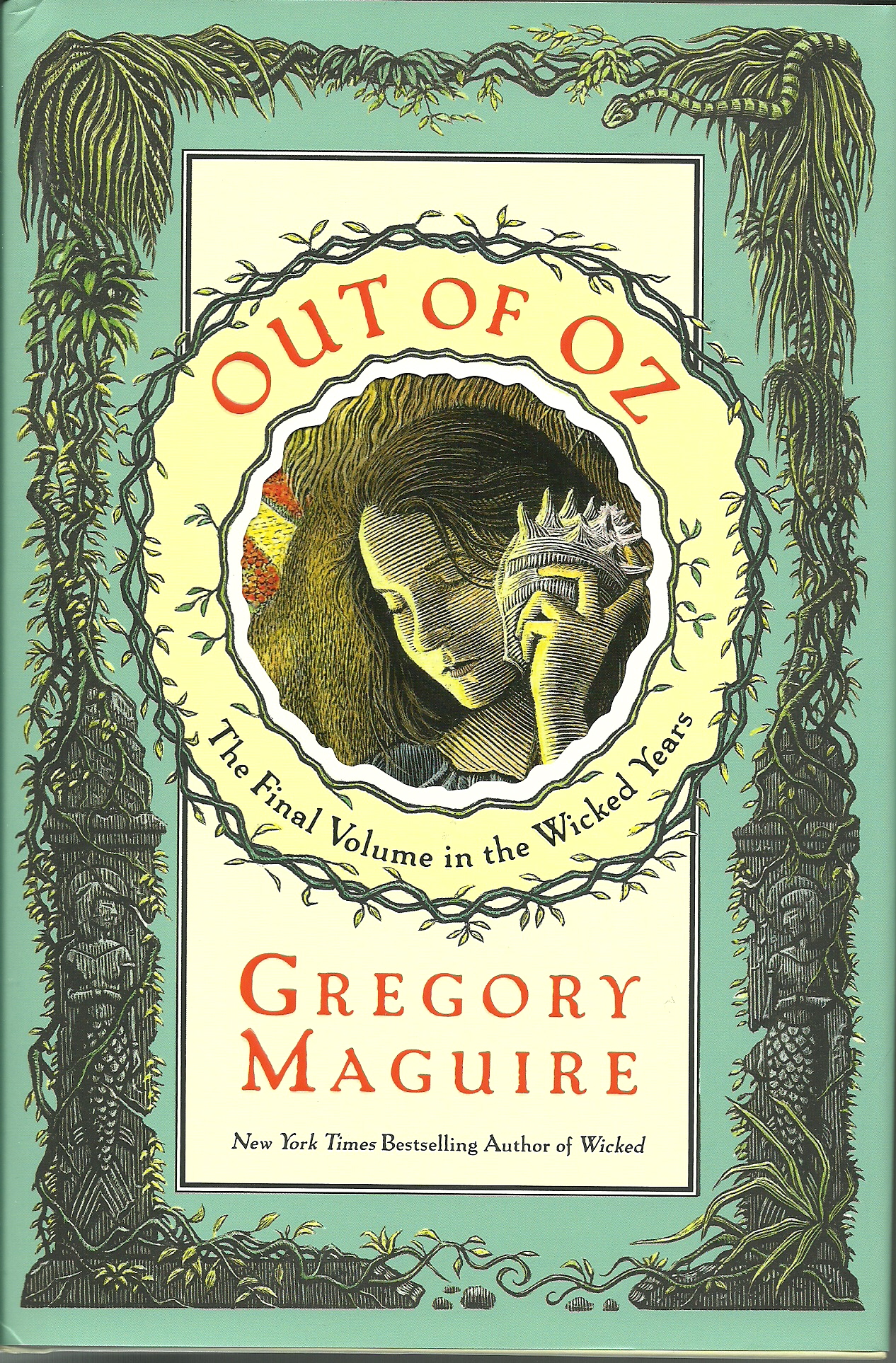
Out of Oz ~ A Capsule Book Review by Allen Kopp

American writer Frank Baum created the Land of Oz in a popular series of children’s books in the early 1900s. Contemporary American writer Gregory Maguire takes Oz one step farther in his Wicked Years series of four books that are decidedly more for adults than for children. The first (and, I think, the best) book in the series is Wicked. It’s about the life and times of the Wicked Witch of the West. She’s the one that Dorothy Gale of Kansas kills by throwing a bucket of water on her. (Wicked, by the way, was turned into a famous Broadway musical.) The second book, Son of a Witch, is about Liir, the strange bisexual son of the Wicked Witch of the West. (Yes, she has a son—you have to read the book to see how that comes about.) Liir has a daughter, named Rain, who figures prominently in the fourth book in the series, Out of Oz. Just so we don’t fail to mention it, the third book is A Lion Among Men. It’s about (you guessed it) the Cowardly Lion.

Out of Oz begins with Rain as a child. She doesn’t know who she is or where she came from, but she’s living with (and being cared for) the Good Witch of the North, Lady Glinda. (You will recall, in the movie version of The Wizard of Oz, Lady Glinda arrives in a bubble. She’s the one who eventually facilitates the return of Dorothy Gale to Kansas.) As the granddaughter of the Wicked Witch of the West (although she doesn’t know it yet), Rain has the potential to shape the empire with her as-yet untapped magical powers. A war is raging between Munchkinland and Loyal Oz. Both sides are seeking Rain, but especially a book of magic called the Grimmerie. It seems the Grimmerie will give a powerful strategic advantage to the side that has it. Through her bloodline, Rain is perhaps the only person in all of Oz who can know how to harness the power of the Grimmerie. It’s up to Rain’s parents, Liir and Candle, along with the Cowardly Lion and an assorted group of characters (Mr. Boss and his Munchkin wife Little Daffy, Iskinaary the Goose, etc.), to keep Rain and the Grimmerie from falling into the hands of the warring factions.

In Out of Oz, Dorothy Gale of Kansas has returned to Oz via the 1906 San Francisco earthquake and is being used as a pawn in the war between Loyal Oz and Munchkinland. She is being tried for murder in the deaths of the Wicked Witch of the East (you recall she accidentally landed her house on her) and the Wicked Witch of the West (death by a bucket of water). She is found guilty and is going to be executed until the Cowardly Lion and his crew rescue her and take her away with them. Dorothy gets on everybody’s nerves, as she is so chipper and always about to burst into song. I thought she was a fun character and would like to have seen more of her.

At 568 pages, Out of Oz is a long reading experience. It could have had more punch, I think, if it had been, say, 200 pages less. Possibly only those readers who have read the other three books in the series will want to stick with Out of Oz through to its conclusion. Maybe Gregory Maguire, in writing it, was following Oscar Wilde’s dictum: Nothing succeeds like excess.  

Although Out of Oz is billed as the fourth and final book in the series, there seems to be plenty of potential material for a fifth book. If such a book comes out, I’ll be over my Out of Oz fatigue enough by then to want to read it, especially if it’s about 350 pages or less.  

Copyright © 2012 by Allen Kopp

What the Young Matron is Wearing


What the Young Matron is Wearing ~ A Short Story by Allen Kopp

(Published in The Legendary.)

In preparation for company coming for dinner, Peachy Keen was in her boudoir putting the finishing touches to her toilette. She slipped her best blue dress on over her head and smoothed it over her broad hips and fastened it up the back and spritzed herself all over with eau de cologne. She stood before the mirror and touched the comb to the wreath of curls on her head, even though it was already perfect to her way of thinking, and went downstairs to the kitchen.

Hetta was working over the tray of hors d’oeuvres. She had given herself a failed home permanent and her hair hung in limp cascades around her face like seared sheep’s wool. She spread cream cheese on little round crackers and put a half-moon of olive on top of each one and licked her fingers. Seeing that everything was proceeding as planned in the kitchen, Peachy went into the dining room.

Jewell was just setting the table. The spoons were cloudy, so she was blowing her breath on each one and wiping it with the tail end of her bathrobe. Her hair was up in curlers, as it had been since the night before. When she realized Peachy was standing beside the table looking at her, she jumped back and dropped a spoon as though a loud noise had startled her, even though Peachy had not made a sound.

“When you’re finished with your work,” Peachy said in the no-nonsense way she had of speaking to Jewell, “I want you to go upstairs and get yourself fixed up. Wash your face and comb your hair and put on some lipstick and some face powder. And put on something nice. You don’t have to go around looking slovenly all the time. I want you go make a good impression on Mr. Dilly and his son.”

Jewell said nothing but only looked down at a blister on her finger and nodded her head slightly and went back to her work.

Peachy put on her little hostess apron and busied herself with straightening up in the living room. She adjusted the sofa cushions for at least the fifth time that day and straightened the picture over the divan and emptied an ashtray where Hetta had deposited the stump of a cigarette and turned again toward the mirror and tugged at a little strand of hair over her right ear that wasn’t cooperating. She was thinking about taking the scissors and cutting it off when the doorbell rang. Her heart gave a little leap and she swept across the room in her grandest manner and opened the door.

When she saw Mr. Dilly she smiled and showed all her teeth, but when she focused her attention on Chick, Mr. Dilly’s son, her smile faded. She stepped aside and motioned for them to come inside. By the time she closed the door she had regained her smile, which she shone on them like a beacon.

“So,” she said, taking the little bouquet of flowers that Mr. Dilly handed to her, “this is the son I’ve heard so much about.”

“Yes,” Mr. Dilly said, “This is my boy Chick.”

She stepped forward bravely and took Chick by the hand. “I’m so happy to make your acquaintance, Chick,” she said. “Welcome to my home.”

Chick looked at her and tilted his huge shaggy head back and rolled his watery blue eyes at her in greeting. She had a fleeting mental image of a St. Bernard.

“This is the fine lady I told you about that Daddy is going to marry,” Mr. Dilly said in a loud voice to Chick. “She’s to be your new mama.”

“Yaw-yaw-yaw,” said Chick.

While Mr. Dilly was a small man, with the bodily proportions of an ant, Chick was thickset through the shoulders and hips and a head taller than his father. They looked nothing alike.

“Won’t you sit down?” Peachy said, gesturing toward the divan in her best hostessy manner. “I’ll tell Hetta you’re here.”

When she went into the kitchen, Hetta was sitting at the table reading a movie magazine. “What’s the matter with you?” Hetta asked. “You look funny. Are you going to be sick?”

“They’re here,” Peachy said, “and it’s worse than I thought. Much worse.”

“What are you talking about?”

“Come and meet them.”

Peachy took Hetta by the arm and led her back into the living room, as if she might escape if she let go of her, and introduced her to Mr. Dilly first and then to Chick.

“Enchanted,” Hetta said to Mr. Dilly, giving a little curtsey. “Enchanted,” she said again to Chick.

“Gaw-gaw-gram!” Chick said.

“Yes, that’s grandma,” Mr. Dilly said.

“Do you need to go to the toilet?” Hetta asked.

“Why, no,” Mr. Dilly said with a strained smile.

“Would you care for a beer?”

“No, no.”

“Well, let’s all sit down, then” Peachy said. “Jewell will be right down. She went upstairs to change.”

“What will she be when she comes down?” Mr. Dilly asked, tugging at the legs of his trousers.

“What?”

“You said she went upstairs to change. I asked what she’d be when she came down. I was making a little joke.”

“Oh. Ha-ha! Don’t you have the driest wit ever?”

“Oh, yeah,” Hetta said, lighting a cigarette.

Smiling brightly, Peachy went to the bottom of the steps and called up them. “Jewell, dear, we have guests and they’re waiting to meet you! Please come down right this minute!”

When Jewell came down, she was wearing silk Chinese lounging pajamas, and all eyes were upon her. She had removed the curlers, and her hair stood out all over her head as if electrified. Peachy introduced Mr. Dilly to her as her soon-to-be stepfather and Chick her soon-to-be stepbrother. Jewell looked at them solemnly and put her palms together in front of her and bowed from the waist without saying anything. Mr. Dilly looked strangely at her, while Chick lolled his head and clamped his eyes on the dragon on her chest.

“Serve the hors d’oeuvres, now,” Peachy said, forgetting, for the moment, to smile.

Jewell passed around the tray, and when she came to Chick and held it in front of his face, he took two of the hors d’oeuvres, one in each hand. He looked at them and started to put them over his eyes, but Mr. Dilly saw what he was doing and took hold of his wrists and made him drop them back onto the tray.

“Sometimes he doesn’t know what to do with things,” Mr. Dilly said apologetically.

“Glaw-tib-faw-faw!” Chick said.

“If it’s some kind of food he doesn’t recognize, he thinks he’s supposed to attach it to his face somehow.”

“Oh, dear!” Peachy said. “Should we get him something else?”

“Oh, no, we’re fine,” Mr. Dilly said. He made Chick put his hands in his lap as he fed one of the hors d’oeuvres into his mouth.

“Nyum-nyum-nyum,” Chick said as he chewed.

Jewell set the tray of hors d’oeuvres down and sat in the chair opposite the couch. She crossed her legs and rested her elbow on her knee and her chin in her hand.

“So,” Mr. Dilly said, “I hear you’re a good little worker.”

“What’s that?” Jewell asked. It was the first words she had spoken to him.

“I hear you take care of things while mummy’s working.”

“What things?”

“I hear you clean the house and wash the clothes and help out sometimes in the kitchen.”

“I like to make tuna fish sandwiches, but they don’t like it when I make too much noise. I like it at night when everybody is gone and I’m here by myself. I can hear the wind in the trees and if it’s raining I can hear the rain hitting the windows. The best time is when there’s a thunderstorm and the lightning hits really close to the house and it makes you scream. You might think I would be afraid of that, but I’m not. Not one bit. If it ever strikes me and kills me, I think it would be a glorious way to die, don’t you? I could ride right up to heaven on the old bolt of lightning! One night a man came and knocked on the door. He was a big man, too. I went to the door and told him nobody was at home and I couldn’t let him come inside.”

“Is that so?” Mr. Dilly asked.

“I sometimes wonder what might have happened if I had let him come in, though. I wonder what we might have talked about. Maybe he was a talent scout from Hollywood and he was looking for a girl just like me to be in the movies. I might have missed out on a wonderful opportunity by not letting him in. I do so wish I had let him come in. My life might be all different now.”

“Chick boy likes the movies, too,” Mr. Dilly said. “He likes any kind of picture with animals in it, especially westerns with lots of horses.”

“I like love stories where there’s lots of singing,” Jewell said. “And circus pictures and prison pictures.”

“I think you and Chick boy will find you have a lot in common. The two of you are very much alike.”

“Me and him?” Jewell asked, pointing at Chick. “I don’t know how you figure that.”

“Dinner’s ready,” Hetta said, as if she had received a telepathic communication from the kitchen.

When they were all seated at the table, Mr. Dilly set about filling Chick’s plate first. He took a little bit of everything and heaped it right in the middle of the plate and took a big spoon and mixed it all up together into a brown-and-gray mash. Then he took a napkin and tied it bib-like around Chick’s neck and set the plate in front of him and took hold of his right hand and closed his fingers around the spoon and pushed his arm forward to get as much food onto the spoon as he could and then into his mouth.

“He can feed himself,” Mr. Dilly said. “You just have to help him get started.”

“Nyum-nyum-nyum,” Chick said.

As the meal progressed, Mr. Dilly and Peachy spoke of their wedding plans. Since it was to be the fifth marriage for Mr. Dilly and the third for Peachy, they would have a simple civil ceremony at the courthouse. Afterwards, there was to be a five-day honeymoon trip to an undisclosed location that only Mr. Dilly knew about.

“That will be the perfect time for you and the Chick boy to get to know each other,” Mr. Dilly said to Jewell. “I’ll drop him off here with his grip and the two of you can have a fine time together.”

“Wait a minute,” Jewell said. “You’re going to go off for five days and leave me alone with him?”

“Hetta will be here to help out,” Peachy said cheerily.

“When I’m not tending bar,” Hetta said.

“Now, don’t worry about a thing,” Mr. Dilly said. “I’ll write out everything you need to know. Then after your mother and I get back, we’ll all be living together in the same house.”

“I just know we’re going to be so happy!” Peachy said, her eyes glistening. “Just as happy as we deserve to be!”

After dinner, Mr. Dilly had to help Chick go to the toilet, which took such a long time that Peachy thought about going to the door and knocking to make sure the two of them were all right, but finally they came out and Mr. Dilly installed himself on one end of the divan where he had been sitting before dinner and Chick on the other end. Mr. Dilly launched into a long and graphic account of a recent abdominal operation he had suffered through, while Chick roved his eyes around the walls and the ceiling, breathing audibly.

“I tell you, the gas pains were something fierce,” Mr. Dilly said in his droning voice. “I needed to have a bowel movement so bad and it just was not going to happen! They were giving me laxative after laxative and I was getting no satisfaction at all. I thought it was going to take at least a ton of dynamite to get some movement down there again…”

Peachy gave a little yelp of laughter and rocked in her chair, while Hetta yawned behind her hand.

Jewell listened for a while to what Mr. Dilly was saying and then, since nobody was paying any attention to her anyway, she blanked him out the best she could and leaned her head back and closed her eyes. She went to sleep for just a minute or two and then she awoke with a little start, wondering how she could have gone to sleep so easily.

She realized in the moment of waking that Chick had been looking at her, as if studying her. When he saw that he had her attention and hers alone, he placed both hands on his crotch and rubbed up and down suggestively. He smiled then, and in his eyes was an intimation of cognizance that had been absent before.

A little while later, when Hetta opened a bottle of cut-rate champagne to toast the happy couple and their upcoming union, Mr. Dilly asked if Chick boy, since he wasn’t allowed champagne, might have a glass of milk in a champagne glass so he wouldn’t feel left out. Jewell was sent to the kitchen to get the milk.

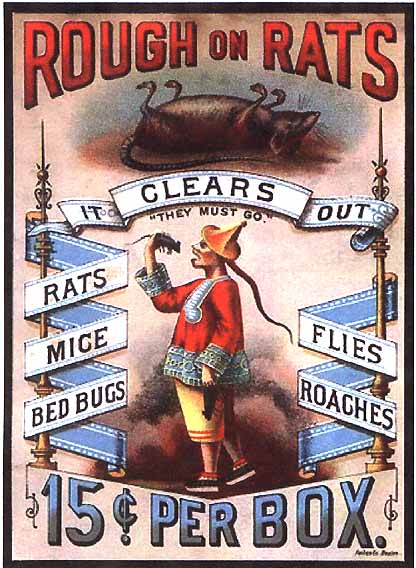
She poured the milk into the champagne glass and stood there for a moment at the counter looking at it. She could still hear Mr. Dilly talking in the living room and Peachy’s high-pitched laughter. Quickly, before someone came in, she opened the cabinet door under the sink and picked up the small, faded box of rat pellets that had been there for as long as she could remember.

She tilted the box of pellets and allowed two of them to come out of the box and rest on the palm of her hand. They were little brown nuggets the size of pencil erasers that rats were deceived into believing was something good to eat but that would kill them. She squeezed them between her fingers and put them to her nose, but they had no smell. She wondered if they had somehow lost their strength and their ability to poison. She dumped them from her hand into the champagne glass full of milk and took a spoon and made sure they dissolved.

When she took the milk back into the living room, Chick took it from her and drank it greedily in one long drink and wiped his mouth with the back of his hand. Jewell stood back and watched to see if he was going to die right away. If he didn’t, she would have to think about using more of the pellets the next time.

Copyright © 2012 by Allen Kopp

My Week with Marilyn ~ A Capsule Movie Review

My Week with Marilyn ~ A Capsule Movie Review by Allen Kopp

In 1956 Marilyn Monroe was at the peak of her movie stardom. She was thirty years old and married to her third husband, playwright Arthur Miller. In spite of her fame and all she had achieved, she was a deeply troubled and insecure woman. She traveled to England at this time to make a movie with Laurence Olivier that would eventually be called The Prince and the Showgirl. While in England, she became acquainted with a twenty-three-year-old production assistant named Colin Clark. The new movie, My Week with Marilyn, is based on Colin Clark’s memoir about Marilyn.

Michelle Williams gives a great performance as Marilyn Monroe in My Week with Marilyn. She will be remembered when Oscars are being handed out. She doesn’t just do a Marilyn impression, but shows the damaged person underneath the sex goddess persona. Marilyn knew as well as anybody that she wasn’t the person that people thought she was, the woman they saw on the screen. At one point in the movie, she says that as soon as people realize “she isn’t really Marilyn,” they abandon her. She isn’t emotionally equipped to live in the world in which she finds herself.

During the making of The Prince and the Showgirl, Marilyn latches on to young Colin Clark (Eddie Redmayne), in spite of the executives on the picture trying to keep them apart. She comes to rely on Colin to comfort her; she summons him in the night to come to her. Laurence Olivier (Kenneth Brannagh), Marilyn’s costar in the movie and also the director, finds her impossible to work with. She can’t remember—and doesn’t seem to grasp—the simplest direction or line of dialogue. But, as a character in the movie states, “when she gets it right, you can’t look at anybody else on the screen.” She has a magnetism and an appeal that can’t quite be explained or understood.

Young Colin falls in love with Marilyn, as it seems that most men do who come under her influence. At one point he asks her to leave the movie business behind and marry him, because he believes he’s the only person who really understands her, but he knows it’s impossible.

Fifty years after Marilyn’s premature death at age thirty-six, her legend lives on. She is the unique screen goddess who will be forever young. Anybody who has ever been drawn to her on the screen, for whatever reason, should enjoy seeing My Week with Marilyn.

Copyright © 2012 by Allen Kopp
War Horse ~ A Capsule Movie Review

War Horse ~ A Capsule Movie Review by Allen Kopp

Steven Spielberg’s new movie, War Horse, is like the kind of movie they don’t make (much) anymore. With its notable absence of four-letter words and its lush, retro-sounding music score, it has a kind of old-fashioned, Lassie Come Home feel to it. It’s a “family” movie (based on a children’s novel by Michael Murpurgo), but that doesn’t mean it’s only for kids. With the proper “suspension of disbelief,” many adults should like it too.

In 1914 Devon, England, struggling farmer Ted Narracott (Peter Mullen) buys a horse at auction that he can’t really afford; he’s about to lose his farm. The horse is more of a show horse than a farm horse. His wife (Emily Watson) tells him to take the horse back this instant, but we know he’s not going to do that. For his teen son, Albert (Jeremy Irvine), it’s love at first sight. He names the horse Joey and promises to train him and take care of him.

Things are not going well at the Narracott farm; farmer Ted is not able to make of the place a going concern. War has broken out between England and Germany, so farmer Ted sells Joey to the cavalry for the little bit of money he can get. Albert is understandably broken-hearted; you just don’t sell something you love as much as he loves Joey. He wants to join up to be near Joey, but he is too young.

A sympathetic officer, Captain Nicholls (Tom Hiddleston), recognizes what a fine horse Joey is. When he discovers what Joey means to Albert, he promises to take Joey as his own personal horse and return him to Albert when the war is over. It’s not the only time that Joey, through a twist of fate, experiences kindness in strangers. Maybe it’s not such a rotten world after all.

When Captain Nicholls is killed in a skirmish with the Germans, Joey falls into the hands of a young French girl, Emilie, and her grandfather. Emilie loves Joey and comes to consider him her own horse; she, of course, doesn’t know his history or anything about him. One day when she is riding Joey over a hill, she comes across the invading German army. The Germans take everything Emilie and her grandfather have, including Joey. They use him for pulling cannons through the mud, work that will eventually kill him. But do the Germans care? When Joey succumbs, they’ll have another horse waiting at the ready.

Joey experiences war at first-hand but, like the trouper he is, he perseveres. At one point he becomes hopelessly entangled in barbed wire on the battlefield with shells going off all around him. In my favorite scene in the movie, a young British soldier risks his life to go to Joey and extricate him with wire cutters. While he is setting Joey free, a German soldier emerges from an opposing trench. The two young soldiers, British and German, have a brief but telling (and beautifully written) conversation.

The war goes on long enough that Albert ends up in the British army. He has never given up on getting Joey back, although he doesn’t know all the terrible things that Joey has been through since he last saw him. Albert is gassed in the trenches by the Germans and temporarily (we learn) loses his eyesight.

Through all the twists and turns that Albert and Joey experience, the story comes full-circle in the end. While there might be a little too much irony in the conclusion to be entirely believable, it’s impossible not to be moved by it, especially if you are the sort who understands the love that exists between a boy and his horse (or the love between any human and any animal). 

Copyright © 2012 by Allen Kopp
Never Let Me Go ~ A Capsule Movie Review

Never Let Me Go ~ A Capsule Movie Review by Allen Kopp

A 2010 movie that got little or no play in my area is one called Never Let Me Go. It’s about ten times more interesting and compelling that most of the crap that plays at the seven-screen multiplex in my neighborhood, but nobody asked me. It is currently available for viewing on HBO. Otherwise, I would probably have never seen it.

Never Let Me Go is about a group of kids at an English boarding school called Hailsham, specifically three kids: Tommy, Kathy and Ruth. The kids at Hailsham are just like kids anyplace else, with one striking difference. We learn about thirty minutes into the movie that they exist for one reason only. They are “clones” (although that word is never used); when they are at the appropriate age, their organs will be used to save the lives of others. Most of them will make two or three “donations,” at most, until they reach “completion,” which is a polite way of saying their sad lives will end at a young age.

Since the Hailsham kids have no family and no ties outside of school, all they have is each other; they don’t learn skills in school that will help them cope with the outside world because they won’t need them. Kathy and Tommy (played by Carey Mulligan and Andrew Garfield as older kids and as young adults) are drawn to each other from childhood. Under different circumstances, they would have fallen in love, married and lived happy lives. Ruth (Keira Knightley) witnessing the attraction between Tommy and Kathy, is jealous and afraid of being left behind; she decides that she and Tommy were meant for each other. She takes Tommy away from Kathy; Tommy seems more than willing to be taken. As Tommy and Ruth embark on donating their organs one by one, Kathy becomes a “carer,” meaning that her “donations” are delayed for a number of years so she can help to care for the donors as they undergo the horrific surgeries that will ultimately end their lives.  The question becomes: How much of a “normal” life can young people in such circumstances reasonably expect to have?

Never Let Me Go is based on a novel by the English novelist Kazuo Ishiguro. It’s a memorable and intelligent little movie with poignant characters that seems to have been mostly overlooked. Too bad, because it might just be the best movie of 2010 that you never saw.

Copyright © 2011 by Allen Kopp

My Favorite Christmas Movie

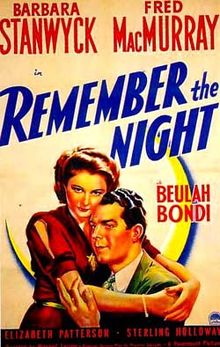
My Favorite Christmas Movie ~ Remember the Night

I don’t have to tax my brain very hard to think of a bunch of Christmas-themed movies, movies that are either about Christmas or that revolve in some way around the Christmas season.  Movies that immediately come to mind are Meet Me in St. Louis, Miracle on 34th Street, The Bells of St. Mary’s, A Christmas Story, A Christmas Carol, Meet John Doe, A Tree Grows in Brooklyn, The Apartment, Christmas in Connecticut, Holiday Inn, The Polar Express, and many others. My favorite Christmas movie, though, and one that I’ve seen maybe thirty times, is a little gem from 1940 called Remember the Night, with Barbara Stanwyck as a girl thief who runs afoul of the law at Christmastime, and Fred MacMurray as the straight-arrow prosecuting attorney who just might redeem her. 

The character Barbara Stanwyck plays is a charming and not-quite-decent girl named Lee Leander, who is caught stealing expensive jewelry right before Christmas and ends up in jail. Her trial is being held over until after the holidays, so it seems she’s going to have to spend Christmas behind bars. John Sargent (played by Fred MacMurray), the prosecutor in her case, takes pity on her and bails her out at least until her trail will resume after Christmas.  Since she has no place to go, he offers to take her with him to Indiana to spend Christmas. It turns out that Lee is also from Indiana, so she is eager to return there with him. 

After a memorable road trip and one stop along the way at Lee’s hateful mother’s house, where it turns out Lee isn’t wanted, they end up at John’s Indiana home which, as it turns out, is everything a home should be. John has a mother (played by Beulah Bondi), and an aunt, (played by Elizabeth Patterson) and they have an odd but lovable hired man named Willy (played by Sterling Holloway). These are warm, quirky characters, and you will immediately feel a connection with them. They are the kind of people we have all known in the past, or wish we had known.

John’s family welcomes Lee with open arms and treats her like family during the few days she is with them. They gradually come to learn of her troubles back in the city and that she is likely to end up in jail. John’s well-intentioned mother has a talk with Lee and makes her promise she won’t do anything to spoil John’s career, which he has worked so hard to get. Lee assures her that there is nothing between her and John and that when they return to the city she won’t ever see him again. 

On their way back to the city after Christmas, Lee and John discover they’ve fallen in love. The Christmas she has spent with decent John and his decent family has changed her and has made her want to go straight after her life as a thief. What happens in the courtroom when her trial resumes might not be what you expected, but it is fitting to the characters and the situation and we see that it’s exactly the conclusion they’ve been headed toward all along.   

Remember the Night has sentiment but is never hokey or heavy-handed. It’s sweet but not overly sweet. The characters and situations are believable and the dialogue is crisp and funny. It’s one of those rare movies where all the elements come together in a perfect blend.  Barbara Stanwyck and Fred MacMurray appeared together in several films, but I think they were never better than in this one. If it’s a Christmas movie you’re wanting—and likely one you haven’t seen before—it’s Remember the Night from 1940. You might even want to see it more than once.

Copyright © 2011 by Allen Kopp

“Stopping by the Woods on a Snowy Evening” by Robert Frost


Stopping by the Woods on a Snowy Evening ~
A Classic American Poem by Robert Frost (1874-1963)

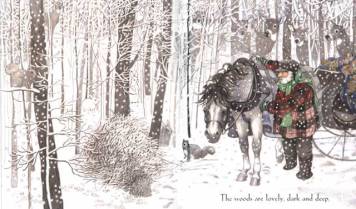
Whose woods these are I think I know.
His house is in the village though;
He will not mind me stopping here
To watch his woods fill up with snow.
 
My little horse must think it queer
To stop without a farmhouse near
Between the woods and frozen lake
The darkest evening of the year.
 
He gives his harness bells a shake
To ask if there is some mistake.
The only other sound’s the sweep
Of easy wind and downy flake.
 
The woods are lovely, dark and deep.
But I have promises to keep,
And miles to go before I sleep,
And miles to go before I sleep.
 

“Snow Flakes” by Nathaniel Hawthorne

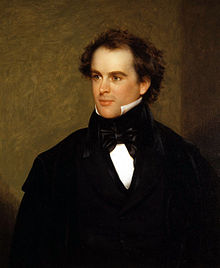
Nathaniel Hawthorne (1804-1864)

Snow Flakes ~ A Classic American Short Story by Nathaniel Hawthorne 

There is snow in yonder cold gray sky of the morning, and, through the partially frosted window-panes, I love to watch the gradual beginning of the storm. A few feathery flakes are scattered widely through the air, and hover downward with uncertain flight, now almost alighting on the earth, now whirled again aloft into remote regions of the atmosphere. These are not the big flakes, heavy with moisture, which melt as they touch the ground, and are portentous of a soaking rain. It is to be, in good earnest, a wintry storm. The two or three people, visible on the side-walks, have an aspect of endurance, a blue-nosed, frosty fortitude, which is evidently assumed in anticipation of a comfortless and blustering day. By nightfall, or at least before the sun sheds another glimmering smile upon us, the street and our little garden will be heaped with mountain snow- drifts. The soil, already frozen for weeks past, is prepared to sustain whatever burden may be laid upon it; and, to a northern eye, the landscape will lose its melancholy bleakness and acquire a beauty of its own, when Mother Earth, like her children, shall have put on the fleecy garb of her winter’s wear. The cloud-spirits are slowly weaving her white mantle. As yet, indeed, there is barely a rime like hoarfrost over the brown surface of the street; the withered green of the grass-plat is still discernible; and the slated roofs of the houses do but begin to look gray, instead of black. All the snow that has yet fallen within the circumference of my view, were it heaped up together, would hardly equal the hillock of a grave. Thus gradually, by silent and stealthy influences, are great changes wrought. These little snow-particles, which the storm-spirit flings by handfuls through the air, will bury the great earth under their accumulated mass, nor permit her to behold her sister sky again for dreary months. We, likewise, shall lose sight of our mother’s familiar visage, and must content ourselves with looking heavenward the oftener.Now, leaving the storm to do his appointed office, let us sit down, pen in hand, by our fireside. Gloomy as it may seem, there is an influence productive of cheerfulness, and favorable to imaginative thought, in the atmosphere of a snowy day. The native of a southern clime may woo the muse beneath the heavy shade of summer foliage, reclining on banks of turf, while the, sound of singing birds and warbling rivulets chimes in with the music of his soul. In our brief summer, I do not think, but only exist in the vague enjoyment of a dream. My hour of inspiration–if that hour ever comes–is when the green log hisses upon the hearth, and the bright flame, brighter for the gloom of the chamber, rustles high up the chimney, and the coals drop tinkling down among the growing heaps of ashes. When the casement rattles in the gust, and the snow-flakes or the sleety raindrops pelt hard against the window-panes, then I spread out my sheet of paper, with the certainty that thoughts and fancies will gleam forth upon it, like stars at twilight, or like violets in May,– perhaps to fade as soon. However transitory their glow, they at least shine amid the darksome shadow which the clouds of the outward sky fling through the room. Blessed, therefore, and reverently welcomed by me, her true-born son, be New England’s winter, which makes us, one and all, the nurslings of the storm, and sings a familiar lullaby even in the wildest shriek of the December blast. Now look we forth again, and see how much of his task the storm-spirit has done.

Slow and sure! He has the day, perchance the week, before him, and may take his own time to accomplish Nature’s burial in snow. A smooth mantle is scarcely yet thrown over the withered grass-plat, and the dry stalks of annuals still thrust themselves through the white surface in all parts of the garden. The leafless rose-bushes stand shivering in a shallow snow-drift, looking, poor things! as disconsolate as if they possessed a human consciousness of the dreary scene. This is a sad time for the shrubs that do not perish with the summer; they neither live nor die; what they retain of life seems but the chilling sense of death. Very sad are the flower shrubs in midwinter! The roofs of the houses are now all white, save where the eddying wind has kept them bare at the bleak corners. To discern the real intensity of the storm, we must fix upon some distant object,–as yonder spire,-and observe how the riotous gust fights with the descending snow throughout the intervening space. Sometimes the entire prospect is obscured; then, again, we have a distinct, but transient glimpse of the tall steeple, like a giant’s ghost; and now the dense wreaths sweep between, as if demons were flinging snowdrifts at each other, in mid-air. Look next into the street, where we have seen an amusing parallel to the combat of those fancied demons in the upper regions. It is a snow-battle of school-boys. What a pretty satire on war and military glory might be written, in the form of a child’s story, by describing the snowball-fights of two rival schools, the alternate defeats and victories of each, and the final triumph of one party, or perhaps of neither! What pitched battles, worthy to be chanted in Homeric strains! What storming of fortresses, built all of massive snowblocks! What feats of individual prowess, and embodied onsets of martial enthusiasm! And when some well-contested and decisive victory had put a period to the war, both armies should unite to build a lofty monument of snow upon the battle-field, and crown it with the victor’s statue, hewn of the same frozen marble. In a few days or weeks thereafter, the passer-by would observe a shapeless mound upon the level common; and, unmindful of the famous victory, would ask, “How came it there? Who reared it? And what means it?” The shattered pedestal of many a battle monument has provoked these questions, when none could answer.

Turn we again to the fireside, and sit musing there, lending our ears to the wind, till perhaps it shall seem like an articulate voice, and dictate wild and airy matter for the pen. Would it might inspire me to sketch out the personification of a New England winter! And that idea, if I can seize the snow-wreathed figures that flit before my fancy, shall be the theme of the next page.

How does Winter herald his approach? By the shrieking blast of latter autumn, which is Nature’s cry of lamentation, as the destroyer rushes among the shivering groves where she has lingered, and scatters the sear leaves upon the tempest. When that cry is heard, the people wrap themselves in cloaks, and shake their heads disconsolately, saying, “Winter is at hand!” Then the axe of the woodcutter echoes sharp and diligently in the forest; then the coal-merchants rejoice, because each shriek of Nature in her agony adds something to the price of coal per ton; then the peat-smoke spreads its aromatic fragrance through the atmosphere. A few days more; and at eventide, the children look out of the window, and dimly perceive the flaunting of a snowy mantle in the air. It is stern Winter’s vesture. They crowd around the hearth, and cling to their mother’s gown, or press between their father’s knees, affrighted by the hollow roaring voice, that bellows a-down the wide flue of the chimney. It is the voice of Winter; and when parents and children bear it, they shudder and exclaim, “Winter is come! Cold Winter has begun his reign already!” Now, throughout New England, each hearth becomes an altar, sending up the smoke of a continued sacrifice to the immitigable deity who tyrannizes over forest, country side, and town. Wrapped in his white mantle, his staff a huge icicle, his beard and hair a wind-tossed snow-drift, he travels over the land, in the midst of the northern blast; and woe to the homeless wanderer whom he finds upon his path! There he lies stark and stiff, a human shape of ice, on the spot where Winter overtook him. On strides the tyrant over the rushing rivers and broad lakes, which turn to rock beneath his footsteps. His dreary empire is established; all around stretches the desolation of the Pole. Yet not ungrateful be his New England children—for Winter is our sire, though a stern and rough one—not ungrateful even for the severities, which have nourished our unyielding strength of character. And let us thank him, too, for the sleigh-rides, cheered by the music of merry bells; for the crackling and rustling hearth, when the ruddy firelight gleams on hardy Manhood and the blooming cheek of Woman; for all the home enjoyments, and the kindred virtues, which flourish in a frozen soil. Not that we grieve, when, after some seven months of storm and bitter frost, Spring, in the guise of a flower-crowned virgin, is seen driving away the hoary despot, pelting him with violets by the handful, and strewing green grass on the path behind him. Often, ere he will give up his empire, old Winter rushes fiercely back, and hurls a snow-drift at the shrinking form of Spring; yet, step by step, he is compelled to retreat northward, and spends the summer months within the Arctic circle.

Such fantasies, intermixed among graver toils of mind, have made the winter’s day pass pleasantly. Meanwhile, the storm has raged without abatement, and now, as the brief afternoon declines, is tossing denser volumes to and fro about the atmosphere. On the window-sill, there is a layer of snow, reaching half-way up the lowest pane of glass. The garden is one unbroken bed. Along the street are two or three spots of uncovered earth, where the gust has whirled away the snow, heaping it elsewhere to the fence-tops, or piling huge banks against the doors of houses. A solitary passenger is seen, now striding mid-leg deep across a drift, now scudding over the bare ground, while his cloak is swollen with the wind. And now the jingling of bells, a sluggish sound, responsive to the horse’s toilsome progress through the unbroken drifts, announces the passage of a sleigh, with a boy clinging behind, and ducking his head to escape detection by the driver. Next comes a sledge, laden with wood for some unthrifty housekeeper, whom winter has surprised at a cold hearth. But what dismal equipage now struggles along the uneven street? A sable hearse, bestrewn with snow, is bearing a dead man through the storm to his frozen bed. O, how dreary is a burial in winter, when the bosom of Mother Earth has no warmth for her poor child!

Evening–the early eve of December–begins to spread its deepening veil over the comfortless scene; the firelight gradually brightens, and throws my flickering shadow upon the walls and ceiling of the chamber; but still the storm rages and rattles, against the windows. Alas! I shiver, and think it time to be disconsolate. But, taking a farewell glance at dead Nature in her shroud, I perceive a flock of snow-birds, skimming lightsomely through the tempest, and flitting from drift to drift, as sportively as swallows in the delightful prime of summer. Whence come they? Where do they build their nests, and seek their food? Why, having airy wings, do they not follow summer around the earth, instead of making themselves the playmates of the storm, and fluttering on the dreary verge of the winter’s eve? I know not whence they come, nor why; yet my spirit has been cheered by that wandering flock of snow-birds.

“One Christmas Eve” by Langston Hughes

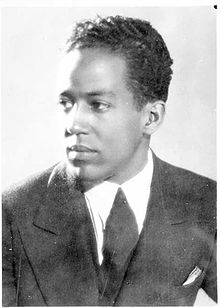
Langston Hughes (1902-1967)

One Christmas Eve ~ A Classic American Short Story by Langston Hughes

Standing over the hot stove cooking supper, the colored maid, Arcie, was very tired. Between meals today, she had cleaned the whole house for the white family she worked for, getting ready for Christmas tomorrow. Now her back ached and her head felt faint from sheer fatigue. Well, she would be off in a little while, if only the Missus and her two children would come on home to dinner. They were out shopping for more things for the tree which stood all ready, tinsel-hung and lovely in the living-room, waiting for its candles to be lighted.

Arcie wished she could afford a tree for Joe. He’d never had one yet, and it’s nice to have such things when you’re little. Joe was five, going on six. Arcie, looking at the roast in the white folks’ oven, wondered how much she could afford to spend tonight on toys. She only got seven dollars a week, and four of that for her room and the landlady’s looking after Joe while Arcie was at work.

“Lord, it’s more’n a notion raisin’ a child,” she thought.

She looked at the clock on the kitchen table. After seven. What made white folks so darned inconsiderate? Why didn’t they come on home here to supper? They knew she wanted to get off before all the stores closed. She wouldn’t have time to buy Joe nothin’ if they didn’t hurry. And her landlady probably wanting to go out and shop, too, and not be bothered with little Joe.

“Dog gone it!” Arcie said to herself. “If I just had my money, I might leave the supper on the stove for ‘em. I just got to get to the stores fo’ they close.” But she hadn’t been paid for the week yet. The Missus had promised to pay her Christmas Eve, a day or so ahead of time.

Arcie heard a door slam and talking and laughter in the front of the house. She went in and saw the Missus and her kids shaking snow off their coats.

“Ummm-mm! It’s swell for Christmas Eve,” one of the kids said to Arcie. “It’s snowin’ like the deuce and mother came near driving through a stoplight. Can’t hardly see for the snow. It’s swell!”

“Supper’s ready,” Arcie said. She was thinking how her shoes weren’t very good for walking in snow.

It seemed like the white folks took as long as they could to eat that evening. While Arcie was washing dishes, the Missus came out with her money.

“Arcie,” the Missus said, “I’m so sorry, but would you mind if I just gave you five dollars tonight? The children have made me run short of change, buying presents and all.”

“I’d like to have seven,” Arcie said. “I needs it.”

“Well, I just haven’t got seven,” the Missus said. “I didn’t know you’d want all your money before the end of the week, anyhow. I just haven’t got it to spare.”

Arcie took five. Coming out of the hot kitchen, she wrapped up as well as she could and hurried by the house where she roomed to get little Joe. At least he could look at the Christmas trees in the windows downtown.

The landlady, a big light yellow woman, was in a bad humor. She said to Arcie, “I thought you was comm’ home early and get this child. I guess you know I want to go out, too, once in a while.”

Arcie didn’t say anything for, if she had, the landlady would probably throw it up to her that she wasn’t getting paid to look after a child both night and day.

“Come on, Joe,” Arcie said to her son, “let’s us go in the street.”

“I hears they got a Santa Claus downtown,” Joe said, wriggling into his worn little coat. “I wants to see him.”

“Don’t know ‘bout that,” his mother said, “but hurry up and get your rubbers on. Stores’ll all be closed directly.”

It was six or eight blocks downtown. They trudged along through the falling snow, both of them a little cold. But the snow was pretty!

The main street was hung with bright red and blue lights. In front of the City Hall there was a Christmas tree but it didn’t have no presents on it, only lights. In the store windows there were lots of toys—for sale.

Joe kept saying, “Mama, I want…”

But mama kept walking ahead. It was nearly ten, when the stores were due to close, and Arcie wanted to get Joe some cheap gloves and something to keep him warm, as well as a toy or two. She thought she might come across a rummage sale where they had children’s clothes. And in the ten-cent store, she could get some toys.

“O-oo! Lookee…,” little Joe kept saying, and pointing at things in the windows. How warm and pretty the lights were, and the shops, and the electric signs through the snow.

It took Arcie more than a dollar to get Joe’s mittens and things he needed. In the A&P Arcie bought a big bag of hard candies for forty-nine cents. And then she guided Joe through the crowd on the street until they came to the dime store. Near the ten-cent store they passed a moving picture theatre. Joe said he wanted to go in and see the movies.

Arcie said, “Ump-un! No, child! This ain’t Baltimore where they have shows for colored, too. In these here small towns, don’t let colored folks in. We can’t go in there.”

“Oh,” said little Joe.

In the ten-cent store, there was an awful crowd. Arcie told Joe to stand outside and wait for her. Keeping hold of him in the crowded store would be a job. Besides she didn’t want him to see what toys she was buying. They were to be a surprise from Santa Claus tomorrow.

Little Joe stood outside the ten-cent store in the light, and the snow, and people passing. Gee, Christmas was pretty. All tinsel and stars and cotton. And Santa Claus a-coming from somewhere, dropping things in stockings. And all the people in the streets were carrying things, and the children looked happy.

But Joe soon got tired of just standing and thinking and waiting in front of the ten-cent store. There were so many things to look at in the other windows. He moved along up the block a little, and then a little more, walking and looking. In fact, he moved until he came to the white folk’s picture show.

In the lobby of the moving picture show, behind the plate glass doors, it was all warm and glowing and awful pretty. Joe stood looking in, and as he looked his eyes began to make out, in there blazing beneath holly and colored streamers and the electric stars of the lobby, a marvelous Christmas tree. A group of children and grown-ups, white, of course, were standing around the big jovial man in red beside the tree. Or was it a man? Little Joe’s eyes opened wide. No, it was not a man at all. It was Santa Claus!

Little Joe pushed open one of the glass doors and ran into the lobby of the white moving picture show. Little Joe went right through the crowd and up to where he could get a good look at Santa Claus. And Santa Claus was giving away gifts, little presents for children, little boxes of animal crackers and stick-candy canes. And behind him on the tree was a big sign (which little Joe didn’t know how to read). It said, to those who understood, MERRY XMAS FROM SANTA CLAUS TO OUR YOUNG PATRONS.

Around the lobby, other signs said, WHEN YOU COME OUT OF THE SHOW STOP WITH YOUR CHILDREN AND SEE OUR SANTA CLAUS. And another announced, GEM THREATRE MAKES ITS CUSTOMERS HAPPY—SEE OUR SANTA.

And there was Santa Claus in a red suit and white beard all sprinkled with tinsel snow. Around him were rattles and drums and rocking horses which he was not giving away. But the signs on them said, (could little Joe have read) that they would be presented from the stage on Christmas Day to the holders of the lucky numbers. Tonight, Santa Claus was only giving away candy, and stick-candy canes, and animal crackers to the kids.

Joe would have liked terribly to have a stick-candy cane. He came a little closer to Santa Claus, until he was right in front of the crowd. And then Santa Claus saw Joe.

Why is it that lots of white people always grin when they see a Negro child? Santa grinned. Everybody else grinned, too, looking at little black Joe, who had no business in the lobby of a white theatre. Then Santa Claus stooped down and slyly picked up one of his lucky number rattles , a great big loud tin-pan rattle such as they use in cabarets. And he shook it fiercely right at Joe. That was funny. The white people laughed, kids and all. But little Joe didn’t laugh. He was scared. To the shaking of the big rattle, he turned and fled out of the warm lobby of the theatre, out into the street where the snow was and the people. Frightened by laughter, he had begun to cry. He went looking for his mama. In his heart he never thought Santa Claus shook great rattles at children like that—and then laughed.

In the crowd on the street he went the wrong way. He couldn’t find the ten-cent store or his mother. There were too many people, all white people, moving like white shadows in the snow, a world of white people.

It seemed to Joe an awfully long time till he suddenly saw Arcie, dark and worried-looking, cut across the sidewalk through the passing crowd and grab him. Although her arms were full of packages, she still managed with one free hand to shake him until his teeth rattled.

“Why didn’t you stand where I left you?” Arcie demanded loudly. “Tired as I am, I got to run all over the streets in the night lookin’ for you. I’m a great mind to wear you out.”

When little Joe got his breath back, on the way home, he told his mama he had been in the moving picture show.

“But Santa Claus didn’t give me nothing,” Joe said tearfully. “He made a big noise at me and I runned out.”

“Serves you right,” said Arcie, trudging through the snow. “You had no business in there. I told you to stay where I left you.”

“But I seed Santa Claus in there,” little Joe said, “so I went in.”

“Huh! That wasn’t no Santa Claus,” Arcie explained. “If it was, he wouldn’t a-treated you like that. That’s a theatre for white folks—I told you once—and he’s just a old white man.”

“Oh…,” said little Joe.