
Résumé ~ A Classic American Poem by Dorothy Parker (1893-1967)
Razors pain you; Rivers are damp; Acids stain you; And drugs cause cramp. Guns aren’t lawful; Nooses give; Gas smells awful; You might as well live.
Résumé ~ A Classic American Poem by Dorothy Parker (1893-1967)
Razors pain you; Rivers are damp; Acids stain you; And drugs cause cramp. Guns aren’t lawful; Nooses give; Gas smells awful; You might as well live.
Aunt Helen ~ A Classic American Poem by T. S. Eliot
Miss Helen Slingsby was my maiden aunt, And lived in a small house near a fashionable square Cared for by servants to the number of four. Now when she died there was silence in heaven And silence at her end of the street. The shutters were drawn and the undertaker wiped his feet– He was aware that this sort of thing had occurred before. The dogs were handsomely provided for, But shortly afterwards the parrot died too. The Dresden clock continued ticking on the mantelpiece, And the footman sat upon the dining table Holding the second housemaid on his knees– Who had always been so careful while her mistress lived.
The Pit and the Pendulum ~ A Classic American Short Story by Edgar Allan Poe (1809-1849)
Impia tortorum longos hic turba furores
Sanguinis innocui, non satiata, aluit.
Sospite nunc patria, fracto nunc funeris antro,
Mors ubi dira fuit vita salusque patent.
I was sick — sick unto death with that long agony; and when they at length unbound me, and I was permitted to sit, I felt that my senses were leaving me. The sentence — the dread sentence of death — was the last of distinct accentuation which reached my ears. After that, the sound of the inquisitorial voices seemed merged in one dreamy indeterminate hum. It conveyed to my soul the idea of revolution — perhaps from its association in fancy with the burr of a mill wheel. This only for a brief period; for presently I heard no more. Yet, for a while, I saw; but with how terrible an exaggeration! I saw the lips of the black-robed judges. They appeared to me white — whiter than the sheet upon which I trace these words — and thin even to grotesqueness; thin with the intensity of their expression of firmness — of immoveable resolution — of stern contempt of human torture. I saw that the decrees of what to me was Fate, were still issuing from those lips. I saw them writhe with a deadly locution. I saw them fashion the syllables of my name; and I shuddered because no sound succeeded. I saw, too, for a few moments of delirious horror, the soft and nearly imperceptible waving of the sable draperies which enwrapped the walls of the apartment. And then my vision fell upon the seven tall candles upon the table. At first they wore the aspect of charity, and seemed white and slender angels who would save me; but then, all at once, there came a most deadly nausea over my spirit, and I felt every fibre in my frame thrill as if I had touched the wire of a galvanic battery, while the angel forms became meaningless spectres, with heads of flame, and I saw that from them there would be no help. And then there stole into my fancy, like a rich musical note, the thought of what sweet rest there must be in the grave. The thought came gently and stealthily, and it seemed long before it attained full appreciation; but just as my spirit came at length properly to feel and entertain it, the figures of the judges vanished, as if magically, from before me; the tall candles sank into nothingness; their flames went out utterly; the blackness of darkness supervened; all sensations appeared swallowed up in a mad rushing descent as of the soul into Hades. Then silence, and stillness, night were the universe.
I had swooned; but still will not say that all of consciousness was lost. What of it there remained I will not attempt to define, or even to describe; yet all was not lost. In the deepest slumber — no! In delirium — no! In a swoon — no! In death — no! even in the grave all is not lost. Else there is no immortality for man. Arousing from the most profound of slumbers, we break the gossamer web of some dream. Yet in a second afterward, (so frail may that web have been) we remember not that we have dreamed. In the return to life from the swoon there are two stages; first, that of the sense of mental or spiritual; secondly, that of the sense of physical, existence. It seems probable that if, upon reaching the second stage, we could recall the impressions of the first, we should find these impressions eloquent in memories of the gulf beyond. And that gulf is — what? How at least shall we distinguish its shadows from those of the tomb? But if the impressions of what I have termed the first stage, are not, at will, recalled, yet, after long interval, do they not come unbidden, while we marvel whence they come? He who has never swooned, is not he who finds strange palaces and wildly familiar faces in coals that glow; is not he who beholds floating in mid-air the sad visions that the many may not view; is not he who ponders over the perfume of some novel flower — is not he whose brain grows bewildered with the meaning of some musical cadence which has never before arrested his attention.
Amid frequent and thoughtful endeavors to remember; amid earnest struggles to regather some token of the state of seeming nothingness into which my soul had lapsed, there have been moments when I have dreamed of success; there have been brief, very brief periods when I have conjured up remembrances which the lucid reason of a later epoch assures me could have had reference only to that condition of seeming unconsciousness. These shadows of memory tell, indistinctly, of tall figures that lifted and bore me in silence down — down — still down — till a hideous dizziness oppressed me at the mere idea of the interminableness of the descent. They tell also of a vague horror at my heart, on account of that heart’s unnatural stillness. Then comes a sense of sudden motionlessness throughout all things; as if those who bore me (a ghastly train!) had outrun, in their descent, the limits of the limitless, and paused from the wearisomeness of their toil. After this I call to mind flatness and dampness; and then all is madness — the madness of a memory which busies itself among forbidden things.
Very suddenly there came back to my soul motion and sound — the tumultuous motion of the heart, and, in my ears, the sound of its beating. Then a pause in which all is blank. Then again sound, and motion, and touch — a tingling sensation pervading my frame. Then the mere consciousness of existence, without thought — a condition which lasted long. Then, very suddenly, thought, and shuddering terror, and earnest endeavor to comprehend my true state. Then a strong desire to lapse into insensibility. Then a rushing revival of soul and a successful effort to move. And now a full memory of the trial, of the judges, of the sable draperies, of the sentence, of the sickness, of the swoon. Then entire forgetfulness of all that followed; of all that a later day and much earnestness of endeavor have enabled me vaguely to recall.
So far, I had not opened my eyes. I felt that I lay upon my back, unbound. I reached out my hand, and it fell heavily upon something damp and hard. There I suffered it to remain for many minutes, while I strove to imagine where and what I could be. I longed, yet dared not to employ my vision. I dreaded the first glance at objects around me. It was not that I feared to look upon things horrible, but that I grew aghast lest there should be nothing to see. At length, with a wild desperation at heart, I quickly unclosed my eyes. My worst thoughts, then, were confirmed. The blackness of eternal night encompassed me. I struggled for breath. The intensity of the darkness seemed to oppress and stifle me. The atmosphere was intolerably close. I still lay quietly, and made effort to exercise my reason. I brought to mind the inquisitorial proceedings, and attempted from that point to deduce my real condition. The sentence had passed; and it appeared to me that a very long interval of time had since elapsed. Yet not for a moment did I suppose myself actually dead. Such a supposition, notwithstanding what we read in fiction, is altogether inconsistent with real existence; — but where and in what state was I? The condemned to death, I knew, perished usually at the autos-da-fe, and one of these had been held on the very night of the day of my trial. Had I been remanded to my dungeon, to await the next sacrifice, which would not take place for many months? This I at once saw could not be. Victims had been in immediate demand. Moreover, my dungeon, as well as all the condemned cells at Toledo, had stone floors, and light was not altogether excluded.
A fearful idea now suddenly drove the blood in torrents upon my heart, and for a brief period, I once more relapsed into insensibility. Upon recovering, I at once started to my feet, trembling convulsively in every fibre. I thrust my arms wildly above and around me in all directions. I felt nothing; yet dreaded to move a step, lest I should be impeded by the walls of a tomb. Perspiration burst from every pore, and stood in cold big beads upon my forehead. The agony of suspense grew at length intolerable, and I cautiously moved forward, with my arms extended, and my eyes straining from their sockets, in the hope of catching some faint ray of light. I proceeded for many paces; but still all was blackness and vacancy. I breathed more freely. It seemed evident that mine was not, at least, the most hideous of fates.
And now, as I still continued to step cautiously onward, there came thronging upon my recollection a thousand vague rumors of the horrors of Toledo. Of the dungeons there had been strange things narrated — fables I had always deemed them — but yet strange, and too ghastly to repeat, save in a whisper. Was I left to perish of starvation in this subterranean world of darkness; or what fate, perhaps even more fearful, awaited me? That the result would be death, and a death of more than customary bitterness, I knew too well the character of my judges to doubt. The mode and the hour were all that occupied or distracted me.
My outstretched hands at length encountered some solid obstruction. It was a wall, seemingly of stone masonry — very smooth, slimy, and cold. I followed it up; stepping with all the careful distrust with which certain antique narratives had inspired me. This process, however, afforded me no means of ascertaining the dimensions of my dungeon; as I might make its circuit, and return to the point whence I set out, without being aware of the fact; so perfectly uniform seemed the wall. I therefore sought the knife which had been in my pocket, when led into the inquisitorial chamber; but it was gone; my clothes had been exchanged for a wrapper of coarse serge. I had thought of forcing the blade in some minute crevice of the masonry, so as to identify my point of departure. The difficulty, nevertheless, was but trivial; although, in the disorder of my fancy, it seemed at first insuperable. I tore a part of the hem from the robe and placed the fragment at full length, and at right angles to the wall. In groping my way around the prison, I could not fail to encounter this rag upon completing the circuit. So, at least I thought: but I had not counted upon the extent of the dungeon, or upon my own weakness. The ground was moist and slippery. I staggered onward for some time, when I stumbled and fell. My excessive fatigue induced me to remain prostrate; and sleep soon overtook me as I lay.
Upon awaking, and stretching forth an arm, I found beside me a loaf and a pitcher with water. I was too much exhausted to reflect upon this circumstance, but ate and drank with avidity. Shortly afterward, I resumed my tour around the prison, and with much toil came at last upon the fragment of the serge. Up to the period when I fell I had counted fifty-two paces, and upon resuming my walk, I had counted forty-eight more; — when I arrived at the rag. There were in all, then, a hundred paces; and, admitting two paces to the yard, I presumed the dungeon to be fifty yards in circuit. I had met, however, with many angles in the wall, and thus I could form no guess at the shape of the vault; for vault I could not help supposing it to be.
I had little object — certainly no hope these researches; but a vague curiosity prompted me to continue them. Quitting the wall, I resolved to cross the area of the enclosure. At first I proceeded with extreme caution, for the floor, although seemingly of solid material, was treacherous with slime. At length, however, I took courage, and did not hesitate to step firmly; endeavoring to cross in as direct a line as possible. I had advanced some ten or twelve paces in this manner, when the remnant of the torn hem of my robe became entangled between my legs. I stepped on it, and fell violently on my face.
In the confusion attending my fall, I did not immediately apprehend a somewhat startling circumstance, which yet, in a few seconds afterward, and while I still lay prostrate, arrested my attention. It was this — my chin rested upon the floor of the prison, but my lips and the upper portion of my head, although seemingly at a less elevation than the chin, touched nothing. At the same time my forehead seemed bathed in a clammy vapor, and the peculiar smell of decayed fungus arose to my nostrils. I put forward my arm, and shuddered to find that I had fallen at the very brink of a circular pit, whose extent, of course, I had no means of ascertaining at the moment. Groping about the masonry just below the margin, I succeeded in dislodging a small fragment, and let it fall into the abyss. For many seconds I hearkened to its reverberations as it dashed against the sides of the chasm in its descent; at length there was a sullen plunge into water, succeeded by loud echoes. At the same moment there came a sound resembling the quick opening, and as rapid closing of a door overhead, while a faint gleam of light flashed suddenly through the gloom, and as suddenly faded away.
I saw clearly the doom which had been prepared for me, and congratulated myself upon the timely accident by which I had escaped. Another step before my fall, and the world had seen me no more. And the death just avoided, was of that very character which I had regarded as fabulous and frivolous in the tales respecting the Inquisition. To the victims of its tyranny, there was the choice of death with its direst physical agonies, or death with its most hideous moral horrors. I had been reserved for the latter. By long suffering my nerves had been unstrung, until I trembled at the sound of my own voice, and had become in every respect a fitting subject for the species of torture which awaited me.
Shaking in every limb, I groped my way back to the wall; resolving there to perish rather than risk the terrors of the wells, of which my imagination now pictured many in various positions about the dungeon. In other conditions of mind I might have had courage to end my misery at once by a plunge into one of these abysses; but now I was the veriest of cowards. Neither could I forget what I had read of these pits — that the sudden extinction of life formed no part of their most horrible plan.
Agitation of spirit kept me awake for many long hours; but at length I again slumbered. Upon arousing, I found by my side, as before, a loaf and a pitcher of water. A burning thirst consumed me, and I emptied the vessel at a draught. It must have been drugged; for scarcely had I drunk, before I became irresistibly drowsy. A deep sleep fell upon me — a sleep like that of death. How long it lasted of course, I know not; but when, once again, I unclosed my eyes, the objects around me were visible. By a wild sulphurous lustre, the origin of which I could not at first determine, I was enabled to see the extent and aspect of the prison.
In its size I had been greatly mistaken. The whole circuit of its walls did not exceed twenty-five yards. For some minutes this fact occasioned me a world of vain trouble; vain indeed! for what could be of less importance, under the terrible circumstances which environed me, then the mere dimensions of my dungeon? But my soul took a wild interest in trifles, and I busied myself in endeavors to account for the error I had committed in my measurement. The truth at length flashed upon me. In my first attempt at exploration I had counted fifty-two paces, up to the period when I fell; I must then have been within a pace or two of the fragment of serge; in fact, I had nearly performed the circuit of the vault. I then slept, and upon awaking, I must have returned upon my steps — thus supposing the circuit nearly double what it actually was. My confusion of mind prevented me from observing that I began my tour with the wall to the left, and ended it with the wall to the right.
I had been deceived, too, in respect to the shape of the enclosure. In feeling my way I had found many angles, and thus deduced an idea of great irregularity; so potent is the effect of total darkness upon one arousing from lethargy or sleep! The angles were simply those of a few slight depressions, or niches, at odd intervals. The general shape of the prison was square. What I had taken for masonry seemed now to be iron, or some other metal, in huge plates, whose sutures or joints occasioned the depression. The entire surface of this metallic enclosure was rudely daubed in all the hideous and repulsive devices to which the charnel superstition of the monks has given rise. The figures of fiends in aspects of menace, with skeleton forms, and other more really fearful images, overspread and disfigured the walls. I observed that the outlines of these monstrosities were sufficiently distinct, but that the colors seemed faded and blurred, as if from the effects of a damp atmosphere. I now noticed the floor, too, which was of stone. In the centre yawned the circular pit from whose jaws I had escaped; but it was the only one in the dungeon.
All this I saw indistinctly and by much effort: for my personal condition had been greatly changed during slumber. I now lay upon my back, and at full length, on a species of low framework of wood. To this I was securely bound by a long strap resembling a surcingle. It passed in many convolutions about my limbs and body, leaving at liberty only my head, and my left arm to such extent that I could, by dint of much exertion, supply myself with food from an earthen dish which lay by my side on the floor. I saw, to my horror, that the pitcher had been removed. I say to my horror; for I was consumed with intolerable thirst. This thirst it appeared to be the design of my persecutors to stimulate: for the food in the dish was meat pungently seasoned.
Looking upward, I surveyed the ceiling of my prison. It was some thirty or forty feet overhead, and constructed much as the side walls. In one of its panels a very singular figure riveted my whole attention. It was the painted figure of Time as he is commonly represented, save that, in lieu of a scythe, he held what, at a casual glance, I supposed to be the pictured image of a huge pendulum such as we see on antique clocks. There was something, however, in the appearance of this machine which caused me to regard it more attentively. While I gazed directly upward at it (for its position was immediately over my own) I fancied that I saw it in motion. In an instant afterward the fancy was confirmed. Its sweep was brief, and of course slow. I watched it for some minutes, somewhat in fear, but more in wonder. Wearied at length with observing its dull movement, I turned my eyes upon the other objects in the cell.
A slight noise attracted my notice, and, looking to the floor, I saw several enormous rats traversing it. They had issued from the well, which lay just within view to my right. Even then, while I gazed, they came up in troops, hurriedly, with ravenous eyes, allured by the scent of the meat. From this it required much effort and attention to scare them away.
It might have been half an hour, perhaps even an hour, (for in cast my I could take but imperfect note of time) before I again cast my eyes upward. What I then saw confounded and amazed me. The sweep of the pendulum had increased in extent by nearly a yard. As a natural consequence, its velocity was also much greater. But what mainly disturbed me was the idea that had perceptibly descended. I now observed — with what horror it is needless to say — that its nether extremity was formed of a crescent of glittering steel, about a foot in length from horn to horn; the horns upward, and the under edge evidently as keen as that of a razor. Like a razor also, it seemed massy and heavy, tapering from the edge into a solid and broad structure above. It was appended to a weighty rod of brass, and the whole hissed as it swung through the air.
I could no longer doubt the doom prepared for me by monkish ingenuity in torture. My cognizance of the pit had become known to the inquisitorial agents — the pit whose horrors had been destined for so bold a recusant as myself — the pit, typical of hell, and regarded by rumor as the Ultima Thule of all their punishments. The plunge into this pit I had avoided by the merest of accidents, I knew that surprise, or entrapment into torment, formed an important portion of all the grotesquerie of these dungeon deaths. Having failed to fall, it was no part of the demon plan to hurl me into the abyss; and thus (there being no alternative) a different and a milder destruction awaited me. Milder! I half smiled in my agony as I thought of such application of such a term.
What boots it to tell of the long, long hours of horror more than mortal, during which I counted the rushing vibrations of the steel! Inch by inch — line by line — with a descent only appreciable at intervals that seemed ages — down and still down it came! Days passed — it might have been that many days passed — ere it swept so closely over me as to fan me with its acrid breath. The odor of the sharp steel forced itself into my nostrils. I prayed — I wearied heaven with my prayer for its more speedy descent. I grew frantically mad, and struggled to force myself upward against the sweep of the fearful scimitar. And then I fell suddenly calm, and lay smiling at the glittering death, as a child at some rare bauble.
There was another interval of utter insensibility; it was brief; for, upon again lapsing into life there had been no perceptible descent in the pendulum. But it might have been long; for I knew there were demons who took note of my swoon, and who could have arrested the vibration at pleasure. Upon my recovery, too, I felt very — oh, inexpressibly sick and weak, as if through long inanition. Even amid the agonies of that period, the human nature craved food. With painful effort I outstretched my left arm as far as my bonds permitted, and took possession of the small remnant which had been spared me by the rats. As I put a portion of it within my lips, there rushed to my mind a half formed thought of joy — of hope. Yet what business had I with hope? It was, as I say, a half formed thought — man has many such which are never completed. I felt that it was of joy — of hope; but felt also that it had perished in its formation. In vain I struggled to perfect — to regain it. Long suffering had nearly annihilated all my ordinary powers of mind. I was an imbecile — an idiot.
The vibration of the pendulum was at right angles to my length. I saw that the crescent was designed to cross the region of the heart. It would fray the serge of my robe — it would return and repeat its operations — again — and again. Notwithstanding terrifically wide sweep (some thirty feet or more) and the its hissing vigor of its descent, sufficient to sunder these very walls of iron, still the fraying of my robe would be all that, for several minutes, it would accomplish. And at this thought I paused. I dared not go farther than this reflection. I dwelt upon it with a pertinacity of attention — as if, in so dwelling, I could arrest here the descent of the steel. I forced myself to ponder upon the sound of the crescent as it should pass across the garment — upon the peculiar thrilling sensation which the friction of cloth produces on the nerves. I pondered upon all this frivolity until my teeth were on edge.
Down — steadily down it crept. I took a frenzied pleasure in contrasting its downward with its lateral velocity. To the right — to the left — far and wide — with the shriek of a damned spirit; to my heart with the stealthy pace of the tiger! I alternately laughed and howled as the one or the other idea grew predominant.
Down — certainly, relentlessly down! It vibrated within three inches of my bosom! I struggled violently, furiously, to free my left arm. This was free only from the elbow to the hand. I could reach the latter, from the platter beside me, to my mouth, with great effort, but no farther. Could I have broken the fastenings above the elbow, I would have seized and attempted to arrest the pendulum. I might as well have attempted to arrest an avalanche!
Down — still unceasingly — still inevitably down! I gasped and struggled at each vibration. I shrunk convulsively at its every sweep. My eyes followed its outward or upward whirls with the eagerness of the most unmeaning despair; they closed themselves spasmodically at the descent, although death would have been a relief, oh! how unspeakable! Still I quivered in every nerve to think how slight a sinking of the machinery would precipitate that keen, glistening axe upon my bosom. It was hope that prompted the nerve to quiver — the frame to shrink. It was hope — the hope that triumphs on the rack — that whispers to the death-condemned even in the dungeons of the Inquisition.
I saw that some ten or twelve vibrations would bring the steel in actual contact with my robe, and with this observation there suddenly came over my spirit all the keen, collected calmness of despair. For the first time during many hours — or perhaps days — I thought. It now occurred to me that the bandage, or surcingle, which enveloped me, was unique. I was tied by no separate cord. The first stroke of the razorlike crescent athwart any portion of the band, would so detach it that it might be unwound from my person by means of my left hand. But how fearful, in that case, the proximity of the steel! The result of the slightest struggle how deadly! Was it likely, moreover, that the minions of the torturer had not foreseen and provided for this possibility! Was it probable that the bandage crossed my bosom in the track of the pendulum? Dreading to find my faint, and, as it seemed, in last hope frustrated, I so far elevated my head as to obtain a distinct view of my breast. The surcingle enveloped my limbs and body close in all directions — save in the path of the destroying crescent.
Scarcely had I dropped my head back into its original position, when there flashed upon my mind what I cannot better describe than as the unformed half of that idea of deliverance to which I have previously alluded, and of which a moiety only floated indeterminately through my brain when I raised food to my burning lips. The whole thought was now present — feeble, scarcely sane, scarcely definite, — but still entire. I proceeded at once, with the nervous energy of despair, to attempt its execution.
For many hours the immediate vicinity of the low framework upon which I lay, had been literally swarming with rats. They were wild, bold, ravenous; their red eyes glaring upon me as if they waited but for motionlessness on my part to make me their prey. “To what food,” I thought, “have they been accustomed in the well?”
They had devoured, in spite of all my efforts to prevent them, all but a small remnant of the contents of the dish. I had fallen into an habitual see-saw, or wave of the hand about the platter: and, at length, the unconscious uniformity of the movement deprived it of effect. In their voracity the vermin frequently fastened their sharp fangs in my fingers. With the particles of the oily and spicy viand which now remained, I thoroughly rubbed the bandage wherever I could reach it; then, raising my hand from the floor, I lay breathlessly still.
At first the ravenous animals were startled and terrified at the change — at the cessation of movement. They shrank alarmedly back; many sought the well. But this was only for a moment. I had not counted in vain upon their voracity. Observing that I remained without motion, one or two of the boldest leaped upon the frame-work, and smelt at the surcingle. This seemed the signal for a general rush. Forth from the well they hurried in fresh troops. They clung to the wood — they overran it, and leaped in hundreds upon my person. The measured movement of the pendulum disturbed them not at all. Avoiding its strokes they busied themselves with the anointed bandage. They pressed — they swarmed upon me in ever accumulating heaps. They writhed upon my throat; their cold lips sought my own; I was half stifled by their thronging pressure; disgust, for which the world has no name, swelled my bosom, and chilled, with a heavy clamminess, my heart. Yet one minute, and I felt that the struggle would be over. Plainly I perceived the loosening of the bandage. I knew that in more than one place it must be already severed. With a more than human resolution I lay still.
Nor had I erred in my calculations — nor had I endured in vain. I at length felt that I was free. The surcingle hung in ribands from my body. But the stroke of the pendulum already pressed upon my bosom. It had divided the serge of the robe. It had cut through the linen beneath. Twice again it swung, and a sharp sense of pain shot through every nerve. But the moment of escape had arrived. At a wave of my hand my deliverers hurried tumultuously away. With a steady movement — cautious, sidelong, shrinking, and slow — I slid from the embrace of the bandage and beyond the reach of the scimitar. For the moment, at least, I was free.
Free! — and in the grasp of the Inquisition! I had scarcely stepped from my wooden bed of horror upon the stone floor of the prison, when the motion of the hellish machine ceased and I beheld it drawn up, by some invisible force, through the ceiling. This was a lesson which I took desperately to heart. My every motion was undoubtedly watched. Free! — I had but escaped death in one form of agony, to be delivered unto worse than death in some other. With that thought I rolled my eves nervously around on the barriers of iron that hemmed me in. Something unusual — some change which, at first, I could not appreciate distinctly — it was obvious, had taken place in the apartment. For many minutes of a dreamy and trembling abstraction, I busied myself in vain, unconnected conjecture. During this period, I became aware, for the first time, of the origin of the sulphurous light which illumined the cell. It proceeded from a fissure, about half an inch in width, extending entirely around the prison at the base of the walls, which thus appeared, and were, completely separated from the floor. I endeavored, but of course in vain, to look through the aperture.
As I arose from the attempt, the mystery of the alteration in the chamber broke at once upon my understanding. I have observed that, although the outlines of the figures upon the walls were sufficiently distinct, yet the colors seemed blurred and indefinite. These colors had now assumed, and were momentarily assuming, a startling and most intense brilliancy, that gave to the spectral and fiendish portraitures an aspect that might have thrilled even firmer nerves than my own. Demon eyes, of a wild and ghastly vivacity, glared upon me in a thousand directions, where none had been visible before, and gleamed with the lurid lustre of a fire that I could not force my imagination to regard as unreal.
Unreal! — Even while I breathed there came to my nostrils the breath of the vapour of heated iron! A suffocating odour pervaded the prison! A deeper glow settled each moment in the eyes that glared at my agonies! A richer tint of crimson diffused itself over the pictured horrors of blood. I panted! I gasped for breath! There could be no doubt of the design of my tormentors — oh! most unrelenting! oh! most demoniac of men! I shrank from the glowing metal to the centre of the cell. Amid the thought of the fiery destruction that impended, the idea of the coolness of the well came over my soul like balm. I rushed to its deadly brink. I threw my straining vision below. The glare from the enkindled roof illumined its inmost recesses. Yet, for a wild moment, did my spirit refuse to comprehend the meaning of what I saw. At length it forced — it wrestled its way into my soul — it burned itself in upon my shuddering reason. — Oh! for a voice to speak! — oh! horror! — oh! any horror but this! With a shriek, I rushed from the margin, and buried my face in my hands — weeping bitterly.
The heat rapidly increased, and once again I looked up, shuddering as with a fit of the ague. There had been a second change in the cell — and now the change was obviously in the form. As before, it was in vain that I, at first, endeavoured to appreciate or understand what was taking place. But not long was I left in doubt. The Inquisitorial vengeance had been hurried by my two-fold escape, and there was to be no more dallying with the King of Terrors. The room had been square. I saw that two of its iron angles were now acute — two, consequently, obtuse. The fearful difference quickly increased with a low rumbling or moaning sound. In an instant the apartment had shifted its form into that of a lozenge. But the alteration stopped not here-I neither hoped nor desired it to stop. I could have clasped the red walls to my bosom as a garment of eternal peace. “Death,” I said, “any death but that of the pit!” Fool! might I have not known that into the pit it was the object of the burning iron to urge me? Could I resist its glow? or, if even that, could I withstand its pressure And now, flatter and flatter grew the lozenge, with a rapidity that left me no time for contemplation. Its centre, and of course, its greatest width, came just over the yawning gulf. I shrank back — but the closing walls pressed me resistlessly onward. At length for my seared and writhing body there was no longer an inch of foothold on the firm floor of the prison. I struggled no more, but the agony of my soul found vent in one loud, long, and final scream of despair. I felt that I tottered upon the brink — I averted my eyes —
There was a discordant hum of human voices! There was a loud blast as of many trumpets! There was a harsh grating as of a thousand thunders! The fiery walls rushed back! An outstretched arm caught my own as I fell, fainting, into the abyss. It was that of General Lasalle. The French army had entered Toledo. The Inquisition was in the hands of its enemies.

Donal Og (Young Donald) ~ An Anonymous Eighth-Century Irish Poem
It is late last night the dog was speaking of you; the snipe was speaking of you in her deep marsh. It is you are the lonely bird through the woods; and that you may be without a mate until you find me. You promised me, and you said a lie to me, That you would be before me where the sheep are flocked; I gave a whistle and three hundred cries to you, and I found nothing there but a bleating lamb. You promised me a thing that was hard for you, a ship of gold under a silver mast; twelve towns with a market in all of them, and a fine white court by the side of the sea. You promised me a thing that is not possible, that you would give me gloves of the skin of a fish; that you would give me shoes of the skin of a bird; and a suit of the dearest silk in Ireland. When I go by myself to the Well of Loneliness, I sit down and go through my trouble; when I see the world and do not see my boy, He that has an amber shade in his hair. It was on that Sunday I gave my love to you; The Sunday that is last before Easter Sunday. And myself on my knees reading the Passion; And my two eyes give love to you for ever. My mother said to me not to be talking with you today, or tomorrow, or on the Sunday; it was a bad time she took for telling me that; it was shutting the door after the house was robbed. My heart is as black as the blackness of the sloe, or as the black coal that is on the smith’s forge; or as the sole of a shoe left in white halls; it was you that put that darkness over my life. You have taken the east from me; you have taken the west from me; You have taken what is before me and what is behind me; You have taken the moon, you have taken the sun from me; And my fear is great that you have taken God from me!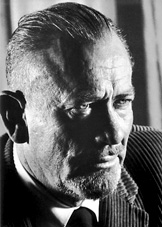
The Chrysanthemums ~ A Classic American Short Story by John Steinbeck
The high grey-flannel fog of winter closed off the Salinas Valley from the sky and from all the rest of the world. On every side it sat like a lid on the mountains and made of the great valley a closed pot. On the broad, level land floor the gang plows bit deep and left the black earth shining like metal where the shares had cut. On the foothill ranches across the Salinas River, the yellow stubble fields seemed to be bathed in pale cold sunshine, but there was no sunshine in the valley now in December. The thick willow scrub along the river flamed with sharp and positive yellow leaves.
It was a time of quiet and of waiting. The air was cold and tender. A light wind blew up from the southwest so that the farmers were mildly hopeful of a good rain before long; but fog and rain did not go together.
Across the river, on Henry Allen’s foothill ranch there was little work to be done, for the hay was cut and stored and the orchards were plowed up to receive the rain deeply when it should come. The cattle on the higher slopes were becoming shaggy and rough-coated.
Elisa Allen, working in her flower garden, looked down across the yard and saw Henry, her husband, talking to two men in business suits. The three of them stood by the tractor shed, each man with one foot on the side of the little Fordson. They smoked cigarettes and studied the machine as they talked.
Elisa watched them for a moment and then went back to her work. She was thirty-five. Her face was lean and strong and her eyes were as clear as water. Her figure looked blocked and heavy in her gardening costume, a man’s black hat pulled low down over her eyes, clod-hopper shoes, a figured print dress almost completely covered by a big corduroy apron with four big pockets to hold the snips, the trowel and scratcher, the seeds and the knife she worked with. She wore heavy leather gloves to protect her hands while she worked.
She was cutting down the old year’s chrysanthemum stalks with a pair of short and powerful scissors. She looked down toward the men by the tractor shed now and then. Her face was eager and mature and handsome; even her work with the scissors was over-eager, over-powerful. The chrysanthemum stems seemed too small and easy for her energy.
She brushed a cloud of hair out of her eyes with the back of her glove, and left a smudge of earth on her cheek in doing it. Behind her stood the neat white farm house with red geraniums close-banked around it as high as the windows. It was a hard-swept looking little house, with hard-polished windows, and a clean mud-mat on the front steps.
Elisa cast another glance toward the tractor shed. The strangers were getting into their Ford coupe. She took off a glove and put her strong fingers down into the forest of new green chrysanthemum sprouts that were growing around the old roots. She spread the leaves and looked down among the close-growing stems. No aphids were there, no sowbugs or snails or cutworms. Her terrier fingers destroyed such pests before they could get started.
Elisa started at the sound of her husband’s voice. He had come near quietly, and he leaned over the wire fence that protected her flower garden from cattle and dogs and chickens.
“At it again,” he said. “You’ve got a strong new crop coming.”
Elisa straightened her back and pulled on the gardening glove again. “Yes. They’ll be strong this coming year.” In her tone and on her face there was a little smugness.
You’ve got a gift with things,” Henry observed. “Some of those yellow chrysanthemums you had this year were ten inches across. I wish you’d work out in the orchard and raise some apples that big.”
Her eyes sharpened. “Maybe I could do it, too. I’ve a gift with things, all right. My mother had it. She could stick anything in the ground and make it grow. She said it was having planters’ hands that knew how to do it.”
“Well, it sure works with flowers,” he said.
“Henry, who were those men you were talking to?”
“Why, sure, that’s what I came to tell you. They were from the Western Meat Company. I sold those thirty head of three-year-old steers. Got nearly my own price, too.”
“Good,” she said. “Good for you.
“And I thought,” he continued, “I thought how it’s Saturday afternoon, and we might go into Salinas for dinner at a restaurant, and then to a picture show—to celebrate, you see.”
“Good,” she repeated. “Oh, yes. That will be good.”
Henry put on his joking tone. “There’s fights tonight. How’d you like to go to the fights?”
“Oh, no,” she said breathlessly. “No, I wouldn’t like fights.”
“Just fooling, Elisa. We’ll go to a movie. Let’s see. It’s two now. I’m going to take Scotty and bring down those steers from the hill. It’ll take us maybe two hours. We’ll go in town about five and have dinner at the Cominos Hotel. Like that?”
“Of course I’ll like it. It’s good to eat away from home.”
“All right, then. I’ll go get up a couple of horses.”
She said, “I’ll have plenty of time to transplant some of these sets, I guess.”
She heard her husband calling Scotty down by the barn. And a little later she saw the two men ride up the pale yellow hillside in search of the steers.
There was a little square sandy bed kept for rooting the chrysanthemums. With her trowel she turned the soil over and over, and smoothed it and patted it firm. Then she dug ten parallel trenches to receive the sets. Back at the chrysanthemum bed she pulled out the little crisp shoots, trimmed off the leaves of each one with her scissors and laid it on a small orderly pile.
A squeak of wheels and plod of hoofs came from the road. Elisa looked up. The country road ran along the dense bank of willows and cotton-woods that bordered the river, and up this road came a curious vehicle, curiously drawn. It was an old spring-wagon, with a round canvas top on it like the cover of a prairie schooner. It was drawn by an old bay horse and a little grey-and-white burro. A big stubble-bearded man sat between the cover flaps and drove the crawling team. Underneath the wagon, between the hind wheels, a lean and rangy mongrel dog walked sedately. Words were painted on the canvas in clumsy, crooked letters. “Pots, pans, knives, sisors, lawn mores, Fixed.” Two rows of articles, and the triumphantly definitive “Fixed” below. The black paint had run down in little sharp points beneath each letter.
Elisa, squatting on the ground, watched to see the crazy, loose-jointed wagon pass by. But it didn’t pass. It turned into the farm road in front of her house, crooked old wheels skirling and squeaking. The rangy dog darted from between the wheels and ran ahead. Instantly the two ranch shepherds flew out at him. Then all three stopped, and with stiff and quivering tails, with taut straight legs, with ambassadorial dignity, they slowly circled, sniffing daintily. The caravan pulled up to Elisa’s wire fence and stopped. Now the newcomer dog, feeling outnumbered, lowered his tail and retired under the wagon with raised hackles and bared teeth.
The man on the wagon seat called out, “That’s a bad dog in a fight when he gets started.”
Elisa laughed. “I see he is. How soon does he generally get started?”
The man caught up her laughter and echoed it heartily. “Sometimes not for weeks and weeks,” he said. He climbed stiffly down, over the wheel. The horse and the donkey drooped like unwatered flowers.
Elisa saw that he was a very big man. Although his hair and beard were graying, he did not look old. His worn black suit was wrinkled and spotted with grease. The laughter had disappeared from his face and eyes the moment his laughing voice ceased. His eyes were dark, and they were full of the brooding that gets in the eyes of teamsters and of sailors. The calloused hands he rested on the wire fence were cracked, and every crack was a black line. He took off his battered hat.
“I’m off my general road, ma’am,” he said. “Does this dirt road cut over across the river to the Los Angeles highway?”
Elisa stood up and shoved the thick scissors in her apron pocket. “Well, yes, it does, but it winds around and then fords the river. I don’t think your team could pull through the sand.”
He replied with some asperity, “It might surprise you what them beasts can pull through.”
“When they get started?” she asked.
He smiled for a second. “Yes. When they get started.”
“Well,” said Elisa, “I think you’ll save time if you go back to the Salinas road and pick up the highway there.”
He drew a big finger down the chicken wire and made it sing. “I ain’t in any hurry, ma am. I go from Seattle to San Diego and back every year. Takes all my time. About six months each way. I aim to follow nice weather.”
Elisa took off her gloves and stuffed them in the apron pocket with the scissors. She touched the under edge of her man’s hat, searching for fugitive hairs. “That sounds like a nice kind of a way to live,” she said.
He leaned confidentially over the fence. “Maybe you noticed the writing on my wagon. I mend pots and sharpen knives and scissors. You got any of them things to do?”
“Oh, no,” she said quickly. “Nothing like that.” Her eyes hardened with resistance.
“Scissors is the worst thing,” he explained. “Most people just ruin scissors trying to sharpen ’em, but I know how. I got a special tool. It’s a little bobbit kind of thing, and patented. But it sure does the trick.”
“No. My scissors are all sharp.”
“All right, then. Take a pot,” he continued earnestly, “a bent pot, or a pot with a hole. I can make it like new so you don’t have to buy no new ones. That’s a saving for you.
“No,” she said shortly. “I tell you I have nothing like that for you to do.”
His face fell to an exaggerated sadness. His voice took on a whining undertone. “I ain’t had a thing to do today. Maybe I won’t have no supper tonight. You see I’m off my regular road. I know folks on the highway clear from Seattle to San Diego. They save their things for me to sharpen up because they know I do it so good and save them money.
“I’m sorry,” Elisa said irritably. “I haven’t anything for you to do.”
His eyes left her face and fell to searching the ground. They roamed about until they came to the chrysanthemum bed where she had been working. “What’s them plants, ma’am?”
The irritation and resistance melted from Elisa’s face. “Oh, those are chrysanthemums, giant whites and yellows. I raise them every year, bigger than anybody around here.”
“Kind of a long-stemmed flower? Looks like a quick puff of colored smoke?” he asked.
“That’s it. What a nice way to describe them.”
“They smell kind of nasty till you get used to them,” he said.
“It’s a good bitter smell,” she retorted, “not nasty at all.”
He changed his tone quickly. “I like the smell myself.”
“I had ten-inch blooms this year,” she said.
The man leaned farther over the fence. “Look. I know a lady down the road a piece, has got the nicest garden you ever seen. Got nearly every kind of flower but no chrysanthemums. Last time I was mending a copper-bottom washtub for her (that’s a hard job but I do it good), she said to me, ‘If you ever run acrost some nice chrysanthemums I wish you’d try to get me a few seeds.’ That’s what she told me.”
Elisa’s eyes grew alert and eager. “She couldn’t have known much about chrysanthemums. You can raise them from seed, but it’s much easier to root the little sprouts you see there.”
“Oh,” he said. “I s’pose I can’t take none to her, then.”
“Why yes you can,” Elisa cried. “I can put some in damp sand, and you can carry them right along with you. They’ll take root in the pot if you keep them damp. And then she can transplant them.”
“She’d sure like to have some, ma’am. You say they’re nice ones?”
“Beautiful,” she said. “Oh, beautiful.” Her eyes shone. She tore off the battered hat and shook out her dark pretty hair. “I’ll put them in a flower pot, and you can take them right with you. Come into the yard.”
While the man came through the picket fence Elisa ran excitedly along the geranium-bordered path to the back of the house. And she returned carrying a big red flower pot. The gloves were forgotten now. She kneeled on the ground by the starting bed and dug up the sandy soil with her fingers and scooped it into the bright new flower pot. Then she picked up the little pile of shoots she had prepared. With her strong fingers she pressed them into the sand and tamped around them with her knuckles. The man stood over her. “I’ll tell you what to do,” she said. “You remember so you can tell the lady.”
“Yes, I’ll try to remember.”
“Well, look. These will take root in about a month. Then she must set them out, about a foot apart in good rich earth like this, see?” She lifted a handful of dark soil for him to look at. “They’ll grow fast and tall. Now remember this. In July tell her to cut them down, about eight inches from the ground.”
“Before they bloom?” he asked.
“Yes, before they bloom.” Her face was tight with eagerness. “They’ll grow right up again. About the last of September the buds will start.”
She stopped and seemed perplexed. “It’s the budding that takes the most care,” she said hesitantlv. “I don’t know how to tell you.” She looked deep into his eyes, searchingly. Her mouth opened a little, and she seemed to be listening. “I’ll try to tell you,” she said. “Did you ever hear of planting hands?”
“Can’t say I have, ma’am.”
“Well, I can only tell you what it feels like. It’s when you’re picking off the buds you don’t want. Everything goes right down into your fingertips. You watch your fingers work. They do it themselves. You can feel how it is. They pick and pick the buds. They never make a mistake. They’re with the plant. Do you see? Your fingers and the plant. You can feel that, right up your arm. They know. They never make a mistake. You can feel it. When you’re like that you can’t do anything wrong. Do you see that? Can you understand that?”
She was kneeling on the ground looking up at him. Her breast swelled passionately.
The man’s eyes narrowed. He looked away self-consciously. “Maybe I know,” he said. “Sometimes in the night in the wagon there—”
Elisa’s voice grew husky. She broke in on him. “I’ve never lived as you do, but I know what you mean. When the night is dark—why, the stars are sharp-pointed, and there’s quiet. Why, you rise up and up! Every pointed star gets driven into your body. It’s like that. Hot and sharp and—lovely.”
Kneeling there, her hand went out toward his legs in the greasy black trousers. Her hesitant fingers almost touched the cloth. Then her hand dropped to the ground. She crouched low like a fawning dog.
He said, “It’s nice, just like you say. Only when you don’t have no dinner, it ain’t.”
She stood up then, very straight, and her face was ashamed. She held the flower pot out to him and placed it gently in his arms. “Here. Put it in your wagon, on the seat, where you can watch it. Maybe I can find something for you to do.”
At the back of the house she dug in the can pile and found two old and battered aluminum saucepans. She carried them back and gave them to him. “Here, maybe you can fix these.”
His manner changed. He became professional. “Good as new I can fix them.” At the back of his wagon he set a little anvil, and out of an oily tool box dug a small machine hammer. Elisa came through the gate to watch him while he pounded out the dents in the kettles. His mouth grew sure and knowing. At a difficult part of the work he sucked his under-lip.
“You sleep right in the wagon?” Elisa asked.
“Right in the wagon, ma’am. Rain or shine I’m dry as a cow in there.”
“It must be nice,” she said. “It must be very nice. I wish women could do such things.”
“It ain’t the right kind of a life for a woman.”
Her upper lip raised a little, showing her teeth. “How do you know? How can you tell?” she said.
“I don’t know, ma’am,” he protested. “Of course I don’t know. Now here’s your kettles, done. You don’t have to buy no new ones.”
“How much?”
“Oh, fifty cents’ll do. I keep my prices down and my work good. That’s why I have all them satisfied customers up and down the highway.”
Elisa brought him a fifty-cent piece from the house and dropped it in his hand. “You might be surprised to have a rival some time. I can sharpen scissors, too. And I can beat the dents out of little pots. I could show you what a woman might do.”
He put his hammer back in the oily box and shoved the little anvil out of sight. “It would be a lonely life for a woman, ma’am, and a scarey life, too, with animals creeping under the wagon all night.” He climbed over the singletree, steadying himself with a hand on the burro’s white rump. He settled himself in the seat, picked up the lines. “Thank you kindly, ma’am,” he said. “I’ll do like you told me; I’ll go back and catch the Salinas road.”
“Mind,” she called, “if you’re long in getting there, keep the sand damp.”
“Sand, ma’am?. .. Sand? Oh, sure. You mean around the chrysanthemums. Sure I will.” He clucked his tongue. The beasts leaned luxuriously into their collars. The mongrel dog took his place between the back wheels. The wagon turned and crawled out the entrance road and back the way it had come, along the river.
Elisa stood in front of her wire fence watching the slow progress of the caravan. Her shoulders were straight, her head thrown back, her eyes half-closed, so that the scene came vaguely into them. Her lips moved silently, forming the words “Good-bye—good-bye.” Then she whispered, “That’s a bright direction. There’s a glowing there.” The sound of her whisper startled her. She shook herself free and looked about to see whether anyone had been listening. Only the dogs had heard. They lifted their heads toward her from their sleeping in the dust, and then stretched out their chins and settled asleep again. Elisa turned and ran hurriedly into the house.
In the kitchen she reached behind the stove and felt the water tank. It was full of hot water from the noonday cooking. In the bathroom she tore off her soiled clothes and flung them into the corner. And then she scrubbed herself with a little block of pumice, legs and thighs, loins and chest and arms, until her skin was scratched and red. When she had dried herself she stood in front of a mirror in her bedroom and looked at her body. She tightened her stomach and threw out her chest. She turned and looked over her shoulder at her back.
After a while she began to dress, slowly. She put on her newest underclothing and her nicest stockings and the dress which was the symbol of her prettiness. She worked carefully on her hair, pencilled her eyebrows and rouged her lips.
Before she was finished she heard the little thunder of hoofs and the shouts of Henry and his helper as they drove the red steers into the corral. She heard the gate bang shut and set herself for Henry’s arrival.
His step sounded on the porch. He entered the house calling, “Elisa, where are you?”
“In my room, dressing. I’m not ready. There’s hot water for your bath. Hurry up. It’s getting late.”
When she heard him splashing in the tub, Elisa laid his dark suit on the bed, and shirt and socks and tie beside it. She stood his polished shoes on the floor beside the bed. Then she went to the porch and sat primly and stiffly down. She looked toward the river road where the willow-line was still yellow with frosted leaves so that under the high grey fog they seemed a thin band of sunshine. This was the only color in the grey afternoon. She sat unmoving for a long time. Her eyes blinked rarely.
Henry came banging out of the door, shoving his tie inside his vest as he came. Elisa stiffened and her face grew tight. Henry stopped short and looked at her. “Why—why, Elisa. You look so nice!”
“Nice? You think I look nice? What do you mean by ‘nice’?”
Henry blundered on. “I don’t know. I mean you look different, strong and happy.”
“I am strong? Yes, strong. What do you mean ‘strong’?”
He looked bewildered. “You’re playing some kind of a game,” he said helplessly. “It’s a kind of a play. You look strong enough to break a calf over your knee, happy enough to eat it like a watermelon.”
For a second she lost her rigidity. “Henry! Don’t talk like that. You didn’t know what you said.” She grew complete again. “I’m strong,” she boasted. “I never knew before how strong.”
Henry looked down toward the tractor shed, and when he brought his eyes back to her, they were his own again. “I’ll get out the car. You can put on your coat while I’m starting.”
Elisa went into the house. She heard him drive to the gate and idle down his motor, and then she took a long time to put on her hat. She pulled it here and pressed it there. When Henry turned the motor off she slipped into her coat and went out.
The little roadster bounced along on the dirt road by the river, raising the birds and driving the rabbits into the brush. Two cranes flapped heavily over the willow-line and dropped into the river-bed.
Far ahead on the road Elisa saw a dark speck. She knew.
She tried not to look as they passed it, but her eyes would not obey. She whispered to herself sadly, “He might have thrown them off the road. That wouldn’t have been much trouble, not very much. But he kept the pot,” she explained. “He had to keep the pot. That’s why he couldn’t get them off the road.”
The roadster turned a bend and she saw the caravan ahead. She swung full around toward her husband so she could not see the little covered wagon and the mismatched team as the car passed them.
In a moment it was over. The thing was done. She did not look back.
She said loudly, to be heard above the motor, “It will be good, tonight, a good dinner.”
“Now you’re changed again,” Henry complained. He took one hand from the wheel and patted her knee. “I ought to take you in to dinner oftener. It would be good for both of us. We get so heavy out on the ranch.”
“Henry,” she asked, “could we have wine at dinner?”
“Sure we could. Say! That will be fine.”
She was silent for a while; then she said, “Henry, at those prize fights, do the men hurt each other very much?”
“Sometimes a little, not often. Why?”
“Well, I’ve read how they break noses, and blood runs down their chests. I’ve read how the fighting gloves get heavy and soggy with blood.”
He looked around at her. “What’s the matter, Elisa? I didn’t know you read things like that.” He brought the car to a stop, then turned to the right over the Salinas River bridge.
“Do any women ever go to the fights?” she asked.
“Oh, sure, some. What’s the matter, Elisa? Do you want to go? I don’t think you’d like it, but I’ll take you if you really want to go.”
She relaxed limply in the seat. “Oh, no. No. I don’t want to go. I’m sure I don’t.” Her face was turned away from him. “It will be enough if we can have wine. It will be plenty.” She turned up her coat collar so he could not see that she was crying weakly—like an old woman.

A Good Clown is Worth Repeating ~ A Short Story by Allen Kopp
(Published in Short Story America.)
Polly Wollydoodle sat at her dressing table on an early summer evening, getting herself ready for a night on the town. After covering her face with white powder, she drew her lips on in a wide arc and applied glittery blue eye shadow halfway up her forehead to her eyebrows. Then she opened her box of noses and selected a glittery red one appropriate for evening wear.
The dress she had chosen had large blue polka dots on a white background. After she had stepped into the dress and did it up, the puffy collar covered her neck and made it almost appear as if she had no neck at all. The cuffs on the ends of the sleeves were also puffy, nearly hiding her hands but affording her the use of them nonetheless. The voluminous padding built into the dress made falling down and sitting on hard surfaces much more comfortable than otherwise.
When she finished dressing, she saw from the chicken clock on the wall that it was nearly seven o’clock and her heart began beating faster and her throat constricted with dryness. She said a little prayer to the patron saint of clowns as she stepped into her size thirty-eight clown pumps. She hoped her nerve wasn’t going to fail her.
She was going out on a date with no one less than Mr. Noah Zark. He was only the most eligible clown bachelor in Clown Town—the handsome, dashing, ambitious, accomplished, much-desired and much sought-after clown-about-town. When he called her on the hamburger telephone and asked her to go out with him, she believed at first that her brother Jocko Wollydoodle (kidder that he was) was playing a trick on her but, after speaking to him for a couple of minutes, she knew it was the real Noah Zark and he was asking her to go out with him. She could hardly believe her good fortune.
She checked her reticule and made sure she had all the items essential for a date: the squirt bottle filled with seltzer, the rubber chicken, the feather-duster floral bouquet, six multi-colored balls for juggling, the horn with the squeeze bulb and, most importantly, the custard pie. If the date went well, she would hit Noah Zark in the face with the custard pie when he took her home at the conclusion of the date. She felt weak in the knees at the thought of it.
When Polly went downstairs, Clemmie Dibble Wollydoodle, her poppa, and Boombah Wollydoodle, her brother, were sitting in front of the TV watching Calling All Clowns and didn’t pay any attention to her when she came into the room. Eata Banana Wollydoodle, her plain older sister, was sitting in a chair to the side of the sofa. She wasn’t looking at the TV but was looking instead at a spot on the wall with her hand covering her mouth. She had been crying and, instead of being happy for Polly that she was going out with Noah Zark, she was angry and jealous. She refused to look at Polly or compliment her on her appearance.
Wishing to be seen, Polly went and stood in front of the TV and did a little pirouette, followed by a curtsey with her forefinger under her chin.
“Hey!” Boombah said. “Get out of the way! I can’t see the TV.”
“How do I look?” she asked coquettishly, holding still as though posing for a picture.
“Now, just what do you think you’re doing?” Clemmie Dibble asked, irritated at having his favorite TV show interrupted.
“Oh, don’t you remember, dearest, our little girl clown is stepping out tonight?” Clarabelle Wollydoodle, Polly’s mother, said from the doorway to the kitchen. She had a rubber chicken draped over each shoulder and a piglet in one hand and a meat cleaver in the other. She was happy and excited that her Polly had been invited to step out with Noah Zark. It might be the beginning of big things for her.
“No, she’s not,” Clemmie Dibble said. “Not tonight.” He had a way of laying down the law.
“What?” Polly asked, panic-stricken.
Eata Banana looked up with interest, a little smile forming on her lips.
“I said you’re not going out tonight,” Clemmie Dibble said, “and that’s final.”
“Oh, dearest,” Clarabelle said. “Don’t be an old silly. It’s too late to cancel now. A young clown is coming to pick her up.”
“Well, why didn’t you say so?” Clemmie Dibble asked. “Is a clown poppa to know nothing about his clown children?”
“I told you, dearest,” Clarabelle said. “You must not have been listening.” She turned and went back into the kitchen, trying to calm the piglet down.
“He’s late,” Eata Banana said gleefully. “I don’t think he’s coming.”
“He’s probably just tied up in rush-hour traffic,” Polly said. “I’ll just sit down and wait.” She settled her padded rump in the middle of the sofa between Clemmie Dibble and Boombah and put her arm around Boombah.
“Gee, you look pretty,” Boombah said. He reached up and touched the end of her glittery red nose with the tip of his finger.
“Aren’t you sweet!” Polly said. “I’m glad somebody in this family has something approving to say.” She kissed Boombah on his white cheek, leaving the imprint of her lips.
She wanted to appear cool and collected, but she was terrified that Eata Banana was right and Noah Zark wasn’t coming after all. Her heart was beating way too fast and she was having a little trouble breathing. She looked at the TV, not really seeing it, and time dragged on. Finally, at half-past seven, when she had begun to abandon all hope, the doorbell rang.
“I’ll get it,” Boombah said. He bounded off the sofa with accustomed exuberance and went to the door and flung it open.
All of them, Eata Banana included, turned and looked at Noah Zark standing in the doorway. He held his hat in his hand against his chest. He looked so handsome standing there, dressed in the latest clown fashion. He smiled shyly and said to Boombah, “Is this the Wollydoodle residence?”
“Come in,” Boombah said, looking Noah Zark up and down.
Polly stood up and gave Noah Zark a nervous little smile and curtseyed, her forefinger under her chin.
“Good evening, Miss Polly,” Noah Zark said in his resonant voice.
“Who do we have here?” Clemmie Dibble asked, a note of jeering skepticism in his voice.
“Poppa, I’d like for you to meet Noah Zark,” Polly said. “I’m stepping out with him this evening.”
Clemmie Dibble gave Noah Zark an appraising look and held out his hand. Noah Zark shook it forcefully and, instead of letting go of Clemmie Dibble’s hand at the end of the handshake, he held onto it and pulled him to his feet. Before Clemmie Dibble knew what was happening, he and Noah Zark were standing nose to nose.
“Just what do you think you’re doing there?” Clemmie Dibble asked gruffly. “I’m not a yo-yo!”
“It’s a very great honor to meet you, sir,” Noah Zark said. “I have heard so much about the great Clemmie Dibble Wollydoodle.”
“You have?” Clemmie Dibble asked, instantly charmed.
“Your reputation as the greatest of clowns precedes you, sir.”
“Well, I don’t know about that.”
“This is my little brother, Boombah Wollydoodle,” Polly said.
“How do you do?” Noah Zark said, shaking Boombah’s hand.
“Hello,” Boombah said.
“And this is my older sister, Eata Banana Wollydoodle,” Polly said.
Eata Banana stood up and sniffled and offered Noah Zark a pitiful smile. He took her hand and bent over it and kissed it.
“It’s an honor to meet you, Miss Eata Banana,” Noah Zark said.
“Hello,” Eata Banana said in her pained voice.
Clarabelle, having put the piglet back into his little cage, came in from the kitchen.
“Oh, and this is my mother,” Polly said.
“Well, well, well,” Noah Zark said. “I would have said she was your sister. How do you do, madam?”
“Very well, thank you, Noah Zark,” Clarabelle said. She blushed as Noah Zark took her hand and kissed it.
“Well, we’d better be off,” Noah Zark said, turning to Polly and rubbing his hands together. “We have a reservation for eight o’clock at Clown Rendezvous. That’s all the way over in Crazy Town.”
“Can I come along?” Boombah asked.
“You’d better take a wrap, dear,” Clarabelle said.
“Oh, mother, I’ll be fine,” Polly said.
“Be good to our little clown,” Clarabelle said to Noah Zark.
“Mother, please!” Polly said.
“And be home at a respectable hour!” Clemmie Dibble said with a laugh, as though he didn’t mean it at all.
“Good evening to you all,” Noah Zark said. “It was such a very great pleasure to meet all of you.”
After they left, Clemmie Dibble turned to Clarabelle and said, “That young clown seems like a very sensible and decent chap. I think I like him.”
“And he’s so handsome,” Clarabelle said, “in his junk-yard tuxedo with the enormous baggy pants with the suspenders and his smashed top-hat and his wide red tie.”
Eata Banana began bawling uncontrollably. Clemmie Dibble and Clarabelle and Boombah turned and looked at her in surprise. When she realized everyone was looking at her, she ran upstairs to her boudoir and slammed the door.
“Now, what do you suppose is the matter with her?” Clemmie Dibble asked, sitting down again.
“I think I know,” Clarabelle said, “but I don’t think you would understand.”
“I know what’s the matter with her,” Boombah said. “She’s a girl!”
In Noah Zark’s clown car, Polly sat as close to him as she could get. She was sitting so close, in fact, that he could hardly move his arms to steer. When he turned his eyes away from the road and looked at her, she gave him a simpering smile and her eyes were moist. He could smell her perfume, which was something called Clown Parisienne and was very expensive.
“I hope you’re hungry, Miss Polly,” Noah Zark said, not being able for the moment to think of anything else to say.
“Oh, I could eat an elephant.” In truth, she had been too nervous to eat all day and now had a raging appetite.
“I wouldn’t advise it,” Noah Zark said and laughed. Polly didn’t understand what he meant, but she laughed appreciatively anyway to show that her wit was as sharp as his.
She watched the unreeling scenery for a couple of minutes and then she turned to Noah Zark and said, “Gee, it must be wonderful to have your own clown car and be able to drive all over Clown Town, or beyond, whenever you feel like it.”
“It’ll do for now, I suppose,” Noah Zark said dispiritedly. “I’d rather go around in a chauffeur-driven limousine like your poppa, though.”
Polly felt oddly flattered that Noah Zark recognized her poppa’s significance in the scheme of things. “Maybe some day you will,” she said.
“Oh, yes, Clemmie Dibble Wollydoodle is a very important clown. Every clown in Clown Town knows that.”
“Yes, I suppose that’s true,” Polly said, wishing to change the subject. She had been with Noah Zark for ten minutes and he hadn’t said a thing about how pretty she looked.
“Why, he practically runs the Jerkus Circus. He can make or break a clown. One favorable word from him and a young clown’s career is made.”
“Uh-huh,” Polly said.
“As a rodeo clown,” Noah Zark said, “I’m on the road most of the year and I don’t even have a home I can call my own. I want to settle down. My goal is to get a berth with an established concern like the Jerkus Circus and move up through the clown ranks.”
At the words “settle down,” Polly believed that Noah Zark had marriage in mind and was laying the groundwork to propose to her. She couldn’t expect him to propose on their first date together—that would be rushing things too much—but maybe by their second or third date.
“Everybody looks up to rodeo clowns,” she said. “You are the hero of many.”
“That may be true,” Noah Zark said, “but there’s more to life than the admiration of one’s fellow clowns.”
“My brother Jocko wants to be a rodeo clown,” she said, feeling a little thrill as her leg brushed against Noah Zark’s leg.
“Why does he not follow in your poppa’s footsteps?”
“Jocko and poppa never got along,” Polly said. “Jocko is very head-strong. He doesn’t like to be ordered about, and poppa can be a bit overbearing at times.”
“Well, I hope Jocko knows the life of a rodeo clown is a lonely life. I hope he knows what he’s getting himself into.”
“I’m sure it has its rewards,” Polly said. “It must be exciting to travel and be in a different town every night. I’ve never even spent a single night away from home.”
“Believe me, after a while all towns look alike, and you wish desperately to be back in Clown Town where you feel you belong. The romance of the road is vastly overstated.”
“Well, the Jerkus Circus moves around a lot, too,” she said.
“That’s true,” Noah Zark said, “but they stay in one place a lot longer than the rodeo does.”
Soon they were in Crazy Town and Noah Zark turned off the road onto the parking lot at Clown Rendezvous and a uniformed clown valet appeared to park the car. After the valet had driven off, Polly took Noah Zark’s arm and they went inside.
She was impressed that the maitre‘d recognized Noah Zark as soon as he saw him. He made a checkmark next to Noah Zark’s name in his big book and then, bowing and scraping, he personally escorted Noah Zark and Polly to their table. As they walked through the crowded nightclub, Polly felt clowns looking at the two of them—at Noah Zark because of who he was and at her because she was with Noah Zark.
When they were seated at their table, Noah Zark ordered a bottle of champagne and before it came he took Polly by the hand and pulled her out onto the dance floor. She wasn’t accustomed to dancing, but she soon saw that Noah Zark’s skill and polish made up for her not knowing what she was doing. He held her close in a slow number and then twirled her around the dance floor when the orchestra played The New Tiger Rag, a very fast number. He literally tossed her away and then pulled her back, bent her over backwards until the top of her head touched the floor, lifted her up into the air and slid her along the floor between his legs, spun her left and spun her right until she was dizzy and believed she might be sick. When the number ended, they went back to their table amid a smattering of applause.
“My, you’re such a good dancer!” Polly said with a laugh. She felt as if she had just been inside a cocktail shaker, but she also felt happy and, well, important. She was sweating and panting a little, but she noticed that Noah Zark was perfectly composed.
“Oh, it’s nothing,” Noah Zark said. “A clown in my position has to learn many things.”
He poured her a glass of champagne and handed it to her and then poured one for himself and drank it down and poured another. She took a tiny sip of the champagne and smacked her lips.
“You like?” Noah Zark asked.
“I like,” she said.
She drank down her champagne the way Noah Zark had done and he poured her another glassful. After the waiter came and took their order for dinner, Polly excused herself and stood up and made her way on wobbly legs to the powder room.
Inside the powder room, she sat down in front of one of the big mirrors encircled with light bulbs and opened her reticule and took out her comb and fixed her hair that had become disarranged during her wild dance with Noah Zark. Then as she was touching up her makeup, two more clowns came into the powder room. They made their way to the other end of the row of mirrors. One of them sat down in front of the mirror and the other stood behind her, looking at her face in the mirror. They were engrossed in conversation and didn’t seem to notice Polly sitting there.
“And did you notice that dress?” the sitting clown asked. Her name was Arma Geddon. She was short and fat and had flaming-orange hair. Her lips were painted on in a cupid’s bow and her eyebrows inverted V’s.
“How could I miss it?” the other clown said. “She looks like she raided her grandmother’s closet!” This clown’s name was Bozinda. She was tall and skinny; she wore a skirt that was slit up the side and ended in the middle of her calf, showing horizontally striped stockings.
“And that nose!” Arma Geddon exclaimed. “Nobody wears those glittery things anymore. They went out with the horse and buggy.”
Polly had her hand to her nose when the remark about glittery noses registered in her brain. She pulled her hand away as though she had touched a hot stove. She realized the two clowns were talking about her. She stood up and was making her way for the door as unobtrusively as she could when the two clowns noticed her and stopped talking.
“Oh, miss!” Bozinda said, just as Polly had her hand on the door to push it open.
Polly turned toward Bozinda and gave her an innocent look. “Me?” she asked, touching her breastbone.
“Yes, you, dearie! Might we have a word with you?”
“I suppose so,” Polly said.
“We saw you dancing with Noah Zark,” Bozinda said.
“Yes?”
“How much do you know about him, dear?”
“I know he’s a very fine, accomplished gentleman,”
“Hah!” Arma Geddon exclaimed. “You are a sweet innocent!”
“You’re probably thinking right now that he’s the man of your dreams,” Bozinda said, laughing up her sleeve. “Most of the girl clowns in Clown Town and Crazy Town and the surrounding environs have thought the same thing at one time or another.”
“You need to be made aware of what a scamp he is,” Arma Geddon said, pulling at her false eyelash.
“Let’s face it, darling,” Bozinda said. “You just aren’t his type at all, but you probably can’t see that because you don’t know what type is his type the way we do.”
“Just what is it you’re trying to tell me?” Polly asked, beginning to understand all too clearly.
“Well, since you aren’t his type,” Bozinda said, “I’d say he wants something you have that he doesn’t have. He wants you to do something for him that would further his career.”
“He has a way of always getting what he wants from girl clowns,” Arma Geddon said in her know-it-all way.
“Yes, and after he gets what he wants from you,” Bozinda said, “he’ll cast you aside like a pair of old boots.” With that, she looked down at her own army-issue boots and shook her foot as though trying to dispel a cramp.
“Take a piece of friendly advice,” Arma Geddon said, batting her eyelashes and turning away from the mirror and facing Polly. “Get what you can out of him—a night on the town, a few drinks, a good time, a few laughs. But when it comes right down to it, my dear, don’t fall for his suavity and his line of smooth talk. If you do, you’ll end up wishing you hadn’t.”
“I’m sure I do not know to what you are referring,” Polly said quietly. Believing the conversation had come to an end, she gave Bozinda and Arma Geddon a little curtsey and then left the powder room.
When she got back to her table, Noah Zark pulled the chair out for her. She sat down without looking at him and picked up her glass of champagne and drank it down and reached over for the bottle and poured herself another glass.
“Are you quite all right, Miss Polly?” Noah Zark asked. “You look a little peaked.”
“I was feeling a little sick,” Polly said, “but now I’m all right.”
“I so want to get to know you better,” Noah Zark said. He reached across the table for Polly’s hand but she pulled it away quickly before he could touch it.
The waiter brought their food and they began eating. Before they were finished with the soup course, the floor show began. First there was a girl clown singer who stood in front of the orchestra and belted out a couple of clown ballads and then there was a troupe of midget tumblers. They leapt and bounced and buffeted about the stage as if the laws of gravity didn’t apply to them. When the tumblers left the stage to enthusiastic applause, a couple of identical twin clowns came on who juggled bottles of milk; first one juggled the bottles and then the other, and then they juggled the bottles back and forth between them so fast they could hardly be seen. The audience gasped with delight and appreciation.
As soon as the floor show was over, Noah Zark asked Polly if she was finished eating and if she would care to dance again.
“Yes and no,” Polly said. “Yes, I’m finished eating and, no, I wouldn’t care to dance again.”
“Why, what’s the matter, Miss Polly?” Noah Zark asked. “You seem so different. Are you not feeling well?”
“I just think it’s time for all good girl clowns to be at home,” she said. She couldn’t bring herself to tell him that all the glamour and excitement had gone out of the evening for her.
“Do you mean you want to leave already?”
“Well, we’ve had dinner and we’ve seen the floor show. What else is there?”
“Are you not enjoying my company?”
“I would just like to leave, Noah Zark, if you don’t mind.”
Noah Zark called for the check in his customary showy manner. He threw a handful of clown money down on the table and then he helped Polly out of her chair.
When they were once again in Noah Zark’s clown car, he looked over at Polly, now sitting as far from him as the car seat would allow, and said, “Would you like to go someplace for a nightcap?”
“That means more liquor, doesn’t it?” Polly asked. “I think I’ve had enough champagne. If I drink any more than I’ve already had, I think I may be quite ill in the morning.”
“Maybe a drive in the country, then?” Noah Zark asked. “It’s a beautiful evening and still early.”
“Oh, all right,” Polly said, “as long as you don’t go too far out of Clown Town.”
“I know just the place,” he said.
He steered the clown car in the direction of the Mountain Road between Crazy Town and Clown Town. He knew of a secluded spot to stop and park that looked out over the city. He hoped to get Polly to thaw out because he had a favor he wanted to ask of her. He had never yet known a female clown that wouldn’t melt into his arms when he turned on the charm.
For her part, Polly opened her reticule and slipped her hand inside and felt around until she found the socket wrench that she carried with her at all times. She closed her hand around it, ready to pull it out. She would clonk Noah Zark on the head if she had to.
Noah Zark pulled the car off the Mountain Road at Lookout Point. Polly was relieved to see there were already several other clown cars with clown couples in them parked there. If Noah Zark tried to get too fresh, she could scream for help and someone would hear her. Maybe she wouldn’t even need to clonk him on the head.
Noah Zark parked the clown car and turned off the engine and put his arm up over the back of the seat. Polly shrank from his arm as if it was a rattlesnake.
“It’s a lovely evening,” Noah Zark said. “The moon and the stars and the city spread out before you in a lovely panorama of glittering lights.”
“How poetic!” Polly said, altogether unimpressed.
“I trust you’ve had a pleasant evening,” Noah Zark said. “I hope that stepping out with me this evening has been a worthwhile experience for you.”
“Well, I always wanted to go to Clown Rendezvous.”
“Miss Polly, I must confess I have a little favor to ask of you.”
“Just a little one?” she asked.
“Miss Polly, have you ever heard the expression, ‘It’s not what you know—it’s who you know’?”
“No, I don’t believe I’ve ever heard that expression.”
“I’ve called your poppa on the telephone several times and I’ve written him a couple of letters.”
“Whatever for?”
“He won’t return my calls and doesn’t respond to my letters.”
“Oh, “Polly said, “I think I’m beginning to understand.”
“I was wondering if you might arrange it so that I might be placed in the way of your poppa in a situation where he wouldn’t be distracted by other matters.”
“You want his help in getting a berth with the Jerkus Circus?”
“One word from him is all it would take.”
“You want me to invite you to dinner at my house, where the talk would inevitably turn toward your career and what a great benefit your talents would be to the Jerkus Circus?”
“That would be splendid!”
“Well, I…”
“You don’t have to give me an answer now. Just think about what I’m saying and let me know if what I’m asking is going to be possible.” He reached inside his coat pocket and pulled out a card and handed it to her. “Here’s my agent’s business card. He’ll know how to get in touch with me. And please remember, this is urgent. The sooner you are able to arrange it, the better.”
She took the card and looked at it and slipped it inside her glove. “I think I’d like to go home now, Noah Zark, if you please,” she said.
When he pulled up in front of the house where she lived, he turned off the engine and put his arm up over the back of the seat the way he had done at Lookout Point. He thought again that she would melt into his arms and, if she did so, he would reward her with a big sloppy clown kiss, but again she failed to do as expected.
“Well, good night,” she said, putting her hand on the door handle. “Thank you for a very lovely evening. I don’t think I’ll ever forget it.”
“Wait just a second,” he said. “I’ll walk with you up to your front door.”
“That’s not necessary. I’m a grown clown. I can find my way to my front door in the dark. I’ve done it many times before. I’m not as helpless as everybody seems to think me.”
“You’ll call my business agent, then?” he asked. “You won’t forget?”
“I don’t think I will be seeing you again,” Polly said.
“Why ever not?”
“Noah Zark,” she said, “have you ever heard the expression, ‘There’s none so blind as those who will not see’?”
“I don’t think I ever heard that expression. What does it mean?”
She got out of the clown car and stood beside it, but before she closed the door she pulled the business card he had given her out of her glove and tore it into tiny pieces and flicked the pieces at him across the front seat.
Two days later in the middle of the afternoon Polly was sitting at the table in the kitchen polishing the silver and listening to music on the radio, her mind pleasantly devoid of thought. Clarabelle was standing at the counter putting frosting on a cake. Clemmie Dibble was upstairs taking a clown nap, Boombah was at a Clown Scouts meeting, and Jocko was in the back yard practicing his juggling routine. Suddenly Eata Banana, who had been moping around the house all week, burst into the room. She was uncharacteristically happy and excited.
“Guess who just called me?” she said, hardly able to keep from jumping up and down.
“Who did?” Clarabelle asked, turning from her cake, her frosting-laden knife in the air.
“Noah Zark!” Eata Banana said. “Noah Zark called me on the telephone just now!” She was trembling and her eyes shone with excitement.
“What did he want?” Clarabelle asked.
“He asked me to go to a clown ball with him at the Clown Country Club on Saturday night!”
“Are you going?”
“Am I going? Well, of course, I’m going!” Eata Banana said. “I’d be crazy not to go! He’s a rodeo clown! He’s just the most exciting clown bachelor in all of Clown Town.”
“What are you going to wear?” Clarabelle asked.
“I don’t know,” Eata Banana said. “I think now that things are finally happening for me I’m going to need to buy a whole new wardrobe. Maybe he’ll ask me to marry him!”
Polly smiled and dabbed her rag into the silver polish and rubbed it on the silver serving tray that had belonged to her Grandmother Lulu. She realized that Clarabelle and Eata Banana were both looking at her, expecting her to say something. She said nothing, though, only singing along with Life is Just a Bowl of Cherries, which was just then playing on the radio. She knew very well that Eata Banana wasn’t Noah Zark’s type, either, but she said nothing to that effect. Eata Banana would just have to find out on her own, in her own way and in her own time.
Copyright © 2012 by Allen Kopp

Send Me a Postcard ~ A Short Story by Allen Kopp
(Published in The Fringe Magazine, April 2011.)
Since Paul’s mother lost her job at the hospital, she’s not the same anymore. She stays in bed a lot of the time during the daylight hours, something she never did before. If she’s not in bed, she’s sitting in front of the TV in her bathrobe smoking cigarettes and watching soap operas and game shows with the sound turned all the way down. He stands in the doorway looking at her and she doesn’t seem to know he’s there until she sees his shadow on the wall.
“What are you doing?” she asks, craning her neck around to look at him. “You creep around the house like a thief.”
“I’m just looking at you,” he says. “What’s for dinner?”
“Oh, is it time for dinner?” she asks, looking at the clock. “I didn’t think it was that late.”
He goes into the kitchen and fixes himself a peanut butter sandwich. He is glad to see she has been to the store and bought some fresh bread while he was at school. He puts the sandwich on a plate and goes back into the living room where she is.
“Just help yourself to whatever you can find in the kitchen,” she says. “I don’t feel like cooking dinner.”
“Did you eat anything?” he asks.
“I don’t have any appetite,” she says. “I’ll have something later.” She reaches for her pack of Lucky Strikes and takes one out and lights it and inhales deeply.
He looks at her skeptically but she doesn’t know it. “Smoking is bad for you,” he says.
“So I’ve heard.”
“I’m not ever going to smoke.”
“Bully for you.”
“How about if we go to a movie tonight? There’s a western at the Criterion and a comedy at the Gem.”
“How about if we stay at home and watch TV? There’s a western on one channel and a comedy on another one, and you don’t have to pay to see them. I’m not made out of money, you know.”
He marvels at how mothers always say they’re not made out of money, but he says nothing because he doesn’t want to argue. He would someday like to see a mother made out of money, though. That must be a sight worth seeing.
“I have to write a book report,” he says.
“How lovely for you.”
“Do you want to help me?”
“What’s the book?”
“A Tale of Two Cities by Charles Dickens.”
“Isn’t that kind of a grown-up book for eighth grade?”
“I read grown-up books all the time.”
“Oh, yes, I forgot. You’re already quite the little man, aren’t you?”
“I chose that book to read from the list. I’m the only person in the class who read it.”
“Isn’t that about the French Revolution or something?”
“Yes, they’re killing all the aristocrats. They’re mad at them because the king and his wife are rich and they don’t care that the peasants are starving, so the peasants want to kill all the aristocrats, whether they’ve done anything wrong or not. Do you know how they kill them?”
“Let me guess,” she says. “They cut off their heads with a thing with a big blade that drops down.”
“It’s called a guillotine. It was invented by a Dr. Guillotine. He was a Frenchman. They make them stick their heads through a hole and tie their hands behind their backs and then they let the blade drop down and wham! it slices off their heads.”
“Sounds divine,” she says. “I’ll be sure and add that book to my reading list.”
“They say it doesn’t hurt, but I don’t know how having your head cut off could not hurt.”
“Why don’t you try it some time and let me know?”
“I saw Daddy when I was walking to school today.”
“Where?”
“He drove past in a black car.”
“It must have been somebody else. His car is blue. Was it a new car?”
“I don’t know.”
“You can tell a new car from an old one, can’t you?”
“I think it was a new car.”
“Well, the next time you see him tell him to throw some of that money our way that he’s spending on a new car.”
“I wouldn’t ask him for money.”
“Why not? He’s your father, isn’t he? You wouldn’t be on this earth if it wasn’t for him, so he’s supposed to pay your way. That’s the way it works.”
He notices how many of his conversations with his mother always come around to the subject of money. He tries to steer her in another direction.
“Are you still looking for a job?” he asks.
“Off and on,” she says. “If it’s any of your business.”
“Do you want me to read the want ads to you? I’ll bet there are some good jobs in there.”
“If I wanted to read the want ads, don’t you think I could read them myself? You’re just a two-bit punk and you don’t know anything.”
“’You’re just a two-bit punk and you don’t know anything,’” he says, in exact imitation of her voice.
“You’re getting just a little too big for your britches!”
“’You’re getting just a little too big for your britches.’”
“Stop it!” she says.
“’Stop it!’”
“Don’t you know you’re driving me crazy?”
“’Don’t you know you’re driving me crazy?’”
“Do you want me to get up from here and come over there and slap you silly?”
“No, I don’t,” he says solemnly, using his own voice again.
“You remind me more of your father every day.”
“Well, what am I supposed to do about it?”
“Run away from home and join the circus. You could be one of their freaks.”
He knows she’s only teasing him, but remarks like that hurt him a little, he has to admit. It’s as if she doesn’t want him around her anymore.
“When I’m old enough, I’m going to join the navy.”
“Good for you,” she says. “Serve your country. See the world. Send me a postcard.”
A man and woman are kissing on the TV. Their noses are pressed together.
“Can we change channels?” he asks.
“No!” she says. “I’m watching this!”
He goes into the kitchen and gets an apple and goes out the back door with it and around the house and sits on the front steps, between the bushes that grow on both sides. He throws the apple up in the air a couple of times and catches it and then takes a bite out of it. The juice is running down his chin when he sees a black car pull up to the curb in front of the house, the same black car he saw that morning.
Somebody in the car motions to him. Fascinated, he stands up, throws down the apple, and crosses the lawn toward the car.
“Hello, son!” his father says brightly, rolling down the window.
“Did you get a new car?” he asks. He can’t think of anything else at the moment to say.
“No, it’s a friend’s car. I’m just borrowing it. How are you?”
“I’m all right. When are you coming home?”
His father turns off the engine and puts both hands on the steering wheel. “I’m not,” he says. “How’s your mother?”
“She’s fine.”
“Don’t tell her I was here.”
“All she has to do is look out the window and she’ll know you’re here.”
“Well, this is just between you and me.” He reaches into his pocket and takes out some money and hands his son a twenty-dollar bill. “Get yourself something good to eat,” he says.
“Thanks.”
“Well, I just wanted to see you for a minute and see how you are. I’ve got to be going.” He reaches to start the engine again.
“Daddy, can I come and live with you?”
“No, I’m afraid that’s out the question right now. I’m staying with friends. We’ll talk about that later when I’m more settled.”
“Mother hates me.”
“She doesn’t hate you. She loves you very much.”
“She’s crazy. She’s going to smoke herself to death and she doesn’t eat any food.”
“Well, she’s just going through a rough patch right now. You’ll understand when you’re older and not hold it against her.”
“I’m going to run away from home.”
“No, you’re not. You just stay put for now. We’ll talk more about a different kind of arrangement later, after things have settled down.”
He starts the engine and looks over his shoulder to see if any cars are coming. He makes a u-turn in the middle of the street and speeds off in the opposite direction from which he came with a little squeal of tires.
When Paul goes back into the house, his mother is waiting for him at the door.
“Who was that you were talking to?” she asks.
“Nobody. A man looking for the hospital.”
“That was a black car, wasn’t it?”
“I think it was.”
“Did he try to get you to get into the car with him?”
“Of course not.”
“Did you tell him how to get to the hospital?”
“I tried to.”
At ten o’clock that night his mother is still in front of the TV, but now she’s asleep with a bottle of gin on the table beside her. On the TV is a skinny old man in a tuxedo doing a tap dance in front of a wall of mirrors that reflect the people watching him.
He goes into his room and shuts the door, moving the bureau in front of the door so nobody can come in. He starts to work on his book report; writing it should be easy because he’s already read the book, but he can’t seem to concentrate. Luckily it’s not due for a few days.
He turns off the light, finding the dark comforting; it makes him feel safe. Far off in the distance he hears a siren. The wind is blowing against the house as if to blow up a rainstorm. He settles under the covers and sighs. The last thought he has before going to sleep is about the guillotine. He wonders if it really hurts or if it’s just like a whisper on the back of the neck. Of one thing, though, he is certain: He will never know for sure.
Copyright © 2012 by Allen Kopp

Shame ~ A Capsule Movie Review by Allen Kopp
Shame is an English movie with an English director with a German leading man playing the part of an American. Handsome mid-thirties New Yorker Brandon Sullivan (Michael Fassbender) seems to have it all. He has a high-powered job and an upscale apartment with a spectacular view of the New York skyline. He has something else, though, and it is the one thing that defines him more than anything else: He is a sex addict. When he isn’t engaged in sexual activity, he’s seeking sexual activity, gratifying himself (you get the picture), or watching porn on the Internet. He is consumed with sex and because he’s so attractive he has no shortage of sexual partners.
We see after a while, though, that no matter how much sex Brandon has, it’s never enough. While constantly seeking gratification of his appetites, he is never gratified. He is an empty shell of a man, a lost soul. He can only relate to people on a sexual level and, once the sex act is finished, there is nothing.
Brandon’s irresponsible younger sister Sissy (Carey Mulligan) shows up one day at his apartment. She has an unhappy past and is a singer of sorts (in a nightclub scene she sings a very slow, bluesy version of “New York, New York”). She has no place to stay and Brandon allows her to stay with him for a few days. He finds, though, that she is an unwelcome burden; she encroaches on his ability to satisfy his appetites. She makes a play for Brandon’s boss and, once the initial conquest is over, she continues to pursue the boss, even though he is a married man with children. Through his sister, Brandon begins to see himself as a he really is and he doesn’t like what he sees.
Shame has an NC17 rating, meaning that the sex scenes are too graphic for an R rating. The sex scenes are not there for titillation, though, as in most movies that venture into that territory. The sex scenes are an integral, organic part of what’s going on in Shame; they are so much a part of the character of Brandon Sullivan that we wouldn’t see his pain—or his shame—without them.
Copyright © 2012 by Allen Kopp

Pass Without Paying ~ A Short Story by Allen Kopp
Lester Fane had been to the store to buy a couple of items that his mother simply couldn’t do without. He was on his way back home, worrying about what other jobs she might decide to make him do, when he spotted Jingo Lanky and his homely sister, Lynette, standing on the street corner up ahead. He was going to turn around and walk home a different way, but he knew that Jingo and Lynette had spotted him so he kept on going.
Jingo Lanky was only a couple of years older than Lester, but he seemed much older. He was as tall as a grown man and he had whiskers and bulging biceps. He smoked cigarettes that he rolled himself; he was said to drink beer and even whiskey and do other adult things that Jingo had only a vague knowledge of. He lived in a falling-down house on the edge of town with his hag of a mother and his eight miserable brothers and sisters. He had been expelled from school and had been in jail more than once for drunken and disorderly conduct and for shoplifting candy and cigarettes and other small items that he attempted, not always successfully, to conceal in his clothing. Everybody who knew him believed he was on his way to living a useless and crime-ridden life and would one day end up in the state penitentiary.
Lynette was about twenty and had been in girls’ reformatory. She had pale, pockmarked skin and orange hair that could only come from a bottle. She wore falsies because her breasts had never developed the way they were supposed to and tight denim skirts that showed the contours of her buttocks.
Lester put his head down and walked faster, believing he could get past Jingo and Lynette without having to speak to them or even look at them. Maybe they wouldn’t even notice him.
“Well, well, well,” Jingo said, grabbing Lester by the upper arm and stopping him. Where in the hell do you think you’re going, you little punk?”
“Let me go!” Lester said.
“I asked where you’re going, you little turd.”
“I’m going home. My mother is waiting for me. She’s sick and I’ve got to take her some medicine.”
“She’s probably been sick ever since she gave birth to a little freak like you.”
“I’m not a freak!”
“What have you got there?” He pointed to the paper bag Lester was carrying. “You got anything to eat in there?” He grabbed the bag and unfolded the top and looked inside.
“Give me that!” Lester said. “It’s none of your business!”
“What is it?” Lynette asked, trying to see inside the bag.
“Looks like…toothpaste and some kind of pills,” Jingo said.
“It’s roach paste and suppositories for hemorrhoids, if you must know,” Lester said.
“What the hell?” Lynette said. “That’s some weird shit!”
“Hey, man, that’s disgusting!” Jingo said. “Who goes to the store and buys stuff like that?” He threw the bag back and Lester caught it.
“Ask him what his mother uses the roach paste for,” Lynette said. “Does she use in cooking when she wants to poison somebody?”
Lester started to run but Jingo grabbed him by the shoulder and held him. “You can’t go until you give me a dollar.” He squeezed Lester’s upper arm painfully.
“You’re hurting me!” Lester yelped. “I don’t have a dollar!”
“You don’t pass until you give me some money.”
“You don’t own the street!” Lester said. “I can pass without paying if I want to.”
“Leave him alone,” Lynette said. You’re going to make the poor little thing cry.”
“Hah-hah-hah!” Jingo laughed, shaking Lester by the shoulders. I wouldn’t want to make the little girl baby cry. You aren’t going to cry now, are you, sweetie pie?”
“You’re a dirty pig!” Lester said.
“Hey, man, you hurt my feelings. Why do you want to go and do that?”
“You’re hurting me!” Lester said. He squirmed to get loose, but Jingo held him immobile.
“Hey, man, do you want to have sex with my sister?
“Oh, come on, now,” Lynette said. “Don’t you think he’s a little young?”
“She’ll have sex with you if you pay her.”
Lynette laughed. “He wouldn’t have enough money to make me want to have sex with him,” she said.
“Let me go!” Lester said.
He saw an old man open his front door, look out, and close the door quickly.
“I’ll bet you’ve got some money,” Jingo said. “Don’t be stingy with an old pal.” He wrapped his arms around Lester and slipped his hands into his pockets. When he saw that his pockets were empty, he let him go. “Hey, you really don’t have any money, do you?” he said.
Lester tried to kick Jingo in the leg but missed. Jingo laughed and held up his hands in surrender.
“Come back in about ten years,” Lynette said haughtily.
“And next time you’d better have some money,” Jingo said, “or you don’t get past. Remember that.”
“Go to hell!” Lester said.
“Is that the best you can do, tough boy?” Jingo said.
“You’re a shit-faced hog and I hope you go to the electric chair!”
“Hah-hah-hah!”
“That’s pretty cruel,” Lynette said. “You ought to be ashamed of yourself for speaking to people that way.”
Lester was trying to think of other names he might call Jingo, when a white car came around the corner very fast and pulled up at the curb. Lester saw right away that it was Harry Harris, the town sheriff, driving the unmarked patrol car. When Harry Harris jumped out of the car without turning off the engine, Jingo Lanky started running.
“Hey, you!” Harry Harris yelled. “Come back here! I want to talk to you!”
Moving with surprising agility for a man of his years, Harry Harris began running after Jingo. In the middle of the next block, just as Jingo was about to cut across somebody’s lawn, Harry Harris overtook him and tackled him, knocking him face down on the ground.
Lester and Lynette watched as Harry Harris cuffed Jingo’s hands behind his back, jerked him to a standing position and brought him back to the patrol car. Lester thought he would enjoy seeing Jingo handcuffed and in the custody of the law, but he didn’t. Jingo was out of breath and his face had suddenly gone white. His nose was bleeding and starting to swell. He had the look of a trapped, injured animal.
When Harry Harris opened the rear door of the unmarked patrol car and began to push Jingo into the back seat, Jingo twisted around toward Lynette.
“Tell mother what happened,” he said, blood pouring from his nose into his mouth. “And tell her I don’t know when I’ll be home again.”
Lester suddenly felt sorry for Jingo and was sorry for what he had said about the electric chair. Maybe he really would go to the electric chair now.
“What did he do?” Lester asked Lynette as they watched the unmarked patrol car speed away.
“What didn’t he do?” she said, shrugging.
“I wonder what they’ll do to him,” Lester said, believing for the first time that maybe Jingo wasn’t so bad after all.
“I’m sorry for what I said about your mother poisoning people,” Lynette said. “I didn’t mean it. I was only making a joke.”
“That’s okay. I know you didn’t mean it. I’m sorry I called your brother a dirty pig.”
“It’s not the first time he’s been called that. Do you want a cigarette?”
“No, I’ve got to be getting home.”
“Maybe I’ll see you around sometime.”
“Yeah,” Lester said. “Maybe so.” When he turned to look at her he saw she was crying real tears. “Can you make it home all right?” he asked.
“What other choice do I have?” she said, cupping her hands around a match to light a cigarette.
Copyright © 2011 by Allen Kopp
The Artist ~ A Capsule Movie Review by Allen Kopp
The Artist is an odd little movie. It’s as different from most other movies being made nowadays as a Remington manual typewriter is from a word processor. It’s in black and white, it’s silent (except for music and a few spoken lines of dialogue at the end), and it’s shot in 1.33:1 “Academy ratio,” just as in silent-film days, meaning that the image on the screen is slightly more from top to bottom than from side to side to maintain the look and feel of a silent film.
The story involves a fictional actor of the silent screen named George Valentin (played by French actor Jean Dujardin). He is a big star until silent movies become sound movies in the late 1920s. Because he refuses to embrace the new sound technology, his career is essentially over. Somewhere along the line, while he was still a success, he encounters an up-and-coming young actress named Peppy Miller (played by Bérénice Bejo). There is a spark between them but nothing happens and they go along their separate ways.
As Peppy Miller rises through the ranks and becomes a big star of sound films, George Valentin fades and is soon forgotten. His marriage crumbles. His money evaporates as quickly as his fame. He is never entirely alone, though; his terrier named Jack (in almost every scene) and his faithful manservant (James Cromwell) stick with him. Even more importantly, Peppy Miller has never forgotten him and is observing his downward spiral from afar. You know that, with Peppy Miller’s assistance, everything will turn out all right in the end. It is, after all, a comedy.
The Artist is not like anything I ever saw before. I had to keep reminding myself I was seeing a movie made in 2011, rather than one made in 1928. It’s not for everybody, of course, but if you like a different kind of movie-going experience, give it a try. It grows on you. You know you’ve just been dying to a see a retro, 1920s-style silent film in black and white, so climb on board the time machine and have a good time.
Copyright © 2012 by Allen Kopp

