Shiloh ~ A Capsule Book Review

shiloh-cover

Shiloh ~ A Capsule Book Review by Allen Kopp
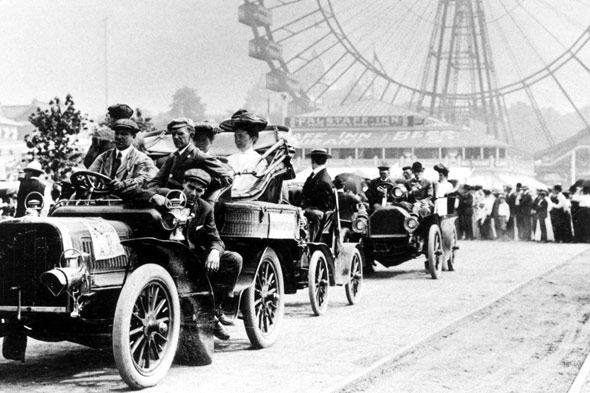
The Battle of Shiloh (also known as the Battle of Pittsburg Landing) was fought in southwestern Tennessee, on April 6th and 7th, 1862. It was the mostly unsuccessful effort by the Southern forces to keep two armies of the Northern forces from joining together and advancing into the Confederacy. The soldiers of the South, commonly referred to as the Rebels, considered that they were trying to keep a foreign invader out of their land, as the Revolutionaries had done in 1776. Casualties were heavy on both sides (about 20,000), and people everywhere were shocked by the wholesale carnage. The Battle of Shiloh was the biggest and costliest battle up to that point in the Civil War. There were, however, worse battles to come.

Shiloh is a short (225 pages) novel by writer/historian Shelby Foote. Although it’s fiction, it’s based on actual historical records of the battle. The action is told from the point of view of regular fighting men (not generals or officers) who lived the battle firsthand: aide-de-camp, adjutant, rifleman, cannoneer, and scout. It’s told in the language of the common man, what he sees and hears on the ground, rather than that of the military strategist or the West Point graduate. We get the Southern point of view and then the Northern point of view in alternating chapters throughout the book. Both sides believed they were fighting a just cause and both sides were determined to win without giving an inch to the enemy. Many people in the South believed the war to be a lost cause from the start, considering the superior numbers and weapons of the North.

The Southern forces were winning on the first day of battle, but on the second day the tide turned in favor of the North. The two Northern armies joined forces and repulsed the Southern forces. The South wasn’t giving up, though. It was going to be a long and terrible war.

Copyright © 2016 by Allen Kopp
The Literary Hatchet, Special Issue #16

51gs6eij6fl-_sx331_bo1204203200_1

The Literary Hatchet, Special Issue #16

Short Story and Poetry Collection, 240 pages

Subjects range from mystery, murder, macabre, horror, monsters, ghosts, and things that go bump in the night. 

May be purchased for $14 per copy on Amazon at this link:

Or, download a free PDF copy of the magazine at this link:

Click to access LiteraryHatchet16L.pdf

(I have two short stories in this collection: “At the Rise of the Hill” and “Odell the First.”)


The Adoration of the Magi ~ A Painting by Rembrandt van Rijn

rembrandt-the-adoration-of-the-magi

The Adoration of the Magi (1632) by Rembrandt van Rijn (1606-1669) 

Matthew 2:11: “On entering the house, they saw the child with Mary his mother; and knelt down and paid him homage. Then, opening their treasure chests, they offered him gifts of gold, frankincense, and myrrh. And having been warned in a dream not to return to Herod, they left for their own country by another path.”

The Beautiful and Damned ~ A Capsule Book Review

the-beautiful-and-damned-cover

The Beautiful and Damned ~ A Capsule Book Review by Allen Kopp

In college literature classes, we learned that there are about seven basic themes in all of literature and that nearly all great novels incorporate all seven of them. One of these themes is “the fall” or “fall of man.” F. Scott Fitzgerald’s second novel, The Beautiful and Damned (published in 1922), is an example of the theme of “the fall.” It concerns the young and doomed (by his own hand, by his own frailty) fictional character known as Anthony Patch. Anthony is young in the early years of the twentieth century. He is of the privileged class. He attends Harvard University and is the heir to a considerable fortune, being the only living relative of his grandfather, Adam Patch. We don’t learn how Adam Patch made all his millions, only that he is a “reformer.” From that word, we can deduce that he’s moralistic and Puritanical.

Anthony meets a debutante named Gloria Gilbert and falls in love with her. Gloria’s beauty is the wellspring of her shallowness and self-centeredness. Her beauty and desire for social status are all she has going for her. Men are, of course, drawn to her, but that’s because they’re shallow. We know that when she gets older and her looks begin to fade, she will be finished. Anthony persuades Gloria to marry her; she is easily persuaded because one day he will be very rich. The two of them are happy for a while, at least a few years, but Anthony discovers that marrying Gloria was the worst thing he ever did.

It seems that old Adam Patch will never die. Anthony could get a job, but all he does is wait around for years for the big day when the old man dies and leaves him all his money. Anthony and Gloria are a socialite couple. They throw parties (or attend parties that other people give) every night. Drinking all the time, Anthony becomes an alcoholic, if he wasn’t already one. Gloria and Anthony have only limited money that they get from their investments but—not to worry—when Anthony gets his millions all will be well. The longer they wait for the money, the more they get on each other’s nerves. They begin to hate each other and their marriage deteriorates.

One night in summer old Adam Patch decides to pay an impromptu call on his grandson and his wife at the house they’re renting. On that night, Anthony and Gloria happen to be “entertaining” guests with drinking, dancing and raucous fun. Adam Patch is appalled at what he sees (people drunk out of their senses, dancing in their underwear). He dies soon enough, but when he does Anthony discovers that he has disinherited him, leaving all his money to servants. Anthony contests the will, being forced to retain an expensive lawyer, but he isn’t given much hope that the case will go his way in court.

So, Anthony and Gloria wait out a lengthy court case, with no reason to believe they will win it in the end. Anthony continues his drinking, his money problems get worse, and he and Gloria become more alienated from each other. While World War I rages, Anthony is drafted into the army. He ends up in a miserable training camp in Mississippi and it’s while he’s there that he begins an affair with a local girl named Dot. For Anthony it’s just a little fling while he’s away from home, but for Dot it’s all or nothing. She proclaims her love for him, suggesting that she might kill herself if for any reason he should happen to leave her. She knows that Anthony has a wife back in New York, but she doesn’t care very much, believing that he will choose her (Dot) over his wife. It’s while Anthony and his unit are waiting to be shipped to France that Germany surrenders and the war ends. Dot isn’t giving Anthony up without a fight, though.

After Anthony’s stint in the army, he returns to Gloria and things only continue to get worse between them. The suit he filed to contest his grandfather’s will isn’t going anywhere and Anthony and Gloria are down on their heels. They don’t know what they are going to do for money. Neither one of them will consider going to work and earning any honest dough. They drink and quarrel, as their friends and their hopes abandon them. Anthony becomes completely unraveled and degrades and humiliates himself. But, wait a minute! The court case is still pending! Is there any chance, even a slim one, that it might still go Anthony’s way, since public sentiment has turned against “reformers” because of Prohibition?

Almost more than any other American writer of the twentieth century, F. Scott Fitzgerald was a chronicler of his age, the World War I era, the years leading up to the war, the 1920s, Prohibition, and the “Jazz Age.” We get a vivid impression, though his books and stories, of what it was like to be alive in those days that were so different from our own. Of course, a hundred years’ passage of time has romanticized the era. Maybe in 2116, people will have a romanticized view of 2016 because they didn’t live it and couldn’t possibly know what it’s like with its leaf blowers (I hear one now), cell phones, microwave ovens, computers and political lunacy.

The Beautiful and Damned, if not a great a novel, is certainly a very good one, with a strong story, vivid characters and a strong sense of time and place. Where else could we learn about New York “café society” in the years before, during and after World War I? (Through Fitzgerald’s descriptions, we see the New York streets, the park, the buildings and the trees around Anthony Patch’s apartment.) The story of Anthony Patch and his lovely bride Gloria, we are told in background material, parallels the real-life story of Fitzgerald’s tumultuous relationship with his wife, Zelda Fitzgerald. Plenty of heartache to go around.

Copyright © 2016 by Allen Kopp

Visitors’ Day

visitors-day-image

Visitors’ Day ~ A Short Story by Allen Kopp

It was a Sunday morning in December. Freda and Julian were in the back seat of Daddy Earl’s car. Daddy Earl careened through traffic with ease, no obstacle too much for him to overcome. He had the radio tuned to some cheerful Christmas music because he knew Freda liked it. Julian held onto his teddy bear, although he insisted he didn’t need it, watching the passing scenery with absorption.

“Are you going to take that stupid bear inside with you?” Freda asked.

“Shut up!” Julian said. “I’ll do whatever I want.”

“Will they have her in handcuffs?” Freda asked the back of Daddy Earl’s head.

“I don’t think so,” Daddy Earl said. “Not on visitors’ day.”

The parking lot was full and Daddy Earl had to drive around for a long time before he found a place to park and, once he did, they had to walk a long way to the visitors’ entrance.

“This place gives me the creeps,” Freda said, as they waited to be searched and admitted.

Daddy Earl put his finger to his lips to tell her she should stop talking.

A man in a uniform took Daddy Earl, Julian and Freda into a large visiting room filled with people and showed them where to sit. He left and came back in a couple of minutes with mother.

Mother gave Daddy Earl a peck on the cheek and hugged first Julian and then Freda before sitting down.

“How’s my big boy?” she smiled at Julian.

“Mother, I don’t like for you to be in jail,” Freda said, on the point of tears.

“I know you don’t like it, dear. I don’t like it, either.”

“Why don’t you tell them to let you come home?” Julian asked.

“It doesn’t quite work that way, honey,” mother said. “I wish it did.”

“How are you doing, old girl?” Daddy Earl asked. It was one of the many names he had for her.

“I’m just peachy, darling!” she said.

“How are they treating you?”

“Like a queen.”

“How’s the cuisine?”

“Every meal like dining at the Ritz.”

“Do you need some money?”

“It would only be stolen.”

“Do you need anything?”

“Just one thing. To get out of this place and go home.”

“It feels funny having a criminal for a mother,” Freda said.

“I know, baby,” mother said. “And I apologize for it in every possible way.”

“Why don’t you just promise to stop shoplifting so they’ll let you out.”

“I’ll do that and see if it works.”

“Do you have a court date set?” Daddy Earl asked.

“No. You know what the courts are like.”

“Any chance you’ll be out by Christmas?”

“I don’t think so. No bail for me since it’s my third conviction. I’m a flight risk.”

“What does that mean?” Julian asked.

“Nothing for you to worry about, dear,” mother said.

“Is this place a hospital? Are you going to die here?”

“You don’t have a worry in the world, sweetheart. Mother will be home with you soon. If not before Christmas, then pretty soon after.”

“Are you sick?”

“No, I’m not sick. Everything is going to be fine.”

“I don’t know why you have to stay here if you’re not sick.”

“Shut up, Julian!” Freda said. “You’re only making things worse.”

“How am I making things worse?”

Mother took Julian on her lap, even though he was almost too big for it. “I don’t want you to be unhappy,” she whispered in his ear.

“I’m not,” he said.

“I’m so glad you came to see me today. This is the only good thing that’s happened me to since I’ve been here.” She hugged Julian and he hugged back. “The two of you are going to have a wonderful Christmas, with Santa and a tree and everything.”

“Maybe we don’t want those things while you’re in jail,” Freda said.

“Of course you want those things! And you’ll have them, too. Won’t they, Daddy Earl?”

“Santa already knows they’ll be at my house,” Daddy Earl said. “He’s not going to let us down.”

“I knew we could count on old Santa,” mother said.

“I’ve been thinking,” Daddy Earl said.

“About what?”

“Maybe they’d go easier on you if you were married.”

“What are you saying?”

“I’m saying I think we should get married.”

“Last I heard, you had a wife somewhere.”

“A minor technicality,” Daddy Earl said.

Mother laughed. “I hear they have a special place for bigamists over in the men’s prison.”

“What does that mean?” Julian asked.

“I know what it means,” Freda said.

“Never mind what it means,” mother said. “I was just making a joke with Daddy Earl.”

“I have the feeling they’re going to let you out in time for Christmas,” Daddy Earl said.

“Oh, baby, I wouldn’t count on that if I were you!” mother said.

“You’ll be calling me to come and get you, and I’ll get here so fast you won’t believe it!”

Mother began crying, no matter how hard she wanted to avoid it. “We have to be realistic,” she said. “I might be here for a long time. I might never go home again. I did such stupid things. I didn’t know what I was doing and I swear I’m done with all that!”

“Of course you are!” Daddy Earl said. He put his beefy arm across her shoulders. “You have to look on the bright side and keep your spirits up.”

“Yes, I’ll try,” mother said. She wiped her eyes with his monogrammed handkerchief.

A guard was watching them carefully and then he came over and told them it was time for them to leave; the visit was over.

Mother gave Daddy Earl a passionless kiss. When she hugged Julian and Freda, she started crying again, which made all of them cry.

“We’ll come again just as soon as we can,” Daddy Earl said.

“I want all of you to have a good Christmas,” mother said, “and don’t worry about me. I’ll be fine. I’ll be thinking of all of you.”

“We’ll be thinking of you, too, mother,” Freda said.

On the way to the car, Freda said, “I don’t think we’ll ever see her alive again.”

Julian began wailing, so Daddy Earl picked him up and carried him the rest of the way.

Freda turned to look at the windows of the prison, expecting mother to be there waving at them, but she saw only a gray blankness that told her that nothing good ever came out of there.

On the way home, they stopped and ate a chicken dinner with cherry pie for dessert and then Daddy Earl went to a place where he knew they could get a good, real-live Christmas tree. When they got home, he set the tree up in the living home, strung the lights expertly, and then let Freda and Julian do the rest of the decorating.

In their twin beds in Daddy Earl’s guest room at ten o’clock, they could hear sleet and rain hitting the windows.

“Maybe they’ll call school off tomorrow,” Julian said.

“Did you hear mother say that Daddy Earl already has a wife?” Freda asked.

“What of it?” Julian asked.

“His wife might come back from wherever she is and tell us we have to get out.”

“Why would she do that?” Julian asked.

“She’d be jealous, that’s why.”

“Daddy Earl could always punch her in the nose.”

“Maybe we could sneak mother out of prison and sneak Daddy Earl’s wife in there in her place.”

“How you gonna do that?” Julian asked.

“Didn’t you ever hear of chloroform?”

“No!”

He groaned and rolled over so that his face was inches from the wall. He didn’t want to think about school tomorrow, about mother being in jail, or about anything else. He pictured snow piling up outside, so much snow that school would be called off for the whole week. With that comforting thought, he was able to make himself go to sleep.

Copyright © 2016 by Allen Kopp

Manchester by the Sea ~ A Capsule Movie Review

manchester-by-the-sea

Manchester by the Sea ~ A Capsule Movie Review by Allen Kopp

Manchester by the Sea is a somber study in loss and tragedy, set in bleak New England winter with gray skies and a gray heart. Lee Chandler (played by Casey Affleck) is a working-class man with a foul-mouthed wife and three small children. He drinks more than is good for him and it’s while he’s under the influence of alcohol that he makes the terrible error in judgment from which he will never recover.

As the story moves back and forth in time, it takes us a while to know who is who and what is what. Lee Chandler’s brother, Joe (played, coincidentally, by an actor named Kyle Chandler, who was the unhappy husband of a lesbian in the movie Carol last year), develops a heart condition in early middle age and dies. He has one child, a sixteen-year-old son named Patrick. Joe’s wife, Patrick’s mother, is an unreliable, drunken shrew, so Joe leaves guardianship of Patrick to his brother Lee. Lee, now divorced, works as a janitor/handyman, living in one room, and he has plenty of problems of his own (including alcoholism), so he probably isn’t the best choice in the world to take care of a confused, sexually precocious sixteen-year-old boy. Patrick probably isn’t going to be happy in any circumstances, with his father dead and his mother “away.”

The Manchester of Manchester by the Sea is Manchester, Massachusetts, and not Manchester, England, as the title would seem to suggest. It’s a contemporary story, so that means there’s lots of foul language and naturalistic acting, with parts of the dialogue mumbled and unintelligible. The outdoor scenes are wintry scenes, with piles of dirty snow everywhere and cloud-covered vistas, so there’s nothing pretty to look at, even the sea. There’s nothing happy about this movie, including the way it looks, but it’s an engrossing, immersive movie; its two hours and sixteen minutes race by with barely a thought of how much longer it’s going to take, and when the end comes we were probably wishing for a little more.

Copyright © 2016 by Allen Kopp   

The Medici Boy ~ A Capsule Book Review

the-medici-boy-cover

The Medici Boy ~ A Capsule Book Review by Allen Kopp

Donato di Niccolò di Betto Bardi (better known as Donatello) was one of the most gifted sculptors and artisans of Renaissance Italy. He lived from 1386 to 1466 in the politically volatile city state of Florence. His bronze statue of David is among his greatest works and one of the most famous works of the Italian Renaissance. He shows David as a beautiful, delicately nude youth, a shepherd boy who has just slain the giant Goliath. We see David’s foot resting on Goliath’s head, a sword in his right hand, his left hand on his left hip and his left knee canted out. He is an almost androgynous figure with long, curling hair and a slight frame. He looks like anything other than a slayer of giants.

In The Medici Boy, John L’Heureux has written a purely fictional account of Donatello’s creation of his bronze statue of David and his obsessive and destructive love for the model, one Agnolo Mattei. Agnolo is a male whore, a bardassa. He prowls the streets at night, looking for men who will pay him to perform sex acts. (Donatello is, of course, a real person, while Agnolo is a fictional construct.) For all his physical appeal (some people don’t see it at all), Agnolo is a trouble-maker. He exerts a kind of spell over Donatello, a physical attraction that develops (for Donatello) into an all-consuming passion. Sodomy is, of course, a terrible sin and a crime in Florence, referred to as the “Florentine vice.” Men who engage in the forbidden practice are subject to severe punishment, including imprisonment, fines, or even death. (The penalty for each conviction is more severe than the one before.)

The Medici Boy is told in the first-person voice of one Luka Matteo, a worker in Donatello’s workshop (bottega). He is himself an artisan, but he also keeps the account books for the enterprise and handles other details that Donatello is too busy to handle himself. He has a wife, a former prostitute, and four children, two of whom are “carried off” by the Black Pest, a terrible disease that seems always to be lurking in the background in fifteenth century Italy.

Luka is a sort of step-brother to Agnolo, the male whore who has stolen Donatello’s heart, but he hates Agnolo for all the trouble he causes. (He is also a little bit jealous of Agnolo because he ingratiates himself with both men and woman.) When a political conflict erupts between the different factions in Florence, the opposing side hopes to use Agnolo to inform on Donatello, in an attempt to bring down the powerful Cosimo di Medici, a long-time associate and patron of Donatello.

For a speculative story about a real person (Donatello) in a real place (Florence, Italy), The Medici Boy is convincing and believable. We can easily believe that this is what “might have happened.” It’s obvious that the author has done a lot of research to render the time and place just right, although he has filled in the details of the lives of the characters with fictional details. It’s an easy and fascinating book to read, especially if you like historical fiction that removes you from your distasteful surroundings and transports you to another time and place. The sexual content is never graphic or offensive (after all, it was not written by Jacqueline Susann) and is handled in good taste and never sensationalized. Now that we have that out of the way, go and get the book and read it.

Copyright © 2016 by Allen Kopp

Arrow Collar Man

leyendecker-arrow-collar-man

Before Norman Rockwell became famous, there was Joseph Christian Leyendecker (1874-1951). J. C. Leyendecker was one of the most influential American illustrators of the twentieth century. His illustrations were seen in clothing advertisements, recruiting posters and hundreds of magazine covers for Saturday Evening Post and Collier’s. With his Arrow Collar Man, he idealized the American male.

lyendecker-men

Arrival ~ A Capsule Movie Review

arrival

Arrival ~ A Capsule Movie Review by Allen Kopp

A huge pod-like object, obviously an alien spacecraft, has landed in the farm fields of Montana. We soon learn that there are eleven other pods in different locations around the world. Have aliens come to destroy human life on earth? If not, what are they (the aliens) here for? They seem to be trying to communicate in a non-human language but, of course, humans don’t know what they’re saying. The military engages the services of a renowned teacher and language expert named Louise Banks (Amy Adams, superb in any movie she’s in). She is taken to the alien pod in Montana where, it is hoped, she will be able to figure out what they are saying.

Louise Banks is a recent divorcee with plenty of heartbreak in her life, having lost her young daughter to disease. This, of course, means that she is provided with fellow language researcher and love interest in the person of Dr. Ian Donnelly (Jeremy Renner). Louise and Ian ascend into the alien spacecraft to confront the aliens and try to discover what they hope to accomplish by coming to earth.

Right away we see the aliens as Louise and Ian see them. They aren’t acid-slobbering killing machines as in the classic sci-fi movie Alien, but they are not pleasing to the eye. They resemble octopuses at the bottom of the sea, except that they have no eyes or mouths that we can see. The researchers right away dub them “heptapods” because they are about seven feet tall and seem to have seven legs or tentacle-like appendages. Louise discovers that they have names and they communicate in a strange language that, unlike human languages, is not based on sound or symbols but on thought. Inside the alien spaceship, she removes her bulky hood and breathing apparatus so the aliens can get a clearer picture of what humans are like. Ian does the same. This helps to establish a connection with the aliens.

The aliens communicate by extending their tentacles and writing before them, in an ink-like substance, in large, semi-circles with feathery extensions. After studying these “writings,” Louise begins to get a clearer picture of what the aliens are trying to communicate. She learns, for one thing, that time for the aliens is not “linear,” as it is for us. (This is a difficult concept for humans to grasp.)  The aliens want to help humans because they will need help in the far-distant future (this is very vague.) Louise also learns that her own life has taken, or will take, a non-linear course and that this will allow her to know what will happen in the future. Her past, her life, and her future are somehow bound up with these strange creatures from an alien place.

Arrival is dark, in the way it looks and in its tone. There’s a sense of foreboding throughout much of the movie, a feeling that we don’t know what the aliens are going to do—or what might be done to them while they’re on earth (some countries are calling for aggressive military action). If the ending is unsatisfying because we don’t learn as much as we’d like to know about the aliens, we forgive it because the rest of the movie is so much more interesting than the rest of the stuff that’s playing at the multiplex.

Copyright © 2016 by Allen Kopp