Downton Abbey ~ A Capsule Movie Review

Downton Abbey ~ A Capsule Movie Review by Allen Kopp

The television series Downton Abbey ran for six seasons and fifty-two episodes from 2010 to 2015. Now there is a Downton Abbey movie. It’s not a sequel or a rehash of the television series but a continuation, set two years after the series left off. If you never saw the series and are not familiar with the characters, you probably won’t find the movie meaningful or interesting. Familiarity with the characters is what will provide the spark.

It’s now 1927. The world has been changing since the Great War (“the war to end all wars”). The uppercrust Crawleys (he’s a peer, don’t you know) have witnessed the slow demise of their “class,” their privilege, and all that goes with it. People on the huge estates, such as Downton, have been selling out and moving into more modest homes. The Crawleys hang on, but sometimes they get discouraged and talk about giving up the ghost, which would mean, of course, letting their servants go out into the cold world and fending for themselves.

King George V and his wife, Queen Mary, are going to be touring Yorkshire, so they will spend one night at Downton Abbey. A royal visit, of course, always provides lots of opportunity for drama and intrigue. After the snooty royal retinue arrives, the Downton Abbey servants are incensed to find that they will be displaced for the duration of the royal visit by the king’s own. Mrs. Patmore will not be required to cook the dinner after all, after laying in mountains of supplies from the local grocer; the cooking will be handled by the king’s French chef. Mr. Barrow, now head butler at Downton, will not need to lift a finger because the king’s butler (although he will not allow himself to be called by that title) will see to everything. Mrs. Hughes’s housekeeping skills will not be needed; the king has brought his own hatchetfaced housekeeper with him; she can scare anybody away just by looking at them.

The royal visit goes off smoothly enough, but, of course, with complications. There is a plot to assassinate the king during a parade (politics, don’t you know) that is thwarted by the ever-brave and resourceful Mr. Tom Branson. (It has now been seven years since the death of his wife, Lady Sybil, so he has an eye again for the ladies.) The Dowager Countess (Maggie Smith) must confront (and make peace with) a detested relative who is part of the king’s retinue. Lady Mary’s husband, Henry Talbot, can’t be present for the royal visit because he is off in Chicago at an auto show, but he appears at the last moment. Lady Edith’s husband, Bertie Pelham, is planning on being on an extended trip in South Africa with the king at the time that their first child is due to be born, so what will Lady Edith do with an absentee husband at such an important time? Our Mr. Barrow (more handsome than ever now that he’s “older”) gets into a jam by being in a “men’s” club—men dancing with each other!—when it is raided by the police. “I’ve never been here before!” he says as he is pushed into the paddy wagon. “You’re here now!” a helpful policeman states.

If you liked Downton Abbey on TV, you should like the movie, which is grander, bigger, broader and more lavish than the TV series. It’s old-fashioned entertainment for those, like me, who need to escape into another time and place. And if the Downton Abbey movie makes enough money, there will undoubtedly be more to come.

Copyright © 2019 by Allen Kopp
Ethan Frome ~ A Capsule Book Review

Ethan Frome ~ A Capsule Book Review by Allen Kopp

American author Edith Wharton (1862-1937) gained fame for her novels about wealthy New Yorkers during America’s Gilded Age, such as House of Mirth and The Age of Innocence. Her 1911 novel, Ethan Frome, is not about high society but is instead about a poor farmer in a bleak New England village, set at some unidentified time in the late eighteenth century.

Ethan Frome has a wife named Zenobia (“Zeena”) that he doesn’t like very much, and who can blame him? He married her out of convenience (inertia) in a weak moment when she came to help him take care of his sick mother. Zeena is older than Ethan and is a bundle of complaints and physical ailments. There is no warmth or kind feelings between Ethan and Zeena.

Zeena has a “poor relation” (even more poor than Ethan and Zeena) named Mattie Silver. Mattie comes and lives in the Frome household to help Zeena with the farm work. Mattie is the opposite of Zeena. She is young, pretty and sunny. Zeena doesn’t like Mattie very much and is always quick to find fault with her.

Ethan is naturally drawn to Mattie Silver. He knows it’s wrong to have “feelings” for her, right in the house under Zeena’s nose, but Mattie makes him feel good, maybe for the first time in his life. Zeena is such a whiny old thing, so sick all the time. Why doesn’t she just die and leave Ethan and Mattie alone in their little love nest? Hah! No such luck!

This ménage a trois can’t end well. Ethan dreams of running away with Mattie, but they are desperately poor, and where would they go and how would they get there? Is he really the kind of man to leave his life for a younger, prettier woman? Has he no decency? Well, yes, he has.

A new doctor advises Zeena to bring in a “hired girl,” meaning somebody who is more competent than Mattie. That means Mattie Silver is going to be tossed out of the Frome household on her ear. On the day that Mattie is supposed to go, Ethan’s hand is forced. Is he just going to keep his mouth shut and let Mattie Silver go out of his life forever without even letting her know how he feels about her? When he discovers that the feelings he has for her are reciprocated, will that make a difference, or will it just lead to an ill-advised action on his part?

Ethan Frome is an American classic about a love affair that is doomed from the start, set in a snowy Massachusetts landscape. It’s a simple story about loneliness, alienation and hidden feelings. When Ethan married Zeena, he missed his chance of ever meeting a woman like Mattie Silver who might have made him happy. He missed the boat and then he paid the price, as so many people do.

Copyright © 2019 by Allen Kopp
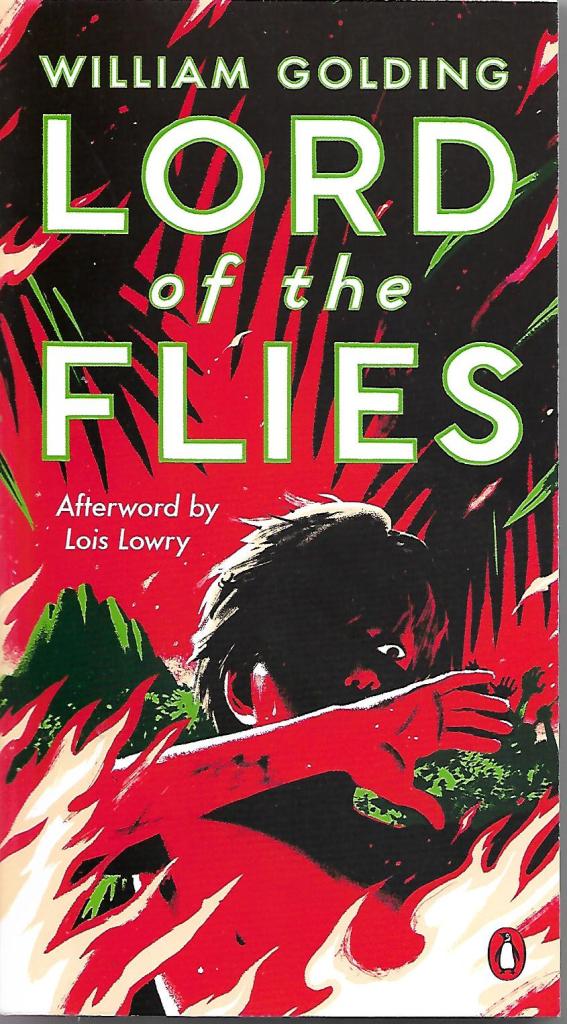
Lord of the Flies ~ A Capsule Book Review

Lord of the Flies ~ A Capsule Book Review by Allen Kopp

Author William Golding was born in Cornwall, England, in 1911, and died in 1993. His most famous and enduring work is his 1954 novel, Lord of the Flies. In it, a group of about twenty British schoolboys, ranging in age from six to fourteen, crash-lands on an uninhabited and unnamed island in the Pacific. We learn nothing of where they come from, where they’re going, or of the crash that landed them on the island. Their world begins and ends on the island.

The first thing the boys must do when they find themselves alone (no adults) on the island is to figure out how to survive. There’s plenty of fruit (we never know what kind of fruit it is) on the island, so they aren’t going to starve to death. There are also wild pigs but they’re very difficult to catch and kill. The problem of food and fresh water solved, they build crude shelters to sleep in. They find a large shell (conch) which they blow into to call meetings. The shell becomes a symbol for law and order because, in the meetings, only the person who holds the conch can speak.

Their only hope of being rescued is to keep a smoky signal fire burning all the time, which they believe will be seen by passing ships. They can have fun on the island, but their top priority needs to be the signal fire, according to their elected leader, Ralph. He is the most sensible boy on the island and the one most likely to maintain a semblance of “civilization.” Ralph’s chief ally is Piggy, a chubby boy who uses bad English and is afraid of almost everything. The boys have no matches, of course, so they cleverly use Piggy’s glasses to kindle flames from the rays of the sun.

Months go by. The longer the boys remain on the island, the less chance they have of surviving their ordeal. A boy named Jack challenges Ralph’s authority as leader. He and his group of followers gradually break off from the group as a whole and begin doing things their own way, which is Jack’s way. They become less and less civilized and more like savages. So now we have two warring factions, Ralph’s small group (representing rules and a sensible approach to survival) and Jack’s group (chaos and savagery). They become the world in microcosm.

Lord of the Flies is an influential book that has influenced and inspired many writers—and readers—over the many years since it was first published. If you’ve never read it and you don’t know how it ends, you might be surprised and gratified (or disappointed) by its deus ex machina conclusion.

Copyright © 2019 by Allen Kopp