

Hotel de Dream ~ A Capsule Book Review
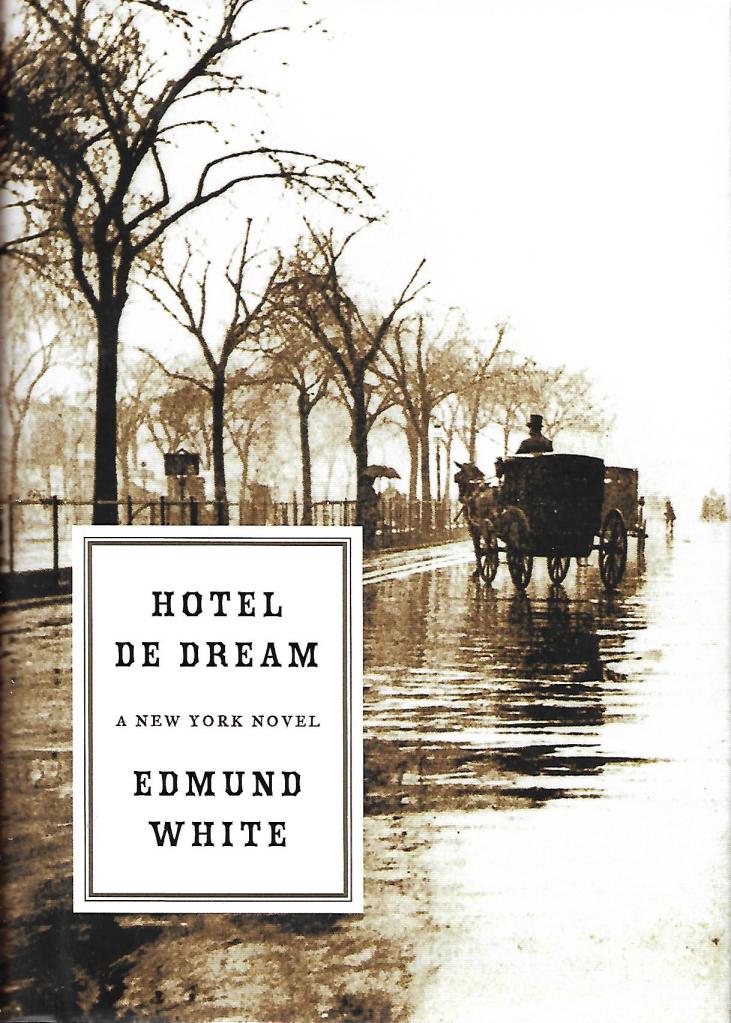
Hotel de Dream ~ A Capsule Book Review by Allen Kopp
American writer Stephen Crane was born in Newark, New Jersey, in 1871, and died of tuberculosis in Germany in 1900 at the age of twenty-eight. He was one of the most gifted young writers of his generation. His 1895 Civil War novel, The Red Badge of Courage, achieved worldwide acclaim for its realistic depiction of war, which Crane wrote without ever having seen battle.
Hotel de Dream, a 2007 novel by Edmund White, is a fictionalized account of Stephen Crane’s final illness and his struggle to complete his final work of fiction called The Painted Boy (which only exists in Hotel de Dream and Crane never actually wrote). The Painted Boy was in the mold of Crane’s earlier novel, Maggie, Girl of the Streets, and was quite daring for its time because it deals with an “invert” (a coy, turn-of-the-century word for a homosexual). The invert in question is named Elliott. He’s a sixteen-year-old boy of the streets, a male prostitute, who comes to New York from a farm, where he was sexually abused by his father and older brothers. As a rent-boy, Elliott meets stodgy, married, middle-aged banker Theodore Koch. After a few “dates,” Koch is convinced he is in love with the syphilitic boy and is willing to risk everything—career, marriage, home, children, place in the world—to be with him. He rents a room where he and Elliott can meet every day. When he is blackmailed, he begins stealing money from the bank where he works. This cannot end well, for him or for Elliott.
Hotel de Dream is a story-within-a-story. Sections about Crane’s private life are interspersed with his fictional story of Theodore Koch and Elliott. Crane is too weak from his tuberculosis to write, so he “dictates” The Painted Boy to his common-law wife, Cora. She knows that Crane is dying, is in love with him, and will do anything to help him.
If you are a student of American literature or a fan of Stephen Crane’s naturalistic style of writing, Hotel de Dream is well worth your time. It’s a fascinating fictional excursion into the life of a real-life American writer, his time and the people he knew. And it’s a reminder, once again, of what a terrible disease tuberculosis is and how fortunate we are to live in an age in which it has been eradicated.
Copyright © 2020 by Allen Kopp
Kumquat
A kumquat is small, orange-like fruit, about the size of an olive, native to Southeast Asia.






The Rise of Silas Lapham ~ A Capsule Book Review
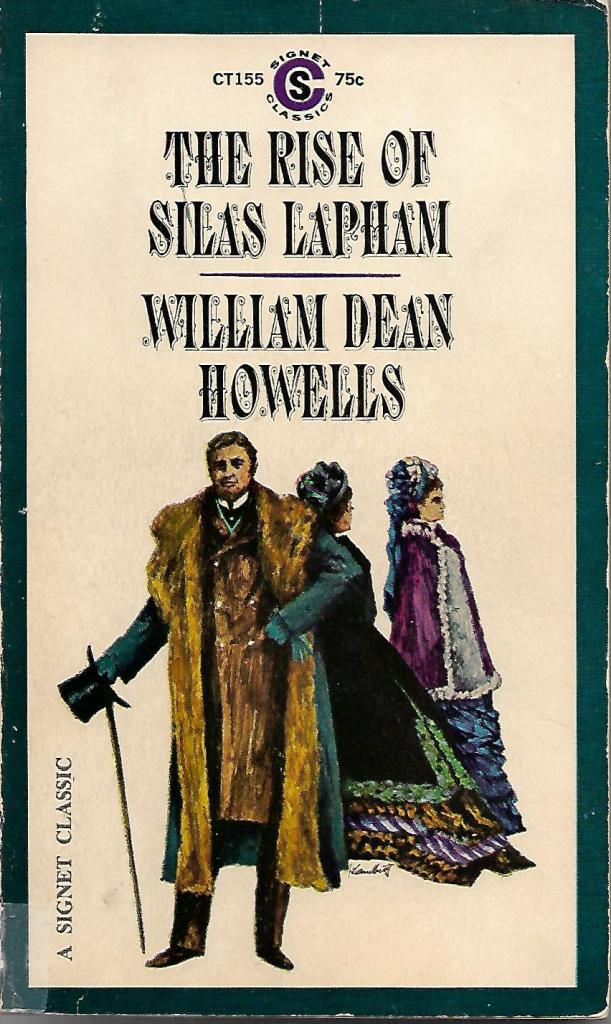
The Rise of Silas Lapham ~ A Capsule Book Review by Allen Kopp
American writer William Dean Howells lived from 1837 to 1920. After the “romanticist” writers of the nineteenth century such as Hawthorne and Poe, Howells was an advocate of “realism” in fiction; realism, that is, that’s not sordid. He was at the forefront of a new wave of American writing and has been called the “Dean of American Letters.” Of the thirty-five novels he wrote, The Rise of Silas Lapham is the most popular and most enduring.
The fictional Silas Lapham is an American “type,” a self-made millionaire, one of Boston’s nouveau riche in the decades after the Civil War. Despite his fortune and his station in the business world, “Corporal” Lapham (he fought at the Battle of Gettysburg) is a little rough around the edges and doesn’t quite fit in with Boston crème de la crème. His grammar borders on the atrocious and he tends to be a bit of a blowhard. He has a matter-of-fact (she nags) wife named Persis who speaks her mind and doesn’t mind telling Silas exactly what she thinks of him and his business dealings. He also has two deb daughters, Penelope and Irene, of marriageable age. Penelope is the older of the two; she’s serious, clever and not so pretty as Irene.
As you might expect, Silas came from humble beginnings. His family were people of the earth. When his father discovers a “mineral paint mine” on their property in Vermont, Silas is able to turn the enterprise into a successful money-making venture. Soon he is at the forefront of the American paint market and has all the heartache and responsibilities of a titan of industry. To solidity his family’s status in Boston society, he has his heart set on building a showy, expensive ($100,000 in 1875) mansion in one of the most fashionable sections of Boston.
The Coreys are a snooty, blue-blood Boston family of Silas Lapham’s acquaintance. He would like to be like the Coreys if only he had more “class.” He believes that any association with the Corey family would benefit him professionally and socially. The Coreys have a handsome son named Tom. When Tom begins hanging around the Lapham home, everybody believes he’s interested in Irene, the younger and prettier of the two daughters. No, wait a minute! He’s not interested in Irene, but in the older, homelier daughter, Penelope. This confusion sets up a love-story subplot with many complications. How can Penelope marry a man with whom her younger sister was once in love?
As might be expected, Silas Lapham experiences financial reverses in his business empire, facing some unexpected competition from a rival paint manufacturer. Not only that, his beloved Boston mansion, still under construction, is destroyed in a fire, one week after its insurance policy lapsed. As quick as you can say “financial collapse,” he faces insolvency and the loss of his world.
The Rise of Silas Lapham is a solid American classic, easy to read and with none of the antique qualities that are sometimes associated with 19th century American writing, such as tortured, twisted sentences and high-blown syntax. If you, like me, first encountered The Rise of Silas Lapham in your younger days in school, it is well worth another look.
Copyright © 2020 by Allen Kopp
 Literary Fictions