

Category: Uncategorized
The Literary Hatchet, Issue 31 (Correction)

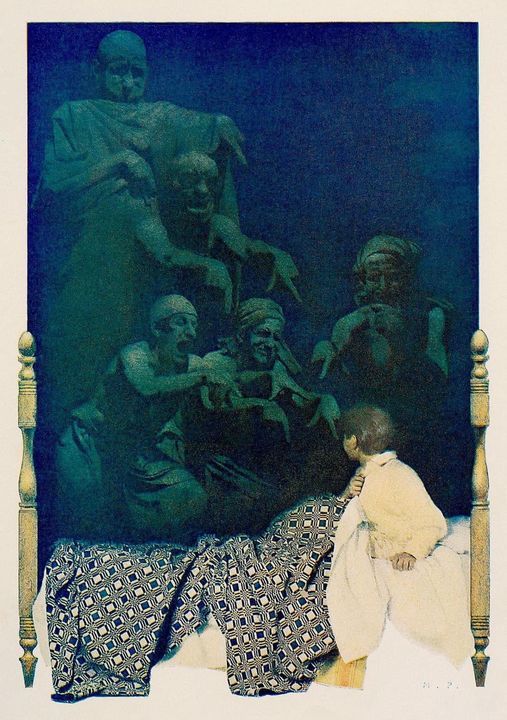
The Literary Hatchet, Issue 31
(When I originally posted this on May 17, I misspelled George Kelly’s name. I have corrected it. Sorry, George.)
The Literary Hatchet is an independent international journal devoted to emerging and established voices crafting provocative short fiction and thoughtful poetry and prose. Published three times a year! (Stefani Koorey, editor; Eugene Hosey, editor; Michael Brimbau, editor.)
Contributing writers and artists for Issue 31 include Aric Annear, Bruce Boston, Scott J. Couturier, Holly Day, Barbara Demarco-Barrett, George Freek, Matt Gleason, S. E. Greco, John Grey, Michael Lee Johnson, Gloria Keeley, George Kelly, Allen Kopp, Aurora Lewis, Christopher Locke, Fabiyas MV, Michelle R. Markuson, J. Marquez Jr, Denny Marshall, Corey Niles, R. L. Raymond, Emmett Ross, Rory C. Say, Michael Seeger, Mack Severns, Wayne Scheer, Judith Skillman, Doug Smith, Stuart Stromin, Ann Christine Tabaka, Bill Thomas, John Tustin, Jim Windolf, Todd Zack.
Available for purchase for $14 a copy at this link on Amazon:
*****
(With the extreme modesty that is my nature, I have to admit that I have four short stories in Issue 31 of The Literary Hatchet: “The Errant Husband,” “Pneumonia,” “Blanche Barrow,” “Cherry Hill.”)
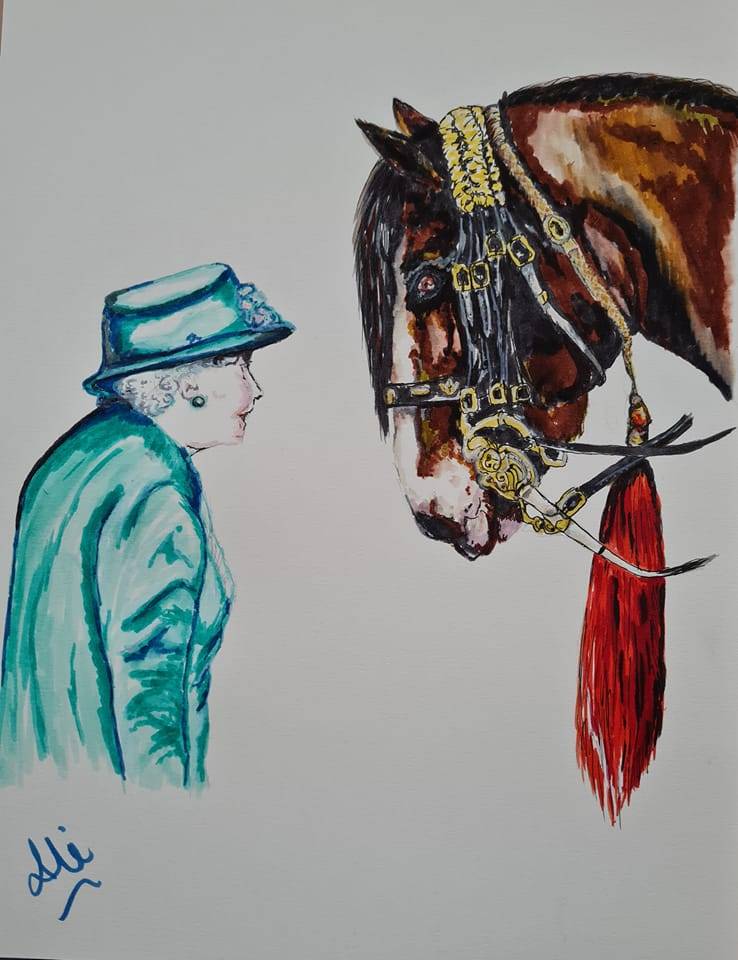
The Literary Hatchet, Issue 32

The Literary Hatchet, Issue 32
The Literary Hatchet is an independent international journal devoted to emerging and established voices crafting provocative short fiction and thoughtful poetry and prose. Published three times a year! (Stefani Koorey, editor; Eugene Hosey, editor; Michael Brimbau, editor.)
Contributing writers and artists for Issue 32 include: Jaya Abraham, Jon S. Bach, Barbara Demarco-Barrett, Mike Bemis, Warren Benedetto, Bruce Boston, Jarad T. Bushnell, Jay Caselberg, Scott J. Couturier, Nate Currier, George Freek, Eugene Hosey, Michael Lee Johnson, Gloria Keeley, Ngo Binh Anh Khoa, Tara Knight, Allen Kopp, Aurora Lewis, Christopher Locke, Denny Marshall, DS Maolalai, Mark Millicent, Fabiyas MV, James B. Nicola, Caitlyn Pace, Jaden Pierce, Marshall Pipkin, Trevor Price, Wayne Scheer, Emily Smith, John Sweet, Bill Thomas, John Tustin, Gracelyn Walls, Jim Windolf, Todd Zack.
Available for purchase for $15 a copy at this link on Amazon:
*****
(With the extreme modesty that is my nature, I have to admit that I have three short stories in Issue 32 of The Literary Hatchet: “Auburn Delacroix,” “Divorcee with Two Growing Children,” “Mrs. Biederhof.”)

Depraved ~ A Capsule Book Review
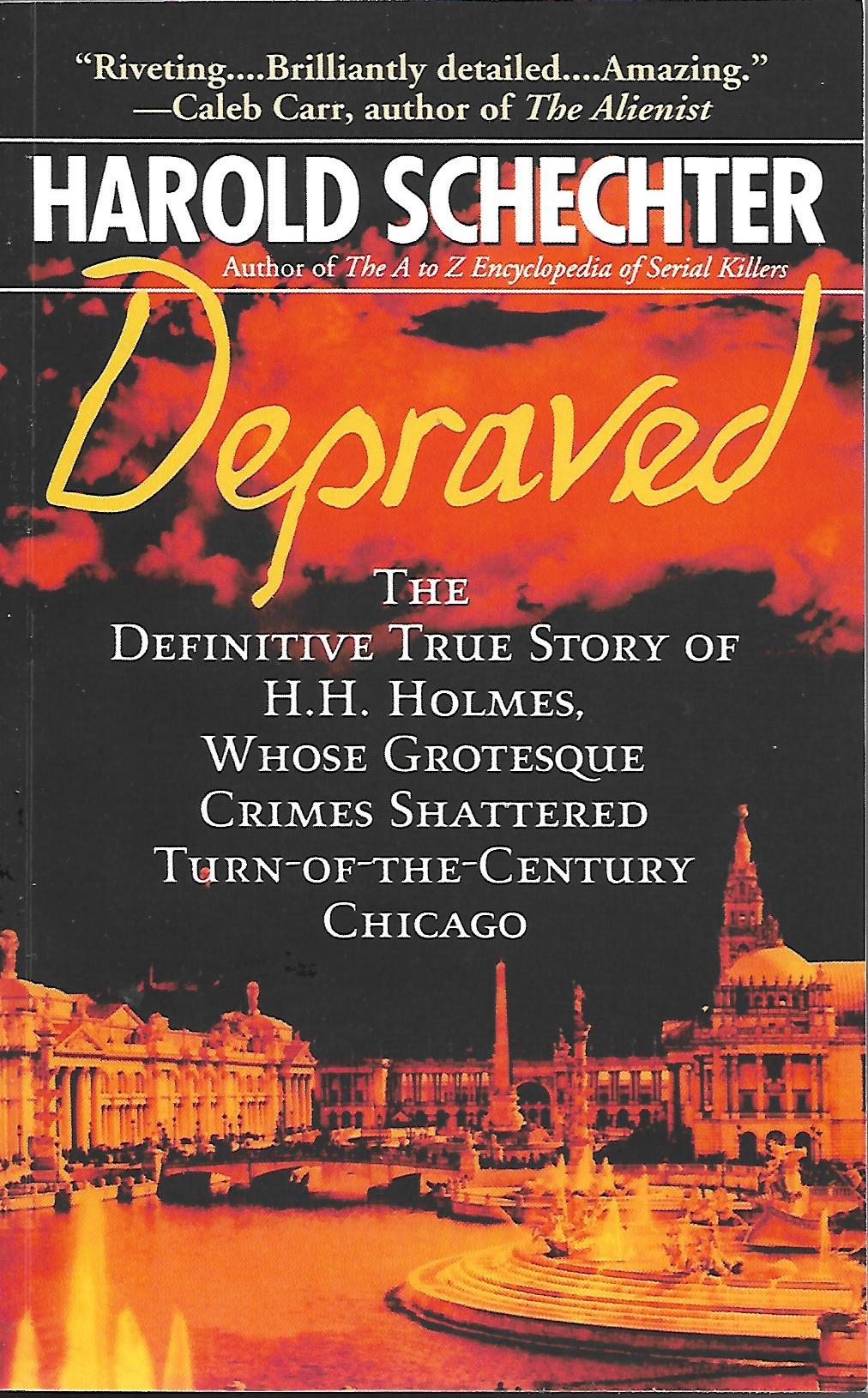
Depraved
~ A Capsule Book Review by Allen Kopp ~
Herman Webster Mudgett was born in a small town in New Hampshire in 1861. In young adulthood he became a doctor and changed his name to Henry Howard Holmes (or H. H. Holmes). He then embarked on a criminal career that included kidnapping, murder, arson, bigamy, insurance fraud, swindling, check forging, theft, grave-robbing, etcetera.
Because he was attractive, well-groomed, a stylish dresser and well-educated, he could easily ingratiate himself to people, men and women alike. The victims of his crimes never saw what was coming. Do you think he’d lock you in a bank vault and let you suffocate to death? No, he would never do that. His suit was too expensive, his mustache too neatly trimmed, his English too refined.
After moving to suburban Chicago, he purchased a drug store and became a druggist, but soon moved on to other business ventures. He built a block-long building nicknamed the Castle. It was a four-story mixed-use building, with apartments on the second floor and retail spaces, including a new drugstore. Reports by the sensationist press of the day called the building “Holmes’s Murder Castle,” claiming the structure contained secret torture chambers, trap doors, gas chambers and a basement crematorium. None of these claims turned out to be true. After he became well-known for his highly publicized crimes, much of what was written about him was untrue or exaggerated. Horrific, gruesome, bloody stories sold lots of newspapers.
By his own count, Dr. Holmes murdered twenty-seven people. Others claimed the number was much higher. He murdered a former college classmate in an insurance scheme. He inadvertently killed one of his girlfriends in a botched abortion. Because of his connection with the medical profession, he provided cadavers and skeletons to medical schools. Most of the people he murdered he did so to silence them. They knew too much about him or had become inconvenient to his plans.
What finally tripped him up was an insurance-fraud scheme. He and a “business partner,” Benjamin Pietzel, set out to defraud an insurance company of $10,000 (a fortune in the 1890s.) The plan was that Dr. Holmes would insure Benjamin Pietzel’s life, fake his death, collect on the policy and then the two of them split the profits. Dr. Holmes really did murder Pietzel, however, so he could keep all the insurance money for himself. He also murdered three of Pietzel’s five children to silence them.
He was tried and found guilty of the murder of Benjamin Pietzel. The police only needed to prove one of his murders to nab him. During his trial, he vehemently professed his innocence. He had done some bad things in his life, he said, but he never killed anybody. (His “confessions” about what he did or didn’t do might change daily.) He was hanged in Philadelphia in 1896, just short of his thirty-fifth birthday.
Depraved, by Harold Schechter, is the true-life story of Dr. H. H. Holmes, a man who became famous in the late nineteenth century for unspeakable murders and other crimes. He was, probably, what later would be called a sociopath or a psychopath. He himself said that, when he was born, Satan was there beside him and guided him through his life. At times he could sweetly profess shining innocence, but right at the end he admitted he was getting exactly what he deserved. Some people claimed he had supernatural abilities. After his death, several of the people who were instrumental in his capture and conviction met with unexplainable illnesses or had other misfortunes befall them.
Copyright © 2022 by Allen Kopp

 Literary Fictions