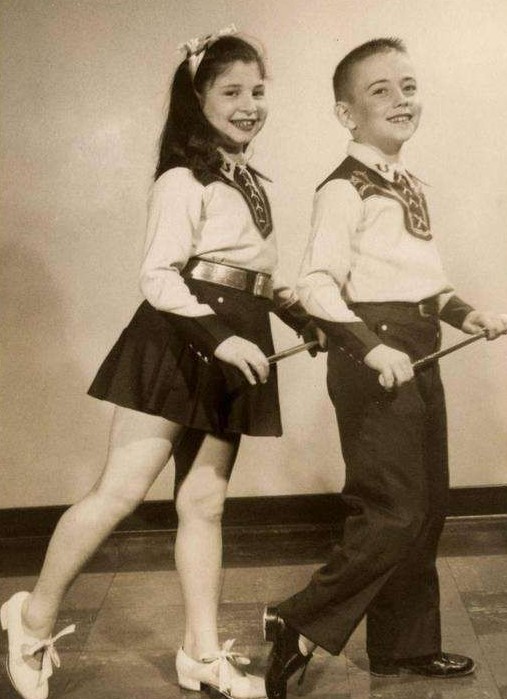
Those Dancing Feet ~ A Short Story

Those Dancing Feet image 4 (2)
Those Dancing Feet
~ A Short Story by Allen Kopp ~

(This short story is a re-post. It has been published in The Literary Hatchet.)

Nine-year-old Edith Mullinex couldn’t keep her legs still and when her legs moved her arms moved and then her whole body moved. When this ceaseless movement turned to dancing, she believed herself to be one of the all-time great dancers of the world. She didn’t know anything about the all-time great dancers of the world but, whoever they were, she was sure she was better than any of them.

She danced her way to school in the morning and she danced her way home in the afternoon and she danced every chance she got between morning and afternoon. She danced her way to the bathroom and she danced her way to the lunchroom and after she had eaten her lump of meatloaf and her cold mashed potatoes and her two canned plums in a puddle of mauve-colored juice, she danced her way back to the fourth-grade classroom, where all of her classmates and her teacher, Miss Divine, watched in open-mouthed wonder as she danced her way to her desk at the back of the room. Stop dancing, people would say, but she just ignored them. She knew they would never be able to understand.

“We have a real dancing problem with little Edith,” Miss Divine told Edith’s mother.

“It’s a phase she’s going through,” Edith’s mother said. “She has somehow got it into her head that she’s one of the all-time great dancers of the world.”

“It’s not normal,” Miss Divine said. “I think it calls for psychiatric evaluation.”

Thirteen-year-old Fairfax taunted Edith mercilessly when she was dancing at home, but she ignored him, as she did all the naysayers. When he tripped her while she was dancing on her way to the kitchen to eat dinner, she made the fall part of her dance and in this way annoyed him even further. When friends of Fairfax’s visited to watch a football game with him on TV, she danced all around them and in front of them, obstructing their view, until suddenly they remembered they had leaves to rake or grass to cut and left to go home.

“Boy, Fairfax sure does have a screwy sister!” they said when they were out the door.

Edith was always improvising new dance steps. When the phone rang, she danced her way to answer it and when it was time to go to bed, she danced her way into her bedroom, making closing the door part of the dance. Her mother sent her to the store with a list of things to buy. She danced her way there and she danced her way up and down the aisles of the store until she had everything on the list. People looked at her curiously, sure she was either filming a television special or was an escapee from the mental hospital.

Edith had a cousin named Pansy Mullinex. Like Edith, Pansy was very thin with lank blond hair to her shoulders and stick-like arms and legs. Edith and Pansy were the exact same age, born five days apart, and could have passed for twins. Pansy should have been in the same fourth-grade class as Edith, but she still read at a first-grade level and was in special education.

On the playground at recess, Edith showed Pansy some of her latest dance steps and soon they were dancing together. They worked up a dance routine to the song “When the Saints Go Marching In.” Edith taught Pansy the words. They sang and danced every day at morning recess and, on a good day, attracted an appreciative crowd of forty of fifty. That’s when Edith knew she loved having an audience.

The school talent contest was coming up. The whole school would be watching. First prize was ten dollars. Edith proposed to Pansy that they enter, and, if they won, they could split the ten dollars. There wasn’t much you could do with half of ten dollars, but it was more money than they were used to having at one time.

Edith chose the songs they would dance to, a combination of classics and bouncy contemporary hits that anybody who listened to the radio would know. There was some Roy Orbison (“Oobie Doobie”), Elvis Presley (“Jailhouse Rock”), Connie Francis (“Lipstick on Your Collar”), Bobby Vee (“Rubber Ball”), Tommy Dorsey (“Sunny Side of the Street”), and even some Perez Prado (“Mambo No. 49”) to add a cute Latin flavor at the end. It was a range of music to show their range and versatility.

For what to wear they chose matching black poodle skirts with white trim; white, short-sleeved sweaters with pompom ties; red ribbons in their hair, saddle oxfords and bobby socks.  To add some pizzazz, Edith bought some taps and tiny nails from a shoe repair store on Main Street and turned both pairs of shoes into tap shoes.

They rehearsed every day for two weeks on a sheet of plywood in an old wasp-infested shed behind Pansy’s house and, when it was time for the talent contest, they were both ready. Neither of them had worn makeup before, but Edith confiscated from her mother’s dressing table some face powder, lipstick and rouge to slather on their faces to keep them from looking ghostly in the spotlights.

Edith knew about the other acts and she considered them stupid. There was a girl twirling two hula-hoops, a boy playing “Yankee Doodle Dandy” on his banjo, a boy acting like Curly from the Three Stooges, a girl moving her lips to the Connie Francis song “Who’s Sorry Now,” another boy playing spoons to the tune of “Swanee River” and other assorted acts. She knew that she and Pansy had more class and more pizzazz in their little fingers than all the others put together and were almost certain to win first prize, unless something bad happened, like freezing up in front of an audience of two hundred people and not being able to dance at all. She was sure nothing like that was going to happen.

They didn’t go on until about an hour into the show. While they waited, they stood just behind the curtain watching the contestants go on and come off. The audience applauded after each act—and there were always a few cheers—but Edith knew they were just being polite. People didn’t go to a show to just sit on their hands; they wanted to participate.

Finally, it was Edith and Pansy’s turn. They started out behind a screen with a big light shining on it from behind so that, to the audience, they were only silhouettes. They danced behind the screen and after a few seconds they came out, Edith on the left and Pansy on the right. After that they owned the talent contest. They tapped and jiggled and turned and swooped. They propelled each other into the air and did some ballet steps. Edith twirled Pansy and then Pansy twirled Edith. They joined hands and jitter-bugged, they waltzed and did some tango steps. They were a two-person conga line and then they drew some laughs when they acted like chickens pecking and scratching at the ground. They jumped, jittered and jived, drawing oohs from the audience when they both did the “splits” at the same time. Pansy remembered all the steps Edith taught her and even improvised some of her own.

When the music stopped and Edith and Pansy finished with a flourish in which they both went down on one knee with their arms extended, the crowd went wild. The clapping, cheering and whistling were deafening. They had to do several curtain calls before the show could go on.

There were more acts waiting to go on, but Edith knew it was all but over.

The show finally ended and then all that was left was for the judges to make their decision. The judges were all teachers and as Edith looked out at them from backstage, she saw they had their heads together to arrive at their decision.

The deliberations among the judges took about five minutes. When they were ready, Miss Mish, the music teacher who was also one of the judges, took to the stage to announce the winners.

Miss Mish wheezed into the microphone, “No matter who wins, there’s one thing on which we can all agree. Everybody on this stage tonight is a winner!”

The audience clapped and cheered and Miss Mish held up her hands to get them to shut up. “Our third-place winner,” she said, “is none other than Marvin Hittler and his banjo!”

Cheers and huzzahs for Marvin Hittler.

“Our second-place winner is Leeman LaFarge for his remarkable impression of Curly Howard of the Three Stooges. Come on out, Leeman, and take a bow.”

Leeman came out from backstage and, to anybody familiar with the Three Stooges, he was a perfect pint-sized version of Curly. He gave the audience a few Curley mannerisms and then he pretended to be shy and had to retreat behind the curtain.

Miss Mish clapped and wheezed into the microphone like a donkey. When the laughter and cheering died down, she brayed: “And now the moment for which we have all been waiting! The first-place winner of this year’s school talent contest is…may I have a drumroll, please!…Edith Mullinex and Pansy Mullinex! For their sparkling and innovative dance routine!”

Edith wasn’t surprised. She knew, unless the show was rigged, that she and Pansy would win first prize. She took Pansy’s hand and they both bowed graciously again and again before the audience. After they left the stage, the audience was still applauding, so they gave a curtain call and then another and another. After a few minutes, Miss Mish took to the microphone again and told everybody to shut up and go home. The show was over.

As the crowd dispersed, everybody wanted to congratulate Edith and Pansy, but especially Edith because the whole thing had been her idea. She was the star of the show.

Edith’s mother, who had been sitting in the audience, was going to give Edith and Pansy a ride home, but Edith wanted to walk home by herself. She was too excited to sit still and ride in the car, she said. She needed to dance her way home.

She said her goodbyes and danced her way down the street away from the school. It felt good to be away from the crowd and to breathe in the cool night air. Her head was still in the clouds. She still heard the music and the applause, the cheering, as her name was announced as the first-place winner and the crowd went wild! It was the happiest moment of her life!

As she danced off the sidewalk into an intersection, she wasn’t thinking about watching for oncoming cars, wasn’t thinking about anything other than how good she felt. She didn’t see the red sportscar speeding toward her.

There was a squeal of brakes, a skidding of tires and impact. A woman standing on the sidewalk screamed. Traffic came to a standstill. Somebody called an ambulance. Within minutes, they came and picked Edith up off the street and took her to the emergency room at the hospital. The hospital people were trying to call Edith’s mother, but she wasn’t home yet.

Edith died two hours later in the hospital. She never regained consciousness and never knew what happened. Everybody who knew Edith and who heard the story afterwards said the same thing: She died happy.

School closed at noon the day of the funeral so everybody could attend. Her entire fourth-grade class was there and all the teachers. She was buried in a white casket with a spray of red roses that her classmates had taken up a collection to buy for her. And, on her headstone, beneath her name, was etched one word: DANCER.

After Pansy got over the shock of Edith’s death, she assumed the dancing mantle for herself. She danced her way to school in the morning and she danced her way home in the afternoon. She danced before, during and after school. She danced her way to the bathroom and she danced her way to the lunchroom to eat lunch.

The special education teacher, Miss Cornapple, called Pansy’s mother and said, “I’m afraid we have a dancing problem with Pansy.”

“It’s a phase she’s going through,” Pansy’s mother said. “She has somehow got it into her head that she’s one of the all-time great dancers of the world.”

“It’s not normal,” Miss Cornapple said. “I think it calls for psychiatric evaluation.”

“Maybe you just can’t stand to see anybody happy,” Pansy’s mother said.

As Pansy’s dancing skills improved, so did her reading skills. Soon she was allowed to move out of special education and take her place in the fourth-grade class. She danced and danced and danced, and she looked so much like Edith, and acted so much like her, that soon people began calling her Edith instead of Pansy and whenever it happened she never bothered to correct them. Edith was back, or maybe she had never left at all.

Copyright © 2022 by Allen Kopp

Heart of Darkness ~ A Capsule Book Review

Heart of Darkness cover

Heart of Darkness
~ A Capsule Book Review by Allen Kopp ~

While reading the novel Heart of Darkness, I discovered the word “tenebrous.” It’s an adjective, meaning dark, shadowy or obscure. That word is a perfect, one-word description for the novel.

Heart of Darkness was written in 1899 by Polish-English writer Joseph Conrad (1857-1924). It is a highly regarded, much-studied novel. It’s number 67 on the Modern Library’s list of the hundred best books in English of the twentieth century.

The story is being narrated in the first-person voice of a character named Charles Marlow. He is on a boat on the Thames River in England, but he’s relating to his boatmates his experiences in what used to be called Darkest Africa.

Charles Marlow, an Englishman, takes a job as a riverboat captain with a Belgian company that trades in the Congo. As he makes his way up the Congo River, he encounters widespread inefficiency in management of the company’s affairs and mistreatment of the natives at the company’s stations. This is part of the book’s indictment of European colonial affairs in places like Africa. One of the novel’s themes is that there is little difference between civilized people and savages.

As he progresses in his journey, Marlow hears people speak highly of a man named Kurtz, a first-class agent and ivory hunter far up the river. He is told that Kurtz has “gone native” and that the natives worship him. From the information he gleans, Marlow deduces that Kurtz is insane.

Marlow and the passengers on board his ship face terrible difficulties. The steamer has sunk and it will take months to wait for the parts to fix it. During this period, Marlow’s interest in Kurtz grows. Kurtz is rumored to be ill. Marlow eventually gets the parts he needs to repair his ship, and he and his crew set out (agents and a crew of cannibals) on a long, difficult voyage up the river. The jungle is dark, silent, and impenetrable, making everybody on board the ship a little nervous. They are surrounded by a thick fog. When a bunch of natives attack the ship with arrows, Marlow scares them away by sounding the steamer’s whistle.

When Marlow and his crew finally arrive at Kurtz’s Inner Station, they expect to find him dead, but are greeted by a Russian trader, who informs them that everything is fine. The Russian claims that Kurtz has enlarged his mind and can’t be subjected to the same moral judgments as other people.

Kurtz has apparently established himself as a god with the natives and has gone on brutal raids in the surrounding territory in search of ivory. The collection of severed heads adorning the fence posts around the station attests to his “methods.” The agents bring Kurtz out of the station-house on a stretcher, and a large group of native warriors emerges from the jungle and surrounds them. Kurtz speaks to them, and the natives disappear into the woods.

The manager of Marlow’s party brings Kurtz, who is quite ill, aboard the steamer. A beautiful native woman, apparently Kurtz’s mistress, appears on the shore and stares out at the ship. The Russian reveals to Marlow, after swearing him to secrecy, that Kurtz had ordered the attack on the steamer to make them believe he was dead so they would turn back and leave him to his plans. Kurtz disappears in the night. When Marlow goes out looking for him, he finds him crawling on all fours toward the native camp. Marlow convinces him to return to the ship. They set off down the river the next morning, but Kurtz is failing fast.

While they travel downriver, Marlow listens to Kurtz talk. Kurtz entrusts Marlow with a packet of personal documents, including a pamphlet he has written on civilizing the savages, at the end of which he declaims: “Exterminate all the brutes!”

When the steamer breaks down and they stop for repairs. Kurtz dies. His last words are: “The horror! The horror!” Marlow himself becomes ill soon after and barely survives. Eventually when he returns to Europe, he goes to meet with Kurtz’s fiancée. She is still in mourning, even though a years has passed since Kurtz’s death. She praises Kurtz as a paragon of virtue and achievement. She asks Marlow what Kurtz’s last words were. Marlow lies and tells her that Kurtz spoke her name right before he died.

We are told that Joseph Conrad didn’t speak fluent English until he was in his twenties (he was Polish). He went on to become a great writer of novels in English. He wrote Heart of Darkness in his early forties, basing it on his own experiences when he was in Africa.

My favorite part of Heart of Darkness is the last few pages of the book when Charles Marlow goes to see Kurtz’s fluttery, naïve girlfriend after he gets back home to England. The dialogue between the two characters in this scene is transcendent.

Copyright © 2022 by Allen Kopp

Hillbilly Elegy ~ A Capsule Book Review

Hillbilly Elegy cover

Hillbilly Elegy
~ A Capsule Book Review by Allen Kopp ~

J. D. Vance was born in Appalachian Kentucky in 1984. He refers to himself and his family (without irony) as “hillbillies.” His mother was unstable, often married, and a frequent drug abuser. J. D. had many different surrogate “fathers,” some of whom lasted a very short time. When he was a small child, his family moved to Middletown, Ohio, in search of economic opportunities that were not available to them in Kentucky. His childhood was often chaotic and unsettled, mostly because of his volatile mother. He looked to his grandparents, his “Mamaw” and “Papaw,” for the stability in life that he lacked. He refers to Mamaw and Papaw as “crazy hillbillies.” Papaw drank to excess and was often abusive, but Mamaw was crazy kindness and stability personified. She was exactly the kind of grandmother J. D. needed at exactly the right time. She knew he was smart, though unmotivated. In her own skewed way, she gave him direction and the will to succeed.

Hillbilly Elegy is a memoir by J. D. Vance about his life in a hillbilly family, being imbued with hillbilly values, and then overcoming those values and doing something unexpected with his life. He was a mediocre and underperforming student but in high school scored a perfect score on his SATs. Defying the odds, he made it into Ohio State University, getting his undergraduate degree in a year and a half, and then going on to Yale Law School and getting his law degree. Today he is the Republican candidate for United States Senator from the state of Ohio.

This book is a true-life American success story about an ordinary boy who, through the right set of outside influences and through the will to succeed, was able to overcome his heritage and push through to a better life. Most people are not that lucky.

Copyright © 2022 by Allen Kopp

The Literary Hatchet, Issue 31

The Literary Hatchet cover, Issue 31

The Literary Hatchet, Issue 31

The Literary Hatchet is an independent international journal devoted to emerging and established voices crafting provocative short fiction and thoughtful poetry and prose. Published three times a year! (Stefani Koorey, editor; Eugene Hosey, editor; Michael Brimbau, editor.)

Contributing writers and artists for Issue 31 include Aric Annear, Bruce Boston, Scott J. Couturier, Holly Day, Barbara Demarco-Barrett, George Freek, Matt Gleason, S. E. Greco, John Grey, Michael Lee Johnson, Gloria Keeley, George Kelly, Allen Kopp, Aurora Lewis, Christopher Locke, Fabiyas MV, Michelle R. Markuson, J. Marquez Jr, Denny Marshall, Corey Niles, R. L. Raymond, Emmett Ross, Rory C. Say, Michael Seeger, Mack Severns, Wayne Scheer, Judith Skillman, Doug Smith, Stuart Stromin, Ann Christine Tabaka, Bill Thomas, John Tustin, Jim Windolf, Todd Zack.

Available for purchase for $14 a copy at this link on Amazon:

Amazon.com

*****

(With the extreme modesty that is my nature, I have to admit that I have four short stories in Issue 31 of The Literary Hatchet: “The Errant Husband,” “Pneumonia,” “Blanche Barrow,” “Cherry Hill.”)

Boxes: The Secret Life of Howard Hughes ~ A Capsule Book Review

Boxes cover
Boxes: The Secret Life of Howard Hughes
~ A Capsule Book Review by Allen Kopp ~

As a young man, Howard Hughes (born 1905) inherited the Hughes Tool Company from his father, using it as the starting point to build a vast business empire. He was a pioneer of aviation design and a daring test pilot (in 1946 he was nearly killed when the aircraft he was testing crash-landed and burned). In the 1930s and ‘40s, he was a movie maker in Hollywood, having become enamored of the movies as a child. He owned an airline and then another one, getting into trouble with the U.S. government for violating antitrust laws. At one time he owned almost all the gambling casinos in Last Vegas, lending an air of respectability to an unsavory industry. For a while, he was not only the richest man in America, but the richest in the world. He was a playboy, an escort for some of the most beautiful and well-known ladies in Hollywood. He had ties with organized crime and rubbed elbows with some of the most famous political leaders of his time. More than anything else, though, he was known for being extravagantly eccentric, reclusive, and mysterious.

This following quote from the nonfiction book, Boxes: The Secret Life of Howard Hughes (by Douglas Wellman and Mark Musick), tells us a lot about the real Howard Hughes:

“The world of Howard Hughes is sometimes unfathomable. Between the things he did do, the things he didn’t do but was accused of, and the things he did but covered up, his life is a bewildering series of conflicting stories. He was a master of secrecy, intrigue, and diversion, which is apparent from the abundance of books and articles on the man, many of which are contradictory.”

At the height of Howard Hughes’ fame, the world knew him as a rich eccentric. People loved to talk about him and write about him, but much of what was spoken and written was exaggeration or blatantly untrue. Nobody could know Howard Hughes, so people fabricated stories about him to sell books, newspapers and magazines. He was “hot” copy.

The world believes that Howard Hughes died a broken old man at age 71 in April 1976. He had been living in a Las Vegas hotel room, barely kept alive by his uncaring custodians. He was filthy, malnourished, emaciated and addicted to Codeine, Valium, and other drugs that he didn’t need. He left behind a fortune in excess of two billion dollars. At the time of his supposed death, he had at least forty pending lawsuits against him and was being hounded all the time by the U.S. government for non-payment of taxes. Great wealth has its own unique problems.

The premise of the nonfiction book Boxes: The Secret Life of Howard Hughes is that Hughes didn’t really die in 1976. A decoy died in his place, a Howard Hughes stand-in, presumably a Las Vegas derelict of about the same age, with similar physical characteristics. Why would a man like Howard Hughes fake his own death? The answer should be obvious. He wanted to be left alone, to live the rest of his life in peace and seclusion. The forfeiting of his great wealth was the price he was willing to pay.

We hear all the time about people faking their own deaths, but if anybody could do it, it was Howard Hughes. He had the means to do it and the “enablers” to carry out his wishes and keep their mouths shut. He assumed the name and identity of Verner “Nik” Nicely. He married a woman named Eva McClelland. He died in 2001 at the age of 95.

The book presents plenty of compelling evidence that the mysterious and eccentric old man named Verner “Nik” Nicely was in reality Howard Hughes. Mr. Nicely had burn scars on his body, consistent with the scars that Howard Hughes sustained in a crash in his test pilot days. He was the same height as Howard Hughes, had the same physical characteristics, and was in possession of encyclopedic knowledge of aviation and mechanics. His wife, Eva, who died a few years after he died, was certain that she was married to the once-famous Howard Hughes. Read the book and decide for yourself if she was telling the truth.

Copyright © 2022 by Allen Kopp    

Brumm’s Drug Store ~ A Short Story

Brumm's Drug Store image 2

Brumm’s Drug Store
~ A Short Story by Allen Kopp ~

Mayfleur had worked at her new job for only two weeks and already she was thinking about quitting. There was always so much to do, she had never had to work so hard before. She was on her feet all day long without ever a moment to herself. The worst part, though, was Mrs. Brumm watching her all the time.

Some people named Brumm owned the store. Mr. Brumm was the pharmacist. He stayed behind the pharmacy counter all the time. He smiled a lot and hardly ever said a word to anybody. If anybody asked him a question, he pointed to his wife to answer it. And his wife, Mrs. Brumm, seemed to be everywhere all at once. Nothing escaped her scrutiny. She was all-knowing and all-seeing.

There was only one customer at the lunch counter drinking coffee so Mayfleur wasn’t very busy at the moment, but she knew that Mrs. Brumm was lurking around somewhere—she could smell the stench of her sweet perfume—so she tried to look busier than she was. When the man drinking coffee asked for a refill, she was glad to be in motion for a few seconds with something specific to do. She gave him a sweet smile as she filled his cup and asked if he would like anything else.

“Mayflower!” Mrs. Brumm came around the corner without a sound. “The magazines are a mess! They need straightening! Right now!

Mayfleur jumped at the sound of Mrs. Brumm’s voice and sloshed some of the hot coffee on her hand. She put the pot back on the warmer with a clatter and then nearly fell down where somebody had dribbled some water on the floor. Her day was not going well and she had more than six hours to go.

Mrs. Brumm was right. The magazine rack was a mess. It was one of Mayfleur’s responsibilities to keep it in order, and Mrs. Brumm would accept nothing less than perfection. Mayfleur was just separating Look from Life and Superman from Justice League America, when Mrs. Brumm barked at her to drop what she was doing and fill a food order. Miss Tolley upstairs wanted a tuna salad sandwich on toast, a chocolate milk shake with a jigger of rum mixed in, a pack of Lucky Strikes—and she wanted them now.

Mayfleur knew that Miss Tolley was Mrs. Brumm’s sister and there was something funny about her. Something not quite right, but Mayfleur didn’t know what it was. Maybe she had a missing leg or something and couldn’t get out of bed. When she took the food order upstairs, she’d find out for sure.

She went behind the lunch counter and began preparing the food order, not bothering to wash her hands first. She put the wrapped tuna sandwich on toast in a white paper bag, along with the Lucky Strikes, and then she set about making the chocolate milk shake with the rum in it. (The bottle of rum was kept under the counter especially for that purpose.) She fastened a plastic lid on the milk shake and put it in its own white paper bag. When the order was ready, she carried it out the front door and around the corner to the door where the stairs were. She went up the steps slowly, looking at the grooves in the wood underneath her feet. The grooves made her think of all the people who had gone up the stairs who were now dead.

There were four apartments over the drug store. She found Miss Tolley’s door and knocked hesitantly, as though afraid she might wake someone. She heard the undoing of the locks from the inside and then the door opened and there stood Miss Tolley in a red Japanese kimono.

Mayfleur was only moderately surprised to see that Miss Tolley was a midget, no more than three feet tall. She realized it could have been a lot worse. She might have had leprosy or no arms or been covered in scales.

“Are you Miss Tolley?” Mayfleur asked.

“Well, I ain’t Virginia Mayo!”

“I have your food order from downstairs.”

“Okay.”

She took the two bags from Mayfleur and set them down. Mayfleur turned and started to leave, but Miss Tolley gestured for her to sit on her sagging sofa and “take a load off.”

“What’s your name?” Miss Tolley asked.

“Mayfleur Pickering.”

“How is Bertha treating you?”

“Who? Do you mean Mrs. Brumm?

Hah-hah-hah! Is that what she makes you call her?”

“That’s what she told me to call her from the first day.”

Hah-hah-hah! She’s a riot! I’ll bet she doesn’t give you a moment’s peace, does she?”

“Well, she is kind of demanding.”

“You don’t have to sugarcoat it for me, honey. She’s my sister. I know what a demon she is. How long you been on the payroll?”

“Two weeks.”

“I’ll bet it seems like a couple of years already, don’t it?”

Mayfleur felt uncomfortable hearing Miss Tolley talk about Mrs. Brumm that way and she wished she might go back downstairs and disappear behind the soda fountain.

“Well, if there’s nothing else,” Mayfleur said, “I really need to get back downstairs.”

“You don’t need to worry about it,” Miss Tolley said. “I call the shots around here and if Bertha don’t like it, she knows what she can do about it.”

“You ‘call the shots’?”

“I own the drugstore. Didn’t you know that?”

“No, nobody told me.”

“Not only do I own the drugstore, I also own these apartments and three other buildings besides.”

“Oh.”

“So, two weeks, you say?”

“That’s right.”

“I bet you think every day about quitting, don’t you?”

“Well, I…”

“You can be truthful with me, dearie. I know nobody can stand working for Bertha for long. You would not believe how many girls she has had working for her! I think we average about one a month.”

“Well, I don’t like to complain. I had a little trouble finding a job, so when this one came along I was glad to get it. I’d like to keep it for a while.”

“But still, you’d like to tell Bertha to take it and shove it, wouldn’t you?”

“Well, I…”

“And what do you think of the mister?”

“Who?”

“The pharmacist. His name is Lloyd Brumm. He’s Bertha’s husband, if you can call it that.”

“Oh, him! I don’t usually see him unless I have to go behind the pharmacy counter for something.”

“Don’t let the smile and the quiet demeanor fool you. He’s a drug addict and he’s just as crazy as Bertha.”

“He seems all right.”

“He’s in the perfect profession for an addict. One day he’s going to overdose himself. Do you know he used to go around telling people he was a doctor? He did it to impress the ladies. They’d see the white coat and believe him. Oh, he’s quite the ladies’ man, he is!”

“He seems harmless enough.”

“Let me warn you about him, though. He’s quite the skirt chaser. He’ll go after any female over fourteen years old. It don’t matter if she’s married or ugly or obese or covered in fur. Drugs are not the only thing he’s addicted to!”

“Does Mrs. Brumm know?”

“Of course she knows, and it don’t matter to her! It’s a marriage in name only.”

“I do feel a little sorry for him being married to her.”

“You and me both, honey, but you don’t want to waste too much sympathy on him, though. And, take my advice. Don’t ever let him get you alone if you can help it. That’s what he likes to do. Get a girl in the room alone, and then he’s all over her!”

“I never would have known!”

“And, something else I gotta tell you: he peeps at you when you’re going to the toilet.”

What?

“He’s got a peep hole in the wall. He spies on you when you’re in the bathroom.”

“Are—are you sure?”

“Yes, he’s a very sick person!”

“Why don’t you plug up the peep hole?”

“Because I’m waiting for the right time. I’m going to bust him and I’m going to bust her, too! I’m going to squash them both like bugs! Do you want to know why she watches you all the time?”

“No. Why?”

“She’s hoping to catch you stealing from her.”

“I’m not going…”

“She’s always on the lookout for a thief so she can call the police and have them arrested.”

“Why would she do that?”

“She enjoys getting people in trouble. That’s her thing. She’s an absolute lunatic. She wants to embarrass you in front of other people. If she so much as caught you taking a toothpick that didn’t belong to you, she’d be on you like a dive bomber. She’s hoping you steal money, though, out of the cash drawer.”

“I would never…”

“Her favorite thing, though, would be to catch you with him.”

“With who?”

“With Lloyd, her husband. The pharmacist. If she caught you dallying with him in the back room, that would push her over the edge.”

“I thought you said it was a marriage in name only.”

“It is, but she’s still jealous of his attentions to other women. She’s a drama queen down to her toenails. She loves explosive, emotional scenes. She watches soap operas on TV all the time. That’s where she gets a lot of her material.”

“Believe me, Miss Tolley, I would never dally with him in the back room or anywhere else! The thought of it makes me sick!”

“Makes me sick, too!”

“And I would never steal money from her. Or anything else.”

“I believe you’re a good girl, or I wouldn’t be telling you these things.”

“I’d better get back downstairs. She’ll think I’m taking too long.”

“Don’t worry about it, Mayflower. If she says anything, just tell her to talk to me. I’ve got your ass covered.”

She went back downstairs, expecting a large dose of Mrs. Brumm’s anger for taking so long with Miss Tolley’s food order, but Mrs. Brumm was standing in the back of the store near the pharmacy counter, talking to two men. When Mrs. Brumm saw Mayfleur come in the door, she stopped talking in mid-sentence and pointed. The two men turned and looked at Mayfleur. Breathless, Mrs. Brumm strode forward in a few sprinting steps.

“Here she is!” Mrs. Brumm said. “Here’s the girl! She’s the one!”

As the men came toward her, Mayfleur saw they were uniformed police officers, but still she didn’t know what was happening.

“You work for this woman?” one the officers asked.

“Yes,” Mayfleur said.

“How long?”

“Two weeks.”

“She says you’ve been stealing money from her. Money from her cash register.”

“I haven’t!”

“Of course she’d lie about it!” Mrs. Brumm said. “They always do!”

Mayfleur saw that there were several customers in the store and they had all stopped what they were doing and were looking at her. Mr. Brumm had come out from behind the pharmacy counter and was looking at her with a strange smile on his face. Mrs. Brumm was performing for the assemblage.

“She has a hundred and fifty dollars, at least, inside her purse that she keeps in the back room,” Mrs. Brumm said. “Where would a girl like that get a hundred and fifty dollars in cash?”

“I don’t have a hundred and fifty dollars in my purse!” Mayfleur said. “I have two dollars and some change. If there’s a hundred and fifty dollars in my purse, you put it there!”

“I did not!” Mrs. Brumm said.

“Anything else stolen besides the hundred and fifty?” the officer asked Mrs. Brumm.

“Yes, I’m sure she’s been stealing from me all along!”

“Oh, Mrs. Brumm!” Mayfleur said. “The magazines are all messed up. I never got a chance to straighten them earlier. I think I’ll do it now.”

Copyright © 2022 by Allen Kopp