For Esme with Love and Squalor ~ A Classic American Short Story
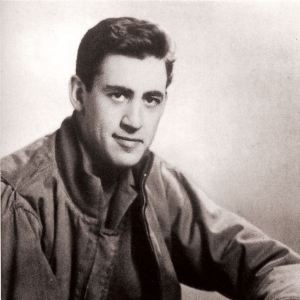
By J. D. Salinger (1919-2010)
JUST RECENTLY, by air mail, I received an invitation to a wedding that will take place in England on April 18th. It happens to be a wedding I’d give a lot to be able to get to, and when the invitation first arrived, I thought it might just be possible for me to make the trip abroad, by plane, expenses be hanged. However, I’ve since discussed the matter rather extensively with my wife, a breathtakingly levelheaded girl, and we’ve decided against it–for one thing, I’d completely forgotten that my mother-in-law is looking forward to spending the last two weeks in April with us. I really don’t get to see Mother Grencher terribly often, and she’s not getting any younger. She’s fifty-eight. (As she’d be the first to admit.)
All the same, though, wherever I happen to be I don’t think I’m the type that doesn’t even lift a finger to prevent a wedding from flatting. Accordingly, I’ve gone ahead and jotted down a few revealing notes on the bride as I knew her almost six years ago. If my notes should cause the groom, whom I haven’t met, an uneasy moment or two, so much the better. Nobody’s aiming to please, here. More, really, to edify, to instruct.
In April of 1944, I was among some sixty American enlisted men who took a rather specialized pre-Invasion training course, directed by British Intelligence, in Devon, England. And as I look back, it seems to me that we were fairly unique, the sixty of us, in that there wasn’t one good mixer in the bunch. We were all essentially letter-writing types, and when we spoke to each other out of the line of duty, it was usually to ask somebody if he had any ink he wasn’t using. When we weren’t writing letters or attending classes, each of us went pretty much his own way. Mine usually led me, on clear days, in scenic circles around the countryside. Rainy days, I generally sat in a dry place and read a book, often just an axe length away from a ping-pong table.
The training course lasted three weeks, ending on a Saturday, a very rainy one. At seven that last night, our whole group was scheduled to entrain for London, where, as rumor had it, we were to be assigned to infantry and airborne divisions mustered for the D Day landings. By three in the afternoon, I’d packed all my belongings into my barrack bag, including a canvas gas-mask container full of books I’d brought over from the Other Side. (The gas mask itself I’d slipped through a porthole of the Mauretania some weeks earlier, fully aware that if the enemy ever did use gas I’d never get the damn thing on in time.) I remember standing at an end window of our Quonset but for a very long time, looking out at the slanting, dreary rain, my trigger finger itching imperceptibly, if at all. I could hear behind my back the uncomradely scratching of many fountain pens on many sheets of V-mail paper. Abruptly, with nothing special in mind, I came away from the window and put on my raincoat, cashmere muffler, galoshes, woollen gloves, and overseas cap (the last of which, I’m still told, I wore at an angle all my own–slightly down over both ears). Then, after synchronizing my wristwatch with the clock in the latrine, I walked down the long, wet cobblestone hill into town. I ignored the flashes of lightning all around me. They either had your number on them or they didn’t.
In the center of town, which was probably the wettest part of town, I stopped in front of a church to read the bulletin board, mostly because the featured numerals, white on black, had caught my attention but partly because, after three years in the Army, I’d become addicted to reading bulletin boards. At three-fifteen, the board stated, there would be children’s-choir practice. I looked at my wristwatch, then back at the board. A sheet of paper was tacked up, listing the names of the children expected to attend practice. I stood in the rain and read all the names, then entered the church.
A dozen or so adults were among the pews, several of them bearing pairs of small-size rubbers, soles up, in their laps. I passed along and sat down in the front row. On the rostrum, seated in three compact rows of auditorium chairs, were about twenty children, mostly girls, ranging in age from about seven to thirteen. At the moment, their choir coach, an enormous woman in tweeds, was advising them to open their mouths wider when they sang. Had anyone, she asked, ever heard of a little dickeybird that dared to sing his charming song without first opening his little beak wide, wide, wide? Apparently nobody ever had. She was given a steady, opaque look. She went on to say that she wanted all her children to absorb the meaning of the words they sang, not just mouth them, like silly-billy parrots. She then blew a note on her pitch-pipe, and the children, like so many underage weightlifters, raised their hymnbooks.
They sang without instrumental accompaniment–or, more accurately in their case, without any interference. Their voices were melodious and unsentimental, almost to the point where a somewhat more denominational man than myself might, without straining, have experienced levitation. A couple of the very youngest children dragged the tempo a trifle, but in a way that only the composer’s mother could have found fault with. I had never heard the hymn, but I kept hoping it was one with a dozen or more verses. Listening, I scanned all the children’s faces but watched one in particular, that of the child nearest me, on the end seat in the first row. She was about thirteen, with straight ash-blond hair of ear-lobe length, an exquisite forehead, and blase eyes that, I thought, might very possibly have counted the house. Her voice was distinctly separate from the other children’s voices, and not just because she was seated nearest me. It had the best upper register, the sweetest-sounding, the surest, and it automatically led the way. The young lady, however, seemed slightly bored with her own singing ability, or perhaps just with the time and place; twice, between verses, I saw her yawn. It was a ladylike yawn, a closed-mouth yawn, but you couldn’t miss it; her nostril wings gave her away.
The instant the hymn ended, the choir coach began to give her lengthy opinion of people who can’t keep their feet still and their lips sealed tight during the minister’s sermon. I gathered that the singing part of the rehearsal was over, and before the coach’s dissonant speaking voice could entirely break the spell the children’s singing had cast, I got up and left the church.
It was raining even harder. I walked down the street and looked through the window of the Red Cross recreation room, but soldiers were standing two and three deep at the coffee counter, and, even through the glass, I could hear ping-pong balls bouncing in another room. I crossed the street and entered a civilian tearoom, which was empty except for a middle-aged waitress, who looked as if she would have preferred a customer with a dry raincoat. I used a coat tree as delicately as possible, and then sat down at a table and ordered tea and cinnamon toast. It was the first time all day that I’d spoken to anyone. I then looked through all my pockets, including my raincoat, and finally found a couple of stale letters to reread, one from my wife, telling me how the service at Schrafft’s Eighty-eighth Street had fallen off, and one from my mother-in-law, asking me to please send her some cashmere yarn first chance I got away from “camp.”
While I was still on my first cup of tea, the young lady I had been watching and listening to in the choir came into the tearoom. Her hair was soaking wet, and the rims of both ears were showing. She was with a very small boy, unmistakably her brother, whose cap she removed by lifting it off his head with two fingers, as if it were a laboratory specimen. Bringing up the rear was an efficient-looking woman in a limp felt hat–presumably their governess. The choir member, taking off her coat as she walked across the floor, made the table selection–a good one, from my point of view, as it was just eight or ten feet directly in front of me. She and the governess sat down. The small boy, who was about five, wasn’t ready to sit down yet. He slid out of and discarded his reefer; then, with the deadpan expression of a born heller, he methodically went about annoying his governess by pushing in and pulling out his chair several times, watching her face. The governess, keeping her voice down, gave him two or three orders to sit down and, in effect, stop the monkey business, but it was only when his sister spoke to him that he came around and applied the small of his back to his chair seat. He immediately picked up his napkin and put it on his head. His sister removed it, opened it, and spread it out on his lap.
About the time their tea was brought, the choir member caught me staring over at her party. She stared back at me, with those house-counting eyes of hers, then, abruptly, gave me a small, qualified smile. It was oddly radiant, as certain small, qualified smiles sometimes are. I smiled back, much less radiantly, keeping my upper lip down over a coal-black G.I. temporary filling showing between two of my front teeth. The next thing I knew, the young lady was standing, with enviable poise, beside my table. She was wearing a tartan dress–a Campbell tartan, I believe. It seemed to me to be a wonderful dress for a very young girl to be wearing on a rainy, rainy day. “I thought Americans despised tea,” she said.
It wasn’t the observation of a smart aleck but that of a truth-lover or a statistics-lover. I replied that some of us never drank anything but tea. I asked her if she’d care to join me.
“Thank you,” she said. “Perhaps for just a fraction of a moment.”
I got up and drew a chair for her, the one opposite me, and she sat down on the forward quarter of it, keeping her spine easily and beautifully straight. I went back–almost hurried back–to my own chair, more than willing to hold up my end of a conversation. When I was seated, I couldn’t think of anything to say, though. I smiled again, still keeping my coal-black filling under concealment. I remarked that it was certainly a terrible day out.
“Yes; quite,” said my guest, in the clear, unmistakable voice of a small-talk detester. She placed her fingers flat on the table edge, like someone at a seance, then, almost instantly, closed her hands–her nails were bitten down to the quick. She was wearing a wristwatch, a military-looking one that looked rather like a navigator’s chronograph. Its face was much too large for her slender wrist. “You were at choir practice,” she said matter-of-factly. “I saw you.”
I said I certainly had been, and that I had heard her voice singing separately from the others. I said I thought she had a very fine voice.
She nodded. “I know. I’m going to be a professional singer.”
“Really? Opera?”
“Heavens, no. I’m going to sing jazz on the radio and make heaps of money. Then, when I’m thirty, I shall retire and live on a ranch in Ohio.” She touched the top of her soaking-wet head with the flat of her hand. “Do you know Ohio?” she asked.
I said I’d been through it on the train a few times but that I didn’t really know it. I offered her a piece of cinnamon toast.
“No, thank you,” she said. “I eat like a bird, actually.”
I bit into a piece of toast myself, and commented that there’s some mighty rough country around Ohio. “I know. An American I met told me. You’re the eleventh American I’ve met.”
Her governess was now urgently signalling her to return to her own table–in effect, to stop bothering the man. My guest, however, calmly moved her chair an inch or two so that her back broke all possible further communication with the home table. “You go to that secret Intelligence school on the hill, don’t you?” she inquired coolly.
As security-minded as the next one, I replied that I was visiting Devonshire for my health.
“Really,” she said, “I wasn’t quite bom yesterday, you know.”
I said I’d bet she hadn’t been, at that. I drank my tea for a moment. I was getting a trifle posture-conscious and I sat up somewhat straighter in my seat.
“You seem quite intelligent for an American,” my guest mused.
I told her that was a pretty snobbish thing to say, if you thought about it at all, and that I hoped it was unworthy of her.
She blushed-automatically conferring on me the social poise I’d been missing. “Well. Most of the Americans I’ve seen act like animals. They’re forever punching one another about, and insulting everyone, and–You know what one of them did?”
I shook my haad.
“One of them threw an empty whiskey bottle through my aunt’s window. Fortunately, the window was open. But does that sound very intelligent to you?”
It didn’t especially, but I didn’t say so. I said that many soldiers, all over the world, were a long way from home, and that few of them had had many real advantages in life. I said I’d thought that most people could figure that out for themselves.
“Possibly,” said my guest, without conviction. She raised her hand to her wet head again, picked at a few limp filaments of blond hair, trying to cover her exposed ear rims. “My hair is soaking wet,” she said. “I look a fright.” She looked over at me. “I have quite wavy hair when it’s dry.”
“I can see that, I can see you have.”
“Not actually curly, but quite wavy,” she said. “Are you married?”
I said I was.
She nodded. “Are you very deeply in love with your wife? Or am I being too personal?”
I said that when she was, I’d speak up.
She put her hands and wrists farther forward on the table, and I remember wanting to do something about that enormous-faced wristwatch she was wearing–perhaps suggest that she try wearing it around her waist.
“Usually, I’m not terribly gregarious,” she said, and looked over at me to see if I knew the meaning of the word. I didn’t give her a sign, though, one way or the other. “I purely came over because I thought you looked extremely lonely. You have an extremely sensitive face.”
I said she was right, that I had been feeling lonely, and that I was very glad she’d come over.
“I’m training myself to be more compassionate. My aunt says I’m a terribly cold person,” she said and felt the top of her head again. “I live with my aunt. She’s an extremely kind person. Since the death of my mother, she’s done everything within her power to make Charles and me feel adjusted.”
“I’m glad.”
“Mother was an extremely intelligent person. Quite sensuous, in many ways.” She looked at me with a kind of fresh acuteness. “Do you find me terribly cold?”
I told her absolutely not–very much to the contrary, in fact. I told her my name and asked for hers. She hesitated. “My first name is Esme. I don’t think I shall tell you my full name, for the moment. I have a title and you may just be impressed by titles. Americans are, you know.”
I said I didn’t think I would be, but that it might be a good idea, at that, to hold on to the title for a while.
Just then, I felt someone’s warm breath on the back of my neck. I turned around and just missed brushing noses with Esme’s small brother. Ignoring me, he addressed his sister in a piercing treble: “Miss Megley said you must come and finish your tea!” His message delivered, he retired to the chair between his sister and me, on my right. I regarded him with high interest. He was looking very splendid in brown Shetland shorts, a navy-blue jersey, white shirt, and striped necktie. He gazed back at me with immense green eyes. “Why do people in films kiss sideways?” he demanded.
“Sideways?” I said. It was a problem that had baffled me in my childhood. I said I guessed it was because actors’ noses are too big for kissing anyone head on.
“His name is Charles,” Esme said. “He’s extremely brilliant for his age.”
“He certainly has green eyes. Haven’t you, Charles?” Charles gave me the fishy look my question deserved, then wriggled downward and forward in his chair till all of his body was under the table except his head, which he left, wrestler’s-bridge style, on the chair seat. “They’re orange,” he said in a strained voice, addressing the ceiling. He picked up a comer of the tablecloth and put it over his handsome, deadpan little face.
“Sometimes he’s brilliant and sometimes he’s not,” Esme said. “Charles, do sit up!”
Charles stayed right where he was. He seemed to be holding his breath.
“He misses our father very much. He was s-l-a-i-n in North Africa.”
I expressed regret to hear it.
Esme nodded. “Father adored him.” She bit reflectively at the cuticle of her thumb. “He looks very much like my mother–Charles, I mean. I look exactly like my father.” She went on biting at her cuticle. “My mother was quite a passionate woman. She was an extrovert. Father was an introvert. They were quite well mated, though, in a superficial way. To be quite candid, Father really needed more of an intellectual companion than Mother was. He was an extremely gifted genius.”
I waited, receptively, for further information, but none came. I looked down at Charles, who was now resting the side of his face on his chair seat. When he saw that I was looking at him, he closed his eyes, sleepily, angelically, then stuck out his tongue–an appendage of startling length–and gave out what in my country would have been a glorious tribute to a myopic baseball umpire. It fairly shook the tearoom.
“Stop that,” Esme said, clearly unshaken. “He saw an American do it in a fish-and-chips queue, and now he does it whenever he’s bored. Just stop it, now, or I shall send you directly to Miss Megley.”
Charles opened his enormous eyes, as sign that he’d heard his sister’s threat, but otherwise didn’t look especially alerted. He closed his eyes again, and continued to rest the side of his face on the chair seat.
I mentioned that maybe he ought to save it–meaning the Bronx cheer–till he started using his title regularly. That is, if he had a title, too.
Esme gave me a long, faintly clinical look. “You have a dry sense of humor, haven’t you?” she said–wistfully. “Father said I have no sense of humor at all. He said I was unequipped to meet life because I have no sense of humor.”
Watching her, I lit a cigarette and said I didn’t think a sense of humor was of any use in a real pinch.
“Father said it was.”
This was a statement of faith, not a contradiction, and I quickly switched horses. I nodded and said her father had probably taken the long view, while I was taking the short (whatever that meant).
“Charles misses him exceedingly,” Esme said, after a moment. “He was an exceedingly lovable man. He was extremely handsome, too. Not that one’s appearance matters greatly, but he was. He had terribly penetrating eyes, for a man who was intransically kind.”
I nodded. I said I imagined her father had had quite an extraordinary vocabulary.
“Oh, yes; quite,” said Esme. “He was an archivist–amateur, of course.”
At that point, I felt an importunate tap, almost a punch, on my upper arm, from Charles’ direction. I turned to him. He was sitting in a fairly normal position in his chair now, except that he had one knee tucked under him. “What did one wall say to the other wall?” he asked shrilly. “It’s a riddle!”
I rolled my eyes reflectively ceilingward and repeated the question aloud. Then I looked at Charles with a stumped expression and said I gave up.
“Meet you at the corner!” came the punch line, at top volume.
It went over biggest with Charles himself. It struck him as unbearably funny. In fact, Esme had to come around and pound him on the back, as if treating him for a coughing spell. “Now, stop that,” she said. She went back to her own seat. “He tells that same riddle to everyone he meets and has a fit every single time. Usually he drools when he laughs. Now, just stop, please.”
“It’s one of the best riddles I’ve heard, though,” I said, watching Charles, who was very gradually coming out of it. In response to this compliment, he sank considerably lower in his chair and again masked his face up to the eyes with a corner of the tablecloth. He then looked at me with his exposed eyes, which were full of slowly subsiding mirth and the pride of someone who knows a really good riddle or two.
“May I inquire how you were employed before entering the Army?” Esme asked me.
I said I hadn’t been employed at all, that I’d only been out of college a year but that I like to think of myself as a professional short-story writer.
She nodded politely. “Published?” she asked.
It was a familiar but always touchy question, and one that I didn’t answer just one, two, three. I started to explain how most editors in America were a bunch–
“My father wrote beautifully,” Esme interrupted. “I’m saving a number of his letters for posterity.”
I said that sounded like a very good idea. I happened to be looking at her enormous-faced, chronographic-looking wristwatch again. I asked if it had belonged to her father.
She looked down at her wrist solemnly. “Yes, it did,” she said. “He gave it to me just before Charles and I were evacuated.” Self-consciously, she took her hands off the table, saying, “Purely as a momento, of course.” She guided the conversation in a different direction. “I’d be extremely flattered if you’d write a story exclusively for me sometime. I’m an avid reader.”
I told her I certainly would, if I could. I said that I wasn’t terribly prolific.
“It doesn’t have to be terribly prolific! Just so that it isn’t childish and silly.” She reflected. “I prefer stories about squalor.”
“About what?” I said, leaning forward. “Squalor. I’m extremely interested in squalor.”
I was about to press her for more details, but I felt Charles pinching me, hard, on my arm. I turned to him, wincing slightly. He was standing right next to me. “What did one wall say to the other wall?” he asked, not unfamiliarly.
“You asked him that,” Esme said. “Now, stop it.”
Ignoring his sister, and stepping up on one of my feet, Charles repeated the key question. I noticed that his necktie knot wasn’t adjusted properly. I slid it up into place, then, looking him straight in the eye, suggested, “Meetcha at the corner?”
The instant I’d said it, I wished I hadn’t. Charles’ mouth fell open. I felt as if I’d struck it open. He stepped down off my foot and, with white-hot dignity, walked over to his own table, without looking back.
“He’s furious,” Esme said. “He has a violent temper. My mother had a propensity to spoil him. My father was the only one who didn’t spoil him.”
I kept looking over at Charles, who had sat down and started to drink his tea, using both hands on the cup. I hoped he’d turn around, but he didn’t.
Esme stood up. `Il faut que je parte aussi,” she said, with a sigh. “Do you know French?”
I got up from my own chair, with mixed feelings of regret and confusion. Esme and I shook hands; her hand, as I’d suspected, was a nervous hand, damp at the palm. I told her, in English, how very much I’d enjoyed her company.
She nodded. “I thought you might,” she said. “I’m quite communicative for my age.” She gave her hair another experimental touch. “I’m dreadfully sorry about my hair,” she said. “I’ve probably been hideous to look at.”
“Not at all! As a matter of fact, I think a lot of the wave is coming back already.”
She quickly touched her hair again. “Do you think you’ll be coming here again in the immediate future?” she asked. “We come here every Saturday, after choir practice.”
I answered that I’d like nothing better but that, unfortunately, I was pretty sure I wouldn’t be able to make it again.
“In other words, you can’t discuss troop movements,” said Esme. She made no move to leave the vicinity of the table. In fact, she crossed one foot over the other and, looking down, aligned the toes of her shoes. It was a pretty little execution, for she was wearing white socks and her ankles and feet were lovely. She looked up at me abruptly. “Would you like me to write to you?” she asked, with a certain amount of color in her face. “I write extremely articulate letters for a person my–“
“I’d love it.” I took out pencil and paper and wrote down my name, rank, serial number, and A.P.O. number.
“I shall write to you first,” she said, accepting it, “so that you don’t feel compromised in any way.” She put the address into a pocket of her dress. “Goodbye,” she said, and walked back to her table.
I ordered another pot of tea and sat watching the two of them till they, and the harassed Miss Megley, got up to leave. Charles led the way out, limping tragically, like a man with one leg several, inches shorter than the other. He didn’t look over at me. Miss Megley went next, then Esme, who waved to me. I waved back, half getting up from my chair. It was a strangely emotional moment for me.
Less than a minute later, Esme came back into the tearoom, dragging Charles behind her by the sleeve of his reefer. “Charles would like to kiss you goodbye,” she said.
I immediately put down my cup, and said that was very nice, but was she sure?
“Yes,” she said, a trifle grimly. She let go Charles’ sleeve and gave him a rather vigorous push in my direction. He came forward, his face livid, and gave me a loud, wet smacker just below the right ear. Following this ordeal, he started to make a beeline for the door and a less sentimental way of life, but 1 caught the half belt at the back of his reefer, held on to it, and asked him, “What did one wall say to the other wall?”
His face lit up. “Meet you at the corner!” he shrieked, and raced out of the room, possibly in hysterics.
Esme was standing with crossed ankles again. “You’re quite sure you won’t forget to write that story for me?” she asked. “It doesn’t have to be exclusively for me. It can–“
I said there was absolutely no chance that I’d forget. I told her that I’d never written a story for anybody, but that it seemed like exactly the right time to get down to it.
She nodded. “Make it extremely squalid and moving,” she suggested. “Are you at all acquainted with squalor?”
I said not exactly but that I was getting better acquainted with it, in one form or another, all the time, and that I’d do my best to come up to her specifications. We shook hands.
“Isn’t it a pity that we didn’t meet under less extenuating circumstances?”
I said it was, I said it certainly was.
“Goodbye,” Esme said. “I hope you return from the war with all your faculties intact.”
I thanked her, and said a few other words, and then watched her leave the tearoom. She left it slowly, reflectively, testing the ends of her hair for dryness.
This is the squalid, or moving, part of the story, and the scene changes. The people change, too. I’m still around, but from here on in, for reasons I’m not at liberty to disclose, I’ve disguised myself so cunningly that even the cleverest reader will fail to recognize me.
It was about ten-thirty at night in Gaufurt, Bavaria, several weeks after V-E Day. Staff Sergeant X was in his room on the second floor of the civilian home in which he and nine other American soldiers had been quartered, even before the armistice. He was seated on a folding wooden chair at a small, messy-looking writing table, with a paperback overseas novel open before him, which he was having great trouble reading. The trouble lay with him, not the novel. Although the men who lived on the first floor usually had first grab at the books sent each month by Special Services, X usually seemed to be left with the book he might have selected himself. But he was a young man who had not come through the war with all his faculties intact, and for more than an hour he had been triple-reading paragraphs, and now he was doing it to the sentences. He suddenly closed the book, without marking his place. With his hand, he shielded his eyes for a moment against the harsh, watty glare from the naked bulb over the table.
He took a cigarette from a pack on the table and lit it with fingers that bumped gently and incessantly against one another. He sat back a trifle in his chair and smoked without any sense of taste. He had been chain-smoking for weeks. His gums bled at the slightest pressure of the tip of his tongue, and he seldom stopped experimenting; it was a little game he played, sometimes by the hour. He sat for a moment smoking and experimenting. Then, abruptly, familiarly, and, as usual, with no warning, he thought he felt his mind dislodge itself and teeter, like insecure luggage on an overhead rack. He quickly did what he had been doing for weeks to set things right: he pressed his hands hard against his temples. He held on tight for a moment. His hair needed cutting, and it was dirty. He had washed it three or four times during his two weeks’ stay at the hospital in Frankfort on the Main, but it had got dirty again on the long, dusty jeep ride back to Gaufurt. Corporal Z, who had called for him at the hospital, still drove a jeep combat-style, with the windshield down on the hood, armistice or no armistice. There were thousands of new troops in Germany. By driving with his windshield down, combat-style, Corporal Z hoped to show that he was not one of them, that not by a long shot was he some new son of a bitch in the E.T.O.
When he let go of his head, X began to stare at the surface of the writing table, which was a catchall for at least two dozen unopened letters and at least five or six unopened packages, all addressed to him. He reached behind the debris and picked out a book that stood against the wall. It was a book by Goebbels, entitled “Die Zeit Ohne Beispiel.” It belonged to the thirty-eight-year-old, unmarried daughter of the family that, up to a few weeks earlier, had been living in the house. She had been a low official in the Nazi Party, but high enough, by Army Regulations standards, to fall into an automatic-arrest category. X himself had arrested her. Now, for the third time since he had returned from the hospital that day, he opened the woman’s book and read the brief inscription on the flyleaf. Written in ink, in German, in a small, hopelessly sincere handwriting, were the words “Dear God, life is hell.” Nothing led up to or away from it. Alone on the page, and in the sickly stillness of the room, the words appeared to have the stature of an uncontestable, even classic indictment. X stared at the page for several minutes, trying, against heavy odds, not to be taken in. Then, with far more zeal than he had done anything in weeks, he picked up a pencil stub and wrote down under the inscription, in English, “Fathers and teachers, I ponder `What is hell?’ I maintain that it is the suffering of being unable to love.” He started to write Dostoevski’s name under the inscription, but saw–with fright that ran through his whole body–that what he had written was almost entirely illegible. He shut the book.
He quickly picked up something else from the table, a letter from his older brother in Albany. It had been on his table even before he had checked into the hospital. He opened the envelope, loosely resolved to read the letter straight through, but read only the top half of the first page. He stopped after the words “Now that the g.d. war is over and you probably have a lot of time over there, how about sending the kids a couple of bayonets or swastikas . . .” After he’d torn it up, he looked down at the pieces as they lay in the wastebasket. He saw that he had overlooked an enclosed snapshot. He could make out somebody’s feet standing on a lawn somewhere.
He put his arms on the table and rested his head on them. He ached from head to foot, all zones of pain seemingly interdependent. He was rather like a Christmas tree whose lights, wired in series, must all go out if even one bulb is defective.
The door banged open, without having been rapped on. X raised his head, turned it, and saw Corporal Z standing in the door. Corporal Z had been X’s jeep partner and constant companion from D Day straight through five campaigns of the war. He lived on the first floor and he usually came up to see X when he had a few rumors or gripes to unload. He was a huge, photogenic young man of twenty-four. During the war, a national magazine had photographed him in Hurtgen Forest; he had posed, more than just obligingly, with a Thanksgiving turkey in each hand. “Ya writin’ letters?” he asked X. “It’s spooky in here, for Chrissake.” He preferred always to enter a room that had the overhead light on.
X turned around in his chair and asked him to come in, and to be careful not to step on the dog.
“The what?”
“Alvin. He’s right under your feet, Clay. How ’bout turning on the goddam light?”
Clay found the overhead-light switch, flicked it on, then stepped across the puny, servant’s-size room and sat down on the edge of the bed, facing his host. His brick-red hair, just combed, was dripping with the amount of water he required for satisfactory grooming. A comb with a fountain-pen clip protruded, familiarly, from the right-hand pocket of his olive-drab shirt. Over the left-hand pocket he was wearing the Combat Infantrymen’s Badge (which, technically, he wasn’t authorized to wear), the European Theatre ribbon, with five bronze battle stars in it (instead of a lone silver one, which was the equivalent of five bronze ones), and the pre-Pearl Harbor service ribbon. He sighed heavily and said, “Christ almighty.” It meant nothing; it was Army. He took a pack of cigarettes from his shirt pocket, tapped one out, then put away the pack and rebuttoned the pocket flap. Smoking, he looked vacuously around the room. His look finally settled on the radio. “Hey,” he said. “They got this terrific show comin’ on the radio in a coupla minutes. Bob Hope, and everybody.”
X, opening a fresh pack of cigarettes, said he had just turned the radio off.
Undarkened, Clay watched X trying to get a cigarette lit. “Jesus,” he said, with spectator’s enthusiasm, “you oughta see your goddam hands. Boy, have you got the shakes. Ya know that?”
X got his cigarette lit, nodded, and said Clay had a real eye for detail.
“No kidding, hey. I goddam near fainted when I saw you at the hospital. You looked like a goddam corpse. How much weight ya lose? How many pounds? Ya know?”
“I don’t know. How was your mail when I was gone? You heard from Loretta?”
Loretta was Clay’s girl. They intended to get married at their earliest convenience. She wrote to him fairly regularly, from a paradise of triple exclamation points and inaccurate observations. All through the war, Clay had read all Loretta’s letters aloud to X, however intimate they were–in fact, the more intimate, the better. It was his custom, after each reading, to ask X to plot out or pad out the letter of reply, or to insert a few impressive words in French or German.
“Yeah, I had a letter from her yesterday. Down in my room. Show it to ya later,” Clay said, listlessly. He sat up straight on the edge of the bed, held his breath, and issued a long, resonant belch. Looking just semi-pleased with the achievement, he relaxed again. “Her goddam brother’s gettin’ outa the Navy on account of his hip,” he said. “He’s got this hip, the bastard.” He sat up again and tried for another belch, but with below-par results. A jot of alertness came into his face. “Hey. Before I forget. We gotta get up at five tomorrow and drive to Hamburg or someplace. Pick up Eisenhower jackets for the whole detachment.”
X, regarding him hostilely, stated that he didn’t want an Eisenhower jacket.
Clay looked surprised, almost a trifle hurt. “Oh, they’re good! They look good. How come?”
“No reason. Why do we have to get up at five? The war’s over, for God’s sake.”
“I don’t know–we gotta get back before lunch. They got some new forms in we gotta fill out before lunch…. I asked Bulling how come we couldn’t fill ’em out tonight–he’s got the goddam forms right on his desk. He don’t want to open the envelopes yet, the son of a bitch.”
The two sat quiet for a moment, hating Bulling. Clay suddenly looked at X with new-higher-interest than before. “Hey,” he said. “Did you know the goddam side of your face is jumping all over the place?”
X said he knew all about it, and covered his tic with his hand.
Clay stared at him for a moment, then said, rather vividly, as if he were the bearer of exceptionally good news, “I wrote Loretta you had a nervous breakdown.”
“Oh?”
“Yeah. She’s interested as hell in all that stuff. She’s majoring in psychology.” Clay stretched himself out on the bed, shoes included. “You know what she said? She says nobody gets a nervous breakdown just from the war and all. She says you probably were unstable like, your whole goddam life.”
X bridged his hands over his eyes–the light over the bed seemed to be blinding him–and said that Loretta’s insight into things was always a joy.
Clay glanced over at him. “Listen, ya bastard,” he said. “She knows a goddam sight more psychology than you do.”
“Do you think you can bring yourself to take your stinking feet off my bed?” X asked.
Clay left his feet where they were for a few don’t-tell-me-where-to-put-my-feet seconds, then swung them around to the floor and sat up. “I’m goin’ downstairs anyway. They got the radio on in Walker’s room.” He didn’t get up from the bed, though. “Hey. I was just tellin’ that new son of a bitch, Bernstein, downstairs. Remember that time I and you drove into Valognes, and we got shelled for about two goddam hours, and that goddam cat I shot that jumped up on the hood of the jeep when we were layin’ in that hole? Remember?”
“Yes–don’t start that business with that cat again, Clay, God damn it. I don’t want to hear about it.”
“No, all I mean is I wrote Loretta about it. She and the whole psychology class discussed it. In class and all. The goddam professor and everybody.”
“That’s fine. I don’t want to hear about it, Clay.”
“No, you know the reason I took a pot shot at it, Loretta says? She says I was temporarily insane. No kidding. From the shelling and all.”
X threaded his fingers, once, through his dirty hair, then shielded his eyes against the light again. “You weren’t insane. You were simply doing your duty. You killed that pussycat in as manly a way as anybody could’ve under the circumstances.”
Clay looked at him suspiciously. “What the hell are you talkin’ about?”
“That cat was a spy. You had to take a pot shot at it. It was a very clever German midget dressed up in a cheap fur coat. So there was absolutely nothing brutal, or cruel, or dirty, or even–“
“God damn it!” Clay said, his lips thinned. “Can’t you ever be sincere?”
X suddenly felt sick, and he swung around in his chair and grabbed the wastebasket–just in time. When he had straightened up and turned toward his guest again, he found him standing, embarrassed, halfway between the bed and the door. X started to apologize, but changed his mind and reached for his cigarettes.
“C’mon down and listen to Hope on the radio, hey,” Clay said, keeping his distance but trying to be friendly over it. “It’ll do ya good. I mean it.”
“You go ahead, Clay. . . . I’ll look at my stamp collection.”
“Yeah? You got a stamp collection? I didn’t know you–“
“I’m only kidding.”
Clay took a couple of slow steps toward the door. “I may drive over to Ehstadt later,” he said. “They got a dance. It’ll probably last till around two. Wanna go?”
“No, thanks. . . . I may practice a few steps in the room.”
“O.K. G’night! Take it easy, now, for Chrissake.” The door slammed shut, then instantly opened again. “Hey. O.K. if I leave a letter to Loretta under your door? I got some German stuff in it. Willya fix it up for me?”
“Yes. Leave me alone now, God damn it.”
“Sure,” said Clay. “You know what my mother wrote me? She wrote me she’s glad you and I were together and all the whole war. In the same jeep and all. She says my letters are a helluva lot more intelligent since we been goin’ around together.”
X looked up and over at him, and said, with great effort, “Thanks. Tell her thanks for me.”
“I will. G’night!” The door slammed shut, this time for good.
X sat looking at the door for a long while, then turned his chair around toward the writing table and picked up his portable typewriter from the floor. He made space for it on the messy table surface, pushing aside the collapsed pile of unopened letters and packages. He thought if he wrote a letter to an old friend of his in New York there might be some quick, however slight, therapy in it for him. But he couldn’t insert his notepaper into the roller properly, his fingers were shaking so violently now. He put his hands down at his sides for a minute, then tried again, but finally crumpled the notepaper in his hand.
He was aware that he ought to get the wastebasket out of the room, but instead of doing anything about it, he put his arms on the typewriter and rested his head again, closing his eyes.
A few throbbing minutes later, when he opened his eyes, he found himself squinting at a small, unopened package wrapped in green paper. It had probably slipped off the pile when he had made space for the typewriter. He saw that it had been readdressed several times. He could make out, on just one side of the package, at least three of his old A.P.O. numbers.
He opened the package without any interest, without even looking at the return address. He opened it by burning the string with a lighted match. He was more interested in watching a string burn all the way down than in opening the package, but he opened it, finally.
Inside the box, a note, written in ink, lay on top of a small object wrapped in tissue paper. He picked out the note and read it.
17, —-ROAD,
—–DEVON
JUNE 7, 1944
DEAR SERGEANT X,
I hope you will forgive me for having taken 38 days to begin our correspondence but, I have been extremely busy as my aunt has undergone streptococcus of the throat and nearly perished and I have been justifiably saddled with one responsibility after another. However I have thought of you frequently and of the extremely pleasant afternoon we spent in each other’s company on April 30, 1944 between 3:45 and 4:15 P.M. in case it slipped your mind.
We are all tremendously excited and overawed about D Day and only hope that it will bring about the swift termination of the war and a method of existence that is ridiculous to say the least. Charles and I are both quite concerned about you; we hope you were not among those who made the first initial assault upon the Cotentin Peninsula. Were you? Please reply as speedily as possible. My warmest regards to your wife.
Sincerely yours,
ESMA
P.S. I am taking the liberty of enclosing my wristwatch which you may keep in your possession for the duration of the conflict. I did not observe whether you were wearing one during our brief association, but this one is extremely water-proof and shockproof as well as having many other virtues among which one can tell at what velocity one is walking if one wishes. I am quite certain that you will use it to greater advantage in these difficult days than I ever can and that you will accept it as a lucky talisman.
Charles, whom I am teaching to read and write and whom I am finding an extremely intelligent novice, wishes to add a few words. Please write as soon as you have the time and inclination.
HELLO HELLO HELLO HELLO HELLO HELLO HELLO HELLO HELLO HELLO LOVE AND KISSES CHALES
It was a long time before X could set the note aside, let alone lift Esme’s father’s wristwatch out of the box. When he did finally lift it out, he saw that its crystal had been broken in transit. He wondered if the watch was otherwise undamaged, but he hadn’t the courage to wind it and find out. He just sat with it in his hand for another long period. Then, suddenly, almost ecstatically, he felt sleepy.
You take a really sleepy man, Esme, and he always stands a chance of again becoming a man with all his fac-with all his f-a-c-u-1-t-i-e-s intact.
Copyright © 1950 by J. D. Salinger