
Author: allen0997

They Shall Not Grow Old ~ A Capsule Movie Review

They Shall Not Grow Old ~ A Capsule Movie Review by Allen Kopp
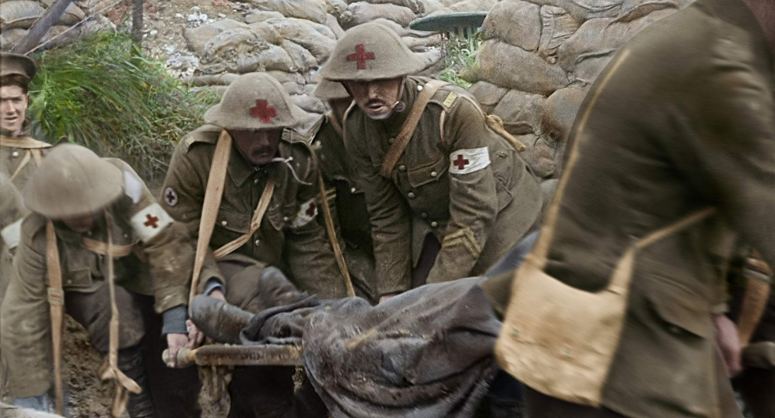
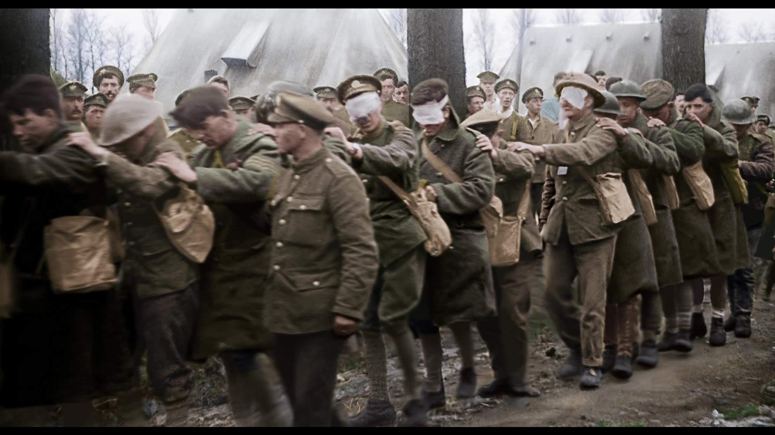
We already know that war is hell. If you still doubt it, you need to see the 2018 movie documentary They Shall Not Grow Old, made for theatrical release and currently being shown on HBO.
It’s now one hundred years since World War I, called the “Great War” at the time, or better yet, “the war to end all wars” (it wasn’t). It was the world’s first (and sadly not the last) experience with global warfare. Millions of people lost their lives, were displaced from their homes, and generally made miserable by food shortages, worthless currencies and dithering leaders who probably should have been locked up at the start.
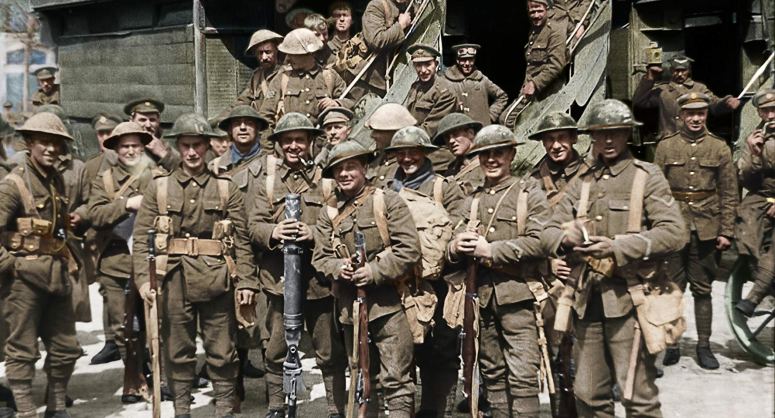
The premise of They Shall Not Grow Old is a simple one. English men who served in the front lines, in the infantry, are talking about their experiences. We don’t see them but only hear their voices. What they are saying is accompanied by moving pictures of life on the front lines, on the “Western Front” in France. Many of these men were very young at the time, no more than eighteen or nineteen years old; they had limited experience of the world, let alone of war. While fighting the enemy at the frontlines, they lived through the worst and most terrifying experiences imaginable, knowing that at any moment a shell bearing their name might come out of the sky and slam into their heads. “You never see the shell that kills you,” they say, “because it’s traveling faster than the speed of sound.”
What makes They Shall Not Grow Old so impressive is that the hundred-year-old film clips have been reprocessed (digitized, colorized, enlarged, restored), giving them a sense of immediacy and a “you are there” feeling. Sound has been added, making it appear that the long-dead people in the film clips are talking, when you know they couldn’t be talking because synchronized sound in film hadn’t been invented yet. I don’t know how this technique is accomplished, but I guess it can be explained by a cliched phrase such as “state-of-the-art technology.” Whatever you call it, They Shall Not Grow Old is worth seeing as a testament to human suffering and the lunacy of war.
Copyright © 2019 by Allen Kopp


Fahrenheit 451 ~ A Capsule Book Review
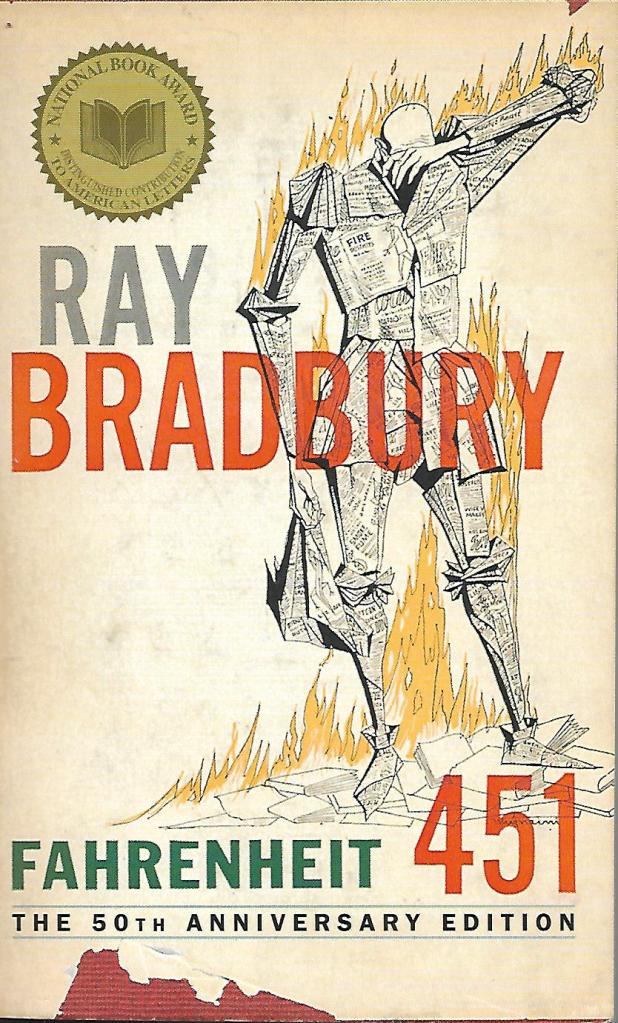
Fahrenheit 451 ~ A Capsule Book Review by Allen Kopp
Paper burns at a temperature of 451 degrees Fahrenheit. What more perfect title could Ray Bradbury have chosen for his 1953 novel about a “fireman” in a future society whose job it is to burn books? Yes, books have been declared subversive and dangerous in this future time and owning them—specifically reading them—is a crime for which you might pay with your life.
In this future society (no time is given), books are seen as giving people ideas and making them think. Thinking is dangerous and makes people unhappy. A bunch of people got together and decided to ban all books and, not only ban them, but make a public exhibition of destroying them while also destroying the homes and lives of anybody who might have the audacity to resist. “Firemen” don’t go around putting out fires to save lives and property; they carry flame throwers fueled with kerosene and set fire to books or to homes where books are kept, and they don’t mind setting fire to any book owners who get in their way.
Fireman Guy Montag, thirty years old, is the protagonist of Fahrenheit 451. He has a shallow, hideous wife name Mildred who is addicted to her “wall screens” (a future version of wide-screen TV) and her “parlor families” (TV characters). Guy and Mildred obviously don’t care for each other at all. Guy meets a seventeen-year-old girl named Clarisse McClellan in the neighborhood who is, in every way, the opposite of Mildred. She makes Guy see the world in a different way; she makes him see the shallowness and narrowness of his own life.
When the firemen go out on a call, Guy takes pity (something firemen should never do) on a defiant older woman who chooses to burn up with her books. He develops an unhealthy curiosity for books; if people are willing to die for books, they must be very powerful and compelling. On some of his professional calls, he begins stealing books, one or two at a time, and hiding them in an air conditioning vent in his house. His own wife, Mildred, reports him, and when the firemen show up to burn his house, headed by his boss, Captain Beatty, he is driven to extreme measures and desperate acts.
Guy Montag, the fireman in Fahrenheit 451, is similar to Winston Smith, the office worker in George Orwell’s 1949 novel, 1984. Both characters live in future, repressive societies. They both take a look at their lives, don’t like what they see, and rebel against the dehumanization and enforced conformity of their worlds. Both novels, Fahrenheit 451 and 1984, foreshadow present-day America. There are plenty of people, including some running for high political office, who would strip away our rights and freedoms, make us all the same, and make us forget how unique we are as individuals. We can’t let that happen. It’s a dangerous precedent when only one viewpoint is allowed and any opposing viewpoint is shouted down or not tolerated. That’s a violation of our Constitutional rights. It’s how tyrannical regimes get started.
Copyright © 2019 by Allen Kopp
Downton Abbey ~ A Capsule Movie Review

Downton Abbey ~ A Capsule Movie Review by Allen Kopp
The television series Downton Abbey ran for six seasons and fifty-two episodes from 2010 to 2015. Now there is a Downton Abbey movie. It’s not a sequel or a rehash of the television series but a continuation, set two years after the series left off. If you never saw the series and are not familiar with the characters, you probably won’t find the movie meaningful or interesting. Familiarity with the characters is what will provide the spark.
It’s now 1927. The world has been changing since the Great War (“the war to end all wars”). The uppercrust Crawleys (he’s a peer, don’t you know) have witnessed the slow demise of their “class,” their privilege, and all that goes with it. People on the huge estates, such as Downton, have been selling out and moving into more modest homes. The Crawleys hang on, but sometimes they get discouraged and talk about giving up the ghost, which would mean, of course, letting their servants go out into the cold world and fending for themselves.
King George V and his wife, Queen Mary, are going to be touring Yorkshire, so they will spend one night at Downton Abbey. A royal visit, of course, always provides lots of opportunity for drama and intrigue. After the snooty royal retinue arrives, the Downton Abbey servants are incensed to find that they will be displaced for the duration of the royal visit by the king’s own. Mrs. Patmore will not be required to cook the dinner after all, after laying in mountains of supplies from the local grocer; the cooking will be handled by the king’s French chef. Mr. Barrow, now head butler at Downton, will not need to lift a finger because the king’s butler (although he will not allow himself to be called by that title) will see to everything. Mrs. Hughes’s housekeeping skills will not be needed; the king has brought his own hatchetfaced housekeeper with him; she can scare anybody away just by looking at them.
The royal visit goes off smoothly enough, but, of course, with complications. There is a plot to assassinate the king during a parade (politics, don’t you know) that is thwarted by the ever-brave and resourceful Mr. Tom Branson. (It has now been seven years since the death of his wife, Lady Sybil, so he has an eye again for the ladies.) The Dowager Countess (Maggie Smith) must confront (and make peace with) a detested relative who is part of the king’s retinue. Lady Mary’s husband, Henry Talbot, can’t be present for the royal visit because he is off in Chicago at an auto show, but he appears at the last moment. Lady Edith’s husband, Bertie Pelham, is planning on being on an extended trip in South Africa with the king at the time that their first child is due to be born, so what will Lady Edith do with an absentee husband at such an important time? Our Mr. Barrow (more handsome than ever now that he’s “older”) gets into a jam by being in a “men’s” club—men dancing with each other!—when it is raided by the police. “I’ve never been here before!” he says as he is pushed into the paddy wagon. “You’re here now!” a helpful policeman states.
If you liked Downton Abbey on TV, you should like the movie, which is grander, bigger, broader and more lavish than the TV series. It’s old-fashioned entertainment for those, like me, who need to escape into another time and place. And if the Downton Abbey movie makes enough money, there will undoubtedly be more to come.
Copyright © 2019 by Allen Kopp

 Literary Fictions