
Month: August 2019
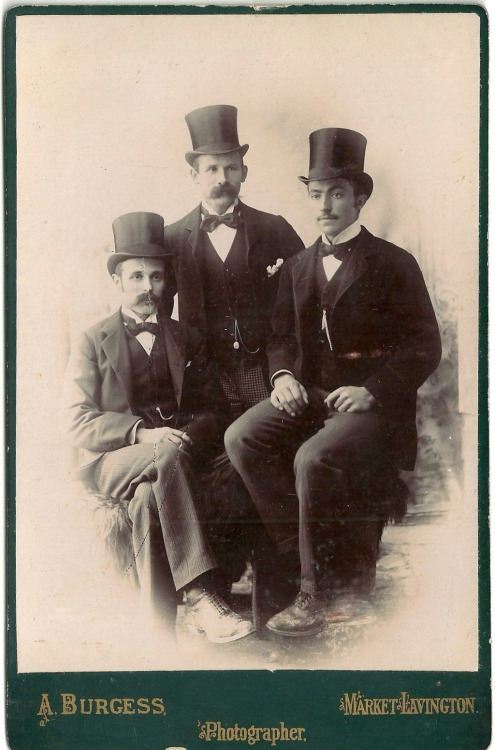
Where Angels Fear to Tread ~ A Capsule Book Review

Where Angels Fear to Tread ~ A Capsule Book Review by Allen Kopp
E. M. Forster (1879-1970) was one of the best and most readable English writers of the twentieth century. His first novel, Where Angels Fear to Tread, was published in 1905. It’s a story of a clash of cultures, in this case English and Italian. Stodgy, conventional, keeping-up-appearances, English middle-class morality goes head to head with emotional, hot-blooded Italian effusiveness. The English characters in Where Angels Fear to Tread are all fools who can’t see farther than the ends of their noses. The principal Italian character, Gino, is forgiving, kind and generous. Which would you rather be?
Lilia Herriton is an English widow, thirty-three years old. She lives with and is dominated by her late husband’s narrow-minded family in a small English town. She has a small daughter named Irma, who seems to prefer her grandmother and her aunt over her mother. When Lilia travels to Italy, she is captivated by its romance and beauty. Rebelling against the middle-class English morality to which she has long been captive, she meets, falls in love with, and marries a charming Italian fellow named Gino, ten years younger than she is. He has a handsome face and not much else in the way of prospects. When Lilia, early in her marriage, has a child, a boy, she dies in childbirth. Her first husband’s (the dead husband, if you will recall) family back in England believes they must go to Italy and “rescue” Lilia’s child and bring it back to England to give it a proper (English) upbringing.
Philip and Harriet Herriton, brother and sister of Lilia’s late husband, go to the little town of Monteriano, along with family friend, Caroline Abbott, ostensibly to get Lilia’s baby and bring it back to England. They fail to consider the father’s (Gino’s) feelings in the matter. Harriet is an unpleasant, bossy spinster who believes she can bully and bluff Gino into giving up the baby because it is the “right” thing to do. Philip is also of the same mind as Harriet, but when the trio arrives in Italy, Philip once again falls under Italy’s spell (partly as a result of the opera Lucia di Lammermoor) and is charmed by Gino into believing that he, Gino, is a loving and caring father and the baby is better off remaining where it is.
The Herritons don’t really give a hoot about Gino and Lilia’s baby. They want it only so they can assert their English superiority, keep up appearances, and make a point. They will do anything, including kidnapping, to get what they want. With pig-headed Harriet leading the way, they screw up monumentally, with tragic and unforeseen consequences.
Where Angels Fear to Tread was published when the author was only twenty-six. It is a meticulously written, intelligent English classic, accessible and easy to read, well worth another look. A faithful and memorable movie adaptation of the novel was made in 1991.
Copyright © 2019 by Allen Kopp



Alexander the Fabulous ~ A Capsule Book Review
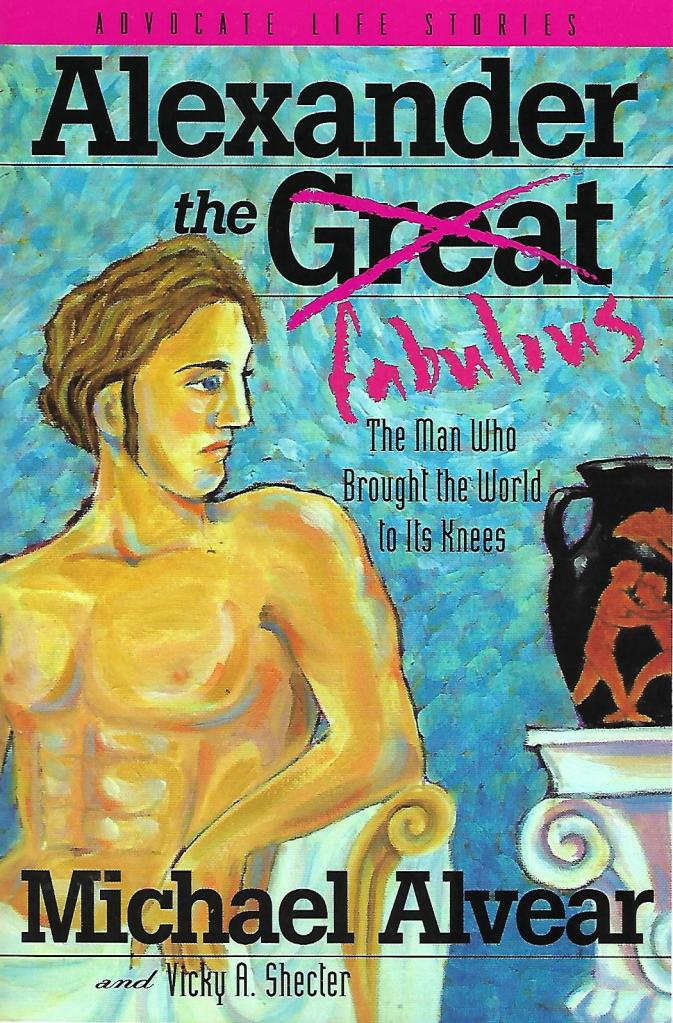
Alexander the Fabulous ~ A Capsule Book Review by Allen Kopp
Alexander the Great (356-323 BCE) certainly made his mark on the ancient world. He lived about three-hundred-and-fifty years before Christ. He was born son of a king, one-eyed King Philip of the ancient kingdom of Macedonia and a strange woman named Olympias. While both of his parents were mere mortals, he was really believed to be the son of the god Zeus.
From an early age, Alexander showed a talent for military strategy and winning battles against the enemy. When King Philip died, Alexander became king (although he had been regent before that, which is almost the same as king). While still in his teens, he set about conquering the known world. He commanded the allegiance and love of a huge army. Within ten years, he had conquered the known world. He was the first and only “king of the world,” although others have aspired to that title since then.
Alexander’s role model was Achilles from Homer’s The Iliad. He patterned his life after Achilles, right down to the lifelong boyfriend (Achille’s boyfriend was Patroklos, Alexander’s was Hephaestion). As with Achilles, Alexander was a fierce adversary in warfare and he had a talent for winning battles when the odds were against him and he went against far bigger fighting forces. He was so good that Julius Caesar is known to have wept because he knew he would never be as good as Alexander.
Alexander never lost a battle, but his constant campaigning and warfare took their toll. He always went into the battle at the front line along with is men, never hanging back to give orders. He was wounded many times, including his lung being pierced by a crossbow. He wouldn’t rest or eat or take a drink of water until his men had been taken care of; this is one of the reasons why he was so loved and respected.
He was grief-stricken at the unexpected death of his boyfriend Hephaestion. The two of them had been inseparable since Alexander was fourteen. Just eight months after Hephaestion’s death, in 323 BCE, Alexander himself died at the age of thirty-two, either from pneumonia, typhoid, malaria, or infection. His heavy use of alcohol was believed to have been a contributing factor in his early death.
Alexander the Fabulous by Michael Alvear is an entertaining, campy, not-always-serious account of the life of one of the most interesting and influential men in history. If you like your ancient history entertaining and peppered with gay jokes and snarky and funny comments, this is it. A quote from the first paragraph of chapter eight reads: “The ancient world had crow’s feet, sagging tits, and a loose box. Then Alexander gave it the kind of makeover that inspires Cher to dedicate songs to her plastic surgeons. Alexander didn’t just inject a little botox; he radically transformed the face of the earth with a unique surgical tool known as Hellenism, which spread Greek language, ideas, arts, politics, architecture, science, and philosophy to the rest of the known world. Don’t confuse Hellenism with equally important “Nellyism,” which spread Greek musical theatre, flowing robes, Doric columns, rich Corinthian leather, and floral appliques.”
Copyright © 2019 by Allen Kopp

 Literary Fictions