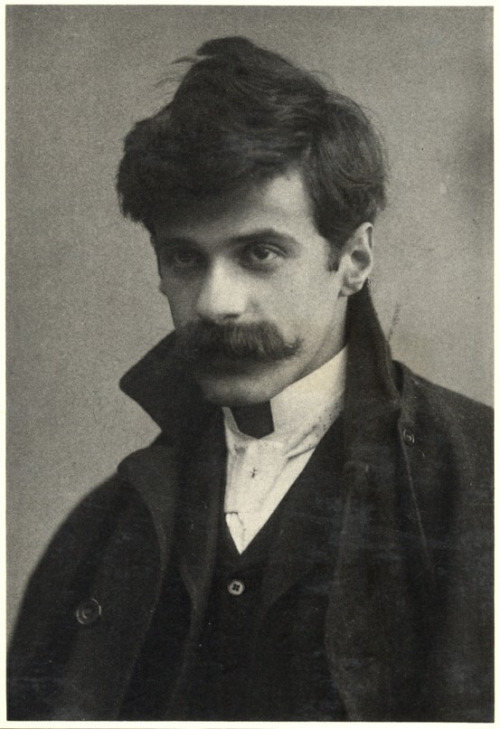
Alfred Stieglitz (1864-1946)

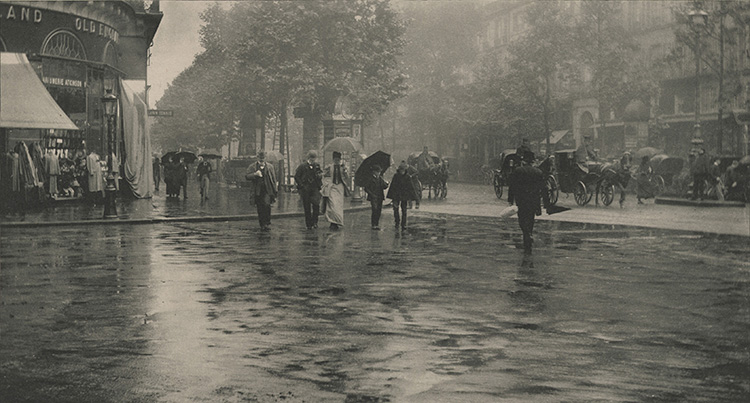
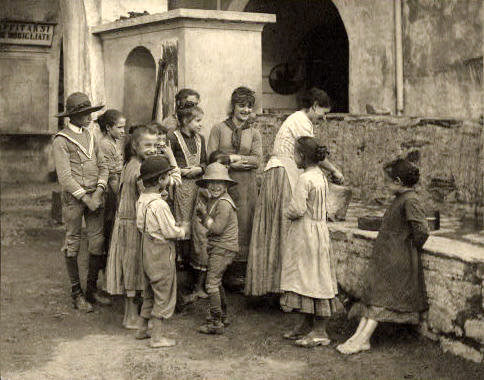
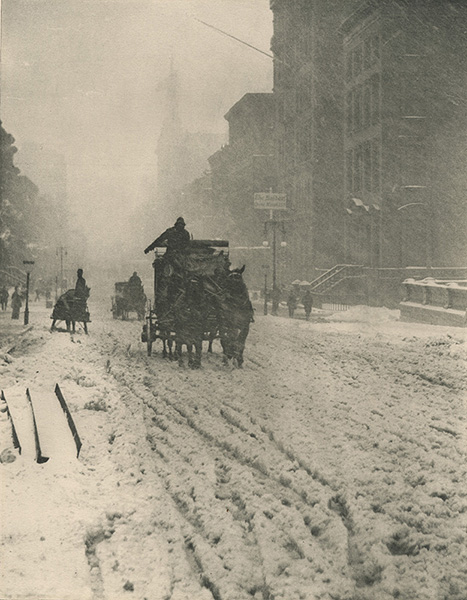
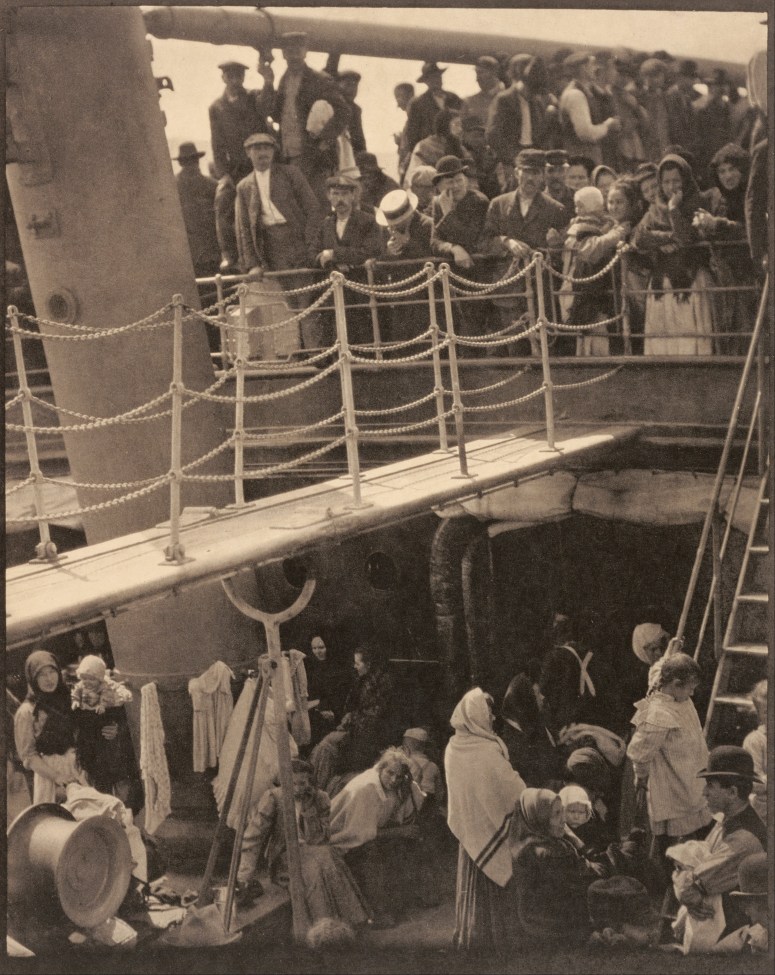
Alfred Stieglitz was an American photographer who lived from 1864 to 1946. He was instrumental in popularizing photography as an art form. He was married to painter Georgia O’Keefe. Below are some examples of his groundbreaking photographic work.

Wet Day on the Boulevard
The Last Joke (1897)
Venetian Canal (1894)
Winter on Fifth Avenue
The Steerage

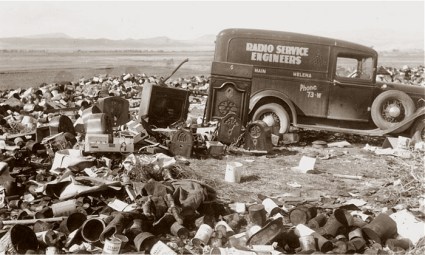
City Dump

City Dump image 1

City Dump ~ A Short Story by Allen Kopp

(This is a repost from November 2015 and has been published in 1947 Journal.)

When I was in the eighth grade, the Dutchman decided our old house needed a new roof. Instead of consulting the Yellow Pages to find a reputable roofer, he decided to save a few greenbacks by—no, not by doing the job himself—but by having a “friend” do it at a cut-rate price.

The price at which the friend agreed to replace the roof didn’t, oddly enough, include any clean-up. That means that pieces of the old roof dating from the time the house was built—boards, shingles, chunks of asbestos, nails, what-have-you—were scattered in the yard on all four sides of the house, looking like the scene of an unspeakable natural disaster. How many houses, I ask you, have a new roof while the old roof adorns the yard in the ugliest way imaginable?

The Dutchman’s solution to the clean-up was simple. He had a thirteen-year-old son: me. I weighed ninety-two pounds but was more than capable of picking chunks of debris out of the shrubs and off the lawn and placing them in a washtub. How many washtubs full does it take to hold the thousands of splintered pieces of an old roof? More than you can imagine.

He didn’t own a pickup truck so he borrowed one from another “friend.” (Where do all these friends come from?) It was an old dark blue truck that had seen better days. It was only a one-day loan, so that meant we only had one day to get rid of all the crap that surrounded the house. I was wishing I would lose consciousness and not regain it until well into the next week. I would rather have thirty hours of gym class than a day of enforced yard clean-up with the Dutchman.

After I got the washtub loaded up with stuff, it was too heavy to lift on my own. “Candy ass,” the Dutchman said. “You’re not worth the powder to blow you to hell.”

“I know,” I said. And I did know, as this phrase had been repeated to me in some form or another almost every day of my life.

The Dutchman saw that I could manage the loaded washtub only if he took the other handle. It occurred to him then for the first time that I didn’t have the strength of a grown man. Who knew?

With about eight tubs full of stuff, we had enough in the back of the truck to make a full load. I had to take a rake and distribute the stuff so we could get more in. Then, when the Dutchman was convinced the truck would hold no more, we headed for the city dump, about two miles outside of town. It felt good to sit down, even if the inside of the truck smelled like an old woman who never takes a bath.

At the city dump, the Dutchman carefully backed the truck as close to the edge of the embankment as he could get without going over the side, and we got out and started unloading. I stood up in the bed of the truck and tossed the stuff over the side but, of course, I wasn’t doing it fast enough to suit the Dutchman.

“Do you want to still be working at this at midnight?” he asked.

“I’m starting to feel sick,” I said.

By the time we got back to the house to begin work on the second load, it had started to rain the kind of rain you get in November: slow, cold and steady. The Dutchman made me put on a hat—not to protect my health but because he was thinking about how much money it might cost him if I got sick and had to see a doctor.

The second truckload to the city dump didn’t go any faster than the first one and, after two loads, we had made very little progress. This was taking a lot longer than the Dutchman thought it would. There weren’t going to be enough hours in the day. I was happy, maybe for the first time in my life, at the prospect of going to school the next day.

It was when we were working on the third load that an old man from the neighborhood stepped into the yard and motioned to us. The Dutchman stopped what he was doing and went over to him. I was near enough that I could hear.

“I know somebody that will take all that stuff away for you for a good price,” the old man said.

The Dutchman thought about it for a minute and shook his head. “No, thanks,” he said. “I can do it myself.”

“Looks like that boy there’s about worn out,” the old man said. He meant me, of course.

The Dutchman looked at me as though noticing me for the first time. “He’s stronger than he looks,” he said with a little laugh.

My mother came out of the house then in her plastic rain bonnet. “You know somebody that’ll do this hard work?” she asked.

“My nephew and his friend,” the old man said. “They’ve got themselves an old truck and will do little jobs here and there to earn enough money to fill it up with gas.”

“Does your nephew have a phone number?” she asked.

The old man gave the number and my mother said she would remember it without writing it down. She thanked the old man and he left.

“You come into the house,” she said to me, “and get cleaned up before supper.”

“He’s not going in,” the Dutchman said, “until the work is finished.”

“Says you,” she said.

She put her hand on my shoulder and drew me along with her into the house. It was one of the few times I ever saw her stand up to the Dutchman.

I took a bath as hot as I could stand it to get the roof grit off and put on my pajamas. I had the sniffles afterwards and there were some bleeding cuts on my hands, but I was happy and was sure I would be all right.

The next day when I came home from school, all the roof junk in the yard had been taken away. Mother told me she paid for it out of her own money and that it had been a real bargain. I was beaming with satisfaction at the dinner table that evening while the Dutchman looked unhappy and defeated, too dispirited even to complain that the mashed potatoes weren’t the way he liked them.

Copyright © 2017 by Allen Kopp

Tulip Fever ~ A Capsule Book Review

Tulip Fever ~ A Capsule Book Review by Allen Kopp

Tulip Fever is a novel by Deborah Moggach set in picturesque Amsterdam, Holland, in the year 1636. Cornelis Sandvoort is a wealthy merchant. At sixty-one, he is in the twilight of his years. His young wife, Sophia, is only twenty-six. Cornelis lost his first wife and child to disease; he wants nothing more than for Sophia to give him another child to carry on his name and his business after he is gone. Sophia honors and respects Cornelis—after all, he saved her family from poverty—but she doesn’t love him. She finds his physical presence repellant.

When Cornelis commissions a young painter, Jan Van Loos, to paint his and Sophia’s portrait, Sophia quickly becomes enamored of the painter. She falls so easily. She sneaks out of the house at odd times to meet the painter. They become lovers. She goes to great pains to make sure her husband doesn’t find out.

Sophia has a maid named Maria. Maria has a lover named Willem. Maria and Willem are intimate together and plan on being married. Maria finds herself expecting Willem’s child. Willem, through a misunderstanding, believes that Maria has been unfaithful to him with another man. Heartbroken, he runs off and joins the navy, not even knowing that Maria is going to have his baby.

Sophia tells Maria she will soon have to leave the household since she is going to have a baby and isn’t married. With nothing to lose, Maria threatens to expose Sophia for carrying on a clandestine love affair with the painter Jan Van Loos. Rather than part on bitter terms, Sophia and Maria together devise a plan whereby Sophia will pretend to be pregnant (by her husband, of course), while concealing Maria’s pregnancy. Then, when Maria’s baby is born, they will pretend it is Sophia’s and that Sophia died during the delivery. Pretending to be dead, Sophia will then be free to run off with her lover, Jan Van Loos, to Batavia in the East Indies and start a new life.

While Sophia and Jan’s elaborate deception plays out, the city (Amsterdam) and the country (Holland) are in the grip of “tulip fever.” Fortunes are being made and lost in tulip bulb speculation. Some bulbs are worth a fortune. Never has the adage “a thing is worth what somebody is willing to pay for it” been more appropriate. Jan is counting on one fabulously expensive bulb (which he plans on selling for much more than he paid for it) to get him out of debt and pay for his and Sophia’s passage to a new country and a new life. Their plot to trick Sophia’s husband—and the world—has worked so far. All they need is a bit more luck and for Jan’s bumbling servant, Gerrit, to pick up the bulb and bring it to Jan.

Tulip Fever is a tautly written 280 pages. The themes of infidelity, greed, self-delusion and human failing that we see here are universal. Jan and Sophia’s illicit love affair was one thing, but their plan to fool Sophia’s husband with Maria’s baby and then to run away to another country was something else. Failure was built in from the beginning. A strong story about the extraordinary lengths to which people will go to achieve their own version of happiness.

Copyright © 2017 by Allen Kopp
Feud: Bette and Joan ~ A Capsule Review

Feud: Bette and Joan ~ A Capsule Review by Allen Kopp

If you squint your eyes, you might almost be able to believe you’re seeing Bette Davis and Joan Crawford instead of Jessica Lange and Susan Sarandon. Yes, here we have two fading movie queens of today playing two fading movie queens of yesterday. The year is 1961. Joan Crawford (Jessica Lange) and Bette Davis (Susan Sarandon) are two movie stars who were once at the top of their game. Sadly, time has played its dirty tricks on them, and they are getting “older.” They no longer have the appeal they once had; they no longer pull in the dollars at the box office. In a youth-obsessed culture, there are no parts for “older” actresses, no matter how many Oscars they have or how much people still love them.

Sixteen or so years after Joan Crawford won her Oscar for Mildred Pierce, she flaunts her trophy to a producer, saying, “I want another one.” “Movies for older actresses are just not being made today,” the producer says. Being very ambitious and having no intention of being thwarted, Joan sets out to find her own story that can be made into the compelling film she knows she still has in her. After much searching, she comes up with a novel called Whatever Happened to Baby Jane? by a writer named Henry Farrell. With whatever influence she still has, she gets director Robert Aldrich to agree to direct it. “It can be the greatest horror movie ever made,” he says, thinking of the success that Alfred Hitchcock had with Psycho.

Bette Davis is also desperate for a “comeback” film that will show she still has what it takes. Even though she and Joan Crawford are rivals and have an intense dislike for each other, she is interested when Joan Crawford pitches the idea to her of playing the demented Baby Jane Hudson. Yes, this can be the picture that turns the tide for both fading movie stars. “You don’t like me and I don’t like you,” Bette says to Joan in her dressing room, “but we both need this film to work.” So, the two of them agree to bury the hatchets (and not in each other’s backs) and devote themselves to making a good picture.

If you, like me, are a fan of the film Whatever Happened to Baby Jane? and you like behind-the-scenes show biz stories, you’ll love Feud: Bette and Joan on FX. What is FX, you ask? I had never heard of it, either, and wasn’t sure if it was available where I live, but I looked in the list of hundreds of channels we get, and there it was, slightly south of TCM, in a direction on the proverbial TV dial in which I never venture. There are commercials, but not many, and if you DVR the eight-part series, you can easily fast-forward through them.

Feud: Bette and Joan is watchable, dumb fun, even if our credulity is stretched. Besides Susan Sarandon and Jessica Lange, there’s Alfred Molina as Robert Aldrich, the harried director of Whatever Happened to Baby Jane? What a job he has handling these two bitches! Can the film be completed without the two “stars” killing each other? As Bette Davis said in later years, “The best time I had with Joan Crawford was when I pushed her down the stairs.”

Copyright © 2017 by Allen Kopp
Call Me by Your Name ~ A Capsule Book Review

Call Me by Your Name ~ A Capsule Book Review by Allen Kopp

Call Me by Your Name, a novel by a writer named Andre Aciman, is set on the Italian Riviera during a summer in the mid-1980s. Elio is seventeen, very astute and with more depth than most people have at three times his age. He plays the piano, knows several languages, and his work for the summer is transcribing Haydn’s The Seven Last Words of Christ. When was the last time you knew a seventeen-year-old boy who could boast of such splendid accomplishments?

Elio’s father is an American college professor and his mother Italian. They are what are called “ex-pats.” They live on the beautiful Italian Riviera near the spot where Percy Shelley drowned in 1822 at the age of twenty-nine. Every summer Elio’s family hosts an academic to stay with them for about six weeks or so. During the summer in which the story takes place, a twenty-four-year-old man named Oliver is chosen from among other applicants. Despite his young age, Oliver is also an academic and is busy working on a book on an esoteric, scholarly subject. That doesn’t mean, however, that during his summer with Elio’s family he doesn’t have plenty of time for nightlife, tennis, swimming and lying around naked, or practically naked, in the sun. Oh, and he’s also very good looking with a fabulous body. And, when it comes to sex, he is absolutely freewheeling, not bound up in rigidity and Puritanism the way most American men are.

So, the story of this summer in the mid-1980s is being told to us in the first-person voice of Elio, about thirty years or so after it occurred. In a way, it is a coming-of-age story, but with a twist. Most adolescent boys living on the Italian Riviera with their well-to-do and sophisticated parents are going to become infatuated and obsessed with a dark-eyed Italian woman with large breasts. In Elio’s case, however, the object of his lust and affection is Oliver, the young American man who came for the summer and changed Elio’s emotional landscape and the way he would forever view the world.

The words “homosexual” or “gay” are never used in Call Me by Your Name, but that’s what we’re talking about here. There is absolutely a blasé attitude toward sex and gender identity that is very European and that most Americans would find offensive. Americans separate “gay” and “straight” like they separate cars and motorcycles. The European attitude toward sex is that it is more of a continuum. If today you are with a woman and tomorrow a man, who cares? It’s just different branches of the same tree.

Copyright © 2017 by Allen Kopp  

Monster

I always loved the monster movies from the golden age of Hollywood filmmaking, and I always had a lot of sympathy for the monster. So what if he carries off the glamorous female lead! Let him have her! As soon as he finds out what a harridan she is, he’ll send her home in a cab.

the-mummy-2