

Year: 2017
Mother Witch, Father Ghoul

Mother Witch, Father Ghoul ~ A Short Story by Allen Kopp
Jock and Lena had been married for eighteen years when their first child came along, a boy they named Finley. They had resigned themselves to being childless, so Finley was something of a surprise. Lena was sick the whole time she was carrying Finley and she wondered secretly if childbirth was worth all the trouble and fuss. She had been happy without children and wondered if she would ever be happy again.
Always a reader, she read book after book on child-rearing and parenting, hoping that the words on the printed page would make her feel inspired, but they had no effect in that direction. She woke up every morning during her pregnancy hoping that the little thing growing inside her would—if not exactly die—just not be there at all.
When Lena told Jock she was going to have a baby that neither of them expected, he was so dismayed he couldn’t speak. He shook and felt weak and had to sit down. When he recovered his senses, he demanded a scotch and soda and a steak medium-rare and accused Lena of having a secret affair with the obese man who cleaned the carpets.
The birth was a difficult one and Lena thought she would die. When the nurse at the hospital placed Finley in Lena’s arms for the first time, Lena fainted and fell out of bed; the nurse caught Finley just in time before he hit the floor. When Lena woke up from her faint, she had temporarily lost her senses.
Jock and Lena readied an upstairs room in their spacious house for the baby. They bought all the requisite furniture and all the little things they thought a baby would like. They had the room painted a cheerful yellow color and bought new curtains with elephants and giraffes on them; they spared no expense.
On the day Lena brought Finley home from the hospital, a few curious neighbors dropped in to see him. Lena wore a tight smile and welcomed the visitors graciously. Jock locked himself in his study and drank whiskey and wrote atrocious poetry.
Finley was a beautiful, perfect child with abundant light-brown hair and a full set of teeth. It was his strange, green-and-amber eyes, though, that people noticed first. He looked searchingly at any visitor who came into the room, as if he were studying them and knew things about them that nobody else knew. When people talked, he moved his lips and smiled, pretending he too was talking. Frequently he pointed at something across the room and when people turned to look at what he was pointing at, there was nothing there except the blank wall. He was seeing things that nobody else saw.
At about three weeks old, Finley began moving objects around the room by pointing at them with his tiny index finger and pursing his lips. If a floppy yellow bunny was sitting on the chest of drawers, he could make it fall to the floor or float across the room and fall into his bed, at which time he would grab it and stick it in his mouth. When a wasp came into this room, he pointed at it and flicked his tongue and the wasp fell dead in mid-flight.
“I don’t see anything of myself in him,” Jock said. “Nobody in my family ever had eyes that color.”
Lena was hurt anytime Jock suggested that somebody else was Finley’s father. The marriage, which before had been tolerable, was strained to the breaking point. Jock went out of the room when Lena entered and spoke to her only when it couldn’t be avoided. He blamed her for Finley’s existence and came to see their marriage as a mistake. He tried to warm up to Finley but believed that the two of them would only ever be strangers. He couldn’t visualize Finley living in his house for twenty or so years until reaching adulthood.
Despite Lena’s misgivings about parenthood, she tried to be a good mother to Finley. She fed him, bathed him and spent most of her waking hours looking out for him. There was always something about him, though, that to her didn’t seem right. It seemed he didn’t need her. He was attuned to something or someone else besides her. At times he would look longingly outside the window and point his finger and warble at something that only he could see.
At six months, Finley was walking and at nine months talking in complete sentences. He asked for pencil and paper and began drawing pictures of birds, castles, airplanes and elephants.
“How could you know about such things?” Lena asked.
When Finley was less than a year old, a relative gave him a picture book with farm animals and jungle animals. He looked appreciatively at all the pictures and then asked for a book with words.
“What kind of a book would you like?” Lena asked, stunned that a baby would make such a request.
“It doesn’t matter,” Finley said. “Just something I can hold in my tiny hands and turn the pages.”
She didn’t want to give him anything too “adult,” so she gave him a juvenile book about the Pilgrims and the first Thanksgiving. He read the book in one afternoon and asked for another one.
“Where did you learn to read?” Lena asked. “You haven’t been to school yet.”
“Some people are just born knowing things, I guess,” he said.
At one year, Finley was dressing and bathing himself and getting his own food. Lena kept a little stepstool within easy reach of the refrigerator. He never dropped any crumbs or spilled anything on the floor, and when he was finished eating he washed his own dishes, standing on a chair at the sink.
He learned to turn on the TV when nobody was around and watch on his own. He wasn’t interested in anything where people were talking. He wanted to hear music and see movement: pictures of animals, cars, airplanes, trains—anything but people.
One day, when Finley was one year and two months old, someone knocked on the door in the middle of the afternoon. Opening the door, Lena saw a strange-looking man and woman standing on the porch peering in at her. The man was very thin and pale and dressed in formal attire. (He seemed like a holdover from the Third Reich.) The woman was taller and broader than the man and wore a very old-fashioned kind of lady’s hat with a red feather and a veil. The chimpanzee she held by the hand wore an aviator cap with goggles and a little leather coat.
“You have the wrong house,” Lena said.
“I’m Mrs. Miggles and this is my husband, Julian.”
“Charmed,” Julian said.
“Whatever you’re selling, I’m not interested.”
“We’re not selling anything, but we would like to speak to you.”
“I’m very busy right now.”
“You’re going to want to hear this,” the woman said. “It concerns your son.”
When Mrs. Miggles said the words your son, she inclined her head toward the chimpanzee.
Lena allowed them into the living room and asked them to sit down. The woman began by saying, “The boy’s name is Armand. Say hello to the lady, Armand.”
The chimpanzee took two steps toward Lena and held out his hand for her to shake.
“How do you do?” Lena said.
Armand rolled his lips back over his teeth and gave a little squawk.
“Is your husband at home?” Mrs. Miggles asked. “We really wanted to speak to both of you.”
“He’s out right now,” Lena said. “Just what is this about?”
“I don’t know quite how to say it.”
“Just say it. Isn’t that usually the best way?”
“Well, you can probably tell we’re not like anybody else. I’m a witch and my husband here is a ghoul.”
“A ghoul?”
“Yes, a ghoul.” Mrs. Miggles faltered and then continued. “You had a son on the last day of August last year, I believe.”
“How do you know that?”
“I also had a son on that day.”
“And you’re a witch?”
“Yes, ma’am.”
“Witches have children?”
“Sometimes they do.”
“All right. So you had a son on the same day as me. How does that concern me?”
“Well, to put it bluntly…”
“Yes.”
“I have your child and you have mine.”
“What?”
“The child that you have that you think is yours is really mine. He’s half-witch and half-ghoul.”
“All right, if that’s true, then where is my child?” Lena asked.
“This is him,” Mrs. Miggles said, picking Armand up and setting him on her lap.
“You’re telling me I gave birth to a chimp?”
“Oh, no, no, no! You gave birth to a human child on the same day that I gave birth to my child, who isn’t really human in the sense that you mean it.”
“Then where is my child?” Lena asked.
“I just told you! Your child is Armand!”
“I’m going to have to ask you to leave my house now.”
“Well, perhaps I should backtrack and explain a little further.”
“I think you must!” Julian said in his odd croaking voice.
“When your attention was diverted for just a tiny second, my sister, who is also a witch, stole your baby and replaced him with mine.”
“That’s not possible.”
“Oh, witches can trick you very easily, I assure you!”
“I don’t believe a word of this!”
“She switched babies, and then do you know what she did? To get back at me for something I did to her a long time ago, she turned your baby into a chimp!”
Mrs. Miggles and Julian both laughed heartily.
“Nobody took my baby,” Lena said. “If such a thing had happened, I would have known.”
“It has taken me all this time to find you!” Mrs. Miggles said. “Of course, I had to torture my sister to get it out of her!”
“I’m going to call the police,” Lena said.
“And what do you think they’ll do, my dear!”
“My husband is behind all this, isn’t it? He’s playing an elaborate Halloween hoax on me because he never wanted a baby in the first place.”
“I’ve never spoken to your husband.”
Lena looked down at Armand who was sitting at Mrs. Miggles’s feet. When he realized he was being looked at, he smiled sweetly and yawned.
“So, if your sister turned my child into a chimp,” Lena asked, “why can’t she turn him back again?”
“That is a very reasonable question, my dear,” Mrs. Miggles said. “The truth is that the spell was hers and I don’t know how to reverse it.”
“Can’t you get her to reverse it?”
“Oh, no! I had to kill her!”
“You killed your own sister?”
“Oh, my, yes! She was a terrible trickster! If I hadn’t killed her, she would have killed me in the end!”
“She was a poor jealous thing,” Julian said. “She couldn’t have children of her own.”
“So, if you’ll just go and get your little fellow, whatever his name is,” Mrs. Miggles said, “we’ll make the switch and be on our way!”
“Do you think I’m going to turn my baby over to a couple of crazy people and take a chimp in return?” Lena asked.
“We prefer that you didn’t call him that,” Julian said.
Finley, who had been standing at the top of the stairs the whole time hearing every word, came running into the room.
“Mother! Father!” he said. “I knew you’d come for me on Halloween!”
During the embraces and kisses, Mrs. Miggles turned to Lena and said, “Now do you believe me?”
Armand went and stood beside Lena and took her by the hand. She reached down and picked him up in her arms and he kissed on her cheek, the way Finley was doing with Mrs. Miggles and Julian.
“At last, everything is right in the world!” Mrs. Miggles said.
Copyright © 2017 by Allen Kopp
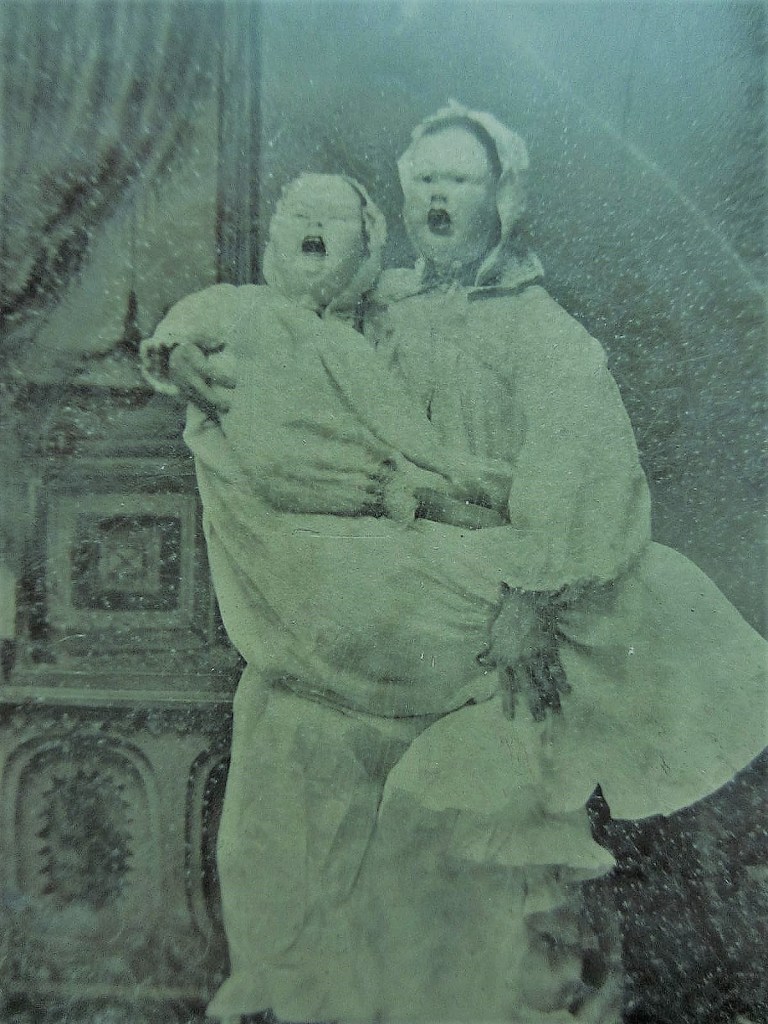



Baby

Baby ~ A Short Story by Allen Kopp
(Published in the literary journal, Streetcake, Issue 43.)
Louise was gone for three days. When she returned home, she was carrying a bundle in the crook of her arm.
“Where have you been all this time?” Theodore asked. “I was about to call the police.”
“Oh, you silly man!” Louise said. “Where do you think I’ve been? I’ve been giving birth to your son.”
She lifted the corner of the blanket to show him the baby’s face.
“This one has blue eyes,” Theodore said.
“He has your eyes.”
“My eyes are brown.”
“I’m going to name him Nathaniel,” she said. “After Hawthorne.”
“Name him whatever you want.”
“If I give him the name of a great writer, he might turn out to be a great writer himself.”
“Uh-huh.”
“You like that name?”
“It’s as good as any other, I suppose.”
She laid the baby down gently on the couch and took off her coat and laughed.
“Believe me,” she said. “It’s not easy carrying a newborn baby home on the uptown bus. I had to stand up the whole way, holding the baby in one hand and trying to keep from falling with the other. You’d think a gentleman might have given me his seat, but nobody even noticed me.”
“I could have come down and met you.”
“Oh, that’s all right,” she said. “I managed perfectly fine. And, anyway, I wanted to surprise you. What do you think of our new son?”
“He’s, uh…I can’t seem to find the words. I’m speechless.”
“I know! It’s a shock, isn’t it? Seeing him for the first time?”
“Especially since I didn’t know he was expected.”
“But that makes it that much more fun, doesn’t it?”
“If you say so.”
“Now, don’t you be an old grump puss! I’m going to need lots of help from you with this baby. Feeding him, changing his diapers, bathing him, and all the rest of it.”
“I don’t think that baby is going to be any trouble at all,” he said.
“No, of course not! He’s such a good baby! I can tell already, as young as he is.”
Theodore played piano in a jazz combo in a bar, so he had to leave to go to work. “Don’t wait up for me,” he said.
“Have a good time,” she said, “and don’t worry about me. The baby and I will be here when you get back.”
With Theodore gone, Louise was glad to have some time alone with the baby. She carried him into every room in the apartment, talking to him all the while, even though she knew he didn’t understand a word she said. She fed him, bathed him, and put him to bed in the crib at the foot of her own bed.
She slept until one o’clock, at which time she got up and fed him again. After she put him back in his crib and got back into bed, she had trouble going back to sleep. She kept thinking about how Theodore didn’t seem very happy about the baby. Well, men, she thought. You can’t ever tell what they’re thinking or how they really feel. They keep it all bottled up inside.
At two o’clock she still hadn’t gone back to sleep. She got up and checked on the baby and when she saw he was sleeping peacefully she knew the problem wasn’t with the baby but with her. She was lonely and sad. She picked up the sleeping baby and put him in the bed beside her. After that she was able to go to sleep.
Theodore came home about three-thirty. He undressed quietly and got into bed and after a couple of minutes Louise began to cry.
“What’s the matter?” he asked.
“I’m not going to have any more children,” she said.
“Okay.”
“I don’t think you love them.”
“Could we postpone this conversation to another time? I’m very tired.”
“Take Nathaniel and put him with the others. They need to get acquainted.”
“I just got into bed. Can’t you do it?”
“You’re the father.”
He sighed and got out of bed again without turning on the light. He picked Nathaniel up by the neck and carried him out of the room and down the hallway to another room. In this room was a bed with six lifelike plastic dolls lying side by side, all exactly like Nathaniel. He added Nathaniel to the collection and went back to bed.
“Better now?” he asked Louise.
“Yes.”
“And this is going to be the last one?”
“Yes, I think so. Seven is my lucky number.”
Copyright © 2017 by Allen Kopp
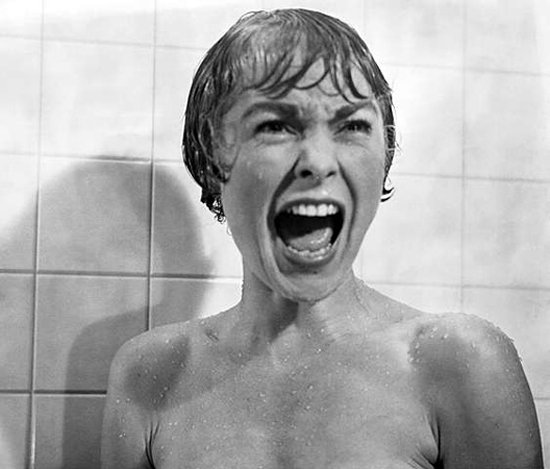
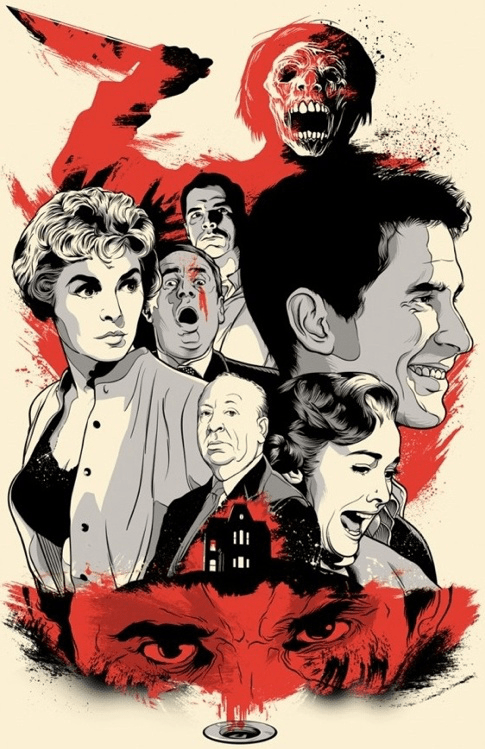
Psycho (1960)
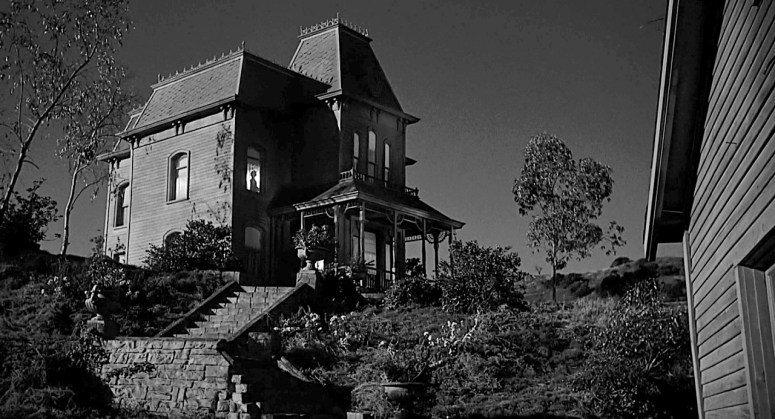
There’s a spooky old house, a deserted motel, a desiccated corpse in the fruit cellar, a deranged young man who dresses in his mother’s clothes and wig and kills people with a big knife, a main character who dies thirty minutes into the movie, and a creepily effective music score. What more could you want from a great horror movie?






 Literary Fictions