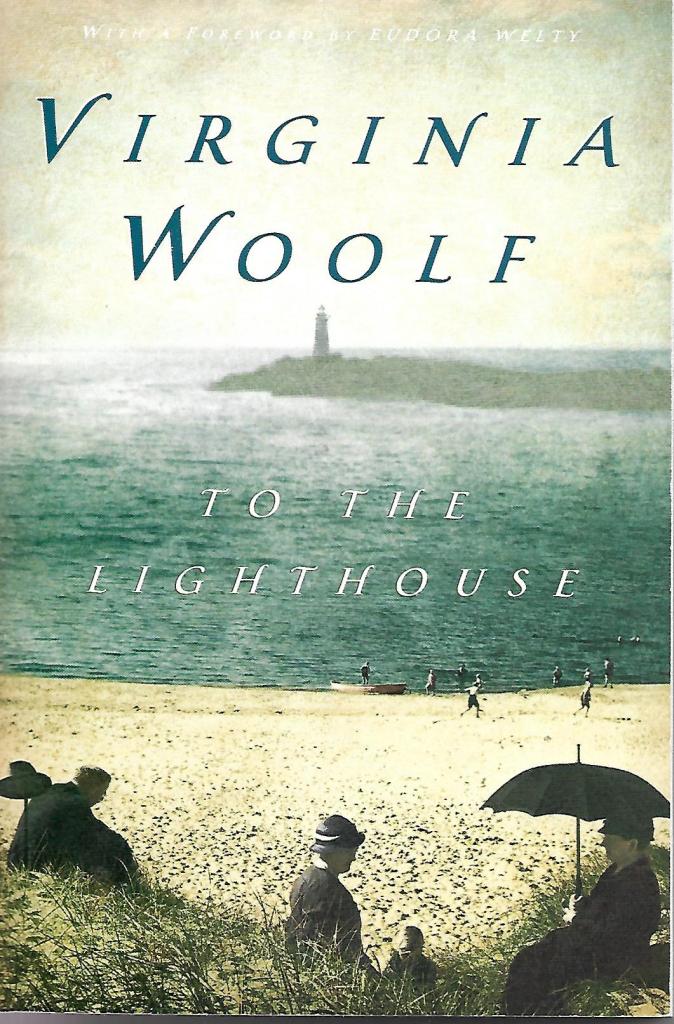
To the Lighthouse ~ A Capsule Book Review

To the Lighthouse ~ A Capsule Book Review by Allen Kopp

Modernist English author Virginia Woolf was born in 1882 and died in 1941, age 59, a suicide by drowning. Her acclaimed novel To the Lighthouse (number 15 on the Modern Library’s list of the greatest novels of the twentieth century) was published in 1927. There is no plot, action or story to speak of in To the Lighthouse. The narrative consists of philosophical introspection (thoughts and observations) of the characters. This was a technique pioneered by modernist writers Marcel Proust and James Joyce.

The novel is set on the Scottish island of Skye between 1910 and 1920. (We aren’t told where the story is set, or when, but we can find out by reading background information on the Internet.) The Ramsay family is “vacationing” in a seaside house on the island. Mrs. Ramsay is fifty and we are constantly told how beautiful she is (or how beautiful people think she is). Mr. Ramsay is a stuffy, grouchy philosophical professor and writer. The Ramsays have eight children, among them James, who dislikes his father. They have several “guests” staying with them, including the young painter, Lily Briscoe, who knows that her paintings will end up in the attic; Charles Tansley, who asserts that women can’t paint or write; Augustus Carmichael, a poet who riles Mr. Ramsay by asking for a second helping of soup; Paul Rayley and Minta Doyle, two acquaintances with whom Mrs. Ramsay is practicing her matchmaking skills.

The second part of the novel takes place ten years later. The Ramsays return to the house on the Island of Skye for the summer, but there have been some changes to the dramatis personae. Mrs. Ramsay has died in the interim. Prue Ramsay, the Ramsays’ daughter, has married and died in childbirth. And then there’s that awful war, the Great War, in which Andrew Ramsay has died in France, blown up by a shell.

At the end of the book, the long-awaited trip to the Lighthouse takes place, with Mr. Ramsay, James Ramsay and Cam Ramsay in attendance. Lily Briscoe remains behind on the lawn, watching the Ramsays’ boat from a distance. She is still trying to paint without much success, possibly the same picture she was painting ten years earlier. She has never married and, as she watches the boat, she decides she will marry Mr. Ramsay, now in his seventies. Good luck with that, Lily.

What can you say about Virginia Woolf? Of twentieth century English writers, she is the most cerebral. To the Lighthouse cannot be said to be light reading. It requires concentration and a dedicated effort to make it through to the end. I’ve read it twice and the second time was no easier than the first. If you like a book where absolutely nothing happens, except what goes into inside people’s heads, you’ll love To the Lighthouse.

Copyright © 2018 by Allen Kopp
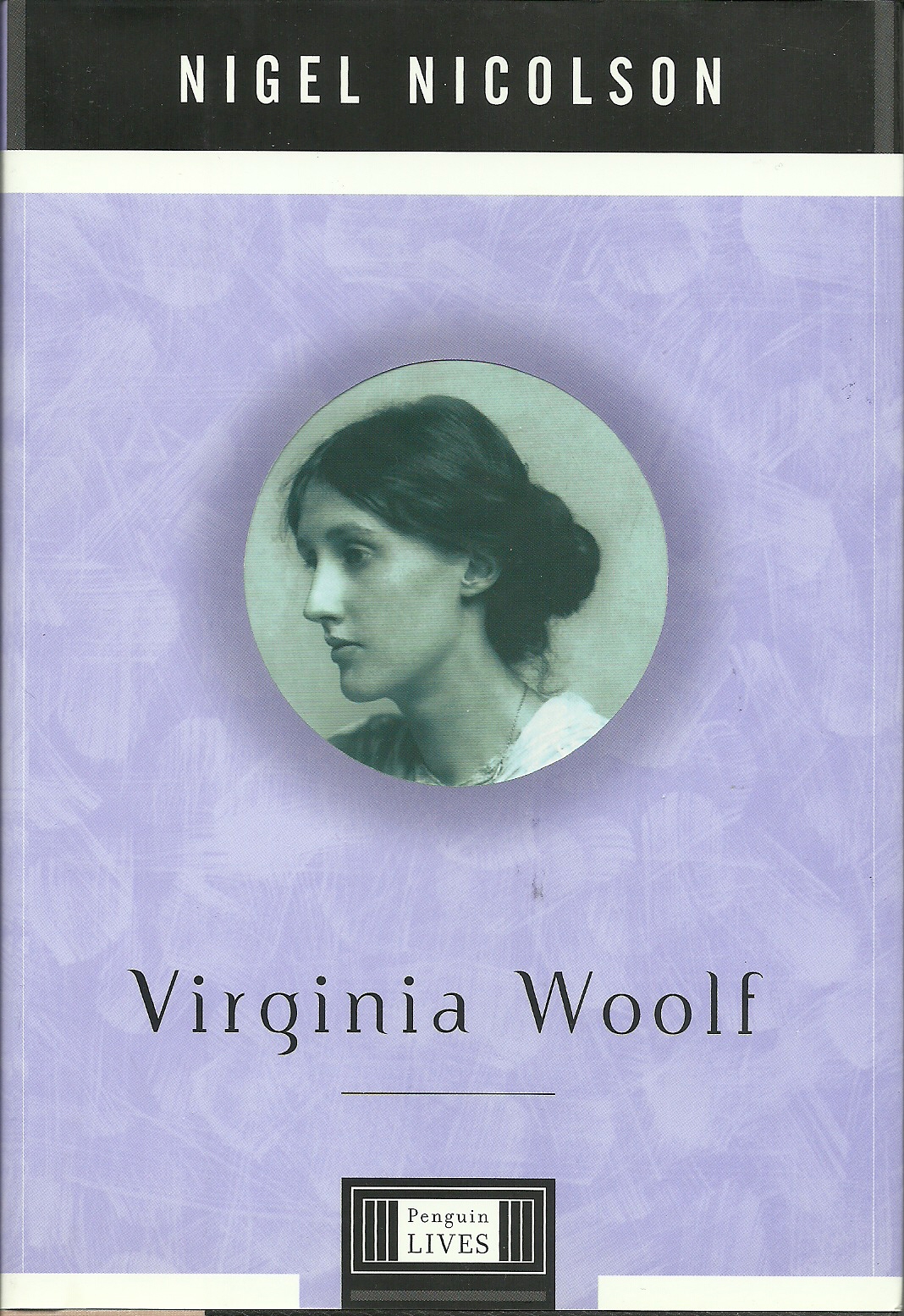
Virginia Woolf ~ A Capsule Book Review

Virginia Woolf

Virginia Woolf ~ A Capsule Book Review by Allen Kopp 

Virginia Woolf (1882-1941) was one of the leading lights of English literature of the twentieth century. Her famous novels include Orlando, Mrs. Dalloway and To the Lighthouse. Edward Albee’s play, Who’s Afraid of Virginia Woolf?, has added to her fame, or at least to her name recognition, even though it has nothing to do with her. She was married to Leonard Woolf, a publisher and writer, from 1912 until her death in 1941. They never had any children.

Besides being a brilliant writer, Virginia Woolf was a feminist (extreme in her views that women had always been held back by men), lecturer (she would spend a year preparing a series of lectures she was going to give), snob (she believed America or Americans had never produced anything of value), pacifist (her lack of patriotism and indifference in World War I were mitigated by her fear of Hitler and the outbreak of World War II), and a lesbian. One of her long-term lesbian lovers was the writer Vita Sackville-West. Vita was married to Harold Nicholson, a writer who was also a homosexual. In spite of their sexual proclivities, Vita and Harold had two sons, Ben and Nigel. Nigel Nicholson was born in 1917 and knew Virginia Woolf when he was a child and she was an adult. (We should assume, I suppose, that he didn’t know the nature of his mother’s relationship with Virginia Woolf until many years later.) Nigel Nicholson wrote this brief (190 pages), engaging biography, Virginia Woolf, for the Penguin Lives series.

During Virginia Woolf’s life, she was as famous for her day-to-day activities as for her writing. She was a leader and outspoken member of the Bloomsbury Group, an aggregation of writers, thinkers and intellectuals whose works and outlook influenced literature, aesthetics, criticism and modern outlooks on pacifism, feminism and sexuality. Members of the Bloomsbury Group were well-known for their love affairs and espoused what later would be called “free love.” The Bloomsbury Group included (among others) writers E. M. Forster and Lytton Strachey and painters Dora Carrington and Virginia’s sister, Vanessa Bell.

What most people today know about Virginia Woolf (thanks, in part, to the novel and movie, The Hours) is that she had “bouts of insanity.” She suffered from a form of mental illness, probably manic depression or bipolar disorder, that could today be controlled by medication. After a number of suicide attempts throughout her life, she drowned herself in the River Ouse near her home in 1941 at the height (for Britain) of World War II, age fifty-nine. Her life and legacy live on in her work.

For students of twentieth century English literature, Virginia Woolf by Nigel Nicholson is a fascinating, easy-to-read overview of the author’s life and times. Nigel Nicholson has the added advantage of having known Virginia Woolf firsthand and says in 190 pages what other writers would say in 500.

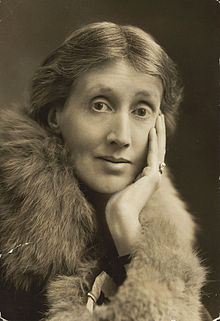
Virginia Woolf in 1927

Copyright © 2015 by Allen Kopp