“A Clean, Well-Lighted Place” by Ernest Hemingway

A Clean, Well-Lighted Place ~ A Classic American Short Story by Ernest Hemingway, first published in 1926

It was very late and everyone had left the cafe except an old man who sat in the shadow the leaves of the tree made against the electric light. In the day time the street was dusty, but at night the dew settled the dust and the old man liked to sit late because he was deaf and now at night it was quiet and he felt the difference. The two waiters inside the cafe knew that the old man was a little drunk, and while he was a good client they knew that if he became too drunk he would leave without paying, so they kept watch on him.

“Last week he tried to commit suicide,” one waiter said.

“Why?”

“He was in despair.”

“What about?”

“Nothing.”

“How do you know it was nothing?”

“He has plenty of money.”

They sat together at a table that was close against the wall near the door of the cafe and looked at the terrace where the tables were all empty except where the old man sat in the shadow of the leaves of the tree that moved slightly in the wind. A girl and a soldier went by in the street. The street light shone on the brass number on his collar. The girl wore no head covering and hurried beside him.

“The guard will pick him up,” one waiter said.

“What does it matter if he gets what he’s after?”

“He had better get off the street now. The guard will get him. They went by five minutes ago.”

The old man sitting in the shadow rapped on his saucer with his glass. The younger waiter went over to him.

“What do you want?”

The old man looked at him. “Another brandy,” he said.

“You’ll be drunk,” the waiter said. The old man looked at him. The waiter went away.

“He’ll stay all night,” he said to his colleague. “I’m sleepy now. I never get into bed before three o’clock. He should have killed himself last week.”

The waiter took the brandy bottle and another saucer from the counter inside the cafe and marched out to the old man’s table. He put down the saucer and poured the glass full of brandy.

“You should have killed yourself last week,” he said to the deaf man. The old man motioned with his finger. “A little more,” he said. The waiter poured on into the glass so that the brandy slopped over and ran down the stem into the top saucer of the pile. “Thank you,” the old man said. The waiter took the bottle back inside the cafe. He sat down at the table with his colleague again.

“He’s drunk now,” he said.

“He’s drunk every night.”

“What did he want to kill himself for?”

“How should I know.”

“How did he do it?”

“He hung himself with a rope.”

“Who cut him down?”

“His niece.”

“Why did they do it?”

“Fear for his soul.”

“How much money has he got?”

“He’s got plenty.”

“He must be eighty years old.”

“Anyway I should say he was eighty.”

“I wish he would go home. I never get to bed before three o’clock. What kind of hour is that to go to bed?”

“He stays up because he likes it.”

“He’s lonely. I’m not lonely. I have a wife waiting in bed for me.”

“He had a wife once too.”

“A wife would be no good to him now.”

“You can’t tell. He might be better with a wife.”

“His niece looks after him. You said she cut him down.”

“I know.” “I wouldn’t want to be that old. An old man is a nasty thing.”

“Not always. This old man is clean. He drinks without spilling. Even now, drunk. Look at him.”

“I don’t want to look at him. I wish he would go home. He has no regard for those who must work.”

The old man looked from his glass across the square, then over at the waiters.

“Another brandy,” he said, pointing to his glass. The waiter who was in a hurry came over.

“Finished,” he said, speaking with that omission of syntax stupid people employ when talking to drunken people or foreigners. “No more tonight. Close now.”

“Another,” said the old man.

“No. Finished.” The waiter wiped the edge of the table with a towel and shook his head.

The old man stood up, slowly counted the saucers, took a leather coin purse from his pocket and paid for the drinks, leaving half a peseta tip. The waiter watched him go down the street, a very old man walking unsteadily but with dignity.

“Why didn’t you let him stay and drink?” the unhurried waiter asked. They were putting up the shutters. “It is not half-past two.”

“I want to go home to bed.”

“What is an hour?”

“More to me than to him.”

“An hour is the same.”

“You talk like an old man yourself. He can buy a bottle and drink at home.”

“It’s not the same.”

“No, it is not,” agreed the waiter with a wife. He did not wish to be unjust. He was only in a hurry.

“And you? You have no fear of going home before your usual hour?”

“Are you trying to insult me?”

“No, hombre, only to make a joke.”

“No,” the waiter who was in a hurry said, rising from pulling down the metal shutters. “I have confidence. I am all confidence.”

“You have youth, confidence, and a job,” the older waiter said. “You have everything.”

“And what do you lack?”

“Everything but work.”

“You have everything I have.”

“No. I have never had confidence and I am not young.”

“Come on. Stop talking nonsense and lock up.”

“I am of those who like to stay late at the cafe,” the older waiters aid.

“With all those who do not want to go to bed. With all those who need a light for the night.”

“I want to go home and into bed.”

“We are of two different kinds,” the older waiter said. He was now dressed to go home. “It is not only a question of youth and confidence although those things are very beautiful. Each night I am reluctant to close up because there may be some one who needs the cafe.”

“Hombre, there are bodegas open all night long.”

“You do not understand. This is a clean and pleasant cafe. It is well lighted. The light is very good and also, now, there are shadows of the leaves.”

“Good night,” said the younger waiter.

“Good night,” the other said. Turning off the electric light he continued the conversation with himself. It was the light of course but it is necessary that the place be clean and pleasant. You do not want music. Certainly you do not want music. Nor can you stand before a bar with dignity although that is all that is provided for these hours. What did he fear? It was not a fear or dread, It was a nothing that he knew too well. It was all a nothing and a man was a nothing too. It was only that and light was all it needed and a certain cleanness and order. Some lived in it and never felt it but he knew it all was nada y pues nada y nada y pues nada. Our nada who art in nada, nada be thy name thy kingdom nada thy will be nada in nada as it is in nada. Give us this nada our daily nada and nada us our nada as we nada our nadas and nada us not into nada but deliver us from nada; pues nada. Hail nothing full of nothing, nothing is with thee. He smiled and stood before a bar with a shining steam pressure coffee machine.

“What’s yours?” asked the barman.

“Nada.”

“Otro loco mas,” said the barman and turned away.

“A little cup,” said the waiter.

The barman poured it for him.

“The light is very bright and pleasant but the bar is unpolished,” the waiter said.

The barman looked at him but did not answer. It was too late at night for conversation.

“You want another copita?” the barman asked.

“No, thank you,” said the waiter and went out. He disliked bars and bodegas. A clean, well-lighted cafe was a very different thing. Now, without thinking further, he would go home to his room. He would lie in the bed and finally, with daylight, he would go to sleep. After all, he said to himself, it’s probably only insomnia. Many must have it.
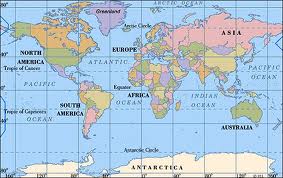
Map of the World

Map of the World ~ A Short Story by Allen Kopp

On the first day of the new school term, Joanne Torrance was sullen and unhappy. She wasn’t ready for summer vacation to be over; she wanted to be able to stay at home and do as she pleased all the time. It wouldn’t have mattered to her if school had never taken up again for as long as she lived. She was sure she could learn all she needed to know from reading books and magazines and seeing lots of movies and watching the really important shows on TV like Superman and Lassie and The Three Stooges. 

As soon as she met her new teacher for the first time—one Ruby Chinn—she hated her on sight. She had long yellow teeth that showed even when her mouth was closed. She had dyed hair the color of beets that she wore pulled into a severe bun on top of her head that resembled a cake made out of hair and that showed the fleshy folds on the sides of her face and neck. Joanne could have told her how she might adopt a more flattering hairdo to complement her round face, but she didn’t care how ridiculous a person’s hair looked when she despised that person as much as she despised Miss Chinn.   

Since it was the first day of the new term and people didn’t know each other very well, Miss Chinn had each person write his (or her, as the case may be) name on the blackboard in colored chalk. After writing his or her name, the person was to turn around and face the class and introduce himself (or herself) in a loud clear voice. The boys were then supposed to bow from the waist and the girls to curtsey. This was a chance for everybody to get to know what face went with what name. Miss Chinn referred to this exercise as an ice breaker.

When Joanne’s turn came, she went to the blackboard and picked up the pink chalk and wrote her name in a neat cursive script underneath the babyish scrawl of the person who went before her. Then she turned around and bowed from the waist instead of curtseying. A howl went up from the class and she flushed with embarrassment.

“No, no, no!” Miss Chinn said impatiently with her forefingers extended, two feet apart, as though measuring the length of a fish she had caught. “What do girls do?”

“Curtsey!” the class said in unison.

“And what do boys do?”

“Bow from the waist!”

“That’s right! Now, Joanne, I have a simple question for you and it isn’t that difficult. Are you a girl or a boy?”

Again a howl of laughter erupted from the class. They were enjoying her discomfort, which went a long way toward relieving the tedium of the first day of class.  

“I’m a girl,” she said in a small voice.

“What was that?” Miss Chinn said. “I can’t hear you!”

“I said I’m a girl!”

“Well, you certainly look like a girl, but we all just saw you do the thing that boys do. Now, can you prove that you’re a girl and do what girls do?”

“No.”

“What do you mean ‘no’?”  

“I mean I would rather not.”

“And why would you rather not?”

“It’s silly.”

“Not as silly as you are in refusing to do it.”

“I don’t think I have to do it just because you tell me to do it.”

Miss Chinn rolled her eyes and the class laughed again. “If there is one thing I will not tolerate in the classroom,” she bellowed, “it is insolence!”

“You and me both,” Joanne said, but not loud enough for Miss Chinn to hear it.

“You are wasting precious time! Sit down this instant! We’ll deal with this matter later.” She opened her grade book. “I could send you to the principal’s office, but I know he’s busy on the first day and would rather not be bothered, so I’m giving you a failing grade for the day. You may be the only student in the history of this school to get a failing grade for the first day of the new term.”

“Whoo-whoo-whoo!” went the class.

Joanne returned to her seat, wishing she had a pirate dagger to plunge far into the heart of Miss Chinn and everybody else in the class.

The next person to the blackboard to write her name was Veronica Kennedy. She had blonde hair and dimples and a beauty mark on her right cheek. People said she looked like a movie star and would go far in life. She already had breasts and was wearing a brassiere, the outline of which could be clearly seen through her lovely yellow blouse. She wrote her name beautifully with yellow chalk (yellow seemed to be her color) underneath Joanne’s name, and then she turned and faced the class and executed a perfect curtsey, holding her skirt out just far enough so that the edge of her underpants showed. The class erupted in cheers and applause.  

“You see?” Miss Chinn said triumphantly. “That is what girls do!”

“Yaw-yaw-yaw!” went the class as Veronica Kennedy smirked with superiority and resumed her seat.

Later in the day, during the social studies lesson, Miss Chinn pulled down a map of the world like a window shade and stood before it with her pointer.

“Now,” she said, “who can tell me where Peru is?”

Joanne was the only person in the class who raised a hand.

“Come now,” Miss Chinn said. “Doesn’t anybody know where Peru is?”

Joanne raised her hand even higher. She was all the way at the back of the room, so maybe Miss Chinn hadn’t noticed her.

“Nobody?” Miss Chinn asked. “Can’t anybody tell me where Peru is? No? It’s in South America. Can anybody tell me where South America is?”

“I can!” Joanne said, waving her hand.

“Who said that?” Miss Chinn asked.

“I did!” Joanne said. 

“I believe I’m had quite enough of you for one day,” Miss Chinn said. “You should know by now that we don’t speak in class until we’ve been called on. You haven’t been called on.”

“Hoo-hoooooo!” went the class.

“Now, can anybody tell me where South America is?”

Joanne lowered her hand and slumped down in her chair.

“Nobody? Shame on you! It’s right there!” She pointed to South America, outlining it with the pointer. “And there is Peru!”   

During lunch in the school cafeteria, Joanne sat by herself facing the wall. She heard sniggers behind her back and knew they were coming from the next table where Veronica Kennedy and her coterie of followers were sitting. Somebody threw a wet bread ball and hit her in the side of the head, followed by a volley of snorting laughter. She was only half-finished with her lunch, but she didn’t feel like eating the rest of it and so stood up and emptied her tray and went outside.

Rosalie Dunphy was leaning against the side of the building with her head tilted back against the brick and her eyes closed, like a cat sunning itself. She was a large, silent girl with wild unkempt hair who was a couple of years older than anybody else because she had been held back two grades. Joanne knew her slightly from the year before. When she walked up to her, Rosalie opened her eyes and looked at her but didn’t move her head.

“I’d like to poison Miss Chinn,” Joanne said.

Rosalie reached in her pocket and took out a folded-up piece of paper and handed it to Joanne. “I drew this,” she said.

Joanne unfolded the paper and saw there a picture of a witch flying on a broomstick with her heels up in the air and a leer on her face. She was wearing a pointed hat and had a hump on her back and a wart on her chin with hairs coming out of it. It was a perfect likeness of Miss Chinn.

“That’s pretty good,” she said, handing the drawing back to Rosalie.

“I like to draw.”

She stood next to Rosalie against the wall and she somehow felt better and not so alone. “I hate everybody in this school,” Joanne said after a while.

“Come with me,” Rosalie said. “I have something I want to show you.”

She led the way around the building to the long flight of concrete steps that went down from the school grounds to Main Street. The steps were strictly off limits during school hours, but that didn’t make any difference to Rosalie. She went down near the bottom of the steps and sat down. Joanne followed her and sat next to her.

“You have to promise not to tell anybody about this,” Rosalie said.

“I won’t,” Joanne said.

She reached into her pocket again and took out a package of Lucky Strike cigarettes and a little box of kitchen matches.

Joanne wanted to say is that all, but she said nothing because Rosalie surprised her by taking a cigarette out of the pack and putting it in her mouth and lighting it as expertly as if she had been smoking her whole life.

Rosalie took a deep drag on the cigarette and inhaled the smoke into her lungs. “Ah, that is so good,” she said. 

After another drag, she held the cigarette out to Joanne. “Try it,” she said.

“I haven’t ever smoked before,” Joanne said.

“Try it.”

She took the cigarette from her and drew a little of the smoke into her mouth and breathed it out. “That tastes awful,” she said.

“It takes some practice before you’re any good at it,” Rosalie said.

They smoked the cigarette, handing it back and forth, until it was smoked down to the filter. Joanne didn’t like the taste of it at all, but she smiled every time she handed the cigarette back as if she approved and was enjoying it. When they heard the bell ring to go back inside, Rosalie flipped the cigarette butt away out to the street and they went back up the steps unnoticed.  

That evening when Joanne was having dinner with her mother, she had been going to tell her that she had smoked her first cigarette at school that day, but she decided it wouldn’t be a good idea. She had already had enough disapproval for one day. Instead she asked her mother if she knew where Peru is.

“Isn’t that in South America?” her mother asked. “They have those strange animals with the long necks.”

“Llamas,” Joanne said.

“That’s it!”

“I’m going to murder Old Cakehead.”

“Who’s that?”

“Miss Chinn, my new teacher.”

“Well, all right,” her mother said. “Just don’t get caught. The trick is to try to make it look like an accident or to make it look like somebody else did it. Somebody you don’t like.”

At ten o’clock Joanne got into bed, but before she turned off the light she looked at the map on the wall of her room that had been there for as long as she could remember. It was somehow reassuring to look at it every night before she went to sleep. She loved the colors—the pinks, oranges, browns, greens, yellows—surrounded by a dazzling expanse of blue that was the ocean. And, yes, from looking at the map every night of her life, she knew where Peru was and just about every other country in the world. She knew a lot more than some people were willing to give her credit for.  

Copyright © 2011 by Allen Kopp