See a Show, Smoke a Lucky

See a Show, Smoke a Lucky ~ A Short Story by Allen Kopp 

Miss Bobbie Bouchard lived in an air-conditioned apartment on the fifteenth floor in an apartment building in the city. When her mother went into the hospital for an extended stay during the summer, she sent Bobbie to stay with her aunt and uncle on their farm a hundred miles from the city. Bobbie rode all that way on the bus by herself, feeling very grown-up and wishing she had bought along a pack of cigarettes to smoke on the way. When the bus stopped midway through the trip for a rest stop at a little café, she went inside and sat at a booth by herself and ordered a tuna salad sandwich and a Coke just like a seasoned traveler.

Uncle Floyd and Aunt Bernice had two children of their own, cousins of Bobbie Bouchard. Bobbie liked them well enough, even though they were younger than she was and they seemed awfully naïve. There was a girl named Freda, who was fourteen, and a twelve-year-old boy named Floyd Junior, who was just called Junior. Neither of them had ever gone to a show, smoked a cigarette or kept a secret from their mother. The only family secret was that Junior occasionally wet the bed, still, at his age. The doctor said it was an adolescent phase and that Junior would eventually stop doing it. In the meantime he advised Aunt Bernice to buy a rubber sheet.

Bobbie was just as naïve about the farm as Freda and Junior were about the way things were done in the city. She thought chickens were strange, exotic creatures and a pig was a kind of dog that might bite her if she got too close. She could hardly believe that you could go all day on the farm and not see any people or cars and hear nothing except the wind in the trees and the sounds the farm animals made. At night the crickets kept her awake, but after three or four nights she didn’t notice them as much.

When Bobbie saw in the newspaper that there was a show in the town of Delford, about ten miles from the farm, and that they had a two o’clock matinee on Saturday, she asked Aunt Bernice if she and Freda and Junior might go. Wanting Bobbie to have as much fun as possible during her stay on the farm, Aunt Bernice agreed.

Saturday was the day that Aunt Bernice had to see her doctor in the city for her female trouble; Uncle Floyd would be driving her in his pickup truck. They left at nine o’clock in the morning and wouldn’t be back until evening. Before she left, Aunt Bernice gave Bobbie a wad of bills from her egg money and put her in charge of the trip to Delford to see the show, since she was the oldest. She was to watch out for Freda and Junior and make sure they were careful and that nothing bad happened to them.

After breakfast and after Uncle Floyd and Aunt Bernice had left, Bobbie and Freda were still sitting at the kitchen table. Bobbie was telling Freda a funny story about a family of midgets that lived in her apartment building in the city. There was a write-up about them in the newspaper. They had tiny furniture made especially for them, a tiny bed, table, sofa and chairs just a little bit larger than doll furniture. They had a special-made door on their apartment, with the knob and the lock about knee-high to a normal-sized person.

Bobbie stopped mid-sentence and looked appraisingly at Freda. “You have hardly any eyebrows at all,” she said.

“What?” Freda asked. She had difficulty making the transition from midgets to eyebrows that fast.

“Hold on a minute!” Bobbie said.

She ran into the bedroom she shared with Freda and when she came back she was carrying a makeup kit. She unzipped it and took out an eyebrow pencil and gently penciled in where Freda’s eyebrows would be if she had any.

“You look just like Joan Crawford!” she said when she was finished, handing Freda a mirror.

“Like who?” Freda asked.

When Bobbie saw the effect of a little eyebrow pencil, she wasn’t going to stop there. She endowed on Freda’s face a full complement of makeup, including rouge, lipstick, mascara and eye shadow. Not too much but just the right amount; if she had learned anything at all in the city, it was how to apply makeup. Freda had never worn makeup before and was amazed at the way it made her look. When she looked at herself in the mirror, she saw a much older, more sophisticated girl looking back at her.

“Mother would die if she saw me like this,” she said.

“You look great!” Bobbie said. “Your hair ruins it, though.”

She seemed to have a solution for everything. She just happened to have a curly blond wig in her suitcase. She went to the bedroom and brought it back to the kitchen and put it on Freda’s head, covering up her own lank, colorless hair with it, tugging it until it was in place and pushing the stray strands underneath.

“There!” she said, handing Freda the mirror. “Now you look like somebody.”

“That’s not me,” Freda said.

Junior came into the kitchen with his hair slicked back, wearing his favorite blue plaid shirt. When he saw Freda, he said, “Who are you supposed to be?”

“Doesn’t she look glamorous?” Bobbie said.

“Daddy is going to kill her!”

“He’ll never know about it,” Bobbie said.

“And you’d better not tell him!” Freda said. “If you do, I’ll tell him and mama about how you skipped Sunday school.”

“I didn’t skip Sunday school,” he said. “I just didn’t go.”

“I hope I don’t see anybody at the show who knows me,” Freda said. “They’re bound to tell on me.”

“You look so different nobody would ever know who you are,” Bobbie said with a laugh.

They walked half-a-mile up the highway to the crossroads to catch the bus to Delford. Bobbie carried a big patent leather handbag that contained the money to ride on the bus and see the show, along with a headscarf, cough drops, lipstick and some other things she might need. She still had not been able to come by any cigarettes since she had been on the farm, though. Freda felt funny at first in the wig and makeup, but after a while when she realized people weren’t staring at her she felt more comfortable.

The bus ride to Delford, at about fifteen minutes, was all too short for Bobbie Bouchard. After being on the farm for several days, she was happy to be moving again and to see people. There were hardly any people on the bus and they were very quiet, absorbed in their own thoughts. Nobody paid any attention to Bobbie, Freda and Junior. Junior sat in a seat by himself and looked out the window at the passing scenery as if he had never seen it before. Bobbie talked the whole time about motion pictures she had seen and about her favorite motion picture actors and actresses. She found it very nearly incredible that Freda and Junior had gone their entire lives and hadn’t seen a motion picture. She felt sorry for them and didn’t know how they could have stood such a life.

The bus let them out at a little gas station on the edge of the Delford downtown business district. It was an easy walk to get to the show and the stores that lined the two streets, Main Street and First Street. Bobbie told Freda and Junior to wait for her for a minute while she went into the gas station. They thought she needed to use the restroom, but when she came out they saw that she had bought a pack of Lucky Strike cigarettes, with a complementary book of matches, which she ostentatiously placed inside the patent leather handbag.

Bobbie was a little disappointed that the movie that was playing was a western—she much preferred musicals or love stories—but she was willing to see the western for Freda and Junior’s sake and not complain about it. If she had been in the city, she would have had four or five movies to choose from. In a little town like Delford, though, when a western was playing, a western is what you saw.

There was lots of action in the movie, lots of riding and shooting. When the characters in the movie, mostly men, weren’t sitting around in the saloon talking and drinking beer while they played poker around a big table, they were riding horses through the desert or getting into fights or shooting at each other from behind big rocks. The sheriff of the town had a red-haired girlfriend with big breasts who was always crying and begging him to take her away and marry her. She had a brother with a big scar on the side of his face that gave him a lopsided grin. He was a cattle rustler and a murderer and the mortal enemy of the sheriff. The red-haired, big-breasted woman was torn between her love for the two men, one her brother and the other her sweetheart. In the end there was the inevitable showdown between them, the struggle between good and bad.

When the show was over, they still had plenty of time before their bus back to the farm, so they went to the Idle Hour Café across from the courthouse. They sat at a booth next to a window. After an elderly waitress in a black-and-white uniform came and took their order, Bobbie opened her purse and took out her cigarettes and lit one as if it was the most natural thing in the world.

“Did you like the show?” she asked Junior.

“I liked it fine,” he said. He never seemed to have too much to say about anything. “Can we go again sometime?”

“I don’t think your mother would like it if she knew you were smoking,” Freda said, looking over her shoulder to make sure nobody was looking.

“She’s not here, though, is she?” Bobbie said. “Would you like to try one?”

“No.”

“I’d like to try one,” Junior said.

“You’re twelve years old,” Freda said.

“Go ahead and take a puff,” Bobbie said. “Nobody’s looking.”

“Only if Freda does it first,” he said. “Then she can’t tell on me if I do it.”

“I’m not going to do it,” Freda said.

“Then I won’t either,” Junior said.

Bobbie placed the cigarette on the ash tray and slid it across the table to Freda. “Nobody’s looking,” she said.

“Go ahead,” Junior said.

Freda picked up the cigarette and took a small puff and blew the smoke out as quickly as she took it in.

“It doesn’t count if you don’t inhale,” Bobbie said.

Bobbie took the cigarette back from Freda and showed how to take the smoke into the mouth and draw it down into the lungs before letting it out. Freda tried doing what Bobbie had done but started coughing.

“It tastes terrible,” she said, “and it burns my throat.”

“You get used to it after a while,” Bobbie said.

“Now let me try,” Junior said.

He took a couple of preliminary puffs before making a show of trying to inhale.

“I don’t think you did it right,” Freda said.

“Close enough for twelve,” Bobbie said.

“Can they put you in jail for smoking?” Junior asked.

“Smoking is silly,” Freda said. “I don’t know why anybody wants to do it.”

“It’s very sophisticated,” Bobbie said. “All the best people do it.”

While they were eating, an older gentleman with a big belly and a toupee stepped up to the table and snapped Freda’s picture with a camera he had hanging around his neck. “Pardon me,” he said. “I wonder if I might have a word with you.”

Freda looked at him, bewildered. She thought it had something to do with the cigarette. “Yes?” she said. She put down her hamburger and wiped her fingers. She half-expected to be handcuffed and led away.

“I couldn’t help noticing you sitting there in front of that window. Your face stands out above all the others.”

“What?” she asked. “I was just sitting here.”

“The way the light shines through the window behind your head, I think you would photograph very well.”

“I, uh—“

“What are you talking about, mister?” Bobbie asked. “You’re scaring the poor girl.” She had learned how to deal with his type in the city.

“May I?” the man asked, stepping closer to Freda. He put his finger under her chin and lifted her face. “You have a very interesting physiognomy,” he said.

In the excitement of riding on the bus, seeing the show and eating in a restaurant, Freda had forgotten she looked like somebody completely different from who she was. “I, uh, this is not me,” she said.

“I’m a casting director for a motion picture production company,” he said, handing her his card. “We’re shooting a picture locally and want to hire some non-professional actors for some of the smaller speaking parts. I think you might be right for one of the parts.”

“A part in a movie?” Bobbie asked.

“Well, perhaps,” he said. “That is, if she’s available and interested.”

“I, uh, I don’t know,” Freda said.

“Are you a minor?”

“What?”

“He’s asking you your age, dumbbell,” Bobbie said.

“I’m fourteen,” Freda said.

The man took a step back. “You look older than that,” he said. “You look about sixteen or seventeen.”

“That’s what I’ve been telling her,” Bobbie said.

“No matter,” he said. “Since you are a minor, have your parent or guardian call us at the number on that card and we’ll arrange a time for you to come in and talk to us.”

“She sure will, mister!” Bobbie said. “And thanks.”

The man tipped his hat and walked away.

“What just happened?” Junior asked.

“Imagine that,” Bobbie said. “A part in a movie!” She didn’t know whether to be jealous or terribly happy for Freda, so she was both.

Freda laughed. “They wouldn’t want me if they knew what I really look like underneath.”

“Don’t be silly,” Bobbie said. “They don’t care about underneath. They care about what they can see.”

“It’s just about the silliest thing that’s ever happened to me,” Freda said, flushing with embarrassment.

“I told you you looked great and you didn’t believe me.”

“Are they going to make you a movie star?” Junior asked.

“It’s too ridiculous,” Freda said.

“You’ll call, won’t you?” Bobbie asked. “Just as soon as you get home?”

“No,” Freda said. “I can’t call. It’s not me they want. It’s somebody who doesn’t even exist.”

“Have Aunt Bernice call.”

“I can’t have her know about this. She’d just about die.”

“So does that mean you’re not going to call?”

Bobbie considered calling herself and saying she was the girl the man saw in the restaurant, but she didn’t know if she would be able to pull it off. He would know as soon as he saw her that she was somebody else, the “other girl” who didn’t even rate a second look.

When they left the Idle Hour Café, they still had more than an hour before their bus, so they walked around, looking in store windows. Bobbie smoked on the street and tried to get Freda and Junior to light up, but they refused. They had smoked once already and that was enough. All the fun had gone out of it.

Bobbie tried repeatedly to talk Freda into calling the number on the card, but Freda wanted no part of it and she refused to let Bobbie call on her behalf and pretend to be Aunt Bernice. She wanted to forget all about it, she said, but, above all, she wanted to keep Uncle Floyd and Aunt Bernice from ever knowing about it. She made Junior promise not to ever mention it. If he should forget and let it slip, she would tell them he had smoked. Never mind that she had smoked, too.

Bobbie believed that Freda was passing up the chance to be a big star, maybe even bigger than Linda Darnell, Rita Hayworth, or Susan Hayward. She believed a chance like that only comes along once in a lifetime. A part of her, deep down, though, was glad. She wouldn’t have to go through life seeing Freda a movie star while she herself was something less. She believed that things always work out for the best.

A few days later, Bobbie received a call from her mother. She was going home from the hospital and she wanted Bobbie to come home and help take care of her while she recuperated from an operation. Bobbie hated the thought of being cooped up at home taking care of her mother, but she promised to come back to the farm as soon as she could. For the next trip, she would think of all kinds of fun things for the three of them to do. She had some secret pictures she would bring along next time to show them.

Copyright © 2012 by Allen Kopp 
Never Marry

Never Marry ~ A Short Story by Allen Kopp 

Mrs. Shockley had been a widow for many years. Just when she was thought to be past such things, she began “keeping company” with an old man named Wallace Timpkins, who worked as a janitor at the grade school. Nobody was more chagrined at Mrs. Shockley’s recent flowering than her forty-year-old unmarried daughter, Edith. She watched in disbelief as her mother and Wallace sat on the couch on the evenings when he came for dinner, whispering and grappling together like a couple of adolescents. Edith was embarrassed for her mother. She knew that she, of all people, had to rescue her from the spell that Wallace seemed to have cast over her.

When Wallace Timpkins proposed marriage to Mrs. Shockley and she told him she needed a few days to think about it, Edith knew the situation was spiraling out of her control. Having dinner together and sitting on the couch afterwards was one thing, but talk of marriage seemed to be taking it a step too far. She had hoped her mother would come to her senses about Wallace but, if she married him, it would be too late; she would be stuck with him for as long as she lived and where would that leave Edith? She had no intention of being put out of her home.

One rainy Saturday morning when Edith had washed Mrs. Shockley’s hair at the kitchen sink and was putting it up in rollers at the table, she broached the rather sensitive topic of a union with Wallace.

“You wouldn’t really marry him, would you?” she asked.

“I don’t know why not,” Mrs. Shockley said. “He’s free and I’m free. We’re both of age.”

“Yes, but why would you even want to marry him?”

“Why does anybody get married?”

“I know why he wants to marry you.”

“Why?”

“He needs a cook, laundress and housekeeper and he can’t afford to hire one.”

“What a terrible thing to say!”

“How do you know he isn’t already married?”

“His wife died. He told me all about it.”

“How did she die?”

“She was hit by a train.”

“How do you know he didn’t push her?”

Mrs. Shockley sputtered with laughter and turned around so she could see Edith’s face. “Why would he do that?”

“So he would be free to marry you.”

“Oh! This conversation is getting out of hand!”

“You know nothing about him.”

“I know enough.”

“How long as he worked at the school?”

“Six years.”

“Where was he before that? Has he ever been in prison?”

“Why don’t you ask him yourself? He’s coming over tonight for dinner.”

With that revelation, Edith went upstairs to her room and locked herself in, refusing to finish rolling up her mother’s hair. Let her do it herself for once and see how she likes it, she thought.

For the rest of the morning and most of the afternoon, Edith remained in her room. She didn’t come down for lunch but instead sampled generously from a box of chocolate candy she kept in her dresser drawer. After that she took a long nap, waking up to a pounding headache and the smell of cooking food. She went downstairs silently and set the dining room table for three.

Wallace arrived just as dinner was ready. He seemed, Edith thought, to have a sixth sense where food was concerned. As she brought the chicken in from the kitchen and set it in the middle of the table and Wallace pulled out her chair for her to sit down, she thought: the dinner is already ruined for me. Mrs. Shockley was giggling like a schoolgirl and Wallace had only been there for five minutes.

Edith sat and nibbled at her food (what appetite she had was gone), looking coldly at her mother and Wallace. Mrs. Shockley spread some butter on a roll and held it up to Wallace; when he took a bite of it, the butter rolled down his chin. He began laughing to himself and when Mrs. Shockley asked what was so funny, he leaned over and whispered something in her ear, which caused her to erupt into a fit of laughter. When Wallace’s left hand wasn’t engaged in stuffing food into his maw, it was usually someplace or other on Mrs. Shockley’s body. Edith thought she was going to be sick. She needed to say something to remind them that she was also in the room.

“Being a janitor at a school must be terribly exciting,” she said, with an archness that Wallace and her mother both missed.

“What was that?” he asked, taking his eyes off Mrs. Shockley to look directly at Edith.

“I said it must be so exciting to be a janitor.”

“No, it’s not exciting,” he said. “It’s a living, that’s about all I can say. There are the good days and the bad days.”

“How long do you intend to be a janitor?” Edith asked.

“Until I retire, I guess.”

“And when might that be?”

“I don’t know yet.”

“Why all the questions?” Mrs. Shockley asked.

“I don’t know,” Edith said. “I guess I’m just trying to get better acquainted.”

“Yes, that’s a good idea,” Wallace said, “since we’re all going to be living in the same house together.”

“Why do you say that?” Edith asked.

“I haven’t told her yet, dear,” Mrs. Shockley said.

“Told me what?” Edith asked.

“I’ve accepted Wallace’s proposal of marriage. We’re going to be married in about six weeks, when school is out.”

Edith wasn’t even mildly surprised. She had been expecting the news. “This is rather sudden, isn’t it?” she asked.

“We decided the time is right,” Wallace said. “We neither one of us are getting any younger.”

“Do you think it’s wise for two people of your age to get married?” Edith asked.

“You’re beginning to sound rude,” Mrs. Shockley said, reaching over and taking Wallace’s hand in hers. “I was hoping you would be happy for us.”

“I am happy for you,” Edith said. “I just think there are some practical considerations that must be taken into account.”

“Like what?” Mrs. Shockley asked.

“Where are you going to live?”

“Wallace is going to move in with us, dear,” Mrs. Shockley said. “He lives in a rented place. We own our home.”

“I see,” Edith said. “And where does that leave me?”

“Why, what do you mean?”

“Where am I supposed to live?”

“You’ll live here with us, of course.”

“Why would I want to do that?”

“This has always been your home. I never thought of having it any other way.”

“I see,” Edith said, tears forming in her eyes. “While the two of you are mooning around, giggling and pawing at each other in a nauseating fashion, I’ll be doing all the housework, all the cooking, cleaning, washing and sewing. I’m to be relegated to the role of unpaid servant, is that right?”

“Well, of course not!” Mrs. Shockley said. “What a ridiculous notion!”

“I think she just needs some time to get used to the idea,” Wallace said. “It’s a bit of a shock for her.”

“I just might be getting married myself,” Edith said defiantly.

“Who would marry you?” Mrs. Shockley said with a laugh.

“Do you realize how insulting that is?” Edith asked. “As if nobody in the world would ever want to marry me!”

“I didn’t mean it that way,” Mrs. Shockley said. “It’s just that we’ve already gotten so used to the idea that you will never marry. It seems your time has come and gone.”

“Oh!” Edith said. “So that’s what you think of me, is it?”

“I think we just need to calm down and take a deep breath and watch what we say,” Wallace said.

“You don’t need to be giving me orders in my own house!” Edith said.

“There’s no need to be so touchy about everything!” Mrs. Shockley said.

“Let’s talk about something more pleasant,” Wallace said, “and talk about the marriage stuff later. There’s no hurry.”

“My mother and I own this house,” Edith said. “If she dies, the house belongs to me. If she marries you, does that mean you own the house?”

“We haven’t thought about anything like that,” Mrs. Shockley said.

“We can work out those details later,” Wallace said. “Let’s not spoil this lovely dinner.”

They sat in silence for a few moments, with Edith snuffling back tears. When it was time to serve the dessert, Mrs. Shockley started to get up to go into the kitchen.

“You just stay put,” Edith said, “and keep Mr. Timpkins company. I’ll get the dessert and make the coffee.”

“All right, dear,” Mrs. Shockley said.

Edith went into the kitchen and squeezed the tears out of her eyes. She took the banana cream pie out of the ice box where it was chilling and sliced three big pieces. While she was waiting for the coffee to brew, she took the flashlight out of the drawer and went quietly down the basement steps.

She went to the far corner of the basement—shining the light in the murk—behind the furnace and past the hot water heater, to the little shelf where her father used to keep paint cans. Now the shelf was empty except for a box of rat pellets that her mother had bought when she mistakenly believed she saw a rat under the basement steps. She shook two of the pellets into her hand and went back upstairs.

The pellets were hard like stale cookies. She crumbled them up with a butter knife and, after she had poured three cups of coffee, dissolved the rat pellets into one of the cups. She put the three slices of pie and three cups of coffee on a tray—the cup with the rat pellets in it separated from the other two—and took them into the dining room.

Her mother was talking about a murder case she had been reading about in the paper and Wallace was, as usual, hanging on her every word. After Edith set the coffee and pie in front of Wallace, she resumed her seat and watched him closely after he began taking small bites of the pie and sipping the coffee. She didn’t know how many pellets it would take to kill him but, if he was going to die, she hoped he would not die until later, until after he had gone home. Maybe the small amount she had used would only make him sick. Maybe it would have no effect at all.

When they were finished eating, Mrs. Shockley began clearing the table, but Edith told her to take Wallace into the living room and have a nice “visit” with him while she washed all the dishes herself and put everything away. Mrs. Shockley readily complied, believing that Edith was over the “unpleasantness” that had occurred earlier.

While Edith was in the kitchen, she could hear her mother and Wallace talking and laughing in the front room. He played the piano while she sang in her quivery soprano. After a while she heard nothing, so she was sure they were locked in an intimate embrace on the couch. In that way did all their evenings conclude.

She went upstairs to her room and read for a while and then readied herself for bed. She was aware when Wallace Timpkins left to go home about eleven-thirty. She heard her mother come upstairs a short time after that and go into her bedroom and shut the door.

She slept well and soundly and was awakened at dawn by the ringing of a bell. It took her a few seconds to realize the ringing was the phone in the hallway, halfway between her room and her mother’s room.

After several rings, her mother opened her door and come out into the hallway to answer the phone. Edith listened carefully to the voice of her mother as it went from a barely audible murmur to a gasp and a cry of distress. She turned over on her side and covered up her head. When her mother came into her room to tell her the news, she would pretend to be asleep and would not be smiling.

Copyright © 2012 by Allen Kopp
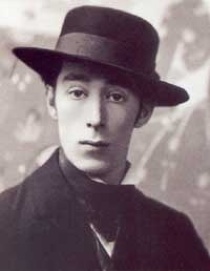
“The Lumber Room” by Saki (H. H. Munro)

Saki (1870-1916)

The Lumber Room ~ A Classic English Short Story by Saki (H. H. Munro)

The children were to be driven, as a special treat, to the sands at Jagborough. Nicholas was not to be of the party; he was in disgrace. Only that morning he had refused to eat his wholesome bread-and-milk on the seemingly frivolous ground that there was a frog in it. Older and wiser and better people had told him that there could not possibly be a frog in his bread-and-milk and that he was not to talk nonsense; he continued, nevertheless, to talk what seemed the veriest nonsense, and described with much detail the coloration and markings of the alleged frog. The dramatic part of the incident was that there really was a frog in Nicholas’s basin of bread-and-milk; he had put it there himself, so he felt entitled to know something about it. The sin of taking a frog from the garden and putting it into a bowl of wholesome bread-and-milk was enlarged on at great length, but the fact that stood out clearest in the whole affair, as it presented itself to the mind of Nicholas, was that the older, wiser, and better people had been proved to be profoundly in error in matters about which they had expressed the utmost assurance.

“You said there couldn’t possibly be a frog in my bread-and-milk; there was a frog in my bread-and-milk,” he repeated, with the insistence of a skilled tactician who does not intend to shift from favourable ground.

So his boy-cousin and girl-cousin and his quite uninteresting younger brother were to be taken to Jagborough sands that afternoon and he was to stay at home. His cousins’ aunt, who insisted, by an unwarranted stretch of imagination, in styling herself his aunt also, had hastily invented the Jagborough expedition in order to impress on Nicholas the delights that he had justly forfeited by his disgraceful conduct at the breakfast-table. It was her habit, whenever one of the children fell from grace, to improvise something of a festival nature from which the offender would be rigorously debarred; if all the children sinned collectively they were suddenly informed of a circus in a neighbouring town, a circus of unrivalled merit and uncounted elephants, to which, but for their depravity, ther would have been taken that very day.

< 2 >

A few decent tears were looked for on the part of Nicholas when the moment for the departure of the expedition arrived. As a matter of fact, however, all the crying was done by his girl-cousin, who scraped her knee rather painfully against the step of the carriage as she was scrambling in. “How she did howl,” said Nicholas cheerfully, as the party drove off without any of the elation of high spirits that should have characterized it.

“She’ll soon get over that,” said the soi-disant aunt; “it will be a glorious afternoon for racing about over those beautiful sands. How they will enjoy themselves!”

“Bobby won’t enjoy himself much, and he won’t race much either,” said Nicholas with a grim chuckle; “his boots are hurting him. They’re too tight.”

“Why didn’t he tell me they were hurting?” asked the aunt with some asperity.

“He told you twice, but you weren’t listening. You often don’t listen when we tell you important things.”

“You are not to go into the gooseberry garden,” said the aunt, changing the subject.

“Why not?” demanded Nicholas.

“Because you are in disgrace,” said the aunt loftily.

Nicholas did not admit the flawlessness of the reasoning; he felt perfectly capable of being in disgrace and in a gooseberry garden at the same moment. His face took on an expression of considerable obstinacy. It was clear to his aunt that he was determined to get into the gooseberry garden, “only,” as she remarked to herself, “because I have told him he is not to.”

Now the gooseberry garden had two doors by which it might be entered, and once a small person like Nicholas could slip in there he could effectually disappear from view amid the masking growth of artichokes, raspberry canes, and fruit bushes. The aunt had many other things to do that aftemoon, but she spent an hour or two in trivial gardening operations among flower beds and shrubberies, whence she could watch the two doors that led to the forbidden paradise. She was a woman of few ideas, with immense powers of concentration.

< 3 >

Nicholas made one or two sorties into the front garden, wriggling his way with obvious stealth of purpose towards one or other of the doors, but never able for a moment to evade the aunt’s watchful eye. As a matter of fact, he had no intention of trying to get into the gooseberry garden, but it was extremely convenient for him that his aunt should believe that he had; it was a belief that would keep her on selfimposed sentry-duty for the greater part of the aftemoon. Having thoroughly confirmed and fortified her suspicions, Nicholas slipped back into the house and rapidly put into execution a plan of action that had long germinated in his brain. By standing on a chair in the library one could reach a shelf on which reposed a fat, important-looking key. The key was as important as it looked; it was the instrument which kept the mysteries of the lumber-room secure from unauthorized intrusion, which opened a way only for aunts and such-like privileged persons. Nicholas had not had much experience of the art of fitting keys into keyholes and turning locks, but for some days past he had practised with the key of the schoolroom door; he did not believe in trusting too much to luck and accident. The key turned stiffly in the lock, but it turned. The door opened, and Nicholas was in an unknown land, compared with which the gooseberry garden was a stale delight, a mere material pleasure.

Often and often Nicholas had pictured to himself what the lumber-room might be like, that region that was so carefully sealed from youthful eyes and concerning which no questions were ever answered. It came up to his expectations. In the first place it was large and dimly lit, one high window opening onto the forbidden garden being its only source of illumination. In the second place it was a storehouse of unimagined treasures. Tne aunt-by-assertion was one of those people who think that things spoil by use and consign them to dust and damp by way of preserving them. Such parts of the house as Nicholas knew best were rather bare and cheerless, but here there were wonderful things for the eye to feast on. First and foremost there was a piece of framed tapestry that was evidently meant to be a fire-screen. To Nicholas it was a living, breathing story; he sat down on a roll of Indian hangings, glowing in wonderful colours beneath a layer of dust, and took in all the details of the tapestry picture. A man, dressed in the hunting costume of some remote period, had just transfixed a stag with an arrow; it could not have been a difficult shot because the stag was only one or two paces away from him; in the thickly growing vegetation that the picture suggested it would not have been difficult to creep up to a feeding stag, and the two spotted dogs that were springing forward to join in the chase had evidently been trained to keep to heel till the arrow was discharged. That part of the picture was simple, if interesting, but did the huntsman see, what Nicholas saw, that four galloping wolves were coming in his direction through the wood? There might be more than four of them hidden behind the trees, and in any case would the man and his dogs be able to cope with the four wolves if they made an attack? The man had only two arrows left in his quiver, and he might miss with one or both of them; all one knew about his skill in shooting was that he could hit a large stag at a ridiculously short range. Nicholas sat for many golden minutes revolving the possibilities of the scene; he was inclined to think that there were more than four wolves and that the man and his dogs were in a tight corner.

< 4 >

But there were other objects of delight and interest claiming his instant attention; there were quaint twisted candlesticks in the shape of snakes, and a teapot fashioned like a china duck, out of whose open beak the tea was supposed to come. How dull and shapeless the nursery teapot seemed in comparison! And there was a carved sandalwood box packed tight with aromatic cotton-wool, and between the layers of cotton-wool were little brass figures, hump-necked bulls, and peacocks and goblins, delightful to see and to handle. Less promising in appearance was a large square book with plain black covers; Nicholas peeped into it, and, behold, it was full of coloured pictures of birds. And such birds! In the garden, and in the lanes when he went for a walk, Nicholas came accross a few birds, of which the largest were an occasional magpie or wood-pigeons here were herons and bustards, kites, toucans, tiger-bitterns, brush turkeys, ibises, golden pheasants, a whole portrait gallery of undreamed-of creatures. And as he was admiring the colouring of the mandarin duck and assigning a life-history to it, the voice of his aunt in shrill vociferation of his name came from the gooseberry garden without. She had grown suspicious at his long disappearance, and had leapt to the conclusion that he had climbed over the wall behind the sheltering screen of the lilac bushes: she was now engaged in energetic and rather hopeless search for him among the artichokes and raspberry canes.

“Nicholas, Nicholas!” she screamed, “you are to come out of this at once. It’s no use trying to hide there; I can see you all the time.”

It was probably the first time for twenty years that any one had smiled in that lumber-room.

Presently the angry repetitions of Nicholas’s name gave way to a shriek, and a cry for somebody to come quickly. Nicholas shut the book, restored it carefully to its place in a corner, and shook some dust from a neighbouring pile of newspapers over it. Then he crept from the room, locked the door, and replaced the key exactly where he had found it. His aunt was still calling his name when he sauntered into the front garden.

< 5 >

“Who’s calling?” he asked.

“Me,” came the answer from the other side of the wall; “didn’t you hear me? I’ve been looking for you in the gooseberry garden, and I’ve slipped into the rain-water tank. Luckily there’s no water in it, but the sides are slippery and I can’t get out. Fetch the little ladder from under the cherry tree–”

“I was told I wasn’t to go into the gooseberry garden,” said Nicholas promptly.

“I told you not to, and now I tell you that you may,” came the voice from the rain-water tank, rather impatiently.

“Your voice doesn’t sound like aunt’s,” objected Nicholas; “you may be the Evil One tempting me to be disobedient. Aunt often tells me that the Evil One tempts me and that I always yield This time I’m not going to yield.”

“Don’t talk nonsense,” said the prisoner in the tank; “go and fetch the ladder.”

“Will there be strawberry jam for tea?” asked Nicholas innocently.

“Certainly there will be,” said the aunt, privately resolving that Nicholas should have none of it.

“Now I know that you are the Evil One and not aunt,” shouted Nicholas gleefully; “when we asked aunt for strawberry jam yesterday she said there wasn’t any. I know there are four jars of it in the store cupboard, because I looked, and of course you know it’s there, but she doesn’t, because she said there wasn’t any. Oh, Devil, you have sold yourself!”

There was an unusual sense of luxury in being able to talk to an aunt as though one was talking to the Evil One, but Nicholas knew, with childish discernment that such luxuries were not to be over-indulged in. He walked noisily away, and it was a kitchenmaid, in search of parsley, who eventually rescued the aunt from the rain-water tank. Tea that evening was partaken of in a fearsome silence. Tne tide had been at its highest when the children had arrived at Jagborough Cove, so there had been no sands to play on–a circumstance that the aunt had overlooked in the haste of organising her punative expedition. The tightness of Bobby’s boots had had a disasterous effect on his temper the whole of the afternoon, and altogether the children could not have been said to have enjoyed themselves. The aunt maintained the frozen muteness of one who has suffered undignified and unmerited detention in a rain-water tank for thirty-five minutes. As for Nicholas, he, too, was silent, in the absorption of one who has much to think about; it was just possible, he considered, that the huntsman would escape with his hounds while the wolves feasted on the stricken stag.

The Midnight Hideaway

The Midnight Hideaway ~ A Short Story by Allen Kopp 

The phone rang several rings before Tully was awake. He had been dreaming about when he was seven years old and saw a fat woman in a blue flowered dress having an epileptic seizure on the street; she lay on her back and twitched and moaned like a ghost but the thing that scared him the most was the foaming at the mouth. He was still having nightmares.

He picked up the receiver without turning on the light and almost dropped it. He could still see the woman’s face, the twitching. “Hello,” he said. “Tully here.”

“Tully, is that you?” a man’s voice said.

“I just said it was,” he said. He managed to look at the clock and see that it was nearly two in the morning.

“Got a job for you.”

“Who is this?”

“Wellington.”

“Couldn’t it have waited until morning?”

“Manners says it’s urgent. You know how he is.”

“Don’t you ever sleep like a normal person?”

“Yeah, I sleep sometimes.”

“Well, what is it then? I want to go back to sleep and see how my nightmare turns out.“

“You’re not going to like this job, I’m afraid. It’s the sort of thing you hate.”

“Just tell me what it is without the editorial comment.”

“They want you to kill a guy.”

He felt a contraction in his chest. “I’m listening,” he said.

“His name is Sidney Keen. He’s twenty-three years old. I’m going to send you over a couple of pictures.”

“Anything else I need to know?”

“He works at the Paradise movie theatre downtown and gets off work around midnight. He sometimes goes to a bar on his way home and stays there a couple of hours. Should be easy for you to pick off.”

“Who wants him dead and why?”

“You know we’re not supposed to ask.”

“When am I supposed to do this dirty deed?”

“Tomorrow night. You know the drill.”

“Okay.”

“Call me when it’s finished. And no slip-ups this time!”

Tully was still awake a couple of hours later when the runner slipped the envelope under his door. He got out of bed, turned on the light, opened the envelope and studied the pictures of the person he was supposed to kill. The first was of a young man in a tuxedo with a blonde in a black dress on his arm, all smiles, off to the country club dance. The other picture was of the same young man dressed in a baseball uniform with a big smile, standing at home plate swinging a bat; obviously just a pose because the uniform was too clean to be real and the young man’s hair too perfectly combed. He was a kid like a million others, not ugly and not pretty. No distinguishing characteristics but a good face with a strong chin and a straight nose.

Tully had killed anonymously before, but not often, and he hated doing it. Each time he had to tell himself there was nothing personal in it; he hoped somehow to convey that sentiment in the last few seconds, without words, to the person he was killing.

He stayed at home all day the next day; went out about seven o’clock in the evening and bought a newspaper. After checking the time of the last show at the Paradise theatre, he had a steak at his favorite restaurant and after that still had plenty of time to go to a hotel bar not far from the theatre and have a couple drinks to give him courage.

Ten minutes before the last show started, he walked to the Paradise and stood in line and bought a ticket. As soon as he entered the theatre lobby, he saw Sidney Keen, smiling at people as he took their tickets. There could be no mistake it was him: the same face as the one in the pictures, the same lock of dark hair falling forward on the forehead.

“Good evening, sir,” Sidney said to Tully as he tore his ticket in half.

“Show any good tonight?” Tully asked just to have something to say.

“Everybody’s crazy about it,” Sidney said. “I’ve seen it three times myself.”

“Must be good, then,” Tully said as he moved on.

About half the seats were filled; a fairly large crowd for the late show. Tully took a seat on the aisle in the shadows close to the back and took off his hat and rested it on his knee.

The picture was about a group of misfits pulling off a jewelry heist. They were naïve enough, or dumb enough, to believe they were going to succeed. The main character, who was the head of the gang, was going to go straight after he made the one final haul that would allow him to get away from all the things in the world he hated, such as women who wear too much lipstick and people who mistreat animals.

When the picture was over, Tully stood up, put on his hat and filed out with the others. He stood out in front of the theatre and smoked a cigarette and waited. In a few minutes the marquee went dark and the ushers and other people who worked in the theatre came out and, saying their good nights, went their separate ways.

Sidney separated himself from the others, took a few steps and stopped to light a cigarette. Then he walked briskly off into the night, trailing a stream of smoke. Tully waited until Sidney was about fifty yards away and then began following him.

The street after midnight was deserted, so Tully could have popped Sidney in the back right then and there without being seen, gone home and gone to bed and reported the next morning that all went well. It was too easy, though—he couldn’t quite bring himself to do it. Killing an unarmed, unsuspecting man that way just seemed too dishonorable. There had to be a better way, one that would let him sleep nights and live the rest of his days in relative peace.

Sidney came to a small bar about three blocks from the theatre called The Midnight Hideaway and went inside. Tully waited about five minutes and then went in himself.

The place was smoky and dark, lit by blue lights that barely allowed people to see where they were going. There were a few drunks sitting at the bar, some couples sitting at tables. Canned jazz music played softly in the background, punctuated by low conversation and drunken female laughter.

Sidney had taken a seat at the bar. Tully sat in the seat two over from Sidney and lit a cigarette. When the bartender asked him what he wanted, he ordered a scotch and soda.

“You were following me from the theatre, weren’t you?” Sidney said, turning to his left to face Tully.

“What’s that?” Tully said. Playing innocent was easy.

“I said you were following me from the theatre.”

“No, not at all.” He downed his drink and the bartender served him again.

“Then why are you here?”

“Everybody’s got to be someplace.”

“How did you like the picture?”

“I was a little disappointed in the ending. I’m always hoping the crooks get away with it and live happily ever after.”

“They can’t do that. Have stories turn out that way, I mean. It’s against the code of morals and ethics. People who commit crimes have to be punished.”

“You seem to know a lot about it.”

“I’ve been in the motion picture business now for two years, first behind the candy counter and then as an usher.”

“Sounds like you’ve got a real career going for you.”

“No, I’m going to quit soon. I don’t have to work if I don’t want to. I’ve only been doing it this long to have someplace to go in the evenings to get out of the house.”

“Independently wealthy?”

“My father is in the final stages of heart disease. I’m the principal beneficiary of his will.”

“Why are you telling all this to a complete stranger?”

“I’m not sure. I think I felt some kind of connection with you the minute I first saw you in the lobby of the theatre. You were looking at me in a way I’ve never been looked at before.”

“Don’t get the wrong idea. I’m not that sort.”

“What sort is that?”

“If you don’t know, I’m not going to explain it to you.”

“No, it’s nothing like that. It’s on a higher plane than that.”

“I don’t know anything about planes. But I do you know you should be careful who you spill your guts to. The enemy is everywhere.”

“That’s an odd thing to say.”

“I’m an odd sort of a fellow, I guess.”

“I have this stepmother, though. She’d like to see me dead.”

“Why do you say that?”

“My father’s will stipulates that I get the bulk of his estate. I think it has something to do with guilt over the way he treated my mother. There’s this other woman, though, that he’s has been married to for about five years, my darling stepmother. While she’s mentioned in his will, she’s not sitting as pretty as I am. The only way she can get the whole caboodle is if I die.”

“If something happened to you, wouldn’t the stepmother be the first to be suspected?”

“Well, yes, but she’d make sure there was never a shred of evidence connecting her to my death. People could suspect all they wanted to, but it would never go any farther than that. If she could arrange it, she’d make it appear that I was killed randomly by a crazed escapee from an insane asylum or in an accident. A runaway bus that just happened to run up onto the sidewalk where I was walking and flattened me would be the answer to her prayers.”

“Maybe she’s not as bad as you think.”

“She’s ten times worse. She’s Satan’s doxy. She’d sell her own young to the highest bidder.”

“Why did your father marry her?”

“He was afraid of being alone. She was available.”

A drunk fell noisily to the floor, pulling a chair over with him. Everybody turned to see what the disturbance was. Sidney took advantage of the lull in conversation to stand up in preparation for leaving.

“It was a pleasure talking to you,” he said. “I hope I didn’t bore you too much with my problems.”

“No, it’s all right,” Tully said. “I wasn’t bored.”

“Could I give you a lift somewhere? I have my car.”

“No, thanks. I’ll get a cab.”

“You won’t be able to find a cab this late, I’m afraid.”

“All right. You can drop me off downtown.”

When they left the bar, Sidney told Tully to wait for him on the street corner while he went to get the car. Tully waited so long he believed Sidney wasn’t coming back, but finally he pulled up at the curb and stopped for Tully to get in.

Tully, sitting on the seat two feet away from Sidney, fingered the gun in his pocket. He thought about how easy it would be to shoot Sidney in the head and be done with it. He thought about the freshly laundered sheets on his bed and how good it would feel to get between them and shut out the world, to have his work behind him and have nothing to think about.

“Now, maybe you can tell me who you really are and why you were following me,” Sidney said.

“I already said I wasn’t following you.”

“What’s your racket?”

“I don’t have a racket.”

“Did she send you to kill me?”

“Of course not.”

“I knew you weren’t there to see the show. All we get for the late show are smooching couples and giggling adolescents. People like you have better things to do than come to a third-rate theatre late at night to see a second-rate feature. What’s your story?”

“I don’t have one.”

Sidney surprised him by pulling a gun out of his clothing and pointing it at him.

“Put the gun away,” Tully said with a little laugh. “You don’t need it.”

“I started carrying a gun when I realized my life was in danger.”

“Why don’t you go someplace far away where nobody knows you? Change your name if you have to. Then when your daddy dies you can collect your inheritance and give the evil stepmother the boot.”

“It’s not that easy. I need to stay around and keep an eye on things.”

“Why don’t you go to the police and tell them your stepmother is trying to have you killed?”

“I don’t have any proof. They would just say I’m imagining things.”

“Look, just drop me downtown and I’ll forget you threatened to shoot me.”

“You still haven’t told me who you are.”

“I’m nobody.”

“What brings a nobody like you to this part of the city this late at night?”

“I have trouble sleeping. I’m a roamer. I like to roam around and go places I’ve never been before. I stop at a bar I’ve never been to before and have a couple of drinks and then I go back home and go to sleep.”

“I don’t believe you. Why were you at the theatre tonight?”

“People usually go to a theatre to see a show.”

“That’s not why you were there. I could see it on your face. When you saw me, you recognized me. Have we met someplace before?”

“No.”

“Are you a friend of my stepmother’s?”

“Of course not.”

“If you don’t tell me, I’m going to shoot you in the leg.”

“Why don’t you just stop the car right here? I’ll get out and we’ll forget we ever had this conversation.”

“And then you’ll come back tomorrow night and finish the job?”

“You’ve been seeing too many movies, sonny.”

To Tully’s surprise, Sidney shot him in the thigh. Tully pulled his gun out from where he had it hidden against his chest and pointed it at Sidney.

“You little bastard!” he said. “I’m going to blow your head off!”

“I’m driving fifty miles an hour. If you shoot me, and, if you survive the crash, don’t you think you’d have some explaining to do?”

“Just pull over and I’ll kill you properly, the way I should have done when I had the chance.”

“Now we’re getting down to cases. You are a hired killer, aren’t you?”

“I’m an operative. I do what I’m told.”

“And that involves killing people you don’t know?”

“It beats working in a factory. I’m going to bleed to death if you don’t stop the car and let me out so I can see a doctor.”

“It’s a flesh wound. I could have shot you in the knee and you would have walked with a limp for the rest of your life.”

“What makes you so tough?”

“It’s a rotten, stinking world. You’re either tough or you’re dead.”

“You’re just a kid. That’s why I didn’t kill you as soon as you left the theatre. I felt bad about killing somebody who looks so young.”

“How much did my stepmother pay you to kill me?”

“I don’t know anything about that, or even if it was your stepmother. It could have been somebody else, maybe your boss at the theatre or a girl friend you’ve wronged. The higher-ups make the arrangements and then give the assignments to the operatives to carry out.”

“If you don’t kill me, they’ll send somebody else?”

“There’s always somebody else.”

“Just go ahead and kill me, then, but not in the car or on the street. I’ll get a room in a cheap hotel and lie down on the bed and you can plug me in the head and leave quietly afterwards. Just make it quick.”

Tully put his gun away. “Drop me off at the hospital. My leg hurts like hell and I’m bleeding all over your upholstery.”

“And you’ll come back tomorrow night and kill me?”

“I won’t but somebody will. If you want to go on living, you’ll take my advice. Don’t go back to the theatre or the bar. Go into hiding for the time being. Hire a couple of body guards. Somebody paid ten thousand dollars to have you killed. That’s all I can tell you. When that much money is involved, there’s determination to get the job done.”

“And what about you?”

“I’ll be fine after I get the bleeding stopped.”

After Tully had his leg wound treated, it was seven o’clock. He stopped by a diner and had breakfast and then went home. He hadn’t been home more than a few minutes when the expected call came.

“Everything go all right?” Wellington asked.

“Couldn’t have been easier,” Tully said.

“The subject was dispatched as we discussed?”

“You have nothing to worry about.”

“I’ll let Manners know.”

He figured he had at least a day or two before they discovered the truth. When they came looking for him, he would be so far away it would be as if he never existed.

Copyright © 2012 by Allen Kopp

“Wet Saturday” by John Collier

John Collier (1901-1980)

Wet Saturday ~ A Classic British Short Story by John Collier

It was July. In the sprawling house they were imprisoned by the swish and the gurgle and all the hundred sounds of rain. They were in the drawing room, behind four tall and weeping windows, in a lake of damp and faded chintz.

This house, ill-kept and unprepossessing, was necessary to Mr. Princey, who detested his wife, his daughter, and his hulking son. His life was to walk through the village, touching his hat, not smiling. His cold pleasure was to recapture snapshot memories of the infinitely remote summers of this childhood — coming into the orangery and finding his lost wooden horse, the tunnel in the box hedge and the square light at the end of it. But now all this was threatened — his pride of position in the village, his passionate attachment to the house — and all because Millicent, his cloddish daughter Millicent, had done this shocking and incredibly stupid thing. Mr. Princey turned from her in revulsion and spoke to his wife.

“They’d send her to the lunatic asylum,” he said. “A criminal-lunatic asylum. We should have to move. It would be impossible.”

His daughter began to shake again. “I’ll kill myself,” she said.

“Be quiet,” said Mr. Princey. “We have very little time. No time for nonsense. I intend to deal with this.” He called to his son, who stood looking out the window. “George, come here. Listen, how far did you get with your medicine before they threw you out as hopeless?”

“You know as well as I do,” said George.

“Do you know enough — did they drive enough into your head for you to be able to guess what a competent doctor could tell about such a wound?”

“Well, it’s a — it’s a knock or blow.”

“If a tile fell from the roof? Or a piece of the coping?”

“Well, guv’nor, you see, it’s like this –“

“Is it possible?”

“No.”

“Why not?”

“Oh, because she hit him several times.”

“I can’t stand it,” said Mrs. Princey.

“You have got to stand it, my dear,” said her husband. “And keep that hysterical note out of your voice. It might be overheard. We are talking about the weather. If he fell down the well, George, striking his head several times?”

“I really don’t know, guv’nor.”

“He’d have to had to hit the sides several times in thirty or forty feet, and at the correct angles. No. I’m afraid not. We must go over it all again. Millicent.”

“No! No!”

“Millicent, we must go over it all again. Perhaps you have forgotten something. One tiny irrelevant detail may save or ruin us. Particularly you, Millicent. You don’t want to be put in an asylum, do you? Or be hanged? They might hang you, Millicent. You must stop that shaking. You must keep your voice quiet. We are talking of the weather. Now.”

“I can’t. I… I…”

“Be quiet, child. Be quiet.” He put his long, cold face very near to his daughter’s. He found himself horribly revolted by her. Her features were thick, her jaw heavy, her whole figure repellently powerful. “Answer me,” he said. “You were in the stable?”

“Yes.”

“One moment, though. Who knew you were in love with this wretched curate?”

“No one. I’ve never said a–“

“Don’t worry,” said George. “The whole god-damned village knows. They’ve been sniggering about it in the Plough for three years past.”

“Likely enough,” said Mr. Princey. “Likely enough. What filth! He made as if to wipe something off the backs of his hands. “Well, now, we continue. You were in the stable?”

“Yes.”

“You were putting the croquet set into its box?”

“Yes.”

“You hear someone crossing the yard?”

“Yes.”

“It was Withers?”

“Yes.”

“So you called him?”

“Yes.”

“Loudly? Did you call him loudly? Could anyone have heard?”

“No, Father. I’m sure not. I didn’t call him. He saw me as I went to the door. He just waved his hand and came over.”

“How can I find out from you whether there was anyone about? Whether he could have been seen?”

“I’m sure not, Father. I’m quite sure.”

“So you both went into the stable?”

“Yes. It was raining quite hard.”

“What did he say?”

“He said ‘Hullo, Milly.’ And to excuse him coming in the back way, but he’d set out to walk over to Lyston.”

“Yes.”

“And he said, passing the park, he’d seen the house and suddenly thought of me, and he thought he’d just look in for a minute, just to tell me something. He said he was so happy, he wanted me to share it. He’d heard from the Bishop he was to have the vicarage. And it wasn’t only that. It meant he could marry. And he began to stutter. And I thought me meant me.”

“Don’t tell me what you thought. Exactly what he said. Nothing else.”

“Well … Oh dear!”

“Don’t cry. It is a luxury you cannot afford. Tell me.”

“He said no. He said it wasn’t me. It’s Ella Brangwyn-Davies. And he was sorry. And all that. Then he went to go.”

“And then?”

“I went mad. He turned his back. I had the winning post of the croquet set in my hand –“

“Did you shout or scream? I mean, as you hit him?”

“No. I’m sure I didn’t.”

“Did he? Come on. Tell me.”

“No, Father.”

“And then?”

“I threw it down. I came straight into the house. That’s all. I wish I were dead.”

“And you met none of the servants. No one will go into the stable. You see, George, he probably told people he was going to Lyston. Certainly no one knows he came here. He might have been attacked in the woods. We must consider every detail . . . A curate, with his head battered in –“

“Don’t, Father!” cried Millicent.

“Do you want to be hanged? A curate, with his head battered in, found in the woods. Who’d want to kill Withers?”

There was a tap on the door, which opened immediately. It was little Captain Smollett, who never stood on ceremony. “Who’d kill Withers?” said he. “I would, with pleasure. How d’you do, Mrs. Princey. I walked right in.”

“He heard you, Father,” moaned Millicent.

“My dear, we can have our little joke,” said her father. “Don’t pretend to be shocked. A little theoretical curate-killing, Smollett. In these days we talk nothing but thrillers.”

“Parsonicide,” said Captain Smollett. “Justifiable parsonicide. Have you heard about Ella Brangwyn-Davies? I shall be laughed at.”

“Why?” said Mr. Princey. “Why should you be laughed at?”

“Had a shot in that direction myself,” said Smollett, with careful sang-froid. “She’d have said yes, too. Hadn’t you heard? She told most people. Now it’ll look as if I got turned down for a white rat in a dog collar.”

“Too bad!” said Mr. Princey.

“Fortune of war,” said the little Captain.

“Sit down,” said Mr. Princey. “Mother, Millicent, console Captain Smollett with your best light conversation. George and I have something to look to. We shall be back in a minute or two, Smollett. Come, George.”

It was actually five minutes before Mr. Princey and his son returned.

“Smollett,” said Mr. Princey, “will you come round to the stable for a moment? There’s something I want to show you.”

They went into the stable yard. The buildings were now unused except as odd sheds. No one ever went there. Captain Smollett entered, George followed him, Mr. Princey came last. As he closed the door he took up a gun which stood behind it. “Smollett,” said he, “we have come out to shoot a rat which George heard squeaking under that tub. Now, you must listen to me very carefully or you will be show by accident. I mean that.”

Smollett looked at him. “Very well,” said he. “Go on.”

“A very tragic happening has taken place this afternoon,” said Mr. Princey. “It will be even more tragic unless it is smoothed over.”

“Oh?” said Smollett.

“You head me ask,” said Mr. Princey, “who would kill Withers. You heard Millicent make a comment, an unguarded comment.”

“Well?” said Smollett. “What of it?”

“Very little,” said Mr. Princey. “Unless you heard that Withers had met a violent end this very afternoon. And that, my dear Smollett, is what you are going to hear.”

“Have you killed hiim?” cried Smollett.

“Millicent has,” said Mr. Princey.

“Hell!” said Smollett.

“It is hell,” said Mr. Princey. “You would have remembered–and guessed.”

“Maybe,” said Smollett. “Yes. I suppose I should.”

“Therefore,” said Mr. Princey, “you constitute a problem.”

“Why did she kill him?” said Smollett.

“It is one of these disgusting things,” said Mr. Princey. “Pitiable, too. She deluded herself that he was in love with her.”

“Oh, of course,” said Smollett.

“And he told her about the Brangwyn-Davies girl.”

“I see,” said Smollett.

“I have no wish,” said Mr. Princey, “that she should be proved either a lunatic or a murderess. I could hardly live here after that.”

“I suppose not,” said Smollett.

“On the other hand,” said Mr. Princey,” you know about it.”

“Yes,” said Smollett. “I am wondering if I could keep my mouth shut. If I promised you–“

“I am wondering if I could believe you,” said Mr. Princey.

“If I promised,” said Smollett.

“If things went smoothly,” said Mr. Princey. “But not if there was any sort of suspicion, any questioning. You would be afraid of being an accessory.”

“I don’t know,” said Smollett.

“I do,” said Mr. Princey. “What are we going to do?”

“I can’t see anything else,” said Smollett. “You’d never be fool enough to do me in. You can’t get rid of two corpses.”

“I regard it,” said Mr. Princey, “as a better risk than the other. It could be an accident. Or you and Withers could both disappear. There are possibilities in that.”

“Listen,” said Smollett, “You can’t–“

“Listen,” said Mr. Princey. “There may be a way out. There is a way out, Smollett. You gave me the idea yourself.”

“Did I?” said Smollett. “What?”

“You said you would kill Withers,” said Mr. Princey. “You have a motive.”

“I was joking,” said Smollett.

“You are always joking,” said Mr. Princey. “People think there must be something behind it. Listen, Smollett, I can’t trust you, you must trust me. Or I will kill you now, in the next minute. I mean that. You can choose between dying and living.”

“Go on,” said Smollett.

“There is a sewer here,” said Mr. Princey, speaking fast and forcefully. “That is where I am going to put Withers. No outsider knows he has come up here this afternoon. No one will ever look there for him unless you tell them. You must give me evidence that you have murdered Withers.”

“Why?” said Smollett.

“So that I shall be dead sure that you will never open your lips on the matter,” said Mr. Princey.

“What evidence?” said Smollett.

“George,” said Mr. Princey, “hit him in the face, hard.”

“Good God!” said Smollett.

“Again,” said Mr. Princey. “Don’t bruise your knuckles.”

“Oh!” said Smollett.

“I’m sorry,” said Mr. Princey. “There must be traces of a struggle between you and Withers. Then it will not be altogether safe for you to go to the police.”

“Why won’t you take my word?” said Smollett.

“I will when we’ve finished,” said Mr. Princey. “George, get that croquet post. Take your handkerchief to it. As I told you. Smollett, you’ll just grasp the end of this croquet post. I shall shoot you if you don’t.”

“Oh, hell,” said Smollett. “All right.”

“Pull two hairs out of his head, George,” said Mr. Princey, “and remember what I told you to do with them. Now, Smollett, you take that bar and raise the big flagstone with the ring in it. Withers is in the next stall. You’ve got to drag him through and dump him in.”

“I won’t touch him,” said Smollett.

“Stand back, George,” said Mr. Princey, raising the gun.

“Wait a minute,” cried Smollett. “Wait a minute.” He did as he was told.

Mr. Princey wiped his brow. “Look here,” said he. “Everything is perfectly safe. Remember, no one knows that Withers came here. Everyone thinks he walked over to Lyston. That’s five miles of country to search. They’ll never look in our sewer. Do you see how safe it is?”

“I suppose it is,” said Smollett.

“Now come into the house,” said Mr. Princey. “We shall never get that rat.”

They went into the house. The maid was bringing tea into the drawing room. “See, my dear,” said Mr. Princey to his wife, “we went to the stable to shoot a rat and we found Captain Smollett. Don’t be offended, my dear fellow.”

“You must have walked up the back drive,” said Mrs. Princey.

“Yes. Yes. That was it,” said Smollett in some confusion.

“You’ve cut your lip,” said George, handing him a cup of tea.

“I … I just knocked it.”

“Shall I tell Bridget to bring some iodine?” said Mrs. Princey. The maid looked up, waiting.

“Don’t trouble, please,” said Smollett. “It’s nothing.”

“Very well, Bridget,” said Mrs. Princey. “That’s all.”

“Smollett is very kind,” said Mr. Princey. “He knows all our trouble. We can rely on him. We have his word.”

“Oh, have we, Captain Smollett?” cried Mrs. Princey. “You are good.”

“Don’t worry, old fellow,” Mr. Princey said. “They’ll never find anything.”

Pretty soon Smollett took his leave. Mrs. Princey pressed his hand very hard. Tears came into her eyes. All three of them watched him go down the drive. Then Mr. Princey spoke very earnestly to his wife for a few minutes and the two of them went upstairs and spoke still more earnestly to Millicent. Soon after, the rain having ceased, Mr. Princey took a stroll round the stable yard.

He came back and went to the telephone. “Put me through to Lyston police station,” said he. “Quickly … Hullo, is that the police station? This is Mr. Princey, of Abbott’s Laxton. I’m afraid something rather terrible has happened up here. Can you send someone at once?”

“Dracula’s Guest” by Bram Stoker

Bram Stoker (1847-1912)

Dracula’s Guest ~ A Short Story by Bram Stoker

When we started for our drive the sun was shining brightly on Munich, and the air was full of the joyousness of early summer. Just as we were about to depart, Herr Delbruck (the maitre d’hotel of the Quatre Saisons, where I was staying) came down bareheaded to the carriage and, after wishing me a pleasant drive, said to the coachman, still holding his hand on the handle of the carriage door, “Remember you are back by nightfall. The sky looks bright but there is a shiver in the north wind that says there may be a sudden storm. But I am sure you will not be late.” Here he smiled and added, “for you know what night it is.”

Johann answered with an emphatic, “Ja, mein Herr,” and, touching his hat, drove off quickly. When we had cleared the town, I said, after signalling to him to stop:

“Tell me, Johann, what is tonight?”

He crossed himself, as he answered laconically: “Walpurgis nacht.” Then he took out his watch, a great, old-fashioned German silver thing as big as a turnip and looked at it, with his eyebrows gathered together and a little impatient shrug of his shoulders. I realized that this was his way of respectfully protesting against the unnecessary delay and sank back in the carriage, merely motioning him to proceed. He started off rapidly, as if to make up for lost time. Every now and then the horses seemed to throw up their heads and sniff the air suspiciously. On such occasions I often looked round in alarm. The road was pretty bleak, for we were traversing a sort of high windswept plateau. As we drove, I saw a road that looked but little used and which seemed to dip through a little winding valley. It looked so inviting that, even at the risk of offending him, I called Johann to stop—and when he had pulled up, I told him I would like to drive down that road. He made all sorts of excuses and frequently crossed himself as he spoke. This somewhat piqued my curiosity, so I asked him various questions. He answered fencingly and repeatedly looked at his watch in protest.

Finally I said, “Well, Johann, I want to go down this road. I shall not ask you to come unless you like; but tell me why you do not like to go, that is all I ask.” For answer he seemed to throw himself off the box, so quickly did he reach the ground. Then he stretched out his hands appealingly to me and implored me not to go. There was just enough of English mixed with the German for me to understand the drift of his talk. He seemed always just about to tell me something – the very idea of which evidently frightened him; but each time he pulled himself up saying, “Walpurgis nacht!”

I tried to argue with him, but it was difficult to argue with a man when I did not know his language. The advantage certainly rested with him, for although he began to speak in English, of a very crude and broken kind, he always got excited and broke into his native tongue – and every time he did so, he looked at his watch. Then the horses became restless and sniffed the air. At this he grew very pale, and, looking around in a frightened way, he suddenly jumped forward, took them by the bridles, and led them on some twenty feet. I followed and asked why he had done this. For an answer he crossed himself, pointed to the spot we had left, and drew his carriage in the direction of the other road, indicating a cross, and said, first in German, then in English, “Buried him – him what killed themselves.”

I remembered the old custom of burying suicides at cross roads: “Ah! I see, a suicide. How interesting!” But for the life of me I could not make out why the horses were frightened.

Whilst we were talking, we heard a sort of sound between a yelp and a bark. It was far away; but the horses got very restless, and it took Johann all his time to quiet them. He was pale and said, “It sounds like a wolf—but yet there are no wolves here now.”

“No?” I said, questioning him. “Isn’t it long since the wolves were so near the city?”

“Long, long,” he answered, “in the spring and summer; but with the snow the wolves have been here not so long.”

Whilst he was petting the horses and trying to quiet them, dark clouds drifted rapidly across the sky. The sunshine passed away, and a breath of cold wind seemed to drift over us. It was only a breath, however, and more of a warning than a fact, for the sun came out brightly again.

Johann looked under his lifted hand at the horizon and said, “The storm of snow, he comes before long time.” Then he looked at his watch again, and, straightway holding his reins firmly—for the horses were still pawing the ground restlessly and shaking their heads—he climbed to his box as though the time had come for proceeding on our journey.

I felt a little obstinate and did not at once get into the carriage. “Tell me,” I said, “about this place where the road leads,” and I pointed down.

Again he crossed himself and mumbled a prayer before he answered, “It is unholy.”

“What is unholy?” I enquired.

“The village.”

“Then there is a village?”

“No, no. No one lives there hundreds of years.”

My curiosity was piqued, “But you said there was a village.”

“There was.”

“Where is it now?”

Whereupon he burst out into a long story in German and English, so mixed up that I could not quite understand exactly what he said. Roughly I gathered that long ago, hundreds of years, men had died there and been buried in their graves; but sounds were heard under the clay, and when the graves were opened, men and women were found rosy with life and their mouths red with blood. And so, in haste to save their lives (aye, and their souls!—and here he crossed himself) those who were left fled away to other places, where the living lived and the dead were dead and not—not something. He was evidently afraid to speak the last words. As he proceeded with his narration, he grew more and more excited. It seemed as if his imagination had got hold of him, and he ended in a perfect paroxysm of fear – white-faced, perspiring, trembling, and looking round him as if expecting that some dreadful presence would manifest itself there in the bright sunshine on the open plain.

Finally, in an agony of desperation, he cried, “Walpurgis nacht!” and pointed to the carriage for me to get in.

All my English blood rose at this, and standing back I said, “You are afraid, Johann—you are afraid. Go home, I shall return alone, the walk will do me good.” The carriage door was open. I took from the seat my oak walking stick—which I always carry on my holiday excursions—and  closed the door, pointing back to Munich, and said, “Go home, Johann—Walpurgis nacht doesn’t concern Englishmen.”

The horses were now more restive than ever, and Johann was trying to hold them in, while excitedly imploring me not to do anything so foolish. I pitied the poor fellow, he was so deeply in earnest; but all the same I could not help laughing. His English was quite gone now. In his anxiety he had forgot ten that his only means of making me understand was to talk my language, so he jabbered away in his native German. It began to be a little tedious. After giving the direction, “Home!” I turned to go down the cross road into the valley.

With a despairing gesture, Johann turned his horses towards Munich. I leaned on my stick and looked after him. He went slowly along the road for a while, then there came over the crest of the hill a man tall and thin. I could see so much in the distance. When he drew near the horses, they began to jump and kick about, then to scream with terror. Johann could not hold them in; they bolted down the road, running away madly. I watched them out of sight, then looked for the stranger; but I found that he, too, was gone.

With a light heart I turned down the side road through the deepening valley to which Johann had objected. There was not the slightest reason, that I could see, for his objection; and I daresay I tramped for a couple of hours without thinking of time or distance and certainly without seeing a person or a house. So far as the place was concerned, it was desolation itself. But I did not notice this particularly till, on turning a bend in the road, I came upon a scattered fringe of wood; then I recognized that I had been impressed unconsciously by the desolation of the region through which I had passed.

I sat down to rest myself and began to look around. It struck me that it was considerably colder than it had been at the commencement of my walk—a sort of sighing sound seemed to be around me with, now and then, high overhead, a sort of muffled roar. Looking upwards I noticed that great thick clouds were drafting rapidly across the sky from north to south at a great height. There were signs of a coming storm in some lofty stratum of the air. I was a little chilly, and, thinking that it was the sitting still after the exercise of walking, I resumed my journey.

The ground I passed over was now much more picturesque. There were no striking objects that the eye might single out, but in all there was a charm of beauty. I took little heed of time, and it was only when the deepening twilight forced it self upon me that I began to think of how I should find my way home. The air was cold, and the drifting of clouds high overhead was more marked. They were accompanied by a sort of far away rushing sound, through which seemed to come at intervals that mysterious cry which the driver had said came from a wolf. For a while I hesitated. I had said I would see the deserted village, so on I went and presently came on a wide stretch of open country, shut in by hills all around. Their sides were covered with trees which spread down to the plain, dotting in clumps the gentler slopes and hollows which showed here and there. I followed with my eye the winding of the road and saw that it curved close to one of the densest of these clumps and was lost behind it.

As I looked there came a cold shiver in the air, and the snow began to fall. I thought of the miles and miles of bleak country I had passed, and then hurried on to seek shelter of the wood in front. Darker and darker grew the sky, and faster and heavier fell the snow, till the earth before and around me was a glistening white carpet the further edge of which was lost in misty vagueness. The road was here but crude, and when on the level its boundaries were not so marked as when it passed through the cuttings; and in a little while I found that I must have strayed from it, for I missed underfoot the hard surface, and my feet sank deeper in the grass and moss. Then the wind grew stronger and blew with ever increasing force, till I was fain to run before it. The air became icy- cold, and in spite of my exercise I began to suffer. The snow was now falling so thickly and whirling around me in such rapid eddies that I could hardly keep my eyes open. Every now and then the heavens were torn asunder by vivid lightning, and in the flashes I could see ahead of me a great mass of trees, chiefly yew and cypress all heavily coated with snow.

I was soon amongst the shelter of the trees, and there in comparative silence I could hear the rush of the wind high overhead. Presently the blackness of the storm had become merged in the darkness of the night. By-and-by the storm seemed to be passing away, it now only came in fierce puffs or blasts. At such moments the weird sound of the wolf appeared to be echoed by many similar sounds around me.

Now and again, through the black mass of drifting cloud, came a straggling ray of moonlight which lit up the expanse and showed me that I was at the edge of a dense mass of cypress and yew trees. As the snow had ceased to fall, I walked out from the shelter and began to investigate more closely. It appeared to me that, amongst so many old foundations as I had passed, there might be still standing a house in which, though in ruins, I could find some sort of shelter for a while. As I skirted the edge of the copse, I found that a low wall encircled it, and following this I presently found an opening. Here the cypresses formed an alley leading up to a square mass of some kind of building. Just as I caught sight of this, however, the drifting clouds obscured the moon, and I passed up the path in darkness. The wind must have grown colder, for I felt myself shiver as I walked; but there was hope of shelter, and I groped my way blindly on.

I stopped, for there was a sudden stillness. The storm had passed; and, perhaps in sympathy with nature’s silence, my heart seemed to cease to beat. But this was only momentarily; for suddenly the moonlight broke through the clouds showing me that I was in a graveyard and that the square object before me was a great massive tomb of marble, as white as the snow that lay on and all around it. With the moonlight there came a fierce sigh of the storm which appeared to resume its course with a long, low howl, as of many dogs or wolves. I was awed and shocked, and I felt the cold perceptibly grow upon me till it seemed to grip me by the heart. Then while the flood of moonlight still fell on the marble tomb, the storm gave further evidence of renewing, as though it were returning on its track. Impelled by some sort of fascination, I approached the sepulchre to see what it was and why such a thing stood alone in such a place. I walked around it and read, over the Doric door, in German –

COUNTESS DOLINGEN OF GRATZ
IN STYRIA
SOUGHT AND FOUND DEATH
1801

On the top of the tomb, seemingly driven through the solid marble–for the structure was composed of a few vast blocks of stone–was a great iron spike or stake. On going to the back I saw, graven in great Russian letters:

“The dead travel fast.”

There was something so weird and uncanny about the whole thing that it gave me a turn and made me feel quite faint. I began to wish, for the first time, that I had taken Johann’s advice. Here a thought struck me, which came under almost mysterious circumstances and with a terrible shock. This was Walpurgis Night!

Walpurgis Night was when, according to the belief of mill ions of people, the devil was abroad – when the graves were opened and the dead came forth and walked. When all evil things of earth and air and water held revel. This very place the driver had specially shunned. This was the depopulated village of centuries ago. This was where the suicide lay; and this was the place where I was alone–unmanned, shivering with cold in a shroud of snow with a wild storm gathering again up on me! It took all my philosophy, all the religion I had been taught, all my courage, not to collapse in a paroxysm of fright.

And now a perfect tornado burst upon me. The ground shook as though thousands of horses thundered across it; and this time the storm bore on its icy wings, not snow, but great hailstones which drove with such violence that they might have come from the thongs of Balearic slingers – hailstones that beat down leaf and branch and made the shelter of the cypresses of no more avail than though their stems were standing corn. At the first I had rushed to the nearest tree; but I was soon fain to leave it and seek the only spot that seemed to afford refuge, the deep Doric doorway of the marble tomb. There, crouching against the massive bronze door, I gained a certain amount of protection from the beating of the hail stones, for now they only drove against me as they ricocheted from the ground and the side of the marble.

As I leaned against the door, it moved slightly and opened inwards. The shelter of even a tomb was welcome in that pitiless tempest and I was about to enter it when there came a flash of forked lightning that lit up the whole expanse of the heavens. In the instant, as I am a living man, I saw, as my eyes turned into the darkness of the tomb, a beautiful woman with rounded cheeks and red lips, seemingly sleeping on a bier. As the thunder broke overhead, I was grasped as by the hand of a giant and hurled out into the storm. The whole thing was so sudden that, before I could realize the shock, moral as well as physical, I found the hailstones beating me down. At the same time I had a strange, dominating feeling that I was not alone. I looked towards the tomb. Just then there came another blinding flash which seemed to strike the iron stake that surmounted the tomb and to pour through to the earth, blasting and crumbling the marble, as in a burst of flame. The dead woman rose for a moment of agony while she was lapped in the flame, and her bitter scream of pain was drowned in the thundercrash. The last thing I heard was this mingling of dreadful sound, as again I was seized in the giant grasp and dragged away, while the hailstones beat on me and the air around seemed reverberant with the howling of wolves. The last sight that I remembered was a vague, white, moving mass, as if all the graves around me had sent out the phantoms of their sheeted dead, and that they were closing in on me through the white cloudiness of the driving hail.

Gradually there came a sort of vague beginning of consciousness, then a sense of weariness that was dreadful. For a time I remembered nothing, but slowly my senses returned. My feet seemed positively racked with pain, yet I could not move them. They seemed to be numbed. There was an icy feeling at the back of my neck and all down my spine, and my ears, like my feet, were dead yet in torment; but there was in my breast a sense of warmth which was by comparison delicious. It was as a nightmare—a physical nightmare, if one may use such an expression; for some heavy weight on my chest made it difficult for me to breathe.

This period of semi-lethargy seemed to remain a long time, and as it faded away I must have slept or swooned. Then came a sort of loathing, like the first stage of seasickness, and a wild desire to be free of something—I knew not what. A vast stillness enveloped me, as though all the world were asleep or dead—only broken by the low panting as of some animal close to me. I felt a warm rasping at my throat, then came a consciousness of the awful truth which chilled me to the heart and sent the blood surging up through my brain. Some great animal was lying on me and now licking my throat. I feared to stir, for some instinct of prudence bade me lie still; but the brute seemed to realize that there was now some change in me, for it raised its head. Through my eyelashes I saw above me the two great flaming eyes of a gigantic wolf. Its sharp white teeth gleamed in the gaping red mouth, and I could feel its hot breath fierce and acrid upon me.

For another spell of time I remembered no more. Then I be came conscious of a low growl, followed by a yelp, renewed again and again. Then seemingly very far away, I heard a “Holloa! holloa!” as of many voices calling in unison. Cautiously I raised my head and looked in the direction whence the sound came, but the cemetery blocked my view. The wolf still continued to yelp in a strange way, and a red glare began to move round the grove of cypresses, as though following the sound. As the voices drew closer, the wolf yelped faster and louder. I feared to make either sound or motion. Nearer came the red glow over the white pall which stretched into the darkness a round me. Then all at once from beyond the trees there came at a trot a troop of horsemen bearing torches. The wolf rose from my breast and made for the cemetery. I saw one of the horsemen (soldiers by their caps and their long military cloaks) raise his carbine and take aim. A companion knocked up his arm, and I heard the ball whiz over my head. He had evidently taken my body for that of the wolf. Another sighted the animal as it slunk away, and a shot followed. Then, at a gallop, the troop rode forward—some towards me, others following the wolf as it disappeared amongst the snow-clad cypresses.

As they drew nearer I tried to move but was powerless, although I could see and hear all that went on around me. Two or three of the soldiers jumped from their horses and knelt beside me. One of them raised my head and placed his hand over my heart.

“Good news, comrades!” he cried. “His heart still beats!”

Then some brandy was poured down my throat; it put vigor into me, and I was able to open my eyes fully and look around. Lights and shadows were moving among the trees, and I heard men call to one another. They drew together, uttering frightened exclamations; and the lights flashed as the others came pouring out of the cemetery pell-mell, like men possessed. When the further ones came close to us, those who were around me asked them eagerly, “Well, have you found him?”

The reply rang out hurriedly, “No! no! Come away quick—quick! This is no place to stay, and on this of all nights!”

“What was it?” was the question, asked in all manner of keys. The answer came variously and all indefinitely as though the men were moved by some common impulse to speak yet were restrained by some common fear from giving their thoughts.

“It – it – indeed!” gibbered one, whose wits had plainly given out for the moment.

“A wolf—and yet not a wolf!” another put in shudderingly.

“No use trying for him without the sacred bullet,” a third remarked in a more ordinary manner.

“Serve us right for coming out on this night! Truly we have earned our thousand marks!” were the ejaculations of a fourth.

“There was blood on the broken marble,” another said after a pause, “the lightning never brought that there. And for him—is he safe? Look at his throat! See comrades, the wolf has been lying on him and keeping his blood warm.”

The officer looked at my throat and replied, “He is all right, the skin is not pierced. What does it all mean? We should never have found him but for the yelping of the wolf.”

“What became of it?” asked the man who was holding up my head and who seemed the least panic-stricken of the party, for his hands were steady and without tremor. On his sleeve was the chevron of a petty officer.

“It went home,” answered the man, whose long face was pallid and who actually shook with terror as he glanced around him fearfully. “There are graves enough there in which it may lie. Come, comrades—come quickly! Let us leave this cursed spot.”

The officer raised me to a sitting posture, as he uttered a word of command; then several men placed me upon a horse. He sprang to the saddle behind me, took me in his arms, gave the word to advance; and, turning our faces away from the cypresses, we rode away in swift military order.

As yet my tongue refused its office, and I was perforce silent. I must have fallen asleep; for the next thing I remembered was finding myself standing up, supported by a soldier on each side of me. It was almost broad daylight, and to the north a red streak of sunlight was reflected like a path of blood over the waste of snow. The officer was telling the men to say nothing of what they had seen, except that they found an English stranger, guarded by a large dog.

“Dog! that was no dog,” cut in the man who had exhibited such fear. “I think I know a wolf when I see one.”

The young officer answered calmly, “I said a dog.”

“Dog!” reiterated the other ironically. It was evident that his courage was rising with the sun; and, pointing to me, he said, “Look at his throat. Is that the work of a dog, master?”

Instinctively I raised my hand to my throat, and as I touched it I cried out in pain. The men crowded round to look, some stooping down from their saddles; and again there came the calm voice of the young officer, “A dog, as I said. If aught else were said we should only be laughed at.”

I was then mounted behind a trooper, and we rode on into the suburbs of Munich. Here we came across a stray carriage into which I was lifted, and it was driven off to the Quatre Saisons—the young officer accompanying me, whilst a trooper followed with his horse, and the others rode off to their barracks.

When we arrived, Herr Delbruck rushed so quickly down the steps to meet me, that it was apparent he had been watching within. Taking me by both hands he solicitously led me in. The officer saluted me and was turning to withdraw, when I recognized his purpose and insisted that he should come to my rooms. Over a glass of wine I warmly thanked him and his brave comrades for saving me. He replied simply that he was more than glad, and that Herr Delbruck had at the first taken steps to make all the searching party pleased; at which ambiguous utterance the maitre d’hotel smiled, while the officer plead duty and withdrew.

“But Herr Delbruck,” I enquired, “how and why was it that the soldiers searched for me?”

He shrugged his shoulders, as if in depreciation of his own deed, as he replied, “I was so fortunate as to obtain leave from the commander of the regiment in which I serve, to ask for volunteers.”

“But how did you know I was lost?” I asked.

“The driver came hither with the remains of his carriage, which had been upset when the horses ran away.”

“But surely you would not send a search party of soldiers merely on this account?”

“Oh, no!” he answered, “but even before the coachman arrived, I had this telegram from the Boyar whose guest you are,” and he took from his pocket a telegram which he handed to me, and I read:

Be careful of my guest – his safety is most precious to me. Should aught happen to him, or if he be missed, spare nothing to find him and ensure his safety. He is English and therefore adventurous. There are often dangers from snow and wolves and night. Lose not a moment if you suspect harm to him. I answer your zeal with my fortune.
– Dracula.

As I held the telegram in my hand, the room seemed to whirl around me, and if the attentive maitre d’hotel had not caught me, I think I should have fallen. There was something so strange in all this, something so weird and impossible to imagine, that there grew on me a sense of my being in some way the sport of opposite forces—the mere vague idea of which seemed in a way to paralyze me. I was certainly under some form of mysterious protection. From a distant country had come, in the very nick of time, a message that took me out of the danger of the snow sleep and the jaws of the wolf.

Threes

Threes ~ A Short Story by Allen Kopp

It was late fall, getting close to Thanksgiving. I was eleven and in the sixth grade. I came down with a terrible cold that settled in my chest. I had a rattling cough and a fever. My chest hurt and my swallowing mechanism wasn’t right. My mother had taken a sliding fall on the street and was in the hospital with a brain concussion. She was out of commission until further notice. Daddy, who ordinarily didn’t like being bothered with kid problems, was in charge in my mother’s absence. He never understood me, even at the best of times. He thought I was faking it even when I wasn’t. I was too young to stay at home by myself all day long, the thinking went, so my cold was ignored (by him, anyway) and I was sent packing off to school.

Miss Smalls noticed right away there was something wrong with me. I couldn’t stop coughing. I could hardly hold my head up. She held her hand to my forehead and then walked me up to the nurse’s office.

Miss Millie Deal, the school nurse, looked in my eyes and ears and down my throat. She put a thermometer under my tongue and then unbuttoned my shirt and listened to my heart. “You’ve got a lot of congestion in the lungs,” she said. (No fooling.) “You should have stayed at home today and rested.”

“There’s nobody there,” I said around the little glass tube in my mouth.

“Are you afraid to stay by yourself?”

“No. It wasn’t my idea.”

She took the thermometer out of my mouth and turned toward the window to get a better look. “A hundred and two,” she said. “If left untreated, your condition could be dangerous.”

“What?”

“I think you might have the start of pneumonia. You feel rotten, don’t you?”

“Yes.”

“Any vomiting or cramps?”

“No.”

“You’re not coughing up blood, are you?”

“No,” I said anxiously. “Will I?”

There was a small, metal hospital bed—more like a cot, really—against the wall. It looked like it might have been used in World War I or before. She pulled down the covers and told me to take off my shoes and get into the bed. After I had done so, she took my glasses from me and covered me up.

“Just stay there,” she said, “until I tell you to get up.”

The sheets smelled liked peppermint. The pillow was soft and fit my head perfectly. I turned my face to the wall and covered up my head. By the time Miss Deal came back from telling Miss Smalls she was keeping me in her office “for observation,” I was sound asleep.

I slept all morning and through lunch. When the lunch-is-over bell rang, I woke up briefly and then went back to sleep. When school was over for the day, Miss Deal woke me up and told me it was time to go home. Before I left she handed me a note she had written for me to give to daddy: Your son needs to see a doctor before he returns to school.

Daddy wasn’t happy about the note, but he didn’t do more than the usual amount of crabbing. After a dinner (that I didn’t want) of fish sticks and macaroni and cheese, he made me go straight to bed without any TV. A little shit as sick as I was, he said, needed to be in bed.

In the morning he took me to Dr. Vermilion’s office on his way to work. He sat there beside me silently, looking at a magazine, while I waited my turn to see the doctor. When my name was called, he didn’t go in with me, as my mother would have.

I had been going to Dr. Vermilion all my life and I wasn’t too scared of him. He was old but he knew how to laugh and joke around. The thing I hated most about going to the doctor was having to take off my clothes. This time he let me keep on my undershirt and my pants while he examined me, so already I felt better.

He used a tongue depressor to look as far down my throat as he could; listened to me front and back with the stethoscope. My temperature was still about a hundred and two.

“What girls have you been kissing?” he asked.

“None!” I said emphatically.

“I think you’ve picked up a germ somewhere.”

“It wasn’t from any girl.”

“How do you know that?”

I was trying to think of an answer but he laughed then, so I knew he was just playing with me.

He gave me a shot, a bottle of pills, and cherry cough syrup. He said I was to stay home from school for the rest of the week and stay in bed as much of the time as I could. Drink plenty of fluids, stay warm and dry, avoid chills. If I wasn’t better in four or five days, he would do an x-ray of my lungs. The part I liked best was staying home from school.

When I told daddy what the doctor had said, he grabbed me by the wrist and pulled me out to the car before I had a chance to put on my coat. I had already screwed up his entire morning, he said, but, by god, he had no intention of letting the entire day go to waste.

He drove me to grandma’s house and dropped me off and sped away in the car. I wasn’t sure if grandma was even at home, but when I rang the bell she opened the door with a smile. I told her what had happened, that I had been to see the doctor, but she already knew somehow.

She put me to bed in her big front bedroom that was only used for overnight company. She put her portable TV at the foot of the bed and turned it on for me. Then she went into another part of the house and told me to just give her a holler if I needed anything.

I wasn’t used to being able to watch anything I wanted on TV with no grownups around, especially during the day. I watched cartoons, game shows, and a soap opera that I thought was stupid. Then it was time for lunch. Grandma fixed me a hamburger and I went into the kitchen and sat at the table and ate it. After lunch I went back to bed and took a two-hour nap and then I watched TV some more. The life of the invalid suited me fine.

When it was just starting to get dark outside, grandma came into the bedroom and woke me up. I started to get up, figuring daddy had come to pick me up to take me home, but she told me to stay put. She would call me when it was time for dinner.

I learned later that daddy had had an accident at work. He was hurrying to get something done and fell off a ladder and broke his leg in two places. They had operated on him and were going to keep him in the hospital for a few days. I would be staying at grandma’s for the time being. I told her I was old enough to stay by myself, but she swatted me playfully with the newspaper and told me not to even think such a thing. If anything happened to me in that house alone, she would never be able to forgive herself.

Bad luck always comes in threes, she said. She had seen it happen too many times. After my mother’s brain concussion, daddy’s broken leg was bad luck number two. Number three was just waiting to happen and when it happened it would be sure to happen to me.

Copyright © 2012 by Allen Kopp

At the River

At the River ~ A Short Story by Allen Kopp

(Published in The Sim Review.)

All day long he had nothing to do. His legs didn’t work so well anymore; neither did his eyes or his ears. He slept at night and got up in the morning and there was somebody always there, sometimes a stranger he had never seen before, to help him get himself into the bathroom and dressed and downstairs to breakfast, where he sat with thirty or forty others just like him, making a mess of his oatmeal and eggs and not saying anything. After breakfast somebody always sat him down in a comfortable spot in the solarium or the TV room and he just sat there, usually all day, until they came and got him for the next meal. After that it was time to get into bed and sleep again and wake up again and get dressed and go down for breakfast and do the same thing all over again; again and again as if that was what he was put on the earth for: a lot of nothing that seemed to have no end. Whoever said life was short?

He wondered what happened to the people he used to know. Didn’t he have a wife and a couple of children? Didn’t he have at one time some grandparents, uncles and aunts, a mother and father, a sister and a couple of brothers? What happened to all of them? Did he just dream them up? Oh, yes, that’s right: one after the other they all died. He came to see life as a kind of lottery: the winners went on ahead and the losers had no other choice but to stay behind. In the end there would be one loser left, and he was it. When they were children and they played tag or kick-the-can or hide-and-seek, somebody always had to be “it.” He didn’t like being “it” then, and he didn’t like it now.

Since he had no current life to speak of, he dwelt mostly in the past. Once, when he was eight years old, he and his whole family—including grandparents, aunts, uncles and cousins—went on a camping trip to a river. The men went fishing while the women went in swimming. He had never fished and wasn’t interested in learning, so he stayed with the women. His mother told him he didn’t need to be embarrassed about staying with the women, but somebody always teased him about it and it hurt him enough that he thought he should probably learn to fish so it wouldn’t happen again. His mother took his swimming trunks out of her suitcase and gave them to him and told him to go into the tent and take everything off and put on the trunks and come back out as soon as he could because they were all waiting to go in swimming.

After he put on the trunks, he was ashamed of the way he looked. His arms and legs were a pale yellow color and as thin as sticks. His chest was ugly and not at all manly. His stomach stuck out farther than he would have liked. He imagined that he looked like a monkey without any hair, a shaved monkey. He couldn’t let anybody see him almost naked with just a strip of red cloth around his middle. He stayed in the tent until his mother came and pulled him out, looking plenty silly herself in her green swimsuit and matching bathing cap that wrinkled the skin on her forehead. When he insisted that he had to stay in the tent because he felt sick, she slapped at him and told him she was in no mood for any of his nonsense. He slapped her back on the arm, which later he regretted. He could tell that she wasn’t quite herself; her tongue seemed thick in her mouth and her movements were jerky; she had been drinking. She dragged him out into the sunlight and held him to her hip as if she thought he might get away if she let him go.

Nobody looked at him in his silly red swimming trunks so he started to relax. He went into the water up to his elbows and then got back out and sat on a towel in the shade on the bank. The women were splashing around in the middle of the river, talking and laughing. The older kids were playing in a spot farther off, screaming and trying to hold each other under. He wanted no part of any of them.

He realized after a while that he couldn’t just sit there all day while everybody else was having fun, so he went back to the water. He waded in slowly until he was up to his chest and then, taking a quick look over his shoulder, began walking downriver. He walked until he was out of sight and hearing of the others.

He went farther and farther, staying in the middle of the river. The farther he went the deeper the water became. It was up to his breastbone and then past his shoulders to his neck. When he looked down all he saw was green-black murkiness; he could no longer see his feet, but still he kept going.

Every couple of feet he advanced, the water came closer to swallowing him up. It was up to his chin and then to just beneath his mouth. If he stepped off a drop-off that he couldn’t see, he would go under. He knew the drop-off was there, up ahead, waiting for him; he could see it without seeing it. All he had to do was keep going and he would find it. He would drown because he had never learned to swim. And even if he had had a chance to yell before he drowned, nobody would hear him because they were all too far away. He knew, even at his young age, that he was flirting with death.

As he stood in the water up to his mouth—unable to swim if he should go under—he looked over at the river bank; at the sky and the wild foliage that began on the other side of the trees. He was watching some birds doing acrobatic loops in the air when he noticed a smell in the air, a smell that he realized had been hanging over him all day. It seemed to him to be the smell of death. He thought for a moment that it was his own death he had been smelling, but as he turned around and began walking back upriver he knew it was somebody else’s.

When he got back to camp, everybody who had been in the water earlier was now out. His mother, as he was soon to find out, had had an argument with her younger sister and swam off by herself to another part of the river. Everybody expected her to come back in a few minutes, after she cooled off, but more than an hour had gone by and nobody had seen her. They were starting to get a little worried.

After another hour or two, they were certain something bad had happened, or she would have come back on her own. Somebody drove to the nearest phone and called for help. The police came in due time and, after they had asked their myriads of questions, conducted a search of the river. They found her body near some bluffs where it had been swept by the current and become lodged against some rocks. The green bathing cap was what they saw that led them to her.

His mother’s drowning was the terrible event of his life, the one event by which all other events were measured; the event that changed everything. It was his primer in death—the death that prepared him for all the others, including his own.

Not a day—and barely a waking hour—had gone by in his life that he didn’t think of her. She was and always would be the unknowable thirty-three-year-old wife and mother of four and he, the frightened eight-year-old boy clinging to her memory. He had—and always would have—unanswered questions that only she could answer.

After dinner he had a sinking spell; he blacked out on the way to his room and fell in the hallway. The nurses got him to his room and into bed and called his doctor.

He had been dozing in the darkened room when he opened his eyes and saw a nurse he had never seen before standing beside his bed. He smiled at her and she smiled back.

“I knew you would come,” he said.

“Of course I came.”

“Where’s the green bathing cap?”

“This is my day not to wear it.”

“You don’t look a day older.”

“That’s the way it is. You look much older.”

“Isn’t it awful?”

“Don’t talk now. The doctor is on his way.”

She straightened the blanket around his shoulders and went to the window and pulled back the curtain and looked out. “It’s starting to rain,” she said.

“You won’t leave again?” he asked.

“No,” she said. “I’ll be right here.”

Copyright © 2012 by Allen Kopp

Phiz

 Phiz ~ A Short Story by Allen Kopp 

(Published in Bewildering Stories.)

I’m not allowed any visitors. I said my goodbyes to my parents a week ago on my eighteenth birthday. My mother cried and my father was without emotion. They were told I was to be made one with the essence of the Nonpareil, which means I’ll be gassed and my body placed in a thick block of cement that will be used in one of the public works projects. Maybe someday the cement containing my body will crumble and my bones or whatever is left of me will again be exposed to the light of day.

I’m in a little room somewhere but I’m not sure where I am. I have nothing to do but wait for the end. A utility robot brings me food three times a day but I don’t eat much. Since I have no future, I try not to think about anything and try not to feel anything. I have a little window up high and I spend most of the daylight hours looking at the blue sky, at the tops of the trees off in the distance and at the birds flying from tree to tree. Occasionally I see an airship moving ponderously across the sky and wish I was on it. At night I love looking at the stars and sometimes I catch a glimpse of the moon.

How I came to be here is a long story. I was the only child of my parents and a disappointment to them. From the very first, I did not take well to the teachings of the Nonpareil. I was rebellious and moody and I refused to march in lock-step with other children my age. I was in constant trouble at school until my father was told to make some other arrangement for my education. I was placed in another school and then a succession of schools after that.

My parents were determined to find out what was wrong with me. They took me to a series of doctors who subjected me to every physical and psychological test known to man. After a period of time, the doctors found that I had no mental or physical impairments that would keep me from conforming the way I was supposed to conform. I was a healthy boy and there was no reason I couldn’t be like the other boys my age: a wholesome example of obedience and loyalty to the Nonpareil and all he espoused. There was no reason I wouldn’t live to pass on my seed of obedience to the next generation. The doctors advised more rigorous mind control and an aggressive drug regimen to be administered by the state.

My father knew that, in spite of everything that could be done to change me, I would never be what he wanted me to be. When I was ten years old, I overheard a conversation he had with my mother late at night in which he stated that he had given up on me and was ready to see me made one with the essence of the Nonpareil before I caused him further trouble and heartache. My mother pleaded with him and begged him to give me another chance. It was only after she threatened to leave him, disgracing him, that he agreed.

It was when I was fifteen years old that my rebellion took shape and developed a purpose. I was introduced at that time to one of the underground “secret societies” that detested mind control and conformity and advocated the overthrow of the Nonpareil and a return to a free and democratic society and form of government. The secret society was a place of free thought and free speech where the forbidden ways of the Old Time were revered. I knew finally what it was I had always longed for.

I discovered a whole new world in the secret society. I was made to feel welcome, for the first time in my life, with a group of people who thought as I thought. I was surprised at the many people of all ages and backgrounds who belonged. We studied the ways of the Old Time and longed for the day when we would be free. Many of us believed the overthrow of the Nonpareil was only an airy dream that would never happen, while others were sure the day of deliverance was close at hand.

Membership in the secret society was, of course, a serious offense to the Nonpareil and was strictly prohibited. Cells of secret societies were constantly being flushed out (many times from the tips of anonymous paid spies) and members gassed (or, made one with the essence of the Nonpareil). These events were always highly publicized to make examples of the members and to discourage other miscreants from wanting to join.

Over the years I had accumulated some books and texts on the ways of the Old Time. I had traded them with other members of the secret society and had in some cases bought them on the black market that operated on the fringes of the law. I kept them locked in a foot locker under my bed. When I was alone in my room at night, I would take them out and read them and study the pictures and dream about what life in the Old Time was like—and what life might someday be like again. My mother discovered these books—not by accident but by prying open the foot locker with a crowbar—and that’s when things went really bad for me. She informed my father that I was in possession of forbidden materials; he called the police and I was arrested that night. I was incarcerated in a correctional facility where I was forced to submit to electroshock therapy that was supposed to “reorder” my thinking.

I was kept locked in a tiny white cell (white was thought to be purifying and cleansing) for over a year. During that time, I saw only utility robots and had no contact with anyone. My mother was allowed to speak to me on the picture phone for a few minutes once a month, during which time she cried and attempted to get me to reform, to confess to all my wrongdoings and apologize for all the trouble I had caused. My father refused to expend further effort on my behalf.

During all this time, of course, no one had been able to “break me.” I remained true to what I had always been and that was the only thing I had. No matter what they did to me or in what way they threatened me, I was not going to change and become the boy they wanted me to be. Not now. Not ever.

After I still showed no signs of “improvement,” my father requested (he had the legal right to do so) that I be made one with the essence of the Nonpareil, and the court, after reviewing my case, complied with his request. So, I was brought here to wait for the end of my life. My parents were told I would be here for three or four days—a week at the most—but that I would be treated well and fed regularly (like an animal locked in a cage), no matter how long it took.

I’ve been here now for a week and two days. I have no calendar and no clock, but I’m still able to keep track of how many days have gone by. Not that it matters much. Every day I think will be my last. Every time I hear the door being opened, I think it will be them coming to get me. I’ve been told it will be easier for me if I don’t resist. When the time comes, I’m going to be cool and calm; I’m going to show them I don’t feel anything at all. They can kill me but they can’t hurt me. I’ve rehearsed it in my mind a thousand times.

On my ninth night in the little room—it must have been two in the morning—I woke up to the moonlight streaming through the window. I was surprised at how bright the moonlight was but I thought no more about it and turned over to go back to sleep. That’s when I realized it was not the moonlight that woke me up—but a sound—and someone was coming quietly into the room.

I propped myself on my elbows in the bed, thinking my time had come. I saw a dark figure coming toward me and when I started to get out of the bed he held up his hand.

“Don’t make a sound,” he said.

“What is it?” I asked sleepily. “Who are you?”

“Get out of the bed and put these on,” he said, handing me a small bundle of clothing.

I did as I was told and discovered that what he handed me was a black tunic, a pair of soft black trousers and a pair of black leather boots.

“What is this about?” I asked.

“Don’t ask questions,” he said. “Just do as I tell you if you want to live past tonight.”

After I was dressed, I could see his face better in the dim light. I had never seen him before.

“Who are you?” I asked again.

“It’s better if you don’t know who I am,” he said. “And anyway, it doesn’t matter. I’m an interested party who knows what is about to happen to you.”

“What are you talking about?”

“Tonight is your last night. They would have come for you in about an hour or so. I’m offering you a chance to escape if you just take it.”

“Why would you want me to escape? Who are you?”

“Be quiet and just listen to what I’m going to say.”

I sat down on the bed and laced the boots while he continued to stand.

“I’ve sent the two guards on a small errand that will take them five minutes or less,” he said. “That’s all the time you have to escape.”

“You’re letting me escape?” I asked.

“I’m going to walk away from this room without re-locking the door. One minute after I’ve left, you may go out the door and to your left down the hallway to a flight of stairs. Go down the stairs and at the bottom of the stairs go to your right down the long hallway. At the end of the hallway is a door. You may leave by that door.”

“What then?”

“Walk away from the building for about a quarter of a mile until you come to a gravel road. Turn left on that road and stay on it until you come to a paved road called the Hyphen Road. Start walking on it toward the east.”

“How do I know this is not a trick?”

“You don’t, but it’s your only chance. Stay on the Hyphen Road east for five miles, at which time you will see an airship docked at a small airfield. The airship will leave exactly at dawn and it won’t wait for you if you’re not there.”

“Why would anybody take me on board? An escaped miscreant?”

“Tell them your name is Lloyd David and that Mr. Thackeray sent you. Can you remember that?”

“Yes.”

“Can you walk five miles without stopping?”

“I haven’t ever tried.”

He gave me an identification tag to show in case I was stopped along the way, and then, without speaking another word, he was gone.

I waited for what seemed a minute and then I went out the door and down the hallway to the left as he had said. I walked calmly—not fast and not slow—as if I belonged there. I went down the stairs and down the long hallway to the door at the end. In less than a minute I was outside the building, breathing in the night air.

I crouched down in the shadow of the building for a minute or two to make sure there was nobody around who might spot me, and then I began walking away from the building. I found the gravel road and stayed on it until I came to the paved road, the Hyphen Road, and began walking on it toward the east. I knew that five miles was a long way to walk without stopping, but I was moving forward almost without effort. My legs seemed almost to be working independently of my body.

I had to admit that it felt good to be someplace other than locked in a small room. The night, with its smells and sounds, was delightful. Only once did I encounter other people: I saw two men walking toward me—they apparently didn’t see me—and crouched down in the tall grass beside the road until they had passed.

I first saw the docked airship from about a half-mile away. It seemed enormous, like a huge sleeping animal. I felt my heart beat faster as I came closer to the airship. I was happy that the thing hadn’t left without me but also apprehensive with the feeling that anything might happen. I still believed my “escape” might be something other than what it appeared to be.

I was surprised to see no one around the airship, no workmen or crew preparing for flight. One lone man was standing at the bottom of the steps that went up into the airship. As I approached, I could see that he was a strikingly handsome boy a year or two older than me with pale skin and tousled brown hair. When he looked at me and smiled, I saw from his slightly luminous eyes that he was a robot. For a moment I couldn’t believe what I was seeing because he was by far the most lifelike robot I had ever seen, a welcome change from the utility ‘bots I had become accustomed to for the last couple of years.

“I’m Lloyd David,” I said. “Mr. Thackeray sent me.” My own voice sounded to me like somebody else’s voice.

He gave me a salute and stood aside and gestured for me to board the airship. I went up the ladder on shaky legs, with him right behind me, and when we were both inside he gestured for me to follow him. He took me down a small flight of stairs through a passageway and down a corridor to a door. He opened the door and stepped aside for me to enter and when I had gone inside he closed the door again and was gone.

I found myself in a small but comfortable cabin. There was a cot, a small table and two chairs and not much else. I could see through the one porthole in the cabin that it was starting to get light outside. I sat down and was taking off my boots when the robot opened the door again and came back into the room.

“We’ll be taking off in a few minutes,” he said.

“Who are you?” I asked.

“My name is Phiz,” he said.

“Where are we going?”

“It’s going to be a long flight, so just make yourself comfortable.” He closed the partition over the porthole, blocking out the light, and then he was gone again.

I lay down on the cot and fell into a deep sleep, during which I dreamt of the room I slept in at home when I was a child; the room was high up in the house where we lived and I used to pretend it was a cabin on an airship bound for exotic ports.

I don’t know how long I had been asleep when I awoke with a start. Phiz, the robot, was standing at the foot of the cot looking at me. He had a strange way of seeming to come alive when I looked at him; he was at other times, I suppose, in a dormant state to conserve his energy supply.

“Where are we?” I asked. “Have we landed?”

“Still airborne,” he said, raising the partition over the porthole.

“When will we land?”

“Not for a long time yet. Would you like some food?”

“Yes, and something to drink.”

He was gone no longer than five minutes and when he came back he was carrying a tray with a covered plate on it. When he put the tray on the table and removed the cover, I could see the plate held some kind of roasted fowl surrounded by vegetables. I sat down at the table and began eating. He left again and in a moment came back carrying a bottle of wine and a glass. He opened the bottle and poured the glass full and handed it to me. The wine was light and delicious, unlike any I had ever tasted before.

He sat down across from me at the little table. “Would you like me to sing to you while you eat?” he asked.

“I’d rather talk,” I said.

“Of course. What would you like to talk about?”

“Why haven’t I seen any other people on this airship since I came aboard?”

“You and I are the only ones here,” he said.

“Somebody has to be steering,” I said. “Somebody has to be navigating. The thing just doesn’t fly itself.”

“If you must know, I’m steering and I’m navigating.”

“Oh, I see. And who cooked this food?”

“I did.”

“You do everything?”

“Yes.”

“I’d like to see the captain,” I said. “I want to know where we’re going.”

He looked at me as I stood up from the table and went out the door of the cabin. I had been in airships before and I knew where the control room was. I ran to the front of the airship and up a stairway to where I believed the captain and navigator
would be. I opened a hatch and stepped into a large empty space. There were no steering device, no navigating instruments, and no crew.

I ran back to my cabin and looked out the porthole. I hoped to see a mountain, river, or city—some feature that might tell me where we were. Clouds were all I saw; we were in a thick cloudbank.

“I know all about you,” Phiz said, “from the day you were born.”

I turned and looked at him. “Who are you?” I asked.

“Don’t you know?”

“No.”

“I’m the Nonpareil.”

I let out a little snort of laughter. “The Nonpareil is a robot named Phiz?” I asked.

“The Nonpareil is different things to different people.”

“I want you to turn this ship around and take me back to where we were.”

“That isn’t possible. We’ve passed through the portal. There’s no going back.”

“What portal?

“The portal from one plane of existence to another.”

I sat down heavily on the bed. “So this is what it’s like to be dead,” I said.

“Do you feel any less alive than you did?”

“I want to go back.”

“I just told you. You can’t go back. And, believe me, where you are now is better than where you were.”

“I’ll figure out how this thing operates and turn it around.”

“You would be wasting your time to even try.”

“I’ll open the door and jump out.”

“You would drift forever in purgatory. It’s a horrible existence.”

He sat down beside me on the bed. I could hear the slight whir coming from inside his chest, the robot equivalent of a heartbeat.

“I don’t want to be here,” I said, “with a robot. I’ll figure out a way to bring this thing down, even if it kills both of us.”

He smiled sympathetically. “You’re not making sense,” he said.

“Where are we going and when will we land?” I asked. “I want to know!”

He gripped the back of my neck gently in his hand and, in spite of myself, I leaned into him and put my head on his shoulder. If I had had a knife, I would have ripped his beautiful face apart and done him some real damage.

“This is what you always dreamed about, isn’t it?” he asked. “Just drifting among the clouds, without a care in the world?” He began making little cooing noises, which I found strange in a robot, and pretty soon I began feeling drowsy. The next time I woke up it was dark but I could see his luminous eyes looking right at me. 

Copyright © 2012 by Allen Kopp

A Good Clown is Worth Repeating

A Good Clown is Worth Repeating ~ A Short Story by Allen Kopp

(Published in Short Story America.)

Polly Wollydoodle sat at her dressing table on an early summer evening, getting herself ready for a night on the town. After covering her face with white powder, she drew her lips on in a wide arc and applied glittery blue eye shadow halfway up her forehead to her eyebrows. Then she opened her box of noses and selected a glittery red one appropriate for evening wear.

The dress she had chosen had large blue polka dots on a white background. After she had stepped into the dress and did it up, the puffy collar covered her neck and made it almost appear as if she had no neck at all. The cuffs on the ends of the sleeves were also puffy, nearly hiding her hands but affording her the use of them nonetheless. The voluminous padding built into the dress made falling down and sitting on hard surfaces much more comfortable than otherwise.

When she finished dressing, she saw from the chicken clock on the wall that it was nearly seven o’clock and her heart began beating faster and her throat constricted with dryness. She said a little prayer to the patron saint of clowns as she stepped into her size thirty-eight clown pumps. She hoped her nerve wasn’t going to fail her.

She was going out on a date with no one less than Mr. Noah Zark. He was only the most eligible clown bachelor in Clown Town—the handsome, dashing, ambitious, accomplished, much-desired and much sought-after clown-about-town. When he called her on the hamburger telephone and asked her to go out with him, she believed at first that her brother Jocko Wollydoodle (kidder that he was) was playing a trick on her but, after speaking to him for a couple of minutes, she knew it was the real Noah Zark and he was asking her to go out with him. She could hardly believe her good fortune.

She checked her reticule and made sure she had all the items essential for a date: the squirt bottle filled with seltzer, the rubber chicken, the feather-duster floral bouquet, six multi-colored balls for juggling, the horn with the squeeze bulb and, most importantly, the custard pie. If the date went well, she would hit Noah Zark in the face with the custard pie when he took her home at the conclusion of the date. She felt weak in the knees at the thought of it.

When Polly went downstairs, Clemmie Dibble Wollydoodle, her poppa, and Boombah Wollydoodle, her brother, were sitting in front of the TV watching Calling All Clowns and didn’t pay any attention to her when she came into the room. Eata Banana Wollydoodle, her plain older sister, was sitting in a chair to the side of the sofa. She wasn’t looking at the TV but was looking instead at a spot on the wall with her hand covering her mouth. She had been crying and, instead of being happy for Polly that she was going out with Noah Zark, she was angry and jealous. She refused to look at Polly or compliment her on her appearance.

Wishing to be seen, Polly went and stood in front of the TV and did a little pirouette, followed by a curtsey with her forefinger under her chin.

“Hey!” Boombah said. “Get out of the way! I can’t see the TV.”

“How do I look?” she asked coquettishly, holding still as though posing for a picture.

“Now, just what do you think you’re doing?” Clemmie Dibble asked, irritated at having his favorite TV show interrupted.

“Oh, don’t you remember, dearest, our little girl clown is stepping out tonight?” Clarabelle Wollydoodle, Polly’s mother, said from the doorway to the kitchen. She had a rubber chicken draped over each shoulder and a piglet in one hand and a meat cleaver in the other. She was happy and excited that her Polly had been invited to step out with Noah Zark. It might be the beginning of big things for her.

“No, she’s not,” Clemmie Dibble said. “Not tonight.” He had a way of laying down the law.

“What?” Polly asked, panic-stricken.

Eata Banana looked up with interest, a little smile forming on her lips.

“I said you’re not going out tonight,” Clemmie Dibble said, “and that’s final.”

“Oh, dearest,” Clarabelle said. “Don’t be an old silly. It’s too late to cancel now. A young clown is coming to pick her up.”

“Well, why didn’t you say so?” Clemmie Dibble asked. “Is a clown poppa to know nothing about his clown children?”

“I told you, dearest,” Clarabelle said. “You must not have been listening.” She turned and went back into the kitchen, trying to calm the piglet down.

“He’s late,” Eata Banana said gleefully. “I don’t think he’s coming.”

“He’s probably just tied up in rush-hour traffic,” Polly said. “I’ll just sit down and wait.” She settled her padded rump in the middle of the sofa between Clemmie Dibble and Boombah and put her arm around Boombah.

“Gee, you look pretty,” Boombah said. He reached up and touched the end of her glittery red nose with the tip of his finger.

“Aren’t you sweet!” Polly said. “I’m glad somebody in this family has something approving to say.” She kissed Boombah on his white cheek, leaving the imprint of her lips.

She wanted to appear cool and collected, but she was terrified that Eata Banana was right and Noah Zark wasn’t coming after all. Her heart was beating way too fast and she was having a little trouble breathing. She looked at the TV, not really seeing it, and time dragged on. Finally, at half-past seven, when she had begun to abandon all hope, the doorbell rang.

“I’ll get it,” Boombah said. He bounded off the sofa with accustomed exuberance and went to the door and flung it open.

All of them, Eata Banana included, turned and looked at Noah Zark standing in the doorway. He held his hat in his hand against his chest. He looked so handsome standing there, dressed in the latest clown fashion. He smiled shyly and said to Boombah, “Is this the Wollydoodle residence?”

“Come in,” Boombah said, looking Noah Zark up and down.

Polly stood up and gave Noah Zark a nervous little smile and curtseyed, her forefinger under her chin.

“Good evening, Miss Polly,” Noah Zark said in his resonant voice.

“Who do we have here?” Clemmie Dibble asked, a note of jeering skepticism in his voice.

“Poppa, I’d like for you to meet Noah Zark,” Polly said. “I’m stepping out with him this evening.”

Clemmie Dibble gave Noah Zark an appraising look and held out his hand. Noah Zark shook it forcefully and, instead of letting go of Clemmie Dibble’s hand at the end of the handshake, he held onto it and pulled him to his feet. Before Clemmie Dibble knew what was happening, he and Noah Zark were standing nose to nose.

“Just what do you think you’re doing there?” Clemmie Dibble asked gruffly. “I’m not a yo-yo!”

“It’s a very great honor to meet you, sir,” Noah Zark said. “I have heard so much about the great Clemmie Dibble Wollydoodle.”

“You have?” Clemmie Dibble asked, instantly charmed.

“Your reputation as the greatest of clowns precedes you, sir.”

“Well, I don’t know about that.

“This is my little brother, Boombah Wollydoodle,” Polly said.

“How do you do?” Noah Zark said, shaking Boombah’s hand.

“Hello,” Boombah said.

“And this is my older sister, Eata Banana Wollydoodle,” Polly said.

Eata Banana stood up and sniffled and offered Noah Zark a pitiful smile. He took her hand and bent over it and kissed it.

“It’s an honor to meet you, Miss Eata Banana,” Noah Zark said.

“Hello,” Eata Banana said in her pained voice.

Clarabelle, having put the piglet back into his little cage, came in from the kitchen.

“Oh, and this is my mother,” Polly said.

“Well, well, well,” Noah Zark said. “I would have said she was your sister. How do you do, madam?”

“Very well, thank you, Noah Zark,” Clarabelle said. She blushed as Noah Zark took her hand and kissed it.

“Well, we’d better be off,” Noah Zark said, turning to Polly and rubbing his hands together. “We have a reservation for eight o’clock at Clown Rendezvous. That’s all the way over in Crazy Town.”

“Can I come along?” Boombah asked.

“You’d better take a wrap, dear,” Clarabelle said.

“Oh, mother, I’ll be fine,” Polly said.

“Be good to our little clown,” Clarabelle said to Noah Zark.

“Mother, please!” Polly said.

“And be home at a respectable hour!” Clemmie Dibble said with a laugh, as though he didn’t mean it at all.

“Good evening to you all,” Noah Zark said. “It was such a very great pleasure to meet all of you.”

After they left, Clemmie Dibble turned to Clarabelle and said, “That young clown seems like a very sensible and decent chap. I think I like him.”

“And he’s so handsome,” Clarabelle said, “in his junk-yard tuxedo with the enormous baggy pants with the suspenders and his smashed top-hat and his wide red tie.”

Eata Banana began bawling uncontrollably. Clemmie Dibble and Clarabelle and Boombah turned and looked at her in surprise. When she realized everyone was looking at her, she ran upstairs to her boudoir and slammed the door.

“Now, what do you suppose is the matter with her?” Clemmie Dibble asked, sitting down again.

“I think I know,” Clarabelle said, “but I don’t think you would understand.”

“I know what’s the matter with her,” Boombah said. “She’s a girl!”

In Noah Zark’s clown car, Polly sat as close to him as she could get. She was sitting so close, in fact, that he could hardly move his arms to steer. When he turned his eyes away from the road and looked at her, she gave him a simpering smile and her eyes were moist. He could smell her perfume, which was something called Clown Parisienne and was very expensive.

“I hope you’re hungry, Miss Polly,” Noah Zark said, not being able for the moment to think of anything else to say.

“Oh, I could eat an elephant.” In truth, she had been too nervous to eat all day and now had a raging appetite.

“I wouldn’t advise it,” Noah Zark said and laughed. Polly didn’t understand what he meant, but she laughed appreciatively anyway to show that her wit was as sharp as his.

She watched the unreeling scenery for a couple of minutes and then she turned to Noah Zark and said, “Gee, it must be wonderful to have your own clown car and be able to drive all over Clown Town, or beyond, whenever you feel like it.”

“It’ll do for now, I suppose,” Noah Zark said dispiritedly. “I’d rather go around in a chauffeur-driven limousine like your poppa, though.”

Polly felt oddly flattered that Noah Zark recognized her poppa’s significance in the scheme of things. “Maybe some day you will,” she said.

“Oh, yes, Clemmie Dibble Wollydoodle is a very important clown. Every clown in Clown Town knows that.”

“Yes, I suppose that’s true,” Polly said, wishing to change the subject. She had been with Noah Zark for ten minutes and he hadn’t said a thing about how pretty she looked.

“Why, he practically runs the Jerkus Circus. He can make or break a clown. One favorable word from him and a young clown’s career is made.”

“Uh-huh,” Polly said.

“As a rodeo clown,” Noah Zark said, “I’m on the road most of the year and I don’t even have a home I can call my own. I want to settle down. My goal is to get a berth with an established concern like the Jerkus Circus and move up through the clown ranks.”

At the words “settle down,” Polly believed that Noah Zark had marriage in mind and was laying the groundwork to propose to her. She couldn’t expect him to propose on their first date together—that would be rushing things too much—but maybe by their second or third date.

“Everybody looks up to rodeo clowns,” she said. “You are the hero of many.”

“That may be true,” Noah Zark said, “but there’s more to life than the admiration of one’s fellow clowns.”

“My brother Jocko wants to be a rodeo clown,” she said, feeling a little thrill as her leg brushed against Noah Zark’s leg.

“Why does he not follow in your poppa’s footsteps?”

“Jocko and poppa never got along,” Polly said. “Jocko is very head-strong. He doesn’t like to be ordered about, and poppa can be a bit overbearing at times.”

“Well, I hope Jocko knows the life of a rodeo clown is a lonely life. I hope he knows what he’s getting himself into.”

“I’m sure it has its rewards,” Polly said. “It must be exciting to travel and be in a different town every night. I’ve never even spent a single night away from home.”

“Believe me, after a while all towns look alike, and you wish desperately to be back in Clown Town where you feel you belong. The romance of the road is vastly overstated.”

“Well, the Jerkus Circus moves around a lot, too,” she said.

“That’s true,” Noah Zark said, “but they stay in one place a lot longer than the rodeo does.”

Soon they were in Crazy Town and Noah Zark turned off the road onto the parking lot at Clown Rendezvous and a uniformed clown valet appeared to park the car. After the valet had driven off, Polly took Noah Zark’s arm and they went inside.

She was impressed that the maitre‘d recognized Noah Zark as soon as he saw him. He made a checkmark next to Noah Zark’s name in his big book and then, bowing and scraping, he personally escorted Noah Zark and Polly to their table. As they walked through the crowded nightclub, Polly  felt clowns looking at the two of them—at Noah Zark because of who he was and at her because she was with Noah Zark.

When they were seated at their table, Noah Zark ordered a bottle of champagne and before it came he took Polly by the hand and pulled her out onto the dance floor. She wasn’t accustomed to dancing, but she soon saw that Noah Zark’s skill and polish made up for her not knowing what she was doing. He held her close in a slow number and then twirled her around the dance floor when the orchestra played The New Tiger Rag, a very fast number. He literally tossed her away and then pulled her back, bent her over backwards until the top of her head touched the floor, lifted her up into the air and slid her along the floor between his legs, spun her left and spun her right until she was dizzy and believed she might be sick. When the number ended, they went back to their table amid a smattering of applause.

“My, you’re such a good dancer!” Polly said with a laugh. She felt as if she had just been inside a cocktail shaker, but she also felt happy and, well, important. She was sweating and panting a little, but she noticed that Noah Zark was perfectly composed.

“Oh, it’s nothing,” Noah Zark said. “A clown in my position has to learn many things.”

He poured her a glass of champagne and handed it to her and then poured one for himself and drank it down and poured another. She took a tiny sip of the champagne and smacked her lips.

“You like?” Noah Zark asked.

“I like,” she said.

She drank down her champagne the way Noah Zark had done and he poured her another glassful. After the waiter came and took their order for dinner, Polly excused herself and stood up and made her way on wobbly legs to the powder room.

Inside the powder room, she sat down in front of one of the big mirrors encircled with light bulbs and opened her reticule and took out her comb and fixed her hair that had become disarranged during her wild dance with Noah Zark. Then as she was touching up her makeup, two more clowns came into the powder room. They made their way to the other end of the row of mirrors. One of them sat down in front of the mirror and the other stood behind her, looking at her face in the mirror. They were engrossed in conversation and didn’t seem to notice Polly sitting there.

“And did you notice that dress?” the sitting clown asked. Her name was Arma Geddon. She was short and fat and had flaming-orange hair. Her lips were painted on in a cupid’s bow and her eyebrows inverted V’s.

“How could I miss it?” the other clown said. “She looks like she raided her grandmother’s closet!” This clown’s name was Bozinda. She was tall and skinny; she wore a skirt that was slit up the side and ended in the middle of her calf, showing horizontally striped stockings.

“And that nose!” Arma Geddon exclaimed. “Nobody wears those glittery things anymore. They went out with the horse and buggy.”

Polly had her hand to her nose when the remark about glittery noses registered in her brain. She pulled her hand away as though she had touched a hot stove. She realized the two clowns were talking about her. She stood up and was making her way for the door as unobtrusively as she could when the two clowns noticed her and stopped talking.

“Oh, miss!” Bozinda said, just as Polly had her hand on the door to push it open.

Polly turned toward Bozinda and gave her an innocent look. “Me?” she asked, touching her breastbone.

“Yes, you, dearie! Might we have a word with you?”

“I suppose so,” Polly said.

“We saw you dancing with Noah Zark,” Bozinda said.

“Yes?”

“How much do you know about him, dear?”

“I know he’s a very fine, accomplished gentleman,”

“Hah!” Arma Geddon exclaimed. “You are a sweet innocent!”

“You’re probably thinking right now that he’s the man of your dreams,” Bozinda said, laughing up her sleeve. “Most of the girl clowns in Clown Town and Crazy Town and the surrounding environs have thought the same thing at one time or another.”

“You need to be made aware of what a scamp he is,” Arma Geddon said, pulling at her false eyelash.

“Let’s face it, darling,” Bozinda said. “You just aren’t his type at all, but you probably can’t see that because you don’t know what type is his type the way we do.”

“Just what is it you’re trying to tell me?” Polly asked, beginning to understand all too clearly.

“Well, since you aren’t his type,” Bozinda said, “I’d say he wants something you have that he doesn’t have. He wants you to do something for him that would further his career.”

“He has a way of always getting what he wants from girl clowns,” Arma Geddon said in her know-it-all way.

“Yes, and after he gets what he wants from you,” Bozinda said, “he’ll cast you aside like a pair of old boots.” With that, she looked down at her own army-issue boots and shook her foot as though trying to dispel a cramp.

“Take a piece of friendly advice,” Arma Geddon said, batting her eyelashes and turning away from the mirror and facing Polly. “Get what you can out of him—a night on the town, a few drinks, a good time, a few laughs. But when it comes right down to it, my dear, don’t fall for his suavity and his line of smooth talk. If you do, you’ll end up wishing you hadn’t.”

“I’m sure I do not know to what you are referring,” Polly said quietly. Believing the conversation had come to an end, she gave Bozinda and Arma Geddon a little curtsey and then left the powder room.

When she got back to her table, Noah Zark pulled the chair out for her. She sat down without looking at him and picked up her glass of champagne and drank it down and reached over for the bottle and poured herself another glass.

“Are you quite all right, Miss Polly?” Noah Zark asked. “You look a little peaked.”

“I was feeling a little sick,” Polly said, “but now I’m all right.”

“I so want to get to know you better,” Noah Zark said. He reached across the table for Polly’s hand but she pulled it away quickly before he could touch it.

The waiter brought their food and they began eating. Before they were finished with the soup course, the floor show began. First there was a girl clown singer who stood in front of the orchestra and belted out a couple of clown ballads and then there was a troupe of midget tumblers. They leapt and bounced and buffeted about the stage as if the laws of gravity didn’t apply to them. When the tumblers left the stage to enthusiastic applause, a couple of identical twin clowns came on who juggled bottles of milk; first one juggled the bottles and then the other, and then they juggled the bottles back and forth between them so fast they could hardly be seen. The audience gasped with delight and appreciation.

As soon as the floor show was over, Noah Zark asked Polly if she was finished eating and if she would care to dance again.

“Yes and no,” Polly said. “Yes, I’m finished eating and, no, I wouldn’t care to dance again.”

“Why, what’s the matter, Miss Polly?” Noah Zark asked. “You seem so different. Are you not feeling well?”

“I just think it’s time for all good girl clowns to be at home,” she said. She couldn’t bring herself to tell him that all the glamour and excitement had gone out of the evening for her.

“Do you mean you want to leave already?”

“Well, we’ve had dinner and we’ve seen the floor show. What else is there?”

“Are you not enjoying my company?”

“I would just like to leave, Noah Zark, if you don’t mind.”

Noah Zark called for the check in his customary showy manner. He threw a handful of clown money down on the table and then he helped Polly out of her chair.

When they were once again in Noah Zark’s clown car, he looked over at Polly, now sitting as far from him as the car seat would allow, and said, “Would you like to go someplace for a nightcap?”

“That means more liquor, doesn’t it?” Polly asked. “I think I’ve had enough champagne. If I drink any more than I’ve already had, I think I may be quite ill in the morning.”

“Maybe a drive in the country, then?” Noah Zark asked. “It’s a beautiful evening and still early.”

“Oh, all right,” Polly said, “as long as you don’t go too far out of Clown Town.”

“I know just the place,” he said.

He steered the clown car in the direction of the Mountain Road between Crazy Town and Clown Town. He knew of a secluded spot to stop and park that looked out over the city. He hoped to get Polly to thaw out because he had a favor he wanted to ask of her. He had never yet known a female clown that wouldn’t melt into his arms when he turned on the charm.

For her part, Polly opened her reticule and slipped her hand inside and felt around until she found the socket wrench that she carried with her at all times. She closed her hand around it, ready to pull it out. She would clonk Noah Zark on the head if she had to.

Noah Zark pulled the car off the Mountain Road at Lookout Point. Polly was relieved to see there were already several other clown cars with clown couples in them parked there. If Noah Zark tried to get too fresh, she could scream for help and someone would hear her. Maybe she wouldn’t even need to clonk him on the head.

Noah Zark parked the clown car and turned off the engine and put his arm up over the back of the seat. Polly shrank from his arm as if it was a rattlesnake.

“It’s a lovely evening,” Noah Zark said. “The moon and the stars and the city spread out before you in a lovely panorama of glittering lights.”

“How poetic!” Polly said, altogether unimpressed.

“I trust you’ve had a pleasant evening,” Noah Zark said. “I hope that stepping out with me this evening has been a worthwhile experience for you.”

“Well, I always wanted to go to Clown Rendezvous.”

“Miss Polly, I must confess I have a little favor to ask of you.”

“Just a little one?” she asked.

“Miss Polly, have you ever heard the expression, ‘It’s not what you know—it’s who you know’?”

“No, I don’t believe I’ve ever heard that expression.”

“I’ve called your poppa on the telephone several times and I’ve written him a couple of letters.”

“Whatever for?”

“He won’t return my calls and doesn’t respond to my letters.”

“Oh, “Polly said, “I think I’m beginning to understand.”

“I was wondering if you might arrange it so that I might be placed in the way of your poppa in a situation where he wouldn’t be distracted by other matters.”

“You want his help in getting a berth with the Jerkus Circus?”

“One word from him is all it would take.”

“You want me to invite you to dinner at my house, where the talk would inevitably turn toward your career and what a great benefit your talents would be to the Jerkus Circus?”

“That would be splendid!”

“Well, I…”

“You don’t have to give me an answer now. Just think about what I’m saying and let me know if what I’m asking is going to be possible.” He reached inside his coat pocket and pulled out a card and handed it to her. “Here’s my agent’s business card. He’ll know how to get in touch with me. And please remember, this is urgent. The sooner you are able to arrange it, the better.”

She took the card and looked at it and slipped it inside her glove. “I think I’d like to go home now, Noah Zark, if you please,” she said.

When he pulled up in front of the house where she lived, he turned off the engine and put his arm up over the back of the seat the way he had done at Lookout Point. He thought again that she would melt into his arms and, if she did so, he would reward her with a big sloppy clown kiss, but again she failed to do as expected.

“Well, good night,” she said, putting her hand on the door handle. “Thank you for a very lovely evening. I don’t think I’ll ever forget it.”

“Wait just a second,” he said. “I’ll walk with you up to your front door.”

“That’s not necessary. I’m a grown clown. I can find my way to my front door in the dark. I’ve done it many times before. I’m not as helpless as everybody seems to think me.”

“You’ll call my business agent, then?” he asked. “You won’t forget?”

“I don’t think I will be seeing you again,” Polly said.

“Why ever not?”

“Noah Zark,” she said, “have you ever heard the expression, ‘There’s none so blind as those who will not see’?”

“I don’t think I ever heard that expression. What does it mean?”

She got out of the clown car and stood beside it, but before she closed the door she pulled the business card he had given her out of her glove and tore it into tiny pieces and flicked the pieces at him across the front seat.

Two days later in the middle of the afternoon Polly was sitting at the table in the kitchen polishing the silver and listening to music on the radio, her mind pleasantly devoid of thought. Clarabelle was standing at the counter putting frosting on a cake. Clemmie Dibble was upstairs taking a clown nap, Boombah was at a Clown Scouts meeting, and Jocko was in the back yard practicing his juggling routine. Suddenly Eata Banana, who had been moping around the house all week, burst into the room. She was uncharacteristically happy and excited.

“Guess who just called me?” she said, hardly able to keep from jumping up and down.

Who did?” Clarabelle asked, turning from her cake, her frosting-laden knife in the air.

“Noah Zark!” Eata Banana said. “Noah Zark called me on the telephone just now!” She was trembling and her eyes shone with excitement.

“What did he want?” Clarabelle asked.

“He asked me to go to a clown ball with him at the Clown Country Club on Saturday night!”

“Are you going?”

“Am I going? Well, of course, I’m going!” Eata Banana said. “I’d be crazy not to go! He’s a rodeo clown! He’s just the most exciting clown bachelor in all of Clown Town.”

“What are you going to wear?” Clarabelle asked.

“I don’t know,” Eata Banana said. “I think now that things are finally happening for me I’m going to need to buy a whole new wardrobe. Maybe he’ll ask me to marry him!”

Polly smiled and dabbed her rag into the silver polish and rubbed it on the silver serving tray that had belonged to her Grandmother Lulu. She realized that Clarabelle and Eata Banana were both looking at her, expecting her to say something. She said nothing, though, only singing along with Life is Just a Bowl of Cherries, which was just then playing on the radio. She knew very well that Eata Banana wasn’t Noah Zark’s type, either, but she said nothing to that effect. Eata Banana would just have to find out on her own, in her own way and in her own time.

Copyright © 2012 by Allen Kopp