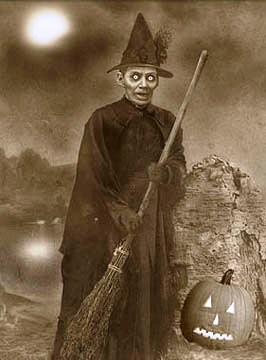
Happy Trails

Happy Trails image 1

Happy Trails ~ A Short Story by Allen Kopp 

“It’s so hot!” Johnnie said, lifting up her hair to let the wind blow on her neck.

“No fooling,” I said.

She had been complaining all the way across the desert and, believe me, we had had more than our share of trouble. The day before, we had spent six hours at a dusty roadside filling station while a greasy mechanic with tattoos repaired our carburetor. The problems with the car were fixed for now, though, and we were on what was the last leg of our trip. Soon we would be resting in comfort and all our troubles would be behind us.

“Why don’t you try to take a nap,” I said. “It’ll make the time go by quicker.”

“I’m worried about things at home,” she said. “I don’t like being away this long.”

“You were the one that wanted to come,” I said. I reached over and gave her a playful little pinch on the leg. She gave me a dark look and moved farther away.

“Don’t touch me,” she said, but without much conviction.

“Crabby, crabby,” I said. “You know what happened to the crab, don’t you? She got herself boiled in a pot!”

“Very funny.”

“I thought it was.”

“The only way you can stand this heat is to keep moving and create your own wind,” she said. “I think hell must be a desert like this.”

“Oh, no, this is nothing compared to hell!” I said. “This is a cakewalk compared to hell.”

“You would know, of course!”

“Well, so I’ve been told.”

One of those giant bugs came in through the window and landed on her leg. She screamed and nearly climbed up the seat back to get away from it. It fell to the floor and she mashed it with her foot.

We called them giant bugs but the biggest one was only about two inches long. To us they were giant because they were so much bigger than any bugs we had ever seen before. I’m not sure what they were, but I believe they were some kind of desert locusts.

“Why do those things always have to land on me?” she screamed.

“They seem to like you,” I said.

“Well, I don’t like them!”

“That’s the pioneering spirit that made this country great!” I said.

“You can always make a joke out of anything, can’t you?” she said. “I’m getting awfully tired of you.”

“Do you know how mutual it is?” I said. “To find out if you really like somebody or not, you have to travel with them.”

“I’m surprised there aren’t a lot more murders,” she said.

We hadn’t passed another car for at least a half-hour. I pulled off the road so we could take a rest and get a drink of water. Johnnie said she needed a couple of minutes of privacy, so she went off about fifty yards away from the road.

“Don’t go too far!” I yelled but I didn’t think she heard me because she just kept going and didn’t look back.

Johnnie and I got along swell. We had been married for five years. We talked all the time about how we were sick of each other and were going to kill each, but it was just our way of bantering. We never really fought, not the way my parents did when I was growing up.

I was standing by the car smoking a cigarette and trying to get the kinks out of my legs when I heard Johnnie scream. I figured she must have stumbled across a rattlesnake or a scorpion. I went running toward the sound of her voice.

When I found her, she was standing in a hole about three feet deep. She was screaming and waving her arms like a crazy person.

“What happened?” I yelled.

It appeared the ground had given way under her feet and she had fallen into a hive of those big bugs. They were swarming all around her, angry and confused.

“What did you do?” I said.

I grabbed onto her arms and pulled her out of the hole. Some of the bugs were clinging to her face and arms, not because they wanted to but because they had no other choice.

“Oh, my god!” I said. “There must be a million of them!”

When I had dragged her a few feet away from the hole, I let go of her and began pulling the bugs off her face and head.

“You just had to find out where they live, didn’t you?” I said.

“I don’t know what happened,” she said. “I was just walking back to the car.”

She had some little welts on her face, scalp, and hands. I wasn’t sure if the bugs had bitten her or if it was something else. I got her back to the car and into the back seat. She was shivering, in spite of the heat, so I covered her up with an old blanket.

“Are you all right?” I asked.

“I’m going to have nightmares for a long time,” she said.

“I’m going to get you to a doctor.”

“I’ve been waiting for something terrible to happen ever since we left home,” she said.

“Don’t talk,” I said. “Just rest.”

I wasn’t sure how far it was to the next town, but I would keep driving until I came to it. If I saw a gas station or a roadside café, I’d stop and call for help. Anybody would have a phone, even way out here.

I kept turning around in the seat looking at Johnnie. She was lying on her back, wrapped in the blanket. Her eyes were closed and she was apparently asleep. It was starting to get dark so I pulled off the road to get her a drink of water and to see if there was anything I could do for her.

I went around the other side of the car and opened the back door where her head was. I didn’t like what I saw. She was breathing heavily and her skin was turning a brown-green color.

“Johnnie!” I said. “How are you doing?”

“I feel a little funny,” she said. “Where are we?”

“I’m not sure,” I said. “I think we might be lost.”

“Oh, no!” She started to cry.

“Don’t worry, Johnnie,” I said. “Everything is going to be all right. I’m taking you to see a doctor right now.”

“Just let me rest.”

“You just go to sleep now and I’ll wake you when we get to the doctor. Don’t worry about a thing.”

It was all the way dark now. My headlights were the only light anywhere on the desert. I felt like I was alone in an enormous empty bowl with the sky as the lid. When I looked at the gas gauge, I saw that I only had about an eighth of a tank. I didn’t know how much farther that was going to take us.

Finally up ahead two or three miles—it’s difficult to gauge distance on the desert—I saw lights over to the left. I held my breath until I was close enough to see what it was: a gas station and motel called Happy Trails Auto Court.

“We’re all right now!” I said to Johnnie, even though I wasn’t sure if she would hear me.

As I pulled up to the gas pump, my brakes squealed. An attendant came running out.

“Do you have a phone?” I asked.

“Pay phone,” he said, pointing with his thumb back inside the building.

As he filled my tank, I was digging in my pockets for change.

“Wait a minute,” Johnnie said. “Don’t call anybody. I’ll be all right. I don’t need a doctor.”

I turned and looked at her. “Are you sure?” I said. “You look like you could use a doctor.” I didn’t want to tell her how bad she really looked.

“Just get a room,” she said. “I need to be someplace other than this car. I want to sleep. In the morning I’ll be fine.”

After I paid the attendant for the gas, I engaged a room for the night and then I helped Johnnie out of the car and into the room. She was barely able to walk; her legs didn’t seem to work right. When we were in the room with the door closed, I helped her to the bed. She lay down heavily and took a few deep breaths.

“I’m going to get a doctor,” I said.

“No!” she said.  “There isn’t anything a doctor could do.”

“How do you know?” I asked.

She didn’t answer but turned her face away and groaned. That’s when I noticed that her head was elongating and her features flattening as if she were made of wax and melting.

“There’s something terribly wrong,” I said.

“Just leave me alone or I’m going to kill you,” she said, but she could barely form the words. Her lips had flattened out and her mouth was a straight line.

She was resting comfortably so I went into the bathroom and took a much-needed bath. When I was finished, I was feeling sick from not having eaten all day, so I went to the café next door and had a huge steak.

When I got back to the room after eating, I saw right away that Johnnie had changed even further in the short time I was away. She was covered all over with a brown-and-green hide that felt like dried corn stalks to the touch. Her arms were turning into wings, and they weren’t an angel’s wings, either. When I let my eyes travel down the length of the bed, I saw that her human legs had been absorbed by the lower part of her body and she had, instead, three pairs of bug legs evenly spaced along her underside. And her face…it almost defied description. She had no nose to speak of and her mouth was a wide slit that went from one side of her head to the other.

“Oh, my God!” I said. “You’re turning into one of those big bugs!”

“Oh, hello, honey,” she said, opening her eyes, which were as big as saucers and domed.

She had never called me honey in her life. “Are you feeling better now?” I asked.

“I must look a fright,” she said. “Will you get me my mirror out of my vanity case?”

I realized then that she didn’t know what was happening and it was probably better that she didn’t. “You look fine,” I said. “Don’t worry about that now.”

“Did you have dinner?” she asked.

“Yes,” I said. “Would you like something?”

“Did you see those weeds growing in the ditch along the highway?”

“I guess I did,” I said. “Why?”

“Ever since I woke up I can smell them and I can’t think about anything else. Will you go out and grab a couple of handfuls and bring them in to me? Get mostly leaves but some stalks, too!”

I did as she asked and when I brought them to her I placed them on the bed near her head. By manipulating her wings and her six tiny legs she turned herself over and began eating them.

She made little nyum-nyum-nyum sounds as she ate. “They are just every bit as delicious as I knew they would be!” she said. “And so economical!”

When she was finished eating, she wanted a drink of water. I filled a glass for her and held it to her mouth. She didn’t seem to have a tongue but she had a way of drawing the water from the glass up into her mouth.

“I feel so much better now,” she said.

“I’m glad,” I said.

“Will you bring me the mirror now? I want to brush my hair.”

“That can wait,” I said. “You just need to rest now.” I couldn’t bring myself to tell her she no longer had hair.

For the next couple of hours she sat on the bed and groomed herself. She had a way of bending herself double and sticking her legs, one at a time, in her mouth, and pulling on them. (I wasn’t sure if she was washing them or trying to straighten them out.) Every now and then she would flutter her wings as if exercising them or trying them out. She kept looking toward the door and the window, but I didn’t know why. She must have heard something that I didn’t hear.

I was exhausted from all that had happened and went to sleep in the chair. When I woke up at first daylight she was lying on her back again. All her legs were sticking up in the air. I thought at first she was dead but then I noticed a slight breathing movement, so I knew she was alive.

“Good morning, Johnnie!” I said cheerily.

She opened her eyes and looked at me and I knew then that the transformation was complete and she would no longer be able to talk to me.

“What are we to do now, Johnnie?” I said, even though I knew there would be no answer. “Do we just go back home and pretend that none of this ever happened?”

She looked at me and waved all her legs in the air. I knew she was trying to tell me something but I didn’t know what it was.

“I’m going to bring the car around,” I said. “I’ll help you in to the back seat. Before we go, I’ll bring you a lot of those nice weeds for you to eat on the way.”

She became agitated, waving all her legs frantically in the air.

“Don’t worry,” I said. “I’ll help to turn you over.”

She began opening and closing her eyes in time to the movement of her legs, moving her body from side to side. A faint sound came from inside her, almost like a whimper.

“What is it, Johnnie?” I said.

I leaned my ear down to her mouth, feeling her antennae touch the side of my head. I heard the little chomping sound that she made with her mouth, but still I didn’t know what she wanted me to do.

It came to me after a while that she was communicating with me in the only way she had left, by gesturing toward the door with all her legs. She wanted me to open it.

After I had turned her right-side-up on the bed, I lifted her gently to the floor and set her down on her tiny legs, a hundred-and-thirty-pound, human-sized bug. I had never seen anything like it before.

I opened the door and stepped back. She took a few tentative bug steps toward it and stopped and looked at me with those bug eyes I knew I would never forget. My Johnnie. I could tell she didn’t really want to leave me but she had to. We belonged to separate worlds now.

As soon as she had crawled out the door, she elevated the front part of her body, opened up her wings, and took flight. I hoped that there were other bug people waiting for her so she wouldn’t have to be alone, and I imagined that I saw some of them across the highway crouched down waiting for her to join them.

“Good-bye, Johnnie!” I called out as she flew away, but I wasn’t sure if she heard me.

I closed the door then and began contemplating my life without her.

Copyright © 2013 by Allen Kopp

All I Have

All I Have image 3

All I Have ~ A Short Story by Allen Kopp 

It came to Mrs. Russ in a dream. She came awake and sat up in bed as if a light had been turned on inside her head. It was like this: she was all alone in the world and her life really hadn’t amounted to much. She had been grasping and selfish her entire life, rarely thinking of others. There might still be a chance for her to do some good, though. She would sell everything she had and give the money to the poor, just like it says in the Bible. She would start by deeding the house to the church. When she had her attorney, Vernon Bluet, on the phone, she told him what she planned to do.

“And where are you going to live after you’ve given your house away?” he asked.

“Don’t you see?” she said. “That’s the whole thing. I will be taken care of.”

“By whom?”

“You’re not a religious man, are you?”

“Religion and the law don’t mix.”

“Maybe they should.”

“It’s your house to do with as you please,” he said, “but I would just like to know why you want to give it away.”

“It seems the right thing to do.”

“You had a religious experience.”

“Of sorts.”

“The voice of God spoke to you and told you to sell all your possessions.”

“Well, when you put it that way, I suppose that is what happened.”

“After you’ve sold everything you have, then what?”

“I’ll give the money to the poor.”

“And then you’ll be one of the poor.”

“Maybe so, but I’ll be assured of a place in heaven.”

“Is that what you believe?”

“Yes. Don’t you?”

“I don’t know what I believe. When it comes to religious matters, I know nothing.”

“I like a man who admits he knows nothing,” she said as she stuck a cigarette in her holder and lit it.

“I knew your husband. He was a very practical man. I don’t think he would approve of what you want to do.”

“He isn’t in a position to either approve or disapprove, though, is he?”

“May I give you a word of advice?”

“Only if you must.”

“Wait one week.”

“That won’t make any difference. I’ve already made up my mind.”

“If you were my own mother,” he said hesitantly.

“Yes?”

“If you were my mother I’d advise you to see a doctor to make sure you haven’t had a stroke that has impaired your judgment.”

She laughed as if he had made a joke. “I can assure you there’s nothing the matter with me,” she said. “I’ve never felt better.”

“Will you agree to have a thorough physical examination before we proceed with this? As a personal favor to me?”

“I just had one,” she said, “not three months ago.”

“Have another one.”

“I want you to start the ball rolling to deed my house over to the church. When that’s taken care of, I’ll decide what to do with everything else.”

She emptied out the closets upstairs, unearthing some garments she hadn’t seen in over thirty years. She threw away the things that she thought nobody would want and boxed up the rest to give to charity. She kept out one change of clothes for herself, a pair of shoes, and a few personal items.

A man who dealt in antiques and second-hand furniture was interested in buying most of the furniture, especially the dining room table, chairs, and sideboard that were over a hundred years old and the beds, dressers and chest of drawers in two of the bedrooms upstairs. (He knew someone else who would buy all the rest of the stuff, including the cast-off furniture in the attic and the old piano that hadn’t been played in fifty years.) When a price was agreed upon, she told him to send the check to the church as a charitable donation for the poor with her name attached, which he agreed to do before his men came to pick up the stuff.

The auction people made an inventory of everything else in the house, which would all be sold in one day at public auction. They arranged all the most valuable items in the living room and dining room: family heirlooms, an antique violin that belonged to her uncle, china and silver, her husband’s book and music collections, gun and coin collections, paintings, artifacts, bric-a-brac, and objets d’art. They took pictures to be used in flyers and newspaper advertising.

It rained the day of the auction, but that didn’t keep people from coming. At first there were about thirty, which increased to fifty, then eighty and then more than a hundred. People were allowed to come into the house and look over the items to be auctioned before the bidding began.

From the beginning the auction was a success. Items sold briskly and brought handsome prices. Mrs. Russ stood to the side with a smile on her face, her hands folded in front of her. She didn’t know most of the people but recognized a few of them from the neighborhood. The minister from her church, the Reverend Frankie Finkle, was in attendance and purchased an antique crystal vase and a table lamp.

When nearly all the items had been sold and the sale was coming to an end, Vernon Bluet, her attorney, stopped by.

“The sale has exceeded our expectations,” she said to him happily as he came through the door.

“There isn’t anything you want to keep for yourself?” he asked, looking around.

“Not a thing,” she said. “I won’t need anything where I’m going.”

“And where is that?” he asked. “Heaven?”

She didn’t answer but only smiled her mysterious little smile.

“I just hope you know what you’re doing and don’t come to regret it,” he said.

She arranged to meet with him the next day at three o’clock to sign the papers to complete the transfer of the house.

After the auction was over and all the people had left, she walked through the house she had lived in for over fifty years, marveling at how different the rooms seemed after they had been stripped of all that had given them character. It was just four walls and nothing more. It meant nothing to her.

That night she slept on a pallet on the floor in her bedroom, reduced to the bare necessities. It would be the last night she spent in the house. Now it belonged to somebody else.

On her way to the attorney’s office the next day, she stopped at the bank to get the deeds to her house and car from her safety deposit box. When she arrived at his office, he was waiting for her. He greeted her warmly and showed her to a comfortable chair.

“Any regrets?” he asked her.

“Not one.”

He showed her where she needed to sign and in a matter of a few minutes the transaction was completed. She signed her car over to him, as well as the house, and gave him all her keys. Before she left, he insisted that she take a glass of brandy with him, since it was unlikely they would ever meet again.

“What now?” he asked.

“I feel wonderful,” she said. “Free of encumbrances for the first time in my life.”

“It isn’t practical, though, to feel that way,” he said.

“Practical isn’t always the same to everybody,” she said.

“You’re going to need at least some money. Cab fare?”

“I don’t need it,” she said. “I’ll walk.”

“As a favor to me, take this.” He opened his desk drawer and counted out five one-hundred dollar bills and handed them to her.

“I don’t want any money,” she said firmly.

“Indulge me.”

She took the money with a shrug and stuffed it into her purse and stood up. They shook hands and then she was gone.

She walked five blocks until she came to a bus stop. She waited and when a bus came along she boarded it and took a seat beside the window. She didn’t know where the bus was going but it didn’t matter. She still believed all would be revealed. All she had to do was go where she was directed.

The other people on the bus seemed dazed and lifeless, as if they had just come from waging battle. The bus crept onward through traffic, stopping frequently to discharge or take on passengers. Soon they entered a part of the city Mrs. Russ had never seen before or hardly knew existed. On both sides of the streets were dilapidated tenement buildings, pool halls and taverns. Some of the buildings looked as if their insides had been bombed out.

At an intersection, a car on the cross street failed to stop at the stoplight and rammed into the side of the bus. The bus driver dismounted and, waving his arms, engaged in furious conversation with the driver of the car, who seemed to be drunk. The passengers came alive, standing up to see what was happening and chattering excitedly.

The car hitting the bus caused Mrs. Russ to strike her head on the metal frame that went around the window. She covered her eyes, experienced a moment of dizziness, and when she took her hands away she didn’t know where she was or why she was on a bus. She never rode on buses!

The passengers filed off the bus to wait for another bus to come along and pick them up, which might take as long as a half-hour. While they were standing in a bunch on the sidewalk, Mrs. Russ disengaged herself from the others and walked away.

She walked three or four blocks, not knowing where she was going but knowing only that she wanted to go home. Her feet hurt, she was tired, and she had a headache. The worst part, though, was not knowing where she was going or why. There was a gap in her consciousness. Something happened but she couldn’t quite fit the pieces together. She tried to remember if she had been sick or had an operation.

She walked until she believed she couldn’t walk any farther. She believed for a while that someone was following her but when she turned around and looked behind her, no one was there. A man standing in a doorway looked at her; he smiled in what she thought was a suggestive manner and flicked cigarette ashes at her. She clutched her purse to her chest and walked on.

When she came to a hotel on a corner, she went into the lobby. It seemed cool and quiet, somehow inviting, after the street. The desk clerk saw her come in and put down the newspaper he was reading. He was bored and hoping for a little diversion.

“May I help you?” he asked.

“This is a hotel?”

“That’s what the sign says.”

“I want a room for the night.”

“You can have anything you want as long as you pay for it in advance.”

She gave him a confused look and opened her purse, seeing the wad of bills just inside that she didn’t know she had. She took them out and, after counting them, handed him a hundred-dollar bill.

“I don’t have change for that,” he said. “I’ll have to owe you.”

She nodded her head. He gave her a key and pointed up the stairs.

“Up one flight and down the hall on your right.”

She took the key gratefully and found the room and let herself in. After she had locked the door behind her, she took off her shoes, sat down and took a few deep breaths. She felt better now that she was in a room by herself, off her feet, and with nobody looking at her. After she sat quietly for a few minutes, she would be all right again.

She nodded off and woke up to a siren on the street outside the hotel. She jumped to her feet and ran to the window. It was raining now and nearly dark. And in the drops of water on the pane of glass before her eyes were all the missing pieces, now found.

Copyright © 2013 by Allen Kopp 

Training Wheels

Training Wheels image 2

Training Wheels ~ A Short Story by Allen Kopp

Gee was allowed to ride four blocks on the sidewalk toward the school to the stone fence and back. He didn’t want to go any farther than that, anyway, because the Hedgepeth brothers were just beyond that. They threw rocks at him and called him names and he was afraid of them.

He didn’t have a full-sized bike yet because he was only seven and small for his age. He had a half-sized bike. It was really a girl’s bike but he didn’t mind because it was comfortable and easy to ride. The bike had been equipped with training wheels up until a few days ago, but a bigger kid in the neighborhood took them off for him. He was proud of being able to ride without them.

He had just reached the stone fence and was about to turn around and go back when he noticed a man leaning against the fence looking at him. He was in the shade under an overhang of leaves, so Gee couldn’t see his face very well.

“Hello,” the man said, as Gee was making the turn-around maneuver on the narrow sidewalk.

“Hi,” Gee said, looking quickly at the man and then looking away.

“How are you today?”

“I’m all right,” Gee said.

“I bet you don’t know who I am.”

“Who?”

“Would it surprise you very much if I told you I’m you, fifty years from now?”

Gee laughed a little bit because he didn’t know what else to do. “That’s silly,” he said.

“Why is it silly?”

“How could you be me when I’m right here?”

“I don’t know,” the man said. “Except to say that time is a river.”

“I don’t know what that means,” Gee said.

“I know you don’t. I don’t know what it means, either. It’s just what I’ve been told.”

“Do you live in that house?” Gee asked, pointing to the house with the stone fence around the yard.

“No,” the man said. “I don’t live anywhere around here anymore.”

“So you’re just visiting?”

“Yes, I’m visiting you.”

“Does my mother know you?”

“Yes, she knows me. About as well as anybody could.”

“I’d better get going. If I don’t come back right away, she’ll come looking for me.”

“Tell her hello for me.”

“What’s your name?”

“My name is the same as yours.”

Gee looked at the man’s face but still couldn’t see it very well. “I don’t know what you’re talking about,” he said. “Are you a friend of the family?”

The man laughed. “In a way,” he said. “You’ll understand when you’re older.”

“I think I’ve heard that one before,” Gee said.

“Before you go, I want to tell you something that won’t mean anything to you now but will when you’re older.”

“What is it?” Gee asked.

“You’ll be married three times. You’ll save yourself a lot of grief if you skip the first one.”

“I’m not ever getting married.”

“Don’t go into business with a partner named Alonso. He’s a crook. The business fails and you lose all your money.”

“I don’t know anybody named Alonso.”

“After your father dies, your mother will want to marry a man named Bartlett. Whatever you do, don’t let that marriage take place. He wants to marry her for all the wrong reasons.”

“Would you like to come home with me and tell her yourself?”

“No, I can’t do that.”

“Why not?”

“I’m here to see you. Not her.”

“Okay. I’m going now.”

“Try to remember the things I told you, even though they don’t mean anything to you now. Write them down when you get home and put them away someplace safe where you’ll be able to see them in twenty or thirty years.”

“Twenty or thirty years?” Gee said. It seemed to him like all the time in the world. His young mind couldn’t grasp that much time.

That evening when they were having dinner, mother said, “Millie called me and told me she saw you talking to an old man on the sidewalk today.”

“Yes,” Gee said. “He was just standing there on the sidewalk when I rode past on my bike.”

“What did he say to you?”

“Nothing much. He just asked me how I was and he told me he used to live here a long time ago.”

“He wasn’t trying to mess with you, was he?” daddy asked.

“No.”

“Did he say anything dirty to you?” mother asked.

“No! He was just a nice old man.”

“You’ll be sure and tell me if anybody bothers you, won’t you?”

“He didn’t bother me.”

“I’m going to call the sheriff and tell him there’s an old man hanging around the neighborhood bothering kids,” daddy said. “They can at least keep an eye out for anybody that looks suspicious.”

“I don’t think he’ll be back,” Gee said.

He watched his father chewing and he knew he wasn’t paying any attention; he was already in some other place. His mother sipped her iced tea daintily with a cigarette in her fingertips as a fly buzzed around the table and lighted on the plate of sliced tomatoes.

Copyright © 2013 by Allen Kopp

Queen for a Day

Queen for a Day image 1

Queen for a Day ~ A Short Story by Allen Kopp

The year is 1958 and Mrs. Thelma Caswell has applied to go on the TV show Queen for a Day. That’s the show where four contestants, all women, go in front of a studio audience and tell their unhappy stories. Delivery is everything because the audience votes for the saddest, most deserving story, with its applause; that is, the loudest applause determines the winner. (There can be no doubt about which story garners the loudest applause because it’s registered on a scientific instrument known as the “applause-o-meter.”)

The lucky winner is given what she wants and needs most to make her difficult life more bearable, whether it’s a wheelchair or a washing machine or an iron lung—sometimes all those things. The losers are given a basket containing colorful little bars of soap, a set of shot glasses, and coupons for reduced prices on lobster dinners.

One month after applying to be on the show, Thelma is asked to come to the television studio where the show is produced for what they call an “initial interview.” The “producers” of the show (a fat man and a mannish woman) want to speak to her to make sure she is “telegenic” enough and won’t “freeze up” in front of the television cameras and the studio audience. Thelma is told at the end of the interview, which takes an entire afternoon, that she will be notified of the producers’ decision regarding her suitability to be a contestant on the show.

In the days and weeks that follow, she won’t allow herself to become excited at the possibility of being on Queen for a Day. In fact, she tries to put it out of her mind because there is a very real possibility they won’t want her. For that reason, she doesn’t tell her husband, her children, or any of her friends or family; she will tell them if and when she is chosen to be on the show.

Finally, when she least expects it, she receives the phone call. She is requested to be at the television studio at ten o’clock for a twelve o’clock taping of Queen for a Day on Thursday. When she hangs up the phone, her hands are shaking and for a few minutes she doesn’t know what she’s doing. She seems to be walking on air. When she regains control of her senses, she immediately starts going through her closet to see what she has to wear. She doesn’t see anything that she can stand anymore, so she goes shopping.

She tries on many dresses in the store but has a hard time deciding. Since the show is in black and white (color is still a few years away), she thinks she will look better in a light color, although black or navy blue will make her appear thinner. (She has put on a lot of extra weight in the last couple of years and she has heard somewhere that TV cameras add fifteen or twenty pounds to a person’s appearance.) She settles on a simple white silk dress with peach-colored trim, elegant but not flashy. She can’t think about how much it cost.

On the day before the taping, she spends six hours in the beauty parlor, availing herself of all the services they have to offer. She gets a henna rinse, a cut, and a permanent wave that makes her hair look like a poodle dog, but still she believes she looks better than she has ever looked in her life.

That night she hardly sleeps at all. She didn’t think she would be nervous, but now that it’s getting so close she feels as if she might die. She feels alternately sick with dread and giddy with excitement. In the morning she’s up long before she needs to be and spends hours on getting dressed, “putting on her face,” and getting her hair just so. When finally it’s time to leave for the TV studio, she feels thoroughly exhausted.

She can’t find a place to park so she squeezes her car in at the end of a block too close to a fireplug. She is sure she will have a parking ticket when she comes out but that’s a trivial matter, she believes, that she will deal with when the time comes.

She expects the emcee of the show, Durwood Sherwood, to be there to greet her with a little hug and a peck on the cheek, but instead she is directed to a third-floor office where she finds herself before a middle-aged woman behind a desk with facial hair and big glasses that make her look like an unhappy owl. The woman gives Thelma a stony look and bites down on her dentures.

“May I help you?” she asks.

“I’m here to be on the show,” Thelma says.

“What show might that be?”

“Why, Queen for a Day!

“I know,” the woman says with a laugh. “I was just messing with you. Queen for a Day is the only show taping today. What’s your name?”

“Thelma Caswell.”

“All right. Have a seat. I’ll let them know you’re here.”

Thelma sits on an orange plastic couch while the woman picks up a phone and murmurs into it words that Thelma is not able to make out. In a few minutes a door opens and the fat man who Thelma met earlier as one of the producers of the show emerges.

“How nice to see you again, Miz Caswell!” he says, holding out his hand for her to shake. “Please follow me.”

He takes hold of her arm as if she is blind and leads her down a hallway.

“Are you excited about being on Queen for a Day?” he asks.

“Oh, yes!” she says.

“Well, right this way.”

He takes her around a corner and stops at another door. He opens it and gives her a little shove inside. “Well, have fun!” he says and then he’s gone.

The other three contestants are sitting in chairs against the wall like in a doctor’s waiting room, smiling at her wanly. She sits down with them, making four. It’s quiet in the room and nobody is saying anything, as if they are in a church. It doesn’t seem to Thelma like the kind of room they put you in before you go on TV. She wonders if she is in the right place or if they have mistaken her for somebody else.

Soon a man with a clipboard comes in and gives them nametags that he instructs them to put on their chests over their hearts. There’s Buffy, Chichi, Peaches, and Thelma.

“We use only first names,” he says. “You’ll be up in alphabetical order, but you don’t need to worry about that. Durwood will cue you. Now, if we’re all ready, we’ll go in and meet the studio audience.”

They all stand up as if they are one and follow the man out of the room. He takes them through a labyrinth of dark passages lined with what looks like clutter until they come to a black curtain. He arranges them in a line in reverse alphabetical order (Thelma, Peaches, Chichi, and Buffy), opens the curtain and motions for them to go through it.

The studio audience, numbering about five hundred, has already been sitting for two hours. They have been “primed” and are relaxed and ready to be entertained. They are cued to applaud at the entrance of the four contestants.

“And here they are!” Durwood Sherwood announces in his sonorous voice. “There are four of them! They are all worthy! But only one of them will be. Queen! For! A! Day!”

The audience applauds wildly again while the contestants take their places behind four little podiums bearing their names. Two cameras roll forward to beam their movements to the millions of people watching at home.

After Durwood has dispensed with the preliminaries, it’s time to get down to the business of hearing from the contestants. Buffy is first.

“I think you have a very special story to tell us, don’t you, Buffy?” Durwood cues her.

“Well, Durwood,” she says, “I used to be a bareback rider in the circus.”

Ohhhhhh!” sighs the audience.

“During a performance to a packed house two years ago, the horse I was riding stumbled and fell. I, of course, was thrown forward. Two clowns tried to catch me but they missed. I landed on a low wall that was used to separate the audience from the performers. I had serious neck injuries.”

Here she pauses for effect and points to her neck brace that is, oddly enough, the same color green as the dress she is wearing, making it look as if she has no neck at all. Her black hair interspersed with gray is splayed over the neck brace to her shoulders. Her mouth is a wide, grim, lipless line. As she stares into the TV camera, she looks like a frog about to catch a fly.

“I was in a coma for two weeks,” she continues. “When I woke up, my doctors told me I would never ride again. Bareback riding was all I knew. There I was, my livelihood taken away, with two children and no husband. My daughter desperately wants to go to modeling school. She is so pretty and everybody who has ever seen her believes she has a future in modeling. If we had enough money to put her through school, she could get herself a good job and support the family while I get myself back on my feet.”

The audience is here cued to applause. The applause is interspersed with whistles and cheers.

“Now we have Chichi,” Durwood says. “Chichi, won’t you tell us your story?”

“Well, Durwood,” Chichi says in a breathy whisper, “my husband and I have eight children.”

“Ahhhhhh!” sighs the audience.

“We were always able to get along quite well on my husband’s salary, but he got into a fight with the foreman at the factory where he worked and got fired. That was six months ago. He hasn’t been able to find another job. When his unemployment runs out, we won’t have any income. He’s depressed and has been drinking quite heavily. I think he’s seeing another woman.”

Here she lowers her head and squeezes her eyes shut. The camera moves in for a close-up, showing the ugly splotches on her face and bare upper arms. For a few seconds she can’t speak at all.

“I know this is difficult,” Durwood says sympathetically.

When she speaks again, her voice is a-tremble. “If we had the money for my husband to go to trade school, he could get a good job as an auto mechanic and everything would be all right again. It would give him a new purpose in life and would make him stop drinking and running around so much.”

“That’s wonderful!” Durwood says, holding up his arms to indicate that Chichi is finished. The audience applauds.

“Now let us hear from Peaches,” he says. “Peaches, won’t you tell us your story?”

“Well, Durwood,” she says, her fleshy chin wobbling. “My husband Stan and I have four beautiful children, two boys and two girls. The oldest is twelve and the youngest four.”

“And there’s something quite different about your husband Stan, isn’t there?” Durwood prompts her.

“Yes,” she says in a kind of drawl, ”Stan is four foot tall. He’s a midget!”

Here a picture of a tiny, smiling man is flashed on the screen. He’s wearing a tuxedo and top hat and is carrying a cane. The audience applauds and cheers.

“And I couldn’t love him more if he was six-and-a-half foot tall!” Peaches shrieks.

“Ahhhhhh!” sighs the audience.

She pivots her head from side to side, obviously enjoying the attention. Her eyes are tiny slits and her cheeks apple-like, her head an inverted black bowl.

“I’ve always been a short woman,” she says, “but I’m a whole foot taller than he is!”

The camera pans out over the audience to show how much they are enjoying this moment.

“All is not well, though, at your house, is it, dear?” Durwood asks.

“No,” Peaches says, a handkerchief at the ready. “Stan works as a bouncer in a nightclub. The pay is meager, at best, but he works very hard and loves all of us very much.”

“Ahhhhhh!” sighs the audience.

“Our youngest son, Leroy, is four,” she says.

“And is Leroy a midget, too?” Durwood asks.

“No, he isn’t. He’s normal-sized. Although he’s only four, he’s almost as tall as his father and is going to be a big man some day.”

“Bless his heart!” Durwood says.

She waits a moment for the laughter to subside before she continues. “The problem is not with his height but with his eyes. He has a rare eye disorder and will go completely blind in the next few years if he doesn’t have an eye operation. We aren’t able to afford the operation on the money Stan makes as a bouncer. We already have a second mortgage on our house and can’t borrow another cent until we pay off the debts we already have. That will take years and it might be too late to save little Leroy’s eyesight.”

She begins crying uncontrollably, covering her eyes, and the audience almost swoons with sympathy.

Durwood gives a big sigh and looks directly into the camera. His eyes are moist. “We’ll all be rooting for little Leroy, won’t we?” he says earnestly, and the audience breaks into thunderous applause.

After a few seconds he holds up his hands to bring the applause to an end. “And, now,” he says, “that brings us to our final contestant, Thelma. Thelma, won’t you tell us your story?”

“Well, Durwood,” she says, feeling more at ease than she expected, “I don’t know where to begin. My husband is in prison and has no hope of getting out for at least six more years. We spent all the money we had for his defense. I have a sixteen-year-old daughter, Lulu, who is a paranoid schizophrenic. She believes aliens from outer space are trying to kidnap her and she needs constant supervision. My eleven-year-old son, Raphael, is an albino. He’s very smart but he has to go to an expensive special school because the kids in public school would kill him.”

Ohhhhhh!” sighs the audience.

“Our house is heavily mortgaged and we’re behind in the payments,” she continues. “The bank is about to foreclose. I’d like to have enough money to make the back payments to keep us in the house for a few more months until I can finish the novel I’m writing and get it published. It’s sure to be a bestseller.”

“Well, well, well,” Durwood says. “We wish you and your family all the best!” He faces the audience and raises his arms as a signal for them to applaud.

When the applause subsides, he holds the microphone in both hands and looks reflectively at the floor. “Well, ladies and gentlemen,” he says, “we’ve heard the stories from our four contestants. Now the time has come for members of our studio audience to vote with their applause for the contestant they believe is most worthy to be crowed Queen for a Day!”

There’s a little bit of stage resetting as Durwood retreats to the left away from the contestants and the TV camera rolls in for close-ups. The first close-up is of Buffy. The picture the audience sees at home is Buffy’s face with the applause-o-meter on the bottom half of the screen. The audience applauds, with some cheering and whistling interspersed. The needle on the applause-o-meter goes over about three quarters of the way. The same with Chichi. Then Peaches. Then Thelma. There is a drum roll. All four contestants are nearly tied, but the judges determine that the needle advanced just a little more for Peaches than for the others. Peaches is Queen for a Day! It was the blind baby and the midget husband that did it!

Peaches is crowned and robed to the cheering of the audience. She cries, screams, and jumps up and down. When the hoopla subsides, Durwood announces in an excited voice that little Leroy will have an eye operation at the finest eye clinic in the country and his eyesight will be saved, all because his mother was crowned. Queen! For! A! Day!

Thelma gets away just as soon as she can. She doesn’t want anybody looking at her. She is the loser, along with Buffy and Chichi, and there’s no joy in that. She wishes now that she had never gone on such a show that’s obviously aimed at imbeciles. She sees now that she’s smarter than that, better than that.

While she’s driving home, her hands are shaking and her mouth is dry. She wants to find a hole and crawl inside and die. She cringes at the thought of her mother and her friends seeing the show and laughing at how insipid she is, along with those others. She has humiliated herself in front of millions of people, bared her soul, and then lost to a fat little woman with slit eyes and a midget for a husband. She can hear the world laughing at her! Woman, thy name is Fool!

By the time she gets home, it has started to rain so she pulls the car into the garage. With the motor still running, she gets out of the car and closes the garage door before any of the neighbors have a chance to see her.

It’s comforting, somehow, with the rain on the roof and the purr of the engine. It feels intimate, restful, secluded. Her own little world. Leaving the car door open, she stretches out on the seat with her feet under the steering wheel and the top of her head against the passenger-side door. Soon she begins to feel drowsy. She has never known a sweeter feeling.

Copyright © 2013 by Allen Kopp

The Beauty Box

The Beauty Box image 1

The Beauty Box ~ A Short Story by Allen Kopp

When Noreen set the plate of salmon croquettes and macaroni and cheese in front of Odell, he gave her a significant look but didn’t say anything. He was hoping for chicken or beef stew, at least. He didn’t like salmon croquettes; they had little soft fish bones in them that he tried not to think of as bones as he chewed them.

“Do you notice anything different about me?” Noreen asked as they began eating.

“You’re wearing a different shade of lipstick,” Odell said, barely looking at her.

“I’m not wearing any lipstick,” she said. “Guess again.”

“You got a new pair of pedal pushers.”

“No!”

She turned around so he could see the back of her head. “I’m wearing what they call a ‘fall,’” she said. “It’s an addition that blends in with the rest of my hair so you can’t tell the fake hair from the real hair.”

“Do you mean you’re wearing a hairpiece?”

“Well, if you want to call it that.”

“Why don’t they call it a hairpiece, then?”

“Because ‘fall’ sounds better.”

“The more important question, I suppose, is why do you need a hairpiece?”

“Well, I don’t really need it, but it makes my hair look better, don’t you think? Thicker and fuller? It somehow makes me look younger?”

“If you say so.”

“I went to the Beauty Box today. They have this wonderful new hairdresser named Enzo. He took one look at me and said, ‘A fall would do wonders for your hair!’.”

“Enzo is a man?”

“Yes.”

“Why is it that hairdressers are all men now? Hairdressers used to be women. Now they’re men. Men with foreign-sounding names.”

“I don’t know. Why don’t you conduct a survey?”

“Is Enzo a homosexual?”

“I didn’t think to ask.”

“Well, it seems you would want to know the sexual preferences of a person fixing your hair.”

“It doesn’t matter.”

“What country is he from? Is ‘Enzo’ an Italian name?”

“If I had to guess, I’d guess he’s an American.”

“Does he speak with an accent?”

“No.”

“Do you want me to go punch him in the face for you?”

“What for?”

“For raising so many questions for which there are no answers.”

“But don’t you think my hair looks cute?”

“It looks flat in the back and pushed up on top,” he said. “The way it looks when you get up in the morning.”

“Enzo said I have lovely hair.”

“Isn’t he paid to say that?”

“He looked at my face with a magnifying glass and he said I have beautiful skin. He said a lot of women have weather-beaten skin, but he could tell that I take care of mine. He said you can tell a lot about a person’s general health just by looking at the skin on their face.”

“And if Enzo said it, you believe it.”

“It’s his business to know about those things.”

“If he told you to make yourself up to look like a frog, would you do it?”

“Of course I would!”

“Are you in love with Enzo?”

She laughed. “Hardly.”

“Why don’t you divorce me and marry Enzo?”

“That’s too much trouble.”

“If you heard Enzo talking to other women, I’ll bet you’d hear him say the exact same things to them, no matter how old and ugly they are.”

“Are you saying I’m old and ugly?”

“No, I’m just saying I’m wondering what Enzo’s game is.”

“I don’t think he has one. He’s just a very nice man.”

“He made you feel important.”

“Well, yes, I guess so.”

“He made you feel special.”

“When you put it that way, I guess he did.”

“And you gave him a great big tip.”

“I always tip my hairdresser.”

“What else?”

“What do you mean?”

“What else did you feel compelled to do for him because he’s such a nice man?”

“I bought some beauty products from him.”

“How much?”

“A hundred and eighty-seven dollars.”

“And that on top fixing your hair and selling you the fall?”

“Well, yes.”

“How much did you spend today at the Beauty Box?”

“Everything is always about money with you, isn’t it?”

“How much?”

“Three hundred and thirty dollars.”

“So there you have Enzo’s game.”

“I don’t know what you’re talking about.”

“He’s a crap artist! He flatters you and makes you feel special and gets you to liking him. Then he just happens to mention these beauty products he’s selling. By that point you have no sales resistance. You wouldn’t be able to turn him down if he was selling real estate on the moon.”

“Now you’re just being silly.”

“I didn’t get fleeced out of three hundred and thirty dollars today.”

They were silent for the rest of the meal until Noreen was serving the dessert. “There’s a Doris Day movie on tonight,” she said. “It’s one we haven’t seen before. Do you want to watch it with me?”

“I told Willard I’d stop by and see him this evening,” he said tersely.

After he was gone she stacked the dishes in the sink and went to the phone and called the Beauty Box and asked to speak to Enzo. She had to wait what seemed a long time but finally he came on the line.

“Enzo?” she said. “This is Noreen Baggett. I was in the shop today.”

“Yes, darling,” he said. “I was just about to leave for the day. What can I do for you?”

“I just wanted to make sure you have me down for the seventeenth at ten o’clock.”

“Just a minute, dear. I’ll check the book.”

He laid down the phone and when he came back he said, “Yes, dear, we’re all set for the seventeenth.”

“I’m so looking forward to it!” she said.

“Well, so am I, dearest!”

After she hung up the phone, she turned on the TV and sat down in the recliner and made herself comfortable. The Doris Day movie was just beginning.

Copyright © 2013 by Allen Kopp

Charmaine Chatsworth, Society Girl

 Charmaine Chatsworth image 1

Charmaine Chatsworth, Society Girl ~ A short story by Allen Kopp 

Fifi opened the curtains, letting the sun in. Charmaine was instantly awake. She groaned and sat up in bed as if reveille had been sounded.

“You said you wanted to be up by seven, miss,” Fifi said.

She wanted to pick something up and throw it at Fifi for interrupting such a lovely sleep but, after all, she was only doing her job.

“Where are mummy and daddy?” she asked.

“Breakfast is being served on the terrace, miss.”

She got slowly out of bed and went into the bathroom. After brushing her teeth and dabbing at her face with a washcloth, she ran a brush over her hair, put on a dressing gown and went down to the terrace.

“Good morning, dear!” mummy said cheerily. “I hope you slept well.”

“I always sleep like a dog,” Charmaine said.

“I think that’s ‘sleep like a log’,” daddy said, not bothering to look up from the paper he was reading.

“Well, that’s a cliché,” mummy said. “We try to avoid clichés in our speech.”

The maid came with coffee for Charmaine.

“None of that,” Charmaine said. “I’ll just have some grapefruit juice and toast.”

“I’m afraid you’re not eating enough,” mummy said. “You’re as thin as a nail.”

“I think you mean ‘thin as a rail’,” daddy said.

“Isn’t that what all women strive for?” Charmaine said.

Daddy put the paper down and looked at Charmaine’s dressing gown. “Are we not even bothering to get dressed anymore?” he asked.

“I don’t know about you,” she said, “but I’m not getting dressed until there’s a good enough reason.”

“Why don’t we all just sit around in our drawers, then?” he said.

Chester came out onto the terrace, kissed mummy on the cheek and sat down at the fourth side of the table.

“Morning all,” he said.

“Yes, isn’t it?” Charmaine said.

Chester was two years younger than Charmaine and already quite a man. He was six feet, two inches tall, had blue eyes and a dimple in his chin. He looked nothing like either mummy or daddy. Nobody was more entranced by his handsomeness than he was himself.

“How’s my favorite son this morning?” mummy asked, reaching over and patting him on the hand.

“I’m your only son, mummy,” he said.

“Unless, of course, you count Rexford, my dog,” she said. “He’s like a son, really, when you think about it, except that I didn’t give birth to him.”

“Why are you all dressed up so early in the day?” daddy asked, pointing at Chester’s tie and jacket. “You’re not by any chance planning on doing any work today, are you?”

“Heaven forbid!” Chester said. “I stand to inherit a very large fortune. Why would I work for it when I don’t have to?”

“There’s a little thing called ambition,” daddy said.

“Of which I have none. No, I just have a little business in town, that’s all.”

“What kind of business?” mummy asked.

“I think it comes under the heading of private business.”

“You’ve just been told to mind your own beeswax, mummy.” Charmaine said.

“It’s not some intrigue with some woman, I hope.” daddy said.

“Nothing as tawdry as that,” Chester said. “I’m going to the travel bureau and then I’m having lunch at the Seafarers’ Club with Dexter and Louie.”

“Louie’s that musician fellow, isn’t he?” mummy asked.

“That’s the one.”

“I’m afraid he isn’t a very savory companion for you.”

Chester laughed. “I believe I can choose my own friends, if it’s all the same to you.”

“Well, I just want you to be careful with that sort.”

“I hear he smokes reefers,” Charmaine said to tease Chester. “And that’s just for starters.”

“Oh, he does not!” Chester said. “You stay out of it!”

“How about you, daddy?” Charmaine asked. “Aren’t you going in to the office today?”

“Not today,” daddy said. “I’m taking a few days at home.”

“It wouldn’t matter if he never went to that horrible old office again,” mummy said. “He’s already got a hundred and seventy-five million dollars. Let those other people scramble and claw at each other to make money. Daddy doesn’t have to do that anymore.”

“Three years ago, in 1929, I had two hundred million,” he said.

“This awful Depression,” mummy said. “I don’t know what people are supposed to do.”

“Yes,” Charmaine said. “Isn’t it awful to have to squeak by on a hundred and seventy-five million?”

“The way you females spend money,” daddy said, “I’m wondering how long it’ll take you to run through the hundred and seventy-five million.”

“Oh, you exaggerate so!” mummy said.

“You ever notice how much of the conversation in this family centers around money?” Chester said.

“Well, since you’re not using Liggett this morning,” Charmaine said, “I thought I could get him to drive me in to town.”

“Oh, not you, too!” mummy said. “Why do both of my children have to go to town today when it’s a perfectly lovely spring day and we have this charming old thirty-five room house to knock around in?”

“I’m sure Rexford won’t want to go,” Chester said.

“Well, it’s like this,” Charmaine said. “I haven’t seen my friend Claudia Millet for ages. I told her I’d spend the day with her today and I might even stay the night if she invites me. We’ll probably see a show or something.”

“Well, if you think you should,” mummy said. “I have to keep reminding myself that you’re a grown-up person now.”

“I was going to take a cab to town,” Chester said, “but since Liggett is going to drive you, Cha-Cha, I’ll just tag along. He can drop me off at the travel bureau. I can walk to the Seafarers’ Club from there and I’ll take a cab home.”

“Oh, why must you use that horrible nickname?” mummy asked. “I cringe every time I hear it.”

“What’s wrong with Cha-Cha? It’s a perfectly logical diminutive of Charmaine.”

“It sounds like a floozy or a harlot or something.”

“Well, isn’t that what she is?”

“Watch who you’re calling names, buster!” Charmaine said. “Two can play at that game. I might think of some names to call you that you wouldn’t especially like.”

Charmaine ordered the car for nine o’clock. Liggett was waiting for them at the front door. All the way into town, she and Chester spoke little. Chester closed his eyes and appeared to be dozing, while she looked out the window at the trees, which were just beginning to come into full leaf.

Liggett dropped Chester off first and then turned around in the front seat and asked Charmaine where she wanted to go.

“Just let me out at the library,” she said, “and I’ll walk from there.”

As she was getting out of the car, she dismissed Liggett for the day. She was spending the night in town, she said, and wouldn’t need him. He looked pleased that he wasn’t going to have to wait for her and could go back home and do as he pleased until he was needed again. He touched the brim of his hat in a kind of salute and drove away.

From the library, she walked six blocks to a different part of the city. She turned at a corner as if she knew where she was going and walked two blocks down until she came to an old hotel on a corner opposite an empty warehouse. She went inside and engaged a room for the night. The desk clerk told her she could have the room only if she paid for it in advance.

Alone in the room with the door securely locked, she put her little suitcase on the bed and opened it. She took off her expensive-looking dress and changed into an ugly gray one like a female prisoner would wear. She changed her stylish shoes for a pair of scuffed oxfords and then put her dress, shoes and leather handbag into the suitcase and put the suitcase under the bed. She wiped the lipstick and makeup off her face and put on a brown felt hat that completely covered her hair. Checking herself over in the mirror, front and back, she then went back down the dark, foul-smelling stairs to the street.

From the hotel, she walked five blocks and turned and began walking toward the river. She could smell the river and feel it in her mouth from a long way off. Finally when she came to a charity soup kitchen in a building whose windows had been covered with newspaper, she paused for a moment and then went inside. She found the man who ran the soup kitchen, a Reverend Peebles, and told him she was there to help. He gave her an apron and put her behind the counter.

She ladled soup into bowls until the pot was empty and somebody from the kitchen came and replaced the empty pot with a full one. She was sweating and her feet ached. Still the indigents came, an endless flow of them. The bowl of soup and slice of bread was all the food most of them would have all day.

After a couple of hours she spotted him far back in the line. His turn came, finally, and she filled his bowl. She smiled at him and he smiled back. When she saw him take a seat at the back of the room and begin eating, she gave her ladle to the girl standing closest to her and said she needed to take a little break. She took off the apron and went to where he was sitting and sat down across from him.

“Hello,” she said. “I was hoping you’d be here today.”

“Well, here I am,” he said.

“Are you feeling better than the last time?”

“No. I think I’m dying.”

“You should see the doctor at the free clinic.”

“What if I told you I don’t care that I’m dying?”

“Everybody wants to live,” she said.

“Do they?”

“Let’s not quarrel.”

“Who’s quarreling?”

“I read the first six chapters of your book.”

“Are you going to tell me I’m a lousy writer?”

“On the contrary. I’ve never read anything like it. You have a very interesting and unusual way of expressing yourself. I can’t wait to read the rest of the book.”

“There’s not going to be anymore,” he said. “I’ve given up writing. It’s a luxury I can no longer afford.”

“What about the six chapters?”

“Burn them. Use them for wrapping fish. I don’t care.”

“You can’t give up now.”

“Can’t I?”

“I got us a room,” she said, hoping to change the subject.

“Does this room have a bathtub?” he asked.

“Yes.”

He flashed one of his rare smiles at her and finished his soup.

When they were walking back to the hotel, she stopped at a little market and bought a loaf of bread, some cheese, a couple tins of sardines, a package of cigarettes, two apples and some oranges.

“First a room and now food,” he said. “Where is the money coming from?”

“I had a little saved,” she said.

“You’re not a prostitute, are you?”

She laughed. “I’ll try not to be too insulted by that,” she said.

At the hotel, she had to help him up the stairs to the room because he was so weak. She opened the door and when he saw the bed he went to it and lay down heavily on his back, gasping for air.

“When are you going to see a doctor?” she asked.

“Probably not until they’re doing the autopsy.”

“Ha-ha. What a wit.”

While he was taking a bath, she washed his underwear and socks the best she could in the sink and hung them up to dry. When he came out of the bathroom he got into bed and covered up because he had nothing to put on.

“You’re feeling much better now, aren’t you?” she said.

She lay down on the bed beside him, on top of the covers. She kissed him lightly on the lips and then lit a cigarette for him.

“I really don’t know what I see in you,” she said.

“Don’t you think I’m handsome?”

“Not especially.”

“What is it then?”

“I don’t know. It was something I felt the first time I saw you last fall. Something that can’t be explained in words. Some kind of mysterious connection.”

“I don’t believe in that kind of bull,” he said.

“What do you believe in?”

“Nothing.”

He took her hand and put it to his lips. “You look and smell so clean,” he said. “Not like the rest of us.”

“I had a bath before I walked over to the soup kitchen.”

“I know nothing about you,” he said. “Are you some kind of an angel or something?”

“Hardly.”

“Do you have family? A family of angels?”

She laughed. “I have a mother, father and brother, but I don’t think anybody would ever think of them as angels.”

“Where do they live?”

“Not far from here.”

“When do I get to meet them?”

“Soon.”

“You know, don’t you, that you’re wasting your time with me?”

“Why do you say that?”

“Because I’m no good. When I was growing up, my old man was always telling me I was worthless and I see now that he was so right.”

“Everybody has worth,” she said.

“I want you to just forget about me.”

“I could help you if you’d let me.”

“How do you mean?”

“I could give you money while you finish your book.”

“I’d rather die than take money from you.”

“You could think of it as a loan and pay me back when the book is published.”

“The book won’t ever be published. I told you. I’m washed up as a writer. I won’t ever write another word.”

They talked through much of the night and slept intermittently. He wanted to know about her upbringing. She told him as much as she could without actually lying, omitting, of course, certain details such as the family yacht and vacations in the South of France. They ate the food she bought, talked some more and slept some more.

When a police siren woke her up before dawn, he was gone. She waited for the sun to come up and then changed her clothes and left the hotel and found a cab to take her home.

At mid-morning when she was dozing on the terrace in the sun, mummy came out of the house and sat down close to her. When she realized mummy was looking at her with more than the usual scrutiny, she opened her eyes all the way and sat up.

“Are you going to the dance tonight at the country club?” mummy asked.

“I suppose so.”

“What dress are you going to wear?”

“The peach, I guess.”

“Who are you going with?”

“Talbot Lakey.”

“He’s very good-looking, isn’t he?”

“Yes.”

“But you don’t like him very much, do you?”

“Not very much.”

“He’s an accomplished polo player and already owns his own yacht.”

“Yes.”

“I think it’s time for you to start thinking about finding a suitable husband.”

“Maybe you can find one for me and save me the bother.”

“Did you and Claudia Millet have a good time?”

“Yes.”

“What show did you see?”

“Oh, we decided not to go to a show after all. We had lots of talk to catch up on.”

“Why don’t you tell me where you really were?” mummy said.

“I suppose it wouldn’t do any good to tell you it’s none of your business, would it?”

“No,” mummy said. “Not this time. I think you should see a doctor and have a thorough physical exam.”

“All right, mummy,” she said. “Anything you say.”

Copyright © 2013 by Allen Kopp

A Conversation Between Two Mothers

A Conversation Between Two Mothers image 5

A Conversation Between Two Mothers ~ A Short Story by Allen Kopp

It was Madge’s turn to host the card party and she still had much to do. She had put her hair up in curlers and was tying a scarf around her head to make herself presentable to go and buy some last-minute items, when there came a knock at the back door. She huffed with impatience, snuffed her cigarette out in the garbage pail, and opened the door to a short, toad-like woman with frazzled red hair.

“Mrs. Simple?” the woman said.

“It’s Semple,” Madge said.

“Well, Simple or Semple or whatever it is, I need to have a word with you.”

“What about?”

“You have a son named Dakin?”

“That’s right.”

“He’s been picking on my Leslie.”

“Picking on your what?”

“On my son Leslie, dodo bird!”

“Oh. And who are you?”

“My name, if it should happen to be of any interest to you, is Mrs. Felton. My son is Leslie Felton.”

Madge sighed and stepped out the back door. “Maybe you’d just better tell me what happened,” she said.

“Leslie was riding his bicycle on the sidewalk, minding his own business. Dakin jumped out from behind a tree and yelled and scared him and caused him to wreck his bike. He cut a big gash in his leg that was pouring blood.”

“I’m sure that’s an exaggeration.”

“And that’s not all. When Leslie was lying on the ground howling in pain, Dakin took his bicycle.”

“Oh, he’s just playing. That’s what boys do.”

“Oh, is that so? Well, if you want to know the truth, I think Dakin is a lunatic! Only a lunatic enjoys inflicting pain on others.”

“Now, hold on a minute!” Madge said. “You don’t have any right to speak to me that way about my child!”

“Then when Leslie finally got his bike back, it had some scratches on it that weren’t there before. Caused by your brat!”

“Wait a minute!” Madge said. “Did you see Dakin do any of this?”

“He did it all right!”

“Did you see him do it?”

“Well, no, I was in the house, tending to my little girl.  She’s got a rash all over her body and we don’t know what’s causing it.”

“If you didn’t see Dakin do it, how do you know he did?”

“Because Leslie said so. If you could have seen how upset he was, it would have broken your heart. If you have a heart.”

“Maybe Dakin didn’t do it. There are lots of boys in the neighborhood.”

“Leslie said he did it and if Leslie says a thing, it’s true! He came into the house crying with the blood dripping down his leg. He was so upset he couldn’t speak. When I held him on my lap and got him to calm down, he told me what happened.”

“So, you’re taking Leslie’s word that Dakin did it?”

“Hell, yes!”

“You can’t always go on what kids say. They have a way of distorting the truth. Sometimes you have to find out what happened on your own.”

“So you’re saying my boy is a liar?”

“Look, Mrs. Whatever-your-name-is, I’m very busy at the moment and I don’t have time to stand here and jaw with you all day, as lovely a prospect as that is. When Dakin comes home, I’ll speak to him and I’ll find out what really happened. If he did what you say he did, he will be made to apologize.”

“And that’s all?”

“You want a written confession in blood?”

“I have a good mind to call the police.”

“They’ll just laugh at you for being so trivial.”

“You tell that little ham-handed troglodyte of yours to stay away from Leslie and Leslie’s bike and anything that belongs to Leslie.”

“You’d better watch who you’re calling names! You’ve got a lot of nerve coming to my door and raising such a fuss over nothing!”

“So now you’re saying it’s nothing? First Leslie is a liar and now it’s nothing!”

“I told you the matter will be taken care of! Now, so help me, if you don’t get off my property right now, I’m going to throw something at you!”

“My, aren’t we hoity-toity, though? You think you’re better than me, don’t you? Well, I’ll tell you something. I have no intention of getting off your property until I’m good and ready.”

Oh!” Madge said. She ran into the kitchen, looking for something to throw. The first thing that came to hand was a bag of grapefruits. She carried the bag out the door and began lobbing grapefruits at the woman, one after the other. The first one hit her in the chest but the rest missed her.

“I see where Dakin gets his craziness from!” the woman said. “Only crazy people throw fruit!”

When Madge had run out of grapefruits, the woman, as deft as a monkey, rushed her and punched her in the chin with her fist. The blow almost knocked her off her feet but she caught herself on the doorframe.

“I’ll give you fifteen seconds to get off my property,” she said. “That’s how long it’ll take me to go to the bedroom closet and get the loaded gun my husband keeps there.”

“Oh, my!” the woman said, taking a few mincing steps and waggling her hips in a demonstration of hoity-toity. “You can see how scared I am, can’t you?”

“You are the most repulsive woman I’ve ever seen!”

“Well, that goes double for me!”

The gun was in the exact spot in the closet where Madge thought it would be, high up where the kids wouldn’t find it. She checked to make sure it was loaded and then before she knew what she was doing she was outside again, pointing the gun at the woman.

When the woman saw the gun, she didn’t leave as Madge hoped she would but bent over from the waist and made a raspberry sound with her tongue and lips. Then she stuck her thumbs in her ears and waggled her fingers.

“Hah-hah-hah!” she said. “Are you supposed to be scaring me with that little pea shooter? I’ve had bigger guns than that pointed at me!”

The first bullet struck the woman in the breastbone, the second knocked her off her feet. She was lying on the ground, struggling to stand up, as Madge fired all the bullets in the gun at her, six in all.

When she was sure the woman was dead, she dragged her body by the ankles into the bushes in the overgrown neighboring yard where the house just happened to be vacant. It would be a while before anybody found her and, when they did, they wouldn’t know what had happened.

She put the gun back in the closet and checked herself in the mirror. No, she didn’t look as if she had just killed somebody. She went out to the garage and backed the car out and zoomed up the street, waving and smiling at some of the neighbors. It was getting late and she had to get to the store before they were out of the best cuts of meat.

Copyright © 2013 by Allen Kopp

Curtain of Night

Curtain of Night image 2

Curtain of Night ~ A Short Story by Allen Kopp

She didn’t know how far she had walked, but it seemed more than a mile but not quite two. Finally when she came to an old house at the end of a dirt road with a split tree she knew she had come to the right place. She walked up rickety wooden steps to the front door and knocked timidly. In a moment an old woman came and peered out at her through the screen.

“Yes?” she said.

“Mrs. Wakes?” the girl asked.

“Yes.”

“I’ve walked all the way from town to see you.”

“Do you have any chocolate on you?”

“Why, no.”

“Are you alone?”

“Yes ma’am.”

“Well, come on in, then. And make sure you don’t have no mud on your shoes.”

Stepping in out of the bright sunlight, she could barely see. It was the darkest house she ever saw. The windows were covered up on the inside.

“Come on back to the kitchen,” Mrs. Wakes said.

She pulled a chair out from a table and gestured for the girl to sit. She took a glass and filled it with ice-cold water and put it on the table in front of her. “Better tell me who you are,” she said. “I like to know who I’m dealing with.”

“My name is Ernestine Bird. I live in town with my papa and my mama and my younger brother Gaither. My papa owns the feed and grain store. I go to church every Sunday.”

“What can I do for you, Ernestine Bird?”

“People say you’re a witch.”

“Uh-huh.”

“Are you a witch?”

“Do I look like one?”

“I’ve never seen a witch so I couldn’t say.”

“Some call it one thing. Others call it something else. If you feel good calling me a witch, then go ahead and do it.”

“You sell potions and things.”

“I don’t call them potions. They’re medicines, restoratives, mixtures, compounds and what-not. Whether or not they work is very often in the mind of the person using them.”

“Do you have something that could cause a person to die mysteriously, but really fast and without any pain or choking or fits or anything?”

“There is something called ‘Curtain of Night’ that brings instantaneous death to those that take it. I don’t give it to just anybody, though.”

“That’s the thing I want.”

“Just who is it you want to die?”

“It’s for me.”

Mrs. Wakes looked directly at her face as if studying her. “I don’t usually give it to people who want to use it on themselves,” she said. “It’s mostly always used for a sick family member who can’t get well or for revenge against an enemy.”

“I promise you nobody will ever know where I got it.”

She sat down at the little table and took Ernestine’s right hand in her own and turned it palm up.

“Are you going to read my fortune?” Ernestine asked.

“Nothing as silly as all that,” she said. She rubbed her palm against Ernestine’s palm. “Your hand is all sweaty.”

“I walked a long way.”

“Drink the water.” She pushed the glass toward Ernestine and watched as she drank.

“Now,” she said when the glass was empty, “tell me your foolishness, whatever it is. I’ve heard it all in my day.”

“There’s this boy I want to marry.”

“Oh, so it’s about love, then. Why am I not surprised?”

His name is Phillip Andrew Clague. He’s older than me. I’ve been out on dates with him exactly three times. He has a Ford that we ride in with the top down. One time we went to the picture show and the other two times for a drive in the country.”

“And he took advantage of you when you were least able to resist and now you’re in trouble, is that it?”

“Oh, no, that’s just the thing. He keeps his distance. He acts like I’ve got the plague or something.”

“So, he doesn’t like you very much, or not enough to suit you? Is that what you’re saying?”

“Yes, ma’am.”

“And you want to die because of it.”

“Recently he’s started stepping out with a girl named Hester Risley. She’s a whore but he doesn’t know it yet. I’ve heard from somebody who knows Hester that she’s got it into her head that she’s going to marry him. I can’t let that happen.”

“Is it worth dying over?”

“If I can’t have him I don’t want to go on living.”

Mrs. Wakes sighed. “Oh, foolishness, thy name is woman!” she said. “Take the word of an old harridan four times older than you. You don’t want to die over the first boy that bats his eyelashes at you. He’ll move out of your life and then somebody else will move in and, before you know it, you won’t even remember the name of the one you were willing to die for. It’s the way of young people. Go on home now and forget you were ever here.”

“I’ll pay you all I have. Twenty dollars.”

She leaned over and spit into a lard bucket on the floor against the wall. “Has it occurred to you,” she said, “that there might be some other way besides doing away with yourself?”

“I have the feeling you’re laughing at me.”

“I can give you a love elixir that will make any boy fall in love with you. Even one who thinks he doesn’t like you at all.”

“Is that possible?”

“It happens all the time. If you’re able to give him the elixir and take some yourself at the same time, he will love you throughout all eternity. Your spirit will be locked together with his as though you are one, forever and ever.”

“I’d like some of that, please.”

“Not so fast. You have to ask yourself if you really love him that much. You have to be sure because there’s no way to undo it.”

“The answer is yes.”

“How much do you know about him?”

“I know enough.”

“Do you know what his personal habits are like? Does he keep his word? Is he kind to animals? Is he kind to his mother? Do you know his opinions on the important subjects of the day? Is there anything going on in that head of his behind his pretty face?”

“I know enough, I tell you.”

“I want you to think about these things. Go away and come back in one week. After a week’s reflection, you might change your mind.”

“I don’t have one week and I won’t change my mind! If he decides he’s going to marry Hester Risley, it’ll be too late.”

“It’s your funeral. Don’t say I didn’t warn you.”

“So you’ll let me have it, then?”

“I don’t know yet. Only on the condition that you’ll think about it for a while before acting.”

“I will.”

“And, also, you’ve got to understand there are no guarantees.”

“Are you saying it might not work?”

“It’s not a hundred percent foolproof. Most of the time it works but not always.”

“If it doesn’t work, will you give me back my money?”

“After you leave here, you assume full responsibility for what happens or doesn’t happen. By the time you get back to town, you’ll forget that I exist or that you were ever here. You’ll have the love elixir but you won’t know where you got it.”

“How is that possible?”

“It’s something I do to you. In fact, I’ve already done it and you didn’t even know it.”

“You cast a spell on me?”

“Call it whatever you like.”

“Since the love elixir might not work, I want the Curtain of Night, too. Just in case.”

“I want you to make sure you understand the seriousness of the step you are about to take. You’re not playing a child’s game.”

“I know that.”

“Very well. Go into the next room and lie on your back on the bed. I’ll be with you in a few minutes.”

The room off the kitchen was just as dark as the rest of the house, but a small chink of light, enough to see by, came through at the top of a window. Against the far wall was a small bed with one pillow and a coverlet. She lay on the bed as Mrs. Wakes had instructed her to do and folded her hands over her abdomen. She breathed out and breathed in. Soon she was asleep.

When she came awake, she was on the road back to town with the odd sensation of not being able to remember how she got there, as if she had woken up while in the act of walking.

“She really is a witch,” she said to herself.

By the time she got back to town, though, she couldn’t remember Mrs. Wakes at all. When she got home and found the two tiny bottles in her pocket, one marked Love and the other Death, she couldn’t remember where they came from but she knew what they were for and how she was going to use them when the time came.

Copyright © 2013 by Allen Kopp

The Man Who Prepared Himself for Death

The Man Who Prepared image 1

The Man Who Prepared Himself for Death ~ A Short Story by Allen Kopp

(Published in The Zodiac Review.)

I’ve always lived a thousand miles from the ocean, so it’s rather a novelty for me to be able to stand on the beach with the surf lapping at my feet and look at out the endless horizon where water meets sky. At night when I get into bed, I can hear the waves, which for me is the sweetest kind of blankness to drop off to.

I have a beautiful room—more of a suite, really—on the eighth floor. Except for bellboys, waiters, and the maid who picks up in my room in the morning, I haven’t spoken a word to anybody since I’ve been here. I’ve almost forgotten what my own voice sounds like, which is altogether fine with me.

I gave my son, my only living relative, what I thought he deserved. When I gave him the keys to my house and car, I told him I was going away and never coming back. He asked me jokingly if I was going on an expedition to another planet and I told him that, yes, in a way I was. He could sell or keep all my possessions—it made no difference to me. When he could see I wasn’t joking, I thought I saw a flicker of concern pass over his face; it lasted only a second and then was gone. We shook hands whenever we parted as if we were business partners instead of father and son.

On Friday evening I get dressed and go down for dinner. The restaurant is an enormous room—I’m told it used to be a ballroom—with a thirty-foot-high ceiling. The outside wall, including part of the ceiling, is all glass, giving the illusion that one is both indoors and outdoors at the same time. The only difference is the tropical plants outside are growing in the ground and inside they are in huge planters. Off to the side is a pianist on a little raised platform. One has to twist one’s head all the way around to get a glimpse of him. He plays softly and tirelessly from the French repertoire: Ravel, Satie, and Debussy.

Everybody in the restaurant is seated alone. I suppose it would be possible for two or more people to sit together at one table, but nobody ever does. Something else that you might find peculiar is that everybody is facing the same direction, toward the glass wall. And, since everybody is a party of one, there is no conversation except with the waiters who move efficiently among the tables in what seems a sort of dance.

The dinner with its various courses takes upwards of two hours. In all that time I can’t help but notice the people in my line of sight, although all I can see are backs of heads and the occasional profile. They are mostly very ordinary people, like me; people you would see on any street in America. There are the well-heeled bottle blondes and the middle-aged men who don’t wear their clothes very well because of their lumpy bodies.

A few of the people stand out, for one reason or another: The large woman dressed all in black with a veil over her face. I wonder how she is going to eat with her face covered, but then her food arrives and she raises the veil like a curtain. (When the show is over, the curtain comes down again.) The distinguished-looking gentleman with the eye patch and the terrible limp who obviously has an artificial leg under his trousers. The platinum blonde in the glittery gown who, you realize on the second or third look, is really a man. The “movie star” with his perfect black hair (a wig?) and finely chiseled features. (No autographs, please!) Even with my limited knowledge of movie actors, I recognize him from movies he was in ten or fifteen years ago. I believe he’s what is known as a “has-been.”

The one person who stands out the most (for me, anyway) is the midget. Unlike other midgets I’ve seen, he’s perfectly proportioned; his head is a perfect oval shape and is not too big for his body. With his pencil-line moustache and his evening attire with top hat, cane and gloves, he resembles a doll or a ventriloquist’s dummy. You almost want to take him on your lap and see what happens. After he has been seated, he removes the top hat and places it upside-down on the corner of the table with the gloves inside and the cane beside the hat.

All the people in the room, like me, have been schooled in the art of closing themselves off from others. While sitting alone in a room with a hundred or so other people, you are able to radiate the illusion in your every movement that you are the only person present.

One by one, over the course of the next several days, those people who stand out for me cease to exist, along with others who merely seemed like ciphers. Every evening at dinner in the restaurant I notice new people who were never there before and an absence of those who were there when I first came. First the fat lady in black takes her leave; then the glamorous platinum blonde who is a man. Then, conspicuous in his absence is the gentleman with the limp, followed by the fading movie star. They all got what they came for.

For several days thereafter I continue to see the midget every evening when I’m eating my swordfish or filet mignon. Even though we’ve never met or spoken a word to each other, I feel some kind of a connection with him, a familiarity. I know, without knowing, that he has a fascinating story to tell; I’m sure I would like him and he me. Then, one evening when I take my place at my tiny table and look across the room to find him with my eyes, he, too, is gone. I think maybe he is just late in coming, but then he doesn’t come at all.

After dinner that evening I am unnerved and maybe even a little despondent. And I had been doing so well since I came here. At one a.m., I still haven’t been able to go to sleep, so I call the night attendant. I think he can give me a pill or speak a few words of encouragement.

“What’s the problem?” he asks as he comes into my room and sits down in the chair by the bed, puts his elbows on his knees and clasps his hands together. He wears a form-fitting blue shirt that shows his muscular frame. His name is Paul.

“I’m a little unsettled,” I say.

“Stomach bothering you? I can give you a bromide.”

“No, it’s not that. My stomach is fine.”

“Would you like a massage? It’ll help you to relax.”

“No, I don’t like being touched.”

He looks at me as if he’s trying to figure me out. He could break me in half if he wanted to.

“Do you want me to sing to you?” he asks.

“Does anybody change their minds after they get here? Decide they don’t want to go through with it?”

“You know that’s not possible,” he says. “That’s why they subject you to all that counseling and screening so you know before you get here that there’s no turning back.”

“Do you know how they do it?”

“No, I don’t, and you don’t want to know either. You’re not supposed to worry about that at all. You’re not supposed to even think about it or talk about it.”

“I wasn’t worried about it until this evening after dinner.”

“Did something happen at dinner?” he asks.

“No, it’s just that a friend of mine who had always been there wasn’t there anymore.”

“You didn’t come here to make friends,” he says with a sad smile.

“I know. I just can’t seem to help myself.”

“I can give you a pill if you like.”

“Is it the pill? The pill to end all pills?”

He laughs. “No, it’s not that,” he says. “That’s not my department. It’s just a simple little sleeping pill.”

He takes a little bottle out of his pocket and shakes a pill into my palm. He goes into the bathroom and gets a glass of water and when he comes back I take the pill like a trouper.

“I’ve been here now for two weeks,” I say. “I’m a little concerned about how much longer I’m going to have to wait.”

“The wait is making you nervous?”

“A little.”

“Everybody is different,” he says. “When the decision is made that you’re ready, your wait will be over.”

“I’m ready now. I was ready on the day I arrived.”

He surprises me by patting my hand. “You have absolutely nothing to worry about. Maybe you’re just feeling a little lonely. Do you want me to sit with you for a while until you go to sleep?”

“If you have nothing better to do.”

He makes himself comfortable in the chair and in a minute or two he’s snoring. I must have fallen asleep right after that because that’s the last thing I remember.

When I wake up I look at the clock and am surprised to see it’s nearly noon. Paul is gone, of course, and I haven’t heard him leave. I  have lost ten hours or more in sleep that seemed like ten minutes. I don’t know what was in the pill he gave me, but it was very effective. Oblivion in a bottle.

I force myself to get out of bed and take a few steps. I feel groggy and my legs feel like lead. When I open the curtains, I see the sky is gray instead of the customary brilliant blue; it’s raining out and foggy.

Unlike most people, I like the rain and the fog, so I get dressed and go down in the elevator and outside. I’ll walk for a while and then maybe I’ll feel like eating a light lunch.

The surf is choppy and I don’t see the usual small boats. It promises to be an interesting day, I think. We’ll see what all this weather brings. I feel a tiny bit of exhilaration, something I haven’t felt for a long time. Something is in the air; I’m not sure what.

I walk a half-mile or so down the beach from the hotel. I don’t see anybody, not even any gulls. I plan on going down just a little farther and then turning around and going back. I like the spirit of adventure, being out in wind, rain and fog that nobody else will brave. Take me for the fool I am.

As I continue walking, I hear a rushing sound, like a rush of air. I think it’s the wind picking up but when I turn and look out at the ocean I see a huge wave that seems to be coming right toward me. The wave is so big I know I can’t outrun it. I stand rooted to the spot and close my eyes and wait for the wave to crush me. My last thought is: So this is how they do it!

I don’t know how much time goes by. Time has lost its relevance. I’m lying in shallow water. I open my eyes and see people standing on a small pier looking down at me. Somebody jumps into the water and raises me up. I see right away it’s Paul, the night attendant who gave me the pill. He lifts me out and places me on my back on the pier. I choke and gasp for air. When I have revived a little bit I look up at the people standing over me. It’s the fat lady in black, the faded movie star, the gentleman with the eye patch, and the glamorous platinum blonde who is really a man. Someone is straddling my chest to force the water out of my lungs. I think at first it’s Paul but then I realize it’s the midget with the pencil-line moustache.

Copyright © 2013 by Allen Kopp

A Man Without a Wife

A Man Without a Wife

A Man Without a Wife ~ A Short Story by Allen Kopp

(Published in Circus of the Damned Magazine.)

Ronald Nettles came home from work one day and found his wife dead on the floor near the stairs. She was lying on her back, dressed in her pajamas and the green chenille robe with coffee stains down the front. On kneeling by her side and taking a closer look, he saw that she had a collar of red marks all the way around her white neck. Her eyes were open and slightly bulged but, except for that, she looked quite all right, quite at peace. Her clothing was hardly disarranged and there was no sign of a struggle. It was almost as if she had laid down on the floor voluntarily and allowed somebody to strangle her without offering any resistance.

Looking around her body for a piece of rope or cord with which the deed might have been done, he found nothing. He walked all through the house to see if anything was missing, but nothing was out of place. All windows and doors were tightly secured.

He was going to get a blanket and cover her up so he couldn’t see her staring eyes, but instead he picked her up and put her in the wing chair. When he had her perfectly balanced in the middle of the chair so she wouldn’t slide over either way, he pulled the collar of the robe around her neck to cover up the red marks and propped her feet on the ottoman. Except for the eyes, which weren’t open as wide as they had been when she was on the floor, she looked perfectly natural. There was nothing wrong at all, except that she was dead.

“Who did this to you?” he asked, as he sat on the couch facing her. “Why would anybody want to kill you? Is there something you’re not telling me?”

The phone rang and he ran to answer it, thinking, illogically, that it might be the killer or somebody who knew what had happened, but it was only a wrong number. He could have wept with frustration. He poured himself a tumbler of whiskey and drank it down. He believed it might help to calm him down, help him to think.

If he called the police, they would most certainly believe he had killed Midge himself. They wouldn’t believe when he told them he came home and found her that way and knew nothing about what had happened. A likely story, they would say. They would make him feel like a criminal, even though he had done nothing wrong. They might even coerce a confession out of him. He had seen enough movies to know how unscrupulous the police can be.

Feeling hungry in spite of his upset—he had been too busy at work that day to eat lunch—he went into the kitchen and ate some leftovers from the refrigerator. When he was finished, he had another tumbler of whiskey and went upstairs and took a long bubble bath, dressed himself in his pajamas and matching robe, and went back downstairs.

Midge was exactly as he had left her in the wing chair. It was an odd sensation, he thought, to be in the room with a person who wasn’t there. He knew he couldn’t leave her there indefinitely. He was going to have to make a decision about what to do. He was either going to have to dispose of her body somehow or call the authorities and tell them what had happened. Either way, he felt backed into a corner.

He had another drink and then another. Worn out from the trials of the day, he lay down on the couch a few feet away from Midge and fell into an alcohol-induced state somewhere between sleep and unconsciousness. He remained that way all night long until the first hour of daylight the next day.

When he awoke, he was surprised to find he wasn’t in his own bed. Something was pressing uncomfortably into the small of his back and he didn’t know what it was. He sat up, stretched, and rubbed his eyes with both hands. For one hazy minute, he forgot all that had happened before he went to sleep, forgot that Midge was dead.

He felt a pang of despair when he thought of the trouble he was going to have as a result of Midge being murdered. He was going to have to answer a lot of questions and be terribly inconvenienced. He would have to go to pick out a casket and arrange for burial. He regretted that the two of them had never talked about death, never made any plans. Now it was too late. Maybe she would have preferred cremation, but he would never know.

Here he was thinking about Midge being dead, and he forgot for a moment that she was in the room with him. When he realized she wasn’t in the room with him, that the wing chair was empty, he jumped to his feet. Where did she go? He ran into the kitchen and out the back door, as if he could catch her before she left or could see where she had gone. Realizing how silly that was, he went back into the house.

Luckily it was Saturday and he didn’t have to bother with going to work. He had two days to try to figure out what was going on with Midge. He was a little relieved that she wasn’t in the wing chair. Maybe that meant she wasn’t really dead. If she wasn’t really dead, then where was she? Was she—or someone else—playing a trick on him?

There was a knock at the door. He smiled and pulled his robe around him. Someone was here to help him. If it wasn’t Midge, it would be someone who could tell him what was going on. He eagerly went to the door and opened it. The old woman who lived next door, Mrs. Finney, was standing on his doorstep holding a casserole up toward his face.

“Hello, neighbor!” she said cheerily, grinning like a gremlin. “I hope I’m not calling too early!”

“No, no, it’s fine,” he said. “What can I do for you?”

“Well, I made a tuna casserole and as usual I made too much for just Eubie and me and I didn’t want any of it to go to waste. I said to Eubie, I said, ‘I think I’ll take the rest of it over to that nice young man who lives next door’.”

“That was very thoughtful of you,” he said mechanically.

“I know that bachelors don’t always like to cook for themselves.”

“What?”

“I said bachelors don’t like to cook.”

“Did you say ‘bachelor’?”

“Why, yes. Is anything the matter? You look a little peaked.”

“No, I’m fine. Just a little headache is all.”

“Well, you can bring me the dish whenever you’re finished with it. I hope you enjoy it.”

“You haven’t by any chance seen Midge, have you?” he asked.

“Midge?” she said. “Is that your dog’s name?”

“No, my wife. Midge, my wife.”

“Oh, I didn’t know you were married! When do I get to meet the bride?”

“No, I think there’s been some mistake,” he said, not being able to think of anything else to say.

Mrs. Finney opened her mouth to say something else, but he closed the door in her face before she got it out.

He and Midge had lived next door to Mrs. Finney for five years. He didn’t know how she could not know who Midge was. There was something going on, and he had to find out what it was.

When he went upstairs to get dressed, nothing was as it should be. The wedding picture of the two of them that Midge had always kept on top of the bureau was replaced by a porcelain zebra. The left side of the closet, where all of Midge’s clothes and shoes were, was bare; likewise the drawers where she kept her underwear, stockings, scarves, gloves. In the bathroom her toothbrush was not in its usual spot; neither was her cold crème, face soap, shower cap, or any of the other items she always kept scattered around.

Midge could only be one place, he reasoned. She took all her things without telling him and went back home to her mother. Trying to get him to believe she was dead was just to scare him, to get back at him for something he did.

While he couldn’t remember the old lady’s phone number, he remembered the house where she lived and he would drive there. It would be better if he showed up in person, confronted Midge face to face. Let her know he wasn’t appreciating the little games she was playing.

He drove the twenty miles to the small town where Midge had lived when he first met her. He found the town all right, but nothing looked the way he remembered it. The library near where Midge lived and where she worked as a librarian wasn’t there anymore; neither was the movie theatre or the restaurant where he had taken her and her mother a couple of times for dinner. He wasn’t able to find the house at all, or even the street it was on. The streets, which used to run north to south, now ran east to west. It was almost as if the town had been replaced by a different town entirely.

As he was driving back home, he remembered Judy Lumpkin. Midge had known Judy since high school and often referred to her as her best friend. If anybody knew where Midge was, it would be Judy. He and Midge had gone to a New Year’s Eve party at Judy’s house a couple of years ago. She would at least be able to tell him the last time she had seen Midge.

All the two-story, brick houses on Judy’s street looked the same, but he remembered that Judy’s house had a little gazebo in the yard that she strung with Christmas lights during the holiday season. He spotted the gazebo and pulled up in front of the house, pleased with himself that he had been able to find it so easily. He was grinning as he went up the walk to the house and rang the bell. Judy came to the door but he hardly recognized her. Her hair was a different color and she was wearing glasses now.

“Hello, Judy,” he said.

“Do I know you?” she said, opening the door a couple of inches.

“Ronald Nettles,” he said. “You remember me. We came to a party here a couple of years ago on New Year’s Eve.”

“That’s been about five years ago, but, yes, I do kind of remember your face. What can I do for you?”

He laughed to try to hide his discomfort. “I was wondering if you could tell me anything about where Midge might be.” he said.

“What’s her last name?”

“Midge, my wife. Midge Nettles.”

“Um, I don’t know anybody by that name.”

“Midge always said you were her best friend.”

“Well, that must have been in high school. I don’t remember much about those days. Sorry I can’t be of help.”

She smiled for the first time and started to pull the door shut.

“Wait a minute!” he said, taking hold of the door. “How can you not remember Midge? The two of you get together all the time for lunch and shopping trips.”

“I’m afraid you’ve got me mixed up with somebody else.”

She closed the door before he had a chance to say anything else.

After he left Judy’s house, he didn’t want to go back home and sit there and worry without having anybody to talk to. He felt like being with people. He drove to an unfamiliar part of town and parked the car and got out and began walking down the street.

After walking for several blocks, he stopped at a bar that seemed friendly and inviting and went inside, took a seat at the bar and ordered a beer. He drank it quickly and ordered another.

In a few minutes a woman came into the bar and sat down to his right. She had red hair and wore false eyelashes, lots of makeup, in an apparent attempt to make herself look younger than she was. He could feel her looking at him so he turned to face her.

“Haven’t ever seen you here before,” she said with a smile.

“First time,” he said.

“My name’s Estelle.”

“My name’s Bob,” he said. “Bob White, like the bird.”

She laughed, knowing that wasn’t his real name. “You can relax with me, honey,” she said. “Nobody’s out to get you.”

“I’ve really got to be going,” he said. “My wife is waiting for me at home.”

“I’m going to let you in on a little secret.”

“What is it?”

“She doesn’t exist. You made her up when you needed her and then when you didn’t need her anymore you killed her.”

“Who are you?”

“Name’s Estelle, I said.”

“That’s not what I mean.”

“Take it from one who knows, baby.”

“I don’t know what you’re talking about,” he said, standing up and leaving the bar.

As he was driving home, he became lost on the unfamiliar streets and had difficulty finding his way back to anything he recognized. Traffic was heavy and there were lots of pedestrians because of a street festival. The longer he drove, the more entangled he seemed to become.

While waiting at a stoplight, several cars back, he saw a group of women crossing the street up ahead. He wouldn’t have noticed them particularly except that one of them turned her head in his direction, looked at him and then looked away. He was sure it was Midge. He felt a jolt of recognition pass between them.

Copyright © 2013 by Allen Kopp