The Man Who Prepared Himself for Death

The Man Who Prepared image 1

The Man Who Prepared Himself for Death ~ A Short Story by Allen Kopp

(Published in The Zodiac Review.)

I’ve always lived a thousand miles from the ocean, so it’s rather a novelty for me to be able to stand on the beach with the surf lapping at my feet and look at out the endless horizon where water meets sky. At night when I get into bed, I can hear the waves, which for me is the sweetest kind of blankness to drop off to.

I have a beautiful room—more of a suite, really—on the eighth floor. Except for bellboys, waiters, and the maid who picks up in my room in the morning, I haven’t spoken a word to anybody since I’ve been here. I’ve almost forgotten what my own voice sounds like, which is altogether fine with me.

I gave my son, my only living relative, what I thought he deserved. When I gave him the keys to my house and car, I told him I was going away and never coming back. He asked me jokingly if I was going on an expedition to another planet and I told him that, yes, in a way I was. He could sell or keep all my possessions—it made no difference to me. When he could see I wasn’t joking, I thought I saw a flicker of concern pass over his face; it lasted only a second and then was gone. We shook hands whenever we parted as if we were business partners instead of father and son.

On Friday evening I get dressed and go down for dinner. The restaurant is an enormous room—I’m told it used to be a ballroom—with a thirty-foot-high ceiling. The outside wall, including part of the ceiling, is all glass, giving the illusion that one is both indoors and outdoors at the same time. The only difference is the tropical plants outside are growing in the ground and inside they are in huge planters. Off to the side is a pianist on a little raised platform. One has to twist one’s head all the way around to get a glimpse of him. He plays softly and tirelessly from the French repertoire: Ravel, Satie, and Debussy.

Everybody in the restaurant is seated alone. I suppose it would be possible for two or more people to sit together at one table, but nobody ever does. Something else that you might find peculiar is that everybody is facing the same direction, toward the glass wall. And, since everybody is a party of one, there is no conversation except with the waiters who move efficiently among the tables in what seems a sort of dance.

The dinner with its various courses takes upwards of two hours. In all that time I can’t help but notice the people in my line of sight, although all I can see are backs of heads and the occasional profile. They are mostly very ordinary people, like me; people you would see on any street in America. There are the well-heeled bottle blondes and the middle-aged men who don’t wear their clothes very well because of their lumpy bodies.

A few of the people stand out, for one reason or another: The large woman dressed all in black with a veil over her face. I wonder how she is going to eat with her face covered, but then her food arrives and she raises the veil like a curtain. (When the show is over, the curtain comes down again.) The distinguished-looking gentleman with the eye patch and the terrible limp who obviously has an artificial leg under his trousers. The platinum blonde in the glittery gown who, you realize on the second or third look, is really a man. The “movie star” with his perfect black hair (a wig?) and finely chiseled features. (No autographs, please!) Even with my limited knowledge of movie actors, I recognize him from movies he was in ten or fifteen years ago. I believe he’s what is known as a “has-been.”

The one person who stands out the most (for me, anyway) is the midget. Unlike other midgets I’ve seen, he’s perfectly proportioned; his head is a perfect oval shape and is not too big for his body. With his pencil-line moustache and his evening attire with top hat, cane and gloves, he resembles a doll or a ventriloquist’s dummy. You almost want to take him on your lap and see what happens. After he has been seated, he removes the top hat and places it upside-down on the corner of the table with the gloves inside and the cane beside the hat.

All the people in the room, like me, have been schooled in the art of closing themselves off from others. While sitting alone in a room with a hundred or so other people, you are able to radiate the illusion in your every movement that you are the only person present.

One by one, over the course of the next several days, those people who stand out for me cease to exist, along with others who merely seemed like ciphers. Every evening at dinner in the restaurant I notice new people who were never there before and an absence of those who were there when I first came. First the fat lady in black takes her leave; then the glamorous platinum blonde who is a man. Then, conspicuous in his absence is the gentleman with the limp, followed by the fading movie star. They all got what they came for.

For several days thereafter I continue to see the midget every evening when I’m eating my swordfish or filet mignon. Even though we’ve never met or spoken a word to each other, I feel some kind of a connection with him, a familiarity. I know, without knowing, that he has a fascinating story to tell; I’m sure I would like him and he me. Then, one evening when I take my place at my tiny table and look across the room to find him with my eyes, he, too, is gone. I think maybe he is just late in coming, but then he doesn’t come at all.

After dinner that evening I am unnerved and maybe even a little despondent. And I had been doing so well since I came here. At one a.m., I still haven’t been able to go to sleep, so I call the night attendant. I think he can give me a pill or speak a few words of encouragement.

“What’s the problem?” he asks as he comes into my room and sits down in the chair by the bed, puts his elbows on his knees and clasps his hands together. He wears a form-fitting blue shirt that shows his muscular frame. His name is Paul.

“I’m a little unsettled,” I say.

“Stomach bothering you? I can give you a bromide.”

“No, it’s not that. My stomach is fine.”

“Would you like a massage? It’ll help you to relax.”

“No, I don’t like being touched.”

He looks at me as if he’s trying to figure me out. He could break me in half if he wanted to.

“Do you want me to sing to you?” he asks.

“Does anybody change their minds after they get here? Decide they don’t want to go through with it?”

“You know that’s not possible,” he says. “That’s why they subject you to all that counseling and screening so you know before you get here that there’s no turning back.”

“Do you know how they do it?”

“No, I don’t, and you don’t want to know either. You’re not supposed to worry about that at all. You’re not supposed to even think about it or talk about it.”

“I wasn’t worried about it until this evening after dinner.”

“Did something happen at dinner?” he asks.

“No, it’s just that a friend of mine who had always been there wasn’t there anymore.”

“You didn’t come here to make friends,” he says with a sad smile.

“I know. I just can’t seem to help myself.”

“I can give you a pill if you like.”

“Is it the pill? The pill to end all pills?”

He laughs. “No, it’s not that,” he says. “That’s not my department. It’s just a simple little sleeping pill.”

He takes a little bottle out of his pocket and shakes a pill into my palm. He goes into the bathroom and gets a glass of water and when he comes back I take the pill like a trouper.

“I’ve been here now for two weeks,” I say. “I’m a little concerned about how much longer I’m going to have to wait.”

“The wait is making you nervous?”

“A little.”

“Everybody is different,” he says. “When the decision is made that you’re ready, your wait will be over.”

“I’m ready now. I was ready on the day I arrived.”

He surprises me by patting my hand. “You have absolutely nothing to worry about. Maybe you’re just feeling a little lonely. Do you want me to sit with you for a while until you go to sleep?”

“If you have nothing better to do.”

He makes himself comfortable in the chair and in a minute or two he’s snoring. I must have fallen asleep right after that because that’s the last thing I remember.

When I wake up I look at the clock and am surprised to see it’s nearly noon. Paul is gone, of course, and I haven’t heard him leave. I  have lost ten hours or more in sleep that seemed like ten minutes. I don’t know what was in the pill he gave me, but it was very effective. Oblivion in a bottle.

I force myself to get out of bed and take a few steps. I feel groggy and my legs feel like lead. When I open the curtains, I see the sky is gray instead of the customary brilliant blue; it’s raining out and foggy.

Unlike most people, I like the rain and the fog, so I get dressed and go down in the elevator and outside. I’ll walk for a while and then maybe I’ll feel like eating a light lunch.

The surf is choppy and I don’t see the usual small boats. It promises to be an interesting day, I think. We’ll see what all this weather brings. I feel a tiny bit of exhilaration, something I haven’t felt for a long time. Something is in the air; I’m not sure what.

I walk a half-mile or so down the beach from the hotel. I don’t see anybody, not even any gulls. I plan on going down just a little farther and then turning around and going back. I like the spirit of adventure, being out in wind, rain and fog that nobody else will brave. Take me for the fool I am.

As I continue walking, I hear a rushing sound, like a rush of air. I think it’s the wind picking up but when I turn and look out at the ocean I see a huge wave that seems to be coming right toward me. The wave is so big I know I can’t outrun it. I stand rooted to the spot and close my eyes and wait for the wave to crush me. My last thought is: So this is how they do it!

I don’t know how much time goes by. Time has lost its relevance. I’m lying in shallow water. I open my eyes and see people standing on a small pier looking down at me. Somebody jumps into the water and raises me up. I see right away it’s Paul, the night attendant who gave me the pill. He lifts me out and places me on my back on the pier. I choke and gasp for air. When I have revived a little bit I look up at the people standing over me. It’s the fat lady in black, the faded movie star, the gentleman with the eye patch, and the glamorous platinum blonde who is really a man. Someone is straddling my chest to force the water out of my lungs. I think at first it’s Paul but then I realize it’s the midget with the pencil-line moustache.

Copyright © 2013 by Allen Kopp

A Man Without a Wife

A Man Without a Wife

A Man Without a Wife ~ A Short Story by Allen Kopp

(Published in Circus of the Damned Magazine.)

Ronald Nettles came home from work one day and found his wife dead on the floor near the stairs. She was lying on her back, dressed in her pajamas and the green chenille robe with coffee stains down the front. On kneeling by her side and taking a closer look, he saw that she had a collar of red marks all the way around her white neck. Her eyes were open and slightly bulged but, except for that, she looked quite all right, quite at peace. Her clothing was hardly disarranged and there was no sign of a struggle. It was almost as if she had laid down on the floor voluntarily and allowed somebody to strangle her without offering any resistance.

Looking around her body for a piece of rope or cord with which the deed might have been done, he found nothing. He walked all through the house to see if anything was missing, but nothing was out of place. All windows and doors were tightly secured.

He was going to get a blanket and cover her up so he couldn’t see her staring eyes, but instead he picked her up and put her in the wing chair. When he had her perfectly balanced in the middle of the chair so she wouldn’t slide over either way, he pulled the collar of the robe around her neck to cover up the red marks and propped her feet on the ottoman. Except for the eyes, which weren’t open as wide as they had been when she was on the floor, she looked perfectly natural. There was nothing wrong at all, except that she was dead.

“Who did this to you?” he asked, as he sat on the couch facing her. “Why would anybody want to kill you? Is there something you’re not telling me?”

The phone rang and he ran to answer it, thinking, illogically, that it might be the killer or somebody who knew what had happened, but it was only a wrong number. He could have wept with frustration. He poured himself a tumbler of whiskey and drank it down. He believed it might help to calm him down, help him to think.

If he called the police, they would most certainly believe he had killed Midge himself. They wouldn’t believe when he told them he came home and found her that way and knew nothing about what had happened. A likely story, they would say. They would make him feel like a criminal, even though he had done nothing wrong. They might even coerce a confession out of him. He had seen enough movies to know how unscrupulous the police can be.

Feeling hungry in spite of his upset—he had been too busy at work that day to eat lunch—he went into the kitchen and ate some leftovers from the refrigerator. When he was finished, he had another tumbler of whiskey and went upstairs and took a long bubble bath, dressed himself in his pajamas and matching robe, and went back downstairs.

Midge was exactly as he had left her in the wing chair. It was an odd sensation, he thought, to be in the room with a person who wasn’t there. He knew he couldn’t leave her there indefinitely. He was going to have to make a decision about what to do. He was either going to have to dispose of her body somehow or call the authorities and tell them what had happened. Either way, he felt backed into a corner.

He had another drink and then another. Worn out from the trials of the day, he lay down on the couch a few feet away from Midge and fell into an alcohol-induced state somewhere between sleep and unconsciousness. He remained that way all night long until the first hour of daylight the next day.

When he awoke, he was surprised to find he wasn’t in his own bed. Something was pressing uncomfortably into the small of his back and he didn’t know what it was. He sat up, stretched, and rubbed his eyes with both hands. For one hazy minute, he forgot all that had happened before he went to sleep, forgot that Midge was dead.

He felt a pang of despair when he thought of the trouble he was going to have as a result of Midge being murdered. He was going to have to answer a lot of questions and be terribly inconvenienced. He would have to go to pick out a casket and arrange for burial. He regretted that the two of them had never talked about death, never made any plans. Now it was too late. Maybe she would have preferred cremation, but he would never know.

Here he was thinking about Midge being dead, and he forgot for a moment that she was in the room with him. When he realized she wasn’t in the room with him, that the wing chair was empty, he jumped to his feet. Where did she go? He ran into the kitchen and out the back door, as if he could catch her before she left or could see where she had gone. Realizing how silly that was, he went back into the house.

Luckily it was Saturday and he didn’t have to bother with going to work. He had two days to try to figure out what was going on with Midge. He was a little relieved that she wasn’t in the wing chair. Maybe that meant she wasn’t really dead. If she wasn’t really dead, then where was she? Was she—or someone else—playing a trick on him?

There was a knock at the door. He smiled and pulled his robe around him. Someone was here to help him. If it wasn’t Midge, it would be someone who could tell him what was going on. He eagerly went to the door and opened it. The old woman who lived next door, Mrs. Finney, was standing on his doorstep holding a casserole up toward his face.

“Hello, neighbor!” she said cheerily, grinning like a gremlin. “I hope I’m not calling too early!”

“No, no, it’s fine,” he said. “What can I do for you?”

“Well, I made a tuna casserole and as usual I made too much for just Eubie and me and I didn’t want any of it to go to waste. I said to Eubie, I said, ‘I think I’ll take the rest of it over to that nice young man who lives next door’.”

“That was very thoughtful of you,” he said mechanically.

“I know that bachelors don’t always like to cook for themselves.”

“What?”

“I said bachelors don’t like to cook.”

“Did you say ‘bachelor’?”

“Why, yes. Is anything the matter? You look a little peaked.”

“No, I’m fine. Just a little headache is all.”

“Well, you can bring me the dish whenever you’re finished with it. I hope you enjoy it.”

“You haven’t by any chance seen Midge, have you?” he asked.

“Midge?” she said. “Is that your dog’s name?”

“No, my wife. Midge, my wife.”

“Oh, I didn’t know you were married! When do I get to meet the bride?”

“No, I think there’s been some mistake,” he said, not being able to think of anything else to say.

Mrs. Finney opened her mouth to say something else, but he closed the door in her face before she got it out.

He and Midge had lived next door to Mrs. Finney for five years. He didn’t know how she could not know who Midge was. There was something going on, and he had to find out what it was.

When he went upstairs to get dressed, nothing was as it should be. The wedding picture of the two of them that Midge had always kept on top of the bureau was replaced by a porcelain zebra. The left side of the closet, where all of Midge’s clothes and shoes were, was bare; likewise the drawers where she kept her underwear, stockings, scarves, gloves. In the bathroom her toothbrush was not in its usual spot; neither was her cold crème, face soap, shower cap, or any of the other items she always kept scattered around.

Midge could only be one place, he reasoned. She took all her things without telling him and went back home to her mother. Trying to get him to believe she was dead was just to scare him, to get back at him for something he did.

While he couldn’t remember the old lady’s phone number, he remembered the house where she lived and he would drive there. It would be better if he showed up in person, confronted Midge face to face. Let her know he wasn’t appreciating the little games she was playing.

He drove the twenty miles to the small town where Midge had lived when he first met her. He found the town all right, but nothing looked the way he remembered it. The library near where Midge lived and where she worked as a librarian wasn’t there anymore; neither was the movie theatre or the restaurant where he had taken her and her mother a couple of times for dinner. He wasn’t able to find the house at all, or even the street it was on. The streets, which used to run north to south, now ran east to west. It was almost as if the town had been replaced by a different town entirely.

As he was driving back home, he remembered Judy Lumpkin. Midge had known Judy since high school and often referred to her as her best friend. If anybody knew where Midge was, it would be Judy. He and Midge had gone to a New Year’s Eve party at Judy’s house a couple of years ago. She would at least be able to tell him the last time she had seen Midge.

All the two-story, brick houses on Judy’s street looked the same, but he remembered that Judy’s house had a little gazebo in the yard that she strung with Christmas lights during the holiday season. He spotted the gazebo and pulled up in front of the house, pleased with himself that he had been able to find it so easily. He was grinning as he went up the walk to the house and rang the bell. Judy came to the door but he hardly recognized her. Her hair was a different color and she was wearing glasses now.

“Hello, Judy,” he said.

“Do I know you?” she said, opening the door a couple of inches.

“Ronald Nettles,” he said. “You remember me. We came to a party here a couple of years ago on New Year’s Eve.”

“That’s been about five years ago, but, yes, I do kind of remember your face. What can I do for you?”

He laughed to try to hide his discomfort. “I was wondering if you could tell me anything about where Midge might be.” he said.

“What’s her last name?”

“Midge, my wife. Midge Nettles.”

“Um, I don’t know anybody by that name.”

“Midge always said you were her best friend.”

“Well, that must have been in high school. I don’t remember much about those days. Sorry I can’t be of help.”

She smiled for the first time and started to pull the door shut.

“Wait a minute!” he said, taking hold of the door. “How can you not remember Midge? The two of you get together all the time for lunch and shopping trips.”

“I’m afraid you’ve got me mixed up with somebody else.”

She closed the door before he had a chance to say anything else.

After he left Judy’s house, he didn’t want to go back home and sit there and worry without having anybody to talk to. He felt like being with people. He drove to an unfamiliar part of town and parked the car and got out and began walking down the street.

After walking for several blocks, he stopped at a bar that seemed friendly and inviting and went inside, took a seat at the bar and ordered a beer. He drank it quickly and ordered another.

In a few minutes a woman came into the bar and sat down to his right. She had red hair and wore false eyelashes, lots of makeup, in an apparent attempt to make herself look younger than she was. He could feel her looking at him so he turned to face her.

“Haven’t ever seen you here before,” she said with a smile.

“First time,” he said.

“My name’s Estelle.”

“My name’s Bob,” he said. “Bob White, like the bird.”

She laughed, knowing that wasn’t his real name. “You can relax with me, honey,” she said. “Nobody’s out to get you.”

“I’ve really got to be going,” he said. “My wife is waiting for me at home.”

“I’m going to let you in on a little secret.”

“What is it?”

“She doesn’t exist. You made her up when you needed her and then when you didn’t need her anymore you killed her.”

“Who are you?”

“Name’s Estelle, I said.”

“That’s not what I mean.”

“Take it from one who knows, baby.”

“I don’t know what you’re talking about,” he said, standing up and leaving the bar.

As he was driving home, he became lost on the unfamiliar streets and had difficulty finding his way back to anything he recognized. Traffic was heavy and there were lots of pedestrians because of a street festival. The longer he drove, the more entangled he seemed to become.

While waiting at a stoplight, several cars back, he saw a group of women crossing the street up ahead. He wouldn’t have noticed them particularly except that one of them turned her head in his direction, looked at him and then looked away. He was sure it was Midge. He felt a jolt of recognition pass between them.

Copyright © 2013 by Allen Kopp

The Doctor Will See You Now

The Doctor Will See You Now image x

The Doctor Will See You Now ~ A Short Story by Allen Kopp

(Published on The Short Humour Site and in People of Few Words, Volume 4.)

The old man sat in a straight-backed wooden chair against the wall. In front of him a few feet away a nurse sat writing behind a desk, her face without expression. She wore a white peaked nurse’s hat and a white uniform. The old man studied the nurse, noting the web of fine lines around her eyes and the stubble on her upper lip, but she never once looked back at him or gave any indication that she knew he was there.

A woman came in with a little girl and sat down to the old man’s left. He smiled at the woman and the little girl, but neither of them looked back at him. The woman was very fat and she wore a blue dress with white flowers. She sat down in a chair and settled her dress over her knees and spread her legs wide apart and picked up a romance magazine and began reading it.

With one empty chair between them, the little girl sat to the old man’s left. She looked all around the room and, finding nothing of interest, settled her attention on the old man. She stared at him with bug-eyed intensity while he looked straight ahead at the nurse. Finally she reached over and put the tip of her forefinger on his arm, causing him to turn and look at her.

“Are you a man or a woman?” she asked. “How old are you? How much do you weigh?”

The fat woman turned the page of the romance magazine and, without lifting her eyes from the page, said, “Leave the old man alone, Patsy. He might have some disease.”

The little girl laughed and covered her mouth with her hand. “Do you have a disease?” she asked.

The old man said nothing but just looked straight ahead at the nurse, who still showed no sign that she knew he was sitting there.

In a little while he began to feel dizzy. The color drained from his face and he slumped forward and fell off the chair onto the floor, unconscious.

The nurse behind the desk looked over the edge of the desk at the old man on the floor and wrinkled her nose with distaste. She picked up the phone and said, “Got one down on the floor up here. Better send somebody up.” She hung up and went back to her writing.

The inner door to the office opened and a young nurse stood there with her hand on the knob. Her eyes looked straight ahead and her face was empty, as though in a trance.

“Miss Arbuckle,” she said, “the doctor will see you now.”

The fat woman stood up and pulled the little girl to her feet. They both stepped over the old man lying on the floor and passed into the inner office. The young nurse yawned and jerked the door closed, wishing it was time to go home.

Copyright © 2013 by Allen Kopp

Late of Cherry Street

 Late of Cherry Street image x

Late of Cherry Street ~ A Short Story by Allen Kopp

(Published in Burial Day Books.)

Cora Sue Hightower developed a summer cold, which turned into pneumonia and then into something worse. She was supposed to get better but she didn’t. She faded very fast and died in her own bed on a lovely afternoon in late June with her mother, father, and younger sister at her side. She was only eighteen years old.

Ashenbrenner and Sons came in their shiny black hearse within minutes of being called and took Cora Sue away underneath a blanket on a stretcher. They worked over her body for a day and a half in their basement laboratory, drawing the blood out of her body and replacing it with embalming fluid. They called in a hairdresser and a makeup artist to work their magic and dressed her according to her mother’s explicit instructions. In short, they did all they could to make sure she would look in death exactly as she had looked in life.

Almost everybody who had ever known Cora Sue in her life came for the visitation and viewing: friends past and present, school teachers, acquaintances of her parents who saw her maybe one time when she was five years old, a slew of third and fourth cousins from out of town, and on and on. So many people showed up, in fact, that Ashenbrenner and Sons had to send out for more chairs from the church across the street.

When the visitation was over and everybody had gone home, Manny Ashenbrenner turned off all the lights except for one floor lamp at the foot of Cora Sue’s casket; he always left that one lamp burning overnight whenever he had a body lying in state to keep the place from being so lonely. He left to go home just as the clock was striking eleven.

With everyone gone and the place shut down for the night, it couldn’t have been quieter if it had been on the surface of the moon. It was an almost other-worldly quiet. If a feather had been floating through the air, you would have heard it land on the thick gray carpet. If a mouse had walked across the floor, you would have heard its tiny footfalls.

Some slight sound—was it the wind?—caused Cora Sue to open her eyes. She thought she was in her bed at home and was waking up from a dream. She was aware that she had been surrounded by a lot of people earlier, but she thought they were only dream people and hadn’t been bothered by them. She was just glad when they finally went away with their waggling tongues and hot breath and left her alone.

Her bed seemed awfully narrow and unfamiliar; when she tried to move her hips from side to side, she couldn’t. With some difficulty she pulled herself to a sitting position. When she looked around in the dim light, she knew she wasn’t in her own home, in her own bed, but in a place that was unknown but oddly familiar. She expected her mother or father to be there when she woke up, but there was no one; she was all alone.

Oddly enough, she could smell flowers, chrysanthemums especially. She had always liked chrysanthemums but ever since she was a small child she had associated the smell of them with trips to the funeral home when they went to visit somebody who had died. This gave the flowers a significance that the other flowers, however lovely, didn’t possess. She reached over and took a huge chrysanthemum bloom between her hands and inhaled deeply of its scent. Smiling and feeling happy, she extricated her legs and planted her feet on the floor.

She didn’t feel quite herself—no doubt from being in that cramped little bed—but after she had stood upright for a few seconds and took a few steps, she felt fine again. She walked backwards and forwards in a straight line, heel to toe, when she noticed all the chairs but no people. She thought she must be at the bus station or the library or the medical clinic after they had closed down for the night; nothing felt lonelier. She didn’t want to be the only person in such a place after everybody else has left.

She looked around for a pay phone to call her mother to come and get her, but, even if there had been a phone, she wouldn’t have been able to use it because she didn’t have any money. All she could think to do was walk home on her own, no matter how far it was.

She went outside to the street in front of the building and stopped and looked both ways. To her left was darkness but to the right were lights far off in the distance, so she began walking in that direction. Lights meant people and people meant being able to ask for directions. She would get a taxi to take her home and ask the cab man to wait while she went inside to get some money from her mother. She pictured her mother sitting alone on the couch in her pink chenille bathrobe, waiting for her to come home and relieved to see her. She would be happy to pay the cab man.

Everything she saw was strange to her yet oddly familiar. She didn’t know where she was but she had the feeling of having been there before. Objects—buildings, trees, streetlights, cars—existed just outside her field of vision, but when she looked directly at them they seemed to become something other than what they had been. A house became a tree; a telephone pole became a white cat with black spots; a car with people in it became a cloud of dust. She passed a house with a yellow porch light and apple trees in the yard that she was certain she had passed a few minutes earlier. Or did she? If she was simply going around in circles, she hadn’t been aware of turning any corners. Wherever she was, the ordinary rules of things remaining true to themselves didn’t seem to apply.

After a period of walking—had it been hours or only minutes?—she came to a part of town that she was sure she had never seen before except maybe in a dream. There were bars and cafes, bright lights and lively music; people enjoying themselves everywhere—talking, laughing, standing around in bunches. In a doorway a tall man in a uniform was kissing a woman, both of them apparently oblivious to what was going on around them. A monkey dressed as a policeman walked past, rolling its eyes and tootling a horn. Across the street a boy danced while an identical boy accompanied him on an accordion. A small group of onlookers tossed coins, which the accordion player then picked up. A roman candle shot up into the sky and everybody stopped what they were doing and watched it. When it reaches its apex, it exploded with a pop into a ball of golden fire.

She passed a movie theatre with a crowd of people under the marquee waiting to get inside, a crowded penny arcade aglow with yellow light, a dancehall from which music was piped to the street, a liquor store that sold foreign and domestic beers, wines, liquors. She came to a little stand where an old man was selling ice cream cones. He gave her a kind smile, which emboldened her to ask for directions.

“I live on Cherry Street,” she said. “Can you tell me where that is from here?”

“Haven’t ever heard of no Cherry Street, girlie,” he said.

“I’ve lived in this town my whole life and I’ve never seen this part of it.”

“You don’t tell me.”

“Do you know if there’s a telephone around here where I can call my mother to come and get me?”

“You might try the all-night drug store, but last I head their phone was busted,” he said. “Here, have a cone. It’ll make you feel better.” He extended a cone with two dips of chocolate, which, as good as it looked, she didn’t want to take.

“I’m sorry,” she said. “I don’t have any money with me.”

“That’s okay. You can pay me the next time around.”

She knew the opportunity of ever seeing him again was highly unlikely, but she took the cone anyway and continued on her way, eating it. The old man might not have known where Cherry Street was, but he was right about one thing: eating the two-dip chocolate ice cream cone made her feel quite a lot better.

She came to a hotel that had its doors opened invitingly to the street so she went inside. The lobby was cool and hushed like a museum or a library. She went to the sign-in desk and asked the clerk if there was a telephone she might use.

“Pay phones over there,” he said, pointing.

“I don’t have any change,” she said. “Isn’t there any other phone I could use?”

He looked at her and sighed and reached behind the counter and placed a phone on the desk in front of her. “Don’t let the manager see you.”

She dialed the number that she knew so well and when she heard the phone ringing she felt a wave of relief. At last she would hear her mother’s voice and everything would be all right again. After a few rings, though, she heard a recorded voice telling her: Your call could not be completed as dialed. She dialed the number three more times and the same thing happened every time.

“You couldn’t get through to your party?” the clerk asked, watching her the whole time.

“Line’s busy,” she said.

She left the hotel and continued on her way, feeling a little hopeless. She didn’t know what time it was but it seemed late and she wanted to get home and go to bed. Before she went to bed, though, she would have a ham sandwich and a Coke and a couple of chocolate chip cookies at the table in the kitchen while her mother paced the floor in a cloud of cigarette smoke and lectured her about staying out late on a school night. Or—wait a minute—was it a school night? Was she even still in school? She seemed to remember something about finishing school for good and not having to ever go back again. Oh, she was confused all right. How could a person not know if she was still in school or not? She was thinking that maybe she had been hypnotized the way they do in the movies, or that somebody had given her a drug in a drink that she didn’t know about. When she did get home, she would have a lot to tell her parents. Her mother would want to take her right to the doctor to make sure she was all right.

Passing a pet store, closed for the night, she saw a bunch of blue-gray puppies asleep in the window and stopped to get a better look. There were six puppies in all; they couldn’t have been more than a few weeks old. They were so perfect and so artfully grouped together that they might have not have been real except every now and then one of them moved its head or its paw slightly. They seemed close enough that she could touch them except for the glass that stood between her and them. She was hoping that one of them would open its eyes and look at her, when she felt someone standing behind her.

“You’re thinking about Smoky, aren’t you?” a man’s voice said.

She jumped a little, startled, and just stopped short of letting out a little yelp. She always did hate having somebody sneak up on her. “What was that you said?” she asked, turning around and getting a good look at him.

He was older than her but not by much. She thought she had never seen him before but she couldn’t be sure of anything. She realized she should probably be afraid of a man she had never seen before approaching her on the street, but she wasn’t. You can’t always assume that strangers are going to do you harm.

“I said they remind you of Smoky,” he said.

“I was just thinking I’d like to take one of them home with me but I wouldn’t know which one to take. I would want them all.”

“Greedy girl,” he said.

She gave him a little smile and continued on her way. She was a little surprised when he began walking in step beside her.

“You seem kind of lost,” he said.

“I’m not sure if that’s the right word. I woke up in a strange place hours ago—or maybe days ago—and I’ve been trying to find my way home. Everything I see seems kind of familiar but not so familiar, if you know what I mean. I’ve lived in this town my entire life and I’ve never seen this part of it before tonight.”

“Come along with me and I’ll buy you a something to eat,” he said.

“I don’t know if I should.”

“It’s all right, believe me. There’s nothing to worry about.”

He took her to a little restaurant called Afterlife. They sat at a table for two with a white tablecloth and linen napkins. They had a fish dinner with wine served by a mustached waiter in a white apron. It all seemed very fancy to her.

“I never knew this place was here,” she said.

“It’s an out-of-the-way place.”

“It’s funny,” she said. “I don’t know your name.”

“You can call me Boris if you must call me anything.”

“I never knew anybody named Boris before.”

“I didn’t say it’s my name. I said it’s what you can call me.”

“You’re a strange kind of person.”

“You have to get used to things being different now.”

“Why? What do you mean?”

“You’ll have to find out on your own. If I were to tell you, you wouldn’t believe me.”

“I know my family is worried about me. I wish I could call them.”

“You don’t need to worry about them. They know where you are.”

“I feel like I’m having one of those dreams that lasts all night long. You’re somebody that I know I met a while back but I can’t remember your name or much about you. For some reason, you’re in my dream. You’re not real and neither is any of this.”

“You’re giving me a headache,” he said.

“What was that you said about Smoky when you first came up behind me?”

“I said those young pups in the window made you think of Smoky.”

“How is it that you know about Smoky? Who are you, really?”

“I’ve already told you. I’m Boris.”

“That’s not who you are. That’s just a silly name you made up.”

“Smoky was a dog your family had when you were little. He was really old. When you came home from school one day in third grade, Smoky was gone. Your father told you he had gone to heaven, and someday if you were a good person you would see him again.”

“A stranger wouldn’t know that.”

“Did your mother ever tell you you had a brother?”

“I don’t have a brother.”

“You had a brother. He died when he was three weeks old from a heart defect. That was four years before you were born.”

“I don’t believe it. My mother would have told me.”

“Some people are harder to convince than others. Your mother didn’t tell you because she didn’t want to ever talk about it. It was her right to keep it to herself, wasn’t it?”

“I suppose so, but she never kept anything else to herself. What was my brother’s name?”

“If you don’t eat your fish, they’re going to take it back to the kitchen and give it to somebody else.”

When they left the restaurant, he took her to yet another part of her home town she had never seen before. They passed buildings, cars, and people, all of which were something of a blur to her. They ended up walking a long way in the dark. When she flagged, he took her by the hand and pulled her along. She was getting awfully tired but she didn’t complain.

He took her to a train station where, it seemed, the train was ready to pull out. People were everywhere, some waiting to get on the train and others seeing passengers off. She was happy she was with him because he seemed to know where he was going, while she didn’t have a clue. He took her to a certain car on the train and put her in a window seat and sat down beside her.

“Not everybody goes by train,” he said. “Some go by boat, or plane, or car—some even by hot-air balloon. It’s just a matter of where you’re leaving from.”

“Will it be a short trip?” she asked. “I need to be getting home.”

He laughed and picked up a magazine from the back of the seat in front of him and began turning the pages. In a minute the train started to move, slowly at first and then faster. She settled back in the seat and closed her eyes. She would sleep for a while. When she woke up, she would know then where she was going.

Copyright © 2013 by Allen Kopp

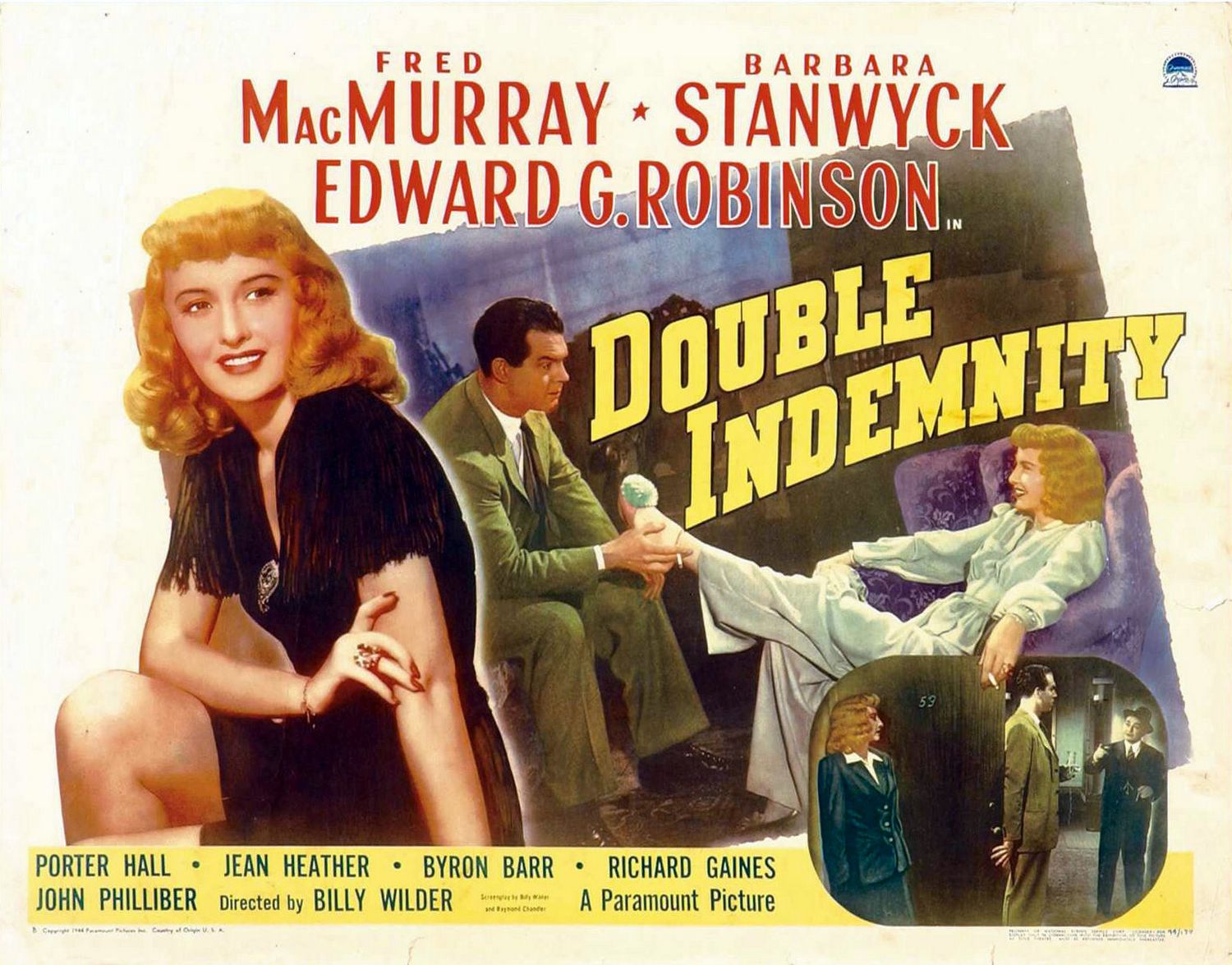
Double Indemnity ~ A Capsule Movie Review

double_indemnity_ver2_xlg

Double Indemnity ~ A Capsule Movie Review By Allen Kopp 

Bored 1940s California housewife Phyllis Dietrichson (Barbara Stanwyck) uses her bewigged allure to get malleable insurance salesman Walter Neff (Fred MacMurray) to help her kill her repulsive husband for the insurance money and for “love.” After Phyllis and Walter execute as neat and ingenious a murder as has ever been committed to celluloid, their happiness is short-lived. Astute claims investigator Barton Keyes (Edward G. Robinson), who works with Walter, does not believe the story that is being put forth about how Phyllis’s husband died and contests payment of the insurance money. As the story progresses and as the figurative noose tightens around Walter’s neck, we learn that Phyllis is not all we thought she was (or not all Walter thought, which is the same thing) and has only been using Walter to attain her ends. She has been messing around with her stepdaughter Lola’s boyfriend, Nino Zachetti, and has probably murdered before. And will murder again if she gets the chance.

Double Indemnity is a genre film and is the best of its genre, which can loosely be classified as film noir. It was made in 1944 and appropriately reflects the cynical wartime mood the country was in. It is such a perfect movie (if such a thing is possible) that seeing it for the first time is something of a revelation. Barbara Stanwyck, Fred MacMurray and Edward G. Robinson are at the top of their form. Screenwriters Billy Wilder (who also directed) and mystery novelist Raymond Chandler take a good story by James M. Cain and make it even better. It is a perfect example of lean writing without any fat. Down to the tiniest detail (cinematography, music, art direction), Double Indemnity is meticulously and beautifully crafted. On a high-definition TV (as broadcast by TCM), it is as clear and crisp as if it was made yesterday instead of sixty-nine years ago.

Copyright © 2013 by Allen Kopp

Where the Frogs Are

Where the Frogs Are image 4

Where the Frogs Are ~ A Short Story by Allen Kopp

Giles knocked loudly. When Eddie opened the door, he was wearing a dressing gown of John Barrymore vintage and smoking a cigarette in a long holder. He had put something on his hair to cause it to stand up. It was flat on top.

“I figured it would be you,” Eddie said as he held the door for Giles to enter.

“I was just in the neighborhood,” Giles said.

“Yeah, yeah, that’s a likely story.”

“Are you all alone?”

“Of course.”

“Do you have anything you want to tell me?”

“Not a thing.”

“There’s a rumor going around school today that a certain party had a little set-to with Miss Cratty and scored a three-day suspension.”

“Word travels fast, doesn’t it?”

“Would you care to tell me how it all came down so I can tell everybody about it tomorrow?”

Eddie puffed on the cigarette holder with a flourish and blew the smoke out through his nose. “How much do you know?” he asked.

“Practically nothing,” Giles said. “Try as I might, I wasn’t able to find out any details. Those who might have known weren’t talking.”

“First a drink,” Eddie said.

He went into the kitchen and when he came back he was carrying two whisky glasses containing Coke and two ice cubes in each glass. He handed one of the glasses to Giles and sat down beside him on the couch.

Giles took a sip and looked at Eddie. “Since I’m the closest thing you have to a best friend, you’d better tell me everything.”

“Can you keep a secret?”

“You know I can’t.”

“What if I said I don’t want everybody to know about this?”

“Everybody will know about it anyway.”

“You know I’ve been having trouble with geometry,” Eddie said. “Failing, in fact.”

“Yeah.”

“Why does there even need to be geometry in the world? It’s an affliction to those who are forced to learn it, not to mention a complete waste of time. No matter what I do in life or where I go, I will never need to know that crap!”

“I’ve heard all this before,” Giles said, “but go on.”

“Miss Cratty, the dear old thing, agreed to let me take a makeup test. She said it was the only way I could come out of the class with a passing grade.”

“That was rather sporting of her.”

“Well, you know that geometry is nothing more than just memorizing stuff. You memorize all these theorems for a test and just as soon as the test is over, you put everything out of your mind as if it had never happened. Education is rather stupid at times.”

“You could write a book.”

“Well, I gave up my fifth period study hall—during which I was planning on catching up on my sleep—to go and take the silly old makeup test. Miss Cratty told me to come to the zoology room where they cut up frogs and starfishes and things because the math room was being used during that period.”

“That seems logical.”

“When I got to the zoology room, I was a couple minutes late and Miss Cratty was already foaming at the mouth because I didn’t get there on time. Right off she gave me a lecture about how rude it was to keep her waiting and how she was giving me the makeup test out of the goodness of her heart and not because she had to. You might say we got off to a really bad start. I mean, you could have cut the ill will with a knife. I never liked Miss Cratty anyway and she obviously feels the same about me.”

“Are you sure you were only a couple minutes late?”

“I figured she would just give me the test paper and then fly off somewhere on her broomstick, but I could see she was going to stay in the room with me the whole time.”

“She didn’t trust you not to cheat.”

“After I had been in the zoology room not more than five minutes, I began to feel sick from the smell.”

“Miss Cratty?”

“No, the smell of formaldehyde or whatever they use when they’re dissecting frogs. You know how sensitive I am to my surroundings.”

“You never let anybody forget.”

“Well, Miss Cratty gave me the test paper and sat down about twelve feel away from me, over to my right, where she could see every move I made. She opened her book of spells and incantations and began reading.”

“She probably feels right at home where the frogs are.”

“When I started the test, I was feeling pretty sick, not only from the smell, but from all the stuff on the test I didn’t know. I had crammed my head full of geometry stuff to prepare for the test but it was all gone by the time I needed it. I was suffering from temporary amnesia. I couldn’t remember a thing. I could hardly even remember my own name.”

“That sounds like a pretty good excuse, but I think you’d have a hard time proving it.”

“I looked over at Miss Cratty. Her head was down and she seemed deeply involved in her reading, almost in a trance or something.”

“I’ve heard that witches do that.”

“I had copied some things I was likely to forget on a tiny little index card and had the card in my pocket.”

“Uh-oh.”

“I thought I could slip the card out of my pocket and put it flat on the desk against my stomach, refer to it as needed, and nobody would be any the wiser.”

“So you cheated.”

“I don’t think of it as cheating. I think of it as helping oneself where one can.” He pinched the butt out of the end of his holder, put a fresh cigarette in and lit it.

“Go on,” Giles said.

“Miss Cratty’s eyes were closed, almost as if she had drifted off to sleep, so I became a little bolder. I was referring to my index card freely, copying the stuff into the test. Then it happened.”

“I know what’s coming.”

“She saw what I was doing and was on me like a duck on a June bug. She tried to snatch the index card away from me to see what it was but I wouldn’t let her have it. She began poking me in the shoulder with the end of her pencil. I told her to stop it and when she didn’t I grabbed the pencil out of her hand and threw it across the room. That enraged her. She began punching me with her bony fingers and saying terrible things to me.”

“What things?”

“She said a person who will cheat on a makeup test is just about the lowest thing in the world. She told me I was a disgrace to the school and to my family. She was screaming right in my face like a lunatic. All I could see was the wart on the end of her nose with the little hairs sticking out of it.”

“So what did you do then?”

“I stood up off the stool I was sitting on, and when I did I stepped on her foot. She thought I did it on purpose. She yowled as if I had stabbed her in the stomach. She started punching me on the shoulder, getting nearer my face. I panicked. All I could think was that I had to get away from her, had to make her stop punching me. I reared back as if I was going to hit her in the face but I did something else instead.”

“What?”

“I pushed her. Her feet got tangled in the stool legs and she fell backward and landed on the floor. Her dress went up over her waist and I saw her underpants. It was the most horrible sight I ever saw in my life. I can’t get it out of my mind. It was like looking upon the face of Satan.”

“You actually saw her underpants?”

“She screamed as one mortally wounded. The art teacher and the janitor heard her and came running. They helped get her up off the floor. She told them I hit her but I didn’t. The art teacher took me by one arm and the janitor by the other, as if I was a dangerous criminal, and took me to the principal’s office with Miss Cratty right behind us.”

“Are you making this up?”

“When Miss Cratty told the principal her version of the story, he wasn’t pleased. He would hardly let me speak at all. He tried to get me to apologize to her but I refused, so he suspended me. To await further review, he said. The only way I can get back in school is to have one or both my parents solicit the principal’s office, in person, for my re-admittance. Miss Cratty is going to prefer charges against me for assault. I’m going to end up behind bars. Nobody will take my word for what happened over hers.”

“What are you going to do?”

“I’m not ever going back to school. I’m leaving tonight. I have a little money.”

“Where are you going?”

“I’m not going to tell you because everyone will suspect that I told you and force you to tell them. You admit yourself that you can’t keep a secret.”

“What do you want me to do?”

“Tell my friends at school tomorrow that I said goodbye.”

At the door as Giles was leaving, Eddie hugged him with tears in his eyes. “I’ve known you since kindergarten,” he said, “and you’ve always been square with me. Maybe we’ll see each other again sometime, but probably not.”

“Are you sure that going away is the only way to deal with this thing?” Giles asked.

“Don’t tell anybody you even saw me today,” Eddie said. “I’m vanishing right before your eyes. I no longer exist.”

Copyright © 2013 by Allen Kopp

Lola Fenwick

Lola Fenwick image 1

Lola Fenwick ~ A Short Story by Allen Kopp 

A woman in a trench coat and a stylish hat ran down a city street in the rain, ably but not fast in high-heeled shoes. When she came to a certain apartment building, she ducked inside, stopping just inside the door to shake the water off her coat.

“Elevator’s busted, Miss Fenwick,” the clerk said from behind the desk. “I’m afraid it’s the stairs tonight.”

She gave the man a tense smile and hesitated for only a moment before crossing the lobby to the stairs. She nearly fell on the first step but caught hold of the railing and righted herself. The clerk turned around and watched her until she was out of sight up the stairs. He smiled but there was no telling what the smile meant. It could have meant that he knew something she didn’t know but was about to find out. 

When she came to the sixth floor, she wasn’t out of breath from running up the stairs, but she had an anxious look on her face. She went along the deserted hallway to the door she wanted and inserted the key into the lock and opened the door. She stepped into the darkened room and turned on a lamp.

“Hello, Lola,” a man’s voice said.

She whirled around, drawing in a sharp breath, and faced the man. “Oh!” she said. “It’s you!”   

“Glad to see me?” he asked with a devilish grin.

“I thought you were…” Everybody thought you were…”

“Dead?” he asked. “No, I’m not dead. I’m very much alive and I’ve come back to pick up where we left off.”

Music began faintly in the background and swelled dramatically. With the two of them standing there looking at each other, not speaking and not moving, the picture slowly faded to black.

Dorothy switched off the TV before the commercials began and turned to Vernon. “I knew something like that was going to happen,” she said.

“How did you know?” Vernon asked.

“Oh, the signs were all there,” she said. “The mysterious phone calls. The anonymous letter. I knew Palmer was alive all the time.”

“You did not! You couldn’t have known!”

“Well, anyway, our Lola is certainly in a mess now!”

“He’s going to take that money she has saved for her nephew’s eye operation, I just know it.”

“Maybe he doesn’t know about the money.”

“Of course, he knows! Why else would he come back from the dead?”

“Maybe he really loves her.”

“Bah! He doesn’t know the meaning of the word. He’ll only use her to get what he wants and then run out on her.”

“Just when she was all ready to marry Dr. Blake.”

“Well, she can’t marry Dr. Blake now unless she wants to commit bigamy.”

“I shudder to think what Dr. Blake will do when he finds out that Palmer isn’t really dead and has come back to torment poor Lola again. You know what a temper he has!”

“I hope he kills the son of a bitch,” Vernon said.

“Oh, I don’t think I can wait until tomorrow to see what’s going to happen,” Dorothy said.

“Today is Friday. You’ll have to wait until Monday.”

“Oh, dear! I wish I could just snap my fingers and make it one o’clock Monday afternoon.”

“Wishing your life away, you cluck.” he said.

Dorothy had to go downtown to do some shopping, so Vernon went upstairs to his bedroom and closed the door. He took off his shoes and lay down on the bed and covered up with an afghan. In a few minutes he was lost in sleep.

When he awoke, he knew from the light coming in at the window that it was no longer the middle of the afternoon but was early evening. He wondered if Dorothy was back from shopping yet. As he yawned and started to get up from the bed, he realized there was somebody else in the room with him.

“Hello, darling,” a woman’s voice said.

He turned sharply toward the voice and saw Lola Fenwick from To Live, To Love stand up from the chair in the corner and walk toward the bed in her stiletto heels.

“How did you get in here?” he asked. He knew it was a stupid thing to say but it was the first thing that came into his head.

“I’ve been here all along,” she said.

She smiled indulgently with those ruby lips of hers. She was dressed in a stunning wool dress of a tawny color, showing her trim waist and large breasts. He could smell her perfume that smelled like the lilac bush his mother had in the yard when he was a boy.

“Has Dorothy come home yet?” he asked. “She’s got to see this!”

“Now don’t worry about her. She and I had a long talk while you were asleep. I gave her a nice drink and a pill and she’s sound asleep in her bedroom.”

“I’ve been watching you on To Live, To Love for eight years. You’re more real to me than anybody I know.” He realized as he spoke these words that he had been in love with her almost from the first moment he saw her.

“I know, darling. That’s why I’m here.”

“Darling,” he said. “I’ve imagined many times, by some sort of magic, being able to hear you call me that.”

“Now, I don’t want to rush you, but there isn’t much time and we’re going to have to get a move on. They’ll be here any minute.”

Who will be? Is it that son of a bitch Palmer Belvedere?”

“Yes, him, and all my other past husbands, the good ones and the bad.”

“But what can we do?”

“I want you to take me away from here before something terrible happens.”

“All right, but where to?”

“I’m thinking Mexico.”

“Mexico! But what about Dorothy?”

“She’ll be fine without you. She has often wished that you would go away and leave her in peace.”

“I’ve always wanted to see Mexico, and with you! I must be dreaming!”

“Now, please hurry and get dressed! You don’t need to worry about packing a bag. We’ll buy what we need when we get to where we’re going. I’ll call a taxi and will be waiting for you downstairs.”

“All right, dearest,” he said.

When he went downstairs, she was waiting for him by the front door in her mink coat. She was more lovely than Debra Paget and Kim Novak put together. He felt a thrill that he hadn’t felt in at least twenty years. She took him by the arm and they went out and got into the back seat of the waiting taxicab.

“Bus station,” she said to the driver, “and please hurry!”

“I figured we would go to the airport and fly down in a plane,” Vernon said.

“No, that’s just what they’ll be expecting us to do. They would never think I’d go on a bus. It’s the perfect dodge.”

“But isn’t it an awfully long way to go on the bus?”

“Several hundred miles. We’ll be there in no time.”

“Well, I’m sure you know best,” he said.

When they got to the bus station, they had to wait for over an hour for the southbound bus they wanted, so they went into the diner and sat at a secluded booth in the back and had a bite to eat.

“Oh, I do hope we can get on that bus before anybody tries to stop us,” she said.

“I think we’re fairly safe here,” he said, looking over his shoulder. “Nobody’s paying any attention to us.”

“There are spies everywhere!” she said.

“Don’t worry,” he said. “I’ll protect you.”

“Oh, I just knew you would.” She reached across the table and put her hand over his.

“Maybe I should call Dorothy and tell her where I am,” he said.

“Now, don’t you worry about a thing,” she said. “I took care of all that while you were asleep.”

“You didn’t kill her, did you?”

She laughed her tinkling little laugh. “I can tell when you’re not being serious,” she said. “No, I didn’t kill her. I have some scruples, you know.”

“But what about Dr. Blake? He’s expecting you to marry him. He needs your help with the life-saving serum he’s working on.”

“The marriage to Dr. Blake is off, I’m afraid. When I told him last night that I couldn’t marry him, he threatened to kill me.”

“He’ll never find you, dearest.”

“You’re sweet,” she cooed.

“I’ve seen you through all your marriages, your miscarriages, your near-drowning, your trial for murder, your brain operation, your kidnapping, your amnesia, your car going over the cliff, your alien abduction and your stint in women’s prison. You always look stunning, no matter what terrible thing you’re going through, but I have to tell you that you have never looked any lovelier than you do right now.”

She looked across the table at him and there were tears in her eyes. There was nothing she could say that was equal to the moment. He thought he might be able to lean across the table and manage a little kiss, but the departure of their bus was announced over the loud speaker.

He took her by the hand and led her to the last seat in the back of the bus where nobody would look at them. She slipped off her mink coat and he put it on the overhead rack for her and sat down beside her. She slipped her arm through his and put her head on his shoulder.

They rode all night without getting out of their seats, talking little and sleeping fitfully. When he awoke and felt the warmth of her body against his, he knew he was as happy as he had ever been in his life. This was, perhaps, his last chance at happiness and he intended to take it.

He thought about their coming life in Mexico spread out before them like a sun-drenched dream. They would lie in the sun to the accompaniment of the splashing surf, drinking exotic fruity drinks out of coconut shells. He would rub suntan oil on her shoulders, and everywhere they went people would admire her beauty and envy him for being her man.

Just as the sun was coming up, the bus stopped for a fifteen-minute rest stop. Lola was still sleeping, using her mink coat as a pillow. Vernon stood up so as not to disturb her and tiptoed away to the front of the bus. Most of the other passengers were sleeping, unaware that there was a celebrated international beauty in their midst, slipping away to Mexico with her man.

He stepped off the bus and was making his way to the little building that served as gas station, restaurant and bus stop, when two large men came from around the front end of the bus and approached him.

“Are you Vernon Buckles?” the first man asked.

“Who wants to know?”

He pulled a badge from his pocket and flashed it in Vernon’s face. “We have a warrant for your arrest, sir,” he said.

“For what?”

“For the suspected murder of your wife.”

“You’re crazy! I haven’t done anything!”

“Then you have nothing to worry about, but you’ll have to come with us, anyway. You can tell your story when the time comes.”

“I’m not going anywhere!” Vernon said.

“You can make it easy or you can make it hard,” the second man said.

“I have a traveling companion,” Vernon said. “She’s asleep on the bus. I can’t just go off and leave her without telling her what’s happened!”

The first man considered for a moment. “All right,” he said, “you can go tell her, but I’ll have to come with you.”

Grim-faced, Vernon stepped up the three little steps onto the bus and walked down the aisle, the police officer close behind him. When he came to the back of the bus, Lola wasn’t there. No one was there. He looked for the mink coat but it wasn’t there, either.

The nearest person was a sleeping Mexican four seats away. Vernon grabbed him by the shoulder and shook him roughly awake.

“Where is the lovely young woman that was sitting here?” he asked. “She was wearing a mink coat! You couldn’t miss her!”

The Mexican sat up straight and held up his hands, a frightened look on his face. “Sorry,” he said. “I see no one.”

Copyright © 2013 by Allen Kopp

A Pack of Cigarettes and Thou

smoking

A Pack of Cigarettes and Thou ~ A Short Story by Allen Kopp 

When she was younger, April Snow liked school, or at least could tolerate it but, now that she was fourteen, things had changed. Her body had changed, had filled out, and that somehow affected her outlook on life. She was no longer a child and she was ready, she felt, to leave all childhood things behind. She had had enough of her mother telling her what to do and of going to school day everyday and abiding by a bunch of rules that seemed to have lost all meaning for her.

As she walked the four blocks to the bus in the morning, her thoughts turned to suicide. She thought back to the day a week ago when she and her mother were having a raging argument and her mother slapped her in the face and knocked her off the toilet and caused her to hit her head on the bathtub. She lay on the floor and screamed that she couldn’t move her arms and legs, but her mother knew she was just putting on an act. She told April that she was insane—insanity ran in the family—and she was going to “put her away” in the place where they had straightjackets and padded cells and shot charges of electricity through people’s heads like in a Frankenstein movie to try to make them less crazy. If she hanged herself or cut on herself enough to bleed to death, she thought, her mother would certainly be sorry she had been so mean to her. People at school would say, “Poor April! If we had only known she was so sad, we might have given her some money or done something to help her, but now it’s too late.”

At the bus stop, she lit a cigarette and pointedly ignored the two skinny girls standing there. They looked liked little children compared to her but one of them was actually older than she was. They needed some fashion advice, some rouge and lipstick; they needed to dress and act more grown up, or they would always be hopeless losers.

The bus was late. Just when April was hoping it wouldn’t come at all and she would be able to go back home and go back to the bed, it came around the corner with a malodorous roar. She flipped her cigarette away with her thumb and forefinger in her grown-woman way, knowing the two skinny girls were looking at her. When she boarded the bus she went all the way to the back as she always did.

Of the thirty or so people on the bus, the only one who interested her in the least was Selma Butts. She sat primly with her books on her lap and her ankles crossed. She had a face like a bird—a tiny pointed nose like a beak. On her head a silly green-and-yellow knit cap she had made herself. She wasn’t interesting in herself but she was the sister of Seymour Butts, so that made her as interesting as she would ever be.

April was in love with Seymour Butts; she had only just realized it on the day her mother slapped her off the toilet. He was the reason they had been fighting in the first place. Her mother didn’t like Seymour, didn’t think he was the “proper” boy for April to associate with. She had heard things about him, bad things that would curdle cream, she said. He was, figuratively speaking, from the wrong side of the tracks, and was—anybody with any sense could see it—headed for the state penitentiary and probably the electric chair.

April had been out with him three times in his car with the “souped-up” engine that she could hear from half-a-mile away. They had gone driving two times; the third time he picked her up in front of her house and took her for an ice cream cone. Each time, she had been thrilled by his pouty expression, his perfectly coiffed hair and the skull-and-crossbones tattoo on his bulging bicep. She had expected him to sweep her off her feet in an ardor of passion—if he had she wouldn’t have been able to resist—but the most he had done was to touch her lightly on the knee to get her attention and put his hand on the back of her neck and squeeze. He was more of a gentleman than she might have expected.

He had quit high school when he was sixteen and worked at mysterious “odd jobs” for his uncle and his cousins. If he really needed a high school diploma, he said, he could get one without having to go through the hell of going to school everyday and listening to those hypocrites spout their lies that anybody with any sense didn’t believe anyway. April thought him deep and endearingly independent. He wasn’t like anybody she had ever known before.

When the bus pulled up in front of the school to let everybody out, April held back a little, keeping her eyes on Selma. She stood up just as Selma did and made sure they almost collided as Selma stepped into the aisle to get off the bus.

“Oh, I’m so sorry,” April said. “Did I step on your foot?”

Selma looked at April and the corners of her mouth turned down. “No, it’s all right,” she said.

“I wasn’t watching where I was going.”

She expected Selma to say something else, but she just kept going with her head down. When she got off the bus, she ran to the door of the school and went inside as if it was raining and she was afraid she would get wet (it wasn’t).

April took her unsatisfying encounter with Selma as rather a bad omen, a bad way to start the day. She had hoped to at least speak Seymour’s name and to gauge Selma’s response, if any. In that way, she might have discovered if Seymour had ever mentioned her name to Selma. On these small things do lovers hang.

In first-period English class, she dozed through a discussion of Endymion, losing interest after “A thing of beauty is a joy forever.” She didn’t much like poetry. It was too hard to figure out.

In physical education class, which she loathed more than all her other classes put together, she feigned illness so she wouldn’t have to change out of her clothes into shorts and a red jersey to play volleyball. How she despised volleyball! She never cared whether the team she was on won or not, so she didn’t even try. The result was a barely passing grade.

While the other girls were playing, she lolled on the cot in the locker room, surreptitiously smoking a cigarette. She went through the lockers that hadn’t been locked and “found” a dollar and eighteen cents that somebody hadn’t bothered to secure. She didn’t think of this as stealing, but, rather, as “finding.” She had no scruples where “finding” was concerned.

In math class she failed a test that she hadn’t bothered to prepare for and, in fact, turned in her test paper with half the problems unanswered. After that was study hall, during which she propped a novel, Forever Amber, in front of her and pretended to read. When the bell rang for lunch, she ran to her locker to put her books away and went downstairs to the lunchroom, where a long line had already formed.

After she got her food (a slab of gelatinous meatloaf, watery mashed potatoes and two stewed prunes) and was looking for a place to sit, she spotted Selma Butts sitting alone at a table in the back of the room. She rushed to claim the spot across from Selma before somebody else got it.

“Hi, there,” she said with a winning smile as she pulled out the chair and sat down.

“Hello,” Selma said.

“I’ll be glad when this day is over.”

“See that boy over there?” Selma said.

April turned to look over her shoulder at a very large boy with blond hair and bulging cheeks.

“He just ate his fifth hot dog.”

“You’re counting?”

“Until you sat down, he was all I could see.”

When April looked at Selma, she felt a little rush of pleasure. Here was somebody who was not only related to Seymour Butts (although she looked nothing like him), but also lived in the same house with him.

“You know my brother, Seymour, don’t you?” Selma asked.

It was almost as if she had read April’s mind!

“Yes, I know him,” April said. She didn’t want to be too obvious but she hoped to convey in those few words that she and Seymour were on very intimate terms.

“Did you hear what he did?” Selma asked.

“No. What?”

“He and his boyfriend moved to California. They just packed up and left without a word to anybody. So impulsive!”

“Did you say ‘boyfriend’?”

“Yeah, didn’t you know he’s ‘that way’? I thought everybody knew it. He doesn’t go around talking about it but he doesn’t exactly make a secret of it, either.”

“When’s he coming back?” April asked with a sick feeling.

“Oh, he’s not ever coming back here,” Selma said. “He’s had it with this place. I can’t say I blame him. I’m going to get away from here, too, just as soon as I can.”

“People can certainly surprise you sometimes,” April said.

After lunch she was feeling too dispirited to remain at school, so she left for the day without telling anybody. Nobody cared where she was, anyway, she told herself; she wouldn’t even be missed.

She couldn’t go home because of her mother, so she just began walking, she didn’t know where. She didn’t have a thought about how she would get home; she didn’t care if she went home or not. She just kept thinking about how she had been so wrong about Seymour Butts and how she would never see him again, just when she realized she was in love with him. How could he just go away like that without saying anything to her? Did she mean nothing to him at all?

After walking for eight or ten blocks, she came to a little park that she had never seen before. She entered the park and went in far enough so she felt hidden from view. She found an inviting bench in the shade of an enormous maple tree and sat down. She cried some, knowing that nobody could see her and, after she had cried as much as she was going to, she lay on her back on the bench and closed her eyes.

When she opened them, a young man—more a boy, really—was standing about ten feet away looking at her. How long had he been standing there? She hadn’t heard him at all. Had he seen her crying?

She sat up, a little embarrassed, and smiled at the young man. He came and sat down beside her on the bench. He was nothing like Seymour Butts but quite interesting in his way. Instead of dark hair, he had fine, sandy-colored hair and the beginnings of a little moustache and hairy forearms. All the things she had been told about not being friendly with strangers passed through her mind and then were gone.

She took out her cigarettes and offered him one. He nodded his head as if a cigarette was the one thing in this world he needed and took one out of the pack. When she had taken one for herself, he lit hers and then his own. She blew out a cloud of smoke and he did the same; the two clouds merged into one. She looked into his eyes and he looked into hers. They hadn’t yet spoken a word. They seemed to have passed into a realm where words are not needed.

In a little while he stood up from the bench and motioned for her to follow him. He led her to another part of the park where there was a clump of bushes as big as a herd of elephants. He crouched down and crawled inside. She followed along behind him, smelling the damp earth and another smell that she was unable to identify. For the first time all day, she was thinking about something other than Seymour Butts.

Copyright © 2012 by Allen Kopp 

The Christmas Club

Christmas 9

The Christmas Club ~ A Short Story by Allen Kopp

(Published in Poor Mojo’s Almanac(k).) 

Stanley and Virginia Miller lived in a modest four-room house on a tree-lined street in a small town. They had known each other their entire lives and had been married for ten years. To this union had been born two children: Georgette, age nine, and Ian, age seven. When Ian was born, Virginia experienced some complications and wasn’t able to have any more children, but that was fine with her because she thought two children were as many as she could reasonably hope to take care of. Both children attended the town’s public elementary school, the same school that Stanley and Virginia had gone to when they were growing up.

Stanley was never very good in school, had just barely graduated, and worked as a miner. He spent all day long, every day, below the ground chipping away at rock. The mine where he worked had been in operation for many years, and every year the mine became bigger and bigger until it had become so vast that people never believed how big it was until they saw it for themselves. It had become big enough, Stanley joked, to swallow the entire town. He sometimes had nightmares about the mine, about digging down too far to ever make it out again, and he would wake up calling for help and gasping for air. Every time he came out of the mine at the end of his shift, being out in the open air again seemed like something of a miracle.

Stanley’s take-home pay was meager and he and Virginia never quite had enough money to go around. After paying the rent, buying food, paying the gas bill and the light bill and all the other incidentals, they sometimes ran out of money before the end of the month. To help meet expenses, Virginia took in washing and ironing and occasionally hired herself out for “heavy cleaning” or some other kind of domestic work.

When Virginia was younger, before she married Stanley, she had worked in a tailor shop doing alterations and seamstress work. She thought she was quite good at it and she liked working for the old man who ran the tailor shop. Now that she was older and, knowing that she had real aptitude for the work, she wanted to buy her own sewing machine and whatever else was needed to go into business for herself. She was sure she could make enough money to supplement Stanley’s pay and provide a few little extras for her family.

When she spoke to Stanley about going to the bank and borrowing money to start her own little business, he was against the idea from the outset. He was superstitious about banks and he hated the thought of owing money. He had the idea that Virginia would never make enough money on her own to pay back a loan and he would have to make good on the loan himself.

In spite of the shortage of cash, Virginia was still able to save a little money here and there by scrimping and counting pennies. If she bought a cut of meat, for example, for thirteen cents less than she had paid for it the last time, she would put thirteen cents in her jar at the back of the kitchen cabinet. If the light bill was two dollars less this month than last month, she would put two dollars in the jar. When she had more than two or three dollars in the jar, usually in small change, she would take it out and deposit it into her Christmas Club account at the bank. By autumn she had about two hundred and thirty dollars in the account, but she didn’t want Stanley to know about it just yet. Eventually she would have to tell him, but she would deal with telling him at the appropriate time. She hoped he would be pleased with her for saving money he didn’t even know they had.

She wanted to give Ian and Georgette a wonderful Christmas, the kind of Christmas she had never had when she was growing up. Every Friday when she was finished at the grocery store and had the groceries stowed in the trunk of the car, she would take a walk down the block to look at the bicycles in the window of the hardware store. There was a boy’s bicycle and a girl’s bicycle that were very much alike. The boy’s bicycle was a little bigger, with a crossbar that the girl’s bicycle didn’t have. Both were shiny red, with chrome bumpers, pristine-looking whitewall tires, and streamers attached to the handlebars. She knew that any child would be thrilled to own such a bicycle.

When Virginia was growing up, Christmas never amounted to much in her house. Her father was much older than her mother and, although a decent man, he was odd in his own way. He didn’t believe in any kind of religious observance and would never allow the celebration of Christmas in his house. Christmas was, he said, for people with lots of money to throw away and he had none, in spite of the stocks and bonds he owned that eventually left Virginia’s mother well-off in her widowhood.

There were never any gifts or music or Christmas tree or decorations in their house, and on Christmas Day they usually had stew or hash or beans and cornbread for dinner, while Virginia’s father silently read the newspaper or listened to the stock market quotes or the war news on the radio and Virginia and her mother sat with their eyes downcast and ate in silence.

On the first Friday in December, Virginia went to the bank to withdraw the money from her Christmas Club account. She waited in line behind several other people, and when her turn came she stepped up to the teller’s window and handed the teller her passbook that showed the balance in her account. She told the teller she wanted to withdraw the money and close the account.

The teller frowned and squinted as she looked for the account number in her records. She had a double chin and eyebrows drawn on in graceful arcs halfway up her forehead. When she spoke, her voice had an odd little-girl quality about it. “Hold on a minute,” she said. “I’ll have to go check on this.” She turned and walked away to the rear of the bank and disappeared through a doorway.

When she came back, she smiled at Virginia and handed the passbook back to her. “Your money has already been drawn out of this account,” she said.

“There must be some mistake,” Virginia said. “I haven’t taken my money out.”

“No, but your husband did. I guess he forgot to tell you.”

Virginia just stood there looking at the teller with no expression on her face until the teller asked her if she was all right and if there was anything else she needed.

When she got back home, she felt better because she was sure the bank had made a mistake and, after speaking to Stanley when he returned from work, she would call the bank and have the matter straightened out in a matter of two minutes. Stanley would never take her money without telling her. He didn’t even know the money was there, so how could he take it out? She couldn’t wait for him to walk through the door so she could talk to him about it.

When Georgette and Ian arrived home from school, Virginia gave them some money and sent them to the store to buy a loaf of bread and a quart of milk. She gave them a little extra money so they could each buy themselves a candy bar, but she made them promise not to eat it until after supper.

She was sitting at the kitchen table thumbing through a magazine when Stanley came in from work, a few minutes later than usual. Without looking at Virginia, he set his lunch pail on the table and went to the sink to get a drink of water.

Virginia looked up from the magazine at the back of Stanley’s head. She waited until he had turned the water off and then she said, “I went to the bank today.”

He turned around and faced her with the glass of water in his hand, his hip resting against the sink. “What?” he asked.

“I said I went to the bank today. They told me you took the money out of my Christmas Club account. I was sure it had to be a mistake. I knew that, even if you had known about the money, you would never take it without telling me.”

“Oh,” he said, looking down at the floor.

“So, the question is: Did you withdraw the money from the Christmas Club account?”

“Yes, I guess I did,” he said.

“Why did you do that? That was my money. I saved it.”

“Just what is a Christmas Club anyway?”

“I want to know why you took my money.”

“Well, I think there’s a law somewhere that says your money is also my money.”

“You had no right to take it without telling me.”

“I was going to tell you.”

“That money was for Christmas. I wanted to buy some things for Ian and Georgette. I wanted to give them a nice Christmas.”

He poured his glass of water out into the sink. “Some things are a lot more important than Christmas,” he said.

“Do you still have the money?”

“No.”

“I want to know what happened to it.”

“Ian and Georgette have everything they need.  They have food to eat and clothes to wear and they’re getting an education. That’s a lot more than I had.”

“What happened to the money?”

“I’ve owed my brother Richard two hundred dollars for a long time. He was desperate to get it back. He’s getting a divorce and he needs all the money he can get.”

“So, you’re telling me that my Christmas Club money went for your no-good brother’s most recent divorce?”

“He’s family,” Stanley said. “I think family is more important than buying stuff for the kids for Christmas that they don’t need.”

She wasn’t finished with what she wanted to say, but Ian and Georgette returned from the store and she didn’t want them to hear her and Stanley arguing about money. She stood up from the table and went to the sink and began peeling potatoes for supper.

Over the next few days, Virginia wouldn’t look at Stanley and she spoke to him only when he spoke first or when he asked her a question. She slept on the couch and when Stanley got up in the morning to get ready for work, she covered up her head with the blanket and wouldn’t get up and cook his breakfast as she usually did. She wouldn’t uncover her head until after he had left for work.

In the second week of December, there was an accident in the mine. Stanley and two other miners were injured when some rock above where they were working gave way and fell on them. One of the miners died instantly. Stanley and the other miner were rushed to the hospital.

Stanley had a fractured skull and a badly broken arm and shoulder and was in a coma. Somebody from the mine called Virginia and told her what had happened and she got the next-door neighbor to drive her to the hospital in his car. She sat in a chair by Stanley’s bedside and prayed that he would be all right. She twisted a handkerchief in her hand and wept some, but most of the time she just looked at Stanley lying in the bed, hoping to see some sign that he was going to be all right. When there was no one else in the room, she told him—even though he was unconscious—that she was sorry for the way she behaved about the Christmas Club money. He was right, she said; some things are a lot more important than Christmas presents.

After a day and a half, Stanley died without ever regaining consciousness. Virginia knew there had never been any hope that he would live. She went home and sat on the sofa and cried and waited for Ian and Georgette to come home from school to tell them their father was dead.

A week after Stanley’s funeral, two letters came in the mail. Virginia carried them into the kitchen and opened them one after the other with a paring knife. One was from the mine where Stanley worked and it contained his last two weeks’ pay. The other letter was from the miners’ union; it was a letter of condolence and a “death benefit” check in the amount of three hundred dollars. These two checks were all the money she had in the world.

That night she lay awake most of the night, hearing the forlorn sound of the train whistles off in the distance. After Ian and Georgette left for school the next morning, she put on her clothes and drove downtown with the two checks. She went to the bank and deposited Stanley’s paycheck to pay for the rent and other bills that would soon be coming due. The death benefit check she endorsed. When the teller handed her six crisp fifty-dollar bills, she folded the money and put it inside the zipper compartment inside her purse. It was the most money she had ever seen or owned at one time.

Her next stop was the hardware store. Luckily they still had the bicycles in stock that she admired and hoped to get for Ian and Georgette. She bought both bicycles, paying a small down-payment on them and arranging to have them delivered to her house on the day before Christmas. She signed an agreement stating she would make monthly payments on the bicycles until they were paid for.

After the hardware store, she went to another store where they sold sewing machines and asked to see the best top-of-the-line machine the store carried. The clerk demonstrated the machine and told her it was so simple to operate even a child could use it. She bought the machine and asked that it be delivered to her house as soon as possible.

After the sewing machine store, she went to another store where she bought a record player with a radio built into it and a selection of records that she knew Ian and Georgette would like. In the same store she bought new winter coats for herself and for Ian and Georgette, refusing to add up in her head the amount of money she had spent that afternoon.

On her way back home she stopped at the supermarket, where she bought a large turkey and everything she would need for a Christmas dinner. She also bought a lot of extra things she would not ordinarily buy, such as candy and nuts and fruit. Outside the supermarket where they were selling Christmas trees she bought a large fir tree that would reach all the way to the ceiling in their little house. The clerk tied the tree to the top of the car for her.

When she got back home, she carried everything inside, and then carried the Christmas tree in and set it up in the living room. She went down to the basement to bring up the lights and decorations. She was stringing lights on the tree when Ian and Georgette came home from school. She knew they would appreciate decorating the tree by themselves without any help from her.

She stood back and watched as they excitedly took the decorations out of the box and began putting them on the tree. She tried to remember what it was like to be their age and find joy in such simple things; she had lost the feeling long ago and would never experience it again.

The phone began ringing in the kitchen. She didn’t want to leave the Christmas tree and answer it, but she would tell whoever it was that she would call them back later, after supper. It was a woman down the street, a Mrs. Capers, for whom she had done some housecleaning a while back.

Mrs. Capers had heard about Virginia’s past experience as a seamstress and wanted to know if she was interested in coming by her house the day after Christmas and talking to her about making some new drapes for the dining room. If everything went well (that is, if she liked the drapes), she would have other work to be done. Also, she had a couple of lady friends who needed to have all their clothes let out due to the middle-aged expansion. Having their old clothes altered would be so much cheaper than buying new ones.

Virginia arranged with Mrs. Capers to come around to her house at one o’clock on the twenty-sixth. When she hung up the phone and went back into the living room, Georgette stopped what she was doing and looked at her.

“Who was that on the phone?” she asked.

“It was the spirit of Christmas,” Virginia said.

Georgette didn’t ask for an explanation because they had all the lights strung on the tree. When Ian plugged them in and they saw that all of them still worked after their year-long hibernation in the basement, Virginia took that as a very good sign.

Copyright © 2012 by Allen Kopp   

The Teddy Bear Phase

The Teddy Bear Phase image 2

The Teddy Bear Phase ~ A Short Story by Allen Kopp

Phillip stood behind the door in his pajamas, clutching Elfie to his chest. He was listening to his parents arguing in the kitchen.

“You should have consulted me first,” father said.

“I didn’t think I needed to ask your permission,” mother said.

“If you had, I wouldn’t have given it.”

“He’s all that’s left of my family. I think we can tolerate him for a couple of days.”

“Yes, but why did you have to invite him at Christmas?”

“Christmas is a time for families to reunite. I can see my mother smiling down at me from heaven for inviting her only brother into my home.”

“What makes you think she’s in heaven? And it’s our home. Not my home.”

“Should I put him in the guest room or do you think he’d be more comfortable in the spare bedroom?”

“How about in the shed outback where we keep the gardening tools?”

“Once you get to know him, you’ll like him.”

“I don’t want an alcoholic around Phillip and Chickie.”

“He’s a recovered alcoholic.”

“How about if I just take them to a hotel and you can have the house to yourself with your wonderful uncle?”

“We’ll welcome him as a family. That’s what he needs.”

So it was decided that mother’s long-lost Uncle Benny would come for a Christmas visit. Father said that if he didn’t leave by the day after Christmas at the latest, he was going to grab him by the throat and throw him into the street. There was to be no extended visit.

When Uncle Benny arrived by taxicab on the day before Christmas, he had a box of candy for mother (she was dieting), a box of Havana cigars for father (he had no intention of smoking them), and Groucho glasses and a flashlight for Phillip and Chickie. Chickie was only five and was enchanted by the flashlight. She shone it all around the room, in her own mouth, in the dog’s face.

Phillip was a little frightened of Uncle Benny from the first time he met him. He was tall, slightly stooped, and had a wrinkled face; he wore a black wig that looked like it belonged on somebody else’s head. His dentures were too big and looked as if they might fly out of his mouth with a life of their own.

“Who is this little chappy?” Uncle Benny asked.

“This is Phillip,” mother said, standing behind him and putting her hands on his shoulders. “He’s our oldest.”

“And how old is Phillip, may I ask?”

“He’s eight.”

“And what is that thing he’s holding in his arms?”

“That’s Elfie, his teddy bear,” mother said. “It’s his favorite toy. He takes it with him everywhere he goes. He can’t go to sleep without it.”

“I see,” Uncle Benny said. “Don’t you think he’s a little old for a teddy bear?”

Mother laughed. “We indulge him in his teddy bear phase,” she said. “I expect it’ll pass after a while.”

“I think we need to take that thing away from him and throw it in the river,” Uncle Benny said, twisting Elfie’s furry ear.

Phillip felt Elfie stiffen in his arms. When he went into the bathroom to wash his hands for dinner, he locked the door and set Elfie beside the sink.

“I don’t like him,” Elfie said. “He’s a jerk and he smells funny.”

“I don’t like him, either,” Phillip said, “but he’ll only be here until day after tomorrow. He’s family so we have to be nice to him.”

“Bah!” Elfie said.

After dinner it was snowing, so mother opened the curtains and turned off all the lights in the living room except the ones on the Christmas tree. Father read in the newspaper that it was going to get down below zero, a record low for Christmas Eve, so he built a big fire in the fireplace.

“It feels exactly the way Christmas should,” mother said.

Chickie wanted to open her presents but mother told her she had to wait until after Santa had had a chance to drop by. She fell asleep on the couch while she was watching the snow out the window, so mother put her to bed.

Mother served eggnog to father and Uncle Benny, adding a little harmless (she thought) whiskey for “body.” Uncle Benny took a drink and said it was too weak; he asked mother to bring the bottle of whiskey in from the kitchen so he could flavor the eggnog to his own liking. She and father exchanged a significant look, but she went and got the bottle anyway and set it on the table next to Uncle Benny.

Father had one glass of eggnog, but Uncle Benny kept drinking. Each time mother refilled his glass, he added a generous amount of whiskey from the bottle. Mother and father could see him getting drunk, but they said nothing. To anybody else she would have said, “Don’t you think you’ve had enough,” but she couldn’t bring herself to say that to Uncle Benny. He was family and she didn’t want to offend him.

Phillip was bored with Uncle Benny; he knew that he was spoiling the fun that he and Chickie would be having on Christmas Eve. He wanted to turn on the TV, but mother said it was rude to have it on when company was present. She made him a cup of cocoa and a bowl of popcorn and told him he could sit by the fire for a while longer with the grownups but he would have to go to bed soon because tomorrow was a big day.

Uncle Benny was telling mother and father about all the places he had been. He had worked as purser on a passenger ship and had been all over the world.

“I had to get out of the country,” he said. “My ex-wife was after me for back alimony payments. They couldn’t touch me as long as I was at sea.”

“Didn’t they get you when you came back?” father asked.

“No, because by that time the old girl had found some other sucker to marry and had dropped the suit against me. She was my third wife and I learned from that experience never to get married again, although I had plenty of chances, believe me. Haw-haw-haw!”

“Whatever happened to your daughter?” mother asked.

“The last I heard, she was living in Texas, but that was years ago. She wants nothing to do with me.”

“If I knew her address, I’d write to her. After all, she’s the only first cousin I have.”

“You’d be wasting your time, I’m afraid,” Uncle Benny said.

Further conversation revealed that he had been living in a cheap rooming house but was going to have to move because the landlady had rented to his room to another man.

“Where will you go?” mother asked.

“Oh, don’t worry about me,” he said. “I’ve always got irons in the fire. I always land on my feet.”

When grownups were talking endlessly, or “visiting” as they called it, Phillip had a knack of blocking out the words so the voices began to sound like dogs barking off in the distance or the drone of a machine. After he finished his cocoa and ate all the popcorn, he fell asleep on the settee, holding Elfie in his arms.

He awoke with a start. Uncle Benny was bending over him, smiling at him with those big teeth.  Mother and father were out of the room.

“I’m going to do you a big favor, now” Uncle Benny said, slurring the words.

He wrenched Elfie out of Phillip’s arms and, taking three quick steps to the fireplace, threw him in the fire. Phillip jumped up off the settee and screamed as if he himself had been thrown into the fire. As mother came running in from the kitchen, Phillip fainted and fell to the floor unconscious.

When he came to, he was in his bed in his room but he didn’t remember how he got there. All the lights were off but the room was very bright from the drapes never having been drawn and the snow outside. He remembered what happened to Elfie and began crying.

The door to his room opened silently—he could see the bar of light from the hallway—and then closed again. He was surprised—and rapturously happy—to see Elfie climb up on the bed and sit down beside him just inches from his face.

“You’re all right!” he said, reaching out and touching Elfie on the head to make sure he wasn’t dreaming.

“Mother took the andiron and pulled me out before I caught on fire,” Elfie said. “Happy to say, I’m made from nonflammable material.”

“The house is quiet now,” Philip said. “I don’t hear a thing.”

“Mother and father have gone to bed. Uncle Benny is outside smoking a cigarette in his pajamas and bathrobe. He’s as drunk as a coot and it’s killing cold outside. If he couldn’t get back inside for some reason, he’d freeze to death and they wouldn’t find him until morning. I can see him walking down the street in his bedroom slippers trying to get help and falling and busting his hip. There’s nobody around on Christmas Eve. Too bad.”

Phillip threw back the covers and stood up. “I’ll be back in just a minute,” he said. “I think father forgot to lock the door.”

Copyright © 2012 by Allen Kopp