Night Watch ~ A Capsule Book Review

Night Watch book cover
Night Watch ~ A Capsule Book Review by Allen Kopp ~  

Night Watch by Jayne Anne Phillips is a period novel set in the state of Virginia in the period after the Civil War. A woman named Eliza Connolly lives with her daughter (whose name is also Eliza but is called ConaLee) in an isolated, rough, mountain setting, impassable in winter. Her husband has gone off to fight in the Civil War; she doesn’t know if he is still alive. An old woman named Dearbhla lives near them. She knows all the old conjuring ways, although she claims to not be a conjurer. She helps Eliza Connally and her young daughter and looks after them. Dearbhla is the mother (maybe) of Eliza’s husband.

These people living on their mountain are removed from the war, but every now and then the war intrudes on their lives. A man shows up with evil intent. He appears to be a straggler from the war, or maybe a deserter. He goes away, but then he comes back because he has taken a liking to the woman Eliza Connolly. He calls himself Papa. We never know him by any other. He finds that the remote mountain is a good place for  him to hide out, so he will stay as long as he needs to. After a while, Mrs. Connolly has a baby by Papa and then twins. (He forced himself on her.)

After a period of years, Mrs. Connoly stops talking and seems to have lost her mind, while ConaLee takes care of the babies. Papa, apparently desirous of moving on to greener pastures, takes the two of them (Mrs. Connolly and ConaLee) to the Trans-Allegheny Lunatic Asylum and drops them off. (The TALA is built on the grand Kirkbride model of lunatic asylums, popular at this time.)

Contrary to expectations, Mrs. Connolly is treated well in the lunatic asylum and seems to blossom. She is allowed to keep ConaLee with her as her “attendant.” (She doesn’t tell anybody that ConaLee is her daughter.) They have pleasant accommodations, and the staff are most helpful and courteous, especially the head of the institution, who develops a romantic interest in her.)

There’s one man at the asylum who will play an important part in the story. He’s the “gatekeeper” of the place, the first person there whom Mrs. Connolly and ConaLee meet. They call him “Night Watch,” which is also the title of the book. His face is disfigured, but nobody knows his story because he doesn’t remember it himself.

Soon an unexpected (and unwanted) person shows up at the asylum. Will this person bring the unpleasant past to life and jeopardize Mrs. Connolly’s progress? All will be revealed.

Night Watch won this year’s Pulitzer Prize for fiction. If you are a thinking person with an interest in good writing, I think you will find it well worth your time and effort. It’s a story about surviving (war, hardship, life) when you think it just might be easier to stop trying and lay down and die.

Copyright © 2024 by Allen Kopp

Between Two Fires ~ A Capsule Book Review

Between Two Fires book cover
Between Two Fires
~ A Capsule Book Review by Allen Kopp ~ 

Between Two Fires is a 2012 speculative-fiction novel by Chrisopher Buehlman. The year is 1348. The place is France. The country is ravaged by war with England (the Hundred Years War) and by a horrible disease known as the Black Plague. (The world is such a mess, we are told, because Lucifer and the other fallen angels are waging war in heaven.)

Thomas de Givras, a former knight of the Crusades, has fallen on hard times. His armor is tarnished. He has been excommunicated from the church and he has been stripped of his property. He is not old but not young, either. He has joined a band of brigands. They accost people on the road and rob them.

When he encounters a young girl named Delphine, a recent plague orphan, he sees that there is something special about her. She claims she can see angels and she asks him to accompany her to Paris and then Avignon. Although he is not known for his generous nature, he decides it is in his best interest to do as she asks. Along the way, they meet Father Matthieu, a homosexual priest who drinks too much wine. He confides that he was caught in a compromising situation with another man right before the plague struck. As a result, he lost his church and his congregation. Delphine takes pity on him. The three of them (Thomas, Delphine, and Father Matthieu) make quite a trio.

In Paris, Delphine acquires the Spear of Longinus from a seller of relics. Before the trio leaves the city, they are attacked by possessed statues of the Virgin Mary and other saints. They have several other encounters with fallen angels before they reach Avignon. Father Matthieu is killed by a demon in the River Rhone. Thomas, by chance, meets the man who ruined him, D’Évreux, and challenges him to a duel. Thomas is victorious and D’Évreux is killed.

In Avignon, Thomas and Delphine uncover a plot to kill Pope Clement and replace him with a demon look-alike. In the fight that ensues, Delphine is killed, but Archangel Michael and the heavenly host emerge from her body to defeat the false pope and his army of demons. Thomas’s soul is dragged into Hell by the fleeing demons, where he is tortured. Delphine descends into Hell to look for him, at which time she reveals that she is both Jesus Christ and the girl Delphine. Thomas awakens in his own body. Everyone except Thomas forgets the supernatural aspects of that night, believing the damage was from an earthquake. Thomas returns to Normandy and lives in the castle he lived in before it was taken away. Delphine becomes a nun; Thomas considers her his adopted daughter.

Copyright © 2024 by Allen Kopp

Restoration ~ A Capsule Book Review

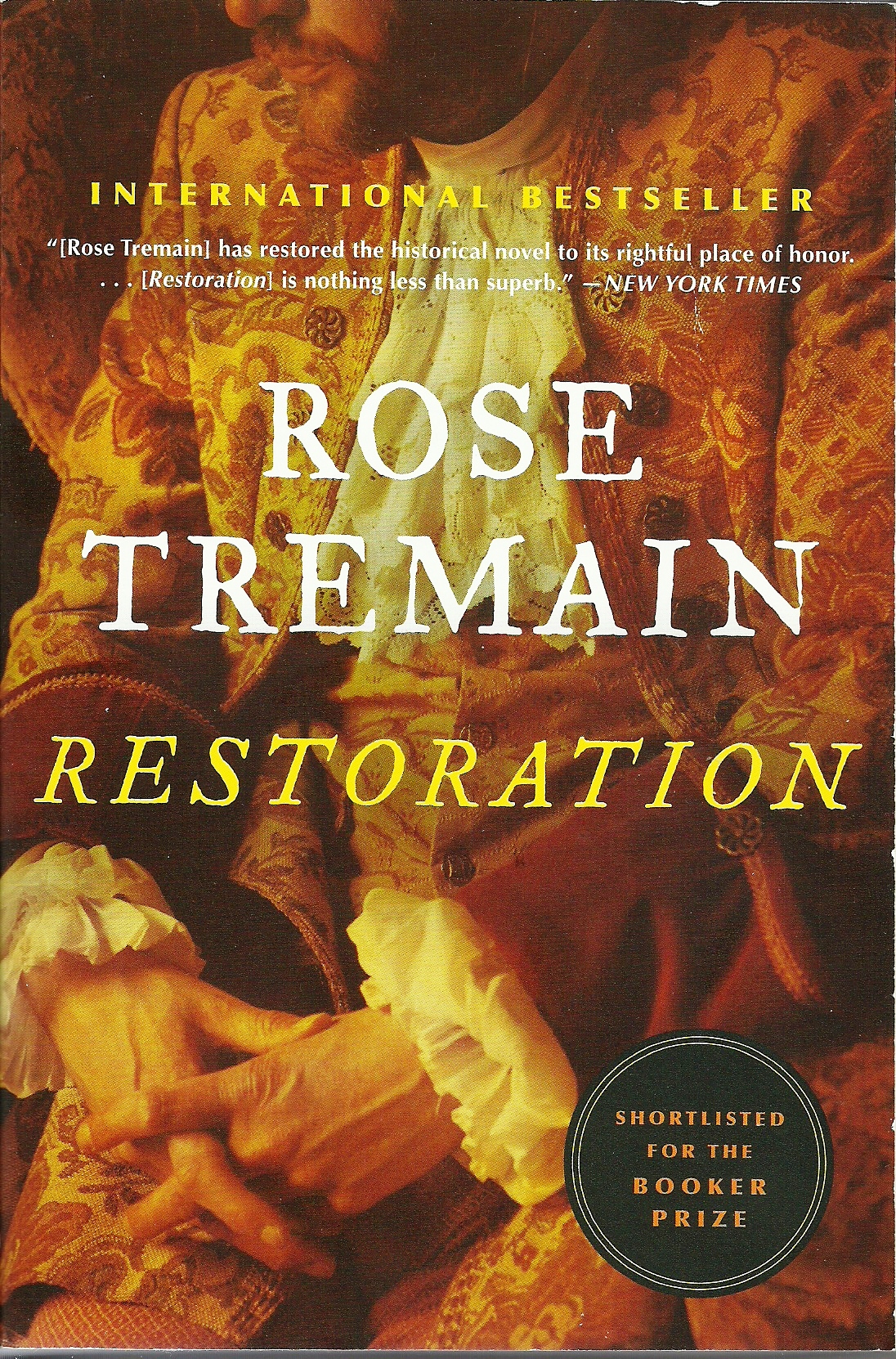
Restoration cover

Restoration ~ A Capsule Book Review by Allen Kopp

From 1649 to 1658 was the period in English history known as the English Interregnum or the English Commonwealth. The country during this period was a de facto republic with Oliver Cromwell as virtual dictator. A political crisis resulting from Cromwell’s death in 1658 led to the restoration of the monarchy with Charles II as king. The period that followed is known as the “Restoration.” It was a time of fashion (plumes, powdered wigs, knee britches with stockings, high-heeled shoes with polished buckles—all for the men), relaxed moral values, hedonism, excesses of every kind, greed and materialism. The historical novel Restoration by Rose Tremain is about this period in English history and about one man in particular, the fictional Sir Robert Merivel.

Merivel is very much a man of his times. He comes from humble beginnings, begins studying to be a doctor as a young man, and is soon caught up in the pursuit of fulfillment of his appetites. He abandons his study of medicine, becomes a sort of courtier in the court of King Charles and, for a brief period, is a favorite of the king. The king, however, is known for his mercurial personality and for his whims, for taking up one person one day and throwing him down the next. Merivel makes the king laugh but the king finds for him another purpose: the king will marry Merivel to the king’s mistress, Lady Celia, a marriage in name only. In return for this marriage, the king sets Merivel up in a magnificent country estate called Bidnold, which has everything an English country gentleman could ask for: lots of servants, a park filled with abundant wildlife, and lots of room to pursue a life of idleness and pleasure. (Merivel takes up painting and playing the oboe but finds he has little talent for either pursuit.) Like Adam and Eve in Paradise, however, Merivel does the one thing he is absolutely not supposed to do: he falls in love with Lady Celia. When the king finds out, he dispossesses Merivel, telling him he needs to go find himself, to “restore” himself to the kind of man he was always meant to be. Suddenly without money or a home, Merivel must embark on a quest to find out who he really is and to fulfill his purpose in life. Fate takes him to a mental hospital run by Quakers in a rural part of England (where he inadvertently finds himself a father) and back to London again where he deals with a plague epidemic and the Great Fire of 1666.

Restoration is not the potboiler one might expect it to be. It elevates the “historical fiction” genre into the realm of “good literature.” It’s beautifully written and contains not a dull or extraneous word. It illuminates a fascinating period in English history without ever being academic or seeming like a history lesson. It brings a remote period of history alive and makes it somehow relevant.

Copyright © 2014 by Allen Kopp