Mirror Mirror ~ A Capsule Book Review

Mirror Mirror cover
Mirror Mirror
~ A Capsule Book Review by Allen Kopp ~

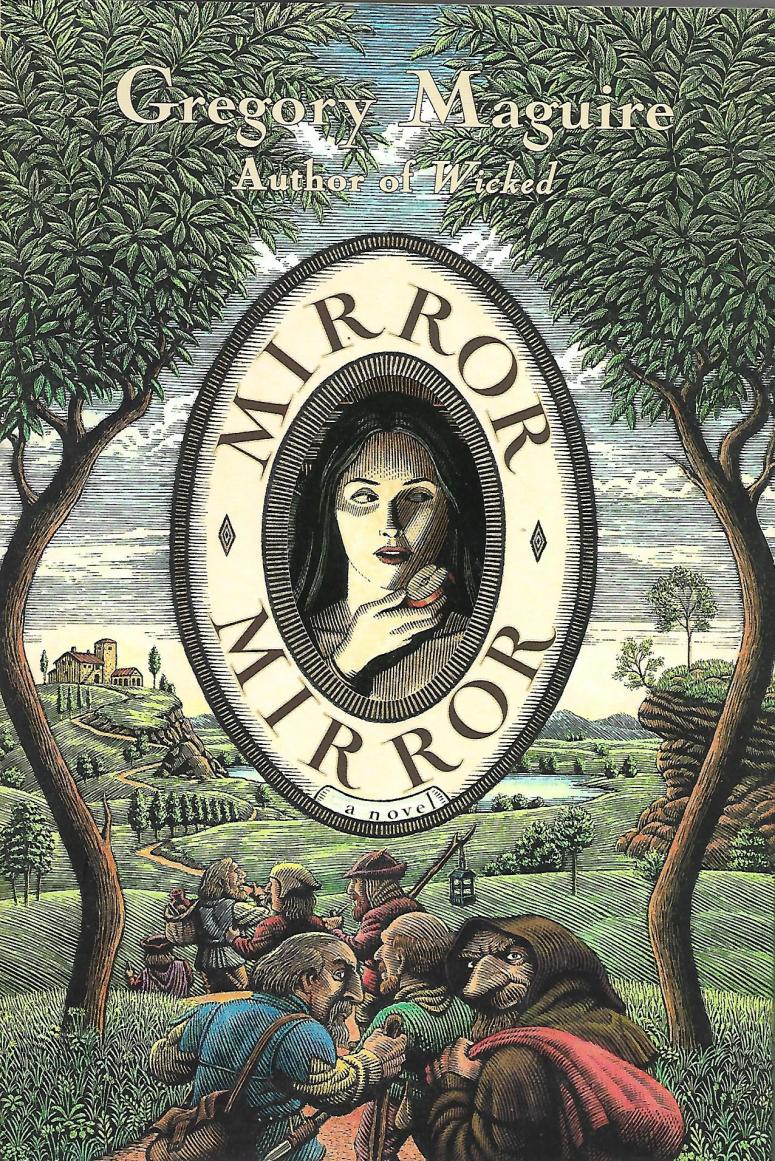
Gregory Maguire’s 2003 novel, Mirror Mirror, is set in Tuscany, Italy, in the early 1500s. A beautiful girl named Bianca de Nevada lives with her father, Vicente, on an isolated hilltop estate called Montefiore. Bianca, a motherless girl, has lived a sheltered life and doesn’t know much of the world. Lucrezia Borgia, real-life daughter of Pope Alexander VI (the Borgia Pope), comes to Montefiore with her brother, Cesare Borgia. Lucrezia and her brother Cesare are both moved by Bianca in different ways: Cesare wants her for a sex toy, even though she is still a child, and Lucrezia is jealous of Bianca’s girlish beauty, which will soon be womanly beauty.

Lucrezia and Cesare decide they will stay at Montefiore for a while. Cesare is suffering from the French disease (we all know what that is). Cesare sends Bianca’s father on a (nearly) impossible quest (to get him out of the way) to find a fabled branch from the Tree of Life (you know, the one from the Garden of Eden), that still has three perfect apples attached to its branches. Bianca’s father doubts the branch with the apples on it even exists, but he has no other choice but to comply with Cesare’s commands. It might take him years to find it (if it even exists) and he might die in the effort.

With Bianca’s father on his quest, Bianca is left at Montefiore under the questionable care of Lucrezia Borgia, who just might do anything. Since Bianca has flowered into a lovely young woman and is no longer a child, Lucrezia is still jealous of her and has decided she will have her killed. She hires a young man to take Bianca into the woods and do away with her. The young man does as Lucrezia tells him to do, but he finds he is unable to kill her. He leaves her alone in the woods, making Lucrezia think he has done the deed.

Left alone in the woods, Bianca falls into a deep sleep that mimics death. Seven dwarfs (nothing like the Disney variety) find her and, believing she is dead, place her in a glass coffin and watch over her body. She will awake, though, and when she does she will go back to Montefiore. Her father, contrary to all expectations, has returned from his quest, bearing the ever-elusive branch from the Tree of Life.

Mirror Mirror blends elements of legend, history, fairy tale, and fantasy into an imaginative, lightning-speed novel. If you are an admirer of Gregory Maguire’s work (Wicked, Son of a Witch, Notes on a Cowardly Lion, Out of Oz, After Alice, etcetera.), you will find everything here that makes his work unlike anybody else’s. Highly recommended for connoisseurs of the different and unusual.

Copyright © 2021 by Allen Kopp    
Hiddensee ~ A Capsule Book Review

Hiddensee ~ A Capsule Book Review by Allen Kopp

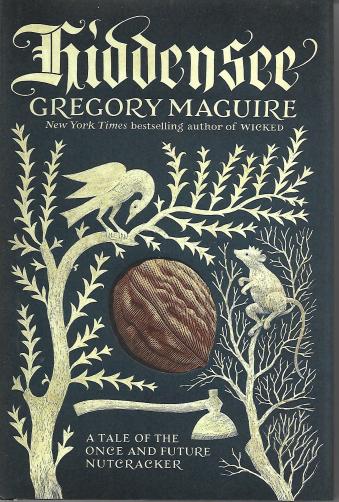
Author Gregory Maguire takes fairy stories or well-known fantasy stories such as The Wizard of Oz and “reinterprets” them for a grown-up audience. His latest novel is Hiddensee, all about the life of the fictional character Herr Dirk Drosselmeier, woodcarver and toy maker who made from wood “the nutcracker.” Yes, it’s the same nutcracker as the one in the story popularized by Tchaikovsky’s ballet, which was taken from a short story by E.T.A. Hoffmann, which was itself adapted from a story “The Nutcracker” by Alexandre Dumas. As you can see, this is a story with deep literary roots, none of which you need to know to enjoy the book.

Hiddensee is set in the 1800s in the Black Forest in Bavaria, southern Germany, a magical place even when nothing happens there. Dirk Drosselmeier is a foundling child never knowing his parents or where he came from. He is brought up in a tiny house deep in the woods by an old man and an old woman, who, we find out toward the end of the book, are really Hansel and Gretel. He never has any contact with any other person in his life besides this old man and old woman. They treat him kindly until he is about ten years old and they decide to kill him. When Hansel takes him out into the woods to kill him with his axe, the killing isn’t successful, except in the sense that Drosselmeier dies and comes back to life. It’s a fantasy story, remember.

Drosselmeier, for obvious reasons, gets away from Hansel and Gretel and spends the rest of his childhood with a minister, who takes care of him but is mostly indifferent to him. Do you see a trend here? He doesn’t have a very happy life and doesn’t seem to belong anywhere. One important plot point that must be remembered is that Drosselmeier, when he leaves Hansel and Gretel, takes a crutch with him that he made for Hansel. The crutch is of no apparent use to him, but he takes it with him everywhere he goes, anyway.

After he leaves the minister he finds himself as a sort of servant with a wealthy family, where he befriends the young musician Felix Stahlbaum. He and Felix remain friends as long as they both live. He gets into trouble when it is assumed that he impregnated a young servant girl (he didn’t) and has to leave. He ends up with a paper maker with a strange Persian wife and two small boys. He befriends the family and begins making toys and entertaining the two boys with stories he heard as a child. Eventually he falls in love with the paper maker’s wife. This, of course, does not end happily.

Anyway, the story follows Drosselmeier’s life through to the end. He makes a nutcracker from the crutch he took away from Hansel and Gretel. He sets up a shop in Munich and makes a living as a toy maker. His friend Felix Stahlbaum has two sons of his own and Drosselmeier becomes their godfather.

Felix’s family is the only family Drosselmeier has ever known. Felix dies and Drosselmeier continues being friendly with his widow and two sons. One of the sons grows up and has children of his own, including a daughter Klara. Klara is sickly and might die. The story takes us to a Christmas Eve when Klara is gravely ill and Drosselmeier presents her with the nutcracker he made years earlier and a magical castle that can be opened only with a golden key that is kept inside a walnut concealed on the Tannenbaum. What happens when Klara is alone in the room with the nutcracker, some mice, and the magical castle forms the basis for the story’s conclusion.

I’ve read all of Gregory Maguire’s books. Hiddensee is not my favorite, but it’s engaging and beautifully written throughout, if you, like me, are willing to suspend disbelief for three hundred pages. For a book by Gregory Maguire that seems truly inspired, however, read Wicked or Confessions of an Ugly Stepsister.

Copyright © 2017 by Allen Kopp

After Alice ~ A Capsule Book Review

After Alice

After Alice ~ A Capsule Book Review by Allen Kopp

Gregory Maguire is famous for his “Oz Series” of four books, the best of which is the first, Wicked. His latest novel is After Alice, a clever take on Lewis Carroll’s Alice in Wonderland. On the summer day that little Alice Clowd disappears from her home in Oxford, England, in the 1860s, one Ada Boyce, her unhappy friend, goes looking for her and finds herself disappearing down a hole by the riverbank and ending up in Wonderland, where the two girls have separate but simultaneous adventures.

The whole time Ada is in Wonderland, she is looking for Alice but she doesn’t have much luck in finding her for the longest kind of time. In the meantime, we get a glimpse of Ada’s life and the life of her family. Her father is a vicar, her mother a disconnected “dipsomaniac” and her little brother a tiny infant who screams all the time, little Boyd Boyce. He seems to get all the attention in the family, leaving none for Ada. She has some kind of physical deformity involving her spine that forces her to wear a kind of corset under her clothes. The corset is worth mentioning because it plays an important part in how the story is resolved. Ada also has a governess, the formidable Miss Armstrong, who seems to turn up when she is least wanted and seems to know everybody’s business. Miss Armstrong is secretly in love with Ada’s father, the vicar, and doesn’t always do a very good job of concealing it.

Then there is Lydia, Alice’s older sister, age fifteen. She isn’t very interested in where Alice is and is quietly contemptible of Miss Armstrong when she comes along looking for Ada and Alice. On that same summer afternoon, Lydia also meets a handsome young American named Mr. Winter. He is traveling with and assisting the famous Dr. Charles Darwin, who is paying a call on Alice and Lydia’s father. Mr. Winter has a small black child with him named Siam, who is a runaway American slave. Soon Siam disappears, as Alice and Ada did before him, and he also—what a coincidence!—ends up in Wonderland.

After Alice is a breezy 273 pages. It’s a fantasy, skewed toward adults. That doesn’t mean it’s inappropriate for children; it means that children would probably be bored by it. The pleasure of reading After Alice is in the subtlety of the language.

Copyright © 2015 by Allen Kopp

Out of Oz ~ A Capsule Book Review

Out of Oz ~ A Capsule Book Review by Allen Kopp

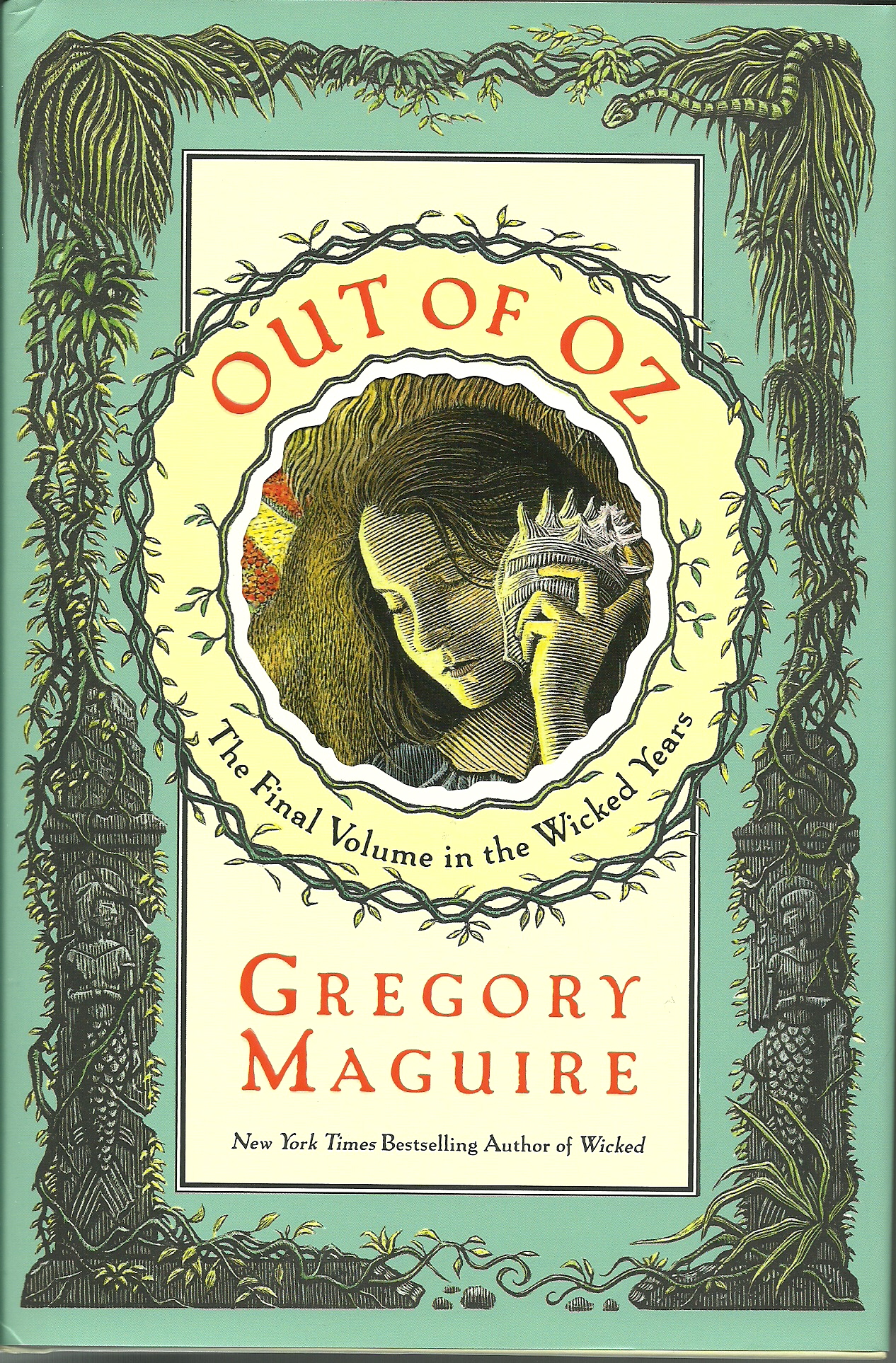
American writer Frank Baum created the Land of Oz in a popular series of children’s books in the early 1900s. Contemporary American writer Gregory Maguire takes Oz one step farther in his Wicked Years series of four books that are decidedly more for adults than for children. The first (and, I think, the best) book in the series is Wicked. It’s about the life and times of the Wicked Witch of the West. She’s the one that Dorothy Gale of Kansas kills by throwing a bucket of water on her. (Wicked, by the way, was turned into a famous Broadway musical.) The second book, Son of a Witch, is about Liir, the strange bisexual son of the Wicked Witch of the West. (Yes, she has a son—you have to read the book to see how that comes about.) Liir has a daughter, named Rain, who figures prominently in the fourth book in the series, Out of Oz. Just so we don’t fail to mention it, the third book is A Lion Among Men. It’s about (you guessed it) the Cowardly Lion.

Out of Oz begins with Rain as a child. She doesn’t know who she is or where she came from, but she’s living with (and being cared for) the Good Witch of the North, Lady Glinda. (You will recall, in the movie version of The Wizard of Oz, Lady Glinda arrives in a bubble. She’s the one who eventually facilitates the return of Dorothy Gale to Kansas.) As the granddaughter of the Wicked Witch of the West (although she doesn’t know it yet), Rain has the potential to shape the empire with her as-yet untapped magical powers. A war is raging between Munchkinland and Loyal Oz. Both sides are seeking Rain, but especially a book of magic called the Grimmerie. It seems the Grimmerie will give a powerful strategic advantage to the side that has it. Through her bloodline, Rain is perhaps the only person in all of Oz who can know how to harness the power of the Grimmerie. It’s up to Rain’s parents, Liir and Candle, along with the Cowardly Lion and an assorted group of characters (Mr. Boss and his Munchkin wife Little Daffy, Iskinaary the Goose, etc.), to keep Rain and the Grimmerie from falling into the hands of the warring factions.

In Out of Oz, Dorothy Gale of Kansas has returned to Oz via the 1906 San Francisco earthquake and is being used as a pawn in the war between Loyal Oz and Munchkinland. She is being tried for murder in the deaths of the Wicked Witch of the East (you recall she accidentally landed her house on her) and the Wicked Witch of the West (death by a bucket of water). She is found guilty and is going to be executed until the Cowardly Lion and his crew rescue her and take her away with them. Dorothy gets on everybody’s nerves, as she is so chipper and always about to burst into song. I thought she was a fun character and would like to have seen more of her.

At 568 pages, Out of Oz is a long reading experience. It could have had more punch, I think, if it had been, say, 200 pages less. Possibly only those readers who have read the other three books in the series will want to stick with Out of Oz through to its conclusion. Maybe Gregory Maguire, in writing it, was following Oscar Wilde’s dictum: Nothing succeeds like excess.  

Although Out of Oz is billed as the fourth and final book in the series, there seems to be plenty of potential material for a fifth book. If such a book comes out, I’ll be over my Out of Oz fatigue enough by then to want to read it, especially if it’s about 350 pages or less.  

Copyright © 2012 by Allen Kopp