All the Spirits in the Place ~ A Short Story

The Spirits in the Hotel image 3
All the Spirits in the Place
~ A Short Story by Allen Kopp ~

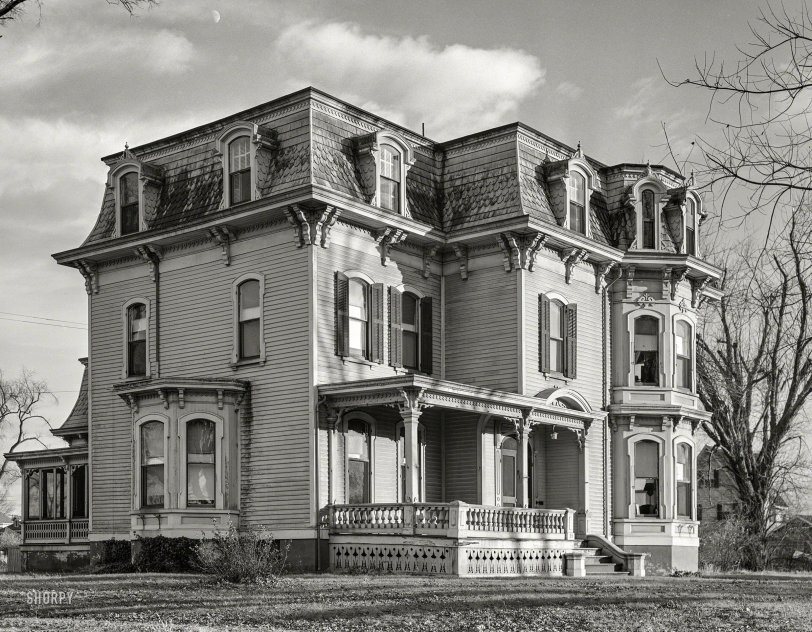
I always liked staying in a good hotel, even one that was falling apart and hadn’t seen a paying guest in fifty years. The Hotel Argyle was on the riverfront, in a cluster of other derelict buildings. It was twenty stories tall and could be seen from a long way off because the hotel name had been painted in huge letters on the side of the building. It stood as a symbol of urban blight. There’s nothing spirits love more than urban blight.

I walked into the lobby of the Argyle and was surprised to see a ghostly apparition at the registration desk. He seemed to be made of purple-and-green smoke. He gestured to the registration book and I knew what to do. It must have been somebody’s idea of a joke because spirits don’t use the names they had when they were alive. I made a little mark on the book. That seemed to satisfy him because he smiled his grotesque smile and gestured for me to take the stairs.

There were many vacancies at the Argyle. I would venture to guess that I could pick almost any room, on any floor, and it would be vacant. I went all the way to the top floor, the twentieth, and found the room I wanted at the end of the hall. It showed no signs of occupancy, so I took it as my own.

I was a tired old spook. I had traveled a long way to get here. I needed a rest, so I was happy for that reason that the hotel was quiet. The other spirits in residence were probably sleeping, since it was the middle of the day and the sun was shining brightly. If there’s anything a spirit hates, it’s bright sunlight.

I stared out the window at the skyline of the city for a while and then, hovering near the ceiling, I went into a trancelike state, which was as near as I ever came to sleeping. As long as I’m not disturbed, I can stay in this state for years at a time, but, of course, when you’re a spirit, a year means nothing. We think in terms of eternity. Time has no meaning.

In this trancelike state, I thought of—dreamed of—many things. I had been in the spirit world now for eighty years. I was only thirty-five when I crossed over. I had two wives when I was alive. I regret that I wasn’t very kind to either of them. I had a drinking problem. Luckily there were no children. I would have been a terrible father.

After my divorce, I had no job and no money, so I went back home to live with my mother. She and I never understood each other. We fought constantly. I should have known better, even if she didn’t. She nagged me about my drinking; she thought I could stop if I only tried. She wanted me to go to church with her the way I did as a child. She thought if I just read my Bible I’d be the kind of man God wanted me to be.

I got a part-time job driving a truck. I was never that keen on driving. I hated it. All my organs were pickled in alcohol. One hot July afternoon, my hundred-proof heart stopped when I was parked on a street downtown. I took off my shoes, put them side by side, laid down on the seat, and died. I knew I was dying and I didn’t care. I thought it was the best thing that could happen to me.

When I found myself in the spirit world, I was surprised there was any kind of existence after death. I thought it was punishment for all the bad things I had done. Everybody else went to heaven, I thought, but not me. That, of course, wasn’t true. The spirit world is teeming with spirits who never made it to heaven.

That night I met two of them. I was going out for a little city night life when I met them in the lobby of the hotel. I remembered them from before, a long time ago, in another incarnation. They went by the names Jocko and Howdy. They recognized me immediately and I them.

“We heard you were here,” Jocko said. “When did you get in?”

“A few days ago. I’ve been resting up in my room on the top floor.”

“We were just going out to do the town,” Howdy said. “Why don’t you join us for old time’s sake?”

“I’ll go if you promise not to scare me too much,” I said.

Hah-hah-hah!”

On our way downtown, Jocko, Howdy and I walked side by side, as if we were living instead of dead.  Howdy made a show of knocking people out of the way but, of course, they didn’t know he was there because he was invisible to them and, also, they were solid and he wasn’t. It’s only fair to mention that we met a few other spirits, but they were mostly in haughty groups and didn’t pay any attention to us. Howdy would get into a brawl with some of them if he could. He was a brawler and a mischief-maker.

On the way downtown, I asked Jocko and Howdy if the Hotel Argyle was a good place for a spook to live.

“It’s dead most of the time,” Jocko said.

“What do you mean?”

“Not much action there, man,” Howdy said.

“It seems perfect to me,” I said. “An abandoned hotel on the riverfront of a major city. Doesn’t it abound with ghosts?”

“Yeah, but ghosts are boring if they’re not doing anything,” Jocko said.

“So, you’re saying the ghosts in the hotel are all retired?”

“Well, something like that.”

“Don’t they like to scare little girls? Make them scream?”

“Yeah, but that’s the point. There aren’t any little girls to scare. What’s the fun of having the ability to scare people if there aren’t any people to scare?”

“You have to find out where the people are and scare them where they live,” I said.

“The people who own the hotel should turn it into a haunted-house attraction for Halloween,” Jocko said. “A lot of people would pay good money to tour a vintage hotel full of real ghosts instead of fake ones.”

“The people who own the hotel are dead,” Howdy said.

“The city owns the hotel,” Jocko said. “They’re just waiting for the right time to bring in the wrecking balls.”

“If they tear it down, they’re going to put a lot of ghosts out of a home,” I said.

“Not so many. Most of the spirits moved on a long time ago. Only losers stay at the Argyle now.”

“I was just beginning to like the atmosphere,” I said. “I had to leave my last home because a vengeful witch started throwing fireballs and burned the place down.”

“You have to watch out for those fireball-throwing witches!” Howdy said.

“The best way to deal with them is to cut off their heads and then burn their bodies,” Jocko said. “You have to be sure to remember to burn their bodies because some of them can go on living without a head.”

“Here, now!” Howdy said. “Let’s stop talking about witches and have some fun!”

Howdy was one of those spirits who engage in mayhem. He caused two cars to collide and then doubled over with laughter. When I asked him how he did it, he said it was a secret he learned during the war.

“What war was that?” I asked, but he didn’t answer me.

We couldn’t go to a bar or a restaurant and sit at a table the way other fellows do, so we walked all over downtown. We went into a movie theatre and watched part of the movie that was playing.

“I don’t like this movie!” Jocko said after a while. He then caused the projection equipment to break down when the movie was halfway through.

“That’s the way it’s done,” he said, laughing hysterically.

We entered a library and did some moaning and then we pulled down some shelves of books. Pretty tame stuff, but spirits have to make their own kind of fun.

Next we went to a dance hall where men buy tickets and use them to dance with weary-looking dames. It was a sorry-looking spectacle. I don’t know which was worse, the men or the women. What fools these mortals be.

We stood apart from the crowd against the wall. Knowing we were watching him, Howdy made as if to cut in on certain dancing couples, but he only brushed up against the ladies. They could feel it, of course, but not see it, so they were confused about what was happening to them. Some of them thought somebody was playing a trick on them. Maybe some of them knew it was spirits, but I doubt if any of them were smart enough to figure that out.

After the dance hall, we went to the oldest and biggest cemetery in the city. There were some really old corpses there—Civil War and before. The place needed some livening up. We built a small fire and joined hands and danced around it. We moaned and sang and chanted. Soon we had a couple of dozen spirits gathered around. They were delighted  we were there. They were happy to join in any kind of foolishness. They danced and sang and were happy.

Howdy, always the smooth operator, found himself a lady spirit. She was wearing a long, flowing white dress and a tiara on her head. She looked like a queen. She made eyes at Howdy, he made eyes at her, and then they joined hands and went off together into the darkness.

“How will we find him when it’s time to go?” I said to Jocko.

“Don’t worry about Howdy. He’ll make short work of her.”

We made merry in the cemetery until the first traces of dawn began to light up the eastern sky. Then the spirits reluctantly began to drift back to wherever they came from. Surprised that the night had passed so quickly, Jocko, Howdy, and I went back to the Argyle. It had been a most enjoyable evening.

We returned often to the cemetery, where we made some good friends. The spirits there were always happy to see us. We brought the good times with us. I had never had so much fun before.

I began spending all my evenings with Jocko and Howdy, resting in my room at the Argyle during the daylight hours. We took in all the attractions that the city had to offer. We spooked people left and right, sometimes causing them to doubt their own sanity. Howdy was a spirit who enjoyed mayhem, such as causing traffic lights to malfunction or streets to flood for no reason. Because we were with him, Jocko and I were more often than not willing to go along with him.

In the winter we had some excitement at the humdrum Argyle. A team of paranormal investigators set up shop in the old ballroom on the tenth floor. They were investigating the existence of life after death. It gave us all a good laugh.

All the spirits in the hotel were excited at the prospect of proving, beyond a shadow of a doubt, that they had lived and that they went right on living after they died.

The psychic investigators (or ghost-hunters as they came to be called) had ultra-sensitive sound-recording equipment that would pick up the sound of a mouse breathing. They all left to go home at night but left their sound-recording equipment running to pick up every infinitesimal (ghostly) sound. In the mornings when they returned, they listened to what had been recorded during the night.

From the first night, all the spirits went to the ballroom with messages for the ghost-hunters. Some of them sang songs or recited poetry. Others laughed, moaned, or gave out with nonsense words of their own devising. Some of the spirits swore or made farting sounds. It was a lot of fun for everybody and a way to express our disdain for the living.

Regardless of what they said about the Argyle, I was beginning to like to and to think of it as home. And then something bad happened, and it wasn’t the wrecking balls, either. A fire started on one of the lower floors and soon spread to every floor. When all the spirits in the place realized what was happening, they all escaped out the windows. We all gathered outside and watched the place burn like a torch and collapse in on itself, all twenty stories. Whatever the cause of the fire, it saved the city a lot of trouble.

Jocko, Howdy and I bucked up the other spirits and urged them not to be downhearted. We had a plan.

We took them all, a procession of two hundred spirits or more (like a parade of the dead), to the cemetery, where we had been made to feel welcome before. All the spirits in the cemetery were delighted we had returned and had brought along lots of new friends. Everybody was welcome. The old cemetery had everything a spirit could want, and more.

Copyright © 2022 by Allen Kopp

All Hallow’s Eve ~ A Short Story

Halloween 2021 3

All Hallow’s Eve
~ A Short Story by Allen Kopp ~ 

(This is a repost.)

Mother stood over him while he ate his dinner of liver and onions. When she decided he had eaten enough, she told him he could go. He ran up the stairs to his room and put on his Halloween costume. A ghost this year, same as last year. Next year he was going to have to be something different. Wearing the same costume more than two years in a row was terrible.

His false face still had dried spit around the mouth, but it was his own spit so he didn’t care. He put it on and checked the entire effect in the mirror, costume, mask and all. Something was missing. Oh, yes, the old derby hat. It was the one thing that made his costume look just a little bit creepy and scary. Without the hat, the costume was just a cheap little-kid’s getup.

Mother was in the living room when he came down the stairs. “Come here, Buster, and let me take a look at your outfit,” she said.

“It’s a costume,” Buster said.

“Oh, don’t you look cute!”

“I’m supposed to look scary!”

“So, where are you going tonight? What are you plans?”

“I’m going tricking-or-treating, mother, the same as every Halloween.”

“Who are you going with?”

“I don’t know. Some of the kids from my class, I guess.”

“What are their names?”

“You want the names of all the kids in my class?”

“Of course I don’t. You’ll be careful, now, won’t you?”

“Yeah, I’ll be careful.”

“Make sure you’re not alone. Wherever you go, go in a group.”

“I don’t care.”

“What?”

“I said okay, I’ll go in a group.”

“Be home by ten o’clock.”

“Mother! It’s Halloween and tomorrow is Saturday!”

“All right, then. Eleven.”

When he finally got out the door, he broke into a run. The evening air felt good after the stuffy house and smelled good, like leaves and burning candle wax. It wasn’t all the way dark yet, but trick-or-treaters were everywhere, mostly little kids accompanied by their mothers.

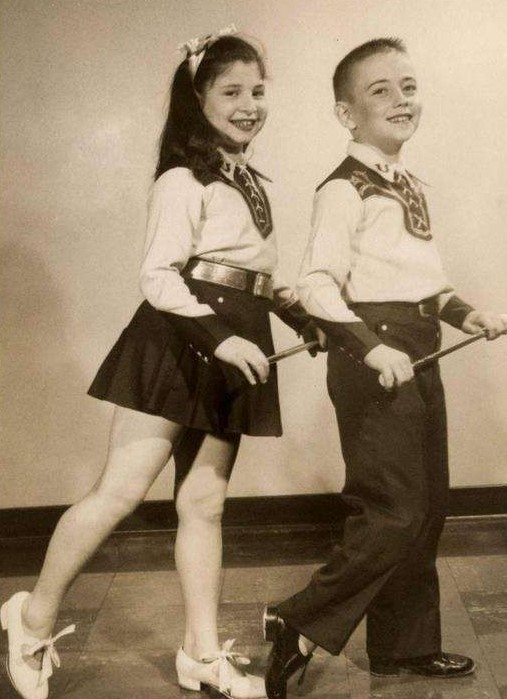
He met his friends at the corner by the park. Eric was a skeleton, Stan a hobo, and Squeamy the Lone Ranger. Squeamy’s sister, Oda May, stood apart from the others, smoking a cigarette and looked bored. She carried a rubber-and-fur gorilla mask loosely in her hand like a rag.

“What’s Oda May doing here?” Buster asked.

“My mother wouldn’t let me go out without an adult,” Squeamy said.

“She’s fifteen!”

“I guess that’s enough of an adult.”

“Let’s get going, you losers,” Stan said, “before all the good candy is gone!”

Oda May flipped away her cigarette and put on the gorilla mask and they headed for the neighborhood on the other side of the park where all the best houses were.

It was a lucrative neighborhood. Three-quarters of the houses had their porch lights on. When people took one look at adult-sized Oda May in her gorilla mask, their smiles usually faded.

The treats were good, Hershey bars and popcorn balls instead of stale jelly beans. After three blocks, their bags were starting to get heavy. They sat down on the curb to rest for a while.

“That’s how it’s done,” Oda May said, hefting the bag of candy appreciatively between her legs. “If they’re just a little bit scared of you, they’ll fork over the candy quick enough so they can get rid of you.” She lit a cigarette without taking off the gorilla mask.

“Where to now?” Buster asked.

“I don’t know about you little turds,” Oda May said, “but I’m going to go meet my boyfriend.”

“What about us?” Stan asked.

“You’re on your own. I’ve played nursemaid long enough.”

“It’s all right,” Squeamy said. “We don’t need her.”

“And don’t follow me,” she said, “or somebody’s gonna lose some teeth!”

“Leave the mask on!” Squeamy called after her. “Your boyfriend might like you better that way!”

“What will she do with all that candy?” Buster asked.

“Probably give it to her boyfriend.”

“Who is this boyfriend, anyway?” Eric asked. “Why don’t we get to meet him?”

“He’s a criminal, I think,” Squeamy said. “She doesn’t want me to see him because she’s afraid I’ll tell on her. He’s twenty-three years old. I’ll bet he’s really terrible looking, like a convict.”

“I’d like to see him,” Stan said.

“Hey, I stole some of her cigarettes when she wasn’t looking,” Squeamy said, passing them around and lighting them.

“Boy, I like smoking!” Eric said. “I inhale the smoke deep down into my lungs and let it stay there.”

“Me too,” Stan said. “I’m always going to smoke for as long as I live.”

“My mother told me if she ever caught me smoking a cigarette she’d knock it down my throat,” Squeamy said.

“Doesn’t she smoke?” Eric asked.

“Of course she does. They all smoke.”

“Then why does she care?”

“Because I’m in fifth grade.”

“She’s a hypocrite,” Stan said.

Buster had never smoked before except for a quick puff off his mother’s cigarette when she wasn’t looking. He didn’t like the taste of it, but he wasn’t going to be the only one not to smoke.

Several times, he took the smoke into his mouth and quickly blew it out again. He wanted to have the others see him with smoke coming out his nose like a dragon, but he wasn’t sure how to do it without inhaling.

“Don’t you like smoking, Buster?” Squeamy asked.

“Yeah, I like it all right. I smoke all the time when my mother isn’t looking.”

“Well, finish your cigarettes, ladies,” Eric said. “We’ve still got a lot of territory to cover.”

They went over a couple of blocks to another neighborhood where the treats were bound to be good. They covered several blocks, both sides of the street, in just under an hour.

“My bag is getting really heavy,” Squeamy said. “I think I’d probably better go on home now.”

“Somebody gave me a guitar pick as a treat. Isn’t that weird?”

“Hey, it looks like it’s going to rain! If our bags get wet, they’ll bust through on the bottom and all our candy will spill out!”

“What time is it?”

“I think it’s about a quarter to ten.”

“I think we should call it a night.”

Some older kids, sixteen and seventeen, came up behind them with the intention of stealing their candy, so they began running furiously into the dark to get away from them. Stan knew the neighborhood better than the others, so they all followed him.

He led them around in a circuitous loop over to Main Street, where there were lots of lots of lights, people and cars.

“I think we outran them!” he said.

“Can you imagine the nerve?” Eric said. “We’ve been out all night trick-or-treating for our candy, and somebody thinks they can just come along and take it from us? What is the world coming to?”

Some of the businesses on Main Street were giving out treats. A lady at a bakery gave them day-old pumpkin cookies, which they devoured like hungry wolves.

A man standing in front of a tavern was giving out treats from a large plastic pumpkin. “You kids need to be home in bed,” he said.

“If we come inside, will you give us a beer?” Stan asked.

“Come back in ten years,” the man said.

There was a big crowd at the Regal Theatre, a long line of people waiting to buy tickets to the Halloween double feature: Bride of the Gorilla and The Terror of Tiny Town. Anybody in costume could get in for half-price.

“If we had enough money, we could go,” Stan said.

“Aw, I can’t stay out that late,” Buster said. “My mother would come looking for me.”

They were about to walk past the theatre, but Squeamy spotted Oda May in the ticket line in the gorilla mask and stopped. She wasn’t alone, either.

“She’s with a little kid and he’s a cowboy!” Squeamy said. “Her boyfriend is a child and a cowboy! That’s why she didn’t want us to meet him!”

From where they were standing, they all had a good look at the little cowboy. When he turned around to look at the line behind him, Buster saw his face. “That’s no little kid,” he said. “That’s a midget!”

“A what?”

“Oda May’s boyfriend is a midget and his face is all wrinkled! He must be thirty years old!”

“Oh, boy!” Squeamy said. “I’m really going to tell on her now!”

“I think we should go over and say ‘hi’ to her,” Eric said.

“No!” Squeamy said. “She’ll think we’ve been following her!”

They stood and watched Oda May and the midget cowboy move up in the line. When it was their turn, Oda May moved around behind the midget, put her hands on his waist and lifted him up so he could buy the tickets and then set him down again. Several people in line behind them laughed, but they seemed not to notice.

“Now I’m seen everything!” Squeamy said. “Can you imagine what their children will be like? I don’t even want to think about it.”

“Let’s go,” Stan said. “It’s ten o’clock and it’s starting to rain again.”

They decided to walk home with Stan, since he lived the closest. The interesting thing about Stan was that his father was an undertaker and the family lived above the funeral parlor. It was a subject of endless fascination to Stan’s friends.

“I think I’m going to call it a night,” Stan said when they were at the corner near his house. “Thanks for walking me home.”

“Do you mean you’re not going to ask us in after we’ve come all this way?” Squeamy said.

“Do you have a body in a casket we can look at?” Eric asked.

“Stan’s right,” Buster said. “I should be getting home, too.”

“I have to go to the bathroom,” Squeamy said. “I don’t think I can wait until I get home.”

“Oh, all right!” Stan said. “You can come in but you have to wipe your feet first.”

Stan’s parents were out for the evening, so they had the place to themselves. Stan took them down to the basement to show them around but made them promise not to touch anything. First he showed them the room where the embalming was done with its white cabinets full of jars and bottles and then a separate room where bodies were dressed and prepared for burial. The most impressive part of the tour was the casket room, where more than fifty caskets were opened up so people could see inside them. Eric, Buster and Squeamy took turns taking off their shoes and getting into a casket to see what it felt like, while Stan closed the lid on each of them for a few seconds and then made them get out.

“My dad wouldn’t like it if he knew we were down here,” he said.

“Let us know when there’s a body so we can come back and see it,” Eric said.

“I’ve seen plenty of dead bodies. It’s people you don’t know. You don’t feel anything looking at them.”

“You are so lucky! I’ve never seen a dead body!”

“I need to get home,” Buster said. “It’s getting late.”

Buster walked part of the way home with Squeamy and Eric, but they left him at the corner by the church and he had to walk the last four blocks alone. He held his bag of candy in his arms because it was heavy and soggy and he didn’t want the bottom breaking through. He didn’t see a single other person on his way home. Everybody was finished for the night. Halloween was over for another year.

Mother was sitting on the couch in her bathrobe and slippers watching a Charlie Chan movie on TV. “Did you have a nice time?” she asked.

“Yeah, it was okay.”

“I’m glad you’re home.”

“Why?

“I always worry about you when you’re out by yourself.”

“I wasn’t by myself.”

“There’s an escapee on the loose killing people. I just heard it on TV.”

“We just missed him.”

“Now don’t eat all that candy at once. You’ll make yourself sick. You still have to eat your fruits and vegetables.”

“I know. I want to go to bed now. I’m tired.”

She was saying something else as he went up the stairs, but he didn’t hear what it was.

He weighed himself on the bathroom scale, first without the bag and then with it. He weighed eighty-four pounds without the bag and ninety-five pounds with it. Eleven pounds of candy. One pound for every year of his life.

He undressed and put on his pajamas and set the bag of candy on top of the chest of drawers where he could see it from the bed. He got into bed, took one last look at it, turned off the light. Before he could have counted to ten, he was asleep.

Copyright © 2022 by Allen Kopp

The Haunted Cigarette ~ A Short Story

The Haunted Cigarette image 4
The Haunted Cigarette
~ A Short Story by Allen Kopp ~  

Constanza was confused when she woke up. She couldn’t remember anything that happened the day or the night before. She looked over at the clock and seeing that it had stopped and not knowing the time only added to her confusion. She sat up in the bed and pulled a pillow up behind her so that it was between her back and the headboard and smoked a cigarette and then she remembered the reason for her confusion. She had been sick, she had had a high fever, and the doctor gave her some pills to help make her sleep.

She got out of the bed and slipped into her bathrobe and went into the kitchen. She was glad to see that her husband had gone to the store and bought groceries. He was always good to help out with the housework whenever she wasn’t feeling well. There were milk and oranges in the refrigerator and a loaf of bread on the counter and plenty of cigarettes. She made some coffee and sat down at the table and smoked another cigarette and looked out the window at the gray, hazy sky and waited for the coffee to brew.

She drank half a cup of the coffee and took a few bites of a piece of toast, but she had no appetite and she soon went back into the bedroom and lay down again on the bed. She had a terrible headache and a searing pain in her throat and chest. She took another of her pills and pulled a pillow lightly over her face; in a little while she was able to stop thinking about how bad she felt and she fell again into a very deep sleep.

The next time she awoke, the room was dark. She had slept throughout the entire day and it was night again. She got out of bed and turned on the lights and went into the kitchen, expecting her husband to be there, but he was nowhere in the apartment. She looked at the kitchen clock and saw that it had stopped at exactly two-ten, the same time that the clock in the bedroom had stopped. She thought the pills must be playing tricks on her mind.

Her husband would surely be coming home soon. She felt bad that she kept missing him and hadn’t seen him for what seemed like days, but she couldn’t be sure how long it had been because she had been sleeping so much from the pills. He had been coming home and then leaving again, not wanting to disturb her; that much was obvious. His coffee cup was in a different place, he had left a plate in the sink to be washed, and a jacket he always wore had been taken out of the closet and draped over the back of a chair. She was comforted by these little signs of his presence.

She would sit up and stay awake and wait for him to come home and then she would fix him some dinner and they would talk. He would laugh when she told him she had slept the whole day through and had lost all track of time. He would tell her about things that had been happening to him at work and then she would feel better.

Being awake and alert when he came home suddenly seemed very important to her. She turned on the radio for some company, turning the dial until she found a station that was playing some soothing music, and then she picked up a magazine and sat down on the couch and began looking through it. She smoked a cigarette and then another one. She read a story in the magazine to make herself stay alert, but before she finished the story she was overwhelmed again with drowsiness. She lay full-length on the couch and let her magazine fall to the floor. She would just take a little nap. When her husband came in the door, that would wake her up and he need never know she had been asleep again.

When she awoke it was the next morning and voices on the radio startled her; she thought there were strangers in the room with her. She stood up from the couch rather shakily and turned off the radio and then, thinking that her husband must still be asleep, she went into the bedroom, expecting him to be in the bed, but he wasn’t there. She went into the kitchen, hoping to see him sitting at the table looking through the morning paper, but he wasn’t there, either. He had made some coffee, though. Or had he? When she realized the coffee was cold, she thought maybe it was the coffee she had made the day before, but she couldn’t be sure.

She dressed and had a bite of breakfast and then she took another of her pills. She lit a cigarette and tried calling the doctor to tell him how the pills were making her feel and to ask him whether or not she should keep taking them, but there was no answer; she thought maybe it was Sunday and his office was closed.

She made the bed and washed the dishes and cleaned up the apartment a little until she became tired. She was still not over being sick and her stamina was not what it should be. She lay down on the bed in her clothes and soon she went to sleep.

Then it was night again and she was awakened by a clamor on the street in front of the building. There were excited voices and a sound like bells ringing and a roar that she couldn’t identify. She got up and ran to the window to see what was going on, but there was nothing out of the ordinary happening in front of the building. The stoplight at the intersection turned from red to green and back to red again serenely, with no cars in sight. She thought she must surely have been dreaming the sounds.

In this way several days passed. She continued to take the pills. She slept and woke and then slept again. Time had lost its meaning for her; it seemed fragmented instead of continuous. A day might seem like a minute or a minute an hour. Days and nights were jumbled together. Every time she woke, she expected her husband to be nearby, but he was never there. She wasn’t sure why she kept missing him, but she felt certain he had been there and had left again.

At times she was awakened by a popping sound and the sound of screaming and running somewhere in the building, but she could never be sure if these sounds were real or if they were happening only inside her head. When she heard these sounds, her heart beat rapidly and she went to the door and opened it and stepped out into the hallway, but by then the sounds would cease and the hallway would be quiet. At other times she believed she smelled smoke but when she investigated she wasn’t able to find any source of smoke. Sometimes she would wake with a sensation of heat all over her body, but it went away just as soon as she became aware of it.

Most disturbing of all, though, were the sounds coming from the street. Every night at what seemed exactly the same time she heard the bells and the roaring and the loud voices, and every time she went to the window and looked out, all was quiet. She concluded that the only explanation was that she was going insane.

She hadn’t been out of the apartment for days; she couldn’t remember how long it had been since she had dressed and gone out. Maybe being out in the fresh air would make her feel better, she thought. Just the idea of being someplace other than the apartment cheered her up.

She cleaned herself up and put on her clothes and combed her hair and put on some lipstick. After she put on her shoes, she was ready to go. She opened the door and stepped out into the hallway and locked the door behind her and went down the stairs to the street.

The sunlight hurt her eyes and the traffic noise made her head ache. People she saw seemed indistinct, as though they were out of focus. When she was standing on a corner waiting to cross the street, a couple of women jostled her rudely and knocked her off-balance.

Six blocks away was a little park that she and her husband often walked to on hot summer nights. She made her way to the park and, finding it nearly deserted, found a place to sit on a bench facing a small duck pond. Out in the middle of the pond were two lone ducks swimming side by side. She watched the ducks for a while and then she looked disinterestedly at the sky and at the trees off in the distance and at the few people who passed.

Near the bench on which she sat was a trashcan in which somebody had discarded a newspaper. In startling print, the newspaper proclaimed to the world: Eight Die in Apartment Blaze. She might easily have seen it, but she didn’t. It would have explained so much to her.

The fire department was summoned to the Grove Apartments on June the twenty-first at two-ten in the morning. She and seven other people, including three children, perished in the blaze. Her husband made it out of the building alive; that’s why she was never able to find him. The building was destroyed. The cause of the fire was under investigation.

She was the first to die before the fire spread to the rest of the building. Her husband had warned her repeatedly about not smoking in bed. The pills she took made her do things she would not ordinarily have done.

She would continue to exist in the in-between world of darkness and confusion. Every day and every night she would relive bits of what happened the night of the fire—the shouts, the commotion in the street in front of the building, the panicked footsteps, the smoke stealing her breath and, finally, the searing heat and flames enveloping her.

In time, though, she would pay her penance, if penance is what it was, and the night of the fire would be wiped from her memory. She would remember nothing, only that she had died and passed on to a different kind of existence.

Copyright 2022 by Allen Kopp

Haunt ~ A Short Story

Haunt
Haunt
~ A Short Story by Allen Kopp ~

A spirit needs a house to haunt. I’ve haunted a church, a theatre, a department store and a graveyard, but there’s nothing like a house. A house is where people have lived. Where things have happened. Where tears have been shed. Where people have been born and people have died. A spirit can feel all of it and more.

After looking at thirty or forty houses, I found one I liked. It was large, with many rooms, three floors, built in the old style. It was abandoned, in an advanced state of neglect, but still plenty sturdy. The cellar was like a dungeon with chains hanging from the beams. Behind the house was an old cemetery. All in all, the house had much to recommend it.

As a spirit, all I needed to do to claim a house as my own was to move in and take possession. If anybody else was haunting it, all I had to do was kick them out.

I soon discovered other spirits in residence. There was a woman who committed suicide every night at midnight, with piercing shrieks, by hanging herself from the upstairs banister. I don’t know why she did it every night since she was already dead, but I suppose she enjoyed the drama. One night, just before midnight, I grabbed her by the throat and threw her out of the house. She didn’t see me, not knowing of the existence of other spirits, and didn’t know what had happened to her. She wandered around on the outside of the house, not knowing how to get back in. Finally she flew up into the trees, and as far as I know she’s still there.

Then I found an eight-year-old female spirit haunting the attic. When she was alive, her cruel mother locked her in the attic with the mice and spiders to punish her. She was deathly afraid of the dark. While locked in the attic and unable to free herself, her mother was stabbed to death in a quarrel with her young lover. The girl never knew what happened to her mother. She starved to death, waiting for her dinner.

The girl in the attic wasn’t as annoying as the woman who hanged herself every night. I didn’t know what to do about her. I didn’t think it was right to just throw her out. I opened the attic door so she could come out if she wanted to, but she stayed where she was. She had been in the attic so long it was all she knew.

The spirit of a very old man haunted the cellar. He owned the house when he was alive. After he died, he didn’t want anybody else living in the house. He rattled chains and moaned at night to try to keep anybody away, living or dead. He didn’t scare anybody except maybe himself. He was the kind of spirit other spirits laughed at.

There were two boys, twins, who haunted the whole house but most especially the upstairs rooms. They had both died there of scarlet fever. They didn’t know yet that they were dead, even though it had been over a hundred years. They were constantly playing tricks, trying to scare each other. I heard them laughing all the time. Anytime they saw me, they ran as if we were playing a game. I wanted to grab one of them in each hand and throw them out of the house.

I was an old spirit; I had been in the spirit world for eighty years or more. I had seen everything and done everything a spirit could do. Now I longed for the quiet, pastoral life, and I didn’t want a lot of other spirits around me. I came to this house hoping to escape the clamor of the spirit world, hoping to be alone.

At night when I tried to rest instead of haunt, I could hear the old spirit in the cellar kicking up a fuss. He knew there were other spirits in the house besides himself and he wanted to scare them away. He thought the louder he became, the scarier he would be. He didn’t scare me, though. He did annoy me, however, and I wanted him gone.

Through most of the night, I could hear the twins laughing and running up and down the stairs. I wondered why they never slept. Then I realized they slept during the daylight hours. That would be the best time to catch them and run them out of the house, but first I’d have to find out where they slept. Even though they were children, they had been in the spirit world longer than I had and they knew all the ways to protect themselves.

Then I started finding dead, rotting bodies all over the house. Some were only skeletons and others still wore part of their human bodies. All were long dead. I knew right away they were from the graveyard behind the house. Many of them still wore remnants of the fine clothes they had been buried in: men in white-tie-and-tails and women in ball gowns or wedding dresses. Oh, what a world!

First there were one or two bodies and then eight or ten and then dozens and then hundreds. Finally they filled the downstairs parlor from floor to ceiling. I was past the point of pretending they weren’t there. Even though I was a spirit myself, I didn’t like dead bodies. They were part of the physical world that I left behind long ago. A rotting body was an affront to me. Hundreds of rotting bodies were an abomination!

After two or three days of observation, I discovered the twins sleeping during the daylight hours in a barely noticeable niche in the wall of their bedroom. I stormed in on them, waking them from a stupor, and was able to grab each of them by the neck. Before they knew what was happening, I clapped their heads together like cymbals. While they were stunned and nearly immobile, I threw them out of the house.

While I was brushing my hands off and congratulating myself on a job well done, I realized somebody was standing on the stairs looking at me. It was the little starveling girl from the attic. Her face was a glowing white and her eyes completely engulfed in black circles. She surprised me by speaking.

“It wasn’t them,” she said.

“What?” I asked.

“They weren’t the ones who brought the bodies from the graveyard into the house.”

“Who was it, then?”

She mimed hanging herself, and I knew right away what she meant.

Every night there were more bodies in the downstairs rooms. I could hardly go into any of these rooms without becoming ill. I had seen many vile things during my existence, but now I had seen the worst.

I waited until the middle of the night, three hours past midnight and three hours before sunup. I went quietly downstairs at this unholy hour and, standing on the stairs about halfway down, I saw her come in from outside, dragging her burden of dead bodies, as many as she could manage at one time. It was the hanging woman. I wanted to throttle her. I wanted to finish her off. I wanted to make sure she was gone for good and would never come back.

“Just what do you think you’re doing?” I said, although it was obvious.

“It’s you!” she said. “What do I have to do to get you to leave my house?”

“Leave it yourself! It’s my house now! And make sure you clean up this mess before you go!”

She came at me then, teeth bared, but I was able to sidestep her. She hit her head on the banister with a crack that split the wood, but, without missing a beat, she got up and came at me again. Again I sidestepped her.

“You’re wasting your time!” I said. “I’m younger than you, stronger and smarter. You’re just a worn-out old hag of a spook. I think you were in your prime about the time of the Revolutionary War!”

“I’ll show you!” she said.

She hurled an unexpected fireball at me. I hadn’t counted on her being a witch, in addition to everything else.

The fireball was directed at my face and chest, but I was able to get out of the way just in time. It hit the wall behind me and set fire to it.

“You’re going to have to do better than that!” I said.

Next came a barrage of fireballs, more fireballs than I could count. Soon the wall and stairway behind me were a wall of fire. With her out-of-control emotions, she had set fire to the entire house in just a few seconds. All I could do was get out.

“Now look what you’ve done, you horrible old witch!” I said as I ran past her for the front door. “Now it’s nobody’s house!”

I went out to the road and watched the house as it burned all the way down to the foundation. I figured the hanging woman burned up in the house because I didn’t see her come out. Nobody can blame that one on me.

I stayed and haunted the cemetery for a few days, not knowing what else to do. Then I went to the city again and took up residence in a waterfront hotel. I had some friends there that I had known before. It was a good time for me.

Copyright © 2022 by Allen Kopp
Men With Red Hair ~ A Short Story

Men With Red Hair image 1
Men With Red Hair
~ A Short Story by Allen Kopp ~

Gerta Fain awoke at nine o’clock with the sunlight streaming through the window and the birds singing their happy song. She rolled out of bed feeling good for a reason that for the moment escaped her and then it came to her: her mother was gone for the day and she had the house to herself. She had always liked being alone and it was going to be a good day. She would roll up her hair, paint her nails and bake an angel food cake. While she was doing these things she could listen to her music on the radio and watch soap operas on television and there would be no one to complain.

She went downstairs to the kitchen and was scouting around in the refrigerator for something to eat for breakfast when she saw a man in the back yard, painting the old garage. Her mother didn’t tell her she had engaged someone to paint the garage; it must have slipped her mind.

From the kitchen window she could see him quite well. He was about thirty-five, slender, dressed in white painter overalls. The best thing about him, though, was that he had red hair that glinted in the sun. She never knew a person with red hair that she didn’t like.

Wearing only her thin pajamas and no shoes, Gerta went out the back door and down the porch steps. “Hey, you!” she said as she approached him. “I saw you out the window of my kitchen! Here I was thinking I was all alone and then I look out the window and see you!”

“Yes, ma’am!” he said. “I’ll be finished up here before you know it!”

“This garage belongs to us. It’s an old rickety thing, isn’t it? There’s hornets’ nests inside there. I’d watch out if I was you.”

“Yes, ma’am.”

“It must have been my mother you talked to, but she didn’t tell me you were coming today. She’s gone today, though. All day. I have the house to myself and I can do whatever I want. I like it when she’s gone.”

“Uh-huh.”

“I sure do like your red hair! As soon as I saw you out the window, I noticed it. I bet you get a lot of compliments on your hair.”

“Not until now.”

“You don’t see that many men with red hair. I had a cousin with red hair, but he was shot and killed.”

“Oh?”

“You’ll be here today and tomorrow?”

“That’s right.”

“That’s only two days. Where will you be after that?”

“I don’t know. Another painting job somewhere else.”

“Do you like being a painter?”

“Better than some things.”

“I don’t think I’ve seen you around before,” Gerta said. “Are you new in town?”

“I’ve only been here seventeen years.”

“If you do a good job on the garage, maybe my mother will have you paint the whole house.”

He looked up the slope of the yard to the house. “It’s a big house,” he said.

“Yeah, we’ve got nine rooms. I’ve never lived anywhere else.”

“Just you and your mother?”

“That’s right. I don’t have a husband. I’ve never been married. I’ll probably get married someday, but for now I like being single. You wouldn’t happen to have a cigarette, would you?”

“Don’t smoke.”

“Well, I’m not supposed to smoke, either, but I do it anyway when my mother isn’t around. It’s not as if I’m a child or anything, but she doesn’t like smoking and gets awfully mad about it sometimes.”

“Well, I’d like to stand around and talk all day,” he said, “but I’ve got a lot of ground to cover in two days.”

“Oh, don’t mind me! I certainly don’t want to keep you from your work!”

“No, ma’am.”

“Would you like a drink of water? It must be awfully hot working out here in the sun.”

“I usually don’t take a drink until I’m finished working,” he said.

“Don’t you ever take a break?”

“No time to waste. Always in a hurry, I guess.”

“Oh, if it was me, I’d take a lot of breaks!”

“Yes, ma’am.”

“I don’t have a job,” Gerta said. “I had a job once but it was just temporary. I was a phantom shopper. Do you know what a phantom shopper is?”

“No, ma’am.”

“It’s sort of a department store spy. If they catch you spying, they’ll break both your legs. Another time I worked for a cleaning service, but I had to quit that job because the chemicals we used to clean with made me break out all over. The doctor said I had an allergic reaction. Have you been painting garages long?”

“About seven years. Seems like a lot longer.”

“Are you planning on doing that all the rest of your life?”

“No, when something better comes along, I’ll take it.”

“One of these days I’ll get me a job that lasts,” she said. “I wouldn’t mind doing what you do, but I guess there aren’t many women that do that, are there?”

“I haven’t known of any.”

“I think I’d like a job on TV,” she said. “I’d either like to be an actress on one of those soap operas or a news reporter. I could stand up in front of a map on the television screen and talk to people about what the weather is going to be like tomorrow. If they won’t let me do that, then I’d like to work behind a counter in a department store or as a supermarket checker. I’d be good at that.”

“Yes, ma’am.”

“I was going to go back inside the house, but it feels so good being out here in the sunlight and the air that I think I’ll just stay out here for a while.”

“Yes, ma’am.”

She sat down on the ground and put her knees up, forgetting for the moment that she was wearing only thin pajamas with nothing on underneath. She didn’t mind that the ground was a little bit soggy. She put her feet together and her hands on her ankles.

After a couple minutes of silence, she said, “Did I tell you that my mother is gone for the day? I like it when she’s gone. My father died a long time ago. He worked as a foreman in a factory and one day he just fell over dead. I think he was lucky in that respect. He had an easy death. I’d like to have an easy death, wouldn’t you?  Do you mind if I ask you whether or not you have a girlfriend?”

“No, I don’t have a girlfriend,” he said, “but since the two of us don’t know each other at all, don’t you think it’s better not to ask personal questions?”

“I’m sorry. I didn’t mean anything by it. I just like to know about people, is all. Some people call it friendly and others call it nosy.”

“It’s all right. It’s just that I don’t have any time for talking.”

“I understand and I apologize.”

“No need.”

“You make me tired just by watching you,” Gerta said. “I guess I’m not much for working. My mother says I’m lazy. Well, if I’m lazy, she’s lazy too. She doesn’t do any more work than I do. I do all the housework and most of the laundry and most of the cooking. I like to cook, though, when my mother isn’t standing over me. She calls me an idiot and a dumbbell when I don’t do things the way she likes them. Is your mother dead?”

“No, but she lives far away and I never see her.”

“Families are funny things.”

“Yes, they are.”

“I prefer friends over family, but I don’t have that many friends, either. Sad to say. When I was in high school I had friends but that’s been years ago. The friends I had then have all drifted away. Some of them got married and some moved away. One or two of them are even in jail.” She laughed. “I wouldn’t like to be in jail, would you?”

“No, ma’am.”

“If they were going to lock me up for thirty years for a crime I committed, I think I would just prefer the death penalty, wouldn’t you?”

“Yeah, I guess so.”

“They just do the lethal injection thing now. I hear about it all the time on television. It probably doesn’t even hurt. I’m pretty sure it’s a painless death. They used to hang people by the neck or put them in front of a firing squad, but they had to stop doing that. People were complaining.”

“Yes, ma’am.”

“Are you sure you wouldn’t like to take a little break for a while? Aren’t you tired.”

“No, I’m not tired.”

“You must be hungry. Would you like a sandwich or something? You can come into the kitchen and sit at the table and I’ll fix you a baloney and cheese sandwich.”

“No, thanks. I’m not hungry and I’m not tired.”

“Well, if you want to take a break, let me know.”

“I will.”

“I know I’ve just about talked you to death. I don’t know what’s gotten into me. I don’t usually talk so much. You just seem like a sympathetic person that I can talk to.”

“People don’t usually notice me when I’m working.” he said. “They don’t even see me. They’re only interested in the finished job. They never think about the person doing the work.”

“Well, isn’t that just typical? Tomorrow you can meet my mother. And I promise I won’t talk so much.”

“That’s all right, ma’am.”

“You’re a real gentleman. You don’t meet many of those, anymore. I’ll go back inside now and leave you to your work. Before I go, though, I wonder if I could ask you one tiny favor?”

“What is it?”

“I have this old trunk upstairs in my bedroom. The lock is busted; the key won’t turn. There are some important papers in it that I need to get out. I’ve had a feeling ever since I first saw you that you would know how to get it opened, but I hated to ask.”

“Can you bring the trunk out here?”

“No, it’s too heavy.”

“Well, all right. I guess I can take a couple of minutes and go upstairs and take a look.”

Gerta took him into the house, through the kitchen, into the dining room, and down the hallway to the stairs. She held onto the banister as she went up ahead of him, wondering what he must be thinking.

When she came to the door of her bedroom, she paused for a moment for him to catch up. Then she opened the door and took him inside.

She was aware of how messy the room was. She hadn’t even made the bed. He’d think she had the manners of a pig.

The trunk was on the other side of the bed, beneath the window. She had to move some clothes and old blankets out of the way for him to get to it.

He knelt down. After a thorough examination of the lock, he asked her for a hammer and a screwdriver and when she produced them, he inserted the screwdriver into the lock and tapped lightly with the hammer until the lock opened.

She squealed and clapped her hands together with genuine delight. “I knew you could do it!” she said.

“It’s an old lock,” he said. “Needs some oil.”

“I want to give you something,” she said.

“Oh, no! It’s not necessary!”

“I don’t have any money, but I want to give you something!”

She opened the dresser drawer and rummaged around inside until she found a Fourth of July lapel pin that she had since she was eleven. It showed an American flag on a background of exploding shells.

“This isn’t much,” she said, “but it will help you remember that you did a good deed for a stranger and asked nothing in return.”

He stood still while she came very close and attached the pin to the front of his shirt.

“This isn’t necessary,” he said.

After she pinned the lapel pin to his shirt, they continued to stand very close to each other for a few seconds too long. Then he stepped away from her and they both realized at that moment that they weren’t alone in the room.

Gerta’s mother had returned earlier than expected. She stood in the doorway, hand on knob, glaring at Gerta and the painter.

“What’s going on here?” her mother asked. “Who is this man?”

“He’s nobody,” Gerta said. “He’s the man painting the garage.”

“What’s he doing in your bedroom?”

“We were talking and I asked him if he would take a look at the lock on my trunk.”

“Since when was there anything wrong with the lock on your trunk? That was just an excuse to get him up here, wasn’t it?”

“No!”

“I’ll go,” he said.

“That’s right! You go! And if you ever come messing around my daughter again, I’ll have you arrested!”

She stood aside to let him pass. As he was going down the stairs, she called out after him, “And I’m going to have you fired for this! Don’t think I won’t!”

“You have to ruin everything, don’t you?” Gerta said.

“So I was right! You were about to take him to bed!”

“Of course not! I was going to give him something out of my dresser drawer.”

“Give him what?”

“None of your business!”

She tried to go out of the room but her mother grabbed her by the arm and pulled her back and started slapping her. When she put her arms up to fend off the blows, her mother stripped off her pajamas with a wrenching pull and knocked her to the floor.

“Just what I thought!” her mother screamed. “You’re a cheap whore! You’re trash through and through! I can’t leave you alone for just a few hours! You should be locked up!”

“I didn’t do anything!”

She tried to stand up, but her mother kept slapping and kicking her so that after a while she just lay still and didn’t offer any resistance.

When she awoke she was on the floor and it was after two in the morning. Her head hurt terribly and her wrist, she was sure, was broken. She felt too sick and demoralized to stand upright.

Then she thought of him and it all came back. He came to paint the garage. He had the prettiest red hair she ever saw. They started talking, except that she did most of the talking. He listened politely but she knew, deep down, that he wanted her to go away and stop bothering him. She persuaded him to go upstairs with her to take a look at a lock on her trunk. Her mother came back at that moment and found them alone together in the bedroom, but they weren’t doing anything. Nothing at all. It was all so innocent. Her mother, of course, would make it out to be infinitely worse than it was, like two pigs rutting in the mud.

They’d get somebody else to finish the garage. She’d never see him again. She hadn’t even thought to ask him his name. All she knew about him was that he painted garages and had red hair. It wasn’t much to go on.

Copyright © 2022 by Allen Kopp

I Laughed, I Cried

I Laughed, I Cried image 1

I Laughed, I Cried
~ A Short Story by Allen Kopp ~

(This short story is a repost. It was published in State of Imagination magazine.)

*****

The world is ending, maybe in as little as two days. I feel strangely at peace; there’s some comfort in knowing that I—along with everybody else left in the world—will go out at the same time and in the same way. There’ll be no more bills to pay, no more car insurance, traffic jams, head colds, television commercials, doctor visits, taxes, corrupt politicians, backaches, family arguments, mosquito bites, or tough chicken. The list could go on and on, but I digress.

I’m in a huge shopping mall. People are going crazy, stealing everything they can carry. It’s an end-of-the-world dream come true. All that beautiful merchandise sitting there, waiting to be taken by whoever wants to take it. And who’s going to keep them from taking it? A large woman nearly knocks me down with an armful of blankets—she’s going to be warm for the end of the world. A man rushes by me for the door with a table lamp in one hand and a telescope in the other. And if you have a sensitive nature, don’t even bother looking toward the jewelry counter. Women are fighting each other over diamond necklaces, earrings and watches. There’s blood all over the floor. I see an old woman stuffing engagement rings into her bag while a couple of young girls, no more than twelve years old, tug at the bag to try get it away from her. The end of the world, I can see, brings out the very worst in people.

I’m in the book department. I see a couple of paperback books I want, but I don’t feel right just taking them without paying, even with the chaos that’s going on around me. I decide not to take them, even though I know I can, because I know I won’t have a chance to read them. Books don’t mean much now; nothing does.

On the other side of the book rack I’m facing, I see Clifford Devore. I went all the way through school with him and haven’t seen him for many years. If I had a best friend during school, it was Clifford. He’s wearing a purple-and-white striped knit cap, fastened underneath his chin. It’s the same knit cap he wore in eighth grade, a gift he received at a union Christmas party. It makes him look like a baby and I have the urge to laugh but I don’t.

“Hello, Clifford,” I say. I have to look up because he was always a few inches taller than me.

“Oh, hello, there,” he says, not smiling.

He doesn’t seem very happy to see me, but I know that the end of the world makes people behave in strange ways.

“I have to admit I’m a little afraid,” I say. “Will you stay with me?”

He just looks at me and doesn’t answer. I’m not sure if he heard what I said. A woman screaming behind me startles me and I turn around and look over my left shoulder. When I turn back to face Clifford, he’s gone, as if he disappeared into the air. I look around for him for a minute or so and then I realize it’s no use.

I see Buckwheat standing nearby, looking at me with his enormous eyes as if he knows me. He’s the little black child from Our Gang that I used to see on TV all the time when I was growing up. He’s wearing the little print dress he always wore that made me sometimes wonder if he was a boy or a girl (which I realized after seeing many times was really a long sweater that went down to his ankles, and not a dress) and curl papers in his hair. He doesn’t appear to be afraid, even though he’s surrounded by frenzied people yelling and stealing things. He has a serenity about him that tells me he’s taking the end of the world very well.

I’m ready to leave the mall to go home, so Buckwheat and I are on a moving conveyance that at first seems like an escalator and then is more like a roller coaster. We’re sitting in a comfortable seat—Buckwheat to my left—and we go up very high into the air. We pass over water down below and trains moving backwards. Now the roller coaster is more like a train and we’re on flat, regular ground. Somebody is standing at the front of the train car talking to the passengers about how the end of the world is coming, but nobody is paying any attention to what he’s saying. We’re past the time of having to listen to somebody we don’t want to listen to—another good thing about the end of the world.

The train stops and I get off, but I’m the only one who does; everybody else stays where they are. When I get to the door of the train and start to step down, I pause and look back over my shoulder at Buckwheat. He’s smiling and he gives me the high sign, which is back of hand to chin and waggling of the fingers. I give him the high sign back and get off the train.

When I get home, it’s my grandmother’s house that she lived in when I was in grade school. She’s sitting in front of the television, smoking Old Gold cigarettes and watching Liberace. He’s playing a grand piano with candelabra. The camera moves slowly around the piano, loving every inch of Liberace. He looks up as if he doesn’t know the camera is there and when he sees it he winks. Grandma thinks the wink is especially for her.

“Isn’t he just the cutest thing you ever saw,” she says.

I hear a thumping sound against the wall. “What’s that noise?” I ask.

“It’s those people that live in the other part of the house,” Grandma says.

“I didn’t know people lived there,” I say.

I go and open a door I never noticed before and, sure enough, there’s an entire other house there, with a kitchen, furniture, a dog, and a family I never saw before. I don’t know how they could have been so close all this time; seems like I would have heard or seen them before now. They seem to be having dinner; they look at me with annoyance. I apologize for bothering them and close the door as quickly as I can.

“What did I tell you?” Grandma says, not taking her eyes off Liberace.

My mother and sister are fighting, as usual; this time about my nephew, who has somehow mutated into an egg about two feet high. The egg that is my nephew is sitting on the couch. I try not to look at him because when I do I want to cry. The top of the egg is transparent and if you look down into the egg you can see my nephew’s face. He’s moving his mouth as if he’s trying to say something but no words come out; his tongue is flicking at the inside of the egg.

“He seems to want out of the egg,” I say. “Shouldn’t we try to crack it or something?”

“No,” my mother says. “All we can do is make him comfortable.”

“How do you make an egg comfortable?” I ask.

My sister stands up and I know now why my mother is so mad at her. She’s very cold and doesn’t seem to mind that her son has turned into an egg. In fact, I would say she’s glad he’s an egg.

“I’m leaving now,” she says.

My mother doesn’t say anything to my sister and doesn’t look at her as she goes out the front door. I’m thinking that my sister should never have been a mother in the first place, but I don’t say so.

As soon as my sister exits the scene, my great-great aunt, Fritzie Williams, enters. Aunt Fritzie is considerably more than a hundred years old. She’s wearing a long yellow coat made of knobby material, buttoned up to her neck; her fluffy white hair is arranged in a triangle on her head. She has two spinster daughters well into their eighties who are my third cousins.

“How are Esther and Josephine?” I ask.

“They’re spooked,” she says.

She launches into a long explanation of why she can’t take me home with her for the end of the world. While she’s talking, I visualize her house with its French doors between the dining room and living room, her big screened-in front porch, and her thick carpeting that’s the color of a Siamese kitten. When she’s finished talking, I just smile and nod my head. She turns and disappears into the wall. I know I won’t see her again.

I sit down on the couch beside the egg. He’s not making the slurping sounds with his tongue anymore so I figure he’s sleeping inside the shell. My mother also seems to be asleep, her chin on her breastbone. Grandma is still absorbed in Liberace on TV; I hear the strains of Warsaw Concerto. I look at the big grandfather clock that has been in the same place in the corner my entire life and I see that it’s stopped. I know without proof that all clocks, everyplace, all over the world, have stopped at the same time. Time doesn’t matter anymore.

The end comes that night while we are all in our beds. There’s no fireball from the sky; no tearing of the earth; no explosions or screaming. I don’t even wake up. I just have the feeling, in my sleep, of slipping out of one place and into another. When a thing really happens, it turns out to be so much different from what you imagined it would be. That’s one of the little tricks life plays on us.

I’m now in a place that must be the afterlife. The only people I’ve seen here are far off, men in dark suits and bowler hats and ladies in long ruffled dresses with parasols. If I try to approach them, they seem to get farther away.

I don’t feel hunger or thirst or any sensation of weariness. An ache I’ve had in a joint of my right foot for ten years is gone. I can lie on the ground and sleep—and the ground is more comfortable than any bed I’ve ever known—but I don’t have to sleep if I don’t want to.

Food is all around me in abundance, for the taking without effort, but eating is only for pleasure and not for sustaining life. I catch glimpses of beautiful animals—lions, peacocks, bears, elephants, giraffes—but when I look directly at them they hide from me and I don’t see them anymore.

Off in the distance on a hill I see a beautiful structure like a castle. With the sunlight shining on it just so, it appears to be made of gold. If I can just make my way over there, I’m sure I can find somebody who can tell me where I am, what it all means, and why I have the sensation of something lost that I must find again.

Copyright © 2022 by Allen Kopp

Bereavement Leave ~ A Short Story

Bereavement Leave graphic 1
Bereavement Leave
~ A Short Story by Allen Kopp ~

(This short story is a repost. It has been published in The Dirty Pool literary magazine.)

*****

“I feel like firing somebody today,” Mr. P. said. “Who shall it be?”

“I don’t know,” Mr. C. said. “Go down the list and pick somebody.”

“Well, now, let me see,” Mr. P. said. “We have lots of suckers to choose from. Are there any standouts? Yes, there are many, many standouts. Anybody you’ve found especially offending lately?”

“Ed Boyce spends too much time in the men’s room,” Mr. C. said.

“He has a chronic bowel disorder,” Mr. P. said, “so I don’t think we could get him on that. He might counter with a lawsuit.”

“How about Frank Taplin? I’ve noticed him staring off into space a couple of times lately when he ought to be working.”

“He just lost his wife to an automobile accident. We gave him three days’ bereavement leave, but I think it takes longer than that to get over the accidental loss of a wife. Sometimes it’s a good idea to have a heart, or at least pretend we do.”

Haw-haw-haw!” Mr. C. laughed. “You’re right, of course, as you usually are.”

“Always being right is the thing that got me where I am today!”

“Well, now, let me see,” Mr. C. said. “Who to fire? Who to fire? Betty Ballantine comes to mind. I don’t like the way she lounges around in the break room, showing her legs like a whore in a waterfront saloon.”

“Can’t fire Betty,” Mr. P. said. “She makes the best coffee in the office and her father is on the board at the country club. We don’t want to make him mad.”

“All right, then. How about Florence Smalls? She’s put on a lot of weight lately. That means she’s moving slow and isn’t working as efficiently as she might.”

“Lot of weight is right!” Mr. P. said. “She’s going to have a baby.”

“You don’t say! I just thought she had been eating too many donuts.”

“You can’t fire an expectant mother, no matter how much you may want to. Pick somebody else.”

“I’m starting to get one of my headaches,” Mr. C. said. “Finding somebody to fire is just too taxing! You pick somebody from the list. I’m going to take a little snooze before lunch.”

Mr. P. and Mr. C. believed in their heart of hearts that that they managed the company, but the truth was they did nothing. When there was any real work to be done, they put it off on one of their minions and sat back and took the credit (and the profits), if any was to be taken.

Mr. C. went into his private office and closed the door. Mr. P. continued studying the list for somebody to fire. When he grew weary and decided it was time to take a little break, he called one of his current girlfriends, one Pansy Ruff, on the telephone. Pansy was a failed actress and had spent some time behind bars for cashing other people’s checks.

Mr. P. and Pansy spoke for over an hour about sundry personal matters, including her two pet poodles and the lousy manicure she had from a manicurist who was obviously high on drugs. Then she told him about how she had been taxing her intellect looking at travel brochures, trying to decide on a vacation destination (the French Riviera, Rome, or both?) and grew pouty when he told her he didn’t know when he would be able to get away to join her.

“You don’t know how difficult it is to run a large corporation with thousands of employees,” Mr. P. said.

“Have one of your perky little secretaries take care of things while you’re gone,” Pansy said. She was referring, of course, to the dozens of short-skirted, large-breasted female employees of Mr. P.’s of whom she was jealous.

By lunchtime Mr. C.’s headache was better and Mr. P. had had enough of the office for one morning, so the two of them left to have a steak-lobster-martini lunch at the fanciest restaurant in town.

They made it a rule never to discuss office matters while lunching, so Mr. C. didn’t ask Mr. P. who, if anyone, he had chosen to fire. Mr. C. trusted Mr. P.’s judgment and he knew that Mr. P. would pick somebody who would be crushed at losing his job and would probably cry and throw things, maybe turn over some chairs, and would have to be removed by the security staff. It would certainly spice up the afternoon.

While they were lunching, though, they talked of personal matters. While Mr. C. had a dull, dowdy wife and three dreadful children in the suburbs, he lived vicariously through Mr. P.’s exploits with the opposite sex.

Despite Mr. P.’s penchant for the ladies, he had never married, believing it would be unfair to the female population to confine himself to just one. Also, he was afraid of how expensive a divorce would be for someone of his stature. No, he would continue to make himself available to large numbers of women and keep everybody—but mostly himself—happy.

After two hours of excellent food and drink—and after Mr. P. had ogled all the women in the place under the age of seventy—Mr. C. paid their tab and left.

Once back at the office, Mr. C. retired for a little siesta, while Mr. P. again sat down at his desk with the list. Now that his mind was clear after a good lunch and a spate of martinis, he would find the perfect candidate for termination.

In no more than five minutes, he settled on the name Paul Schiller. Paul Schiller had a German-sounding name and he wore hideous ties with birds on them and the American flag. He kept to himself and didn’t seem to enjoy the three-hour meetings that everyone was required to attend.

Mr. P. couldn’t wait to share the news with Mr. C. He buzzed Mr. C. to come into the main office and, when Mr. C. appeared looking sleepy-eyed, Mr. P. burst out with the news.

“Paul Schiller!” he said. “He’s the one we’ll fire.”

“Oh? Which one is he?” Mr. C. asked.

“He’s an accountant or something. He’s a mousy sort of a short man with a mustache. He didn’t get drunk and act like a pig at the office Christmas party the way everybody else did. In fact, he wasn’t even there.”

“I still don’t know who he is,” Mr. C. said.

“He always keeps his head down and doesn’t try to flirt with any of the ladies.”

“You’ll have to give a reason to fire him,” Mr. C. said.

“Well, word is he uses a lot of soap and paper towels when he’s washing his hands in the men’s room.”

“He must be really clean.”

“And that he has arrived for work five minutes late two times in the last year,” Mr. P. said.

“Well, that was the commuter strike and the snowstorm, I’m sure,” Mr. C. said. “Everybody was late those days!”

“Somebody else told me they saw him put a packet of sugar in his shirt pocket, obviously to take home with him. Now, when employees begin stealing sugar from the company, you know it’s time to take some action!”

“That is so true!” Mr. C. said.

“And, if all that weren’t enough, there’s simply something about the fellow I don’t like,” Mr. P. said. “I think it’s the way he carries himself when he walks. He seems just a little too sure of himself.”

“He’s cocky.”

“Yes, that’s it exactly!”

“Have your secretary show the man in, then, and we’ll get right to it!” Mr. C. said, rubbing his hands together.

Mr. P. and Mr. C. both greeted Paul Schiller with enthusiastic smiles, shaking his hand and patting his shoulder.

“Take a chair, please, sir,” Mr. P. said.

Paul Schiller sat in the large leather chair in front of Mr. P.’s desk, crossed his legs and folded his hands in his lap. Even now, Mr. P. thought, when he’s called into the boss’s office, this Paul Schiller person is entirely too sure of himself.

“What can I do for you gentlemen today?” Paul Schiller asked.

“You’ve been with the company now for about—what?—sixteen months?” Mr. P. said.

“That’s right,” Paul Schiller said.

“And how do you like it here?” Mr. C. said.

“Well, I have to say I’ve found it very enlightening,” Paul Schiller said.

“In what way?” Mr. C. asked.

“I’ve accomplished everything I’ve wanted to accomplish and more,” Paul Schiller said, smiling in a way that Mr. C. found disconcerting.

“That’s fine!” Mr. P. said. “The reason we asked you to come in and chat with us today is…”

“Well, I’m afraid whatever it is, it won’t matter much now,” Paul Schiller said. “I was just typing my letter of resignation when the secretary came and said you wanted to see me.”

“Oh? You’re leaving us?” Mr. C. asked.

“Yes. I didn’t think it would be necessary to give you the usual two weeks’ notice since my work here is finished,” Paul Schiller said, taking a folded letter out of his pocket and placing it on the desk in front of Mr. P.

“No, of course not!” Mr. P. said, not wanting to admit that he didn’t know what work Paul Schiller was talking about because he didn’t know what Paul Schiller’s job was.

“I’ve already removed my personal effects from my desk and said goodbye to my co-workers,” Paul Schiller said, “so I guess there’s nothing more to be said.”

He stood up and shook Mr. P.’s hand briskly and then Mr. C.’s hand and went out the door, leaving Mr. P. and Mr. C. at a loss for words.

“Well, I never!” Mr. C. said.

“That’s very disappointing!” Mr. P. said. “I thought we would at least see a temper tantrum from the fellow and have to call security.”

“You just never know about people!” Mr. C. said, shaking his head.

“Did you ever see anybody with more gall?” Mr. P. said. “He wouldn’t even let me fire him!”

“It takes all kinds,” Mr. C. said.

“I wasn’t even able to make him feel humiliated,” Mr. P. said, “and I’ve always been so good at that!”

“Well, pick somebody else from the list.”

“I’m afraid it’s going to have to wait until Monday. That fellow gave me a headache.”

“I’m going to take a little lie-down in my office,” Mr. C. said.

At four o’clock, with one hour left to go before time to go home, Mr. P. was relaxing in his big chair in front of the window, thinking about where he was going to have dinner and with whom, when he heard a commotion in the outer office. Before he had a chance to go and see what it was, three men, with several others behind them, burst into his office.

“Mr. Cornelius P.?” the tall man in front asked.

“Yes?” Mr. P. said, blusteringly. “And just who the hell might you be?”

“We have a warrant for your arrest, sir.”

What?” Mr. P. said. “I believe there’s been some mistake!”

Mr. C., also hearing the commotion, emerged from his office.

“Are you Mr. Alonzo C.?” the tall man asked.

“Well, uh…” Mr. C. said, unable to go any farther.

“I’m afraid you’re both under arrest, sir!”

“What is this all about?” Mr. P. asked.

“You’ll have plenty of time to ask questions later,” the tall man said. “All we’re here to do is to take you in.”

“In where?” Mr. C. asked, his fingertips in his mouth.

Desperate for a stalling tactic, Mr. P. began grabbing articles and papers from his desk and throwing them in all directions. While the tall man and the others were trying to get out of the way of flying articles, Mr. P. grabbed Mr. C. by the arm and they ran out their private door into the hallway.

“What now?” Mr. C. said.

“I’m not going to jail!” Mr. P. said.

“Me, either!”

“To the roof, then!”

They ran up to the roof, both knowing in their hearts that it was all over for them; there was no way to get out of the trouble they were in. They had been embezzling money from the company for years and it had been so easy. They had no reason to believe they couldn’t go on in the same way forever.

Crying real tears, they joined hands, stepped to the edge, and leapt to their deaths, thirty-three stories to the street. They created an epic traffic jam in all directions and were the top story on the evening news.

While Mr. P. and Mr. C. were sitting in Satan’s outer office, waiting to be admitted to hell, Mr. P. said, “Maybe we shouldn’t have taken quite so much money. Maybe we could have treated people a little better. Showed some humility.”

“I think it’s too late for that now,” Mr. C. said.

“Maybe they’ll let us into heaven if we apologize and promise to do better,” Mr. P. said.

“I don’t think it’ll do any good. Once you’re in hell, I don’t think there’s any getting out.”

“Who would have ever guessed that Paul Schiller was a federal investigator?” Mr. P. said.

“There’s no way we could have known,” Mr. C. said.

“Who hired the fellow in the first place?”

“It was you!

“No, it wasn’t me! I remember now! It was you!

“What does it matter now?” Mr. C. said. “I do hope, though, that I get a well-appointed room with a private bath and a view.”

“As for me,” Mr. P. said, “I’m going to insist on a supervisory position.”

“Yes,” Mr. C. said. “We’ll let them know we’re not going to take this hell thing lying down. We can beat them at their own game.”

“Yes,” Mr. P. said. “We’re two very special and unique fellows. We’re not going to stand for any ill treatment here.”

Copyright © 2022 by Allen Kopp

Those Dancing Feet ~ A Short Story

Those Dancing Feet image 4 (2)
Those Dancing Feet
~ A Short Story by Allen Kopp ~

(This short story is a re-post. It has been published in The Literary Hatchet.)

Nine-year-old Edith Mullinex couldn’t keep her legs still and when her legs moved her arms moved and then her whole body moved. When this ceaseless movement turned to dancing, she believed herself to be one of the all-time great dancers of the world. She didn’t know anything about the all-time great dancers of the world but, whoever they were, she was sure she was better than any of them.

She danced her way to school in the morning and she danced her way home in the afternoon and she danced every chance she got between morning and afternoon. She danced her way to the bathroom and she danced her way to the lunchroom and after she had eaten her lump of meatloaf and her cold mashed potatoes and her two canned plums in a puddle of mauve-colored juice, she danced her way back to the fourth-grade classroom, where all of her classmates and her teacher, Miss Divine, watched in open-mouthed wonder as she danced her way to her desk at the back of the room. Stop dancing, people would say, but she just ignored them. She knew they would never be able to understand.

“We have a real dancing problem with little Edith,” Miss Divine told Edith’s mother.

“It’s a phase she’s going through,” Edith’s mother said. “She has somehow got it into her head that she’s one of the all-time great dancers of the world.”

“It’s not normal,” Miss Divine said. “I think it calls for psychiatric evaluation.”

Thirteen-year-old Fairfax taunted Edith mercilessly when she was dancing at home, but she ignored him, as she did all the naysayers. When he tripped her while she was dancing on her way to the kitchen to eat dinner, she made the fall part of her dance and in this way annoyed him even further. When friends of Fairfax’s visited to watch a football game with him on TV, she danced all around them and in front of them, obstructing their view, until suddenly they remembered they had leaves to rake or grass to cut and left to go home.

“Boy, Fairfax sure does have a screwy sister!” they said when they were out the door.

Edith was always improvising new dance steps. When the phone rang, she danced her way to answer it and when it was time to go to bed, she danced her way into her bedroom, making closing the door part of the dance. Her mother sent her to the store with a list of things to buy. She danced her way there and she danced her way up and down the aisles of the store until she had everything on the list. People looked at her curiously, sure she was either filming a television special or was an escapee from the mental hospital.

Edith had a cousin named Pansy Mullinex. Like Edith, Pansy was very thin with lank blond hair to her shoulders and stick-like arms and legs. Edith and Pansy were the exact same age, born five days apart, and could have passed for twins. Pansy should have been in the same fourth-grade class as Edith, but she still read at a first-grade level and was in special education.

On the playground at recess, Edith showed Pansy some of her latest dance steps and soon they were dancing together. They worked up a dance routine to the song “When the Saints Go Marching In.” Edith taught Pansy the words. They sang and danced every day at morning recess and, on a good day, attracted an appreciative crowd of forty of fifty. That’s when Edith knew she loved having an audience.

The school talent contest was coming up. The whole school would be watching. First prize was ten dollars. Edith proposed to Pansy that they enter, and, if they won, they could split the ten dollars. There wasn’t much you could do with half of ten dollars, but it was more money than they were used to having at one time.

Edith chose the songs they would dance to, a combination of classics and bouncy contemporary hits that anybody who listened to the radio would know. There was some Roy Orbison (“Oobie Doobie”), Elvis Presley (“Jailhouse Rock”), Connie Francis (“Lipstick on Your Collar”), Bobby Vee (“Rubber Ball”), Tommy Dorsey (“Sunny Side of the Street”), and even some Perez Prado (“Mambo No. 49”) to add a cute Latin flavor at the end. It was a range of music to show their range and versatility.

For what to wear they chose matching black poodle skirts with white trim; white, short-sleeved sweaters with pompom ties; red ribbons in their hair, saddle oxfords and bobby socks.  To add some pizzazz, Edith bought some taps and tiny nails from a shoe repair store on Main Street and turned both pairs of shoes into tap shoes.

They rehearsed every day for two weeks on a sheet of plywood in an old wasp-infested shed behind Pansy’s house and, when it was time for the talent contest, they were both ready. Neither of them had worn makeup before, but Edith confiscated from her mother’s dressing table some face powder, lipstick and rouge to slather on their faces to keep them from looking ghostly in the spotlights.

Edith knew about the other acts and she considered them stupid. There was a girl twirling two hula-hoops, a boy playing “Yankee Doodle Dandy” on his banjo, a boy acting like Curly from the Three Stooges, a girl moving her lips to the Connie Francis song “Who’s Sorry Now,” another boy playing spoons to the tune of “Swanee River” and other assorted acts. She knew that she and Pansy had more class and more pizzazz in their little fingers than all the others put together and were almost certain to win first prize, unless something bad happened, like freezing up in front of an audience of two hundred people and not being able to dance at all. She was sure nothing like that was going to happen.

They didn’t go on until about an hour into the show. While they waited, they stood just behind the curtain watching the contestants go on and come off. The audience applauded after each act—and there were always a few cheers—but Edith knew they were just being polite. People didn’t go to a show to just sit on their hands; they wanted to participate.

Finally, it was Edith and Pansy’s turn. They started out behind a screen with a big light shining on it from behind so that, to the audience, they were only silhouettes. They danced behind the screen and after a few seconds they came out, Edith on the left and Pansy on the right. After that they owned the talent contest. They tapped and jiggled and turned and swooped. They propelled each other into the air and did some ballet steps. Edith twirled Pansy and then Pansy twirled Edith. They joined hands and jitter-bugged, they waltzed and did some tango steps. They were a two-person conga line and then they drew some laughs when they acted like chickens pecking and scratching at the ground. They jumped, jittered and jived, drawing oohs from the audience when they both did the “splits” at the same time. Pansy remembered all the steps Edith taught her and even improvised some of her own.

When the music stopped and Edith and Pansy finished with a flourish in which they both went down on one knee with their arms extended, the crowd went wild. The clapping, cheering and whistling were deafening. They had to do several curtain calls before the show could go on.

There were more acts waiting to go on, but Edith knew it was all but over.

The show finally ended and then all that was left was for the judges to make their decision. The judges were all teachers and as Edith looked out at them from backstage, she saw they had their heads together to arrive at their decision.

The deliberations among the judges took about five minutes. When they were ready, Miss Mish, the music teacher who was also one of the judges, took to the stage to announce the winners.

Miss Mish wheezed into the microphone, “No matter who wins, there’s one thing on which we can all agree. Everybody on this stage tonight is a winner!”

The audience clapped and cheered and Miss Mish held up her hands to get them to shut up. “Our third-place winner,” she said, “is none other than Marvin Hittler and his banjo!”

Cheers and huzzahs for Marvin Hittler.

“Our second-place winner is Leeman LaFarge for his remarkable impression of Curly Howard of the Three Stooges. Come on out, Leeman, and take a bow.”

Leeman came out from backstage and, to anybody familiar with the Three Stooges, he was a perfect pint-sized version of Curly. He gave the audience a few Curley mannerisms and then he pretended to be shy and had to retreat behind the curtain.

Miss Mish clapped and wheezed into the microphone like a donkey. When the laughter and cheering died down, she brayed: “And now the moment for which we have all been waiting! The first-place winner of this year’s school talent contest is…may I have a drumroll, please!…Edith Mullinex and Pansy Mullinex! For their sparkling and innovative dance routine!”

Edith wasn’t surprised. She knew, unless the show was rigged, that she and Pansy would win first prize. She took Pansy’s hand and they both bowed graciously again and again before the audience. After they left the stage, the audience was still applauding, so they gave a curtain call and then another and another. After a few minutes, Miss Mish took to the microphone again and told everybody to shut up and go home. The show was over.

As the crowd dispersed, everybody wanted to congratulate Edith and Pansy, but especially Edith because the whole thing had been her idea. She was the star of the show.

Edith’s mother, who had been sitting in the audience, was going to give Edith and Pansy a ride home, but Edith wanted to walk home by herself. She was too excited to sit still and ride in the car, she said. She needed to dance her way home.

She said her goodbyes and danced her way down the street away from the school. It felt good to be away from the crowd and to breathe in the cool night air. Her head was still in the clouds. She still heard the music and the applause, the cheering, as her name was announced as the first-place winner and the crowd went wild! It was the happiest moment of her life!

As she danced off the sidewalk into an intersection, she wasn’t thinking about watching for oncoming cars, wasn’t thinking about anything other than how good she felt. She didn’t see the red sportscar speeding toward her.

There was a squeal of brakes, a skidding of tires and impact. A woman standing on the sidewalk screamed. Traffic came to a standstill. Somebody called an ambulance. Within minutes, they came and picked Edith up off the street and took her to the emergency room at the hospital. The hospital people were trying to call Edith’s mother, but she wasn’t home yet.

Edith died two hours later in the hospital. She never regained consciousness and never knew what happened. Everybody who knew Edith and who heard the story afterwards said the same thing: She died happy.

School closed at noon the day of the funeral so everybody could attend. Her entire fourth-grade class was there and all the teachers. She was buried in a white casket with a spray of red roses that her classmates had taken up a collection to buy for her. And, on her headstone, beneath her name, was etched one word: DANCER.

After Pansy got over the shock of Edith’s death, she assumed the dancing mantle for herself. She danced her way to school in the morning and she danced her way home in the afternoon. She danced before, during and after school. She danced her way to the bathroom and she danced her way to the lunchroom to eat lunch.

The special education teacher, Miss Cornapple, called Pansy’s mother and said, “I’m afraid we have a dancing problem with Pansy.”

“It’s a phase she’s going through,” Pansy’s mother said. “She has somehow got it into her head that she’s one of the all-time great dancers of the world.”

“It’s not normal,” Miss Cornapple said. “I think it calls for psychiatric evaluation.”

“Maybe you just can’t stand to see anybody happy,” Pansy’s mother said.

As Pansy’s dancing skills improved, so did her reading skills. Soon she was allowed to move out of special education and take her place in the fourth-grade class. She danced and danced and danced, and she looked so much like Edith, and acted so much like her, that soon people began calling her Edith instead of Pansy and whenever it happened she never bothered to correct them. Edith was back, or maybe she had never left at all.

Copyright © 2022 by Allen Kopp

Brumm’s Drug Store ~ A Short Story

Brumm's Drug Store image 2

Brumm’s Drug Store
~ A Short Story by Allen Kopp ~

Mayfleur had worked at her new job for only two weeks and already she was thinking about quitting. There was always so much to do, she had never had to work so hard before. She was on her feet all day long without ever a moment to herself. The worst part, though, was Mrs. Brumm watching her all the time.

Some people named Brumm owned the store. Mr. Brumm was the pharmacist. He stayed behind the pharmacy counter all the time. He smiled a lot and hardly ever said a word to anybody. If anybody asked him a question, he pointed to his wife to answer it. And his wife, Mrs. Brumm, seemed to be everywhere all at once. Nothing escaped her scrutiny. She was all-knowing and all-seeing.

There was only one customer at the lunch counter drinking coffee so Mayfleur wasn’t very busy at the moment, but she knew that Mrs. Brumm was lurking around somewhere—she could smell the stench of her sweet perfume—so she tried to look busier than she was. When the man drinking coffee asked for a refill, she was glad to be in motion for a few seconds with something specific to do. She gave him a sweet smile as she filled his cup and asked if he would like anything else.

“Mayflower!” Mrs. Brumm came around the corner without a sound. “The magazines are a mess! They need straightening! Right now!

Mayfleur jumped at the sound of Mrs. Brumm’s voice and sloshed some of the hot coffee on her hand. She put the pot back on the warmer with a clatter and then nearly fell down where somebody had dribbled some water on the floor. Her day was not going well and she had more than six hours to go.

Mrs. Brumm was right. The magazine rack was a mess. It was one of Mayfleur’s responsibilities to keep it in order, and Mrs. Brumm would accept nothing less than perfection. Mayfleur was just separating Look from Life and Superman from Justice League America, when Mrs. Brumm barked at her to drop what she was doing and fill a food order. Miss Tolley upstairs wanted a tuna salad sandwich on toast, a chocolate milk shake with a jigger of rum mixed in, a pack of Lucky Strikes—and she wanted them now.

Mayfleur knew that Miss Tolley was Mrs. Brumm’s sister and there was something funny about her. Something not quite right, but Mayfleur didn’t know what it was. Maybe she had a missing leg or something and couldn’t get out of bed. When she took the food order upstairs, she’d find out for sure.

She went behind the lunch counter and began preparing the food order, not bothering to wash her hands first. She put the wrapped tuna sandwich on toast in a white paper bag, along with the Lucky Strikes, and then she set about making the chocolate milk shake with the rum in it. (The bottle of rum was kept under the counter especially for that purpose.) She fastened a plastic lid on the milk shake and put it in its own white paper bag. When the order was ready, she carried it out the front door and around the corner to the door where the stairs were. She went up the steps slowly, looking at the grooves in the wood underneath her feet. The grooves made her think of all the people who had gone up the stairs who were now dead.

There were four apartments over the drug store. She found Miss Tolley’s door and knocked hesitantly, as though afraid she might wake someone. She heard the undoing of the locks from the inside and then the door opened and there stood Miss Tolley in a red Japanese kimono.

Mayfleur was only moderately surprised to see that Miss Tolley was a midget, no more than three feet tall. She realized it could have been a lot worse. She might have had leprosy or no arms or been covered in scales.

“Are you Miss Tolley?” Mayfleur asked.

“Well, I ain’t Virginia Mayo!”

“I have your food order from downstairs.”

“Okay.”

She took the two bags from Mayfleur and set them down. Mayfleur turned and started to leave, but Miss Tolley gestured for her to sit on her sagging sofa and “take a load off.”

“What’s your name?” Miss Tolley asked.

“Mayfleur Pickering.”

“How is Bertha treating you?”

“Who? Do you mean Mrs. Brumm?

Hah-hah-hah! Is that what she makes you call her?”

“That’s what she told me to call her from the first day.”

Hah-hah-hah! She’s a riot! I’ll bet she doesn’t give you a moment’s peace, does she?”

“Well, she is kind of demanding.”

“You don’t have to sugarcoat it for me, honey. She’s my sister. I know what a demon she is. How long you been on the payroll?”

“Two weeks.”

“I’ll bet it seems like a couple of years already, don’t it?”

Mayfleur felt uncomfortable hearing Miss Tolley talk about Mrs. Brumm that way and she wished she might go back downstairs and disappear behind the soda fountain.

“Well, if there’s nothing else,” Mayfleur said, “I really need to get back downstairs.”

“You don’t need to worry about it,” Miss Tolley said. “I call the shots around here and if Bertha don’t like it, she knows what she can do about it.”

“You ‘call the shots’?”

“I own the drugstore. Didn’t you know that?”

“No, nobody told me.”

“Not only do I own the drugstore, I also own these apartments and three other buildings besides.”

“Oh.”

“So, two weeks, you say?”

“That’s right.”

“I bet you think every day about quitting, don’t you?”

“Well, I…”

“You can be truthful with me, dearie. I know nobody can stand working for Bertha for long. You would not believe how many girls she has had working for her! I think we average about one a month.”

“Well, I don’t like to complain. I had a little trouble finding a job, so when this one came along I was glad to get it. I’d like to keep it for a while.”

“But still, you’d like to tell Bertha to take it and shove it, wouldn’t you?”

“Well, I…”

“And what do you think of the mister?”

“Who?”

“The pharmacist. His name is Lloyd Brumm. He’s Bertha’s husband, if you can call it that.”

“Oh, him! I don’t usually see him unless I have to go behind the pharmacy counter for something.”

“Don’t let the smile and the quiet demeanor fool you. He’s a drug addict and he’s just as crazy as Bertha.”

“He seems all right.”

“He’s in the perfect profession for an addict. One day he’s going to overdose himself. Do you know he used to go around telling people he was a doctor? He did it to impress the ladies. They’d see the white coat and believe him. Oh, he’s quite the ladies’ man, he is!”

“He seems harmless enough.”

“Let me warn you about him, though. He’s quite the skirt chaser. He’ll go after any female over fourteen years old. It don’t matter if she’s married or ugly or obese or covered in fur. Drugs are not the only thing he’s addicted to!”

“Does Mrs. Brumm know?”

“Of course she knows, and it don’t matter to her! It’s a marriage in name only.”

“I do feel a little sorry for him being married to her.”

“You and me both, honey, but you don’t want to waste too much sympathy on him, though. And, take my advice. Don’t ever let him get you alone if you can help it. That’s what he likes to do. Get a girl in the room alone, and then he’s all over her!”

“I never would have known!”

“And, something else I gotta tell you: he peeps at you when you’re going to the toilet.”

What?

“He’s got a peep hole in the wall. He spies on you when you’re in the bathroom.”

“Are—are you sure?”

“Yes, he’s a very sick person!”

“Why don’t you plug up the peep hole?”

“Because I’m waiting for the right time. I’m going to bust him and I’m going to bust her, too! I’m going to squash them both like bugs! Do you want to know why she watches you all the time?”

“No. Why?”

“She’s hoping to catch you stealing from her.”

“I’m not going…”

“She’s always on the lookout for a thief so she can call the police and have them arrested.”

“Why would she do that?”

“She enjoys getting people in trouble. That’s her thing. She’s an absolute lunatic. She wants to embarrass you in front of other people. If she so much as caught you taking a toothpick that didn’t belong to you, she’d be on you like a dive bomber. She’s hoping you steal money, though, out of the cash drawer.”

“I would never…”

“Her favorite thing, though, would be to catch you with him.”

“With who?”

“With Lloyd, her husband. The pharmacist. If she caught you dallying with him in the back room, that would push her over the edge.”

“I thought you said it was a marriage in name only.”

“It is, but she’s still jealous of his attentions to other women. She’s a drama queen down to her toenails. She loves explosive, emotional scenes. She watches soap operas on TV all the time. That’s where she gets a lot of her material.”

“Believe me, Miss Tolley, I would never dally with him in the back room or anywhere else! The thought of it makes me sick!”

“Makes me sick, too!”

“And I would never steal money from her. Or anything else.”

“I believe you’re a good girl, or I wouldn’t be telling you these things.”

“I’d better get back downstairs. She’ll think I’m taking too long.”

“Don’t worry about it, Mayflower. If she says anything, just tell her to talk to me. I’ve got your ass covered.”

She went back downstairs, expecting a large dose of Mrs. Brumm’s anger for taking so long with Miss Tolley’s food order, but Mrs. Brumm was standing in the back of the store near the pharmacy counter, talking to two men. When Mrs. Brumm saw Mayfleur come in the door, she stopped talking in mid-sentence and pointed. The two men turned and looked at Mayfleur. Breathless, Mrs. Brumm strode forward in a few sprinting steps.

“Here she is!” Mrs. Brumm said. “Here’s the girl! She’s the one!”

As the men came toward her, Mayfleur saw they were uniformed police officers, but still she didn’t know what was happening.

“You work for this woman?” one the officers asked.

“Yes,” Mayfleur said.

“How long?”

“Two weeks.”

“She says you’ve been stealing money from her. Money from her cash register.”

“I haven’t!”

“Of course she’d lie about it!” Mrs. Brumm said. “They always do!”

Mayfleur saw that there were several customers in the store and they had all stopped what they were doing and were looking at her. Mr. Brumm had come out from behind the pharmacy counter and was looking at her with a strange smile on his face. Mrs. Brumm was performing for the assemblage.

“She has a hundred and fifty dollars, at least, inside her purse that she keeps in the back room,” Mrs. Brumm said. “Where would a girl like that get a hundred and fifty dollars in cash?”

“I don’t have a hundred and fifty dollars in my purse!” Mayfleur said. “I have two dollars and some change. If there’s a hundred and fifty dollars in my purse, you put it there!”

“I did not!” Mrs. Brumm said.

“Anything else stolen besides the hundred and fifty?” the officer asked Mrs. Brumm.

“Yes, I’m sure she’s been stealing from me all along!”

“Oh, Mrs. Brumm!” Mayfleur said. “The magazines are all messed up. I never got a chance to straighten them earlier. I think I’ll do it now.”

Copyright © 2022 by Allen Kopp

The Ship Sailed On ~ A Short Story

The Ship Sailed On image 2

The Ship Sailed On
~ A Short Story by Allen Kopp ~ 

Wallace Weems didn’t like offices. They were places of confinement and discomfort. He squirmed in the chair, picked up a magazine and, finding it of no interest, threw it down again. He looked at his watch and then at the clock on the wall, confirming that it was fifteen minutes after the time of his appointment. He had arrived on time, and he wondered why they couldn’t extend the same courtesy to him.

He was thinking about getting up and going home, when, finally, the young secretary came out from behind a partition and told him Mr. Strang would see him now.

“How are you?” Mr. Strang asked, shaking his hand without smiling. “Have a seat. I’ll be with you in a minute.”

He sat in the leather chair in front of Mr. Strang’s desk and wondered if he was going to have to wait some more, while Mr. Strang fumbled through some papers on his desk. Finally he set the papers aside and sat down at his desk.

“I was sorry to hear of your mother’s passing,” Mr. Strang said.

“Thank you.”

“I represented her interests for more than twenty years.”

“Oh?”

“I wanted to come to her services, but I found myself unable to get away.”

“There weren’t any services to speak of. Just a simple cremation.”

“No family?”

“Only me.”

“Oh. That’s very sad.”

“Not so sad, really. Just a fact of life.”

“So, what are your plans now that she’s gone?”

“I don’t have any plans. I haven’t had time to think about it. She’s only been gone a few days. I still find myself in a state of shock.”

“That’s perfectly understandable.”

“Even though she was over ninety years old, I had convinced myself she would never die.”

Never die?”

“That’s not quite true. I mean, I knew she would die someday, but I wouldn’t allow myself to think about it. My own death seemed more real to me than her death.”

“It was your own way of coping, I suppose.”

“Yes.”

“It helped you get through the difficult years with her.”

“When I graduated from high school, she was almost fifty years old and in failing health. She had a bad heart and cirrhosis of the liver from heavy drinking. She had smoked two or three packs of cigarettes a day since the seventh grade. She believed she would live for only two or three more years.”

“Uh-huh.”

“I also believed it. I tried to get away from her, but when I saw she was probably going to die soon, I thought I could wait. Two or three years. That’s not so long. I could ease her dying and keep her from being all alone. No more than three years and I’d be free and clear. I’d sell the house and go someplace far away. I always wanted to travel. I thought about Europe or Australia. I had always been attracted to Australia, for some reason.”

“It didn’t quite work out that way, did it?”

“No, it did not! The two or three years turned out to be more than forty years! Forty years is a big chunk out of your life. While I waited for her to die, I missed all my chances.  The boat sailed without me. I missed the chance for a college education or a career or a happy marriage. I didn’t even have any friends. I gave everything up for her!”

“Do you think she appreciated your sacrifice?”

“Of course she didn’t! She was selfish that way. She didn’t see me as a real person.”

“Surely, that’s an exaggeration!”

“No, it isn’t. She only saw me as an extension of herself. She was a person without empathy. She was unable to see anything from my standpoint.”

“Yet you loved her.”

“I wanted to kill her! I used to fantasize about pushing her down the basement steps or putting rat poison in her soup. I wanted to drop her from the highway overpass into rush-hour traffic. I wanted to take her on an ocean cruise and push her overboard in shark-infested waters.”

“Yet you never acted on these impulses.”

“Of course not! What do you think I am?”

“Well, cheer up! You’re not quite sixty. That’s not so old. You have a lot of years remaining to you. The best part is your mother left you some money. You can travel or do whatever you want now, without accounting to anyone.”

“She left me money?”

“Yes, she did.”

“She never talked to me about money, except to complain about not having enough. She always wanted me to think we were one step away from starvation and bankruptcy. We ate plenty of baloney and Ramen noodles because they were cheap.”

“She had money.”

“She wanted me to think we were poor because if I had known there was money, I might have robbed her and gone far away where she’d never find me. It makes perfect sense.”

“Well, your troubles are over. She left you in excess of one million, two hundred thousand dollars.”

What?

“She left you a fortune of over a million dollars.”

“She left me what?”

“One million, two hundred thousand dollars.”

“Are you sure there’s not some mistake?”

A few weeks later, he was on an ocean liner to the European continent. He wanted to see Paris, Rome and London. He might have flown on a plane and been there in a dozen hours, but he had always imagined himself on a mighty, ocean-going ship, and he couldn’t see it any other way.

He loved being at sea. It was everything he ever dreamed of. He was seasick on the first night out, but he refrained from eating dinner and the next morning he felt better than he had ever felt before. It was the beginning of a new life for him. He was casting off the old life like a snake shedding its skin.

He hadn’t spoken yet to any of the other passengers, but he studied them furtively and wondered what they were thinking. Some of them looked at him appreciatively and smiled knowingly. Surely they found him of some interest, or they wouldn’t bother looking at him at all.

The third night out he enjoyed a lavish dinner in the dining salon. When he was finished with his dinner, he didn’t feel like returning to his cabin alone, so he went into the bar and ordered a champagne cocktail. He found he was enjoying the music and the atmosphere, so he stayed for over an hour and had several drinks.

He returned to his cabin, more drunk than he had ever been in his life. As he switched on the lights and locked himself in, he wasn’t surprised to see his mother sitting in the chair beside the bed.

“Well, well, well!” she said in her raspy smoker’s voice. “What have we here?”

“Leave me alone, mother,” he said. “I’m enjoying myself and I’m just getting started”

“On my money!”

“It’s not your money anymore, mother. It’s my money now.”

“You’ve got a lot of nerve! Squandering my money! How much did this little trip of yours cost?”

“None of your business, mother. It doesn’t in any way concern you. You’re dead.”

“You’ll never be rid of me!”

“It’ll be easier than you think.”

“Why did you have me cremated? You know how I hate cremation!”

“I wanted to make sure you were really and truly gone.”

“I’m not gone! I’m right here beside you!”

“I want to show you something, mother.”

He opened his suitcase out on the bed and pulled out a modest-looking oblong box from underneath the pants and shirts.

“Do you know what this is, mother?”

She watched, fascinated, as he set the box on the bed and took off the lid, revealing a quantity of gray ash nestled in a plastic bag.

“This is you, mother! It’s you!”

“I think you’ve taken leave of your senses!”

“Not at all, mother. And do you know what I’m going to do with you? Come along with me and I’ll show you.”

Carrying the box of ashes, reeling from the liquor he had consumed, he left his cabin like a mad man and went out onto the deck. The wind was blowing and the sea was rough, but he was not to be deterred.

“Watch me now, mother!” he said. “This is where you and I part company!”

He lifted the plastic bag out of the box and began emptying his mother’s ashes over the railing. He leaned out a little too far and when the boat gave a little lurch he lost his balance and fell headlong into the sea.

He struggled to right himself in the frigid water. He emitted one pitiful little scream, but it was already too late. No one had seen him fall. No one heard him scream. The ship sailed on. The waves closed over his head. His absence was not noted for two carefree days.

Copyright © 2022 by Allen Kopp