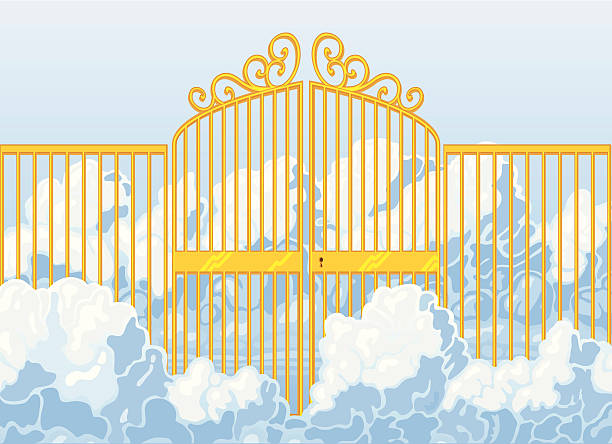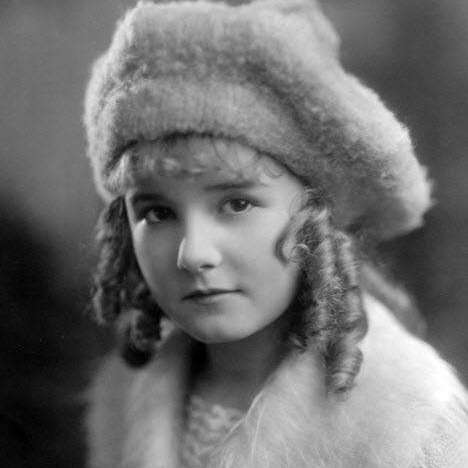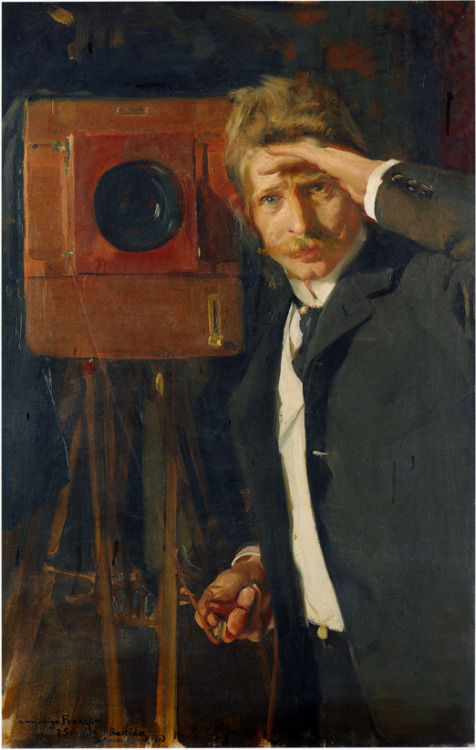
By Appointment or By Chance ~ A Short Story

By Appointment or By Chance
~ A Short Story by Allen Kopp ~ 

(This short story has been published in The Literary Hatchet.)

The year was 1899. The old century was in its death spiral and a new century was about to be born. At this auspicious time of new beginning, I opened a business on Main Street in the town of Echo Bend.

I had worked as a teacher, editor at a small newspaper and clerk in a department store, but I dreamed of a profession where I was in sole command. I hated having to be accountable to anybody for anything. I wanted to be accountable only to myself.

I went to a demonstration of photography in a college lecture hall and, after sitting through a lecture and a practical demonstration, I was certain portrait photography was something at which I could make a living. I bought a couple of books and studied them, front to back, with interest. I took my savings and bought a camera and all the necessary equipment. In Echo Bend, I rented commercial space in the heart of the business district. I engaged a carpenter to construct a wall, so that the front part of the space would be public and the back part private. A professional sign painter painted my name across the window and underneath my name these words: Portrait Photographer, By Appointment or By Chance.

Photography had been around for a long time but to most people it was still a novelty. If you had the money to spend, it was all the rage to put on your glad rags and go and sit for your portrait. Then, no matter how poorly time treated you, no matter how ugly and corpulent you became, you would always have the photographic image of yourself to remind you of what you once looked like, when you were at your best. Your descendants would still have your photographic image in a quaint little frame decades after your death, and one day they would sit around and say to each other, “Now, just who was he?” or, “Didn’t she die of diphtheria when she was only about twenty-three?”

Families wanted their portraits taken as a group and then separately. Some families had as many as eight or ten children. Mothers wanted their children to sit for a portrait every year, traditionally on their birthdays. Mantelpieces and chairside tables abounded with portraits in frames. People gave them to relatives as gifts at Christmas. Photography as a business was a modest gold mine for the right sort of fellow.

And then, of course, there was death photography. People wanted portraits of their deceased family members, in a coffin or on a bed, sometimes sitting in a chair, oftentimes posed with the living members of the family or with the family dog. Some photographers painted eyes or rosy cheeks on the finished portraits, but I never employed that vulgar technique. I figured that once a person was dead, it was pointless to try to make him or her seem alive again.

While business was booming in town, I was willing, more often than not, to go out of town to take portraits of the deceased, since the deceased were by necessity bound to one spot. I could usually charge any amount for this service and people would pay it willingly because the resultant photo was a blessed remembrance of the departed loved one and money was, where the death sentiment was concerned, no object. This is not to say I cheated people; I charged them what I thought they could pay. If someone lived in a fine house with many rooms and beautiful furnishings, I had no qualms about charging top prices. If, however, they dressed in rags and lived in a falling-down shack, I did the work for practically nothing.

At this time I was still traveling by horse-drawn wagon. I had a specially made enclosed wagon to keep my equipment dry if it should happen to rain, and it rained most days at certain times of the year. Often I found myself slogging over unfamiliar country roads, looking for a place I wasn’t sure existed. Sometimes it took me all day to get to where I needed to go and I would end up staying the night. I wasn’t above bedding down inside my wagon if there was no other choice. I kept telling myself that next year, or maybe the year after, I’d hire an assistant to do the driving, carry the equipment and perform other trivial tasks. I might even train him to go on the out-of-town forays on his own.

Children died more often than adults. There was always a fever or an infection or pneumonia to carry them off. If you thought about it at all, you knew that a competent doctor might have fixed them up with a pill, a bottle of medicine, or just a word of advice, if only a doctor had been around when needed. I photographed dead babies in sateen-covered boxes in the family parlor, surrounded by sprays of forget-me-nots; babies in their mother’s arms, with a brood of older children looking on; babies just ready to go into their graves with smiles on their faces and a toy animal in their arms; twin babies in one tiny coffin with their arms entwined. Once I photographed a baby and a little brown-and-white dog side by side in a wooden box, ready to embark together on their journey through eternity.

Then there were the older children: the tiny six-year-old girl whose father accidentally shot her through the heart while cleaning a gun; the boy, eight years old, who didn’t get out of the way of the train fast enough; the girl, age ten, who died of heart failure when her mother locked her in a basement with rats to punish her. Most parents were good parents, though, and brokenhearted at the loss of a child. I provided them with the photographic remembrance that helped to ease their pain and made the child seem forever close and not so far away after all.

I was on my way back to town after one of these missions to photograph a ten-year-old boy who had fallen on a pitchfork when I saw a woman standing beside the road waving a handkerchief at me. I pulled up with impatience and stopped, ready to growl at her like an old bear.

“You’re the photography man?” she asked.

“I am,” I said. “What can I do for you?”

“I’m Mrs. Trenton Fairman. I live in that house over there.” She pointed and I looked at a large brick house set back about two hundred feet from the road.

“I’m just coming off a case,” I said. “I’m headed back to town.”

“Well, you might come back in the morning, if you’re agreeable.”

“I don’t think I can do that,” I said. “Just what is it you need?”

She sighed and wiped tears from her cheeks. “Death has paid a call at my house.”

“You want a photograph of the deceased?”

“Yes, but it’s more than that.”

“What, may I ask?”

“You look like a strong man,” she said, “and quite young.”

“Yes?”

“My husband, Trenton Fairman Senior, is lying in his coffin in the bay window between the parlor and the dining room. The sun shines on him most of the day. He hasn’t been embalmed and it’s been three days now.”

“Why don’t you go ahead and bury him?”

“Tomorrow, April twenty-third, would have been his fifty-seventh birthday. When he knew he was dying, he made me promise that I wouldn’t have him buried until that day. He was very superstitious. He studied numerology and he believed that nothing would ever go right for him in the afterlife or for his kinfolk still living on the earth if he did not go into the ground on the day he was born.”

“I don’t think I’ve ever heard of that superstition,” I said.

“So, if you could consent to take my dear husband’s photograph before he goes at last into the ground on his birthday, I will make it worth your while.”

“I couldn’t do it for less than fifty dollars,” I said, believing she would balk at the price and that would end the matter.

“All right, but we’ll negotiate terms later on. You see, there’s more to my request than I’ve stated.”

“I haven’t eaten since early this morning,” I said.

“I believe we might deign to find something suitable in the house for you to eat, sir.”

She instructed me to pull my wagon around to the side of the house where she was waiting for me. When she took me inside, there was the unmistakable stench of death.

“I know,” she said. “He’s starting to smell. Nature takes its course.”

I took my handkerchief out of my pocket and held it over my mouth and nose. It was probably a good thing I hadn’t eaten.

She instructed the housemaid, a large, ungainly girl named Myrtle, to fix me a sandwich but I said, “Never mind. A drink of water will do. Just show me where the deceased is and we’ll get this thing over with.”

He was lying in a mahogany casket, very expensive looking, suffused with milky light from a bay window. Enormous potted ferns lay at the head and foot of the casket. Smaller containers of flowers were ranged on the floor along the front.

“He loved the sunlight,” Mrs. Fairman said. “I just couldn’t see blocking out the light with heavy curtains. It’ll be the last earthly light that will ever shine on him.”

“All right,” I said. “I’ll bring my equipment in from the wagon and we’ll have this over in no time at all.”

While I got the camera set up and everything ready to take the picture, Mrs. Fairman and the housemaid, Myrtle, hovered in the background, watching my every move. I would have preferred that they go about their business, but they had never seen picture-taking before and were interested in how it worked.

I took two photographs of the deceased from different angles and then Mrs. Fairman wanted one with her standing next to the casket looking down into her husband’s face. When I was finished, I said, “That’ll be fifty dollars, ma’am, if you please. When your photographs are ready, I’ll send you a postcard and you can pick them up in town at your convenience.”

“I believe I mentioned there was something else,” Mrs. Fairman said.

“Yes?”

“My son, Trenton Fairman Junior, died a day and a half after his father. He is upstairs in his room, lying on his bed. He has been bathed and dressed for burial.”

“You want a photograph of him, too?” I asked.

“Yes, I do and then…”

“Then what, ma’am?”

“Myrtle and I are here alone. Neither one of us are very strong. After you take Junior’s picture, I would like to prevail upon you to pick him up and carry him downstairs and place him in the coffin with his father and then close the lid. The boys will be here early in the morning—on my husband’s fifty-seventh birthday, I believe I mentioned—to perform the burial.”

“How old is the boy?”

“He’s fifteen years old, sir, and not very big. I think he could not weigh more than a hundred pounds. I’ll pay you an extra twenty dollars to carry him downstairs and place him in the coffin beside his father and close the lid.”

“Are you sure they’ll both fit in the same coffin?”

“Oh, yes, sir! Comfortably, I think.”

“So, that’ll be fifty to photograph your husband, thirty to photograph your son, and twenty to carry the boy downstairs. That’s a hundred all together.”

“That seems fair, sir. I have the cash in the wall safe in my bedroom.”

“All right, let’s photograph the boy, then.”

Mrs. Fairman took me up a broad carpeted staircase, up one flight and then up another. We went down a hallway to a closed door, Mrs. Fairman first, then me, and then silent Myrtle. Mrs. Fairman turned to look at me before she opened the door.

“Why does God punish us so?” she said.

She opened the door and I saw the boy, Trenton Fairman Junior, lying on his back on the bed. He was a fine-looking boy, nothing like his hatchet-faced father, dressed in a dark suit with knickers, gray stockings and expensive-looking, high-top leather shoes. He wore a high collar with a cravat, just as a grown man would, with a diamond stickpin.

“He looks to be asleep,” I said.

Mrs. Fairman and Myrtle sobbed behind me.

“Maybe it would best if you leave me to my work,” I said.

They went out of the room and I went back downstairs to the parlor where the father lay and got my photographic equipment and carried it back up. I set up to take the picture and, as usual, I photographed the deceased from three different angles.

When I was finished, I carried my equipment back down, out the door, and loaded it into my wagon so I would be ready to leave as soon as Mrs. Fairman paid me the money she owed me.

Mrs. Fairman and Myrtle were waiting for me when I went back inside. Now it was time to carry the boy downstairs. The three of us went silently back up the stairs.

With Mrs. Fairman and Myrtle standing in the doorway, I approached the bed. Cautiously, I slipped my right arm under the boy’s back and my left arm under his knees. As I hefted him off the bed, I got the surprise of my life. His body went rigid, he opened his eyes and looked at me and gasped for air as if he had been under water.

“He’s not dead!” I said, laying him back down.

“Oh, oh, oh!” Mrs. Fairman said and Myrtle screamed.

“What made you think he was dead?” I said.

He continued to revive, moving his arms and legs, pulling at his clothes, as if he had suddenly become animated by the throwing of a switch. When I looked away from him over to Mrs. Fairman, I saw that she had collapsed on the floor. She convulsed violently and then stopped moving.

“Has she also been sick?” I asked Myrtle.

I approached the recumbent woman and took her hand in mine and began patting it because I didn’t know what else to do. I administered these little slaps to her hands and face and after a while I could see she wasn’t breathing. I put my ear to her chest and heard nothing.

“I’m afraid she’s dead,” I said. “The shock was too much for her.”

Myrtle gasped and ran from the room. I heard her shoes clomping all the way down the stairs.

I turned to the boy, Trenton Fairman Junior, sitting on the bed, feet on the floor. “Are you all right?” I asked him.

“I don’t know,” he said. “Who are you?”

“I photograph the dead. Your mother asked me to come up here and take your picture.”

“Why would she do that?”

“She believed you to be dead for the last day and half.”

“Oh, yes. That’s right.”

“You know your father is dead, lying downstairs in the parlor?”

“Yes, we were going to have a funeral.”

“I’m afraid your mother is dead, too.”

He looked over at her lying on the floor and shook his head.

“Where is the nearest doctor?” I asked.

“I don’t know. I’m not sure there is one.”

“What about that girl? Myrtle? Does she live in the house with the family?”

“I don’t know where she lives.”

“She’s the only one left.”

“She’s ignorant,” he said.

“Would she be able find a doctor?”

“She wouldn’t be able to find her bunghole with both hands.”

“I’m going back to town now,” I said. “I’ll go to the sheriff and tell him what happened. Do you want to stay here do you want to go with me?”

“I’ll go.”

“You don’t want to stay here with your mother?”

“She wasn’t my mother. She was only play-acting.”

He asked me to wait while he changed his clothes and got a drink of water. I went outside and leaned against a tree in the front yard. In five minutes he came out of the house wearing a dress suit, carrying a small valise. He locked the door and we departed in my carriage.

It was late afternoon and the sky was threatening rain. I didn’t like the way the day had turned out. On top of everything else, I hadn’t collected the hundred dollars that was owed me and there would be no way to get it now.

For the first couple of miles, Trenton Fairman Junior said nothing, so after a while I turned to him to see how he was faring. With both of his parents dead, I expected him at least to need a reassuring adult to speak to.

“Do you have any family in town?” I asked.

“I don’t think so,” he said.

“You’ll have to have somebody to stay with,” I said.

“After the dead bodies are removed from my house, I can stay there. The house belongs to me now.”

“I don’t think they’ll let you stay in that big house all by yourself without an adult present.”

“Why not?”

“You’re a minor.”

“What does that mean?”

“You’re underage. Still a child.”

“I’ll bet I’m more grown up than you.”

“It’s not a subject for argument. I’m just telling you the law won’t let you live in the house alone until you’re old enough.”

“I’d like to see them try and stop me.”

“Didn’t your father have a lawyer who handled his estate?”

“Yes, I think so. A lawyer in town. I think him name was Henry something.”

“Well, that’s a start. There can’t be that many lawyers in Echo Bend with Henry for a first name.”

He was silent then. He looked straight ahead as if I wasn’t even there.

“Your mother thought you were dead,” I said. “How’s that for irony?”

“She wasn’t my mother, I told you. She was my stepmother.”

“Well, whatever she was, she thought you were dead.”

“I was dead.”

“As you stated earlier. You were dead and then what happened? You just came back to life?”

“I don’t have any explanation for it, but that’s what happened. Not everything is explainable.”

“What happened while you were dead? Do you remember anything?”

“I saw God. He spoke to me.”

“What did he say?”

“I would expect you to ask a silly question like that.”

“Don’t you think anybody would want to know what God says when he speaks.”

“God is a compact man with thin lips and a small mustache, almost as if it had been drawn on. People think of him as being big and old and having a long white beard, but he isn’t any of those things.”

“I don’t think I would have known him,” I said.

“He wears a black dress suit with a gray cravat and a ruby stickpin. And a monocle in his right eye.”

“Don’t tell me God has an eye deficiency! Or is the monocle just more of an affectation?”

“Go ahead and make fun of me. I don’t care.”

“All right. What did God say to you?”

“He said the Saints are with him in heaven.”

“Is that all?”

“He told me to await further instructions.”

“What did He mean by that?”

“You tell me.”

I sighed. I was starting to get bored with the conversation. “You must be hungry,” I said for a change of subject.

“Why must I be hungry?” he asked.

“You were dead for a day and a half. Dead people don’t eat.”

“Yes, I suppose I’m hungry,” he said. “I could eat.”

“When we get to town, we’ll get you a good dinner.”

“In the morning I’ll go see Henry what’s-his-name and tell him my stepmother decided to die along with my father. He’ll advise me what to do.”

“You’ll need a place to stay tonight,” I said.

“I can manage.”

“We’ll get you a room in the hotel for tonight.”

“I don’t have any money. I know that she had money in the safe, my father’s money, but she never told me the combination.”

“I’ll advance you the money.”

“Forget it. I’ll just walk around until morning. I’ve done it before.”

“That doesn’t seem the right thing to do,” I said.

When we got back to town, I went straight to the sheriff’s office, went inside and told him what had happened at the Fairman place, that there were two dead bodies there and nobody to tend to them. He asked me a dozen questions, where I might be reached for further questioning, and then he told me I could go. I went back out to my carriage and drove to the hotel. I stabled my horse and locked my wagon so nobody would become curious about what might be inside worth stealing. These trivial matters tended to, Trenton Fairman Junior and I went into the crowded hotel dining room and sat at a round table in the middle of the room. After we placed our order, I noticed the people in the restaurant looking at us and then I realized they were looking at him.

“You see the way they’re looking at me?” he said.

“They’re not used to seeing a young fellow all dressed up in a dress suit. Not in this town. You look like you just got here from someplace else.”

“It isn’t what I’m wearing.”

“What is it then?”

“They know I’ve seen God and will see Him again.”

“They don’t know any such thing.”

The food came, huge amounts of beefsteak, fried potatoes, carrots and green beans. After we ate, the boy said he was tired and wanted to go to bed. I figured he must be upset at the strange turn of events his life had taken that day, but he seemed perfectly calm and unemotional.

After I paid for our meal, we went into the hotel, where I engaged a room for him for the night. I asked him if he was afraid to stay by himself in a strange hotel room and he laughed. “You can’t be serious,” he said. “I’ve always been by myself. Since the day I was born.”

He had such a grownup way about him that I sometimes forgot I was dealing with a child.

He signed his name in the hotel register and the clerk handed him the key. Before he went upstairs to his room, I put my hand on his shoulder and told him I’d come by in the morning at eight-thirty to take him to his father’s lawyer and for him to meet me in the lobby. He nodded and turned and went up the stairs.

When I got home, I took a hot bath and fell into bed and slept soundly until thunder woke me up at seven in the morning. I dressed and consumed a light breakfast and then I set out for the hotel. I was sitting in the lobby reading a newspaper at twenty minutes after eight. I expected Trenton Fairman Junior to come down the stairs at any moment.

At eight forty-five he still hadn’t made an appearance and at nine o’clock I was still sitting there holding the newspaper in my foolish hands. At ten minutes after nine, I went over to the desk and asked the clerk if he could check on the boy in room three-twelve for me. He had been supposed to meet me and he never appeared.

The clerk checked his book and looked up at me and said, “A boy, you say?”

“Yes, a boy,” I said.

“A small boy?”

“No, a big boy. Almost an adult.”

The clerk looked down and then looked back at me and sighed. “Room three-twelve has not been occupied for several days,” he said.

“Are you sure?”

“Yes, sir.”

“I was with the boy last night. I engaged the room for him to spend the night in and he was supposed to meet me here, in the lobby, this morning at eight-thirty.”

“Are you sure it was this hotel?” the clerk asked.

“Will you let me take the key and go up to room three-twelve and check for myself?”

“That would be against regulations, sir.”

“Then open the door yourself to make sure the boy is all right.”

The clerk went with me up to the third floor. We walked to the door of room three-twelve and he inserted the key into the lock and pushed the door open for me to enter. The bed was neatly made up. The window shades were drawn. It was clear the room had not been occupied the night before.

“He signed the register last night,” I said to the clerk. “I was with him. His name, Trenton Fairman Junior, will be there if you only bother yourself to look.”

We went back down to the lobby and the clerk checked the register from the night before. “No such name here,” he said.

“Can I look?”

He turned the register around and I read over the four or five names from the night before. The name Trenton Fairman Junior was indeed not there.

So much for Trenton Fairman Junior. I had no explanation for why his name wasn’t in the hotel register, but I figured he didn’t need or want my help any more and had gone to find his father’s lawyer on his own.

I thanked the clerk and went back out into the rain. I went to my photography studio and opened for business. It was a slow morning, so I had a chance to process my plates from the day before: two shots from different angles of the boy who died of the pitchfork wound through the stomach, two of Trenton Fairman Senior lying in his coffin, one of Mrs. Fairman standing next to her husband’s coffin. They all turned out beautifully.

When I processed the plates I had taken of Trenton Fairman Junior lying dead on his bed, I saw only a dim outline of a bed and that’s all. No Trenton Fairman Junior. Why would I have taken photographs of just a bed? I tried to recall the events of the day before to make some sense of it. I began to think I had experienced a kind of lapse while I was in the Fairman house. Had Trenton Fairman Junior even existed outside of my own mind? Was he a ghost? I couldn’t be sure. Not all things, as had recently been pointed out to me, are explainable.

After that I didn’t do any more work. I was beginning to feel tired and lightheaded so I closed the shop for the rest of the day and went home.

That night I was sick and was sure I was dying. I ached in every joint and was having trouble swallowing. I couldn’t keep anything on my stomach, not even a sip of water. I knew I had a fever.

When I was trying to think what might be the matter with me, the truth came to me as if spoken by a voice inside my head. I had failed to ask the reason for Trenton Fairman Senior’s death. He had obviously died of something catching and I had caught it. I had spent two hours at least inside a house breathing in disease germs and death.

I didn’t want to die alone and have my bloated body found only after the neighbors noticed the smell, so I checked myself into the nearest hospital. The doctor examined me briefly and put me in the isolation ward. I was sure I was going to die; if not that night, then very soon.

For two days and nights I passed in and out of consciousness. I was barely aware of anything but I knew there were other people moving at all hours around the bed on which I lay. I didn’t know who they were, or care: I only wanted them to go away and let me die in peace.

Hours passed, maybe days, but I had no real sense of time. The light at my window went from light to dark and back to light. I was aware of the sounds of rain and thunder, the perfect accompaniment, I thought, to dying.

Once when I woke up from one of my naps, Trenton Fairman Junior was standing at the foot of my bed, smiling at me.

“I wondered what happened to you!” I said. “I’m happy to know you made it all right.”

Then I realized that somebody else was standing beside Trenton Fairman Junior. He was a compact man with thin lips and a small mustache, almost as if it had been drawn on. He had a Continental air about him, rather than an American one.

“Who are you?” I asked.

He smiled and said, “It’s time for me to ask you a question.”

“What is it?”

“Do you want to go or do you want to stay?”

“What? Go where?”

“I asked you if you want to go or if you want to stay?”

“I think I’d like to stay if it’s all the same to you,” I said.

I must have drifted off to sleep after that because when I came to myself again, Trenton Fairman Junior and the man with the monocle were gone.

I was several more days in the hospital and then they said I was well enough to go home. As I was getting dressed to leave, one of the nurses told me how lucky I was to be alive because I had come so close to dying.

“I saw God,” I said. “He spoke to me.”

“What did he say?”

“He asked me if I wanted to go or if I wanted to stay.”

“What did you say?”

I thought it an unnecessary question, but I answered all the same.

“I said I wanted to stay.”

“You’re not usually given a choice, I believe,” she said.

After a few days at home by myself I felt almost well again. On Sunday morning I rode out to the Fairman place, for what reason I don’t know. It looked abandoned. Grass and weeds had grown up in the yard. The windows were shuttered. A large for-sale sign was placed so that people would see it coming from either direction on the road. Just being near the house made me start to feel ill again, so I left.

In a month or so I moved to the city. I borrowed some money from a bank and set up a photography studio in a fashionable location (fashionable meaning people with money). I did well and moved into expensive lodgings with maid service. I bought myself a motor car, something every man of means was doing. I paid back the money I borrowed and was as happy as I ever expected to be.

My photographic subjects now were all living. I wanted nothing more to do with death. My own would be coming for me soon enough.

Copyright © 2023 by Allen Kopp

Happy Starfish ~ A Short Story

Happy Starfish
~ A Short Story by Allen Kopp ~

(This short story was published in Halfway Down the Stairs.)

Did I tell you how I hate school? This morning in zoology I had to dissect a starfish. The inside of the starfish is green. That’s disgusting enough, but the thing that got to me is the fishy smell. It’s a smell that lingers in my head and my nose. I don’t think I’ll ever be able to eat any kind of fish or seafood again for as long as I live without being reminded of the green insides of a starfish.

The world is very cruel. That little starfish was probably just minding its own business on a beach somewhere when somebody picked it up and put it in pickling solution where it instantly died. One minute a happy starfish and the next minute a laboratory specimen to be cut open and have its insides probed. If I was a starfish, I would want to live on a faraway island where there were no people and I could die of old age.

After zoology was American history, but I skipped. I thought I was going to vomit and I didn’t want anybody to see me. I went to the boys’ toilet on the third floor where it was quiet and went into a stall and latched the door. I put my hands on my knees, leaned forward and closed my eyes, trying not to think about that starfish.

In a minute somebody came into the toilet whistling. I hate to hear people whistle. It spoiled my concentration, so I just spit into the toilet and flushed without vomiting. I opened the stall door and went to the sink and started to wash my hands.

“What do you think you’re doing?” somebody to my left said.

I turned and saw it was Claude Qualls. If there’s anybody in school I hate, it’s Claude. He’s the class president and a snitch. Mr. Do-Gooder. Mr. Over-Achiever. Mr. Perfect. He has somehow taken it upon himself to keep the rest of us in line. Probably someday he’ll be a congressman or a senator or something if somebody doesn’t kill him first.

“Washing my hands,” I said. “What does it look like?”

“That’s not what I meant, smartass! What are you doing out of class?”

“I’m sick.”

“You don’t look sick.”

He took his eyes off himself in the mirror and leaned in close to me, sniffing.

“Get away from me!” I said. “What I have is probably contagious.”

“Aren’t you supposed to be in American history?”

“What business is it of yours?”

“As class president, I’m supposed to report anybody skipping class.”

“Go to hell!” I said.

He grabbed me by the collar and pulled me toward him, holding his right arm back like he was going to hit me in the face. “What did you just say to me?” he said.

“You heard me. I said: Go to hell, bitch!

He roughed me up a little bit but didn’t hit me. He finished by pushing me into the sink. The fingers on my left hand bent back painfully.

“You stupid little baby!” he said. “You can be sure that this little episode will be reported.”

“You’re the big man, aren’t you?” I said. “The big man will always be there to tell the rest of us what to do, won’t he?”

“Shut up, you little freak!”

“No, you’re the freak, Claude! Not me! Everybody hates your guts!”

“I’m going down to Mr. Ludlow’s office right now and write up a report stating that you’re loitering in the bathroom when you’re supposed to be in class.”

“I hope you break your leg going down the steps,” I said.

I went to the library to hide out for the rest of the period. I knew that if I sat at one of the tables out front, anybody coming in would spot me right away, so I wandered around in the dusty stacks for a while and then went all the way to the back where nobody ever ventured and sat down on the floor in the corner. I opened a book on my knees so if I heard anybody coming I’d pretend to be reading.

I was starting to feel a little less like vomiting. The quiet and the smell of old books made me sleepy, so I leaned my head against the wall and dozed off like a bum sleeping it off in an alley.

“Here he is!” I heard somebody say in a loud voice.

I jerked awake and saw Claude Qualls looking down at me. Behind him was Mr. Ludlow, the principal.

“I was sure he’d be hiding out somewhere!” Claude said.

“What do you think you’re doing?” Mr. Ludlow scolded. “Sleeping on the floor in the library!”

“I was feeling sick,” I said, standing up.

“You haven’t been drinking, have you?”

“Of course not!”

“Aren’t you supposed to be in class?”

“American history class,” Claude said.

“I was going to vomit,” I said. “I didn’t want to be in class when it happened.”

Mr. Ludlow took hold of my arm above the elbow and squeezed. I was sure I would have a bruise there and I was sorry that Claude was the only one present to witness this rough treatment.

“Skipping class will not be tolerated in this school,” Mr. Ludlow snarled in his best warden-of-the-big-house voice. I could smell his cologne and it was worse than the starfish. “Do you want a suspension?”

“No,” I said. “I just want my high school years to be over.”

“Do you need me to help you with him?” Claude asked.

“No, thanks, Claude,” Mr. Ludlow said. “I can take it from here.”

“Before you tell somebody else to go to hell,” Claude said to me with his demonic smile, “think about who you’re talking to.”

“That’s fine, Claude,” Mr. Ludlow said. “You may go now.” To me Mr. Ludlow said, “Proper disciplinary action will be taken at the appropriate time but, for now, you may go to your next class, and if you even think about skipping class again you’ll be faced with a three-day suspension. Think what that will do to your scholastic record and to your chances of getting into a good college.”

My next class was gym class, which I hated more than all my other classes put together. I went to the locker room and changed out of my “street clothes” into the ridiculous gym togs: baggy red shorts that hung down to my knees, a stretched-out tee shirt and grass-stained high-top tennis shoes that were too small for me and made my toes hurt.

While we were all standing around waiting for the teacher to arrive so the class could begin, I spotted Claude Qualls about twenty feet away, bouncing a basketball. When he saw me, he gave me a look of bemused hatred and I mouthed the words go to hell. There wasn’t any way he could not know what I was saying.

The physical education teacher was Mr. Upjohn, or “coach,” as he liked to be called. He was four feet, eleven inches tall and he looked like a troll in a fairy story who hides under a bridge.

“All right now, everybody!” he yelled and blew his whistle. “Time for warm-up!”

As bad as the warm-up was, it wasn’t as bad as the game of volleyball or basketball that followed. We stood in rows as Mr. Upjohn faced us and directed us in the knee bends, sit-ups, pushups, and jumping jacks.

It was during the jumping jacks that I vomited on the floor, a thick green mass that looked exactly like the insides of the starfish. Everybody stopped jumping up and down and looked at me. I bent forward to vomit again and fainted face down in what I had just deposited on the floor. It was only the second time in my life that I had ever fainted. The first time was when I was eight and had the flu.

When I regained consciousness, they were all standing around in a circle watching me. I had really spiced up their boring old gym class. Mr. Upjohn was kneeling beside me, waving a bottle of smelling salts under my nose.

“He’s coming around,” he said.

“I want to go home,” I said.

“Can you make it to the nurse’s office?”

“She doesn’t like me. I pushed her down the stairs once.”

As I stood up, Mr. Upjohn took hold of my arm. “Go get dressed,” he said, “and go see the nurse.”

“I don’t know,” I said, wobbling for effect. “I feel like I’m going to faint again.”

“Claude!” he barked. “Go with him and help him get dressed!”

Claude stepped forward, ready once again to fulfill his role as student leader.

“I don’t need any help from him!” I said. “Just give me time!

I went down to the deserted locker room, cleaned the vomit off my face and out of my hair and put my clothes back on. As I was leaving the locker room, I noticed the door to Claude’s locker was partway open. I approached the locker, pulled the door open all the way and looked inside. There, on the top shelf, was Claude’s expensive gold wrist watch. I slipped the watch into my pocket and deposited it in a trashcan on my way to the nurse’s office.

I walked into her office and vomited again, all over the floor. Now, I have to tell you, there’s nothing like vomiting to get people’s attention. You can say you’re sick, but dramatic vomiting leaves no room for doubt.

The nurse dropped what she was doing and came running with a kidney-shaped metal pan. She told me to lie back on the cot and she put a wet cloth on my head. When she took my temperature and saw I had a fever, she called my mother and told her to come and get me.

When I got home, I kicked off my shoes and got into bed. My mother stood in the doorway and harangued me, as usual.

“Why did you choose today of all days to be sick?” she asked.

“I figured it was time,” I said.

“Algebra test today?”

“No, I failed that last week.”

“Well, I have to tell you,” she said, “sometimes when you say you’re sick I don’t believe you, but today you look sick.”

“Thank you,” I said.

She called the doctor and described my symptoms. From my bed, I could hear her yapping into the phone in the other room for a good ten minutes. After she hung up, she came back into my room. I pretended to be asleep until I heard her breathing and opened my eyes.

“He said it sounds like you have a virus that’s making the rounds,” she said. “It’s contagious and he said to keep you at home in bed for a few days.”

“I always liked Dr. Fain,” I said.

“He said that after the nausea passes I’m to give you anything you want to eat or drink.”

“I want a champagne cocktail,” I said, “and a steak medium rare.”

“But the main thing,” my mother said, “is to keep you quiet and in bed.”

I groaned for good effect and my mother went out of the room and closed the door.

I remembered my conversation earlier in the day with Claude Qualls in the boys’ toilet. He had stuck his snoot in my face and I hope he caught what I had, only ten times worse. He would be distraught at the thought of missing any school, while I, on the other hand, loved it better than anything.

Copyright © 2023 by Allen Kopp
The Most Beautiful Suicide ~ A Short Story

The Most Beautiful Suicide
~ A Short Story by Allen Kopp ~

Angela McNeill traveled down by train to see Harry Vance and they spent that last Sunday together. They walked in the park, holding hands, and sat for a long time watching the swans gliding back and forth across the lake. It was a day in April and the weather could not have been finer.

He took her hand and said he wanted to marry her in June.

She avoided looking directly at him. “That doesn’t give me much time,” she said.

“Time for what?” he asked.

“A wedding takes a lot of planning,” she said.

“It’s going to be a small wedding,” he said.

“Yes, but I want everything to be just right.”

It was a conversation they had had many times before. She was in “no hurry” to get married, while he couldn’t get it done fast enough. He was a college student and wanted to get the wedding out of the way in June, between semesters. Then, by the beginning of the fall semester, they would have found a place to live and would be “settled.” His parents were giving them a thousand dollars as a wedding gift to “get started” on.

“I don’t think your parents like me very much,” she said.

“Of course they like you! Why wouldn’t they?”

“They think I’m not right for you.”

“Nobody said any such thing! You’re just looking for complications that don’t exist.”

“I just want everything to be right, that’s all.”

“You’re thinking about your parents, aren’t you?” he said.

“No. Why should I?”

“You’re afraid you’ll have a bad marriage just because they did.”

“I didn’t say that.”

“You don’t have to say it. I know what you’re thinking.”

“Let’s not talk about it,” she said. “Let’s not spoil the day.”

Angela hadn’t told Harry the whole truth about her mother. When Angela was little, her mother cast a pall over her family with her dark moods and sudden emotional shifts. In one evening or one afternoon, she would go from laughing and happy to raging and accusing. She’s just high-strung and emotional, Angela’s father used to say. She doesn’t mean anything by it.

Angela thought for years her mother was evil but then she found out the truth: she suffered from hereditary mental illness, passed down to her from her mother and grandmother. Feckless doctors gave her pills that were supposed to “calm her down,” but they only seemed to make her worse. When the pills didn’t provide the kick she wanted, she began supplementing them with whiskey. Soon she was an alcoholic in addition to being a drug abuser. She smoked countless cigarettes and had started at least two small fires in the house.

A divorce followed soon after. Angela and her brothers and sisters (nine all together) went with their father and moved to another city to make a fresh start. Angela’s mother, unable to take care of herself, went to live with her sister, who ran a kind of boarding house.

Angela was certain she was following in her mother’s footsteps. She would not escape the mental illness. She felt it, like a cancer inside her, that would one day consume her: the black moods, the despair, the hopelessness, the days when she couldn’t get out of bed. Could she marry Harry Vance and let him find out too late what she was going on inside her? The answer was no. She wasn’t going to inflict such pain on Harry or any children they might have.

That last Sunday evening they had a lavish, candlelit dinner together, paid for by money that Harry’s father gave him. When they were finished eating, it was almost time for Angela’s train.

“You can spend the night if you want to,” Harry said.

“I have a job to go to in the morning, dear,” she said. “I have to get up early.”

“When we’re married, you’re going to quit that job.”

“And what will we do for money until you graduate and get a job?”

“I don’t know. I can always rob a bank, I guess.”

“I don’t think that’s a very practical idea.”

He got her to the station just in time. She boarded her train and waved to him from the window. It was the last time they would ever see each other.

The next morning she arose at the usual time and ate a light breakfast. She dressed herself with care, making sure everything was exactly right. Before she was ready to go, she sat down at the kitchen table and wrote out a quick note. She didn’t even have to think before she wrote because she had thought it all out beforehand.

When it was time to leave for work, she put the note in her purse, put on her new spring jacket, slipped on her shoes and left her apartment. She didn’t go to her job, though, and didn’t bother to call to say she wasn’t coming.

She took a cab to the tallest building in the city, about twelve blocks from where she lived. She tipped the driver generously and he helped her out of the car and wished her a good day.

As usual, there were lots of people everywhere. Always a busy city. She took the crowded elevator to the eighty-sixth floor. She had been there before and knew there was an observation deck on that floor.

The people on the observation deck were so enthralled by the exhilarating view at more than eight hundred feet (it was like looking down from the top of a mountain) that nobody looked at her.

After standing at the rail for a few minutes, looking down, she took off her coat, folded it neatly and placed it over the rail, putting her purse on the floor underneath the coat. She then swung her legs over the rail, first the left and then the right, until she was sitting on the rail. Before anybody had a chance to see what she was doing and try to stop her, she let go of the railing and leaned forward slightly. Gravity did the rest.

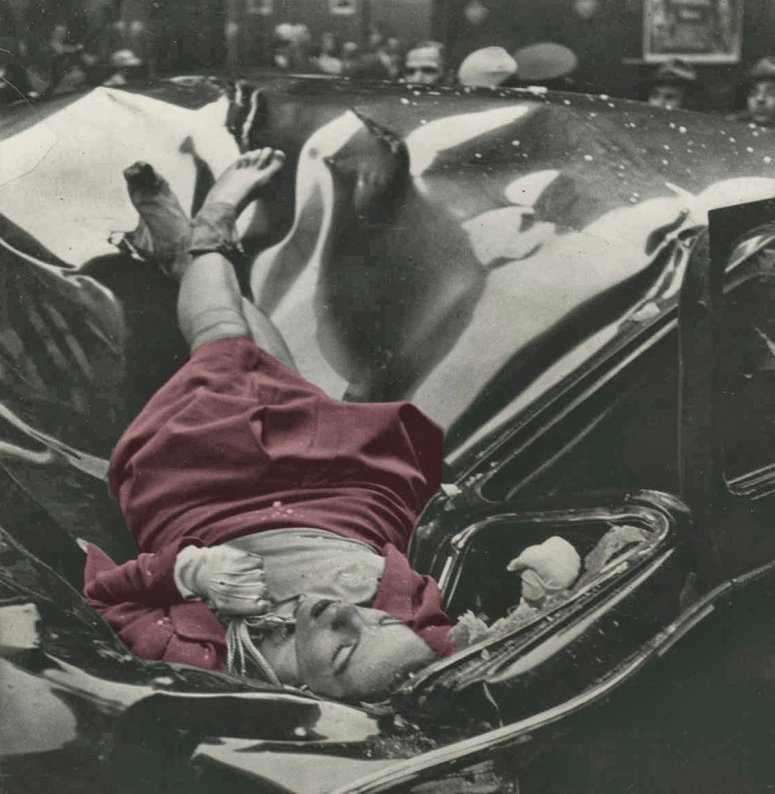
She landed, feet first, on the roof of a parked limousine. Hardly anybody saw it. It happened so fast. Somebody called for an ambulance. In a minute or two, a couple hundred people knew that something had happened and wanted to see what it was.

A student photographer happened to be nearby with his camera. Approximately four minutes after Angela died, the student photographer took her picture. Instead of a grisly, horrifying scene of a smashed body, the picture was of a young woman with her shoes off, her stockings down around her ankles, her clothing barely disarranged. The expression on her face was one of peace and composure. The picture, when printed in the newspaper, bore the caption: The Most Beautiful Suicide.

In her purse was the note she had written right before leaving her apartment: I don’t want anyone in or out of my family to see any part of me. Could you destroy my body by cremation? I beg of you and my family—don’t have any service for me or remembrance for me. My fiancé asked me to marry him in June. I don’t think I would make a good wife for anybody. He is much better off without me. Tell my father I have too many of my mother’s tendencies.

Harry Vance saw no hint (he told everybody), not the slightest suggestion, in all the time he spent with her on Sunday, that she was contemplating such a move. If he had known, he would never have let her out of his sight. She was the one he wanted to marry. The only one. There would be nobody else. Sixty years later, when he went to his grave, it was as a man who had never married.

Copyright © 2023 by Allen Kopp

At the Rise of the Hill ~ A Short Story

At the Rise of the Hill
~ A Short Story by Allen Kopp ~

(This short story has been published in The Literary Hatchet.)

Freddy Chickwell’s mother called him at seven o’clock on Sunday morning, before he was even out of bed.

“I need you to come over right away!” she said.

“I can’t, mother!” Freddy said. “It’s too early. I don’t even have my eyes open yet.”

“You’re going to want to see this.”

“What is it?”

“I can’t tell you on the phone. You have to see for yourself.”

“I’m going back to bed, mother. Please don’t call me until the sun is all the way up.”

“I never ask you for anything,” she said pitifully. “I’m asking you this one thing politely.”

“I’ll come, but only if there’s bacon and French toast.”

“How can you think of food at a time like this?” she asked.

“A time like what?”

He lay back on the bed and groaned. He had planned on going back to sleep but now that he was wide awake, he got up and dressed himself. He hated jumping out of bed and driving someplace first thing in the morning, but it appeared he had no other choice.

As he drove the six miles to his mother’s house, he thought of the different things that might have elicited such a call at an early hour: a large rat (spider) in the basement (bathtub); a bill that came in the mail for a large sum that she says she doesn’t owe and has no intention of paying; Aunt Jeanette has a tumor on her gallbladder; a large crack has appeared overnight in the foundation.

He pulled into the driveway and his mother came out the front door and down the steps, toward his car in a pink terrycloth bathrobe and fuzzy slippers; her hair was sticking out in spikes.

“Prepare yourself!” she said.

“For what?” he asked.

“He’s come back!”

“Who has?”

“Need you ask?”

Freddy walked into the house behind her and there, sitting in the living room in the middle of the couch, was his father, who had been dead for a year. Freddy looked at his father and his father looked at him. There were no words.

His mother motioned Freddy into the kitchen. “What do you suppose is going on?” she asked.

“Who is that?” Freddy asked.

“Who do you think it is?”

“Well, I know who it looks like!”

“He’s been raising all kinds of Cain with me ever since he came back.”

“Why?”

“He says I went off and left him.”

“Left him where?”

“I told him I would never do that.”

“Mother, something’s not right here,” Freddy said. “People don’t just come back from the dead after a year.”

“Apparently some of them do!”

“Is he a ghost?”

“I don’t think so. He ate a big breakfast and then had to go to the bathroom. I don’t think ghosts do that.”

“If he’s not a ghost,” Freddy said, “it must mean he was never dead in the first place. How do you account for it?”

“I don’t account for it! I saw him go into his grave.”

“The only other explanation I can think of is that he’s a zombie come back to eat our flesh.”

“Oh, I don’t think he would ever do that!”

“I’m calling the police,” Freddy said.

“And what could they do?” mother asked. “They’d never believe he was dead in the first place. They’d just think we were a bunch of lunatics.”

“Then call his doctor.”

“He died, too. Right after your father.”

“Maybe he’s a hallucination that we’re both having,” Freddy said. “We were both so poisoned by the man all the years he was alive that we’re being affected by him from beyond the grave.”

“I just don’t know,” mother said. She sat down at the table with her cup of tea, lit a Pall Mall cigarette, and sniffled back tears. “I cared for your father while he was alive—truly I did—and I missed him after he was gone, but now that I’ve become used to having my freedom, I just don’t think I can go back to the way things were before.”

“I’m hungry,” Freddy said. “I haven’t had any breakfast.”

He ate quickly, pushed the plate back when he was finished eating, and fanned away his mother’s cigarette smoke. “Now that I’ve had a little time to think about this dispassionately,” he said, “I’ve decided on a plan of action.”

“What is it?” she asked anxiously.

“We’ll kill him. It’s as simple as that.”

“Oh, Freddy! Your own father?”

“Well, he’s already dead, isn’t he? If you kill somebody who’s already dead, it’s not really wrong, is it? Not really a crime?”

“I’m not sure how the law would look at it,” mother said. “Killing is killing, whether the person you kill is already dead or not.”

“I don’t expect you to do any killing. I’ll do it.”

“But how? I don’t want a mess in the house that I’ll have trouble explaining later.”

“Remember Echo Hill?”

“That old place? I haven’t been there for years.”

“I haven’t, either. If it’s like it was when I was in high school, it would be the perfect place to kill a person that’s already dead.”

“Oh, Freddy, I just don’t know about this.”

“Remember how they used to tell us kids how dangerous it was to go up there because of the air holes?”

“What are air holes?”

“It’s places where you can fall through the earth down into the old mine if you’re not careful. There are probably some new ones that have formed since.”

“That sounds dangerous!”

“Yes, but it’s the perfect place to hide a body. If a body falls down an air hole, it would never be found. The old mine is as big as the whole town and there’s deep water in places.”

“It sounds very forbidding.”

“We can take him for a Sunday drive up to Echo Hill. We’ll get him out of the car and walking around, and—boom!—he’s gone down an air hole. Just like that.”

“And what if somebody sees us?”

“They won’t, and if they do they won’t know what they’re seeing.”

“While I’m getting dressed,” she said, “you go in and visit with your father.”

Freddy went into the living room and sat down in the chair facing the couch. “How have you been doing?” he asked father.

“There’s some weeds growing along the back fence,” the old man said. “Somebody needs to get out there and pull them up, and I guess that somebody is going to be me.”

“I wouldn’t worry about any weeds, if I were you,” Freddy said.

“The whole place is goin’ to hell!”

“So, tell me. What have you been doing this past year?”

“What do you mean?”

“Well, you’ve been…away, haven’t you? I just wondered what things were like where you were.”

The old man looked at Freddy with something like contempt. “What things?” he asked. “I don’t know what you’re talking about.”

Mother came down from upstairs wearing a yellow pantsuit and matching wig that made her look like Doris Day. “Well!” she said brightly. “How are we getting along?”

“About like always,” Freddy said. “Not much in the way of communication.”

She bent over toward the old man and said very loud, as if being dead for a year might have made him partially deaf, “We thought it would be lovely to go for a little drive! It’s such a beautiful day!”

“Huh?” the old man said.

“Remember Echo Hill? We used to go up there for picnics with Betty and Waldo when we were young.”

“I don’t know what you’re talking about,” the old man said. “I never did.”

“Wouldn’t you like to get out of the house? Go for a little drive?”

The two of them together helped the old man off the couch, out the door and into the car. With him installed in the back seat, mother got into the front seat with Freddy.

“I just don’t know about this,” she said as Freddy started the car.

“It’ll be all right,” he said. “I think I know what I’m doing.”

He drove out to the edge of town, past the bowling alley, the abandoned funeral home, the roller rink, a used car lot, a couple of taverns, and into farm country, where there were barns, silos, cows and young horses grazing in fields.

“Not much traffic today,” Freddy said.

He looked in the rearview mirror and saw that the old man was asleep in the back seat, his head lolled to the side.

“Isn’t this fun?” mother said. “I just love going for a drive in the country on a pretty day!”

Freddy came to the turnoff to go to Echo Hill, and it was exactly as he remembered it. “Won’t be long now!” he said.

He took a couple of turns onto old country roads that became narrower and more tree-encroached. Finally, he came to the end of the blacktop and turned onto a dirt road. There was a gate across the road, long-since fallen into disuse.

“Just like pioneering days!” mother said. “This reminds me of my childhood!”

At the big hill, the road was very rough; Freddy slowed to ten miles an hour to prevent any damage to the tires.

Mother rolled down the window. “Just smell that country air!” she said. A bumble bee flew in and she screamed.

After what seemed a very long, slow climb, Freddy came to the top of the hill from which one could see into the next state. The dirt road ended there, so he pulled the car onto a little rise off to the right that seemed dry and firm and didn’t have a lot of weeds growing on it. It was a place where he could easily turn around when the time came.

“How about if we get out here and scout around a bit?” Freddy said, giving mother a wink.

He started to open the door but was arrested by a sound that he didn’t identify, a sound of dirt sifting. Then the front end of the car lurched forward significantly.

“What on earth!” mother said.

Freddy wanted to see what was happening to the front end but, as he put his hand out to open the door, the ground gave way and the car slid downward, front end first, into a hole just big enough to admit one mid-sized car.

Down, down, down went the car, into darkness complete. Mother gasped and grabbed onto the dashboard as if she could arrest the car in its flight. The old man in the back didn’t make a sound. Freddy had a few seconds before the car hit the water in which it all became clear, all the pieces of the puzzle fit into place. Everything that had ever happened—his whole life—had been preparing him for this moment when it would all come to end.

Copyright © 2023 by Allen Kopp

Things I Must Have ~ A Short Story

Things I Must Have
~ A Short Story by Allen Kopp ~

Mrs. Koenig lay near death. Her four grown children had taken it upon themselves to gather in her house to discuss the disposition of her personal belongings.

“I want the Tiffany lamp,” Gwendolyn said.

“I already said the Tiffany lamp is mine!” Cupcake said.

“I’ve loved that lamp since I was a baby!”

“So? It’s still mine!”

“I want the dining room table and chairs,” Kent said. “Mother said I could have them.”

“Not so fast!” Gwendolyn said. “She said I could have them.”

“When did she say that?”

“I don’t know. Last Christmas, I think.”

“Well, she just told me last month that I could have them, so I guess that cancels you out.”

“I get the antique bed and dresser that were grandma’s,” Cupcake said. “Mother told me when I was fifteen that she wanted me to have them.”

“Well, isn’t that funny, Miss Cupcake!” Gwendolyn said. “I always thought I would get the antique bed and dresser.”

“I want the complete set of Dickens and the set of Britannica,” Kent said.

“You can have them!” Gwendolyn said. “Nobody cares about books.”

I care. The Dickens set is over a hundred years old. It’s valuable. I’m going to sell it and buy a car I’ve been wanting.”

“Why don’t you keep the Dickens books and pass them on to your children, chowderhead?”

“I don’t have any children. Remember?”

“Oh, that’s right! There’s something funny about you, isn’t there?”

“There’s something even funnier about you!”

“I get the set of antique china,” Cupcake said, “and I’m not going to sell it, either.”

“What are you going to do with it, dear?” Gwendolyn asked.

“I’m going to keep it. What do you think? I also want the china cabinet. What good is the china without the cabinet?”

“I want the rolltop desk,” Cupcake said. “Mother told me in high school when I made the honor roll that I could have it.”

“I think the rolltop desk should go to me!” Kent said.

“And why is that?” Cupcake asked.

“It’s a man’s desk. I’m a man. Remember?”

“Oh, yes, darling! I keep forgetting!”

“I get the piano,” Gwendolyn said. “I’m the only one who plays.”

“You haven’t played since you were twelve years old,” Kent said, “and you were horrible! You used to cry when mother made you practice, and then she cried when she heard how bad your playing was.”

“Well, maybe I’ll take it up again. I always feel there’s something lacking in my life. Maybe it’s the piano.”

“Maybe it’s good judgment and common sense!” Cupcake said.

“Oh, and I also get the antique vase from China,” Gwendolyn said. “Mother’s piano wouldn’t be mother’s piano without the vase sitting on it.”

“Wait a minute!” Cupcake said. “I’m the only one here who knows antiques. I think I should get the antique vase from China.”

“I want mother’s photo albums and the big picture in the attic of grandma and grandpa,” Kent said. “Also the hall tree, the antique sideboard, the library table and the brocade sofa.”

“You can have them!” Gwendolyn said. “I never liked them, anyway.”

“Excuse me!” Cupcake said. “The library table is mine! I’ve already decided where I’m going to put it!”

I’ll tell you where you can put it!” Kent said.

“I must have mother’s silver that she only used for special occasions,” Cupcake said. “The china is nothing without the silver to go with it.”

“I’m going to take the grandfather clock,” Kent said. “I’ve had my eye on it for  a long time. I’m sure mother wanted me to have it.”

“Then why didn’t she say so when she was in her right mind?”

“She did! She said it to me!”

“Don’t you think it’s funny she never told any of the rest of us?”

Dickie was the fourth and youngest child. He had not spoken until now. “You should hear yourselves!” he said. “Squabbling like a bunch of old hens over things! Mother’s not even dead yet! She may recover! She may come home from the hospital! She may live many more years!”

“We’re just trying to be prepared for when the time comes,” Kent said.

“These are the things we grew up with,” Gwendolyn said. “They’re meaningful to us. We want to make sure they end up in the right hands.”

“Meaning your hands,” Dickie said.

“Don’t you want to stake your claim to the things you want to keep” Cupcake asked. “To remember mother by?”

“No, I don’t want any of this stuff!”

“Why not?” Gwendolyn said.

“This stuff isn’t your stuff and it’s not my stuff!”

“What are you talking about?” Kent asked. “Of course it’s our stuff! Who else would it belong to?”

“I am in possession of some information that the rest of you sons-of-bitches don’t know!”

“What are you talking about?” Gwendolyn asked.

“Have you lost your mind?” Cupcake asked.

“No, I haven’t lost my mind. Mother’s lawyer called me yesterday. On the phone. Mother knew you would be fighting over her things, so she made a last-minute provision to her will. She wants everything in the house sold at auction and the money—all of it!—to go to charity.”

What?” Cupcake said.

“I don’t think mother would do that!” Gwendolyn said.

“I don’t believe it!” Kent said. “You’re making this up out of spite!”

“And that’s not all!” Dickie said. “She donated the house to the church.”

Church?” Cupcake said. “What church?”

“People from the church talked to her many times about giving them the house when she died. They finally broke her down and got her to sign an agreement.”

“This isn’t right!” Gwendolyn said. “Mother wasn’t right in the head! We can contest it! We can file a lawsuit! We can hold it up for years in the courts!”

“I don’t think so,” Dickie said. “It’s all legal and valid. If you don’t believe me, call mother’s lawyer. His name is Kenneth Ormiston.”

“Mother disinherited us!” Kent said, as if in a daze. “We don’t get anything!”

“Mother wouldn’t do that!” Cupcake said. “Not to me! I was always her favorite!”

“She won’t get away with this!” Gwendolyn said. “I’m going to have her buried face-down!”

“I don’t think it’ll make any difference to her,” Dickie said, “one way or another.”

“I don’t think I can walk!” Cupcake said, sobbing. “I need somebody to take me home!”

“Dickie, you bastard!” Gwendolyn said. “Look what you did to your sister! I’m going to kill you!”

Copyright © 2023 by Allen Kopp

Porch Light ~ A Short Story

Summer Evening by Edward Hopper

Porch Light  
~ A Short Story by Allen Kopp ~ 

(This short story has been published in Dew on the Kudzu: A Journal of Southern Writing.)

Nola was reading a book sitting beside an open window in the quiet house when she heard a soft knock on the door. It was eleven o’clock at night and she wasn’t wearing very much, but she went to the door and opened it anyway. She was feeling lonely, and a little blue, and was glad for the chance to talk to someone.

“Oh, hello,” she said, when she saw Roy standing there. She was neither happy nor unhappy to see him.

“Is she asleep?” he asked.

“For hours.”

“Why don’t you come out and talk to me. I’m not in any hurry to get home just yet.”

“Oh, all right. I suppose I could for a little while.”

She turned on the porch light and stepped out the door.

“What is that you’re wearing?” he asked. “Is that what you sleep in?”

“Of course not! After I took off my uniform, I put this on to try to keep cool. I wasn’t expecting any callers.”

“It looks like your brassiere and your step-ins. And pink, at that!”

“Well, you shouldn’t be looking. If your delicate sensibilities are offended, I’ll go put on a robe.”

“No, no, no, I don’t care what you have on. It’s your porch and you’re a grown-up person and it’s too hot to wear a robe.”

“It was over a hundred degrees today and will be again tomorrow.”

“It’s hotter here than the Sahara Desert in Africa. Did you know?”

“We’ve still got two more months of summer,” she said. “I don’t know if I’m going to last. I just wish it would rain.”

He looked up at the clear, star-laden sky and held out his hand. “Not a chance,” he said.  He sat on the porch railing and she leaned her backside against it beside him. A moth fluttered crazily around the light.

“Do you want a cigarette?” he asked.

“I’ll just take a puff or two off yours.”

He lit up and handed the burning cigarette to her.

“I might call Nellie in the morning,” she said, “and tell her I’m sick and can’t make it in. It won’t be too much of a lie.”

“I thought you were going to quit that job.”

“I can’t quit until I have another job lined up.”

“Let’s go to the park,” he said. “It’s too hot to go home. We can spend the night under the stars.”

“I can’t. I have to get up in about six hours and go to work.”

“I thought you were going to call in sick.”

“Well, I haven’t definitely made up my mind about that yet.”

“I’ll have you back in time to go to work.”

“I can’t stay awake all night and work all day.”

“You won’t sleep anyway in this heat.”

“I’m usually able to forget how hot it is and go to sleep about two o’clock.”

“And then you have to get up at five.”

“And the whole rotten routine starts over again. What a life.”

“Let’s run away together.”

She laughed and blew out a spluttering stream of smoke. “Where to?” she asked.

“I don’t know,” he said. “We could hop a freight train somewhere.”

“Oh, sure! That sounds worse than what I have now. As lousy as my life is, I at least have a bed to sleep in and food to eat.”

“If you ran away, you’d be free of everything here. You could start over somewhere else.”

“What would I do about my mother?”

“Send her a postcard.”

“You’re not being very practical.”

“That doesn’t get you anywhere.”

A police car drove past, slowed almost to a stop, sped away again.

“Must be looking for somebody,” she said.

“I didn’t do anything,” he said.

“Are you still looking for a job?”

“Off and on. I could maybe go to work for my uncle if I wanted to, but I don’t want to.”

“Doing what?”

“Moving furniture.”

“That doesn’t sound very promising.”

“I applied for a job as an usher at a movie theatre downtown, but I probably won’t get it.”

“Why not?”

“Don’t want it.”

She watched the fireflies in the yard and didn’t say anything for a while. “Can you see us going on this way for the next forty or fifty years?” she asked. “Until we die?”

“I don’t think about it much,” he said.

“I think there has to be more to life.”

“Maybe tomorrow will be better. That’s what you have to hope for.”

“I might get married to somebody someday,” she said, “but it’s going to have to be to somebody who can take me away from all this.”

“You wouldn’t marry me?” he asked. She knew he was joking.

“No,” she said. “You’re a bum like everybody else I know.”

“Well, that can always change. I haven’t completely given up on life.”

“Go to school and become a doctor or a lawyer,” she said. “Then I’ll consider marrying you.”

“I’m lacking some necessary ingredients for that,” he said. “Namely, money and ambition.”

“You can’t be a bum all your life.”

“Who says? My father has been a bum all his life and his father before him.”

“Maybe you’re better than that.”

“My mother wants me to join the army. She’s threatened to throw me out of the house if I don’t do something.”

“Maybe that’s what you need.”

“If she tosses me out, can I come and live with you?”

“No. You and my mother wouldn’t get along.”

“You see how it is? If it’s not my mother giving me grief, it’s somebody else’s.”

“What a life,” she said.

“Are you sure you won’t go to the park with me?”

“It’s late. I need to try to go to sleep so I can get up and go to work in the morning.”

“What a life,” he said. “My room is so hot I can’t stand to lie on the bed. I put a quilt on the floor underneath the window and sleep on it naked until the sun comes up.”

“I really should be going in now.”

“Will you go to the park with me tomorrow night?”

“Maybe.”

“Something good is going to happen tomorrow,” he said. “I just know it. Maybe a thunderstorm.”

“Good night,” she said.

“Good night.”

She knew he would leave whenever she told him to. He wouldn’t try to kiss her or touch her, the way some would. He never did that; he wasn’t that kind of a boy. She had known him so long. He was more like the brother she never had.

She went back inside and turned off the porch light, locked the door. She went to the door of her mother’s room to make sure she was still sleeping and then she walked through the dark house she knew so well and got into her bed. Far off in the distance she heard the low rumble of thunder that could only mean one thing. If she stayed awake long enough, she might see lightning and hear some rain on the roof.   

Copyright © 2023 by Allen Kopp 

Shall We Have a Cigarette on It? ~ A Short Story

Shall We Have a Cigarette On It
Shall We Have a Cigarette on It?
~ A Short Story by Allen Kopp ~

“This is a lovely old house,” Jerry said, sipping his martini. “How many rooms does it have?”

“I never bothered to count them,” Charlotte said. “There are so many.”

“It isn’t any of your business how many rooms my house has,” Charlotte’s mother said. “That’s an impertinent question.”

“Mother, I thought we agreed that you were going to try to be civil this evening,” Charlotte said.

“I made no such agreement.”

“I apologize, Mrs. Vale,” Jerry said with his humble smile. “I had no business asking such a question. It’s just that I admire these old houses so much.”

“Yes, and I’ll bet you’d like to see it knocked down and a parking garage or an office building put in its place!”

“That would be a great pity, ma’am.”

“Or maybe you can see yourself living in it. A life of ease and idleness.”

“Not at all, ma’am.”

Charlotte could see that her mother was determined to make Jerry feel uncomfortable. He would handle it with his customary grace, though, of that she was certain.

“Charlotte tells me she met you on a cruise to South America.”

“That’s right,” Jerry said.

“I don’t approve of cruises on which idle young women with too much money and too much time on their hands indulge themselves.”

“Not everybody on the cruise was rich, mother,” Charlotte said, “and they weren’t all young. I was talking to one middle-aged woman who told me that she and her husband saved for five years to be able to afford it.”

“What were you talking to her for?”

“Well, you know. Too much time on our hands.”

“I’ll bet there was lots of drinking and other activities on board that ship that decent people would rather not know about.”

“No doubt,” Jerry said.

“I suppose Charlotte told you all about herself.”

“As much as I needed to know.”

“Did she tell you that she had a nervous breakdown and, in so doing, was a patient in a sanatorium for almost a year?”

“Yes.”

“It was only at the urging or her psychiatrist that I allowed her to go on the cruise at all without a chaperone. He said it was vital for her mental well-being. I never heard such hogwash but I allowed her to go nonetheless.”

“It was very kind of you.”

“I don’t believe in psychiatrists. Most people with mental problems have nothing to do but gain control of themselves and their emotions. When I was young, we weren’t allowed the luxury of nervous breakdowns and special doctors to treat them. We all bucked up and did whatever had to be done!”

“I don’t think Jerry wants to hear all that, mother,” Charlotte said. “We’ve already said all that needs to be said on the subject.”

“I’ll say whatever I want to say and ask whatever questions I want to ask in my own home!”

“No less than you deserve, ma’am,” Jerry said.

“And, under the guidance of her ‘progressive’ psychiatrist, Charlotte changed completely. She became a daughter I no longer recognized.”

“Don’t you think it was change for the better, ma’am?” Jerry asked.

“I do not! When a mother no longer recognizes her daughter, how can that be change for the better?”

“You decide for yourself, Jerry,” Charlotte said. “You saw the picture of what I looked like before.”

“She was fat!” Mrs. Vale said. “Comfortably fat! After her so-called illness, she lost thirty pounds. She changed her hair and eyebrows and began buying expensive clothes which, of course, she expected me to pay for!”

“You seem to forget that I have money of my own,” Charlotte said.

“Everything you have still belongs to me! Don’t you ever forget that! With one stroke of my pen, I could strip you of everything!”

“Yes, but you won’t, though, will you?”

As if on cue, Theda, the maid, appeared in the doorway. “Dinner is ready to be served!” she said, loudly.

“You don’t have to shout, Theda!” Mrs. Vale said. “You’re not announcing train departures.”

“Since there are just the three of us tonight,” Charlotte said, “we’re having dinner in the small dining room.”

“You have more than one dining room?” Jerry asked.

When they were seated at the table that seated fifteen (the small dining room), Theda began serving the dinner, first the soup and then the fish.

“The finest food I ever ate!” Jerry said.

“Don’t think there’s any reason for you to get used to it!” Mrs. Vale said.

“Mother, stop picking on my guest,” Charlotte said. “You needn’t attack him every time he opens his mouth.”

“It’s all right, Charlotte,” Jerry said. “She’s just exercising a mother’s prerogative.”

“I don’t think it’s anyone’s prerogative to be rude.”

“I’m not rude!” Mrs. Vale said. “I’m only being forthright!”

“And an admirable quality it is, too!” Jerry said.

Mrs. Vale gave a tiny smile. Charlotte believed that she was beginning to warm toward him, if ever so slightly.

“And what about you?” Mrs. Vale asked. “Have you had any nervous breakdowns?”

“Not yet,” Jerry said.

“But you will have at some time in the future?”

“He was making a joke, mother,” Charlotte said.

“Well, I want to know something about the men my daughter invites into my home for dinner.”

“What do you want to know about me, Mrs. Vale? You may ask me anything.”

“Are you going to marry Charlotte?”

“I’m already married, you see.”

“So, you’re not just after her for her money?”

He laughed and wiped his mouth. “No,” he said.

“Tell me about this wife of yours. If you’re running around with other women, why doesn’t she give you a divorce?”

“Her religious scruples prevent it. And, anyway, we’ve been separated for a long time.”

“So, you’re married to a woman you’re not living with? Not sharing the same bed?”

“Mother, really!” Charlotte said.

“I haven’t laid eyes on her in two years.”

“Have you and Charlotte been intimate?”

“Jerry, you don’t have to answer that question!” Charlotte said. “Mother, that’s not an appropriate line of questioning. I’m not fifteen years old!”

“You sometimes act as if you were!”

“I think what you want to know is if Jerry and I are serious about each other and how we plan to proceed if we are. Isn’t that it?”

“All right, then, you tell me!”

“Jerry and I are very much in love. We won’t be able to marry for some time, but that’s all right with me. We plan on going abroad and living together.”

“Not on my money you won’t!

“Really, mother, are you going to start in on money again?”

“I won’t have my daughter living in sin with a man she’s not married to!”

“I am of age and I may do whatever I wish.”

“I don’t think you have any real desire to be reduced to a pauper at any age.”

“No need to worry, Mrs. Vale,” Jerry said. “I have plenty of money for the two of us to live comfortably.”

“I won’t allow my daughter to blacken her name and the memory of her father by cavorting with a married man.”

“If you don’t mind my saying so, Mrs. Vale,” Jerry said, “that seems a hopelessly old-fashioned view to take.”

“Who are you to judge me? You don’t know Charlotte the way I do. You don’t know the family history that’s behind her.”

“Maybe it’s time to forget all that and begin anew.”

“Never! Not as long as I’m still living. I’ll call my lawyer tomorrow morning and have my will changed!”

“You go right ahead, mother,” Charlotte said. “I’ve had enough of your bullyragging and intimidation.”

“So, are you saying you don’t care about my twenty million dollars?”

“You can do whatever you want with it. We can meet with your lawyer and make a few suggestions.”

“So, it doesn’t frighten you anymore when I threaten to disinherit you?”

“Not in the least.”

“Why not?”

“Because I’m in love.”

“Love! What could you possibly know about love?”

“Mother, if you don’t stop saying such mean things, I’m going to stick a knife through your heart.”

“You haven’t got the guts!”

“Try me!”

Theda brought in three cups of coffee, along with dessert, and withdrew again to the kitchen.

“No dessert for me,” Charlotte said. “I’m watching my figure.”

“What happened to the little girl who used to eat a whole pie at one sitting?” Mrs. Vale asked.

“She’s all grown up, mother. She’s somebody else now.”

“I’ll eat yours if you don’t want it,” Jerry said. “I love banana cream pie.”

“Watch out you don’t get fat,” Charlotte said.

“I’ve got a ways to go,” he said.

Mrs. Vale drank her coffee and called Theda in from the kitchen to give her another cup. When she was halfway through the second cup, her eyes closed, she gave a little shudder and fell forward. Her head banged loudly on the table and she fell onto the floor in a heap. Charlotte and Jerry sat quite still, Charlotte sipping her coffee and Jerry eating the pie.

After a couple of minutes, Theda opened the door to the kitchen a few inches and peeked around the edge of it. “Can I come in?” she asked.

“Yes, please do, Theda,” Charlotte said.

“Did it work?”

“I think so,” Charlotte said. “I don’t see her breathing.”

“One of us should check to make sure,” Jerry said.

Theda put the tips of her fingers to Mrs. Vale’s neck. “I don’t feel no pulse,” she said.

After Jerry and Theda had pulled Mrs. Vale away from the table and laid her on her back on the floor, Theda put her ear to the old woman’s chest. “I don’t hear no heartbeat, neither,” she said. “You’d better listen for yourself, Miss Charlotte.”

Charlotte took off her earring and leaned over until her ear was touching the sunken chest. “She’s quite dead!” she said with a smile.

“Ah!” Jerry said. “Success!”

“Glory be!” Theda said. “It sure enough worked!”

“She really was a vile old woman,” Jerry said. “You didn’t exaggerate to the slightest degree, did you? But wherever did you find such an effective poison?”

“We Boston spinsters have our secrets too, you know,” Charlotte said.

“I won’t shed no tears over her!” Theda said. “She sure was mean to me! There’s never been a day since I worked here that I didn’t want to kill her myself!”

“And, Theda, you must never breathe a word of this to anybody!” Charlotte said. “You do understand that, don’t you?”

“Oh, yes, ma’am! You don’t ever have to worry about me! I didn’t see nothin! I didn’t hear nothin’ and I don’t know nothin’! Forever and forever, a-men!”

“And I’ll give you enough money so you’ll never have to work hard again. You can go back home and do whatever you want for as long as you live.”

“I can’t begin to tell you how much I appreciate it, ma’am! I’m gonna buy me a dozen pairs of silk stockings and some gardenia perfume. It sure do smell elegant!”

“You’ll be able to buy anything you want now.”

“And who knows? I might even find me another man to marry.”

“The field will be wide open for you now,” Jerry said.

Charlotte and Jerry went into the library, Charlotte’s favorite room in the house. She went to the French doors that opened onto the terrace and opened them. The room was instantly filled with night smells from the garden.

“Just think!” Jerry said. “Free of that old buzzard at last!”

“Yes, finally, free of all encumbrances,” Charlotte said.

“I was thinking we might live here, at least for a while.”

“I don’t think so,” Charlotte said. “I want to get away, go abroad somewhere. There are too many unhappy memories for me in this house. Wherever I turn, I’ll always see mother there.”

“Of course, darling. Whatever you want.”

“Tomorrow I’ll call everybody and tell them mother’s dead. We’ll plan an elaborate funeral, of course, and I want you to be there by my side.”

“I wouldn’t miss it for the world,” Jerry said. “I’ve been thinking, though.”

“Yes?”

“Shouldn’t you have your mother cremated? You wouldn’t want anybody suspecting poison at any time in the future. They could have her body disinterred and make a big fuss over trying to find traces of it in her system.”

“I’ve been told by an expert that the poison is absolutely untraceable and no traces of it remain in the body.”

“It seems you’ve covered all the bases,” Jerry said. “Brilliantly planned and executed, if I may say so!”

“And the twenty million dollars?” Charlotte said. “It’s all mine now.”

“I’m getting hard!”

 “I won’t have to listen to her threats ever again about cutting me off without a penny.”

“Too wonderful to be believed!”

“It is rather wonderful, isn’t it?”

“Shall we have a cigarette on it?”

He put two cigarettes in his mouth, lit them together, and handed one to Charlotte. Her eyes glistened with tears as she took it from him.

Standing there, side by side, framed in the doors to the garden, they looked up at the sky. A half-moon was just visible over the treetops, surrounded by a million diamond-like stars.

“And will we be happy?” he asked.

“Oh, Jerry!” she said. “Let’s not ask for the moon! We have the stars!”

Copyright © 2023 by Allen Kopp

Single Man in Large House ~ A Short Story

Single Man in Large House image 5
Single Man in Large House
~ A Short Story by Allen Kopp ~

They both died in their rooms upstairs, first the mother and then the father, only six months apart. The father was eighty-eight and the mother ninety-one. They left behind their only son, Gunter, age fifty-four. He was a gray, colorless man, a man without attachments or issue. He was a man who, in certain respects, barely existed.

Now that his parents were dead, the fourteen-room house belonged to him and him alone. For the first time in his life, he had absolute freedom. He could stay in bed all day if he wanted to, or eat dinner in front of the television, watching cartoons or old westerns. He could indulge any whim, such as putting on lipstick or wearing his mother’s wig just to see what it looked like.

The top floor of the old house was very hot during the summer. He liked to go up to the small bedroom all the way at the top of the house, spread a blanket on the floor, and sleep naked in front of the open windows. With the lights turned off, it was like sleeping outside. He would listen to the nightbirds and small animals doing whatever they do at night. He could feel the scented breeze wafting through the trees. The best part was when there was a thunderstorm with lighting, wind and rain. He would feel a tingle all over his body, as if he was part of the storm without a single drop of water touching him.

After his mother died, he went on a spending spree. He had always wanted a tuxedo, so he bought one, even though he didn’t need one and had no place to wear it. He would be buried in it, if nothing else.

He bought an expensive couch and matching chair and had the trash collector take away the old couch and chair. He bought all new linens for bath and bed, all new underwear and socks. He bought himself six pairs of silk pajamas in a variety of colors, including pink. He bought wine glasses and an expensive set of china. The list went on and on.

He always hated going to the grocery store and buying food. He never knew what to buy. There were too many choices and he wasn’t good at making decisions. He would end up buying impractical items, such as a three-pound box of candy or four bottles of wine because he thought the labels were pretty. After one trip to the store, he realized he hadn’t really bought anything he could eat for dinner, so he sat down and made out a list and went back to the store and bought only the things he had written down.

One day when he was in the store, surrounded by crowds of people and at least two screaming babies, the idea came to him to hire a woman as cook and housekeeper. He could afford it. It would have to be an older woman, a motherly type. She could vacuum the stairs, wash the clothes, dust the furniture and buy all the food. Then after she had bought the food she could carry it home and cook it. It was a wonderful idea and it put a crazy smile on his face.

The next day he placed an ad in the newspaper: Single man in large house seeks experienced cook, housekeeper for light housekeeping duties. Since he hated talking to people on the phone, he asked interested applicants to respond to a post office box. Within a week, he received sixteen replies.

After carefully reviewing all the applicants, he chose one out of all the others. She was an overweight, forty-five-year-old widow, an Austrian woman named Alma Bergner. She had lots of experience and glowing references, but, above all, she knew how to make genuine apple strudel. She agreed to his terms, he offered her a generous salary, and she started to work the next day.

The first day he gave her a list of items he wanted from the grocery store. When she returned from the store, she put away the groceries, made a delicious stew for dinner and did all the laundry that had been piling up for weeks. She vacuumed the stairs, cleaned the upstairs bathroom, and organized the kitchen pantry. He was so impressed with her quietly effective way of working that he wondered why he had waited as long as he did to hire her. She was unlike his own mother as a pig is from a giraffe.

One night, in the middle of the night, he awoke with the feeling that he wasn’t alone. Startled, he came partly awake and sat up in the bed.

“Who’s there?” he said.

He heard a muffled voice but couldn’t make out any words.

“If there’s anybody there, you’d better identify yourself!”

“It’s me, Vera, your mother,” a raspy voice said, and when he focused his eyes on the space at the foot of his bed, he could indeed see his mother standing there.

“My mother’s dead!” he said.

“Yes, my body is dead,” she said, a little more coherently, “but I’ve never left your side this whole time.”

He reached out to turn on the lamp beside the bed, but the lamp had vanished. It was like a dream he had when he was eight years old.

“Go away and leave me alone!” he said.

He covered up his head, but her voice only became louder.

“Look who’s giving the orders now!” she said. “Mr. Big Shot!”

“I’m so glad you’re dead!” he said. “I thought you’d never die!”

“I want that woman gone!”

“What woman?”

“That foreign woman!”

“Do you mean Alma?”

“Do you know she’s stealing from you?”

“She wouldn’t do that!”

“I saw her take a stick of butter out of the refrigerator and put it in her purse as she was leaving. Another time I saw her steal a stamp from your desk.”

“Why don’t you stop spying on people and stick to the business of being dead?”

“She’s going to poison you when she gets the chance.”

What? Why would she do that?”

“She’s going to get you to marry her and then she’s going to poison you so she can have the house.”

“Please believe me, mother, when I tell you I have absolutely no interest in being married to Alma or anybody else!”

“She’ll trick you.”

“She wouldn’t do that.”

“I know what she’s like!”

“All right. I’ll ask her tomorrow if she plans to marry me and then kill me so she can take the house.”

“You don’t think she’d tell you the truth, do you?”

“Not everybody’s a liar like you are, mother! Some people actually have some integrity.”

“I know how much you’re paying her and it’s far more than she deserves! You’re throwing my money away! Before you know it, there won’t be any left!”

“It’s my money now, mother! You have nothing to say about it!”

Just then, Tom, his father, came stumbling into the room. He looked disheveled and confused. He was wearing what looked like a choir robe.

“What’s all the turmoil about?” he said, rubbing his head. “You woke me from my nap.”

Gunter groaned. “Get out of here, both of you!” he screamed. “It’s the middle of the night. You’re both dead and you’re both crazy! Now that I’m finally free of the pair of you, I won’t have you intruding on my life and on my privacy! I won’t have you barging into my bedroom at all hours, interrupting my sleep!”

“You wouldn’t even have this house if it wasn’t for me!” his father said. “You wouldn’t even be alive if it wasn’t for me!”

“He’s right, as much as I hate to admit it!” his mother said. “You wouldn’t even be alive if it wasn’t for us!”

“You’ve both lived your lives and now it’s time for me to live mine!”

“I can cut off your money, you ingrate!” she said.

“How are you going to do that, mother? You’re dead!”

His mother and father both faded into the wall then, and that was the end of the dream, if a dream is what it was.

A few days later Gunter went downtown to see his lawyers. He was gone all morning and when he got home he had a terrible shock waiting for him. Alma was lying unconscious at the foot of the stairs. When he saw she was still breathing, he called an ambulance. They came and took her away and a few hours later she died at the hospital of a broken neck.

Nobody could be really sure what happened because she was alone at the time, but apparently Alma had tripped when she was vacuuming and fell the entire length of the stairs. After a thorough investigation, police ruled it an accident. Gunter wanted to tell them that there might be more to the “accident” than there appeared to be, but he knew that doing so would raise questions for which he had no answers.

Alma had no family living in the United States, so Gunter paid for her funeral and burial. He couldn’t help feeling at least partly responsible for her death.

Three days after Alma’s death, when Gunter got up in the morning, on his bathroom mirror was scrawled this message in lipstick: It was no accident. You’re next.

Now, why would a dead mother threaten to kill her living son? That was the foremost question in his mind. He had no answer, except that his mother and father were awfully strange when they were alive. Not like anybody else. Outside the norm. They wanted him dead, or gone, so they could have the house to themselves to haunt on their own. He, alive as he was, was in their way. He didn’t fit in with their future plans. His whole life, he had felt he wasn’t wanted, that he was an inconvenience. Looking back on his life, he wondered why one of them, his mother or his father, hadn’t killed him at some point in his childhood. It would have been so easy when he was a baby.

A few nights later he received a message in a dream: Look in the attic.

His mother never threw anything away. If there was something she no longer needed, she didn’t discard it the way most people would; she stored it in the attic.

He hadn’t been in the attic for years. When he opened the door, the cobwebs swirled and the mice ran for cover.

There were trunks, boxes, and barrels of stuff he had never seen before; shelves loaded with wrapped parcels. It was like opening the tomb of an Egyptian pharaoh. He didn’t know where to begin, so he started with the nearest thing at hand, an old-fashioned trunk, what they used to call a portmanteau.

The trunk was full of books and papers on the subject of Satan worship, witchcraft, demonology, spells and incantations, black sabbath. His mother’s name was on all the books. He never had an intimation that she was interested in any such subject.

In the next trunk he found photo albums containing pictures of his mother and father performing Satanic rituals with other people. Some of the pictures were taken in their basement, where they had constructed a kind of altar. The most embarrassing aspect of these photos was that all the people, including his parents, were naked. He didn’t know how anybody could ever get his father to pose naked; it was so unlike him. They were probably in their late fifties or early sixties at the time.

Other pictures included his father fellating a man wearing a devil costume and his mother slavering over a goat. He was embarrassed for them. Such undignified behavior. He supposed it was all part of what they were required to do, but it made him want to vomit.

So, his parents were Satan worshipers. He never suspected, although it made perfect sense. They used to host parties for special people when he was growing up, but his mother always made sure he went to the movies or spent the evening at a friend’s house. There were the weekend trips to some undisclosed location, mysterious phone calls at odd times, heavy packages arriving by messenger. One time his parents took him on a trip with them to Mexico. He was excited about seeing a foreign country, but he saw nothing of it because they left him locked in a hotel room.

As for the altar in the basement, it was still there, or at least part of it was. When he was a child, his mother wouldn’t let him go down to the basement. He never knew why.

He began seeing his mother and his father every night when he was awakened from sleep. They floated over his bed, made a clatter on the stairs, or moaned and rattled chains. They were definitely taunting him.

Now, the question was how he might make his mother and father depart from the house so he could go on living there? It was the only house he had ever known, and he wanted to stay. It was a comfortable, commodious house. It was home. Hadn’t his parents lived in the house long enough? Now it belonged to him.

Again, it came to him in a dream: consult a professional spiritualist who had experience dealing with people who linger on the earth plane after they’re dead. He didn’t have a lot of confidence in spiritualism, but he supposed it couldn’t hurt to try.

Not knowing where else to begin, he read the classified ads in the newspaper. Right away one ad jumped out at him. It was a woman named Beatrice Corn. She was, according to her ad, a licensed, certified, reputable spiritualist, with one-hour consultations starting at $175.

Beatrice Corn agreed to come the next day at ten o’clock. When he told her what he wanted, she said she had seen many cases like it before. It wasn’t always easy to get an entrenched spirit to vacate the premises that they knew so well in life. She preferred the house to be as quiet as possible while performing her consultation. Also, she liked to be paid in cash but would accept a check.

She was an eighty-year-old eccentric dressed in an army uniform from the First World War and a gentleman’s top hat. He showed her the pictures of his parents engaged in Satanic worship and the books with his mother’s name on them about witchcraft, demonology, and spells and incantations. She clucked her tongue and asked to see the rest of the house.

When she went into his mother’s room, she said she felt a very strong psychic presence.

“The mother is definitely present in the house. The father too. There are also at least two other spirits in residence.

“Who are the other two?”

“I’m not sure. A couple your parents met in the afterlife, possibly. They all want you gone. I think their intention is to kill you in a horrible way so they can deliver your soul up to Satan.”

“They killed my housekeeper. I don’t have any proof that they killed her, but I know they did. They wrote on my bathroom mirror that I was next.”

“How long did your parents live in this house?” she asked.

“Over sixty years.”

“Then they won’t leave willingly.”

“Is there any way to get them to leave?”

“Burn them out.”

“What do you mean?”

“Burn the house down.”

“I’m obviously not going to do that.”

“I’d advise you to sell your house and get far away from here, for your own good. Otherwise something terrible will happen. You’ve seen what they’re capable of.”

“If I leave, how do I know they won’t come after me?”

“From all you’ve told me, I would say they’re not interested in you. They want the house and they want you out of it. Spirits are always unpredictable. I would advise you to do what your instinct tells you to do.”

He thanked Beatrice Corn for her professionalism and her sensible advice. She gave him her business card and told him to call her any time, day or night. He paid her her fee and she left.

Two days later he put the house up for sale. Within a week, a funeral home agreed to his price of two million dollars. They had two funeral homes in other locations and wanted to open a third one. They were eager to close the deal and take possession of the house as soon as possible.

He made his new home in the Old World. He lived in Paris for a while and then in the Italian countryside. He could live in style wherever he wanted. The world was finally opening up for him.

Copyright © 2023 by Allen Kopp

Seven Eight Nine ~ A Short Story

Seven Eight Nine image 3

Seven Eight Nine
~ A Short Story by Allen Kopp ~  

(This is a re-post.)

Milly Pogue was the guidance counselor. She walked with a limp because she had an artificial leg. She came into fifth-hour study hall where Penny Costello was looking at a magazine and told her she wanted to see her in her office. Without questioning the command (there would be time for that later), Penny stood up and followed Miss Pogue down the hallway to her office. Clunk, clunk, clunk went her artificial leg.

They went into the little windowless office and Miss Pogue closed the door.

“What did you want to see me about?” Penny asked. “I was busy.”

“You were looking at a magazine,” Miss Pogue said. “Sit down.”

Penny sat in the metal chair facing the metal desk and already she looked bored.

“You’re not living up to your potential, Penny,” Miss Pogue said.

“What do you mean?”

“Your math and reading scores are the lowest in your class.”

“I can’t help that! I’ve been sick!”

“You’ve missed too many days of school.”

“When you’re sick, aren’t you supposed to stay at home so you don’t spread your germs around?”

“The school nurse says there’s nothing wrong with you.”

“What does she know? She’s a crackpot. She’s not even a real nurse. She flunked out of nurses’ school.”

“Where did you hear that?”

“My mother heard it in the beauty shop.”

“It’s not true. She’s a fully accredited nurse.”

“Okay. That’s what you wanted to see me about?”

“I met with Mr. Bumpus this morning.”

“Was it good for both of you?”

“He asked me to have a private talk with you.”

“What about?”

“You won’t be passed on to the ninth grade.”

“What does that mean?”

“It means you’ll be repeating eighth grade next year.”

What?

“In view of your low scholastic ranking, you’ll be required to repeat eighth grade again when the new school term begins.”

“Could you put that in plain English?”

“You flunked eighth grade. You’ll have to do it all over again.”

Bullshit!”

“In these cases, we find it’s better to inform the student privately beforehand. That gives you time to adjust to the idea of repeating a grade. You’ll have time to talk it over with your mother and father before anybody else has to know about it.”

“Are you saying that when school starts up again I’ll still be in eighth grade, while everybody else in my class is in the ninth?”

“It can be a difficult adjustment, I know, but I’ll be here as your guidance counselor to help you in any way I can.”

Penny began to cry as the truth of what she was being told took root in her brain.

“I can’t repeat the eighth grade!” she said.

“What not?”

“It makes me look so stupid! Everybody will laugh at me.”

“No, they won’t!”

“Am I the only one?”

Miss Pogue looked down at her paper. “There’s one other person.”

“Are you going to tell me who it is, or do I have to ask?”

“It’s really none of your business, but if you think it’ll help, I’ll tell you. It’s Hermie Malchick.”

Hermie Malchick! Why, he’s retarded! He can’t even write his own name!”

“I’m sorry, but that’s the way it is.”

“Do you think I’m retarded?”

“No, Penny, I know you’re not retarded.  You have the ability. You just don’t use it.”

“Everybody will laugh at me for being such a loser. Me and the retarded boy are the only two that didn’t pass the eighth grade! That must mean I’m retarded, too!”

“No, Penny. It doesn’t mean you’re retarded. It means you have to try a little harder in the future.”

“I can’t repeat eighth grade! I won’t!”

“Penny, I don’t think you have much choice in the matter.”

“We’ll get a lawyer! They’ll make you pass me on to ninth grade!”

“Can your family afford a lawyer?”

“No, but we’ll get one, anyway!”

“It wouldn’t do you any good.”

“As of this moment, I’m quitting school! I won’t ever be back! Not to this school or any school!”

“You’re too young to quit school, Penny, and you know it. You have to be sixteen, and even then you have to have your parents’ permission.”

“There’s a very good reason I won’t be coming back and it’s not only because I’m flunking eighth grade.”

“What is it?”

“I’m going to have a baby.”

Oh, Penny! Are you sure?”

“Yes, I’m sure.”

“Who’s the boy?”

“You mean the father of the baby? He goes to a different school. He’s a senior.”

“Oh, Penny, that can’t be! You’re just a child yourself.”

“I know, but it sometimes happens.”

“Whoever he is, he could be facing legal issues. You’re a minor.”

“He knows all about that and he doesn’t care. You see, he’s in love with me and I’m in love with him.”

“What could you know about love at your age?”

“I know plenty. I’m not stupid.”

“Have you told your mother and father?”

“Sure. They know all about it.”

“And they approve?”

“They know there’s nothing they can do about it.”

“Oh, Penny! This is tragic. There’s no other word for it.”

“I’ll get over it. In about seven and a half months.”

“You can go on back to study hall now.”

“Hell, no! I’m not going back to study hall! I’m going home! I’m done with this place once and for all! No more school for me! Ever!”

When Penny was leaving Miss Pogue’s office, she almost ran into Hermie Malchick coming out of the boys’ restroom. She and Hermie were a matching pair. Two of a kind. Two cards from the same defective deck. If she had had a knife in her hand, she might have stabbed him in the throat with it.

Before she left school for the last time, she went up to the third floor and emptied the contents of her locker out onto the floor. One last act of defiance.

Walking home, she had to laugh at how readily Miss Pogue believed the lie about the baby. The only person she knew of who was going to have a baby was her own mother. She was an expert at it. She had had seven.

She was all smiles that evening, that school was finally out for the summer and she had three long months of vacation before she had to go back. If she had told her parents that she was never going back, it would not have gone well. There would have been a big scene, and either her mother or her father would have ended up slapping her. They would find out the truth when school took up again and she stayed at home in bed.

Her mother had her baby in the middle of June. It was a boy and they named him Skippy. Her mother had a difficult time with lasting effects. The doctor told her she’d better not think about having any more babies. Seven were enough. Any more would be excessive.

Throughout the summer, Penny began thinking of Skippy as her own child. She fed him, bathed him, got up with him in the night, and took him all over town in his perambulator, while her mother lay in bed and complained.

Old ladies looked at her with Skippy and turned up their noses, as old ladies do. It’s such a shame, they said, that a girl of such a tender age is already a mother. What is the world coming to? If she was my daughter, I’d keep her busy scrubbing the floors and cooking the meals. She wouldn’t have any time for nonsense with boys.

Copyright 2023 by Allen Kopp

The Thanksgiving Guests ~ A Short Story

Thanksgiving 2021

The Thanksgiving Guests
~ A Short Story by Allen Kopp ~
 

She placed an ad in the newspaper: My husband and I have no family and are alone. We are looking for a poor family to spend a bountiful Thanksgiving with us. Please contact Mrs. Griselda Pinkwater at the phone number below. We look forward to hearing from you.

In the days leading up to Thanksgiving, she expected a flood of calls but received only one, from a woman named Carlotta Knuckles. She said she saw the ad in the newspaper and showed it to her husband. After they talked it over, they decided they would like to apply.

“There’s no applying,” Mrs. Pinkwater said. “If you and your family want to come, you are welcome.”

“Oh, thank you!” Mrs. Knuckles said. “I’m sure we qualify as poor, but just how poor, I really couldn’t say. We have more than the air to breathe and the clothes on our backs, but still we’re poor.”

“Well, poor is poor,” Mrs. Pinkwater said. “I’m sure you’re poor enough. And how many of you will there be besides you and your husband?”

“We have two half-grown children, Bixley and Chickpea.”

“Shall we say about one o’clock on Thanksgiving Day, then?”

“Oh, yes!”

Mrs. Pinkwater gave Mrs. Knuckles the address. Mrs. Knuckles wrote it down and the conversation ended.

“What do you think?” Mrs. Pinkwater said to her husband, Mr. Gunter Pinkwater. “We have some takers!”

“What do you mean?” Mr. Pinkwater asked.

“I’ve located a poor family to come and share Thanksgiving dinner with us. Their name is Knuckles.”

“That’s kind of a funny name, isn’t it?” he said.

“All names sound funny when you first hear them.”

“Are you sure you don’t want to get them here just so you can rob them?”

“Why would I want to rob them? They’re poor.”

“Poor in spirit or just poor?”

“I think we can rely on a literal interpretation in this instance,” she said.

“What if they plan on coming here and robbing us when it becomes apparent to them that we are not poor?”

“Oh, Gunter!” she said. “I’m too kind and too pure to ever think of anything like that.”

“Well, it’s your funeral,” he said.

“It will be my little social experiment. I’ll write a tract about it for the ladies’ club and it’s sure to get me elected president, or at least vice-president.”

“So that’s your motive,” he said.

On Thanksgiving morning, Mrs. Pinkwater felt her nerves on edge and began drinking large quantities of wine to soothe them. Had she made a mistake in inviting a family of strangers into her home? What if she had nothing in common with them and nothing to say? What if they were dirty and smelled bad? If she felt the need to get rid of them, she would just lock herself in her bedroom and let her husband eject them in his own way. He could always say that she had just come down with a horribly contagious disease and the house was under quarantine. God willing, it wouldn’t be necessary.

At a few minutes before the hour of one o’clock, the doorbell rang and Mrs. Pinkwater went to the door herself, rather than allowing the maid to do it. When she opened the door, she had the surprise of her life. The Knuckleses were not what she expected. They were a family of four tiny midgets.

“Oh, my!” she said.

“Mrs. Pinkwater?” the woman, who would, of course, be Mrs. Carlotta Knuckles, said in her squeaky little voice.

“Why, yes, my dear!” Mrs. Pinkwater said. “Please come in!”

She held the door while the Knuckleses came into the house in a single file. The maid stepped forward to take their coats.

“Mrs. Pinkwater,” Carlotta Knuckles said, “I’d like you to meet my husband, Mr. Quincy Knuckles.”

Mr. Knuckles stepped forward after slithering out of his coat and took Mrs. Pinkwater’s hand in his own and kissed it. “Charmed, I’m sure,” he said.

“And these are my children,” Carlotta said, “Bixley and Chickpea.”

Bixley shook Mrs. Pinkwater’s hand. “I’m Bixley,” he said. “I’m the smart one in the family.”

Chickpea put the tip of her index finger to the bottom of her chin and curtseyed. “I’m Chickpea,” she said.

“Why, they’re just so cute!” Mrs. Pinkwater said. “Are they twins?”

“Bixley is the older of the two,” Mrs. Knuckles said.

“Yeah, by two years!” Bixley said.

“Well, they’re the same size so I figured they were the same age.”

“Yeah, and not only the kids are the same size, but the parents are the same size, too,” Bixley said. “I’ll let you in on a little secret about midgets. We’re as tall as we’re ever going to be. There aren’t any tall midgets. We’ll all the same size, no matter what age we are.”

“We don’t really like the word ‘midgets’,” Mrs. Knuckles said. “We prefer ‘little people’.”

“I’m a midget,” Bixley said. “It’s good enough for me.”

Mrs. Pinkwater took the midgets into the living room. “Make yourselves at home,” she said.

Mr. Knuckles climbed into the wingback chair, turned around and sat down, his wingtip shoes straight out in front of him. (He looked like a tiny king on an oversized throne.) Mrs. Knuckles and Bixley and Chickpea struggled onto the couch, one leg up with the rest of the body following, as if they were climbing onto a life raft. Mrs. Pinkwater watched them, frowning, and decided it was best to not try to help them.

“I hope you didn’t have any trouble finding your way to our home,” she said in her best hostessy voice.

“Oh, no!” Mrs. Knuckles said. “No trouble at all.”

“How many rooms do you have in this house?” Chickpea asked.

“Well, let’s see,” Mrs. Pinkwater said. “Counting the two rooms in the attic, we have fifteen rooms.”

Mrs. Knuckles whistled. “I can’t imagine,” he said.

Mr. Pinkwater had been getting dressed upstairs and came into the room wearing his cashmere smoking jacket that he bought in London.

“Oh, there you are, dear!” Mrs. Pinkwater said. “Come and greet our guests!”

“How do you do,” Mr. Pinkwater said politely.

Mrs. Pinkwater watched him to see if he registered any surprise at a roomful of midgets, but there was none. “How about a drink before dinner?” he asked.

“Scotch and soda,” Mr. Knuckles said.

“I’ll have the same,” Mrs. Knuckles said.

“How about a little white wine?” Chickpea asked.

“I’ll have a beer,” Bixley said.

“Do you allow them to have alcoholic beverages, dear?” Mrs. Pinkwater asked Mrs. Knuckles.

“Oh, yes!” Mrs. Knuckles said. “They’re not children, you know.”

“What will you have, darling?” Mrs. Pinkwater asked his wife.

“I’ll have some more of that wine that I was having before our guests arrived,” she said.

Mr. Pinkwater went out of the room and in two minutes he returned bearing a tray with the drinks on it, always the perfect host.

“Dinner will be ready in a few minutes,” Mrs. Pinkwater said as she sipped her wine. “I hope you brought along some great big appetites!”

“I haven’t eaten since yesterday,” Bixley said.

“It certainly smells wonderful,” Mrs. Knuckles said, draining her drink and holding up her glass so Mr. Pinkwater could get her another. “Could I help in the kitchen in any way? Peel the potatoes or anything?”

“Oh, no, honey!” Mrs. Pinkwater said. “Everything is under control. The cook and the maid have taken care of everything.”

“You have a cook and a maid?”

“Yes.”

“They have servants,” Mrs. Knuckles said to her husband.

“We could have had a house like this if we had stayed with the circus,” Mr. Knuckles said.

“You were with the circus?” Mr. Pinkwater asked.

“For twelve years. That’s where I met my wife.”

“After the children were born,” Mrs. Knuckles said, “I insisted that we leave the circus once and for all. I didn’t want the little darlings growing up in that kind of environment.”

“Now I’m working as a part-time janitor in an office building,” Mr. Knuckles said, “and people make fun of me, as if a midget could never have any human feelings. In the circus nobody made fun of me. Everybody respected me. I belonged there.”

“He blames me for the way his life turned out,” Mrs. Knuckles said.

“Who else am I going to blame?” he said.

“I’m going to be a professional wrestler,” Bixley said. “There’s big money in that for a good-looking young midget like me.”

“How many bathrooms do you have?” Chickpea asked.

The maid announced that dinner was ready. They all went into the dining room and Mrs. Pinkwater showed the midgets where she wanted them to sit.

“Do I need to get something for you to sit on?” she asked. “A phone book or a pillow?”

“Oh, no, dear, we’re fine,” Mrs. Knuckles said. “We’re used to sitting in chairs for regular-sized people.”

The midgets took off their shoes and squatted on their haunches on the chairs so that the they were high enough to eat. Awfully uncomfortable, Mrs. Pinkwater thought, but she tried not to think about it.

“Now I’ll say grace,” she said, clearing her throat. “Thank you, Lord, for the food of which we are about to partake; for our heath, home, and country, and on this Thanksgiving Day, thank you especially for the company of friends. In Jesus’ name we pray. Amen.”

“Amen,” Mrs. Knuckles said, but she was the only one who bothered.

The midgets were dazzled by the abundance of the Pinkwater table. There were all the traditional dishes—turkey, dressing, sweet potatoes, big bowls of carrots and green beans—and in prodigious quantities. It looked like a table setting in a dream of heaven.

“My goodness gracious!” Carlotta Knuckles exclaimed. “Everything is just  supreme-o, Super-duper deluxe! I’ve never seen anything like this outside of the motion picture screen!”

After dinner Chickpea sang My Heart Belongs to Daddy and The Lady is a Tramp in a surprisingly strong, clear voice, while her mother accompanied her on the piano. Then Mr. Knuckles and Bixley moved some of the furniture out of the way and gave a demonstration of tumbling to the delight of Mr. and Mrs. Pinkwater.

“I keep in shape,” Mr. Knuckles said, patting his belly, “for the day when I can return to the circus.”

Mr. Pinkwater was showing Mr. Knuckles his collection of antique firearms in the den when the police arrived and took Mr. Knuckles away in handcuffs.

“How the hell did you know I was here?” Mr. Knuckles said as he was being taken out the door.

“What did he do?” Mrs. Pinkwater asked Mrs. Knuckles.

“He busted out a window of a pawn shop with an artificial leg.”

“Why did he do that?”

“He thought he saw a banjo in there that he used to use in his circus act.”

“Did he get the banjo back?”

“No, it turned out to be a different banjo.”

Mrs. Pinkwater patted Mrs. Knuckles on the shoulder. She wanted to pick her up and hug her and kiss her cheek to express her sympathy but knew it wouldn’t look good in front of the police. Instead, she said, “If there’s anything I can do to help, please let me know.”

“I suppose I need to get to the police station and see if he’s going to be eligible for bail or if they’re going to keep him permanently,” Mrs. Knuckles said.

“Do you want me to come with you?”

“Oh, no, dear! I wouldn’t dream of imposing on you in that way.”

At midnight, Mrs. Pinkwater was sitting in front of the mirror in her boudoir brushing her hair when Mr. Pinkwater came into the room.

“It was a wonderful day, wasn’t it?” she said.

“If you say so, dear,” he said.

“I think I’m going to invite them to our Christmas party.”

“Who?”

“The Knuckleses.”

“Quincy Knuckles might still be in jail then.”

“That’s all right. Carlotta can come with the children. We can ask Chickpea to sing some Christmas songs. She has a lovely voice. And, I ask you: who else has a midget singing at their party this season?”

“I’m going to be on a business trip then,” he said.

“I want all the ladies of the club to meet Carlotta Knuckles. They’ll absolutely adore her. If she doesn’t have an evening gown, we’ll get her one. A sparkly thing with tassels.”

“Where do you buy a sparkly evening gown for a midget?” he asked.

“They prefer ‘little people’. It’s more respectful.”

“You’re in love, aren’t you?”

“Tired is what I am,” she said as she crushed out her cigarette and got into bed.

Copyright © 2022 by Allen Kopp