Mortal Remains

Mortal Remains ~ A Short Story by Allen Kopp 

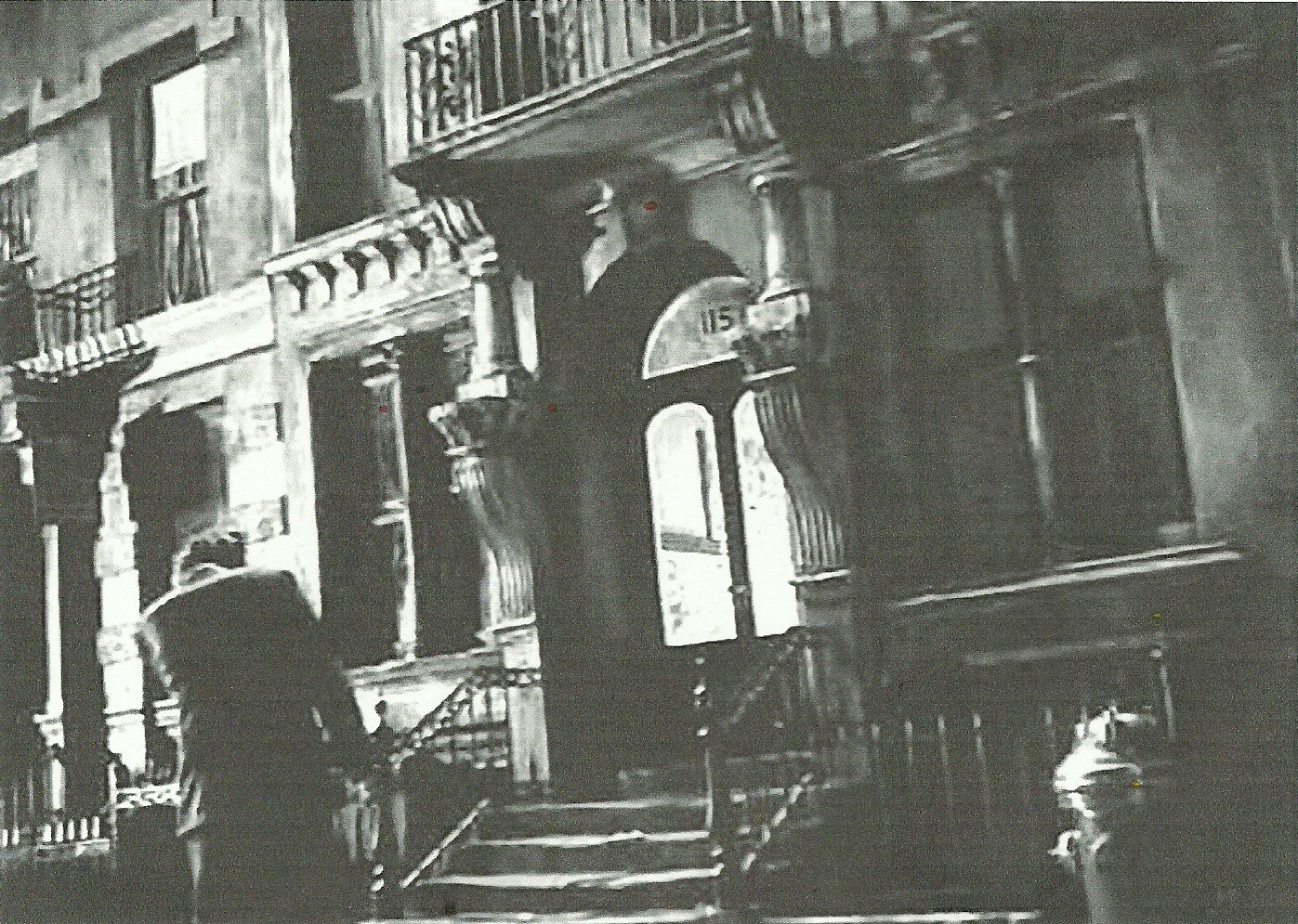
On a rainy evening in mid-October 1940, a large crowd had gathered at the Biederhoff funeral parlor on Mission Street near the bridge. By six o’clock—the time when most people were having dinner or settling down for the evening—the chapel was already filled to capacity and the street outside clotted with cars. Every few seconds the door opened to admit new arrivals into the foyer, their voices hushed as they closed their umbrellas and shook the rain off their coats and hats. As they entered the Greek chapel to view the remains of the deceased, their smiles of greeting faded and they assumed expressions of solemnity appropriate to the occasion.    

When an old person dies, it’s just a matter of course. A young person dying, though, gets everybody’s attention, especially when the death is sudden and violent and has raised questions for which no answers have been given. Galen Fahrenwald’s death was just such a death. In truth, many of the people who showed up at the funeral parlor to pay their respects didn’t know or care about him—or anybody in his family—but were there because they had heard the news reports of the death and wanted to see for themselves a young man (he was only thirty-seven) laid out in his coffin, a young man with a beautiful young wife and a lot of money who may or may not have died under mysterious circumstances.    

Galen Fahrenwald, banked by elaborate floral offerings of every color and variety, was resplendent in his white tie and tails, nestled cozily in his golden chariot casket with its elaborate scrollwork, handles that looked to be made of pure gold, and apricot-colored lining. With his pursed lips that made him appear to be about to break into laughter, perfectly coiffed hair and red cheeks, he looked the picture of health. Nobody would ever know by looking at him that a bullet had struck him in the back, lodged in his heart, and killed him in the space of three seconds.

The police who investigated the murder and examined the evidence were about evenly split, with one-half believing that Galen Fahrenwald was murdered and the other half that the bullet that found his heart was a stray bullet fired from the weapon of a hunter. After all, it was the middle of hunting season and Galen Fahrenwald was not far from a spot known to be frequented by hunters, where game was said to be plentiful. He had taken his lunch with him and was leaning on the fender of his car, eating a chicken sandwich and admiring the view when he was killed. What he was doing there was no mystery; he was known to visit the spot on occasion when he wanted to think and be alone.

A hush came over the crowd when Galen Fahrenwald’s mother and father came in. The old lady was small and frail-looking, dressed entirely in black, her face behind a veil. She held onto her husband’s arm as if she would not have been able to stand on her own. He was tall and dignified, his face expressionless. Those who were hoping for a display of emotion were disappointed as the two quietly viewed the body of their son and moved on, as dispassionate as if they had been looking at a side of beef.

Just as the frisson over the arrival of the parents was waning, Doreen Fahrenwald came in, the wife of the deceased. She was the star attraction of the evening, the one person in everybody’s thoughts. How broken up was she over the death of her husband? Was she as baffled as everybody else over what happened? Just what was she planning to do with all the money that would come to her (at least half a million in life insurance, in addition to the house and everything else)? Would she stay put or go away to a place where nobody knew her? Was she sorry now she never had any children?

Dressed in her exquisitely sleek, Parisian dress the color of wine, with a simple strand of pearls at her neck, Doreen Fahrenwald was the picture of poise and grace. She would put to shame any fabled Hollywood beauty. Her auburn hair was drawn away from her face and arranged simply at the back of her neck. She wore little or no makeup because her beauty was the kind that doesn’t need adornment or fakery. Neither did she wear a hat or a veil or any other mourning frippery. As she approached her husband’s casket, all eyes were turned toward her. People wanted to hear what she was going to say and how she was going to bear up under her tremendous loss. There was a collective intake of breath.

She stood for several minutes and looked at her dead husband, her face a mask. What she was thinking or feeling no one was able to discern. She was a cool customer, people would say. She didn’t believe in public displays of grief, but, oh, to be a fly on the wall when she was alone: that’s when she would let it all out. She moved on as though coming out of a trance and accepted the condolences of those standing nearby.

When Galen married Doreen, he had only known her for only a few weeks and knew almost nothing about her. She was a new teacher at the school and he a member of the school board. She told him she had no family to speak of and had lived with a great-aunt while growing up. The aunt died and left Doreen a little money, so she decided to move on and start a new life for herself in a different part of the world. He was satisfied with the account she gave of her life and saw no reason to look further.

Galen’s mother and father looked unfavorably upon Doreen from the beginning. They believed they saw right through her to her rotten core, in spite of her polished exterior. She was interested in Galen only for his money and the comfort and security it would provide. Galen, they believed, had too much sense to be taken in by such a person. It wasn’t in his nature to want to marry someone he just met and knew nothing about.

They hired the best and most expensive private detective agency to uncover the truth that they knew was lurking there, somewhere just beneath the surface. They hoped to disillusion Galen with the information that was sure to be uncovered.

The investigation revealed that Doreen had, in fact, lived for years with her only known relative, an elderly woman who was a sister of her grandmother. The aunt was nearly bedridden with a host of maladies; Doreen helped care for her. The aunt died unexpectedly of a drug overdose a month after Doreen turned twenty-one. The police investigated, but the death was in the end ruled an accident. The old lady wasn’t in her right mind and just didn’t know how much of her medicine she was taking.  

Doreen inherited about a hundred thousand dollars. She rented a luxurious apartment and lived the high life for a couple of years with her fashionable friends until she discovered, to her surprise, that she had spent her entire inheritance. She was forced to leave her apartment and move into a boarding house. All her friends dropped her as if she had died.   

She worked for a while as a nightclub hostess. Some of the men she encountered during that time were well-heeled older gentlemen who gave her presents of jewelry and cash. She sold the jewelry and saved the cash. She hated the way she was living and longed for a different kind of life. Through taking some night courses, she was able to earn her teaching certificate. She applied for a teaching job in another state and was hired without too much effort. That’s when she met Galen.

When Galen’s mother and father presented the report from the detective agency to him, he read it silently and threw it into the fire. He said none of the information in the report made any difference and he was going through with the marriage in spite of their objections. He told them calmly that he never wanted to see them again. He would never forgive them for meddling in his private affairs. He was a grown man and past caring what they thought of him. It was the first time in his life he had ever rebelled against parental authority.

From the beginning the marriage was not a conventional one. Galen and Doreen lived as separately as they could for two people who occupied the same house. Doreen was rumored to have her discreet love affairs, but she always made sure she didn’t give Galen a reason to hand her a divorce. For his part, he wanted a wife in name only. All he required was that Doreen run the household, accompany him to certain social functions, and to act in the role of wife or business confidante when needed. Nobody knew for sure, of course, but the general belief among friends and acquaintances was that the marriage had never been consummated.

The marriage was amicable enough for a while until Doreen became bored with her fat, comfortable life. She began to drink heavily and spend enormous sums of money at the roulette table and the race track. She wasn’t nearly as lucky at gambling as she thought she should be. Her debts accumulated to the point where she was unable to repay them. Her creditors threatened to try to get the money from her husband.

Galen had, from his strict upbringing, a moralistic view of the world. He believed in the principles of right and wrong; he believed that to waste one’s precious resources on such trivial pursuits as gambling was stupid and irresponsible. When he learned of his wife’s enormous debt, he refused to bankroll her activities. For the first time in their marriage, they engaged in vicious fighting over money. He slapped her across the face, knocking her down and loosening two of her teeth; she threw a bookend at him and cut a gash in his forehead. A few days before Galen was killed, Doreen told friends she was going to file for divorce on the grounds of incompatibility and physical cruelty.  

While Doreen Pitkin Fahrenwald was viewing the mortal remains of her husband, a different kind of scene was playing out across town at the police station. After hours of questioning, an auto mechanic by the name of Curtis Faulkner, who held medals for marksmanship from the army, had just confessed to the murder of Galen Fahrenwald. Frightened out of his wits when told he could go to the electric chair, Curtis Faulkner told the police everything.

He had known Doreen Fahrenwald for a year or so, and, no, he wasn’t her lover—she was too much of a lady for that. He met her when she brought her Ford into the shop where he worked. They started talking and discovered they were both just wild about horse racing.

Talk of horses led to more serious conversation. Doreen told Curtis Faulkner about her unhappy marriage and how cold and strange her husband was; how he was controlled by a domineering mother who hated her and wished her dead. To escape her unhappy marriage, she had been drawn into the unsavory world of gambling and café society. She had taken on more debt than she could ever repay. She was being threatened to repay the money she owed and she didn’t know what she was going to do. She was contemplating suicide.

When Doreen learned that Curtis Faulkner was an expert marksman, she was tremendously interested and asked to see his medals. Playing on his ego, she coaxed him into telling her about his exploits in the army. Soon after, she came up with the idea of paying Curtis to kill her husband. Since Curtis didn’t know her husband and had never met him, nobody would suspect him. With her husband dead, she would have control of all his money, could pay off her gambling debts, and live comfortably for the rest of her days. Curtis would have more money than he ever dreamed possible and could escape the job he despised. Everybody would be happy.

The police chief wanted to pick Doreen up quickly before somebody tipped her off and she had a chance to flee. If he could get a confession from her before the voters went to the polls in about three weeks’ time, he would be assured of being re-elected. He dispatched four armed men to pick her up at Biederhoff’s funeral parlor, telling them not to handcuff her unless she resisted.

The four police officers walked single-file into Biederhoff’s, trying to be unobtrusive but getting the attention of everybody there by the mere fact of their presence. The lead man, with the others behind him, went over to Doreen Fahrenwald—at that moment engaged in quiet conversation with a friend near her husband’s casket—and told her she was under arrest for suspicion of murdering her husband, Galen Fahrenwald. When she smiled at him as though he had paid her a compliment, he put the handcuffs on her to show that he meant business. Murder was nothing to smile about.

Doreen Pitkin Fahrenwald showed no emotion, no surprise, as she was led from Beiderhoff’s funeral chapel by a retinue of police officers on that rainy October evening. She stopped in front of Galen’s mother and the four officers stopped, too, willing to give her a chance to say what needed to be said. She seemed about to speak to the veil—seeing nothing of the face underneath—but no words came. She just smiled and shook her head and moved on. There would be much speculation later over what the headshake meant, but, or course, nobody would ever know for sure. She was, to the end, a mystery to all who knew her.  

Copyright © 2011 by Allen Kopp
Muriel Self


Muriel Self ~ A Short Story by Allen Kopp

(Published in Berg Gasse 19, February 2011.)

In his younger days Emory Self wanted to be an actor. He attended a Midwestern liberal arts college to learn the fine art of standing on a stage before a crowd of people and persuasively pretending to be somebody other than who he was. And college suited him well, better than high school ever had. He survived—if not flourished—made a number of friends and did fairly well in his studies. His appearance in small character roles in several college productions increased his confidence and ability.

He was preparing to play the lead in Uncle Vanya when, during the autumn months, he found himself as the least significant angle in an unfortunate love triangle. The affair, with its inevitable sad conclusion, left him with a broken heart. He attempted suicide on Christmas Eve by taking an entire bottle of sleeping pills. He woke up on Christmas morning tied to the bed in a hospital ward, refusing to believe he hadn’t died. From that moment on, he galumphed into the strange and encompassing world of a complete nervous breakdown.

His suicide attempt and breakdown were the end of his college days and of his desire to be an actor. He recuperated for a time in a sanatorium and, when he was finally released, he returned home, vowing to the world that it (the world) would never have him to misuse again.

His mother, Muriel Self, installed him in an upstairs bedroom in her large old house and devoted herself to taking care of him in the way that only a mother could. She provided for his every comfort in any way she knew how. She bathed him, dressed him, fed him, and sat beside his bed on the nights when his demons tormented him. She read to him, sang to him, played cards and board games with him, and generally devoted her life to him. No mother and son were ever closer. If any of her lady friends asked her to go out with them to have dinner or see a show, she would tell them she had to stay at home and take care of her invalid son.   

Emory was lethargic at first and sedated; he wanted only to lie in bed in a near-stupor and stare at the wall. Sometimes he wouldn’t blink his eyes for hours but would just lie there breathing shallowly with his mouth open, making a kind of wheezing noise. The wheezing was the only indication he gave that he was still alive. 

Emory’s mother had once been a very good cook but had fallen away from cooking after Emory became an adult. Emory had always enjoyed eating, so she decided that good food was the best way she knew to get him well again. She launched herself into cooking in a way she had never done before. She got out all her old cookbooks and pored over them in the evenings while sitting beside his bed. She made a dozen or more excursions to different grocery stores, buying the best cuts of meat and the most enticing foods she could find. She had a standing order with a certain bakery for pastries, rolls, fancy breads, pies and cakes, all the things that Emory had always favored.

The meals she cooked for Emory became ever richer and more lavish. One day it was a standing rib roast and the next day a rack of lamb, roasted turkey, chicken and dumplings, or sirloin steak—always in enormous quantities. Since Emory wasn’t able to come downstairs to eat at the table the way a normal person would, she carried all the food up the stairs to him without complaint and, since he didn’t like to eat alone, she prepared double portions of everything and ate with him while sitting beside his bed. At the end of his meal he would eat nearly an entire pie or cake for dessert, while she sat and daintily nibbled at a small slice, full to bursting but too thrilled with Emory’s apparent renewed interest in life (or food, which to her meant life) to ever complain.  

Emory gradually responded to his mother’s cooking in a way he didn’t respond to anything else. Slowly, almost imperceptibly, he emerged from his deep depression. Food became the center of his life, his raison d’être. He looked forward to his meals with a fierce anticipation. When he wasn’t eating, he was waiting, sick with impatience, for his next meal. He would try to nap or read or look out the window, but if he could smell the cooking smells coming from the kitchen downstairs, he would think he was going to die until the food was ready for him to eat.

 In this way the years passed uneventfully for Emory and his mother. With the enormous quantities of food he ate and his never taking any exercise, he put on weight at an alarming rate. He lost the ability to walk but, since he was determined to never leave his bed again, he didn’t care to walk anyway. His mother would do his walking for him. She would do for him all he needed to have done and couldn’t—or wouldn’t—do for himself.  

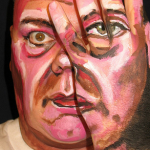
 As Emory grew very fat, so did his mother. They came to resemble each other in a way they never had before. He had an enormous round head with stubbly red hair and so did his mother. He had puffy, drooping eyelids and so did she. He had full lips that he pursed into a little cupid’s bow whenever he wanted to, exactly like hers. He took to smoking cigarettes the way she did and he developed her laugh and her hand gestures. On “special occasions,” she gave his face the full makeup treatment, put one of her wigs on him, and dressed him in one of her gowns. When she was finished with this transformation, she would turn him toward the mirror and he would gasp at the effect, at how much he looked like her. At those times they were sisters instead of mother and son.

After Emory began to experience better days than he had for years and finally seemed as happy and contented as he was meant to be, his mother began to turn her attention more to herself than had been her wont. She believed that, even though she was enormously fat, she could still be an appealing woman. She was no longer as young as she had been, of course, but she was far from old and she was sure she had many good years remaining to her. She began spending entire days away from home, either getting some kind of beauty treatment or other or buying expensive clothes.

And finally, with the dramatic change that had taken place in her appearance, the inevitable happened. She met a man who was interested in her. He was a widower named Chester Van Runkle who owned his own antiques business. When she arranged for him to stop by and take a look at a table that she wanted to sell, she was instantly drawn to him in an inexplicable way and he to her. He ended up staying the entire afternoon, canceling all his other appointments for the day.  

She began going out on dates regularly with Chester Van Runkle. He called her two or three times a week, wanting to take her to a fine restaurant for dinner, to a show or sporting event, to a nightclub for dancing, or even, once, to the circus. And she never declined any of his invitations, which left her facing a dilemma. How was she going to break the news to Emory that she had a gentleman friend, and who was going to take care of Emory while she was stepping out?

She engaged a “nurse-companion” through an agency. Her name was Miss Bibb. When Miss Bibb arrived, she was wearing men’s clothes and a men’s hat and was smoking a cigar, but Emory’s mother was willing to overlook these quirks of attire as long as Miss Bibb showed herself to have Emory’s best interests at heart.

Emory was hostile to Miss Bibb and naturally suspicious. He believed she would poison him when she got the chance. He called her a “bitch” and a “dyke,” but Miss Bibb just smiled her placid smile and wasn’t offended. Emory’s mother believed at that moment that Miss Bibb possessed just the right combination of love and firmness that would be good for Emory.  

When Emory asked his mother why she thought he needed a “keeper” or “sitter” after all the years she had taken care of him on her own, she told him she was “getting older” and she had come to a point in her life where she needed to consider her own wants and needs.

“I thought your wants and needs were the same as my own,” Emory sniffled pathetically.

She decided she wasn’t going to tell him about Chester Van Runkle until the time was right.

The first time Emory’s mother left Miss Bibb alone with him, he threw a cup at her (Miss Bibb) and blackened her eye. He told her he was going to slit her throat when she had her back turned. He refused to eat the food she brought to him, until hunger overwhelmed every other consideration and he ended up eating lunch and dinner together.   

“I’m going to need more money to take care of that big boy,” Miss Bibb told Emory’s mother on her return.

She agreed to pay Miss Bibb twice the amount of money she had originally agreed to.

When Emory’s mother engaged Miss Bibb to stay with Emory for an extended weekend while she went away with Chester Van Runkle on a “little trip to the country” (separate rooms, of course), Emory offered Miss Bibb two hundred dollars in cash to walk out the door and never come back.

“It’s going to take a lot more than what you’ve got,” Miss Bibb said with a laugh, blowing smoke in his face.

“I’m an invalid,” Emory said. “You shouldn’t be smoking around me.”

The next time Miss Bibb came to his room, carrying his dinner tray (bearing considerably less food than he was used to), he was sitting up in bed holding ten one-hundred dollar bills fanned out in his hands like playing cards.

“It’s yours,” Emory said. “All you have to do is walk away and pretend you were never here.”

Miss Bibb smiled and slammed the tray down on the table beside the bed. “Everybody has his price,” she said, grabbing the money out of Emory’s hand.

Before she went out the door, she turned to Emory and said, “The only thing wrong with you is you’re an over-indulged mama’s boy. All you need to do is get up out of that bed and get some exercise. Oh, and lose about eight hundred pounds.”

“It’s none of your concern,” Emory said, throwing a book at the door after she had already closed it.

After Miss Bibb was gone, Emory realized with a stab of fear that he was alone in the house and there was nobody to bring him food. His mother wouldn’t be back for two days. He would have to get downstairs to where the food was or he would die.

He eased himself out of the bed onto the floor; he rested for a while and then tried to stand up, but his legs buckled under him. After much effort, he discovered he was able to pull himself forward in a crawling fashion using his arms and legs. He crawled in this manner to the door of his bedroom and out into the hallway to the top of the stairs.

The stairs seemed steeper than he remembered, and there were more of them, like in a disturbing dream. He eased himself into a sitting position on the top step and, holding on to the spindles of the banister, let his enormous bulk fall forward enough to advance downward to the next step. In this way, holding on to the spindles and letting gravity do its part, he eased himself all the way down.   

At the bottom of the stairs, he was sweating heavily but felt strangely cold; his clothing had become disarranged in his descent and he was nearly naked. A stabbing pain in his chest made him cry out and clutch at his chest with both hands. He lay for several minutes in a semi-conscious state, gasping for air like a beached whale.

After a while his breathing slowed and the pain in his chest subsided. He pulled himself to a standing position, holding on to the stair railing. He attempted to take a step or two, but his muscles were no longer accustomed to supporting his weight and he fell painfully on his side. In that position, he half-scooted and half-crawled toward the kitchen.  

The tile floor in the kitchen felt cool and welcoming. He lay on his side, his head in the crook of his arm, until he went to sleep from exhaustion. How long he slept he knew not, but he awoke feeling refreshed and ravenously hungry. He pulled himself over to the refrigerator and, balancing himself on his knees, opened the door.

The first thing he saw was a lone pork chop sitting on a plate in a pool of congealed grease. He grabbed the pork chop and stuffed it in his mouth, stopping short of the bone. He threw the bone aside and picked up a large tomato. He tried to get the entire tomato in his mouth at one time and, as a result, ended up with seeds and juice flowing down his chin but he didn’t mind because it tasted so good. He discovered the remains of a pot roast and ate it with his fingers. He drank an entire quart of milk without stopping.  

Rather than try to get back up the stairs, he crawled on hands and knees to his mother’s room. He pulled himself onto the bed, rolled over on his back, and emitted a pitiful groan. He fell into a deep sleep and slept until morning.

When he awoke he didn’t know at first where he was and then, slowly, all that happened the day before came back to him. He felt unaccustomed anger at his mother for going away and leaving him alone with Miss Bibb. The current state he was in was all her fault and, for the first time in his life, he believed he hated her.

He practiced walking from the bed to the vanity table and back again. Slowly he felt the use of his legs returning. After several tries and with enormous effort, he was able to walk ten or twelve feet without holding on to the furniture. After he rested from his exertions, he took a scalding bubble bath in his mother’s bathroom and when he was finished he sat at her vanity table and made up his face exactly the way she would have done and then he put on her fancy red wig that she said made her look just like Arlene Dahl.

Then he dressed in her clothes—a gauzy, frilly, floor-length dressing gown of yellow see-through silk—and after he had sprayed himself liberally with her perfume he went into the kitchen and, for the first time ever, prepared his own breakfast of bacon, eggs, toast and tea.

When Emory’s mother returned from her trip to the country a day and a half later, the sight of Emory installed in her favorite and most comfortable chair in the living room, wearing her clothes and her wig, brought a spontaneous scream from her throat.

“What are you—?” she asked after she had recovered herself enough to speak.

“Hello, Mother,” Emory said.

“Why are you out of bed? Where’s Miss Bibb? Was this her idea?”

“Miss Bibb has been gone since the first day,” Emory said.

“Gone where?”

“She was wanted for murder. The police came and took her away.”

“Who did she murder?”

“It seems she’s been murdering patients for years. She might have murdered me, for all you cared.”

“And you’ve been left alone here all this time?”

“Oh, I’ve been managing on my own quite well, thank you.”

“How did you get downstairs?”

“The way a helpless baby would have done. I rolled myself down on my bottom.”

“You poor boy!”

“It was either that or die upstairs of starvation.”

“Oh, I’m so sorry!”

“Forget it, Mother. I believe I heard somebody say one time that those things that don’t kill us make us stronger.”

“How can I ever make it up to you? I feel so guilty!”

“Well, I was hoping you would, but there’s no reason for it to last more than a minute.”

When she recovered from her astonishment, she was happy again, especially to know that Emory had survived his ordeal and seemed to have emerged from it better and stronger than before.

“It’s so wonderful to see you this way!” she squealed with delight as tears ran down her face. “The Lord above was watching out for you.”

“Yes, I believe He was,” Emory said with a modest smile.

She sat down on the arm of the chair, leaning the bulk of her weight against him, and put her arms around him and sobbed. When she pulled back to wipe the tears from her eyes, he noticed she was wearing a large diamond ring on her left hand that he had never seen before.

“What’s this?” he asked.

“It’s my engagement ring!” she said. “I’m going to be married. You’re to have a new papa.”

“Isn’t this rather sudden?”

“In a way, I suppose, it is sudden, but I’m absolutely certain that marrying Chester is the right thing to do. We’re all going to be so happy! My boy is going to have the father he always needed.”

“Funny, I never knew,” Emory said. 

She told him to rest for a while. She was going to change her frock and fix him a special dinner and while they were eating she would tell him all the details of Chester’s marriage proposal, her acceptance, and of their plans for the future.

She offered to serve dinner upstairs in his room, where he was accustomed to eating it, but he told her he wanted to have it in the dining room. He wanted the occasion to be the start of a new and different life for him.  

When the food was ready and the dining room table set, she went and woke him up and helped him out of the chair and into the dining room. She pulled out the chair for him at the head of the table and, when he was comfortable, she brought in from the kitchen a huge platter of fried chicken and set it in front of him.

Bon appétit, my darling boy,” she said.

She turned on some piano music and for a while they ate without speaking. After his sixth piece of chicken, Emory looked at her and smiled. She reached across the table, tears in her eyes, and took his greasy hand in her own as though they were lovers.

“It’s so grand to see you sitting there looking exactly like me,” she said. “I swear it’s like looking in the mirror. That wig looks better on you than it ever looked on me. I always said you were far too pretty to be a boy.”

“Now, I want to hear all the details about you and this Chester person,” Emory said, in her voice.

“Well, there was just this magic between us from the moment we laid eyes on each other. As soon as I opened the door and saw him standing there—”

She talked on and on, emptying her wine glass and refilling it as she spoke. Emory, for his part, watched her and smiled and didn’t say much. She told him about the romantic interludes she had experienced with Chester, what a good dancer he was, and what a smart business man. When she came to the part about selling the house, Emory stopped her.

“You want to sell the house?” he asked. “Where are we going to live?”

“This house is much too big for us. We can sell it and get a smaller place.”

“But I like it here,” Emory said. “This has always been our home.”

“I know, darling, but it will all work out for the best. You’ll see.”

“You’re going to sell the house and the three of us—you, me, and Chester what’s-his-name—are going to live together in a tiny, cramped house?”

“Now, I didn’t say that, dearest. There’ll be plenty of room for all of us. We’ll make sure of that.”

“Have you told Chester about me?”

“Well, not exactly. He knows I have son, but that’s all.”  

“It seems that suddenly I’m an extraneous appendage,” he said.

His mother laughed. “Where do you get those words?” she said. “I don’t even know what you’re talking about! I’d have to get the dictionary!”

“I don’t think I’m going to let you sell the house,” he said quietly, but she didn’t hear him because she was standing up from the table and her foot caught on the leg of the chair and she almost stumbled. He could see that she was halfway—if not more—drunk from all the wine.

“I’m going to get another bottle of wine from the cellar,” she said.

“Don’t you think you’ve had enough?”

He heard her moving around in the kitchen—opening and closing the refrigerator door, turning the water on and off. He heard her open the door to the cellar and give a little squeal, the way she did when she saw a mouse or a spider. He stood up very slowly from the table and went into the kitchen on his uncertain legs, holding to the wall as he went, to make sure she was all right.

She was standing at the top of the cellar stairs looking down into the darkness—she hadn’t yet turned on the light—teetering as if she might fall forward or backward. He went toward her as if to pull her back, but the moment his hand connected with her shoulder he gave her the tiniest shove. She grabbed for the door frame, missed it, and went crashing down the stairs in a rolling heap. 

Emory ran to the phone to call for help, but as soon as he picked up the receiver he put it back again. There was a good chance his mother was dead and, if she was, no power on earth was going to help her. He wanted to see her first, up close; if she was still alive, he would call for an ambulance. If she was dead, well, that was another matter.

He kicked off the slippers he was wearing; he could negotiate the narrow cellar stairs much better in his bare feet. He turned on the light over the stairs and began his descent as if it were the face of a mountain.

When he reached his mother, she was still breathing but unconscious. Her arms and legs were splayed out like a doll that has been thrown to the ground from an upper-story window. Her head was twisted at an unnatural angle. He knew right away that her neck was broken.

“Mother!” he said.

She lifted her hand as if to reach out to him. Her hand dropped, she breathed one expiring breath, and then she was dead.

“Oh, God!” he said. “What has happened?”

He knelt down, covered her body with his own, and wept genuine tears. When his tears were spent, he gathered himself up to go back up the stairs to call someone and tell them what had happened. In that moment, though, a thought came to him from out of nowhere.

In the floor of the cellar was an old vault that had been installed by a long-ago owner of the house who had been a dealer in gemstones. The only two people in the world who knew about the vault were Emory and his mother. He hadn’t thought about the vault in years.  

He had to move some boxes and barrels out of the way, but the vault was exactly where he remembered it. With the aid of a crowbar, the lid came away easily enough. He dragged his mother by the arms, inch by inch, across the floor and lined her body up with the edge of the vault. He knelt beside her again, taking her hand in his, and removed the engagement ring from her finger and put it on his own. In the simple act of putting on his mother’s ring, he became his mother.

He held her hand against his cheek, wetting it with his tears, and then he pushed her into the vault and let the lid close with a satisfying click. He put the items back that he had displaced to get to the vault and stood back to survey the scene to make sure everything was exactly as it had been. Then, exhausted from his exertions, he went upstairs to take a well-deserved rest.

While he was in his mother’s room (now his own) resting on the chaise longue, the phone rang. He answered it not as Emory but as his mother. A man’s voice, rather loud, spoke in her ear.

“Muriel, darling, this is your own Chester. I just had to call you. I have some wonderful news.”

“What is it, darling?” she asked, drawing out the syllables in a purr.

“I’ve discovered the sweetest little ranch house in the suburbs, just for the two of us, and I think I can get the owner to agree to my price.”

“Oh, Chester, that is wonderful news!”

“We’re going to have to move fast, though, or somebody else will get it out from under our noses. I want to come by in the morning and pick you up around ten o’clock and take you out to see it. If you like it as much as I do—and I’m sure you will—we can close the deal on it tomorrow.”

“Oh, dearest, you are impetuous!”

“I can’t wait to get my own little cherub in our own little love nest!”

“I’ll be waiting, dearest!

“Good night, my love.”

“I send my love and kisses over the wire to you!”

“Until tomorrow, then!”

After hanging up the phone, she stood up and went to the closet to pick out something to wear for her excursion to the suburbs with Chester. The frock she chose should say simple yet elegant, casual yet classic. She selected two different frocks that were appropriate to the occasion and took them from their hangers and stood in front of the mirror and held them up to her to see how they looked.

For a moment she became Emory again. Emory smiled at his reflection. He felt a little thrill rising up from his toes past his stomach and all the way to the top of his head. Such good times were coming. He was about to embark on the greatest acting challenge of his life.

Copyright © 2011 by Allen Kopp

When My Turn Comes

When My Turn Comes ~ A Short Story by Allen Kopp 

In the air is the smell of rubbing alcohol, or, as it is more commonly known, “shot medicine.” It’s shot day and Miss Goldsmith, the school nurse—along with her huge female assistant with bulging arms, affectionately referred to as “the Angel of Death”—is alone in the narrow nurse’s room on the third floor with the door, usually opened, now closed.  The ghoulish pair requires solitude while they lay out on the table the cotton balls, syringes, frightening-looking bottles of serum, and hundreds of needles required to vaccinate the students of Harmony Hill elementary school against the dreaded scourge of disease. When they are ready to begin, the door will re-open and the Angel of Death will issue forth with a bunch of the blue “shot cards” in her dimpled hands to collect the first lucky recipients of the largess of the state health department. We wait in our stifling classroom, pretending to be paying attention to our social studies lesson, but instead consumed with worry about when the Angel of Death will appear at our door and begin calling out the names of those of us who must submit to the needle.

Miss Joyce, our teacher, pauses in midsentence when there is a knock at the door. We all sit bolt upright, knowing our moment has come. The door opens and there is the Angel of Death proffering her stack of blue cards as she steps into the room. She has a satisfied grin on her lipsticked mouth as Miss Joyce gives her the go-ahead and she begins calling out the names, in seemingly random—rather than alphabetical—order: Eddie Fuller, Ramona Peabody, Roy Babb, Emory Dalton, Felicity Fleming, Curtis Welch, Norman Hardy, Betty Ray, Travis Fletcher, George Abney…

By the time my name is called, I have a lump of dread in my stomach, but I stand up and walk jauntily to the front of the room and take my blue shot card from the Angel of Death with a smile on my face as if getting stuck in the arm with a needle is the one thing in the world I’m longing to do today.

When all the names have been called (about half in the room) and we are all lined up ready to go, the Angel of Death leads us out of the room, down the long hallway and up the stairs. We don’t make a sound except for the clomping of our shoes on the old wooden floors.  

While we are standing in the nurse’s room in a line that goes all the way out into the hallway, Wanda Gilroy, who I don’t know very well because she’s in another grade, wets her pants and begins wailing. One of the older girls leads her away by the arm—as if wetting her pants has somehow affected her ability to see—while the Angel of Death puts some paper towels on the floor to soak up the urine so the rest of us won’t have to walk through it. Wanda might have thought that wetting her pants would get her out of getting the shot, but she’ll have to get back in line as soon as she dries herself off.  

I’m about twenty people back, and the line seems to be moving very slow (is this going to take all day?), when there’s a commotion at the front of the line. Leroy Meinhardt is putting up a fuss just as Miss Goldsmith is wiping his stringy little arm with the alcohol-soaked cotton ball. It seems that Leroy has decided at the very last moment that he can’t and won’t tolerate getting a shot today. He keeps saying, “No! No! No!” As he tries to pull away, Miss Goldsmith holds him and says, “There, now, this isn’t going to hurt at all.” She finishes swabbing his arm and when Leroy sees the syringe she’s holding in her hand, he breaks away. He dives under the little hospital bed against the wall, but he’s no match for the Angel of Death. She grabs him by the ankles and pulls him out easily on the slick tile floor. She jerks his little ass to a standing position and sets him down in easy reach of Miss Goldsmith with her needle.

“You’re making this much harder than it needs to be,” Miss Goldsmith says grimly. “I’m just as determined to give it as you are not to get it!”

Leroy appears to be about to acquiesce; he is holding still but making little sobbing sounds. Miss Goldsmith holds his arm in her vise-like grip and swabs it again. When she has the needle not more than three inches from his arm, he breaks away again but the Angel of Death grabs him before he has a chance to get very far. She sits down and pulls him toward her and holds him between her massive thighs. She puts her arms around his upper body as if she is a bear and, in this way, with her arms and legs, holds him immobile. He is making “yah-yah,” sounds, but he can’t move so he is essentially helpless, eyes shut tight, holding his breath and gritting his teeth. 

Miss Goldsmith grabs the flesh of his upper arm in her left hand and with the other hand sticks the needle in. She pushes the plunger on the syringe, emptying the life-saving serum into his arm, and withdraws the needle.

Leroy grows limp; his head lolls forward on his shoulders. The Angel of Death continues to hold him because it seems he will slump to the floor if she doesn’t, but in a few seconds he opens his eyes and looks around as if he is just coming out of a trance. The room is absolutely still, with everybody watching him. When he realizes he is half-sitting on the Angel of Death’s lap, he pushes away and stands up and smiles broadly. Everybody in the room claps and cheers, jubilant that the ordeal is over and has ended in success.    

When my turn comes, I look out the window at the sky and let my body go as limp as I can to still remain standing. I don’t look at the needle going into my arm and I won’t show that I feel it. I believe, even at my young age, in the principle of simple human dignity. I would never want anybody to see me making a scene, crying and screaming, the way Leroy Meinhardt does. He will always be remembered, even decades later, as a whiny crybaby and a person to be avoided.

I get my lemon sucker, the kind with the soft loop—so if you fall flat on your face while you’re eating it you won’t push it out the backside of your head—and go back downstairs to Miss Joyce’s room. I’m not supposed to eat the sucker until recess, so I put it in my shirt pocket for safe keeping. I’m happy to have the shot over with. I don’t see what all the fuss was about; it didn’t hurt at all. I’ll try to remember that for the next time, but I probably won’t.

Copyright © 2011 by Allen Kopp

The Last Hour of the Day


The Last Hour of the Day ~ A Short Story by Allen Kopp 

(Published in The Santa Fe Writers’ Project Journal, March 2011)

Holton had come a long way from the city. He hadn’t seen another person for three days. For the first time in longer than he could remember, he felt at ease in his surroundings. He sat down on the riverbank underneath a tree and looked at the sky. The clouds had lifted and the sunlight glinted in gold on the water. There was still beauty in the world.

He took a tiny sip of water from the canteen. He didn’t have much left and he knew he was going to have to get more, and soon. He could go for a long time without food but water was a different matter. He would never get thirsty enough to drink from the river. If drinking from the river didn’t kill him, it could make him sick enough that he might never recover.

He took a tiny bundle from his pack and unwrapped it carefully; it contained the last of his food—a carrot, a piece of bread, a chunk of dried meat, and some candy. He wrapped the bread around the meat and began taking tiny bites. He chewed slowly to make it last longer.

Would building a fire and boiling some water from the river make the water safe for drinking, he wondered? If he was going to build a fire, he might as well stay the night. He was weighing these considerations in his mind when a sound startled him. He looked up to see a man walking toward him and he realized the sound he heard was the man singing. He grabbed for his pack and thrust his hand inside to where his gun rested on the bottom.

“I don’t have anything you want,” he said, when the man was close enough to speak to.

“Don’t worry,” said the man, who went by the name of Clement. “I’m not going to bother you. I only want to rest here for a while.”

“I’d like it better if you were to move along. There’s nothing here for you.”

“No doubt,” Clement said with a little laugh. He took off his boots and lay on the ground with his feet toward the river, just to the right of Holton. He was wearing clean white socks.

“I have a gun here and I know how to use it,” Holton said. “Just in case you have any ideas about trying to steal what I have.”  

“I’m not going to steal anything. You have nothing I want.”

“What do you want then?”

He looked at Holton as if studying him. “I don’t want anything from you,” he said. “I’m not going to do you any harm.”  

“What’s your game, then?”

“I don’t have one. Maybe I just want to hear the sound of a voice other than my own. Is that too much to ask?”

“I’m not much for talking. I really ought to be on my way.”

“Where exactly is it you’re headed?”  

Holton relaxed a little and forgot about drawing the gun. He didn’t have bullets anyway. “I got out of the city and just kept going,” he said. “This is where I ended up. I don’t know where I am. I don’t even know if I’m in the same state or in another one.”

“Geographical boundaries don’t seem to matter much now.”

“Everybody in the city was dying. I knew I would die, too, if I stayed there. Once I left the city, I just kept going until I ended up here.” 

“How long ago was that?” Clement asked.

“A week. Maybe longer. I seem to have lost some time and I don’t know how much.”

“Are you sure you don’t have the sickness?”

“I know what the symptoms are,” Holton said, “and I don’t have them yet.”

“But you expect to have them?”

“We heard the enemy dropped bombs with the sickness in them on every city. The people in the city would die first and then the sickness would spread to the spaces between the cities and the people there would die too.”

“You had family in the city?” Clement asked.

“I was new to the city. I have a wife and child but they’re far away in another place.” 

“Are they all right?”

“I don’t know. There’s no way for me to find out now. I had in my mind that if I just kept going as long as I could I might come to a place where the sickness hadn’t reached or couldn’t reach for some reason, and there would be people there like me.”

“People without the sickness?”

“Yes. Or maybe people who know how to keep from getting the sickness.”

“You’re witnessing the death of the human race,” Clement said. “Not just the decline but the end. God brought it into existence and now He’s ending it.”

“You believe in God?”

“Yes. Don’t you?”

“I don’t know what I believe. If there’s a God, why is he doing this to us?”

“He’s not doing anything to us. It’s just something that happens. Do you know how many extinct species there are in the history of the world? There’s about to be another one, that’s all. Man is no more important than any of the other species that have become extinct. We’re important to ourselves but that’s all. This planet was here a long time before we came along, and it will be here long after we’re gone.”

“There might be places where people will survive the sickness. We don’t know yet.”

“They might survive for a while, but it will eventually catch them in the end.”

“How do you know so much about it?” Holton asked, suddenly suspicious. 

“I don’t know any more about it than anybody else. I’m just repeating what somebody else has told me.”

“Maybe they’re wrong,” Holton said. “Maybe you’re wrong.”

“It sounds like you want to go on living,” Clement said.

“If I didn’t, I wouldn’t have left the city.”

“Maybe we’ve reached the end. Maybe there’s no point in going on. We could go on for another day or another month or even longer, but the end result is going to be the same. Why prolong it?”

“You haven’t told me yet where you’re going or where you’ve been,” Holton said.   

Clement cleared his throat and looked out at the river. “I’m staying a couple of miles from here, over in those hills,” he said, as he pointed over his shoulder away from the river. “I stopped running shortly after the bombs fell. I figured there was no use trying to outrun the sickness. I wanted to spend my last days in relative comfort.”

“You have shelter?” Holton asked.

“Yes.”

“Food and water?”

“Food enough to last for as long as I need it and plenty of water. There’s a well nearby. It has the coldest, purest water you ever saw.”

“And there’s nobody else around?” Holton asked.

“It’s so far back in the hills nobody would ever find it.”  

“How did you find it, then?”

“It’s a place I’ve known about since I was a child.”  

The sun was going down behind the trees beyond the river and there was a sudden chill in the air. Holton thought about moving on but was too tired to even get up off the ground.

“I need clean water,” he said carefully. “I was just thinking about boiling some water from the river when you came along.”

“Don’t think about drinking that muck,” Clement said. “It has enough contaminants in it to kill the entire population.” He laughed at the irony of his remark. “I doubt if boiling would ever make it safe enough to drink.”

“I might have no other choice,” Holton said. “If I don’t get water soon, I’ll be dead from something other than the sickness.”

“You can come to the place where I’m staying,” Clement said, “if you don’t mind tramping a couple of miles through the woods. There’s as much water there as you could want.”

“I have nothing to trade for it.”

Clement snorted with amusement. “It’s not my water,” he said. “It was there when I came along and it will still be there after I’m gone. You might as well get yourself some of it while you can.”

Holton agreed to go with Clement, so, without another word, Clement put his books back on. When he had them laced up, he stood and motioned for Holton to follow him.

In a short time after they entered the dense forest, Holton was sure they were lost but Clement kept going without hesitation. The terrain was rough and rocky in places and they seemed to be going upward most of the way, as if they were climbing the side of a mountain. Finally, after what seemed two hours or more of very difficult walking, they came to a clearing with a little cabin in it.

Clement took Holton inside the cabin, which was two little rooms, and pointed to one of his two canvas chairs and told him to sit down and rest. While Holton was taking off his shoes and socks, Clement brought him a pitcher of water and a tin cup. Holton drank most of the water in the pitcher so Clement filled it again.

Clement had a little cook stove in one corner of the cabin that served as the kitchen. He told Holton to go out behind the cabin and get himself washed while he prepared the food. He gave Holton a shirt and pair of pants that were like new to put on after he had washed and told him to keep them because he had no use for them.

After Holton had made himself as clean as he could and put on the clean shirt and pants, he went back inside the cabin. Clement was just putting the food on the little table. He gestured for Holton to sit down.

They dined silently on canned soup, beans, spinach, and tomatoes. Holton ate his fill and leaned back in the chair with contentment. He was thinking that he should leave and not prevail too much on Clement’s hospitality, but he knew he would never find his way back down the mountain in the dark.  

“You’ll want to stay the night now,” Clement said, as if he was reading Holton’s thoughts. “The forest is not safe at night if you’re not familiar with it.”

“Not safe,” Holton said. He thought about those words and then laughed.

After they were finished eating and Clement had cleared away the food and washed up the dishes, they went outside and sat on the step of the little cabin. It was so dark they couldn’t see more than five feet in front of them. Clement offered Holton a cigarette but he declined it, not liking himself in the role of the taker who had nothing to offer.

They talked about pleasant things that they knew before all the trouble came about. They talked about dogs and cats they had owned and books they had read and music they liked and trips abroad they had taken. Holton told Clement about his ten-year-old son and about how he and his wife planned to divorce, but if she was dead now, as he figured she was, there would be no need for the divorce. He said this with irony as if the thought amused him, but then he began to cry uncontrollably.

“It’s all right,” Clement said, unembarrassed, putting his arm around Holton’s shoulder. “I think you just need to let it out and then you’ll feel better.”

When they were back inside the cabin and Clement had rolled himself in his sleeping bag on the floor and Holton was lying on the cot, Clement started talking about the end that he knew was coming. He didn’t mind dying so much, he said; he had had a good life, what there was of it. He had seen the world and known true happiness. His greatest fear now was that there would be no one to bury him properly when he died. His body would be left lying out to rot in the open air where flies and other insects and starving animals would feast on it down to the bones. He could see himself, he said, one week after he was dead, one month, one year. It was too horrible to contemplate. He had seen and smelled rotting corpses in the war and he believed there was nothing worse. If he had a way to make himself evaporate in the air, to no longer exist, he would do it.

“I was hoping to find somebody I could rely on to bury me when the time comes,” he said.

“Maybe you won’t die,” Holton said. “As long as you’re alive, there’s hope you’ll go on living.”

“No, I’ve got the sickness in my bones. I can feel it. It won’t be long now.”

To humor him, and to repay Clement for his kindness and generosity, Holton agreed to stay for a few days and, if Clement died during that time, he would see that he was buried properly, in as deep a hole as Holton could dig. He would pile large rocks on the grave to make sure no animals could ever dig it up. He would even read some verses from the Bible if that’s what Clement wanted. In his heart, however, he was sure that things would not play out that way.  

They slept soundly that night and the next day had a pleasant time relaxing in the sun-dappled shade outside the cabin, talking and laughing and forgetting the terrible state the world was in. By the evening, twenty-four hours after he had arrived at Clement’s cabin, Holton was starting to show symptoms of the sickness. His vision was blurred and his face wore a deathly pallor. He was vomiting blood and babbling incoherently.

Holton passed a very bad night on the cot in the little cabin. Clement tended him the best he could, but there wasn’t much he could do for him; he had no medicine. He gave him drinks of water, bathed his face in cold water, and tried to soothe his fears the best he could. Toward morning his body began turning black and he died just as the birds were waking up in the trees outside the cabin.

As soon as Clement realized Holton was dead, he went outside and began digging the grave under the trees in the clearing, in the spot he had set aside for his own grave. When he was satisfied the grave was the appropriate depth, he went back inside the cabin and put Holton’s body in the canvas bag that he had planned would contain his own body when the time came. Then he carried the bag outside and carefully arranged it on the floor of the grave so Holton was facing up. Gasping for air—realizing he was no longer as young as he once was—he said a silent prayer for Holton and, when he was finished, he filled in the grave.

All day long and during the night he expected to begin to see the symptoms of the sickness in himself, but the symptoms didn’t appear. When he awoke the next morning, he felt fine and was very hungry. He ate an enormous breakfast, washed himself at the pump and put on clean clothes.

Two days later he still felt well and healthy. He looked at his face in the mirror for any signs of change but saw none. He felt as well as he had ever felt in his life, in spite of the reduced circumstances in which he was living. He began to think that he was being spared the sickness for some reason or another.  

That night a voice seemed to speak to him in a dream. He didn’t know if it was Holton’s voice or somebody else’s, but it was a voice he knew—maybe a voice from his distant past. The voice was telling him to go to the river and follow it south all the way to its end where it emptied into the sea—hundreds of miles. At the end of that journey he would find some kind of answer—perhaps not the answer he wished for—but an answer nonetheless.

He awoke in the morning with a resolve he hadn’t felt in a long while. The resolve had taken the place of the resignation he had felt since the bombs fell. He put as much food as he could carry into his pack, two canteens of water, and a change of clothes. He took one last look around the cabin and went out its door for the last time. With the slap of the screen door still in his ears, he looked toward the mound of dirt under the trees in the clearing and gave a little salute of farewell. Then he was gone, melding into the trees of the forest as if he had never existed.   

Copyright © 2011 by Allen Kopp

Map of the World

Map of the World ~ A Short Story by Allen Kopp

On the first day of the new school term, Joanne Torrance was sullen and unhappy. She wasn’t ready for summer vacation to be over; she wanted to be able to stay at home and do as she pleased all the time. It wouldn’t have mattered to her if school had never taken up again for as long as she lived. She was sure she could learn all she needed to know from reading books and magazines and seeing lots of movies and watching the really important shows on TV like Superman and Lassie and The Three Stooges

As soon as she met her new teacher for the first time—one Ruby Chinn—she hated her on sight. She had long yellow teeth that showed even when her mouth was closed. She had dyed hair the color of beets that she wore pulled into a severe bun on top of her head that resembled a cake made out of hair and that showed the fleshy folds on the sides of her face and neck. Joanne could have told her how she might adopt a more flattering hairdo to complement her round face, but she didn’t care how ridiculous a person’s hair looked when she despised that person as much as she despised Miss Chinn.   

Since it was the first day of the new term and people didn’t know each other very well, Miss Chinn had each person write his (or her, as the case may be) name on the blackboard in colored chalk. After writing his or her name, the person was to turn around and face the class and introduce himself (or herself) in a loud clear voice. The boys were then supposed to bow from the waist and the girls to curtsey. This was a chance for everybody to get to know what face went with what name. Miss Chinn referred to this exercise as an ice breaker.

When Joanne’s turn came, she went to the blackboard and picked up the pink chalk and wrote her name in a neat cursive script underneath the babyish scrawl of the person who went before her. Then she turned around and bowed from the waist instead of curtseying. A howl went up from the class and she flushed with embarrassment.

“No, no, no!” Miss Chinn said impatiently with her forefingers extended, two feet apart, as though measuring the length of a fish she had caught. “What do girls do?”

“Curtsey!” the class said in unison.

“And what do boys do?”

“Bow from the waist!”

“That’s right! Now, Joanne, I have a simple question for you and it isn’t that difficult. Are you a girl or a boy?”

Again a howl of laughter erupted from the class. They were enjoying her discomfort, which went a long way toward relieving the tedium of the first day of class.  

“I’m a girl,” she said in a small voice.

“What was that?” Miss Chinn said. “I can’t hear you!”

“I said I’m a girl!”

“Well, you certainly look like a girl, but we all just saw you do the thing that boys do. Now, can you prove that you’re a girl and do what girls do?”

“No.”

“What do you mean ‘no’?”  

“I mean I would rather not.”

“And why would you rather not?”

“It’s silly.”

“Not as silly as you are in refusing to do it.”

“I don’t think I have to do it just because you tell me to do it.”

Miss Chinn rolled her eyes and the class laughed again. “If there is one thing I will not tolerate in the classroom,” she bellowed, “it is insolence!”

“You and me both,” Joanne said, but not loud enough for Miss Chinn to hear it.

“You are wasting precious time! Sit down this instant! We’ll deal with this matter later.” She opened her grade book. “I could send you to the principal’s office, but I know he’s busy on the first day and would rather not be bothered, so I’m giving you a failing grade for the day. You may be the only student in the history of this school to get a failing grade for the first day of the new term.”

“Whoo-whoo-whoo!” went the class.

Joanne returned to her seat, wishing she had a pirate dagger to plunge far into the heart of Miss Chinn and everybody else in the class.

The next person to the blackboard to write her name was Veronica Kennedy. She had blonde hair and dimples and a beauty mark on her right cheek. People said she looked like a movie star and would go far in life. She already had breasts and was wearing a brassiere, the outline of which could be clearly seen through her lovely yellow blouse. She wrote her name beautifully with yellow chalk (yellow seemed to be her color) underneath Joanne’s name, and then she turned and faced the class and executed a perfect curtsey, holding her skirt out just far enough so that the edge of her underpants showed. The class erupted in cheers and applause.  

“You see?” Miss Chinn said triumphantly. “That is what girls do!”

“Yaw-yaw-yaw!” went the class as Veronica Kennedy smirked with superiority and resumed her seat.

Later in the day, during the social studies lesson, Miss Chinn pulled down a map of the world like a window shade and stood before it with her pointer.

“Now,” she said, “who can tell me where Peru is?”

Joanne was the only person in the class who raised a hand.

“Come now,” Miss Chinn said. “Doesn’t anybody know where Peru is?”

Joanne raised her hand even higher. She was all the way at the back of the room, so maybe Miss Chinn hadn’t noticed her.

“Nobody?” Miss Chinn asked. “Can’t anybody tell me where Peru is? No? It’s in South America. Can anybody tell me where South America is?”

“I can!” Joanne said, waving her hand.

“Who said that?” Miss Chinn asked.

“I did!” Joanne said. 

“I believe I’m had quite enough of you for one day,” Miss Chinn said. “You should know by now that we don’t speak in class until we’ve been called on. You haven’t been called on.”

“Hoo-hoooooo!” went the class.

“Now, can anybody tell me where South America is?”

Joanne lowered her hand and slumped down in her chair.

“Nobody? Shame on you! It’s right there!” She pointed to South America, outlining it with the pointer. “And there is Peru!”   

During lunch in the school cafeteria, Joanne sat by herself facing the wall. She heard sniggers behind her back and knew they were coming from the next table where Veronica Kennedy and her coterie of followers were sitting. Somebody threw a wet bread ball and hit her in the side of the head, followed by a volley of snorting laughter. She was only half-finished with her lunch, but she didn’t feel like eating the rest of it and so stood up and emptied her tray and went outside.

Rosalie Dunphy was leaning against the side of the building with her head tilted back against the brick and her eyes closed, like a cat sunning itself. She was a large, silent girl with wild unkempt hair who was a couple of years older than anybody else because she had been held back two grades. Joanne knew her slightly from the year before. When she walked up to her, Rosalie opened her eyes and looked at her but didn’t move her head.

“I’d like to poison Miss Chinn,” Joanne said.

Rosalie reached in her pocket and took out a folded-up piece of paper and handed it to Joanne. “I drew this,” she said.

Joanne unfolded the paper and saw there a picture of a witch flying on a broomstick with her heels up in the air and a leer on her face. She was wearing a pointed hat and had a hump on her back and a wart on her chin with hairs coming out of it. It was a perfect likeness of Miss Chinn.

“That’s pretty good,” she said, handing the drawing back to Rosalie.

“I like to draw.”

She stood next to Rosalie against the wall and she somehow felt better and not so alone. “I hate everybody in this school,” Joanne said after a while.

“Come with me,” Rosalie said. “I have something I want to show you.”

She led the way around the building to the long flight of concrete steps that went down from the school grounds to Main Street. The steps were strictly off limits during school hours, but that didn’t make any difference to Rosalie. She went down near the bottom of the steps and sat down. Joanne followed her and sat next to her.

“You have to promise not to tell anybody about this,” Rosalie said.

“I won’t,” Joanne said.

She reached into her pocket again and took out a package of Lucky Strike cigarettes and a little box of kitchen matches.

Joanne wanted to say is that all, but she said nothing because Rosalie surprised her by taking a cigarette out of the pack and putting it in her mouth and lighting it as expertly as if she had been smoking her whole life.

Rosalie took a deep drag on the cigarette and inhaled the smoke into her lungs. “Ah, that is so good,” she said. 

After another drag, she held the cigarette out to Joanne. “Try it,” she said.

“I haven’t ever smoked before,” Joanne said.

“Try it.”

She took the cigarette from her and drew a little of the smoke into her mouth and breathed it out. “That tastes awful,” she said.

“It takes some practice before you’re any good at it,” Rosalie said.

They smoked the cigarette, handing it back and forth, until it was smoked down to the filter. Joanne didn’t like the taste of it at all, but she smiled every time she handed the cigarette back as if she approved and was enjoying it. When they heard the bell ring to go back inside, Rosalie flipped the cigarette butt away out to the street and they went back up the steps unnoticed.  

That evening when Joanne was having dinner with her mother, she had been going to tell her that she had smoked her first cigarette at school that day, but she decided it wouldn’t be a good idea. She had already had enough disapproval for one day. Instead she asked her mother if she knew where Peru is.

“Isn’t that in South America?” her mother asked. “They have those strange animals with the long necks.”

“Llamas,” Joanne said.

“That’s it!”

“I’m going to murder Old Cakehead.”

“Who’s that?”

“Miss Chinn, my new teacher.”

“Well, all right,” her mother said. “Just don’t get caught. The trick is to try to make it look like an accident or to make it look like somebody else did it. Somebody you don’t like.”

At ten o’clock Joanne got into bed, but before she turned off the light she looked at the map on the wall of her room that had been there for as long as she could remember. It was somehow reassuring to look at it every night before she went to sleep. She loved the colors—the pinks, oranges, browns, greens, yellows—surrounded by a dazzling expanse of blue that was the ocean. And, yes, from looking at the map every night of her life, she knew where Peru was and just about every other country in the world. She knew a lot more than some people were willing to give her credit for.  

Copyright © 2011 by Allen Kopp