“Dracula’s Guest” by Bram Stoker

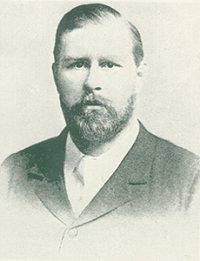
Bram Stoker (1847-1912)

Dracula’s Guest ~ A Short Story by Bram Stoker

When we started for our drive the sun was shining brightly on Munich, and the air was full of the joyousness of early summer. Just as we were about to depart, Herr Delbruck (the maitre d’hotel of the Quatre Saisons, where I was staying) came down bareheaded to the carriage and, after wishing me a pleasant drive, said to the coachman, still holding his hand on the handle of the carriage door, “Remember you are back by nightfall. The sky looks bright but there is a shiver in the north wind that says there may be a sudden storm. But I am sure you will not be late.” Here he smiled and added, “for you know what night it is.”

Johann answered with an emphatic, “Ja, mein Herr,” and, touching his hat, drove off quickly. When we had cleared the town, I said, after signalling to him to stop:

“Tell me, Johann, what is tonight?”

He crossed himself, as he answered laconically: “Walpurgis nacht.” Then he took out his watch, a great, old-fashioned German silver thing as big as a turnip and looked at it, with his eyebrows gathered together and a little impatient shrug of his shoulders. I realized that this was his way of respectfully protesting against the unnecessary delay and sank back in the carriage, merely motioning him to proceed. He started off rapidly, as if to make up for lost time. Every now and then the horses seemed to throw up their heads and sniff the air suspiciously. On such occasions I often looked round in alarm. The road was pretty bleak, for we were traversing a sort of high windswept plateau. As we drove, I saw a road that looked but little used and which seemed to dip through a little winding valley. It looked so inviting that, even at the risk of offending him, I called Johann to stop—and when he had pulled up, I told him I would like to drive down that road. He made all sorts of excuses and frequently crossed himself as he spoke. This somewhat piqued my curiosity, so I asked him various questions. He answered fencingly and repeatedly looked at his watch in protest.

Finally I said, “Well, Johann, I want to go down this road. I shall not ask you to come unless you like; but tell me why you do not like to go, that is all I ask.” For answer he seemed to throw himself off the box, so quickly did he reach the ground. Then he stretched out his hands appealingly to me and implored me not to go. There was just enough of English mixed with the German for me to understand the drift of his talk. He seemed always just about to tell me something – the very idea of which evidently frightened him; but each time he pulled himself up saying, “Walpurgis nacht!”

I tried to argue with him, but it was difficult to argue with a man when I did not know his language. The advantage certainly rested with him, for although he began to speak in English, of a very crude and broken kind, he always got excited and broke into his native tongue – and every time he did so, he looked at his watch. Then the horses became restless and sniffed the air. At this he grew very pale, and, looking around in a frightened way, he suddenly jumped forward, took them by the bridles, and led them on some twenty feet. I followed and asked why he had done this. For an answer he crossed himself, pointed to the spot we had left, and drew his carriage in the direction of the other road, indicating a cross, and said, first in German, then in English, “Buried him – him what killed themselves.”

I remembered the old custom of burying suicides at cross roads: “Ah! I see, a suicide. How interesting!” But for the life of me I could not make out why the horses were frightened.

Whilst we were talking, we heard a sort of sound between a yelp and a bark. It was far away; but the horses got very restless, and it took Johann all his time to quiet them. He was pale and said, “It sounds like a wolf—but yet there are no wolves here now.”

“No?” I said, questioning him. “Isn’t it long since the wolves were so near the city?”

“Long, long,” he answered, “in the spring and summer; but with the snow the wolves have been here not so long.”

Whilst he was petting the horses and trying to quiet them, dark clouds drifted rapidly across the sky. The sunshine passed away, and a breath of cold wind seemed to drift over us. It was only a breath, however, and more of a warning than a fact, for the sun came out brightly again.

Johann looked under his lifted hand at the horizon and said, “The storm of snow, he comes before long time.” Then he looked at his watch again, and, straightway holding his reins firmly—for the horses were still pawing the ground restlessly and shaking their heads—he climbed to his box as though the time had come for proceeding on our journey.

I felt a little obstinate and did not at once get into the carriage. “Tell me,” I said, “about this place where the road leads,” and I pointed down.

Again he crossed himself and mumbled a prayer before he answered, “It is unholy.”

“What is unholy?” I enquired.

“The village.”

“Then there is a village?”

“No, no. No one lives there hundreds of years.”

My curiosity was piqued, “But you said there was a village.”

“There was.”

“Where is it now?”

Whereupon he burst out into a long story in German and English, so mixed up that I could not quite understand exactly what he said. Roughly I gathered that long ago, hundreds of years, men had died there and been buried in their graves; but sounds were heard under the clay, and when the graves were opened, men and women were found rosy with life and their mouths red with blood. And so, in haste to save their lives (aye, and their souls!—and here he crossed himself) those who were left fled away to other places, where the living lived and the dead were dead and not—not something. He was evidently afraid to speak the last words. As he proceeded with his narration, he grew more and more excited. It seemed as if his imagination had got hold of him, and he ended in a perfect paroxysm of fear – white-faced, perspiring, trembling, and looking round him as if expecting that some dreadful presence would manifest itself there in the bright sunshine on the open plain.

Finally, in an agony of desperation, he cried, “Walpurgis nacht!” and pointed to the carriage for me to get in.

All my English blood rose at this, and standing back I said, “You are afraid, Johann—you are afraid. Go home, I shall return alone, the walk will do me good.” The carriage door was open. I took from the seat my oak walking stick—which I always carry on my holiday excursions—and  closed the door, pointing back to Munich, and said, “Go home, Johann—Walpurgis nacht doesn’t concern Englishmen.”

The horses were now more restive than ever, and Johann was trying to hold them in, while excitedly imploring me not to do anything so foolish. I pitied the poor fellow, he was so deeply in earnest; but all the same I could not help laughing. His English was quite gone now. In his anxiety he had forgot ten that his only means of making me understand was to talk my language, so he jabbered away in his native German. It began to be a little tedious. After giving the direction, “Home!” I turned to go down the cross road into the valley.

With a despairing gesture, Johann turned his horses towards Munich. I leaned on my stick and looked after him. He went slowly along the road for a while, then there came over the crest of the hill a man tall and thin. I could see so much in the distance. When he drew near the horses, they began to jump and kick about, then to scream with terror. Johann could not hold them in; they bolted down the road, running away madly. I watched them out of sight, then looked for the stranger; but I found that he, too, was gone.

With a light heart I turned down the side road through the deepening valley to which Johann had objected. There was not the slightest reason, that I could see, for his objection; and I daresay I tramped for a couple of hours without thinking of time or distance and certainly without seeing a person or a house. So far as the place was concerned, it was desolation itself. But I did not notice this particularly till, on turning a bend in the road, I came upon a scattered fringe of wood; then I recognized that I had been impressed unconsciously by the desolation of the region through which I had passed.

I sat down to rest myself and began to look around. It struck me that it was considerably colder than it had been at the commencement of my walk—a sort of sighing sound seemed to be around me with, now and then, high overhead, a sort of muffled roar. Looking upwards I noticed that great thick clouds were drafting rapidly across the sky from north to south at a great height. There were signs of a coming storm in some lofty stratum of the air. I was a little chilly, and, thinking that it was the sitting still after the exercise of walking, I resumed my journey.

The ground I passed over was now much more picturesque. There were no striking objects that the eye might single out, but in all there was a charm of beauty. I took little heed of time, and it was only when the deepening twilight forced it self upon me that I began to think of how I should find my way home. The air was cold, and the drifting of clouds high overhead was more marked. They were accompanied by a sort of far away rushing sound, through which seemed to come at intervals that mysterious cry which the driver had said came from a wolf. For a while I hesitated. I had said I would see the deserted village, so on I went and presently came on a wide stretch of open country, shut in by hills all around. Their sides were covered with trees which spread down to the plain, dotting in clumps the gentler slopes and hollows which showed here and there. I followed with my eye the winding of the road and saw that it curved close to one of the densest of these clumps and was lost behind it.

As I looked there came a cold shiver in the air, and the snow began to fall. I thought of the miles and miles of bleak country I had passed, and then hurried on to seek shelter of the wood in front. Darker and darker grew the sky, and faster and heavier fell the snow, till the earth before and around me was a glistening white carpet the further edge of which was lost in misty vagueness. The road was here but crude, and when on the level its boundaries were not so marked as when it passed through the cuttings; and in a little while I found that I must have strayed from it, for I missed underfoot the hard surface, and my feet sank deeper in the grass and moss. Then the wind grew stronger and blew with ever increasing force, till I was fain to run before it. The air became icy- cold, and in spite of my exercise I began to suffer. The snow was now falling so thickly and whirling around me in such rapid eddies that I could hardly keep my eyes open. Every now and then the heavens were torn asunder by vivid lightning, and in the flashes I could see ahead of me a great mass of trees, chiefly yew and cypress all heavily coated with snow.

I was soon amongst the shelter of the trees, and there in comparative silence I could hear the rush of the wind high overhead. Presently the blackness of the storm had become merged in the darkness of the night. By-and-by the storm seemed to be passing away, it now only came in fierce puffs or blasts. At such moments the weird sound of the wolf appeared to be echoed by many similar sounds around me.

Now and again, through the black mass of drifting cloud, came a straggling ray of moonlight which lit up the expanse and showed me that I was at the edge of a dense mass of cypress and yew trees. As the snow had ceased to fall, I walked out from the shelter and began to investigate more closely. It appeared to me that, amongst so many old foundations as I had passed, there might be still standing a house in which, though in ruins, I could find some sort of shelter for a while. As I skirted the edge of the copse, I found that a low wall encircled it, and following this I presently found an opening. Here the cypresses formed an alley leading up to a square mass of some kind of building. Just as I caught sight of this, however, the drifting clouds obscured the moon, and I passed up the path in darkness. The wind must have grown colder, for I felt myself shiver as I walked; but there was hope of shelter, and I groped my way blindly on.

I stopped, for there was a sudden stillness. The storm had passed; and, perhaps in sympathy with nature’s silence, my heart seemed to cease to beat. But this was only momentarily; for suddenly the moonlight broke through the clouds showing me that I was in a graveyard and that the square object before me was a great massive tomb of marble, as white as the snow that lay on and all around it. With the moonlight there came a fierce sigh of the storm which appeared to resume its course with a long, low howl, as of many dogs or wolves. I was awed and shocked, and I felt the cold perceptibly grow upon me till it seemed to grip me by the heart. Then while the flood of moonlight still fell on the marble tomb, the storm gave further evidence of renewing, as though it were returning on its track. Impelled by some sort of fascination, I approached the sepulchre to see what it was and why such a thing stood alone in such a place. I walked around it and read, over the Doric door, in German –

COUNTESS DOLINGEN OF GRATZ
IN STYRIA
SOUGHT AND FOUND DEATH
1801

On the top of the tomb, seemingly driven through the solid marble–for the structure was composed of a few vast blocks of stone–was a great iron spike or stake. On going to the back I saw, graven in great Russian letters:

“The dead travel fast.”

There was something so weird and uncanny about the whole thing that it gave me a turn and made me feel quite faint. I began to wish, for the first time, that I had taken Johann’s advice. Here a thought struck me, which came under almost mysterious circumstances and with a terrible shock. This was Walpurgis Night!

Walpurgis Night was when, according to the belief of mill ions of people, the devil was abroad – when the graves were opened and the dead came forth and walked. When all evil things of earth and air and water held revel. This very place the driver had specially shunned. This was the depopulated village of centuries ago. This was where the suicide lay; and this was the place where I was alone–unmanned, shivering with cold in a shroud of snow with a wild storm gathering again up on me! It took all my philosophy, all the religion I had been taught, all my courage, not to collapse in a paroxysm of fright.

And now a perfect tornado burst upon me. The ground shook as though thousands of horses thundered across it; and this time the storm bore on its icy wings, not snow, but great hailstones which drove with such violence that they might have come from the thongs of Balearic slingers – hailstones that beat down leaf and branch and made the shelter of the cypresses of no more avail than though their stems were standing corn. At the first I had rushed to the nearest tree; but I was soon fain to leave it and seek the only spot that seemed to afford refuge, the deep Doric doorway of the marble tomb. There, crouching against the massive bronze door, I gained a certain amount of protection from the beating of the hail stones, for now they only drove against me as they ricocheted from the ground and the side of the marble.

As I leaned against the door, it moved slightly and opened inwards. The shelter of even a tomb was welcome in that pitiless tempest and I was about to enter it when there came a flash of forked lightning that lit up the whole expanse of the heavens. In the instant, as I am a living man, I saw, as my eyes turned into the darkness of the tomb, a beautiful woman with rounded cheeks and red lips, seemingly sleeping on a bier. As the thunder broke overhead, I was grasped as by the hand of a giant and hurled out into the storm. The whole thing was so sudden that, before I could realize the shock, moral as well as physical, I found the hailstones beating me down. At the same time I had a strange, dominating feeling that I was not alone. I looked towards the tomb. Just then there came another blinding flash which seemed to strike the iron stake that surmounted the tomb and to pour through to the earth, blasting and crumbling the marble, as in a burst of flame. The dead woman rose for a moment of agony while she was lapped in the flame, and her bitter scream of pain was drowned in the thundercrash. The last thing I heard was this mingling of dreadful sound, as again I was seized in the giant grasp and dragged away, while the hailstones beat on me and the air around seemed reverberant with the howling of wolves. The last sight that I remembered was a vague, white, moving mass, as if all the graves around me had sent out the phantoms of their sheeted dead, and that they were closing in on me through the white cloudiness of the driving hail.

Gradually there came a sort of vague beginning of consciousness, then a sense of weariness that was dreadful. For a time I remembered nothing, but slowly my senses returned. My feet seemed positively racked with pain, yet I could not move them. They seemed to be numbed. There was an icy feeling at the back of my neck and all down my spine, and my ears, like my feet, were dead yet in torment; but there was in my breast a sense of warmth which was by comparison delicious. It was as a nightmare—a physical nightmare, if one may use such an expression; for some heavy weight on my chest made it difficult for me to breathe.

This period of semi-lethargy seemed to remain a long time, and as it faded away I must have slept or swooned. Then came a sort of loathing, like the first stage of seasickness, and a wild desire to be free of something—I knew not what. A vast stillness enveloped me, as though all the world were asleep or dead—only broken by the low panting as of some animal close to me. I felt a warm rasping at my throat, then came a consciousness of the awful truth which chilled me to the heart and sent the blood surging up through my brain. Some great animal was lying on me and now licking my throat. I feared to stir, for some instinct of prudence bade me lie still; but the brute seemed to realize that there was now some change in me, for it raised its head. Through my eyelashes I saw above me the two great flaming eyes of a gigantic wolf. Its sharp white teeth gleamed in the gaping red mouth, and I could feel its hot breath fierce and acrid upon me.

For another spell of time I remembered no more. Then I be came conscious of a low growl, followed by a yelp, renewed again and again. Then seemingly very far away, I heard a “Holloa! holloa!” as of many voices calling in unison. Cautiously I raised my head and looked in the direction whence the sound came, but the cemetery blocked my view. The wolf still continued to yelp in a strange way, and a red glare began to move round the grove of cypresses, as though following the sound. As the voices drew closer, the wolf yelped faster and louder. I feared to make either sound or motion. Nearer came the red glow over the white pall which stretched into the darkness a round me. Then all at once from beyond the trees there came at a trot a troop of horsemen bearing torches. The wolf rose from my breast and made for the cemetery. I saw one of the horsemen (soldiers by their caps and their long military cloaks) raise his carbine and take aim. A companion knocked up his arm, and I heard the ball whiz over my head. He had evidently taken my body for that of the wolf. Another sighted the animal as it slunk away, and a shot followed. Then, at a gallop, the troop rode forward—some towards me, others following the wolf as it disappeared amongst the snow-clad cypresses.

As they drew nearer I tried to move but was powerless, although I could see and hear all that went on around me. Two or three of the soldiers jumped from their horses and knelt beside me. One of them raised my head and placed his hand over my heart.

“Good news, comrades!” he cried. “His heart still beats!”

Then some brandy was poured down my throat; it put vigor into me, and I was able to open my eyes fully and look around. Lights and shadows were moving among the trees, and I heard men call to one another. They drew together, uttering frightened exclamations; and the lights flashed as the others came pouring out of the cemetery pell-mell, like men possessed. When the further ones came close to us, those who were around me asked them eagerly, “Well, have you found him?”

The reply rang out hurriedly, “No! no! Come away quick—quick! This is no place to stay, and on this of all nights!”

“What was it?” was the question, asked in all manner of keys. The answer came variously and all indefinitely as though the men were moved by some common impulse to speak yet were restrained by some common fear from giving their thoughts.

“It – it – indeed!” gibbered one, whose wits had plainly given out for the moment.

“A wolf—and yet not a wolf!” another put in shudderingly.

“No use trying for him without the sacred bullet,” a third remarked in a more ordinary manner.

“Serve us right for coming out on this night! Truly we have earned our thousand marks!” were the ejaculations of a fourth.

“There was blood on the broken marble,” another said after a pause, “the lightning never brought that there. And for him—is he safe? Look at his throat! See comrades, the wolf has been lying on him and keeping his blood warm.”

The officer looked at my throat and replied, “He is all right, the skin is not pierced. What does it all mean? We should never have found him but for the yelping of the wolf.”

“What became of it?” asked the man who was holding up my head and who seemed the least panic-stricken of the party, for his hands were steady and without tremor. On his sleeve was the chevron of a petty officer.

“It went home,” answered the man, whose long face was pallid and who actually shook with terror as he glanced around him fearfully. “There are graves enough there in which it may lie. Come, comrades—come quickly! Let us leave this cursed spot.”

The officer raised me to a sitting posture, as he uttered a word of command; then several men placed me upon a horse. He sprang to the saddle behind me, took me in his arms, gave the word to advance; and, turning our faces away from the cypresses, we rode away in swift military order.

As yet my tongue refused its office, and I was perforce silent. I must have fallen asleep; for the next thing I remembered was finding myself standing up, supported by a soldier on each side of me. It was almost broad daylight, and to the north a red streak of sunlight was reflected like a path of blood over the waste of snow. The officer was telling the men to say nothing of what they had seen, except that they found an English stranger, guarded by a large dog.

“Dog! that was no dog,” cut in the man who had exhibited such fear. “I think I know a wolf when I see one.”

The young officer answered calmly, “I said a dog.”

“Dog!” reiterated the other ironically. It was evident that his courage was rising with the sun; and, pointing to me, he said, “Look at his throat. Is that the work of a dog, master?”

Instinctively I raised my hand to my throat, and as I touched it I cried out in pain. The men crowded round to look, some stooping down from their saddles; and again there came the calm voice of the young officer, “A dog, as I said. If aught else were said we should only be laughed at.”

I was then mounted behind a trooper, and we rode on into the suburbs of Munich. Here we came across a stray carriage into which I was lifted, and it was driven off to the Quatre Saisons—the young officer accompanying me, whilst a trooper followed with his horse, and the others rode off to their barracks.

When we arrived, Herr Delbruck rushed so quickly down the steps to meet me, that it was apparent he had been watching within. Taking me by both hands he solicitously led me in. The officer saluted me and was turning to withdraw, when I recognized his purpose and insisted that he should come to my rooms. Over a glass of wine I warmly thanked him and his brave comrades for saving me. He replied simply that he was more than glad, and that Herr Delbruck had at the first taken steps to make all the searching party pleased; at which ambiguous utterance the maitre d’hotel smiled, while the officer plead duty and withdrew.

“But Herr Delbruck,” I enquired, “how and why was it that the soldiers searched for me?”

He shrugged his shoulders, as if in depreciation of his own deed, as he replied, “I was so fortunate as to obtain leave from the commander of the regiment in which I serve, to ask for volunteers.”

“But how did you know I was lost?” I asked.

“The driver came hither with the remains of his carriage, which had been upset when the horses ran away.”

“But surely you would not send a search party of soldiers merely on this account?”

“Oh, no!” he answered, “but even before the coachman arrived, I had this telegram from the Boyar whose guest you are,” and he took from his pocket a telegram which he handed to me, and I read:

Be careful of my guest – his safety is most precious to me. Should aught happen to him, or if he be missed, spare nothing to find him and ensure his safety. He is English and therefore adventurous. There are often dangers from snow and wolves and night. Lose not a moment if you suspect harm to him. I answer your zeal with my fortune.
– Dracula.

As I held the telegram in my hand, the room seemed to whirl around me, and if the attentive maitre d’hotel had not caught me, I think I should have fallen. There was something so strange in all this, something so weird and impossible to imagine, that there grew on me a sense of my being in some way the sport of opposite forces—the mere vague idea of which seemed in a way to paralyze me. I was certainly under some form of mysterious protection. From a distant country had come, in the very nick of time, a message that took me out of the danger of the snow sleep and the jaws of the wolf.
Threes

Threes ~ A Short Story by Allen Kopp

It was late fall, getting close to Thanksgiving. I was eleven and in the sixth grade. I came down with a terrible cold that settled in my chest. I had a rattling cough and a fever. My chest hurt and my swallowing mechanism wasn’t right. My mother had taken a sliding fall on the street and was in the hospital with a brain concussion. She was out of commission until further notice. Daddy, who ordinarily didn’t like being bothered with kid problems, was in charge in my mother’s absence. He never understood me, even at the best of times. He thought I was faking it even when I wasn’t. I was too young to stay at home by myself all day long, the thinking went, so my cold was ignored (by him, anyway) and I was sent packing off to school.

Miss Smalls noticed right away there was something wrong with me. I couldn’t stop coughing. I could hardly hold my head up. She held her hand to my forehead and then walked me up to the nurse’s office.

Miss Millie Deal, the school nurse, looked in my eyes and ears and down my throat. She put a thermometer under my tongue and then unbuttoned my shirt and listened to my heart. “You’ve got a lot of congestion in the lungs,” she said. (No fooling.) “You should have stayed at home today and rested.”

“There’s nobody there,” I said around the little glass tube in my mouth.

“Are you afraid to stay by yourself?”

“No. It wasn’t my idea.”

She took the thermometer out of my mouth and turned toward the window to get a better look. “A hundred and two,” she said. “If left untreated, your condition could be dangerous.”

“What?”

“I think you might have the start of pneumonia. You feel rotten, don’t you?”

“Yes.”

“Any vomiting or cramps?”

“No.”

“You’re not coughing up blood, are you?”

“No,” I said anxiously. “Will I?”

There was a small, metal hospital bed—more like a cot, really—against the wall. It looked like it might have been used in World War I or before. She pulled down the covers and told me to take off my shoes and get into the bed. After I had done so, she took my glasses from me and covered me up.

“Just stay there,” she said, “until I tell you to get up.”

The sheets smelled liked peppermint. The pillow was soft and fit my head perfectly. I turned my face to the wall and covered up my head. By the time Miss Deal came back from telling Miss Smalls she was keeping me in her office “for observation,” I was sound asleep.

I slept all morning and through lunch. When the lunch-is-over bell rang, I woke up briefly and then went back to sleep. When school was over for the day, Miss Deal woke me up and told me it was time to go home. Before I left she handed me a note she had written for me to give to daddy: Your son needs to see a doctor before he returns to school.

Daddy wasn’t happy about the note, but he didn’t do more than the usual amount of crabbing. After a dinner (that I didn’t want) of fish sticks and macaroni and cheese, he made me go straight to bed without any TV. A little shit as sick as I was, he said, needed to be in bed.

In the morning he took me to Dr. Vermilion’s office on his way to work. He sat there beside me silently, looking at a magazine, while I waited my turn to see the doctor. When my name was called, he didn’t go in with me, as my mother would have.

I had been going to Dr. Vermilion all my life and I wasn’t too scared of him. He was old but he knew how to laugh and joke around. The thing I hated most about going to the doctor was having to take off my clothes. This time he let me keep on my undershirt and my pants while he examined me, so already I felt better.

He used a tongue depressor to look as far down my throat as he could; listened to me front and back with the stethoscope. My temperature was still about a hundred and two.

“What girls have you been kissing?” he asked.

“None!” I said emphatically.

“I think you’ve picked up a germ somewhere.”

“It wasn’t from any girl.”

“How do you know that?”

I was trying to think of an answer but he laughed then, so I knew he was just playing with me.

He gave me a shot, a bottle of pills, and cherry cough syrup. He said I was to stay home from school for the rest of the week and stay in bed as much of the time as I could. Drink plenty of fluids, stay warm and dry, avoid chills. If I wasn’t better in four or five days, he would do an x-ray of my lungs. The part I liked best was staying home from school.

When I told daddy what the doctor had said, he grabbed me by the wrist and pulled me out to the car before I had a chance to put on my coat. I had already screwed up his entire morning, he said, but, by god, he had no intention of letting the entire day go to waste.

He drove me to grandma’s house and dropped me off and sped away in the car. I wasn’t sure if grandma was even at home, but when I rang the bell she opened the door with a smile. I told her what had happened, that I had been to see the doctor, but she already knew somehow.

She put me to bed in her big front bedroom that was only used for overnight company. She put her portable TV at the foot of the bed and turned it on for me. Then she went into another part of the house and told me to just give her a holler if I needed anything.

I wasn’t used to being able to watch anything I wanted on TV with no grownups around, especially during the day. I watched cartoons, game shows, and a soap opera that I thought was stupid. Then it was time for lunch. Grandma fixed me a hamburger and I went into the kitchen and sat at the table and ate it. After lunch I went back to bed and took a two-hour nap and then I watched TV some more. The life of the invalid suited me fine.

When it was just starting to get dark outside, grandma came into the bedroom and woke me up. I started to get up, figuring daddy had come to pick me up to take me home, but she told me to stay put. She would call me when it was time for dinner.

I learned later that daddy had had an accident at work. He was hurrying to get something done and fell off a ladder and broke his leg in two places. They had operated on him and were going to keep him in the hospital for a few days. I would be staying at grandma’s for the time being. I told her I was old enough to stay by myself, but she swatted me playfully with the newspaper and told me not to even think such a thing. If anything happened to me in that house alone, she would never be able to forgive herself.

Bad luck always comes in threes, she said. She had seen it happen too many times. After my mother’s brain concussion, daddy’s broken leg was bad luck number two. Number three was just waiting to happen and when it happened it would be sure to happen to me.

Copyright © 2012 by Allen Kopp

At the River

At the River ~ A Short Story by Allen Kopp

(Published in The Sim Review.)

All day long he had nothing to do. His legs didn’t work so well anymore; neither did his eyes or his ears. He slept at night and got up in the morning and there was somebody always there, sometimes a stranger he had never seen before, to help him get himself into the bathroom and dressed and downstairs to breakfast, where he sat with thirty or forty others just like him, making a mess of his oatmeal and eggs and not saying anything. After breakfast somebody always sat him down in a comfortable spot in the solarium or the TV room and he just sat there, usually all day, until they came and got him for the next meal. After that it was time to get into bed and sleep again and wake up again and get dressed and go down for breakfast and do the same thing all over again; again and again as if that was what he was put on the earth for: a lot of nothing that seemed to have no end. Whoever said life was short?

He wondered what happened to the people he used to know. Didn’t he have a wife and a couple of children? Didn’t he have at one time some grandparents, uncles and aunts, a mother and father, a sister and a couple of brothers? What happened to all of them? Did he just dream them up? Oh, yes, that’s right: one after the other they all died. He came to see life as a kind of lottery: the winners went on ahead and the losers had no other choice but to stay behind. In the end there would be one loser left, and he was it. When they were children and they played tag or kick-the-can or hide-and-seek, somebody always had to be “it.” He didn’t like being “it” then, and he didn’t like it now.

Since he had no current life to speak of, he dwelt mostly in the past. Once, when he was eight years old, he and his whole family—including grandparents, aunts, uncles and cousins—went on a camping trip to a river. The men went fishing while the women went in swimming. He had never fished and wasn’t interested in learning, so he stayed with the women. His mother told him he didn’t need to be embarrassed about staying with the women, but somebody always teased him about it and it hurt him enough that he thought he should probably learn to fish so it wouldn’t happen again. His mother took his swimming trunks out of her suitcase and gave them to him and told him to go into the tent and take everything off and put on the trunks and come back out as soon as he could because they were all waiting to go in swimming.

After he put on the trunks, he was ashamed of the way he looked. His arms and legs were a pale yellow color and as thin as sticks. His chest was ugly and not at all manly. His stomach stuck out farther than he would have liked. He imagined that he looked like a monkey without any hair, a shaved monkey. He couldn’t let anybody see him almost naked with just a strip of red cloth around his middle. He stayed in the tent until his mother came and pulled him out, looking plenty silly herself in her green swimsuit and matching bathing cap that wrinkled the skin on her forehead. When he insisted that he had to stay in the tent because he felt sick, she slapped at him and told him she was in no mood for any of his nonsense. He slapped her back on the arm, which later he regretted. He could tell that she wasn’t quite herself; her tongue seemed thick in her mouth and her movements were jerky; she had been drinking. She dragged him out into the sunlight and held him to her hip as if she thought he might get away if she let him go.

Nobody looked at him in his silly red swimming trunks so he started to relax. He went into the water up to his elbows and then got back out and sat on a towel in the shade on the bank. The women were splashing around in the middle of the river, talking and laughing. The older kids were playing in a spot farther off, screaming and trying to hold each other under. He wanted no part of any of them.

He realized after a while that he couldn’t just sit there all day while everybody else was having fun, so he went back to the water. He waded in slowly until he was up to his chest and then, taking a quick look over his shoulder, began walking downriver. He walked until he was out of sight and hearing of the others.

He went farther and farther, staying in the middle of the river. The farther he went the deeper the water became. It was up to his breastbone and then past his shoulders to his neck. When he looked down all he saw was green-black murkiness; he could no longer see his feet, but still he kept going.

Every couple of feet he advanced, the water came closer to swallowing him up. It was up to his chin and then to just beneath his mouth. If he stepped off a drop-off that he couldn’t see, he would go under. He knew the drop-off was there, up ahead, waiting for him; he could see it without seeing it. All he had to do was keep going and he would find it. He would drown because he had never learned to swim. And even if he had had a chance to yell before he drowned, nobody would hear him because they were all too far away. He knew, even at his young age, that he was flirting with death.

As he stood in the water up to his mouth—unable to swim if he should go under—he looked over at the river bank; at the sky and the wild foliage that began on the other side of the trees. He was watching some birds doing acrobatic loops in the air when he noticed a smell in the air, a smell that he realized had been hanging over him all day. It seemed to him to be the smell of death. He thought for a moment that it was his own death he had been smelling, but as he turned around and began walking back upriver he knew it was somebody else’s.

When he got back to camp, everybody who had been in the water earlier was now out. His mother, as he was soon to find out, had had an argument with her younger sister and swam off by herself to another part of the river. Everybody expected her to come back in a few minutes, after she cooled off, but more than an hour had gone by and nobody had seen her. They were starting to get a little worried.

After another hour or two, they were certain something bad had happened, or she would have come back on her own. Somebody drove to the nearest phone and called for help. The police came in due time and, after they had asked their myriads of questions, conducted a search of the river. They found her body near some bluffs where it had been swept by the current and become lodged against some rocks. The green bathing cap was what they saw that led them to her.

His mother’s drowning was the terrible event of his life, the one event by which all other events were measured; the event that changed everything. It was his primer in death—the death that prepared him for all the others, including his own.

Not a day—and barely a waking hour—had gone by in his life that he didn’t think of her. She was and always would be the unknowable thirty-three-year-old wife and mother of four and he, the frightened eight-year-old boy clinging to her memory. He had—and always would have—unanswered questions that only she could answer.

After dinner he had a sinking spell; he blacked out on the way to his room and fell in the hallway. The nurses got him to his room and into bed and called his doctor.

He had been dozing in the darkened room when he opened his eyes and saw a nurse he had never seen before standing beside his bed. He smiled at her and she smiled back.

“I knew you would come,” he said.

“Of course I came.”

“Where’s the green bathing cap?”

“This is my day not to wear it.”

“You don’t look a day older.”

“That’s the way it is. You look much older.”

“Isn’t it awful?”

“Don’t talk now. The doctor is on his way.”

She straightened the blanket around his shoulders and went to the window and pulled back the curtain and looked out. “It’s starting to rain,” she said.

“You won’t leave again?” he asked.

“No,” she said. “I’ll be right here.”

Copyright © 2012 by Allen Kopp

Phiz

 Phiz ~ A Short Story by Allen Kopp 

(Published in Bewildering Stories.)

I’m not allowed any visitors. I said my goodbyes to my parents a week ago on my eighteenth birthday. My mother cried and my father was without emotion. They were told I was to be made one with the essence of the Nonpareil, which means I’ll be gassed and my body placed in a thick block of cement that will be used in one of the public works projects. Maybe someday the cement containing my body will crumble and my bones or whatever is left of me will again be exposed to the light of day.

I’m in a little room somewhere but I’m not sure where I am. I have nothing to do but wait for the end. A utility robot brings me food three times a day but I don’t eat much. Since I have no future, I try not to think about anything and try not to feel anything. I have a little window up high and I spend most of the daylight hours looking at the blue sky, at the tops of the trees off in the distance and at the birds flying from tree to tree. Occasionally I see an airship moving ponderously across the sky and wish I was on it. At night I love looking at the stars and sometimes I catch a glimpse of the moon.

How I came to be here is a long story. I was the only child of my parents and a disappointment to them. From the very first, I did not take well to the teachings of the Nonpareil. I was rebellious and moody and I refused to march in lock-step with other children my age. I was in constant trouble at school until my father was told to make some other arrangement for my education. I was placed in another school and then a succession of schools after that.

My parents were determined to find out what was wrong with me. They took me to a series of doctors who subjected me to every physical and psychological test known to man. After a period of time, the doctors found that I had no mental or physical impairments that would keep me from conforming the way I was supposed to conform. I was a healthy boy and there was no reason I couldn’t be like the other boys my age: a wholesome example of obedience and loyalty to the Nonpareil and all he espoused. There was no reason I wouldn’t live to pass on my seed of obedience to the next generation. The doctors advised more rigorous mind control and an aggressive drug regimen to be administered by the state.

My father knew that, in spite of everything that could be done to change me, I would never be what he wanted me to be. When I was ten years old, I overheard a conversation he had with my mother late at night in which he stated that he had given up on me and was ready to see me made one with the essence of the Nonpareil before I caused him further trouble and heartache. My mother pleaded with him and begged him to give me another chance. It was only after she threatened to leave him, disgracing him, that he agreed.

It was when I was fifteen years old that my rebellion took shape and developed a purpose. I was introduced at that time to one of the underground “secret societies” that detested mind control and conformity and advocated the overthrow of the Nonpareil and a return to a free and democratic society and form of government. The secret society was a place of free thought and free speech where the forbidden ways of the Old Time were revered. I knew finally what it was I had always longed for.

I discovered a whole new world in the secret society. I was made to feel welcome, for the first time in my life, with a group of people who thought as I thought. I was surprised at the many people of all ages and backgrounds who belonged. We studied the ways of the Old Time and longed for the day when we would be free. Many of us believed the overthrow of the Nonpareil was only an airy dream that would never happen, while others were sure the day of deliverance was close at hand.

Membership in the secret society was, of course, a serious offense to the Nonpareil and was strictly prohibited. Cells of secret societies were constantly being flushed out (many times from the tips of anonymous paid spies) and members gassed (or, made one with the essence of the Nonpareil). These events were always highly publicized to make examples of the members and to discourage other miscreants from wanting to join.

Over the years I had accumulated some books and texts on the ways of the Old Time. I had traded them with other members of the secret society and had in some cases bought them on the black market that operated on the fringes of the law. I kept them locked in a foot locker under my bed. When I was alone in my room at night, I would take them out and read them and study the pictures and dream about what life in the Old Time was like—and what life might someday be like again. My mother discovered these books—not by accident but by prying open the foot locker with a crowbar—and that’s when things went really bad for me. She informed my father that I was in possession of forbidden materials; he called the police and I was arrested that night. I was incarcerated in a correctional facility where I was forced to submit to electroshock therapy that was supposed to “reorder” my thinking.

I was kept locked in a tiny white cell (white was thought to be purifying and cleansing) for over a year. During that time, I saw only utility robots and had no contact with anyone. My mother was allowed to speak to me on the picture phone for a few minutes once a month, during which time she cried and attempted to get me to reform, to confess to all my wrongdoings and apologize for all the trouble I had caused. My father refused to expend further effort on my behalf.

During all this time, of course, no one had been able to “break me.” I remained true to what I had always been and that was the only thing I had. No matter what they did to me or in what way they threatened me, I was not going to change and become the boy they wanted me to be. Not now. Not ever.

After I still showed no signs of “improvement,” my father requested (he had the legal right to do so) that I be made one with the essence of the Nonpareil, and the court, after reviewing my case, complied with his request. So, I was brought here to wait for the end of my life. My parents were told I would be here for three or four days—a week at the most—but that I would be treated well and fed regularly (like an animal locked in a cage), no matter how long it took.

I’ve been here now for a week and two days. I have no calendar and no clock, but I’m still able to keep track of how many days have gone by. Not that it matters much. Every day I think will be my last. Every time I hear the door being opened, I think it will be them coming to get me. I’ve been told it will be easier for me if I don’t resist. When the time comes, I’m going to be cool and calm; I’m going to show them I don’t feel anything at all. They can kill me but they can’t hurt me. I’ve rehearsed it in my mind a thousand times.

On my ninth night in the little room—it must have been two in the morning—I woke up to the moonlight streaming through the window. I was surprised at how bright the moonlight was but I thought no more about it and turned over to go back to sleep. That’s when I realized it was not the moonlight that woke me up—but a sound—and someone was coming quietly into the room.

I propped myself on my elbows in the bed, thinking my time had come. I saw a dark figure coming toward me and when I started to get out of the bed he held up his hand.

“Don’t make a sound,” he said.

“What is it?” I asked sleepily. “Who are you?”

“Get out of the bed and put these on,” he said, handing me a small bundle of clothing.

I did as I was told and discovered that what he handed me was a black tunic, a pair of soft black trousers and a pair of black leather boots.

“What is this about?” I asked.

“Don’t ask questions,” he said. “Just do as I tell you if you want to live past tonight.”

After I was dressed, I could see his face better in the dim light. I had never seen him before.

“Who are you?” I asked again.

“It’s better if you don’t know who I am,” he said. “And anyway, it doesn’t matter. I’m an interested party who knows what is about to happen to you.”

“What are you talking about?”

“Tonight is your last night. They would have come for you in about an hour or so. I’m offering you a chance to escape if you just take it.”

“Why would you want me to escape? Who are you?”

“Be quiet and just listen to what I’m going to say.”

I sat down on the bed and laced the boots while he continued to stand.

“I’ve sent the two guards on a small errand that will take them five minutes or less,” he said. “That’s all the time you have to escape.”

“You’re letting me escape?” I asked.

“I’m going to walk away from this room without re-locking the door. One minute after I’ve left, you may go out the door and to your left down the hallway to a flight of stairs. Go down the stairs and at the bottom of the stairs go to your right down the long hallway. At the end of the hallway is a door. You may leave by that door.”

“What then?”

“Walk away from the building for about a quarter of a mile until you come to a gravel road. Turn left on that road and stay on it until you come to a paved road called the Hyphen Road. Start walking on it toward the east.”

“How do I know this is not a trick?”

“You don’t, but it’s your only chance. Stay on the Hyphen Road east for five miles, at which time you will see an airship docked at a small airfield. The airship will leave exactly at dawn and it won’t wait for you if you’re not there.”

“Why would anybody take me on board? An escaped miscreant?”

“Tell them your name is Lloyd David and that Mr. Thackeray sent you. Can you remember that?”

“Yes.”

“Can you walk five miles without stopping?”

“I haven’t ever tried.”

He gave me an identification tag to show in case I was stopped along the way, and then, without speaking another word, he was gone.

I waited for what seemed a minute and then I went out the door and down the hallway to the left as he had said. I walked calmly—not fast and not slow—as if I belonged there. I went down the stairs and down the long hallway to the door at the end. In less than a minute I was outside the building, breathing in the night air.

I crouched down in the shadow of the building for a minute or two to make sure there was nobody around who might spot me, and then I began walking away from the building. I found the gravel road and stayed on it until I came to the paved road, the Hyphen Road, and began walking on it toward the east. I knew that five miles was a long way to walk without stopping, but I was moving forward almost without effort. My legs seemed almost to be working independently of my body.

I had to admit that it felt good to be someplace other than locked in a small room. The night, with its smells and sounds, was delightful. Only once did I encounter other people: I saw two men walking toward me—they apparently didn’t see me—and crouched down in the tall grass beside the road until they had passed.

I first saw the docked airship from about a half-mile away. It seemed enormous, like a huge sleeping animal. I felt my heart beat faster as I came closer to the airship. I was happy that the thing hadn’t left without me but also apprehensive with the feeling that anything might happen. I still believed my “escape” might be something other than what it appeared to be.

I was surprised to see no one around the airship, no workmen or crew preparing for flight. One lone man was standing at the bottom of the steps that went up into the airship. As I approached, I could see that he was a strikingly handsome boy a year or two older than me with pale skin and tousled brown hair. When he looked at me and smiled, I saw from his slightly luminous eyes that he was a robot. For a moment I couldn’t believe what I was seeing because he was by far the most lifelike robot I had ever seen, a welcome change from the utility ‘bots I had become accustomed to for the last couple of years.

“I’m Lloyd David,” I said. “Mr. Thackeray sent me.” My own voice sounded to me like somebody else’s voice.

He gave me a salute and stood aside and gestured for me to board the airship. I went up the ladder on shaky legs, with him right behind me, and when we were both inside he gestured for me to follow him. He took me down a small flight of stairs through a passageway and down a corridor to a door. He opened the door and stepped aside for me to enter and when I had gone inside he closed the door again and was gone.

I found myself in a small but comfortable cabin. There was a cot, a small table and two chairs and not much else. I could see through the one porthole in the cabin that it was starting to get light outside. I sat down and was taking off my boots when the robot opened the door again and came back into the room.

“We’ll be taking off in a few minutes,” he said.

“Who are you?” I asked.

“My name is Phiz,” he said.

“Where are we going?”

“It’s going to be a long flight, so just make yourself comfortable.” He closed the partition over the porthole, blocking out the light, and then he was gone again.

I lay down on the cot and fell into a deep sleep, during which I dreamt of the room I slept in at home when I was a child; the room was high up in the house where we lived and I used to pretend it was a cabin on an airship bound for exotic ports.

I don’t know how long I had been asleep when I awoke with a start. Phiz, the robot, was standing at the foot of the cot looking at me. He had a strange way of seeming to come alive when I looked at him; he was at other times, I suppose, in a dormant state to conserve his energy supply.

“Where are we?” I asked. “Have we landed?”

“Still airborne,” he said, raising the partition over the porthole.

“When will we land?”

“Not for a long time yet. Would you like some food?”

“Yes, and something to drink.”

He was gone no longer than five minutes and when he came back he was carrying a tray with a covered plate on it. When he put the tray on the table and removed the cover, I could see the plate held some kind of roasted fowl surrounded by vegetables. I sat down at the table and began eating. He left again and in a moment came back carrying a bottle of wine and a glass. He opened the bottle and poured the glass full and handed it to me. The wine was light and delicious, unlike any I had ever tasted before.

He sat down across from me at the little table. “Would you like me to sing to you while you eat?” he asked.

“I’d rather talk,” I said.

“Of course. What would you like to talk about?”

“Why haven’t I seen any other people on this airship since I came aboard?”

“You and I are the only ones here,” he said.

“Somebody has to be steering,” I said. “Somebody has to be navigating. The thing just doesn’t fly itself.”

“If you must know, I’m steering and I’m navigating.”

“Oh, I see. And who cooked this food?”

“I did.”

“You do everything?”

“Yes.”

“I’d like to see the captain,” I said. “I want to know where we’re going.”

He looked at me as I stood up from the table and went out the door of the cabin. I had been in airships before and I knew where the control room was. I ran to the front of the airship and up a stairway to where I believed the captain and navigator
would be. I opened a hatch and stepped into a large empty space. There were no steering device, no navigating instruments, and no crew.

I ran back to my cabin and looked out the porthole. I hoped to see a mountain, river, or city—some feature that might tell me where we were. Clouds were all I saw; we were in a thick cloudbank.

“I know all about you,” Phiz said, “from the day you were born.”

I turned and looked at him. “Who are you?” I asked.

“Don’t you know?”

“No.”

“I’m the Nonpareil.”

I let out a little snort of laughter. “The Nonpareil is a robot named Phiz?” I asked.

“The Nonpareil is different things to different people.”

“I want you to turn this ship around and take me back to where we were.”

“That isn’t possible. We’ve passed through the portal. There’s no going back.”

“What portal?

“The portal from one plane of existence to another.”

I sat down heavily on the bed. “So this is what it’s like to be dead,” I said.

“Do you feel any less alive than you did?”

“I want to go back.”

“I just told you. You can’t go back. And, believe me, where you are now is better than where you were.”

“I’ll figure out how this thing operates and turn it around.”

“You would be wasting your time to even try.”

“I’ll open the door and jump out.”

“You would drift forever in purgatory. It’s a horrible existence.”

He sat down beside me on the bed. I could hear the slight whir coming from inside his chest, the robot equivalent of a heartbeat.

“I don’t want to be here,” I said, “with a robot. I’ll figure out a way to bring this thing down, even if it kills both of us.”

He smiled sympathetically. “You’re not making sense,” he said.

“Where are we going and when will we land?” I asked. “I want to know!”

He gripped the back of my neck gently in his hand and, in spite of myself, I leaned into him and put my head on his shoulder. If I had had a knife, I would have ripped his beautiful face apart and done him some real damage.

“This is what you always dreamed about, isn’t it?” he asked. “Just drifting among the clouds, without a care in the world?” He began making little cooing noises, which I found strange in a robot, and pretty soon I began feeling drowsy. The next time I woke up it was dark but I could see his luminous eyes looking right at me. 

Copyright © 2012 by Allen Kopp

“The Chrysanthemums” by John Steinbeck

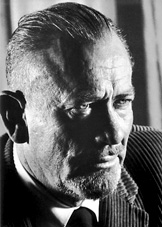
John Steinbeck (1902-1968)

The Chrysanthemums ~ A Classic American Short Story by John Steinbeck

The high grey-flannel fog of winter closed off the Salinas Valley from the sky and from all the rest of the world. On every side it sat like a lid on the mountains and made of the great valley a closed pot. On the broad, level land floor the gang plows bit deep and left the black earth shining like metal where the shares had cut. On the foothill ranches across the Salinas River, the yellow stubble fields seemed to be bathed in pale cold sunshine, but there was no sunshine in the valley now in December. The thick willow scrub along the river flamed with sharp and positive yellow leaves.

It was a time of quiet and of waiting. The air was cold and tender. A light wind blew up from the southwest so that the farmers were mildly hopeful of a good rain before long; but fog and rain did not go together.

Across the river, on Henry Allen’s foothill ranch there was little work to be done, for the hay was cut and stored and the orchards were plowed up to receive the rain deeply when it should come. The cattle on the higher slopes were becoming shaggy and rough-coated.

Elisa Allen, working in her flower garden, looked down across the yard and saw Henry, her husband, talking to two men in business suits. The three of them stood by the tractor shed, each man with one foot on the side of the little Fordson. They smoked cigarettes and studied the machine as they talked.

Elisa watched them for a moment and then went back to her work. She was thirty-five. Her face was lean and strong and her eyes were as clear as water. Her figure looked blocked and heavy in her gardening costume, a man’s black hat pulled low down over her eyes, clod-hopper shoes, a figured print dress almost completely covered by a big corduroy apron with four big pockets to hold the snips, the trowel and scratcher, the seeds and the knife she worked with. She wore heavy leather gloves to protect her hands while she worked.

She was cutting down the old year’s chrysanthemum stalks with a pair of short and powerful scissors. She looked down toward the men by the tractor shed now and then. Her face was eager and mature and handsome; even her work with the scissors was over-eager, over-powerful. The chrysanthemum stems seemed too small and easy for her energy.

She brushed a cloud of hair out of her eyes with the back of her glove, and left a smudge of earth on her cheek in doing it. Behind her stood the neat white farm house with red geraniums close-banked around it as high as the windows. It was a hard-swept looking little house, with hard-polished windows, and a clean mud-mat on the front steps.

Elisa cast another glance toward the tractor shed. The strangers were getting into their Ford coupe. She took off a glove and put her strong fingers down into the forest of new green chrysanthemum sprouts that were growing around the old roots. She spread the leaves and looked down among the close-growing stems. No aphids were there, no sowbugs or snails or cutworms. Her terrier fingers destroyed such pests before they could get started.

Elisa started at the sound of her husband’s voice. He had come near quietly, and he leaned over the wire fence that protected her flower garden from cattle and dogs and chickens.

“At it again,” he said. “You’ve got a strong new crop coming.”

Elisa straightened her back and pulled on the gardening glove again. “Yes. They’ll be strong this coming year.” In her tone and on her face there was a little smugness.

You’ve got a gift with things,” Henry observed. “Some of those yellow chrysanthemums you had this year were ten inches across. I wish you’d work out in the orchard and raise some apples that big.”

Her eyes sharpened. “Maybe I could do it, too. I’ve a gift with things, all right. My mother had it. She could stick anything in the ground and make it grow. She said it was having planters’ hands that knew how to do it.”

“Well, it sure works with flowers,” he said.

“Henry, who were those men you were talking to?”

“Why, sure, that’s what I came to tell you. They were from the Western Meat Company. I sold those thirty head of three-year-old steers. Got nearly my own price, too.”

“Good,” she said. “Good for you.

“And I thought,” he continued, “I thought how it’s Saturday afternoon, and we might go into Salinas for dinner at a restaurant, and then to a picture show—to celebrate, you see.”

“Good,” she repeated. “Oh, yes. That will be good.”

Henry put on his joking tone. “There’s fights tonight. How’d you like to go to the fights?”

“Oh, no,” she said breathlessly. “No, I wouldn’t like fights.”

“Just fooling, Elisa. We’ll go to a movie. Let’s see. It’s two now. I’m going to take Scotty and bring down those steers from the hill. It’ll take us maybe two hours. We’ll go in town about five and have dinner at the Cominos Hotel. Like that?”

“Of course I’ll like it. It’s good to eat away from home.”

“All right, then. I’ll go get up a couple of horses.”

She said, “I’ll have plenty of time to transplant some of these sets, I guess.”

She heard her husband calling Scotty down by the barn. And a little later she saw the two men ride up the pale yellow hillside in search of the steers.

There was a little square sandy bed kept for rooting the chrysanthemums. With her trowel she turned the soil over and over, and smoothed it and patted it firm. Then she dug ten parallel trenches to receive the sets. Back at the chrysanthemum bed she pulled out the little crisp shoots, trimmed off the leaves of each one with her scissors and laid it on a small orderly pile.

A squeak of wheels and plod of hoofs came from the road. Elisa looked up. The country road ran along the dense bank of willows and cotton-woods that bordered the river, and up this road came a curious vehicle, curiously drawn. It was an old spring-wagon, with a round canvas top on it like the cover of a prairie schooner. It was drawn by an old bay horse and a little grey-and-white burro. A big stubble-bearded man sat between the cover flaps and drove the crawling team. Underneath the wagon, between the hind wheels, a lean and rangy mongrel dog walked sedately. Words were painted on the canvas in clumsy, crooked letters. “Pots, pans, knives, sisors, lawn mores, Fixed.” Two rows of articles, and the triumphantly definitive “Fixed” below. The black paint had run down in little sharp points beneath each letter.

Elisa, squatting on the ground, watched to see the crazy, loose-jointed wagon pass by. But it didn’t pass. It turned into the farm road in front of her house, crooked old wheels skirling and squeaking. The rangy dog darted from between the wheels and ran ahead. Instantly the two ranch shepherds flew out at him. Then all three stopped, and with stiff and quivering tails, with taut straight legs, with ambassadorial dignity, they slowly circled, sniffing daintily. The caravan pulled up to Elisa’s wire fence and stopped. Now the newcomer dog, feeling outnumbered, lowered his tail and retired under the wagon with raised hackles and bared teeth.

The man on the wagon seat called out, “That’s a bad dog in a fight when he gets started.”

Elisa laughed. “I see he is. How soon does he generally get started?”

The man caught up her laughter and echoed it heartily. “Sometimes not for weeks and weeks,” he said. He climbed stiffly down, over the wheel. The horse and the donkey drooped like unwatered flowers.

Elisa saw that he was a very big man. Although his hair and beard were graying, he did not look old. His worn black suit was wrinkled and spotted with grease. The laughter had disappeared from his face and eyes the moment his laughing voice ceased. His eyes were dark, and they were full of the brooding that gets in the eyes of teamsters and of sailors. The calloused hands he rested on the wire fence were cracked, and every crack was a black line. He took off his battered hat.

“I’m off my general road, ma’am,” he said. “Does this dirt road cut over across the river to the Los Angeles highway?”

Elisa stood up and shoved the thick scissors in her apron pocket. “Well, yes, it does, but it winds around and then fords the river. I don’t think your team could pull through the sand.”

He replied with some asperity, “It might surprise you what them beasts can pull through.”

“When they get started?” she asked.

He smiled for a second. “Yes. When they get started.”

“Well,” said Elisa, “I think you’ll save time if you go back to the Salinas road and pick up the highway there.”

He drew a big finger down the chicken wire and made it sing. “I ain’t in any hurry, ma am. I go from Seattle to San Diego and back every year. Takes all my time. About six months each way. I aim to follow nice weather.”

Elisa took off her gloves and stuffed them in the apron pocket with the scissors. She touched the under edge of her man’s hat, searching for fugitive hairs. “That sounds like a nice kind of a way to live,” she said.

He leaned confidentially over the fence. “Maybe you noticed the writing on my wagon. I mend pots and sharpen knives and scissors. You got any of them things to do?”

“Oh, no,” she said quickly. “Nothing like that.” Her eyes hardened with resistance.

“Scissors is the worst thing,” he explained. “Most people just ruin scissors trying to sharpen ’em, but I know how. I got a special tool. It’s a little bobbit kind of thing, and patented. But it sure does the trick.”

“No. My scissors are all sharp.”

“All right, then. Take a pot,” he continued earnestly, “a bent pot, or a pot with a hole. I can make it like new so you don’t have to buy no new ones. That’s a saving for you.

“No,” she said shortly. “I tell you I have nothing like that for you to do.”

His face fell to an exaggerated sadness. His voice took on a whining undertone. “I ain’t had a thing to do today. Maybe I won’t have no supper tonight. You see I’m off my regular road. I know folks on the highway clear from Seattle to San Diego. They save their things for me to sharpen up because they know I do it so good and save them money.

“I’m sorry,” Elisa said irritably. “I haven’t anything for you to do.”

His eyes left her face and fell to searching the ground. They roamed about until they came to the chrysanthemum bed where she had been working. “What’s them plants, ma’am?”

The irritation and resistance melted from Elisa’s face. “Oh, those are chrysanthemums, giant whites and yellows. I raise them every year, bigger than anybody around here.”

“Kind of a long-stemmed flower? Looks like a quick puff of colored smoke?” he asked.

“That’s it. What a nice way to describe them.”

“They smell kind of nasty till you get used to them,” he said.

“It’s a good bitter smell,” she retorted, “not nasty at all.”

He changed his tone quickly. “I like the smell myself.”

“I had ten-inch blooms this year,” she said.

The man leaned farther over the fence. “Look. I know a lady down the road a piece, has got the nicest garden you ever seen. Got nearly every kind of flower but no chrysanthemums. Last time I was mending a copper-bottom washtub for her (that’s a hard job but I do it good), she said to me, ‘If you ever run acrost some nice chrysanthemums I wish you’d try to get me a few seeds.’ That’s what she told me.”

Elisa’s eyes grew alert and eager. “She couldn’t have known much about chrysanthemums. You can raise them from seed, but it’s much easier to root the little sprouts you see there.”

“Oh,” he said. “I s’pose I can’t take none to her, then.”

“Why yes you can,” Elisa cried. “I can put some in damp sand, and you can carry them right along with you. They’ll take root in the pot if you keep them damp. And then she can transplant them.”

“She’d sure like to have some, ma’am. You say they’re nice ones?”

“Beautiful,” she said. “Oh, beautiful.” Her eyes shone. She tore off the battered hat and shook out her dark pretty hair. “I’ll put them in a flower pot, and you can take them right with you. Come into the yard.”

While the man came through the picket fence Elisa ran excitedly along the geranium-bordered path to the back of the house. And she returned carrying a big red flower pot. The gloves were forgotten now. She kneeled on the ground by the starting bed and dug up the sandy soil with her fingers and scooped it into the bright new flower pot. Then she picked up the little pile of shoots she had prepared. With her strong fingers she pressed them into the sand and tamped around them with her knuckles. The man stood over her. “I’ll tell you what to do,” she said. “You remember so you can tell the lady.”

“Yes, I’ll try to remember.”

“Well, look. These will take root in about a month. Then she must set them out, about a foot apart in good rich earth like this, see?” She lifted a handful of dark soil for him to look at. “They’ll grow fast and tall. Now remember this. In July tell her to cut them down, about eight inches from the ground.”

“Before they bloom?” he asked.

“Yes, before they bloom.” Her face was tight with eagerness. “They’ll grow right up again. About the last of September the buds will start.”

She stopped and seemed perplexed. “It’s the budding that takes the most care,” she said hesitantlv. “I don’t know how to tell you.” She looked deep into his eyes, searchingly. Her mouth opened a little, and she seemed to be listening. “I’ll try to tell you,” she said. “Did you ever hear of planting hands?”

“Can’t say I have, ma’am.”

“Well, I can only tell you what it feels like. It’s when you’re picking off the buds you don’t want. Everything goes right down into your fingertips. You watch your fingers work. They do it themselves. You can feel how it is. They pick and pick the buds. They never make a mistake. They’re with the plant. Do you see? Your fingers and the plant. You can feel that, right up your arm. They know. They never make a mistake. You can feel it. When you’re like that you can’t do anything wrong. Do you see that? Can you understand that?”

She was kneeling on the ground looking up at him. Her breast swelled passionately.

The man’s eyes narrowed. He looked away self-consciously. “Maybe I know,” he said. “Sometimes in the night in the wagon there—”

Elisa’s voice grew husky. She broke in on him. “I’ve never lived as you do, but I know what you mean. When the night is dark—why, the stars are sharp-pointed, and there’s quiet. Why, you rise up and up! Every pointed star gets driven into your body. It’s like that. Hot and sharp and—lovely.”

Kneeling there, her hand went out toward his legs in the greasy black trousers. Her hesitant fingers almost touched the cloth. Then her hand dropped to the ground. She crouched low like a fawning dog.

He said, “It’s nice, just like you say. Only when you don’t have no dinner, it ain’t.”

She stood up then, very straight, and her face was ashamed. She held the flower pot out to him and placed it gently in his arms. “Here. Put it in your wagon, on the seat, where you can watch it. Maybe I can find something for you to do.”

At the back of the house she dug in the can pile and found two old and battered aluminum saucepans. She carried them back and gave them to him. “Here, maybe you can fix these.”

His manner changed. He became professional. “Good as new I can fix them.” At the back of his wagon he set a little anvil, and out of an oily tool box dug a small machine hammer. Elisa came through the gate to watch him while he pounded out the dents in the kettles. His mouth grew sure and knowing. At a difficult part of the work he sucked his under-lip.

“You sleep right in the wagon?” Elisa asked.

“Right in the wagon, ma’am. Rain or shine I’m dry as a cow in there.”

“It must be nice,” she said. “It must be very nice. I wish women could do such things.”

“It ain’t the right kind of a life for a woman.”

Her upper lip raised a little, showing her teeth. “How do you know? How can you tell?” she said.

“I don’t know, ma’am,” he protested. “Of course I don’t know. Now here’s your kettles, done. You don’t have to buy no new ones.”

“How much?”

“Oh, fifty cents’ll do. I keep my prices down and my work good. That’s why I have all them satisfied customers up and down the highway.”

Elisa brought him a fifty-cent piece from the house and dropped it in his hand. “You might be surprised to have a rival some time. I can sharpen scissors, too. And I can beat the dents out of little pots. I could show you what a woman might do.”

He put his hammer back in the oily box and shoved the little anvil out of sight. “It would be a lonely life for a woman, ma’am, and a scarey life, too, with animals creeping under the wagon all night.” He climbed over the singletree, steadying himself with a hand on the burro’s white rump. He settled himself in the seat, picked up the lines. “Thank you kindly, ma’am,” he said. “I’ll do like you told me; I’ll go back and catch the Salinas road.”

“Mind,” she called, “if you’re long in getting there, keep the sand damp.”

“Sand, ma’am?. .. Sand? Oh, sure. You mean around the chrysanthemums. Sure I will.” He clucked his tongue. The beasts leaned luxuriously into their collars. The mongrel dog took his place between the back wheels. The wagon turned and crawled out the entrance road and back the way it had come, along the river.

Elisa stood in front of her wire fence watching the slow progress of the caravan. Her shoulders were straight, her head thrown back, her eyes half-closed, so that the scene came vaguely into them. Her lips moved silently, forming the words “Good-bye—good-bye.” Then she whispered, “That’s a bright direction. There’s a glowing there.” The sound of her whisper startled her. She shook herself free and looked about to see whether anyone had been listening. Only the dogs had heard. They lifted their heads toward her from their sleeping in the dust, and then stretched out their chins and settled asleep again. Elisa turned and ran hurriedly into the house.

In the kitchen she reached behind the stove and felt the water tank. It was full of hot water from the noonday cooking. In the bathroom she tore off her soiled clothes and flung them into the corner. And then she scrubbed herself with a little block of pumice, legs and thighs, loins and chest and arms, until her skin was scratched and red. When she had dried herself she stood in front of a mirror in her bedroom and looked at her body. She tightened her stomach and threw out her chest. She turned and looked over her shoulder at her back.

After a while she began to dress, slowly. She put on her newest underclothing and her nicest stockings and the dress which was the symbol of her prettiness. She worked carefully on her hair, pencilled her eyebrows and rouged her lips.

Before she was finished she heard the little thunder of hoofs and the shouts of Henry and his helper as they drove the red steers into the corral. She heard the gate bang shut and set herself for Henry’s arrival.

His step sounded on the porch. He entered the house calling, “Elisa, where are you?”

“In my room, dressing. I’m not ready. There’s hot water for your bath. Hurry up. It’s getting late.”

When she heard him splashing in the tub, Elisa laid his dark suit on the bed, and shirt and socks and tie beside it. She stood his polished shoes on the floor beside the bed. Then she went to the porch and sat primly and stiffly down. She looked toward the river road where the willow-line was still yellow with frosted leaves so that under the high grey fog they seemed a thin band of sunshine. This was the only color in the grey afternoon. She sat unmoving for a long time. Her eyes blinked rarely.

Henry came banging out of the door, shoving his tie inside his vest as he came. Elisa stiffened and her face grew tight. Henry stopped short and looked at her. “Why—why, Elisa. You look so nice!”

“Nice? You think I look nice? What do you mean by ‘nice’?”

Henry blundered on. “I don’t know. I mean you look different, strong and happy.”

“I am strong? Yes, strong. What do you mean ‘strong’?”

He looked bewildered. “You’re playing some kind of a game,” he said helplessly. “It’s a kind of a play. You look strong enough to break a calf over your knee, happy enough to eat it like a watermelon.”

For a second she lost her rigidity. “Henry! Don’t talk like that. You didn’t know what you said.” She grew complete again. “I’m strong,” she boasted. “I never knew before how strong.”

Henry looked down toward the tractor shed, and when he brought his eyes back to her, they were his own again. “I’ll get out the car. You can put on your coat while I’m starting.”

Elisa went into the house. She heard him drive to the gate and idle down his motor, and then she took a long time to put on her hat. She pulled it here and pressed it there. When Henry turned the motor off she slipped into her coat and went out.

The little roadster bounced along on the dirt road by the river, raising the birds and driving the rabbits into the brush. Two cranes flapped heavily over the willow-line and dropped into the river-bed.

Far ahead on the road Elisa saw a dark speck. She knew.

She tried not to look as they passed it, but her eyes would not obey. She whispered to herself sadly, “He might have thrown them off the road. That wouldn’t have been much trouble, not very much. But he kept the pot,” she explained. “He had to keep the pot. That’s why he couldn’t get them off the road.”

The roadster turned a bend and she saw the caravan ahead. She swung full around toward her husband so she could not see the little covered wagon and the mismatched team as the car passed them.

In a moment it was over. The thing was done. She did not look back.

She said loudly, to be heard above the motor, “It will be good, tonight, a good dinner.”

“Now you’re changed again,” Henry complained. He took one hand from the wheel and patted her knee. “I ought to take you in to dinner oftener. It would be good for both of us. We get so heavy out on the ranch.”

“Henry,” she asked, “could we have wine at dinner?”

“Sure we could. Say! That will be fine.”

She was silent for a while; then she said, “Henry, at those prize fights, do the men hurt each other very much?”

“Sometimes a little, not often. Why?”

“Well, I’ve read how they break noses, and blood runs down their chests. I’ve read how the fighting gloves get heavy and soggy with blood.”

He looked around at her. “What’s the matter, Elisa? I didn’t know you read things like that.” He brought the car to a stop, then turned to the right over the Salinas River bridge.

“Do any women ever go to the fights?” she asked.

“Oh, sure, some. What’s the matter, Elisa? Do you want to go? I don’t think you’d like it, but I’ll take you if you really want to go.”

She relaxed limply in the seat. “Oh, no. No. I don’t want to go. I’m sure I don’t.” Her face was turned away from him. “It will be enough if we can have wine. It will be plenty.” She turned up her coat collar so he could not see that she was crying weakly—like an old woman.

A Good Clown is Worth Repeating

A Good Clown is Worth Repeating ~ A Short Story by Allen Kopp

(Published in Short Story America.)

Polly Wollydoodle sat at her dressing table on an early summer evening, getting herself ready for a night on the town. After covering her face with white powder, she drew her lips on in a wide arc and applied glittery blue eye shadow halfway up her forehead to her eyebrows. Then she opened her box of noses and selected a glittery red one appropriate for evening wear.

The dress she had chosen had large blue polka dots on a white background. After she had stepped into the dress and did it up, the puffy collar covered her neck and made it almost appear as if she had no neck at all. The cuffs on the ends of the sleeves were also puffy, nearly hiding her hands but affording her the use of them nonetheless. The voluminous padding built into the dress made falling down and sitting on hard surfaces much more comfortable than otherwise.

When she finished dressing, she saw from the chicken clock on the wall that it was nearly seven o’clock and her heart began beating faster and her throat constricted with dryness. She said a little prayer to the patron saint of clowns as she stepped into her size thirty-eight clown pumps. She hoped her nerve wasn’t going to fail her.

She was going out on a date with no one less than Mr. Noah Zark. He was only the most eligible clown bachelor in Clown Town—the handsome, dashing, ambitious, accomplished, much-desired and much sought-after clown-about-town. When he called her on the hamburger telephone and asked her to go out with him, she believed at first that her brother Jocko Wollydoodle (kidder that he was) was playing a trick on her but, after speaking to him for a couple of minutes, she knew it was the real Noah Zark and he was asking her to go out with him. She could hardly believe her good fortune.

She checked her reticule and made sure she had all the items essential for a date: the squirt bottle filled with seltzer, the rubber chicken, the feather-duster floral bouquet, six multi-colored balls for juggling, the horn with the squeeze bulb and, most importantly, the custard pie. If the date went well, she would hit Noah Zark in the face with the custard pie when he took her home at the conclusion of the date. She felt weak in the knees at the thought of it.

When Polly went downstairs, Clemmie Dibble Wollydoodle, her poppa, and Boombah Wollydoodle, her brother, were sitting in front of the TV watching Calling All Clowns and didn’t pay any attention to her when she came into the room. Eata Banana Wollydoodle, her plain older sister, was sitting in a chair to the side of the sofa. She wasn’t looking at the TV but was looking instead at a spot on the wall with her hand covering her mouth. She had been crying and, instead of being happy for Polly that she was going out with Noah Zark, she was angry and jealous. She refused to look at Polly or compliment her on her appearance.

Wishing to be seen, Polly went and stood in front of the TV and did a little pirouette, followed by a curtsey with her forefinger under her chin.

“Hey!” Boombah said. “Get out of the way! I can’t see the TV.”

“How do I look?” she asked coquettishly, holding still as though posing for a picture.

“Now, just what do you think you’re doing?” Clemmie Dibble asked, irritated at having his favorite TV show interrupted.

“Oh, don’t you remember, dearest, our little girl clown is stepping out tonight?” Clarabelle Wollydoodle, Polly’s mother, said from the doorway to the kitchen. She had a rubber chicken draped over each shoulder and a piglet in one hand and a meat cleaver in the other. She was happy and excited that her Polly had been invited to step out with Noah Zark. It might be the beginning of big things for her.

“No, she’s not,” Clemmie Dibble said. “Not tonight.” He had a way of laying down the law.

“What?” Polly asked, panic-stricken.

Eata Banana looked up with interest, a little smile forming on her lips.

“I said you’re not going out tonight,” Clemmie Dibble said, “and that’s final.”

“Oh, dearest,” Clarabelle said. “Don’t be an old silly. It’s too late to cancel now. A young clown is coming to pick her up.”

“Well, why didn’t you say so?” Clemmie Dibble asked. “Is a clown poppa to know nothing about his clown children?”

“I told you, dearest,” Clarabelle said. “You must not have been listening.” She turned and went back into the kitchen, trying to calm the piglet down.

“He’s late,” Eata Banana said gleefully. “I don’t think he’s coming.”

“He’s probably just tied up in rush-hour traffic,” Polly said. “I’ll just sit down and wait.” She settled her padded rump in the middle of the sofa between Clemmie Dibble and Boombah and put her arm around Boombah.

“Gee, you look pretty,” Boombah said. He reached up and touched the end of her glittery red nose with the tip of his finger.

“Aren’t you sweet!” Polly said. “I’m glad somebody in this family has something approving to say.” She kissed Boombah on his white cheek, leaving the imprint of her lips.

She wanted to appear cool and collected, but she was terrified that Eata Banana was right and Noah Zark wasn’t coming after all. Her heart was beating way too fast and she was having a little trouble breathing. She looked at the TV, not really seeing it, and time dragged on. Finally, at half-past seven, when she had begun to abandon all hope, the doorbell rang.

“I’ll get it,” Boombah said. He bounded off the sofa with accustomed exuberance and went to the door and flung it open.

All of them, Eata Banana included, turned and looked at Noah Zark standing in the doorway. He held his hat in his hand against his chest. He looked so handsome standing there, dressed in the latest clown fashion. He smiled shyly and said to Boombah, “Is this the Wollydoodle residence?”

“Come in,” Boombah said, looking Noah Zark up and down.

Polly stood up and gave Noah Zark a nervous little smile and curtseyed, her forefinger under her chin.

“Good evening, Miss Polly,” Noah Zark said in his resonant voice.

“Who do we have here?” Clemmie Dibble asked, a note of jeering skepticism in his voice.

“Poppa, I’d like for you to meet Noah Zark,” Polly said. “I’m stepping out with him this evening.”

Clemmie Dibble gave Noah Zark an appraising look and held out his hand. Noah Zark shook it forcefully and, instead of letting go of Clemmie Dibble’s hand at the end of the handshake, he held onto it and pulled him to his feet. Before Clemmie Dibble knew what was happening, he and Noah Zark were standing nose to nose.

“Just what do you think you’re doing there?” Clemmie Dibble asked gruffly. “I’m not a yo-yo!”

“It’s a very great honor to meet you, sir,” Noah Zark said. “I have heard so much about the great Clemmie Dibble Wollydoodle.”

“You have?” Clemmie Dibble asked, instantly charmed.

“Your reputation as the greatest of clowns precedes you, sir.”

“Well, I don’t know about that.

“This is my little brother, Boombah Wollydoodle,” Polly said.

“How do you do?” Noah Zark said, shaking Boombah’s hand.

“Hello,” Boombah said.

“And this is my older sister, Eata Banana Wollydoodle,” Polly said.

Eata Banana stood up and sniffled and offered Noah Zark a pitiful smile. He took her hand and bent over it and kissed it.

“It’s an honor to meet you, Miss Eata Banana,” Noah Zark said.

“Hello,” Eata Banana said in her pained voice.

Clarabelle, having put the piglet back into his little cage, came in from the kitchen.

“Oh, and this is my mother,” Polly said.

“Well, well, well,” Noah Zark said. “I would have said she was your sister. How do you do, madam?”

“Very well, thank you, Noah Zark,” Clarabelle said. She blushed as Noah Zark took her hand and kissed it.

“Well, we’d better be off,” Noah Zark said, turning to Polly and rubbing his hands together. “We have a reservation for eight o’clock at Clown Rendezvous. That’s all the way over in Crazy Town.”

“Can I come along?” Boombah asked.

“You’d better take a wrap, dear,” Clarabelle said.

“Oh, mother, I’ll be fine,” Polly said.

“Be good to our little clown,” Clarabelle said to Noah Zark.

“Mother, please!” Polly said.

“And be home at a respectable hour!” Clemmie Dibble said with a laugh, as though he didn’t mean it at all.

“Good evening to you all,” Noah Zark said. “It was such a very great pleasure to meet all of you.”

After they left, Clemmie Dibble turned to Clarabelle and said, “That young clown seems like a very sensible and decent chap. I think I like him.”

“And he’s so handsome,” Clarabelle said, “in his junk-yard tuxedo with the enormous baggy pants with the suspenders and his smashed top-hat and his wide red tie.”

Eata Banana began bawling uncontrollably. Clemmie Dibble and Clarabelle and Boombah turned and looked at her in surprise. When she realized everyone was looking at her, she ran upstairs to her boudoir and slammed the door.

“Now, what do you suppose is the matter with her?” Clemmie Dibble asked, sitting down again.

“I think I know,” Clarabelle said, “but I don’t think you would understand.”

“I know what’s the matter with her,” Boombah said. “She’s a girl!”

In Noah Zark’s clown car, Polly sat as close to him as she could get. She was sitting so close, in fact, that he could hardly move his arms to steer. When he turned his eyes away from the road and looked at her, she gave him a simpering smile and her eyes were moist. He could smell her perfume, which was something called Clown Parisienne and was very expensive.

“I hope you’re hungry, Miss Polly,” Noah Zark said, not being able for the moment to think of anything else to say.

“Oh, I could eat an elephant.” In truth, she had been too nervous to eat all day and now had a raging appetite.

“I wouldn’t advise it,” Noah Zark said and laughed. Polly didn’t understand what he meant, but she laughed appreciatively anyway to show that her wit was as sharp as his.

She watched the unreeling scenery for a couple of minutes and then she turned to Noah Zark and said, “Gee, it must be wonderful to have your own clown car and be able to drive all over Clown Town, or beyond, whenever you feel like it.”

“It’ll do for now, I suppose,” Noah Zark said dispiritedly. “I’d rather go around in a chauffeur-driven limousine like your poppa, though.”

Polly felt oddly flattered that Noah Zark recognized her poppa’s significance in the scheme of things. “Maybe some day you will,” she said.

“Oh, yes, Clemmie Dibble Wollydoodle is a very important clown. Every clown in Clown Town knows that.”

“Yes, I suppose that’s true,” Polly said, wishing to change the subject. She had been with Noah Zark for ten minutes and he hadn’t said a thing about how pretty she looked.

“Why, he practically runs the Jerkus Circus. He can make or break a clown. One favorable word from him and a young clown’s career is made.”

“Uh-huh,” Polly said.

“As a rodeo clown,” Noah Zark said, “I’m on the road most of the year and I don’t even have a home I can call my own. I want to settle down. My goal is to get a berth with an established concern like the Jerkus Circus and move up through the clown ranks.”

At the words “settle down,” Polly believed that Noah Zark had marriage in mind and was laying the groundwork to propose to her. She couldn’t expect him to propose on their first date together—that would be rushing things too much—but maybe by their second or third date.

“Everybody looks up to rodeo clowns,” she said. “You are the hero of many.”

“That may be true,” Noah Zark said, “but there’s more to life than the admiration of one’s fellow clowns.”

“My brother Jocko wants to be a rodeo clown,” she said, feeling a little thrill as her leg brushed against Noah Zark’s leg.

“Why does he not follow in your poppa’s footsteps?”

“Jocko and poppa never got along,” Polly said. “Jocko is very head-strong. He doesn’t like to be ordered about, and poppa can be a bit overbearing at times.”

“Well, I hope Jocko knows the life of a rodeo clown is a lonely life. I hope he knows what he’s getting himself into.”

“I’m sure it has its rewards,” Polly said. “It must be exciting to travel and be in a different town every night. I’ve never even spent a single night away from home.”

“Believe me, after a while all towns look alike, and you wish desperately to be back in Clown Town where you feel you belong. The romance of the road is vastly overstated.”

“Well, the Jerkus Circus moves around a lot, too,” she said.

“That’s true,” Noah Zark said, “but they stay in one place a lot longer than the rodeo does.”

Soon they were in Crazy Town and Noah Zark turned off the road onto the parking lot at Clown Rendezvous and a uniformed clown valet appeared to park the car. After the valet had driven off, Polly took Noah Zark’s arm and they went inside.

She was impressed that the maitre‘d recognized Noah Zark as soon as he saw him. He made a checkmark next to Noah Zark’s name in his big book and then, bowing and scraping, he personally escorted Noah Zark and Polly to their table. As they walked through the crowded nightclub, Polly  felt clowns looking at the two of them—at Noah Zark because of who he was and at her because she was with Noah Zark.

When they were seated at their table, Noah Zark ordered a bottle of champagne and before it came he took Polly by the hand and pulled her out onto the dance floor. She wasn’t accustomed to dancing, but she soon saw that Noah Zark’s skill and polish made up for her not knowing what she was doing. He held her close in a slow number and then twirled her around the dance floor when the orchestra played The New Tiger Rag, a very fast number. He literally tossed her away and then pulled her back, bent her over backwards until the top of her head touched the floor, lifted her up into the air and slid her along the floor between his legs, spun her left and spun her right until she was dizzy and believed she might be sick. When the number ended, they went back to their table amid a smattering of applause.

“My, you’re such a good dancer!” Polly said with a laugh. She felt as if she had just been inside a cocktail shaker, but she also felt happy and, well, important. She was sweating and panting a little, but she noticed that Noah Zark was perfectly composed.

“Oh, it’s nothing,” Noah Zark said. “A clown in my position has to learn many things.”

He poured her a glass of champagne and handed it to her and then poured one for himself and drank it down and poured another. She took a tiny sip of the champagne and smacked her lips.

“You like?” Noah Zark asked.

“I like,” she said.

She drank down her champagne the way Noah Zark had done and he poured her another glassful. After the waiter came and took their order for dinner, Polly excused herself and stood up and made her way on wobbly legs to the powder room.

Inside the powder room, she sat down in front of one of the big mirrors encircled with light bulbs and opened her reticule and took out her comb and fixed her hair that had become disarranged during her wild dance with Noah Zark. Then as she was touching up her makeup, two more clowns came into the powder room. They made their way to the other end of the row of mirrors. One of them sat down in front of the mirror and the other stood behind her, looking at her face in the mirror. They were engrossed in conversation and didn’t seem to notice Polly sitting there.

“And did you notice that dress?” the sitting clown asked. Her name was Arma Geddon. She was short and fat and had flaming-orange hair. Her lips were painted on in a cupid’s bow and her eyebrows inverted V’s.

“How could I miss it?” the other clown said. “She looks like she raided her grandmother’s closet!” This clown’s name was Bozinda. She was tall and skinny; she wore a skirt that was slit up the side and ended in the middle of her calf, showing horizontally striped stockings.

“And that nose!” Arma Geddon exclaimed. “Nobody wears those glittery things anymore. They went out with the horse and buggy.”

Polly had her hand to her nose when the remark about glittery noses registered in her brain. She pulled her hand away as though she had touched a hot stove. She realized the two clowns were talking about her. She stood up and was making her way for the door as unobtrusively as she could when the two clowns noticed her and stopped talking.

“Oh, miss!” Bozinda said, just as Polly had her hand on the door to push it open.

Polly turned toward Bozinda and gave her an innocent look. “Me?” she asked, touching her breastbone.

“Yes, you, dearie! Might we have a word with you?”

“I suppose so,” Polly said.

“We saw you dancing with Noah Zark,” Bozinda said.

“Yes?”

“How much do you know about him, dear?”

“I know he’s a very fine, accomplished gentleman,”

“Hah!” Arma Geddon exclaimed. “You are a sweet innocent!”

“You’re probably thinking right now that he’s the man of your dreams,” Bozinda said, laughing up her sleeve. “Most of the girl clowns in Clown Town and Crazy Town and the surrounding environs have thought the same thing at one time or another.”

“You need to be made aware of what a scamp he is,” Arma Geddon said, pulling at her false eyelash.

“Let’s face it, darling,” Bozinda said. “You just aren’t his type at all, but you probably can’t see that because you don’t know what type is his type the way we do.”

“Just what is it you’re trying to tell me?” Polly asked, beginning to understand all too clearly.

“Well, since you aren’t his type,” Bozinda said, “I’d say he wants something you have that he doesn’t have. He wants you to do something for him that would further his career.”

“He has a way of always getting what he wants from girl clowns,” Arma Geddon said in her know-it-all way.

“Yes, and after he gets what he wants from you,” Bozinda said, “he’ll cast you aside like a pair of old boots.” With that, she looked down at her own army-issue boots and shook her foot as though trying to dispel a cramp.

“Take a piece of friendly advice,” Arma Geddon said, batting her eyelashes and turning away from the mirror and facing Polly. “Get what you can out of him—a night on the town, a few drinks, a good time, a few laughs. But when it comes right down to it, my dear, don’t fall for his suavity and his line of smooth talk. If you do, you’ll end up wishing you hadn’t.”

“I’m sure I do not know to what you are referring,” Polly said quietly. Believing the conversation had come to an end, she gave Bozinda and Arma Geddon a little curtsey and then left the powder room.

When she got back to her table, Noah Zark pulled the chair out for her. She sat down without looking at him and picked up her glass of champagne and drank it down and reached over for the bottle and poured herself another glass.

“Are you quite all right, Miss Polly?” Noah Zark asked. “You look a little peaked.”

“I was feeling a little sick,” Polly said, “but now I’m all right.”

“I so want to get to know you better,” Noah Zark said. He reached across the table for Polly’s hand but she pulled it away quickly before he could touch it.

The waiter brought their food and they began eating. Before they were finished with the soup course, the floor show began. First there was a girl clown singer who stood in front of the orchestra and belted out a couple of clown ballads and then there was a troupe of midget tumblers. They leapt and bounced and buffeted about the stage as if the laws of gravity didn’t apply to them. When the tumblers left the stage to enthusiastic applause, a couple of identical twin clowns came on who juggled bottles of milk; first one juggled the bottles and then the other, and then they juggled the bottles back and forth between them so fast they could hardly be seen. The audience gasped with delight and appreciation.

As soon as the floor show was over, Noah Zark asked Polly if she was finished eating and if she would care to dance again.

“Yes and no,” Polly said. “Yes, I’m finished eating and, no, I wouldn’t care to dance again.”

“Why, what’s the matter, Miss Polly?” Noah Zark asked. “You seem so different. Are you not feeling well?”

“I just think it’s time for all good girl clowns to be at home,” she said. She couldn’t bring herself to tell him that all the glamour and excitement had gone out of the evening for her.

“Do you mean you want to leave already?”

“Well, we’ve had dinner and we’ve seen the floor show. What else is there?”

“Are you not enjoying my company?”

“I would just like to leave, Noah Zark, if you don’t mind.”

Noah Zark called for the check in his customary showy manner. He threw a handful of clown money down on the table and then he helped Polly out of her chair.

When they were once again in Noah Zark’s clown car, he looked over at Polly, now sitting as far from him as the car seat would allow, and said, “Would you like to go someplace for a nightcap?”

“That means more liquor, doesn’t it?” Polly asked. “I think I’ve had enough champagne. If I drink any more than I’ve already had, I think I may be quite ill in the morning.”

“Maybe a drive in the country, then?” Noah Zark asked. “It’s a beautiful evening and still early.”

“Oh, all right,” Polly said, “as long as you don’t go too far out of Clown Town.”

“I know just the place,” he said.

He steered the clown car in the direction of the Mountain Road between Crazy Town and Clown Town. He knew of a secluded spot to stop and park that looked out over the city. He hoped to get Polly to thaw out because he had a favor he wanted to ask of her. He had never yet known a female clown that wouldn’t melt into his arms when he turned on the charm.

For her part, Polly opened her reticule and slipped her hand inside and felt around until she found the socket wrench that she carried with her at all times. She closed her hand around it, ready to pull it out. She would clonk Noah Zark on the head if she had to.

Noah Zark pulled the car off the Mountain Road at Lookout Point. Polly was relieved to see there were already several other clown cars with clown couples in them parked there. If Noah Zark tried to get too fresh, she could scream for help and someone would hear her. Maybe she wouldn’t even need to clonk him on the head.

Noah Zark parked the clown car and turned off the engine and put his arm up over the back of the seat. Polly shrank from his arm as if it was a rattlesnake.

“It’s a lovely evening,” Noah Zark said. “The moon and the stars and the city spread out before you in a lovely panorama of glittering lights.”

“How poetic!” Polly said, altogether unimpressed.

“I trust you’ve had a pleasant evening,” Noah Zark said. “I hope that stepping out with me this evening has been a worthwhile experience for you.”

“Well, I always wanted to go to Clown Rendezvous.”

“Miss Polly, I must confess I have a little favor to ask of you.”

“Just a little one?” she asked.

“Miss Polly, have you ever heard the expression, ‘It’s not what you know—it’s who you know’?”

“No, I don’t believe I’ve ever heard that expression.”

“I’ve called your poppa on the telephone several times and I’ve written him a couple of letters.”

“Whatever for?”

“He won’t return my calls and doesn’t respond to my letters.”

“Oh, “Polly said, “I think I’m beginning to understand.”

“I was wondering if you might arrange it so that I might be placed in the way of your poppa in a situation where he wouldn’t be distracted by other matters.”

“You want his help in getting a berth with the Jerkus Circus?”

“One word from him is all it would take.”

“You want me to invite you to dinner at my house, where the talk would inevitably turn toward your career and what a great benefit your talents would be to the Jerkus Circus?”

“That would be splendid!”

“Well, I…”

“You don’t have to give me an answer now. Just think about what I’m saying and let me know if what I’m asking is going to be possible.” He reached inside his coat pocket and pulled out a card and handed it to her. “Here’s my agent’s business card. He’ll know how to get in touch with me. And please remember, this is urgent. The sooner you are able to arrange it, the better.”

She took the card and looked at it and slipped it inside her glove. “I think I’d like to go home now, Noah Zark, if you please,” she said.

When he pulled up in front of the house where she lived, he turned off the engine and put his arm up over the back of the seat the way he had done at Lookout Point. He thought again that she would melt into his arms and, if she did so, he would reward her with a big sloppy clown kiss, but again she failed to do as expected.

“Well, good night,” she said, putting her hand on the door handle. “Thank you for a very lovely evening. I don’t think I’ll ever forget it.”

“Wait just a second,” he said. “I’ll walk with you up to your front door.”

“That’s not necessary. I’m a grown clown. I can find my way to my front door in the dark. I’ve done it many times before. I’m not as helpless as everybody seems to think me.”

“You’ll call my business agent, then?” he asked. “You won’t forget?”

“I don’t think I will be seeing you again,” Polly said.

“Why ever not?”

“Noah Zark,” she said, “have you ever heard the expression, ‘There’s none so blind as those who will not see’?”

“I don’t think I ever heard that expression. What does it mean?”

She got out of the clown car and stood beside it, but before she closed the door she pulled the business card he had given her out of her glove and tore it into tiny pieces and flicked the pieces at him across the front seat.

Two days later in the middle of the afternoon Polly was sitting at the table in the kitchen polishing the silver and listening to music on the radio, her mind pleasantly devoid of thought. Clarabelle was standing at the counter putting frosting on a cake. Clemmie Dibble was upstairs taking a clown nap, Boombah was at a Clown Scouts meeting, and Jocko was in the back yard practicing his juggling routine. Suddenly Eata Banana, who had been moping around the house all week, burst into the room. She was uncharacteristically happy and excited.

“Guess who just called me?” she said, hardly able to keep from jumping up and down.

Who did?” Clarabelle asked, turning from her cake, her frosting-laden knife in the air.

“Noah Zark!” Eata Banana said. “Noah Zark called me on the telephone just now!” She was trembling and her eyes shone with excitement.

“What did he want?” Clarabelle asked.

“He asked me to go to a clown ball with him at the Clown Country Club on Saturday night!”

“Are you going?”

“Am I going? Well, of course, I’m going!” Eata Banana said. “I’d be crazy not to go! He’s a rodeo clown! He’s just the most exciting clown bachelor in all of Clown Town.”

“What are you going to wear?” Clarabelle asked.

“I don’t know,” Eata Banana said. “I think now that things are finally happening for me I’m going to need to buy a whole new wardrobe. Maybe he’ll ask me to marry him!”

Polly smiled and dabbed her rag into the silver polish and rubbed it on the silver serving tray that had belonged to her Grandmother Lulu. She realized that Clarabelle and Eata Banana were both looking at her, expecting her to say something. She said nothing, though, only singing along with Life is Just a Bowl of Cherries, which was just then playing on the radio. She knew very well that Eata Banana wasn’t Noah Zark’s type, either, but she said nothing to that effect. Eata Banana would just have to find out on her own, in her own way and in her own time.

Copyright © 2012 by Allen Kopp

Send Me a Postcard

Send Me a Postcard ~ A Short Story by Allen Kopp 

(Published in The Fringe Magazine, April 2011.)

Since Paul’s mother lost her job at the hospital, she’s not the same anymore.  She stays in bed a lot of the time during the daylight hours, something she never did before. If she’s not in bed, she’s sitting in front of the TV in her bathrobe smoking cigarettes and watching soap operas and game shows with the sound turned all the way down. He stands in the doorway looking at her and she doesn’t seem to know he’s there until she sees his shadow on the wall.

“What are you doing?” she asks, craning her neck around to look at him. “You creep around the house like a thief.”

“I’m just looking at you,” he says. “What’s for dinner?”

“Oh, is it time for dinner?” she asks, looking at the clock. “I didn’t think it was that late.”

He goes into the kitchen and fixes himself a peanut butter sandwich. He is glad to see she has been to the store and bought some fresh bread while he was at school. He puts the sandwich on a plate and goes back into the living room where she is.

“Just help yourself to whatever you can find in the kitchen,” she says. “I don’t feel like cooking dinner.”

“Did you eat anything?” he asks.

“I don’t have any appetite,” she says. “I’ll have something later.” She reaches for her pack of Lucky Strikes and takes one out and lights it and inhales deeply.

He looks at her skeptically but she doesn’t know it. “Smoking is bad for you,” he says.

“So I’ve heard.”

“I’m not ever going to smoke.”

“Bully for you.”

“How about if we go to a movie tonight? There’s a western at the Criterion and a comedy at the Gem.”

“How about if we stay at home and watch TV? There’s a western on one channel and a comedy on another one, and you don’t have to pay to see them. I’m not made out of money, you know.”

He marvels at how mothers always say they’re not made out of money, but he says nothing because he doesn’t want to argue. He would someday like to see a mother made out of money, though. That must be a sight worth seeing.

“I have to write a book report,” he says.

“How lovely for you.”

“Do you want to help me?”

“What’s the book?”

A Tale of Two Cities by Charles Dickens.”

“Isn’t that kind of a grown-up book for eighth grade?”

“I read grown-up books all the time.”

“Oh, yes, I forgot. You’re already quite the little man, aren’t you?”

“I chose that book to read from the list. I’m the only person in the class who read it.”

“Isn’t that about the French Revolution or something?”

“Yes, they’re killing all the aristocrats. They’re mad at them because the king and his wife are rich and they don’t care that the peasants are starving, so the peasants want to kill all the aristocrats, whether they’ve done anything wrong or not. Do you know how they kill them?”

“Let me guess,” she says. “They cut off their heads with a thing with a big blade that drops down.”

“It’s called a guillotine. It was invented by a Dr. Guillotine. He was a Frenchman. They make them stick their heads through a hole and tie their hands behind their backs and then they let the blade drop down and wham! it slices off their heads.”

“Sounds divine,” she says. “I’ll be sure and add that book to my reading list.”

“They say it doesn’t hurt, but I don’t know how having your head cut off could not hurt.”

“Why don’t you try it some time and let me know?”

“I saw Daddy when I was walking to school today.”

“Where?”

“He drove past in a black car.”

“It must have been somebody else. His car is blue. Was it a new car?”

“I don’t know.”

“You can tell a new car from an old one, can’t you?”

“I think it was a new car.”

“Well, the next time you see him tell him to throw some of that money our way that he’s spending on a new car.”

“I wouldn’t ask him for money.”

“Why not? He’s your father, isn’t he? You wouldn’t be on this earth if it wasn’t for him, so he’s supposed to pay your way. That’s the way it works.”

He notices how many of his conversations with his mother always come around to the subject of money. He tries to steer her in another direction.

“Are you still looking for a job?” he asks.

“Off and on,” she says. “If it’s any of your business.”

“Do you want me to read the want ads to you? I’ll bet there are some good jobs in there.”

“If I wanted to read the want ads, don’t you think I could read them myself? You’re just a two-bit punk and you don’t know anything.”

’You’re just a two-bit punk and you don’t know anything,’” he says, in exact imitation of her voice.

“You’re getting just a little too big for your britches!”

’You’re getting just a little too big for your britches.’”

“Stop it!” she says.

’Stop it!’”

“Don’t you know you’re driving me crazy?”

’Don’t you know you’re driving me crazy?’

“Do you want me to get up from here and come over there and slap you silly?”

“No, I don’t,” he says solemnly, using his own voice again.

“You remind me more of your father every day.”

“Well, what am I supposed to do about it?”

“Run away from home and join the circus. You could be one of their freaks.”

He knows she’s only teasing him, but remarks like that hurt him a little, he has to admit. It’s as if she doesn’t want him around her anymore.

“When I’m old enough, I’m going to join the navy.”

“Good for you,” she says. “Serve your country. See the world. Send me a postcard.”

A man and woman are kissing on the TV. Their noses are pressed together.

“Can we change channels?” he asks.

“No!” she says. “I’m watching this!

He goes into the kitchen and gets an apple and goes out the back door with it and around the house and sits on the front steps, between the bushes that grow on both sides. He throws the apple up in the air a couple of times and catches it and then takes a bite out of it. The juice is running down his chin when he sees a black car pull up to the curb in front of the house, the same black car he saw that morning.

Somebody in the car motions to him. Fascinated, he stands up, throws down the apple, and crosses the lawn toward the car.

“Hello, son!” his father says brightly, rolling down the window.

“Did you get a new car?” he asks. He can’t think of anything else at the moment to say.

“No, it’s a friend’s car. I’m just borrowing it. How are you?”

“I’m all right. When are you coming home?”

His father turns off the engine and puts both hands on the steering wheel. “I’m not,” he says. “How’s your mother?”

“She’s fine.”

“Don’t tell her I was here.”

“All she has to do is look out the window and she’ll know you’re here.”

“Well, this is just between you and me.” He reaches into his pocket and takes out some money and hands his son a twenty-dollar bill. “Get yourself something good to eat,” he says.

“Thanks.”

“Well, I just wanted to see you for a minute and see how you are. I’ve got to be going.” He reaches to start the engine again.

“Daddy, can I come and live with you?”

“No, I’m afraid that’s out the question right now. I’m staying with friends. We’ll talk about that later when I’m more settled.”

“Mother hates me.”

“She doesn’t hate you. She loves you very much.”

“She’s crazy. She’s going to smoke herself to death and she doesn’t eat any food.”

“Well, she’s just going through a rough patch right now. You’ll understand when you’re older and not hold it against her.”

“I’m going to run away from home.”

“No, you’re not. You just stay put for now. We’ll talk more about a different kind of arrangement later, after things have settled down.”

He starts the engine and looks over his shoulder to see if any cars are coming. He makes a u-turn in the middle of the street and speeds off in the opposite direction from which he came with a little squeal of tires.

When Paul goes back into the house, his mother is waiting for him at the door.

“Who was that you were talking to?” she asks.

“Nobody. A man looking for the hospital.”

“That was a black car, wasn’t it?”

“I think it was.”

“Did he try to get you to get into the car with him?”

“Of course not.”

“Did you tell him how to get to the hospital?”

“I tried to.”

At ten o’clock that night his mother is still in front of the TV, but now she’s asleep with a bottle of gin on the table beside her. On the TV is a skinny old man in a tuxedo doing a tap dance in front of a wall of mirrors that reflect the people watching him.

He goes into his room and shuts the door, moving the bureau in front of the door so nobody can come in. He starts to work on his book report; writing it should be easy because he’s already read the book, but he can’t seem to concentrate. Luckily it’s not due for a few days.

He turns off the light, finding the dark comforting; it makes him feel safe. Far off in the distance he hears a siren. The wind is blowing against the house as if to blow up a rainstorm. He settles under the covers and sighs. The last thought he has before going to sleep is about the guillotine. He wonders if it really hurts or if it’s just like a whisper on the back of the neck. Of one thing, though, he is certain: He will never know for sure.

Copyright © 2012 by Allen Kopp

Pass Without Paying

Pass Without Paying ~ A Short Story by Allen Kopp

Lester Fane had been to the store to buy a couple of items that his mother simply couldn’t do without. He was on his way back home, worrying about what other jobs she might decide to make him do, when he spotted Jingo Lanky and his homely sister, Lynette, standing on the street corner up ahead. He was going to turn around and walk home a different way, but he knew that Jingo and Lynette had spotted him so he kept on going.

Jingo Lanky was only a couple of years older than Lester, but he seemed much older. He was as tall as a grown man and he had whiskers and bulging biceps. He smoked cigarettes that he rolled himself; he was said to drink beer and even whiskey and do other adult things that Jingo had only a vague knowledge of. He lived in a falling-down house on the edge of town with his hag of a mother and his eight miserable brothers and sisters. He had been expelled from school and had been in jail more than once for drunken and disorderly conduct and for shoplifting candy and cigarettes and other small items that he attempted, not always successfully, to conceal in his clothing. Everybody who knew him believed he was on his way to living a useless and crime-ridden life and would one day end up in the state penitentiary.

Lynette was about twenty and had been in girls’ reformatory. She had pale, pockmarked skin and orange hair that could only come from a bottle. She wore falsies because her breasts had never developed the way they were supposed to and tight denim skirts that showed the contours of her buttocks.

Lester put his head down and walked faster, believing he could get past Jingo and Lynette without having to speak to them or even look at them. Maybe they wouldn’t even notice him.

“Well, well, well,” Jingo said, grabbing Lester by the upper arm and stopping him. Where in the hell do you think you’re going, you little punk?”

“Let me go!” Lester said.

“I asked where you’re going, you little turd.”

“I’m going home. My mother is waiting for me. She’s sick and I’ve got to take her some medicine.”

“She’s probably been sick ever since she gave birth to a little freak like you.”

“I’m not a freak!”

“What have you got there?” He pointed to the paper bag Lester was carrying. “You got anything to eat in there?” He grabbed the bag and unfolded the top and looked inside.

“Give me that!” Lester said. “It’s none of your business!”

“What is it?” Lynette asked, trying to see inside the bag.

“Looks like…toothpaste and some kind of pills,” Jingo said.

“It’s roach paste and suppositories for hemorrhoids, if you must know,” Lester said.

“What the hell?” Lynette said. “That’s some weird shit!”

“Hey, man, that’s disgusting!” Jingo said. “Who goes to the store and buys stuff like that?” He threw the bag back and Lester caught it.

“Ask him what his mother uses the roach paste for,” Lynette said. “Does she use in cooking when she wants to poison somebody?”

Lester started to run but Jingo grabbed him by the shoulder and held him. “You can’t go until you give me a dollar.” He squeezed Lester’s upper arm painfully.

“You’re hurting me!” Lester yelped. “I don’t have a dollar!”

“You don’t pass until you give me some money.”

“You don’t own the street!” Lester said. “I can pass without paying if I want to.”

“Leave him alone,” Lynette said. You’re going to make the poor little thing cry.”

“Hah-hah-hah!” Jingo laughed, shaking Lester by the shoulders. I wouldn’t want to make the little girl baby cry. You aren’t going to cry now, are you, sweetie pie?”

“You’re a dirty pig!” Lester said.

“Hey, man, you hurt my feelings. Why do you want to go and do that?”

“You’re hurting me!” Lester said. He squirmed to get loose, but Jingo held him immobile.

“Hey, man, do you want to have sex with my sister?

“Oh, come on, now,” Lynette said. “Don’t you think he’s a little young?”

“She’ll have sex with you if you pay her.”

Lynette laughed. “He wouldn’t have enough money to make me want to have sex with him,” she said.

“Let me go!” Lester said.

He saw an old man open his front door, look out, and close the door quickly.

“I’ll bet you’ve got some money,” Jingo said. “Don’t be stingy with an old pal.” He wrapped his arms around Lester and slipped his hands into his pockets. When he saw that his pockets were empty, he let him go. “Hey, you really don’t have any money, do you?” he said.

Lester tried to kick Jingo in the leg but missed. Jingo laughed and held up his hands in surrender.

“Come back in about ten years,” Lynette said haughtily.

“And next time you’d better have some money,” Jingo said, “or you don’t get past. Remember that.”

“Go to hell!” Lester said.

“Is that the best you can do, tough boy?” Jingo said.

“You’re a shit-faced hog and I hope you go to the electric chair!”

“Hah-hah-hah!”

“That’s pretty cruel,” Lynette said. “You ought to be ashamed of yourself for speaking to people that way.”

Lester was trying to think of other names he might call Jingo, when a white car came around the corner very fast and pulled up at the curb. Lester saw right away that it was Harry Harris, the town sheriff, driving the unmarked patrol car. When Harry Harris jumped out of the car without turning off the engine, Jingo Lanky started running.

“Hey, you!” Harry Harris yelled. “Come back here! I want to talk to you!”

Moving with surprising agility for a man of his years, Harry Harris began running after Jingo. In the middle of the next block, just as Jingo was about to cut across somebody’s lawn, Harry Harris overtook him and tackled him, knocking him face down on the ground.

Lester and Lynette watched as Harry Harris cuffed Jingo’s hands behind his back, jerked him to a standing position and brought him back to the patrol car. Lester thought he would enjoy seeing Jingo handcuffed and in the custody of the law, but he didn’t. Jingo was out of breath and his face had suddenly gone white. His nose was bleeding and starting to swell. He had the look of a trapped, injured animal.

When Harry Harris opened the rear door of the unmarked patrol car and began to push Jingo into the back seat, Jingo twisted around toward Lynette.

“Tell mother what happened,” he said, blood pouring from his nose into his mouth. “And tell her I don’t know when I’ll be home again.”

Lester suddenly felt sorry for Jingo and was sorry for what he had said about the electric chair. Maybe he really would go to the electric chair now.

“What did he do?” Lester asked Lynette as they watched the unmarked patrol car speed away.

“What didn’t he do?” she said, shrugging.

“I wonder what they’ll do to him,” Lester said, believing for the first time that maybe Jingo wasn’t so bad after all.

“I’m sorry for what I said about your mother poisoning people,” Lynette said. “I didn’t mean it. I was only making a joke.”

“That’s okay. I know you didn’t mean it. I’m sorry I called your brother a dirty pig.”

“It’s not the first time he’s been called that. Do you want a cigarette?”

“No, I’ve got to be getting home.”

“Maybe I’ll see you around sometime.”

“Yeah,” Lester said. “Maybe so.” When he turned to look at her he saw she was crying real tears. “Can you make it home all right?” he asked.

“What other choice do I have?” she said, cupping her hands around a match to light a cigarette.

Copyright © 2011 by Allen Kopp

Schooled in Depravity

Schooled in Depravity ~ A Short Story by Allen Kopp

John the Baptist was brought before King Herod Antipas and his wife, Herodias. He was disheveled from the rough treatment he had received at the hands of his captors, but he maintained his dignity and his composure. If he was afraid of what King Herod was going to do to him, he didn’t show it.

King Herod looked John up and down, a sneer on his lips. “Are you the Messiah everybody keeps talking about?” he asked.

“No, I’m not him,” John said. “He’s coming, though.”

“How do you know this?”

“How do I know the sun is shining? I know because it is.”

“The man is impertinent,” Herodias said.

“I hear you are a troublemaker,” King Herod said. “You preach sedition wherever you go.”

“Only peace,” John said.

“I hear you are dangerous.”

“I am but a voice crying in the wilderness.”

“You are a reckless cur!” Herodias spat out. “You should bow down before your master. You should kiss the hem of his garment and beg his forgiveness!”

“I have but one master,” John said quietly.

“What are we going to do with him?” King Herod said to himself, but out loud so everybody could hear him.

“Let’s burn him over a slow fire and hear him beg for mercy,” Herodias said.

“Is not your cup of abomination already full enough, woman?” John said.

“Are you going to let him speak to me that way?” Herodias screeched at her husband.

Salome, step-daughter of King Herod, heard the commotion and knew something interesting was going on. She entered the room and stood beside her mother, Herodias.

“I heard you just insult my mother, the queen,” Salome said to John, a cruel smile on her lips.

“I just spoke what is the truth,” John said. “It’s time somebody did.”

“Don’t you know it’s dangerous to insult the queen, the wife of Herod Antipas?”

“When I look at you, child,” John said to Salome, “I see someone who is not yet entirely rotted through with the corruption that permeates this place and these people.”

“What kind of talk is this?” Salome said with a laugh. “It sounds as if you’re giving me some kind of a warning.”

“I am giving you a warning, child, for your own sake. Leave this wicked place tonight while there’s still a chance for you. Leave and never look back. I see when I look at you that you haven’t yet crossed the threshold that these others have crossed. They are beyond redemption, while for you there is still some hope because you are so young.”

“And if I left my home and my mother, just where would I go?” Salome asked.

“The Lord will guide you in your path if you let Him.”

“I have never heard such crazy talk in all my life!” Herodias said. “I say we kill him before he lives one more day. I say we have him tortured and listen to his bones crack!”

“No,” King Herod said quietly.

“What? Do you mean you’re going to let him live?”

“I mean I haven’t yet decided what I’m going to do with him. I want to keep him alive for now until we see how this thing with the Messiah plays out.”

“You coward!” Herodias shrieked. “You’re afraid of him! You’re afraid that the stories you’ve heard of him might be true. You believe he wields some kind of mysterious power that he might use against you.”

“Hold your tongue, woman,” King Herod said, “or I will make you wish you were never born.”

As the guards led John away to the dungeon, Salome watched him go. “I don’t like him,” she said. “He makes my blood turn to ice water.”

That night, when Salome was alone in her bedchamber, she couldn’t stop thinking about John. She imagined him beside her in her bed, his huge hands running over her body, his lips on hers. The thing about John, she realized, was that he moved her in some mysterious way that she didn’t understand. She hated the power he seemed to have over her but also in a way found it thrilling.

The next day was King Herod’s birthday. A huge feast was held in the palace with dozens of honored guests. The food was rich and abundant and the wine flowed freely. There were musicians, dancing girls, acrobats, even a trained bear. King Herod knew how to throw a memorable party.

All during the festivities, King Herod kept his back to Herodias and pointedly ignored her. He was disappointed in her as a wife. She was far too outspoken for her own good or for his; he cringed at the sound of her voice. She was becoming more and more like a thorn in his side that he couldn’t remove.

Salome, on the other hand, was becoming lovelier every day. She had left girlhood behind and was now a woman with a mind and a will of her own. For beauty and cunning, she could match any woman twice her age.

King Herod kept drinking more and more wine. The drunker he became, the more he abandoned caution. “Why don’t you dance for us, Salome,” he said, unable to take his eyes from her. “For me?”

Herodias bristled at these words, but Herod didn’t notice.

“I don’t feel like dancing,” Salome said petulantly.

“There is nothing I would like better at this moment than to see you dance,” King Herod said.

“Why should I?”

“Because your king requests it and today is the anniversary of your king’s birth. Won’t you grant your king a birthday wish?”

“What will you give me?”

“I’ll give you my entire kingdom.”

“And what would I do with it?”

“I have riches that your mother doesn’t even know about, jewels as big as a goose’s egg. They are yours if you will but dance for me.”

“Ho-hum,” Salome said comically, drawing a laugh from those who heard her.

“Anything I have, anything I can get, is yours.”

“You will give me anything?

“You can name your price.”

Everybody knew that King Herod was being foolish but they watched in silent fascination to see what was going to happen. How far would he go to get Salome to dance?

She stood up and assumed a dance posture, her face covered by a veil. As if it had all been rehearsed, the musicians began playing a dance tune.

Salome danced seductively for the assembled guests but especially for King Herod. She swiveled her hips, put her arms in the air, moved her head from side to side. She used her veils to great effect to show off her face and her body. She bent forward and balanced herself on her hands; backward and joined her head with the floor as if she had no bones in her body. She shimmied and she shook. She moved all about the room so as to be seen by everybody; there was no eye that wasn’t upon her. She demonstrated a skill and dexterity that nobody believed her capable of.

When she came to the end of her dance, everyone was silent with awe. King Herod stood up and held out his arms to her and she ran into them.

“That was heavenly!” he said. “It was divine! I’ve never seen anything lovelier. You may name your price, my child, and, no matter what it is, it will not be too great!”

“I’ll tell you what I want,” she said, speaking out so everybody could hear her.

“Yes, what is it, my child?”

“I want the head of John the Baptist on a plate!”

King Herod was surprised at her request. He thought at first she was making a joke. He had offered her untold riches. Why would she want a trophy as grisly as a severed head?

“I don’t think I heard you correctly, my dear. What was that you said you wanted?”

“You heard what I said and so did everybody else.”

“This is the thing you want above all others?”

“I said so, didn’t I?”

“And what will you do with the head of John the Baptist when it is presented to you?”

“I want to look at it.”

“Are you prepared to deal with the consequences, no matter what they are?”

“Yes, yes,” she said with an impatient gesture.

King Herod clapped his hands to summon the guard. He instructed two of his most loyal and obedient men to go below with a large sword and forthwith bring forward the head of John the Baptist on a plate to present to his step-daughter, Salome.

Within minutes, two men came into the banquet hall bearing a tray between them. On the tray was the severed head of John the Baptist. King Herod motioned for them to set the tray on the table on which he and the others had earlier been eating.

Salome approached the head slowly, her eyes glittering with bloodlust. She had never been happier in her life than she was at that moment. She picked up the head by its hair in both hands, the neck dripping warm blood. She looked into the half-closed eyes and kissed the dead lips passionately. The assembled guests, schooled in depravity as they were, were utterly enchanted. It was the best birthday party they had ever seen.

Copyright © 2012 by Allen Kopp

What the Young Matron is Wearing


What the Young Matron is Wearing ~ A Short Story by Allen Kopp

(Published in The Legendary.)

In preparation for company coming for dinner, Peachy Keen was in her boudoir putting the finishing touches to her toilette. She slipped her best blue dress on over her head and smoothed it over her broad hips and fastened it up the back and spritzed herself all over with eau de cologne. She stood before the mirror and touched the comb to the wreath of curls on her head, even though it was already perfect to her way of thinking, and went downstairs to the kitchen.

Hetta was working over the tray of hors d’oeuvres. She had given herself a failed home permanent and her hair hung in limp cascades around her face like seared sheep’s wool. She spread cream cheese on little round crackers and put a half-moon of olive on top of each one and licked her fingers. Seeing that everything was proceeding as planned in the kitchen, Peachy went into the dining room.

Jewell was just setting the table. The spoons were cloudy, so she was blowing her breath on each one and wiping it with the tail end of her bathrobe. Her hair was up in curlers, as it had been since the night before. When she realized Peachy was standing beside the table looking at her, she jumped back and dropped a spoon as though a loud noise had startled her, even though Peachy had not made a sound.

“When you’re finished with your work,” Peachy said in the no-nonsense way she had of speaking to Jewell, “I want you to go upstairs and get yourself fixed up. Wash your face and comb your hair and put on some lipstick and some face powder. And put on something nice. You don’t have to go around looking slovenly all the time. I want you go make a good impression on Mr. Dilly and his son.”

Jewell said nothing but only looked down at a blister on her finger and nodded her head slightly and went back to her work.

Peachy put on her little hostess apron and busied herself with straightening up in the living room. She adjusted the sofa cushions for at least the fifth time that day and straightened the picture over the divan and emptied an ashtray where Hetta had deposited the stump of a cigarette and turned again toward the mirror and tugged at a little strand of hair over her right ear that wasn’t cooperating. She was thinking about taking the scissors and cutting it off when the doorbell rang. Her heart gave a little leap and she swept across the room in her grandest manner and opened the door.

When she saw Mr. Dilly she smiled and showed all her teeth, but when she focused her attention on Chick, Mr. Dilly’s son, her smile faded. She stepped aside and motioned for them to come inside. By the time she closed the door she had regained her smile, which she shone on them like a beacon.

“So,” she said, taking the little bouquet of flowers that Mr. Dilly handed to her, “this is the son I’ve heard so much about.”

“Yes,” Mr. Dilly said, “This is my boy Chick.”

She stepped forward bravely and took Chick by the hand. “I’m so happy to make your acquaintance, Chick,” she said. “Welcome to my home.”

Chick looked at her and tilted his huge shaggy head back and rolled his watery blue eyes at her in greeting. She had a fleeting mental image of a St. Bernard.

“This is the fine lady I told you about that Daddy is going to marry,” Mr. Dilly said in a loud voice to Chick. “She’s to be your new mama.”

“Yaw-yaw-yaw,” said Chick.

While Mr. Dilly was a small man, with the bodily proportions of an ant, Chick was thickset through the shoulders and hips and a head taller than his father. They looked nothing alike.

“Won’t you sit down?” Peachy said, gesturing toward the divan in her best hostessy manner. “I’ll tell Hetta you’re here.”

When she went into the kitchen, Hetta was sitting at the table reading a movie magazine. “What’s the matter with you?” Hetta asked. “You look funny. Are you going to be sick?”

“They’re here,” Peachy said, “and it’s worse than I thought. Much worse.”

“What are you talking about?”

“Come and meet them.”

Peachy took Hetta by the arm and led her back into the living room, as if she might escape if she let go of her, and introduced her to Mr. Dilly first and then to Chick.

“Enchanted,” Hetta said to Mr. Dilly, giving a little curtsey. “Enchanted,” she said again to Chick.

“Gaw-gaw-gram!” Chick said.

“Yes, that’s grandma,” Mr. Dilly said.

“Do you need to go to the toilet?” Hetta asked.

“Why, no,” Mr. Dilly said with a strained smile.

“Would you care for a beer?”

“No, no.”

“Well, let’s all sit down, then” Peachy said. “Jewell will be right down. She went upstairs to change.”

“What will she be when she comes down?” Mr. Dilly asked, tugging at the legs of his trousers.

“What?”

“You said she went upstairs to change. I asked what she’d be when she came down. I was making a little joke.”

“Oh. Ha-ha! Don’t you have the driest wit ever?”

“Oh, yeah,” Hetta said, lighting a cigarette.

Smiling brightly, Peachy went to the bottom of the steps and called up them. “Jewell, dear, we have guests and they’re waiting to meet you! Please come down right this minute!”

When Jewell came down, she was wearing silk Chinese lounging pajamas, and all eyes were upon her. She had removed the curlers, and her hair stood out all over her head as if electrified. Peachy introduced Mr. Dilly to her as her soon-to-be stepfather and Chick her soon-to-be stepbrother. Jewell looked at them solemnly and put her palms together in front of her and bowed from the waist without saying anything. Mr. Dilly looked strangely at her, while Chick lolled his head and clamped his eyes on the dragon on her chest.

“Serve the hors d’oeuvres, now,” Peachy said, forgetting, for the moment, to smile.

Jewell passed around the tray, and when she came to Chick and held it in front of his face, he took two of the hors d’oeuvres, one in each hand. He looked at them and started to put them over his eyes, but Mr. Dilly saw what he was doing and took hold of his wrists and made him drop them back onto the tray.

“Sometimes he doesn’t know what to do with things,” Mr. Dilly said apologetically.

“Glaw-tib-faw-faw!” Chick said.

“If it’s some kind of food he doesn’t recognize, he thinks he’s supposed to attach it to his face somehow.”

“Oh, dear!” Peachy said. “Should we get him something else?”

“Oh, no, we’re fine,” Mr. Dilly said. He made Chick put his hands in his lap as he fed one of the hors d’oeuvres into his mouth.

“Nyum-nyum-nyum,” Chick said as he chewed.

Jewell set the tray of hors d’oeuvres down and sat in the chair opposite the couch. She crossed her legs and rested her elbow on her knee and her chin in her hand.

“So,” Mr. Dilly said, “I hear you’re a good little worker.”

“What’s that?” Jewell asked. It was the first words she had spoken to him.

“I hear you take care of things while mummy’s working.”

“What things?”

“I hear you clean the house and wash the clothes and help out sometimes in the kitchen.”

“I like to make tuna fish sandwiches, but they don’t like it when I make too much noise. I like it at night when everybody is gone and I’m here by myself. I can hear the wind in the trees and if it’s raining I can hear the rain hitting the windows. The best time is when there’s a thunderstorm and the lightning hits really close to the house and it makes you scream. You might think I would be afraid of that, but I’m not. Not one bit. If it ever strikes me and kills me, I think it would be a glorious way to die, don’t you? I could ride right up to heaven on the old bolt of lightning! One night a man came and knocked on the door. He was a big man, too. I went to the door and told him nobody was at home and I couldn’t let him come inside.”

“Is that so?” Mr. Dilly asked.

“I sometimes wonder what might have happened if I had let him come in, though. I wonder what we might have talked about. Maybe he was a talent scout from Hollywood and he was looking for a girl just like me to be in the movies. I might have missed out on a wonderful opportunity by not letting him in. I do so wish I had let him come in. My life might be all different now.”

“Chick boy likes the movies, too,” Mr. Dilly said. “He likes any kind of picture with animals in it, especially westerns with lots of horses.”

“I like love stories where there’s lots of singing,” Jewell said. “And circus pictures and prison pictures.”

“I think you and Chick boy will find you have a lot in common. The two of you are very much alike.”

“Me and him?” Jewell asked, pointing at Chick. “I don’t know how you figure that.”

“Dinner’s ready,” Hetta said, as if she had received a telepathic communication from the kitchen.

When they were all seated at the table, Mr. Dilly set about filling Chick’s plate first. He took a little bit of everything and heaped it right in the middle of the plate and took a big spoon and mixed it all up together into a brown-and-gray mash. Then he took a napkin and tied it bib-like around Chick’s neck and set the plate in front of him and took hold of his right hand and closed his fingers around the spoon and pushed his arm forward to get as much food onto the spoon as he could and then into his mouth.

“He can feed himself,” Mr. Dilly said. “You just have to help him get started.”

“Nyum-nyum-nyum,” Chick said.

As the meal progressed, Mr. Dilly and Peachy spoke of their wedding plans. Since it was to be the fifth marriage for Mr. Dilly and the third for Peachy, they would have a simple civil ceremony at the courthouse. Afterwards, there was to be a five-day honeymoon trip to an undisclosed location that only Mr. Dilly knew about.

“That will be the perfect time for you and the Chick boy to get to know each other,” Mr. Dilly said to Jewell. “I’ll drop him off here with his grip and the two of you can have a fine time together.”

“Wait a minute,” Jewell said. “You’re going to go off for five days and leave me alone with him?”

“Hetta will be here to help out,” Peachy said cheerily.

“When I’m not tending bar,” Hetta said.

“Now, don’t worry about a thing,” Mr. Dilly said. “I’ll write out everything you need to know. Then after your mother and I get back, we’ll all be living together in the same house.”

“I just know we’re going to be so happy!” Peachy said, her eyes glistening. “Just as happy as we deserve to be!”

After dinner, Mr. Dilly had to help Chick go to the toilet, which took such a long time that Peachy thought about going to the door and knocking to make sure the two of them were all right, but finally they came out and Mr. Dilly installed himself on one end of the divan where he had been sitting before dinner and Chick on the other end. Mr. Dilly launched into a long and graphic account of a recent abdominal operation he had suffered through, while Chick roved his eyes around the walls and the ceiling, breathing audibly.

“I tell you, the gas pains were something fierce,” Mr. Dilly said in his droning voice. “I needed to have a bowel movement so bad and it just was not going to happen! They were giving me laxative after laxative and I was getting no satisfaction at all. I thought it was going to take at least a ton of dynamite to get some movement down there again…”

Peachy gave a little yelp of laughter and rocked in her chair, while Hetta yawned behind her hand.

Jewell listened for a while to what Mr. Dilly was saying and then, since nobody was paying any attention to her anyway, she blanked him out the best she could and leaned her head back and closed her eyes. She went to sleep for just a minute or two and then she awoke with a little start, wondering how she could have gone to sleep so easily.

She realized in the moment of waking that Chick had been looking at her, as if studying her. When he saw that he had her attention and hers alone, he placed both hands on his crotch and rubbed up and down suggestively. He smiled then, and in his eyes was an intimation of cognizance that had been absent before.

A little while later, when Hetta opened a bottle of cut-rate champagne to toast the happy couple and their upcoming union, Mr. Dilly asked if Chick boy, since he wasn’t allowed champagne, might have a glass of milk in a champagne glass so he wouldn’t feel left out. Jewell was sent to the kitchen to get the milk.

She poured the milk into the champagne glass and stood there for a moment at the counter looking at it. She could still hear Mr. Dilly talking in the living room and Peachy’s high-pitched laughter. Quickly, before someone came in, she opened the cabinet door under the sink and picked up the small, faded box of rat pellets that had been there for as long as she could remember.

She tilted the box of pellets and allowed two of them to come out of the box and rest on the palm of her hand. They were little brown nuggets the size of pencil erasers that rats were deceived into believing was something good to eat but that would kill them. She squeezed them between her fingers and put them to her nose, but they had no smell. She wondered if they had somehow lost their strength and their ability to poison. She dumped them from her hand into the champagne glass full of milk and took a spoon and made sure they dissolved.

When she took the milk back into the living room, Chick took it from her and drank it greedily in one long drink and wiped his mouth with the back of his hand. Jewell stood back and watched to see if he was going to die right away. If he didn’t, she would have to think about using more of the pellets the next time.

Copyright © 2012 by Allen Kopp