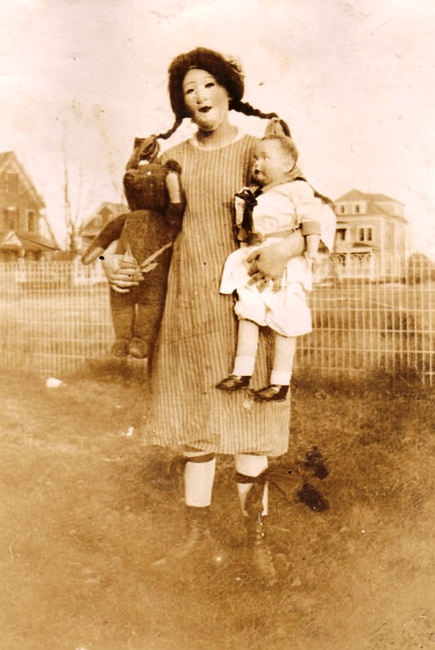
Celeste

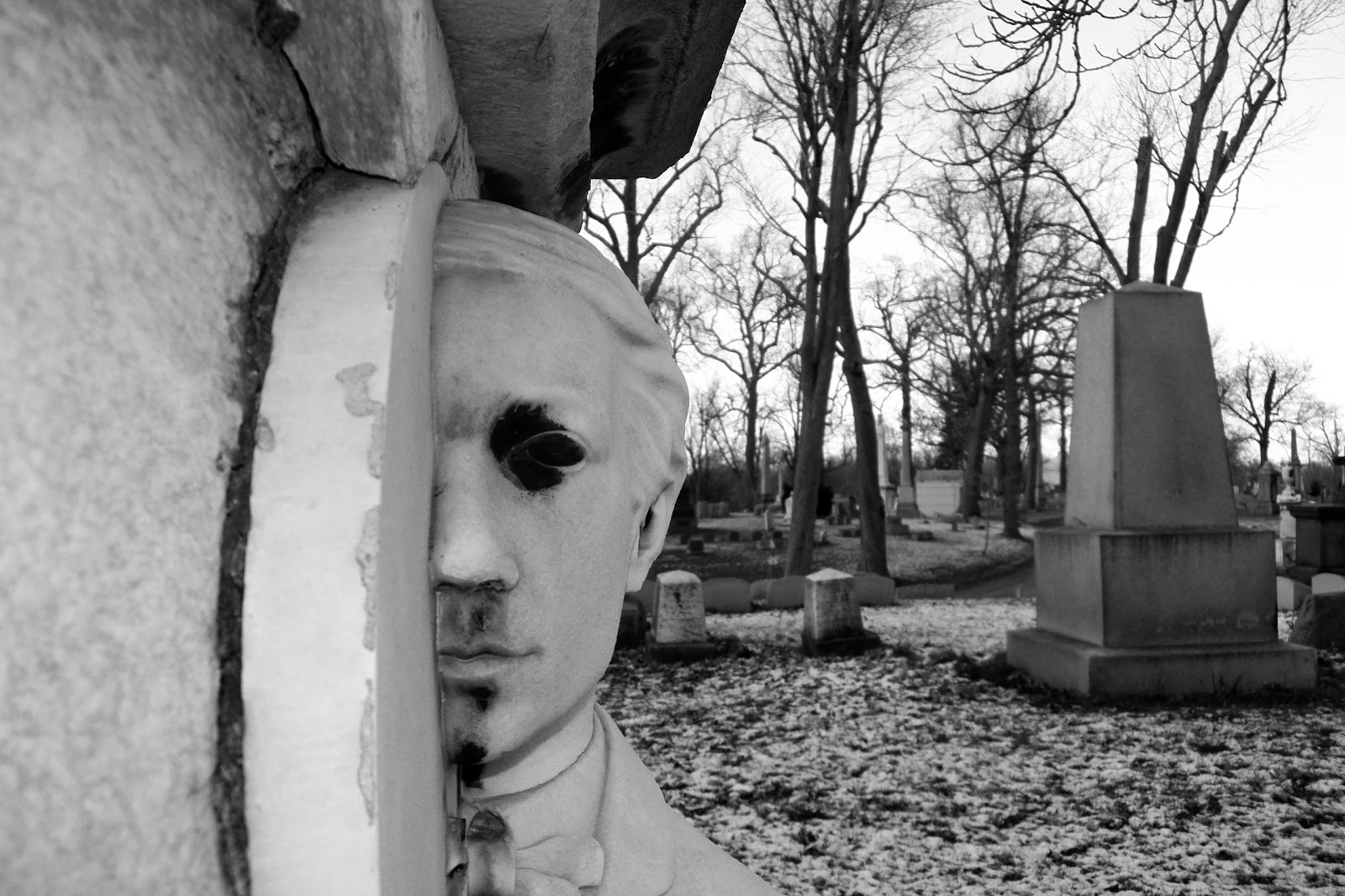
Celeste image 1

Celeste ~ A Short Story by Allen Kopp

(This short story was published in Gothic City Press: Gas Lamp and is a re-post on my website.)

She owed everything to M and F. They brought her into the world, fed and clothed her, educated her, gave her a wonderful childhood. When the world was against her, M and F were always in her corner.

After she grew up, she married and left M and F. The marriage didn’t last, though, and after it came to its sad end she moved back home. M and F were growing old by then and needed her in the same way she needed them when she was a little girl growing up. She would never leave them again.

She did everything for them. They were helpless without her. She got them up in the morning, dressed them, sat them in their chairs, turned the TV or radio on for them. She read the newspaper to F and helped M with all the housework. She loved them so much that she told them all her secrets, like the time she pushed a girl down a long flight of stairs or the time at the lake when she could have saved a drowning boy but instead let him die.

On a beautiful autumn day, when the leaves were bright colors and the air held that wonderful crispness that can only mean the end of October, she bundled M and F up in their coats. F looked so sweet in the knit cap she made for him and M seemed to glow with the prospect of the fun they were going to have.

With M and F snuggly secured in the back seat, she drove out to the country road that she remembered from her childhood. They used to take long drives on Sunday afternoons in autumn, stopping to pick bittersweet or wild flowers or a few persimmons off a scraggly tree. She laughed to remember how eating a persimmon would make the inside of her mouth so puckery that she would have to spit it out on the ground. Autumn was her favorite time of year.

The road was just as she remembered it, the hills, curves, and sudden dips that made the stomach turn over. In fact, everything was exactly the same. There was the old red barn, there the grain silo and over there the horses grazing in a field behind a fence. The rickety old bridge still spanned the creek and the old country store still sold ice-cold drinks and pumpkins.

She looked away for a moment and when she looked back a porcupine was running across the road in front of the car. Porcupines don’t run very fast. If she had run over it and killed it, she would have been upset for the rest of the day. She swerved the car too much and lost control. The car careened off the road, across a ditch and into a tree.

Her first thought was for M and F. They had slid off the seat onto the floor but were unhurt. After she tended to them, she got out of the car to assess the damage. She had hit the tree squarely; water was dripping out of the radiator. She could not drive the car another inch in its present state.

It was too far to walk to town and, besides, she couldn’t leave M and F in the car alone. She could think of nothing else to do but stand by the side of the road and wait for somebody to come along and help.

There wasn’t much traffic and the few people who went by just stared at her as if she were a lunatic and went on past. Finally a police officer in a patrol car came along and, seeing her and the car smashed into the tree, pulled off onto the shoulder and got out.

“Anybody hurt?” the officer asked.

“No,” she said.

“I’ll call a tow for you.”

“Thank you.”

He spotted M and F in the back seat of the car. “Are they all right?” he asked.

“I think so,” she said.

He went closer to the car and leaned over to get a better look. “Why, they’re wax figures!” he said. “Aren’t they?”

“They’re…my family,” she said.

He straightened up and looked closely at her to see if she was making a joke. “Are you made of wax, too?”

“They’re surrogates.” she said.

“They’re what?”

She was wearing an old coat that belonged to F. She thrust her hands into the pockets and felt in the right-hand pocket a small knife that F used to use for whittling. She brought the knife out and stabbed the officer in the forearm.

He yelped with surprise. When she saw the knife sticking into his arm, she turned and started to run, but he grabbed onto her and wrapped his arms around her to subdue her. He pushed her toward the patrol car, opened the back door and shoved her inside.

“What do you think you’re doing?” she said. “I haven’t done anything wrong!”

“Shut up!” he said.

He slammed the door, locking her inside.

“Let me out of here!” she said. “They need me!”

The officer went over to her car and opened the back door. F tumbled out onto the ground head-first in a very undignified manner. The officer picked him up by the arm and tossed him back inside.

She winced as if she had been struck and then laughed at herself because she knew then that it wasn’t the real F. They—the real F and the real M—were asleep in a big trunk in the basement. Only she knew where they were. Nobody else would ever know. She was so much smarter than she had ever been given credit for.

Copyright © 2013 by Allen Kopp

On the Face of It

On the Face of It image 13

On the Face of It ~ A Short Story by Allen Kopp

(This short story was published in Gaia’s Misfits Fantasy Anthology and is a re-post on my website.)

In the morning when Blanche Mims stepped outside to sweep away the autumn leaves that had gathered around her front door, there was a very small man dressed in black formal attire, a midget, standing in the yard looking at her. She stopped sweeping, adjusted her glasses, and snorted through her nose.

“Looking for somebody?” she asked.

“I’ve found her,” he said.

So, he was one of those! He had heard about her in town and wanted to see for himself. She went back inside as fast as she could, slamming the door. She peeked out at him as he got back into a long gray car and drove away. Oh, but he had an evil grin!

She was not like other women, so she had good reason for caution. She had what was, by any measure, a monstrous deformity: her face was not in front of her head but on top. Her nose was exactly at the top of her head, her mouth tucked in underneath her nose. Since her eyes were always pointed skyward, she had to wear a special kind of glasses made with tilted mirrors so she could walk upright and see in front of her. On the sides of her head, all the way around (covering her ears), was thick hair, the color and texture of a lion’s mane. For several years she had been a headliner in a traveling freak show and was, for a time, billed as The Lion Woman. (To her credit, she was, except for the misplacement of her face, exactly the same as anybody else.)

She continued to see the midget every day for nearly two weeks. He either drove by slowly or stopped the car and got out and stood looking at the house for a while before driving on.

“There’s been a strange man hanging around outside for several days now,” she said casually to her mother, Olga Mims, one evening when they were getting ready for bed. “A tiny man.”

Olga laughed. “I’ve seen the little bastard,” she said. “That’s a hearse he’s driving. He’s an undertaker.”

“What’s he looking for?”

“Maybe he’s trying to drum up some business.”

“In Scraptown? Nobody comes to Scraptown if they don’t have to.”

“Why don’t you ask him the next time you see him?” Olga said as she removed her wig and put it on the head of the mannequin that she kept by her bed to keep her company at night.

All day long the next day Blanche kept an eye out for the little man, but she didn’t see him. The day after, though, he parked his hearse under the trees across the road and got out and stood in the front yard and looked up at the house. He was wearing a top hat and a cape as if he thought he was Spencer Tracy in Dr. Jekyll and Mr. Hyde and was smoking a cigarette in a long holder. She decided it was time to confront the little son of a bitch. She ran her fingers through her mane-like hair to smooth it down and went out the door.

“May I help you?” she asked in a too-loud voice.

He took off his hat, took the cigarette holder out of his mouth, made a sweeping gesture with his arm and bowed. “I am so pleased to finally make your acquaintance,” he said. “Allow me to introduce myself. I am Ferris Peabody, mortician. At your service.”

“What makes you think I need a mortician?” she asked.

“I don’t,” he said. “This is purely a personal call, rather than a professional one.”

“All right,” she said. “I think you’d better state your business and be quick about it, or I’m going to call the sheriff and have you removed from my property.” She bent over from the waist so she was really facing him, rather than looking at him through the mirror glasses.

“You have a lovely face,” he said. “It’s too bad the world doesn’t see more of it.”

“What’s the gag? Do you have a hidden camera somewhere?”

“Nothing of the kind, I assure you.” He bowed again as though addressing a queen.

“If this is some kind of trick, I don’t think it’s the least bit funny and I want you to know that I keep a loaded gun in the house.”

“No gag and no trick,” he said.

Hearing their voices, Olga came out of the house. She was wearing a seventy-year-old sailor suit that was too big for her, complete with hat. She smiled at the little man and saluted like a real sailor.

“How-do, ma’am,” he said. “Ferris Peabody at your service.”

“Charmed, I’m sure,” Olga said.

“You are, I take it, the young lady’s mother?”

“I was the last time I looked.”

“You have a sense of humor, ma’am, I can see. I like that and I think it’s so important in this cruel world we live in.”

Already Olga was fascinated by the little man and found him inexpressibly piquant.

“You still haven’t told me what your business is,” Blanche said.

“I come to pay a social call.”

“Why would you do that? I don’t even know you.”

“So that we may come to know each other.”

“If you’re selling funeral plans, we’re not interested.”

“I’m not, I swear.”

“Well, come on inside,” Olga said. “We don’t have to stand out here like a bunch of statues.”

Blanche opened her mouth to object but she saw no reason to be overly rude and, besides, she was curious enough to want to know what the little mortician was going to say.

They went into the parlor and sat down, Blanche and Olga on the old horsehair sofa and he on the overstuffed easy chair facing the sofa. Since he was about the size of a three-year-old child, he had some difficulty getting on the chair but, once he was settled, he smiled broadly, pleased to have been asked inside.

“I have some beer on ice, if you’d like one,” Olga said.

“I’d love one,” he said.

Blanche sat upright on the sofa so that when he looked at her all he could see was the lion’s mane. She was deliberately being cold to him, which he could read in her posture.

“You’re probably wondering how I drive the hearse,” he said to Blanche with an ingratiating smile, “being deprived of height the way I am.”

“I haven’t given it a single thought.”

Olga came back from the kitchen. She had poured the beer into a glass, which she only did for special guests. She handed it to him and watched carefully as he took a sip of the beer.

“Ah, so refreshing!” he said.

She smiled, ever the gracious hostess, and sat back down.

“Now, to get on with my story,” he said.

“I didn’t know you were telling one,” Blanche said.

“I became acquainted with your cousin, Philandra Burgoyne, about a year ago when she came to me for her after-death needs.”

“Oh, yes,” Olga said. “How is dear Philandra?”

“She’s fine,” he said. “She’s dead.”

“Isn’t that odd? I hadn’t heard that she had passed over.”

“She was very large at the end of her life. There was no coffin available that would accommodate, so we had to bury her in a piano crate.”

“I would have gone to the funeral, had I only known.” Olga said.

“The funeral was quite spectacular, if I do say so myself, but that’s not what I came to tell you. To get right to the point, I had many deeply heartfelt conversations with Philandra in the last few months of her life. I was her spiritual advisor, in a way, as there was no one else to fill that position.”

“You must have been a great comfort to her,” Olga said.

When Blanche sighed with boredom, he turned and faced her. He had no way of knowing if she was even listening to him. It was rather like talking to a mop. “When Philandra told me about you, I knew I had to come and pay you a visit, get to know you any way I could.”

“How flattering,” Blanche said. “I still don’t understand where you’re going with this.”

“I have a successful business,” he said. “I began The Ferris Peabody Mortuary and Funeral Parlor from the ground up. I have a very select clientele. People like us.”

“People like what?”

“Unique people. People like you and me and your cousin Philandra. People that the world thinks of as freaks.”

“Oh, well, thank you very much for calling me a freak!”

“To the world that’s what we are because the world only sees what’s on the outside and never considers what’s on the inside.”

“Ho-hum,” Blanche said, covering her mouth to yawn.

“I’ve taken care of the after-death needs of Hortense the Hippopotamus Girl, Isador the Invisible Irishman, Allesandro the Monkey Boy, Lulu the Flipper Baby, and Otto Osgood the Only Human on Earth with an Exoskeleton, to name but a few.”

“Otto and I used to be sweethearts,” Olga said. “He was very proud of his physical endowments.”

“I don’t believe you ever knew him,” Blanche said.

“Well, maybe not.”

“The point I’m trying to make,” he said, “is that my business is successful and getting more so. I have everything I need, except for one thing, and that’s where you come in.”

“You want me to die,” Blanche said, “and let you take care of my after-death needs so you can drop my name whenever and wherever it’s convenient, the way you drop the names of those other freaks? You little name-dropper, you!”

“I want someone to share my success with.”

“Get a dog.”

“The clock is ticking away. I’m no longer young and neither are you.”

”Speak for yourself!”

“You would complement my business in a way that nobody else could. My clients would feel comfortable with you. The women folk like it better if a woman is seeing to the arrangements. You know, what shroud goes with the casket lining and all that. What panties to wear. What shoes.”

“Are you offering me a job?”

“More than that. I’m offering to marry you.”

Phht! And wouldn’t we make a fine pair! A woman whose face is in the wrong place and a man who doesn’t even measure up to the yard stick! We could put on a show for Halloween, but I don’t know what we’d do the rest of the year.”

“You’ve been hurt by life and so have I,” he said.

“Me too,” Olga said. “I’ve been hurt by life a lot.”

“In my world you wouldn’t be an outcast. You wouldn’t have to hide yourself away in a little house built into the side of a hill because you wouldn’t be any more freakish than anybody else.”

“Oh, and where is this world, anyway, where everybody’s a freak but doesn’t know it?”

“It’s closer than you think.”

“It sounds delightful, your world, but there’s just one problem.”

“What?”

“How can I believe you? How do I know you’re not just some evil dwarf come to carry my soul to hell?”

He laughed heartily. “I assure you I’m not,” he said.

“I think you should listen to what he’s saying,” Olga said.

“I want to show you something,” he said. “Maybe it will help to convince you.”

He took her by the hand and led her to a mirror on the wall. After he had positioned a chair behind her to stand on so they were of more or less equal height, he placed his hands on both sides of her head and said, “Watch closely.”

She adjusted her mirror glasses and sighed. All she saw was her lion mane of hair, which is what she expected to see, but after a few seconds she saw something different. Her face was somehow projected on the front of her head so that she looked like a normal person whose face was where it should be and not a freak.

“How do you do that?” she said.

“Never mind how I do it. Just know that I can.”

The image in the mirror faded and she turned around and looked at him as he got down off the chair. “That’s just a trick,” she said. “I’ve had enough tricks in my life.”

“I think there’s something to that,” Olga said.

“Come with me now,” he said.

“I can’t marry you without knowing anything about you.”

“We can put off marrying for as long as you like.”

“And you won’t touch me?”

“You’ll have your own private boudoir with the strongest lock you ever saw on the door.”

“And I can come back home if I so choose.”

“It’s not a prison.”

“Can she come too?” Blanche asked, tilting her head toward Olga.

“I can’t leave now,” Olga said. “Poor Butterfly is about to have her babies.”

“She loves her cats more than anything,” Blanche said.

“We can come back and get her and her cats, too, just as soon as she’s ready,” he said.

“That will give me time to get my wig washed and styled and get my nails done,” Olga said. “What should I wear?”

“You can wear whatever you want,” he said.

“Can I come as a clown? I’ve always loved clowns.”

“You can come as a clown, a sailor, a chicken, or anything you want.”

“I have the cutest clown getup you ever saw!”

“Do I need to pack a bag?” Blanche asked.

“No,” he said. “You’ll have everything you need when we get to where we’re going.”

“What are we waiting for, then?”

Suddenly Blanche Mims seemed in a hurry to leave her little house built into the side of a hill in the section of town known as Scraptown. She gave Olga a little squeeze about the shoulders and followed the tiny mortician outside to his long gray hearse waiting for them under the trees.

Olga stood and watched as they drove away, waving and blowing kisses. She saw the hearse as it disappeared from view down the hill in the lane. Unlike other cars, though, it just never reappeared at the top of the next hill.

Copyright © 2014 by Allen Kopp

On This Day

On This Day image 3

On This Day ~ A Short Story by Allen Kopp 

Traffic was light. Billie Rose Flint arrived at the cemetery at five minutes after three on a bright October afternoon. She knew the cemetery well and parked the car in the same familiar spot, underneath an old oak tree that at the moment was so suffused with sunstruck color that it was as pretty as any picture in a magazine. She breathed deeply of the pleasant leafy smell and, not even bothering to lock the car, walked up the hill that she knew so well, past the gravestones whose names she knew by heart.

By the time she came to her son’s grave, she was winded and her legs ached; she was, after all, getting old. She spread the blanket on the ground, kicked off her shoes and sat down facing the gravestone. It was a simple red-granite affair, not as showy as some of the others, with the name, Randall Wallace Flint, the date of his birth and the date of his death.

As always when she was in the cemetery and there was no one else around, she began to feel sleepy. She reclined on her back and looked up into the trees. The breeze on her face was fragrant and cooling. A little hump in the ground pressed comfortably into the small of her back as if it had been placed there especially for that purpose.

She dozed and in a moment she was aware of someone standing beside her. She opened her eyes and looked up into his face but the sun kept her from seeing him. He smiled and sat down beside her on the edge of the old quilt.

“How have you been keeping yourself?” he asked.

“Just peachy keen,” she said.

“I had a feeling you’d be here today.”

“It’s a special anniversary,” she said.

“Anniversary of what? You can say it.”

She looked at him and saw he was trying to keep from laughing, as if it was all a joke to him.

“Thirty years ago today,” she said, “you hanged yourself from a rafter in the garage after school.”

“Go on,” he said.

“I found you when I opened the door to pull the car in. You were just hanging there. There was a tipped-over chair. I knew right away it was too late.”

“And then what did you do?”

“I screamed. The woman who lived next door, Doris Ellsworth, was in her backyard and heard me. She came running to see what was wrong. When she saw what had happened, she closed the garage door and took me into the house and called an ambulance.”

“And then what?”

“They came and cut you down. By then, all the neighbors had gathered around to watch. The paramedics carried you out on a stretcher and put you into the back of the ambulance. They were moving very slowly because they knew there was nothing to be done.”

“What did you do then?”

“I drank a glass of scotch and called your father and told him he needed to come home.”

“And did he?”

“He was there in a few minutes. At first he didn’t believe you were really dead. He wanted to see to make sure for himself. They let him see you, with all those people watching, and then he turned to the ambulance driver and very calmly told him to take you to the funeral home. Then he made me get into the car with him and we drove there behind the ambulance and bought you a casket. Your father wrote a check to pay for it.”

“It was some funeral, though, wasn’t it?” he said.

“Yes, it was a big funeral.”

“Everybody from school was there. Standing-room only. There wasn’t a dry eye in the place. Suddenly everybody likes you when you’re dead.”

“They liked you before you were dead but you didn’t see it.”

“I was going through an adolescent phase. I thought I couldn’t go on.”

“If only there had been some way to help you before it was too late.”

“It doesn’t do any good to think that way. What’s done is done.”

“Was your life really so unbearable?”

“I was a misfit. I was failing algebra. I had acne. I couldn’t take being chosen last for basketball any more. Do you know how much I despise basketball to this day?”

“Those things would have passed. If you had only talked to me about what was bothering you, I could have helped.”

“Maybe not,” he said. “Who knows?”

“Insanity has always run in my family,” she said.

He laughed. “Do you think that’s what was wrong with me?”

“Who can say?”

“If that helps you to understand what I did,” he said, “I guess it’s as logical an explanation as any.”

“Do you think about all the things you missed?”

“Not much,” he said. “ I think more about the things I avoided. Like having to get a job, paying taxes and having a bad marriage.”

“What makes you think you would have had a bad marriage?”

“I don’t know. Aren’t all marriages bad in one way or another?”

“It depends on who you talk to, I guess.”

“You and father had a terrible marriage.”

“I wouldn’t say it was terrible.”

“You fought all the time.”

“Did we? I don’t remember.”

“I call that ‘convenient forgetting’,” he said.

“Anyway, it’s all in the past now and no longer matters.”

“Yes, all in the past.”

“I’m just glad you’re not in torment for what you did,” she said.

“No, not in torment. Not in heaven, either.”

“I won’t ask you what it’s like where you are because I don’t want to know. All I want to know is that you’re not being made to suffer for what you did.”

“Of course I’m not. There isn’t any such thing as hell.”

“Now you’re forty-five,” she said. “Or you would be if you had lived. When I look at you, I see a forty-five-year-old man. You look a little like your father but more like my side of the family.”

“You see what you want to see,” he said.

“The unhappy fifteen-year-old is gone. I can no longer even see his face.”

“Good riddance,” he said. “I never liked him much, anyway.”

“Are you sorry for what you did? I mean, ending your life before it even had a chance to begin?”

“If you say so, mother.”

She heard voices and when she turned her head to see who it was, she saw two very old ladies hovering over a fresh grave nearby. When she turned back to her son, he was gone. The spell was broken. He wouldn’t have wanted anybody else to see him.

She picked up her blanket and walked over to where the old ladies were and greeted them. One of the old ladies had an excess of makeup caked on her face and the other wore a man’s hat and suit, as if they had just come from a costume party.

“Lovely day,” the woman dressed as a man said.

“Fall is my favorite time of the year,” makeup face said.

“A sad day for me,” Billie Rose Flint said. “My son died thirty years ago today.”

“Oh, my!” makeup face said. “How sad! How old was he?”

“Fifteen.”

“Aww.”

She picked up a lily from the flowers that were left on the fresh grave and handed it to Billie Rose Flint. “In remembrance,” she said.

Billie Rose Flint took the flower and, in spite of herself, began crying uncontrollably, trying to cover her face with her handkerchief to keep the old ladies from looking at her. She opened her mouth to speak again but instead hurried off with the flower before she felt compelled to tell them the whole story.

Copyright © 2014 by Allen Kopp

A Conversation Between Two Mothers

A Conversation Between Two Mothers image 5

A Conversation Between Two Mothers ~ A Short Story by Allen Kopp

(I posted a slightly different version of this short story in April 2013.)

It was Madge’s turn to host the card party and she still had much to do. She had put her hair up in curlers and was tying a scarf around her head to make herself presentable to go and buy some last-minute items, when there came a knock at the back door. She huffed with impatience, snuffed her cigarette out in the garbage pail, and opened the door to a short, toad-like woman with frazzled red hair.

“Mrs. Simple?” the woman said.

“It’s Semple,” Madge said.

“Well, Simple or Semple or whatever it is, I need to have a word with you.”

“What about?”

“You have a son named Dakin?”

“That’s right.”

“He’s been picking on my Leslie.”

“Picking on your what?”

“On my son Leslie, dodo bird!”

“Oh. And who are you?”

“My name, if it should happen to be of any interest to you, is Mrs. Felton. My son is Leslie Felton.”

Madge sighed and stepped out the back door. “Maybe you’d just better tell me what happened,” she said.

“Leslie was riding his bicycle on the sidewalk, minding his own business. Dakin jumped out from behind a tree and yelled and scared him and caused him to wreck his bike. He cut a big gash in his leg that was pouring blood.”

“I’m sure that’s an exaggeration.”

“And that’s not all. When Leslie was lying on the ground howling in pain, Dakin took his bicycle.”

“Oh, he’s just playing. That’s what boys do.”

“Oh, is that so? Well, if you want to know the truth, I think Dakin is a lunatic! Only a lunatic enjoys inflicting pain on others.”

“Now, hold on a minute!” Madge said. “You don’t have any right to speak to me that way about my child!”

“Then when Leslie finally got his bike back, it had some scratches on it that weren’t there before. Caused by your brat!”

“Wait a minute!” Madge said. “Did you see Dakin do any of this?”

“He did it all right!”

“Did you see him do it?”

“Well, no, I was in the house, tending to my little girl.  She’s got a rash all over her body and we don’t know what’s causing it.”

“If you didn’t see Dakin do it, how do you know he did?”

“Because Leslie said so. If you could have seen how upset he was, it would have broken your heart. If you have a heart.”

“Maybe Dakin didn’t do it. There are lots of boys in the neighborhood.”

“Leslie said he did it and if Leslie says a thing, it’s true! He came into the house crying with the blood dripping down his leg. He was so upset he couldn’t speak. When I held him on my lap and got him to calm down, he told me what happened.”

“So, you’re taking Leslie’s word that Dakin did it?”

“Hell, yes!”

“You can’t always go on what kids say. They have a way of distorting the truth. Sometimes you have to find out what happened on your own.”

“So you’re saying my boy is a liar?”

“Look, Mrs. Whatever-your-name-is, I’m very busy at the moment and I don’t have time to stand here and jaw with you all day, as lovely a prospect as that is. When Dakin comes home, I’ll speak to him and I’ll find out what really happened. If he did what you say he did, he will be made to apologize.”

“And that’s all?”

“You want a written confession in blood?”

“I have a good mind to call the police.”

“They’ll just laugh at you for being so trivial.”

“You tell that little ham-handed troglodyte of yours to stay away from Leslie and Leslie’s bike and anything that belongs to Leslie.”

“You’d better watch who you’re calling names! You’ve got a lot of nerve coming to my door and raising such a fuss over nothing!”

“So now you’re saying it’s nothing? First Leslie is a liar and now it’s nothing!”

“I told you the matter will be taken care of! Now, so help me, if you don’t get off my property right now, I’m going to throw something at you!”

“My, aren’t we hoity-toity, though? You think you’re better than me, don’t you? Well, I’ll tell you something. I have no intention of getting off your property until I’m good and ready.”

Oh!” Madge said. She ran into the kitchen, looking for something to throw. The first thing that came to hand was a bag of grapefruits. She carried the bag out the door and began lobbing grapefruits at the woman, one after the other. The first one hit her in the chest but the rest missed her.

“I see where Dakin gets his craziness from!” the woman said. “Only crazy people throw fruit!”

When Madge had run out of grapefruits, the woman, as deft as a monkey, rushed her and punched her in the chin with her fist. The blow almost knocked her off her feet but she caught herself on the doorframe.

“I’ll give you fifteen seconds to get off my property,” she said. “That’s how long it’ll take me to go to the bedroom closet and get the loaded gun my husband keeps there.”

“Oh, my!” the woman said, taking a few mincing steps and waggling her hips in a demonstration of hoity-toity. “You can see how scared I am, can’t you?”

“You are the most repulsive woman I’ve ever seen!”

“Well, that goes double for me!”

The gun was in the exact spot in the closet where Madge thought it would be, high up where the kids wouldn’t find it. She checked to make sure it was loaded and then before she knew what she was doing she was outside again, pointing the gun at the woman.

When the woman saw the gun, she didn’t leave as Madge hoped she would but bent over from the waist and made a raspberry sound with her tongue and lips. Then she stuck her thumbs in her ears and waggled her fingers.

“Hah-hah-hah!” she said. “Are you supposed to be scaring me with that little pea shooter? I’ve had bigger guns than that pointed at me!”

The first bullet struck the woman in the breastbone, the second knocked her off her feet. She was lying on the ground, struggling to stand up, as Madge fired all the bullets in the gun at her, six in all.

When she was sure the woman was dead, she dragged her body by the ankles into the bushes in the overgrown neighboring yard where the house just happened to be vacant. It would be a while before anybody found her and, when they did, they wouldn’t know what had happened.

She put the gun back in the closet and checked herself in the mirror. No, she didn’t look as if she had just killed somebody. She went out to the garage and backed the car out and zoomed up the street, waving and smiling at some of the neighbors. It was getting late and she had to get to the store before they were out of the best cuts of meat.

Copyright © 2013 by Allen Kopp

Cotton

Cotton image 4

Cotton ~ A Short Story by Allen Kopp 

There were five of us: me, a brother and three sisters. When we were old enough, we were taken away one after the other. I think my mother was a little glad to see us go. She was getting old and wanted only to lie in the sun and take uninterrupted naps.

As with all of us, a big one came to get me. He smelled funny but he handled me gently as he put me into a carrier and closed the door. I cried a little and pulled at the door with my paws but I knew it wouldn’t do any good—I wouldn’t be let out again until I was in my new home.

The car ride made me sleepy and made me forget that I had to pee. I had ridden in a car before on a couple of different occasions and I knew how it either makes you want to throw up or go to sleep. I curled up in a tight ball, making myself as small as I could, and went to sleep.

The car went a long, long way from where we started but finally it came to a stop. When the big one got out, I stood up in anticipation of being let out. I was knocked off my feet again, though, when he picked up the carrier, carried it inside the house and set it down on the floor. (A rough but short ride.) Right away I smelled all kinds of awful smells that I couldn’t identify. Was it the smell of another cat? My heart started to pound. All I wanted was to go back to the safety of my mother.

When the big one saw I didn’t want to come out of the carrier, he stuck his big hairless, pink face through the door and spoke the terrifying language that to me sounded like a dog barking. I crouched down and backed up into the corner.

He upended the carrier—I tried holding on but there was nothing to hold to—and I went sliding out against my will. I stood up and took a few steps, stretched my muscles and licked my paw. The big one seemed to approve.

Just then a different big one, a “she” big one, came out of nowhere and scared me with her loud voice. I started to run for cover but she scooped me up in her paws. Now, I have to tell you it’s an odd sensation to be picked up by something fifty times bigger than you are. I meowed a couple of times to let her know I didn’t like what she was doing to me, but she nuzzled me and started scratching my neck and ears. In spite of the bad smells that made me want to gag, I began to purr a little.

The “he” big one said something to the “she” and they both made that hideous sound that I was to recognize later as laughter. They gave me some water out of a little red bowl and, after I took a good long drink, I was directed to the litter box, which I was very glad to see. I scratched in the box for a few seconds, sat on my haunches, made a tiny wet spot and covered it up so it didn’t show.

The two big ones began playing with me, even though I was in no mood. They had a toy mouse on a string that they dangled in front of my face. I thought I smelled another cat on the toy mouse, but I obliged them anyway by batting at it with my paw and trying to catch it in my mouth. After they tired of this game, they gave me some food, which I was barely able to eat because it didn’t smell like anything I had ever eaten before. I guess I was still too nervous to eat, anyway.

Later on they left me alone to do some exploring on my own. I went into the next room and then the room after that. I jumped up on a big table but there was nothing there that interested me so I jumped down. I walked the length of the couch and the chairs in the living room, exploring every inch of the stinky fabric; I stuck my paws in the dirt of some plants and then I climbed on the TV. I crawled under the couch and came out with dust stuck in my whiskers that caused me to sneeze. I jumped onto the counter in the kitchen, nosed into the sink and took a couple of licks out of a greasy skillet on the stove.

I went into the bedroom, which seemed to be the best room of all. The bed was soft with enough room for a hundred cats like me. As good as the top of the bed was, the underside was even better. It was dark and there were some boxes and things that offered complete concealment from any dangers that might still be lurking. I was thinking it would make a good place for a nap when Finley jumped out at me and scared me so bad I jumped sideways and took a few spider-like steps backwards. The fur ruffled up on my back and my tail puffed out to three times its normal size.

Finley was a young cat, not quite full grown, but bigger than me. He was a long-haired cat that made him seem bigger than he was and he had a mane like a lion. He let out a couple of guttural meows that to me sounded like war cries and came running toward me. I wouldn’t let him get near me, though. I ran into the other room with him chasing me. I didn’t know if he was going to kill me or just hurt me.

I dove under the couch and I knew right away it was a smart move because Finley wouldn’t fit. He could see me, though, and he knew I wasn’t going anywhere and that if I came out he would know it. Every now and then he stuck his paw under to try to grab at me, but I pulled away out of his reach.

I discovered then that Finley was the most patient cat in the world. He stood guard there, stalking me, for the rest of the day and most of the night. I was hungry and thirsty and I had to use the litter box, but I was still too scared to come out. When the big one tried to coax me out by shining a flashlight in my face, I just ignored him.

Finally, in the morning, with the big one there to keep Finley at bay, I came out. The big one picked me up and set me on the table in the kitchen to feed me. He spooned some food into a bowl and I began eating. When Finley, who knew everything that was going on, realized I was eating what he thought of as his food, he tried to get at me to push me away. The big one had to make him stay away from me so I could eat. (That’s when I learned how to eat and growl threateningly at the same time.) After I ate, I had a good drink of water and a satisfying couple of minutes in the litter box, while the “she” big one held Finley in her arms and whispered in his ear.

After a couple of days I was feeling more courageous and I stood up to Finley, nose to nose. Instead of hurting me, as I thought he was going to do, he licked me on the face and head. I guess I discovered then that he wasn’t as bad as I thought he was going to be. What I thought at first was meanness and aggression was more curiosity and playfulness, with just a little jealousy thrown in.

I was still leery of him for a week or so, keeping my distance and hiding from him if I found him a little too overbearing, but I began to get used to him after a while. If he wants the spot on the couch that I’ve made warm, he makes no qualms about trying to take it from me, but more often than not I’m willing to move to another spot and let him have it.

Cold weather was coming on. Cats, as you probably know, are always looking for extra warmth. Finley makes a really good sleeping partner. Not only is he warm, but he has the softest fur I’ve ever felt. Sometimes we sleep head to head or cheek to cheek or crossed over each other like a couple of earthworms. Sometimes I use his belly for a pillow or he uses mine. When winter comes and the nights are really cold, the big one lets us sleep under the covers with him in the bed. There is no warmer place in the house.

Finley and I are now inseparable friends. We play together a lot and keep each other company. We’re a lot alike but also a lot different. Sometimes we eat together out of the same bowl, but most of the time he lets me eat first before he eats. If anybody ever knocks on the door, I run and hide but Finley stays right there to find out what is going on. When we both are taken to the doctor at the same time, I’m still scared but not as scared as I would be if Finley wasn’t with me. When I hiss, he hisses, like two parts of the same hissing machine.

Copyright © 2014 by Allen Kopp
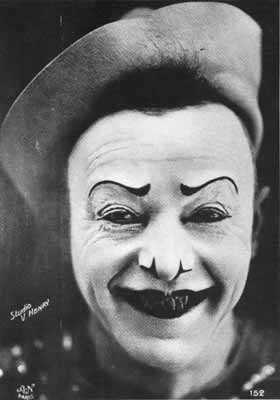
Billie Jo, Betty Jo and Bobbie Jo

Billy Jo, Betty Jo and Bobbie Jo image 1

Billie Jo, Betty Jo and Bobbie Jo ~ A Short Story by Allen Kopp 

I always wanted to watch Petticoat Junction on TV and couldn’t. We only had one TV and I never got to choose what was watched, except on the rare occasions when I happened to be at home by myself. Our TV was almost always tuned to westerns, war or police dramas, or, of course, the news. Comedies were unacceptable. Anybody who wanted to watch a situation comedy had severe mental problems, or worse (especially if it had the word “petticoat” in the title). If you were a “normal” person you didn’t want to see a show that you could laugh at and talk about at school the next day. Life was just too serious for that. If you weren’t seeing men on horses shooting guns or men fighting battles with other men, you just weren’t entertained. That’s the way the cards were stacked at our house.

Anyway, Petticoat Junction was so cheery and so far removed from reality that it made you forget your problems for a while. It was set in the country (as opposed to a city or town), presumably somewhere in the United States, but what state or what part of the country it was in was never specified. (The nearest town was called Hooterville, if that helps at all.)

In this country setting was a hotel called the Shady Rest, run by an old woman named Kate. The actress Bea Benadaret played Kate. She also played the part of cousin Pearl Bodine in The Beverly Hillbillies and did the voice for Wilma Flintstone. No matter which side of the fence you are on regarding Miss Benadaret, you have to admit that is quite an impressive track record for any thespian!

So, Kate the country hotel owner didn’t have a husband but had a trio of perky daughters, named, appropriately, Billie Jo, Betty Jo and Bobbie Jo. They were the reason we watched the show in the first place. They were apparently in their teens but, unlike teens in the real world, they were perfectly groomed—never a hair out of place—and were never sullen, angry or angst-ridden. They never seemed to go to school or do much of anything, but they did, however, swim in the water tank beside the train tracks, as evidenced in the show’s opening every week, slinging their petticoats over the side—hence the title Petticoat Junction.

Also part of the Shady Rest family was irascible Uncle Joe. He had a big belly and wore a bow tie and a funny hat; took a lot of naps in the rocking chair on the porch and could be counted on to say funny and inappropriate things, stimulating the laugh track more than anybody else. He was played by the gravelly voiced character actor Edgar Buchanan, who, during his movie career, was in a lot of westerns and played the helpful friend, Applejack, of Irene Dunne and Cary Grant in the tearjerking movie Penny Serenade in 1941.

When Kate needed food for her guests at the hotel, she bought it from Sam Drucker, a skinny, baldheaded man who wore a garter on his sleeve and a long apron. His general store, right out of the nineteenth century, had a potbellied stove, a phone with a crank (just turn the crank and you’ll get Sarah, the telephone operator), a display of brooms for sale, and shelves of canned goods behind the counter. Sam Drucker might have been a love interest for Kate as there seemed so few eligible men around, but, on second thought, he probably wasn’t.

And then there was the train, the Cannonball, which we usually saw or heard about when the action moved outside the hotel. More often than not, the Cannonball brought interesting guests to the hotel, such as a sick child and her overly protective mother, an old beau of Kate’s from her youth, or the mean old miser who wanted to buy the Shady Rest and tear it down. The engineer and the conductor of the train were two old country gents who, like Uncle Joe, could be counted on to elicit laughter. Their names were Smiley Burnett and Rufe Davis. They weren’t very smart but we didn’t care because nobody else was smart, either.

As the sixties wore on, Petticoat Junction changed, and not for the better, either. It went from black and white to color, as did every other show on television. The actresses who played the three gals weren’t always the same. When there was a different Billy Jo, Betty Jo, or Bobbie Jo from what we were used to, I think we weren’t supposed to notice, but we did, and it was disturbing. (One of the gals, we heard later, was the girlfriend of Nat King Cole.) When Bea Benadaret became ill and died, the show tried to continue without her, but her absence was felt too much to retain the feeling it once had.

Given the popularity of Petticoat Junction, it was inevitable that there would be an offshoot. It was called Green Acres and it had the same pastoral setting and even some of the same characters as Petticoat Junction, including Sam Drucker. It was about a sophisticated New York couple who moved to the country and set themselves up on a farm. The best thing about Green Acres was Eva Gabor, the Hungarian-accented Park Avenue socialite who had to adapt herself to being a farm wife. (“Darling, I love you, but give me Park Avenue!”)

Eventually the kind of gentle, unsophisticated rural humor of Petticoat Junction fell out of favor with audiences and was replaced by more caustic, politically conscious offerings like All in the Family. The simple sixties passed away and became something else entirely. Would I want to go back and live the sixties over again? Not if it means I have to repeat the hellish ninth grade.

Copyright © 2014 by Allen Kopp

Bye Bye Blackbird

Bye Bye Blackbird image 1

Bye Bye Blackbird ~ A Short Story by Allen Kopp

The year Nellis Folts was eleven years old was the year he decided he would enter the school talent contest. He chose Bye Bye Blackbird for the number he would perform, and he wouldn’t just stand there and move his lips to some stupid record the way some people did. He would actually sing the song. He asked Miss Mullendorfer, the assistant music teacher, to accompany him on the piano and she readily agreed, saying that she thought it was “simply splendid” that a boy like Nellis, who was usually so standoffish, was going to participate in something she knew was going to be “lots of fun.”

“I’m not doing it for fun,” he said. “I’m doing it for the prize money.”

That evening when Nellis told his mother at the dinner table that he was going to perform in the talent show, she was less than enthusiastic.

“Are you sure you want to be up there on the stage in front of all those people?” she asked. “They’ll laugh at you.”

“I know. They laugh at me anyway.”

“I didn’t know you could sing.”

“Well, I can.”

“I’ve never heard you.”

“I want you and father to come to the talent show. You can hear me sing then.”

“I’m sure your father will be too tired to go out after having worked all day, but I’ll try to come if it’s a night I’m free.”

“You’re free every night.”

For two weeks before the talent show, he practiced Bye Bye Blackbird every night in front of a full-length mirror in his bedroom, with hand gestures and a couple of dance steps that he made up himself. He sang in a quavery tenor that sometimes verged on the soprano:

Pack up all your cares and woes.
Here I go, singin’ low.
Bye bye blackbird!
 
Where somebody waits for me,
Sugar’s sweet and so is she.
Bye bye blackbird!
 
No one here can love or understand me.
Oh, what hard-luck stories they all hand me!
 
So make the bed, light the light!
I’ll be home late tonight.
Blackbird byyyye byyyye!
 

(At the end of the song, he held out his arms and went down on one knee.)

For his clothes, he would wear black pants, a white shirt, and, from a trunk in the attic, a decades-old yellow sport jacket with wide shoulder pads and a red-and-yellow bow tie. Just the thing.

The night of the talent show brought with it heavy rains and thunderstorms. Nellis’s mother heard on the radio that storm warnings had been issued, but Nellis was not to be deterred. At six o’clock, one hour before the talent show was to begin, he put on his yellow plastic patrol-boy raincoat and, with his satchel containing the clothes he was going to perform in, walked the half-mile to school. He was soaked all the way through when he got there but was gratified to see that a lot of people had already shown up and taken their seats in the auditorium. The school was abuzz with excitement, in spite of the weather.

Without speaking to anyone, Nellis went into the deserted boys’ room to prepare. He took off his raincoat and set his satchel on the floor and opened it. His hair was still wet, so he took a wad of paper towels and dried it off the best he could and poured some Vitalis into his palm, rubbed his hands together and smoothed down his thick mess of dark hair. He then combed his hair exactly the way Sammy Davis Junior would have combed his if he had been there. He felt certain that anybody who owned a television set could not fail to make the comparison.

After dressing, he checked himself in the mirror and, when he was satisfied with the way he looked, especially the bow tie, he went “back stage,” where he and all the other contestants had been told to gather at seven o’clock sharp to draw their numbers out of a hat to determine in what order they would appear on stage. When he picked his number from the hat and realized he was last, his heart did a little thump-jump inside his ribcage. But no matter, he told himself. He didn’t mind being last; he would be freshest in the minds of the judges.

To begin the show, Mrs. Pepper, the music teacher, went out on the stage and waved her flabby arms to shush the audience. She was only four-and-a-half feet tall and almost as wide. Somebody in back of the auditorium whistled at her and yelled “Oh, baby!” but she pretended not to hear.

“Welcome to the annual school talent show!” Mrs. Pepper said in her whiny voice, training her myopic gaze on the middle distance. “It looks like we’ve got a capacity crowd! I’m happy to see that so many of you have braved the bad weather to be with us tonight! And I don’t think you’ll be disappointed! We’ve got a great show for you!”

The public address system squawked and sputtered, eliciting whistles and hoots from the audience.

She tapped on the microphone before continuing. “To make our competition a little more interesting,” she intoned, “our first-place winner, as decided by our three judges, will win a prize of fifty greenbacks. Our second-place winner will win twenty-five greenbacks, while our third-place winner will receive a complementary pass for dinner for two at the Lonesome Pine Restaurant and Grill on Highway 32.”

“Woo-woo-woo!” somebody in the audience yelled. Mrs. Pepper frowned for a moment before resuming her smile. “So, without further adieu,” she said, “we now bring to you our little show.”

The first contestant was Cecelia Upjohn, wearing lots of makeup, even though she was only twelve years old, and a skin-tight, glittery costume with red-white-and-blue diagonal stripes. She twirled her baton to a recording of I’m a Yankee Doodle Dandy, all the time with a fixed, doll-like grin on her face. When she tossed the baton high above her head, she somehow caught it without even looking at it. She finished her routine with a perfect split, one leg in front and the other behind as she went down on the floor with seemingly no effort at all. The audience rewarded her with resounding applause.

Then Ralph Krupperman with his hair the color of a new penny and Belinda Cornish took to the stage to do their Fred Astaire and Ginger Rogers dance routine. He wore a tuxedo with a swallow-tail coat and she a curly blond wig and a satiny white dress that clung to her immature body and dragged the floor. He flung her around and around at a dizzying pace to keep time with the music as the tails of his coat flapped and she tried hard to keep from falling. After a frenetic five minutes, the music ended and the routine was over. Ralph and Belinda clasped hands and smiled like onscreen lovers as they took their bows and exited stage left to polite applause.

When Curtis Bellinger came onto the stage, a questioning murmur arose from the audience because he carried a chair in one hand and a saw in the other. (What was he going to do? Saw the chair in half?) He carried the chair to the middle of the stage and set it down. Then he sat on the chair, put the saw between his knees, and, producing a violin bow, began playing Some Enchanted Evening. The audience was transfixed as the mournful sounds of the saw carried over their heads and out the doors into the rainy night. When the song was over, the audience applauded enthusiastically—more for the novelty and daring of the act than for its musicality.

(As Curtis Bellinger was leaving the stage, a huge crack of lightning caused everybody to gasp and the lights to flicker, but the lights stayed on, and the moment of danger, if that’s what it was, was forgotten in the wake of the next act.)

Three large-for-their-age girls, who looked enough alike to be sisters but weren’t, came onto the stage, their hair in snoods and dressed in women’s army uniforms. They stood side-by-side, looking silly and self-conscious as they waited for their music to begin and, when it did, they began swiveling their hips and moving their arms like marionettes. They moved their lips to Boogie-Woogie Bugle Boy, while everybody (even the most naïve person in the audience) knew they weren’t really singing.

The next act was Gus Goldblatt, a fifth grader who already weighed over two hundred pounds and wore men’s clothes. His grandfather had started teaching him the accordion when he was only two years old and since that time he had become steadily more proficient with that instrument. He favored the audience with Lady of Spain, segueing smartly into I’m Just a Vagabond Lover. The audience was most appreciative.

Gus Goldblatt’s exit brought Bertha Terhune to the stage. She was dressed in a black, full-body leotard with red ribbons in her hair and what appeared to be a bedroll under her arm. She curtsied in the direction of the audience, and, spreading out the bedroll that was really a tumbling mat, began her routine. She did a series of cartwheels, then forward somersaults and backward somersaults. She jumped into the air one way and then the other, twirled, twisted, leapt, spun, and turned, all with the agility of a flea and so fast that she was only a blur. The audience hooted and whistled.

Nellis watched all the acts from the wings as he waited to go on. He stood near a window and was aware of the storm, but what the weather might or might not do was the least of his worries. He knew he could remember all the words to Bye Bye Blackbird, but what he was worried about was “putting the song over,” as they say. The audience had sat though a lot of acts. Would they be ready for his? Would they laugh at him, as his mother had said? Would they boo him off the stage? Suddenly he wanted the whole thing to be over and to be back home where it was safe and quiet. He took deep breaths, felt light in the head, and hoped he wouldn’t be sick.

Miss Mullendorfer was standing beside him with her sheet music when Mrs. Pepper came to him and told him it was time for him to go on. He took a deep breath and walked out onto the stage. When he was installed behind the microphone, he looked out at the audience and tried to smile and they looked back at him, waiting to see what he was going to do. Two hundred eyes trained just on him, waiting for him to begin. Could he remember how the song began?

When Miss Mullendorfer from the piano played the little intro she had worked out, Nellis opened his mouth to let out the first notes. That’s when the storm hit with all its force and fury. The row of windows behind the audience blew inward as if from an explosion. The audience screamed, a prolonged wail of terror, and, as if being awakened from a dream, jumped to their feet and began running in every conceivable direction, except toward the exits and safety.

Nellis was stunned. He didn’t know what was happening. He looked over at Miss Mullendorfer at the piano to see if she might give him some cue as to what he should do, but she was gone. He was all alone on the stage, grasping the microphone stand in both hands. The thing sputtered and sparked. He might have been electrocuted if the power hadn’t failed at that moment, bringing him to the reality of the situation. He was just able to make his way out of the building in the dark as the roof was picked up and deposited someplace else and the walls around him began to collapse like a house of cards.

Copyright © 2014 by Allen Kopp

Color TV

L111455

Color TV ~ By Allen Kopp 

In the early 1960s everybody wanted a color TV, but few people had them. They were expensive and, in the small town where we lived, not easy to get. You had to pay a nonrefundable deposit of twenty-five dollars to get your name on a waiting list to purchase one, which might take six months to a year, depending on how fast the dealer could get them from the factory. And, even if you had a color set, you were still going to be watching black-and-white TV most of the time because there were only three shows on in color. When you think of the early years of color TV, you think of The Wonderful World of Disney and Bonanza on Sunday nights and Hazel in the middle of the week. (I was never able to understand the appeal of Bonanza, in color or black and white.)

Color TV was so much to be desired that Woolworth’s offered a low-cost (cheap) solution to those who wanted a color set but, for whatever reason, didn’t have one. For one dollar, the lucky shopper could have the illusion of color TV with a cheesy little item that was essentially a sheet of plastic with three bands of horizontal colors; the top band was blue to represent the sky; the middle band green for trees or grass; the bottom band brown for the ground. You attached this sheet of plastic over your black-and-white TV screen with adhesive and, if you squinted hard enough, almost closing your eyes, you might have been able to convince yourself you were watching color TV. Of course, if you were watching indoor scenes where you don’t see the sky, trees or the ground, the colors didn’t make much sense, but who’s to quibble with such innovation? Our next-door neighbors had one of these things and their cat, apparently not liking it, shredded it with his claws.

My grandparents were the first to have a real color TV. They were modestly well off and had only themselves to look after, so they bought themselves a top-of-the-line model. It was a squat metal cube with a twenty-four-inch screen with rounded corners. It sat on four spindly legs canted outward, making it look like a Martian spaceship that had landed on earth. If we were ever at their house on one of the nights that a color show was on, we were thrilled (well, I was, anyway) to see TV in color. It was a real novelty. It didn’t matter what the show was; its being in color was the thing that made it cry out to be seen. I could tell everybody about it at school the next day and watch their grimaces of envy.

As thrilling and desirable as color TV was, though, it wasn’t without its problems. The color had to be adjusted every time the TV was turned on. This meant bending over and fiddling with knobs to try to get the color just right. With one knob you adjusted the color of the color. You waited for a face to appear on the screen and then turned the knob until the face was as close to the color of flesh as possible, which turned out to be about the color of baloney. With another knob you adjusted how much color you wanted. Did you want the color to look like it was just barely color, or did you want it to jump out at you in a blatant, unnatural way whenever you entered the room?

By the mid-to-late sixties, everything on TV was in color, so it was no longer the novelty that it once was; it was just one more thing to take for granted like electric lights and the internal combustion engine. TV technology improved, of course, but it would still be many years before we had more than three (five at the most) choices of what to watch. We had a channel for each of the three broadcast networks, an “educational” channel that had shows about such things as blue babies and dentistry, and one “independent” channel that was fuzzy all the time because it had a “weak signal” but had the huge advantage of showing The Three Stooges every weekday afternoon.

Things have come a long way in fifty years. TVs now are sleek and lightweight. Gone are the heavy cabinets and consoles that weighed two or three hundred pounds. No more “picture tubes” (and other small tubes) that burn out like light bulbs and have to be replaced periodically. No more fiddling to adjust the color. No more knobs. No more metal TV antennas on roofs—most people are now connected to some cable or satellite system that offers hundreds of choices instead of just a handful. There’s a “niche” channel for every interest.

Old  black-and-white movies (movies made before the wide-screen format became the norm) are shown on a high-definition TV with the same proportions as they had on the movie screen (with a black space on both sides of the picture), or you can see them “stretched,” in which case they cover the entire rectangular screen and you lose some of the crispness of the picture. Recent movies look much the same as they do in a movie theatre. With a high-end, high-definition, flat-screen TV, it’s almost like having a miniature movie screen in your living room. And the best thing about it is that movies are broadcast as they were meant to be seen. We no longer have to put up with movies being cut up to allow for endless, idiotic commercials and “reformatted” in dreadful “pan and scan.” There are some people who apparently care about the integrity of the art form. That’s the kind of innovation we don’t often see.

Copyright 2014 by Allen Kopp

Chauncey Peeps

Chauncey Peeps image 2

Chauncey Peeps ~ A Short Story by Allen Kopp 

From the time she was a small child, Juniper Trent wanted to be a mother. She was a lonely child and so treated her roomful of dolls like living children or like the younger brothers and sisters she was never to have. She gave them all names, scolded them when scolding was needed—dressed, bathed, fed them—and treated them with the kindest loving care of which she was capable. In short, she taught herself how to be a mother, and, by the time she was in her early twenties, believed she was ready to embark on real—rather than pretend—motherhood.

She married the first boy who asked her, one Frederick Peeps, and, in a little over a year, she had her own real-live baby. He was a fine animal specimen in every way but not exactly what she or her husband expected. He was covered in dark hair, had a snout and a long tail, a large mouth and perfectly formed teeth. He resembled a baby ape more than a human child and, in fact, an ape is what he was. The doctor explained in his dry manner that these things sometimes happened, a little trick of nature, but there was no reason to believe that the monkey baby wouldn’t live a full and happy life.

She named him Chauncey and, after she recovered from the shock of his being so different from what she expected, she was delighted with him, as pleased and as proud as a mother could be. Her husband was a little pouty at first, wondering just who this woman was who could produce such a child, but took only a few days to get used to the idea of having a son unlike any other and came to love him as much as a father could, taking singular pride in his first steps, his first words and in his first bicycle ride.

Mrs. Peeps took Chauncey with her wherever she went. She soon became used to people staring and whispering, of wanting to get a closer look. Just about everybody who saw him wanted to touch him, to take his picture, or to have him grip their thumb with his furry little hand. They cooed in his face and made faces at him and, in so doing, made complete fools of themselves. Soon Mr. and Mrs. Peeps were receiving invitations to parties and dinners on the condition that they bring their unusual little Chauncey with them. They were invited to join the country club, the lodge and several church congregations, none of which held any appeal for them. They weren’t in any way “group” people or the joining kind.

Chauncey developed rapidly, physically and emotionally. He could read the newspaper at age three, recite Tennyson at age four, and, before he was five, perform the soliloquy from Hamlet. The summer before he started to school, he was juggling and doing acrobatics, singing, dancing and performing pantomime skits. His mother believed he was a natural-born performer.

When it came time for Chauncey to go to school, Mr. and Mrs. Peeps took a long, hard look at the situation. They had both attended public school as children and they knew what a cruel place it can be for someone who is different. They couldn’t stand to think of Chauncey being bullied, taunted, mistreated and made unhappy. They would rake together the money and send him to a special school for oddly turned, one-of-a-kind or freakish children.

He became a student at the Sore Bone Academy when he was six years old. For his entrance examination, he recited The Gettysburg Address (with much feeling) and did impressions of movie stars, including Marie Dressler and Zasu Pitts. The examining board, of course, was delighted, and accepted him on the spot without the usual expect-to-hear-from-us period. (They were privately thinking about the notoriety that such a talented and unusual child might bring to their school.)

At the Sore Bone, for the first time in Chauncey’s life, he had the chance to consort with other children who were as unique as he was. His classmates included an albino boy, Siamese twin girls, a boy with webbed hands and feet, a girl with a “twin” sticking out of her side, another girl with telekinetic powers who could make objects fly around the room, a boy with an exoskeleton and a tail, a girl who was covered all over with silky white hair, a boy whose head was attached backwards to his body, a girl with four working arms but no legs, a boy with the bodily proportions of a beach ball, and on and on. After one came to know them, they were more than just “freaks.” They were all bright and friendly in their own way and all fortunate to be shut away from the cruel world at the Sore Bone. Chauncey fit right in and became a student leader.

He excelled in all his studies and was encouraged to become the clown that he knew he was always meant to be. As he grew older, he began living his life as a clown instead of just as a monkey boy. He developed his “Mr. Peeps” persona that would serve him well in the years to come.

He had a complete clown wardrobe that his mother ran up for him on her sewing machine in her little attic room at home. And what a wardrobe it was, complete with junkyard tuxedos, top hats, the traditional red-and-white striped one-piece suits with ruffled colors, oversized suits containing compartments inside for the traditional rubber chicken and other clown paraphernalia, hobo pants with patches in the knees and seat, a long frock coat that dragged five feet behind him as he walked, and female clown dresses with voluminous padding for boobs and hips for when he performed in drag.

The school years passed happily and then it was time for graduation. Of all the clown students in his class, Chauncey (alias “Mr. Peeps”) was at the top of his clown class. As he accepted his diploma in his deep-purple cap and gown festooned with rubber chickens, his mother and father sat in the audience and beamed their happy smiles.

With school behind him, Chauncey had some important decisions to make. Was he going to be a clown all his life, or was he going to set his clownhood aside and pursue some more serious profession, such as lawyering or doctoring? He knew that many doctors and lawyers are also clowns, but he didn’t think he had it in him to combine the two professions. It had to be one or the other.

Just when he was beginning to enjoy his summer vacation, a bad thing happened. His father was run over by a pie wagon in Philadelphia. It was one of those events that just happens for which no planning is possible. After the funeral, Chauncey promised his mother that he would never leave her, no matter what. He would abandon all thoughts of pursuing a profession to stay at home with her. They had plenty of money and he was tired of the world anyway.

“We will defer all important matters for the time being,” his mother said. “I want to take a little vacation and get away from it all.”

They planned on going to a spa in the mountains to take the curative waters when, on the day before they were to catch their train, Chauncey received a telephone call from the Valeria Brothers Combined Shows. They knew his work, were great admirers, and were prepared to offer him a lucrative clown contract. He and his mother put off their trip for the time being, and he traveled alone two days later to meet with Valeria Brothers to discuss the job.

They gave him more money than he ever imagined and for his very first job! He knew that if he signed with them he was going to have to travel around from place to place, wherever the circus was performing, and he wasn’t altogether happy with that prospect. When he expressed a reluctance to leave his mother behind, they told him he could bring her along if she didn’t object to the nomadic life. The circus might even employ her in some capacity if she was interested.

When he told his mother the news, she was happy for a fresh start in life. What had seemed like the end of things was really the beginning of a new kind of life for her and her monkey boy.

Chauncey’s first experience at performing with the Valeria Brothers Combined Shows was a swing through the Southern states. And he was an instant success! As word of him spread, the Valeria Brothers saw their box-office receipts increase wherever they went. His mother became a sort of wardrobe mistress for Chauncey and for some of the other performers. She repaired their costumes when needed and saw that they were cleaned and pressed and ready for the next performance.

It was in the circus that Chauncey found true love. He was instantly drawn to a midget fat-lady clown who went by the name of Ima Pigg. She was about the same age as Chauncey and very naïve, having been sheltered by her wealthy family. When her father died and her mother remarried, she had stepped out into the world on her own and joined the circus and never looked back. Chauncey was her first romantic attachment and she was his.

In a few months, Ima Pigg became Ima Peeps. The wedding was  performed before a capacity audience in the middle of the regular show. The Valeria Brothers realized they could have sold three times as many tickets if only they had had the space for that many people. They considered making marriage ceremonies part of the regular show.

Within a year, Ima Peeps gave birth to her own little monkey boy and named him Chauncey Junior. He was a tiny duplicate of his father. Chauncey and Ima were very happy, as was Chauncey’s mother, the wardrobe mistress.

But the work of performing in the circus came first. The Valeria Brothers were constantly pushing Chauncey to try new routines. They didn’t want him to get stale. They had him juggling swords and live hand grenades and hanging from his teeth from a trapeze thirty feet in the air. It wasn’t enough for him just to be a clown anymore. The audience expected more from him. He had to do things that had never been done before.

One night to a packed house, when Chauncey and several of his clown colleagues were performing a stunt with rings of fire, the fire got out of control and began to spread very fast. All the lights had been turned off, making the situation more frightening for the audience when they began to see the fire coming toward them. They began screaming and running for the exits, trampling whoever got in their way. Eight people died and many others were injured without the flames ever getting to them.

Of the performers, Chauncey and three other clowns were killed. Those who were present stated later that Chauncey was a hero. He was able to get several people out of the way of the flames at the expense of his own life.

His mother left the circus and went home. She was heartbroken, of course, but not alone. Ima Peeps went with her and her grandson, Chauncey Junior. When she looked at him, she saw her monkey boy and she knew he wasn’t really dead. When she took him out into the world with her, she witnessed the stares and whispers. She was there for his first words, his first steps and his first time alone on a bicycle. Everything that had happened before was happening again.

Copyright © 2014 by Allen Kopp

Hold All Calls

Hold All Calls image 1


Hold All Calls ~ A Short Story by Allen Kopp
 

“Oh, how I hate Monday mornings!” Dakin said as he sat down at his desk.

“The countdown to the weekend has begun,” Christopher said. “Only one hundred and five hours until five o’clock Friday afternoon.”

“It’s too far away,” Dakin said. “I shall perish before then.”

“Well, you’d better look busy. Pinky is already in this morning and he’s not happy. Production is down again or something.”

Dakin took some papers out of the drawer and spread them out. “I hate everybody on Monday morning,” he said, “but I especially hate my parents for bringing me into the world and not providing me with a family fortune.”

“Alas,” Christopher said, “so few of us have a family fortune.”

“If I had even a small fortune, I would blow this place so fast.”

“A couple million would do.”

“I’d travel. I’d have a home on the Riviera and another one in Rome.”

“Only two?”

“Two to start with.”

“I hear somebody coming. Look alive!”

Agnes Simpkins came into the room, wearing a funereal black dress and a scowl on her face. She was looking at the floor and didn’t look at Dakin or Christopher. She walked to the far corner of the room, stood for a moment facing the wall, and went out again without speaking.

“What’s she looking for?” Dakin asked.

“Her soul,” Christopher said.

“Have you ever seen a more hideous woman? Her dress looks like she’s got it on backwards. Her hair looks like it was chewed off by a wolverine. Her lipstick looks like a chimp put it on for her.”

“There’s a rumor going around that she’s really a man.”

“That would explain a lot.”

“I think Pinky sent her in here to spy on us.”

Dakin shuffled some papers, held a pencil in his right hand and made a few squiggles. “I woke up with a headache this morning and a sick feeling in the pit of my stomach. I really should have stayed at home.”

“Why didn’t you?”

“Production is down, you know.”

“Hah!”

“If I collapse at my desk, go get somebody to help me, as long as it’s not Agnes Simpkins.”

“I’m sure she would be more than willing to administer mouth-to-mouth resuscitation.”

“I’d rather die.”

“Really, are you planning on doing any work today at all?”

“Not if I can help it. I’m too sick. I’m fine until I get to work and then after I get here I’m sick. I think it sounds like I need to stay away from work altogether for my health, doesn’t it?”

“It’s a conundrum.”

“I saw these friends on the weekend that I hadn’t seen in years. They own their own yacht. Can you believe it? They were going on a cruise in the Caribbean and they invited me to go along. I would love to have gone with them, but instead I’m here. I am in hell! Why was I even born?”

“Another conundrum.”

“And to top it all off, I’m hungry. I skipped breakfast.”

“I thought you said you were sick.”

“I am sick but that doesn’t mean I don’t desire food.”

“Anytime I’m sick, I…”

“How about if you be a dear and go see if anybody brought any donuts in today?”

“Why don’t you go?”

“I have all this work to do and, truly, I don’t have the strength to walk down the hall and witness the sickening sight of all those frightened little people working themselves into a frenzy just because production is down or something and Pinky is in an uproar. I mean, Pinky is always in an uproar about something or other, isn’t he?”

“I have a candy bar in my drawer if you want it.”

“That’s sweet of you but I really don’t want to eat candy on an empty stomach. It might make me vomit.”

“If you vomit, forcibly—and in front of everybody—you can legitimately go home sick. There’s nothing like a little projectile vomiting to drive home your point.”

“Yes, yes, that’s a good idea and I will keep it in mind.”

“How about if you proofread a report for me and correct any errors?”

“Oh, buddy, not you too!”

“Well, somebody’s got to get some work done around here.”

“I am not in any shape, physically or emotionally, to do any work today.”

“All right, I’ll do it myself.”

“Do you really care if it gets done or not?”

“I don’t care for myself but it would be nice to get it done.”

“’Nice to get it done’. I’m afraid you’re even starting to sound like them.”

“Please forgive me.”

“Where are you going for lunch today?”

“I think I’ll just stay here and get something out of the vending machine.”

“How banal! I’m going to take an extra long one today. I feel like walking down the block to Luigi’s and having some linguini in marinara sauce, a crisp salad, and spumoni for dessert. Would you like to come with me?”

“Somebody’s got to stay here and do some of this work.”

“Will you cover for me if I don’t come back?”

“I’ll say I haven’t seen you and I don’t know where you are.”

“Good thinking.”

Christopher put his head back and closed his eyes. “I can smell Pinky’s cologne!” he said. “He’s within thirty feet! Look busy!”

No sooner than the words were spoken, they spotted the man himself. He came toward them carrying a sheath of papers. He was winded, his face was red and the corners of his mouth turned down.

“Mr. Pinkley!” Dakin said cheerfully. “How lovely to see you! Is that a new toupee you’re wearing? It certainly looks handsome!”

“Humph!” Mr. Pinkley said. “I’ve heard reports that there’s been some hanky-panky going on in this department.” The wattles under his chin quivered with emphasis.

“Hanky-panky, sir?”

“Talking and loafing and not focusing on the work at hand.”

“Not focusing? I don’t know what would give anybody that idea, sir. We’re just as busy as a colony of beavers.”

“I’m warning you that I won’t have any slackers working in this company. If you aren’t prepared to give me a full day’s work, then you might as well leave now.”

“I wouldn’t dream of leaving, sir!”

“Production is down for the third straight quarter! That tells me that a house cleaning is in order, but I believe in giving everybody a second chance. You can consider this your warning. If I have to speak to you again, it’ll be to dismiss you.”

“I understand, sir! I believe I’ll be deserving of any punishment you see fit to mete out.”

“I want a written report from you every day outlining what you are working on and how much you have done that day. Do I make myself clear?”

“As a bell, sir! I only have one question.”

“What is it?”

“Will I be the only one submitting a daily report on my activities?”

“None of your business!”

“Yes, sir! Thank you, sir!”

After Mr. Pinkley left, Dakin and Christopher looked at each other and laughed.

“Who does he think he is, speaking that way to me?” Dakin said. “I have a good mind to call up my lawyer and sue the bastard.”

“I’d like to see that,” Christopher said.

“I don’t have to take that kind of crap from him or anybody else.”

“No, indeed, you do not!”

“I’m ten times smarter than he is. I can outclass him any day in the week and twice on Sunday with one hand tied behind my back. He can’t even write a coherent sentence without some help from a secretary.”

“He is an ignorant son of a bitch,” Christopher said. “It goes with the territory.”

“Now I am completely thrown off my game after being spoken to in such a manner.”

“Some people are just too sensitive for the world of business.”

“Yes, thank you! I’m glad that someone in this rotten, stinking world recognizes that fact.”

“What are you going to do now? It sounds like you’re going to have to show Mr. Pinkley some results or he’s going to fire you.”

“What am I going to do? I’m going to take a long, long lunch and then I’m going home and taking an extended bubble bath to get the stench of this place off my body. After that I’m going to put on a dressing gown and telephone my lawyer. He and I are going to have an illuminating little discussion about how I have been harassed and pressured in the workplace to the point of nervous collapse. Then he will advise me about how we might proceed with a lawsuit. I know a very good doctor who will say on my behalf whatever needs to be said.”

“It sounds like you’ve thought it all out carefully.”

“I have.”

“Just do me one favor.”

“Anything.”

“Don’t mention my name.”

“I don’t even know your name. You are one of the millions of anonymous downtrodden office workers who toil and die. The only way you will ever give your life any meaning is to leave this hellish existence and take control of your own destiny.”

“Those are only words. I don’t know how to do it.”

“Believe me, dear friend, I will pave the way for you and countless others just like you.”

“So, I’ll be hearing from you again?”

“Of course you will!”

“What shall I say to people when they ask me where you are?”

“Tell them to hold all calls, for now I belong to history!”

Copyright 2014 by Allen Kopp