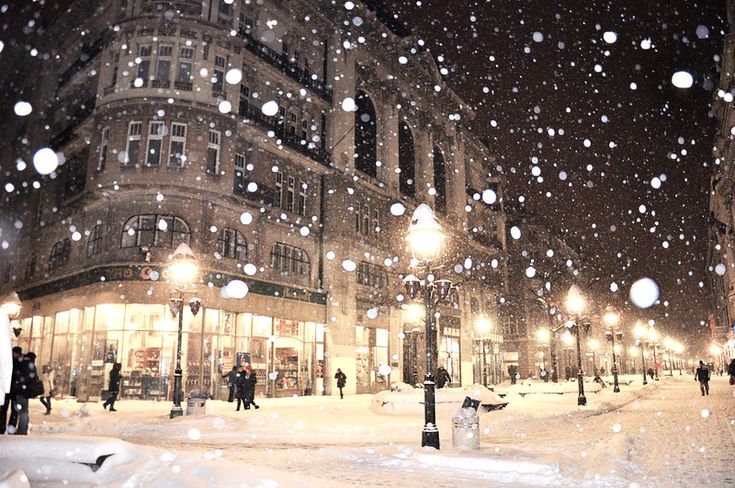
The Third Day of Winter ~ A Short Story


The Third Day of Winter image 4
The Third Day of Winter
~ A Short Story by Allen Kopp ~

(This short story has been published in Offbeat Christmas Story and The Literary Hatchet.)

They had a little party at work, complete with cake and champagne (Here’s to another successful year!), and then everybody was allowed to leave for the day. It was the day before Christmas and nobody had to be back to work for three days. What a festive mood the downtrodden workers were in! There was dancing on tabletops, furtive kissing in corners, drunken laughter.

As Vesper left the office, it was just beginning to snow so she decided to walk home instead of taking the bus. She had always liked snow, especially at Christmastime, and had seen too little of it in recent years. She stopped on the way home at a little market and bought a dozen oranges and a small box of chocolate-covered cherries. As she was paying for her purchases, the old man behind the counter gave her a sprig of mistletoe.

When she reached her building, she felt agreeably fatigued and slightly frostbitten. As she climbed the stairs to her third-floor apartment, she couldn’t help noticing how quiet the building was. The usual loud voices, TVs, crying babies and yapping dogs were absent. She seemed to be the only tenant who hadn’t gone out of town for the holiday.

She unlocked the door, kicked off her wet shoes and hung up her coat. It was just beginning to get dark outside so she turned on all the lights. She tied a ribbon around her mistletoe and hung it in the doorway between the kitchen and the living room; plugged in the lights on her little artificial Christmas tree that was made to look real but wasn’t fooling anybody with its brown-and-green plasticity. She stood back and admired the comfort, the appeal, of her little home. It was the first home she had ever had that was hers and hers alone without belonging to somebody else.

“I’m really very lucky,” she said to herself as she stood in the middle of the room.

Already she was missing her friend Marlene at work, even though she had just left her a short time earlier. She wanted to call her and tell her about walking home in the snow and about the mistletoe. She knew that Marlene would enjoy hearing those things and would laugh at them in her usual way.

She went to the phone, not to call Marlene—she would be busy now with family—but to call somebody else.

“Hello?” she said when she heard her mother’s voice, sounding very faint and far away.

“Who’s that?” her mother said.

“It’s Vesper.”

“Is anything wrong?”

“No. I just got home from work and I wanted to call you and wish you a merry Christmas.”

 “You know I don’t go in for that stuff very much.”

“I know. Did you get the silver pin I sent you?”

“Yes, I got it.”

“I thought it would look good on your black coat.”

“Oh, I don’t have that coat anymore. It was a little too funereal for me.”

“It was a beautiful coat.”

“If I had known you liked it so much, I would have given it to you.”

“It doesn’t matter. How’s Stan?”

“We’ve separated. I haven’t seen him since summer.”

“Are you getting a divorce?”

“Oh, I don’t know. There’s a new man in my life now. His name is Milt. He’s talked about marrying me, but I don’t think I want to get married again. I’ve been down that road too many times.”

“Any news of Weston?”

“Nothing, except that he’s living the bohemian life and wants nothing to do with his family.”

“When you see him, tell him I said hello.”

“I will, dear. I really have to run now. I’m meeting some people for dinner. I have a terrible headache and don’t really feel like going out, but I said I’d go and I don’t want to break my word.”

“All right, mother. Goodbye.”

As Vesper hung up the phone she was aware of the hurtful omissions in the conversation. Her mother hadn’t bothered to ask her how she was or what plans she had for Christmas, if she had someone to spend it with or if she was going to be alone. Those things wouldn’t occur to her—she simply didn’t bother herself too much with her grown children. She had delivered them safely to adulthood and that’s all that anybody could reasonably expect.

Vesper went into the kitchen to see what she might dig up for dinner, but the prospect of having the usual everyday fare on Christmas Eve and then dozing on the couch in front of the TV until time to go to bed was suddenly dismaying to her. She didn’t have to do what she always did, just because she always did it. She could make Christmas Eve into something special, even if she did have to spend it alone.

She went into the bedroom and changed her clothes quickly before she gave herself the chance to change her mind. She made herself ready to go out again (boots, scarf, gloves, coat) and turned off all the lights except for one small lamp beside the door.

She began walking, not knowing for certain where she was going. The snow had accumulated to three or four inches and was still coming down, the wind blowing it along the sidewalk and causing it to drift along the building fronts. Nothing made it seem more like Christmas.

Two blocks from her building she came upon two men, an older and a younger one, standing with their hands over a barrel in which a small fire burned. Both men looked down into the barrel, but when she passed near them they turned and looked at her. The older man was the nondescript sort that one sees on the street every day, ragged and undernourished. The younger man was thin, medium-tall and sturdy-looking. He wasn’t wearing a hat (in the light from the fire his hair had a reddish tint) and he wore an enormous overcoat that went down past his knees, with the collar turned up to partly cover his ears. On his cheek was a crescent-shaped scar as if once, long ago, he had been gouged by a shard of glass or the blade of a knife. These details about him registered on her brain in the few seconds she looked at him and then she looked away.

She came to a brightly lighted drugstore and stopped and looked through the frosty window at the rows of displays and the people moving about as if they were underwater. After a moment of indecision, she went inside, passing a perfume display over which two fat women were talking loudly, and went to a rack of magazines in the back. She picked up a magazine, thumbed through it and put it back.

The wall behind the magazine rack was a mirror. As she reached out her hand to put a magazine back on the rack where she had found it, she saw the reflection of a man in the mirror. He was half-a-foot taller than she was and standing behind her, to her right, as though looking over her shoulder. Thinking herself in the way, she stepped aside to give the man more room and that’s when she realized it was the same young man with the scar on his face who had been standing over the fire in the barrel. She felt embarrassed at the thought that he might speak to her, so she left the drugstore and went back out into the freezing night.

She walked on from the drugstore for a block-and-a-half and when she had to stop at a corner with a clot of other people to wait for the light to turn, she took a quick glance over her shoulder to see if the young man had come out of the drugstore after her. She didn’t see him, so she was sure he wasn’t following her. Why would she have ever thought he was?

A little restaurant with the smell of garlic and twinkling lights in the window attracted her attention. It was a place that ordinarily would have been too expensive for her, but she was tired of walking and went inside.

The lights in the restaurant were very dim, giving the place a dreamlike quality after the snowy street. A smiling waiter seated her at a small table near the front and helped her remove her coat. He handed her a menu and when she seemed to be having trouble making up her mind, he suggested fried calamari and polpette di baccala. She didn’t know what it was but readily acceded to his suggestion anyway. Since it was Christmas, she was glad to be able to order something unusual and exotic that she could tell Marlene about.

When the waiter asked her if she wanted a bottle of wine, she said yes and as soon as he brought it she started drinking copious amounts of it and eating delicious garlicky breadsticks out of a little basket while she waited for her food.

The food was very much to her liking but what she liked most was the wine. She ended up drinking the entire bottle before, during and after the meal.

When all the food on her plate was gone, she felt happy and fortunate, happy to be alive and fortunate to have a good-paying job that would allow her to have an extravagant meal on a special occasion. She thanked the waiter effusively, gave him a more-than-generous tip, and wished him a merry Christmas. He helped her into her coat and opened the door for her as she left.

In the next block she slipped on an icy spot on the sidewalk and fell sideways into a pile of snow, unhurt, but attracting some unwelcome attention. As a small crowd of people gathered around to see if she was all right and to help her to stand up again, she saw coming toward her the man in the long coat with the scar on his face. Someone blocked her view for a few seconds and when the way was clear again he was gone. Was she seeing people who weren’t really there? It must have been a result of drinking all that wine.

It was not late at all for Christmas Eve and, in spite of the snow and cutting wind, she wasn’t ready to go home just yet. She would make a night of it. She would have lots to tell Marlene and her other friends at work how she spent Christmas Eve while they were all with their families. They wouldn’t exactly envy her but would admire her for having a good time on her own without having to depend on somebody else.

Four or five blocks farther on was the Odeon movie theatre. She was delighted to see that the show was just about to begin. She paid her admission and went inside and took a seat in the orchestra among a handful of other people. She dozed during the previews of coming attractions and a featurette about a Christmas tree farm, but when the feature began she was fully awake.

In the feature presentation, a woman named Mildred was released from a mental hospital at Christmastime. She had to become reacquainted with her children because she had been away so long they almost forgot she existed. She tried to resume her role in life as wife, mother and society hostess, but she had terrible nightmares and hallucinations that showed she should never have been released from the mental hospital at all. What was even worse, though, was that her fifteen-year-old daughter, Veronica, was showing signs that she had inherited Mildred’s mental illness. She would put her dress on backwards without even knowing it and stand up during mealtimes and scream there were Martians on the roof. These were the exact same things that Mildred had done that caused her to be sent to the mental hospital in the first place when Veronica was in grammar school.

When the picture was over, Vesper sighed heavily, put on her coat and went back out into the cold. She was feeling tired now and the movie, although she had enjoyed it, made her feel like crying. It had been a lovely evening, though.

It was nearly eleven o’clock. The snow had stopped but it seemed colder now because the wind was blowing. When she thought of the long way she had to walk to get back home, she wished she was already there, relaxing in her pajamas, drinking hot chocolate and listening to Christmas music on the radio.

The streets that had been so crowded before were almost deserted now. Everybody had gone home to celebrate Christmas. A drunk stepped out of the shadows and asked her for a dollar but she sidestepped him and kept going without looking back.

Two blocks from her building she came upon two men, an older and a younger one, standing with their hands over a barrel in which a small fire burned. Both men looked down into the barrel, but when she passed near them they turned and looked at her. The older man was the nondescript sort that one sees on the street every day, ragged and undernourished. The younger man was thin, medium-tall and sturdy-looking. He wasn’t wearing a hat (in the light from the fire his hair had a reddish tint) and he wore an enormous overcoat that went down past his knees, with the collar turned up to partly cover his ears. On his cheek was a crescent-shaped scar as if once, long ago, he had been gouged by a shard of glass or the blade of a knife.

As she walked past these two men, looking straight ahead, the younger man disengaged himself from the older and began following her. She didn’t hear  a sound—his footsteps in the snow were silent—but she knew, she felt, that he was a few paces behind her.

She came to her building and climbed the stairs to the third floor, opened the door with her key, let herself in, and reclosed the door without locking it.  Without turning on any lights, she went to the window overlooking the front of the building and looked down. Standing there in the snow, looking up at her, was the young man in the long overcoat with the crescent-shaped scar on his cheek.

She wrote on a piece of note paper from beside the phone these words: Come up, apartment 320. She wadded the paper into a little ball and opened the window just wide enough to insert the ball of paper and let it drop to the ground. She stood there in the dark and watched the man approach the paper, pick it up and read it. She took a couple of deep breaths and in a few seconds she heard his footsteps on the stairs, exactly in time to the beating of her own heart.

Copyright © 2025 by Allen Kopp

 

My Christmas Eve That Year ~ A Short Story

I Want to Spend Christmas with You
My Christmas Eve That Year
~ A Short Story by Allen Kopp ~ 

My parents got their divorce the summer I was fifteen and sold the house we lived in. My mother, my little brother, and I moved into a small, four-room flat in an old apartment building downtown. It was on the fifth floor and there were no elevators, so that meant we were constantly walking up and down the stairs.

The flat wasn’t big enough for me to have my own room, so we moved my bed into a little space off the kitchen, which was originally meant to be a pantry. It was tiny and cramped, but the best thing about it was that I had my own window with a good view of buildings and trees far off in the distance. I liked to lay in bed at night and look out at the sky. The best nights were when there was a full moon. When there were thunderstorms, it felt like the lightning was going to come in through the window and zap me into oblivion.  

Now it was Christmas again, or almost. Our first Christmas in the apartment. Our Christmas tree stood in the corner of the front room, aglow with multi-colored lights and loaded down with tinsel and ornaments, stacks of presents beneath its branches. A sprig of holly hung in the doorway into the kitchen. On the front door was a wreath that would probably be stolen before Christmas morning ever arrived.

My little brother Georgie, age six, jumped up and down on the couch and screamed. He was wholly invested in Christmas. It was snowing out, he didn’t have to go back to school until after New Year’s, and he believed that Santa was going to be especially generous with him this year.

“You’d better calm down,” I said. “Santa will pass you by if he gets word that you’ve been bad.”

“I haven’t been bad!” he screeched.

My mother came in from her bedroom, where she had been putting on makeup and fixing her hair. She was afraid I was going to divulge the great secret that Santa doesn’t really exist.

“What did you just say to him?” she asked, looking at me threateningly.

“I didn’t say anything,” I said. “I just told him he’s giving me a headache.”

“Get down from there, Georgie! You know you’re not supposed to use the couch as a trampoline! The couch is for sitting, not for jumping.”

“All this Christmas stuff is making me puke,” I said. “A person can only take so much.”

“Well, it’s too bad you’ve forgotten what it’s like to be excited about Christmas,” she said. “I guess you’ve grown too sophisticated for your family.”

“He’s grown too sophisticated!” screamed Georgie.  

“Shut up!” I said.

“When do we get to open the presents?” Georgie screamed.

“For the eighty-seventh time, we will open the presents on Christmas morning after we’ve had a good breakfast.”

“Why do we have to wait so long?”

“Because I said so, that’s why!” She sat on the other end of the sofa and patted her hair in back.  

“I want to open one now!”

“No! We’ve been all through that a dozen times. You have to wait like everybody else.”

“Tomorrow’s Christmas and we haven’t heard anything from daddy yet,” I said.

“No, and you probably won’t, either. He’s probably laying up in some hotel room, drunk as a skunk.”

 “Drunk as a skunk!” Georgie screamed.

 “I thought he’d send at least send us a present.”

 “You’re old enough to know you can’t count on him for anything.”

“We always had a good Christmas with him,” I said.

“I know, but those days are over. Your daddy is out of the picture now. He was the one that wanted the divorce.”

“I’m going to the movies tonight,” I said. “It’s a Christmas Eve horror double feature.”

“I don’t care what it is,” she said. “You’re not going to the movies on Christmas Eve. You’re going to spend the evening with your family.”

“But I’m meeting someone.”

“Call whoever it is and tell them you can’t make it.”

“Is he going to be here?”

He has a name, you know.”

“Is Regis going to be here?”

“Yes, he’s going to be here in time to eat dinner with us and later we’re all going to church.”

“I don’t feel like going to church.”  

“You feel like going to the movies but you don’t feel like going to church?”

“Church gives me a headache.”

“You’re insane.”

“If I am, I get it from you. Insanity runs in your family.”

“I think Regis is going to ask me to marry him.”

“Why would you want to marry Regis?”

“Why shouldn’t I marry him? He’s the sweetest, kindest man I’ve ever met and he’s got a good job.”

“He sells washing machines in an appliance store.”

“Someday he’ll be manager. There’s really good money in that.”

“What about daddy?”

“What about him?”

“You’re going to marry Regis without telling daddy first?”

“You’re a smart boy, but you just don’t seem to understand. There is no longer any connection between me and your daddy. We are kaput!”

“What does that mean?”

“Your daddy and I are finished with each other. All ties are severed.”

“All ties are severed!” Georgie shrieked.

“If you marry Regis, does that mean we can move out of this crummy apartment?”

“Not right away. Regis will probably move in here with us. His business hasn’t been so good lately. He’s a little strapped for cash at the moment. He expects things to pick up next year, though.”

“If Regis moves in here with us, I’m moving out.”

“Why don’t you like Regis?”

“He belongs to a bowling league.”

“A lot of men belong to bowling leagues.”

“He’s old!”

“He’s forty-three.”

“He wears cologne that smells like bug spray.”

“I’ll get him to stop wearing it after a while.”

“He has hairs sprouting out of his ears. Haven’t you ever noticed that?”

“Of course, I’ve noticed it. His grooming isn’t the best. That’s because he lives alone. All that will change after we’re married.”

“I think you should check with daddy first before you marry Regis. He might want to come back. If you marry Regis, it’ll be too late.”

“Your daddy is not coming back. Ever.”

“You might be surprised.”

“It’s time for you to face reality.”

“I am facing reality and I don’t like it.”

“I think I see Santa way up in the sky over there,” Georgie said, standing at the window.

“You’re hallucinating again,” I said.

“It’s too early for Santa,” mother said. “He won’t come until we’re all asleep. He doesn’t like for people to look at him.”

“I can certainly see why,” I said.

“I hope he remembers everything I wanted,” Georgie said.

Mother went back into the bedroom and in a little while came back out in her red Christmas dress that in my opinion was too tight. She had dowsed herself in perfume. When she saw me lying on the couch staring at the ceiling, she decided I needed something to do.  

“I want you to go down to Friedlander’s market and buy a carton of eggnog for tonight,” she said, digging in her purse for some money. 

“I don’t like eggnog,” I said.

“Well, are you the only one here? Regis says it’s not Christmas without eggnog.”

“Regis says. Regis says. What else does Regis say?”

“Can I go to the store, too?” Georgie asked excitedly.

“No! You stay here and help me wrap Regis’s present.”

“Regis, Regis, Regis,” I said as he went out the door. “He’s certainly a big man around here, isn’t he?”

The snow was falling heavier now. Cars made hissing sounds on the pavement as they passed by. Last-minute shoppers were still keeping the stores busy. With the setting of the sun, Christmas Eve had officially arrived.

The store only had one carton of eggnog left, so I grabbed it and went and stood in the long line to pay. When the cashier smiled at me and wished me a merry Christmas, I gave him a sour look.   

When I got back home, Regis had arrived with presents for all of us. He was throwing Georgie up near the ceiling and then catching him on the way down. Georgie squealed with delight. Mother stood at the stove and beamed her approval.

Regis had brought Georgie a stuffed elephant and some other toys. My present from him, still wrapped in a big box with a red bow, was at my place at the table. Before I sat down, I picked up the box and set it on the floor.

“Aren’t you going to open your present from Regis?” mother asked.

“I’ll open it later. I have a headache now.”

When we were all seated at the table, mother insisted we join hands while Regis said grace. Regis’s hand felt clammy and unclean in mine. When he finally let go, I wiped my hand back and forth along my leg before I touched any food.

While we ate, I could see that mother was wearing a diamond engagement ring. This, of course, would be her Christmas present from Regis. So, it was official, then. He had proposed and she had said yes.

Regis talked about his day at work and laughed while we ate. Mother didn’t say much. Georgie kept looking out the window for signs of Santa. When Regis seemed to have run out of things to say for the moment, mother looked at me and said she had something she wanted to tell me and Georgie.

“What is it?” I asked with a sick feeling.

“Regis has asked me to be his wife and I’ve consented. We’re going to be married on New Year’s Eve.”

“What’s the rush?” I asked.

“I think it’s so romantic to be married on New Year’s Eve,” she gushed. “It will be a new start of a new year for all of us.”

She turned and looked at Regis. There were tears in her eyes. Regis took hold of her hand and pulled her in for a kiss. I knew he was getting ham grease all over her.

“I think I hear Santa’s sleigh outside!” Georgie said.

After we finished eating, mother told me to go put on my dress pants and a white shirt for church. She would help me with my tie before we left for church.

Except there wasn’t going to be any church for me. I grabbed my coat and hat and ran out the front door before she had a chance to see what I was doing.

The snow must have been five or six inches by that time. I still had on my tennis shoes and I could feel the snow soaking through to my socks after a few steps, but I didn’t mind. I needed to talk to daddy.

I knew that Colson’s Drug Store, about four blocks down from where we lived, had a pay phone. I had a pocket full of change especially for that purpose.

Right after the divorce, daddy gave me his private number where I could reach him any time. If I ever needed him, all I had to do was give him a call.

There were a lot of people at Colson’s, mostly at the pharmacy counter. Nobody paid any attention to me as I went all the way to the back, where the pay phone was.

I was sure he would answer. He would probably figure it was me calling on Christmas Eve.

The phone rang ten or twelves times, but finally he answered.

“Hello,” a little groggily.

“Daddy?” I said. “Is that you?”

“Who is this? Is this Evan?

“Yeah, it’s me. Evan.”

“I couldn’t hear you very well at first.”

“Can you hear me better now?”

“Yeah, I hear you fine now.”

“Well, since it’s Christmas Eve, I wanted to call and wish you a merry Christmas.”

“Merry Christmas to you, Evan!”

“Do you know where we’re living now?”

“No.”

“In an apartment downtown, on the fifth floor of an old building.”

“I’ve been wanting to come and visit you and Georgie, but I wasn’t sure where you were living. How’s Georgie?”

“He’s fine. Waiting for Santa to bring him everything he asked for.”

“Where are you now?”

“I’m in Colson’s Drug Store, near where we live. Do you know where that is?”

“Yeah, I’ve been to Colson’s a few times. Don’t you have a phone in the apartment?”

“We do, but I didn’t want mother to know I was calling you.”

“How is your mother?”

“She’s fine, but she’s the main reason I wanted to talk to you.”

“She’s not sick, is she?”

“No, she’s not sick. She’s getting married on New Year’s Eve.”

Daddy was silent for a moment and then he laughed. “Who is she marrying?”

“His name is Regis. He’s a creep. He smells funny. I don’t like him.”

“Maybe that’s because you don’t know him very well.”

“I want you to come and get me.”

“What?”

“I said I want you to come to Colson’s Drug Store and get me. I want to spend Christmas with you.”

“Wait a minute, Evan! I’m afraid that’s not possible. I’m not living in a very nice place. I don’t even have a tree.”

“That’s all right. I don’t need a tree.”

“If your mother doesn’t know where you are, she’ll be worried.”

“I’ll call her from your place.”

I started to cry like a blubbery crybaby. I hadn’t meant to cry, but I couldn’t seem to help myself.

“Is it that bad?” he asked.  

“Mother just isn’t herself. I don’t want to be around her. She acts like Regis is some kind of a god. They make me sick.”

“All right. If it’s that bad, I’ll come and get you.”

“How long? How long will it take?”

“Give me a half-hour or so.”

“Colson’s Drug Store. I’ll be waiting outside for you.”

It was still snowing, harder than ever now, but I didn’t mind waiting in the snow for a half-hour. People coming in and out of Colson’s looked at me and then looked away. Maybe some of them thought I was going to try to rob them. I tried leaning back against the building, crossing my legs and putting my hands in my pockets. I tried to look casual, but I felt conspicuous. 

I wasn’t sure what kind of car daddy would be driving, but I looked at every car. One of them would be him.

The half-hour passed and then an hour and then two hours. I was determined to wait as long as it took. I would wait all night. I would still be waiting on Christmas Morning if I had to. My fingers and toes were numb. I could no longer feel them. I wasn’t sure if they would ever work right again or not. I didn’t much care.

Copyright © 2025 by Allen Kopp

The Christmas Club

Christmas 9

The Christmas Club ~ A Short Story by Allen Kopp ~ 

(This short story has been published in Poor Mojo’s Almanac(k).)

Stanley and Virginia Miller lived in a modest four-room house on a tree-lined street in a small town. They had known each other their entire lives and had been married for ten years. To this union had been born two children: Georgette, age nine, and Ian, age seven. When Ian was born, Virginia experienced some complications and wasn’t able to have any more children, but that was fine with her because she thought two children were as many as she could reasonably hope to take care of. Both children attended the town’s public elementary school, the same school that Stanley and Virginia had gone to when they were growing up.

Stanley was never very good in school, had just barely graduated, and worked as a miner. He spent all day long, every day, below the ground chipping away at rock. The mine where he worked had been in operation for many years, and every year the mine became bigger and bigger until it had become so vast that people never believed how big it was until they saw it for themselves. It had become big enough, Stanley joked, to swallow the entire town. He sometimes had nightmares about the mine, about digging down too far to ever make it out again, and he would wake up calling for help and gasping for air. Every time he came out of the mine at the end of his shift, being out in the open air again seemed like something of a miracle.

Stanley’s take-home pay was meager and he and Virginia never quite had enough money to go around. After paying the rent, buying food, paying the gas bill and the light bill and all the other incidentals, they sometimes ran out of money before the end of the month. To help meet expenses, Virginia took in washing and ironing and occasionally hired herself out for “heavy cleaning” or some other kind of domestic work.

When Virginia was younger, before she married Stanley, she had worked in a tailor shop doing alterations and seamstress work. She thought she was quite good at it and she liked working for the old man who ran the tailor shop. Now that she was older and, knowing that she had real aptitude for the work, she wanted to buy her own sewing machine and whatever else was needed to go into business for herself. She was sure she could make enough money to supplement Stanley’s pay and provide a few little extras for her family.

When she spoke to Stanley about going to the bank and borrowing money to start her own little business, he was against the idea from the outset. He was superstitious about banks and he hated the thought of owing money. He had the idea that Virginia would never make enough money on her own to pay back a loan and he would have to make good on the loan himself.

In spite of the shortage of cash, Virginia was still able to save a little money here and there by scrimping and counting pennies. If she bought a cut of meat, for example, for thirteen cents less than she had paid for it the last time, she would put thirteen cents in her jar at the back of the kitchen cabinet. If the light bill was two dollars less this month than last month, she would put two dollars in the jar. When she had more than two or three dollars in the jar, usually in small change, she would take it out and deposit it into her Christmas Club account at the bank. By autumn she had about two hundred and thirty dollars in the account, but she didn’t want Stanley to know about it just yet. Eventually she would have to tell him, but she would deal with telling him at the appropriate time. She hoped he would be pleased with her for saving money he didn’t even know they had.

She wanted to give Ian and Georgette a wonderful Christmas, the kind of Christmas she had never had when she was growing up. Every Friday when she was finished at the grocery store and had the groceries stowed in the trunk of the car, she would take a walk down the block to look at the bicycles in the window of the hardware store. There was a boy’s bicycle and a girl’s bicycle that were very much alike. The boy’s bicycle was a little bigger, with a crossbar that the girl’s bicycle didn’t have. Both were shiny red, with chrome bumpers, pristine-looking whitewall tires, and streamers attached to the handlebars. She knew that any child would be thrilled to own such a bicycle.

When Virginia was growing up, Christmas never amounted to much in her house. Her father was much older than her mother and, although a decent man, he was odd in his own way. He didn’t believe in any kind of religious observance and would never allow the celebration of Christmas in his house. Christmas was, he said, for people with lots of money to throw away and he had none, in spite of the stocks and bonds he owned that eventually left Virginia’s mother well-off in her widowhood.

There were never any gifts or music or Christmas tree or decorations in their house, and on Christmas Day they usually had stew or hash or beans and cornbread for dinner, while Virginia’s father silently read the newspaper or listened to the stock market quotes or the war news on the radio and Virginia and her mother sat with their eyes downcast and ate in silence.

On the first Friday in December, Virginia went to the bank to withdraw the money from her Christmas Club account. She waited in line behind several other people, and when her turn came she stepped up to the teller’s window and handed the teller her passbook that showed the balance in her account. She told the teller she wanted to withdraw the money and close the account.

The teller frowned and squinted as she looked for the account number in her records. She had a double chin and eyebrows drawn on in graceful arcs halfway up her forehead. When she spoke, her voice had an odd little-girl quality about it. “Hold on a minute,” she said. “I’ll have to go check on this.” She turned and walked away to the rear of the bank and disappeared through a doorway.

When she came back, she smiled at Virginia and handed the passbook back to her. “Your money has already been drawn out of this account,” she said.

“There must be some mistake,” Virginia said. “I haven’t taken my money out.”

“No, but your husband did. I guess he forgot to tell you.”

Virginia just stood there looking at the teller with no expression on her face until the teller asked her if she was all right and if there was anything else she needed.

When she got back home, she felt better because she was sure the bank had made a mistake and, after speaking to Stanley when he returned from work, she would call the bank and have the matter straightened out in a matter of two minutes. Stanley would never take her money without telling her. He didn’t even know the money was there, so how could he take it out? She couldn’t wait for him to walk through the door so she could talk to him about it.

When Georgette and Ian arrived home from school, Virginia gave them some money and sent them to the store to buy a loaf of bread and a quart of milk. She gave them a little extra money so they could each buy themselves a candy bar, but she made them promise not to eat it until after supper.

She was sitting at the kitchen table thumbing through a magazine when Stanley came in from work, a few minutes later than usual. Without looking at Virginia, he set his lunch pail on the table and went to the sink to get a drink of water.

Virginia looked up from the magazine at the back of Stanley’s head. She waited until he had turned the water off and then she said, “I went to the bank today.”

He turned around and faced her with the glass of water in his hand, his hip resting against the sink. “What?” he asked.

“I said I went to the bank today. They told me you took the money out of my Christmas Club account. I was sure it had to be a mistake. I knew that, even if you had known about the money, you would never take it without telling me.”

“Oh,” he said, looking down at the floor.

“So, the question is: Did you withdraw the money from the Christmas Club account?”

“Yes, I guess I did,” he said.

“Why did you do that? That was my money. I saved it.”

“Just what is a Christmas Club anyway?”

“I want to know why you took my money.”

“Well, I think there’s a law somewhere that says your money is also my money.”

“You had no right to take it without telling me.”

“I was going to tell you.”

“That money was for Christmas. I wanted to buy some things for Ian and Georgette. I wanted to give them a nice Christmas.”

He poured his glass of water out into the sink. “Some things are a lot more important than Christmas,” he said.

“Do you still have the money?”

“No.”

“I want to know what happened to it.”

“Ian and Georgette have everything they need.  They have food to eat and clothes to wear and they’re getting an education. That’s a lot more than I had.”

“What happened to the money?”

“I’ve owed my brother Richard two hundred dollars for a long time. He was desperate to get it back. He’s getting a divorce and he needs all the money he can get.”

“So, you’re telling me that my Christmas Club money went for your no-good brother’s most recent divorce?”

“He’s family,” Stanley said. “I think family is more important than buying stuff for the kids for Christmas that they don’t need.”

She wasn’t finished with what she wanted to say, but Ian and Georgette returned from the store and she didn’t want them to hear her and Stanley arguing about money. She stood up from the table and went to the sink and began peeling potatoes for supper.

Over the next few days, Virginia wouldn’t look at Stanley and she spoke to him only when he spoke first or when he asked her a question. She slept on the couch and when Stanley got up in the morning to get ready for work, she covered up her head with the blanket and wouldn’t get up and cook his breakfast as she usually did. She wouldn’t uncover her head until after he had left for work.

In the second week of December, there was an accident in the mine. Stanley and two other miners were injured when some rock above where they were working gave way and fell on them. One of the miners died instantly. Stanley and the other miner were rushed to the hospital.

Stanley had a fractured skull and a badly broken arm and shoulder and was in a coma. Somebody from the mine called Virginia and told her what had happened and she got the next-door neighbor to drive her to the hospital in his car. She sat in a chair by Stanley’s bedside and prayed that he would be all right. She twisted a handkerchief in her hand and wept some, but most of the time she just looked at Stanley lying in the bed, hoping to see some sign that he was going to be all right. When there was no one else in the room, she told him—even though he was unconscious—that she was sorry for the way she behaved about the Christmas Club money. He was right, she said; some things are a lot more important than Christmas presents.

After a day and a half, Stanley died without ever regaining consciousness. Virginia knew there had never been any hope that he would live. She went home and sat on the sofa and cried and waited for Ian and Georgette to come home from school to tell them their father was dead.

A week after Stanley’s funeral, two letters came in the mail. Virginia carried them into the kitchen and opened them one after the other with a paring knife. One was from the mine where Stanley worked and it contained his last two weeks’ pay. The other letter was from the miners’ union; it was a letter of condolence and a “death benefit” check in the amount of three hundred dollars. These two checks were all the money she had in the world.

That night she lay awake most of the night, hearing the forlorn sound of the train whistles off in the distance. After Ian and Georgette left for school the next morning, she put on her clothes and drove downtown with the two checks. She went to the bank and deposited Stanley’s paycheck to pay for the rent and other bills that would soon be coming due. The death benefit check she endorsed. When the teller handed her six crisp fifty-dollar bills, she folded the money and put it inside the zipper compartment inside her purse. It was the most money she had ever seen or owned at one time.

Her next stop was the hardware store. Luckily they still had the bicycles in stock that she admired and hoped to get for Ian and Georgette. She bought both bicycles, paying a small down-payment on them and arranging to have them delivered to her house on the day before Christmas. She signed an agreement stating she would make monthly payments on the bicycles until they were paid for.

After the hardware store, she went to another store where they sold sewing machines and asked to see the best top-of-the-line machine the store carried. The clerk demonstrated the machine and told her it was so simple to operate even a child could use it. She bought the machine and asked that it be delivered to her house as soon as possible.

After the sewing machine store, she went to another store where she bought a record player with a radio built into it and a selection of records that she knew Ian and Georgette would like. In the same store she bought new winter coats for herself and for Ian and Georgette, refusing to add up in her head the amount of money she had spent that afternoon.

On her way back home she stopped at the supermarket, where she bought a large turkey and everything she would need for a Christmas dinner. She also bought a lot of extra things she would not ordinarily buy, such as candy and nuts and fruit. Outside the supermarket where they were selling Christmas trees she bought a large fir tree that would reach all the way to the ceiling in their little house. The clerk tied the tree to the top of the car for her.

When she got back home, she carried everything inside, and then carried the Christmas tree in and set it up in the living room. She went down to the basement to bring up the lights and decorations. She was stringing lights on the tree when Ian and Georgette came home from school. She knew they would appreciate decorating the tree by themselves without any help from her.

She stood back and watched as they excitedly took the decorations out of the box and began putting them on the tree. She tried to remember what it was like to be their age and find joy in such simple things; she had lost the feeling long ago and would never experience it again.

The phone began ringing in the kitchen. She didn’t want to leave the Christmas tree and answer it, but she would tell whoever it was that she would call them back later, after supper. It was a woman down the street, a Mrs. Capers, for whom she had done some housecleaning a while back.

Mrs. Capers had heard about Virginia’s past experience as a seamstress and wanted to know if she was interested in coming by her house the day after Christmas and talking to her about making some new drapes for the dining room. If everything went well (that is, if she liked the drapes), she would have other work to be done. Also, she had a couple of lady friends who needed to have all their clothes let out due to the middle-aged expansion. Having their old clothes altered would be so much cheaper than buying new ones.

Virginia arranged with Mrs. Capers to come around to her house at one o’clock on the twenty-sixth. When she hung up the phone and went back into the living room, Georgette stopped what she was doing and looked at her.

“Who was that on the phone?” she asked.

“It was the spirit of Christmas,” Virginia said.

Georgette didn’t ask for an explanation because they had all the lights strung on the tree. When Ian plugged them in and they saw that all of them still worked after their year-long hibernation in the basement, Virginia took that as a very good sign.

Copyright © 2024 by Allen Kopp

Frozen Charlotte ~ A Short Story

Frozen Charlotte image 6

~ Frozen Charlotte ~
A Short Story by Allen Kopp

(This short story has been published in The Literary Hatchet.)

The snow has stopped falling. The temperature hovers at fifteen degrees. The wind is minimal. The air crackles with electricity. The stars twinkle like diamonds on a bed of blue-black velvet. Atmospherically it is the best Christmas Eve on record.

Roads are snow-packed and have been for weeks. The best way to get from place to place is by horse-drawn sleigh. The automobile is still not in common use, as it is 1897, but those days are coming.

Charlotte Little will be attending the party at the Whites on her own, even though she is only twelve. Vardaman will drive the sleigh. He will watch out for her and see that she returns safely.

It is to be a party for adults as well as children. There will be an orchestra, bountiful food and drink, musical acts, caroling, magic tricks, surprises and a visit from Santa. Those who attend the party will remember it all their lives into old age. They will take memories of the party to their graves.

As the best friend of Amy White, Charlotte will be an honored guest at the party. She doesn’t mind that she has to go alone but finds it rather exciting and grown-up. She has a new dress made for her by a real dressmaker. It is white bombazine with red satin trim. It reminds her of peppermint, of Christmas. She has never had a dress before of which she is so proud.

She is to leave at five o’clock. Allowing for no mishaps with the sleigh, she will arrive at the party at six o’clock. She is dressed and ready to go hours in advance. Mother tries to get her to eat before she goes, but she is too excited; there will be lots of time to eat later.

When she goes down to leave, mother and father are waiting for her at the bottom of the stairs. Mother has her coat and scarf for her and father her fur hat, gloves and galoshes, but she doesn’t want to put any of them on. She has spent hours getting herself ready for the party and doesn’t want to spoil the effect. The coat will flatten the frills and puffs of her dress and the fur hat will mess up her hair. She doesn’t need the boots at all but will walk in tracks that have already been made. As a kind of concession, she puts the scarf around her shoulders and slips the gloves on her hands.

Vardaman is waiting for her in the sleigh at the front gate, whip in hand. He is so bundled up in his riding accoutrements that only his eyes can be seen. Charlotte gets into the sleigh, piling her warm winter coat and fur hat on top of the lap robes in the corner of the seat. She throws her galoshes on the floor of the sleigh and forgets about them. Who wears galoshes with a fancy Christmas dress?

Vardaman drives slowly at first and then faster. Soon he seems to be flying without leaving the ground. The trees and farmhouses whiz past in an icy blur. Charlotte breathes deeply of the icy air and looks up at the twinkling stars. Already she is having a good time, and she’s not even at the party yet. She spreads her coat over her lap, but that is the only concession she makes to the cold.

She doesn’t speak a word on the way. If she has anything to say, she would have to say it to Vardaman and she rarely speaks to Vardaman unless he speaks first. He is what they call all business.

The trip goes smoothly enough without incident. Vardaman has guided the sleigh expertly and efficiently, as he always does. He pulls up to the side of the house belonging to the Whites and gets out, throwing a blanket over the horse’s back. His back is sore and he is in a hurry to get inside and take off his coat and outer wrappings and warm his feet at the kitchen fire. In his haste, he fails to notice that Charlotte hasn’t moved from the sleigh. She still sits there, not moving, her icy blue eyes staring straight ahead.

Sometime during the trip, Charlotte’s blood freezes in her veins. Her heart stops pumping blood and turns into a useless, frozen muscle in the middle of her upper torso. Her eyes become fixed in their sockets, frozen in place, eyelids opened. How can someone so dead look so alive?

It is the easiest of deaths. She has felt nothing, not even a tingling sensation. From one second to the next, she is here and then she is gone.

The party disperses at eleven o’clock. Those who expected Charlotte to attend are disappointed, but they figure something must have come up unexpectedly at the last minute to keep her home.

Vardaman, sated with food and drink, comes out and is happy to see that Charlotte has taken her place in the sleigh and is ready to go home. He is all too eager to get home to his warm bed. He wakes up the horse and takes the blanket off his back and in thirty seconds the sleigh has taken to the road.

He turns and asks Charlotte if she had a good time at the party. He believes she answers in the affirmative but, of course, no answer is forthcoming.

When they get back home, it is near midnight on Christmas morning. Unknown to anybody, Charlotte has been sitting in the back of the sleigh on a frigid Christmas Eve for seven hours.

He stops the sleigh at the front gate. When Charlotte doesn’t get out as he expects, he turns around in the seat and looks at her, at her blue, staring eyes. Right away he knows something is wrong. He runs to the front door and bangs loudly. Mother and father, both in their night clothes, know that something is wrong and come running out.

When they see that Charlotte is frozen through and through, they take her in and set her by the fire. They try to lay her flat, but she is frozen in a sitting position. They rub her hands and wrists and pat her cheeks. They put more wood on the fire. They believe all they have to do is thaw her out and she will revive and start breathing again. Not knowing what else to do, mother sends for the doctor.

In the morning they send for the undertaker’s men. They come promptly and take Charlotte away. In the afternoon on Christmas Day, mother and father pay a call at the undertaking establishment. They choose embalming for their little girl and, after she is embalmed, they want her dressed in her fancy, red-and-white Christmas dress that she wore to the party. They pick out the finest and most expensive cast-iron coffin with a little window over the deceased’s face. Only the best will do.

Two days before the New Year, a service is held at the Methodist chapel for Charlotte Little. All the same people who were at the White party attend the service, except now they are in black and are no longer smiling. Everybody wants to know how such a thing could happen. How could a little girl go out on a freezing Christmas Eve in only a thin dress and no coat, hat, gloves or galoshes? Some of the ladies look accusingly at mother and then look away quickly when she looks back.

The ground is hard as iron. No new graves can be dug until there is an appreciable thaw. Frozen Charlotte is kept in the frigid sub-basement of the church for the duration. All through the winter, people may come and visit her and pay their respects. They line up and peer into the little window over her face and are subdued into silence by the mystery of death.

Copyright © 2024 by Allen Kopp

The Third Day of Winter ~ A Short Story


The Third Day of Winter image 4
The Third Day of Winter
~ A Short Story by Allen Kopp ~

(This short story has been published in Offbeat Christmas Story and The Literary Hatchet.)

They had a little party at work, complete with cake and champagne (Here’s to another successful year!), and then everybody was allowed to leave for the day. It was the day before Christmas and nobody had to be back to work for three days. What a festive mood the downtrodden workers were in! There was dancing on tabletops, furtive kissing in corners, drunken laughter.

As Vesper left the office, it was just beginning to snow so she decided to walk home instead of taking the bus. She had always liked snow, especially at Christmastime, and had seen too little of it in recent years. She stopped on the way home at a little market and bought a dozen oranges and a small box of chocolate-covered cherries. As she was paying for her purchases, the old man behind the counter gave her a sprig of mistletoe.

When she reached her building, she felt agreeably fatigued and slightly frostbitten. As she climbed the stairs to her third-floor apartment, she couldn’t help noticing how quiet the building was. The usual loud voices, TVs, crying babies and yapping dogs were absent. She seemed to be the only tenant who hadn’t gone out of town for the holiday.

She unlocked the door, kicked off her wet shoes and hung up her coat. It was just beginning to get dark outside so she turned on all the lights. She tied a ribbon around her mistletoe and hung it in the doorway between the kitchen and the living room; plugged in the lights on her little artificial Christmas tree that was made to look real but wasn’t fooling anybody with its brown-and-green plasticity. She stood back and admired the comfort, the appeal, of her little home. It was the first home she had ever had that was hers and hers alone without belonging to somebody else.

“I’m really very lucky,” she said to herself as she stood in the middle of the room.

Already she was missing her friend Marlene at work, even though she had just left her a short time earlier. She wanted to call her and tell her about walking home in the snow and about the mistletoe. She knew that Marlene would enjoy hearing those things and would laugh at them in her usual way.

She went to the phone, not to call Marlene—she would be busy now with family—but to call somebody else.

“Hello?” she said when she heard her mother’s voice, sounding very faint and far away.

“Who’s that?” her mother said.

“It’s Vesper.”

“Is anything wrong?”

“No. I just got home from work and I wanted to call you and wish you a merry Christmas.”

 “You know I don’t go in for that stuff very much.”

“I know. Did you get the silver pin I sent you?”

“Yes, I got it.”

“I thought it would look good on your black coat.”

“Oh, I don’t have that coat anymore. It was a little too funereal for me.”

“It was a beautiful coat.”

“If I had known you liked it so much, I would have given it to you.”

“It doesn’t matter. How’s Stan?”

“We’ve separated. I haven’t seen him since summer.”

“Are you getting a divorce?”

“Oh, I don’t know. There’s a new man in my life now. His name is Milt. He’s talked about marrying me, but I don’t think I want to get married again. I’ve been down that road too many times.”

“Any news of Weston?”

“Nothing, except that he’s living the bohemian life and wants nothing to do with his family.”

“When you see him, tell him I said hello.”

“I will, dear. I really have to run now. I’m meeting some people for dinner. I have a terrible headache and don’t really feel like going out, but I said I’d go and I don’t want to break my word.”

“All right, mother. Goodbye.”

As Vesper hung up the phone she was aware of the hurtful omissions in the conversation. Her mother hadn’t bothered to ask her how she was or what plans she had for Christmas, if she had someone to spend it with or if she was going to be alone. Those things wouldn’t occur to her—she simply didn’t bother herself too much with her grown children. She had delivered them safely to adulthood and that’s all that anybody could reasonably expect.

Vesper went into the kitchen to see what she might dig up for dinner, but the prospect of having the usual everyday fare on Christmas Eve and then dozing on the couch in front of the TV until time to go to bed was suddenly dismaying to her. She didn’t have to do what she always did, just because she always did it. She could make Christmas Eve into something special, even if she did have to spend it alone.

She went into the bedroom and changed her clothes quickly before she gave herself the chance to change her mind. She made herself ready to go out again (boots, scarf, gloves, coat) and turned off all the lights except for one small lamp beside the door.

She began walking, not knowing for certain where she was going. The snow had accumulated to three or four inches and was still coming down, the wind blowing it along the sidewalk and causing it to drift along the building fronts. Nothing made it seem more like Christmas.

Two blocks from her building she came upon two men, an older and a younger one, standing with their hands over a barrel in which a small fire burned. Both men looked down into the barrel, but when she passed near them they turned and looked at her. The older man was the nondescript sort that one sees on the street every day, ragged and undernourished. The younger man was thin, medium-tall and sturdy-looking. He wasn’t wearing a hat (in the light from the fire his hair had a reddish tint) and he wore an enormous overcoat that went down past his knees, with the collar turned up to partly cover his ears. On his cheek was a crescent-shaped scar as if once, long ago, he had been gouged by a shard of glass or the blade of a knife. These details about him registered on her brain in the few seconds she looked at him and then she looked away.

She came to a brightly lighted drugstore and stopped and looked through the frosty window at the rows of displays and the people moving about as if they were underwater. After a moment of indecision, she went inside, passing a perfume display over which two fat women were talking loudly, and went to a rack of magazines in the back. She picked up a magazine, thumbed through it and put it back.

The wall behind the magazine rack was a mirror. As she reached out her hand to put a magazine back on the rack where she had found it, she saw the reflection of a man in the mirror. He was half-a-foot taller than she was and standing behind her, to her right, as though looking over her shoulder. Thinking herself in the way, she stepped aside to give the man more room and that’s when she realized it was the same young man with the scar on his face who had been standing over the fire in the barrel. She felt embarrassed at the thought that he might speak to her, so she left the drugstore and went back out into the freezing night.

She walked on from the drugstore for a block-and-a-half and when she had to stop at a corner with a clot of other people to wait for the light to turn, she took a quick glance over her shoulder to see if the young man had come out of the drugstore after her. She didn’t see him, so she was sure he wasn’t following her. Why would she have ever thought he was?

A little restaurant with the smell of garlic and twinkling lights in the window attracted her attention. It was a place that ordinarily would have been too expensive for her, but she was tired of walking and went inside.

The lights in the restaurant were very dim, giving the place a dreamlike quality after the snowy street. A smiling waiter seated her at a small table near the front and helped her remove her coat. He handed her a menu and when she seemed to be having trouble making up her mind, he suggested fried calamari and polpette di baccala. She didn’t know what it was but readily acceded to his suggestion anyway. Since it was Christmas, she was glad to be able to order something unusual and exotic that she could tell Marlene about.

When the waiter asked her if she wanted a bottle of wine, she said yes and as soon as he brought it she started drinking copious amounts of it and eating delicious garlicky breadsticks out of a little basket while she waited for her food.

The food was very much to her liking but what she liked most was the wine. She ended up drinking the entire bottle before, during and after the meal.

When all the food on her plate was gone, she felt happy and fortunate, happy to be alive and fortunate to have a good-paying job that would allow her to have an extravagant meal on a special occasion. She thanked the waiter effusively, gave him a more-than-generous tip, and wished him a merry Christmas. He helped her into her coat and opened the door for her as she left.

In the next block she slipped on an icy spot on the sidewalk and fell sideways into a pile of snow, unhurt, but attracting some unwelcome attention. As a small crowd of people gathered around to see if she was all right and to help her to stand up again, she saw coming toward her the man in the long coat with the scar on his face. Someone blocked her view for a few seconds and when the way was clear again he was gone. Was she seeing people who weren’t really there? It must have been a result of drinking all that wine.

It was not late at all for Christmas Eve and, in spite of the snow and cutting wind, she wasn’t ready to go home just yet. She would make a night of it. She would have lots to tell Marlene and her other friends at work how she spent Christmas Eve while they were all with their families. They wouldn’t exactly envy her but would admire her for having a good time on her own without having to depend on somebody else.

Four or five blocks farther on was the Odeon movie theatre. She was delighted to see that the show was just about to begin. She paid her admission and went inside and took a seat in the orchestra among a handful of other people. She dozed during the previews of coming attractions and a featurette about a Christmas tree farm, but when the feature began she was fully awake.

In the feature presentation, a woman named Mildred was released from a mental hospital at Christmastime. She had to become reacquainted with her children because she had been away so long they almost forgot she existed. She tried to resume her role in life as wife, mother and society hostess, but she had terrible nightmares and hallucinations that showed she should never have been released from the mental hospital at all. What was even worse, though, was that her fifteen-year-old daughter, Veronica, was showing signs that she had inherited Mildred’s mental illness. She would put her dress on backwards without even knowing it and stand up during mealtimes and scream there were Martians on the roof. These were the exact same things that Mildred had done that caused her to be sent to the mental hospital in the first place when Veronica was in grammar school.

When the picture was over, Vesper sighed heavily, put on her coat and went back out into the cold. She was feeling tired now and the movie, although she had enjoyed it, made her feel like crying. It had been a lovely evening, though.

It was nearly eleven o’clock. The snow had stopped but it seemed colder now because the wind was blowing. When she thought of the long way she had to walk to get back home, she wished she was already there, relaxing in her pajamas, drinking hot chocolate and listening to Christmas music on the radio.

The streets that had been so crowded before were almost deserted now. Everybody had gone home to celebrate Christmas. A drunk stepped out of the shadows and asked her for a dollar but she sidestepped him and kept going without looking back.

Two blocks from her building she came upon two men, an older and a younger one, standing with their hands over a barrel in which a small fire burned. Both men looked down into the barrel, but when she passed near them they turned and looked at her. The older man was the nondescript sort that one sees on the street every day, ragged and undernourished. The younger man was thin, medium-tall and sturdy-looking. He wasn’t wearing a hat (in the light from the fire his hair had a reddish tint) and he wore an enormous overcoat that went down past his knees, with the collar turned up to partly cover his ears. On his cheek was a crescent-shaped scar as if once, long ago, he had been gouged by a shard of glass or the blade of a knife.

As she walked past these two men, looking straight ahead, the younger man disengaged himself from the older and began following her. She didn’t hear  a sound—his footsteps in the snow were silent—but she knew, she felt, that he was a few paces behind her.

She came to her building and climbed the stairs to the third floor, opened the door with her key, let herself in, and reclosed the door without locking it.  Without turning on any lights, she went to the window overlooking the front of the building and looked down. Standing there in the snow, looking up at her, was the young man in the long overcoat with the crescent-shaped scar on his cheek.

She wrote on a piece of note paper from beside the phone these words: Come up, apartment 320. She wadded the paper into a little ball and opened the window just wide enough to insert the ball of paper and let it drop to the ground. She stood there in the dark and watched the man approach the paper, pick it up and read it. She took a couple of deep breaths and in a few seconds she heard his footsteps on the stairs, exactly in time to the beating of her own heart.

Copyright © 2024 by Allen Kopp