Unbroken ~ A Capsule Movie Review

Unbroken

Unbroken ~ A Capsule Movie Review by Allen Kopp 

Unbroken is a true American story about a boy born of Italian immigrant parents, one Louie Zamperini. As a child, Louie is bullied and inclined toward fighting and mischief, which includes smoking cigarettes surreptitiously and drinking liquor out of milk bottles. Feeling worthless, Louie turns to running at the urging of his older brother, Pete. He finds he is very good at running, becomes the fastest runner in history for a high school student, and ends up in the 1934 Olympic games, held in Nazi Berlin.

Fast forward a few years to World War II when Louie is a bombardier on a fighter plane. When the plane he is on goes down somewhere in the South Pacific, he and only two other members of his crew (Phil and Mac) survive. Adrift on a life raft, they believe someone will rescue them, but they find it difficult to maintain the hope that will keep them alive. After many days at sea with slim hope of rescue, one of the three, Mac, dies. Louie and Phil hang on, but just barely. Just when you think things couldn’t get any worse for them, they are captured by the Japanese and put in a prisoner-of-war camp, where they are routinely beaten, tortured and brutalized. The snarling young Japanese commandant of the camp, known by the prisoners as “Bird,” knows that Louie was an Olympic athlete and singles him out for special mistreatment, at one point forcing all the other prisoners to punch Louie in the face, which they are, of course, reluctant to do.

The only thing that keeps Louie Zamperini and the others alive in the face of unspeakable brutality at the hands of the Japanese is the determination not to give up. At one point, Louie says that making it through alive to the end of the war is the best way to get revenge. The will to persevere that he learned as an athlete in his younger days serves him well.

We’ve seen life in Japanese prisoner-of-war camps in plenty of other movies—The Bridge on the River Kwai, King Rat, Empire of the Sun, Paradise Road, The Railway Man, to name a few—so that aspect of Unbroken seems familiar. Also we have seen plenty of harrowing stories about survival in World War II. What makes Unbroken unique is that it was directed by a woman (Angelina Jolie) and that Louie Zamperini was a real—not a fictional—person that almost anybody could identify with. He died in 2014 at the age of 97. If you won’t give up, neither will I.

Copyright © 2015 by Allen Kopp
Selma ~ A Capsule Movie Review

Selma

Selma ~ A Capsule Movie Review by Allen Kopp 

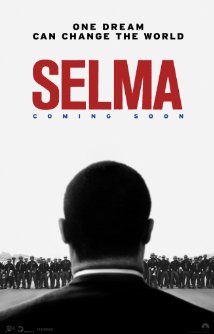
In the American South of the 1960s, black citizens were guaranteed the right to vote but were systematically denied the right to register to vote by a system controlled by white officials. (If you can’t register, you can’t vote.) The new movie, Selma, is about the struggle to right this wrong and about the symbolic fifty-mile protest march from Selma to Montgomery that galvanized the country’s attention.

To politicians of the day, suppression of black voters in the South was a political football they preferred to stay away from. When Dr. Martin Luther King (David Oyelowo) seeks the help of the sitting president, Lyndon Johnson (Tom Wilkinson, the actor who seems to be able to play any part, from Ben Franklin to a transgendered woman), he (Johnson) wants to defer the matter to a future time, believing the country has more pressing problems, such as the Vietnam War and poverty. The demagogic governor of Alabama, George Wallace (a snarling Tim Roth), seems unable to effectively deal with racial issues in his state. He wants the president to handle the matter, while the president dresses Wallace down for not handling it on a state level. When the protesters, mostly black but some white, attempt to cross the bridge over the Alabama River, led by Dr. King, there is a bloody melee with an all-white police force. When the story and its accompanying images are beamed across the national airwaves, people everywhere are suddenly paying attention to what is happening in the South and waiting for what happens next.

Of course, the focus of Selma is Dr. Martin Luther King, his life and struggles. In the many scenes between him and his wife, we sense a tension between them and get the impression that their marriage is not all it should be. (These interior scenes are, for some reason, grungy-looking and dark.) Dr. King’s well-publicized marital infidelities are played down. (The couple’s children are nonentities, mentioned in passing and seen only from a distance.) Dr. King seems to not know that the FBI is snooping on him, listening in on his private conversations, seeking to destroy his family and his life. Once again, J. Edgar Hoover’s FBI is the villain.

Selma is a history lesson wrapped up as mainstream entertainment. How historically accurate is it? Only those who were there and remember the events as they happened can say for sure. What is known is that President Johnson signed into law in 1965 the Voting Rights Act that prohibits racial discrimination in voting.

Copyright © 2015 by Allen Kopp  
Into the Woods ~ A Capsule Movie Review

Into the Woods

Into the Woods ~ A Capsule Movie Review by Allen Kopp 

Into the Woods was a Broadway musical with music by Stephen Sondheim and is now a movie. It’s set in a mythical kingdom, populated by a childless baker and his wife; a wicked old witch (Meryl Streep); Rapunzel, whom the wicked witch passes off as her own daughter but who is really the younger sister of the baker; Cinderella (Anna Kendrick); Cinderella’s wicked stepmother and two wicked stepsisters (“beautiful of face and black of heart”); not one, but two, handsome princes (Chris Pine and Billy Magnuson); Jack (of “and the beanstalk”) and his harried mother (Tracey Ullman); Red Riding Hood and a hungry wolf (Johnny Depp); and an angry female giant who is at first mistaken for an earthquake. They all sing at the full capacity of their lungs (except for the giant) and they all want something. Desire of some kind seems to be the subtext for all fairytales.

There are some funny moments, as when the wicked stepmother cuts off part of each of her daughter’s foot (“If you’re married to a prince,” she says, “you won’t need to walk.”) to accommodate the slipper that Cinderella left behind as she was fleeing the ball at midnight; and when the baker and his wife attempt haplessly to get their hands on the articles (Red Riding Hood’s cape, a white cow, a golden slipper, and hair as yellow as corn) the wicked witch requires to reverse the spell she has placed on them that has made them childless. Also funny is the scene where Meryl Streep is transformed from an ugly witch into a beautiful witch, making her look like a drag queen.

To me the Stephen Sondheim music is unmelodic and highly forgettable (not exactly Rodgers and Hammerstein), but Into the Woods is beautiful to look at, with engaging and likeable characters (except for the wicked stepsisters, one of whom smacks Cinderella in the face and knocks her down). Not a bad way to spend a couple of hours between Christmas and New Year’s. I just wish I could have seen more of that angry female giant.

Copyright © 2014 by Allen Kopp

The Hobbit: The Battle of the Five Armies ~ A Capsule Movie Review

The Hobbit, the Battle of the Five Armies

The Hobbit: The Battle of the Five Armies ~ A Capsule Movie Review by Allen Kopp 

We come now, finally, to the third installment of the Hobbit trilogy: The Hobbit: The Battle of the Five Armies. Smaug, the ill-tempered, fire-breathing dragon that has been sitting on a tremendous horde of gold inside the Lonely Mountain for a long time (centuries, it seems) was unleashed in December 2013 at the end of the second installment. For reasons that are not clear, Smaug is intent on destroying Middle Earth. Smaug manages to destroy a large part of the town called Laketown but is killed by one of its intrepid citizens, the one named Bard, with a special arrow that pierces his otherwise unpierceable hide. Of course, Bard wouldn’t have been able to do it without the help of his young son, whose name, I believe, is Bain.

So, with Smaug dead, that leaves all that glorious gold inside the mountain unattended, which, naturally, everybody wants for their own. The armies of the different races (dwarves, elves, orcs, and men) converge on the mountain to fight it out. Is all that gold worth fighting a war over? Of course, it is. Which army will prevail in the end? Will it be a force of good or will it be the army of orcs (a cruel, ugly, war-like, humanoid race) sent by arch-villain Saruman?

Thorin Oakenshield, a dwarf who is also an exiled king, is supposed to represent the force of good in the war over the gold, but something happens to him. Just being inside the mountain makes him greedy. He begins to believe that the gold means more than honor, integrity and commitment to his people. He is suffering from what one dwarf calls “dragon fever.” How will the hobbit, Bilbo Baggins, and the thirteen dwarves he has been traveling with since the beginning of the adventure make Thorin Oakenshield see how wrong he is?

The Hobbit: The Battle of the Five Armies is worth another visit to Middle Earth, apparently the last one there will ever be. Peter Jackson, the director who directed this trilogy and also the Lord of the Rings trilogy with a master’s touch, says he will not make any more movies based on the fantastical works of J. R. R. Tolkien. It’s been a lot of fun and a great run. 

Copyright © 2014 by Allen Kopp 

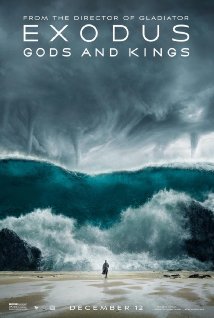
Exodus: Gods and Kings ~ A Capsule Movie Review

Exodus, Gods and Kings

Exodus: Gods and Kings ~ A Capsule Movie Review by Allen Kopp 

There aren’t many movie spectacles anymore like Exodus: Gods and Kings. It is a retelling of the familiar story of Moses (played by Christian Bale) and how he led the Hebrew people to freedom after four hundred years of slavery by the Egyptians. (And how did Egypt use all those slaves? To build its monuments and tombs, some of which still stand today.) John Turturro (an odd choice) plays the pharaoh Seti (with a strange British accent). When Seti dies, his son, Ramses II (Joel Edgerton), becomes pharaoh. Ramses may be a god to his people, but he has the full range of human frailties (self-doubt, fear, etc.) He’s no strutting, arrogant jerk here, as we have seen him portrayed before.

The foundling Moses is, of course, raised by the Egyptian royal family as their own. He and Ramses are like brothers, although they are nothing alike. When Moses, as a man, kills a slavemaster, it becomes apparent that he and Ramses are on opposing sides. Moses is exiled, or chooses exile on his own, and flees across the Red Sea. When he is rescued, near death, from a terrible storm by a tribe of Bedouins, he marries a woman of their tribe and they have a son. In the meantime, God is speaking to Moses through the “Burning Bush.” God’s messenger to Moses is a small boy who appears to be about twelve years old with a grownup’s command of the language. God instructs Moses to return to Egypt and lead the Hebrew people from slavery. Why was Moses chosen out of all the others to carry out this task?

Egypt needs its slaves to build its tombs and monuments and has no intention of giving them up without a fight. (As Ramses explains, the monuments, which are so necessary, represent power.) God unleashes the Ten Plagues on Egypt, not only as punishment, but also to contrast His own power with the power of the Egyptian deities. After the tenth plague (death of the firstborn), which costs Ramses his infant son, he capitulates, bringing about the exodus of the Hebrew people from Egypt.

I can’t attest to the historical or biblical accuracy of Exodus: God and Kings, but, for my money it’s solid entertainment on a spectacular scale, far superior to most of the mainstream crap that’s out there. (Horrible Bosses 2? Oh, please! And do we really need another Dumb and Dumber?) There’s something about seeing the grandeur of ancient Egypt in a big-budget Hollywood movie that makes it worth the time and effort. Just enjoy the ride and don’t pay any attention to those people whose job it is to tear everything down.

Copyright © 2014 by Allen Kopp

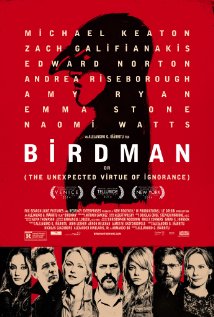
Birdman (The Unexpected Virtue of Ignorance) ~ A Capsule Movie Review

Birdman

Birdman (The Unexpected Virtue of Ignorance) ~ A Capsule Movie Review by Allen Kopp 

An aging, has-been movie star named Riggan Thomson (played by Michael Keaton), whose greatest glory was playing a “Birdman” character on the screen, tries to show the world twenty years later that he is still “relevant” and an actor of substance by writing, directing, and starring in an unlikely stage adaptation on Broadway of a play based on the works of writer Raymond Carver. That’s the premise of the movie with the unwieldy title Birdman (The Unexpected Virtue of Ignorance). 

Right away, Riggan Thomson is beset with problems, as you might expect. His lead actor is injured when a light falls on his head, so he brings in a replacement named Mike (Edward Norton), a prima donna to whom nothing is real except acting. (When he has to remove his clothes for a wardrobe fitting, he isn’t wearing any underwear.) Riggan has a pothead daughter named Sam (Emma Stone) who resents him because he was never around when she was growing up. Sam, who works as a sort of stage assistant, is drawn to the unappealing Mike for some reason, even though she is about half his age. Mike, we learn, suffers from sexual dysfunction, as attested to by his girlfriend, Lesley (the ubiquitous Naomi Watts), who is a cast member in the play.

Riggan has invested all his money in the play, so if it fails he is financially ruined, not to mention what it will do to his prestige. He desperately needs to make it work, and we feel his desperation. Compounding his problems are an ex-wife who shows up every now and then, a might-be-pregnant girlfriend, a nagging lawyer trying to keep him on track, and a vengeful (and apparently powerful) female critic who tells Riggan she will “ruin” his play with a terrible review (even before seeing it) because she hates him and all he represents. (Riggan’s confrontation with the critic in a bar is a high point.) 

Birdman (The Unexpected Virtue of Ignorance) is unusual in its execution and subject matter. (For one thing, it’s set almost entirely in a New York theatre. For another thing, Riggan levitates in his underpants and can make things move at will—I’m not sure what that is all about.) It’s the kind of movie that critics love because it pushes the boundaries of “art.” (The music score, except for some well-known excepts from classical pieces, is almost entirely composed of rifts on drums.) For regular moviegoers who are not critics, it’s either going to be a boring, pretentious blabfest or the best movie of the year. Maybe somewhere in between. Watch as it wins tons of awards for acting and writing.

Copyright © 2014 by Allen Kopp

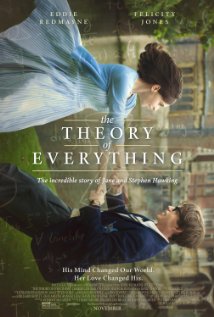
The Theory of Everything ~ A Capsule Movie Review

The Theory of Everything

The Theory of Everything ~ A Capsule Movie Review by Allen Kopp 

Probably everybody on earth has heard the name Stephen Hawking. He is the English physicist who became famous for his theories of the universe and for the books that he wrote, among them A Brief History of Time that has sold ten million copies.

Stephen Hawking is also famous for something else. When he was still a college student, he was found to have ALS (Lou Gehrig’s disease), a disease of progressive muscular degeneration. He was told he had two years to live, being made to understand that, as his body deteriorated, his mind would be unaffected.

The Theory of Everything is Stephen Hawking’s story, based on a book by his wife, Jane Hawking. Eddie Redmayne, who was memorable in My Week with Marilyn and Les Misérables, plays Stephen, and Felicity Jones plays his (nearly saintly) wife, who, even in middle age, appears to be about twelve years old. (A minor quibble.)

When Stephen first discovers that he has ALS, he tries to send Jane away, believing he has no future and nothing to offer her, but she persists. (She takes the idea of romantic love literally.) She will stick by Stephen for as long as he has. (Stephen’s father tells Jane that Stephen’s disease won’t be a fight but will instead be a crushing defeat for all of them.) Stephen and Jane are married and soon have a child.

Living with Stephen and taking care of him is not easy for Jane, but she soldiers on through the years as Stephen becomes world-famous and continues to defy the probability that he will die soon. Jane and Stephen end up having three children. A turning point comes when Jane’s mother suggests that Jane join the choir at church. (“That may be the most English thing that anybody has ever said,” Jane says.) She takes her mother’s suggestion and meets the handsome and charming choir director, Jonathan Hellyer Jones (played by Charlie Cox, who played a likeable character on Boardwalk Empire who met a bad end). Jonathan becomes a friend and helper to both Jane and Stephen. Jane soon admits that she has “feelings” for Jonathan and Jonathan feels the same way about Jane. Stephen, meanwhile, is drawn to a pretty therapist named Elaine.

You don’t have to understand Stephen Hawking’s science (black holes, the theory of relativity, boundaries of the universe, etc.) to be drawn in to The Theory of Everything. It’s a very good movie that, like other very good movies, will probably not appear at the local multiplex that only does mainstream. You might have to go a little farther and expend a little more effort to see it, but it’s worth it. If it’s not one of the best movies of the year, it’ll have to do until the real thing comes along.

Copyright © 2014 by Allen Kopp

The Hunger Games: Mockingjay, Part 1 ~ A Capsule Movie Review

The Hunger Games, Mockingjay, Part 1

The Hunger Games: Mockingjay, Part 1 ~ A Capsule Movie Review by Allen Kopp 

The residents of the strange alternate world known as “Panem” are savagely oppressed by a cruel government represented by the word “Capitol” and personified by creepy Donald Sutherland as the “president.” Enter Katniss Everdeen (Jennifer Lawrence), famous because she was the winner, two times, of the Hunger Games. Like a modern-day Joan of Ark, she will lead her people to freedom against tyranny. Or will she?

The Hunger Games: Mockingjay, Part 1 is the third movie based on the popular book series. While movie number one and number two were very much alike, this one is quite different. Katniss Everdeen is recruited by the leader of the opposition, Alma Coin (Juliette Moore), to be its “mockingjay” in the fight for freedom against the government. Katniss is perfect for the mockingjay because she’s resourceful, brave, determined, fed up with the way her people are treated, but, most of all, she’s known all over the land for her triumphs in the Hunger Games. Getting her to represent the opposition is a major public relations coup.

The government has no intention of letting its people be free; it prefers to see them dead and will employ any measures to get and keep the upper hand, including bombing large parts of the country to cinders. Another of the government’s tactics is to use Peeta Mellark (Josh Hutcherson) as a sort of propaganda tool. You will recall (or maybe you don’t) that Peeta Mellark was with Katniss during the Hunger Games and is an important person in her life (she finally admits that she’s in love with him). Peeta appears to have gone over to the other side but has in reality undergone a kind of brainwashing. He goes on TV as part of an orchestrated plot of disheartening the opposition and tells them that they should lay down their arms and give up their fight against the government. Those who know Peeta know that he is being manipulated like a puppet on a string. Katniss wants Peeta back. Will they be able to rescue him from the enemy? What will he be like once he has returned? Those questions are answered, in part, in this movie, but apparently we will have to wait until the next chapter to learn the whole truth.

Some of the characters from the first two movies are also on hand here, including the ever-strange Effie Trinket, minus her wigs and outrageous outfits; Haymitch Abernathy, the drunken “trainer” from the earlier movies who doesn’t have much to do here; Gayle Hawthorne, Katniss’s alternate love interest who also doesn’t have much to do; Primrose, Katniss’s cat-loving sister; and Caesar Flickerman as the very odd TV host, minus the blue hairdo.

The Hunger Games: Mockingjay, Part 1 is dark, figuratively and literally. Some of the scenes are so dark that you can hardly see what’s going on. Most of the action takes place in a sort of bunker where the opposition is encamped. What’s worse than the darkness is the incomprehensible dialogue, either because of the layered soundtrack or because the actors have been eating mush before going in front of the camera. When it’s shown on TV, I’ll watch it and turn on the closed captions so I can find out what they were really saying.

Fans of the books and of the first two movies will probably love The Hunger Games: Mockingjay, Part 1, but it’s not for everybody. Those who haven’t followed the story up to this point probably won’t have a clue as to what is going on.

Copyright © 2014 by Allen Kopp

Nightcrawler ~ A Capsule Movie Review

Nightcrawler

Nightcrawler ~ A Capsule Movie Review by Allen Kopp 

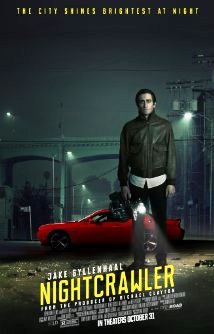
In Nightcrawler, Jake Gyllenhaal plays Louis Bloom, a fast-talking young man with a line of blather, a certain amount of charm, and a burning desire to succeed in his chosen profession. He goes around the scary streets of Los Angeles at night, looking for accidents, shootings or crimes in progress so he can film them. He then sells what he films to TV news stations, which will pay lots of money for the bloodiest and most sensational film footage—the more blood, mayhem, and human misery, the better. This is the stuff that brings in viewers.

We see right away that Louis Bloom is bereft of morals. He steals an expensive bicycle early in the movie and pawns it to buy himself a video camera and the equipment he needs. He ingratiates himself to a news director at a Los Angeles television station, a woman named Nina (Rene Russo). She is charmed by his bravado and sees he has a real eye for TV journalism, or, in other words, he is a deft purveyor of the kind of sleaze that is her life’s blood. (Her job might be on the line if she fails to deliver the kind of trashy visuals her audience has come to expect.)

Louis hires an assistant named Rick (Rick Garcia) for thirty dollars a night. Rick is everything that Louis is not; he’s hesitant and lacking in confidence. He wants to make good (as he tells Louis, he is sleeping in a garage) but we see he isn’t suited for the kind of things that Louis expects him to do. If he had any sense, he would walk away, but, of course, he doesn’t and he comes to a bad end.

When Louis and Rick accidentally stumble on a crime in progress, an apparent “home invasion” (that turns out to be something else) in a house in an upscale neighborhood, it is heaven-sent for Louis. He hides outside and films the whole thing taking place inside the house, including gunshots. After he films two men leaving, he goes inside and films the bloody crime scene up close, including three shooting victims. When he takes this film footage to Nina to sell to her, he demands an exorbitant fee. (To give himself leverage and bargaining power, not to mention big money, he withholds the part of the film that shows the two men leaving the crime scene, landing himself in hot water with the police.)

Nightcrawler is intelligent and literate, if a little verbose. Louis Bloom is an interesting and complex character. Lots of adjectives might apply to him, including unscrupulous, self-aggrandizing and opportunistic. Jake Gyllenhaal is convincing every step of the way (he had an awful lot of dialogue to memorize). Also memorable are Nina (when Louis makes sexual advances, she says she doesn’t date people she works with and, anyway, she’s twice his age, which would make her about 68) and Rick, who has a kind of Ratso Rizzo appeal, although he’s a lot cleaner than that.

Copyright © 2014 by Allen Kopp

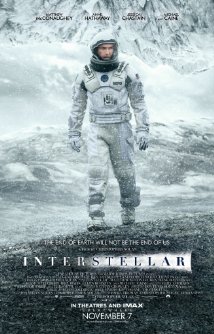
Interstellar ~ A Capsule Movie Review

Interstellar

Interstellar ~ A Capsule Movie Review by Allen Kopp 

In the new movie Interstellar, the earth is dying (a recurring theme in today’s pop culture) and cannot sustain its six billion people. NASA scientists have discovered a “wormhole” in space just outside our solar system. This wormhole allows for space and time to be compressed (remember the theory of relativity) so that earthlings can get to a hospitable, pristine, earth-like planet where human earth-life can begin again. Who made this wormhole, or who allowed earth people to know of its existence? The characters in the movie can’t bring themselves to say that it is part of God’s plan, presumably for fear of offending somebody. Welcome to the world of political correctness.

Matthew McConaughey plays a character known simply as “Cooper.” He is a disaffected farmer whose farm is being ruined by the bad old environment that people themselves have destroyed. He is also a widower, a father, and an engineer. Who better to lead the secret mission through limitless space to the wormhole and on to another planet (unknown, except that it is earthlike) that earthlings can call home? Of course, on the mission there is also the toothsome daughter (Anne Hathaway) of the genius (Michael Caine) who thought it all up but is too old himself to go along, and two male colleagues (one black and one white). Cooper reluctantly leaves his two children behind on earth, promising to return whenever he can. His daughter, with the odd name of “Murph,” will play a significant part in what is to come. (The revelation that comes to Cooper later in the story is that the mission is not to save him or his own family but to save the human species.)

Interstellar is long (eleven minutes short of three hours) and loud, with a pulsing music score that, even though it’s good music, seems to get in the way at times of the audience being able to hear what the characters are saying. My problem throughout much of Interstellar is that a lot of the dialogue is incomprehensible. I might have felt more engaged by the whole thing if I had known what was happening as revealed by what the characters were saying. And when the explorers land on another planet, it’s disappointing because all we can see is water. Where are the exotic inhabitants and strange (to us) plants and animals? Who wants to see only water and waves? We have that on earth.

I got a similar feeling from Interstellar that I got from Elysium, Inception, Prometheus, and other movies. The cleverness of it gets in the way of the story. I don’t want to be blown out of my seat by special effects, gimmickry, and sound design. I want to be blown out of my seat by a believable and beautifully written story that I’ve never seen before.

Copyright © 2014 by Allen Kopp