The Conjuring 2 ~ A Capsule Movie Review

The Conjuring 2

The Conjuring 2 ~ A Capsule Movie Review by Allen Kopp

If we are to believe the current spate of horror movies, there are many, many evil spirits (or demons) waiting to do bad things (or horrifying mischief) to ordinary people. In the movie The Conjuring (2013), based on a “true” story, a working class couple with a houseful of daughters buys a quaint old farmhouse in rural Rhode Island, not knowing that it’s the residence of a malevolent spirit from long ago who tries to make the mother kill her daughters. The family turns to Ed and Lorraine Warren for help. Lorraine is a psychic and her husband, Ed, is a sort of psychic investigator who assists people in ridding their homes of these spirits. Ed and Lorraine Warren are real-life people (not a handsome pair like Vera Farmiga and Patrick Wilson who play them onscreen) who travel around from place to place working on cases of various “hauntings.”

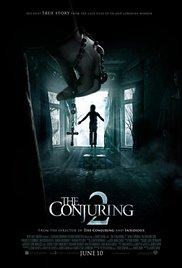
In the new movie The Conjuring 2, Ed and Lorraine Warren travel to England, to  the home of a beleaguered, divorced mother with four children in a dreary working-class neighborhood in northern London. The family’s name is Hodgson. Janet Hodgson is eleven years old. She’s been levitating, her bed shakes violently when she’s asleep and she hears and sees things (people) that apparently aren’t there. Finally, the spirit of an old man named Bill Wilkins who died in the house forty years earlier begins speaking through Janet Hodgson. (Or is he?) The house is his, he says, and he wants the current occupants to get out. After much investigating, it appears that eleven-year-old Janet is just faking the whole thing to get attention. Wait a minute! How can she have faked all the psychic occurrences that have been documented? It seems there are always those skeptics willing to find a “logical” explanation for any “proof” of ghosts or an afterlife. 

We learn finally that the spirit of Bill Wilkins is just a “pawn” for a really malevolent spirit named Valak, who manifests itself in the form of a horrifying nun. Janet Hodgson is being forced to appear to be faking the whole thing; if she doesn’t, the demon will kill her family. After many twists and turns, Ed and Lorraine learn the truth and then know how to counter the demon. 

The Conjuring 2 is formulaic, as these ghost stories usually are, but if you like well-made horror films (not slasher films) with a real plot, characters (not jiggling teenagers) and dialogue, this one is well worth your time. We are always left with the disquieting suggestion at the end that, although the living people may have won this round, the demons are only temporarily discommoded and will be back. As long as The Conjuring 2 makes money, there is bound to be The Conjuring 3

Copyright © 2016 by Allen Kopp 

Genius ~ A Capsule Movie Review

Genius

Genius ~ A Capsule Movie Review by Allen Kopp

Like other geniuses before him, American writer Thomas Wolfe (1900-1938) flamed brightly for a time and then burned out. He lived life exuberantly and was bursting with talent and creativity. In New York in 1929 he was just another failed writer. His massive first novel, which he called Oh, Lost!, had been rejected by every publisher in New York. He had a patroness, though, a woman named Aline Bernstein, who, through her connections, arranged to have the novel brought to the attention of Maxwell Perkins, an editor at Charles Scribners publishing house. Perkins agreed to give the manuscript a “quick look,” even though he was told from the beginning it wasn’t any good.

Max Perkins “discovered” Tom Wolfe, the writer. He would do for Wolfe what he had done for F. Scott Fitzgerald and Ernest Hemingway. As soon as he began reading Oh, Lost!, he knew that it was a unique work. He saw in it what other editors had failed to see, or, more likely, hadn’t taken the time to see. The book needed massive editing, but Perkins believed it was a work of genius that needed to be brought to the reading public. He contacted Tom Wolfe and gave him a check in advance of royalties for five hundred dollars. Wolfe wept.

Of course, Wolfe was reluctant to make any cuts to the book. He and Perkins spent months whipping the book into shape, which included a title change to Look Homeward, Angel. When the novel was published, it was a huge success and Wolfe was hailed as a genius. He knew he would never have been able to do it, though, without the help of Max Perkins.

In the new movie, Genius, Thomas Wolfe is played by Jude Law. He is loud, has a prodigious Southern accent (from Asheville, North Carolina), and isn’t interested in social conventions. He says what he thinks, does what he likes, and spends a lot of his time in a drunken state. He also has some domestic problems. Aline Bernstein (Nicole Kidman), his patroness, the “older” woman who left her husband, family, and respectability behind for him, is unstable and jealous. She is happy for Wolfe’s success, of course, but resents the many hours he spends on his writing. In one scene, she begins pouring pills into her mouth in the office of Max Perkins (Colin Firth) to get Wolfe to go home with her. She is a very unpleasant, bitter woman.

Wolfe’s next book, Of Time and the River, is even longer than the first. Perkins and Wolfe would spend many hours together, day and night, over two years or more, editing the book and getting it ready for publication. During this time, Perkins and Wolfe become close friends. Perkins comes to think of Wolfe almost as the son he never had (he has five daughters). The writer/publisher association develops into a close—at times volatile—friendship. Aline Bernstein tells Perkins that Wolfe will leave him as soon as he (Perkins) has served his purpose. She also threatens Perkins with a gun.

In 1938, at the age of 37, Tom Wolfe is stricken and taken to Johns Hopkins hospital in Baltimore (the same hospital where his father died). When an operation is performed, doctors discover he has a “myriad” of tumors in his brain. He dies soon after.

Genius is based on a nonfiction book by A. Scott Berg. It is an “art” film for a niche audience that won’t get much attention or make much money. Those of us who have read the great books of Thomas Wolfe and know something of his life will find the story fascinating. There aren’t many of us. At the showing I went to last night, there were three other people besides me in the audience. I walked a mile in the heat (I’d always rather walk than drive) to see it and a mile home. It was worth it.

Copyright © 2016 by Allen Kopp
Alice Through the Looking Glass ~ A Capsule Movie Review

Alice Through the Looking Glass

Alice Through the Looking Glass ~ A Capsule Movie Review by Allen Kopp

In Wonderland, Time is a “he” with electric blue eyes, a mustache, and an accent. He tells the Red Queen that her head is looking “wery, wery large today.” The Red Queen (Helena Bonham Carter), besides having an enormous head (out of all proportion to the rest of her body), has a tiny red heart painted in the middle of her lips (to show the smallness of her heart?) and a profusion of red hair. Nobody loves her, she says, but we know the reason for that is because she is so mean and loves to have people’s heads cut off. (“Off with his head!”, she shouts.) The White Queen, her fluttery sister, tells her that she loves her, if nobody else does, but the Red Queen isn’t having any of it. She hates being hugged.

The Mad Hatter (Johnny Depp) also has a profusion of red hair and enormous eyes that change color with his mood. He is rather androgynous and speaks with a lisping accent that is at times indecipherable. His friends (the Cheshire Cat, who floats in the air and disappears and reappears at will; Tweedledum and Tweedledee, rotund male twins; a dormouse, a dog, and a rabbit, all of whom speak English) are worried about him and think he might be dying.

Absolem, a blue, sometime-caterpillar/sometime butterfly, shows Alice (Mia Wasikowska) the way to return to Wonderland through the large mirror over the mantel. She is needed back in Wonderland after her earlier adventures there because the Mad Hatter, her “best friend in the whole world,” is in trouble. When she visits Hatter in his house shaped exactly like a top hat, she finds him in a low state. He tells Alice he wants her help in getting his family back and, when she tells him that getting them back is impossible because they are dead, he orders her out of his house. The Alice he knows, he says, never believed that anything was impossible.

Alice agrees to at least try to get Hatter’s family back, but she knows it will be very difficult, if not downright impossible. She must first manipulate Time (Sacha Baron Cohen), to be able to travel back to an earlier period when Hatter’s family was still alive. When she is finally able to travel back in time, she meets the Red Queen and her sister, the White Queen, as children, before the Red Queen became so mean. She also meets Tweedledum and Tweedledee before they were grown up and also meets Hatter as a child. Of course, he doesn’t have any recollection of Alice at this time because he hasn’t met her yet.

Alice Through the Looking Glass is a sequel to 2010’s Alice in Wonderland, both of them based on literary classics by English author Lewis Carroll. It’s colorful, imaginative and whimsical, full of bizarre characters and fantastic settings. For the child in all of us.

Copyright © 2016 by Allen Kopp

Woman in the Dunes ~ A Capsule Movie Review

Woman in the Dunes

Woman in the Dunes ~ A Capsule Movie Review by Allen Kopp

I read the Japanese novel (in English translation, of course) Woman in the Dunes by Kôbô Abe in 1992, but had never seen the 1964 movie version of the novel until it was shown on “TCM Imports” on Sunday night. It’s a simple story with two principal characters and a handful of “villagers” that we never see for more than a minute or two at a time.

A young, child-like Japanese woman, whose name we never know, lives in a crude wooden shack at the bottom of a ravine from which there is no escape. It’s a barren, isolated place. Sand is all we ever see and the sand moves all the time (from wind and gravity), like a creepy, sinister entity, down into the ravine in which the woman lives. She must shovel the sand day and night to keep from being buried in it. (We learn after a while that her husband and daughter are both buried there.) She hoists the sand up to the villagers who sell it to be used in bricks or building materials. In return, they send her a scant amount of food and water. While most people would believe that the perpetual shoveling of sand is just another version of hell, the Japanese woman thinks of it as her life and the ravine as her home. She states at one point, “Nobody would even bother with me if it wasn’t for the sand.” She thinks it’s what she deserves.

A young man from Tokyo named Niki Jumpei is a teacher and entomologist. He is looking for a certain specimen of sand beetle and if he can find one that hasn’t been classified yet, he’ll get his name in the journals. When he misses the last bus home in the evening, he asks a villager if there is someplace nearby where he might stay for the night. The villager leads him to the ravine where the young woman lives. A rope ladder hangs there which he might easily climb down. The woman feeds him and he spends the night there. In the morning he prepares to leave but discovers that the rope ladder that he used to climb down into the ravine is gone. He is trapped in much the same way that he traps his insect specimens.

Niki Jumpei spends a lot of time calculating how he might get out of the ravine and go home, but the young woman is cheerful and unmoved. He begins to help her with the shoveling and she prepares his food. He tells himself that when he doesn’t return, the people at home will come looking for him. He tries everything he can think of to get out of the ravine, but nothing works. The one time he does get out, he loses his way, gets caught in quicksand, and the villagers find him and lower him back into the ravine.

In time, Niki Jumpei and the young woman are drawn to each other in a sexual way, as nature dictates when two heterosexual people of opposing genders are thrown together. She bathes him as he stands in the middle of the floor naked. She asks him how she compares with the girls in Tokyo. Does he have a wife? She is clearly delighted at his being there and horrified at the thought that he might get away.

For such a simple, stark story, there is a considerable amount of tension in Woman in the Dunes, accompanied by eerie (though appropriate) Japanese music and the perpetual effects of the sand closing in. What’s going to happen? Will Niki Jumpei kill the young woman? Will he be able to escape? Will he escape and take her with him? Will she finally relent and get the villagers to let him go? There are any number of possible outcomes and the way the story finally ends is something we didn’t see coming.

The “director’s cut” of Woman in the Dunes is almost two-and-a-half hours long. In Japanese with English subtitles, it’s not for everybody, of course, but it’s accessible and memorable for those willing to spend the time. Foreign movies, like grand opera, are an acquired taste. Some people will resist both as a matter of principle. It’s hard for some of us to overcome our hillbilly origins.

Copyright © 2016 by Allen Kopp

Risen ~ A Capsule Movie Review

Risen

Risen ~ A Capsule Movie Review by Allen Kopp 

Risen is a fictional story surrounding the Crucifixion and Resurrection of Jesus Christ. Joseph Fiennes, who doesn’t look much older now than he did in 1998 when he played Shakespeare in Shakespeare in Love, plays a Roman tribune named Clavius. Clavius doesn’t seem to believe in much of anything except his own ambition. He’s present at the Crucifixion, and when he sees the suffering that occurs and the devotion of Jesus’s followers, something is stirred deep inside him. He looks long at the face of the man on the cross.

After Jesus’s body is entombed, the trouble seems to have ended for the Roman government, except that three days later the huge stone that was covering the entrance to the sepulcher is rolled away and the body is gone, leaving only the shroud that covered it. The guards who were supposed to be guarding the tomb were found to have been in a drunken stupor. The story that’s advanced is that Jesus’s followers stole the body and have it hidden somewhere to advance their own agenda. Pontius Pilate, in a tizzy over a visit by the Emperor that is supposed to take place in a few days, charges Clavius with finding the body of the man some call a king and thus ending the stories about him that are embarrassing to himself and the government.

Clavius doesn’t believe that anything supernatural has taken place. He admits that the one thing in the world that scares him the most is being wrong. He begins looking everywhere for the body of a 33-year-old man who has been crucified. His investigation leads eventually to the followers of Christ, those who call themselves the Disciples. He finds that these men are sincere and, although they can’t explain what they believe and what they have seen, they believe it wholeheartedly. When Clavius and some of his men burst in on a meeting of the Disciples, he finds sitting among them the living image of the man he saw die on the cross. He is mystified but has no explanation.

To satisfy his own curiosity, Clavius begins traveling with the Disciples. Christ appears to them miraculously at times and Clavius witnesses firsthand some of his miracles, including the curing of an outcast leper. When Christ appears to the Disciples for the last time, he tells them to spread his message to every country in the world. After these events take place, Clavius, if not quite a believer, at least admits that he has been changed forever by what he has witnessed.

Risen is not for everybody, of course. Either you’re a believer, or you’re not. If you aren’t a believer, a movie isn’t going to change your mind. If you are a believer, no further explanation is needed. 

Copyright © 2016 by Allen Kopp

Pride and Prejudice and Zombies ~ A Capsule Movie Review

Pride and Prejudice and Zombies

Pride and Prejudice and Zombies ~ A Capsule Movie Review by Allen Kopp

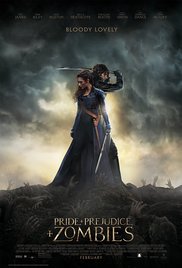
The fluttery, husband-hunting Bennet sisters from Jane Austen’s Pride and Prejudice are back, but with one important element added: Now they are intrepid zombie killers, trained in the art of war. That doesn’t mean they’re not still on the lookout for suitable men (spurred on by their mother), but they are always at the ready to defend themselves, their homes and their England with sharp knives, guns, swords or whatever other weapons come to hand, from the dreaded zombie scourge. Welcome to the zombiefied, but still genteel, world of Pride and Prejudice and Zombies, which was first a novel by Seth Grahame-Smith (who also wrote Abraham Lincoln Vampire Hunter) and is now a movie.

It seems that zombies began to proliferate after a plague epidemic; the plague victims arose from the dead as zombies. How inconvenient that is for non-zombies, because the zombies eat the brains of humans—that’s how they become full-fledged zombies—and their goal is to turn all humans into zombies. Once a person is bitten, he has no other choice but to become a zombie and succumb to his desire to eat brains. (The “Zombie Apocalypse” is upon us!) Zombies are easy to kill, however, if you know how (have been trained) and have the proper weapons.  There’s lots of zombie death in Pride and Prejudice and Zombies, but none of it is overly graphic. This movie doesn’t go in for squirting, splashing blood. The gore is restrained and the zombies are not like other zombies we’ve seen. They have parts of their faces missing and we can see the bones and tissue underneath. Pretty creepy but all part of the fun.

The two principal Bennet sisters, Elizabeth and Jane, are as pretty as Mr. Mr. Darcy, Mr. Bingley and George Wickham are handsome. Mr. Darcy is drawn to Elizabeth but she rejects him at first because she has been misled about him and believes he is something that he’s not. (These romantic complications will work themselves out in due course.) There’s something a little peculiar about Mr. Wickham, though (played by Jack Huston, who was so memorable as maimed World War I veteran Richard Harrow in HBO’s Boardwalk Empire). He is sympathetic toward the zombies and he advocates appeasement. He just might turn out to be the anti-Christ the zombie hoards are waiting for to lead them in the Zombie Apocalypse against the human race. This brewing war between good and evil is where we are left at the end of Pride and Prejudice and Zombies. If it generates enough revenue at the box office, there is certain to be a sequel.

Copyright © 2016 by Allen Kopp

Hail, Caesar! ~ A Capsule Movie Review

Hail, Caesar

Hail, Caesar! ~ A Capsule Movie Review by Allen Kopp

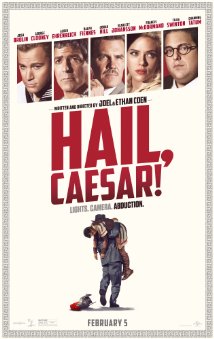
We’re in sun-drenched (except when it’s raining) Hollywood in 1951. Eddie Mannix (Josh Brolin), a decent fellow who goes to confession a lot and loves his family, is an executive at Capitol Studios. His job involves getting his “stars” out of trouble when they go astray and seeing that production runs smoothly. His trampy “aquatic” star, DeAnna Moran (Scarlett Johansson), is going to have a baby and doesn’t have a husband. This isn’t good for her screen image, so it’s up to Eddie Mannix to find a solution. Mr. Skank, head of the studio, wants cowboy star Hobie Doyle (Alden Ehrenreich), who speaks with a decided Western drawl, to star in a “drawing-room” drama based on a Broadway play. Hobie Doyle is in no way suited to such a role, but Mr. Skank is the boss, so what he says goes.

The studio’s biggest star is Baird Whitlock (George Clooney). Gossip columnist Thora Thacker (Tilda Swinton) is threatening to publish a potentially damaging story about Whitlock in his early days in Hollywood that involves “sodomy.” It’s up to Eddie Mannix to make sure this story never sees the light of day. As if this wasn’t enough drama, Baird Whitlock is kidnapped while Hail, Caesar! is being filmed. He plays the lead in the film (the studio’s “prestige picture of the year”) and production can’t go on without him. When the kidnappers (a communist “cell” of disgruntled screen writers) demand a hundred thousand dollars in ransom, it’s up to Eddie Mannix to deliver.

Hail, Caesar! was written and directed by Joel and Ethan Coen, the most innovative filmmakers around, so it’s about as wry and sardonic as you might expect. In spite of a subplot about Communism and a bizarre scene with handsome tap-dancing movie star Burt Gurney (Channing Tatum) boarding a Soviet submarine with his small dog just off the coast of California, the tone throughout is light and frothy. We see a couple of big 1950s-style production numbers, with dancing sailors in a bar lamenting not having any dames at sea and a big splashy pool number with swimming star DeAnna Moran and dozens of girl swimmers (think Esther Williams). There are even some moments of slapstick, as when as when cowboy star Hobie Doyle is being given direction by prissy director Lawrence Laurentz (Ralph Fiennes) and when cigarette-smoking film editor, C. C. Calhoun (Frances McDormand), gets her neck scarf caught in the editing machine and nearly strangles. Those two scenes alone are worth the price of admission.

Copyright © 2016 by Allen Kopp

13 Hours: The Secret Soldiers of Benghazi ~ A Capsule Movie Review

13 Hours

13 Hours: The Secret Soldiers of Benghazi ~ A Capsule Movie Review by Allen Kopp

If you follow the news at all, you will have heard about the terrorist attack on the American embassy in Benghazi, Libya, on September 11, 2012, that resulted in the deaths of four Americans, including ambassador Christopher Stevens. Benghazi was known to be one of the most dangerous and volatile places in the world, but still the United States continued to operate its embassy there, with dozens of employees in residence. When the terrorist attack occurred, the people on the ground were unprepared. When they repeatedly asked for help from American forces, they were denied (for whatever reason, political or otherwise). The attack could have (and should have) been prevented. The people “in charge” weren’t paying attention, underestimated the threat, or were preoccupied with partying or fundraising for their upcoming political races. To make matters worse, certain politicians lied in the aftermath of the attack in an attempt to cover their own asses. Yes, we know from this and other events that the people in charge of this country routinely lie to us for their own political expediency.

13 Hours: The Secret Soldiers of Benghazi is about the six military men who, despite orders to “stand down,” risked their lives to face the terrorists on their own and take control of the situation, without any outside help. There’s no political statement here, no political right or wrong, just a straightforward account of what happened, told entirely from the point of view of the Americans, especially one young American named Jack Silva, who wants to make it back home to his family but knows full well that he may die in a country “he doesn’t care about.” In this movie, we don’t find out anything about the terrorists or even see their faces. All we are told in the beginning is that Libya is a dangerous and crazy place and Americans have no business being there. The ones who are there certainly aren’t on a lark but are there with a sincere desire to help.

13 Hours: The Secret Soldiers of Benghazi is not exactly entertaining in the traditional sense but is well worth seeing so we may know what people oversees in dangerous places go through to protect lives and the interests of their country. The amazing thing about this movie is that it feels so authentic, with an absolute sense of immediacy, even though it was filmed in Malta and not in Benghazi. If moviemakers can make us believe that Malta is Benghazi, they could make us believe almost anything.

Copyright © 2016 by Allen Kopp

The Revenant ~ A Capsule Movie Review

The Revenant

The Revenant ~ A Capsule Movie Review by Allen Kopp 

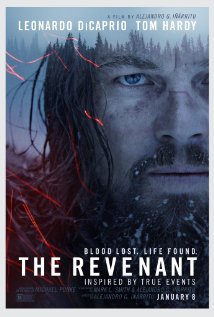
The Revenant (meaning “one who returns from the dead”) is set in the 1820s in an unspecified American wilderness where there are Indians, snow and bears. It’s an inhospitable place for men, especially white men, but that doesn’t keep them from being there. Leonardo DiCaprio plays a character named Hugh Glass who doesn’t believe in giving up as long as he has a breath left in his body. He and his half-Indian son named Hawk (his Indian wife is killed) are with a party of trappers. Their troubles begin when they are set upon by Indians who want to steal the pelts they have gathered to use in trading with the French. The Indians mean business and are proficient with killing white men with their arrows (often through the neck). A lot of the men in the trapping party are killed, while Hugh Glass, his son, and a handful of others get away.

In an encounter with a very angry grizzly bear, Hugh Glass is horribly injured. When the men of his party find him, he is near death. They do what they can for him, which isn’t much, and they expect him to die quickly. At least one of them, John Fitzgerald (Tom Hardy), wants Glass to die as soon as possible so they can move on before they are attacked by Indians again (and so he can get the money he has coming to him and go to Texas and buy some land). When Glass lingers for days (with his son Hawk always by his side), they are going to “do the proper thing” and shoot him in the head for the sake of their own convenience, but their leader, Captain Andrew Henry (Domhnall Gleeson) can’t go through with it. He agrees to leave volunteers behind to look after Glass until they can get back to civilization and send somebody after them. Hawk, of course, volunteers to stay behind, along with Fitzgerald and a very young man named Bridger (Will Poulter).

When Hawk finds Fitzgerald trying to smother his helpless father, he, of course, tries to stop him. Fitzgerald ends up killing Hawk, which Glass sees from where he is lying on the ground. Fitzgerald then attempts to bury Glass in a very shallow grave, even though he is still alive. Fitzgerald lies to the only person remaining, the decent Bridger, and tells him they are about to be attacked again by Indians and that they have to leave quickly before they are killed. Bridger doesn’t feel right about going off and leaving Glass, but he does it because he believes it is his only choice, leaving behind his canteen of water for Glass.

Glass lives and claws himself out of the makeshift grave that Fitzgerald put him in. He can barely walk but he somehow survives alone in the wilderness, eating fish or dead meat or whatever disgusting food he can find. Along the way he is befriended and helped by an Indian who sees how badly he is wounded. When a snowstorm hits, the friendly Indian builds a shelter for Glass to stay in. When the snowstorm passes and Glass awakes, he finds that his Indian friend has been hanged by a band of Frenchmen. As Glass gradually gains strength and is able to walk again, he has one thought in his head: to find Fitzgerald and make him pay for killing his son Hawk, the only thing, Glass says, that he has in the world. This is a story that reminds us how cruel and unrelenting nature is for every living thing (or indifferent, depending on how you look at it). And, of course, the most brutal beast in the wilderness is always going to be man.

Filmed using only natural light, The Revenant is somber and dark (not only in tone but in the way it looks), as it takes place in the winter when there is a heavy cloud cover. With its snowy vistas, rivers, animals, etc., it is beautiful to look at, absent any bright colors. The bear attack early in the movie and the Indian raid have an intense “you are there” feel to them. The music score is haunting and memorable. People will complain about the all-male cast but, after all, this is not Pride and Prejudice.

Copyright © 2016 by Allen Kopp

The Big Short ~ A Capsule Movie Review

The Big Short

The Big Short ~ A Capsule Movie Review by Allen Kopp 

The Big Short exposes the Byzantine world of big banking and specifically the crisis that led to the worst financial crisis of the modern era in 2008, when the mortgage industry collapsed and brought the world economy down with it. We already knew that Wall Street is a morass of corruption and greed. This true story tells us just how bad it is. As one of the characters says, “Wall Street deliberately confuses people. They confuse people into believing that only they can do what they do.” To phrase it another way, nobody understands what’s going on on Wall Street and that’s the way Wall Street wants it.

There’s lots of talk, talk, talk in The Big Short. I hear all the words, all right, but I don’t know what they’re talking about a lot of time, which is all right, I guess, because I’m deliberately supposed to be confused. Most of the time talk that I don’t understand is boring and tedious, but in this case it’s not tedious because you know that something tremendous is underway, a crisis so bad that it “could well be the end of capitalism.” There were a few forward-seeing individuals who foresaw what was coming and did what they could to prepare for it, while most of the “experts” tried to assure the world that everything was fine and the banking industry never on a sounder footing. They couldn’t have been more wrong or more foolish. People don’t want to believe that something bad is going to happen, even when the handwriting is clearly on the wall. This is a statement on human nature.

The Big Short is a very fast two hours and ten minutes. While big banking is not a subject I’m interested in, this is a compelling story because we were all affected by what happened and we see that the level of corruption, greed and stupidity in the highest echelons of the nation’s banking system is astounding. And did banking suffer from the crisis and learn from its mistakes? No, it did not. The middle class bore the cost of the crisis (loss of homes and jobs), while banking executives took their obscene bonuses and laughed all the way to their estates in Nantucket. And will banking make sure that such a crisis never occurs again? No, it will not. After the dust settled, they went right back to doing what they had done that caused the crisis in the first place. Do what you can to protect yourself because it will all happen again, and it could be even worse next time.

Copyright © 2015 by Allen Kopp