
The Raven ~ A Capsule Movie Review


The Raven ~ A Capsule Movie Review by Allen Kopp

The new movie, The Raven, is a fictional and highly speculative account of the mysterious final days of Edgar Allan Poe. Nobody has ever been able to figure out exactly why Poe died at the relatively young age of forty in Baltimore in 1849, so it’s a subject that lends itself to invention and speculation. He was found on a park bench, critically ill, and died a few days later in a Baltimore hospital.

John Cusack plays Poe. He was, to paraphrase an editor of a newspaper that published some of his work, a man to whom God gave a great gift, with more than his share of misery thrown in. His genius as a poet and inventive creator of murder stories is entirely at odds with his private life. He was plagued his whole life by what was in the nineteenth century called melancholy. (The truth is he probably suffered from some kind of undiagnosed mental illness.) He was also an unregenerate drunk who never seemed to have any money—he lowered himself to cadging drinks from the local saloon whenever he was short of funds.

In the movie, Poe is in love with a young woman named Emily Hamilton (Alice Eve), whose father (Brendan Gleeson) violently disapproves of Poe. Emily might be the only thing that can save Poe from his demons. He has already lost one young wife and longs to marry Emily, but her father would gladly kill Poe if given the chance.

A “serial killer” (a phrase that wasn’t a part of common English usage in 1849) is at work in the city of Baltimore. The killer, whoever he is, is using methods of killing described by Poe in his stories. A twelve-year-old girl and her mother are mutilated for no apparent reason. A literary critic who unkindly criticized Poe’s work in the past is sliced in half by a pendulum, as in the story The Pit and the Pendulum. A murder victim’s tongue is sliced out and replaced with a pocket watch. The police suspect at first that Poe is behind the murders, but he is soon found to have had nothing to do with them. He can, however, assist police in finding the murderer. He is especially motivated to help the police when the murderer kidnaps Emily and keeps sending Poe cryptic messages about the horrible things he might be doing to her.

The story is neatly wrapped up at the end, with a conclusion that seems as logical as any conclusion might have been. It’s not a happy ending, but we find out who the murderer is, and, in a neat twist at the end, the police detective (Luke Evans) who befriended Poe in the course of the investigation exacts a satisfying revenge.

The Raven is a mainstream movie and is not a serious examination of the life and work of Poe. It is lightweight entertainment and would not be nearly as interesting if not for Poe. If you like a fast-paced cinematic mystery with lots of period touches and atmosphere (not to mention an interesting music score), however, it’s probably going to be well worth your time and effort to see it. You could do a lot worse.

Copyright © 2012 by Allen Kopp   

The Hunger Games ~ A Capsule Movie Review


The Hunger Games ~ A Capsule Movie Review by Allen Kopp

The new movie The Hunger Games is set in a post-apocalyptic, far-distant future America that is now called Panem. Each of the twelve districts of Panem is required, once a year, to select, by lottery, one teenage boy and one teenage girl to travel to the Capitol and participate as contestants in the Hunger Games. These games are like the gladiatorial contests of ancient Rome in which the participants—through cunning, skill, and endurance—kill each other: Twenty-three will die; only one will survive. Everyone is required to watch the games on TV. It’s sort of a national yearly celebration that everybody seems to enjoy tremendously, except, of course, those who will die like hunted animals.

When the movie begins, participants are being selected in District 12 for the 74th Annual Hunger Games. When a young girl named Primrose Everdeen is selected to represent her district as the female contestant, her older sister, Katniss (played by Jennifer Lawrence), volunteers to take her place. She doesn’t want to be a contestant anymore than anybody else does, but she sacrifices herself to save her sister. Katniss wants to win so she can return home to her mother and sister, and she just might have the “fire” and the will to live that it takes to survive the Hunger Games. Whether she wins or not, we can see she’s going to make her mark.

The male contestant from District 12 is Peeta Mellark (Josh Hutcherson). He and Katniss know each other but don’t seem to like each other very much. They are taken in hand to prepare for the games by the very odd Effie Trinket (Elizabeth Banks) and a gone-to-seed previous winner of the games, Haymitch Abernathy (Woody Harrelson). Haymitch would rather get drunk than anything else, but he makes sure Katniss and Peeta  benefit from his experience so they might have a real chance of winning—and surviving.

The games themselves take place in the wild, or in a virtual wild that the people back at the command center have complete control of. They can create a forest fire for the contestants to deal with, poison berries, a nest of deadly hornets, vicious animals, or any number of other obstacles. Every move the contestants make while in the “wild” is being eagerly watched on TV by the entire country. Within the first eight hours, eleven of the twenty-four contestants are killed. When a contestant falls, a cannon booms.

The Hunger Games is a lot of fun, even though the ending is going to seem kind of predictable to a lot of people, with enough of a twist, though, to make it interesting and believable. The games themselves seem to go on a bit too long; the movie seems to sag about three-quarters of the way through but revives for the conclusion.

My favorite part of The Hunger Games is when the action shifts to the Capitol. It is in complete contrast to the place where Katniss and Peeta come from. It’s interesting to see how movie makers portray a city of the far-distant future. The fashionable people of the Capitol are a spectacle that must be seen. The hairdos and makeup seem to have a decidedly 17th century influence. The unctuous TV host of the games (Stanley Tucci) has a blue hairdo that defies description. It must be seen to be appreciated.

Copyright © 2012 by Allen Kopp

Shame ~ A Capsule Movie Review

Shame ~ A Capsule Movie Review by Allen Kopp 

Shame is an English movie with an English director with a German leading man playing the part of an American. Handsome mid-thirties New Yorker Brandon Sullivan (Michael Fassbender) seems to have it all. He has a high-powered job and an upscale apartment with a spectacular view of the New York skyline. He has something else, though, and it is the one thing that defines him more than anything else: He is a sex addict. When he isn’t engaged in sexual activity, he’s seeking sexual activity, gratifying himself (you get the picture), or watching porn on the Internet. He is consumed with sex and because he’s so attractive he has no shortage of sexual partners.

We see after a while, though, that no matter how much sex Brandon has, it’s never enough. While constantly seeking gratification of his appetites, he is never gratified. He is an empty shell of a man, a lost soul. He can only relate to people on a sexual level and, once the sex act is finished, there is nothing.

Brandon’s irresponsible younger sister Sissy (Carey Mulligan) shows up one day at his apartment. She has an unhappy past and is a singer of sorts (in a nightclub scene she sings a very slow, bluesy version of “New York, New York”). She has no place to stay and Brandon allows her to stay with him for a few days. He finds, though, that she is an unwelcome burden; she encroaches on his ability to satisfy his appetites. She makes a play for Brandon’s boss and, once the initial conquest is over, she continues to pursue the boss, even though he is a married man with children. Through his sister, Brandon begins to see himself as a he really is and he doesn’t like what he sees.

Shame has an NC17 rating, meaning that the sex scenes are too graphic for an R rating. The sex scenes are not there for titillation, though, as in most movies that venture into that territory. The sex scenes are an integral, organic part of what’s going on in Shame; they are so much a part of the character of Brandon Sullivan that we wouldn’t see his pain—or his shame—without them.

Copyright © 2012 by Allen Kopp

The Artist ~ A Capsule Movie Review

The Artist ~ A Capsule Movie Review by Allen Kopp 

The Artist is an odd little movie. It’s as different from most other movies being made nowadays as a Remington manual typewriter is from a word processor. It’s in black and white, it’s silent (except for music and a few spoken lines of dialogue at the end), and it’s shot in 1.33:1 “Academy ratio,” just as in silent-film days, meaning that the image on the screen is slightly more from top to bottom than from side to side to maintain the look and feel of a silent film.

The story involves a fictional actor of the silent screen named George Valentin (played by French actor Jean Dujardin). He is a big star until silent movies become sound movies in the late 1920s. Because he refuses to embrace the new sound technology, his career is essentially over. Somewhere along the line, while he was still a success, he encounters an up-and-coming young actress named Peppy Miller (played by Bérénice Bejo). There is a spark between them but nothing happens and they go along their separate ways.

As Peppy Miller rises through the ranks and becomes a big star of sound films, George Valentin fades and is soon forgotten. His marriage crumbles. His money evaporates as quickly as his fame. He is never entirely alone, though; his terrier named Jack (in almost every scene) and his faithful manservant (James Cromwell) stick with him. Even more importantly, Peppy Miller has never forgotten him and is observing his downward spiral from afar. You know that, with Peppy Miller’s assistance, everything will turn out all right in the end. It is, after all, a comedy.

The Artist is not like anything I ever saw before. I had to keep reminding myself I was seeing a movie made in 2011, rather than one made in 1928. It’s not for everybody, of course, but if you like a different kind of movie-going experience, give it a try. It grows on you. You know you’ve just been dying to a see a retro, 1920s-style silent film in black and white, so climb on board the time machine and have a good time.

Copyright © 2012 by Allen Kopp
My Week with Marilyn ~ A Capsule Movie Review

My Week with Marilyn ~ A Capsule Movie Review by Allen Kopp

In 1956 Marilyn Monroe was at the peak of her movie stardom. She was thirty years old and married to her third husband, playwright Arthur Miller. In spite of her fame and all she had achieved, she was a deeply troubled and insecure woman. She traveled to England at this time to make a movie with Laurence Olivier that would eventually be called The Prince and the Showgirl. While in England, she became acquainted with a twenty-three-year-old production assistant named Colin Clark. The new movie, My Week with Marilyn, is based on Colin Clark’s memoir about Marilyn.

Michelle Williams gives a great performance as Marilyn Monroe in My Week with Marilyn. She will be remembered when Oscars are being handed out. She doesn’t just do a Marilyn impression, but shows the damaged person underneath the sex goddess persona. Marilyn knew as well as anybody that she wasn’t the person that people thought she was, the woman they saw on the screen. At one point in the movie, she says that as soon as people realize “she isn’t really Marilyn,” they abandon her. She isn’t emotionally equipped to live in the world in which she finds herself.

During the making of The Prince and the Showgirl, Marilyn latches on to young Colin Clark (Eddie Redmayne), in spite of the executives on the picture trying to keep them apart. She comes to rely on Colin to comfort her; she summons him in the night to come to her. Laurence Olivier (Kenneth Brannagh), Marilyn’s costar in the movie and also the director, finds her impossible to work with. She can’t remember—and doesn’t seem to grasp—the simplest direction or line of dialogue. But, as a character in the movie states, “when she gets it right, you can’t look at anybody else on the screen.” She has a magnetism and an appeal that can’t quite be explained or understood.

Young Colin falls in love with Marilyn, as it seems that most men do who come under her influence. At one point he asks her to leave the movie business behind and marry him, because he believes he’s the only person who really understands her, but he knows it’s impossible.

Fifty years after Marilyn’s premature death at age thirty-six, her legend lives on. She is the unique screen goddess who will be forever young. Anybody who has ever been drawn to her on the screen, for whatever reason, should enjoy seeing My Week with Marilyn.

Copyright © 2012 by Allen Kopp

War Horse ~ A Capsule Movie Review

War Horse ~ A Capsule Movie Review by Allen Kopp

Steven Spielberg’s new movie, War Horse, is like the kind of movie they don’t make (much) anymore. With its notable absence of four-letter words and its lush, retro-sounding music score, it has a kind of old-fashioned, Lassie Come Home feel to it. It’s a “family” movie (based on a children’s novel by Michael Murpurgo), but that doesn’t mean it’s only for kids. With the proper “suspension of disbelief,” many adults should like it too.

In 1914 Devon, England, struggling farmer Ted Narracott (Peter Mullen) buys a horse at auction that he can’t really afford; he’s about to lose his farm. The horse is more of a show horse than a farm horse. His wife (Emily Watson) tells him to take the horse back this instant, but we know he’s not going to do that. For his teen son, Albert (Jeremy Irvine), it’s love at first sight. He names the horse Joey and promises to train him and take care of him.

Things are not going well at the Narracott farm; farmer Ted is not able to make of the place a going concern. War has broken out between England and Germany, so farmer Ted sells Joey to the cavalry for the little bit of money he can get. Albert is understandably broken-hearted; you just don’t sell something you love as much as he loves Joey. He wants to join up to be near Joey, but he is too young.

A sympathetic officer, Captain Nicholls (Tom Hiddleston), recognizes what a fine horse Joey is. When he discovers what Joey means to Albert, he promises to take Joey as his own personal horse and return him to Albert when the war is over. It’s not the only time that Joey, through a twist of fate, experiences kindness in strangers. Maybe it’s not such a rotten world after all.

When Captain Nicholls is killed in a skirmish with the Germans, Joey falls into the hands of a young French girl, Emilie, and her grandfather. Emilie loves Joey and comes to consider him her own horse; she, of course, doesn’t know his history or anything about him. One day when she is riding Joey over a hill, she comes across the invading German army. The Germans take everything Emilie and her grandfather have, including Joey. They use him for pulling cannons through the mud, work that will eventually kill him. But do the Germans care? When Joey succumbs, they’ll have another horse waiting at the ready.

Joey experiences war at first-hand but, like the trouper he is, he perseveres. At one point he becomes hopelessly entangled in barbed wire on the battlefield with shells going off all around him. In my favorite scene in the movie, a young British soldier risks his life to go to Joey and extricate him with wire cutters. While he is setting Joey free, a German soldier emerges from an opposing trench. The two young soldiers, British and German, have a brief but telling (and beautifully written) conversation.

The war goes on long enough that Albert ends up in the British army. He has never given up on getting Joey back, although he doesn’t know all the terrible things that Joey has been through since he last saw him. Albert is gassed in the trenches by the Germans and temporarily (we learn) loses his eyesight.

Through all the twists and turns that Albert and Joey experience, the story comes full-circle in the end. While there might be a little too much irony in the conclusion to be entirely believable, it’s impossible not to be moved by it, especially if you are the sort who understands the love that exists between a boy and his horse (or the love between any human and any animal). 

Copyright © 2012 by Allen Kopp

Never Let Me Go ~ A Capsule Movie Review

Never Let Me Go ~ A Capsule Movie Review by Allen Kopp

A 2010 movie that got little or no play in my area is one called Never Let Me Go. It’s about ten times more interesting and compelling that most of the crap that plays at the seven-screen multiplex in my neighborhood, but nobody asked me. It is currently available for viewing on HBO. Otherwise, I would probably have never seen it.

Never Let Me Go is about a group of kids at an English boarding school called Hailsham, specifically three kids: Tommy, Kathy and Ruth. The kids at Hailsham are just like kids anyplace else, with one striking difference. We learn about thirty minutes into the movie that they exist for one reason only. They are “clones” (although that word is never used); when they are at the appropriate age, their organs will be used to save the lives of others. Most of them will make two or three “donations,” at most, until they reach “completion,” which is a polite way of saying their sad lives will end at a young age.

Since the Hailsham kids have no family and no ties outside of school, all they have is each other; they don’t learn skills in school that will help them cope with the outside world because they won’t need them. Kathy and Tommy (played by Carey Mulligan and Andrew Garfield as older kids and as young adults) are drawn to each other from childhood. Under different circumstances, they would have fallen in love, married and lived happy lives. Ruth (Keira Knightley) witnessing the attraction between Tommy and Kathy, is jealous and afraid of being left behind; she decides that she and Tommy were meant for each other. She takes Tommy away from Kathy; Tommy seems more than willing to be taken. As Tommy and Ruth embark on donating their organs one by one, Kathy becomes a “carer,” meaning that her “donations” are delayed for a number of years so she can help to care for the donors as they undergo the horrific surgeries that will ultimately end their lives.  The question becomes: How much of a “normal” life can young people in such circumstances reasonably expect to have?

Never Let Me Go is based on a novel by the English novelist Kazuo Ishiguro. It’s a memorable and intelligent little movie with poignant characters that seems to have been mostly overlooked. Too bad, because it might just be the best movie of 2010 that you never saw.

Copyright © 2011 by Allen Kopp

J. Edgar ~ A Capsule Movie Review

J. Edgar ~ A Capsule Movie Review by Allen Kopp 

J. Edgar Hoover was one of the most famous and influential men of the twentieth century. He built the Federal Bureau of Investigation into the best investigative entity in the world and facilitated the capture of John Dillinger, Alvin Karpis and other high-profile hoods during a time of lawlessness in America. He was instrumental in bringing to justice the alleged perpetrator, one Bruno Hauptmann, in the “crime of the century,” the kidnapping and murder of the infant son of Charles Lindbergh. He was a patriot, a man of principle and conviction who wasn’t above exaggerating his own accomplishments in his memoirs.

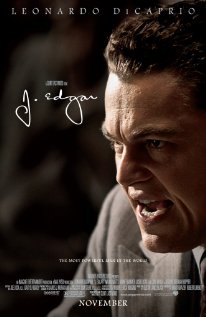
In the new movie, J. Edgar (directed by Clint Eastwood) Leonardo DeCaprio plays the man who was known to his intimates simply as “Edgar.” In spite of his professional accomplishments, Edgar’s personal life was conflicted. He never married and, being of a decidedly homosexual bent, was never comfortable in that role. In one scene, where he is trying, as a young man, to explain to his devoted mother (Judi Dench) that he “doesn’t like dancing with women,” she tells him she would rather have a dead son than a daffodil (gay) son. (We’re speaking in metaphors here.) This is not exactly a ringing endorsement of his sexual proclivities.

The subject of Edgar’s homosexuality is never sensationalized here. We never see him cruising gay bars or propositioning male prostitutes. It’s plain, though, where his sympathies lay. The most important figure in his life (besides his mother) is Clyde Tolson (played by Armie Hammer, who played both Winklevoss twins in The Social Network). Clyde was Edgar’s friend, confidante, and business associate and at one time the number-two man at the FBI. Edgar and Clyde go on vacations together, share hotel rooms and intimate meals. Clyde advises Edgar on matters of fashion. They seem to spend every moment together. However, as we are told in the movie, they never shared a physical relationship. Clyde doesn’t balk at telling Edgar that he loves him; Edgar is not able to respond in kind. He is not able to show the most important person in his life how he feels about him.

In Titanic and The Aviator and other movies, Leonardo has just been Leonardo (however good that might be), but in this movie Leonardo seems submerged (with the help of what must be several pounds of makeup) in the persona of J. Edgar Hoover. For my money, this seems to be the part Leonardo was born to play. I believed him every step of the way. If he isn’t in serious contention for an Oscar, there’s something wrong with those movie people. He would get my vote if I had one.

Another standout in the cast is Naomi Watts (who I can’t see without thinking of King Kong). She plays Edgar’s sympathetic secretary, Helen Gandy. She is one of the few people in the world Edgar trusts. In what seems a thankless job, she is loyal to the end and will do whatever she must do to protect Edgar and his legacy.

While the movie seems slow to start (it takes about fifteen minutes for it to take off) and is darkly lighted (all the interiors seem dark), these are minor quibbles in an otherwise excellent movie. J. Edgar is not a bad way to spend 138 minutes sitting in a darkened movie theatre. On a personal note, however, I, for one, am getting tired of seeing Richard Nixon portrayed as a foul-mouthed lunatic. He must have had some relatively sane moments in his life where he was actually sincere about something. Can’t we ever see any of those?

Copyright © 2011 by Allen Kopp

50/50

50/50 ~ A Capsule Movie Review by Allen Kopp 

In the new movie, 50/50, seemingly healthy, 27-year-old Adam Lerner (played by Joseph Gordon-Levitt) discovers he has a malignant tumor in his spine. Suddenly he is faced with the realization that his odds of dying are about the same as his odds of living. He has a fifty-fifty chance. If this seems like a grim premise for a movie, it is, after all, a comedy. 

Most of the humor in 50/50 derives from Adam’s best friend Kyle (Seth Rogen). While Kyle is crude and tends to make tactless (but funny) remarks, he has more substance than we at first thought. He knows what friendship is all about—he’ll stick with Adam through all the unpleasantness of his illness. 

Adam has a shallow, live-in girlfriend named Rachael (Bryce Dallas Howard) who says at the outset that she will stick with him, but we see right away that she probably isn’t going to last. She seems to care for Adam, but not enough to always be around when he needs her. Adam has never learned to drive a car so he has to depend on Rachael—or somebody—to drive him to his chemotherapy sessions.

Adam’s difficult but loving mother (Anjelica Huston, in what must be her best role in years) doesn’t take the news of her son’s illness very well. There always seems to be an argument about to erupt between mother and son. He won’t return her calls; she doesn’t seem to like it that she doesn’t have much control over him anymore. Adam’s Alzheimer’s-afflicted father doesn’t know much of what’s going on. 

Adam’s newly minted therapist, Katherine (Anna Kendrick), sees that Adam is emotionally distant and longs to help him, but she doesn’t seem to know how. He is, after all, only her third patient. She knows all the textbook terms for everything, but she is as lost as he is. She lectures him on what’s “normal” for people in his situation.

Despite its grim subject matter, 50/50 will not leave viewers feeling sad or depressed. While there are some heartrending moments, the message here is humor, courage and acceptance of the inevitable—rather than tears. 

Copyright © 2011 by Allen Kopp