Django Unchained ~ A Capsule Movie Review


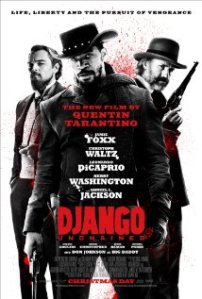
Django Unchained poster

Django Unchained ~ A Capsule Movie Review By Allen Kopp 

The new movie Django Unchained is directed by Quentin Tarantino. Those who are familiar with the work of this director know that his movies are inspired by samurai films, “spaghetti westerns” from the 1960s, and exploitation films of the 1970s. Whether you like Quentin Tarantino’s films or not, you have to admit there’s nothing else quite like them.

Django Unchained is entertaining, violent, bloody, intelligently written, long (two hours and 45 minutes), funny at times (as when the vigilantes are trying to decide whether or not they should wear hoods to cover their faces), and completely implausible. Admirers of Quentin Tarantino will think it’s a masterpiece, while others will be put off by the spurting blood, exploding heads, and simplistic moral tone. It has lots of riding and shooting, just like a western, but it’s set in the pre-Civil War South, so it’s technically not a western. Also like a western, there are good guys and bad guys (the bad ones are really bad), and we know from the outset exactly which is which. It’s a story about retribution, about the good people giving to the bad people exactly what they deserve.

Dr. King Shultz (played by Christoph Waltz) is a native of Germany who ended up, somehow, in America and who speaks excellent English, although with a slight German accent. He is a onetime dentist, now a bounty hunter. He delivers the dead bodies of escaped criminals to the U.S. authorities and receives payment for it. He is seeking (and finds) a slave by the name of Django (played by Jamie Foxx) to help him locate three brothers from a certain plantation where Django lived. After Dr. Shultz finds and kills the three brothers, he discovers that Django has an aptitude for being a bounty hunter, so they become partners. They travel around together, with Django pretending to be Dr. Shultz’s valet. Dr. Shultz learns that Django’s one desire in life is to find his wife, Broomhilda, from whom he has been separated for many years.

The search for Broomhilda leads Dr. Shultz and Django to Mississippi to a plantation named “Candie Land,” owned by one Calvin Candie (played by Leonardo DiCaprio). Calvin Candie is not a nice person. He is, in fact, the villain of the story. He and his simpering sister own slaves and they don’t care how badly they are treated. He owns Broomhilda, the young woman that Django seeks.

Dr. Shultz and Django just can’t take Broomhilda and leave with her. Calvin Candie is a powerful man and he would see that Broomhilda is found and returned to him, and there’s no telling what punishment he would mete out to her. Dr. Shultz, to hide his and Django’s real reason for being at Candie Land, pretends to be interested in purchasing a Mandingo wrestler, a demonstration of which affords yet another opportunity for some exaggerated violence. The winner of a Mandingo wrestling match kills the loser with a hammer, which the spectators enjoy immensely.

Django Unchained ends with a shootout to end all shootouts, with predictable results. Retribution is delivered on the evil, with many bodies torn apart by bullets and enough spurting fake blood to fill a swimming pool. When Django shoots Calvin Candie’s silly sister from the staircase, he blows her ass all the way into the next room. If you think she deserves it, you’re probably the kind of person who will enjoy this film.

Copyright © 2013 by Allen Kopp 

Les Misérables ~ A Capsule Movie Review

Les Miserables poster 2

Les Misérables ~ A Capsule Movie Review By Allen Kopp 

I have never seen the stage version of the musical Les Misérables, so I don’t have a lot of basis for comparison, but I think the movie version works very well. It has everything I want in a movie and more. It is a complete escape from reality; I haven’t ever seen anything like it before; it’s a touching story about redemption; the characters are nothing like any real people I know; it’s beautiful to look at. Most of the dialogue is sung by actors who don’t usually sing in the movies they’re in, and there are at least two very memorable songs (“I Dreamed a Dream” and “Bring Him Home).  It is, of course, based on a classic of world literature, Victor Hugo’s massive 1862 novel of the same name, which has never been out of print in 150 years.

Les Misérables is set in France during the turbulent years of 1815 to 1832, the time it takes for a small girl to become an adult. It is about a man, the fictional character Jean Valjean, who is utterly lost but finds redemption through an act of kindness directed toward him. He has served “nineteen winters” in a brutal prison for petty theft. (He stole a loaf of bread because he and his family were starving.) He is granted conditional parole but escapes. He finds refuge in a convent, where nuns and a kindly priest care for him. One night when everybody is asleep he steals some silver plates and flees. When he is captured by the police, he tells them the priest gave him the items he has stolen. The police take him to the convent to confront the priest, who tells them that Jean Valjean was welcome to take the things he stole and gives him a pair of elaborate candlesticks to go with them. This is the act of kindness that changes Jean Valjean’s life.

He “turns away from hatred,” regains his health after the terrible conditions in prison, and “turns his life over to God.” (After that, his life is as directed by God.) He becomes a successful businessman, owning and operating a factory that employs women, specifically a young woman named Fantine, who will play a significant part in his life. Fantine is unjustly fired from the factory (unknown to Jean) and has to turn to prostitution to support her small child, whose name is Cosette. (One of the highlights of the movie is when Fantine [played by Anne Hathaway] sings “I Dreamed a Dream.”) When Jean discovers what has happened to Fantine, she is dying. He promises her that he will take care of her daughter—that she will never want for anything as long as he lives.

In the meantime, Jean Valjean’s past catches up with him. He meets again, by chance, Inspector Javert (played by Russell Crowe), who recognizes him from his prison days and knows that he skipped out on his parole. Javert believes he is duty-bound to send Jean back to prison, in spite of the smallness of his crime and the twenty years he has already spent behind bars.

In the coming years, Javert continues to obsessively pursue Jean Valjean, who always manages to stay just one step ahead of him. Meanwhile, Cosette has grown to adulthood and lives with Jean Valjean as his daughter. She has fallen in love with a young leader of the “June Rebellion” named Marius. Through a twist of fate, Jean is able to save Marius’s life. Through another twist, he spares the life of Javert when he is given the chance to exact revenge and kill him.

If you are tired of the banal “romantic comedies,” sequels, franchises such as James Bond and Spiderman, animated 3D movies for the under-six set, action-adventure movies, and the mindless drivel that passes these days for entertainment, don’t miss Les Misérables. Movies like this one don’t come along very often.

Copyright © 2012 by Allen Kopp

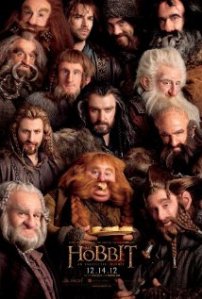
The Hobbit: An Unexpected Journey ~ A Capsule Movie Review

The Hobbit poster

The Hobbit: An Unexpected Journey ~ A Capsule Movie Review By Allen Kopp

The new movie, The Hobbit: An Unexpected Journey, is the first installment of a trilogy based on a novel by J. R. R. Tokien, the world’s foremost fantasy writer. (The other two parts of the trilogy will be out in 2013 and 2014.) It is a cinematic return to Middle Earth after the enormously successful Lord of the Rings trilogy. It is similar in theme and scope to the Lord of the Rings movies but is a different story entirely, involving mostly a different set of characters.

The movie begins with the hobbit, Bilbo Baggins, in his cute little house in the “shire.” He is thoroughly domesticated and lives a comfortable life. (For the uninitiated, a hobbit is a rather human-like being, small in stature, with pointed ears and very large feet—they don’t wear shoes.) One day the wizard, Gandalf the Grey, arrives unexpectedly. Gandalf is very tall in relation to a hobbit. He marks Bilbo’s door to indicate it is to be the meeting place of a delegation of thirteen dwarves. To Bilbo’s dismay, the dwarves arrive and make themselves comfortable in his home, eating his considerable stores of food. It turns out the dwarves are about to embark on a quest to reclaim their homeland from a very bad and very large fire-breathing dragon that loves gold. The dwarves, we are told, are expert at mining gold from the earth and have accumulated enormous piles of it for their greedy king. The dragon flies in, kills the king, takes everything from the dwarves and drives them out into the wilderness.

For some reason that isn’t made clear, the dwarves want Bilbo Baggins the Hobbit to come with them on their quest. He is certain he doesn’t want to leave his comfortable life, but he relents and decides to join them. Almost at once the party of dwarves—plus Bilbo and Gandalf the Grey—encounter dangers and hardships they hadn’t expected. They must deal with Orcs (a kind of brutal, warlike, half-man, half-beast) and disgusting trolls that want to eat them. At one point in the narrative, Bilbo Baggins encounters the Gollum from the Lord of the Rings movies and finds himself in possession of the “ring” that he doesn’t understand the significance of. (The Gollum hasn’t become any more attractive in the intervening years.)

The Hobbit: An Unexpected Journey (and the upcoming two installments of the trilogy) has the same director, writers, and production team as the Lord of the Rings movies, so it is essentially a continuation of what has gone before. It is big, loud, and long. In 3D it is beautiful to look at with its outdoor vistas and computer-generated effects. I’m not a huge fan of this kind of fantasy but I found it engaging and certainly worth the price of admission, plus the nearly three hours running time. My one quibble is that we’re going to have to wait a year (God willing) to find out how the dwarves get the dragon away from the gold. You can bet they’re going to have a huge, special effects-laden fight on their hands!

Copyright © 2012 by Allen Kopp  

Hitchcock ~ A Capsule Movie Review

Hitchcock

Hitchcock ~ A Capsule Movie Review by Allen Kopp 

In the new movie, Hitchcock, Anthony Hopkins plays the famed movie director and Helen Mirren his long-suffering wife, Alma. Alfred Hitchcock is sixty years old and is looking for a project to direct after the success of North by Northwest. When the novel Psycho, by Robert Bloch, is brought to his attention, he decides that will be his next picture, a decision that meets with a chorus of opposition. The movie studio executives don’t like the idea of filming Psycho and won’t back the project. The office of censorship tells Hitchcock he will never get away with showing his lead character hacked to death in a shower in a motel. Members of the press believe that Hitchcock has lost his deft touch as the master of classy suspense films such as Strangers on a Train and Vertigo and has been reduced to making schlock. Even Hitchcock himself believes that he has possibly been cheapened by his association with television and has lost whatever it was that made him unique.

In spite of all the problems put in his way, Hitchcock perseveres. He mortgages his own house to finance Psycho. It’s an enormous gamble for him. If the film fails, not only is he ruined financially, but all the naysayers will have been proved right and his reputation as a director will be ruined.

Much of the one hour and thirty-eight minutes of Hitchcock is taken up with behind-the-scenes stuff about the making of Psycho. If you are a movie fan, a Hitchcock fan, or a Psycho fan, this is fascinating stuff and fun to watch. Ed Gein, the creepy Wisconsin serial killer who inspired the character of Normal Bates in Psycho, becomes a sort of alter-ego for Hitchcock during the making of the movie. The actors who play Anthony Perkins, Janet Leigh, and Vera Miles are all perfect. We see Hitchcock terrorize Janet Leigh with a butcher knife in the shower scene to elicit believable screams from her.

Of course, Alfred Hitchcock proved everybody wrong. Psycho was a critical and financial success. It is now considered his best movie of the dozens he directed and one of the best American movies of all time. If he had given in to those who were telling him it couldn’t be done or shouldn’t be done, we might have been denied the piece of pure cinema that is Psycho.

A companion piece to the movie Hitchcock is a film that HBO aired a while back called The Girl, a movie about the making of The Birds, which was Hitchcock’s next movie after Psycho. The “girl” in question is Tippy Hedren, who Hitchcock chose to star as his blond leading lady in The Birds. Apparently she was never the same again.

Copyright © 2012 by Allen Kopp

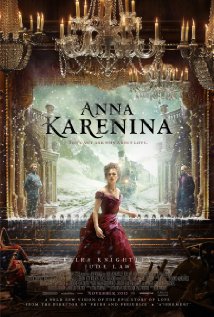
Anna Karenina ~ A Capsule Movie Review

Anna Karenina

Anna Karenina ~ A Capsule Movie Review by Allen Kopp 

There have been many film versions of Leo Tolstoy’s novel Anne Karenina, most notably the 1935 (Greta Garbo) and 1948 (Vivien Leigh) versions. There was also a big-screen 1997 version and several adaptations for TV, including the memorable twelve-part Masterpiece Theatre adaptation in the 1970s. It’s an accessible story with fascinating characters that lends itself well to filmic adaptation. In 1870s Imperial Russia, aristocratic Anna is married to stodgy government official Karenin. Karenin is a “good” man who follows the rules; he believes a wife is a wife for life. Anna meets young cavalry officer Count Vronsky and the earth moves for her and for him. She engages in an adulterous affair with him, has his child, leaves her husband, and in the course of all this shocks St. Petersburg society. The story is simple and almost operatic in its themes of love, duty, honor, obsession.

The latest 2012 film version is true to Tolstoy’s original story but is different from every other film version that has gone before. It has all the traditional elements of a big-budget costume drama (elaborate sets and costumes, stirring music, beautiful photography), but it has something more: it takes a deliberately “stagey” approach to the story. It is, at times, as if we’re watching a play. At the end of a scene, the actors will walk from one set to another or walk backstage to get to where they need to be for their next piece of business. We see stagehands changing the scenery and, at times, it’s as if we’re observing the action taking place on a stage from the audience. Since Anna Karenina is a novel and not a play, this is a highly stylized approach and it works beautifully. It must be seen to be appreciated.

Copyright © 2012 by Allen Kopp

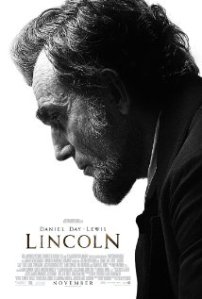
Lincoln ~ A Capsule Movie Review

Lincoln ~ A Capsule Movie Review by Allen Kopp

Lincoln, the new movie directed by Steven Spielberg, is a talky, though engaging, account of the last few months of Abraham Lincoln’s life. When the movie begins, Lincoln has just been re-elected to a second term as president. The Civil War has been raging for four years and politicians in Washington are wondering how it can be brought to an end. Can there be a negotiated peace with the South? Will the South surrender? It seems the biggest problem is what to do about the four million slaves who will suddenly be free citizens when the war ends. How can they be assimilated into society?

Lincoln desperately wants Congress to pass the anti-slavery Thirteenth Amendment to the Constitution, which, he believes, will settle the question of slavery once and for all. Pushing the amendment through Congress is politically risky. The Southern states that seceded want to be readmitted to the Union when the war is over, but they will do whatever they can to prevent passage of the Amendment. Lincoln’s Republican Party controls the House of Representatives (it seems the bill has already passed the Senate), but the Amendment needs a two-thirds majority to pass, so it needs support from the opposition party. Much of the action of the movie is taken up with the political wrangling that goes on behind the scenes to coerce recalcitrant members of Congress to vote for the Amendment. Some of them lack the courage to support it when they know their constituents back home are opposed. They’re damned if they do and damned if they don’t.

Daniel Day-Lewis plays Lincoln with a folksy charm and humility, and he is by far the best thing about the movie. Despite holding an office that is “clothed in immense power,” there is nothing grandiose or swell about him. He has a “common” touch and the people, both black and white, love him for it. It seems he always has time for everybody, no matter how insignificant. He loves telling stories and is not above using ungrammatical English, which is altogether in keeping with his character.

The war takes a tremendous personal toll on Lincoln. (In a scene that takes place toward the end of the war, Ulysses S. Grant tells Lincoln that in the last year he has seen him age ten years.) In addition to dealing with the immense problems the country faces, he has family problems that he must contend with. His oldest son, Robert, wants to enlist (against both parents’ wishes), even though the war is about over. His unhappy wife (played by Sally Field) is still grieving the loss of a son, Willie, three years earlier, and is certain that Robert will be killed if he becomes a soldier. She has terrible headaches and she never lets Abe forget how she much she despises being the wife of the president and living in “this awful house.”

Lincoln is rich in period detail, a vivid recreation of a fascinating chapter in American history when the country was at a crossroads. One unwise or miscalculated decision could have meant the end of the Union. The country was fortunate to have a true leader at the helm, one who was up to the task. He brought the country through the war, intact, though it cost him his life.

Copyright © 2012 by Allen Kopp

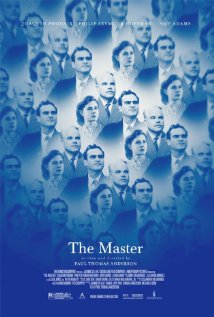
The Master ~ A Capsule Movie Review

The Master ~ A Capsule Movie Review by Allen Kopp

The new movie, The Master, is said to be loosely based on the life of L. Ron Hubbard, writer and controversial founder of the Church of Scientology. It was written and directed by Paul Thomas Anderson, whose credits include There Will be Blood and the bizarre Boogie Nights, about the lives of a group of people working in the pornography industry in California. While The Master is intelligent, beautifully made and interesting in its way, I found it difficult to like.

The main character in the movie is a young man (or not so young—his face is deeply lined) named Freddie Quell (played by Joaquin Phoenix). He fought during World War II and, since the war ended, is directionless. He is, and apparently always has been, an unrepentant drunk. He is a professional photographer of sorts but doesn’t seem to fit in anywhere he goes. He has no friends, home or family to speak of. He seems emotionally immature, dangerously self-destructive, not very bright, and prone to sudden violence. We learn few facts about his earlier life, other than his father died a drunk, his mother is in a mental institution, and he had a sixteen-year-old girlfriend when he was in the navy to whom he promised to return and never did, finding out, years later, that she married somebody else.

By stowing away on a yacht belonging to a man named Lancaster Dodd (played by Phillip Seymour Hoffman), Freddie becomes part of Dodd’s strange world. (Dodd is the character based on L. Ron Hubbard.) Dodd is a writer, philosopher, doctor, mystic, and—some would say—crackpot. He is a father figure of sorts and, for some reason, likes Freddie; he sees something in him that apparently isn’t visible to others.

Dodd has a small but devoted band of followers and adherents, including a much younger pregnant wife (Amy Adams), two grown children and a son-in-law. His followers seem to have nothing better to do than to go wherever he goes, even if it’s at sea on a yacht. He develops a philosophy—a kind of religion—that’s based on the idea of placing subjects in a near-hypnotic state and allowing them to experience past lives. Freddie seems to fit in with this group of people, maybe for the first time in his life. He becomes a devoted disciple of Lancaster Dodd and, in a way, a part of Dodd’s family.

The relationship between Freddie Quell and the older and father-like Lancaster Dodd is the emotional core of the movie, but it—and the movie itself—seems emotionally sterile. Freddie Quell is so unappealing and unlikeable that we are not able to see why Lancaster Dodd likes him and takes him under his wing. He mumbles a lot of his dialogue, or else speaks with a clenched jaw, so we aren’t able to understand a lot of what he says. Did I forget to mention that he’s annoying most of the time he’s onscreen?

In the end, nothing really seems resolved; the story just seems to stop rather than to end. It’s a movie that, I think, seems better in retrospect, but it is, after all, unlike anything I’ve ever seen before. For that reason alone, it is probably worth experiencing for the serious moviegoer interested in cinematic art—rather than in sophomoric laughs, car chases, explosions and titillating sex scenes that Hollywood offers up in abundance these days.   

Copyright © 2012 by Allen Kopp

Lawless ~ A Capsule Movie Review


Lawless
~ A Capsule Movie Review by Allen Kopp

During the lawless days of Prohibition (1918-1933), the illegal liquor trade took off in the United States. Enterprising “businessmen” learned there was much money to be made from the illegal making and selling of the liquor that the public demanded and couldn’t buy legally. The new movie Lawless is the partly true story of the Bondurant brothers (Forrest, Howard and Jack), who thrived as bootleggers for a time during the early 1930s in a rural community in Virginia.

Jack Bondurant (Shia Laboeuf) is the youngest brother. The story is told mostly through his eyes. He is a little too sensitive for the line of work he’s in. The brains of the operation is the oldest brother, Forrest (Tom Hardy), who is tough as nails and knows how to deal with the competition and with the forces of the law that are trying to put him down. A sort of legend grows up around the Bondurant brothers that they are invincible, mostly because of the toughness and tenacity of Forrest Bondurant. When Forrest’s throat is cut, a horrible injury that he survives, Jack is forced to develop some toughness of his own. When their bootlegging business is thriving, they are producing a thousand gallons of bootleg whiskey a week. Jack Bondurant, during this time, develops a penchant for clothes and cars and courts a reluctant minister’s daughter named Bertha Minnix (love that name) whose father would gladly kill him if given the chance.

The law is represented by one Charlie Rakes (Guy Pearce), a creepy (for some reason he has no eyebrows) “special agent” from the city who dresses in a dapper manner and wears perfume. He is sent to Virginia to quell the bootlegging industry there and has a very condescending manner toward the locals. At one point he declares, “these hillbillies are a sideshow unto themselves.” When the local sheriff tells Charlie Rakes he doesn’t much like him, Charlie says, “Not many do.” This simple statement defines his character better than anything he says or does.

When Charlie Rakes delivers a brutal beating to Jack Bondurant because of who he is rather than for anything he’s done, Jack doesn’t even try to defend himself. The score, however, is ultimately settled.

A world-weary dame from the city named Maggie (played by Jessica Chastain) shows up and becomes a sort of employee of the Bondurants. She helps Forrest—at one point saving his life—and eventually falls for him, although very little screen time is given to their “romance.” That’s not what this movie is about.

Even though the Bondurant brothers are on the “wrong” side of the law, we are on their side and want them to succeed. Deep down, they are decent fellows just trying to make a living in hard times. They resort to violence only when they must to defend their interests. At one point, Forrest states that it’s the fear they have over people that makes them survive in the very ugly and brutal business they are in. Don’t mess with them and they won’t mess with you.

Copyright © 2012 by Allen Kopp

Abraham Lincoln: Vampire Hunter ~ A Capsule Movie Review

Abraham Lincoln: Vampire Hunter ~ A Capsule Movie Review by Allen Kopp

Abraham Lincoln: Vampire Hunter is based on the genre-bending (part horror, part historical fiction, part fantasy) novel of the same name by Seth Grahame-Smith. In the movie and the book, Abe Lincoln is an intrepid vampire killer, due in part to the notion that his mother was killed by vampires when he was at the impressionable age of only nine years. He soon discovers that vampires are everywhere, waiting to become the dominant species.

Abe is assisted in his hunt for vampires by one Henry Sturgess, who, Abe discovers, is a vampire himself but also a sworn enemy of all vampires. It seems that vampires can’t kill each other, so Henry uses Abe as his instrument in bringing down select vampires. Abe doesn’t use firearms against vampires, but instead prefers a silver-edged axe. There is much severing of heads and spurting of blood.

As Abe grows into manhood, he meets and marries Ann Todd from Springfield, Illinois. He becomes a lawyer and becomes interested in politics. He abhors slavery and sees the growing struggle between the North and the South as a struggle between vampire and non-vampire. Vampires want a nation of their own, it seems, and the vampire nation will become the separate nation formed if the South is victorious over the North in the epic War Between the States. When Abe becomes president, he has the monumental task of keeping the Union together and making sure the vampire nation does not become a reality.

I was a fan of Abraham Lincoln: Vampire Hunter, the novel, when I read it a couple of years ago. For my money, the movie version doesn’t work as well as the book. We don’t really feel Abe’s anguish and experience his personal misfortune the way we did in the book. We don’t feel the threat the vampires pose (to Abe, his family and the country at large). Also, the ending in the movie seems rather flat, as if they squandered the book’s ironic ending. It could have been a great movie but isn’t. Still, it’s not a bad summertime movie if you like that kind of movie, a toss-away, that you see and forget about. It could have been a lot more than that.

Copyright © 2012 by Allen Kopp 

Prometheus ~ A Capsule Movie Review

Prometheus ~ A Capsule Movie Review by Allen Kopp

The new movie, Prometheus, is a highly speculative (don’t take it too seriously) story about the search for the origins of human life on earth, the premise being that humans on earth originated on another planet in a distant galaxy. It was directed by Ridley Scott, whose impressive credits include the sci-fi classics Alien and Blade Runner and the Oscar-winning Gladiator.

As the movie begins, a spectacular spacecraft called Prometheus is nearing its destination, an alien planet (with an atmosphere sort of like earth) so far away that it has taken nearly two and a half years to get there. The human crew has been asleep, or in a state of suspended animation, during the long flight. Only David, the creepy human-like android, has been awake to keep the ship in order. David (played by Michael Fassbender) is my favorite character in the movie. He is unflappable because he doesn’t have human emotions, but he has a fey quality about him not unlike Peter O’Toole in Lawrence of Arabia. With his perfectly combed blond hair and his soft voice, he is probably up to something, but we don’t know right away what it is.

When some of the crew members leave the Prometheus to investigate an enormous pyramid-like structure on the alien planet, they find the remnants of a humanoid race that seemed to have died out precipitously for some reason. Did they (the humanoids) sew the seeds of their own destruction with their secret “weapon” that was supposed to help them subdue their enemies? It seems the crew members have stumbled on something they hadn’t bargained for and don’t understand. There is the same sense of creepy foreboding as in the classic Alien. The body count begins to mount. Who will live and who will die? Are the humans a match for what they have uncovered? Wouldn’t they have been better off to remain on earth?

Prometheus is a great-looking movie in 3D. It has some eye-popping visuals, as you would expect from a movie like this. We have plenty of opportunity to see the interior of the spacecraft Prometheus and we see it wouldn’t be a bad place to spend a few years, as long as you’re guaranteed a safe return, which, of course, the characters in the movie are not. My one quibble is the mix of accents. A lot of the dialogue, especially during the action sequences, is indistinguishable. I’m a person who likes to hear every word that’s said. When Prometheus is shown on TV, I’ll turn on the closed captions (or subtitles if it’s DVD) and hear what I missed. I look forward to seeing it again in a year or so.

Copyright © 2012 by Allen Kopp