Man of Steel ~ A Capsule Movie Review

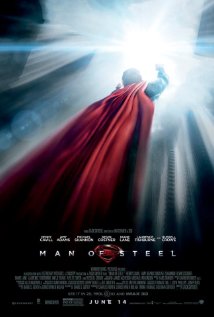
Man of Steel poster

Man of Steel ~ A Capsule Movie Review By Allen Kopp 

I’m not a fan of big-budget summer movies, especially if they’re based on comic books. Superman has been around for a long time and has been told any number of ways. How many Superman movies and TV shows have there been? Don’t people ever get tired of the same old stuff? Well, I guess the idea behind a new Superman movie is to tell it in a different way, make it fresh, give people something they haven’t seen before. That, I suppose, is the aim of Man of Steel.

Man of Steel gives us the lowdown on how Superman came to be Superman. (The “S” that he wears on his chest is only an “S” on earth; on the planet Krypton, where he comes from, it is a symbol of hope.) When the man who becomes Superman is an infant, the planet Krypton is dying. His father, a brilliant scientist (Russell Crowe), devises a method to send his infant son out into space to another planet in a kind of rocket ship. Where does the rocket ship bearing the child land? It lands on earth, of course. A Kansas farm couple (Kevin Costner and Diane Lane) find the baby and raise him as their own son, knowing he is “special” but making sure the world doesn’t know it until the right time.

In Man of Steel, Superman (played here by Henry Cavill) is a Christ-like figure. More than one reference is made to his “coming to earth to save mankind.” At one point he is referred to as the “living embodiment” of a higher intelligence. He is 33 years old, the age Christ was when He was crucified. Even the poster for the movie seems to suggest ascension into heaven. I’m not sure if the Christ parallels are accidental or deliberate, but I have a feeling the filmmakers knew what they were doing. In one scene, Superman (as Clark Kent) goes to a church and speaks to a minister. While he is talking, a stained-glass window bearing the image of Christ is in the background. (We don’t very often see Christian imagery in mainstream movies.) Also, the villain in the movie, one General Zod (played by the ever-creepy Michael Shannon), is a very good characterization of Satan. He wants to turn earth into a new Krypton, which would, of course, kill all earth people. In one scene toward the end of the movie, he admits he will do anything to achieve his ends, even if he must use violence and cruelty. While Superman is “good” (siding with humans), General Zod is all bad, but only doing what he believes he was created to do. He and Superman must battle each other to the finish.

Amy Adams plays Lois Lane, the spunky girl reporter who works for The Daily Planet. She’s an independent gal who can hold her own with the men and who doesn’t mind using a few naughty words when the occasion calls for it. She is, of course, Superman’s love interest. When the movie ends, Superman has taken a job (as Clark Kent) as a reporter on The Daily Planet to try to “blend in” with humans. He is wearing a pair of horn-rimmed glasses, so, of course, Lois Lane and the others don’t recognize him as Superman. Doesn’t the dimple in his chin give them any clue? How long will it be before they catch on? Probably not until the sequel comes out and maybe not even then.

Copyright © 2013 by Allen Kopp
Behind the Candelabra ~ A Capsule Movie Review

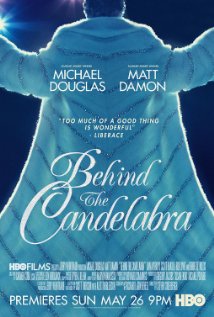
Behind the Candelabra poster

Behind the Candelabra ~ A Capsule Movie Review by Allen Kopp 

Whether you like Liberace or not, you have to admit he was one of a kind. He had an innate musical ability, which he combined with his charisma, charm, and personality to make him one of the most famous and recognizable entertainers of the twentieth century. For twenty years, from the 1950s to the 1970s, he was the highest-paid entertainer in the world. Most of us knew him from his many performances on TV, but people all over the world flocked to his stage performances. As he says in the movie about his life, Behind the Candelabra, he was all about giving people a good time and making them happy.

There were always rumors about Liberace being gay, which he vehemently denied in public (even concocting a “romance” between himself and Sonja Henie). When he died of AIDS in 1987, the truth about his sexual orientation could no longer be hidden. Even his wily agent wasn’t able to sell the story that he died of heart failure brought on by overwork and fatigue.

Behind the Candelabra is about the sordid part of Liberace’s life that he most certainly would not have wanted to be made public. It’s based on a book written by one Scott Thorson who, for six years, was Liberace’s live-in “boyfriend.” Scott Thorson was all of forty years younger than Liberace. At one point in their relationship, Liberace was going to “adopt” Thorson because he always regretted not being a father, even though Thorson was an adult at the time. Thorson even consented to having his face made over by a creepy Hollywood plastic surgeon (Rob Lowe) to make himself resemble Liberace or to create the illusion that they were related by blood.

Liberace showered Thorson with expensive gifts, jewelry, and cars. They shared the same bed and spent many hours alone together in the Jacuzzi. After a few years, though, the relationship began to sour, as one might expect. Turned off by Thorson’s drug use, Liberace began to pursue his interest in other sexual partners. The  “houseboy,” Carlucci, tells Thorson early in his relationship with Liberace that there have been a whole string of “boyfriends” and they have all, for one reason or another, been sent packing. (Liberace never dumps them himself; his agent does it for him.)

Behind the Candelabra is being shown on HBO in the U.S. because, according to IMDb, it’s “too gay” for theatrical release. Michael Douglas plays Liberace. While I’ve never been a Michael Douglas fan, I think he makes a really good Liberace. (Could anybody else have done it better?) Matt Damon plays Scott Thorson. Even though he’s too old for the part, he makes it work (with makeup and what is obviously some computer enhancement). A barely recognizable Debbie Reynolds plays Liberace’s mother.

Behind the Candelabra is fun, flashy, and entertaining to watch if you like behind-the-scenes showbiz stories, but do we really need to know about the secret sex life of a beloved entertainer who has been dead for more than twenty-five years? If you’re the type who would rather remember Liberace as the smiling, likeable gentleman who appeared on TV during his heyday, then Behind the Candelabra is probably not for you.

Copyright © 2013 by Allen Kopp
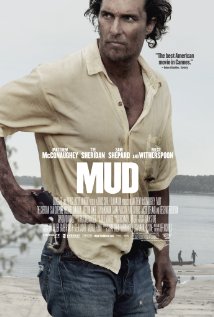
Mud ~ A Capsule Movie Review

Mud

Mud ~ A Capsule Movie Review By Allen Kopp 

Mud is a contemporary story set almost entirely on an unnamed Arkansas river. Fourteen-year-old Ellis lives with his parents on a sort of houseboat and they make their living from the river. His parents are decent people but they seem unhappy. His mother wants to separate from his father and move into town. Their way of life on the river is coming to an end.

One day when Ellis and his friend Neckbone take their boat to an apparently uninhabited island on the river, they discover a boat, intact, about twenty feet off the ground lodged in a tree. It came to be there from a recent flood. When they climb up into the boat, they find signs that someone has been living in it. Soon after, they meet a man who is known only as Mud (Matthew McConaughey). He is dirty and hungry but friendly. Ellis is drawn to him and wants to help him but Neckbone is more skeptical. Mud makes a deal with Ellis and Neckbone whereby they will help him get the boat out of the tree in exchange for his .45 caliber pistol. He plans to use the boat to escape up the river, but first he is waiting for someone to come to him, a girl named Juniper (Reese Witherspoon), with whom he has been in love since he was a child.

Mud has to hide out on the island because he has killed a man who had wronged Juniper. The man’s brother and father are after Mud, intent on killing him. They are terrorizing Juniper because they believe she knows where Mud is and can lead them to him. If Mud can get the boat out of the tree and get it in running order, he and Juniper can run away together, he believes.

When Ellis and Neckbone see Juniper, they see why Mud loves her. Ellis begins taking letters to Juniper from Mud and generally helping Mud in any way he can in his plan to escape. They devise a plan whereby they will take Juniper to Mud, but she doesn’t show up at the appointed time. This is when Ellis begins to see things as they really are. Juniper is just a floozy who will take up with any man. She says she loves Mud but Ellis begins to doubt it. The perfect love that he thought held Mud and Juniper together doesn’t exist at all. He begins to see that Mud has only used him and Neckbone. This disappointment parallels the disintegration of his own family and their way of life on the river. Even his own romance with a slightly older girl named May Pearl ends in disappointment.

Mud is a story about the South that might have been written by William Faulkner or Erskine Caldwell. It’s a coming-of-age story but also a story about friendship, family, and lost love. There are no special effects, no computer-generated razzle-dazzle. Just believable characters and solid storytelling.

Copyright © 2013 by Allen Kopp

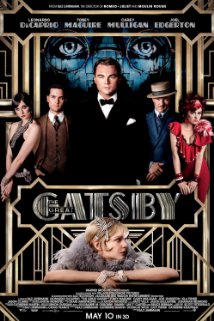
The Great Gatsby ~ A Capsule Movie Review

The Great Gatsby poster

The Great Gatsby ~ A Capsule Movie Review by Allen Kopp 

The Great Gatsby stars Leonardo DiCaprio as the fabulously wealthy, mysterious Jay Gatsby and Carey Mulligan as Daisy Buchanan, the woman who Gatsby has lost and attempts to regain, with tragic results. It is told by Gatsby’s one true friend and confidante, Nick Carraway (Tobey Maguire), who innocently falls under Gatsby’s spell. The Great Gatsby is directed by Baz Luhrmann in a grand visual style (remember Moulin Rouge a few years ago?) that never gets in the way of the story. There have been other film versions of the venerable American novel by F. Scott Fitzgerald, but this one is by far the best.

The story is set in the 1920s. No other decade could have spawned such a story. Not only did the 1920s roar, but they also boomed. There were fabulous amounts of money to be made. It was a time of great optimism. The bubble seemingly would never burst. Jay Gatsby is the perfect figure for the times. He lives in an enormous seaside “palace” on Long Island. He drives a custom-made yellow convertible. He gives lavish parties that he doesn’t attend but observes from a distance. He conducts shadowy business deals over the phone. Because nobody knows much about him, he is the object of much speculation.

Five years earlier, at the end of World War I (before Gatsby made his fortune), he had met and fallen in love with one Daisy Fay of Louisville, Kentucky. Daisy loved him in return but was not going to marry a man without money. She ended up marrying a brutish lout of a man named Tom Buchanan, heir to one of the largest fortunes in the country, and they took up residence on Long Island.

During the five years that Gatsby and Daisy are apart, he never forgets her and never stops believing that the two of them can be together, even though she is married to another man. Now immensely wealthy, he buys the estate just across the bay from Tom and Daisy and spends a lot of time standing on the pier looking across the bay, reaching for the green light that represents for him what is unattainable. He gives lavish parties, to which nobody is invited but goes to anyway, because he’s hoping that Daisy will just “appear” at one of them. Nick Carraway, callow and humble bond salesman, rents the caretaker’s cottage near Gatsby’s home and befriends Gatsby. Learning that Nick is a cousin of Daisy Buchanan, Gatsby gets Nick to arrange a reunion. When Gatsby and Daisy meet again, the old spark of five years earlier is reignited. Will she divorce Tom and marry Gatsby? In the end, it seems she hardly knows what she wants.

Fans of Fitzgerald’s novel, of which I am one, will not be disappointed with this movie adaptation. It is faithful to the novel but, for me, the best thing about it is its lavish visual style. It is, first and foremost, a visual experience (in 3D, no less), especially for those who know the story so well and know what is coming. My favorite scene is Gatsby’s party with everybody happy and dancing to Gershwin’s Rhapsody in Blue, with fireworks exploding in the sky. I want to see it again.

The Great Gatsby does not have a happy ending but it couldn’t have been any other way. The grand future that Gatsby envisioned with him and Daisy happily in love is not meant to be. The bubble always bursts, but it sure was fun while it lasted.

Copyright © 2013 by Allen Kopp

The Place Beyond the Pines ~ A Capsule Movie Review

The Place Beyond the Pines poster

The Place Beyond the Pines ~ A Capsule Movie Review by Allen Kopp 

The Place Beyond the Pines is an ambitious, complex story that is in fact three interwoven stories about how people’s lives can interconnect in a way that seems like fate. It begins in the 1990s with blond-haired, tattooed bad boy Luke Glanton (played by Ryan Gosling), who is employed as a stunt motorcycle rider in a traveling carnival. We don’t know much about his past except that is probably unsavory. When he reconnects with an old girlfriend named Romina (Eva Mendes), he discovers that she has had a baby by him, a son named Jason. He wants desperately to win Romina back and to play a part in Jason’s life, but Romina has moved on. She has another man in her life and she knows that Luke is not the sort of person that anybody can depend on.

Desperate for money to prove to Romina that he can provide for her and their son, Luke turns to robbing banks with a male companion. His excellent motorcycle riding skills allow him to get away easily. He pulls off a few robberies without a hitch but, as expected, his good luck runs out. He meets his end at the hands of a young police officer named Avery Cross (Bradley Cooper), who, it turns out, has an infant son about the same age as the child that Luke has fathered with Romina. Avery is injured but victorious in his violent encounter with Luke Glanton and is hailed as a hero.

We learn that Avery Cross is more than a police officer; he’s also a lawyer and the son of a distinguished judge. As a police officer, he’s exposed to a level of corruption on the police force that he can’t stomach. He uses his position as an injured hero and as the possessor of knowledge about his fellow officers to advance himself to the position of assistant district attorney. He knows how to play the game.

Fifteen years later, Avery Cross is emerging as a player in state politics. He is running for the office of attorney general and is no longer married to the mother of his son. The son, AJ, is now a pouty, mumbling teenager in high school. He meets another seemingly troubled boy at school to whom he is drawn for some reason. We learn that this boy is Jason, the son of Luke Glanton and Romina.

Jason, as a seventeen-year-old, is much like Luke Glanton, the father he never knew. He steals drugs from a pharmacy and has an explosive temper. He is going to come to a bad end. He gradually learns who AJ is and, more importantly, who AJ’s father is and the role he played in Luke Glanton’s death fifteen years earlier. He’s wired like a time bomb.

For the serious moviegoer, The Place Beyond the Pines is thoughtful, intelligent and well-written, with enough twists and turns to keep the viewer engaged. It’s no surprise to me that it’s not playing at the multiplex in my neighborhood, where you can see all the latest G.I. Joe movies, chainsaw movies, and special effects-laden action-adventure movies. It’s the kind of movie that’s worth seeking out, wherever it might be playing, even if it’s at an “art” house in a part of the city where you’d really rather not go. (The whole time you’re watching the movie, you’re probably thinking at the back of your mind: Is my car really safe parked there?)

Copyright © 2013 by Allen Kopp 

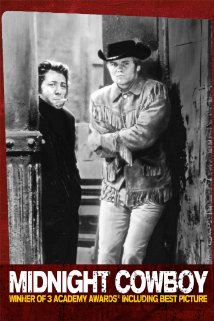
Midnight Cowboy ~ A Capsule Movie Review

 Midnight Cowboy poster

Midnight Cowboy ~ A Capsule Movie Review by Allen Kopp

Midnight Cowboy was made 44 years ago, in 1969. That was the year man first set foot on the moon. You’d think we would have at least conquered Mars by 2013, but the space program went awry after that. I guess after the moon there wasn’t much interest in taking that next step and, anyway, politicians in Washington were busy (and still are, but on a much larger scale) squandering obscene amounts of our money for their “constituents” back home so they will be sure and get re-elected next time. (The more “entrenched” a politician becomes, the more “powerful” and corrupt, but that’s a different story.) If all the money that has been wasted in Washington in the last 44 years had been used for space exploration, we probably could have conquered all the planets in this solar system and might have encountered some kind of intelligent life elsewhere, since there isn’t much of that here.

So, think of Midnight Cowboy being made in 1969 in this atmosphere of bold adventuring. We had conquered the moon for the good of mankind. There was no telling what would come in the years that followed. We would see people colonizing Mars in the way Europeans colonized the New World in the 16th and 17th centuries.

Midnight Cowboy was, in itself, a bold adventure in moviemaking. When you come to think of it, who wants to see a movie about a dimwitted, though physically gifted, Texas dishwasher named Joe Buck who goes to New York City to become a male prostitute and befriends a nasal-voiced bum with a runny nose and a limp named Ratso Rizzo? (His real name is Enrico Salvatore Rizzo; he doesn’t like being called Ratso.) That’s just too repellent, isn’t it?

Well, it turned out that a lot of people wanted to see it because it’s a terrific movie with an intelligent script and great acting (a fascinating gallery of secondary characters, including Cass, the wily dame who pulls a fast one on Joe Buck; Mr. O’Daniel, the street preacher who Joe Buck is tricked into believing is a pimp; Townie, the mama-obsessed old queen who is in New York for a little fun, damn it!) and is made with such care that it just has to be good. When it came out, it generated a lot of controversy because it was given an X rating and it was just so different from what had gone before. (Isn’t that what “art” is all about?) Changes that were taking place in the world were being reflected in the entertainment industry. (Soon the X rating was taken up by the pornography industry and was no longer used for “legitimate” movies.) When the Oscars came out for 1969, Midnight Cowboy was named Best Picture of the Year, with good reason.

If there’s ever an award for Best Actor in a Lead Role Playing a Bum, Dustin Hoffman wins it hands-down for playing Ratso Rizzo. He lives in a derelict building that has been marked for demolition. He steals overcoats in theatres. His skin has an unhealthy sheen. He’s filthy and his hair is greasy. He has a game leg and a bad limp. His voice is an annoying nasal whine. But, in spite of all these things, he makes us feel for him. Underneath the dirt and squalor is a person we recognize. We somehow end up liking him and wishing he would get well and live a happy life.

No less impressive is Jon Voigt as Joe Buck, the naïve Texas hustler. When he leaves his dishwashing job in Texas and boards a bus for New York City, we know he is headed for some heartbreak. He is a babe in the woods. The first few people he encounters who are supposed to pay him for his services don’t work out the way he hopes; he ends up spending more money than he makes. When he runs out of money and is put out of his hotel room, he casts his lot in with Ratso Rizzo, who had swindled him out of some of his money when they first met. From then on it becomes a story of survival and friendship and the desire for a better life. (If only they can make it to Florida and escape the New York winter, everything will be all right.) These two characters are possibly the most memorable pair of misfits ever captured on film.

Copyright © 2013 by Allen Kopp

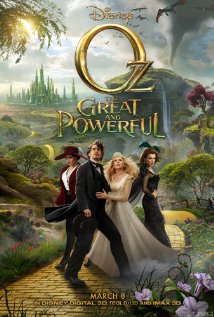
Oz the Great and Powerful ~ A Capsule Movie Review

Oz the Great and Powerful poster

Oz the Great and Powerful ~ A Capsule Movie Review by Allen Kopp 

Oz the Great and Powerful takes place before The Wizard of Oz, so there’s no Dorothy or Toto, no Cowardly Lion, Tin Man, or Scarecrow. There are, however, a Wizard, flying monkeys, the Emerald City, Winkie Guards, Wicked Witches (yes, more than one), singing Munchkins, a hot-air balloon, a cyclone, and a land as beautiful as heaven must be where just about anything might happen.

The story begins in Kansas in 1905 in a carnival. (The first fifteen minutes or so of the movie are in glorious black and white, on a narrow little screen to look the way movies used to look before there was such a thing as wide-screen format.) Oscar Diggs (played by James Franco) is a not-very-convincing carnival magician. It seems he has a penchant for the ladies and finds himself in some trouble when he tries to romance the strong man’s wife. With the strong man in pursuit, he jumps into a waiting hot-air balloon to get away. A fierce storm is brewing just at that time, so the balloon, with Oscar in it, is swept away to parts unknown. Oscar thinks he is going to die, but he finds himself in the magical Land of Oz where everything is different from what he’s used to and where everything is not as it appears. (At this point the screen expands to its usual enormous size and the black and white becomes color.) Right away he discovers that the people of Oz believe he is the long-awaited Wizard that will save them from evil. (Is there a Christ parallel here, or is that just my imagination?)

Oscar learns that when he becomes Wizard, a huge storehouse of gold and treasure will become his. The catch is that he must kill the Wicked Witch to become Wizard, or at least destroy her wand, which will render her powerless. He doesn’t know how he is going to kill the witch, but at least he doesn’t have to do it alone; he has Glinda the Good Witch to help him (who believes in him when he hardly believes in himself), along with Little China Girl (whose legs he glues back on) and a sympathetic flying monkey named Findley. From then on, the story is about the struggle between good and evil.

Oz the Great and Powerful is, according to the credits, based on the works of L. Frank Baum and not on the 1939 The Wizard of Oz, which is, apparently, all tied up with copyrights, including the ruby slippers that Dorothy wears and the wart on the Wicked Witch’s chin. In 3D, it’s expensive-looking and that’s because it’s expensive (two hundred million dollars). The filmmakers have given the Land of Oz depth and dimension and have made it a beautiful place to visit, unless, of course, you are an old crab, don’t like going to the movies at all, and would rather stay at home and watch TV.

With the Wizard installed on the throne as the Wizard of Oz and the Wicked Witch effectively out of the picture (at least for the time being), the Wizard should be expecting a visit any day from a certain Dorothy Gale and a few of her unusual acquaintances. 

Copyright © 2013 by Allen Kopp

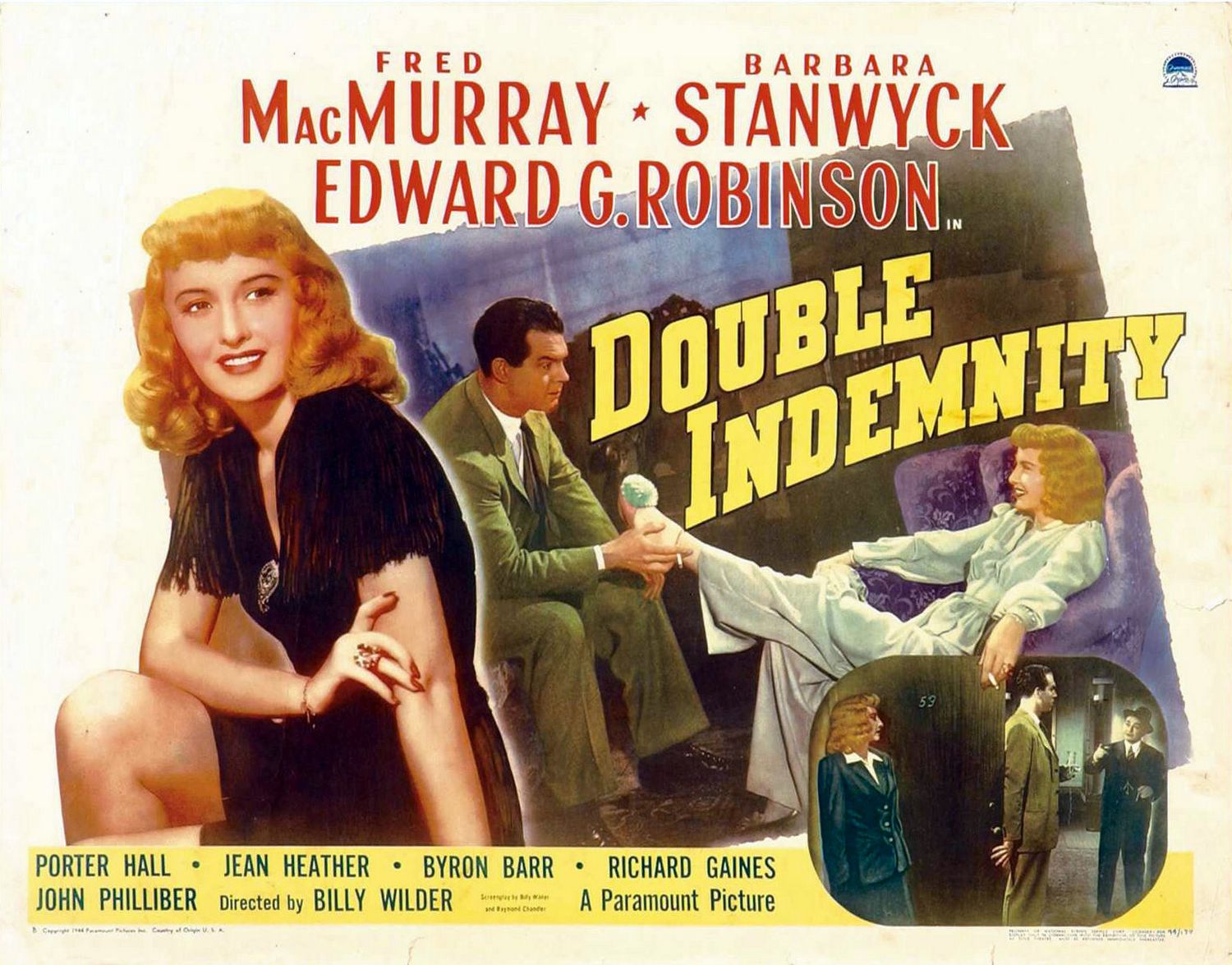
Double Indemnity ~ A Capsule Movie Review

double_indemnity_ver2_xlg

Double Indemnity ~ A Capsule Movie Review By Allen Kopp 

Bored 1940s California housewife Phyllis Dietrichson (Barbara Stanwyck) uses her bewigged allure to get malleable insurance salesman Walter Neff (Fred MacMurray) to help her kill her repulsive husband for the insurance money and for “love.” After Phyllis and Walter execute as neat and ingenious a murder as has ever been committed to celluloid, their happiness is short-lived. Astute claims investigator Barton Keyes (Edward G. Robinson), who works with Walter, does not believe the story that is being put forth about how Phyllis’s husband died and contests payment of the insurance money. As the story progresses and as the figurative noose tightens around Walter’s neck, we learn that Phyllis is not all we thought she was (or not all Walter thought, which is the same thing) and has only been using Walter to attain her ends. She has been messing around with her stepdaughter Lola’s boyfriend, Nino Zachetti, and has probably murdered before. And will murder again if she gets the chance.

Double Indemnity is a genre film and is the best of its genre, which can loosely be classified as film noir. It was made in 1944 and appropriately reflects the cynical wartime mood the country was in. It is such a perfect movie (if such a thing is possible) that seeing it for the first time is something of a revelation. Barbara Stanwyck, Fred MacMurray and Edward G. Robinson are at the top of their form. Screenwriters Billy Wilder (who also directed) and mystery novelist Raymond Chandler take a good story by James M. Cain and make it even better. It is a perfect example of lean writing without any fat. Down to the tiniest detail (cinematography, music, art direction), Double Indemnity is meticulously and beautifully crafted. On a high-definition TV (as broadcast by TCM), it is as clear and crisp as if it was made yesterday instead of sixty-nine years ago.

Copyright © 2013 by Allen Kopp

Zero Dark Thirty ~ A Capsule Movie Review

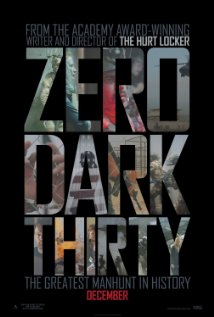
Zero Dark Thirty poster

Zero Dark Thirty ~ A Capsule Movie Review by Allen Kopp

I wasn’t going to see Zero Dark Thirty because I had the idea that it was political propaganda, but when I actually saw it I found that it’s neither political nor propaganda. If anybody gets credit for killing Osama bin Laden (the most hated man in America since Adolf Hitler), it’s not politicians or political parties (as they would have us believe), but the Central Intelligence Agency.

In Zero Dark Thirty, a young female CIA operative known only by the name of Maya (played by Jessica Chastain) arrives in the Middle East. She witnesses first hand an “enhanced interrogation” of a known terrorist. She doesn’t like what she sees but she knows that such tactics are necessary to procure the intelligence that will lead to the high-level terrorists who want to kill Americans and annihilate Western Civilization. When one of the suspects pleads with her to help him, she tells him he can help himself by telling them the truth. As the main “interrogator” says: “When you lie to me, I hurt you.” These scenes are not easy to watch.

Maya focuses more and more on finding and killing Osama bin Laden. She knows, or believes she knows, how to interpret the intelligence that comes her way that she believes will lead to Osama. (She states that, in her eight years in the agency, she has done nothing other than pursue Osama.) She encounters resistance from her boss in the agency (and others) nearly every step of the way. She seems alone in her zeal to get Osama and in how she thinks it should be done. I gather, although I don’t know for sure, that Maya is a fictional character, a composite, of CIA operatives who, through their persistence and dedication, led to the ultimate goal.

Finally, after a ten-year search, intelligence reports seem to indicate that Osama is staying in a “complex” in Pakistan with a small retinue of wives and children. Maya is alone in her belief that Osama is there; some of her colleagues believe there is a “soft” 60% chance.

The highlight of Zero Dark Thirty is the daring nighttime raid on the complex in Pakistan where Osama may or may not be living in seclusion. (We know, of course, in retrospect, that Osama was there and was killed.) It was an enormous gamble that paid off.

Copyright © 2013 by Allen Kopp   

Mama ~ A Capsule Movie Review

Mama poster

Mama ~ A Capsule Movie Review by Allen Kopp

I love a good horror film with a literate story that doesn’t involve scantily clad teenagers being menaced by a hatchet-wielding maniac. Some recent examples of good horror films that come to mind are The Others, The Ring, The Haunting in Connecticut, Drag Me to Hell, and Insidious (all involving the supernatural). A new one that can be added to the list is Mama, a pretty good fright fest with a modern-day ghost story rooted in a tragic event of the nineteenth century.

When Mama begins, a man named Jeffrey DeSange has just gone on a murderous rampage, killing his wife, among others. Distraught over what he has done, he kidnaps his two small daughters (Victoria, age three, and Lily, age one). When he is fleeing with them on a mountainous snowy road, his car skids in an isolated area and goes off a steep embankment. Jeffrey, Victoria and Lily are not hurt, but the car is wrecked. Jeffrey takes Victoria and Lily from the car and begins walking with them in the woods, coming upon an abandoned cabin. Once inside the cabin, he plans to kill Victoria and Lily and then himself. When he has the gun held to Victoria’s head and is about to pull the trigger, something (or somebody) jumps him from behind. From then on, we don’t see Jeffrey anymore.

Five years later, Jeffrey’s brother, Lucas, believes somehow that Jeffrey, Victoria and Lily are still alive somewhere and is searching for them. (Jeffrey and Lucas are both played by the same actor.) Miraculously, Victoria and Lily are found, living in deplorable conditions in the abandoned cabin where we last saw them five years earlier. Many questions remain unanswered.

Lucas and his girlfriend Annabel (played by a barely recognizable Jessica Chastain, who seems to be in about every other movie these days) want to take Victoria and Lily and raise them as their own. Victoria, since she is older, is able to assimilate back into the real world, but Lily, who was only one at the time of her disappearance, still remains like an animal. She walks on all fours part of the time, won’t sleep in a bed or sit at a table, and doesn’t speak. She seems rooted to her old life in the woods.

When Annabel tries to show Victoria affection, Victoria tells her to stop because “she” is watching and will be jealous. We learn by degrees that “she” is a ghost, a sort of mother figure that kept Victoria and Lily alive in the abandoned cabin for five years.

Victoria and Lily refer to the “ghost” as “Mama.” In life, Mama was a mental patient with a baby in the 1870s. She escaped from the mental hospital where she was being kept and took her baby from the orphanage. While being pursued, she ran into the woods to a rocky promontory overlooking a lake. She jumped into the lake with the baby, but the baby got caught on a tree limb sticking out of the cliff and died, never making it into the lake. Mama drowned in the lake alone, without her baby. As someone in the movie explains, a ghost is a twisted emotion that has never been resolved. Mama is a ghost who can’t find rest because she is forever seeking her baby. She finds, instead, Victoria and Lily.

Of course, Mama wants to reclaim Victoria and Lily, while Lucas and Annabel want to keep them. In the film’s dramatic, special effects-laden conclusion, Lucas and Annabel attempt to reunite Mama with the skeletal remains of her baby, but that isn’t what Mama wants. She wants Victoria and Lily.

Scoffers will scoff and laugh and laughers will laugh at Mama (they always do), but those of us who know a good story when we see one will enjoy it, no matter how implausible. If you can stop being sophisticated and suspend disbelief for about an hour and forty minutes, you’ll have a good time.

Copyright © 2013 by Allen Kopp