The Counselor ~ A Capsule Movie Review

The Counselor

The Counselor ~ A Capsule Movie Review by Allen Kopp 

American writer Cormac McCarthy won a Pulitzer Prize for Fiction for The Road. Another of his novels, No Country for Old Men, was adapted into a movie that won Best Picture honors for 2007 at the Oscars. As if those aren’t accolades enough, the 80-year-old writer has written the screenplay for the new movie, The Counselor.

Michael Fassbender plays the title role. He is never known by any name other than “counselor.” He lives in El Paso, Texas, near the Mexican border. He has a pretty girlfriend named Laura (Penelope Cruz), whom he wants to marry. He buys her an expensively ostentatious diamond engagement ring (she doesn’t want to know how much it’s worth). Because he has pressing financial needs (which are never explained), he decides to enter into the business of illegal drug trafficking, where he believes he can make huge sums of money. (He is warned about what he might be getting himself into, but doesn’t heed the warning.) He has a spiky-haired friend named Reiner (Javier Bardem) who lives lavishly from drug-trafficking proceeds. Reiner facilitates the drug deal that the counselor will take part in, and it turns out to be a huge one: twenty million dollars.

Reiner has a creepy girlfriend with a lopsided hairdo and tons of eye makeup named Malkina (Cameron Diaz). Reiner says at one point that all that women want is to be entertained. Malkina apparently wants more than that. She has her own private agenda and doesn’t know the meaning of the word loyalty. She prates on and on about how bad she is. At one point she goes to a Catholic priest to confess her sins, but when she tells the priest she isn’t Catholic, he tells her he can’t give her absolution. When she starts talking dirty to him, he leaves the confessional.

As expected, the drug deal doesn’t go well. The twenty-million-dollars worth of drugs are hijacked and stolen. The counselor, Reiner and another intermediary in the deal (Brad Pitt, with another unflattering hairdo) are all in deep trouble. The men who own the drugs (who we never see) are ruthless and unforgiving. They will not listen to excuses. They will only exact revenge and it won’t be pleasant. There is no way out for the counselor. The people to whom he turns for help are unwilling or unable to assist. He is told: You did this; now you must suffer the consequences.

The Counselor was directed by renowned director Ridley Scott, whose impressive list of credits, going back more than thirty years, includes Alien, Blade Runner, and Gladiator. With all the talent behind and in front of the camera, why isn’t it a better movie? While it’s very slick and pretty to look at, it’s talky and predictable. There are no surprises, other than the fact that the two hours running time seems like it will never end.

Copyright © 2013 by Allen Kopp
Gravity ~ A Capsule Movie Review

Gravity 

Gravity ~ A Capsule Movie Review by Allen Kopp 

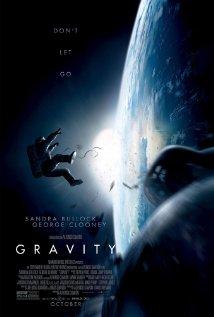
Gravity, with Sandra Bullock and George Clooney (why can’t I ever take him seriously?), is about two astronauts on a space station hundreds of miles above the earth. On this particular day that the action begins, Dr. Ryan Stone (yes, even though she’s a girl, she has a boy’s name) and Matt Kowalski, brother of Stanley (just kidding), happen to be “spacewalking,” meaning they’re working outside the space station when they receive a warning from “mission control” that a “satellite debris field” is headed their way. Dr. Stone is reluctant to leave unfinished the job she has started, so they don’t make it back inside fast enough before the debris hits them. And it’s a good thing they don’t, because the debris has hit the space station (their “home” in space) and ripped it apart, killing the other crew members. Dr. Stone and Matt Kowalski aren’t much better off, though, because they are left adrift in space with their limited oxygen supply. From that point on, it becomes a question of survival. Here’s another fine mess you’ve gotten me into. Does anybody have any bright ideas?

Dr. Stone would be dead right out of the gate if it wasn’t for the more seasoned, cool-headed Matt Kowalski. When she is spinning uncontrollably through space, head over heels, he catches her and tethers her to himself. Off in the far distance (too far) they can see the Chinese space station. Their only chance of survival is to go there and get help. It will be like “swimming” through nothing to get there. Will their oxygen hold out? Probably not, but they have to at least try.

Of course, while all this is going on, they have the panorama of earth, hundreds of miles below them, to look at. All they can see are the swirls of cloud formations and outlines of continents, but still it is a beautiful sight that the vast majority of us will never see except in pictures.

Gravity is only ninety minutes long (including the expansive end credits) which, I read, is the time it takes the space station to go around the globe. (Ninety minutes seems short compared to the length of other movies.) The theme of the movie is perseverance, not giving up in the face of overwhelmingly adverse odds; experiencing a kind of “rebirth” after terrible things have happened.

While Gravity is expensively made and worth seeing for those who are so inclined, I don’t really buy George Clooney and Sandra Bullock as astronauts. Instead of two besieged humans in an inhospitable environment, they seem like nothing more than two middle-aged movie stars trying to justify their twelve-million-dollar salaries. Other problems involve plausibility. When they are in such danger and have so much time for talk, why do they not mention God or at least the possibility that God exists? Wouldn’t most people who know they are likely to die in the next few minutes offer up some kind of prayer for deliverance, or is that concept too offensive nowadays? And, on another note, why are the Chinese and Russian space stations abandoned and accessible to American astronauts? Are the Chinese and Russian astronauts just “out” for the moment? If this is explained at any point in the movie, I must have missed it.

Copyright © 2013 by Allen Kopp

Prisoners ~ A Capsule Movie Review

Prisoners

Prisoners ~ A Capsule Movie Review by Allen Kopp 

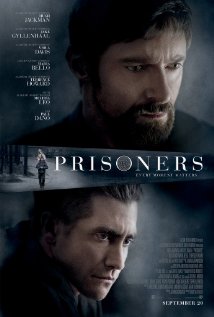
Prisoners is a relentlessly bleak (gray clouds, rain and snow, no bright colors, somber background music) story about two young girls,  Anna and Joy, who vanish in their own neighborhood on Thanksgiving Day. Anna and Joy are friends, as are their families. The two families have just shared Thanksgiving dinner together when they discover the girls are missing. The only thing different that anybody notices that day is a camper truck parked on the street in the neighborhood that doesn’t belong, with sounds coming from inside.

When the police have a suspect in custody, a child-like young man with the mental age of ten years named Alex Jones (played by the ever-strange Paul Dano), they have to release him after 48 hours because they cannot produce any evidence against him. The father of the one of the girls, Keller Dover (played by Hugh Jackman), is outraged that Alex Jones is being released because he feels certain that he at least knows where the girls are. Keller Dover takes matters into his own hands. He abducts Alex Jones and takes him to an abandoned apartment building he owns, where he repeatedly beats him, trying to get him to tell what he knows. If Alex knows anything, he isn’t talking; he barely seems to know what is going on.

The soulful-eyed police inspector on the case, Detective Loki (played by Jake Gyllenhall), investigates every possible lead, trying to make sense of the senseless. What he lacks in fashion sense he makes up for in dedication to his work. He wants to find the missing girls as much as the parents do but is frustrated every step of the way. 

Prisoners is gripping and involving. If it’s not one of the best movies of the year, it’ll have to do until the real thing comes along. It will keep you guessing right up to the end. It might also make you feel like crying when it’s over. The first couple of minutes will probably make you cringe, if you, like me, can’t stand the offensive sight of a deer being shot and killed. I’m assuming, however, that it’s a computer-generated deer since we are told in the closing credits that “no animals were harmed in the making of this picture.” Fake deer or not, I would have liked it a lot better if the bullet had missed and the deer had run off into the woods.

Copyright © 2013 by Allen Kopp

Insidious: Chapter 2 ~ A Capsule Movie Review

Insidious, Chapter 2

Insidious: Chapter 2 ~ A Capsule Movie Review By Allen Kopp 

Insidious, released in 2010, is a solid horror film with some genuinely creepy moments (the “woman” at the ironing board, for one). When a small boy named Dalton Lambert goes into an extended coma for which there is no medical reason, his parents, Josh and Renai Lambert (played by Patrick Wilson and Rose Byrne) call in a psychic. The psychic, named Elise, discovers that Dalton is in a place called “the further,” which is a kind of spirit realm. The spirits in the further like nothing better than to latch on to a living person because they want to “possess” that person. Since they are dead and are not in a very nice place, they covet life. Josh’s mother (Barbara Hershey) reveals that the problem really began when Josh (Dalton’s father) was a child, at which time he was targeted by a spirit from the further. Josh and his mother believe, however, that Josh was rid of the problem forever with Elise’s help. Not so. When Josh goes into the further to bring Dalton, his son, back, he brings back more than he bargained for.

Insidious: Chapter 2 picks up the story a short time after the events in Insidious. It has the same director, writers, and cast as Insidious, so it has the same feel and tone. Ordinarily I’m opposed to sequels on principle, but that didn’t keep me from seeing this one.

When Josh goes into the further to bring back his son, the same terribly twisted sprit that had targeted him as a child latches on to him again, a female spirit who wants him to kill his wife and children. In life, she had forced her own son to act and dress like a girl named Marilyn and she bid him to become a serial killer. (“If she knows you’re here, she’ll make me kill you.”) This mother and son make Norman Bates and his mother look like a Sunday school story.

Josh’s wife, Renai, and his mother, Lorraine, know that he is not the same as he was before he went to the further to bring back Dalton. What are they going to do? They can’t get Elise, the psychic, to help them because she was killed in the first movie. (She is in the sprit world, however, and knows what is going on.)

All in all, Insidious: Chapter 2 is a worthy sequel to the original, if you like this sort of thing. It is completely implausible and absolutely far-fetched, so you will have to “suspend disbelief” to enjoy it. The terribly sophisticated and those who are too grounded in reality aren’t going to like it or be taken in by it. They seem to forget what the movies are for. If movies were exactly like real life and the ugly present, they would be so dreary that nobody would ever want to see them.

Copyright © 2013 by Allen Kopp

Blue Jasmine ~ A Capsule Movie Review

Blue Jasmine

Blue Jasmine ~ A Capsule Movie Review by Allen Kopp 

At age 78, Woody Allen is still making movies. His latest is Blue Jasmine, with Cate Blanchette as a Blanche Dubois-type character with an unhappy past and an uncertain future. She is Jasmine (née Jeanette) Francis, a former Park Avenue society lady who has taken a long fall. She tries to bolster herself up with bluster, pills, and booze, but she’s not fooling anybody, least of all herself.

Jasmine’s husband, Hal (played by Alec Baldwin), is a high-flying business entrepreneur. For the years that he is wildly successful, he and Jasmine live a fairy tale life. When Hal’s business dealings begin to unravel, though, he is found to be a cheat, a fraud and a liar. He has swindled investors out of millions. To make matters worse, he has been cheating on Jasmine with a whole string of other women. When he tells her he is in love with an “au pair girl” who is practically a teenager, Jasmine calls the FBI and informs on his dirty business dealings. He goes to prison and she loses her standing in society, not to mention her jewels, cars, furs, houses, etc.

With no money and no prospects, Jasmine goes to live with her odd, toothy sister, Ginger, in San Francisco. (For some inexplicable reason, men find Ginger wildly attractive.) Ginger lives in a modest apartment and is humbly employed as a bagger in a food store. She is divorced from her husband, Augie, and is the mother of two overweight boys. (When Augie and Ginger were still married, Jasmine’s husband, Hal, “invested” all their money for them and lost it.)

Ginger has a Stanley Kowalski-esque (yet another A Streetcar Named Desire parallel) boyfriend named Chili. He is crude, wears sleeveless T-shirts, has tattoos, and is prone to violence. He and Jasmine clash from the beginning. He sees that Jasmine looks down on him and Ginger. Jasmine believes that Ginger could find a better man if she only tried. (When Ginger attempts a romantic interlude with another man at Jasmine’s urging, it doesn’t work out and she goes right back to Chili.)

Jasmine eventually meets a man at a party named Dwight. He is apparently the kind of “good” man that she had been hoping to meet to take her out of her dreary existence. He works in the State Department, seems to have plenty of money, and has just bought a beautiful house that he wants Jasmine to decorate for him (she lied that she is a decorator). Dwight plans on marrying Jasmine until a chance meeting with her former brother-in-law, Augie. Augie is still bitter about the money of his that Jasmine’s husband lost and spills the beans to Dwight about all the sordid details of Jasmine’s life that she had kept hidden (and all the lies she told). After Dwight learns the truth about Jasmine, he no longer wants to marry her.

Blue Jasmine packs more of a punch than a lot of Woody Allen’s more recent movies. For my money, it is much more interesting than the highly acclaimed Midnight in Paris. Jasmine is such an interesting, complex character, as are Ginger, Augie, and Chili. I’m sure the similarities to Tennessee Williams’s A Streetcar Named Desire are not accidental (Jasmine as Blanche, Chili as Stanley, Ginger as Stella, Dwight as Mitch). What better starting point could there be?

Copyright © 2013 by Allen Kopp

The Butler ~ A Capsule Movie Review

The Butler

The Butler ~ A Capsule Movie Review by Allen Kopp 

The Butler is a panoramic view of recent American history seen through the eyes of a White House butler, Cecil Gaines (played by Forest Whitaker), who served under eight presidents, from Dwight Eisenhower almost through the present day. Cecil’s wife, Gloria, is played by Oprah Winfrey. Gloria is frequently lonely and unhappy because Cecil’s job at the White House takes up so much of his time. They have two sons, Louis and Charlie, and a nice house in the suburbs of Washington, D.C. Cecil has a better life than he ever expected to have, considering his humble beginnings and his lack of an education.

As a child Cecil lives with his family on a cotton plantation in Macon, Georgia. When his father is unjustly shot and killed, the family takes Cecil into the house as a house servant. They teach him all things connected with serving at table. He finds this work much easier than working in the cotton fields.

After a few years he leaves the Georgia plantation and ends up in Washington, D.C., where he lands a job in a hotel as a servant. He is well liked and does his job well. An older man whom he befriends at the hotel recommends him for a job at the White House. When he goes for an interview, he is hired, much to his surprise.

Cecil is so good at his job at the White House because, besides being so accommodating to those he serves, he is nearly invisible. He doesn’t talk about anything he might overhear and doesn’t express any opinions. No matter which political party the current president represents, Cecil remains the same: polite, respectful, and unobtrusive. (“May I do anything else for you, Mr. President?”) There is no political message in this movie. Political ideology is never mentioned.

A subplot in The Butler involves Cecil’s older son, Louis. When he grows up, he becomes involved in the Civil Rights movement in the South. Eventually he becomes more radical and a member of the Black Panther political party. He ends up in jail several times. He clashes with his parents, particularly his father, about his political views. The younger son, Charlie, goes into the army and to Viet Nam. He tells his brother, Louis, “You fight your country. I want to fight for my country.”

Don’t let the naysayers or the Oprah detractors keep you from seeing The Butler. While it’s not the greatest movie ever made or maybe even one of the best movies of the year, it is definitely worth seeing. It’s a little slow in places and probably longer than it needs to be, but the overall impression is a favorable one.

Jane Fonda alert: I don’t like her either and am offended by her presence wherever she is, but she only has a couple of minutes on-screen as Nancy Reagan near the end of the movie. Take a little during nap during her one brief scene and forget she’s even there. Don’t let it spoil the whole movie for you.

Copyright © 2013 by Allen Kopp

Elysium ~ A Capsule Movie Review

Elysium

Elysium ~ A Capsule Movie Review by Allen Kopp 

Elysium is a science fiction story set in the year 2154 about a dystopian earth that is diseased, polluted, and overcrowded. In the sky can faintly be seen the satellite called Elysium. It is like an enormous wheel with houses, trees, people, etc., on the scooped-out inner rim of the wheel. It is a paradisiacal “habitat” (a controlled environment) that only the very rich can escape to. It is far enough above the earth to escape the pollution but close enough to benefit from the earth’s atmosphere. Everything is beautiful and lush on Elysium. In addition to all the wonderful things about living on Elysium, they have machines there that you can recline in and be cured of any disease in a matter of seconds. There are millions of people on earth suffering and dying who could be cured of whatever ails them if only they could get to Elysium, but the thing is that the people there have a strict policy against people from earth coming there and spoiling everything. (Do I detect a metaphor here?)

Matt Damon (who I instinctively dislike for some reason) plays Max, an “everyman” who lives in the squalor on earth. He has a disgusting job in some kind of a factory, where a hateful boss is always threatening to fire him. When he is accidentally exposed to a deadly level of radiation on the job, he is administered first aid by a robot, given a bottle of pills, and sent home to die within five days. Wanting to live, he is determined to get to Elysium, where he knows he can be cured. Ever since he was a child, he has longed to go to Elysium, but now he has a reason to go. He makes a deal with a man named Spider (you can’t understand anything he says) to have himself rigged up with an exoskeleton that is somehow wired into his nervous system. This will allow him to steal vital information, including passwords and codes for Elysium, from a prissy executive visiting earth who has all the information “downloaded” into his brain. Having this information will allow Spider and others to control Elysium, or to do whatever they want to do with it. First they must disable the aircraft the executive is using to fly back to Elysium from earth and kidnap him to steal the information. The executive is killed in the ensuing gunfire, but Max is able to retrieve the information he needs. All does not go smoothly, however.

There is a subplot on Elysium involving the ambitious secretary of defense (played by Jodie Foster with a strange accent), who doesn’t like the president and is plotting a coup to depose him and become president herself. (She is the archetypical hateful female administrator that we have all known at one time or another.) She uses a strange man named Kruger (another nearly incomprehensible accent) to do her dirty deeds for her back on earth. Max, meanwhile, has reconnected with a childhood friend, a girl named Frey. It seems they used to dream together about going to Elysium. She taught Max to read when they were children and helped to open his eyes to the world. Max hasn’t seen Frey for many years. She is now a nurse and has a daughter who is ill and dying from a disease from which she could easily be cured in a matter of seconds if only they could get her to Elysium.

Neill Blomkamp wrote and directed Elysium. He also directed and co-wrote the sci-fi classic District 9 a few years ago. While Elysium isn’t, for my money, as original and compelling as District 9, it is definitely worth the time and effort to see it. To me, the most interesting element is the giant wheel in the sky where rich people go to get away from the dystopian earth. I’d like to see an entire movie about that. Of course, it’s always going to be a story of those who “have” against those who “have not.”

Copyright © 2013 by Allen Kopp

The Conjuring ~ A Capsule Movie Review

The Conjuring poster

The Conjuring ~ A Capsule Movie Review by Allen Kopp 

The Conjuring is a ghost story that, we are told at the beginning, is based on a true story. A working-class couple, Carolyn and Roger Perron (played by Lili Taylor and Ron Livingston), buy a large old house (built in the 1860s) in a rural part of Rhode Island. The house, it seems, has an ugly past that the Perrons don’t know about. They have five children, all girls (ranging in age from about five to about sixteen). They are a happy family but soon things start to happen in their new home that they find very unsettling. Their dog, afraid to enter the house from the beginning, puts up a fuss barking and dies mysteriously in the night. Doors open and close by themselves. Mrs. Perron experiences strange bruises on her body that can’t be explained. All the clocks in the house inexplicably stop at 3:07 a.m. every morning. Pictures the Perrons place on the wall of their children are flung down and broken for no apparent reason. Mr. Perron discovers a creepy cellar that had been boarded up for some reason. The children wake up in the night, believing someone is in the room with them. One of the children feels a definite tugging on her leg while she is sleeping but when she wakes up no one is there.

Mrs. Perron asks paranormal investigators Ed and Lorraine Warren (Patrick Wilson and Vera Farmiga) to come and take a look at the house to try to figure out what is going on. They have worked on many cases of this kind before and usually find a “haunting” to be caused by something that can easily be explained. Not this time, however. Lorraine Warren is a medium; as soon as she goes into the house, she feels it is occupied by a malevolent spirit.

The Warrens discover that the Perrons’ house was the scene of a very horrific occurrence many years earlier involving Satan worship, human sacrifice, suicide, and several unexplained deaths. The spirit that remains in the house wants to possess Mrs. Perron to get her to kill her children. The spirit’s aim is for the entire Perron family to die, which, apparently, will help it to gain favor with Satan. It will do no good for the Perrons to leave, they are told; the spirit has attached itself to them and will go wherever they go.

The Conjuring seems like pretty familiar territory. How many movies and TV shows have there been about an unsuspecting family moving into an interestingly creepy old house that harbors a secret from the past? It always starts out happily enough and then turns dark and edgy as the spirit begins to manifest itself to the innocent occupants of the house. Isn’t this kind of a cliché by now? I was expecting some twist at the end of The Conjuring, such as in Insidious, but there is no such twist. It’s well made and has some interesting characters, but offers up nothing new. It is still worth seeing, though, especially if you, like me, are a fan of haunted house movies.

Copyright © 2013 by Allen Kopp

The Lone Ranger ~ A Capsule Movie Review

The Lone Ranger poster

The Lone Ranger ~ A Capsule Movie Review by Allen Kopp 

The Lone Ranger bears little resemblance to the 1950s TV series of the same name, except for The William Tell Overture. It has Armie Hammer (who played the upper-crust Winklevoss twins in The Social Network and J. Edgar Hoover’s gay love interest, Clyde Tolson, in J. Edgar) as John Reid, the Lone Ranger, and Johnny Depp as the laconic Comanche, Tonto, who, when he speaks, usually says something funny.

John Reid is a lawyer fresh from the East who goes West in the 1860s, after the Civil War. His brother, Dan, is a Texas Ranger and the only likely hero in the family. John Reid’s fate becomes entwined with the repulsive outlaw Butch Cavendish, who, on his way by train to be hanged, is freed by his gang of outlaws. Dan deputizes John Reid as a Texas Ranger. Dan’s wife, Rebecca, has always been in love with John, even though she married Dan. When Dan is killed in an ambush with Butch Cavendish’s gang, John Reid takes up the fight, with Tonto to aid him. We learn along the way that Tonto’s past is a sad one. He did something stupid and feckless when he was younger that resulted in his entire village being slaughtered. He has a lot to atone for. That’s why he’s so odd!

A subplot involves a corrupt railroad tycoon named Cole (played by Tom Wilkinson, the man who seemingly can play anything) who has plans to control, not only all the railroads in the West, but also all the silver. Cole has a hankerin’ for Rebecca. We discover that he and Butch Cavendish are brothers. What a nasty pair they are!

The Lone Ranger has plenty to recommend it, including lots of action on trains and some beautiful Western scenery in and around Monument Valley. Helena Bonham Carter has a funny bit as the madam of a brothel with a Western drawl and an artificial leg made out of ivory, with a built-in gun that she shoots out the bottom of her foot. (She has Butch Cavendish to thank for the loss of her leg.) Don’t try to pay too much attention to what is going on, because the story is muddled at times. Just empty your mind (for some that will be easy) and enjoy the ride. It is, after all, a summer movie. Thinking isn’t allowed in the summer, remember?

In the end, the white-hatted Lone Ranger (on his white horse, Silver) and Tonto ride off together, a couple of misfits. They complement each other because they are so different…or are they? One thing is certain: if this movie makes enough money, they are sure to be back in a sequel.

Copyright © 2013 by Allen Kopp

World War Z ~ A Capsule Movie Review

World War Z poster

World War Z ~ A Capsule Movie Review by Allen Kopp 

In World War Z, zombies (otherwise known as the “undead”) are attempting to take over the world. We never learn where they came from or how they got started, only that they have overrun entire cities almost before anybody knew what was happening. These zombies are repulsive, slavering, tooth-snapping, unthinking beasts. Their skin looks like it is covered with boils or pustules and their eyes are vacant and bug-like. They are very aggressive and make a kind of croaking sound when they are thwarted in their desires or when one of their number is killed. Their one intent is to infect the uninfected. After a person is bitten, it takes him or her about twelve seconds to turn into a zombie. Once turned, a zombie’s one mission in life is to make other zombies. If these zombies eat flesh, we never see it.

As always in movies of this kind (whether the attacker is an alien life form, giant bugs, reawakened prehistoric monsters, vampires, the undead, an unknown virus, etc.) there is a protagonist who is (or becomes) a reluctant hero. The reluctant hero in World War Z is Brad Pitt (badly in need of a haircut). And, as you might expect, he has a perky wife in tight blue jeans and two adorably precious daughters who you know are going to be in deadly peril before too long. (It’s usually girls in these movies because girls scream louder than boys and register fear more dramatically.)

Brad Pitt plays Gerry Lane, a former United Nations employee who, we are told (if you can follow the mumbled dialogue), was present during several dangerous “crises” throughout the world and helped to diffuse them. (We assume, then, that he was a kind of problem solver for the U.N.) When the movie begins, though, he has had some kind of trouble in his job and has left it, becoming, instead, a pancake-cooking, stay-at-home daddy. When the zombie crisis heats up just a few minutes into the movie, he is recruited by his former boss at the U.N. to lend his talents to the fight. He reluctantly leaves his wife and children aboard a naval destroyer two hundred miles out from New York City to go and see how he might save mankind.

In witnessing zombie attacks, Gerry Lane discovers that zombies seem to leave certain individuals alone. These individuals are unappealing to zombies because, he ascertains, they are ill in some way. (Predators, we are told, will pass up potential prey that is ill or dying.) This gives him the idea of infecting people with a deadly but curable disease to make them immune to zombie attacks. No matter how horrible it is to be injected with a disease, it’s still not as bad as being turned into a zombie. If his theory works, it could turn the tide in the zombie war.

World War Z is the first big-budget ($175 million) zombie movie in 3D with a big star in the lead. With its obvious clichés, it has a few scary moments, as when the zombies make a mountain out of themselves (like very nasty ants) to scale a very high wall to get to the humans on the other side or when zombies take over an aircraft and bring it down. The zombies themselves aren’t all that scary until you see them up close, and that doesn’t happen until the second half of the movie. If you’re expecting a lot of blood and gore and people being devoured, you’re going to be disappointed. Even when Gerry Lane cuts off the hand of a young Israeli soldier to save her life after she has been bitten by a zombie, we never see the severed hand or any blood. Maybe the scariest thing in World War Z is Brad Pitt’s hairdo.

Copyright © 2013 by Allen Kopp