Nebraska ~ A Capsule Movie Review

Nebraska
Nebraska
~ A Capsule Movie Review by Allen Kopp 

Old-timer Woody Grant (played by Bruce Dern) is badly in need of a shave and a haircut. He’s married to a nagging wife and has always had a drinking problem. (“You’d drink too if you were married to her!”) He has two middle-aged sons named David and Ross. Ross is a TV newscaster. David sells stereos and has an unhappy personal life. When Woody receives a piece of junk mail telling him he has won a million dollars, he takes it literally, not seeing that it’s just a marketing scam to get people to buy magazines. He sets off on foot from his home in Billings, Montana to Lincoln, Nebraska, to claim his million dollars. When the police pick him up walking along the highway and take him back home, his son David decides to drive him to Lincoln so the two of them can spend some time together and stop off and visit relatives.

Woody tells people he has won a million dollars and they believe him. When Woody and David end up in Woody’s old home town of Hawthorne, Nebraska, Woody is something of a celebrity. All the people he knew from long ago are either envious or admiring of his newly acquired wealth. Woody encounters an old business partner who, believing that Woody owes him money from when they owned a garage together, wants part of Woody’s winnings—and threatens legal action if it’s not given willingly. Then certain family members, remembering that Woody borrowed money from them in the distant past and never repaid it, want “reparation.” A pleasant family gathering turns into a brawl.

Nebraska is shot in crisp black and white (the Nebraska landscape is an important element in the movie) and is beautifully written and acted. Bruce Dern is perfect as Woody Grant. His wife, Katy (played by June Squibb, who I remember seeing as Jack Nicholson’s creepy wife in About Schmidt), has some of the funniest lines in the movie. Name somebody from her past and she’s ready to trash-mouth them. (There’s a funny scene in a cemetery where she’s talking about some of Woody’s deceased family members.) Woody’s son, David (played by Will Forte), is sympathetic and patient, the kind of son you would want in your old age. There are no thrills and chills, no big moments, no computer-generated effects, car chases or boudoir scenes, but if you can do without those things, it’s hard not to like Nebraska.

Copyright © 2014 by Allen Kopp

I, Frankenstein ~ A Capsule Movie Review

I, Frankenstein

I, Frankenstein ~ A Capsule Movie Review by Allen Kopp 

In I, Frankenstein, Frankenstein’s Monster, known here as Adam, is a pawn in the ongoing war between demons from hell and a race of beings known as the Gargoyles. The Gargoyles are “good,” having their origins in the Bible, and are fighting to protect the human race. The demons want to get possession of Adam (the story is set two hundred years after he was created) because he is the only one of his kind, assembled from body parts of cadavers and given life by the “mad scientist” Victor Frankenstein. The demons can learn from studying Adam—and also from the two-hundred-year-old notes of Victor Frankenstein—how to reanimate dead tissue. They have been collecting ten of thousands of dead bodies. When the time is right and they learn what they need to know from Adam, they can reanimate the dead bodies and instill them with demons from hell. The demons in their vast numbers will then be powerful enough to take over the world and enslave or kill all humans. The Gargoyles, of course, are trying to protect Adam and keep him from the demons.

The demon faction is personified by one Niberius who, when he takes human form, calls himself Charles Wessex (played by bill Nighy). He is supposedly a legitimate businessman trying to find the secret of reanimating dead tissue for the good of mankind. The people who work for him don’t even know what he’s up to. He has been storing dead bodies for a long time and will command the legions of demons when the time comes. Frankenstein’s Monster, Adam (played by forty-five-year-old Aaron Eckhart), is nothing like Boris Karloff’s flat-headed, bolt-necked, stiff-legged monster. He is a romantic hero with a toned body and a cleft in his chin. (Of course, there’s the obligatory scene where he strips down.) He wears blue jeans and a duster and looks almost normal except for the stitches that sew his various body parts together. When he befriends a pretty, young female doctor who works for Niberius, romantic sparks fly, even though he has no soul and is a monster created in the eighteenth century. Do they never learn?

I, Frankenstein is based on a graphic novel, with all that implies. It’s long on visuals and action and short on subtlety or character development. It’s entertaining, though, and fun to watch in 3D. Its expensive production values, intelligent script, and “name” actors elevate it way past the “schlock” class. 

Copyright © 2014 by Allen Kopp 

August: Osage County ~ A Capsule Movie Review

August Osage County

August: Osage County ~ A Capsule Movie Review by Allen Kopp 

August: Osage County is based on a Pulitzer Prize-winning play by Tracy Letts. Meryl Streep plays Violet Weston, the foul-mouthed head of an unhappy Oklahoma family. She has “a touch of cancer” and for years has taken far too many pills. Her husband, Beverly (Sam Shepherd), is an alcoholic, an intellectual and a used-to-be poet. They have three daughters in their forties. Barbara (Julia Roberts) is the oldest of the three. She has marital problems and a smart-mouthed fourteen-year-old daughter named Jean. Barbara can match her mother blow for blow in the bitch department. The two of them are so much alike they can’t stand each other. Ivy is the plain middle daughter who has never found the right man but has somehow latched onto someone that, for reasons that become clear, she can’t have. Karen, the third daughter, left home years ago and never looked back. She enjoys the fast life in Miami.

Unhappy Beverly (not often a man’s name in the U.S. but is in this instance) disappears and then is found dead. (Was it an accident or did he kill himself?) With his death, all the wayward family members come home: Barbara with her daughter and estranged husband, Karen with her fifty-year-old adolescent boyfriend, Violet’s sister, Mattie Fae, Mattie Fae’s husband, Charles, and her son, Little Charles. Johnna, the Indian woman that Beverly hired as a maid right before he died, lurks in the background, a mostly silent observer until something happens that riles her. There is an ugly confrontation at the funeral dinner, with Violet and Barbara almost killing each other. One thing you can say for these family members is that they aren’t repressed. They don’t bother themselves too much with tact or diplomacy in their dealings with each other.

Meryl Streep is superb, as always, as Violet Weston. She dominates the movie and makes the part her own. You can’t imagine anybody else doing it any better. She won’t win an Oscar because she’s already won three times and won two years ago, but for my money she should win. Other standouts in the cast are Margo Martindale as Violet’s sister, Mattie Fae, who has carried around a secret far too long; Chris Cooper as Mattie Fae’s kind husband, Charles (his rambling grace at the dinner table is a highlight); Benedict Cumberbatch as Margo’s man-child son, Little Charles, who has always been a disappointment to his mother. (“He watches so much TV,” she says, “his brain is soft.”)

August: Osage County is funny and dark with memorable characters and dialogue. It’s not for everybody, of course, but the serious moviegoer who appreciates a fine movie adaptation of a great play should find plenty here to make the trip worthwhile.  

Copyright © 2014 by Allen Kopp  
Lone Survivor ~ A Capsule Movie Review

Lone Survivor

Lone Survivor ~ A Capsule Movie Review by Allen Kopp

Mark Wahlberg plays Marcus Luttrell, one of a group of Navy Seals sent on a dangerous mission in Afghanistan to remove a terrorist who routinely kills U.S. marines. Five of the Navy Seals are cut off in rough mountainous terrain and find themselves outmanned and outgunned by Afghan Taliban fighters. (When they encounter two young boys and an old man, apparently innocently herding goats, they are faced with the difficult dilemma of killing them because they are the enemy or letting them go, knowing they will alert the enemy of their presence.) Lone Survivor is based on a book of the same name by Marcus Luttrell, the only Navy Seal to survive the ordeal. After the others have been killed one by one, Luttrell, himself wounded, is taken in by non-Taliban Afghans acting in accordance with an ancient code of honor. He would not have survived otherwise.

Lone Survivor is not exactly “enjoyable” in the usual way. It’s grim and bloody and might give you a headache. We get a glimpse in the beginning of the movie of how Navy Seals are trained for the difficult missions they will undertake. Being a Navy Seal takes a special kind of person, especially the part of the training where you are tied up, thrown into a pool and told, “Now you’re going to see what it’s like to not be able to breathe.” (Do something to help me!)

Lone Survivor, like other realistic war movies before it, shows us how hellish war is and what a toll it takes on those who fight. It’s not just a bunch of pouty Calvin Klein models playing soldier-boy dress-up for the edification of the gals back home.

Copyright © 2014 by Allen Kopp

Inside Llewyn Davis ~ A Capsule Movie Review

Inside Llewyn Davis

Inside Llewyn Davis ~ A Capsule Movie Review by Allen Kopp 

From the creative genius of Joel and Ethan Coen comes Inside Llewyn Davis, a story about a down-on-his-heels folk singer in New York’s Greenwich Village in 1961. Oscar Isaac (who I’ve seen in other movies, usually a villain) plays Llewyn Davis, who, despite his obvious talent as a singer, is in no way a “success.” (He was part of a singing duo but his singing partner committed suicide by jumping off the George Washington Bridge.) He doesn’t have a winter coat in the freezing New York winter, but a coat is not his most pressing need. He doesn’t even have a home, so he sleeps on the couches of “friends” until they get tired of him and kick him out. He is irresponsible and, in fact, hardly seems to be able to get along at all, especially in a profession that has as high a rate of failure as his does. A sort of girlfriend  named Jean, who he may or may not have impregnated, tells him he’s “King Midas’s idiot brother.”

He does, in fact, seem hapless in everything he does. He has a  misadventure with a cat belonging to an acquaintance on whose couch he spends the night. He loses the cat, of course, and picks up a cat on the street a day or two later that he thinks is the cat but in fact turns out to be a different cat (a female). He argues with his sister, who tells him she doesn’t want him in her house. He takes verbal abuse from Jean, while making plans to abort the baby she’s carrying that might be his, but, then again, probably isn’t. On the way to Chicago to see about a job, he ends up in a car with the strange Roland Turner (played by John Goodman), a dope addict who can’t walk without the use of canes, and Turner’s “valet,” named Johnny Five (Garrett Hedland), a Jack Kerouac-like character. The job in Chicago doesn’t work out, so he hitches a ride back to New York with a New Jersey boy who hasn’t had any sleep. (I’m not sure what the animal is that he accidentally runs over in the car at night, and I’m not sure what it means, but I found that episode a little unsettling.)

Inside Llewyn Davis has to be one of the most interesting and original movies of the year, told in the inimitable Coen style. (Nobody else even comes close.) I was glad that the cat, named Ulysses, makes it back home (no thanks to Llewyn), but I was sorry for the other cat that Llewyn had to leave behind. Let’s hope that everything turned out well for her.

Copyright © 2013 by Allen Kopp   

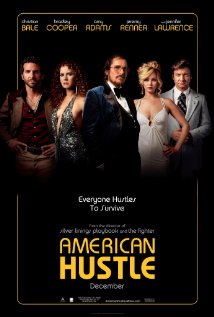
American Hustle ~ A Capsule Movie Review

American Hustle

American Hustle ~ A Capsule Movie Review by Allen Kopp 

American Hustle lays bare all the tackiness of the 1970s. Irving Rosenfeld  (played by Christian Bale) has the ugliest men’s hairdo of the year (it must be seen to be believed). He owns a chain of drycleaning stores, but his real enterprises are loan sharking and art forgery. He promises desperate people that he will try to get loans for them (these are people who can’t get loans anyplace else), but he doesn’t even try—he only takes his “non-refundable” fee of five thousand dollars and lies to them. His motto is that desperate people will believe what they want to believe.

When Irving meets Lady Edith Greenleaf (Amy Adams), an English woman with “London banking connections,” he has more than met his match. (She’s not English and her name is not Edith Greenleaf, but we don’t know that until later.) Edith is smart and just as conniving as Irving is. As a team, they can fleece millions from unsuspecting suckers. The two of them fall in love, but Irving has a problem: a volatile wife, Rosalyn (Jennifer  Lawrence), who says she will never divorce him because there has never been a divorce in her family. She has a son, Danny, whom Irving has adopted as his own. She uses Danny as leverage in her battles between herself and Irving. Appearances to the contrary, Rosalyn is smart and, although very odd, she has a streak of decency. She is, in a way, Irving’s conscience. It’s ironic that the two women in Irving’s life are both smarter than he is.

Enter Richie DiMaso (Bradley Cooper), a hip young man with gold chains and permed hair. (He puts his hair up at night in little curlers.) Irving and Edith take him into their confidence; they believe he is one of them. When Richie finds out enough about Irving and Edith’s crooked enterprises, he reveals himself as an agent of the FBI. He threatens to expose them unless they will help him bring down the nest of vipers that is the New Jersey political machine. His target is one Carmine Polito, the mayor of Camden. Mayor Polito is interested in revitalizing and restoring Atlantic City and he doesn’t much care how corrupt the enterprise is. At this point, organized crime enters the scene. There are payoffs and bribes to be paid, some involving members of Congress and the U.S. Senate.

American Hustle is about human failings, such as greed and incompetence, but also about people’s willingness to be “conned,” even when all the indications are there that things are not what they appear to be. (“People believe what they want to believe.”) Although a fictional story, American Hustle is based on the Abscam scandal of the late 1970s. If scandal involving high-ranking members of government makes good material for movies, future filmmakers will have a mother lode of material to draw from, what with current and ongoing government scandals. I don’t know about you, but I love seeing sleazy, self-serving politicians getting what they deserve.

Copyright © 2013 by Allen Kopp

Dallas Buyers Club ~ A Capsule Movie Review

Dallas Buyers Club

Dallas Buyers Club ~ A Capsule Movie Review by Allen Kopp 

Dallas Buyers Club is set the 1980s and is based on a true story. Hard-living Texas rodeo cowboy Ron Woodruff (played by Matthew McConaughey) finds himself very sick. When he is found to have AIDS as a result of his sexual promiscuity, he is given thirty days to live. He hears about a new drug called AZT that has been proven effective in tests with laboratory animals, but the problem with AZT is that it hasn’t been approved for use by humans. By the time it goes through all the government channels and is finally approved, it will be too late to help Ron and thousands of other AIDS patients who might benefit from it. Ron bribes a hospital employee to provide him with AZT, but after he has taken it for a while he finds it doesn’t do him any good.

From that point on, Ron is more resourceful than we might have given him credit for. He refuses to give up and die in a few weeks. He researches his disease (this is before the Internet) and discovers just what his limited options are. He travels to Mexico, where he might buy certain drugs that are not available in the U.S., and befriends an American doctor there who is willing to help him. He travels to Japan, Canada, Israel, and other countries, where he buys large quantities of the drugs, proteins, and vitamins that might help him and others. He is, of course, operating outside the law.

He establishes what becomes known as the Dallas Buyers Club. Instead of selling drugs to AID patients, he sells memberships that allow patients to draw from his stock of drugs whatever they need. The government is there to thwart him at every turn. If they can’t shut down his operation, they will get him for income tax evasion or any other trumped-up charge they can think of.

Other standout characters in Dallas Buyers Club include Raymond/Rayon (played by Jared Leto), a transsexual who dresses and acts like a woman (though still a man), with AIDS contracted through intravenous drug use. Ron is at first repelled by Rayon’s feminine behavior, but eventually they become friends and business partners of a sort. Eve Saks (played by Jennifer Garner) is a compassionate doctor who helps Ron and in doing so places her job and her standing in the medical community in jeopardy.

Dallas Buyers Club is grim, as stories about sick people who cannot get well always are, but it is a story that demonstrates the value of perseverance and of someone who is willing to operate outside the system. Whether Ron Woodruff is right or wrong in bucking the system, he is able to extend his own life, and the lives of others, far beyond what would have been possible through conventional methods.

Copyright © 2013 by Allen Kopp

The Hobbit: The Desolation of Smaug ~ A Capsule Movie Review

The Hobbit, The Desolation of Smaug

The Hobbit: The Desolation of Smaug ~ A Capsule Movie Review by Allen Kopp 

The epic quest begun in The Hobbit: An Unexpected Journey (released one year ago at this time) is continued in The Hobbit: The Desolation of Smaug, which is part two in The Hobbit trilogy. The third part, The Hobbit: There and Back Again, will be released in December of next year.

As you recall (or maybe you don’t), twelve dwarves are on their way to reclaim their homeland and their gold from a very large, flying, fire-breathing dragon sleeping inside a mountain. They have enlisted the aid of Bilbo Baggins, a hobbit, who is a burglar. Once they get to the mountain, they will need Bilbo to use his skills to get a large white stone, called the Arkanstone, from the extravagant piles of gold and riches the dragon stands guard over inside the mountain. (It seems they need the stone to carry out their plans.) The dragon is sleeping most of the time, but if anybody tries to mess with his riches, he is sure to wake up and be very unpleasant.

On their long journey to the mountain, the dwarves encounter Orcs, a warlike race of creatures who want to kill them. The elves don’t like dwarves, either, but they assist the dwarves because they dislike Orcs even more. (The enemy of my enemy is my friend.) In one standout scene, the dwarves are captured by giant spiders who wrap them in cocoons (presumably to keep them as a snack for a later time). The elves assist the dwarves to escape the spiders, as does Bilbo. Time and again, Bilbo displays unexpected bravery and resourcefulness. When the dwarves are trying to open the door into the mountain where the gold is, which, they are told, will open with a key by the last light of the day, Bilbo figures out that the door will open (after the dwarves have given up) by the light of the moon rather than the sun. Where would they be without Bilbo?

At the end of The Desolation of Smaug, Bilbo and the dwarves have inadvertently unleashed the death-dealing dragon on Middle Earth. As the dragon flies off to wreak all kinds of havoc, Bilbo says, “What have we done?” We’ll have to wait until December 2014 to find out.

The trilogy is based, of course, on books by J.R.R. Tolkien, the premier fantasy writer of the twentieth century. I’m not a big fan of this kind of fantasy, but these movies are beautifully made in 3D and well worth seeing. Even if you don’t care that much for the story and think you have had your fill of hobbits, dwarves, elves, and wizards, there’s no more beautiful place to visit than Middle Earth.

Copyright © 2013 by Allen Kopp

The Hunger Games: Catching Fire ~ A Capsule Movie Review

The Hunger Games, Catching Fire

The Hunger Games: Catching Fire ~ A Capsule Movie Review by Allen Kopp 

The Hunger Games is a series of books and now a movie franchise. The second movie in the franchise, just out, is The Hunger Games: Catching Fire. It stars Jennifer Lawrence as an extraordinarily resourceful girl named Katniss Everdeen, who has acquired fame and fortune as the victor in the 74th Annual Hunger Games, along with her partner, Peeta Mellark (played by Josh Hutcherson). Katniss and Peeta believe that, as victors, they can live the rest of their lives in peace until they discover that every twenty-five years the participants in that year’s Hunger Games will be drawn from previous victors. So, guess what? Katniss and Peeta will have to participate in the 75th Annual Hunger Games, whether they want to or not.

For those who don’t already know, The Hunger Games is set in a future dystopian society (a country called Panem) where life is not easy. The Hunger Games is a sort of public relations gambit to instill a sense of national pride in people and to take their minds off how terrible their lives are. Since Katniss sees things as they really are and sees through the veil of lies, she is viewed by the political ruling class as a possible danger, as someone who might lead a revolution against them. They believe it is in their best interests to kill her.

Meanwhile, Katniss and Peeta are forced to pretend to be in love to make things more interesting for the masses. While they like each other, there doesn’t seem to be much romance between them. (Or is there?) She has a boyfriend on the sidelines, the handsome Gale Hawthorne (played by Liam Hemsworth), with whom she wants to run away, but they both know it’s no use. If they don’t do what’s expected of them, their families will probably be killed.

The games themselves are held in a huge fake jungle, every aspect of which is controlled by people the participants don’t see. Using their skill, cunning, and physical prowess, the twenty participants must kill each other any way they can. Every time one of them dies, a cannon is fired. When the participants hear the cannon, they know how many are left that must be killed. All kinds of dangers are put in their way (a different one every hour) such as lightning, killer baboons, and floods. As they survive or die, they are being watched by millions of people on television.

If you saw the first movie in the franchise, you will know what to expect from The Hunger Games: Catching Fire. The two movies are much the same. You know from the way the second one ends (no surprise here) that there will be a third. Will Katniss lead a revolution against the evil government? Will she be a sort of Joan of Arc? Will she decide she is really in love with Peeta instead of Gale? Who will live and who will die? If the third movie isn’t any different from the first two, will we even care?

Copyright © 2013 by Allen Kopp

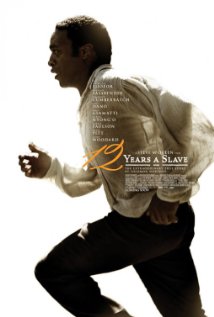
12 Years a Slave ~ A Capsule Movie Review

12 Years a Slave

12 Years a Slave ~ A Capsule Movie Review by Allen Kopp 

Solomon Northup was a real person, a free Northerner, who was kidnapped in 1841, taken to the South and sold into slavery. He wrote a book about his experiences, 12 Years a Slave, and that book has been made into one of the best movies of 2013. It was directed by Steve McQueen (yes, there’s more than one person besides the deceased movie star with that name), who directed the impressive Shame a couple of years ago. In Shame, Michael Fassbender played a sex-addicted New Yorker and in 12 Years a Slave, a sadistic Southern slave owner who has a harpy of a wife as bad as he is.

During the years of his captivity, Solomon Northup (played by Chiwetel Ejiofor), struggles to maintain his identity, his dignity, and his hope. He is the victim of unspeakable cruelty but, even worse, he sees the same cruelty meted out to others. (When a slave girl named Patsy goes to a nearby plantation to get a piece of soap because she wants to be clean, she is beaten savagely.) The only way Solomon can survive as a slave is to not try to rise above his station. If he reveals that he is an educated, cultivated man, he will likely be killed. He wants desperately to get a letter to his wife and children to let them know where he is and to get them to help him, but he isn’t even supposed to know how to write. Simply getting paper and ink to write a letter is impossible for him. Nobody is to be trusted.

Throughout his long ordeal, Solomon Northup admonishes others not to “give in to despair.” Heeding this advice himself is the only way he survives. One never knows when fate—or the hand of Providence—will intervene on one’s behalf.

In 12 Years a Slave a long-dead world is brought back to life and it’s not a pretty world like Gone with the Wind. It’s an ugly place where cruelty and greed are the order of the day. The little bit of kindness that exists is tempered with fear. With the moss hanging from the trees, the heat, the insect sounds, the plantation houses that look lived in, the cane and cotton fields—but most of all with the slaves—you can almost feel what the South was like before the Civil War. Where else can you find this?

Copyright © 2013 by Allen Kopp