The Seven Wonders ~ A Capsule Book Review

The Seven Wonders cover

The Seven Wonders by Steven Saylor ~ A Capsule Book Review by Allen Kopp 

The Seven Wonders is a historical novel by Steven Saylor set in 92 B.C. It’s about a young Roman, Gordianus, and his tutor, the poet Antipater of Sidon, who set out on a journey from Rome to see the Seven Wonders of the Ancient World. At the beginning of the novel, Antipater fakes his own death and travels under an assumed named, Zoticus of Zeugma. We don’t know until the end of the book why he has done this.

The pair travel from one Wonder to another, apparently with ease and without too much discomfort. Such a trip, 92 years before Christ, takes months, if not years. In the order they appear in the book, the Wonders are: The Temple of Artemis at Ephesus, The Mausoleum at Halicarnassus, the Statue of Zeus at Olympia, The Colossus of Rhodes, the Wall and Hanging Gardens of Babylon, the Great Pyramids of Egypt, and the Pharos Lighthouse in Alexandria. They were all engineering and architectural wonders that made even the most jaded traveler sit up and take notice. If you look at them and go “ho-hum,” you are either faking it or you just aren’t right in the head.

At every one of their stops, Gordianus and Antipater encounter some kind of intrigue. There is always a mystery to be solved, which Gordianus is usually able to solve using his deductive powers. He is sort of a junior-grade detective who only has to mature to become something really special. He has his first sexual encounters on this trip (male and female), which is mostly left to our imagination, and he takes a giant leap toward manhood in more ways than one. In the end, he is left alone in Alexandria, Egypt, the largest and most cosmopolitan city in the world at that time, because political unrest makes it unsafe for him to return to Rome and to his family. His story is continued in other novels by the same author.

There is a subplot in The Seven Wonders involving Rome and its political enemies. Rome has conquered most of the civilized world of the time and has its sights set on the parts it hasn’t yet conquered. Some Greeks, however, are not going to stand by and let Rome have everything. Political unrest is fomenting all over the civilized world.

If The Seven Wonders seems contrived, it seems less so at the end when all the pieces come together, rather like a jigsaw puzzle. It’s “pop history,” but the apparently well-researched information it contains about the Seven Wonders of the Ancient World is fascinating. Through the characters in the book, it’s almost as if we are seeing the Wonders for ourselves.

An interesting footnote is that the Great Pyramid in Egypt, the oldest of the Seven Wonders, is also the only one left standing. The others were destroyed by earthquakes, fires, or by pillaging invaders bent on destroying what was left of a once-great civilization. Like Titanic and the World Trade Center, they exist only in our imaginations, in pictures and in stories.

Copyright © 2013 by Allen Kopp
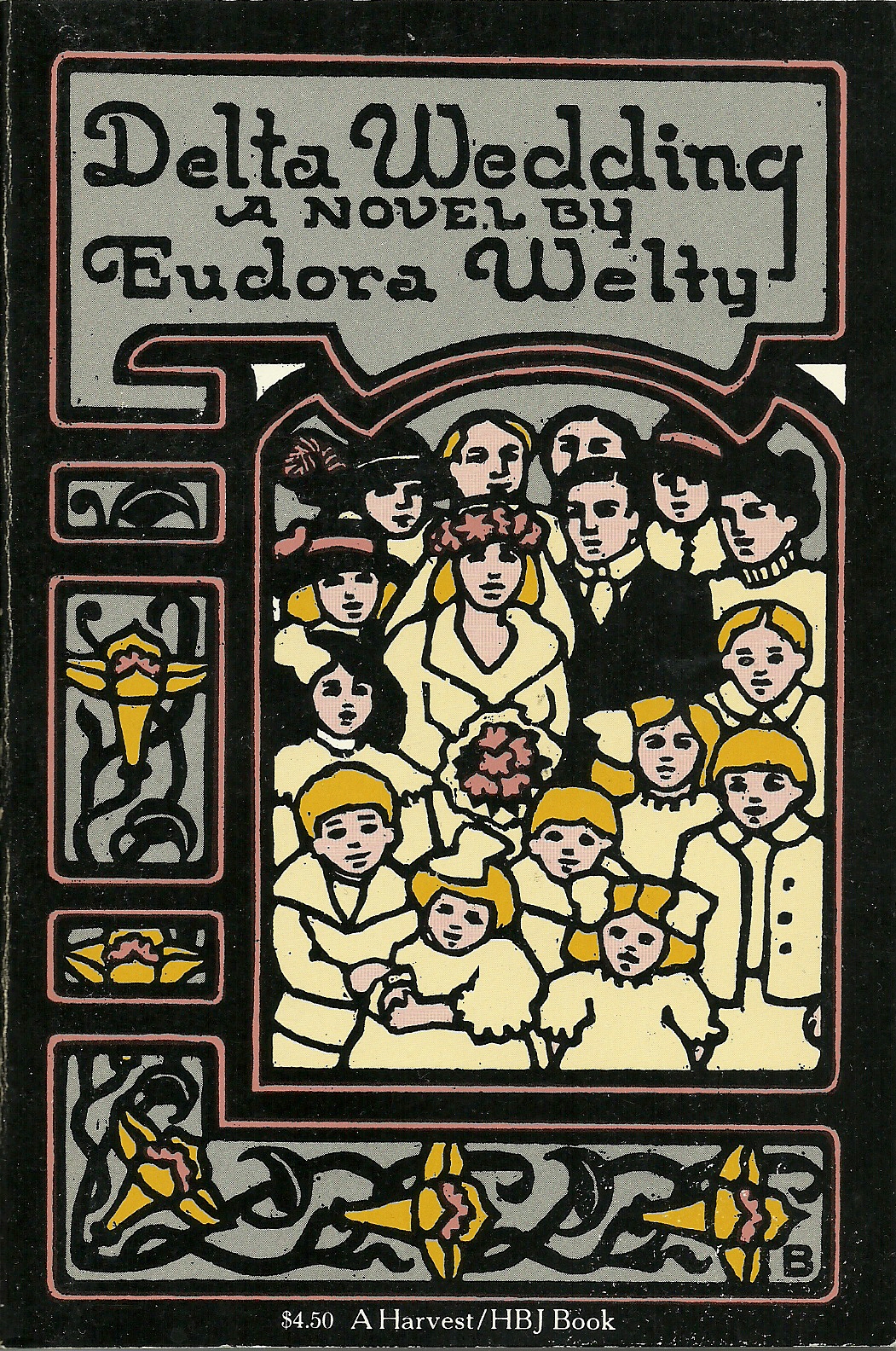
Delta Wedding ~ A Capsule Book Review

Delta Wedding cover


Delta Wedding
by Eudora Welty ~ A Capsule Book Review by Allen Kopp 

Famed American writer Eudora Welty is known for her many short stories, but she also wrote a handful of novels, including The Optimist’s Daughter, which won the Pulitzer Prize for Fiction in 1973. Her novel Delta Wedding, published in 1946, was written when her publisher suggested that she turn some of her short stories into a novel.

There isn’t much story or plot to Delta Wedding. The Fairchilds own a cotton plantation in the Mississippi Delta called Shellmounds. It’s September 1923 and their second-oldest daughter, seventeen-year-old Dabney, is marrying her father’s overseer, Troy Flavin. Troy is thirty-four years old and rough around the edges; most of the Fairchilds believe that, in marrying Troy, Dabney is marrying “beneath” herself.

Dabney Fairchild is “spoiled,” as are all the Fairchild children. The Fairchilds are moderately rich and have given all their children a good life, a life that hardly seems to have been touched by the real world. A Fairchild cousin who has recently lost her mother, Laura McRaven, has arrived on the Yellow Dog (the name they’ve given the train), for a visit. Much of what goes on at the Fairchilds is seen through Laura’s eyes.

In addition to all the Fairchild children (another one on the way), there are lots of aunts: widowed aunts (it is just a few years after World War I), spinster aunts who never married, great-aunts who remember the Civil War, a crazy aunt and a deaf aunt, etc. There are so many characters that, at times, it’s hard to keep everybody straight. Ellen and Battle are the parents of all the Fairchild children. Their children are Shelley, Dabney, Orrin, India, Little Battle, Bluet, and Ranny. Outspoken Aunt Tempe is Battle Fairchild’s sister. She has a husband, but he seems to be away on business all the time. Sisters Jim Allen and Primrose live together and never married. They live in a place called the Grove, which is owned by their brother, George. George is the most beloved of all the Fairchilds and has a rather troubled marriage to Robbie Reid. The Fairchilds look down on Robbie Reid and believe she isn’t good enough for George. Ellen, we learn at the end of the book, has a secret yearning for George but she will make sure nobody ever knows about it.

While Delta Wedding is about the events leading up to a wedding, it is, more than anything, a portrait of a large, close family in a simpler time. It’s all goodness and light, to the accompaniment of piano selections played endlessly by Mary Lamar Mackey. I’ll turn the ice cream freezer while you take the buggy into town and pick up the groceries. It’s so hot tonight I think I’ll sleep on the sleeping porch. When I wake up in the morning I’ll be as happy as I am now and there’ll be a wonderful breakfast waiting for me downstairs and I’ll be surrounded by all the people I love most in the world. They all love me, too, and, when it comes to my faults, they won’t talk about them or even acknowledge that I have any. What a family!

Copyright © 2013 by Allen Kopp  

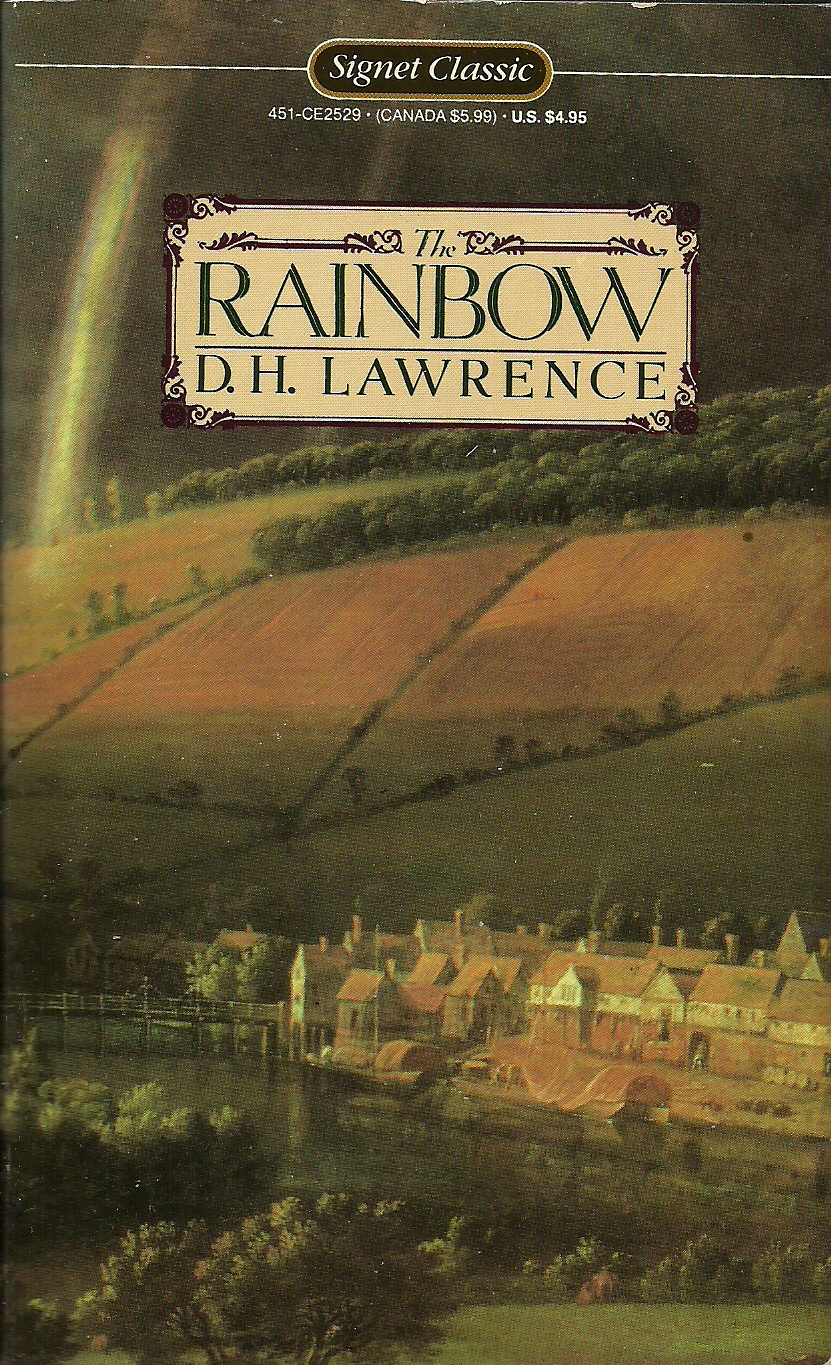
The Rainbow ~ A Capsule Book Review

The Rainbow cover

The Rainbow by D. H. Lawrence ~ A Capsule Book Review by Allen Kopp 

When English writer D. H. Lawrence’s novel, The Rainbow, was first published in 1915, it was hailed as obscene and Lawrence himself was labeled a pornographer. The book was banned in many quarters while the righteous of the day took great pleasure in making a public display of burning it. It wasn’t available in England and the United States for many years after its publication, except in an “expurgated” version, meaning that somebody went through the book and took out the parts they considered “offensive.”

Readers nowadays will not understand what all the fuss was about when The Rainbow was first published nearly a hundred years ago. We live in a permissive age where any words might be spoken for public consumption; anything might be seen on TV or in movies or written about in magazines, newspapers and books. All the rules, all the taboos, seem to have been lifted, and nothing is sacred anymore. The Rainbow seems very mild by today’s standards. Lawrence only suggests that his characters engage in sexual activity. (He was, possibly, the first “mainstream” English writer to do this; thus all the furor.) His heroine in The Rainbow, Ursula Brangwen, sees her boyfriend (to whom she is engaged but doesn’t marry) naked while he is bathing, sleeps with him in his hotel room while pretending to be his wife, and has outdoor sex with him. There are no steamy details; the sex is only implied. This is no Peyton Place. Any of the words connected with sex are never used.

The Rainbow is a multi-generational story of a fictional English family, the Brangwens. It begins with Tom Brangwen, a gentleman farmer who marries a strangely detached Polish woman named Lydia. She is a widow, older than Tom, with a daughter from her previous marriage named Anna. When Anna is older, she marries her stepfather’s nephew, Will Brangwen. If Anna and Will have nothing else together, they have sexual compatibility; they end up having nine children, the oldest of whom is Ursula. She becomes the focal point of the second half of the novel.

As Ursula Brangwen becomes older, she longs to break free from the conventions and constraints that she believes have held women back for so long. She isn’t content to live as other women of her class have lived. She is a “modern” woman of the early twentieth century. She seeks a teaching career (with disastrous results), a college degree (she fails her final exams), and marriage (she decides she can’t go through with it) to a handsome young military man named Anton Skrebensky, a veteran of the Boer War. After The Rainbow ends, Ursula’s story is continued in the novel Women in Love, which was published in 1920.

Much of The Rainbow is taken up with the interior lives of its characters, meaning that we are constantly being told what they think and how they feel, rather than what they are doing or saying or what they are having for dinner. If this sounds like tedious reading, it isn’t. It isn’t a difficult book to read for those who are so inclined, although a little long at 515 pages.

D.H. Lawrence was plagued by ill health throughout much of his life and died at age 45 of tuberculosis in 1930. If he failed to achieve the acclaim and success that he deserved during his lifetime, he is today hailed as a giant of twentieth century English writing. The Rainbow is one of his most famous and enduring works. 

Copyright © 2013 by Allen Kopp

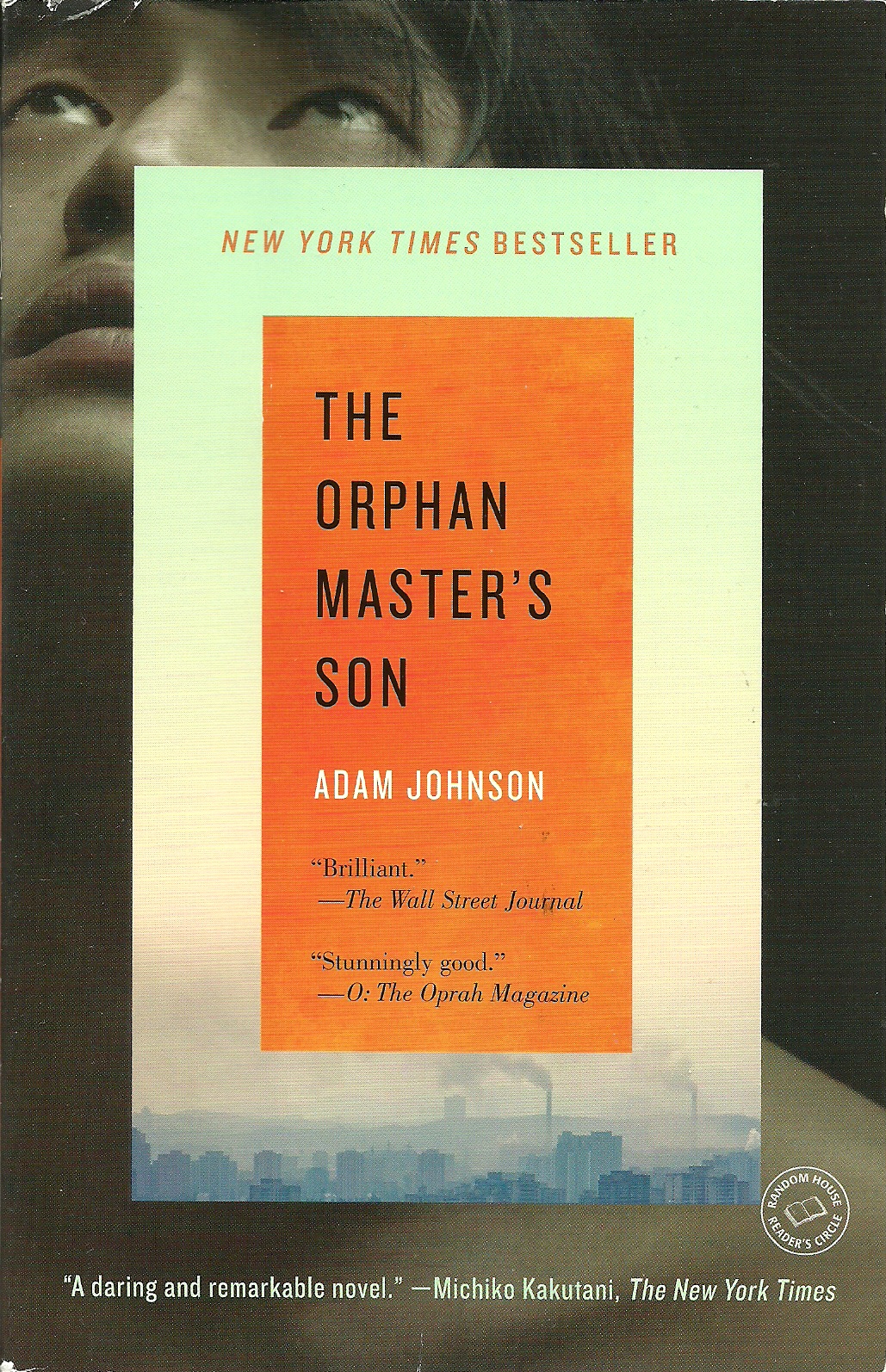
The Orphan Master’s Son ~ A Capsule Book Review

The Orphan Master's Son cover

The Orphan Master’s Son by Adam Johnson ~ A Capsule Book Review by Allen Kopp 

Every year I read the work of fiction (usually a novel but sometimes a volume of short stories) that wins the Pulitzer Prize for Fiction. For me, there have been many high points (Ironweed, Martin Dressler, The Hours, The Mambo Kings Play Songs of Love, The Road, A Confederacy of Dunces) and some low points (anything involving yuppie angst or “relationships”). It seems that some years the winner is based more on “suitability” or “political correctness” rather than merit.

This year’s winner is The Orphan Master’s Son by Adam Johnson. It is set in North Korea, the one country on earth that is like no other. I had never given much thought before to North Korea. It is a communist totalitarian society. People are routinely tortured or imprisoned in horrible prison camps where they are certain to die in a few months. There is no religion other than worship of the “Dear Leader” and the state. The simple freedoms we take for granted in the United States are absent. It is a crime punishable by death to own certain items, such as a Bible or an unauthorized radio. People “disappear” overnight, for no apparent reason, and nobody ever knows what happened to them. People must act and think at all time for the good of the collective. There is no individuality.

The protagonist of The Orphan Master’s Son is a young man named Jun Do. He grows up in an orphan asylum, although he claims he has one parent living, the “orphan master.” In young adulthood, he is conscripted to help kidnap people who happen to be unlucky enough to be in the wrong place at the wrong time. (What they do with these kidnapped people is not fully explained.) When he is older he ends up as a radio operator on a North Korean fishing vessel. What happens to him on the fishing vessel drives the narrative for the rest of the novel.

Only married men are allowed to work on fishing vessels. Their wives’ likenesses are tattooed on their chests. If any of them dare to defect to Japan or some other country, their wives and families can be tortured and killed. Since Jun Do doesn’t have a wife, the men on the fishing vessel tattoo on his chest the likeness of Sun Moon, Korea’s national actress and a favorite of the Dear Leader, who has made her what she is. All her films are propaganda disguised as entertainment.

Sun Moon’s husband is the mysterious and powerful Commander Ga. We don’t know much about Commander Ga, except that he is cruel and feared. Through a quirk of fate (or many quirks of fate), Jun Do kills Commander Ga and assumes his identity. From that point on in the story, Jun Do becomes Commander Ga. In pretending to be Sun Moon’s husband (and father to her two children), he falls in love with her and finally, through many twists and turns, determines her fate. He is inspired by the story of the movie Casablanca, in which “the honorable man stays behind.”

While The Orphan Master’s Son is easy to read and held my interest for much of its 443 pages, the reading of it seemed interminable to me. After about page 300, I was ready for it to end. Too much torture and unrelieved grimness. I mostly came away with the impression that I sure am glad I wasn’t born in North Korea. I don’t think I’d last a whole day there and it’s a world I don’t want to revisit anytime soon.

Copyright © 2013 by Allen Kopp 

Let’s Explore Diabetes with Owls ~ A Capsule Book Review

Let's Explore Diabetes With Owls cover

Let’s Explore Diabetes with Owls ~ A Capsule Book Review by Allen Kopp 

Let’s Explore Diabetes with Owls is the title of David Sedaris’s new book of essays. This book is much like David Sedaris’s seven other books of essays (Barrel Fever, Naked, Holidays on Ice, Me Talk Pretty One Day, Dress Your Family in Corduroy and Denim, When You are Engulfed in Flames, Squirrel Seeks Chipmunk), meaning that it’s funny, entertaining and full of his trademark self-deprecating humor.

If you are a fan of David Sedaris, you know that his writing is as easy and quick to read as anything you’ve ever read in your life. The word “essays” seems a little formal and academic for these little stories that differ from fiction stories in that they are about real life instead of being made up. They could easily pass for fiction if you didn’t know any better. At the center of each story is David Sedaris himself talking about things that have happened to him (sometimes, but not very often, in the voice of somebody else).

The experiences he relates involve everything from his outspoken, rough-around-the-edges parents to visiting a French dentist to dealing with litter in the English countryside; from having a colonoscopy to meeting an interesting stranger on a European train; from feeding strips of meat to a kookaburra (a large bird) in Australia to dealing with a stolen laptop computer; from eating at less-than-sanitary restaurants in China to purchasing a stuffed owl from a very forthcoming British taxidermist.

The only thing about Let’s Explore Diabetes with Owls that I didn’t like is when he ventures into the odious and offensive subject of politics. I despise politics, politicians and all things political. I would rather not hear anybody’s political views. If you don’t bore me with politics, I will extend you the same courtesy.

David Sedaris is a true literary star, a real celebrity, although you’d never know it from his humble demeanor and appearance. Years ago I stood in line for over an hour at one of his book signing events to get him to sign my copies of Holidays on Ice and Me Talk Pretty One Day. (The bookstore where the event took place waived its no-smoking policy for him only for that evening.) I had been to many book signings but had never stood in line that long before (or since). Somehow it seemed worth it. I still have the two signed books. Maybe someday it will be like owning a signed, first-edition copy of Tom Sawyer.

Copyright © 2013 by Allen Kopp
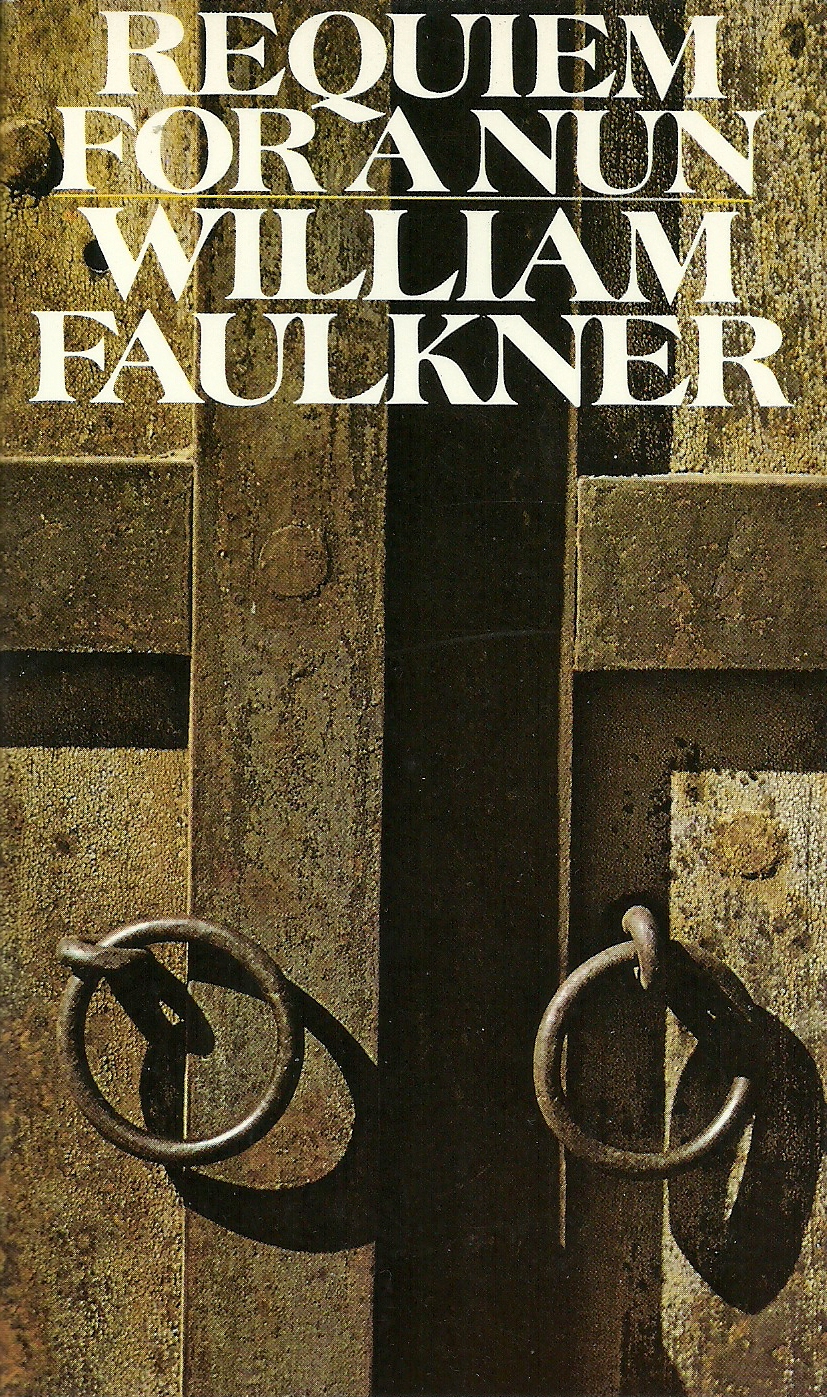
Requiem for a Nun ~ A Capsule Book Review

Requiem for a Nun cover

Requiem for a Nun ~ A Capsule Book Review By Allen Kopp

William Faulkner, the master of twentieth century Southern American gothic writing, wrote Requiem for a Nun as a sort of sequel to his novel Sanctuary, meaning that it’s a brief glimpse into the life of fallen woman Temple Drake eight years after the close of Sanctuary. Requiem for a Nun was written around 1951, when Faulkner was 54 years old, about twenty years after Sanctuary.

Requiem for a Nun is an odd little book, not a traditional novel. The story is told in dramatic form, meaning that reading it is like reading a play. That’s not all, though. The “acts” of the novel are interspersed with some of Faulkner’s dense prose; dense in the sense that sentences are frequently half-a-page long or longer, and you won’t know what he’s saying unless you’re reading carefully and go back and break down the sentences into their various parts. Faulkner is the master of interjectional writing. Great writer though he was, it’s as if his mind was so twisted with interweaving thoughts that he couldn’t finish one thought before he started in on another. I suppose this is part of his “innovation,” although not easy on the reader.

The “narrative” portions of the book that are interspersed with the “dramatic” portions are about the fictional history of the fictional town of Jefferson, Mississippi, in fictional Yoknapatawpha County; specifically the jail, the courthouse, and how the town was begun. These fictional historical details actually have nothing to do with the “story” told in dramatic form.

Readers familiar with the character Temple Drake from Faulkner’s earlier novel Sanctuary know that she ended badly. She was witness to a murder and lied on the witness stand to defend the real murderer, a deformed thug named Popeye, who took her to Memphis and set her up in a whorehouse to keep her from going to the police and telling them what she knew. Requiem for a Nun picks up her story eight years later. She is free of Popeye (he was hanged for another crime that he apparently was innocent of) and is married to her drunken male companion, Gowan Stevens, from Sanctuary. They have two children, an infant daughter and a slightly older son.

Temple has taken a black woman named Nancy Mannigoe, former drug addict and prostitute, into her house as a sort of governess for her two small children. Temple believes she is saving Nancy from her terrible life and giving her a chance to have a better one. When the action of Requiem for a Nun begins, Nancy has murdered Temple and Gowan’s baby daughter in her crib and is going to be executed in a few days for her crime. Temple decides within two days of Nancy’s execution that she herself is responsible for the murder of her own baby, beginning with her actions eight years earlier, and attempts to save Nancy’s life. There is one very long scene where she and her husband’s lawyer uncle go and see the governor of the state in the state capital in the middle of the night to plead for Nancy’s life, even though Temple knows there is no use.

Since there is no nun in Requiem for a Nun, I’m not sure what the title means, although I’m figuring it refers to Nancy Mannigoe. She goes to her death serenely because she believes she deserves to die and because she is a “believer.” Nancy’s serenity is something that Temple Drake cannot touch, understand or share. She is a tormented woman and we get the distinct impression that she will never be anything but that.

Copyright © 2013 by Allen Kopp  

The Song of Bernadette ~ A Capsule Book Review

The Song of Bernadette cover                                 

The Song of Bernadette ~ A Capsule Book Review by Allen Kopp

The Song of Bernadette, by the Austrian writer Franz Werfel, is a fictional account of the true story of a simple peasant girl, Bernadette Soubirous, who experienced visions of the Virgin Mary in Lourdes, France, in 1858. The novel was first published in 1941 in German and was made in 1943 into what is today considered a classic movie that is usually shown on TV around Christmastime.

At almost six hundred pages, The Song of Bernadette is not an easy book to read. The English translation is filled with oddly arranged and wordy sentences that often require re-reading to understand. You are going to have to be a dedicated reader to get through this book. The story is minutely and scrupulously detailed or, to put it another way, it’s a very slow-moving reading experience. It could have been told in half the number of pages. However, those readers who stick with the book through to the end will be glad they did. It’s a fascinating story of simple faith in a cruel, cynical and unbelieving world. The life of a saint is not an easy path.

Bernadette, following examples set in the Bible, was the least likely person to be singled out for a divine visitation. She was a sickly girl from a poor family that lived in what was known as the “Cachot,” a former prison converted into a poor dwelling place. She suffered from asthma from birth and was not a particularly well-liked or well-disposed child, or a bright student in school. There was nothing remarkable about her; she was, in fact, one of hundreds just like her.

One day when she was gathering firewood with her sister and another girl in an ugly, repellant place near her home, she experienced a vision of what she described as a beautiful lady in a niche in a rock formation. She thereafter referred to the vision as “The Lady,” while it is assumed to have been the Virgin Mary. Bernadette tried to keep the vision a secret but, of course, news of it broke out and everyone wanted to know what it was all about and what it meant.

The Lady instructed Bernadette to come to the place where she first saw her every day for fifteen days. On one of these daily visitations, the Lady instructed Bernadette to get on her hands and knees and dig in the dirt. When Bernadette obeyed this directive, a spring gushed forth beneath her fingers, a spring that was found to have curative powers. Among the first to be “healed” from their afflictions were a blind man whose sight was restored and a two-year-old boy, near death, who suffered from paralysis and convulsions. When word of these miraculous cures spread, the spring and Bernadette became famous. People from all over the world came to Lourdes to be healed of whatever ailed them. Enough genuine healings occurred to convince many that it was real.

With all her notoriety, Bernadette’s troubles were just beginning. For every person who believed she was genuine, there was an equal number who believed she was a charlatan and an instrument of the devil. Local officials and even some members of the clergy took it upon themselves to discredit Bernadette and to find plausible reasons to prove she was a fake.

With all that happened to Bernadette and her family, she never lost her simplicity and her faith in her visions of the Lady. What it meant was for others to figure out. She remained humble throughout her life and wasn’t interested in the ways of the world. She entered a religious order, where she performed menial kitchen duties, and died twenty years after her visions at the age of thirty-four from a painful affliction known as tuberculosis of the bones. When a fellow nun suggested during her illness that she partake of the curative waters of the spring at Lourdes, she stated simply that the cure was not meant for her.

Fifty-four years after her death, in 1931, Bernadette was sanctified as a saint in a ceremony at St. Peter’s Basilica in Rome, with fifty thousand people in attendance. Her body, during the investigative process for sainthood, was found to have not decomposed in all the decades since her death. Her detractors had a logical explanation even for that, saying that she had been expertly embalmed and was merely a “mummy.”

Copyright © 2013 by Allen Kopp

Sanctuary ~ A Capsule Book Review

Faulkner - Sanctuary

Sanctuary ~ A Capsule Book Review by Allen Kopp

Many readers find William Faulkner’s work difficult to navigate. His style is very dense at times and we don’t always know at first what he is saying. Whereas many writers walk the reader step by step through what is going on, Faulkner leaves the reader to make certain connections that aren’t always easy to make. For example, in his 1931 novel, Sanctuary, the character Horace Benbow mentions Little Belle, his stepdaughter, on numerous occasions. Little Belle seems to be extremely important to Benbow but we never really known why. Is he in love with her? Does he lust after her? Why has he run away from his wife, Little Belle’s mother? Why does the subject of Little Belle come up with him so much? Why does Benbow have such a contentious relationship with his sister, Narcissa? Is Narcissa his conscience?

These small things aside, Sanctuary is (along with As I Lay Dying) one of Faulkner’s most accessible works, at 250 pages. I first read it many years ago and, after seeing the sanitized 1935 film version, called The Story of Temple Drake, I dug the book out of a box in my basement and read it again. It’s a sordid story about bootleggers (it takes place, after all, during Prohibition), prostitutes, and a fallen woman. Over everything looms the presence of a character named Popeye (we never know him by any other name). Popeye is a sociopath with a misshapen body (he was sickly as a child and never developed properly).

Bootlegger Lee Goodwin operates out of the shattered shell of an antebellum mansion. He has a woman with him (apparently they are not married) and a baby that’s sick all the time. Several nefarious types, including Popeye, hang around Lee Goodwin’s place. His “woman” cooks for them, complains all the time, and takes care of the baby.

Pretty college girl Temple Drake goes to Lee Goodwin’s with a male friend to buy some illegal booze. When the male friend becomes permanently drunk and can’t be relied upon to remove Temple from this awful place, she finds she is in for an extended stay, whether she likes it or not. She tries to get somebody to take her back to town, but it seems that isn’t going to happen anytime soon. She captures the attention of the low men who inhabit the place, including Popeye.

In the course of sexually assaulting Temple, Popeye shoots and kills Tommy, a halfwit who has taken it upon himself to protect Temple. Popeye then leaves with Temple and installs her in a Memphis whorehouse. Lee Goodwin, the bootlegger, is assumed to have killed Tommy and jailed to await trial, although he is innocent of the charge.

At the whorehouse where Popeye has taken Temple, she becomes mentally unhinged. She seems to have given up on being able to return to her old life. Is she willing to let Popeye do whatever he wants with her, or is she only pretending? We learn later that Popeye is not able to perform sexually. (In his initial assault of her, he used a corncob.) At one point he uses a man named Red to engage sexually with Temple while he watches and then shoots Red in the head and kills him.

The whorehouse gives Faulkner the chance to add some humor to the story, especially in the person of Miss Reba, who runs the house. She has two little yapping dogs named Reba and Mr. Binford. (Mr. Binford is a long-dead sweetheart of hers.) In one of the chapters that provides a comic interlude, Reba and two lady friends have just come from the funeral of Red and are getting drunk. One of the ladies has a small boy with her whom they call Uncle Bud who has an unusual (for a child) fondness for beer.

Horace Benbow defends Lee Goodwin in his trial for killing Tommy, but it is a miscarriage of justice. Lee knows that Popeye killed Tommy but won’t say so. When they bring in Temple Drake, she testifies that she saw Lee Goodwin kill Tommy. She is afraid of what Popeye will do to her if she tells the truth. Her testimony seals Lee Goodwin’s fate.

Popeye leaves town but, we learn, his past catches up with him when he is apprehended someplace else for an earlier murder he committed. Temple is free of Popeye but apparently her life is ruined. She is beyond redemption.

Copyright © 2012 by Allen Kopp 

One Flew Over the Cuckoo’s Nest ~ A Capsule Book Review


One Flew Over the Cuckoo’s Nest ~ A Capsule Book Review by Allen Kopp

The classic American novel, One Flew Over the Cuckoo’s Nest, by Ken Kesey, was first published in 1962. It is set entirely (except for one brief scene on a fishing boat toward the end of the novel) in a men’s ward of a state mental hospital. The book owes a large part of its fame to the 1976 Oscar-winning film version starring Jack Nicholson and Louise Fletcher.

The first-person narrative of One Flew Over the Cuckoo’s Nest is told in the voice of one Chief Bromden, a very tall half-Indian-half-white-man, who is a long-time patient (maybe “inmate” is more appropriate) in the ward. He pretends to be “deaf and dumb” but isn’t. He sweeps the floor constantly, allowing him to be in places (closed-door meetings, for example) where he otherwise wouldn’t be allowed. He sees and hears everything. He is the silent observer.

The ward is ruled with an iron fist by one Nurse Ratched, who the men call “Big Nurse.” She is about fifty years old, wears lots of lipstick, has enormous breasts, and is a former army nurse. She is friends with the mother of one of the patients, Billy Bibbit, and, except for that, we know nothing about her life away from the hospital. Is she married? Does she have children? Is she a lesbian? We never know. She remains throughout the novel a rather one-dimensional character.

Over time Nurse Ratched has fine-tuned the ward to her liking. She believes in strict adherence to rules and schedule. The patients are all afraid of her one way or another. She uses fear, intimidation, humiliation—and sometimes electroshock therapy—to keep them in line. She herself is as machine-like and as tightly controlled as her ward. She seems invincible. No one will go against her.

Enter patient Randle Patrick McMurphy, transferred to the mental ward from a state work farm. He is the rowdy nonconformist, the extrovert from the lower classes, the master manipulator. He has been bucking authority his entire life and isn’t intimidated by it. Whether he really belongs in a mental hospital or not is never established. As a work-farm prisoner, he wangles a transfer to the mental hospital because the food is better, the surroundings more comfortable, and the living easier. He has made himself master of his world.

R. P. McMurphy challenges Nurse Ratched’s authority in a way it has never been challenged before. He lets her know that she has met her match in him. He isn’t intimidated by her the way the other men are. He breaks all the rules and leads the other men into doing the same. Finally they have found somebody who speaks for them, who stands up for them. He gives them courage they never realized they had. When he finds that most of them are in the mental hospital voluntarily (they can leave whenever they want to) rather than “committed,” he forces them to look at their lives in a different way: they are masters of their own destiny, most of them, instead of pawns to be manipulated by the “Combine.”

The story doesn’t turn out well for McMurphy, but has Nurse Ratched really won in the end? Hasn’t McMurphy wrought a change that otherwise (if not for him) would not have been possible? It’s the end of the road for him but the beginning of a new and better road for some of the others. In the end he has triumphed over the “Combine” in a way we didn’t expect. He is the classic antihero, the “one against many.”

Copyright © 2012 by Allen Kopp 

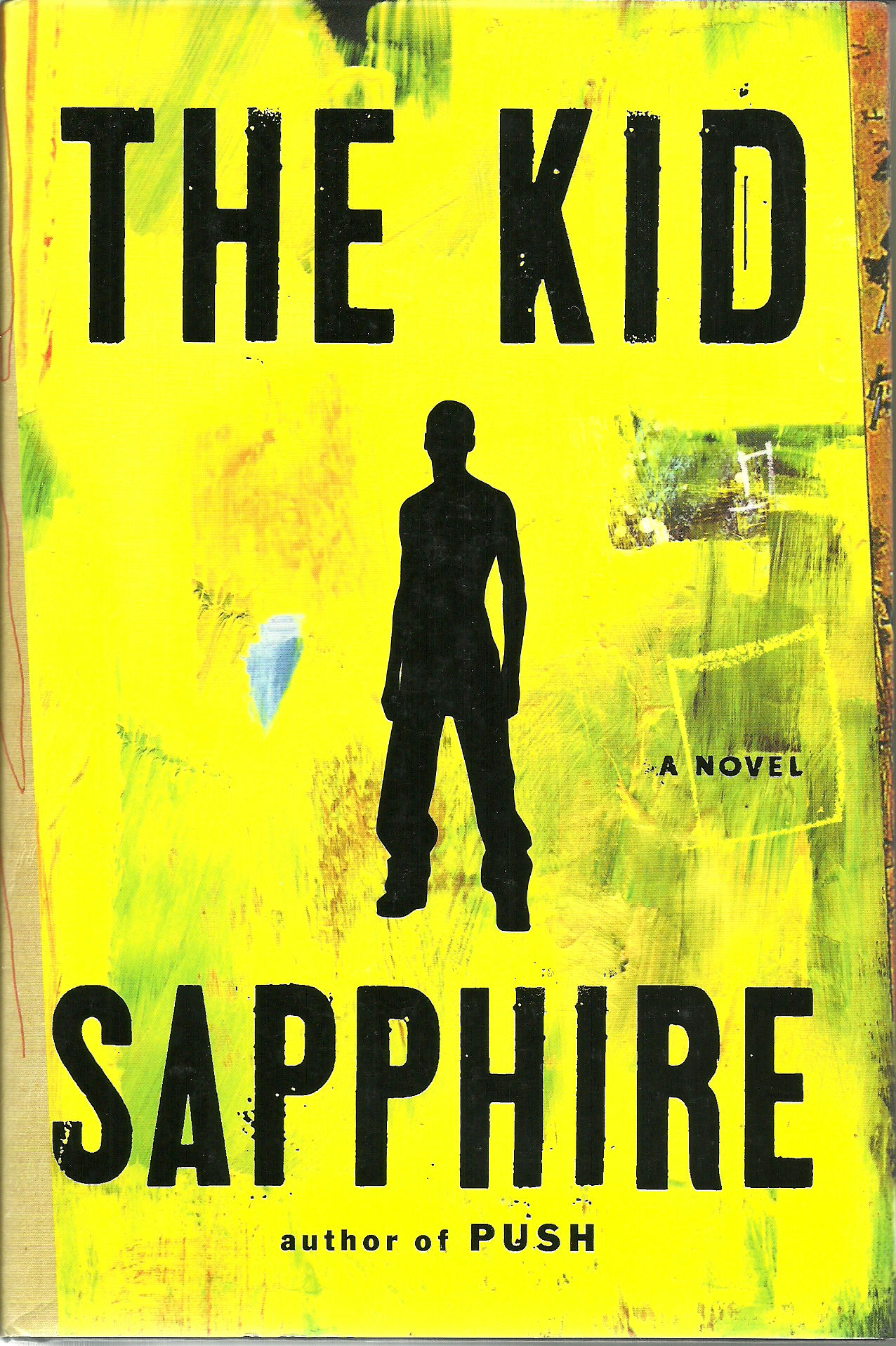
The Kid ~ A Capsule Book Review

The Kid by Sapphire ~ A Capsule Book Review by Allen Kopp

We first met the character Precious Jones in the novel Push by Sapphire. It was made into an excellent movie in 2009 with the title Precious. (It seems that Push had already been used as a title for a different movie.) In the novel and the movie, Precious Jones is black, overweight and illiterate at the age of sixteen.  She has a foul-mouthed, welfare-recipient mother who regularly heaps abuse on her head and a father who routinely rapes her. By the age of sixteen, she has given birth to two children by her father, the first of which was a girl with Down’s syndrome called Mongo.

The second baby Precious gives birth to is a boy that she names Abdul. The novel The Kid begins when Abdul is nine. His mother, Precious Jones, has died at age twenty-seven of AIDS that she contracted from her own father. Abdul has no known family, so he becomes an orphan, a ward of the state. He is put into a foster home with an indifferent foster mother, where he is beaten and sexually assaulted by an older boy. After he recovers from his injuries, he is placed in St. Ailanthus, a Catholic boys’ school.

Abdul comes to regard St. Ailanthus as his home, even though he is sexually assaulted regularly by the “brothers” who run the home (it seems this is something he must tolerate just to get along). In spite of all that, though, there are benefits to living in the home: it’s clean and there’s plenty of food to eat; also there’s an education to be had for those willing to take advantage of it.

It’s while Abdul is at St. Ailanthus that he is exposed by accident one day to African dance. After that, becoming a dancer is the one driving force in his life. He intends to overcome all the obstacles put in his way to get the education and training he needs to become a professional dancer. His path is about to become more difficult, however: He is accused of sexually assaulting a younger boy at St. Ailanthus and is expelled. He believes he is being falsely accused so the brothers in charge of the home can somehow use him as a scapegoat to sidestep their own culpability.

After he leaves St. Ailanthus, he is sent to live with a great-grandmother that he didn’t even know he had. She lives in a filthy, roach-infested apartment and seems to not be in full possession of her faculties. She hasn’t seen Abdul since he was a baby. Abdul refuses to admit he is related to her.

Through all the ups and downs of his young life, Abdul never stops wanting to be a dancer. He lives for a while with an older, effeminate dance instructor. He finds himself in a dance troupe (of sorts) with an Asian girlfriend who calls herself My Lai; his feelings toward her seem to be ambiguous at best, especially after he finds out what she wants him to do for her.

The Kid is a fast, almost effortless reading experience. Those readers who read and liked the novel Push or saw the movie Precious will probably be interested in this story of young Abdul Jones’ troubled life. Although it held my interest throughout its 373 pages, I was a little disappointed in the rather unsatisfying ending. The book seems to just stop, rather than end, with Abdul at age twenty in another terrible jam that he may or may not be able to overcome. It seems another book is needed to tell us what happens to him from there on. Does he overcome all the bad stuff and become a successful dancer? Does he find someone who appreciates him for what he is without using him? These questions are yet to be answered.

Copyright © 2012 by Allen Kopp