The Immoralist ~ A Capsule Book Review

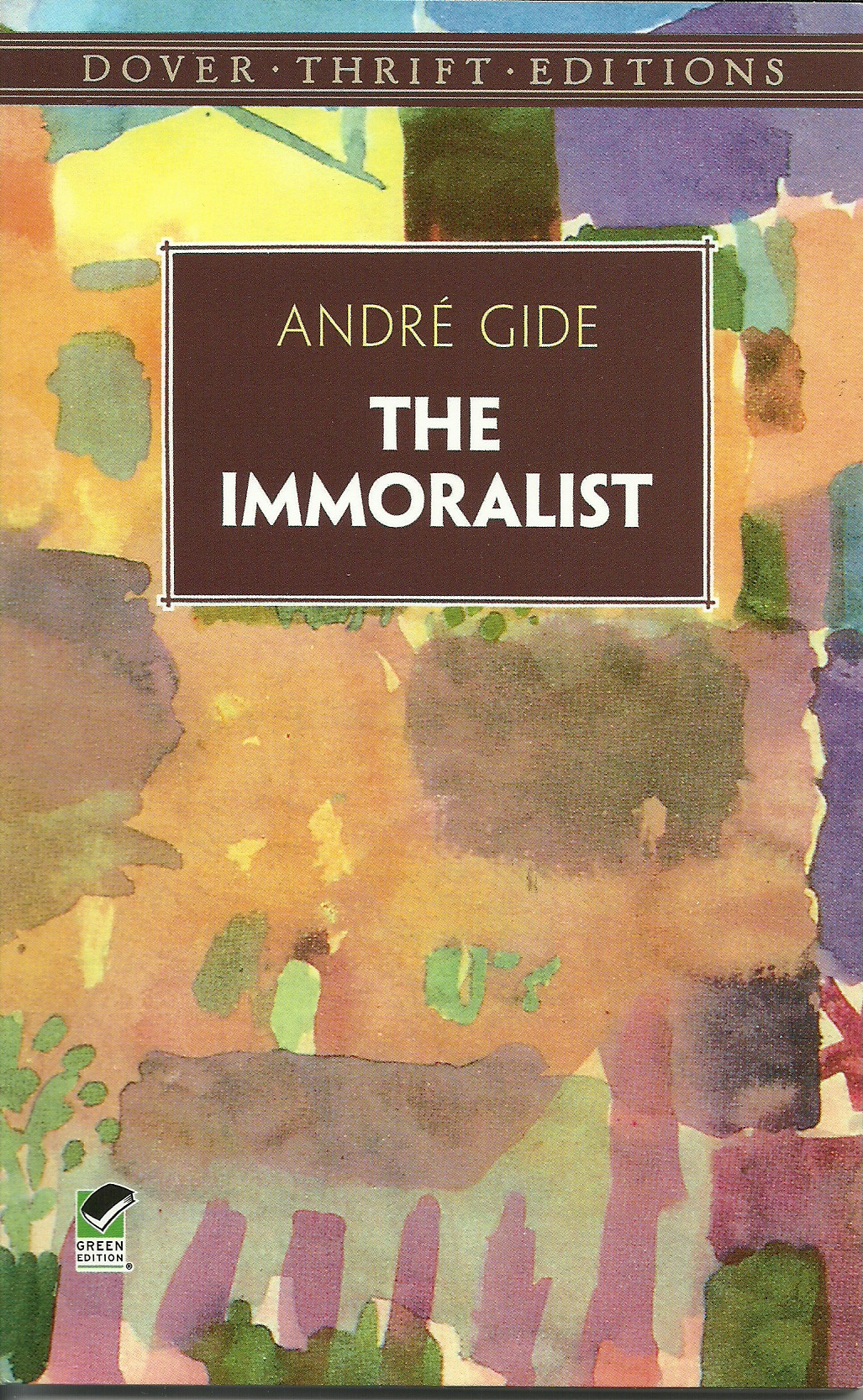
The Immoralist by Andre Gide

The Immoralist ~ A Capsule Book Review by Allen Kopp 

French author André Gide lived from 1869 to 1951. His novel The Immoralist, published in 1902, is one of his most famous and enduring works. Gide was known for his homosexuality, and, not surprisingly, his protagonist in The Immoralist, Michel, is also homosexual, although it is never referred to in those words. (There are no descriptions of sexual activity here, but Michel’s attraction to members of his own sex is repeatedly implied throughout the novel.) Michel is the first-person narrator. He is telling his story to some old friends, not so much to explain himself but to help him to better understand his own nature. He is, after all, a seeker after truth.

Michel seems to be independently wealthy, although he mentions several times about not having enough money. He is some kind of a scholar or philologist but this is never fully explained. He marries a woman named Marceline, who loves him much more than he loves her. They leave their native France and travel to Tunis in Northern Africa (we are never told why Tunis in particular of all the places in the world they might have gone). Michel is entranced by Tunis and particularly by Arab boys, some of whom he pays to stay with him to keep him company. When he realizes he is the early stages of tuberculosis and is spitting blood, he believes he will die. It’s up to Marceline to take care of him the best she can.

After Tunis, Michel and Marceline travel restlessly from place to place in foreign lands. Michel’s health worsens, improves and then worsens again. During one of their happier moments, Michel and Marceline begin sleeping together for the first time. Marceline soon becomes pregnant, but the pregnancy doesn’t go well and she ends up losing the baby. Michel is torn between his tender regard for her and the selfish pursuit of his own ends.

At one point, Michel and Marceline return to France, where he manages some farms that he owns, inherited from his family. He discovers he doesn’t care about the day-to-day running of a farm, which involves dealing with tenant farmers and other mundane tasks. He finds during this time that what he most enjoys is spending time with the “handsome, well-built” young men who work for him. He begins spending all his time with them, while leaving Marceline alone to her own devices.

When Michel decides he no longer likes living on a farm and managing it, he and Marceline begin traveling again in foreign lands. His health has miraculously improved and he wants to pursue pleasure and discover the truth about himself that has for so long eluded him. (While traveling in Sicily, he tells a young carriage driver how beautiful he is and impulsively kisses him.) Michel finds that he prefers “low” people (men), people without breeding and customary “good manners,” to people of his own “class.” They are much more authentic and are not bounded so much by convention and rules of acceptable behavior.

While Michel’s health improves, Marceline’s health declines. As they continue to travel, she becomes sicker and more dependent on Michel. Her failed pregnancy took its toll and she develops tuberculosis that she caught from Michel when she was nursing him back to health. Eventually she dies in a foreign land. We don’t know what happens to Michel after Marceline’s death, but we assume he continues his quest for self-knowledge on his own, or possibly with a male companion he picks up along the way (now that he is no longer burdened with a wife). Will he ever find what he’s looking for? Does he even know what it is?

The Immoralist is a fascinating study of one man’s psyche. If that sounds boring, it isn’t. Gide’s style (translated from French to English, of course) is accessible and easy to read. In the hands of a lesser writer, it could have been ponderous and bloated. On another level, it’s frank for the time in which it was published (1902). It’s impossible to imagine an American novel of this time with the same tone and subject matter.

Copyright © 2015 by Allen Kopp

Marcel Proust ~ A Capsule Book Review

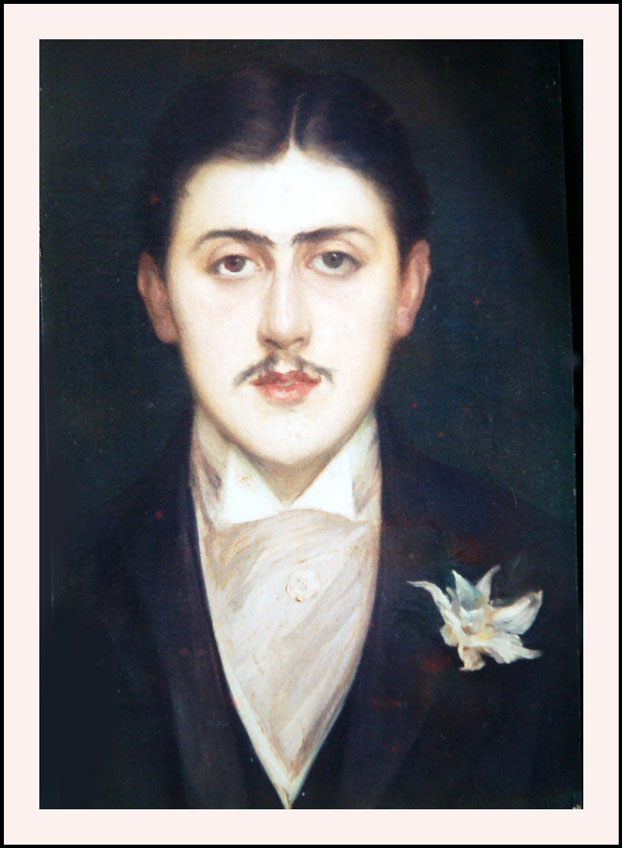
Marcel Proust

Marcel Proust ~ A Capsule Book Review by Allen Kopp 

French author Marcel Proust lived from the Belle Époque (born 1871) to the Roaring Twenties (died 1922.) Of all the writing that he did in his relatively short life, he is best known for his monumental seven-volume novel (approximately 4300 pages), In Search of Lost Time, or, as it has previously been translated, Remembrance of Things Past. Many people believe In Search of Lost Time to be the ultimate in novelistic art and Proust the greatest writer of his time.

Proust didn’t always enjoy such a lofty reputation, however. Early in his writing career he was dismissed as a socialite and a snob, incapable of producing anything of lasting value. He was slight of stature (one hundred pounds), always in poor health from asthma (there were times when he was virtually an invalid); had piercing dark eyes and a small black moustache. His homosexuality (which he took pains to conceal in certain quarters) led him into inappropriate liaisons, often with heterosexual social climbers who used him to get from him what they could.

Unlike other writers of his generation (the so-called “modernists”), Proust’s literary style is one of wordy, flowery sentences and the persistent use of metaphors. He practically invented a new style of writing fiction in which “involuntary memory” and autobiography play a large part. He frequently wrote about male partners with whom he shared dalliances and turned them into female characters in his writing. The “Narrator” of the novel (presumably Proust himself) is a raging heterosexual, even though many of his characters are gay.

Proust had a hard time finding a publisher for the first volume of In Search of Lost Time, which he called Swann’s Way. When it was published in 1913, it was dismissed as long and pointless by some leading critics. It wasn’t until subsequent volumes came out that people came to see it as a groundbreaking literary masterwork. (Apparently one has to read all seven volumes to get the full effect and understand Proust’s vision.) The final volume (volume 7) wasn’t published until 1927, five years after Proust’s death at the age of 51.

Edmund White, who has studied Proust at great length and taught courses about him, wrote this biography, Marcel Proust, for the Penguin Lives series. For the literature student who wants an overview of the life and times of Proust without spending too much time and effort, this book is an excellent choice. Edmund White concludes the book with an analysis of why Proust is even more popular today than ever before. In his words, “Proust is the first contemporary writer of the twentieth century, for he was the first to describe the permanent instability of our times.”

Marcel Proust 2

Copyright © 2015 by Allen Kopp

Virginia Woolf ~ A Capsule Book Review

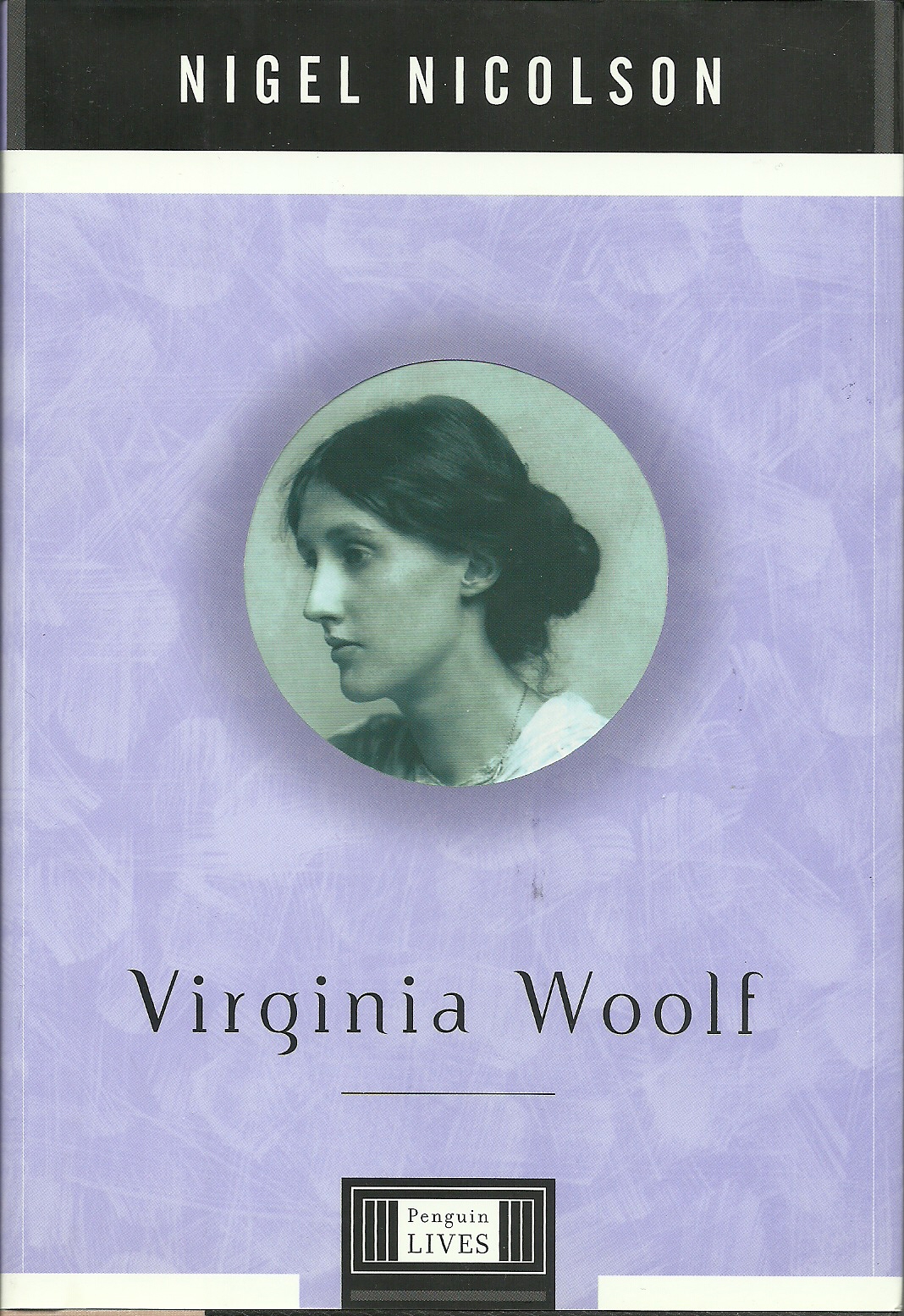
Virginia Woolf

Virginia Woolf ~ A Capsule Book Review by Allen Kopp 

Virginia Woolf (1882-1941) was one of the leading lights of English literature of the twentieth century. Her famous novels include Orlando, Mrs. Dalloway and To the Lighthouse. Edward Albee’s play, Who’s Afraid of Virginia Woolf?, has added to her fame, or at least to her name recognition, even though it has nothing to do with her. She was married to Leonard Woolf, a publisher and writer, from 1912 until her death in 1941. They never had any children.

Besides being a brilliant writer, Virginia Woolf was a feminist (extreme in her views that women had always been held back by men), lecturer (she would spend a year preparing a series of lectures she was going to give), snob (she believed America or Americans had never produced anything of value), pacifist (her lack of patriotism and indifference in World War I were mitigated by her fear of Hitler and the outbreak of World War II), and a lesbian. One of her long-term lesbian lovers was the writer Vita Sackville-West. Vita was married to Harold Nicholson, a writer who was also a homosexual. In spite of their sexual proclivities, Vita and Harold had two sons, Ben and Nigel. Nigel Nicholson was born in 1917 and knew Virginia Woolf when he was a child and she was an adult. (We should assume, I suppose, that he didn’t know the nature of his mother’s relationship with Virginia Woolf until many years later.) Nigel Nicholson wrote this brief (190 pages), engaging biography, Virginia Woolf, for the Penguin Lives series.

During Virginia Woolf’s life, she was as famous for her day-to-day activities as for her writing. She was a leader and outspoken member of the Bloomsbury Group, an aggregation of writers, thinkers and intellectuals whose works and outlook influenced literature, aesthetics, criticism and modern outlooks on pacifism, feminism and sexuality. Members of the Bloomsbury Group were well-known for their love affairs and espoused what later would be called “free love.” The Bloomsbury Group included (among others) writers E. M. Forster and Lytton Strachey and painters Dora Carrington and Virginia’s sister, Vanessa Bell.

What most people today know about Virginia Woolf (thanks, in part, to the novel and movie, The Hours) is that she had “bouts of insanity.” She suffered from a form of mental illness, probably manic depression or bipolar disorder, that could today be controlled by medication. After a number of suicide attempts throughout her life, she drowned herself in the River Ouse near her home in 1941 at the height (for Britain) of World War II, age fifty-nine. Her life and legacy live on in her work.

For students of twentieth century English literature, Virginia Woolf by Nigel Nicholson is a fascinating, easy-to-read overview of the author’s life and times. Nigel Nicholson has the added advantage of having known Virginia Woolf firsthand and says in 190 pages what other writers would say in 500.

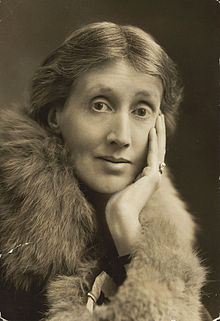
Virginia Woolf in 1927

Copyright © 2015 by Allen Kopp  

Shirley ~ A Capsule Book Review

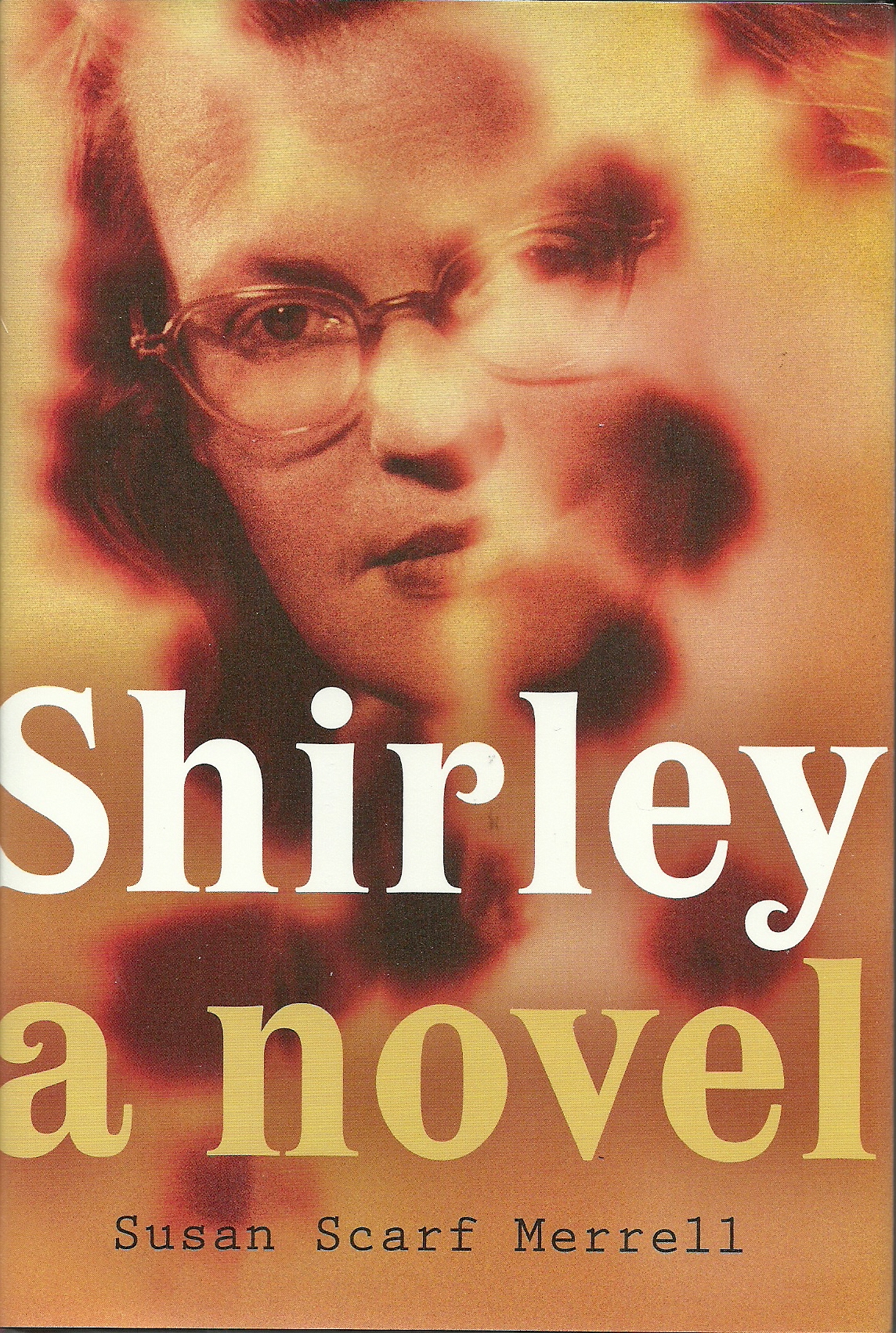
Shirley

Shirley ~ A Capsule Book Review by Allen Kopp 

Shirley is an odd little novel by a writer named Susan Scarf Merrell about the celebrated American writer Shirley Jackson, who was born in 1916 and died in her sleep of apparently undiagnosed heart disease in 1965 at the age of 48. Shirley Jackson is known today mostly for her short stories (of which my favorite is The Daemon Lover), but she also wrote a handful of novels. She was an eccentric, as writers or artists very often are, and was married to the literary critic Stanley Edgar Hyman, who was a professor at Bennington College in Vermont. He and Shirley Jackson had four children and lived near the Bennington campus.

Entering the odd world of Shirley Jackson, her husband and family is the fictional character, Rose Nemser. Rose is the first-person narrator of Shirley. Her husband, Fred, is a protégé of Shirley Jackson’s husband, Stanley Hyman. Rose and Fred have sort of been adopted by Shirley Jackson and her husband and live with the family in their large house. Fred has a job teaching at Bennington College with Stanley. Rose and Fred have an infant daughter, Natalie.

Rose is very young, has literary aspirations of her own, and is awed to be in the household with the celebrated writer Shirley Jackson and her not-quite-as-celebrated husband. Rose helps out with the housework and the cooking and becomes a confidante and friend of Shirley Jackson. Rose also comes to understand the strange marriage that is Shirley and Stanley’s. Shirley is a large woman, unattractive and bespectacled. Stanley is exposed every day to willing young college girls who adore their professors, no matter how unattractive they are. That Stanley is cheating on Shirley is understood, even by Shirley. (“He’s a magician of the loins,” Shirley says.) In a scene reminiscent of the movie, Terms of Endearment, Rose discovers that her own husband is also cheating with a female student.

Hanging over the Jackson-Hyman household (for Rose, anyway) is the unsolved murder of a Bennington college student from years earlier, one Paula Welden, who was lost in the Vermont mountains and was never seen again. Rose comes to believe that Paula Welden was one of Stanley’s extramarital dalliances and that Shirley, in a fit of jealousy, might have done away with her. Of course, we never know for sure.

Shirley is an interesting (though speculative) account of Shirley Jackson’s private life. We come to see Shirley Jackson as a real person, rather than just a shadowy literary figure. People who have an interest in Shirley Jackson or her work will find the book intriguing. About ninety-nine percent of other people, though, will know she’s not Jennifer Lopez and will say: “Who the hell is Shirley Jackson?” Not everybody majored in English.

Copyright © 2015 by Allen Kopp

A Brief History of Time ~ A Capsule Book Review

A Brief History of Time

A Brief History of Time ~ A Capsule Book Review by Allen Kopp 

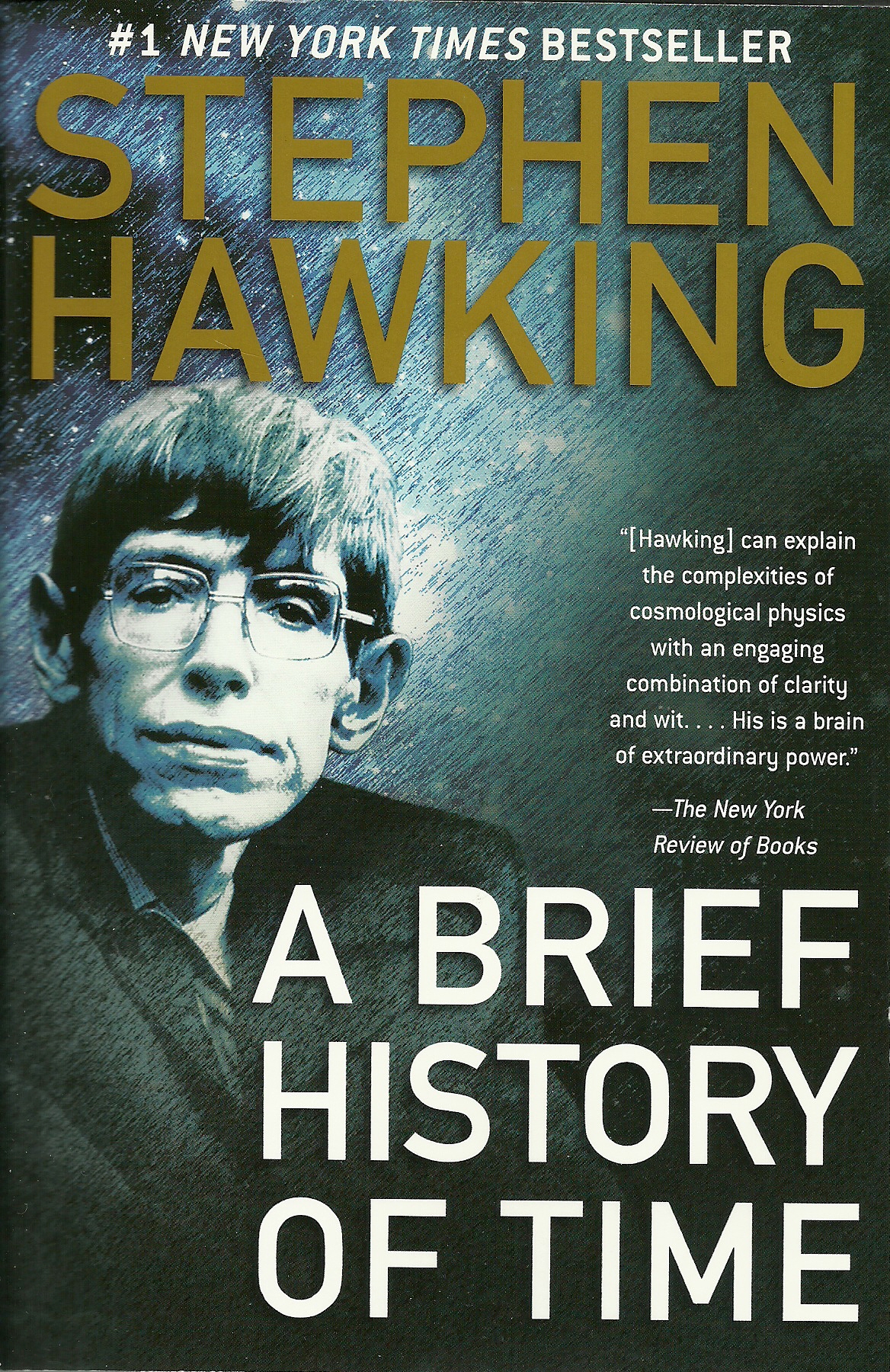
Did the universe have a beginning and, if so, will it have an end? Is the universe infinite, or is it curved around in on itself so that it appears to be infinite when it is, in fact, finite? What role does gravity play in the universe? Is the universe expanding or contracting? What are black holes and what causes them? What are worm holes? What is man’s place in the universe and how did he come into existence? Why are certain locations in the universe suitable for advanced life, such as man, and other places unsuitable? Is the universe what it is just so man can observe it and ask questions about it? (This would imply the existence of an intelligent creator.) What does Einstein’s general theory of relativity tell us? What is the uncertainly principle? What are quantum mechanics and how do they affect the study of the universe? What is a quark? A proton? A neutron? Of what is light composed? It is possible to travel faster than light? Is time travel ever going to be a reality? These and many other weighty questions are addressed by Stephen Hawking in his book, A Brief History of Time.

I don’t ordinarily read science books but was compelled to read A Brief History of Time after seeing the movie about Stephen Hawking’s life, The Theory of Everything. It’s written in clear, concise English (not overly wordy, as is the usual academic style), obviously aimed toward the reader who isn’t scientific and who doesn’t ordinarily read books on scientific subjects. While I can’t say I always understood what I was reading, I was sufficiently interested to keep going through to the end. I learned a few things I didn’t know before, not the least of which is the universe is a lot more complicated than people thought. With technological advances, new theories are being formulated all the time to understand the universe better. Maybe someday man will know the mind of God, or at least a part of it.

Copyright © 2015 by Allen Kopp

Kim ~ A Capsule Book Review

Kim by Rudyard Kipling

Kim ~ A Capsule Book Review by Allen Kopp 

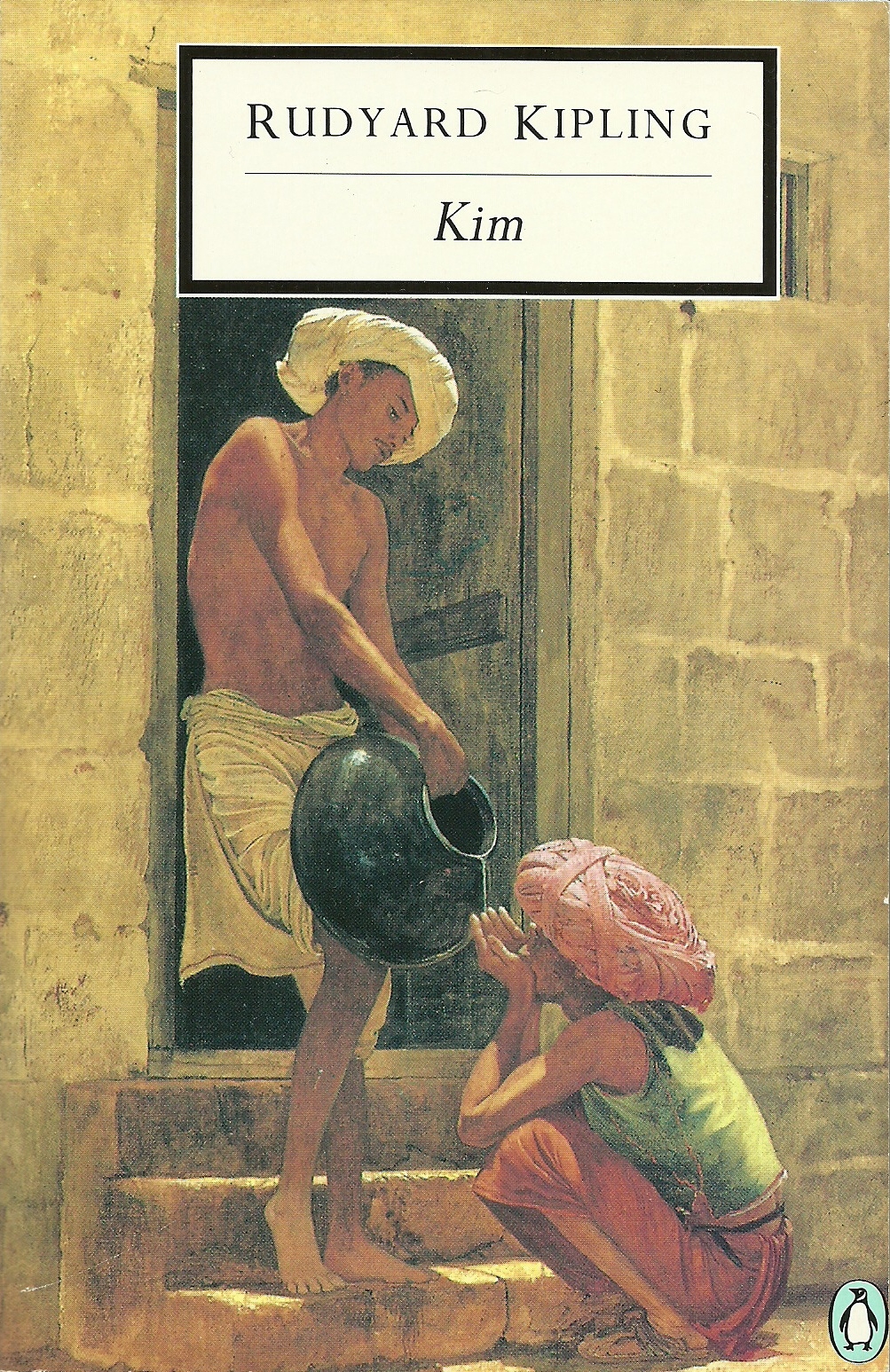
Rudyard Kipling’s novel about India, Kim, was first published in 1901. Its principal character is an orphaned Irish boy, Kimball “Kim” O’Hara. At the beginning of the book, Kim is twelve years old. He dresses like a native and can speak Hindi, so he can go anywhere, blend in, and be accepted as one who belongs. When he meets a traveling Tibetan lama, an old man looking for a sacred river that was supposedly formed when the Buddha shot an arrow, he decides to travel with the lama as his chela. This friendship between Kim and the lama is one of the enduring “male-bonding” friendships in English literature.

Kim and the lama travel throughout India, intermingling with the many ethnic and religious groups. When they come upon (apparently by accident) the army regiment that Kim’s father belonged to, Kim meets Colonel Creighton. When Colonel Creighton sees how smart and resourceful Kim is and how he is able to blend into any part of India, he trains Kim as a British spy and mapmaker. There are secret plans afoot for a war to begin and Kim can assist by ferreting out information in the unlikeliest of places. It turns out that Kim’s friend Mahbub Ali, besides being a horse trader and a sort of father figure to Kim, is also a member of the British Indian Secret Service.

Kim spends three years in an English-run boarding school (that the lama pays for), where he learns English customs and ways. All the rest of the time he continues to bum around with the lama. The book ends five years after it begins, in the hills of Tibet, with Kim on the verge of manhood and the lama achieving the kind of spiritual enlightenment he always wanted.

Kim is not an easy book to read. Since it is a picaresque, it has hardly any plot or “story” to speak of and very little emotional resonance. It is mostly a set of characters moving around from place to place, speaking in “thee” and “thou” language, and having “adventures” that hardly seem relevant or fitting into any kind of cohesive whole. Maybe Kipling fancied himself inventing a new kind of storytelling with this novel, his most famous work.

The Penguin Twentieth-Century Classics version that I read has a forty-page “introduction” that is dry, academic and completely unnecessary. I read the whole thing, but it is painful reading. Adding to my problems with Kim is the heavily footnoted text. Almost every page has multiple footnotes and, instead of the footnotes being at the bottom of each page (which I would have found helpful), they are all gathered in a special section at the back of the book. So, if you are reading every word, you will find yourself having to flip through the pages to the back of the book far too often. To make matters worse, many of the footnotes are explaining obscure place names in India that don’t matter and aren’t essential to what is going on. As soon as you read them, you will forget them.

If Kim is a “juvenile classic” (because the main character is a child), I can’t imagine school kids voluntarily reading and enjoying it. This adult barely made it through the entire 300 pages. If I had tried to read it in eighth or ninth grade, I wouldn’t have made it through the first chapter and would have been begging to read something else instead, just as long as it wasn’t Moby Dick or Little Women.

Copyright © 2014 by Allen Kopp

Tarzan of the Apes ~ A Capsule Book Review

1914 First Edition Cover

Tarzan of the Apes by Edgar Rice Burroughs ~ A Capsule Book Review by Allen Kopp 

Tarzan of the Apes, by American writer Edgar Rice Burroughs, was first published in All-Story Magazine in 1912 and in book form in 1914. The book proved so popular that Burroughs wrote more than twenty sequels over the next thirty years. The first movie version of the novel was in 1918, with many others following. It was during the 1930s, however, that Tarzan became a genuine movie icon. The movies made the story of the jungle ape man much more famous and popular than it would otherwise have been.

As the book begins, John Clayton and his wife, Anne (Lord and Lady Greystoke) have set out from England for Africa. John Clayton is going to assume a post in Africa for the British government. Things do not turn out well for them, however. The crew of the ship they are on mutinies, kills the officers, and puts John Clayton and his wife ashore in an isolated and remote part of Africa where they have very little chance of surviving. Anne is going to have a baby, but that is the least of the couple’s worries. They set about building a small cabin in the jungle where they can keep themselves safe from jungle predators.

Anne delivers herself of the baby, but she and her husband soon die, leaving the baby alone. The baby would also die if a female ape named Kala, who had recently lost her own baby, hadn’t come across him and adopted him as her own. Kala belongs to a tribe of apes that are described as being somewhere between gorillas and man on the evolutionary scale. They are brutal and vicious predators, but Kala takes care of and protects the baby until he grows to about ten years of age, at which time she is herself killed. The apes name the boy Tarzan, which means “white skin.”

Tarzan soon discovers that he is not like the other apes. The most striking difference is that he isn’t covered with fur. As he grows into manhood, he begins to display the best of both worlds: the cunning and intelligence of a man and the strength and agility of a jungle predator. He swings from tree to tree, from branch to branch, with ease, apparently defying gravity. When he is hungry, he kills a jungle animal and eats it raw. Eventually he comes across the little cabin that his father built (not knowing, of course, that it was his father) and discovers the books that belonged to his parents. Their skeletal remains are, in fact, inside the cabin.

With much painstaking effort, Tarzan teaches himself to read English from the books in the cabin without ever having heard it spoken. He gradually puts the pieces together to learn the truth about himself, that he is descended from an English Lord and is an English Lord himself, Lord Greystoke, but it doesn’t matter to him. He is still Tarzan, king of the apes.

When Tarzan is at the height of his muscularity and physical beauty, a small band of white people find themselves in his jungle. (Included in this group is, ironically, Tarzan’s cousin, William Clayton.) The whites are lost and abandoned, in much the same way that Tarzan’s parents were, and, finding Tarzan’s cabin, use it as their own.

Among these white people is one Jane Porter, an American girl traveling with her professor father. She is the first white woman Tarzan has ever seen and he falls in love with her. He becomes the benefactor and protector of all the whites, but he is really doing it for Jane. When he rescues her, they have a romantic interlude in the jungle. The jungle adventure at this point turns into a love story.

Tarzan rescues one of the party of whites, the Frenchman Paul D’Arnot, from torture by cannibals. D’Arnot and Tarzan are then separated from the others for an extended period of time as Tarzan nurses D’Arnot back to health. During this time, Tarzan learns much more about civilization from D’Arnot and learns to speak French.

When D’Arnot is well enough, he and Tarzan make their way back to the camp of the whites, but they have gone way. They waited one week longer for the return of Tarzan and D’Arnot at the urging of Jane Porter, but, alas, they finally go away, believing that Tarzan and D’Arnot are probably dead.

Becoming more and more familiar with the ways of civilization, Tarzan, along with D’Arnot, make their way back to civilization and eventually to America, where Tarzan wants to claim Jane Porter as his own, only to discover that she has agreed to marry his cousin, William Clayton. We learn that she is marrying Clayton only for money to help her father, when it’s Tarzan she really loves.

Tarzan of the Apes is written simply, obviously for a youth audience, but it is engaging enough for an adult audience. If it lacks the depth and nuance of great literature, it still has literary merit. That it is still in print and still being read after a hundred years says a lot.

Copyright © 2014 by Allen Kopp

The Spoils of Poynton ~ A Capsule Book Review

The Spoils of Poynton cover

The Spoils of Poynton by Henry James ~ A Capsule Book Review by Allen Kopp 

Henry James was an American writer who lived from 1843 to 1916. If he seems more an English writer than American, that’s because he did most of his work while living in England and, late in his life, gave up his American citizenship and became a British subject. He wrote about twenty novels, the most famous of which are The Golden Bowl, Wings of the Dove, and Portrait of a Lady. He is one of the key figures of nineteenth century literary realism.

The Spoils of Poynton is a short (for Henry James) novel first published in 1897 that touches on the themes of greed, friendship, the nature of love and the strength of familial connections. Mrs. Gereth is a headstrong widow who lives on her estate called Poynton. Poynton is filled with “treasures” (these are the “spoils” of Poynton) that Mrs. Gereth and her late husband collected, including furnishings, tapestries, old china, paintings, object d’arts, etc. According to a silly and unfair English law, all the things in Poynton (including the house and estate) belong (upon the death of Mrs. Gereth’s husband) to her son, Owen. Owen can do as he pleases with his mother. He can put her out of the house of he wants to. He is under no legal obligation to her.

Owen is engaged to be married to one Mona Brigstock, whom Mrs. Gereth, his mother, loathes. Mrs. Gereth can’t stand to see Mona installed in Poynton with all the “things” that she considers her own. She would do almost anything to keep Owen from marrying Mona. This is where Fleda Vetch enters the picture. She is a friend of Mrs. Gereth’s and Mrs. Gereth’s choice for Owen to marry instead of Mona. After Owen and Fleda meet a few times, they admit they have “feelings” for each other. Could it be love?

Mrs. Gereth moves out of Poynton at the prospect of her son’s marriage to Mona and takes up residence in a place called “Ricks.” Ricks is all right in its own way but far inferior to Poynton. To mollify his mother, Owen tells her she may have a few (a dozen or so) of her favorite pieces from Poynton. She surprises everybody by taking literally everything. Owen is outraged and threatens legal action. (Apparently the desire for earthly possessions is more important than the mother-son bond.) Mona tells Owen the marriage is off until the things are returned to Poynton. She wants to marry Owen, it seems, only if Poynton and everything in it are part of the bargain.

Mrs. Gereth’s friend, Fleda Vetch, is faced with a dilemma. She loves Owen and he apparently loves her, but she believes it would be improper for her to take him away from Mona. The only way she will get Owen herself is if Mona chooses to break off with him. Owen believes it his duty to follow through on his marriage to Mona, even though he seems at times to prefer Fleda. Which way will he go? Will Mona tell him she no longer wants to marry him? What will happen to the “spoils” of Poynton?

Somebody once said that Henry James could find more drama in a raised eyebrow than most people could find in an earthquake. The Spoils of Poynton is a simple and engaging story told in Henry James’s inimitable grand literary style. If a thing could be said in five hundred words, he will more than likely use five thousand. Let’s see…how many ways are there to say the same thing?

Copyright © 2014 by Allen Kopp

Absalom, Absalom ~ A Capsule Book Review

1936 first edition cover

Absalom, Absalom by William Faulkner~ A Capsule Book Review by Allen Kopp 

William Faulkner (1897-1962) is arguably the best American novelist of the twentieth century, the supreme literary stylist. His works are deep, cerebral, rich and complex. His style is dense, sometimes fragmented, wordy and difficult to read. He has the longest sentences and the longest paragraphs of any other writer. If you are trying to follow the thread of a sentence, you might have to go back and break it down into its many parts to figure out exactly what is being said. If reading a novel by Faulkner is frustrating and tedious at times (a painful slog), you must also know that it is worth the effort or you wouldn’t be doing it.

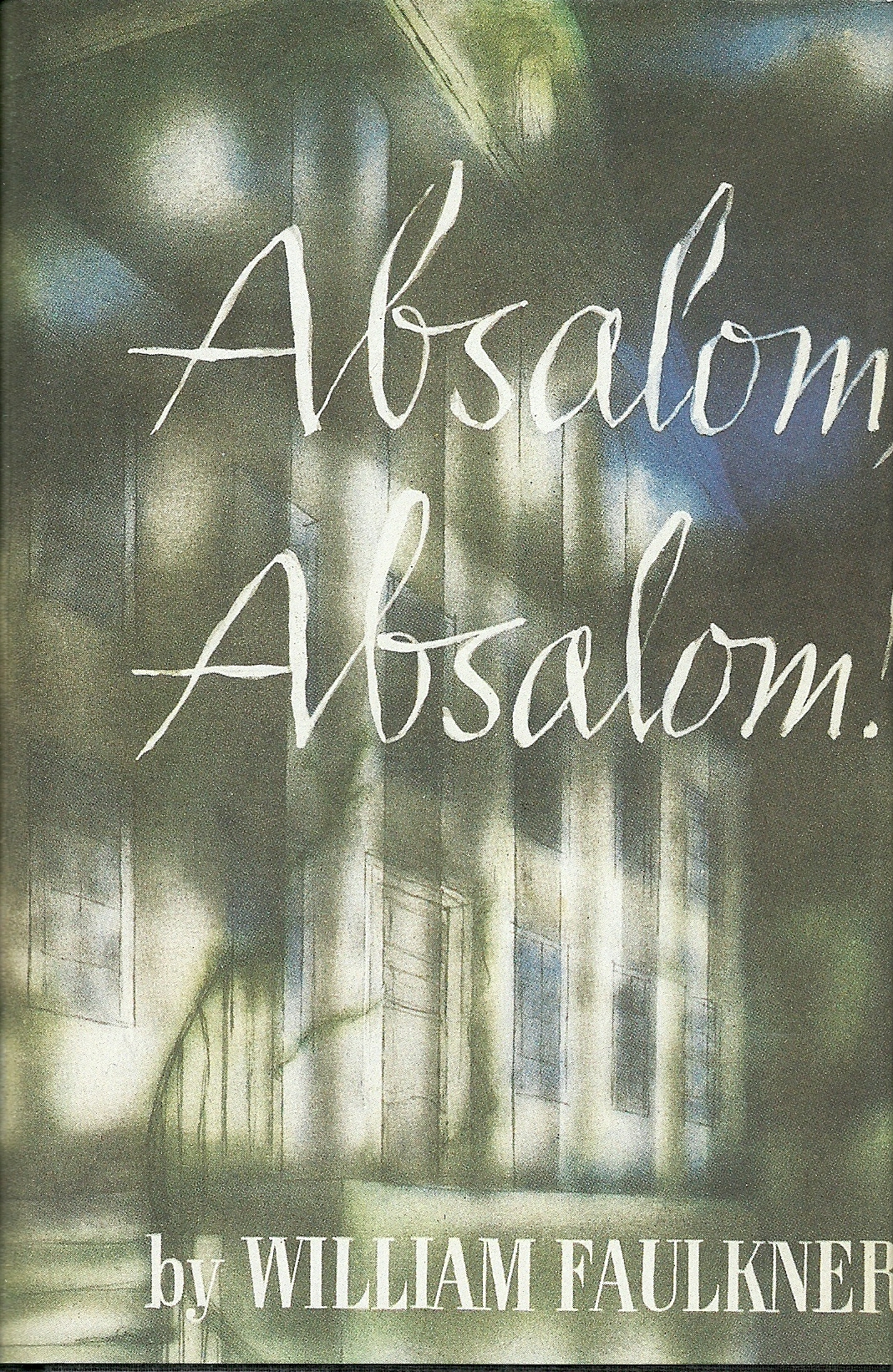
When I first started reading Faulkner’s 1936 novel, Absalom, Absalom, I found the first chapter (told in the voice of Miss Rosa Coldfield in 1909 when she is 64 years old) so difficult that I almost gave up. If you are able to make it through the first chapter, however, the following chapters are easier. Not easy, but not quite as difficult. (There’s no linear structure to the novel.)

Absalom, Absalom is the multilayered family saga of the Sutpen and Coldfield families in the American South in the decades leading up to the Civil War. Thomas Sutpen confounds the town of Jefferson, Mississippi—and particularly the Coldfield family—when he comes from nowhere and acquires a huge tract of land, called the Sutpen Hundred (square miles, not acres), and builds an enormous house on the edge of a swamp with the help of his band of wild black men and a French architect, who he more or less treats as a captive.

For years after the house is built, Thomas Sutpen entertains a band of his male friends with wild hunting and drinking parties and wrestling matches, until the day arrives when he decides he wants to acquire respectability in the form of a wife and children. He drives away his male friends and proposes to a town girl named Ellen Coldfield. (Faulkner compares her throughout the novel to a butterfly.)

To the unlikely union between Thomas Sutpen and Ellen Coldfield are born Henry and Judith. (Thomas Sutpen also has a half-black daughter named Clytemnestra, or “Clytie,” that he had with a slave woman.) Ellen Coldfield has a sister, Miss Rosa Coldfield, who is twenty-seven years younger than she is (younger than her own children). The first part of the story is being told by the elderly Rosa Coldfield to Quentin Compson, whose grandfather was the best friend of Thomas Sutpen. The part that Rosa Coldfield plays in the novel is more of an observer than active participant in what is going on.

When Henry Sutpen is grown (or almost grown), he goes away to college in Oxford, Mississippi. There he meets and becomes good friends with one Charles Bon. Charles is older and more worldly-wise and sophisticated than Henry. (Henry is clearly infatuated with Charles Bon. Faulkner later suggests more than just simple friendship between the two, especially on Henry’s part.) When Henry writes home about Charles Bon, his mother immediately sees Charles as a likely husband for Judith. Charles visits the Sutpen home with Henry on more than one occasion. His interest in Judith seems perfunctory. Will he propose to her or won’t he? We learn later a dark secret about Charles Bon, which I won’t reveal here, and that his association with the Sutpen family is part of an elaborate scheme of revenge. This element of the story drives the narrative for much of the second half of the novel.

The Civil War obtrudes upon the lives of the characters. The three principal male characters (Thomas Sutpen, Henry Sutpen, Charles Bon) all find themselves in battle. (Thomas Sutpen achieves the rank of colonel.) The war, of course, doesn’t turn out the way many Southerners hoped it would or expected it would. (Faulkner points out that the Southern army had the highest mortality rate of any army in history.) The men who survive, defeated not only in war but also in spirit, return home starving and in tatters to discover that everything they loved or cared about has been swept away. It is this defeat that is subtext to everything else.

Absalom, Absalom (the name derives from a character in the Bible) is a dark story, full of revenge, incest (or almost incest), miscegenation, family secrets, hubris, intentions gone awry, class distinction, loss and suffering. There’s no redemption for anybody, no life-affirming conclusion. Nobody writes about these things (or about the South) the way Faulkner does. 

Copyright © 2014 by Allen Kopp

A Journal of the Plague Year ~ A Capsule Book Review

A Journal of the Plague Year cover

A Journal of the Plague Year ~ A Capsule Book Review by Allen Kopp

English author Daniel Defoe (1660-1731) was a literary late bloomer. He wrote his three famous novels (Robinson Crusoe, Moll Flanders and A Journal of the Plague Year) after the age of sixty. A Journal of the Plague Year was first published in 1722 and is an account of the London plague epidemic in 1665, when Defoe was only five years old.

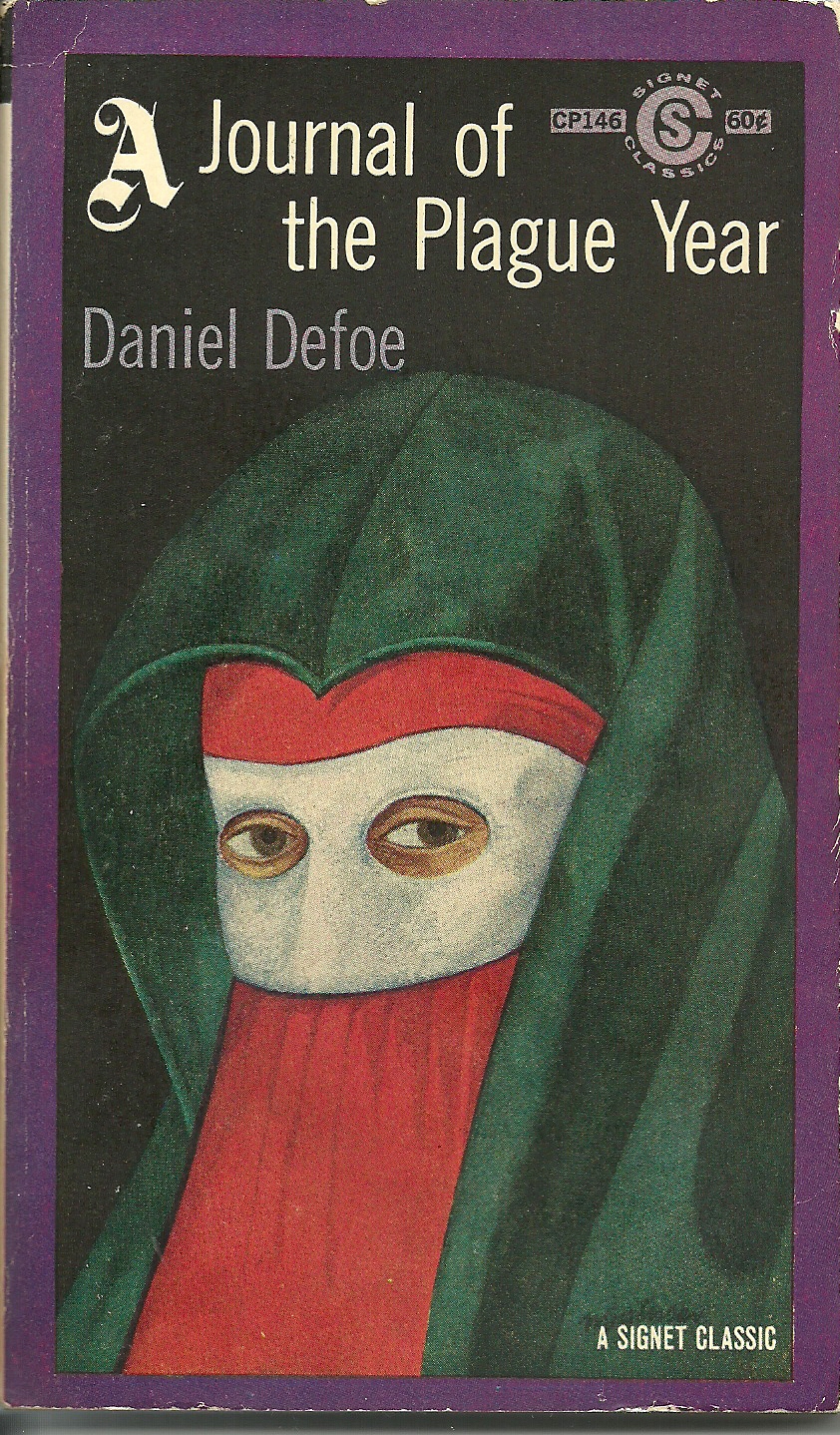
A Journal of the Plague Year is fiction but is told in first person, as if the narrator is there at the time of the epidemic. The fictional narrator doesn’t leave London when he has the chance when the plague starts, as many sensible people do, but stays behind. He is spared the infection but witnesses firsthand the horrors of the epidemic and lives to tell about them. Defoe supposedly drew on the journals of his uncle, one Henry Foe, in writing the novel. That is obviously what gives the story its sense of authenticity and immediacy.

People can have the plague and not even know it, so are spreading it to everybody they come into contact with. Is it airborne or does it come about only through contact with an infected person? In 1665, nobody seemed to know for sure. Those who have someplace to go outside the city leave before the epidemic takes hold. It’s mostly the poor people who have to stay behind, so they are the principal victims.

So many people are dying during the height of the epidemic that the niceties of burying the dead in coffins are dispensed with. With a thousand or more people dying a day, “dead-carts” are dispatched to round up the dead and dump them into a huge pit. The only requirement for the pits is that the dead be buried at least six feet deep. As the lucky people who collect the bodies sicken and die themselves, new people have to be found all the time to fill the job. (It sounds even worse than a job as a technical writer for a restaurant chain.)

As with any human tragedy, there are stories of heroism and sacrifice along with the stories of opportunism and charlatanism. Quack doctors prey on the poor and uneducated, selling them fake “medicines” that are supposed to be a surefire remedy against the plague. Houses of the sick are ransacked by thieves. Unscrupulous “nurses” murder the sick people they have been hired to care for. Infected people willingly spread the disease to those they know are uninfected. On the other hand, caring people risk their own lives to stay behind and care for the sick in the “pest houses.” Charities are set up that provide food and necessities to the poor to see them through the epidemic.

There isn’t much plot or story to A Journal of the Plague Year, but that doesn’t mean it’s dull reading. A plague epidemic in a large seventeenth-century city is dramatic enough without much embellishment. Once you get used to the old style of sentence structure, it’s a fascinating reading experience. I bought a paperback of the novel when I was in college for sixty cents (new, not used—so you know how long ago that was). I read a hundred or so pages of the novel back then but for some reason didn’t finish it. That’s why I undertook to read the entire book (a breezy 240 pages) this summer, and I’m glad I did.

Copyright © 2014 by Allen Kopp