The School on Heart’s Content Road ~ A Capsule Book Review

The School on Heart Content's Road cover

The School on Heart’s Content Road ~ A Capsule Book Review by Allen Kopp

I first became a fan of Carolyn Chute when I read her novel The Beans of Egypt, Maine many years ago. Then Letourneau’s Used Auto Parts, Merry Men and Snow Man. Her most recent book (not that she’s published but that that I’ve read) is The School on Heart’s Content Road. She has another book out, Treat Us Like Dogs and We Become Wolves (just out in 2014) that I haven’t yet read but that I intend to read as soon as I’m ready to tackle another 700-page novel. (The Goldfinch by Donna Tartt, last year’s Pulitzer Prize winner, is 769 pages.)

The thing about Carolyn Chute is that she’s not like other writers. Nothing bores me any faster than stories of yuppie angst and heartbreak (multiple marriages, affairs, fears about growing old, screwed-up kids because their parents are screwed up, blah, blah, blah). Carolyn Chute writes about the other end of the spectrum: people on the fringe, the dispossessed, the poor, illiterate (what’s called in the South white trash but is called something else in Maine where her books are set). These people are fascinating, and in The School on Heart’s Content Road we have a whole assemblage of fascinating characters. Characters who are much more concerned about survival than about their stock portfolios or what wines to have for dinner or what college two-year-old Muffy will apply to when the time comes.

The School on Heart’s Content Road is set, for some reason, in the year 2000. It is not about a school but instead centers around four characters: Michael (known as “Mickey”) Gammon, Jane Miranda Meserve, Richard York (likes to be called “Rex;” his mother calls him “Ricky”) and Guillaume (known as “Gordon”) St. Onge.

Fifteen-year-old Mickey Gammon smells bad (he doesn’t bathe) and he can’t read, even though he goes to school (or seems to). He lives with his half-brother Donnie Locke and Donnie’s family. Donnie works in an unidentified “chain” (like Wal-Mart) store and is understandably unhappy. He and his wife Erika have a sick child, Jesse, who is bound to die with cancer, whether he has treatments or not. They hardly have enough money for pain medicine for the sick child. Also living with them are Mickey and Donnie’s mother, Britta (she has three kids by three different men, none of whom she was ever married to), their younger sister, Elizabeth, and several of Donnie’s kids from a previous marriage (referred to throughout the novel as the “girl gang”). Donnie throws Mickey out of the house. (“You can’t live here anymore,” he says.) Mickey lives for a while in a tree house with Maine winter setting in. He begins spending time with Rex York, a fifty-year-old Vietnam veteran who has a military bearing and a soldierly attitude toward life (he doesn’t eat desserts and maintains his trim body with exercise). Rex is head of the True Maine Militia. This is a “separatist” group that doesn’t trust the government (with good reason) and will use force if necessary to “take back” (with plenty of guns and ammo) the country that they believe was stolen from them by greedy politicians and an even greedier corporate structure that “steals from them and tries to sell back what they have stolen.” They are a fringe group and have been much maligned by the mainstream media, whose job it is to stir up fear in the public imagination against them.

Gordon St. Onge is about ten years younger than Rex York, but they have known each other since they were young. (They consider themselves almost brothers.) Gordon is called (among other things) the “Prophet,” because he is a head of the “Settlement,” a sort of commune/co-op where a bunch of people live and work. Gordon is charismatic and is loved by most of the people who know him and feared by many because he has a lot of (not legal) wives and many children by those wives. It seems that nothing disturbs the public as much as the thought of “polygamy” and a “cult” in which young girls are made to have “relations” with much older men (it isn’t like that in the Settlement). Life seems to be pretty harmonious in the Settlement and the people living there are happy. Still, though, there is the idea that they will overthrow the government in an ugly way if (and when) they have the chance, or possibly even try to secede from the Union. For this reason they are disliked and feared.

Jane Meserve is a six-and-a-half-year-old, half-black girl (her father was a black musician with whom Jane’s mother, Lisa Meserve, had one encounter) who is suddenly left without a mother when Lisa is hauled off to jail on a drug charge. When Jane is wearing her heart-shaped, white-framed glasses that allow her to observe things that others can’t see, she is secret agent Jane, adding a lighter touch to the proceedings. She is a wry observer of everything going on around her, smart and clever beyond her years. She and her mother serve to illustrate how unfair and brutal police are (can be) to poor, powerless people. When her mother goes to jail, apparently forever, Jane is taken in by a Settlement family.

The School on Heart’s Content Road is always engaging reading. The “set piece” of the novel, toward the end, is a long, long (too long) sequence about an open house kind of event at the Settlement where everybody is invited. Hundreds of people show up; there are music, food and drinking. When Gordon speaks, he works the crowd up into a frenzy with his rhetoric about taking back the country and not standing for the government’s lies and double-dealing anymore. There are federal agents everywhere, and word has been circulated that somebody is going to try to kill Gordon. We know something is going to happen but we don’t know what until it happens. It’s not what we expected.

If you are a reader of “serious” fiction (as opposed to a reader of Harold Robbins or Jacqueline Susann), you will like The School on Heart’s Content Road. If it was a movie, it would play at art houses instead of at your neighborhood multiplex where they have Ant Man and Jurassic World and all the latest rom-coms. Some of us just want more out of life and we’ll do whatever we have to do to get it.

Copyright © 2015 by Allen Kopp
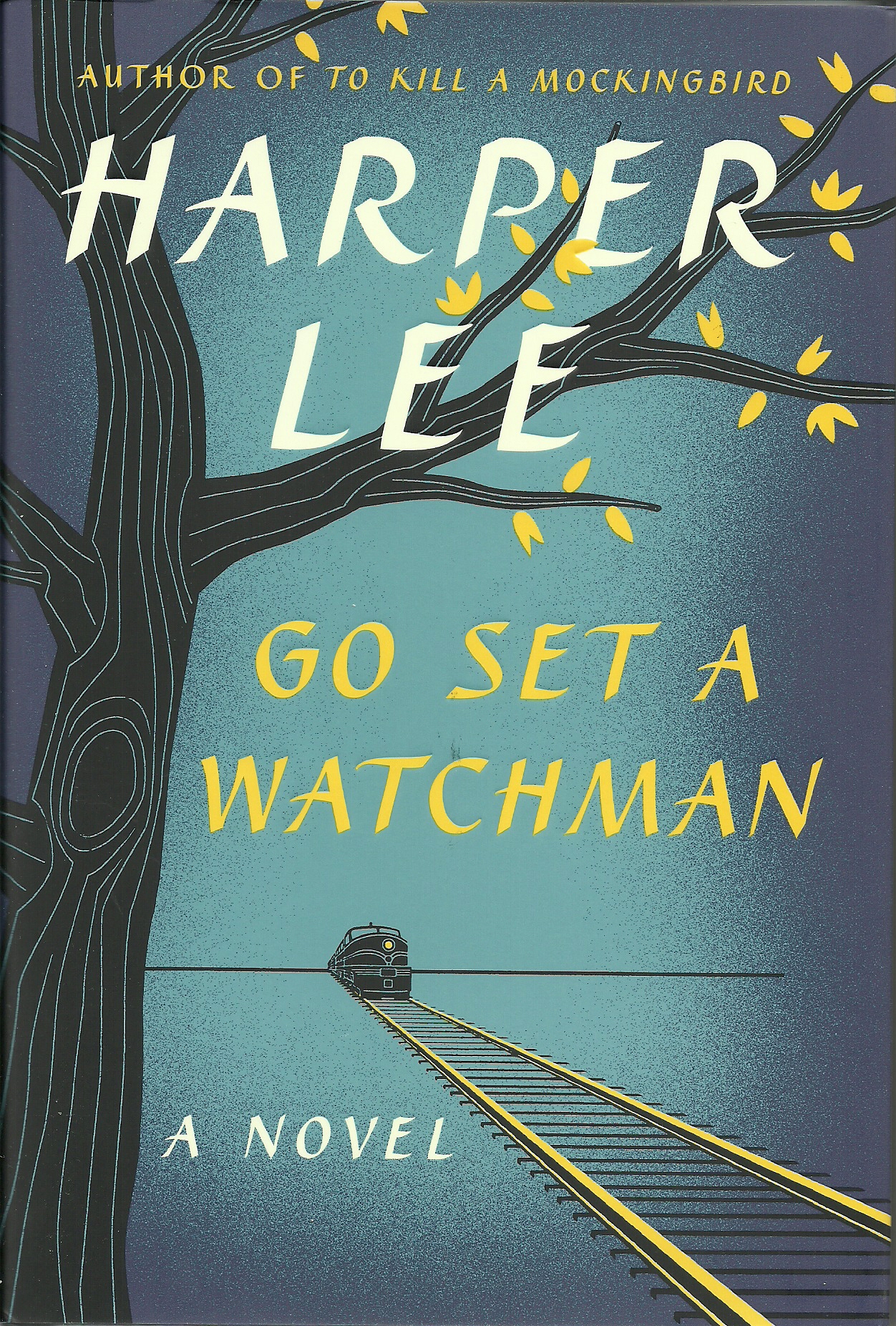
Go Set a Watchman ~ A Capsule Book Review

Go Set a Watchman cover

Go Set a Watchman ~ A Capsule Book Review by Allen Kopp

Harper Lee is famous for writing To Kill a Mockingbird but also for something else: she was friend and confidante to Truman Capote and has been portrayed by not one but two Hollywood actresses in movies about Capote and his writing of In Cold Blood. Truman Capote and Harper Lee were childhood companions in the tiny town of Monroeville, Alabama and remained friends until his death in 1984. While Capote became as famous for his eccentricities (his appearances on The Tonight Show) and his partying lifestyle as he was for the books he wrote, Harper Lee eschewed the limelight and has been, like other writers of her generation, notoriously reclusive. At age 89, she still lives in the tiny town of Monroeville, Alabama. You get the impression that fame hasn’t changed her very much.

With the phenomenal success of To Kill A Mockingbird and the equally famous movie that followed the publication of the novel, Harper Lee might have “cashed in” on her fame; she might have written other books or a sequel, but she didn’t. In the foreword to the thirtieth anniversary printing of her famous novel, she said simply that she didn’t have anything else she wanted to say. It doesn’t happen very often, especially when there’s money to be made.

Now, oddly enough, all these years later, in the futuristic year of 2015 (it would have seemed so in 1960), a new Harper Lee book has emerged, Go Set a Watchman. The title is from a passage in the Book of Isaiah: For thus hath the Lord said unto me, Go, set a watchman, let him declare what he seeth. Every man’s island, the book tells us, every man’s watchman, is his conscience.

At first glance, Go Set a Watchman seems to be a sequel to To Kill a Mockingbird because it’s set twenty years after the earlier novel, but Harper Lee didn’t intend it as a sequel. It is, we are told, a first draft of To Kill a Mockingbird. It was apparently shelved for a different version and hasn’t seen the light of day until now. The publisher, HarperCollins, must have recognized the enormous amount of interest (and the cash potential) in a new book by Harper Lee, even if it is a book written sixty years ago.

The girl in To Kill a Mockingbird, Jean Louise “Scout” Finch, is an adult in Go Set a Watchman. When she is twenty-six, on her yearly summer visit to her hometown of Maycomb, Alabama, she witnesses many changes. Her father, seventy-two-year-old Atticus Finch (the hero of To Kill a Mockingbird) suffers from debilitating arthritis and is not as vigorous as he once was. Calpurnia, the black maid who kept house for him for many years, is too old to work anymore and has been replaced by Alexandra, Atticus’s bossy sister. Calpurnia’s grandson is in trouble for running down in his car (and killing) a drunken white man. Jeremy (known as “Jem”), Jean Louise’s older brother, has succumbed at an early age to the hereditary heart condition that claimed his and Jean Louise’s mother’s life. Henry Clinton, a young attorney and protégé of Atticus Finch (four years older than Jean Louise and a lifelong friend of her brother’s) wants to marry her, but she isn’t sure if he’s the right sort or not. The most significant change, however, is in the social and political landscape of the South. Black people, spurred on by “outside interests,” are demanding their civil rights. The white people who have taken for granted the “status quo” in the South for generations are going to have to adjust to a new order of things. It’s a transitional period in the South, not unlike the period of Reconstruction after the Civil War. It’s in this atmosphere of change that Go Set a Watchman is set.

Most people will probably agree that Go Set a Watchman is not as compelling or as nearly perfect as To Kill a Mockingbird. Instead of a five-star novel, it’s a four- or a three-star novel at best. That’s not to say, however, that it’s not worth the time and effort it takes to read it, especially for those who have read To Kill a Mockingbird and/or seen the movie version and would like to know what becomes of the characters twenty years later.

Copyright © 2015 by Allen Kopp

The Idiot ~ A Capsule Book Review

The Idiot by Dostoevsky cover

The Idiot ~ A Capsule Book Review by Allen Kopp

The title character in Dostoevsky’s 1869 novel The Idiot is Lyov Nikolayevitch Myshkin, or “Prince Myshkin,” as he is generally known. He is fair-haired, about twenty-eight, frail and unwell, an epileptic given to seizures at unexpected moments. For the last few years he has been living as a charity patient in a sanatorium in Switzerland. When the novel begins, he is released from the sanatorium, although he is not well, and is returning by train to his native Russia.

He comes into some money (less than he at first thought) that allows him to live without working. In Petersburg, he falls in with a collection of characters and finds himself so completely out of his depth because he is so unlike any of them. He seems to the others naïve and unworldly, trusting and good (in a world where there isn’t much that’s good). He earns the appellation “idiot,” not for lack of intelligence but for his simplicity.

Prince Myshkin befriends a family known as the Epanchins. The matriarch of the family, Lizaveta Prokofyevna Epanchin, is a distant relative of his and is in fact “Princess Myshkin.” The Epanchins have three daughters in their twenties. Prince Myshkin seems drawn to the youngest daughter, Aglaia. Whether she is drawn to him in return is not immediately clear, not even to her. The Epanchins waver in their belief that Prince Myshkin is an acceptable son-in-law. If they start to have a favorable opinion of him, something always happens to make them change their minds. His potential marriage to Aglaia is an on-again, off-again proposition.

In the meantime, Prince Myshkin has fallen in love (or thinks he is) with Natasya Filippovna Barashkov. She is a flighty, changeable woman who is known for her beauty but, more notoriously, for being the “kept” mistress of a wealthy man. She is both reviled and admired at the same time. Prince Myshkin decides he wants to marry this woman, although he hardly seems to know her. For her part, she is lukewarm toward him. She thinks at times about marrying him while at other times she makes fun of him for being an “idiot.” (If he had any sense, he would get as far away from her as possible.)

Also in love with Natasya Filippovna are Gavril Ardalionovitch Ivolgin (known as “Ganya”) and Parfyon Semyonovitch Rogozhin (on the train with Prince Myshkin when the novel begins and with him also at the end, playing an important role in how the story is resolved). Gavril Ardalionovitch Ivolgin is the older son of the Ivolgins. His father, General Ardalion Alexandrovitch Ivolgin, is one of the most colorful characters in the book. He tells improbable stories about historical events in which he played a part in his younger days (one a long, involved story about being a “page” for Napoleon when Napoleon’s armies invaded Russia).

The introduction of The Idiot states that it’s a “digressive” novel, meaning there’s a lot that happens that doesn’t have anything to do with the plot. It’s a long book (559 dense pages) that could have been shorter if it hadn’t seen so “digressive.” That’s the way with Russian novels, though. Forget tight plotting and economy of words. In one of the digressions, the character Ippolit Terentyev, who is dying of consumption, writes a long, long “explanation” of his life, which he then reads to a roomful of people, for no apparent reason. That’s not to say it’s not interesting, but it just doesn’t seem to serve any purpose.

There’s a character list at the beginning of the book that helps to keep the characters straight, especially since the same character will be referred to by one name in one place and then referred to by another name in a different place. For example, the person we have come to know as “Prince Myshkin” is called “Lyov Nikolayevitch” a little farther along. I found myself referring to the character list a lot.

For the dedicated reader of “heavy” reading (not “light,” not “breezy”), or for the fan of Russian novels, The Idiot is a fascinating reading experience. I was really glad to get to the last page. The next book I read will be something fun and easy.

Copyright © 2015 by Allen Kopp

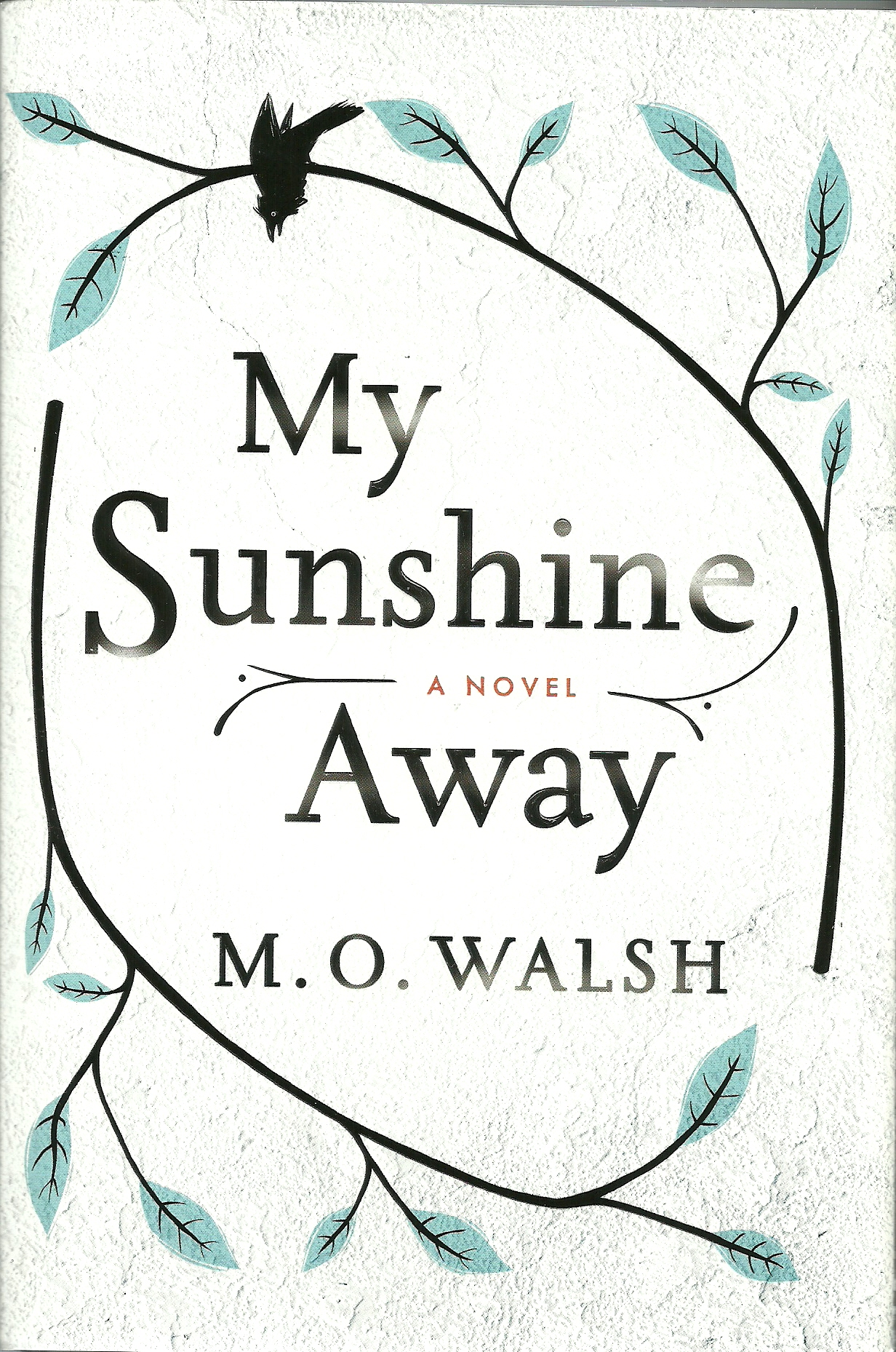
My Sunshine Away ~ A Capsule Book Review

My Sunshine Away

My Sunshine Away ~ A Capsule Book Review by Allen Kopp

My Sunshine Away, by first-time novelist M. O. Walsh, is set in Baton Rouge, Louisiana, in the late 1980s. The unnamed narrator (referred to only by pronouns) lives in a pleasant middle-class housing development with his mother, his philandering father (he has a girlfriend younger than his daughters), and his two older sisters, Hannah (killed in a traffic accident in her twenties) and Rachel. The narrator harbors an unhealthy adolescent obsession for a girl in the neighborhood named Lindy Simpson. He thinks about her day and night. He fantasizes about her. He climbs into a tree in her yard and spies on her with binoculars. He tries to impress her in the way he cuts his hair and the way he dresses. He envisions a future with her. Everything for him is Lindy, Lindy, Lindy. If you think this doesn’t get tiresome after a couple hundred pages, you are mistaken.

On a summer evening when the narrator and Lindy are sixteen, Lindy is raped. It’s an unusual crime for the neighborhood. The narrator is a suspect for a while (he didn’t do it), as is nearly every other male in the neighborhood. The police are not able to find out who did it. Lindy didn’t get a good look at her assailant. The most tragic consequence of the crime is that Lindy changes: from a sweet, pleasant girl into a rebellious, sullen, foul-mouthed idiot. (Know anybody like this?)

Despite Lindy’s change for the worse, however, the narrator’s obsession for her only grows stronger. (She seems increasingly unworthy of his adulation.) He tries to find out who raped Lindy and in a way carries a burden of guilt because he was outside on the dark night of the rape, saw a male figure lurking around, and was too scared to do anything about it. He doesn’t find an answer until many years later when he and Lindy are in their thirties. Will it help Lindy, even at that late stage, to know who raped her? Probably not.

Being set in Baton Rouge doesn’t make My Sunshine Away a “Southern novel.” While there is some “local color” involving heat, swamps, bugs, crepe myrtle trees and hurricanes, it’s a story that could take place anywhere, in New Mexico or New Jersey. If you want to read a real Southern novel, read As I Lay Dying by William Faulkner, The Heart is a Lonely Hunter by Carson McCullers or Wise Blood by Flannery O’Connor.

My Sunshine Away is a beautifully written first-person narrative, highly readable, if a little wordy and repetitive at times. I liked it a lot when I first started reading it and a lot less about two-thirds of the way through. Where the story starts to go south for me is the mutual telephone masturbation scene between the narrator and Lindy. (I think this is what they call “phone sex.” Yuck.) Anyway, the last one-third of the book was a chore for me to get through. The narrator’s obsession with Lindy began to grow thin for me at the point where she turns into such a jerk and such an unlikeable person. His mostly absent father should have taken him aside and told him that Lindy was bad news and that he was wasting his time and emotional energy on her. She will cause you nothing but heartache. Don’t put yourself through that if you don’t have to. Or words to that effect.

The last thirty or forty pages of the book, while compellingly written (as the whole book is), are a little treacly and female-oriented for my taste, as if the writer is going for a female audience here. If you don’t roll your eyes through these pages (rhapsodizing about pregnancy, parenthood and love), you have a much stronger constitution that I do.

Copyright © 2015 by Allen Kopp

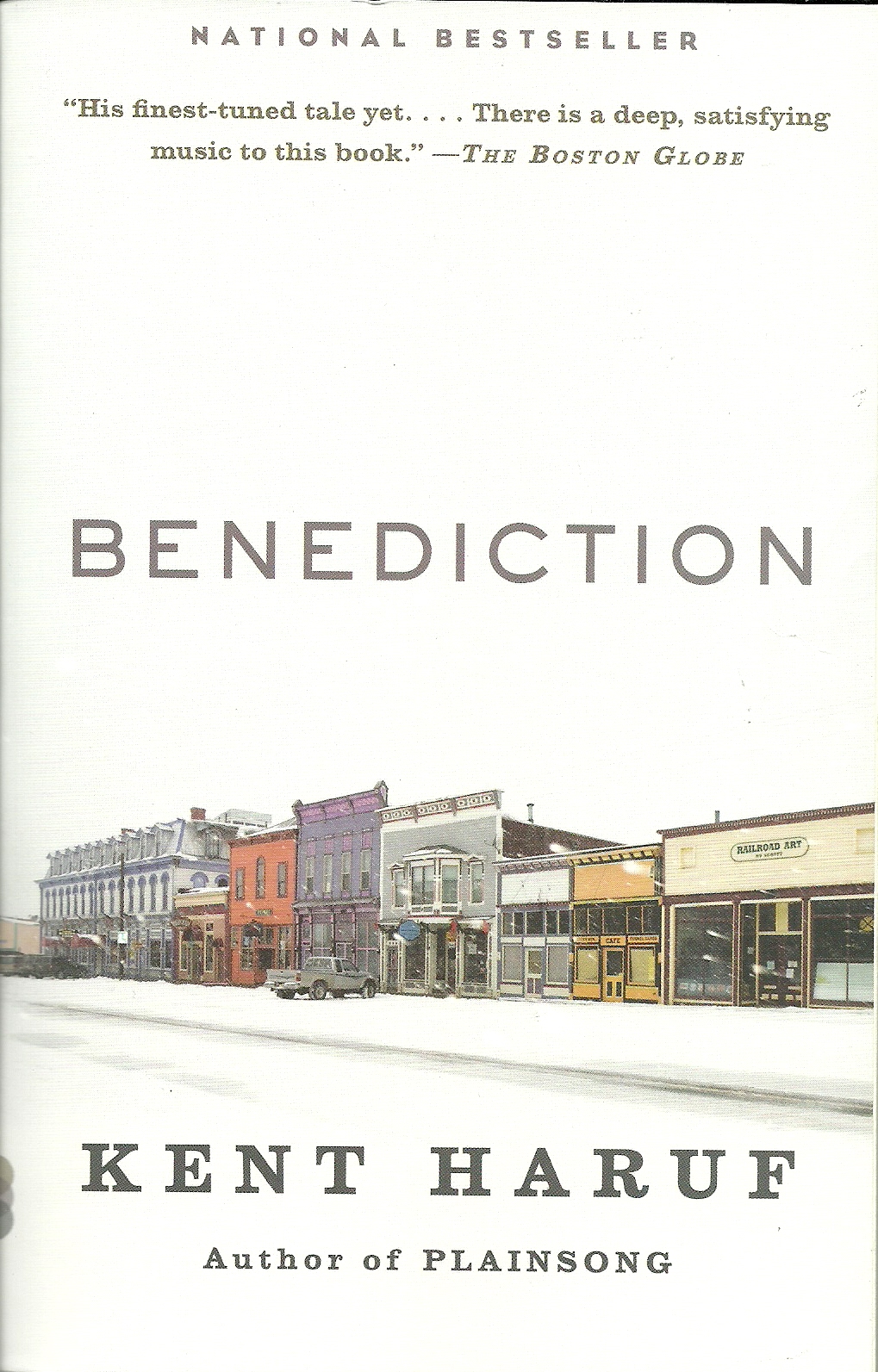
Benediction ~ A Capsule Book Review

Benediction

Benediction ~ A Capsule Book Review by Allen Kopp 

I met writer Kent Haruf at one of his book-signing events in St. Louis. We spoke for a minute about Cormac McCarthy and Oscar Hijuelos and I came away with a signed copy of his novel Plainsong to add to my collection of signed books. His 2013 novel Benediction continues his string of quietly impressive books set on the high plains in the fictional town of Holt, Colorado. The main character here is Dad Lewis (we never know his first name), lifelong owner of the town’s hardware store. He has a faithful wife named Mary and two children, Lorraine and Frank. When we meet him, he is old and sick and doesn’t have long to live. His daughter Lorraine, now middle-aged, returns home to be with him in his final stretch. He longs to reconnect with his estranged son Frank before he dies, but Frank is gay and he and Dad have never hit it off very well.

Then there’s Reverend Lyle, new to Holt from Denver. His wife and son are unhappy with small-town life and they never pass up a chance to remind him. (His wife was having an extramarital affair in Denver and that was one of the reasons they left.) When Reverend Lyle preaches a sermon in the Congregational Church about loving one’s neighbors and turning the other cheek, it doesn’t go over well with small-town folk, especially during wartime. (He’s only stating what the Bible says, but most people seem to think he’s siding with the enemy.) He is so disliked after this sermon, it seems there is no way he can survive attempts to have him fired or reassigned. After his unsympathetic wife leaves him and his son attempts suicide, what’s left for Reverent Lyle in the town of Holt?

Other characters include Berta May, the old lady who lives next door to Dad and Mary Lewis, raising her young granddaughter, Alice, after the girl’s mother dies; Tanya, the wife of a fired employee who Dad Lewis helps (without expecting anything in return, although sex is offered) after her husband commits suicide; Willa Johnson and her fifty-six-year-old daughter Alene, a teacher who once had an unhappy love affair with a married man that she was never quite able to get over. On a hot day the ladies (Mary Lewis and her daughter Lorraine, Willa and Alene Johnson, Berta May and her granddaughter Alice) take off all their clothes and get into the stock tank. I might have expected them to be more modest than that, especially in the company of a young girl, but it seems that woman aren’t as modest as men.

Benediction is a slice of small-town life, understated in the way of the man who wrote it. There’s nothing bombastic or larger than life here, just solid storytelling told in uncluttered language with plenty of drama (but no drama queens) just underneath the surface. It’s people living out their good-and-bad lives, forcing us to wonder—and not for the first time, either—what it’s all about.

Copyright © 2015 by Allen Kopp 

The Stranger ~ A Capsule Book Review

The Stranger

The Stranger ~ A Capsule Book Review by Allen Kopp

French writer Albert Camus was born in Algiers in 1913 and died in an automobile accident in 1960 at the age of 47. His novel The Stranger was published in 1942 and first appeared in English in 1946. It’s the simple story of an ordinary French Algerian, named Meursault, and the act of senseless violence that changed his life.

When the story begins, Meursault’s mother has died in the rest home where he put her because he couldn’t take care of her properly at home. When he travels to her funeral it is a very hot day. He loved his mother in his own way but is not able to cry over her death. In the ordeal of sitting up with her body overnight and the funeral the next day, he shows no emotion. He stands before her coffin, drinking coffee and smoking cigarettes, observing the other mourners. His lack of emotion is noted by those in attendance and plays a significant part in what is to come.

Meursault has a friend named Raymond Sintès. When Raymond has a dispute with an Arab girlfriend, Meursault helps Raymond by writing her a letter. This leads to an altercation between Raymond and the girl, which leads to Raymond hitting her. A few days later when Meursault and Raymond go to the beach with some friends, the girl’s brother is waiting for them. There is a fight, during which Raymond is slightly injured. Meursault takes Raymond’s gun from him to keep him from doing anything rash. Later in the day, after they have all calmed down, Meursault returns to the beach with the gun and shoots the Arab five times and kills him. Meursault can’t explain why he killed the man, except to say that it was very hot.

Meursault is put in prison to await trail. He is detached about prison as he is about everything else. He is appointed a lawyer, who assures him that he will be acquitted. When the trail begins, it doesn’t go well for Meursault. The prosecution brings in all the people from Meursault’s mother’s funeral who testify that Meursault didn’t cry. The prosecutor in his eloquence portrays Meursault is a cold, calculating murderer and an unfeeling monster. The jury finds him guilty and he is sentenced to die by the guillotine. While awaiting death he allows himself to imagine some miracle occurring by which he is acquitted, but he knows it isn’t going to happen.

Meursault confides to a prison chaplain that he believes in nothing, that life is meaningless and random. There is no plan, no design that gives life a larger meaning. Meursault believes he understands the indifference of the universe toward man, and this allows him to come to terms with his own death. “…I opened myself to the gentle indifference of the world,” he says. “Finding it so much like myself—so like a brother, really—I felt that I had been happy and was happy again. For everything to be consummated, for me to feel less alone, I had only to wish that there be a large crowd of spectators the day of my execution and that they greet me with cries of hate.”

The Stranger is divided into two parts, before the murder and after. It’s a first-person narrative, told in Meursault’s own voice. We’re being told Meursault’s version of what happened. This makes the story seem immediate and relevant. While Meursault is detached in all things, his story is not detached and the reader doesn’t feel detached either. It’s a very readable classic, never dull or ponderous. In tenth grade when we were given a list of books to read to write a report on, I chose Pride and Prejudice. If I had known then how good The Stranger is, I would have chosen it instead. The Bennett sisters are chloroform in print.

Copyright © 2015 by Allen Kopp

All the Light We Cannot See ~ A Capsule Book Review

All the Light We Cannot See

All the Light We Cannot See ~ A Capsule Book Review by Allen Kopp

This year’s Pulitzer Prize winner for fiction is All the Light We Cannot See by Anthony Doerr. It’s a World War II story (yes, another one) set mostly in the small French coastal town of Saint-Malo. Marie-Laure LeBlanc is a French girl, blind from the age of six. She lives with her widowed father, who is employed as a locksmith at an enormous Paris museum. Marie-Laure is very bright and seems to live life to the fullest despite her blindness. She reads books in Braille—Jules Verne is her favorite writer—and she and her father are happy in their lives. All of that changes, however, when Germany occupies France and Marie-Laure and her father flee to the town of Saint-Malo and the home of Marie-Laure’s father’s uncle, whose name is Etienne.

Marie-Laure and her father are happy in Saint-Malo with Uncle Etienne and his housekeeper, Madame Manec, in spite of the deprivations of war. After a time, though, Marie-Laure’s father is called back to Paris by his employer (apparently a trick) and is captured and imprisoned by the Germans. Marie-Laure has no other choice but to continue to stay with her great-uncle in the narrow, six-story house in Saint-Malo. The town is right in the way of the fighting, though, so war comes to their doorstep when the Allied forces invade France to liberate it from the Germans. Etienne is forced to give up any radio transmitter in his home, but he keeps one secretly and continues to broadcast information that will be of help to the resistance movement. Marie-Laure is also part of the resistance, as she carries information, baked into loaves of bread, that he can transmit.

Marie-Laure’s story is juxtaposed with that of a German boy named Werner Pfennig. Werner and his sister Jutta live in an orphan home in a dreary mining town in Germany. Werner is also very bright and teaches himself the principles of mechanics and radio technology. When people see that he can repair radios that nobody else can, he is chosen to go to a “Hitler Youth” school. He has been looking for a chance to escape his dreary, futureless existence (and an enforced job in the coal mine when he turns fifteen) and this is his one chance, although he isn’t at all political and he hates to leave behind his sister, Jutta, as she is his only family.

Werner and his small contingent happen to be in Saint-Malo when it is heavily bombarded. They are buried for many days beneath a hotel that has collapsed. With what little he has to work with, he is able to put together a radio receiver that allows him to hear radio transmissions. He hears the voice of Marie-Laure as she reads from Jules Verne. When he and the others miraculously and unexpectedly escape from their imprisonment, he goes looking for the girl whose voice he heard. We knew all along that his life and Marie-Laure’s life were in some way going to intersect. He plays an important role in her life, but not in the way one might expect.

All the Light We Cannot See is a very readable book, with short chapters, most no more than two or three pages long. It’s not what you would call a long-winded book despite its 530 pages. The characters are engaging and believable and, even though it’s a wartime story, it’s not about war but about innocents whose lives are caught up in war. World War II continues to provide an unending source of storytelling material. What would the twentieth century be without war? Not nearly as tumultuous or as interesting.

Copyright © 2015 by Allen Kopp

Bettyville ~ A Capsule Book Review

Bettyville

Bettyville ~ A Capsule Book Review by Allen Kopp 

Bettyville is a memoir by a writer named George Hodgman set in the small town of Paris, Missouri. Paris is an insignificant town in a state full of insignificant towns. George is a middle-aged man and is gay, always feeling that there is something wrong with him or he doesn’t quite measure up. (“The people who feel okay in the world,” he says, “don’t understand those of us who don’t feel okay.”) He knows his conservative parents will never understand or embrace his sexuality, so he chooses to never discuss it with them. He becomes adept at secrecy and at hiding his true feelings. At the age of forty, when he finally admits to his mother that he’s gay (“Surely you must have known.”), she replies, “Well, then, I guess you’ll go your way and I’ll go mine.” She doesn’t make it easy for him.

Knowing he will never fit in or be accepted in his home town, George goes to New York, where he embraces the “gay lifestyle.” He spends summers on Fire Island. He has a series of “relationships,” somehow never managing to make one of them last for the long haul. He works for publishing houses as a book editor or at places like Vogue magazine. He turns to drugs to help him cope with his demanding job and eventually becomes an addict. In spite of all this, though, he manages to go back to Missouri a couple of times a year to visit his family.

When George’s father dies (George senior), his mother, Betty, is left alone. As she gets older and more frail, it is up to George, an only child, to care for her. He would like to put her in a nursing home so he can live his own life, but, as expected, she won’t hear to it. After George loses his job (making him feel like more of a failure than ever), he moves back home with his mother and takes on the difficult job of caring for her full-time. So, a fifty-year-old repressed, secretive man is taking care of his failing, often difficult, emotionally reserved ninety-year-old mother who has dementia. He wants to “do right” by her and see her through to the end, whatever the end is. That’s what Bettyville is about: acceptance of one’s own failings, putting another person’s interests before one’s own, and doing it all with humor and grace.

Bettyville is almost effortless reading and is full of humor. When George takes his mother to see the art film The Master, she says in a loud voice, “Why would anybody want to make a movie like that?” When they go to the Muny Opera in St. Louis to see The Music Man, George’s father sings along, embarrassing George and Betty. In drug rehab, when somebody asks George when he became aware that his emotions had shut down, he replies, “I don’t think they were ever opened up.” George is a clever man who uses self-deprecating humor to keep people from seeing what he really is, as if what he is needs covering up.

Copyright © 2015 by Allen Kopp

An American Son ~ A Capsule Book Review

An American Son

An American Son ~ A Capsule Book Review by Allen Kopp 

Marco Rubio was born in Miami in 1971. His parents came to the United States from Cuba during the 1950s, in search of a better life for themselves and their children. They had no formal education and job skills that would only ever allow them to work in menial jobs, but they were determined that their four children would have better lives than they had had. They survived as Americans without exactly thriving and saw their son Marco become an attorney, a family man with four children of his own, and a successful and powerful politician.

An American Son is Marco Rubio’s story, from his modest upbringing in Miami to his hard-fought election in 2010 as Florida’s junior senator. He began in Florida politics when he was elected to the West Miami City Commission. From there he went to the Florida House or Representatives, where he was eventually elected speaker of the house. When his term of office ended there, he considered leaving politics for good and concentrating on his law practice, but the opportunity came up for him to run for the United States Senate. At a time when nobody believed he could win, he challenged a powerful and popular sitting governor, Charlie Crist, for the nomination of his party to run in the general election. Defying the odds and also conventional wisdom (not to mention a barrage of vicious personal attacks), he won the nomination of his party and went on to the win the general election in a three-way race. It’s a story of perseverance, of not giving up in the face of overwhelming odds.

Too often politicians in Washington, with their $1500 suits and their luxury vacations, come across as elitist and out of touch. Marco Rubio might prove over time to be a different kind of politician. He wasn’t born into a privileged environment. He has lived in the real world and he knows what it’s like to struggle. He comes across as a decent man, maybe overly ambitious but not overly egotistical. He’s not perfect, he makes mistakes, and he’s figuring out the way as he goes along the same as everybody else.

An American Son is breezy reading, never ponderous or bogged down in unnecessary detail. I found the whole book interesting but especially the second half where Marco details his up-and-down campaign for the Senate where he was attacked daily by the opposition. Some politicians have the job dropped into their laps because of what their names are, while others have to work for it, night and day, over months and sometimes years. It’s not an easy road and it takes a certain kind of person to want to do it. Somebody with plenty of drive and ambition but also with the conviction he can make a difference in the world.  

Copyright © 2015 by Allen Kopp

Funeral Rites ~ A Capsule Book Review

Funeral Rites

Funeral Rites ~ A Capsule Book Review by Allen Kopp 

Funeral Rites by Jean Genet (1910-1986) is set in France at the end of World War II when France was ridding itself of German occupation. There were some French people, mostly teen boys and men in their early twenties, who collaborated with the Germans against their own country. They positioned themselves on rooftops and functioned as snipers, shooting at Frenchman who were fighting for, or loyal to, France. These collaborators were naturally hated by the French.

Jean G. is narrating Funeral Rites. He confusedly switches from third person to first person and back again, so we don’t always know who’s who. He also switches back and forth in time, so he eschews the structure of the “traditional” novel. His twenty-year-old lover, Jean Decarnin, has been killed by one of the Frenchman who was acting as a German collaborator. Jean G.’s grief at the loss of Jean Decarnin drives the narrative. He sees a newsreel that shows a young French collaborator who is caught and the punishment that is meted out to him. Jean G. “imagines” the collaborator’s name is Riton. He is seventeen years old and, in Jean G.’s words, he is “beautiful.” Thereupon, the story (what there is of it) is about Riton and the young German invader, Erik Seiler, with whom Riton becomes infatuated. It seems at times that Riton and Jean G. are one and the same.) Riton claims to love Erik, even though Erik is the invader, the rapist, the occupier, the oppressor. (Genet constantly reverts to the theme of how sex and death are intertwined.) Erik is also the lover of Jean Decarnin’s mother, a silly Frenchwoman who doesn’t seem to care that she is consorting with the enemy. She doesn’t care very much that her son has been killed, either.

Jean Genet was born without a father to a prostitute, who gave him up for adoption when he was a few months old. Early in his life, until he turned to writing, he was a vagrant and petty criminal and spent much of his time behind bars. Funeral Rites is partly autobiographical and reflects Genet’s nontraditional approach to life. He is now considered a giant of twentieth century French literature. His other important works include Our Lady of the Flowers, Querelle and The Thief’s Journal.

Funeral Rites was first published in 1947 and wasn’t translated into English until 1953. At 256 pages, it’s challenging to read but not overly difficult, as long as you’re not bothered too much by the nonlinear structure. It’s often distasteful, as in the episode with the cat, but also has some flashes of humor, as when Jean Decarnin’s “stout” mother releases her bodily “wind” into the air of her boudoir. Most readers will find the sexual content (between men) mild by today’s standards. If you were going to be offended by that, you wouldn’t be reading this book anyway.

Copyright © 2015 by Allen Kopp