In the Garden of Beasts ~ A Capsule Book Review

In the Garden of Beasts ~ A Capsule Book Review by Allen Kopp

In 1933, a new U.S. president, Franklin D. Roosevelt, appoints a new ambassador, William E. Dodd, to Germany. He is sixty-four years old, a history professor, scholar and writer. With his wife and adult children (Bill and Martha), he moves to Berlin to take up his duties. It is a tumultuous and transitional time in German history. The elderly president, Paul von Hindenburg, has recently appointed Adolf Hitler as chancellor, more as a move of appeasement than anything else. People feel uneasy about Hitler, with good reason. He rants and raves in his speeches. He is quietly and systematically arming Germany for war, in spite of protestations to the contrary. Hitler and his Nazi regime favor suppression of Jews, which manifests itself in beatings, intimidation, banishment to prison camps, and laws that forbid Jews from marrying non-Jews and from working in journalism and other jobs. Anybody, Jew or Aryan, who opposes Hitler and his government is subject to intimidation and professional ruin or, at worst, imprisonment or death.

Into this maelstrom, the innocent, well-meaning Dodd family is dropped. Ambassador Dodd’s twenty-three-year-old daughter, Martha, is a recent divorcee. Her favorite thing is men. In Berlin she gradually gains a reputation as something of a tramp. She goes from man to man, some of them Nazis and even a Russian communist, with whom is she is so much in love that she wants to tour Russia for a month to gain an understanding of his country. She is also an idealist who is slow at seeing things as they really are. When she first arrives in Berlin, she believes the Nazis are doing good things and improving life for all German people. Gradually she begins to see things in a different, more realistic way.

According to many observers, William E. Dodd is not a successful or effective ambassador. Being the American ambassador to Germany during the rise of Nazism is no easy task. Not only must he deal with radical Nazis, he must also deal with people from his own government who don’t like him and believe he was the wrong choice for the ambassadorial post in the first place. He seems to believe, wrongly and naively, that all he has to do is advocate moderation and common sense and the Nazis will “tone down” just because he thinks it is the right thing for them to do. This, of course, is not the way the world works. Secretary of state Cordell Hull and others in the U.S. government are mainly interested in getting Dodd to press for repayment of German debt, which Dodd does not consider as important as other matters.

During the early years of Nazism (early 1930s), many believed that Hitler and his inner circle (Goebbels, Goring, Himmler) were so radical that it was just a matter of time before rational people would see them for what they were and force them out of office. We know in retrospect, however, that this is not what happened. When President Paul von Hindenburg died in August 1934, Hitler assumed absolute control over Germany and proclaimed himself “Fuhrer and Reich Chancellor.” If it had ever been possible for anybody, any foreign power, to stop the Hitler juggernaut, now it was too late. The next ten years or so were going to be a very difficult time for the entire world. 

Ambassador Dodd proved to be more right about the threat that Germany posed to the world than a lot of people, during his lifetime, were willing to give him credit for. He and his family were in the unique position of viewing the rise of Nazism as outsiders. After Ambassador Dodd’s death, he was mostly vindicated as the lone voice who saw what was really happening in Germany, while most Americans were still hoping to remain uninvolved.   

In the Garden of Beasts is “nonfiction narrative” written by Erik Larson. It’s a chronical of true events, written in such a way that it seems to be a novel, a fictional story, but it’s all true and it really happened. If a fiction writer had written the story of Hitler, it would have been too fantastic and far-fetched to be plausible. What story of the twentieth century is more compelling and at the same time more frightening than the story of the small, mustachioed man who aspired to conquer the entire world and would stop at nothing to achieve his goals?

Copyright © 2017 by Allen Kopp

Dead Wake: The Last Crossing of the Lusitania ~ A Capsule Book Review

Dead Wake: The Last Crossing of the Lusitania ~ A Capsule Book Review by Allen Kopp

The year is 1915. England and Germany are fighting a war that gets uglier and more vicious every day. America, with Woodrow Wilson as president, is trying to remain neutral, but how long that neutrality can last is questionable. Germany is trolling the waters of the North Atlantic with the Unterseeboot or “U-boats,” submarines that, under the right conditions, can deal a death blow to large ocean-going vessels. As the war progresses, Germany is inclined to ignore any laws or rules of decency and fair engagement. The ruthless U-boat commanders will torpedo any boat, especially those belonging to the English, but also any “neutral” boats. America is still neutral in 1915, at least on the surface. However, Germany attacking and sinking American ships—or ships bearing American citizens—almost guarantees U.S. involvement in the war.

The English ship, Lusitania, is sailing from New York to Liverpool, England, in May 1915. On board are many wealthy and important people, Americans and English. The Lusitania is the pinnacle of ocean-going extravagance and beauty. It’s like a floating luxury hotel. Most of the passengers are well aware that traveling through the waters of the North Atlantic is dangerous in wartime, but they believe they will be protected and guarded by the British navy. Many of them are not willing to let the threat of being torpedoed and sunk spoil their good time.

As the Lusitania gets closer to the British Isles, the chances of attack by U-boat increase. William Turner, captain of the Lusitania, gets warnings by wireless communication, but nothing too alarming. He too is lulled into believing that the Germans will not attack a British passenger ship, even one carrying a cargo munitions and materiel for England’s war effort. Germany is (wrongly) credited with having at least some respect for civilians, including many small children.

The commander and crew of U-boat U-20 have had a mostly unsuccessful patrol, meaning that they haven’t come across any “enemy” (meaning English or anybody on the side of the English) vessels to torpedo. (What’s important to U-boats is not the number of vessels they attack and destroy but the cumulative tonnage of those vessels.)

The bad luck of U-20 was about to change. On a bright afternoon in May, with near-perfect weather conditions, the commander of U-20 spies through his periscope the Lusitania, the ship that is the supreme symbol of British naval prowess. Ironically, it is only twelve miles from the coast of Ireland and in the last day of its voyage, only sixteen hours out of Liverpool.

U-20 is able to get a clear shot at the Lusitania, launching a torpedo into the hull of the gigantic ship, destroying and sinking it in a matter of eighteen minutes. There are 764 survivors; 1198 dead, including 123 Americans. Over 600 people on the ship are never found. America doesn’t enter the war for two more years, until German instituted a policy of all-out submarine warfare against any ship, no matter who it belonged to.

After the sinking of the Lusitania, a controversy arose (today called a “conspiracy theory”), as they so often do. The Admiralty (the arm of the British government that overseas shipping) failed to provide—when it might easily have done so—an escort of battleships for the Lusitania as it entered the “danger zone” of the North Atlantic, where U-boats were known to be operating. Many people believed—and still believe—that certain parties in the British government wanted the Lusitania to be attacked so that America would be sure to enter the war and come to Britain’s aid.

Dead Wake is a fascinating slice of twentieth century history, written, by Erik Larson, in a style known as “narrative nonfiction,” a genre originated (or at least advanced) by Truman Capote with In Cold Blood. It’s a story about the stakes that are involved in war, in this case the lives of innocent victims who just happen to be in the wrong place at the wrong time. The sinking of the Lusitania showed the war then being fought between Britain and Germany was to be a different kind of war, one in which nobody was to be spared.

Copyright © 2017 by Allen Kopp

An American Tragedy ~ A Capsule Book Review

An American Tragedy ~ A Capsule Book Review by Allen Kopp

The great American novel of the twentieth century—or at least one of them—is Theodore Dreiser’s An American Tragedy. First published in 1925, it is a very ambitious novel of monumental length (856 pages, originally in two volumes). It’s about one man’s misguided quest for the American dream. The title tells us it’s not an uplifting or a happy story.

It’s the 1920s or thereabouts, but the time doesn’t matter because it could be any time. Young Clyde Griffiths has a disadvantaged childhood. His parents are un-ordained “ministers” of the gospel. They travel around from city to city, saving souls and ministering to the needy by setting up “missions.” Clyde has two sisters and one brother. The family is poor and never has enough money to provide properly for Clyde and his brother and sisters. They don’t even go to school because the family moves around so much.

When Clyde is about sixteen or seventeen, he gets a job as a bellboy in a ritzy Kansas City hotel. With this job, Clyde is able to witness the world of wealth and glamor that he has never seen before. He makes more money through tips than he ever imagined possible. His friends, other bellboys, introduce him to the world of booze and loose women. Clyde realizes what a sheltered life he has been leading. His glimpse into this new world makes him know, for the first time, the kind of life he desires for himself.

A traffic accident killing a young girl in Kansas City causes Clyde to run away. He drifts from place to place alone for a couple of years, until he lands a job as bellboy in a Chicago hotel. There he meets his rich uncle, a manufacturer from Lycurgus, New York. The uncle agrees to give Clyde a tryout in his collar and shirt factory. Clyde arrives in Lycurgus and goes to work for his uncle in a menial job at first and feels neglected by his uncle’s family because they fail to “take him up” socially.

Eventually Clyde is given a better job in the factory and finds himself head of a department that employs young girls. He meets there one Roberta Alden, a poor farm girl who has taken a job in the city to help her family. Roberta is pretty and pleasing in her way and soon she and Clyde begin spending time together, keeping it a secret because of a factory rule that forbids any kind of socializing between employees and department heads.

After a few months of “dating,” Clyde induces Roberta to become “intimate” with him, which she agrees to do because she loves him and believes he loves her and will eventually marry her. Being innocent and not knowing the ways of the world, Roberta soon becomes pregnant.

While Clyde has been secretly dating Roberta, he has also been moving up in Lycurgus society, having been “taken up” by a sympathetic female cousin named Bella Griffiths. Through his good looks and gentlemanly manner, he soon becomes popular with the smart, young, society set and specifically with a girl named Sondra Finchley, beautiful, rich and accomplished. When she and Clyde fall in love, he can’t believe his good fortune. He is on the verge of having everything he ever dreamed of: wealth, comfort, ease, and a beautiful wife. He has a terrible problem, though: a pregnant girlfriend for whom he no longer cares. This situation can ruin everything he’s hoped for and aspired to. If Roberta “exposes” him to his rich relatives and his society friends, it will bring his world crashing down.

Short of marring Roberta, which Clyde doesn’t want to do, he tries to get her to abort the fetus, which she believes is morally wrong but which she is willing to do to get herself out of trouble. She can’t find a doctor willing to perform the operation and a medicine that Clyde gets from a druggist that is supposed to cause the fetus to abort on its own doesn’t work. She then demands that Clyde marry her to salvage her reputation and to give the baby a name.

With Clyde’s world being threatened in this way, he resorts to desperate measures to try to extricate himself. He hears about an accident on a lake whereby two people in a rowboat are drowned when the boat overturns. The body of the woman is found; the man is never found. Clyde believes that if he can get Roberta out on a deserted lake in a rowboat, he can cause the boat to overturn, drowning her. Clyde himself will get away, but people will believe that he also drowned, even if his body is never recovered.

Out on the lake with Roberta in the rowboat, Clyde has a “change of heart” (or so the defense wants the jury to believe). He can’t kill her; he feels sorry for her and begins to rediscover some of the old feeling that he had for her in the beginning. He decides he will go through with marrying her, thereby giving up his dreams of Sondra Finchley and her world of wealth and glamor.

Something happens in the rowboat, though. In an agitated state, Roberta stands up in the boat and attempts to move toward Clyde. He also stands and attempts to catch her. The boat capsizes and Clyde and Roberta both go into the water. Roberta drowns. Without attempting to rescue Roberta, Clyde swims to shore and walks all night to get to his society friends, encamped at a resort nearby.

Clyde isn’t fooling anybody, though. There are abundant witnesses to testify to his activities on the fateful day that he and Roberta go rowing, although no actual witnesses to Roberta’s drowning come forward. Clyde is arrested within a few days while he is cavorting with his society friends (not, however, with a clear conscience), and there begins a lengthy section of the novel that details his incarceration and trial for murder. He has two slick defense lawyers to try to get him off, but are the men of the jury really going to believe that Clyde, with all the damning evidence against him, didn’t mean to kill Roberta at all?

An American Tragedy is a minutely detailed story of a murder, the circumstances of a man’s life that led to murder, how it formed in his mind, the desperation that he felt before and after, how it was executed, what followed, etc. We see the murderer (if that’s what he is) from his own point of view. We gather from this story that just about anybody might commit murder if circumstances warrant it. Clyde is not a foul, dark-hearted killer as he is portrayed during his trial. He is confused, conflicted, and, as his defense paints him, a “moral and mental” coward. Not a bad person but pushed to do a bad deed.

Copyright © 2017 by Allen Kopp

A Handful of Dust ~ A Capsule Book Review

A Handful of Dust ~ A Capsule Book Review by Allen Kopp

English writer Evelyn Waugh lived from 1903 to 1966. His novel, A Handful of Dust, was published in 1934. The story is set in the late 1920s or early 1930s. Tony Last and his wife Brenda belong to the upper crust of English society. They have a country estate called Hetton, Tony’s ancestral home. Tony loves Hetton and is content to be there and no other place. Brenda isn’t happy with country life and loves to pop up to London on the train to shop and eat in smart restaurants and go around to the best nightclubs. In short, she is a social butterfly, while Tony is the more sedate, stay-at-home type. We see right away that they are mismatched. They have one child, an eight-year-old son named John Andrew.

Enter John Beaver. Tony and Brenda invite him down to their home for the weekend because that’s what these people do. He’s a rather dull, uninspiring young man, but Tony and Brenda treat him decently; the weekend ends and he goes home. We don’t know until later that he and Brenda have begun an unlikely love affair.

Brenda begins spending more and more time in London. She claims the need for a small “flat” so she can stay nights and not have to go back home to Hetton on the late-night train. She tells Tony she is studying economics but the truth is she’s carrying on with Beaver. Everybody knows it except Tony.

Finally things come to a head when a terrible riding accident claims the life of Tony and Brenda’s young son, John Andrew. Brenda is, of course, in London when it happens. After the dust settles, Brenda tells Tony that she is in love with Beaver, she’s through pretending, and she wants a divorce so she can marry Beaver.

Tony is perfectly willing to give up Brenda. He doesn’t have a lot of money, but he agrees to give her what he considers a fair amount in the divorce settlement. To Brenda, though—and especially to Beaver—it isn’t enough. Beaver will not marry Brenda, he says, until she is amply provided for. The amount Brenda and Beaver are asking for is ruinous to Tony. He refuses to grant them the amount they want and he tells Brenda he will not give her a divorce.

To try to escape his painful memories, Tony agrees to go on an ill-fated “expedition” to South America with a crackpot “explorer,” Dr. Messinger. The purpose of the expedition is not quite clear, except that Tony hopes to find a lost city. As might be expected, the expedition doesn’t go as planned and things turn very bad for Tony. Meanwhile, back in England, Beaver has abandoned Brenda and she is struggling to get by on the little bit of money she has. Tony is in South America, of course, and she can’t get in touch with him to ask for more.

A Handful of Dust is a satire on marriage and societal mores. We see how easily these people fall into infidelity and even encourage infidelity in one who isn’t predisposed to it. Brenda is a selfish bitch who cares more about her lover than she does about her son and husband. The ironic part is that her lover doesn’t care that much for her. She throws it all away for nothing and, through her selfishness and grasping for money, brings her world crashing down. If Tony had never married her, he could have had a happy life.

Copyright © 2017 by Allen Kopp

Tobacco Road ~ A Capsule Book Review

1932 First Edition Cover

Tobacco Road ~ A Capsule Book Review by Allen Kopp

Erskine Caldwell’s venerable American classic, Tobacco Road, was first published in 1932. It’s the story of a few days in the life of Jeeter Lester, a lazy, ignorant, starving, dirt-poor Georgia farmer. It’s spring and Jeeter wants nothing more than to plant a crop of cotton, but he doesn’t have any seed-cotton or guano (fertilizer), no money to buy it with, and no mule for plowing.

Jeeter and his wife Ada had seventeen children, but only two still remain at home: Dude, a witless lout of sixteen, and Ellie May, a girl who doesn’t have a chance in life because she has a harelip and Jeeter doesn’t have enough money or enough initiative to take her to the doctor and get the lip “sewn up.” Jeeter’s wife, Ada, has pellagra, a vitamin deficiency disease; her fondest wish is to have a “stylish dress of the right length” to be buried in. Jeeter’s old mother lives with the family, but she never says anything; if she speaks or tries to steal food, Jeeter or Ada will clop her on the head.

Jeeter and Ada have married off their twelve-year-old daughter, Pearl, to Lov Bensey. Lov is upset because Pearl sleeps on a “pallet on the floor” and won’t let him touch her and won’t get into bed with him. When Lov comes by the Lester home with a bag full of turnips that he walked seven miles to get (which Jeeter is trying to steal), he is crying over Pearl but is drawn to Ellie May, even with her harelip. Ellie May is also drawn to Lov because she is lonely and her prospects of getting a man are slim. You can feel the sexual tension between them.

Sister Bessie Rice is a self-styled preacher. She doesn’t have a nose, but she has two nostrils flat on her face. “No nose would ever grow on me,” she says. When people are talking to her, they find themselves “looking down her nose holes.” Besides not having a nose, she’s about forty and a widow with eight hundred dollars in insurance money from her deceased husband. When she catches sight of sixteen-year-old Dude and has a petting (and rubbing) session with him, she decides she will marry him and make him a preacher. Dude isn’t much interested in marrying Sister Bessie until she tells him of her intention to go to town and buy a brand-new automobile with her insurance money. They get married (or at least get the license) and, after Sister Bessie buys the automobile, they ride all over the place, with Dude driving and blowing the horn like crazy. The same day they buy the automobile, Dude crashes into the back of a wagon, and from there, they set about tearing up the car as if that had been there intention all along. Every time they get a new dent, they say, “It don’t bother the drivin’ of it none.”

Being dirt poor and not having anything to eat is tragic, isn’t it? A girl having a harelip or a woman not having a nose is also tragic. What happens to Jeeter’s mother at the end of the book is tragic, but also funny. We don’t take the Lesters seriously enough to feel sorry for them because they are so hapless and ignorant. There’s humor in pathos, and no American novel does it better than Tobacco Road.

Copyright © 2016 by Allen Kopp

The Underground Railroad ~ A Capsule Book Review

The Underground Railroad ~ A Capsule Book Review by Allen Kopp

The Underground Railroad by Colson Whitehead is this year’s winner of the Pulitzer Prize for fiction and, finally, the winner is once again about American life. It’s set in pre-Civil War America, when Southern plantation owners were allowed by law to own slaves as property, while sympathizers in the North and elsewhere viewed slavery as an abomination and were willing to do all they could to aid black slaves in their quest for freedom. In these dangerous times, the “underground railroad” sprang up, a series of rails, sometimes crude, constructed under the ground, to give slaves a means of escape from their sometimes-cruel owners. The people who built and maintained the underground railroad, the “station masters,” were often white men. They risked their lives every minute they aided slaves in escaping.

The main character of The Underground Railroad is a young slave girl named Cora. At the beginning of the book, she lives on the Randall plantation in Georgia, where vicious cruelty toward the slaves is the order of the day. Running away, is, of course, a terrible offense in the eyes of the plantation owners. Slaves who run away are caught and when they are brought back they are tortured and killed as an example to the other slaves.

A young man named Caesar gives Cora the idea of running away. At first she doesn’t want to risk it or even think about it, but when she gets a terrible beating for coming to the aid of a small boy, she decides she must run or die. Her mother before her, Mabel, ran away when Cora was only about ten and they never heard from her again. Everybody on the Randall plantation holds Mabel up as an example of what is possible. Cora has feelings of resentment toward her mother for abandoning her at such a young age. (We learn at the end of the book the ironic truth of what really happened to Mabel.)

After Cora’s harrowing escape from the Randall plantation, she is living in a black community in South Carolina under the name of Bessie Carpenter. She lives in a dormitory with lots of other runaway slaves, but there are no beatings and the living conditions are much better than on the plantation. A “slave catcher” by the name of Ridgeway is after her, though, especially determined to catch her and return her to the plantation because it is believed that her mother, Mabel, got away from him; he can’t let Cora humiliate him in the same way. In trying to escape from Ridgeway, Cora spends months in a stifling attic space in the home of a sympathizer.

After years of running and living in fear that she will finally be caught, Cora ends up on the Valentine farm in Indiana, home to a hundred or so runaways. She has books to read and sympathetic friends here, and life and is not so cruel and hard. Everybody who lives on the farm knows, though, that they live a fragile existence and that hostile forces are aligned against them. The slave catcher Ridgeway, though temporarily sidelined, is not about to give up the search for Cora as long as he is alive. The two of them will have a final fateful encounter before the story ends.

There have been lots of books and movies about slavery days and about how slaves were beaten and generally mistreated and sold at the whim of their owners. The Underground Railroad is a familiar story, but it’s a story that never ceases to be interesting in the same way that stories of World War II are interesting and compelling. No matter how terrible Cora’s life is as a slave and then as a runaway, she never loses hope that she can have a better life and live free. It’s a story, then, about hope and never giving up.

Copyright © 2017 by Allen Kopp

Napoleon ~ A Capsule Book Review

Napoleon ~ A Capsule Book Review by Allen Kopp

Napoleon Bonaparte was born on the tiny island of Corsica in 1769 to a minor aristocratic family. Corsica is closer to Italy but was a French possession, so Napoleon was born a French citizen and will forever be identified as French, although he didn’t have high regard for France. As he grew into adulthood (he was only five feet, five inches tall), he became interested in all things military. At a young age he became a military man and was found to have an uncanny instinct for military strategy. He rose through the ranks and soon was in command of a mighty military force.

Napoleon filled the leadership vacuum left by the French Revolution and can be said to have ended the Revolution. When France was struggling to find a foothold after years of turmoil, he stepped in and filled the void, declaring himself Emperor. His ego and ambition knew no bounds. His goal was to conquer all of Europe, from Spain in the west to Russia in the east. His military venturing even led him to Egypt and North Africa. He saw himself as a conqueror in the mold of Alexander the Great and Julius Caesar.

He engaged in almost constant war. Hundreds of thousands of people lost their lives in Napoleonic wars, not to mention the vast sums of money spent to finance the war machine. People began to consider him an opportunistic lunatic who would sacrifice anything or anybody on earth to satisfy his ambitious goals. He was a man without sentiment, loyalty or religion. He had nothing to hold him back.

Of course, he was not without his shortcomings. (Every tyrant, dictator or despot has his downfall built in.) He was impatient, impulsive, lacking in subtlety, refinement or social graces, incapable of deliberative thought or action. Though a master military strategist, he was not a politician and knew nothing of tact and diplomacy. He was all about force, taking the enemy by surprise and gaining the upper hand through superior strategy and cunning. When he sold what became known as the “Louisiana Purchase” to the United States (an enormous area that became thirteen states) for fifteen million dollars (about four cents an acre) to continue to finance his war machine, it was seen (in retrospect) as one of his biggest blunders. He might have extended his empire to the North American continent but wasn’t visionary enough to do so.

His disastrous military campaigns in Spain and Russia—with staggering loss of life and destruction of property—signaled his end. People were sick and tired of almost constant warfare and chaos. Even his most ardent admirers were beginning to turn against him. He was forced to abdicate his title of emperor—leading to a restoration of the monarchy—and was exiled to the tiny island of Elba, seven miles off the coast of Italy. He was not to be contained, however; he was still burning with desire and ambition. He was bored and wasn’t given as much money as he thought he needed. He returned to France, where he once again established himself as emperor and marshaled a huge army.

He met in battle the Duke of Wellington, an Anglo-Irish soldier and statesman, at a place called Waterloo in present-day Belgium. After a bloody and horrific battle, he was defeated. This was to be his final battle and his final defeat. The Napoleonic age was at an end.

Napoleon Bonaparte was this time exiled to the tiny island of Saint Helena, located in the South Atlantic. While not exactly a prisoner or under house arrest, he was closely guarded and would not again be allowed to return to France of his own volition. As long as he was alive, he was viewed as a threat, especially since he still had many admirers and adherents all over the world who would have gladly helped him to escape. He was kept on the island for about six years until he died at the age of fifty-one in 1821.

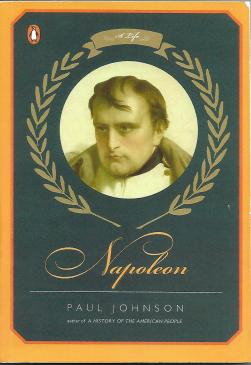
Napoleon by English historian Paul Johnson is a concise (187 pages) overview of Napoleon’s life and times. While it’s a historical biography, it’s also a fascinating story. A small, pale, young man from humble beginnings becomes the leader of the army of a great nation and, after declaring himself Emperor of that nation, sets out to conquer an entire continent. Truth is stranger than fiction.

Copyright © 2017 by Allen Kopp

The Mill on the Floss ~ A Capsule Book Review

The Mill on the Floss ~ A Capsule Book Review by Allen Kopp

English country life in the nineteenth century: Mr. Tulliver is a miller and landowner. He owns a picturesque little mill on the River Floss. He has a not-very-bright wife named Bessie and a son, Tom, and a daughter, Maggie. The Tullivers are simple country folk who live modestly but comfortably. Tom is four years older than Maggie. They have a happy childhood until tragedy intervenes and the family is faced with financial ruin.

Mr. Tulliver is involved in a lawsuit with the wealthy Mr. Wakem involving water rights on the river where the mill is situated. Mr. Tulliver believes he will win his case, but he doesn’t and the family loses everything. Mr. Tulliver, blinded by his feelings of hatred for Mr. Waken, is unreasonable and refuses to seek a middle ground with the man he sees as the devil incarnate. We see subsequently that Mr. Wakem isn’t as bad as Mr. Tulliver makes him out to be. At the urging of Tom Tulliver, Mr. Wakem buys the mill and agrees and pay Mr. Tulliver wages to continue to run it. It galls Mr. Tulliver to have to work for Mr. Wakem, but he agrees to the arrangement for the sake of his wife and Tom and Maggie. Although the Tullivers can go on living in the same house at the mill, they have lost all their furniture and household possessions but, more importantly, they have lost their standing in the world, a thing that is very important to people of their class.

The years pass. Tom and Maggie are now young adults. Maggie devotes her life to her ill father—the loss of his lawsuit is what made him ill—and her feckless mother. She has adopted a philosopher of selflessness that she has taken from a medieval monk. Her dearest friend in the world is none other than Philip Wakem, son of the dreaded Mr. Wakem. Philip has a deformity, a hump on his back, that makes him something of an outcast in society. Maggie has to keep her friendship with Philip a secret from her father and brother. Mr. Tulliver believes that anybody by the name of Wakem is to be despised.

Tom, now grown to manhood, is ambitious. He becomes obsessed with the idea that he will work to pay back the money his father owes and restore the family to its former social standing. He begins working as a sort of apprentice for one of his uncles; he rises in the business and soon he begins to make money on his own, all of which he turns over to his father to help repay the family debt.

Taking his cue from his father, Tom believes that Mr. Wakem was the cause of the downfall of the family and that anybody by the name of Wakem is poison. He makes Maggie promise that she will have nothing to do with Philip Wakem, although Philip is innocent of any wrongdoing in the case with the Tullivers. Ever obedient to Tom and to the family honor, Maggie agrees to never see Philip again, even though Philip has told Maggie he loves her and she thinks she might love him with a love that is more than pity for his deformity.

The day that Tom, age twenty-three, finally makes enough money to restore the family to its former social standing is a happy occasion until Mr. Tulliver has a chance meeting with Mr. Wakem. They have a violent argument and Mr. Tulliver knocks Mr. Wakem off his horse and physically attacks him. Mr. Wakem is unhurt, but Mr. Tulliver, from the effects of violent feeling, experiences a kind of apoplexy and dies in a few days. With Mr. Tulliver dead, Tom carries on his hatred of the Wakem family. He makes Maggie promise that she will have nothing to do with Philip Wakem or with anybody named Wakem. Meanwhile, Maggie, now age nineteen and a stunning, raven-haired beauty, has a new gentleman admirer, one Stephen Guest, who is ostensibly the beau of her cousin Lucy. Maggie is not the usual Victorian coquette, though. She has experienced too much heartache in the world to be shallow and self-possessed.

Mary Anne Evans, who lived from 1819 to 1880, wrote under the name George Eliot because she believed that women writers were not taken seriously. She wrote seven novels, including Silas Marner, Middlemarch, Adam Bede, and Daniel Deronda. She published Mill on the Floss in 1860.

I started reading Mill on the Floss as a senior in high school and didn’t finish it at the time because I was too preoccupied with other things. I always meant to go back and read it in its entirety and now I have done that very thing. With its long wordy sentences and long paragraphs, it’s a product of its time, meaning it’s not an easy book to read. It’s of moderate length (424 pages), though, and the story of a mid-nineteenth century English family, if not gripping, is compelling and interesting enough to carry us through to the end without too much in the way of pain.

Copyright © 2017 by Allen Kopp

Tulip Fever ~ A Capsule Book Review

Tulip Fever ~ A Capsule Book Review by Allen Kopp

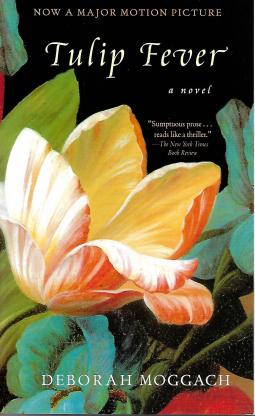
Tulip Fever is a novel by Deborah Moggach set in picturesque Amsterdam, Holland, in the year 1636. Cornelis Sandvoort is a wealthy merchant. At sixty-one, he is in the twilight of his years. His young wife, Sophia, is only twenty-six. Cornelis lost his first wife and child to disease; he wants nothing more than for Sophia to give him another child to carry on his name and his business after he is gone. Sophia honors and respects Cornelis—after all, he saved her family from poverty—but she doesn’t love him. She finds his physical presence repellant.

When Cornelis commissions a young painter, Jan Van Loos, to paint his and Sophia’s portrait, Sophia quickly becomes enamored of the painter. She falls so easily. She sneaks out of the house at odd times to meet the painter. They become lovers. She goes to great pains to make sure her husband doesn’t find out.

Sophia has a maid named Maria. Maria has a lover named Willem. Maria and Willem are intimate together and plan on being married. Maria finds herself expecting Willem’s child. Willem, through a misunderstanding, believes that Maria has been unfaithful to him with another man. Heartbroken, he runs off and joins the navy, not even knowing that Maria is going to have his baby.

Sophia tells Maria she will soon have to leave the household since she is going to have a baby and isn’t married. With nothing to lose, Maria threatens to expose Sophia for carrying on a clandestine love affair with the painter Jan Van Loos. Rather than part on bitter terms, Sophia and Maria together devise a plan whereby Sophia will pretend to be pregnant (by her husband, of course), while concealing Maria’s pregnancy. Then, when Maria’s baby is born, they will pretend it is Sophia’s and that Sophia died during the delivery. Pretending to be dead, Sophia will then be free to run off with her lover, Jan Van Loos, to Batavia in the East Indies and start a new life.

While Sophia and Jan’s elaborate deception plays out, the city (Amsterdam) and the country (Holland) are in the grip of “tulip fever.” Fortunes are being made and lost in tulip bulb speculation. Some bulbs are worth a fortune. Never has the adage “a thing is worth what somebody is willing to pay for it” been more appropriate. Jan is counting on one fabulously expensive bulb (which he plans on selling for much more than he paid for it) to get him out of debt and pay for his and Sophia’s passage to a new country and a new life. Their plot to trick Sophia’s husband—and the world—has worked so far. All they need is a bit more luck and for Jan’s bumbling servant, Gerrit, to pick up the bulb and bring it to Jan.

Tulip Fever is a tautly written 280 pages. The themes of infidelity, greed, self-delusion and human failing that we see here are universal. Jan and Sophia’s illicit love affair was one thing, but their plan to fool Sophia’s husband with Maria’s baby and then to run away to another country was something else. Failure was built in from the beginning. A strong story about the extraordinary lengths to which people will go to achieve their own version of happiness.

Copyright © 2017 by Allen Kopp

Call Me by Your Name ~ A Capsule Book Review

Call Me by Your Name ~ A Capsule Book Review by Allen Kopp

Call Me by Your Name, a novel by a writer named Andre Aciman, is set on the Italian Riviera during a summer in the mid-1980s. Elio is seventeen, very astute and with more depth than most people have at three times his age. He plays the piano, knows several languages, and his work for the summer is transcribing Haydn’s The Seven Last Words of Christ. When was the last time you knew a seventeen-year-old boy who could boast of such splendid accomplishments?

Elio’s father is an American college professor and his mother Italian. They are what are called “ex-pats.” They live on the beautiful Italian Riviera near the spot where Percy Shelley drowned in 1822 at the age of twenty-nine. Every summer Elio’s family hosts an academic to stay with them for about six weeks or so. During the summer in which the story takes place, a twenty-four-year-old man named Oliver is chosen from among other applicants. Despite his young age, Oliver is also an academic and is busy working on a book on an esoteric, scholarly subject. That doesn’t mean, however, that during his summer with Elio’s family he doesn’t have plenty of time for nightlife, tennis, swimming and lying around naked, or practically naked, in the sun. Oh, and he’s also very good looking with a fabulous body. And, when it comes to sex, he is absolutely freewheeling, not bound up in rigidity and Puritanism the way most American men are.

So, the story of this summer in the mid-1980s is being told to us in the first-person voice of Elio, about thirty years or so after it occurred. In a way, it is a coming-of-age story, but with a twist. Most adolescent boys living on the Italian Riviera with their well-to-do and sophisticated parents are going to become infatuated and obsessed with a dark-eyed Italian woman with large breasts. In Elio’s case, however, the object of his lust and affection is Oliver, the young American man who came for the summer and changed Elio’s emotional landscape and the way he would forever view the world.

The words “homosexual” or “gay” are never used in Call Me by Your Name, but that’s what we’re talking about here. There is absolutely a blasé attitude toward sex and gender identity that is very European and that most Americans would find offensive. Americans separate “gay” and “straight” like they separate cars and motorcycles. The European attitude toward sex is that it is more of a continuum. If today you are with a woman and tomorrow a man, who cares? It’s just different branches of the same tree.

Copyright © 2017 by Allen Kopp