Ghostland: An American History in Haunted Places ~ A Capsule Book Review

Ghostland: An American History in Haunted Places
~ A Capsule Book Review by Allen Kopp ~

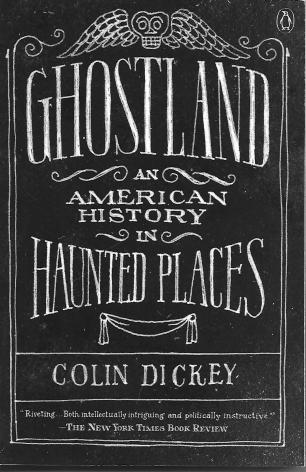
Ghostland: An American History in Haunted Places by Colin Dickey is not about ghosts or ghost stories but is instead about the places (houses, prisons, brothels, mental hospitals, parks, cemeteries, etc.) that have, for one reason or another, come to be thought of as haunted. This book doesn’t espouse a belief in ghosts or hauntings or a disbelief in them. When you read the book, you decide for yourself.

Most ghost stories are folklore, “urban legend,” or tall tales. They start with a grain of truth and go on from there to fantastic make-believe. But, no matter how implausible the stories are, people are willing to believe them without question because they affirm a belief that there is, indeed, life after death. When you hear a ghost story that begins with a tragedy, an unresolved and unavenged murder, it’s satisfying on a psychological level because it makes you feel good that such a terrible thing has happened to somebody else and not to you and, more importantly, it makes you glad you’re alive.

Ghost hunting has grown into an industry, popularized in part by “reality” shows on TV. People believe what they want to believe. If a person on TV is telling you convincingly that a house, a commercial building, park, or cemetery is haunted, you believe it because it’s so easy to believe. Why shouldn’t you believe? When somebody takes the time and effort to dig deeper into a ghost story, however, the truth is often uncovered, and the truth is not nearly as interesting or as much fun as the tall tale.

Sometimes a house or its owner need only be eccentric or unusual. Sarah Winchester (1840-1922) is a perfect example. As heir to the Winchester Repeating Arms Company, she was fabulously wealthy. The Winchester repeating rifle was the gun that “won the West.” Sarah bought a house in San Jose, California, and began adding on to it and, once she got started, she added and added and added. The house was never finished but, by the time she died in 1922, she had 160 rooms, staircases that went nowhere, and other features that, over time, marked the house as “haunted”—haunted supposedly by all the people who were killed by the Winchester rifle. When people think of American haunted houses, the Winchester house in San Jose tops the list. Serious scientific investigation, however, has yet to uncover credible evidence of a single ghost at the Winchester house. People believe what they want to believe.

The house that inspired Nathaniel Hawthorne to write his 1851 gothic novel, The House of the Seven Gables, is in Salem, Massachusetts. The house still stands and is a tourist attraction. There’s no absolute proof that the house is haunted, although it very well could be if you go entirely on the way it looks. Inside the house is a “secret staircase” on which people claim to have experienced ghostly emanations. Nobody has ever seen an actual ghost in the house, though. Hawthorne didn’t think the staircase was important enough to include in his novel.

The Lemp family of St. Louis became wealthy from the manufacture of Falstaff beer in the 1890s. They had their brewing plant, and their residence, in South St. Louis. Underneath their property were vast natural caves in which they stored the beer before electronic refrigeration became common. As wealthy and successful as the Lemps were, they were also plagued with mental illness, which today might be diagnosed as bipolar disorder. Several of the Lemps committed suicide. People believe the ghosts of the Lemps haunt the house, which is now a restaurant and a bed-and-breakfast. Employees at the restaurant claim to have seen spirits, or at least felt them. Teams of “ghost hunters” regularly inhabit the premises, looking for evidence of spirits that nobody else has been able to find. The vast brewery is also still standing but is mostly unused, except as a haunted Halloween attraction in October.

So, in addition to the Winchester house in San Jose, the House of the Seven Gables in Salem, Massachusetts, and the Lemp house in St. Louis, Ghostland: An American History in Haunted Places takes us to a brothel in Nevada, an abandoned mental hospital in Maine, a plantation in Louisiana, a park in Portland, Oregon, that’s haunted by the ghost of a murdered fifteen-year-old girl, a house in New Orleans where slaves were mistreated, a prison in West Virginia where prisoners were starved and neglected, and from there to creepy Los Angeles hotels, where deceased stars still cavort, Civil War battlefields where many thousands of men died and on to Detroit, the once-thriving industrial hub of the U.S. that has its share of tragic ghost stories, most of them fabricated but still believed by people who are willing to believe what they choose to believe.

If you believe in ghosts, Ghostland: An American History in Haunted Places won’t get you to not believe in them, but the one thing the book does is to show that most ghost stories can be easily explained and debunked. The thing is, though, the truth is not nearly as compelling as the legend or the tall tale that, over time, has come to be accepted as the truth.

Copyright © 2024 by Allen Kopp  

Between Two Fires ~ A Capsule Book Review

Between Two Fires book cover
Between Two Fires
~ A Capsule Book Review by Allen Kopp ~ 

Between Two Fires is a 2012 speculative-fiction novel by Chrisopher Buehlman. The year is 1348. The place is France. The country is ravaged by war with England (the Hundred Years War) and by a horrible disease known as the Black Plague. (The world is such a mess, we are told, because Lucifer and the other fallen angels are waging war in heaven.)

Thomas de Givras, a former knight of the Crusades, has fallen on hard times. His armor is tarnished. He has been excommunicated from the church and he has been stripped of his property. He is not old but not young, either. He has joined a band of brigands. They accost people on the road and rob them.

When he encounters a young girl named Delphine, a recent plague orphan, he sees that there is something special about her. She claims she can see angels and she asks him to accompany her to Paris and then Avignon. Although he is not known for his generous nature, he decides it is in his best interest to do as she asks. Along the way, they meet Father Matthieu, a homosexual priest who drinks too much wine. He confides that he was caught in a compromising situation with another man right before the plague struck. As a result, he lost his church and his congregation. Delphine takes pity on him. The three of them (Thomas, Delphine, and Father Matthieu) make quite a trio.

In Paris, Delphine acquires the Spear of Longinus from a seller of relics. Before the trio leaves the city, they are attacked by possessed statues of the Virgin Mary and other saints. They have several other encounters with fallen angels before they reach Avignon. Father Matthieu is killed by a demon in the River Rhone. Thomas, by chance, meets the man who ruined him, D’Évreux, and challenges him to a duel. Thomas is victorious and D’Évreux is killed.

In Avignon, Thomas and Delphine uncover a plot to kill Pope Clement and replace him with a demon look-alike. In the fight that ensues, Delphine is killed, but Archangel Michael and the heavenly host emerge from her body to defeat the false pope and his army of demons. Thomas’s soul is dragged into Hell by the fleeing demons, where he is tortured. Delphine descends into Hell to look for him, at which time she reveals that she is both Jesus Christ and the girl Delphine. Thomas awakens in his own body. Everyone except Thomas forgets the supernatural aspects of that night, believing the damage was from an earthquake. Thomas returns to Normandy and lives in the castle he lived in before it was taken away. Delphine becomes a nun; Thomas considers her his adopted daughter.

Copyright © 2024 by Allen Kopp

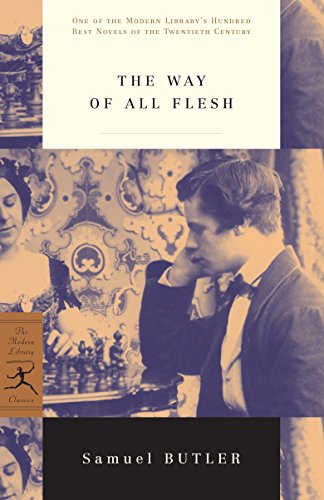
The Way of All Flesh ~ A Capsule Book Review

The Way of All Flesh book cover
The Way of All Flesh
~ A Capsule Book Review by Allen Kopp ~

English author Samuel Butler lived from 1835 to 1902. His most famous book, the novel The Way of All Flesh was first published in 1903. It is a highly regarded and influential work of English literature, number twelve on the Modern Library’s list of the hundred greatest books in English of the twentieth century.

The principal character in The Way of All Flesh is Ernest Pontifex, a middle-class youth born in 1835 to a country clergyman and his wife, Theobald and Christina Pontifex. As a father, Theobald lacks any insight into how to deal with his son Ernest. He is overbearing, unreasonable and feckless. He expects Ernest to embrace the life that he himself has laid out for him. Ernest, however, proves a disappointment to his father at every turn as he grows into manhood. He isn’t good at anything and isn’t interested in anything. He attends Cambridge University, where he achieves some kind of happiness for the first time in his life. After college, he becomes a clergyman because it’s what his father wanted him to do, but he finds after a while that he despises it. Every young clergyman needs a wife, but he would “rather be dead” than married to any of the ladies he knows.

Edward Overton is Ernest’s godfather and the narrator of the novel. He sees how Ernest’s father treats him and sympathizes with him. He admits that he doesn’t like Ernest’s parents any more than Ernest does. There are times when he is Ernest’s only friend.

As a young clergyman, Ernest decides he’d like to mix with the lower classes. He rents a room in a disreputable neighborhood and begins to rub shoulders with the hoi-polloi. He runs into some trouble with a young woman and is accused of a near sexual assault (handled in the story in a very vague way). He is sentenced to six months hard labor. On arriving at prison, however, he becomes ill with brain fever and spends most of his prison sentence in the prison hospital.

When he is released from prison, he meets a girl he knew before named Ellen. She worked for his parents. He thinks he is in love with her, but that’s only because he doesn’t know her. After they get married, he leaves the clergy and he and Ellen opened a little tailor shop. (He learned tailoring in prison.) Ernest at this time severs all connection with his parents.

Opening a tailoring ship with Ellen as his wife really wasn’t such a good idea. He learns things about Ellen that he didn’t know before. She is a drunk and thief and is drinking up all the profits. He discovers after a couple of terrible years that he and Ellen aren’t really married. She was married before and her marriage with her former husband still stands. Her marriage to Ernest is happily null and void.

Ernest’s aunt Alethea leaves him a modest fortune upon her death, but she doesn’t want Ernest to know about it (it will kill his initiative) and doesn’t want him to get the money until he is twenty-eight. He is pleasantly surprised when he turns twenty-eight and with his newly found wealth finds a measure of happiness and success as a writer.

The Way of All Flesh is unusual for its time because it’s a repudiation of Victorian values. The novel’s protagonist rejects the world he was born into. He rejects his parents’ (especially his father’s) narrow worldview. He repudiates his religion. He doubts the existence of God. He repudiates marriage. He repudiates business and the pursuit of money. It was a groundbreaking novel, but one that is not always easy to love. The story is interesting enough, but Samuel Butler frequently interrupts the story for dry philosophical asides that have nothing (very little) to do with the story. That complaint aside, it’s an interesting novel and one that is well worth the time and considerable effort it takes to read it.

Copyright © 2023 by Allen Kopp

The Planet Factory ~ A Capsule Book Review

The Planet Factory book cover image 2
The Planet Factory
~ A Capsule Book Review by Allen Kopp ~

Do you know what an “exoplanet” is? I didn’t know, either, until I read this book, The Planet Factory. An exoplanet is any planet outside our Solar System that orbits a star, the way the Earth orbits the Sun. An “exomoon” is a moon that orbits an exoplanet. So far, there have been more than 5,000 exoplanets located and identified. The search for exoplanets has exploded in the past ten years due to advanced technology and bigger, stronger telescopes.

Planet scientists are always hoping to find a planet that is sufficiently Earth-like. The search for such planets reveals just how unique and unusual the Earth is. So far, no exoplanets have been discovered that are significantly like the Earth. All the elements that combine to make the Earth the perfect spot for life to proliferate are just not that easy to find.

When it comes to space and space travel, the main thing people want to know is whether or not there is life outside of the Earth and, if so, what kind of life. Is there plant life on other planets? Animal life? If there a possibility we will ever encounter a race of beings on other planets with a technology advanced enough to recognize our own and respond in kind?

Outside our own little Solar System of eight planets orbiting the Sun (there used to be nine planets, but Pluto was demoted to a non-planet), are unimagined vastnesses of space. There are potentially billions of planets that might harbor life. The problem is that they are so far away that they are too difficult to observe. At the current rate of space travel, it would take us about 700,00 years to travel four lightyears. (A lightyear is the distance light travels in one year.) We need to figure out a way to circumvent the laws of physics to travel much, much faster than we do now.

The Planet Factory is not an easy book to read for the non-scientific reader. It’s full of statistics, measurements, distances, technical terms, and scientific data. Some of it is extremely interesting, such as the material about Jupiter’s moons and the search for life on other planets. I read every word but didn’t grasp a lot of it. I slogged ahead, though, and made my way through the entire book. I was glad to get to the end.

Copyright © 2023 by Allen Kopp

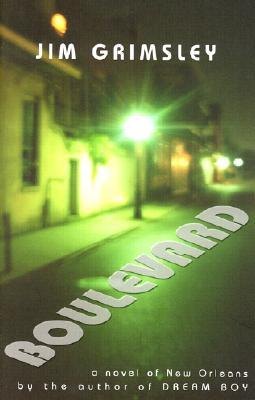
Boulevard ~ A Capsule Book Review

Boulevard book cover 1
Boulevard, a Novel of New Orleans
~ A Capsule Book Review by Allen Kopp ~

Jim Grimsley’s novel Boulevard is a coming-of-age story set in New Orleans in the 1970s. A young man named Newell is the main character and the novel’s protagonist. Coming from a small town in Alabama, he’s naïve and inexperienced, as we would expect him to be. Life in New Orleans is a revelation to him.

Alone in the big city. He only has a little money. He needs a job, fast, and he needs a place to stay. He walks the streets, going from restaurant to restaurant, hoping to find work as a waiter or a dishwasher. Finally he finds a job as a busboy, even though it’s not exactly what he had in mind. After checking many newspaper ads, he finds a room to rent. The room, located above a junk store in the Latin Quarter, is owned by an odd lady named Louise who turns out to be a lesbian (she also owns the junk store).

He’s delighted with the money he makes as a busboy. He furnishes his little apartment (more just a room) with purchases from the junk store. He’s doing well, until a snit among his fellow restaurant workers causes him to get fired. (Call it office politics.) Now he’s back where he started from.

He doesn’t have to wait long before finding another job. This one is in an “adult” bookstore that sells sex toys, pornographic books and magazines. In the back of the bookstore is a room where dirty movies are shown, via coin operated machines.

Newell thrives working in the bookstore in unexpected ways. He was hired by the crude manager of the bookstore because he’s “cute,” and because he’s cute he becomes a favorite with the (mostly gay) customers. He has some original ideas about presentation and organization of merchandise, bringing in more customers, and soon he is made manager and wears a dog collar.

More importantly, he discovers his own sexuality. He becomes a favorite in clubs and bars and makes some new friends, including Henry, a promiscuous, middle-aged homosexual, and Mark, a young man with whom he has a semi-serious affair. Another interesting character is Miss Sophia, the “cleaning lady” in the bookstore who has a silent crush on Newell. As we come to know Miss Sophia, we discover she is a transgender who used to be a lawyer living as a man. Also, there’s Jerry, a lonely, older, married man with whom Newell has an intense sexual encounter.

Boulevard is a story about New Orleans (and the seamy side) but is also about a sexual awakening and the loss of innocence. As the novel shows us (and is traditional in stories of this kind), you can only go so far with loss of innocence, and if you step over a certain boundary, you will find yourself in serious trouble.

Copyright © 2022 by Allen Kopp

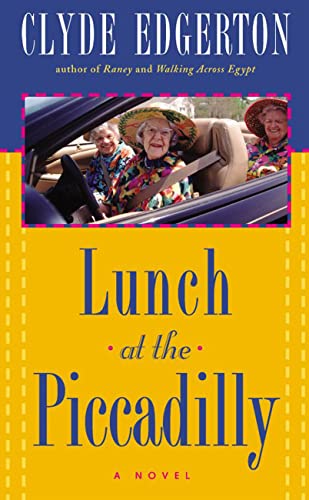
Lunch at the Piccadilly ~ A Capsule Book Review

Lunch at the Piccadilly novel cover

Lunch at the Piccadilly 
~ A Capsule Book Review by Allen Kopp ~

Lunch at the Piccadilly, by Clyde Edgerton, is a serio-comic novel set in a North Carolina nursing home in the 1980s. Carl Turnage is a timid bachelor in his thirties whose profession is making metal awnings. He was raised by his mother and her two sisters, Aunt Lil and Aunt Elizabeth. His mother and his Aunt Elizabeth have both died, but there’s still Aunt Lil Olive. She’s in her nineties and has recently taken up residence in a nursing home called Rosehaven. She hopes to return home to own apartment in a month or so but, with her health in decline, that might never happen.

Carl couldn’t be more attentive to his Aunt Lil. He indulges her in all her whims, including her desire to continue to drive her ’89 Oldsmobile, long after she should have given up driving. He wants to have that little talk with her about surrendering her car keys, but he just can’t seem to get around to it.

A man named L. Ray Flowers is a resident in the nursing home on a temporary basis while he recovers from knee surgery. He’s a sort of self-proclaimed minister. He wants to start a worldwide movement in which nursing homes and churches are merged into one entity called “nurches.” (He seems to know nothing about separation of church and state.) He’s in his early sixties, much younger than most of the other residents.

Most of the ladies are all aflutter over Mr. Flowers; all except one, a woman named Darla Avery who remembers him from high school, some forty-five years earlier. What Darla remembers about him isn’t a pleasant memory. She had a crush on him in high school. He asked her out on a date and when he got her alone in the car he masturbated in front of her. Darla then tells the other ladies in the nursing home that Mr. Flowers exposed himself to her, forgetting to mention that it had happened all those decades earlier. Mr. Flowers is then asked to leave the nursing home by a manager who doesn’t bother to find out the truth. They simply can’t have any old man in residence showing his private parts to any of the ladies. Does he get the benefit of the doubt? Of course not.

Clyde Edgerton’s books are what might be considered “light” reading, but that doesn’t mean they are lacking in substance or literary merit. They are speedy reading, effortless reading. If you read books and you want fast, easy, and as effortless as breathing, you might give ol’ Clyde a go. You won’t be hit over the head with political correctness or pretentious, “with-it” bullshit.

Copyright © 2022 by Allen Kopp


The Night Train ~ A Capsule Book Review

The Night Train book cover
The Night Train
~ A Capsule Book Review by Allen Kopp ~ 

Clyde Edgerton’s 2011 novel, The Night Train, is a coming-of-age story set in 1963 in a small town in North Carolina. The South is roiled at this time by the Civil Rights movement. It seems that race relations are on everybody’s mind. There are “whites only” establishments from which black people are barred, such as restaurants, hotels, and movie theatres. It’s going to take a lot of effort to get this changed.  

Larry Lime Nolan is a black teenager living with his family in the town of Stark, North Carolina. He works in a small furniture refinishing establishment and wants to be a jazz musician. Dwayne Hallston is white. He also works in the furniture refinishing factory and is a friend of Larry’s. Some people believe it’s not a good idea for a black boy and a white boy to be friends at this time and place, but friends they are.

Larry Lime, aspiring to play piano like Thelonious Monk, takes impromptu piano lessons from an old jazz musician called the Bleeder. He thinks learning the piano will help him make his way to a better life so he won’t have to refinish furniture his whole life.   

Dwayne Hallston and Larry Lime are big fans of James Brown. They both greatly admire James Brown’s album, Live at the Apollo. They decide they will mimic the album the best they can and perform exactly as James Brown performs. (“The Night Train” is a track on that album.) Their plan is to get a on a local TV music show and from there launch into big-time showbiz.

Flash Akers is the owner of the furniture refinishing establishment where Larry Lime and Dwayne Hallston work. Larry and Dwayne try to keep out of Flash’s way because when they are at work they are engaged in a lot of non-work. Flash is a middle-aged white man living with and taking care of his mama, who is in her seventies. When she has a stroke, Flash has to call in someone to help him take care of her. Will he get a white woman or a black woman to help out? This is an important decision. A lot of old white woman don’t like taking care of stroke victims, especially if they aren’t “ambulatory.” If he gets a black woman, his mama probably isn’t going to like it. “I just want to die!” mama says. “Don’t say that, mama!” Flash says. “It isn’t nice!”   

Copyright © 2022 by Allen Kopp


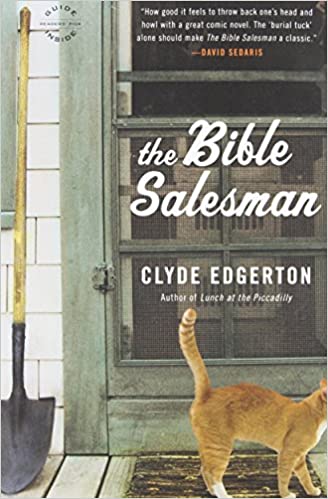
The Bible Salesman ~ A Capsule Book Review

The Bible Salesman book cover

The Bible Salesman
~ A Capsule Book Review by Allen Kopp ~

The year is 1950. Henry Dampier is a twenty-year-old traveling Bible salesman, living in the Southern United States. He was raised in a small town by a loving aunt and uncle. His father was killed when he was hit in the head by a tree limb on a passing truck. His mother is…well…she’s unavailable. Henry sells the Good Book because he believes in its message. He is innocent, gullible and too young to know what the world is really like.

When Henry meets Preston Clearwater (not his real name), Henry is taken in by him. Preston tells him he’s working undercover for the FBI, while in reality he’s working for an auto-theft ring. Preston offers Henry a job. Henry is the perfect dupe for a professional criminal like Preston because he believes what he is told and doesn’t ask too many questions. He accepts Preston’s job offer, believing he is entering into an honorable profession that involves the FBI. He will travel around with Preston from place to place, always on the go, driving stolen cars to wherever Preston wants them. He will, however, continue to sell Bibles.

In his travels, Henry meets a girl named Marlene Green, working at a fruit-and-vegetable stand in a little country town. He is instantly attracted to her, as she is to him. After a couple of dates, he decides he wants to marry her. That won’t be so easy, since he is a criminal and doesn’t know it yet.

One a brief vacation with his family, Henry introduces his attractive sister to Preston Clearwater. Preston is taken with the girl’s beauty and grace, even though he is about forty and she is considerably younger. (People say he looks like Clark Gable, with his stick-out ears.) The sister already has a fiancé, but she falls in love with Preston and is willing to forget about the boy she has said she will marry.

Henry always seems to be protected in life by his innocence and goodness, regardless of what criminal practices he is (unknowingly) engaged in. Life will be good to him because that’s the kind of book this is.

Clyde Edgerton (born 1945) is one of America’s best writers. His novels are decidedly “light” reading, but that doesn’t diminish their literary merit. They are breezy, fun to read, and beautifully written. When you see Mr. Edgerton, tell him I’m a big fan and have read all his books and most of them more than once.

Copyright © 2022 by Allen Kopp

The Plague ~ A Capsule Book Review

The Plague book cover 2
The Plague
~ A Capsule Book Review by Allen Kopp ~

Oran is a large French port on the Algerian coast (Northern Africa) with a population of 200,000. The Plague by French writer Albert Camus is a novel (a fictional account) of a plague that inexplicably strikes Oran in the 1940s. It begins with an influx of dead and dying rats into the city that nobody understands. The rats are found everywhere, in the streets, on the stairs in buildings, in private homes.  

Rats, of course, have fleas, and the fleas bite people and spread disease. The plague (pneumonic or bubonic) is an especially nasty disease that usually leads to agonizing death. As the death toll mounts every day, Oran has no choice but to close itself off from the rest of the world. Nobody can leave the town and nobody can enter. (How this is accomplished is not explained.)

The town is understandably thrown into a panic. How does a town quarantine the sick from the well? How can the sick be cared for with a limited number of people to help? How does the town keep people who might be infected from escaping the town? How can people in the town communicate with the outside world since letters might be infected with the disease? How long will the plague last? Is there any reason to hope the plague will go away as unexpectedly as it arrived? How much help can the town expect from the outside world? How can the people of the town be expected to carry on in the face of such awfulness?

Dr. Bernard Rieux is the main character in The Plague and the narrator of the story. His life every day is a living hell. He stands by helplessly as his friends and neighbors die of the disease. People look to him for answers he doesn’t have. He’s an unassuming man not given to heroics. His wife is ill (with something other than the plague) and in a sanitorium in another location.   

The people of the town behave the way people usually do in a crisis. There are acts of bravery and sacrifice, while many people in the town try to enjoy themselves any way they can, because who knows who will be the next to go? One man plots his escape from the town to return to his lost love. Another man is happy, somehow, for the plague and thrives during the epidemic. Others go the fatalistic, religious route, believing the plague is a judgment from heaven. Some of the very good people die from the disease, while some of the bad people go unscathed. Isn’t that always the way?  

The Plague, first published in 1947, is one of the most celebrated novels of the twentieth century. It’s a timeless and relevant story that might be set in any country in any time. It’s not always easy to read. Not for the faint of heart. After you’ve read it, you’ll feel like you’ve been to hell and back.

Copyright © 2022 by Allen Kopp


Fatherland ~ A Capsule Book Review

Fatherland book cover

Fatherland
~ A Capsule Book Review by Allen Kopp ~

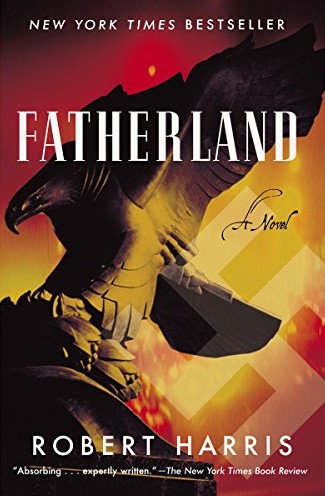
Imagine that Germany has won World War II. The Third Reich has absorbed many countries and extends all the way to the Caspian Sea. Berlin is the largest city in the world with ten million people, filled with magnificent monuments and buildings. German military might has never been equaled anywhere in the world. Adolf Hitler is 75 years old. He is revered as a God. His birthday is a national holiday called Reichstag. This is the “alternate history” premise of Fatherland, a novel by Robert Harris.

Xavier March is the principal character of Fatherland. He is a police inspector. Though a member of the “establishment,” he is a less-than-enthusiastic party man. He is always under suspicion. His ex-wife and his ten-year old son have both denounced him.

When the body of a high-ranking Nazi, Josef Buhler, is found on the banks of the Havre River outside Berlin, the plot is set in motion. As Xavier March investigates the death of Josef Buhler, he uncovers a conspiracy: Nazi Party officials are systematically being murdered. What do these men know, what did they see, and why are they being “removed?” Xavier March is the perfect police investigator to find out the answers because he isn’t a very good party member anyway. A truly loyal investigator would scuttle what he discovers and make sure the world never knows.

Divorced as he is, Xavier March needs a love interest. This is where Charlotte “Charlie” Maguire enters the scene. She is an American journalist. She and Xavier March make the romantic perfect pair to investigate the mystery. After many twists and turns, the two make a startling discovery: the Nazis who are being murdered all attended the Wannsee Conference in 1942, in which the “Final Solution” of the Jews was planned. The world doesn’t know about the Final Solution. It is a closely guarded secret that was never supposed to be made public.

Fatherland by Robert Harris is a (rather tedious at times) detective story (not exactly Agatha Christie, though). We have bad Nazis doing terrible things. (Are there ever any good Nazis?) We have an unseen Adolf Hitler, adored by his people. His birthday is a national holiday lasting several days. Our main character, Xavier March, is an individualist, and we know that individualism doesn’t go over very well with Nazis. Our message to him is this: Get out of Nazi Germany if you want to go on living.

The thing I liked best about Fatherland is the unreal quality of Nazi Germany having won the war and lording it over the whole world. In the alternative reality of Fatherland, Berlin is unequaled anywhere in the world for splendor and magnificence. In reading Fatherland, I was reminded of another alternate-history story, The Plot Against America, by Philip Roth, in which right-winger and Nazi appeaser Charles Lindberg becomes President of the United States in 1940, meaning that America never enters the war. After Lindbergh screws up the entire country, the lefties move in and save the day, however. This is truly alternate reality.

Copyright © 2022 by Allen Kopp