Seven Eight Nine ~ A Short Story

Seven Eight Nine image 3

Seven Eight Nine
~ A Short Story by Allen Kopp ~  

(This is a re-post.)

Milly Pogue was the guidance counselor. She walked with a limp because she had an artificial leg. She came into fifth-hour study hall where Penny Costello was looking at a magazine and told her she wanted to see her in her office. Without questioning the command (there would be time for that later), Penny stood up and followed Miss Pogue down the hallway to her office. Clunk, clunk, clunk went her artificial leg.

They went into the little windowless office and Miss Pogue closed the door.

“What did you want to see me about?” Penny asked. “I was busy.”

“You were looking at a magazine,” Miss Pogue said. “Sit down.”

Penny sat in the metal chair facing the metal desk and already she looked bored.

“You’re not living up to your potential, Penny,” Miss Pogue said.

“What do you mean?”

“Your math and reading scores are the lowest in your class.”

“I can’t help that! I’ve been sick!”

“You’ve missed too many days of school.”

“When you’re sick, aren’t you supposed to stay at home so you don’t spread your germs around?”

“The school nurse says there’s nothing wrong with you.”

“What does she know? She’s a crackpot. She’s not even a real nurse. She flunked out of nurses’ school.”

“Where did you hear that?”

“My mother heard it in the beauty shop.”

“It’s not true. She’s a fully accredited nurse.”

“Okay. That’s what you wanted to see me about?”

“I met with Mr. Bumpus this morning.”

“Was it good for both of you?”

“He asked me to have a private talk with you.”

“What about?”

“You won’t be passed on to the ninth grade.”

“What does that mean?”

“It means you’ll be repeating eighth grade next year.”

What?

“In view of your low scholastic ranking, you’ll be required to repeat eighth grade again when the new school term begins.”

“Could you put that in plain English?”

“You flunked eighth grade. You’ll have to do it all over again.”

Bullshit!”

“In these cases, we find it’s better to inform the student privately beforehand. That gives you time to adjust to the idea of repeating a grade. You’ll have time to talk it over with your mother and father before anybody else has to know about it.”

“Are you saying that when school starts up again I’ll still be in eighth grade, while everybody else in my class is in the ninth?”

“It can be a difficult adjustment, I know, but I’ll be here as your guidance counselor to help you in any way I can.”

Penny began to cry as the truth of what she was being told took root in her brain.

“I can’t repeat the eighth grade!” she said.

“What not?”

“It makes me look so stupid! Everybody will laugh at me.”

“No, they won’t!”

“Am I the only one?”

Miss Pogue looked down at her paper. “There’s one other person.”

“Are you going to tell me who it is, or do I have to ask?”

“It’s really none of your business, but if you think it’ll help, I’ll tell you. It’s Hermie Malchick.”

Hermie Malchick! Why, he’s retarded! He can’t even write his own name!”

“I’m sorry, but that’s the way it is.”

“Do you think I’m retarded?”

“No, Penny, I know you’re not retarded.  You have the ability. You just don’t use it.”

“Everybody will laugh at me for being such a loser. Me and the retarded boy are the only two that didn’t pass the eighth grade! That must mean I’m retarded, too!”

“No, Penny. It doesn’t mean you’re retarded. It means you have to try a little harder in the future.”

“I can’t repeat eighth grade! I won’t!”

“Penny, I don’t think you have much choice in the matter.”

“We’ll get a lawyer! They’ll make you pass me on to ninth grade!”

“Can your family afford a lawyer?”

“No, but we’ll get one, anyway!”

“It wouldn’t do you any good.”

“As of this moment, I’m quitting school! I won’t ever be back! Not to this school or any school!”

“You’re too young to quit school, Penny, and you know it. You have to be sixteen, and even then you have to have your parents’ permission.”

“There’s a very good reason I won’t be coming back and it’s not only because I’m flunking eighth grade.”

“What is it?”

“I’m going to have a baby.”

Oh, Penny! Are you sure?”

“Yes, I’m sure.”

“Who’s the boy?”

“You mean the father of the baby? He goes to a different school. He’s a senior.”

“Oh, Penny, that can’t be! You’re just a child yourself.”

“I know, but it sometimes happens.”

“Whoever he is, he could be facing legal issues. You’re a minor.”

“He knows all about that and he doesn’t care. You see, he’s in love with me and I’m in love with him.”

“What could you know about love at your age?”

“I know plenty. I’m not stupid.”

“Have you told your mother and father?”

“Sure. They know all about it.”

“And they approve?”

“They know there’s nothing they can do about it.”

“Oh, Penny! This is tragic. There’s no other word for it.”

“I’ll get over it. In about seven and a half months.”

“You can go on back to study hall now.”

“Hell, no! I’m not going back to study hall! I’m going home! I’m done with this place once and for all! No more school for me! Ever!”

When Penny was leaving Miss Pogue’s office, she almost ran into Hermie Malchick coming out of the boys’ restroom. She and Hermie were a matching pair. Two of a kind. Two cards from the same defective deck. If she had had a knife in her hand, she might have stabbed him in the throat with it.

Before she left school for the last time, she went up to the third floor and emptied the contents of her locker out onto the floor. One last act of defiance.

Walking home, she had to laugh at how readily Miss Pogue believed the lie about the baby. The only person she knew of who was going to have a baby was her own mother. She was an expert at it. She had had seven.

She was all smiles that evening, that school was finally out for the summer and she had three long months of vacation before she had to go back. If she had told her parents that she was never going back, it would not have gone well. There would have been a big scene, and either her mother or her father would have ended up slapping her. They would find out the truth when school took up again and she stayed at home in bed.

Her mother had her baby in the middle of June. It was a boy and they named him Skippy. Her mother had a difficult time with lasting effects. The doctor told her she’d better not think about having any more babies. Seven were enough. Any more would be excessive.

Throughout the summer, Penny began thinking of Skippy as her own child. She fed him, bathed him, got up with him in the night, and took him all over town in his perambulator, while her mother lay in bed and complained.

Old ladies looked at her with Skippy and turned up their noses, as old ladies do. It’s such a shame, they said, that a girl of such a tender age is already a mother. What is the world coming to? If she was my daughter, I’d keep her busy scrubbing the floors and cooking the meals. She wouldn’t have any time for nonsense with boys.

Copyright 2023 by Allen Kopp
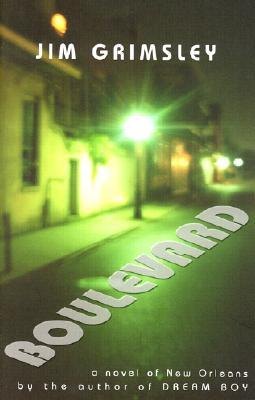
Boulevard ~ A Capsule Book Review

Boulevard book cover 1
Boulevard, a Novel of New Orleans
~ A Capsule Book Review by Allen Kopp ~

Jim Grimsley’s novel Boulevard is a coming-of-age story set in New Orleans in the 1970s. A young man named Newell is the main character and the novel’s protagonist. Coming from a small town in Alabama, he’s naïve and inexperienced, as we would expect him to be. Life in New Orleans is a revelation to him.

Alone in the big city. He only has a little money. He needs a job, fast, and he needs a place to stay. He walks the streets, going from restaurant to restaurant, hoping to find work as a waiter or a dishwasher. Finally he finds a job as a busboy, even though it’s not exactly what he had in mind. After checking many newspaper ads, he finds a room to rent. The room, located above a junk store in the Latin Quarter, is owned by an odd lady named Louise who turns out to be a lesbian (she also owns the junk store).

He’s delighted with the money he makes as a busboy. He furnishes his little apartment (more just a room) with purchases from the junk store. He’s doing well, until a snit among his fellow restaurant workers causes him to get fired. (Call it office politics.) Now he’s back where he started from.

He doesn’t have to wait long before finding another job. This one is in an “adult” bookstore that sells sex toys, pornographic books and magazines. In the back of the bookstore is a room where dirty movies are shown, via coin operated machines.

Newell thrives working in the bookstore in unexpected ways. He was hired by the crude manager of the bookstore because he’s “cute,” and because he’s cute he becomes a favorite with the (mostly gay) customers. He has some original ideas about presentation and organization of merchandise, bringing in more customers, and soon he is made manager and wears a dog collar.

More importantly, he discovers his own sexuality. He becomes a favorite in clubs and bars and makes some new friends, including Henry, a promiscuous, middle-aged homosexual, and Mark, a young man with whom he has a semi-serious affair. Another interesting character is Miss Sophia, the “cleaning lady” in the bookstore who has a silent crush on Newell. As we come to know Miss Sophia, we discover she is a transgender who used to be a lawyer living as a man. Also, there’s Jerry, a lonely, older, married man with whom Newell has an intense sexual encounter.

Boulevard is a story about New Orleans (and the seamy side) but is also about a sexual awakening and the loss of innocence. As the novel shows us (and is traditional in stories of this kind), you can only go so far with loss of innocence, and if you step over a certain boundary, you will find yourself in serious trouble.

Copyright © 2022 by Allen Kopp

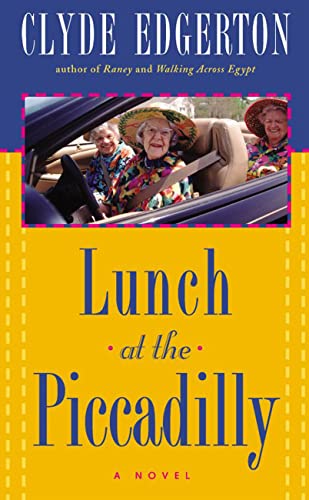
Lunch at the Piccadilly ~ A Capsule Book Review

Lunch at the Piccadilly novel cover

Lunch at the Piccadilly 
~ A Capsule Book Review by Allen Kopp ~

Lunch at the Piccadilly, by Clyde Edgerton, is a serio-comic novel set in a North Carolina nursing home in the 1980s. Carl Turnage is a timid bachelor in his thirties whose profession is making metal awnings. He was raised by his mother and her two sisters, Aunt Lil and Aunt Elizabeth. His mother and his Aunt Elizabeth have both died, but there’s still Aunt Lil Olive. She’s in her nineties and has recently taken up residence in a nursing home called Rosehaven. She hopes to return home to own apartment in a month or so but, with her health in decline, that might never happen.

Carl couldn’t be more attentive to his Aunt Lil. He indulges her in all her whims, including her desire to continue to drive her ’89 Oldsmobile, long after she should have given up driving. He wants to have that little talk with her about surrendering her car keys, but he just can’t seem to get around to it.

A man named L. Ray Flowers is a resident in the nursing home on a temporary basis while he recovers from knee surgery. He’s a sort of self-proclaimed minister. He wants to start a worldwide movement in which nursing homes and churches are merged into one entity called “nurches.” (He seems to know nothing about separation of church and state.) He’s in his early sixties, much younger than most of the other residents.

Most of the ladies are all aflutter over Mr. Flowers; all except one, a woman named Darla Avery who remembers him from high school, some forty-five years earlier. What Darla remembers about him isn’t a pleasant memory. She had a crush on him in high school. He asked her out on a date and when he got her alone in the car he masturbated in front of her. Darla then tells the other ladies in the nursing home that Mr. Flowers exposed himself to her, forgetting to mention that it had happened all those decades earlier. Mr. Flowers is then asked to leave the nursing home by a manager who doesn’t bother to find out the truth. They simply can’t have any old man in residence showing his private parts to any of the ladies. Does he get the benefit of the doubt? Of course not.

Clyde Edgerton’s books are what might be considered “light” reading, but that doesn’t mean they are lacking in substance or literary merit. They are speedy reading, effortless reading. If you read books and you want fast, easy, and as effortless as breathing, you might give ol’ Clyde a go. You won’t be hit over the head with political correctness or pretentious, “with-it” bullshit.

Copyright © 2022 by Allen Kopp


The Night Train ~ A Capsule Book Review

The Night Train book cover
The Night Train
~ A Capsule Book Review by Allen Kopp ~ 

Clyde Edgerton’s 2011 novel, The Night Train, is a coming-of-age story set in 1963 in a small town in North Carolina. The South is roiled at this time by the Civil Rights movement. It seems that race relations are on everybody’s mind. There are “whites only” establishments from which black people are barred, such as restaurants, hotels, and movie theatres. It’s going to take a lot of effort to get this changed.  

Larry Lime Nolan is a black teenager living with his family in the town of Stark, North Carolina. He works in a small furniture refinishing establishment and wants to be a jazz musician. Dwayne Hallston is white. He also works in the furniture refinishing factory and is a friend of Larry’s. Some people believe it’s not a good idea for a black boy and a white boy to be friends at this time and place, but friends they are.

Larry Lime, aspiring to play piano like Thelonious Monk, takes impromptu piano lessons from an old jazz musician called the Bleeder. He thinks learning the piano will help him make his way to a better life so he won’t have to refinish furniture his whole life.   

Dwayne Hallston and Larry Lime are big fans of James Brown. They both greatly admire James Brown’s album, Live at the Apollo. They decide they will mimic the album the best they can and perform exactly as James Brown performs. (“The Night Train” is a track on that album.) Their plan is to get a on a local TV music show and from there launch into big-time showbiz.

Flash Akers is the owner of the furniture refinishing establishment where Larry Lime and Dwayne Hallston work. Larry and Dwayne try to keep out of Flash’s way because when they are at work they are engaged in a lot of non-work. Flash is a middle-aged white man living with and taking care of his mama, who is in her seventies. When she has a stroke, Flash has to call in someone to help him take care of her. Will he get a white woman or a black woman to help out? This is an important decision. A lot of old white woman don’t like taking care of stroke victims, especially if they aren’t “ambulatory.” If he gets a black woman, his mama probably isn’t going to like it. “I just want to die!” mama says. “Don’t say that, mama!” Flash says. “It isn’t nice!”   

Copyright © 2022 by Allen Kopp


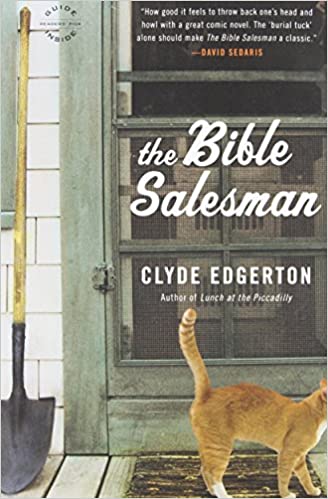
The Bible Salesman ~ A Capsule Book Review

The Bible Salesman book cover

The Bible Salesman
~ A Capsule Book Review by Allen Kopp ~

The year is 1950. Henry Dampier is a twenty-year-old traveling Bible salesman, living in the Southern United States. He was raised in a small town by a loving aunt and uncle. His father was killed when he was hit in the head by a tree limb on a passing truck. His mother is…well…she’s unavailable. Henry sells the Good Book because he believes in its message. He is innocent, gullible and too young to know what the world is really like.

When Henry meets Preston Clearwater (not his real name), Henry is taken in by him. Preston tells him he’s working undercover for the FBI, while in reality he’s working for an auto-theft ring. Preston offers Henry a job. Henry is the perfect dupe for a professional criminal like Preston because he believes what he is told and doesn’t ask too many questions. He accepts Preston’s job offer, believing he is entering into an honorable profession that involves the FBI. He will travel around with Preston from place to place, always on the go, driving stolen cars to wherever Preston wants them. He will, however, continue to sell Bibles.

In his travels, Henry meets a girl named Marlene Green, working at a fruit-and-vegetable stand in a little country town. He is instantly attracted to her, as she is to him. After a couple of dates, he decides he wants to marry her. That won’t be so easy, since he is a criminal and doesn’t know it yet.

One a brief vacation with his family, Henry introduces his attractive sister to Preston Clearwater. Preston is taken with the girl’s beauty and grace, even though he is about forty and she is considerably younger. (People say he looks like Clark Gable, with his stick-out ears.) The sister already has a fiancé, but she falls in love with Preston and is willing to forget about the boy she has said she will marry.

Henry always seems to be protected in life by his innocence and goodness, regardless of what criminal practices he is (unknowingly) engaged in. Life will be good to him because that’s the kind of book this is.

Clyde Edgerton (born 1945) is one of America’s best writers. His novels are decidedly “light” reading, but that doesn’t diminish their literary merit. They are breezy, fun to read, and beautifully written. When you see Mr. Edgerton, tell him I’m a big fan and have read all his books and most of them more than once.

Copyright © 2022 by Allen Kopp

The Thanksgiving Guests ~ A Short Story

Thanksgiving 2021

The Thanksgiving Guests
~ A Short Story by Allen Kopp ~
 

She placed an ad in the newspaper: My husband and I have no family and are alone. We are looking for a poor family to spend a bountiful Thanksgiving with us. Please contact Mrs. Griselda Pinkwater at the phone number below. We look forward to hearing from you.

In the days leading up to Thanksgiving, she expected a flood of calls but received only one, from a woman named Carlotta Knuckles. She said she saw the ad in the newspaper and showed it to her husband. After they talked it over, they decided they would like to apply.

“There’s no applying,” Mrs. Pinkwater said. “If you and your family want to come, you are welcome.”

“Oh, thank you!” Mrs. Knuckles said. “I’m sure we qualify as poor, but just how poor, I really couldn’t say. We have more than the air to breathe and the clothes on our backs, but still we’re poor.”

“Well, poor is poor,” Mrs. Pinkwater said. “I’m sure you’re poor enough. And how many of you will there be besides you and your husband?”

“We have two half-grown children, Bixley and Chickpea.”

“Shall we say about one o’clock on Thanksgiving Day, then?”

“Oh, yes!”

Mrs. Pinkwater gave Mrs. Knuckles the address. Mrs. Knuckles wrote it down and the conversation ended.

“What do you think?” Mrs. Pinkwater said to her husband, Mr. Gunter Pinkwater. “We have some takers!”

“What do you mean?” Mr. Pinkwater asked.

“I’ve located a poor family to come and share Thanksgiving dinner with us. Their name is Knuckles.”

“That’s kind of a funny name, isn’t it?” he said.

“All names sound funny when you first hear them.”

“Are you sure you don’t want to get them here just so you can rob them?”

“Why would I want to rob them? They’re poor.”

“Poor in spirit or just poor?”

“I think we can rely on a literal interpretation in this instance,” she said.

“What if they plan on coming here and robbing us when it becomes apparent to them that we are not poor?”

“Oh, Gunter!” she said. “I’m too kind and too pure to ever think of anything like that.”

“Well, it’s your funeral,” he said.

“It will be my little social experiment. I’ll write a tract about it for the ladies’ club and it’s sure to get me elected president, or at least vice-president.”

“So that’s your motive,” he said.

On Thanksgiving morning, Mrs. Pinkwater felt her nerves on edge and began drinking large quantities of wine to soothe them. Had she made a mistake in inviting a family of strangers into her home? What if she had nothing in common with them and nothing to say? What if they were dirty and smelled bad? If she felt the need to get rid of them, she would just lock herself in her bedroom and let her husband eject them in his own way. He could always say that she had just come down with a horribly contagious disease and the house was under quarantine. God willing, it wouldn’t be necessary.

At a few minutes before the hour of one o’clock, the doorbell rang and Mrs. Pinkwater went to the door herself, rather than allowing the maid to do it. When she opened the door, she had the surprise of her life. The Knuckleses were not what she expected. They were a family of four tiny midgets.

“Oh, my!” she said.

“Mrs. Pinkwater?” the woman, who would, of course, be Mrs. Carlotta Knuckles, said in her squeaky little voice.

“Why, yes, my dear!” Mrs. Pinkwater said. “Please come in!”

She held the door while the Knuckleses came into the house in a single file. The maid stepped forward to take their coats.

“Mrs. Pinkwater,” Carlotta Knuckles said, “I’d like you to meet my husband, Mr. Quincy Knuckles.”

Mr. Knuckles stepped forward after slithering out of his coat and took Mrs. Pinkwater’s hand in his own and kissed it. “Charmed, I’m sure,” he said.

“And these are my children,” Carlotta said, “Bixley and Chickpea.”

Bixley shook Mrs. Pinkwater’s hand. “I’m Bixley,” he said. “I’m the smart one in the family.”

Chickpea put the tip of her index finger to the bottom of her chin and curtseyed. “I’m Chickpea,” she said.

“Why, they’re just so cute!” Mrs. Pinkwater said. “Are they twins?”

“Bixley is the older of the two,” Mrs. Knuckles said.

“Yeah, by two years!” Bixley said.

“Well, they’re the same size so I figured they were the same age.”

“Yeah, and not only the kids are the same size, but the parents are the same size, too,” Bixley said. “I’ll let you in on a little secret about midgets. We’re as tall as we’re ever going to be. There aren’t any tall midgets. We’ll all the same size, no matter what age we are.”

“We don’t really like the word ‘midgets’,” Mrs. Knuckles said. “We prefer ‘little people’.”

“I’m a midget,” Bixley said. “It’s good enough for me.”

Mrs. Pinkwater took the midgets into the living room. “Make yourselves at home,” she said.

Mr. Knuckles climbed into the wingback chair, turned around and sat down, his wingtip shoes straight out in front of him. (He looked like a tiny king on an oversized throne.) Mrs. Knuckles and Bixley and Chickpea struggled onto the couch, one leg up with the rest of the body following, as if they were climbing onto a life raft. Mrs. Pinkwater watched them, frowning, and decided it was best to not try to help them.

“I hope you didn’t have any trouble finding your way to our home,” she said in her best hostessy voice.

“Oh, no!” Mrs. Knuckles said. “No trouble at all.”

“How many rooms do you have in this house?” Chickpea asked.

“Well, let’s see,” Mrs. Pinkwater said. “Counting the two rooms in the attic, we have fifteen rooms.”

Mrs. Knuckles whistled. “I can’t imagine,” he said.

Mr. Pinkwater had been getting dressed upstairs and came into the room wearing his cashmere smoking jacket that he bought in London.

“Oh, there you are, dear!” Mrs. Pinkwater said. “Come and greet our guests!”

“How do you do,” Mr. Pinkwater said politely.

Mrs. Pinkwater watched him to see if he registered any surprise at a roomful of midgets, but there was none. “How about a drink before dinner?” he asked.

“Scotch and soda,” Mr. Knuckles said.

“I’ll have the same,” Mrs. Knuckles said.

“How about a little white wine?” Chickpea asked.

“I’ll have a beer,” Bixley said.

“Do you allow them to have alcoholic beverages, dear?” Mrs. Pinkwater asked Mrs. Knuckles.

“Oh, yes!” Mrs. Knuckles said. “They’re not children, you know.”

“What will you have, darling?” Mrs. Pinkwater asked his wife.

“I’ll have some more of that wine that I was having before our guests arrived,” she said.

Mr. Pinkwater went out of the room and in two minutes he returned bearing a tray with the drinks on it, always the perfect host.

“Dinner will be ready in a few minutes,” Mrs. Pinkwater said as she sipped her wine. “I hope you brought along some great big appetites!”

“I haven’t eaten since yesterday,” Bixley said.

“It certainly smells wonderful,” Mrs. Knuckles said, draining her drink and holding up her glass so Mr. Pinkwater could get her another. “Could I help in the kitchen in any way? Peel the potatoes or anything?”

“Oh, no, honey!” Mrs. Pinkwater said. “Everything is under control. The cook and the maid have taken care of everything.”

“You have a cook and a maid?”

“Yes.”

“They have servants,” Mrs. Knuckles said to her husband.

“We could have had a house like this if we had stayed with the circus,” Mr. Knuckles said.

“You were with the circus?” Mr. Pinkwater asked.

“For twelve years. That’s where I met my wife.”

“After the children were born,” Mrs. Knuckles said, “I insisted that we leave the circus once and for all. I didn’t want the little darlings growing up in that kind of environment.”

“Now I’m working as a part-time janitor in an office building,” Mr. Knuckles said, “and people make fun of me, as if a midget could never have any human feelings. In the circus nobody made fun of me. Everybody respected me. I belonged there.”

“He blames me for the way his life turned out,” Mrs. Knuckles said.

“Who else am I going to blame?” he said.

“I’m going to be a professional wrestler,” Bixley said. “There’s big money in that for a good-looking young midget like me.”

“How many bathrooms do you have?” Chickpea asked.

The maid announced that dinner was ready. They all went into the dining room and Mrs. Pinkwater showed the midgets where she wanted them to sit.

“Do I need to get something for you to sit on?” she asked. “A phone book or a pillow?”

“Oh, no, dear, we’re fine,” Mrs. Knuckles said. “We’re used to sitting in chairs for regular-sized people.”

The midgets took off their shoes and squatted on their haunches on the chairs so that the they were high enough to eat. Awfully uncomfortable, Mrs. Pinkwater thought, but she tried not to think about it.

“Now I’ll say grace,” she said, clearing her throat. “Thank you, Lord, for the food of which we are about to partake; for our heath, home, and country, and on this Thanksgiving Day, thank you especially for the company of friends. In Jesus’ name we pray. Amen.”

“Amen,” Mrs. Knuckles said, but she was the only one who bothered.

The midgets were dazzled by the abundance of the Pinkwater table. There were all the traditional dishes—turkey, dressing, sweet potatoes, big bowls of carrots and green beans—and in prodigious quantities. It looked like a table setting in a dream of heaven.

“My goodness gracious!” Carlotta Knuckles exclaimed. “Everything is just  supreme-o, Super-duper deluxe! I’ve never seen anything like this outside of the motion picture screen!”

After dinner Chickpea sang My Heart Belongs to Daddy and The Lady is a Tramp in a surprisingly strong, clear voice, while her mother accompanied her on the piano. Then Mr. Knuckles and Bixley moved some of the furniture out of the way and gave a demonstration of tumbling to the delight of Mr. and Mrs. Pinkwater.

“I keep in shape,” Mr. Knuckles said, patting his belly, “for the day when I can return to the circus.”

Mr. Pinkwater was showing Mr. Knuckles his collection of antique firearms in the den when the police arrived and took Mr. Knuckles away in handcuffs.

“How the hell did you know I was here?” Mr. Knuckles said as he was being taken out the door.

“What did he do?” Mrs. Pinkwater asked Mrs. Knuckles.

“He busted out a window of a pawn shop with an artificial leg.”

“Why did he do that?”

“He thought he saw a banjo in there that he used to use in his circus act.”

“Did he get the banjo back?”

“No, it turned out to be a different banjo.”

Mrs. Pinkwater patted Mrs. Knuckles on the shoulder. She wanted to pick her up and hug her and kiss her cheek to express her sympathy but knew it wouldn’t look good in front of the police. Instead, she said, “If there’s anything I can do to help, please let me know.”

“I suppose I need to get to the police station and see if he’s going to be eligible for bail or if they’re going to keep him permanently,” Mrs. Knuckles said.

“Do you want me to come with you?”

“Oh, no, dear! I wouldn’t dream of imposing on you in that way.”

At midnight, Mrs. Pinkwater was sitting in front of the mirror in her boudoir brushing her hair when Mr. Pinkwater came into the room.

“It was a wonderful day, wasn’t it?” she said.

“If you say so, dear,” he said.

“I think I’m going to invite them to our Christmas party.”

“Who?”

“The Knuckleses.”

“Quincy Knuckles might still be in jail then.”

“That’s all right. Carlotta can come with the children. We can ask Chickpea to sing some Christmas songs. She has a lovely voice. And, I ask you: who else has a midget singing at their party this season?”

“I’m going to be on a business trip then,” he said.

“I want all the ladies of the club to meet Carlotta Knuckles. They’ll absolutely adore her. If she doesn’t have an evening gown, we’ll get her one. A sparkly thing with tassels.”

“Where do you buy a sparkly evening gown for a midget?” he asked.

“They prefer ‘little people’. It’s more respectful.”

“You’re in love, aren’t you?”

“Tired is what I am,” she said as she crushed out her cigarette and got into bed.

Copyright © 2022 by Allen Kopp

The Plague ~ A Capsule Book Review

The Plague book cover 2
The Plague
~ A Capsule Book Review by Allen Kopp ~

Oran is a large French port on the Algerian coast (Northern Africa) with a population of 200,000. The Plague by French writer Albert Camus is a novel (a fictional account) of a plague that inexplicably strikes Oran in the 1940s. It begins with an influx of dead and dying rats into the city that nobody understands. The rats are found everywhere, in the streets, on the stairs in buildings, in private homes.  

Rats, of course, have fleas, and the fleas bite people and spread disease. The plague (pneumonic or bubonic) is an especially nasty disease that usually leads to agonizing death. As the death toll mounts every day, Oran has no choice but to close itself off from the rest of the world. Nobody can leave the town and nobody can enter. (How this is accomplished is not explained.)

The town is understandably thrown into a panic. How does a town quarantine the sick from the well? How can the sick be cared for with a limited number of people to help? How does the town keep people who might be infected from escaping the town? How can people in the town communicate with the outside world since letters might be infected with the disease? How long will the plague last? Is there any reason to hope the plague will go away as unexpectedly as it arrived? How much help can the town expect from the outside world? How can the people of the town be expected to carry on in the face of such awfulness?

Dr. Bernard Rieux is the main character in The Plague and the narrator of the story. His life every day is a living hell. He stands by helplessly as his friends and neighbors die of the disease. People look to him for answers he doesn’t have. He’s an unassuming man not given to heroics. His wife is ill (with something other than the plague) and in a sanitorium in another location.   

The people of the town behave the way people usually do in a crisis. There are acts of bravery and sacrifice, while many people in the town try to enjoy themselves any way they can, because who knows who will be the next to go? One man plots his escape from the town to return to his lost love. Another man is happy, somehow, for the plague and thrives during the epidemic. Others go the fatalistic, religious route, believing the plague is a judgment from heaven. Some of the very good people die from the disease, while some of the bad people go unscathed. Isn’t that always the way?  

The Plague, first published in 1947, is one of the most celebrated novels of the twentieth century. It’s a timeless and relevant story that might be set in any country in any time. It’s not always easy to read. Not for the faint of heart. After you’ve read it, you’ll feel like you’ve been to hell and back.

Copyright © 2022 by Allen Kopp


Fatherland ~ A Capsule Book Review

Fatherland book cover

Fatherland
~ A Capsule Book Review by Allen Kopp ~

Imagine that Germany has won World War II. The Third Reich has absorbed many countries and extends all the way to the Caspian Sea. Berlin is the largest city in the world with ten million people, filled with magnificent monuments and buildings. German military might has never been equaled anywhere in the world. Adolf Hitler is 75 years old. He is revered as a God. His birthday is a national holiday called Reichstag. This is the “alternate history” premise of Fatherland, a novel by Robert Harris.

Xavier March is the principal character of Fatherland. He is a police inspector. Though a member of the “establishment,” he is a less-than-enthusiastic party man. He is always under suspicion. His ex-wife and his ten-year old son have both denounced him.

When the body of a high-ranking Nazi, Josef Buhler, is found on the banks of the Havre River outside Berlin, the plot is set in motion. As Xavier March investigates the death of Josef Buhler, he uncovers a conspiracy: Nazi Party officials are systematically being murdered. What do these men know, what did they see, and why are they being “removed?” Xavier March is the perfect police investigator to find out the answers because he isn’t a very good party member anyway. A truly loyal investigator would scuttle what he discovers and make sure the world never knows.

Divorced as he is, Xavier March needs a love interest. This is where Charlotte “Charlie” Maguire enters the scene. She is an American journalist. She and Xavier March make the romantic perfect pair to investigate the mystery. After many twists and turns, the two make a startling discovery: the Nazis who are being murdered all attended the Wannsee Conference in 1942, in which the “Final Solution” of the Jews was planned. The world doesn’t know about the Final Solution. It is a closely guarded secret that was never supposed to be made public.

Fatherland by Robert Harris is a (rather tedious at times) detective story (not exactly Agatha Christie, though). We have bad Nazis doing terrible things. (Are there ever any good Nazis?) We have an unseen Adolf Hitler, adored by his people. His birthday is a national holiday lasting several days. Our main character, Xavier March, is an individualist, and we know that individualism doesn’t go over very well with Nazis. Our message to him is this: Get out of Nazi Germany if you want to go on living.

The thing I liked best about Fatherland is the unreal quality of Nazi Germany having won the war and lording it over the whole world. In the alternative reality of Fatherland, Berlin is unequaled anywhere in the world for splendor and magnificence. In reading Fatherland, I was reminded of another alternate-history story, The Plot Against America, by Philip Roth, in which right-winger and Nazi appeaser Charles Lindberg becomes President of the United States in 1940, meaning that America never enters the war. After Lindbergh screws up the entire country, the lefties move in and save the day, however. This is truly alternate reality.

Copyright © 2022 by Allen Kopp

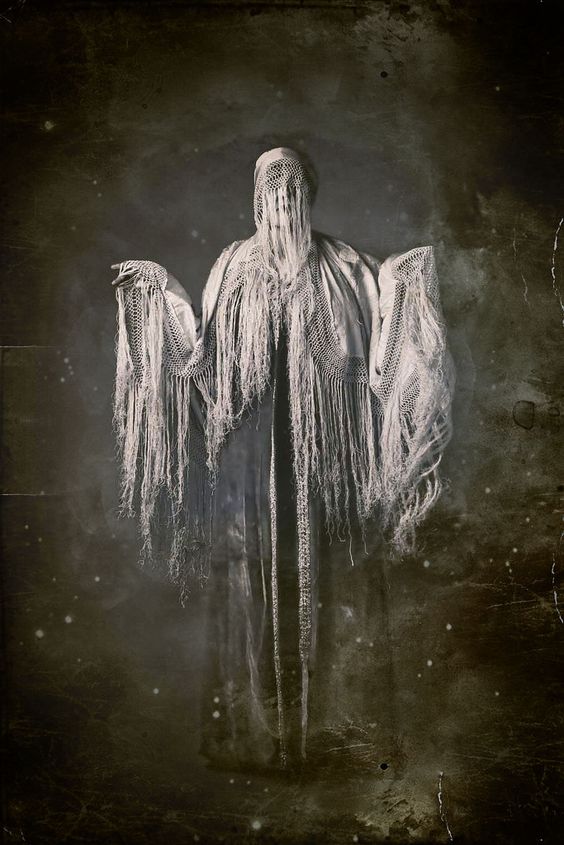
All the Spirits in the Place ~ A Short Story

The Spirits in the Hotel image 3
All the Spirits in the Place
~ A Short Story by Allen Kopp ~

I always liked staying in a good hotel, even one that was falling apart and hadn’t seen a paying guest in fifty years. The Hotel Argyle was on the riverfront, in a cluster of other derelict buildings. It was twenty stories tall and could be seen from a long way off because the hotel name had been painted in huge letters on the side of the building. It stood as a symbol of urban blight. There’s nothing spirits love more than urban blight.

I walked into the lobby of the Argyle and was surprised to see a ghostly apparition at the registration desk. He seemed to be made of purple-and-green smoke. He gestured to the registration book and I knew what to do. It must have been somebody’s idea of a joke because spirits don’t use the names they had when they were alive. I made a little mark on the book. That seemed to satisfy him because he smiled his grotesque smile and gestured for me to take the stairs.

There were many vacancies at the Argyle. I would venture to guess that I could pick almost any room, on any floor, and it would be vacant. I went all the way to the top floor, the twentieth, and found the room I wanted at the end of the hall. It showed no signs of occupancy, so I took it as my own.

I was a tired old spook. I had traveled a long way to get here. I needed a rest, so I was happy for that reason that the hotel was quiet. The other spirits in residence were probably sleeping, since it was the middle of the day and the sun was shining brightly. If there’s anything a spirit hates, it’s bright sunlight.

I stared out the window at the skyline of the city for a while and then, hovering near the ceiling, I went into a trancelike state, which was as near as I ever came to sleeping. As long as I’m not disturbed, I can stay in this state for years at a time, but, of course, when you’re a spirit, a year means nothing. We think in terms of eternity. Time has no meaning.

In this trancelike state, I thought of—dreamed of—many things. I had been in the spirit world now for eighty years. I was only thirty-five when I crossed over. I had two wives when I was alive. I regret that I wasn’t very kind to either of them. I had a drinking problem. Luckily there were no children. I would have been a terrible father.

After my divorce, I had no job and no money, so I went back home to live with my mother. She and I never understood each other. We fought constantly. I should have known better, even if she didn’t. She nagged me about my drinking; she thought I could stop if I only tried. She wanted me to go to church with her the way I did as a child. She thought if I just read my Bible I’d be the kind of man God wanted me to be.

I got a part-time job driving a truck. I was never that keen on driving. I hated it. All my organs were pickled in alcohol. One hot July afternoon, my hundred-proof heart stopped when I was parked on a street downtown. I took off my shoes, put them side by side, laid down on the seat, and died. I knew I was dying and I didn’t care. I thought it was the best thing that could happen to me.

When I found myself in the spirit world, I was surprised there was any kind of existence after death. I thought it was punishment for all the bad things I had done. Everybody else went to heaven, I thought, but not me. That, of course, wasn’t true. The spirit world is teeming with spirits who never made it to heaven.

That night I met two of them. I was going out for a little city night life when I met them in the lobby of the hotel. I remembered them from before, a long time ago, in another incarnation. They went by the names Jocko and Howdy. They recognized me immediately and I them.

“We heard you were here,” Jocko said. “When did you get in?”

“A few days ago. I’ve been resting up in my room on the top floor.”

“We were just going out to do the town,” Howdy said. “Why don’t you join us for old time’s sake?”

“I’ll go if you promise not to scare me too much,” I said.

Hah-hah-hah!”

On our way downtown, Jocko, Howdy and I walked side by side, as if we were living instead of dead.  Howdy made a show of knocking people out of the way but, of course, they didn’t know he was there because he was invisible to them and, also, they were solid and he wasn’t. It’s only fair to mention that we met a few other spirits, but they were mostly in haughty groups and didn’t pay any attention to us. Howdy would get into a brawl with some of them if he could. He was a brawler and a mischief-maker.

On the way downtown, I asked Jocko and Howdy if the Hotel Argyle was a good place for a spook to live.

“It’s dead most of the time,” Jocko said.

“What do you mean?”

“Not much action there, man,” Howdy said.

“It seems perfect to me,” I said. “An abandoned hotel on the riverfront of a major city. Doesn’t it abound with ghosts?”

“Yeah, but ghosts are boring if they’re not doing anything,” Jocko said.

“So, you’re saying the ghosts in the hotel are all retired?”

“Well, something like that.”

“Don’t they like to scare little girls? Make them scream?”

“Yeah, but that’s the point. There aren’t any little girls to scare. What’s the fun of having the ability to scare people if there aren’t any people to scare?”

“You have to find out where the people are and scare them where they live,” I said.

“The people who own the hotel should turn it into a haunted-house attraction for Halloween,” Jocko said. “A lot of people would pay good money to tour a vintage hotel full of real ghosts instead of fake ones.”

“The people who own the hotel are dead,” Howdy said.

“The city owns the hotel,” Jocko said. “They’re just waiting for the right time to bring in the wrecking balls.”

“If they tear it down, they’re going to put a lot of ghosts out of a home,” I said.

“Not so many. Most of the spirits moved on a long time ago. Only losers stay at the Argyle now.”

“I was just beginning to like the atmosphere,” I said. “I had to leave my last home because a vengeful witch started throwing fireballs and burned the place down.”

“You have to watch out for those fireball-throwing witches!” Howdy said.

“The best way to deal with them is to cut off their heads and then burn their bodies,” Jocko said. “You have to be sure to remember to burn their bodies because some of them can go on living without a head.”

“Here, now!” Howdy said. “Let’s stop talking about witches and have some fun!”

Howdy was one of those spirits who engage in mayhem. He caused two cars to collide and then doubled over with laughter. When I asked him how he did it, he said it was a secret he learned during the war.

“What war was that?” I asked, but he didn’t answer me.

We couldn’t go to a bar or a restaurant and sit at a table the way other fellows do, so we walked all over downtown. We went into a movie theatre and watched part of the movie that was playing.

“I don’t like this movie!” Jocko said after a while. He then caused the projection equipment to break down when the movie was halfway through.

“That’s the way it’s done,” he said, laughing hysterically.

We entered a library and did some moaning and then we pulled down some shelves of books. Pretty tame stuff, but spirits have to make their own kind of fun.

Next we went to a dance hall where men buy tickets and use them to dance with weary-looking dames. It was a sorry-looking spectacle. I don’t know which was worse, the men or the women. What fools these mortals be.

We stood apart from the crowd against the wall. Knowing we were watching him, Howdy made as if to cut in on certain dancing couples, but he only brushed up against the ladies. They could feel it, of course, but not see it, so they were confused about what was happening to them. Some of them thought somebody was playing a trick on them. Maybe some of them knew it was spirits, but I doubt if any of them were smart enough to figure that out.

After the dance hall, we went to the oldest and biggest cemetery in the city. There were some really old corpses there—Civil War and before. The place needed some livening up. We built a small fire and joined hands and danced around it. We moaned and sang and chanted. Soon we had a couple of dozen spirits gathered around. They were delighted  we were there. They were happy to join in any kind of foolishness. They danced and sang and were happy.

Howdy, always the smooth operator, found himself a lady spirit. She was wearing a long, flowing white dress and a tiara on her head. She looked like a queen. She made eyes at Howdy, he made eyes at her, and then they joined hands and went off together into the darkness.

“How will we find him when it’s time to go?” I said to Jocko.

“Don’t worry about Howdy. He’ll make short work of her.”

We made merry in the cemetery until the first traces of dawn began to light up the eastern sky. Then the spirits reluctantly began to drift back to wherever they came from. Surprised that the night had passed so quickly, Jocko, Howdy, and I went back to the Argyle. It had been a most enjoyable evening.

We returned often to the cemetery, where we made some good friends. The spirits there were always happy to see us. We brought the good times with us. I had never had so much fun before.

I began spending all my evenings with Jocko and Howdy, resting in my room at the Argyle during the daylight hours. We took in all the attractions that the city had to offer. We spooked people left and right, sometimes causing them to doubt their own sanity. Howdy was a spirit who enjoyed mayhem, such as causing traffic lights to malfunction or streets to flood for no reason. Because we were with him, Jocko and I were more often than not willing to go along with him.

In the winter we had some excitement at the humdrum Argyle. A team of paranormal investigators set up shop in the old ballroom on the tenth floor. They were investigating the existence of life after death. It gave us all a good laugh.

All the spirits in the hotel were excited at the prospect of proving, beyond a shadow of a doubt, that they had lived and that they went right on living after they died.

The psychic investigators (or ghost-hunters as they came to be called) had ultra-sensitive sound-recording equipment that would pick up the sound of a mouse breathing. They all left to go home at night but left their sound-recording equipment running to pick up every infinitesimal (ghostly) sound. In the mornings when they returned, they listened to what had been recorded during the night.

From the first night, all the spirits went to the ballroom with messages for the ghost-hunters. Some of them sang songs or recited poetry. Others laughed, moaned, or gave out with nonsense words of their own devising. Some of the spirits swore or made farting sounds. It was a lot of fun for everybody and a way to express our disdain for the living.

Regardless of what they said about the Argyle, I was beginning to like to and to think of it as home. And then something bad happened, and it wasn’t the wrecking balls, either. A fire started on one of the lower floors and soon spread to every floor. When all the spirits in the place realized what was happening, they all escaped out the windows. We all gathered outside and watched the place burn like a torch and collapse in on itself, all twenty stories. Whatever the cause of the fire, it saved the city a lot of trouble.

Jocko, Howdy and I bucked up the other spirits and urged them not to be downhearted. We had a plan.

We took them all, a procession of two hundred spirits or more (like a parade of the dead), to the cemetery, where we had been made to feel welcome before. All the spirits in the cemetery were delighted we had returned and had brought along lots of new friends. Everybody was welcome. The old cemetery had everything a spirit could want, and more.

Copyright © 2022 by Allen Kopp

All Hallow’s Eve ~ A Short Story

Halloween 2021 3

All Hallow’s Eve
~ A Short Story by Allen Kopp ~ 

(This is a repost.)

Mother stood over him while he ate his dinner of liver and onions. When she decided he had eaten enough, she told him he could go. He ran up the stairs to his room and put on his Halloween costume. A ghost this year, same as last year. Next year he was going to have to be something different. Wearing the same costume more than two years in a row was terrible.

His false face still had dried spit around the mouth, but it was his own spit so he didn’t care. He put it on and checked the entire effect in the mirror, costume, mask and all. Something was missing. Oh, yes, the old derby hat. It was the one thing that made his costume look just a little bit creepy and scary. Without the hat, the costume was just a cheap little-kid’s getup.

Mother was in the living room when he came down the stairs. “Come here, Buster, and let me take a look at your outfit,” she said.

“It’s a costume,” Buster said.

“Oh, don’t you look cute!”

“I’m supposed to look scary!”

“So, where are you going tonight? What are you plans?”

“I’m going tricking-or-treating, mother, the same as every Halloween.”

“Who are you going with?”

“I don’t know. Some of the kids from my class, I guess.”

“What are their names?”

“You want the names of all the kids in my class?”

“Of course I don’t. You’ll be careful, now, won’t you?”

“Yeah, I’ll be careful.”

“Make sure you’re not alone. Wherever you go, go in a group.”

“I don’t care.”

“What?”

“I said okay, I’ll go in a group.”

“Be home by ten o’clock.”

“Mother! It’s Halloween and tomorrow is Saturday!”

“All right, then. Eleven.”

When he finally got out the door, he broke into a run. The evening air felt good after the stuffy house and smelled good, like leaves and burning candle wax. It wasn’t all the way dark yet, but trick-or-treaters were everywhere, mostly little kids accompanied by their mothers.

He met his friends at the corner by the park. Eric was a skeleton, Stan a hobo, and Squeamy the Lone Ranger. Squeamy’s sister, Oda May, stood apart from the others, smoking a cigarette and looked bored. She carried a rubber-and-fur gorilla mask loosely in her hand like a rag.

“What’s Oda May doing here?” Buster asked.

“My mother wouldn’t let me go out without an adult,” Squeamy said.

“She’s fifteen!”

“I guess that’s enough of an adult.”

“Let’s get going, you losers,” Stan said, “before all the good candy is gone!”

Oda May flipped away her cigarette and put on the gorilla mask and they headed for the neighborhood on the other side of the park where all the best houses were.

It was a lucrative neighborhood. Three-quarters of the houses had their porch lights on. When people took one look at adult-sized Oda May in her gorilla mask, their smiles usually faded.

The treats were good, Hershey bars and popcorn balls instead of stale jelly beans. After three blocks, their bags were starting to get heavy. They sat down on the curb to rest for a while.

“That’s how it’s done,” Oda May said, hefting the bag of candy appreciatively between her legs. “If they’re just a little bit scared of you, they’ll fork over the candy quick enough so they can get rid of you.” She lit a cigarette without taking off the gorilla mask.

“Where to now?” Buster asked.

“I don’t know about you little turds,” Oda May said, “but I’m going to go meet my boyfriend.”

“What about us?” Stan asked.

“You’re on your own. I’ve played nursemaid long enough.”

“It’s all right,” Squeamy said. “We don’t need her.”

“And don’t follow me,” she said, “or somebody’s gonna lose some teeth!”

“Leave the mask on!” Squeamy called after her. “Your boyfriend might like you better that way!”

“What will she do with all that candy?” Buster asked.

“Probably give it to her boyfriend.”

“Who is this boyfriend, anyway?” Eric asked. “Why don’t we get to meet him?”

“He’s a criminal, I think,” Squeamy said. “She doesn’t want me to see him because she’s afraid I’ll tell on her. He’s twenty-three years old. I’ll bet he’s really terrible looking, like a convict.”

“I’d like to see him,” Stan said.

“Hey, I stole some of her cigarettes when she wasn’t looking,” Squeamy said, passing them around and lighting them.

“Boy, I like smoking!” Eric said. “I inhale the smoke deep down into my lungs and let it stay there.”

“Me too,” Stan said. “I’m always going to smoke for as long as I live.”

“My mother told me if she ever caught me smoking a cigarette she’d knock it down my throat,” Squeamy said.

“Doesn’t she smoke?” Eric asked.

“Of course she does. They all smoke.”

“Then why does she care?”

“Because I’m in fifth grade.”

“She’s a hypocrite,” Stan said.

Buster had never smoked before except for a quick puff off his mother’s cigarette when she wasn’t looking. He didn’t like the taste of it, but he wasn’t going to be the only one not to smoke.

Several times, he took the smoke into his mouth and quickly blew it out again. He wanted to have the others see him with smoke coming out his nose like a dragon, but he wasn’t sure how to do it without inhaling.

“Don’t you like smoking, Buster?” Squeamy asked.

“Yeah, I like it all right. I smoke all the time when my mother isn’t looking.”

“Well, finish your cigarettes, ladies,” Eric said. “We’ve still got a lot of territory to cover.”

They went over a couple of blocks to another neighborhood where the treats were bound to be good. They covered several blocks, both sides of the street, in just under an hour.

“My bag is getting really heavy,” Squeamy said. “I think I’d probably better go on home now.”

“Somebody gave me a guitar pick as a treat. Isn’t that weird?”

“Hey, it looks like it’s going to rain! If our bags get wet, they’ll bust through on the bottom and all our candy will spill out!”

“What time is it?”

“I think it’s about a quarter to ten.”

“I think we should call it a night.”

Some older kids, sixteen and seventeen, came up behind them with the intention of stealing their candy, so they began running furiously into the dark to get away from them. Stan knew the neighborhood better than the others, so they all followed him.

He led them around in a circuitous loop over to Main Street, where there were lots of lots of lights, people and cars.

“I think we outran them!” he said.

“Can you imagine the nerve?” Eric said. “We’ve been out all night trick-or-treating for our candy, and somebody thinks they can just come along and take it from us? What is the world coming to?”

Some of the businesses on Main Street were giving out treats. A lady at a bakery gave them day-old pumpkin cookies, which they devoured like hungry wolves.

A man standing in front of a tavern was giving out treats from a large plastic pumpkin. “You kids need to be home in bed,” he said.

“If we come inside, will you give us a beer?” Stan asked.

“Come back in ten years,” the man said.

There was a big crowd at the Regal Theatre, a long line of people waiting to buy tickets to the Halloween double feature: Bride of the Gorilla and The Terror of Tiny Town. Anybody in costume could get in for half-price.

“If we had enough money, we could go,” Stan said.

“Aw, I can’t stay out that late,” Buster said. “My mother would come looking for me.”

They were about to walk past the theatre, but Squeamy spotted Oda May in the ticket line in the gorilla mask and stopped. She wasn’t alone, either.

“She’s with a little kid and he’s a cowboy!” Squeamy said. “Her boyfriend is a child and a cowboy! That’s why she didn’t want us to meet him!”

From where they were standing, they all had a good look at the little cowboy. When he turned around to look at the line behind him, Buster saw his face. “That’s no little kid,” he said. “That’s a midget!”

“A what?”

“Oda May’s boyfriend is a midget and his face is all wrinkled! He must be thirty years old!”

“Oh, boy!” Squeamy said. “I’m really going to tell on her now!”

“I think we should go over and say ‘hi’ to her,” Eric said.

“No!” Squeamy said. “She’ll think we’ve been following her!”

They stood and watched Oda May and the midget cowboy move up in the line. When it was their turn, Oda May moved around behind the midget, put her hands on his waist and lifted him up so he could buy the tickets and then set him down again. Several people in line behind them laughed, but they seemed not to notice.

“Now I’m seen everything!” Squeamy said. “Can you imagine what their children will be like? I don’t even want to think about it.”

“Let’s go,” Stan said. “It’s ten o’clock and it’s starting to rain again.”

They decided to walk home with Stan, since he lived the closest. The interesting thing about Stan was that his father was an undertaker and the family lived above the funeral parlor. It was a subject of endless fascination to Stan’s friends.

“I think I’m going to call it a night,” Stan said when they were at the corner near his house. “Thanks for walking me home.”

“Do you mean you’re not going to ask us in after we’ve come all this way?” Squeamy said.

“Do you have a body in a casket we can look at?” Eric asked.

“Stan’s right,” Buster said. “I should be getting home, too.”

“I have to go to the bathroom,” Squeamy said. “I don’t think I can wait until I get home.”

“Oh, all right!” Stan said. “You can come in but you have to wipe your feet first.”

Stan’s parents were out for the evening, so they had the place to themselves. Stan took them down to the basement to show them around but made them promise not to touch anything. First he showed them the room where the embalming was done with its white cabinets full of jars and bottles and then a separate room where bodies were dressed and prepared for burial. The most impressive part of the tour was the casket room, where more than fifty caskets were opened up so people could see inside them. Eric, Buster and Squeamy took turns taking off their shoes and getting into a casket to see what it felt like, while Stan closed the lid on each of them for a few seconds and then made them get out.

“My dad wouldn’t like it if he knew we were down here,” he said.

“Let us know when there’s a body so we can come back and see it,” Eric said.

“I’ve seen plenty of dead bodies. It’s people you don’t know. You don’t feel anything looking at them.”

“You are so lucky! I’ve never seen a dead body!”

“I need to get home,” Buster said. “It’s getting late.”

Buster walked part of the way home with Squeamy and Eric, but they left him at the corner by the church and he had to walk the last four blocks alone. He held his bag of candy in his arms because it was heavy and soggy and he didn’t want the bottom breaking through. He didn’t see a single other person on his way home. Everybody was finished for the night. Halloween was over for another year.

Mother was sitting on the couch in her bathrobe and slippers watching a Charlie Chan movie on TV. “Did you have a nice time?” she asked.

“Yeah, it was okay.”

“I’m glad you’re home.”

“Why?

“I always worry about you when you’re out by yourself.”

“I wasn’t by myself.”

“There’s an escapee on the loose killing people. I just heard it on TV.”

“We just missed him.”

“Now don’t eat all that candy at once. You’ll make yourself sick. You still have to eat your fruits and vegetables.”

“I know. I want to go to bed now. I’m tired.”

She was saying something else as he went up the stairs, but he didn’t hear what it was.

He weighed himself on the bathroom scale, first without the bag and then with it. He weighed eighty-four pounds without the bag and ninety-five pounds with it. Eleven pounds of candy. One pound for every year of his life.

He undressed and put on his pajamas and set the bag of candy on top of the chest of drawers where he could see it from the bed. He got into bed, took one last look at it, turned off the light. Before he could have counted to ten, he was asleep.

Copyright © 2022 by Allen Kopp