Send Me a Postcard

Send Me a Postcard ~ A Short Story by Allen Kopp 

(Published in The Fringe Magazine, April 2011.)

Since Paul’s mother lost her job at the hospital, she’s not the same anymore.  She stays in bed a lot of the time during the daylight hours, something she never did before. If she’s not in bed, she’s sitting in front of the TV in her bathrobe smoking cigarettes and watching soap operas and game shows with the sound turned all the way down. He stands in the doorway looking at her and she doesn’t seem to know he’s there until she sees his shadow on the wall.

“What are you doing?” she asks, craning her neck around to look at him. “You creep around the house like a thief.”

“I’m just looking at you,” he says. “What’s for dinner?”

“Oh, is it time for dinner?” she asks, looking at the clock. “I didn’t think it was that late.”

He goes into the kitchen and fixes himself a peanut butter sandwich. He is glad to see she has been to the store and bought some fresh bread while he was at school. He puts the sandwich on a plate and goes back into the living room where she is.

“Just help yourself to whatever you can find in the kitchen,” she says. “I don’t feel like cooking dinner.”

“Did you eat anything?” he asks.

“I don’t have any appetite,” she says. “I’ll have something later.” She reaches for her pack of Lucky Strikes and takes one out and lights it and inhales deeply.

He looks at her skeptically but she doesn’t know it. “Smoking is bad for you,” he says.

“So I’ve heard.”

“I’m not ever going to smoke.”

“Bully for you.”

“How about if we go to a movie tonight? There’s a western at the Criterion and a comedy at the Gem.”

“How about if we stay at home and watch TV? There’s a western on one channel and a comedy on another one, and you don’t have to pay to see them. I’m not made out of money, you know.”

He marvels at how mothers always say they’re not made out of money, but he says nothing because he doesn’t want to argue. He would someday like to see a mother made out of money, though. That must be a sight worth seeing.

“I have to write a book report,” he says.

“How lovely for you.”

“Do you want to help me?”

“What’s the book?”

A Tale of Two Cities by Charles Dickens.”

“Isn’t that kind of a grown-up book for eighth grade?”

“I read grown-up books all the time.”

“Oh, yes, I forgot. You’re already quite the little man, aren’t you?”

“I chose that book to read from the list. I’m the only person in the class who read it.”

“Isn’t that about the French Revolution or something?”

“Yes, they’re killing all the aristocrats. They’re mad at them because the king and his wife are rich and they don’t care that the peasants are starving, so the peasants want to kill all the aristocrats, whether they’ve done anything wrong or not. Do you know how they kill them?”

“Let me guess,” she says. “They cut off their heads with a thing with a big blade that drops down.”

“It’s called a guillotine. It was invented by a Dr. Guillotine. He was a Frenchman. They make them stick their heads through a hole and tie their hands behind their backs and then they let the blade drop down and wham! it slices off their heads.”

“Sounds divine,” she says. “I’ll be sure and add that book to my reading list.”

“They say it doesn’t hurt, but I don’t know how having your head cut off could not hurt.”

“Why don’t you try it some time and let me know?”

“I saw Daddy when I was walking to school today.”

“Where?”

“He drove past in a black car.”

“It must have been somebody else. His car is blue. Was it a new car?”

“I don’t know.”

“You can tell a new car from an old one, can’t you?”

“I think it was a new car.”

“Well, the next time you see him tell him to throw some of that money our way that he’s spending on a new car.”

“I wouldn’t ask him for money.”

“Why not? He’s your father, isn’t he? You wouldn’t be on this earth if it wasn’t for him, so he’s supposed to pay your way. That’s the way it works.”

He notices how many of his conversations with his mother always come around to the subject of money. He tries to steer her in another direction.

“Are you still looking for a job?” he asks.

“Off and on,” she says. “If it’s any of your business.”

“Do you want me to read the want ads to you? I’ll bet there are some good jobs in there.”

“If I wanted to read the want ads, don’t you think I could read them myself? You’re just a two-bit punk and you don’t know anything.”

’You’re just a two-bit punk and you don’t know anything,’” he says, in exact imitation of her voice.

“You’re getting just a little too big for your britches!”

’You’re getting just a little too big for your britches.’”

“Stop it!” she says.

’Stop it!’”

“Don’t you know you’re driving me crazy?”

’Don’t you know you’re driving me crazy?’

“Do you want me to get up from here and come over there and slap you silly?”

“No, I don’t,” he says solemnly, using his own voice again.

“You remind me more of your father every day.”

“Well, what am I supposed to do about it?”

“Run away from home and join the circus. You could be one of their freaks.”

He knows she’s only teasing him, but remarks like that hurt him a little, he has to admit. It’s as if she doesn’t want him around her anymore.

“When I’m old enough, I’m going to join the navy.”

“Good for you,” she says. “Serve your country. See the world. Send me a postcard.”

A man and woman are kissing on the TV. Their noses are pressed together.

“Can we change channels?” he asks.

“No!” she says. “I’m watching this!

He goes into the kitchen and gets an apple and goes out the back door with it and around the house and sits on the front steps, between the bushes that grow on both sides. He throws the apple up in the air a couple of times and catches it and then takes a bite out of it. The juice is running down his chin when he sees a black car pull up to the curb in front of the house, the same black car he saw that morning.

Somebody in the car motions to him. Fascinated, he stands up, throws down the apple, and crosses the lawn toward the car.

“Hello, son!” his father says brightly, rolling down the window.

“Did you get a new car?” he asks. He can’t think of anything else at the moment to say.

“No, it’s a friend’s car. I’m just borrowing it. How are you?”

“I’m all right. When are you coming home?”

His father turns off the engine and puts both hands on the steering wheel. “I’m not,” he says. “How’s your mother?”

“She’s fine.”

“Don’t tell her I was here.”

“All she has to do is look out the window and she’ll know you’re here.”

“Well, this is just between you and me.” He reaches into his pocket and takes out some money and hands his son a twenty-dollar bill. “Get yourself something good to eat,” he says.

“Thanks.”

“Well, I just wanted to see you for a minute and see how you are. I’ve got to be going.” He reaches to start the engine again.

“Daddy, can I come and live with you?”

“No, I’m afraid that’s out the question right now. I’m staying with friends. We’ll talk about that later when I’m more settled.”

“Mother hates me.”

“She doesn’t hate you. She loves you very much.”

“She’s crazy. She’s going to smoke herself to death and she doesn’t eat any food.”

“Well, she’s just going through a rough patch right now. You’ll understand when you’re older and not hold it against her.”

“I’m going to run away from home.”

“No, you’re not. You just stay put for now. We’ll talk more about a different kind of arrangement later, after things have settled down.”

He starts the engine and looks over his shoulder to see if any cars are coming. He makes a u-turn in the middle of the street and speeds off in the opposite direction from which he came with a little squeal of tires.

When Paul goes back into the house, his mother is waiting for him at the door.

“Who was that you were talking to?” she asks.

“Nobody. A man looking for the hospital.”

“That was a black car, wasn’t it?”

“I think it was.”

“Did he try to get you to get into the car with him?”

“Of course not.”

“Did you tell him how to get to the hospital?”

“I tried to.”

At ten o’clock that night his mother is still in front of the TV, but now she’s asleep with a bottle of gin on the table beside her. On the TV is a skinny old man in a tuxedo doing a tap dance in front of a wall of mirrors that reflect the people watching him.

He goes into his room and shuts the door, moving the bureau in front of the door so nobody can come in. He starts to work on his book report; writing it should be easy because he’s already read the book, but he can’t seem to concentrate. Luckily it’s not due for a few days.

He turns off the light, finding the dark comforting; it makes him feel safe. Far off in the distance he hears a siren. The wind is blowing against the house as if to blow up a rainstorm. He settles under the covers and sighs. The last thought he has before going to sleep is about the guillotine. He wonders if it really hurts or if it’s just like a whisper on the back of the neck. Of one thing, though, he is certain: He will never know for sure.

Copyright © 2012 by Allen Kopp

Shame ~ A Capsule Movie Review

Shame ~ A Capsule Movie Review by Allen Kopp 

Shame is an English movie with an English director with a German leading man playing the part of an American. Handsome mid-thirties New Yorker Brandon Sullivan (Michael Fassbender) seems to have it all. He has a high-powered job and an upscale apartment with a spectacular view of the New York skyline. He has something else, though, and it is the one thing that defines him more than anything else: He is a sex addict. When he isn’t engaged in sexual activity, he’s seeking sexual activity, gratifying himself (you get the picture), or watching porn on the Internet. He is consumed with sex and because he’s so attractive he has no shortage of sexual partners.

We see after a while, though, that no matter how much sex Brandon has, it’s never enough. While constantly seeking gratification of his appetites, he is never gratified. He is an empty shell of a man, a lost soul. He can only relate to people on a sexual level and, once the sex act is finished, there is nothing.

Brandon’s irresponsible younger sister Sissy (Carey Mulligan) shows up one day at his apartment. She has an unhappy past and is a singer of sorts (in a nightclub scene she sings a very slow, bluesy version of “New York, New York”). She has no place to stay and Brandon allows her to stay with him for a few days. He finds, though, that she is an unwelcome burden; she encroaches on his ability to satisfy his appetites. She makes a play for Brandon’s boss and, once the initial conquest is over, she continues to pursue the boss, even though he is a married man with children. Through his sister, Brandon begins to see himself as a he really is and he doesn’t like what he sees.

Shame has an NC17 rating, meaning that the sex scenes are too graphic for an R rating. The sex scenes are not there for titillation, though, as in most movies that venture into that territory. The sex scenes are an integral, organic part of what’s going on in Shame; they are so much a part of the character of Brandon Sullivan that we wouldn’t see his pain—or his shame—without them.

Copyright © 2012 by Allen Kopp

Pass Without Paying

Pass Without Paying ~ A Short Story by Allen Kopp

Lester Fane had been to the store to buy a couple of items that his mother simply couldn’t do without. He was on his way back home, worrying about what other jobs she might decide to make him do, when he spotted Jingo Lanky and his homely sister, Lynette, standing on the street corner up ahead. He was going to turn around and walk home a different way, but he knew that Jingo and Lynette had spotted him so he kept on going.

Jingo Lanky was only a couple of years older than Lester, but he seemed much older. He was as tall as a grown man and he had whiskers and bulging biceps. He smoked cigarettes that he rolled himself; he was said to drink beer and even whiskey and do other adult things that Jingo had only a vague knowledge of. He lived in a falling-down house on the edge of town with his hag of a mother and his eight miserable brothers and sisters. He had been expelled from school and had been in jail more than once for drunken and disorderly conduct and for shoplifting candy and cigarettes and other small items that he attempted, not always successfully, to conceal in his clothing. Everybody who knew him believed he was on his way to living a useless and crime-ridden life and would one day end up in the state penitentiary.

Lynette was about twenty and had been in girls’ reformatory. She had pale, pockmarked skin and orange hair that could only come from a bottle. She wore falsies because her breasts had never developed the way they were supposed to and tight denim skirts that showed the contours of her buttocks.

Lester put his head down and walked faster, believing he could get past Jingo and Lynette without having to speak to them or even look at them. Maybe they wouldn’t even notice him.

“Well, well, well,” Jingo said, grabbing Lester by the upper arm and stopping him. Where in the hell do you think you’re going, you little punk?”

“Let me go!” Lester said.

“I asked where you’re going, you little turd.”

“I’m going home. My mother is waiting for me. She’s sick and I’ve got to take her some medicine.”

“She’s probably been sick ever since she gave birth to a little freak like you.”

“I’m not a freak!”

“What have you got there?” He pointed to the paper bag Lester was carrying. “You got anything to eat in there?” He grabbed the bag and unfolded the top and looked inside.

“Give me that!” Lester said. “It’s none of your business!”

“What is it?” Lynette asked, trying to see inside the bag.

“Looks like…toothpaste and some kind of pills,” Jingo said.

“It’s roach paste and suppositories for hemorrhoids, if you must know,” Lester said.

“What the hell?” Lynette said. “That’s some weird shit!”

“Hey, man, that’s disgusting!” Jingo said. “Who goes to the store and buys stuff like that?” He threw the bag back and Lester caught it.

“Ask him what his mother uses the roach paste for,” Lynette said. “Does she use in cooking when she wants to poison somebody?”

Lester started to run but Jingo grabbed him by the shoulder and held him. “You can’t go until you give me a dollar.” He squeezed Lester’s upper arm painfully.

“You’re hurting me!” Lester yelped. “I don’t have a dollar!”

“You don’t pass until you give me some money.”

“You don’t own the street!” Lester said. “I can pass without paying if I want to.”

“Leave him alone,” Lynette said. You’re going to make the poor little thing cry.”

“Hah-hah-hah!” Jingo laughed, shaking Lester by the shoulders. I wouldn’t want to make the little girl baby cry. You aren’t going to cry now, are you, sweetie pie?”

“You’re a dirty pig!” Lester said.

“Hey, man, you hurt my feelings. Why do you want to go and do that?”

“You’re hurting me!” Lester said. He squirmed to get loose, but Jingo held him immobile.

“Hey, man, do you want to have sex with my sister?

“Oh, come on, now,” Lynette said. “Don’t you think he’s a little young?”

“She’ll have sex with you if you pay her.”

Lynette laughed. “He wouldn’t have enough money to make me want to have sex with him,” she said.

“Let me go!” Lester said.

He saw an old man open his front door, look out, and close the door quickly.

“I’ll bet you’ve got some money,” Jingo said. “Don’t be stingy with an old pal.” He wrapped his arms around Lester and slipped his hands into his pockets. When he saw that his pockets were empty, he let him go. “Hey, you really don’t have any money, do you?” he said.

Lester tried to kick Jingo in the leg but missed. Jingo laughed and held up his hands in surrender.

“Come back in about ten years,” Lynette said haughtily.

“And next time you’d better have some money,” Jingo said, “or you don’t get past. Remember that.”

“Go to hell!” Lester said.

“Is that the best you can do, tough boy?” Jingo said.

“You’re a shit-faced hog and I hope you go to the electric chair!”

“Hah-hah-hah!”

“That’s pretty cruel,” Lynette said. “You ought to be ashamed of yourself for speaking to people that way.”

Lester was trying to think of other names he might call Jingo, when a white car came around the corner very fast and pulled up at the curb. Lester saw right away that it was Harry Harris, the town sheriff, driving the unmarked patrol car. When Harry Harris jumped out of the car without turning off the engine, Jingo Lanky started running.

“Hey, you!” Harry Harris yelled. “Come back here! I want to talk to you!”

Moving with surprising agility for a man of his years, Harry Harris began running after Jingo. In the middle of the next block, just as Jingo was about to cut across somebody’s lawn, Harry Harris overtook him and tackled him, knocking him face down on the ground.

Lester and Lynette watched as Harry Harris cuffed Jingo’s hands behind his back, jerked him to a standing position and brought him back to the patrol car. Lester thought he would enjoy seeing Jingo handcuffed and in the custody of the law, but he didn’t. Jingo was out of breath and his face had suddenly gone white. His nose was bleeding and starting to swell. He had the look of a trapped, injured animal.

When Harry Harris opened the rear door of the unmarked patrol car and began to push Jingo into the back seat, Jingo twisted around toward Lynette.

“Tell mother what happened,” he said, blood pouring from his nose into his mouth. “And tell her I don’t know when I’ll be home again.”

Lester suddenly felt sorry for Jingo and was sorry for what he had said about the electric chair. Maybe he really would go to the electric chair now.

“What did he do?” Lester asked Lynette as they watched the unmarked patrol car speed away.

“What didn’t he do?” she said, shrugging.

“I wonder what they’ll do to him,” Lester said, believing for the first time that maybe Jingo wasn’t so bad after all.

“I’m sorry for what I said about your mother poisoning people,” Lynette said. “I didn’t mean it. I was only making a joke.”

“That’s okay. I know you didn’t mean it. I’m sorry I called your brother a dirty pig.”

“It’s not the first time he’s been called that. Do you want a cigarette?”

“No, I’ve got to be getting home.”

“Maybe I’ll see you around sometime.”

“Yeah,” Lester said. “Maybe so.” When he turned to look at her he saw she was crying real tears. “Can you make it home all right?” he asked.

“What other choice do I have?” she said, cupping her hands around a match to light a cigarette.

Copyright © 2011 by Allen Kopp
The Artist ~ A Capsule Movie Review

The Artist ~ A Capsule Movie Review by Allen Kopp 

The Artist is an odd little movie. It’s as different from most other movies being made nowadays as a Remington manual typewriter is from a word processor. It’s in black and white, it’s silent (except for music and a few spoken lines of dialogue at the end), and it’s shot in 1.33:1 “Academy ratio,” just as in silent-film days, meaning that the image on the screen is slightly more from top to bottom than from side to side to maintain the look and feel of a silent film.

The story involves a fictional actor of the silent screen named George Valentin (played by French actor Jean Dujardin). He is a big star until silent movies become sound movies in the late 1920s. Because he refuses to embrace the new sound technology, his career is essentially over. Somewhere along the line, while he was still a success, he encounters an up-and-coming young actress named Peppy Miller (played by Bérénice Bejo). There is a spark between them but nothing happens and they go along their separate ways.

As Peppy Miller rises through the ranks and becomes a big star of sound films, George Valentin fades and is soon forgotten. His marriage crumbles. His money evaporates as quickly as his fame. He is never entirely alone, though; his terrier named Jack (in almost every scene) and his faithful manservant (James Cromwell) stick with him. Even more importantly, Peppy Miller has never forgotten him and is observing his downward spiral from afar. You know that, with Peppy Miller’s assistance, everything will turn out all right in the end. It is, after all, a comedy.

The Artist is not like anything I ever saw before. I had to keep reminding myself I was seeing a movie made in 2011, rather than one made in 1928. It’s not for everybody, of course, but if you like a different kind of movie-going experience, give it a try. It grows on you. You know you’ve just been dying to a see a retro, 1920s-style silent film in black and white, so climb on board the time machine and have a good time.

Copyright © 2012 by Allen Kopp

Schooled in Depravity

Schooled in Depravity ~ A Short Story by Allen Kopp

John the Baptist was brought before King Herod Antipas and his wife, Herodias. He was disheveled from the rough treatment he had received at the hands of his captors, but he maintained his dignity and his composure. If he was afraid of what King Herod was going to do to him, he didn’t show it.

King Herod looked John up and down, a sneer on his lips. “Are you the Messiah everybody keeps talking about?” he asked.

“No, I’m not him,” John said. “He’s coming, though.”

“How do you know this?”

“How do I know the sun is shining? I know because it is.”

“The man is impertinent,” Herodias said.

“I hear you are a troublemaker,” King Herod said. “You preach sedition wherever you go.”

“Only peace,” John said.

“I hear you are dangerous.”

“I am but a voice crying in the wilderness.”

“You are a reckless cur!” Herodias spat out. “You should bow down before your master. You should kiss the hem of his garment and beg his forgiveness!”

“I have but one master,” John said quietly.

“What are we going to do with him?” King Herod said to himself, but out loud so everybody could hear him.

“Let’s burn him over a slow fire and hear him beg for mercy,” Herodias said.

“Is not your cup of abomination already full enough, woman?” John said.

“Are you going to let him speak to me that way?” Herodias screeched at her husband.

Salome, step-daughter of King Herod, heard the commotion and knew something interesting was going on. She entered the room and stood beside her mother, Herodias.

“I heard you just insult my mother, the queen,” Salome said to John, a cruel smile on her lips.

“I just spoke what is the truth,” John said. “It’s time somebody did.”

“Don’t you know it’s dangerous to insult the queen, the wife of Herod Antipas?”

“When I look at you, child,” John said to Salome, “I see someone who is not yet entirely rotted through with the corruption that permeates this place and these people.”

“What kind of talk is this?” Salome said with a laugh. “It sounds as if you’re giving me some kind of a warning.”

“I am giving you a warning, child, for your own sake. Leave this wicked place tonight while there’s still a chance for you. Leave and never look back. I see when I look at you that you haven’t yet crossed the threshold that these others have crossed. They are beyond redemption, while for you there is still some hope because you are so young.”

“And if I left my home and my mother, just where would I go?” Salome asked.

“The Lord will guide you in your path if you let Him.”

“I have never heard such crazy talk in all my life!” Herodias said. “I say we kill him before he lives one more day. I say we have him tortured and listen to his bones crack!”

“No,” King Herod said quietly.

“What? Do you mean you’re going to let him live?”

“I mean I haven’t yet decided what I’m going to do with him. I want to keep him alive for now until we see how this thing with the Messiah plays out.”

“You coward!” Herodias shrieked. “You’re afraid of him! You’re afraid that the stories you’ve heard of him might be true. You believe he wields some kind of mysterious power that he might use against you.”

“Hold your tongue, woman,” King Herod said, “or I will make you wish you were never born.”

As the guards led John away to the dungeon, Salome watched him go. “I don’t like him,” she said. “He makes my blood turn to ice water.”

That night, when Salome was alone in her bedchamber, she couldn’t stop thinking about John. She imagined him beside her in her bed, his huge hands running over her body, his lips on hers. The thing about John, she realized, was that he moved her in some mysterious way that she didn’t understand. She hated the power he seemed to have over her but also in a way found it thrilling.

The next day was King Herod’s birthday. A huge feast was held in the palace with dozens of honored guests. The food was rich and abundant and the wine flowed freely. There were musicians, dancing girls, acrobats, even a trained bear. King Herod knew how to throw a memorable party.

All during the festivities, King Herod kept his back to Herodias and pointedly ignored her. He was disappointed in her as a wife. She was far too outspoken for her own good or for his; he cringed at the sound of her voice. She was becoming more and more like a thorn in his side that he couldn’t remove.

Salome, on the other hand, was becoming lovelier every day. She had left girlhood behind and was now a woman with a mind and a will of her own. For beauty and cunning, she could match any woman twice her age.

King Herod kept drinking more and more wine. The drunker he became, the more he abandoned caution. “Why don’t you dance for us, Salome,” he said, unable to take his eyes from her. “For me?”

Herodias bristled at these words, but Herod didn’t notice.

“I don’t feel like dancing,” Salome said petulantly.

“There is nothing I would like better at this moment than to see you dance,” King Herod said.

“Why should I?”

“Because your king requests it and today is the anniversary of your king’s birth. Won’t you grant your king a birthday wish?”

“What will you give me?”

“I’ll give you my entire kingdom.”

“And what would I do with it?”

“I have riches that your mother doesn’t even know about, jewels as big as a goose’s egg. They are yours if you will but dance for me.”

“Ho-hum,” Salome said comically, drawing a laugh from those who heard her.

“Anything I have, anything I can get, is yours.”

“You will give me anything?

“You can name your price.”

Everybody knew that King Herod was being foolish but they watched in silent fascination to see what was going to happen. How far would he go to get Salome to dance?

She stood up and assumed a dance posture, her face covered by a veil. As if it had all been rehearsed, the musicians began playing a dance tune.

Salome danced seductively for the assembled guests but especially for King Herod. She swiveled her hips, put her arms in the air, moved her head from side to side. She used her veils to great effect to show off her face and her body. She bent forward and balanced herself on her hands; backward and joined her head with the floor as if she had no bones in her body. She shimmied and she shook. She moved all about the room so as to be seen by everybody; there was no eye that wasn’t upon her. She demonstrated a skill and dexterity that nobody believed her capable of.

When she came to the end of her dance, everyone was silent with awe. King Herod stood up and held out his arms to her and she ran into them.

“That was heavenly!” he said. “It was divine! I’ve never seen anything lovelier. You may name your price, my child, and, no matter what it is, it will not be too great!”

“I’ll tell you what I want,” she said, speaking out so everybody could hear her.

“Yes, what is it, my child?”

“I want the head of John the Baptist on a plate!”

King Herod was surprised at her request. He thought at first she was making a joke. He had offered her untold riches. Why would she want a trophy as grisly as a severed head?

“I don’t think I heard you correctly, my dear. What was that you said you wanted?”

“You heard what I said and so did everybody else.”

“This is the thing you want above all others?”

“I said so, didn’t I?”

“And what will you do with the head of John the Baptist when it is presented to you?”

“I want to look at it.”

“Are you prepared to deal with the consequences, no matter what they are?”

“Yes, yes,” she said with an impatient gesture.

King Herod clapped his hands to summon the guard. He instructed two of his most loyal and obedient men to go below with a large sword and forthwith bring forward the head of John the Baptist on a plate to present to his step-daughter, Salome.

Within minutes, two men came into the banquet hall bearing a tray between them. On the tray was the severed head of John the Baptist. King Herod motioned for them to set the tray on the table on which he and the others had earlier been eating.

Salome approached the head slowly, her eyes glittering with bloodlust. She had never been happier in her life than she was at that moment. She picked up the head by its hair in both hands, the neck dripping warm blood. She looked into the half-closed eyes and kissed the dead lips passionately. The assembled guests, schooled in depravity as they were, were utterly enchanted. It was the best birthday party they had ever seen.

Copyright © 2012 by Allen Kopp

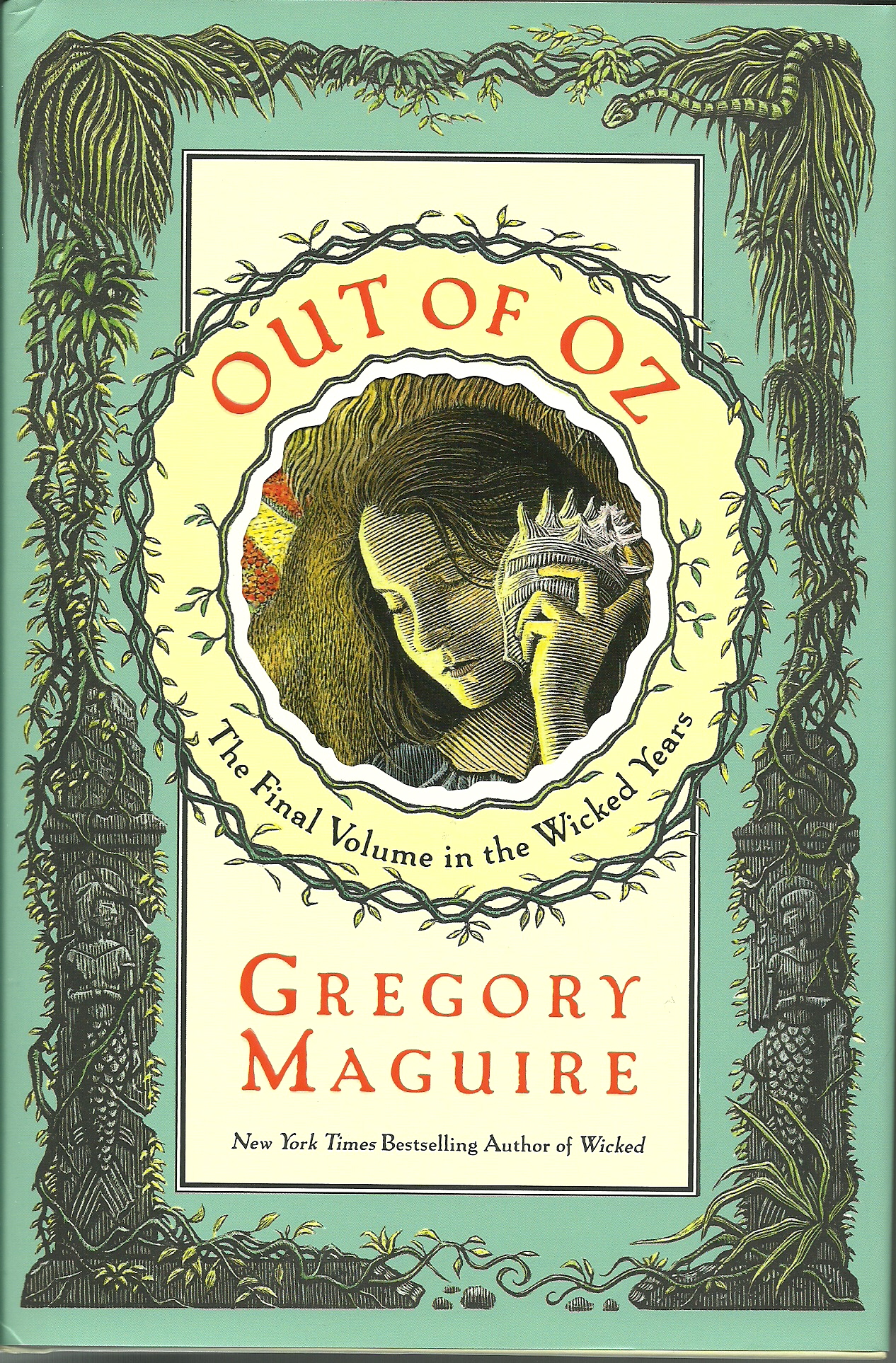
Out of Oz ~ A Capsule Book Review

Out of Oz ~ A Capsule Book Review by Allen Kopp

American writer Frank Baum created the Land of Oz in a popular series of children’s books in the early 1900s. Contemporary American writer Gregory Maguire takes Oz one step farther in his Wicked Years series of four books that are decidedly more for adults than for children. The first (and, I think, the best) book in the series is Wicked. It’s about the life and times of the Wicked Witch of the West. She’s the one that Dorothy Gale of Kansas kills by throwing a bucket of water on her. (Wicked, by the way, was turned into a famous Broadway musical.) The second book, Son of a Witch, is about Liir, the strange bisexual son of the Wicked Witch of the West. (Yes, she has a son—you have to read the book to see how that comes about.) Liir has a daughter, named Rain, who figures prominently in the fourth book in the series, Out of Oz. Just so we don’t fail to mention it, the third book is A Lion Among Men. It’s about (you guessed it) the Cowardly Lion.

Out of Oz begins with Rain as a child. She doesn’t know who she is or where she came from, but she’s living with (and being cared for) the Good Witch of the North, Lady Glinda. (You will recall, in the movie version of The Wizard of Oz, Lady Glinda arrives in a bubble. She’s the one who eventually facilitates the return of Dorothy Gale to Kansas.) As the granddaughter of the Wicked Witch of the West (although she doesn’t know it yet), Rain has the potential to shape the empire with her as-yet untapped magical powers. A war is raging between Munchkinland and Loyal Oz. Both sides are seeking Rain, but especially a book of magic called the Grimmerie. It seems the Grimmerie will give a powerful strategic advantage to the side that has it. Through her bloodline, Rain is perhaps the only person in all of Oz who can know how to harness the power of the Grimmerie. It’s up to Rain’s parents, Liir and Candle, along with the Cowardly Lion and an assorted group of characters (Mr. Boss and his Munchkin wife Little Daffy, Iskinaary the Goose, etc.), to keep Rain and the Grimmerie from falling into the hands of the warring factions.

In Out of Oz, Dorothy Gale of Kansas has returned to Oz via the 1906 San Francisco earthquake and is being used as a pawn in the war between Loyal Oz and Munchkinland. She is being tried for murder in the deaths of the Wicked Witch of the East (you recall she accidentally landed her house on her) and the Wicked Witch of the West (death by a bucket of water). She is found guilty and is going to be executed until the Cowardly Lion and his crew rescue her and take her away with them. Dorothy gets on everybody’s nerves, as she is so chipper and always about to burst into song. I thought she was a fun character and would like to have seen more of her.

At 568 pages, Out of Oz is a long reading experience. It could have had more punch, I think, if it had been, say, 200 pages less. Possibly only those readers who have read the other three books in the series will want to stick with Out of Oz through to its conclusion. Maybe Gregory Maguire, in writing it, was following Oscar Wilde’s dictum: Nothing succeeds like excess.  

Although Out of Oz is billed as the fourth and final book in the series, there seems to be plenty of potential material for a fifth book. If such a book comes out, I’ll be over my Out of Oz fatigue enough by then to want to read it, especially if it’s about 350 pages or less.  

Copyright © 2012 by Allen Kopp

What the Young Matron is Wearing


What the Young Matron is Wearing ~ A Short Story by Allen Kopp

(Published in The Legendary.)

In preparation for company coming for dinner, Peachy Keen was in her boudoir putting the finishing touches to her toilette. She slipped her best blue dress on over her head and smoothed it over her broad hips and fastened it up the back and spritzed herself all over with eau de cologne. She stood before the mirror and touched the comb to the wreath of curls on her head, even though it was already perfect to her way of thinking, and went downstairs to the kitchen.

Hetta was working over the tray of hors d’oeuvres. She had given herself a failed home permanent and her hair hung in limp cascades around her face like seared sheep’s wool. She spread cream cheese on little round crackers and put a half-moon of olive on top of each one and licked her fingers. Seeing that everything was proceeding as planned in the kitchen, Peachy went into the dining room.

Jewell was just setting the table. The spoons were cloudy, so she was blowing her breath on each one and wiping it with the tail end of her bathrobe. Her hair was up in curlers, as it had been since the night before. When she realized Peachy was standing beside the table looking at her, she jumped back and dropped a spoon as though a loud noise had startled her, even though Peachy had not made a sound.

“When you’re finished with your work,” Peachy said in the no-nonsense way she had of speaking to Jewell, “I want you to go upstairs and get yourself fixed up. Wash your face and comb your hair and put on some lipstick and some face powder. And put on something nice. You don’t have to go around looking slovenly all the time. I want you go make a good impression on Mr. Dilly and his son.”

Jewell said nothing but only looked down at a blister on her finger and nodded her head slightly and went back to her work.

Peachy put on her little hostess apron and busied herself with straightening up in the living room. She adjusted the sofa cushions for at least the fifth time that day and straightened the picture over the divan and emptied an ashtray where Hetta had deposited the stump of a cigarette and turned again toward the mirror and tugged at a little strand of hair over her right ear that wasn’t cooperating. She was thinking about taking the scissors and cutting it off when the doorbell rang. Her heart gave a little leap and she swept across the room in her grandest manner and opened the door.

When she saw Mr. Dilly she smiled and showed all her teeth, but when she focused her attention on Chick, Mr. Dilly’s son, her smile faded. She stepped aside and motioned for them to come inside. By the time she closed the door she had regained her smile, which she shone on them like a beacon.

“So,” she said, taking the little bouquet of flowers that Mr. Dilly handed to her, “this is the son I’ve heard so much about.”

“Yes,” Mr. Dilly said, “This is my boy Chick.”

She stepped forward bravely and took Chick by the hand. “I’m so happy to make your acquaintance, Chick,” she said. “Welcome to my home.”

Chick looked at her and tilted his huge shaggy head back and rolled his watery blue eyes at her in greeting. She had a fleeting mental image of a St. Bernard.

“This is the fine lady I told you about that Daddy is going to marry,” Mr. Dilly said in a loud voice to Chick. “She’s to be your new mama.”

“Yaw-yaw-yaw,” said Chick.

While Mr. Dilly was a small man, with the bodily proportions of an ant, Chick was thickset through the shoulders and hips and a head taller than his father. They looked nothing alike.

“Won’t you sit down?” Peachy said, gesturing toward the divan in her best hostessy manner. “I’ll tell Hetta you’re here.”

When she went into the kitchen, Hetta was sitting at the table reading a movie magazine. “What’s the matter with you?” Hetta asked. “You look funny. Are you going to be sick?”

“They’re here,” Peachy said, “and it’s worse than I thought. Much worse.”

“What are you talking about?”

“Come and meet them.”

Peachy took Hetta by the arm and led her back into the living room, as if she might escape if she let go of her, and introduced her to Mr. Dilly first and then to Chick.

“Enchanted,” Hetta said to Mr. Dilly, giving a little curtsey. “Enchanted,” she said again to Chick.

“Gaw-gaw-gram!” Chick said.

“Yes, that’s grandma,” Mr. Dilly said.

“Do you need to go to the toilet?” Hetta asked.

“Why, no,” Mr. Dilly said with a strained smile.

“Would you care for a beer?”

“No, no.”

“Well, let’s all sit down, then” Peachy said. “Jewell will be right down. She went upstairs to change.”

“What will she be when she comes down?” Mr. Dilly asked, tugging at the legs of his trousers.

“What?”

“You said she went upstairs to change. I asked what she’d be when she came down. I was making a little joke.”

“Oh. Ha-ha! Don’t you have the driest wit ever?”

“Oh, yeah,” Hetta said, lighting a cigarette.

Smiling brightly, Peachy went to the bottom of the steps and called up them. “Jewell, dear, we have guests and they’re waiting to meet you! Please come down right this minute!”

When Jewell came down, she was wearing silk Chinese lounging pajamas, and all eyes were upon her. She had removed the curlers, and her hair stood out all over her head as if electrified. Peachy introduced Mr. Dilly to her as her soon-to-be stepfather and Chick her soon-to-be stepbrother. Jewell looked at them solemnly and put her palms together in front of her and bowed from the waist without saying anything. Mr. Dilly looked strangely at her, while Chick lolled his head and clamped his eyes on the dragon on her chest.

“Serve the hors d’oeuvres, now,” Peachy said, forgetting, for the moment, to smile.

Jewell passed around the tray, and when she came to Chick and held it in front of his face, he took two of the hors d’oeuvres, one in each hand. He looked at them and started to put them over his eyes, but Mr. Dilly saw what he was doing and took hold of his wrists and made him drop them back onto the tray.

“Sometimes he doesn’t know what to do with things,” Mr. Dilly said apologetically.

“Glaw-tib-faw-faw!” Chick said.

“If it’s some kind of food he doesn’t recognize, he thinks he’s supposed to attach it to his face somehow.”

“Oh, dear!” Peachy said. “Should we get him something else?”

“Oh, no, we’re fine,” Mr. Dilly said. He made Chick put his hands in his lap as he fed one of the hors d’oeuvres into his mouth.

“Nyum-nyum-nyum,” Chick said as he chewed.

Jewell set the tray of hors d’oeuvres down and sat in the chair opposite the couch. She crossed her legs and rested her elbow on her knee and her chin in her hand.

“So,” Mr. Dilly said, “I hear you’re a good little worker.”

“What’s that?” Jewell asked. It was the first words she had spoken to him.

“I hear you take care of things while mummy’s working.”

“What things?”

“I hear you clean the house and wash the clothes and help out sometimes in the kitchen.”

“I like to make tuna fish sandwiches, but they don’t like it when I make too much noise. I like it at night when everybody is gone and I’m here by myself. I can hear the wind in the trees and if it’s raining I can hear the rain hitting the windows. The best time is when there’s a thunderstorm and the lightning hits really close to the house and it makes you scream. You might think I would be afraid of that, but I’m not. Not one bit. If it ever strikes me and kills me, I think it would be a glorious way to die, don’t you? I could ride right up to heaven on the old bolt of lightning! One night a man came and knocked on the door. He was a big man, too. I went to the door and told him nobody was at home and I couldn’t let him come inside.”

“Is that so?” Mr. Dilly asked.

“I sometimes wonder what might have happened if I had let him come in, though. I wonder what we might have talked about. Maybe he was a talent scout from Hollywood and he was looking for a girl just like me to be in the movies. I might have missed out on a wonderful opportunity by not letting him in. I do so wish I had let him come in. My life might be all different now.”

“Chick boy likes the movies, too,” Mr. Dilly said. “He likes any kind of picture with animals in it, especially westerns with lots of horses.”

“I like love stories where there’s lots of singing,” Jewell said. “And circus pictures and prison pictures.”

“I think you and Chick boy will find you have a lot in common. The two of you are very much alike.”

“Me and him?” Jewell asked, pointing at Chick. “I don’t know how you figure that.”

“Dinner’s ready,” Hetta said, as if she had received a telepathic communication from the kitchen.

When they were all seated at the table, Mr. Dilly set about filling Chick’s plate first. He took a little bit of everything and heaped it right in the middle of the plate and took a big spoon and mixed it all up together into a brown-and-gray mash. Then he took a napkin and tied it bib-like around Chick’s neck and set the plate in front of him and took hold of his right hand and closed his fingers around the spoon and pushed his arm forward to get as much food onto the spoon as he could and then into his mouth.

“He can feed himself,” Mr. Dilly said. “You just have to help him get started.”

“Nyum-nyum-nyum,” Chick said.

As the meal progressed, Mr. Dilly and Peachy spoke of their wedding plans. Since it was to be the fifth marriage for Mr. Dilly and the third for Peachy, they would have a simple civil ceremony at the courthouse. Afterwards, there was to be a five-day honeymoon trip to an undisclosed location that only Mr. Dilly knew about.

“That will be the perfect time for you and the Chick boy to get to know each other,” Mr. Dilly said to Jewell. “I’ll drop him off here with his grip and the two of you can have a fine time together.”

“Wait a minute,” Jewell said. “You’re going to go off for five days and leave me alone with him?”

“Hetta will be here to help out,” Peachy said cheerily.

“When I’m not tending bar,” Hetta said.

“Now, don’t worry about a thing,” Mr. Dilly said. “I’ll write out everything you need to know. Then after your mother and I get back, we’ll all be living together in the same house.”

“I just know we’re going to be so happy!” Peachy said, her eyes glistening. “Just as happy as we deserve to be!”

After dinner, Mr. Dilly had to help Chick go to the toilet, which took such a long time that Peachy thought about going to the door and knocking to make sure the two of them were all right, but finally they came out and Mr. Dilly installed himself on one end of the divan where he had been sitting before dinner and Chick on the other end. Mr. Dilly launched into a long and graphic account of a recent abdominal operation he had suffered through, while Chick roved his eyes around the walls and the ceiling, breathing audibly.

“I tell you, the gas pains were something fierce,” Mr. Dilly said in his droning voice. “I needed to have a bowel movement so bad and it just was not going to happen! They were giving me laxative after laxative and I was getting no satisfaction at all. I thought it was going to take at least a ton of dynamite to get some movement down there again…”

Peachy gave a little yelp of laughter and rocked in her chair, while Hetta yawned behind her hand.

Jewell listened for a while to what Mr. Dilly was saying and then, since nobody was paying any attention to her anyway, she blanked him out the best she could and leaned her head back and closed her eyes. She went to sleep for just a minute or two and then she awoke with a little start, wondering how she could have gone to sleep so easily.

She realized in the moment of waking that Chick had been looking at her, as if studying her. When he saw that he had her attention and hers alone, he placed both hands on his crotch and rubbed up and down suggestively. He smiled then, and in his eyes was an intimation of cognizance that had been absent before.

A little while later, when Hetta opened a bottle of cut-rate champagne to toast the happy couple and their upcoming union, Mr. Dilly asked if Chick boy, since he wasn’t allowed champagne, might have a glass of milk in a champagne glass so he wouldn’t feel left out. Jewell was sent to the kitchen to get the milk.

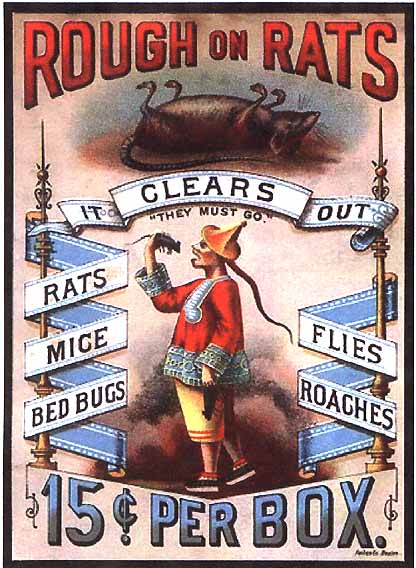
She poured the milk into the champagne glass and stood there for a moment at the counter looking at it. She could still hear Mr. Dilly talking in the living room and Peachy’s high-pitched laughter. Quickly, before someone came in, she opened the cabinet door under the sink and picked up the small, faded box of rat pellets that had been there for as long as she could remember.

She tilted the box of pellets and allowed two of them to come out of the box and rest on the palm of her hand. They were little brown nuggets the size of pencil erasers that rats were deceived into believing was something good to eat but that would kill them. She squeezed them between her fingers and put them to her nose, but they had no smell. She wondered if they had somehow lost their strength and their ability to poison. She dumped them from her hand into the champagne glass full of milk and took a spoon and made sure they dissolved.

When she took the milk back into the living room, Chick took it from her and drank it greedily in one long drink and wiped his mouth with the back of his hand. Jewell stood back and watched to see if he was going to die right away. If he didn’t, she would have to think about using more of the pellets the next time.

Copyright © 2012 by Allen Kopp

My Week with Marilyn ~ A Capsule Movie Review

My Week with Marilyn ~ A Capsule Movie Review by Allen Kopp

In 1956 Marilyn Monroe was at the peak of her movie stardom. She was thirty years old and married to her third husband, playwright Arthur Miller. In spite of her fame and all she had achieved, she was a deeply troubled and insecure woman. She traveled to England at this time to make a movie with Laurence Olivier that would eventually be called The Prince and the Showgirl. While in England, she became acquainted with a twenty-three-year-old production assistant named Colin Clark. The new movie, My Week with Marilyn, is based on Colin Clark’s memoir about Marilyn.

Michelle Williams gives a great performance as Marilyn Monroe in My Week with Marilyn. She will be remembered when Oscars are being handed out. She doesn’t just do a Marilyn impression, but shows the damaged person underneath the sex goddess persona. Marilyn knew as well as anybody that she wasn’t the person that people thought she was, the woman they saw on the screen. At one point in the movie, she says that as soon as people realize “she isn’t really Marilyn,” they abandon her. She isn’t emotionally equipped to live in the world in which she finds herself.

During the making of The Prince and the Showgirl, Marilyn latches on to young Colin Clark (Eddie Redmayne), in spite of the executives on the picture trying to keep them apart. She comes to rely on Colin to comfort her; she summons him in the night to come to her. Laurence Olivier (Kenneth Brannagh), Marilyn’s costar in the movie and also the director, finds her impossible to work with. She can’t remember—and doesn’t seem to grasp—the simplest direction or line of dialogue. But, as a character in the movie states, “when she gets it right, you can’t look at anybody else on the screen.” She has a magnetism and an appeal that can’t quite be explained or understood.

Young Colin falls in love with Marilyn, as it seems that most men do who come under her influence. At one point he asks her to leave the movie business behind and marry him, because he believes he’s the only person who really understands her, but he knows it’s impossible.

Fifty years after Marilyn’s premature death at age thirty-six, her legend lives on. She is the unique screen goddess who will be forever young. Anybody who has ever been drawn to her on the screen, for whatever reason, should enjoy seeing My Week with Marilyn.

Copyright © 2012 by Allen Kopp

War Horse ~ A Capsule Movie Review

War Horse ~ A Capsule Movie Review by Allen Kopp

Steven Spielberg’s new movie, War Horse, is like the kind of movie they don’t make (much) anymore. With its notable absence of four-letter words and its lush, retro-sounding music score, it has a kind of old-fashioned, Lassie Come Home feel to it. It’s a “family” movie (based on a children’s novel by Michael Murpurgo), but that doesn’t mean it’s only for kids. With the proper “suspension of disbelief,” many adults should like it too.

In 1914 Devon, England, struggling farmer Ted Narracott (Peter Mullen) buys a horse at auction that he can’t really afford; he’s about to lose his farm. The horse is more of a show horse than a farm horse. His wife (Emily Watson) tells him to take the horse back this instant, but we know he’s not going to do that. For his teen son, Albert (Jeremy Irvine), it’s love at first sight. He names the horse Joey and promises to train him and take care of him.

Things are not going well at the Narracott farm; farmer Ted is not able to make of the place a going concern. War has broken out between England and Germany, so farmer Ted sells Joey to the cavalry for the little bit of money he can get. Albert is understandably broken-hearted; you just don’t sell something you love as much as he loves Joey. He wants to join up to be near Joey, but he is too young.

A sympathetic officer, Captain Nicholls (Tom Hiddleston), recognizes what a fine horse Joey is. When he discovers what Joey means to Albert, he promises to take Joey as his own personal horse and return him to Albert when the war is over. It’s not the only time that Joey, through a twist of fate, experiences kindness in strangers. Maybe it’s not such a rotten world after all.

When Captain Nicholls is killed in a skirmish with the Germans, Joey falls into the hands of a young French girl, Emilie, and her grandfather. Emilie loves Joey and comes to consider him her own horse; she, of course, doesn’t know his history or anything about him. One day when she is riding Joey over a hill, she comes across the invading German army. The Germans take everything Emilie and her grandfather have, including Joey. They use him for pulling cannons through the mud, work that will eventually kill him. But do the Germans care? When Joey succumbs, they’ll have another horse waiting at the ready.

Joey experiences war at first-hand but, like the trouper he is, he perseveres. At one point he becomes hopelessly entangled in barbed wire on the battlefield with shells going off all around him. In my favorite scene in the movie, a young British soldier risks his life to go to Joey and extricate him with wire cutters. While he is setting Joey free, a German soldier emerges from an opposing trench. The two young soldiers, British and German, have a brief but telling (and beautifully written) conversation.

The war goes on long enough that Albert ends up in the British army. He has never given up on getting Joey back, although he doesn’t know all the terrible things that Joey has been through since he last saw him. Albert is gassed in the trenches by the Germans and temporarily (we learn) loses his eyesight.

Through all the twists and turns that Albert and Joey experience, the story comes full-circle in the end. While there might be a little too much irony in the conclusion to be entirely believable, it’s impossible not to be moved by it, especially if you are the sort who understands the love that exists between a boy and his horse (or the love between any human and any animal). 

Copyright © 2012 by Allen Kopp

Rain Continuing Tonight and Tomorrow

Rain Continuing Tonight and Tomorrow ~ A Short Story by Allen Kopp

(Published in Writers’ Stories Magazine.)

Louise Eldritch didn’t have an umbrella. By the time she walked the six blocks from the bus station to the hotel, she was soaked through to the skin. She stood there, shivering a little and dripping water on the floor, while she signed her name to the register, a false name that came to her in the moment before she wrote it down. The night desk clerk smiled at her familiarly, as though he knew her. He had the same smile for everybody, no matter who they were.

“I have a nice room for you on the eighth floor, Miss Whitehead,” he said, reading the name off the register.

“It’s Mrs. Whitehead. Don’t you have anything on a lower floor?”

“Not cleaned and made up. With all this rain, you see, we’re short-staffed.”

“I guess the eighth floor will have to do, then.”

“It’s nice and quiet up there and you’ll have a fine view. The elevator is in working order, so you won’t have to walk up the stairs.” He handed her the key.

She took the creaking elevator up to the eighth floor. The door opened on a long carpeted hallway, silent and deserted. On the way to her room, she heard voices coming from behind the door to one of the rooms. She paused for a moment because something about the voices seemed oddly familiar; first a woman’s voice, pleading and crying, and then an angry man’s voice. There was the sound of breaking glass and the woman screamed. A different male voice, higher-pitched than the first one, yelled as if he was calling a dog and then the other two voices were stilled. She wondered if maybe someone was in trouble and needed help, but she had problems of her own and didn’t want to become involved in anybody else’s. She walked on to the end of the hallway.

Her room was as dreary as she expected. The walls were covered with faded green-and-brown wallpaper and the ceiling spotted with water stains. She turned on the lights and stepped out of her wet shoes and draped her jacket over the back of the desk chair. She took a towel from the bathroom and dried herself off the best she could. She longed to get into a tubful of hot water to try to soak the aches out of her body but she was just too tired. The day and a half spent travelling on the bus had taken its toll. She wanted only to sleep.

There was one window in the room and beside it a small door that opened onto a tiny fire escape landing. The window and door were both covered with a heavy green curtain, the kind that completely shut out the light. She pulled back the curtain and looked out at the rain, which hadn’t diminished and was, if anything, coming down heavier than before. She looked down the eighty feet or so to the street but couldn’t see much of anything, other than a streetlamp at the next corner and the lights of an all-night drugstore in the next block.

It could be any one of a thousand different towns in America. In the two days she had been traveling, she crossed several states lines and had lost track of where she was. If she had known the name of the town when she arrived there, she had forgotten it, but she derived a sort of perverse pleasure in not knowing where she was. If she didn’t know where she was, didn’t it follow that nobody else would know?

The room, for all its shortcomings, was warm and dry, and for that she was thankful. After she smoked a cigarette, she took off her clothes and got into the too-soft bed underneath the pile of peculiar-smelling covers and switched off the light. She could still hear the voices coming from down the hallway but underneath the soothing sound of the rain they seemed detached and far away.

She lay on her back in the dark for perhaps half an hour, smoking one cigarette after the other. As tired as her body was and as much as she needed to sleep, she knew she wasn’t going to go to sleep without a struggle. She had the sensation of still being in motion; her head reeled and she had a knot in her stomach. She got out of the bed and switched on the light and opened her suitcase and took out some pills, one to calm her down and another to make her sleep. She washed both pills down with a swallow from a bottle of Kentucky bourbon that she had bundled among her clothes to protect it from breakage.

While she had the suitcase opened, she took the diary out of a zippered compartment and opened it and sat down on the bed and held it open on her lap. The diary was for her more than just a book; it represented the end of her old life and the beginning of a new life, the kind of life she had always wanted.

In the diary, in Byron’s own handwriting, was his own confession. She didn’t know why he would confess in writing to having two business associates killed in five years, but that was just his way. He was thumbing his nose at the world. He believed he could get away with anything and outsmart anybody; he believed he was infallible. He kept the diary locked in a safe to which only he had access and he believed nobody would ever even know of its existence.

He slipped up, though, and she found the diary and read it, as wives sometimes will. She recognized it at once as a gold mine. Byron would pay a lot to get it back. She had wanted to get out of the marriage for years and now here was her chance, as if dropped into her lap from heaven.

When she got a safe distance away—and she didn’t know yet exactly where she was going—she would contact Byron and make him an offer. She would start at five-hundred thousand; she didn’t want to be overly greedy. That amount would be enough to keep her comfortably well-off for the rest of her life. She could travel and keep a nice apartment and have friends and give parties and never have to worry about anything; live the kind of independent life she had always wanted.

Byron would kill her too, though, of that she was certain. He would use any means at his disposal to get the diary back. She wasn’t certain that he hadn’t been following her or having someone else follow her—a hired killer, perhaps. For that reason she had taken a meandering course across four states, had changed buses five times, and had stopped at a dreary old hotel on the edge of nowhere—a place that wasn’t even on the map. She didn’t think she was being followed, but still one could never be certain of anything, especially when dealing with a man like Byron Eldritch.

Almost immediately the pills began to take effect and her eyelids began to feel heavy. She put the diary away carefully for safekeeping and got back into bed again. Soon she was asleep.

She dreamed she was walking along a flat country road. She didn’t know where the road was but it seemed somehow familiar, as if she remembered it from her far distant past. Looking down at her legs and feet, she saw they were covered with the dirt of the road.

As she walked along this road to an unknown or uncertain destination, she heard a car coming up behind her. She stopped walking and turned around and faced the car. She was interested in knowing who was driving, but apparently no one was, or, if there was a driver, he was invisible. An invisible driver didn’t make any sense, so it was easier to believe the car was moving on its own.

The car was bearing down on her and she had the sudden sickening realization that it meant to run her down in the road and kill her. When it was no more than thirty or forty feet away, coming toward her very fast, she jumped out of the way just in time and it went on past her in a cloud of dust.

She was awakened from the dream at that moment by a crash down the hallway, as of something being thrown against the wall, and then a scream. After that she could hear the voices, louder than before, as though the argument was still going on and had intensified. She tried covering up her head with a pillow but it was no use; she could still hear it. She got out of bed and turned on the light and picked up the receiver.

“Night clerk,” the voice said.

“There’s an argument going on down the hall from my room, loud voices and shouting, and it’s keeping me awake.”

“What room are you in?”

“846.”

“Oh, yes. The eighth floor. I believe they’ve been celebrating. I’ll call them and tell them to keep it quiet.”

She heard the phone ringing faintly down the hall and the murmur of voices, followed by laughter and the slamming of a door, and then stillness. Whoever they were, they seemed to have finally stopped the arguing and settled down for the night. She switched off the light and covered up her head and went to sleep again.

It might have been ten minutes or an hour or two hours before a knocking on the door jerked her violently awake. She sat up in the bed, her heart pounding, uncertain for the moment where she was. When the knocking came again, she got out of bed and went to the door.

“Who is it?” she asked.

“Mr. Mendel calling for Mr. Sloan,” a raspy voice said.

“What?”

“I said, ‘Mr. Mendel calling for Mr. Sloan’.”

“I don’t know who you are,” she said. “You’ve got the wrong room.”

“I need to see Mr. Sloan right away.”

“There’s nobody here by that name.”

“He said room 846.”

“You’ve got the wrong room.”

“There came one day a lovely box of flowers.”

“What?”

“Will you let me in?”

“You’ve got the wrong room.”

“So you say, but can you give me a good reason why I ought to believe you?”

She heard a huff of breath and faint footsteps as the man turned from the door and walked away. A few seconds later she heard the elevator door open and close and then the faraway creaking as the elevator descended.

The next time she awoke she could still hear the rain, but underneath that was some other sound. She pushed back the covers and sat on the edge of the bed and stared into the darkness. It took a few seconds before she was awake enough to know that she had been hearing someone calling her name outside the door to her room, softly yet insistently. She went to the door and put her ear against it.

“Who’s there?” she asked softly. “Is anyone there?”

There was no reply but the unmistakable sound of someone breathing in air and letting it out again.

“Who is it?” she asked, louder this time. “What do you want?”

There was a long pause, after which a man’s voice said, “Aren’t you going to tell me I’ve got the wrong room?”

“Who is it?” she asked.

“What’s the point of asking such obvious questions?”

“I’ve got a gun and I know how to use it.”

The man laughed. “All right, all right,” he said. “No reason to get excited. So I’ve got the wrong room. No need to shoot me!”

She heard him walking away, followed by silence. She longed to open the door and look down the hall toward the elevator, but she was afraid he was playing a trick on her and when she opened the door he would force his way in.

She went to her suitcase and took from underneath the jumbled clothing the little .22 caliber handgun that Byron had given her in happier days when he traveled a lot and she was left at home to fend for herself. Having a gun nearby had always made her feel safer, even though she had never had any reason to fire it.

Clutching the gun to her breast, she got back into bed and sat against the headboard and pulled the covers up and stared into the darkness. The rain blew in gusts against the window. She went to sleep again.

She awoke to the phone ringing. She dropped the gun to the floor, forgetting she was holding it, and grabbed the receiver to silence the ringing.

“Yes?” she said, her voice breathless.

“This is the night desk clerk.”

“Yes?”

“I wanted to ask you if you’ve been bothered any more by the guests on your floor. We always follow up on these things.”

“What time is it?”

“It’s exactly one-forty-seven, Central Standard Time.”

“There was a man knocking on the door a while ago. He was looking for somebody he thought was in this room.”

“Did you open the door?”

“No.”

“If he comes back, don’t open the door. You never know who might be lurking about. We try to keep people out late at night who aren’t actually paying guests of the hotel, but sometimes they come in unnoticed for one reason or another.”

“Do you have the number of the local police force?” she asked.

“The police? What do you need to call the police for?”

“Well, I can’t say for sure. I have an uneasy feeling.”

“You don’t need to be calling the police, ma’am. I’ll be here all night, until seven or so, and if you’re bothered again pick up the phone and call me. Just don’t call the police.”

“I’m going to leave this place. I don’t feel safe here.”

“Where would you go in the middle of the night in the pouring rain? The dam might be breached and if it is this whole area could be under water. You wouldn’t even get a cab.”

“I’ll sit in the lobby or I’ll go to the all-night drugstore down the street and wait there until morning.”

“No need to do that, ma’am. Just go back to sleep. Everything will be all right.”

When she hung up the phone, her hands were shaking and she felt dizzy and short of breath. She took two more pills and drank the rest of the bourbon in the bottle.

Suddenly a pounding at the door brought her to her feet. She stared at the door in the darkness, as if expecting to see through it to the other side.

“Who’s there?” she asked.

This time a different male voice (with a hint of a foreign accent) said, “Open the door and stop fooling around!”

“I said ‘who’s there’?”

“If you don’t open this door, you’ll have to answer for it later.”

“I don’t know what you’re talking about. It’s the middle of the night. I’m trying to sleep!”

“Do you know how silly that sounds?”

“You’ve got the wrong room.”

“If you know what’s good for you, you’ll open the door.”

“Go away!”

For good measure, he pounded on the door again and kicked it with both feet.

She returned to the bed and pulled the covers up over her head, hoping to shut out any further disturbances. She longed to be at home where everything was certain and where nobody would dare bother her in the middle of the night. She was thinking about getting out of bed again and checking to make sure the door was double-locked, when the phone rang again. Unlike before, she let it ring ten or twelve rings before she picked it up.

“Yes,” she said groggily into the receiver, holding it several inches from her ear.

“You’re not fooling anybody,” a voice said quietly, followed by a click and the dial tone.

“Who is this?” she said, even though she knew no one was there. “Why are you doing this to me? What is it you want?”

When she hung up the phone, she felt ill and took two more pills to calm herself down. Unable to remember how many pills she had taken, she took two more. She then pulled all the covers off the bed and piled them on the floor and lay down on them and tried to cover herself up. She would make herself small on the floor underneath the bedclothes and no one would even know she was there. She would roll herself up in the corner and make herself invisible if that’s what she needed to do. She was more resourceful than people were willing to give her credit for.

There came then a rhythmic pounding on the ceiling and then on the wall behind the bed and then on the opposite wall. It was coming from every place at once and no place at all. She let out a scream and wrapped herself in the blankets on the floor like in a cocoon and covered her ears with her hands but she could still hear the pounding, loud and then soft like tapping and then stopping altogether and starting up again in a different place. When she could stand the pounding no longer, she stood up and made her way to the phone and picked up the receiver.

“Night clerk,” the voice said.

“What is that terrible noise?” she asked.

“This is the lady on the eighth floor, isn’t it?”

“Someone is bothering me, harassing me!”

“How so, ma’am?”

“It sounds as if someone is hitting on the walls and the ceiling with a lead pipe.”

“That’s just the plumbing, ma’am. Air gets trapped in the pipes. This is an old building. You hear all kinds of strange noises.

“It has to be something more than that.”

“Just try to ignore the sound and get some sleep, ma’am. Nobody is deliberately trying to bother you.”

“How can you be sure?”

“Good night, ma’am.”

The pounding continued for some time, growing louder and fainter and then stopping altogether. When all was quiet again, she went to the door and put her ear against it. She imagined she could hear blood coursing through the veins of whoever was standing there, just on the other side of the door. She wanted to call out to the person and ask who they were and what they wanted with her, but her own heart was pounding in her chest as if to strangle her and she seemed to lack the breath to get the words out. She backed slowly away from the door and, as she did so, the doorknob turned quietly one way and then the other. Someone was trying to come into the room.

She picked up her gun and, holding it in both hands, lay down again on the blankets on the floor and covered up, leaving only her eyes exposed.

From her vantage point on the floor she could see the crack underneath the door that admitted a sliver of light from the hallway; in that sliver she could see shadows as people moved silently back and forth, in and out. She had stopped trying to figure out who they were and what they were doing. She trained her gun on the door, holding it in both hands, ready to fire when needed.

She focused all her attention on the door for the remainder of the night, determined to stay awake to protect herself. She lay on the floor in the dark, listening to the rain, waiting for the next thing that was going to happen.

The pounding on the wall had stopped. People were no longer moving about in front of the door. There were no more phone calls, no more voices. She began to feel toward morning that everything was going to be all right. The awful night was almost over. She could get up in a while and get dressed and order some breakfast and catch the next bus out of town. With these thoughts in her head—and in this more relaxed state of mind—she fell into an exhausted sleep.

She had been asleep for only a few minutes when the door to the room opened slowly, without making a sound. A small sound—a footstep or a sigh or the clearing of a throat—woke her up. When she opened her eyes, she wasn’t terribly surprised to see two men in the room with her. They were wearing dark clothes and had no faces; they were only outlines in the dark. She reached for the gun but was unable to find it. She stood up and made her way around the bed to the far side of the room.

Standing in front of the door to the fire escape, she turned and looked at the men. They seemed for the moment to not know she was there. They weren’t looking at her but were instead intent on rifling through the clothes in her suitcase. She believed that when they turned their attention on her they would kill her, so she must somehow get out of the room. Since they were blocking the way between her and door, there was only one way out.

She opened the door and stepped out onto the tiny rain-slicked fire escape landing. She felt the cold sting of the rain on her face as she gripped the railing and looked down into the darkness for the steps that would lead her down to the ground and to safety. Hanging onto the railing with both hands she eased one foot down on the top step and then the other foot. When she stepped down to the next step, she misjudged the distance and her feet slipped out from under her. Try as she might, she wasn’t able to regain her footing. She held on for as long as she could but it was no use. The railing slipped from her hands and she was gone.

The awning over to the entrance to the hotel broke her fall. She was only knocked unconscious and would have survived if she had not fallen face-down into the water that had accumulated in the awning and drowned. Her body was discovered in the daylight and retrieved by firemen with hooks.

When interviewed by the police, the night desk clerk was voluble. Enjoying the unaccustomed attention, he disclosed everything he noticed about the woman. Something about her seemed terribly amiss. She seemed unusually nervous and appeared to have been drinking. He spoke to her several times in the night and she seemed distraught; believed somebody was bothering her for no reason. She complained about noise that only she seemed to hear.

After completing their investigation and establishing the identity of the woman, the police ruled her death a suicide with no indication of foul play. Since she had left no suicide note, maybe she hadn’t intended to commit suicide, but if that was the case what was she doing out on the fire escape before dawn in the rain? It was just one of those silly things that people do for which there is no logical explanation.

Copyright © 2011 by Allen Kopp