My Mother is Away

My Mother is Away ~ A Short Story by Allen Kopp 

Opal Ring awoke at seven o’clock with the sunlight streaming through the window and the birds singing their happy song. She rolled out of bed feeling good for a reason that for the moment escaped her and then it came to her: her mother was gone for the day, taking care of some business, and she had the house to herself. She had always liked being alone and it was going to be a good day.

She went downstairs to the kitchen and smoked a cigarette while she brewed the coffee. She fixed herself some toast and eggs. When she sat down at the table to eat was when she saw him out the window.

He was of medium height, thin and broad-shouldered, dressed in white painters’ overalls. His dark hair shone in the sunlight as he leaned back and reached above his head; his arm moved back and forth rhythmically as he applied the paint to the old wood of the garage.

She was transfixed. She had to speak to him, to see the face that went with the part of him she could see. Wearing only her kimono with nothing underneath and her tattered house slippers, she went outside and down the slope of the back yard.

“Yoo-hoo!” she said. “I saw you out the kitchen window and I wanted to come out and say hello.”

“Hello,” he said. He looked at her once, quickly, and then looked away.

“I didn’t know you were going to be here today. I guess my mother forgot to tell me.”

He took a piece of paper out of his pocket, unfolded it and handed it to her. She looked at the paper and nodded her head. “This is the place, all right,” she said, handing the paper back.

He said nothing, so she looked closely at him. He looked even better up close than he did from inside the house. Clean-looking and maybe a little older than she at first thought.

“I don’t think I’ve seen you around before,” she said. “Are you new in town?”

“Nope.”

“If you do a good job on the garage, maybe my mother will have you paint the whole house.”

He looked up the slope of the yard to the house. “Doesn’t look like it needs it,” he said.

“Do you have a cigarette?”

“No,” he said. “It’s bad for you.”

“Well, I’m not supposed to smoke, either, but I do anyway when my mother isn’t around. It’s not as if I’m a child or anything but she doesn’t like to see me smoking and she nags me about it.”

“I’m supposed to have this job done by the time my brother picks me up. If I don’t get it done today, I’ll have to come back tomorrow and my brother won’t like it.” He took a handkerchief out of his pocket with his left hand and wiped his face without stopping the brush in his right hand.

“Well, don’t let me keep you from your work, then.”

She watched him paint for a minute more. She was going to go back into the house, as there seemed nothing left to say, but she didn’t very often have the chance to talk to someone and wasn’t ready to give up just yet.

“Would you like a drink of water?” she asked.

“Brought my own,” he said, pointing to a bottle underneath the tree.

“Don’t you ever take a break?”

“Not when I don’t need to.”

“What will you do when you get finished painting this garage?”

“There’ll be another job somewhere else, I guess. My brother lines up the jobs. If it’s a small job like this one, he mostly leaves me to do it while he works on something else.”

“I don’t have a job,” she said. “I had a job once but it was just temporary. I was a phantom shopper. Do you know what a phantom shopper is?”

“No, I guess I don’t.”

“It’s sort of a department store spy. If they catch you spying, they’ll break both your legs. Another time I worked for a cleaning service, but I had to quit that job because the chemicals we used to clean with made me break out all over. The doctor said I had an allergic reaction. Have you been painting long?”

“About two years.”

“Are you planning on doing that all the rest of your life?”

“I haven’t thought about it. I hope not.”

“One of these days I’ll get me a job that lasts,” she said. “I wouldn’t mind doing what you do, but I guess there aren’t any women that do that, are there?”

“I haven’t heard of any.”

“I think I’d like a job on TV,” she said. “I’d either like to be soap opera actress or a news reporter. If I can’t get a job on TV, then I’d like to work behind a counter in a department store or be a super market checker. I’d be good at that.”

“Uh-huh.”

She sat down on the ground and put her knees up, forgetting for the moment that she wasn’t wearing any underwear. “Did I tell you my mother is gone for the day? I like it when she’s gone. We get on each other’s nerves. She’s always watching me to make sure I don’t do something she doesn’t like. She still thinks of me as eight years old. Are you married?”

“No.”

“I’m not married either. I’ll probably get married one day but for now I like being single. Do you have a girlfriend?”

“I don’t think it’s polite to ask a complete stranger personal questions.”

“I’m sorry. I didn’t mean anything by it. I just like to know about people, is all. Some people call it friendly and others call it nosy.”

He put down the brush and wiped his hands with a rag. “Look,” he said, “if my brother comes back and sees I haven’t finished the job, he’ll be mad.”

She laughed. “Don’t worry so much. What’s your brother going to do, kill you? Is he some kind of a monster?”

“He’ll think I’ve been wasting my time. He’ll think I’ve been talking when I should have been painting.”

“Tell him to ask me! I know you’ve been working yourself silly without stopping for one second. I’ve got eyes in my head. I can see.”

“I can’t work as well when I have distractions.”

“Do you mean me? Just go on and paint and pretend I’m not here. I don’t keep you from working, do I?”

“Oh, no!” he said.

“You make me tired just by watching you,” she said. “I guess I’m not much for working. My mother says I’m lazy. Well, if I’m lazy, she’s lazy too. She doesn’t do any more work than I do. I do all the housework and most of the laundry and most of the cooking. Do you like to cook?”

“I can cook when I have to, but I don’t like it.”

“Do you have a large family?”

“No.”

“I don’t either. My mother and I are all that’s left of our family. My mother is all I have and I’m all she has. Sad to say. I don’t even have many friends. When I was in high school I had friends but that’s been years ago. The friends I had then have all drifted away. Some of them got married and some moved away. One or two of them are even in jail.” She laughed. “I wouldn’t like to be in jail, would you? If they were going to lock me up for thirty years for a crime I committed, I think I would just prefer the death penalty, wouldn’t you?”

“Yeah, I guess so.”

“They just do the lethal injection thing now. I hear about that all the time on TV. It probably doesn’t even hurt. I’m pretty sure it’s a painless death. They used to cut people’s heads off or shoot them in the heart but they had to stop doing that. People were complaining.”

“Yeah.”

“Are you sure you wouldn’t like to take a little break for a while? Aren’t you tired.”

“No.”

“You must be hungry. Would you like a sandwich or something? You can come into the kitchen and sit at the table and I’ll make you a tuna salad sandwich.”

“No, I’m not hungry and I’m not tired.”

“Well, if you want to take a break, let me know.”

“You’ll be the first to know.”

“I know you’re going to go away soon and I won’t ever see you again. I know you think I’m a terrible pest with all this talking. I don’t know what’s the matter with me today. You just seem like a sympathetic person that I can talk to.”

“Nobody ever talks to me when I’m working,” he said, “unless they’re complaining about something. They just want the job done and all they’re interested in is what it looks like after it’s finished. They never think about the person doing the work.”

“I hope you do come back tomorrow, but if you do my mother will be here then.”

“Will she complain?”

“Probably.”

“I’ll try to finish up today.”

“I have one tiny favor to ask of you before you go,” she said.

“I’m not going yet,” he said.

“I know, but before you do go.”

“What is it?”

“I have this old trunk upstairs in my bedroom. The lock has been busted for a long time. The key won’t turn in the lock. There are some important papers in it that I need to get out. I’ve had a feeling ever since I first laid eyes on you that you would know how to get that old trunk opened, but I hated to bother you.”

“Can’t you bring the trunk out here?”

“It’s too big to carry downstairs.”

He stopped painting, put the brush down, and wiped his hands on the legs of his overalls. “All right,” he said. “I’ll take a little break and look at the trunk.”

She took him into the house, through the house to the stairs and up the stairs. At the doorway to her bedroom, she paused and turned and faced him.

“The room is a mess,” she said.

He shrugged. She pushed the door open and motioned for him to go in ahead of her. She went in after him and closed the door.

She felt a little lightheaded having him in her bedroom. If she didn’t watch herself, she would do and say something stupid that would make him want to run away. She liked him very much but she was going to have to be careful when and how she let him know.

“The trunk is over here,” she said.

Pushing some clothes and clutter out of the way, she went to the far side of the room and opened the door to an enormous closet that was like another small room. “Please come in,” she said. “Here’s the trunk.”

She turned on the light and pushed an old feather boa and a moth-eaten fox stole to the floor that were on top of the trunk. He knelt down in front of the trunk and tried turning the key, first one way and then the other. He asked her for a hammer and a screwdriver and when she went downstairs to get them and brought them back he inserted the screwdriver into the lock and tapped lightly with the hammer until the lock, as if by saying the magic words, opened.

She squealed and clapped her hands together like a girl of eight. “I knew you could do it!” she said. She wanted to pat him on the back but was afraid somehow of touching him.

“It’s an old lock,” he said. “Needed some loosening up.”

“I want to give you something,” she said.

She had a bag of five-dollar gold pieces that she had had since she was a little girl. She had given away a few of them over the years to special friends. She was looking through the dresser drawer for the little wooden box the gold pieces were in when she heard a sound and turned around. Her mother had pushed the door open and was standing in the doorway.

“What’s going on here?” her mother said. “Who is this man?”

“He’s nobody,” she said. “He’s the man painting the garage.”

“What is he doing in your bedroom?”

“We were talking and I asked him if he would take a look at the lock on my trunk.”

“Since when was there anything wrong with the lock on your trunk? That was just an excuse to get him up here, wasn’t it?”

“No!”

“I’ll go,” he said.

“Yes, that’s right. You go. And if you ever come messing around my daughter again, I’ll have you arrested.”

She stood aside to let him pass. As he was going down the stairs, she hollered out after him, “And I’m going to have you fired for this! Don’t think I won’t!”

“You have to ruin everything, don’t you?” Opal said.

“So I was right!” her mother said. “You were about to take him to bed, weren’t you?”

“Of course not! I was going to give him something out of my dresser drawer.”

“What?”

“That’s none of your business!”

She tried to go out of the room but her mother grabbed by the arm and spun her around and started slapping her in the face and then pummeling her with her fists. She gave the kimono a wrenching pull and it came away with a loud ripping sound in one tattered piece. When she saw that Opal was naked underneath the kimono, she believed her suspicions were confirmed. She hit Opal in the face with her fist with all her might. Opal fell back, glancing off the bed to the floor. She hit her head in such a way on the night stand that she was knocked unconscious.

When she awoke she thought it was morning until she realized she was lying on the floor naked and then it all came back to her. She got up and put on a bathrobe and went to the window and looked out into the back yard. The garage looked the same as it always did except that it was half painted and would remain that way. He would never come back and finish it after what her mother said to him. She knew she would never see him again. And she hadn’t even thought to ask his name.

Copyright © 2012 by Allen Kopp
Collector of Souvenirs


Collector of Souvenirs ~ A Short Story by Allen Kopp 

Winter was going to hit hard. The woman had been preparing for weeks. The root cellar and larder were full to overflowing with everything she would need until spring. Firewood was stacked to the ceiling. She wouldn’t have to set foot outside the house unless of her own choosing.

She didn’t mind being alone, even if her solitude lasted for months, and she would have plenty to do to pass the time. She had her books, her sewing and her music. She was mastering some difficult pieces for piano that she had never had the concentration for before. She planned on making some dresses and fancy goods that she would sell in her cousin’s shop in the village in the spring to earn some money. When she grew tired of these pursuits, she would nap and look out at the winter landscape, or else daydream and jot down notes for a book she had been planning to write since she was twelve years old.

On Thursday, the first day of December, the snow began to fall. At first it fell lightly but after a while it was like a curtain of gauze. It accumulated very fast, rendering the scene out the window all but unrecognizable. There was not a sound to be heard except the wind blowing the snow around the little house and rattling the bare branches on the trees. Far off in the valley the houses looked like playthings on a blanket of cotton with the thin streams of smoke coming from their chimneys. It reminded her of a beautiful scene she had once seen in a store window at Christmastime of a miniature village with a tiny electric train going in and out of tunnels in the mountain.

In late afternoon on the second day of snowfall, she had just taken some bread out of the oven when she heard a scraping sound at the back door. She thought it was her cat wanting to be let in, but he was asleep in his box in the corner. When she went to the door and opened it a little to see who or what was there, she saw a man standing there, bent over from the waist as if to catch his breath.

“Are you lost?” she asked, not thinking for a moment to be alarmed. She would allow him to come in and sit at the table and warm himself and she would help to set him on the right course.

When the man looked at her in the half-dark, she almost, but not quite, recognized him. It couldn’t be who she thought it was. That person was dead and deserved to be so.

“They’re after me,” he said.

“Who is?” she asked, but instead of answering he burst through the door, pushing her back against the wall.

“Just a minute,” she said. “You’ve got the wrong house!”

“Don’t you recognize me?” he asked, taking off his hat and letting her see his face in the light.

“It’s not…”

“Yes, it is I,” he said. “It’s Michael.”

“No,” she said.

“Give me something to eat. I’m starving.”

She moved around to the other side of the table away from him. She saw her cat scuttle off into the next room, afraid of a stranger being admitted to the house.

“All right,” she said, trying to think. “I’ll feed you but then you’ll have to leave.”

He laughed and pulled out a chair from the table and sat down and began to take off his boots. “You’re not going to get rid of me that easily, my pet.”

“You can’t stay here.”

“Why not? We’re man and wife.”

“They told me you were dead.”

“A man thought to be dead can get away with so much more than a man known to be alive.”

“You can’t stay here. I have someone coming.”

“Who?”

“My aunt and uncle are coming. And my cousin. My aunt and my cousin are coming tomorrow to spend a few days with me.”

“In this weather? I don’t believe you. Nobody is coming here and you know it.” He took hold of her arm by the wrist and twisted it a little. “After I’ve eaten we’ll have a good long lie-in.”

“You can stay the night. I’ll make a pallet for you on the floor near the fire, but in the morning you have to leave.”

“You don’t seem to be hearing me,” he said, grinning up at her. “I’m going to hide out here for a while. What wife wouldn’t offer refuge to her husband?”

“We’re no longer man and wife. The marriage is invalid.”

“Not according to my book of rules, it’s not.”

She set the steaming plate of food in front of him. “I have a little money in the house. You can have it as long as you promise me I won’t ever see you again.”

He laughed as he began eating. “I don’t think your pin money would do me a lot of good right now.”

“Why do you want to torment me?”

“I’m your husband. Isn’t that what husbands do?”

“I despise you. I was happy when your father came and told me you were dead. It meant I was free of you.”

“You always knew how to be cruel, didn’t you?”

“If you don’t leave, I’m going to put on my boots and walk down the mountain to the village. I know people there. I’ll be back in no time at all with three or four men carrying shotguns.”

“You’d never make it. The snow is too deep but even if it wasn’t you wouldn’t be able to see two feet in front of you. You’d freeze to death and they wouldn’t find your body until spring.”

She sat down at the table across from him. “All right,” she said. “Suppose you stay here for a few days. A week or two. What then?”

“After the snow settles, I’m going to send word to some friends to join me here.”

“What friends?”

“You don’t know them.”

“After that, what then?”

“Well, we wait here—all winter if need be—until the little spot of trouble we’re in dies down.”

“What kind of trouble?”

“Now, that’s not a fair question without knowing the circumstances. All will be revealed in time.”

“What if I said I don’t want any part of this? What if I said this is my house and you and your friends are not welcome here?”

“Then, I’m afraid your husband would be bound to overrule you.” He took a small gun out of his pocket and set it on the table in front of him. “I’m sure you’ll come around to my way of thinking after you’ve had time to get over the shock of seeing me again.”

She stood up and walked around the table to stand behind him, putting her hand on his shoulder. He slumped in the chair as if melting under her touch.

“I never stopped thinking of you,” he said. “There were so many times I wanted to let you know I was alive and would be coming back to you.”

“What would you have done if I had married again?”

“I guess I would have had to kill him,” he said with a small laugh.

“You’re tired, now, dear,” she said. “You just need to rest.”

“Yes, we’ll talk more in the morning.”

“No one knows you’re here?” she asked. “No one at all?”

“Not a living soul on God’s green earth,” he said. “We’re safe and it’s so good to be home.”

She picked up a small, razor-sharp knife that she kept handy to cut up poultry and game and plunged it into his neck a couple of inches below his ear. Blood gushed like a fountain from the severed artery in his neck. He fell off the chair onto the floor, writhing in pain and rage. He tried to speak but only made gurgling sounds. She stood back several feet and watched him as he reached feebly for the table as if to try to pull himself up. After a couple of minutes he bled to death.

She fed his body into the fire. How he sputtered and crackled as the fire consumed him! How quickly and easily he burned! She had to smile to herself as she imagined the particles of him going out the chimney in smoke, spreading out into the frigid winter night.

When the fire cooled and she saw there were fragments of bone among the ashes, she ground them into a fine dust with a mortar and pestle that had belonged to her father. She poured the dust into a glass jar with a lid and placed the jar on a shelf, alongside her glass pig from a county fair she had attended when she was fifteen years old and other souvenirs that she kept from significant events in her life.

Copyright © 2012 by Allen Kopp

Good Night, Sunny


Good Night, Sunny ~
A Short Story by Allen Kopp

(Published in ISFN Anthology #1)

My wife, Pseudophia, had become increasingly unable to function. She stayed in her darkened room all the time, lying in bed and staring at the wall screen. If I ever shut it off, she became horribly agitated. At times she projected herself into what was happening in the pictures and if it was turned off she believed she was dead. The only two things in her life that had any meaning for her anymore were the drugs she was addicted to for her illness and the wall screen.

I needed help with taking care of Pseudophia and managing the cooking and household chores, so I took a two-year option on a female domestic robot. When the two years are up, I will either own the robot outright or I can send her back to where she came from. I considered getting a combination domestic model and pleasure model, but I settled for the domestic model only.

After the robot had been with us for about two weeks, I went into the kitchen one evening when she was washing the dinner dishes.

“That was a wonderful dinner, Sunny,” I said, coming up behind her and taking her by surprise.

She turned and smiled at me. “So glad you liked it, sir.”

“How do you like being with us?” I asked.

“I like it fine, sir,” she said. “This is my first assignment.”

I couldn’t help noticing, as she reached above her head to put the plates away, that she looked the same as she had looked in the morning; her blue-and-white check dress appeared freshly laundered and she hadn’t a hair out of place.

“You look so real,” I said. “I can hardly believe you’re a robot.”

“We prefer the term ‘human simulant’,” she said.

“Of course. When I was growing up, I was afraid of the domestic robots. I thought they were monsters. They didn’t look human then. We had one that seemed to be about eight feet tall. Any time it came near me, I ran and hid.”

“Robot technology has come a long way since then, sir,” she said.

“Do you mind if I touch your cheek?”

“If you wish, sir.”

She held still as I ran the tips of my fingers along her cheek, down to her chin.

“You feel warm,” I said. “Human.”

“My body temperature is ninety-eight point six degrees, sir.”

“Just like a living person.”

“Just as you say, sir.”

“Would you like to go for a little walk around the lake with me after you’re finished with the dishes?” I asked. “There’s a full moon tonight.”

“Now, you know I can’t do that, sir.” she said. “If I don’t get my full eight hours recharging my energy supply, I won’t be able to perform effectively tomorrow.”

“Of course,” I said. I turned away and began rearranging the fruit in the bowl on the table.

“I sense that you’re lonely, sir,” she said.

“No, it’s not that. I just wanted to talk to you about my wife.”

“What about your wife, sir?”

“What do you think about her condition? Do you think the situation is hopeless?”

I forgot for the moment that robots don’t think but only reflect the thoughts of the humans they live among.

“It’s not for me to say, sir,” she said. “Surely you’ve consulted with doctors. What do they say?”

“They say she has a rare degenerative disease that will become progressively worse until she dies.”

“I’m very sorry to hear that, sir. She’s so young and I can tell by looking at her that she was very beautiful before she became ill.”

“She used to be an excellent knife-thrower and she could walk up and down stairs on her hands. She had musical ability, too; she played show tunes on the musical saw.”

“You’re fortunate to have those memories of her, sir.”

I picked up an apple from the bowl and took a bite of it because I was feeling uncomfortable talking about Pseudophia the way she used to be and I didn’t know what else to do.

“Why don’t you go sit in your comfortable recline chair and I’ll bring you a drink that will relax you and help you to sleep?” Sunny said with a sympathetic smile.

I went into the other room and made myself comfortable, and in a few minutes she brought me a little glass of green liquid.

“What is it?” I asked as I took the glass from her.

“Just something I learned to make in school,” she said. “I don’t think you would have ever heard of it.”

I took a tiny taste of the green liquid and I immediately felt a warming sensation throughout my entire body.

“It tastes good,” I said.

“I was sure you would like it, sir,” she said.

She turned on some soothing music and straightened some objects on the desk and turned off all the lights in the room except for one and turned and faced me with her hands clasped in front of her.

“If there’s nothing else you require, sir, I believe I’ll retire for the evening,” she said.

“Of course,” I said. “Good night, Sunny.”

“Good night, sir.”

I drank all the liquid in the glass and dozed for a while, listening to the music that was, I believe, a string quartet by Schubert. After a few minutes I stood up and, instead of going up the stairs to my own bedroom as I had planned to do, I went into Pseudophia’s room and closed the door quietly.

Black-and-white images flickered on the wall screen, affording just enough light in the room for me to see Pseudophia sprawled on her back on the bed. She was a terrible sight with her mouth open and her hair in wild disarray. Her eyes were wild and staring but unfocused, so I knew she didn’t see me and she knew nothing. It was becoming almost impossible for me to remember the person she had been.

I picked a pillow up from the bed and, without thinking about what I was about to do, put it over her face and leaned on it with both hands. She offered very little resistance—only a slight reflexive movement of the arms and legs—and soon I knew she was dead. When I pulled the pillow away from her face, she looked no different—the only difference was that she wasn’t breathing.

I awoke at about nine o’clock the next morning to the smell of food cooking. Feeling a stab of hunger, I got out of bed and put on my bathrobe and went downstairs.

Sunny was pouring a cup of tea for me when I went into the kitchen and sat down at the table and picked up the morning paper.

“Breakfast is nearly ready,” she said as she placed the cup of tea at my elbow with a smile.

I unfolded the paper, took a drink of the scalding tea and watched Sunny as she walked across the room. She looked radiant in a yellow pinafore with a white blouse and a yellow ribbon in her white-blonde hair. I couldn’t help noticing that her lips were very red and her cheeks looked flushed.

“You look like a ray of sunshine this morning,” I said as she set a plate of food before me.

“You’re too kind,” she said with a becoming blush.

“Did you have a good rest?” I asked.

“Yes,” she said. “Most restful. I was up early this morning, though. The undertaker’s assistants came and took away poor Pseudophia’s body before daylight.”

“I didn’t hear anything,” I said.

“I didn’t want to wake you. I took care of everything. They wanted your signature on a release form, but I signed your name for you. The man said he thought that would be all right. I hope I did the right thing.”

“Of course,” I said.

“If you have everything you need for the moment, sir, I’ll just go upstairs and tidy up.”

“There’s just one thing,” I said.

“What is it?” she asked.

“What was in that drink you gave me last night?”

“Nothing special, sir. Just a drink.”

“That will be all for now,” I said with a grateful nod of my head.

“And if I may say so, sir?” she said as she turned to go out of the room.

“Yes?”

“I think your life is going to be very happy and very bright from now on.”

I heard her footsteps on the stairs as I picked up the fork and began eating my breakfast.

Copyright © 2012 by Allen Kopp
The Master ~ A Capsule Movie Review

The Master ~ A Capsule Movie Review by Allen Kopp

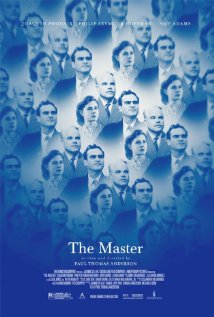
The new movie, The Master, is said to be loosely based on the life of L. Ron Hubbard, writer and controversial founder of the Church of Scientology. It was written and directed by Paul Thomas Anderson, whose credits include There Will be Blood and the bizarre Boogie Nights, about the lives of a group of people working in the pornography industry in California. While The Master is intelligent, beautifully made and interesting in its way, I found it difficult to like.

The main character in the movie is a young man (or not so young—his face is deeply lined) named Freddie Quell (played by Joaquin Phoenix). He fought during World War II and, since the war ended, is directionless. He is, and apparently always has been, an unrepentant drunk. He is a professional photographer of sorts but doesn’t seem to fit in anywhere he goes. He has no friends, home or family to speak of. He seems emotionally immature, dangerously self-destructive, not very bright, and prone to sudden violence. We learn few facts about his earlier life, other than his father died a drunk, his mother is in a mental institution, and he had a sixteen-year-old girlfriend when he was in the navy to whom he promised to return and never did, finding out, years later, that she married somebody else.

By stowing away on a yacht belonging to a man named Lancaster Dodd (played by Phillip Seymour Hoffman), Freddie becomes part of Dodd’s strange world. (Dodd is the character based on L. Ron Hubbard.) Dodd is a writer, philosopher, doctor, mystic, and—some would say—crackpot. He is a father figure of sorts and, for some reason, likes Freddie; he sees something in him that apparently isn’t visible to others.

Dodd has a small but devoted band of followers and adherents, including a much younger pregnant wife (Amy Adams), two grown children and a son-in-law. His followers seem to have nothing better to do than to go wherever he goes, even if it’s at sea on a yacht. He develops a philosophy—a kind of religion—that’s based on the idea of placing subjects in a near-hypnotic state and allowing them to experience past lives. Freddie seems to fit in with this group of people, maybe for the first time in his life. He becomes a devoted disciple of Lancaster Dodd and, in a way, a part of Dodd’s family.

The relationship between Freddie Quell and the older and father-like Lancaster Dodd is the emotional core of the movie, but it—and the movie itself—seems emotionally sterile. Freddie Quell is so unappealing and unlikeable that we are not able to see why Lancaster Dodd likes him and takes him under his wing. He mumbles a lot of his dialogue, or else speaks with a clenched jaw, so we aren’t able to understand a lot of what he says. Did I forget to mention that he’s annoying most of the time he’s onscreen?

In the end, nothing really seems resolved; the story just seems to stop rather than to end. It’s a movie that, I think, seems better in retrospect, but it is, after all, unlike anything I’ve ever seen before. For that reason alone, it is probably worth experiencing for the serious moviegoer interested in cinematic art—rather than in sophomoric laughs, car chases, explosions and titillating sex scenes that Hollywood offers up in abundance these days.   

Copyright © 2012 by Allen Kopp

Eating for Two


Eating for Two ~ A Short Story by Allen Kopp

Carla picked up one of her lesser teddy bears and examined it carefully, front and back. It was pink with little red overalls and white snout, ears and feet. Its eyes were open wide in delighted greeting and its mouth formed a little cupid’s bow, as if delivering a kiss to the world. She shook it vigorously for dust and put it in a pillow case and left for school.

All morning long, everywhere she went, in class after class, people were talking about one thing above all others: Marlene Bowen, just turned sixteen, was dropping out of school because she was going to have a baby. Most of the speculation centered on who the father was, which had not yet been revealed. Carla pretended she wasn’t interested and contributed nothing to the discourse, but she was as titillated by the subject as anybody else.

At lunch she was sitting at a table by herself, wishing it was time to go home, when Jeddah Godric sat down across from her. She had known Jeddah since first grade and had never liked her very much. She had an annoying manner and a funny smell like a closed-up basement.

“Have you seen her today?” Jeddah asked, eyes glinting with excitement.

“Seen who?” Carla asked.

“Marlene Bowen.”

“No, why should I?”

“Today is her last day in school. She won’t ever be back.”

“How do you know she won’t be back? She can come back after she has the baby.”

“I heard she won’t be back because she’s getting married.”

“Who is she going to marry?”

“The father of the baby, silly. It could be the janitor or the football coach. Maybe even the algebra teacher. There’s reason to suspect.”

“It isn’t any of them,” Carla said.

“Do you know something I don’t know?” Jeddah asked, specks of food spraying out her mouth.

Carla shrugged as if she might know something but wasn’t telling.

She was about to leave and go to her fifth period science class to go over some notes before a test, when there was a stir at the entrance to the lunch room. People stepped out the way to let somebody through and a hush came over those already seated.

“Oh, my god!” Jeddah said, turning all the way around to gawk. “It’s her!”

Marlene Bowen had just come into the lunch room alone. Everybody was looking at her but she didn’t look back. She picked up a tray and started moving down the line, not taking her eyes off the food behind the glass. She had a little smile on her lips that seemed frozen on, as though part of a pose.

“How can she be so brazen?” Jeddah said. “How can she hold up her head?”

When Marlene sat down at a table, a couple of boys at the other end got up and left quickly, as though they might be contaminated by being near her. Marlene leaned forward over her tray and began stuffing food into her mouth. She was hungry, eating for two as she was.

The afternoon dragged on exactly like all the afternoons that had come before it. Finally the bell rang to go home. Carla put her books away in her locker and took the teddy bear in the pillow case and went down to the first floor and waited near the door. In a little while she saw Marlene Bowen coming toward her.

“Hi, Marlene,” she said cheerily, as if they were old friends.

Marlene stopped and raised her eyes and looked at Carla. “Oh, hello,” she said.

“Where are you going?” Carla asked.

“I’m going home. Where do you think?”

“I have something I want to give you.”

“What is it? Do I know you?”

“We’ve never met but I feel like I already know you.”

“Oh.”

Marlene started to brush past Carla, as if to bring the conversation to an end, but Carla stood between her and the door.

“I just wanted to give you this,” Carla said. She took the teddy bear out of the pillow case and held it out.

Marlene eyed the bear and huffed with impatience. “Is this some kind of a joke?”

“No, it’s just something I wanted to give you. A little present because today is your last day in school.”

“Why would I want that stupid thing?” Marlene said. She grabbed the bear out of Carla’s hand and threw it in the direction of the trash can and went out the door.

The bear hit the wall and missed going into the can. Carla picked it up and ran out the door after Marlene.

“I didn’t mean anything by it,” she called to Marlene. “I just wanted you to have it for your baby.”

Marlene turned around and faced Carla. “Today has been the worst day of my life,” she said. “Everybody is laughing at me. I thought I could keep it a secret but when I said I had to quit school, I had to give a reason. When one person found out, then everybody knew. The people in this school are cruel and hateful and I hope they all rot in hell!”

“Do you want a boy or a girl?” Carla asked. “What are you going to name it?”

“You’re the only person who has been nice to me all day,” Marlene said, crying. “I’m sorry I was so rude.” She grabbed the bear from Carla and, holding it to her breast, ran off very fast. Carla watched her down the street until she was out of sight.

When she started to walk away, she saw a shiny object on the sidewalk where Marlene had been standing. She bent over and picked it up, seeing it was a little locket worn around the neck, the kind of locket to keep a person’s picture in. She opened the locket with her thumbnail and saw the face of someone she recognized, a person that anybody in the school would know. It was the face of the new, bowtie-wearing English teacher, Mr. Truex, just out of college. That must mean that Mr. Truex was the father of Marlene’s baby. What else could it mean? He would probably lose his job over impregnating Marlene and might even go to jail since she was legally a minor. It had the potential of the being the scandal of the year.

That evening at the dinner table, Carla said to her mother, “I know a girl at school who’s going to have a baby. They say she doesn’t know who the father is, but I think she does know.”

“How awful!” Carla’s mother said. “What is this world coming to?”

“I gave her a teddy bear.”

“Why in the world would you do that?”

“Today was her last day. I wanted to do something for her.”

“I don’t want you to be seen talking to a girl like that. Do you understand me? You’re not to have anything to do with her.”

“Why do you say a ‘girl like that’? You don’t know anything about her.”

The phone rang and Carla’s mother got up to answer it, ending the conversation. Carla looked at her father but he stood up and went out the back door, suddenly remembering something that required his attention in the garage.

Left alone at the table, Carla took the locket out of her pocket and ran her fingers over it. She opened it and looked at the picture inside, as she had done a dozen times since finding it. Mr. Truex was so handsome and it was so romantic that he and Marlene Bowen were having a child together.

She would wait a few days before she let Marlene know she knew her secret. It must be worth something. Maybe it would open the door to friendship. She could see herself standing by Marlene during the difficult days ahead when everybody else, even her family, abandoned her. For the first time in her life she knew the power of a secret knowledge. She planned on finding a way to use it to her advantage.

Copyright © 2012 by Allen Kopp

One Flew Over the Cuckoo’s Nest ~ A Capsule Book Review


One Flew Over the Cuckoo’s Nest ~ A Capsule Book Review by Allen Kopp

The classic American novel, One Flew Over the Cuckoo’s Nest, by Ken Kesey, was first published in 1962. It is set entirely (except for one brief scene on a fishing boat toward the end of the novel) in a men’s ward of a state mental hospital. The book owes a large part of its fame to the 1976 Oscar-winning film version starring Jack Nicholson and Louise Fletcher.

The first-person narrative of One Flew Over the Cuckoo’s Nest is told in the voice of one Chief Bromden, a very tall half-Indian-half-white-man, who is a long-time patient (maybe “inmate” is more appropriate) in the ward. He pretends to be “deaf and dumb” but isn’t. He sweeps the floor constantly, allowing him to be in places (closed-door meetings, for example) where he otherwise wouldn’t be allowed. He sees and hears everything. He is the silent observer.

The ward is ruled with an iron fist by one Nurse Ratched, who the men call “Big Nurse.” She is about fifty years old, wears lots of lipstick, has enormous breasts, and is a former army nurse. She is friends with the mother of one of the patients, Billy Bibbit, and, except for that, we know nothing about her life away from the hospital. Is she married? Does she have children? Is she a lesbian? We never know. She remains throughout the novel a rather one-dimensional character.

Over time Nurse Ratched has fine-tuned the ward to her liking. She believes in strict adherence to rules and schedule. The patients are all afraid of her one way or another. She uses fear, intimidation, humiliation—and sometimes electroshock therapy—to keep them in line. She herself is as machine-like and as tightly controlled as her ward. She seems invincible. No one will go against her.

Enter patient Randle Patrick McMurphy, transferred to the mental ward from a state work farm. He is the rowdy nonconformist, the extrovert from the lower classes, the master manipulator. He has been bucking authority his entire life and isn’t intimidated by it. Whether he really belongs in a mental hospital or not is never established. As a work-farm prisoner, he wangles a transfer to the mental hospital because the food is better, the surroundings more comfortable, and the living easier. He has made himself master of his world.

R. P. McMurphy challenges Nurse Ratched’s authority in a way it has never been challenged before. He lets her know that she has met her match in him. He isn’t intimidated by her the way the other men are. He breaks all the rules and leads the other men into doing the same. Finally they have found somebody who speaks for them, who stands up for them. He gives them courage they never realized they had. When he finds that most of them are in the mental hospital voluntarily (they can leave whenever they want to) rather than “committed,” he forces them to look at their lives in a different way: they are masters of their own destiny, most of them, instead of pawns to be manipulated by the “Combine.”

The story doesn’t turn out well for McMurphy, but has Nurse Ratched really won in the end? Hasn’t McMurphy wrought a change that otherwise (if not for him) would not have been possible? It’s the end of the road for him but the beginning of a new and better road for some of the others. In the end he has triumphed over the “Combine” in a way we didn’t expect. He is the classic antihero, the “one against many.”

Copyright © 2012 by Allen Kopp 

Lawless ~ A Capsule Movie Review


Lawless
~ A Capsule Movie Review by Allen Kopp

During the lawless days of Prohibition (1918-1933), the illegal liquor trade took off in the United States. Enterprising “businessmen” learned there was much money to be made from the illegal making and selling of the liquor that the public demanded and couldn’t buy legally. The new movie Lawless is the partly true story of the Bondurant brothers (Forrest, Howard and Jack), who thrived as bootleggers for a time during the early 1930s in a rural community in Virginia.

Jack Bondurant (Shia Laboeuf) is the youngest brother. The story is told mostly through his eyes. He is a little too sensitive for the line of work he’s in. The brains of the operation is the oldest brother, Forrest (Tom Hardy), who is tough as nails and knows how to deal with the competition and with the forces of the law that are trying to put him down. A sort of legend grows up around the Bondurant brothers that they are invincible, mostly because of the toughness and tenacity of Forrest Bondurant. When Forrest’s throat is cut, a horrible injury that he survives, Jack is forced to develop some toughness of his own. When their bootlegging business is thriving, they are producing a thousand gallons of bootleg whiskey a week. Jack Bondurant, during this time, develops a penchant for clothes and cars and courts a reluctant minister’s daughter named Bertha Minnix (love that name) whose father would gladly kill him if given the chance.

The law is represented by one Charlie Rakes (Guy Pearce), a creepy (for some reason he has no eyebrows) “special agent” from the city who dresses in a dapper manner and wears perfume. He is sent to Virginia to quell the bootlegging industry there and has a very condescending manner toward the locals. At one point he declares, “these hillbillies are a sideshow unto themselves.” When the local sheriff tells Charlie Rakes he doesn’t much like him, Charlie says, “Not many do.” This simple statement defines his character better than anything he says or does.

When Charlie Rakes delivers a brutal beating to Jack Bondurant because of who he is rather than for anything he’s done, Jack doesn’t even try to defend himself. The score, however, is ultimately settled.

A world-weary dame from the city named Maggie (played by Jessica Chastain) shows up and becomes a sort of employee of the Bondurants. She helps Forrest—at one point saving his life—and eventually falls for him, although very little screen time is given to their “romance.” That’s not what this movie is about.

Even though the Bondurant brothers are on the “wrong” side of the law, we are on their side and want them to succeed. Deep down, they are decent fellows just trying to make a living in hard times. They resort to violence only when they must to defend their interests. At one point, Forrest states that it’s the fear they have over people that makes them survive in the very ugly and brutal business they are in. Don’t mess with them and they won’t mess with you.

Copyright © 2012 by Allen Kopp

My Three Least Favorite Words in the English Language

My Three Least Favorite Words in the English Language 

Any writer who has ever sent out manuscripts to publishers for possible publication has probably received a superficial form rejection letter. More often than not, the rejection letter will say something like this:

“Thank you for sending us your story, but UNFORTUNATELY it doesn’t fit our editorial needs at this time.”  

Why UNFORTUNATELY? Is UNFORTUNATELY supposed to make me feel better that my work is being rejected? One person (very possibly a person 22 years of age who just doesn’t “get” my story) has decided my work isn’t worthy of publication. Fortune has nothing to do with it. These “gate keepers” work for literary magazines and are supposed to be writers themselves, for heaven’s sake! They are judging my work, and they can’t think of anything more fitting to say than UNFORTUNATELY? Isn’t it a writers’ job to avoid being trite and lazy? A little originality couldn’t hurt here. UNFORTUNATELY is a junky word that should be avoided in speaking or writing, but especially in writing. Just because UNFORTUNATELY is a long, five-syllable word doesn’t mean people will think you’re smart if you use it.

Another overused word that I truly despise is HOPEFULLY. When you are around anybody doing any talking, you can’t go for more than a few minutes without hearing something like this:

“HOPEFULLY I will get sick after lunch so I can go home for the rest of the day.” 

This is a grammatically incorrect sentence! Didn’t anybody sit through eighth-grade English? HOPEFULLY is an adverb. To be used correctly, it must have a verb to go with it, as in:

“We waited HOPEFULLY for good news from the front.”  

And that brings us to the Queen Mother of all meaningless, overused, cringe-inducing words! If somebody could count up the number of times that BASICALLY is used in a year, it would be in the tens of millions. BASICALLY as a word doesn’t mean anything. What exactly does it mean, anyway? There isn’t any sentence that contains BASICALLY that wouldn’t be a better sentence without it.

“The hurricane will BASICALLY hit landfall around midnight.”  

All right, what does BASICALLY add to that sentence? You are saying the same thing with fewer words and not making anybody cringe if you just say:

“The hurricane will hit landfall around midnight.”  

There are at least two news reporters on Fox News who can barely speak a sentence without throwing in BASICALLY. If they don’t use BASICALLY in the first sentence or two, they are sure to use it in the first thirty seconds of their report. That’s when they lose me. That’s when I reach for the remote to channel over to the comforting and unreal world of Turner Classic Movies. Isn’t that the Wavishing Kay Fwancis?

Copyright © 2012 by Allen Kopp

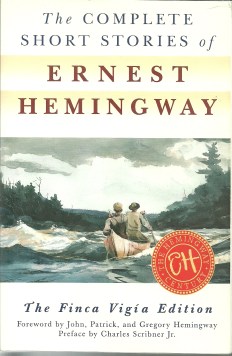
The Complete Short Stories of Ernest Hemingway ~ A Capsule Book Review


The Complete Short Stories of Ernest Hemingway ~ A Capsule Review by Allen Kopp 

Ernest Hemingway is probably the best known and most identifiable American writer of the twentieth century. He is known almost as much for his adventurous life and for his travels as for his writing. He wrote about the manly pursuits of big-game hunting in Africa, bullfighting in Spain, and boxing wherever it happened to be. He was a newspaper reporter for the Kansas City Star, drove an ambulance as a young man on the Italian front in World War I (which formed the basis for his novel A Farewell to Arms), was among the “Lost Generation” of artists, writers and painters who expatriated to Paris between the World Wars, went to Spain to fight with the anti-fascist forces during the Spanish Civil War (leading to his novel For Whom the Bell Tolls), and served as a war correspondent on the European front in World War II.

Throughout most of his life, Hemingway suffered from the mental condition known as manic depression, which is now called bipolar disorder. He underwent electroshock therapy, which affected his memory and his ability to write. He died of a self-inflicted gunshot would in July 1961, a few days before his sixty-second birthday. He left behind a body of work that has stood the test of time. In addition to his dozens of short stories and nonfiction work, he wrote at least three novels (The Sun Also Rises, A Farewell to Arms, For Whom the Bell Tolls) that are considered among the best of the best of twentieth century American writing. His style of writing (terse, clean, straightforward, simple without being spare) has often been imitated but never equaled.

This summer I undertook the monumental task of reading all 650 pages of The Complete Short Stories of Ernest Hemingway. The book is divided into three sections. The first section is “The First Forty-Nine” stories that Hemingway wrote as a young man. It contains the most famous and well known of his stories and was published as a collection in 1938. The second section contains the stories that Hemingway published after 1938, and the third section is stories that, according to the preface, had never been published before.

The section of previously unpublished work contains some fragments of unpublished novels that (sort of) stand alone as short stories. The last selection in the collection is a forty-five page novel “fragment” called “The Strange Country” that later became Islands in the Stream, a novel that was published in the 1980s, long after Hemingway’s death. If it was anybody other than Hemingway, this meandering, rather pointless fragment probably would never have seen the light of day. It’s about a middle-aged man with several failed marriages to his credit on a road trip through Florida with a much-younger woman. They drive, they drink liquor, they talk a lot, they eat, they sleep, they have sex. Was Hemingway writing about himself? It seems a little self-indulgent.

The stories are apparently just in random order, rather than in the order in which Hemingway wrote them. The African stories (“The Snows of Kilimanjaro,” “The Short Happy Life of Francis Macomber,” “An African Story,” etc.) are interspersed with the bullfighting stories (“The Capital of the World,” “The Undefeated”) and the stories of the Spanish Civil War (“The Denunciation,” “The Butterfly and the Tank,” “Night Before Battle,” “Under the Ridge”). The two “Henry Morgan” stories later became incorporated into the novel To Have and Have Not. The “Nick Adams” stories, which Hemingway wrote early in his career, were inspired by summers he spent with his family in Michigan as a boy. The longest of the Nick Adams stories, at forty pages, is “The Last Good Country,” which, for some reason, was never completed. Of the “groups” of stories in the collection, I like the Nick Adams stories the best.

Some of the stories in The Complete Short Stories of Ernest Hemingway I had read, but most of them I was reading for the first time. I liked most of the stories and found them engaging and worth my time, although some of them are not really to my taste. I’m not a fan of either bullfighting or big-game hunting and cringe at some of the long passages about killing animals, but it is, after all, Hemingway, so he must be indulged in his passions. Nobody else demonstrates such a breadth of subject matter in a body of short stories. He is a master of the form. For a great reading experience, though, read either of the novels A Farewell to Arms or For Whom the Bell Tolls. Both of them are love stories in a war setting and are superb.

Copyright © 2012 by Allen Kopp

Camp Bonhomie


Camp Bonhomie ~ A Short Story by Allen Kopp 

August put the strap of his duffle bag over his shoulder and looked around the room as if seeing it for the last time. His eyes lingered fondly over the books, the closet that held his clothes, the door to the bathroom, the writing desk, the bed that (he realized now) was the best and most comfortable bed in the world. He wouldn’t be back for two weeks and two weeks is a long time when you’re going someplace you don’t want to go. He was already homesick and he hadn’t even left yet.

He had been going to take the bus but his father agreed as a kind of concession to drive him the hundred miles to camp. He was silent the entire way, staring grimly out the window. When he saw a sign that said they had only ten miles to go, his mouth went dry and he felt a sick feeling in his stomach.

“You’re going to have such a good time,” his father said, as if reading his mind.

“I don’t want to do this,” August said. “I think I’m going to be sick.”

“You’re not going to be sick,” his father said. “ You’re going to be fine. Look, we all have to do things we don’t want to do. That’s the way life is. Sometimes those things we don’t want to do can turn out to be very good for us.”

“Mother wouldn’t have made me go.”

“Your doctor had to pull some strings to get you accepted. Not everybody can get into this camp.”

“I wish I had been one of the ones that couldn’t get in.”

“He believes it’s the best thing for you at this point in your development.”

“He’s an idiot. I’d like to see him spend two weeks away from home in a strange place with a bunch of strangers he doesn’t care to know.”

“Give it a chance, August. Please, for my sake.”

“How do you know I won’t run away when nobody’s looking.  Hitchhike back home?”

“Is that what you’re planning on doing?”

“No, I’m just saying ‘what if’.”

“I don’t want you hitchhiking. You’re only thirteen years old. You don’t know what the world is like yet.”

“I have a pretty good idea.”

“I don’t want to find you in a ditch with your throat cut and God only knows what else.”

“It might turn out to be a good thing.”

When they came to the camp, his father pulled off the highway and went up an enormous hill where the trees were so thick they kept out the sunlight. He turned in at a gate marked “welcome” at the top of the hill and drove around a winding drive to a low, rustic building where new arrivals were supposed to check in. He parked the car and turned off the engine.

“That’s all right,” August said. “You don’t have to wait. You can just drop me off.”

“No,” his father said. “This is your first time away from home. I want to see where you’ll be staying. I want to talk to the person in charge.”

They went inside. His father waited patiently while August stood in line to sign in. When he had his room assignment, his father insisted on going to the room with him and seeing it. He wanted to have a picture in his head to take back home, he said, of the place where August would be staying.

Each cabin had four rooms with four boys to a room. August was in room two of cabin eight. The three other boys who would be staying in the room with him had already arrived, so August had to take the bed that was left over. He didn’t mind because it was the bed that was the farthest from the others. He threw his bag down and turned to his father.

“You can go now,” he said.

“You’ll be all right?” his father asked. “You like the room?”

“Does it matter?”

“Aren’t you going to say good-bye to me before I go?”

“Good-bye.”

“Won’t you miss me?”

“Probably not as much as you think I should.”

His father put his hands on his shoulders, patted him twice, and then left him alone in the room. Out the window August saw him talking to one of the counselors, a thin young man dressed all in white. His father had his back to the window but August could see the face of the counselor as it went from jolly to seriously attentive. He knew his father was telling him August’s history of emotional problems and how they had all been trying to get August to open up to others and emerge from his self-imposed isolation before it was too late.

After his father drove away, August lay down on the bed, not knowing exactly what he was supposed to do. In a little while his three roommates came in and August stood up. They introduced themselves and shook hands like little men. Two of them, Ricky and Eddie, were younger than August and had a callow, frightened look. The third was half-a-head taller and a year or two older. His name was Randall. He had a self-confident swagger that August found intimidating. If August had trouble with any of them, it would be with Randall.

“There’s something I think I should tell you about myself,” August said, when the others had stopped talking and he had a chance to speak.

“What’s that?” Randall asked.

“I don’t want to be here and I want to be left alone. If you don’t mess with me, we’ll be fine, but if you’re thinking about playing any little tricks on me like putting a snake in my bed or dipping my toothbrush in the toilet, I have to tell you I’m not right in the head and I can snap. I have a big knife and I don’t mind using it.”

Ricky and Eddie sat side by side on the bed looking at him, trying to figure out what he was saying. Ricky smiled but Eddie looked scared.

“I don’t believe you have a knife,” Randall said with a sneer. “Let me see it.”

“Oh, you don’t want to see it,” August said.

“You’re not supposed to have weapons here.”

“Well, nobody needs to know about it. Just knowing it exists ought to be enough.”

“Maybe Captain Jack should know about it too,” Randall said.

“Who’s Captain Jack?”

“He’s the head counselor,” Eddie said.

“He doesn’t need to know about it,” August said. “It’s just for the four of us to know.”

Ricky and Eddie nodded their heads and smiled as if a mystery had been cleared up.

“Big man,” Randall said. “Big, crazy man.”

At dinner in the cafeteria, he imagined that people were looking at him oddly, whispering about him and avoiding being near him, so he figured that Randall must have told people what he said about having a knife. After dinner he went back to the room and lay on his back on the bed with his hands across his chest. Eddie and Ricky came in and asked him if he wanted to go for a walk to see the lake, but he said he was sick from the terrible food and he couldn’t get up off the bed.

That night he couldn’t sleep because the bed was hard and narrow, he was hot, and the chirring of the insects kept him awake. He was still awake around two in the morning when a thunderstorm moved through and nearly tore the roof off the cabin, which the others didn’t seem to notice.

Breakfast was at seven-thirty. After breakfast everybody was required to attend an orientation meeting in the assembly hall, at which the rules of the camp were explained. At the end of the meeting, each camper was given a schedule of events and activities. Failure to follow the schedule resulted in demerits. A certain number of demerits resulted in expulsion from the camp. August glanced briefly at his schedule and crumpled it up. Just like school, he thought, only worse. At school he at least got to go home at the end of the day.

His first scheduled activity was a demonstration of wood carving. He was trying to figure out where he was supposed to go when the young counselor he had seen talking to his father approached him.

“Are you August Gilpin?” the counselor asked, not unlike a police officer serving a summons.

“Who wants to know?”

“Don’t get cute with me. I know who you are.”

“If you know, then why are you asking?”

“Captain Jack wants to see you in his office right away in the administration building.”

“What for?”

“We don’t tolerate any shit here from you city kids, even the crazy ones. You’re about to find that out.”

“I don’t know what you’re talking about,” August said. “I haven’t done anything.”

“They’re waiting for you, little man.”

“Let them wait. I don’t care. They can go to hell.”

He looked over his shoulder to see if anybody was watching him and then he left camp. He didn’t go out the front gate and down the road but instead went around by the lake and into the woods. He found a path through the thick trees and heavy foliage on the other side of the lake but he didn’t know where it led. It led away from camp and that was the important thing.

He followed the path for a long way and then he came to a converging path going in another direction. He was tired of going the same way so he took the new path. It seemed to hold promise in a vague way that he didn’t understand. Maybe the path would lead him to what he was looking for, but he didn’t know yet what that was.

After a while the path ended, or turned back on itself, but he didn’t mind. He kept going because the pathless foliage was not as thick as it had been or the trees as forbidding. It was easy walking for as far as he could see.

Coming to a high hill with some large rocks, he sat down to rest. From that vantage point he could see a long way, perhaps miles. He saw some houses and a road, so he knew he wasn’t hopelessly lost in the woods. On the road he saw a few cars and large trucks on their way to the city. He would hitch a ride with one of the truck drivers. He would tell him he was hiking in the woods with friends and got separated from them, became lost on his own, and wanted only to get back home and let everybody know he was all right.

The road was farther away than it appeared. He was sweating when he reached it, out of breath and thirsty. He began walking in the direction he believed was home. Cars whizzed past him going very fast. He didn’t know how he was ever going to get anybody to stop.

He had walked maybe a quarter-mile or so with his back to oncoming traffic, when a big car, an old white Cadillac, slowed, passed him and pulled off onto the shoulder ahead of him. He didn’t understand at first if somebody was offering him a ride or if it was something else.

The driver rolled down the window and motioned for August to come to him. August saw it was an older man, much older than his father.

“Where you headed?” the man asked him.

“I’m not really sure,” August said.

“You look like you’re pretty well done in. Get in and we’ll give you a ride.”

He reached behind him and pulled the latch on the back door, opening it partway. August grabbed onto the door and got in. He saw right away that there was a woman in the car with the man.

“This is my wife, Nellie Fritchie,” the man said.

“How do you do?” the woman said. She turned around and faced August but he knew she couldn’t see him because she was blind. Her eyes rolled around in her head like loose marbles and her eyelids fluttered. Her face was very wrinkled and she wore a blond wig that seemed too young for her and lots of lipstick.

“And my name is Johnny Fritchie,” the man said.

“Hello,” August said.

“And what might your name be?”

“Carl Heinrich,” he said. It was the first name that came to him, the name of an older boy he knew from school.

“And how old are you, Carl?”

“Thirteen.”

“That’s pretty young to be walking along the highway in this part of the United States alone, Carl. Are you sure you’re not in some kind of trouble?”

“No, I’m not.”

“I’m not even going to ask you where you live, Carl, because I don’t think you’d tell me the truth. Would you like to know where we live?”

“Where?”

“We live hundreds and hundreds of miles from here in the state of Maine. Have you ever been to Maine, Carl?”

“No.”

“Would you like to see Maine?”

“I guess so.”

“We have a big house on the coast of Maine with more room than the two of us need. Would you like to come and be our guest for a while, Carl? For as long as you want, really. You don’t have to answer me right this minute, Carl. Just sit there and think about it. I admire a man who takes his time to make decisions.”

August lay down on the broad seat and put his legs up. He turned over on his side with his face toward the seat back. The leather smelled good and felt cool against his face. He felt perfectly relaxed and at ease for the first time in a long time. As he drifted off to sleep, he felt the tires underneath him turning, turning, putting miles between himself and everything he wanted to leave behind.

Copyright © 2012 by Allen Kopp