Blue Jasmine ~ A Capsule Movie Review

Blue Jasmine

Blue Jasmine ~ A Capsule Movie Review by Allen Kopp 

At age 78, Woody Allen is still making movies. His latest is Blue Jasmine, with Cate Blanchette as a Blanche Dubois-type character with an unhappy past and an uncertain future. She is Jasmine (née Jeanette) Francis, a former Park Avenue society lady who has taken a long fall. She tries to bolster herself up with bluster, pills, and booze, but she’s not fooling anybody, least of all herself.

Jasmine’s husband, Hal (played by Alec Baldwin), is a high-flying business entrepreneur. For the years that he is wildly successful, he and Jasmine live a fairy tale life. When Hal’s business dealings begin to unravel, though, he is found to be a cheat, a fraud and a liar. He has swindled investors out of millions. To make matters worse, he has been cheating on Jasmine with a whole string of other women. When he tells her he is in love with an “au pair girl” who is practically a teenager, Jasmine calls the FBI and informs on his dirty business dealings. He goes to prison and she loses her standing in society, not to mention her jewels, cars, furs, houses, etc.

With no money and no prospects, Jasmine goes to live with her odd, toothy sister, Ginger, in San Francisco. (For some inexplicable reason, men find Ginger wildly attractive.) Ginger lives in a modest apartment and is humbly employed as a bagger in a food store. She is divorced from her husband, Augie, and is the mother of two overweight boys. (When Augie and Ginger were still married, Jasmine’s husband, Hal, “invested” all their money for them and lost it.)

Ginger has a Stanley Kowalski-esque (yet another A Streetcar Named Desire parallel) boyfriend named Chili. He is crude, wears sleeveless T-shirts, has tattoos, and is prone to violence. He and Jasmine clash from the beginning. He sees that Jasmine looks down on him and Ginger. Jasmine believes that Ginger could find a better man if she only tried. (When Ginger attempts a romantic interlude with another man at Jasmine’s urging, it doesn’t work out and she goes right back to Chili.)

Jasmine eventually meets a man at a party named Dwight. He is apparently the kind of “good” man that she had been hoping to meet to take her out of her dreary existence. He works in the State Department, seems to have plenty of money, and has just bought a beautiful house that he wants Jasmine to decorate for him (she lied that she is a decorator). Dwight plans on marrying Jasmine until a chance meeting with her former brother-in-law, Augie. Augie is still bitter about the money of his that Jasmine’s husband lost and spills the beans to Dwight about all the sordid details of Jasmine’s life that she had kept hidden (and all the lies she told). After Dwight learns the truth about Jasmine, he no longer wants to marry her.

Blue Jasmine packs more of a punch than a lot of Woody Allen’s more recent movies. For my money, it is much more interesting than the highly acclaimed Midnight in Paris. Jasmine is such an interesting, complex character, as are Ginger, Augie, and Chili. I’m sure the similarities to Tennessee Williams’s A Streetcar Named Desire are not accidental (Jasmine as Blanche, Chili as Stanley, Ginger as Stella, Dwight as Mitch). What better starting point could there be?

Copyright © 2013 by Allen Kopp

The Butler ~ A Capsule Movie Review

The Butler

The Butler ~ A Capsule Movie Review by Allen Kopp 

The Butler is a panoramic view of recent American history seen through the eyes of a White House butler, Cecil Gaines (played by Forest Whitaker), who served under eight presidents, from Dwight Eisenhower almost through the present day. Cecil’s wife, Gloria, is played by Oprah Winfrey. Gloria is frequently lonely and unhappy because Cecil’s job at the White House takes up so much of his time. They have two sons, Louis and Charlie, and a nice house in the suburbs of Washington, D.C. Cecil has a better life than he ever expected to have, considering his humble beginnings and his lack of an education.

As a child Cecil lives with his family on a cotton plantation in Macon, Georgia. When his father is unjustly shot and killed, the family takes Cecil into the house as a house servant. They teach him all things connected with serving at table. He finds this work much easier than working in the cotton fields.

After a few years he leaves the Georgia plantation and ends up in Washington, D.C., where he lands a job in a hotel as a servant. He is well liked and does his job well. An older man whom he befriends at the hotel recommends him for a job at the White House. When he goes for an interview, he is hired, much to his surprise.

Cecil is so good at his job at the White House because, besides being so accommodating to those he serves, he is nearly invisible. He doesn’t talk about anything he might overhear and doesn’t express any opinions. No matter which political party the current president represents, Cecil remains the same: polite, respectful, and unobtrusive. (“May I do anything else for you, Mr. President?”) There is no political message in this movie. Political ideology is never mentioned.

A subplot in The Butler involves Cecil’s older son, Louis. When he grows up, he becomes involved in the Civil Rights movement in the South. Eventually he becomes more radical and a member of the Black Panther political party. He ends up in jail several times. He clashes with his parents, particularly his father, about his political views. The younger son, Charlie, goes into the army and to Viet Nam. He tells his brother, Louis, “You fight your country. I want to fight for my country.”

Don’t let the naysayers or the Oprah detractors keep you from seeing The Butler. While it’s not the greatest movie ever made or maybe even one of the best movies of the year, it is definitely worth seeing. It’s a little slow in places and probably longer than it needs to be, but the overall impression is a favorable one.

Jane Fonda alert: I don’t like her either and am offended by her presence wherever she is, but she only has a couple of minutes on-screen as Nancy Reagan near the end of the movie. Take a little during nap during her one brief scene and forget she’s even there. Don’t let it spoil the whole movie for you.

Copyright © 2013 by Allen Kopp

Brave New World ~ A Capsule Book Review

First Edition Cover
First Edition Cover

Brave New World ~ A Capsule Book Review by Allen Kopp 

Brave New World was written by British writer Aldous Huxley in 1931. It is the influential and highly regarded novel (number five on the Modern Library’s list of the 100 best books of the twentieth century) about a utopian earth hundreds of years in the future where all people are created in a laboratory. Viviparous birth (where the mother carries the child and delivers it alive) is passé and vulgar. People are divided into castes: alpha, beta, epsilon, etc. The lower castes are created to be inferior mentally and physically so they will be well suited to performing menial jobs. There is no family and no marriage. Neither are there any moral restrictions on sexual activity—the motto is: “Everybody belongs to everybody else.” The state relies heavily on conditioning and “hypnopaedic” learning (homilies and truisms are delivered to the brain of the learner while he/she is asleep) to make sure everybody is conforming in the way they are supposed to. Those who express subversive thinking or engage in subversive activity are exiled to “an island,” in some cases Iceland. What happens to them on the island can only be imagined because we are never told.

Most diseases have been eradicated, as has any unhappiness or discontent. Nobody is allowed to be alone because solitude breeds unhappiness. If there is ever the slightest trace of depression or sadness in a person, it is made to vanish with the application of a drug called “soma.” There is no God and no religion; old copies of the Bible or religious books are considered pornographic. Henry Ford is the one man who is looked to as a sort of god. The current state of things finds its germination in his methods of mass production and conformity.

One character named Bernard Marx stands out from the others. It is believed that a mistake was made when he was created in the test tube that made him different from the others. (Being different is the one unforgiveable sin in this world.) When he goes on a vacation to New Mexico with his “girlfriend” Lenina (if you’ve seen the Diane Keaton character in Woody Allen’s Sleeper, you know what Lenina is like), he meets a strange young, blond-haired man named John, who lives on an Indian reservation with his alcoholic, bloated mother, Linda. (Linda had been impregnated by a government official and abandoned on the reservation; the result of her impregnation was John.)

Bernard becomes enamored of John (if it’s a sexual attraction, it’s never explored) and takes him and Linda back to London with him. John, who apparently is quite good-looking, is drawn to Lenina, as she is to him. When she makes herself freely available to him sexually, he is shocked and repelled.

John, who is referred to as “the Savage,” finds himself completely at odds in the strange new world in which he finds himself. His “humanness,” his moral code, is bound to get him into trouble. While he was not accepted on the reservation because he wasn’t like the Indians, he finds himself even more ostracized in the civilized world. After a while, he seeks to get away from it all. He is famous by now, though, and people won’t leave him in peace. It does not end well for him, or for his mother.

Brave New World is a highly accessible, not-very-long, twentieth century English classic. It is a “classic” in the truest sense of the word, meaning that it’s the “best of its class.” Its influence can be seen in countless other books and movies. People will still be reading this book for a long time to come.

Copyright © 2013 by Allen Kopp

Elysium ~ A Capsule Movie Review

Elysium

Elysium ~ A Capsule Movie Review by Allen Kopp 

Elysium is a science fiction story set in the year 2154 about a dystopian earth that is diseased, polluted, and overcrowded. In the sky can faintly be seen the satellite called Elysium. It is like an enormous wheel with houses, trees, people, etc., on the scooped-out inner rim of the wheel. It is a paradisiacal “habitat” (a controlled environment) that only the very rich can escape to. It is far enough above the earth to escape the pollution but close enough to benefit from the earth’s atmosphere. Everything is beautiful and lush on Elysium. In addition to all the wonderful things about living on Elysium, they have machines there that you can recline in and be cured of any disease in a matter of seconds. There are millions of people on earth suffering and dying who could be cured of whatever ails them if only they could get to Elysium, but the thing is that the people there have a strict policy against people from earth coming there and spoiling everything. (Do I detect a metaphor here?)

Matt Damon (who I instinctively dislike for some reason) plays Max, an “everyman” who lives in the squalor on earth. He has a disgusting job in some kind of a factory, where a hateful boss is always threatening to fire him. When he is accidentally exposed to a deadly level of radiation on the job, he is administered first aid by a robot, given a bottle of pills, and sent home to die within five days. Wanting to live, he is determined to get to Elysium, where he knows he can be cured. Ever since he was a child, he has longed to go to Elysium, but now he has a reason to go. He makes a deal with a man named Spider (you can’t understand anything he says) to have himself rigged up with an exoskeleton that is somehow wired into his nervous system. This will allow him to steal vital information, including passwords and codes for Elysium, from a prissy executive visiting earth who has all the information “downloaded” into his brain. Having this information will allow Spider and others to control Elysium, or to do whatever they want to do with it. First they must disable the aircraft the executive is using to fly back to Elysium from earth and kidnap him to steal the information. The executive is killed in the ensuing gunfire, but Max is able to retrieve the information he needs. All does not go smoothly, however.

There is a subplot on Elysium involving the ambitious secretary of defense (played by Jodie Foster with a strange accent), who doesn’t like the president and is plotting a coup to depose him and become president herself. (She is the archetypical hateful female administrator that we have all known at one time or another.) She uses a strange man named Kruger (another nearly incomprehensible accent) to do her dirty deeds for her back on earth. Max, meanwhile, has reconnected with a childhood friend, a girl named Frey. It seems they used to dream together about going to Elysium. She taught Max to read when they were children and helped to open his eyes to the world. Max hasn’t seen Frey for many years. She is now a nurse and has a daughter who is ill and dying from a disease from which she could easily be cured in a matter of seconds if only they could get her to Elysium.

Neill Blomkamp wrote and directed Elysium. He also directed and co-wrote the sci-fi classic District 9 a few years ago. While Elysium isn’t, for my money, as original and compelling as District 9, it is definitely worth the time and effort to see it. To me, the most interesting element is the giant wheel in the sky where rich people go to get away from the dystopian earth. I’d like to see an entire movie about that. Of course, it’s always going to be a story of those who “have” against those who “have not.”

Copyright © 2013 by Allen Kopp

Happy Trails

Happy Trails image 1

Happy Trails ~ A Short Story by Allen Kopp 

“It’s so hot!” Johnnie said, lifting up her hair to let the wind blow on her neck.

“No fooling,” I said.

She had been complaining all the way across the desert and, believe me, we had had more than our share of trouble. The day before, we had spent six hours at a dusty roadside filling station while a greasy mechanic with tattoos repaired our carburetor. The problems with the car were fixed for now, though, and we were on what was the last leg of our trip. Soon we would be resting in comfort and all our troubles would be behind us.

“Why don’t you try to take a nap,” I said. “It’ll make the time go by quicker.”

“I’m worried about things at home,” she said. “I don’t like being away this long.”

“You were the one that wanted to come,” I said. I reached over and gave her a playful little pinch on the leg. She gave me a dark look and moved farther away.

“Don’t touch me,” she said, but without much conviction.

“Crabby, crabby,” I said. “You know what happened to the crab, don’t you? She got herself boiled in a pot!”

“Very funny.”

“I thought it was.”

“The only way you can stand this heat is to keep moving and create your own wind,” she said. “I think hell must be a desert like this.”

“Oh, no, this is nothing compared to hell!” I said. “This is a cakewalk compared to hell.”

“You would know, of course!”

“Well, so I’ve been told.”

One of those giant bugs came in through the window and landed on her leg. She screamed and nearly climbed up the seat back to get away from it. It fell to the floor and she mashed it with her foot.

We called them giant bugs but the biggest one was only about two inches long. To us they were giant because they were so much bigger than any bugs we had ever seen before. I’m not sure what they were, but I believe they were some kind of desert locusts.

“Why do those things always have to land on me?” she screamed.

“They seem to like you,” I said.

“Well, I don’t like them!”

“That’s the pioneering spirit that made this country great!” I said.

“You can always make a joke out of anything, can’t you?” she said. “I’m getting awfully tired of you.”

“Do you know how mutual it is?” I said. “To find out if you really like somebody or not, you have to travel with them.”

“I’m surprised there aren’t a lot more murders,” she said.

We hadn’t passed another car for at least a half-hour. I pulled off the road so we could take a rest and get a drink of water. Johnnie said she needed a couple of minutes of privacy, so she went off about fifty yards away from the road.

“Don’t go too far!” I yelled but I didn’t think she heard me because she just kept going and didn’t look back.

Johnnie and I got along swell. We had been married for five years. We talked all the time about how we were sick of each other and were going to kill each, but it was just our way of bantering. We never really fought, not the way my parents did when I was growing up.

I was standing by the car smoking a cigarette and trying to get the kinks out of my legs when I heard Johnnie scream. I figured she must have stumbled across a rattlesnake or a scorpion. I went running toward the sound of her voice.

When I found her, she was standing in a hole about three feet deep. She was screaming and waving her arms like a crazy person.

“What happened?” I yelled.

It appeared the ground had given way under her feet and she had fallen into a hive of those big bugs. They were swarming all around her, angry and confused.

“What did you do?” I said.

I grabbed onto her arms and pulled her out of the hole. Some of the bugs were clinging to her face and arms, not because they wanted to but because they had no other choice.

“Oh, my god!” I said. “There must be a million of them!”

When I had dragged her a few feet away from the hole, I let go of her and began pulling the bugs off her face and head.

“You just had to find out where they live, didn’t you?” I said.

“I don’t know what happened,” she said. “I was just walking back to the car.”

She had some little welts on her face, scalp, and hands. I wasn’t sure if the bugs had bitten her or if it was something else. I got her back to the car and into the back seat. She was shivering, in spite of the heat, so I covered her up with an old blanket.

“Are you all right?” I asked.

“I’m going to have nightmares for a long time,” she said.

“I’m going to get you to a doctor.”

“I’ve been waiting for something terrible to happen ever since we left home,” she said.

“Don’t talk,” I said. “Just rest.”

I wasn’t sure how far it was to the next town, but I would keep driving until I came to it. If I saw a gas station or a roadside café, I’d stop and call for help. Anybody would have a phone, even way out here.

I kept turning around in the seat looking at Johnnie. She was lying on her back, wrapped in the blanket. Her eyes were closed and she was apparently asleep. It was starting to get dark so I pulled off the road to get her a drink of water and to see if there was anything I could do for her.

I went around the other side of the car and opened the back door where her head was. I didn’t like what I saw. She was breathing heavily and her skin was turning a brown-green color.

“Johnnie!” I said. “How are you doing?”

“I feel a little funny,” she said. “Where are we?”

“I’m not sure,” I said. “I think we might be lost.”

“Oh, no!” She started to cry.

“Don’t worry, Johnnie,” I said. “Everything is going to be all right. I’m taking you to see a doctor right now.”

“Just let me rest.”

“You just go to sleep now and I’ll wake you when we get to the doctor. Don’t worry about a thing.”

It was all the way dark now. My headlights were the only light anywhere on the desert. I felt like I was alone in an enormous empty bowl with the sky as the lid. When I looked at the gas gauge, I saw that I only had about an eighth of a tank. I didn’t know how much farther that was going to take us.

Finally up ahead two or three miles—it’s difficult to gauge distance on the desert—I saw lights over to the left. I held my breath until I was close enough to see what it was: a gas station and motel called Happy Trails Auto Court.

“We’re all right now!” I said to Johnnie, even though I wasn’t sure if she would hear me.

As I pulled up to the gas pump, my brakes squealed. An attendant came running out.

“Do you have a phone?” I asked.

“Pay phone,” he said, pointing with his thumb back inside the building.

As he filled my tank, I was digging in my pockets for change.

“Wait a minute,” Johnnie said. “Don’t call anybody. I’ll be all right. I don’t need a doctor.”

I turned and looked at her. “Are you sure?” I said. “You look like you could use a doctor.” I didn’t want to tell her how bad she really looked.

“Just get a room,” she said. “I need to be someplace other than this car. I want to sleep. In the morning I’ll be fine.”

After I paid the attendant for the gas, I engaged a room for the night and then I helped Johnnie out of the car and into the room. She was barely able to walk; her legs didn’t seem to work right. When we were in the room with the door closed, I helped her to the bed. She lay down heavily and took a few deep breaths.

“I’m going to get a doctor,” I said.

“No!” she said.  “There isn’t anything a doctor could do.”

“How do you know?” I asked.

She didn’t answer but turned her face away and groaned. That’s when I noticed that her head was elongating and her features flattening as if she were made of wax and melting.

“There’s something terribly wrong,” I said.

“Just leave me alone or I’m going to kill you,” she said, but she could barely form the words. Her lips had flattened out and her mouth was a straight line.

She was resting comfortably so I went into the bathroom and took a much-needed bath. When I was finished, I was feeling sick from not having eaten all day, so I went to the café next door and had a huge steak.

When I got back to the room after eating, I saw right away that Johnnie had changed even further in the short time I was away. She was covered all over with a brown-and-green hide that felt like dried corn stalks to the touch. Her arms were turning into wings, and they weren’t an angel’s wings, either. When I let my eyes travel down the length of the bed, I saw that her human legs had been absorbed by the lower part of her body and she had, instead, three pairs of bug legs evenly spaced along her underside. And her face…it almost defied description. She had no nose to speak of and her mouth was a wide slit that went from one side of her head to the other.

“Oh, my God!” I said. “You’re turning into one of those big bugs!”

“Oh, hello, honey,” she said, opening her eyes, which were as big as saucers and domed.

She had never called me honey in her life. “Are you feeling better now?” I asked.

“I must look a fright,” she said. “Will you get me my mirror out of my vanity case?”

I realized then that she didn’t know what was happening and it was probably better that she didn’t. “You look fine,” I said. “Don’t worry about that now.”

“Did you have dinner?” she asked.

“Yes,” I said. “Would you like something?”

“Did you see those weeds growing in the ditch along the highway?”

“I guess I did,” I said. “Why?”

“Ever since I woke up I can smell them and I can’t think about anything else. Will you go out and grab a couple of handfuls and bring them in to me? Get mostly leaves but some stalks, too!”

I did as she asked and when I brought them to her I placed them on the bed near her head. By manipulating her wings and her six tiny legs she turned herself over and began eating them.

She made little nyum-nyum-nyum sounds as she ate. “They are just every bit as delicious as I knew they would be!” she said. “And so economical!”

When she was finished eating, she wanted a drink of water. I filled a glass for her and held it to her mouth. She didn’t seem to have a tongue but she had a way of drawing the water from the glass up into her mouth.

“I feel so much better now,” she said.

“I’m glad,” I said.

“Will you bring me the mirror now? I want to brush my hair.”

“That can wait,” I said. “You just need to rest now.” I couldn’t bring myself to tell her she no longer had hair.

For the next couple of hours she sat on the bed and groomed herself. She had a way of bending herself double and sticking her legs, one at a time, in her mouth, and pulling on them. (I wasn’t sure if she was washing them or trying to straighten them out.) Every now and then she would flutter her wings as if exercising them or trying them out. She kept looking toward the door and the window, but I didn’t know why. She must have heard something that I didn’t hear.

I was exhausted from all that had happened and went to sleep in the chair. When I woke up at first daylight she was lying on her back again. All her legs were sticking up in the air. I thought at first she was dead but then I noticed a slight breathing movement, so I knew she was alive.

“Good morning, Johnnie!” I said cheerily.

She opened her eyes and looked at me and I knew then that the transformation was complete and she would no longer be able to talk to me.

“What are we to do now, Johnnie?” I said, even though I knew there would be no answer. “Do we just go back home and pretend that none of this ever happened?”

She looked at me and waved all her legs in the air. I knew she was trying to tell me something but I didn’t know what it was.

“I’m going to bring the car around,” I said. “I’ll help you in to the back seat. Before we go, I’ll bring you a lot of those nice weeds for you to eat on the way.”

She became agitated, waving all her legs frantically in the air.

“Don’t worry,” I said. “I’ll help to turn you over.”

She began opening and closing her eyes in time to the movement of her legs, moving her body from side to side. A faint sound came from inside her, almost like a whimper.

“What is it, Johnnie?” I said.

I leaned my ear down to her mouth, feeling her antennae touch the side of my head. I heard the little chomping sound that she made with her mouth, but still I didn’t know what she wanted me to do.

It came to me after a while that she was communicating with me in the only way she had left, by gesturing toward the door with all her legs. She wanted me to open it.

After I had turned her right-side-up on the bed, I lifted her gently to the floor and set her down on her tiny legs, a hundred-and-thirty-pound, human-sized bug. I had never seen anything like it before.

I opened the door and stepped back. She took a few tentative bug steps toward it and stopped and looked at me with those bug eyes I knew I would never forget. My Johnnie. I could tell she didn’t really want to leave me but she had to. We belonged to separate worlds now.

As soon as she had crawled out the door, she elevated the front part of her body, opened up her wings, and took flight. I hoped that there were other bug people waiting for her so she wouldn’t have to be alone, and I imagined that I saw some of them across the highway crouched down waiting for her to join them.

“Good-bye, Johnnie!” I called out as she flew away, but I wasn’t sure if she heard me.

I closed the door then and began contemplating my life without her.

Copyright © 2013 by Allen Kopp

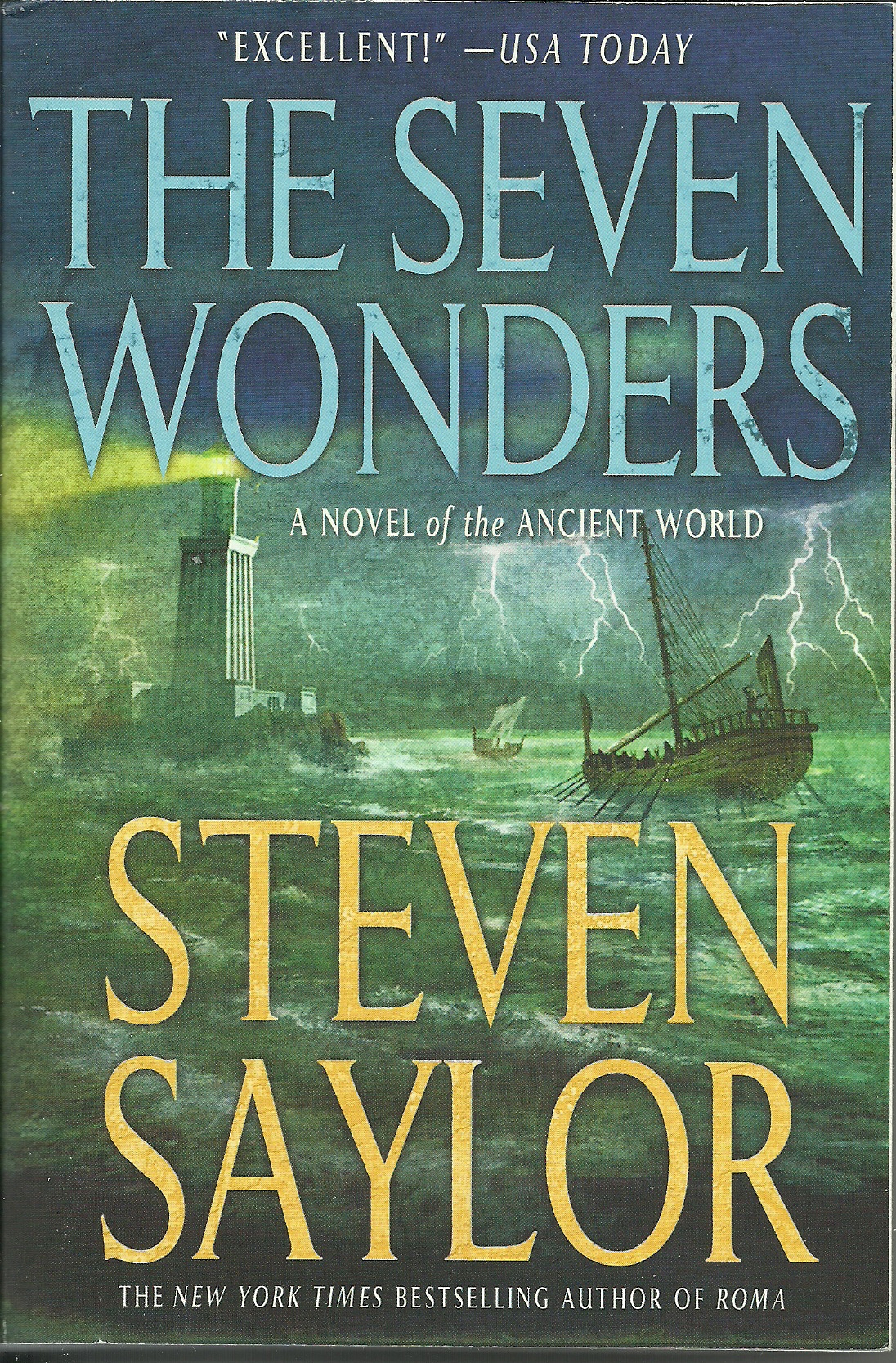
The Seven Wonders ~ A Capsule Book Review

The Seven Wonders cover

The Seven Wonders by Steven Saylor ~ A Capsule Book Review by Allen Kopp 

The Seven Wonders is a historical novel by Steven Saylor set in 92 B.C. It’s about a young Roman, Gordianus, and his tutor, the poet Antipater of Sidon, who set out on a journey from Rome to see the Seven Wonders of the Ancient World. At the beginning of the novel, Antipater fakes his own death and travels under an assumed named, Zoticus of Zeugma. We don’t know until the end of the book why he has done this.

The pair travel from one Wonder to another, apparently with ease and without too much discomfort. Such a trip, 92 years before Christ, takes months, if not years. In the order they appear in the book, the Wonders are: The Temple of Artemis at Ephesus, The Mausoleum at Halicarnassus, the Statue of Zeus at Olympia, The Colossus of Rhodes, the Wall and Hanging Gardens of Babylon, the Great Pyramids of Egypt, and the Pharos Lighthouse in Alexandria. They were all engineering and architectural wonders that made even the most jaded traveler sit up and take notice. If you look at them and go “ho-hum,” you are either faking it or you just aren’t right in the head.

At every one of their stops, Gordianus and Antipater encounter some kind of intrigue. There is always a mystery to be solved, which Gordianus is usually able to solve using his deductive powers. He is sort of a junior-grade detective who only has to mature to become something really special. He has his first sexual encounters on this trip (male and female), which is mostly left to our imagination, and he takes a giant leap toward manhood in more ways than one. In the end, he is left alone in Alexandria, Egypt, the largest and most cosmopolitan city in the world at that time, because political unrest makes it unsafe for him to return to Rome and to his family. His story is continued in other novels by the same author.

There is a subplot in The Seven Wonders involving Rome and its political enemies. Rome has conquered most of the civilized world of the time and has its sights set on the parts it hasn’t yet conquered. Some Greeks, however, are not going to stand by and let Rome have everything. Political unrest is fomenting all over the civilized world.

If The Seven Wonders seems contrived, it seems less so at the end when all the pieces come together, rather like a jigsaw puzzle. It’s “pop history,” but the apparently well-researched information it contains about the Seven Wonders of the Ancient World is fascinating. Through the characters in the book, it’s almost as if we are seeing the Wonders for ourselves.

An interesting footnote is that the Great Pyramid in Egypt, the oldest of the Seven Wonders, is also the only one left standing. The others were destroyed by earthquakes, fires, or by pillaging invaders bent on destroying what was left of a once-great civilization. Like Titanic and the World Trade Center, they exist only in our imaginations, in pictures and in stories.

Copyright © 2013 by Allen Kopp
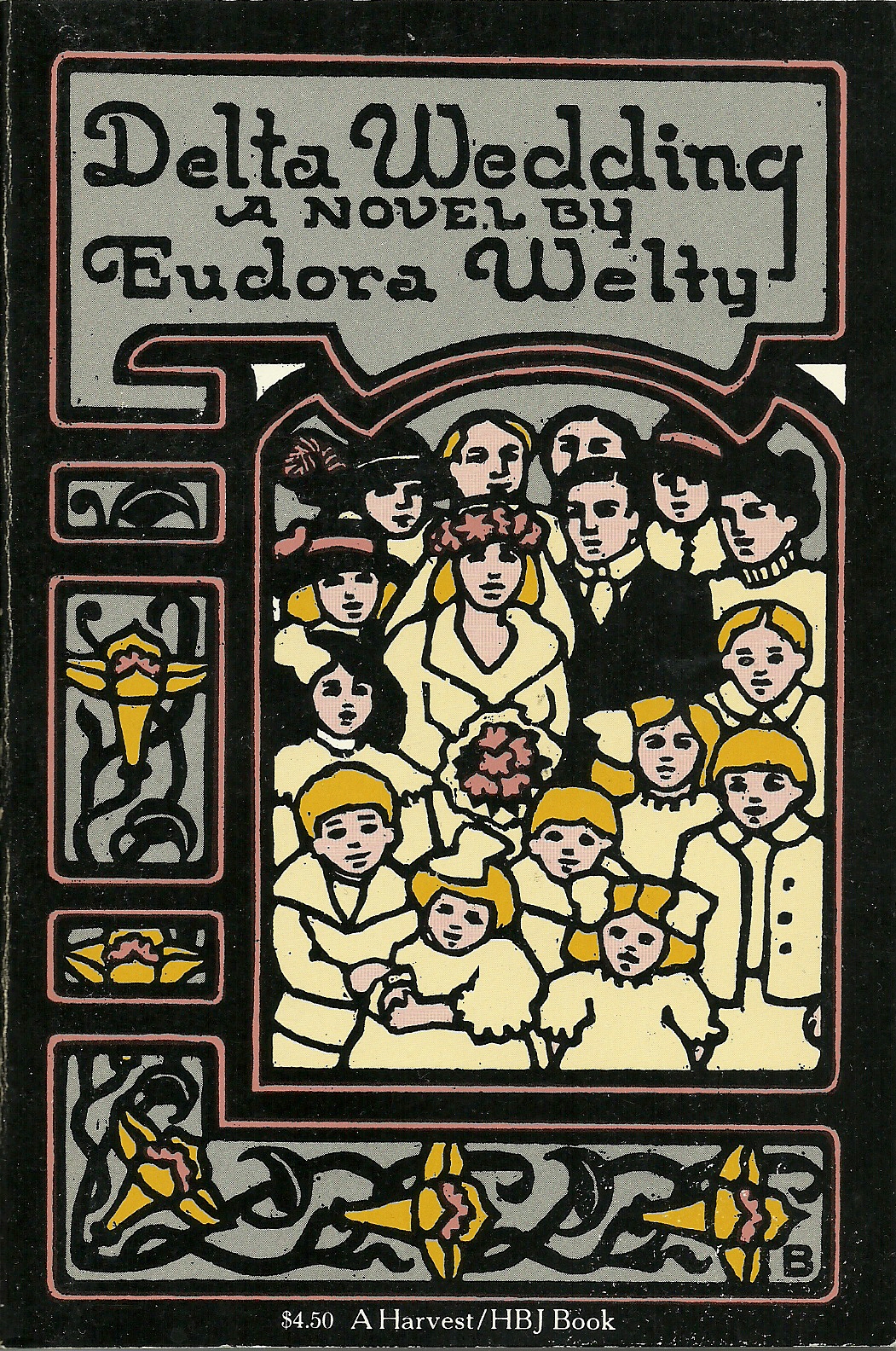
Delta Wedding ~ A Capsule Book Review

Delta Wedding cover


Delta Wedding
by Eudora Welty ~ A Capsule Book Review by Allen Kopp 

Famed American writer Eudora Welty is known for her many short stories, but she also wrote a handful of novels, including The Optimist’s Daughter, which won the Pulitzer Prize for Fiction in 1973. Her novel Delta Wedding, published in 1946, was written when her publisher suggested that she turn some of her short stories into a novel.

There isn’t much story or plot to Delta Wedding. The Fairchilds own a cotton plantation in the Mississippi Delta called Shellmounds. It’s September 1923 and their second-oldest daughter, seventeen-year-old Dabney, is marrying her father’s overseer, Troy Flavin. Troy is thirty-four years old and rough around the edges; most of the Fairchilds believe that, in marrying Troy, Dabney is marrying “beneath” herself.

Dabney Fairchild is “spoiled,” as are all the Fairchild children. The Fairchilds are moderately rich and have given all their children a good life, a life that hardly seems to have been touched by the real world. A Fairchild cousin who has recently lost her mother, Laura McRaven, has arrived on the Yellow Dog (the name they’ve given the train), for a visit. Much of what goes on at the Fairchilds is seen through Laura’s eyes.

In addition to all the Fairchild children (another one on the way), there are lots of aunts: widowed aunts (it is just a few years after World War I), spinster aunts who never married, great-aunts who remember the Civil War, a crazy aunt and a deaf aunt, etc. There are so many characters that, at times, it’s hard to keep everybody straight. Ellen and Battle are the parents of all the Fairchild children. Their children are Shelley, Dabney, Orrin, India, Little Battle, Bluet, and Ranny. Outspoken Aunt Tempe is Battle Fairchild’s sister. She has a husband, but he seems to be away on business all the time. Sisters Jim Allen and Primrose live together and never married. They live in a place called the Grove, which is owned by their brother, George. George is the most beloved of all the Fairchilds and has a rather troubled marriage to Robbie Reid. The Fairchilds look down on Robbie Reid and believe she isn’t good enough for George. Ellen, we learn at the end of the book, has a secret yearning for George but she will make sure nobody ever knows about it.

While Delta Wedding is about the events leading up to a wedding, it is, more than anything, a portrait of a large, close family in a simpler time. It’s all goodness and light, to the accompaniment of piano selections played endlessly by Mary Lamar Mackey. I’ll turn the ice cream freezer while you take the buggy into town and pick up the groceries. It’s so hot tonight I think I’ll sleep on the sleeping porch. When I wake up in the morning I’ll be as happy as I am now and there’ll be a wonderful breakfast waiting for me downstairs and I’ll be surrounded by all the people I love most in the world. They all love me, too, and, when it comes to my faults, they won’t talk about them or even acknowledge that I have any. What a family!

Copyright © 2013 by Allen Kopp  

The Conjuring ~ A Capsule Movie Review

The Conjuring poster

The Conjuring ~ A Capsule Movie Review by Allen Kopp 

The Conjuring is a ghost story that, we are told at the beginning, is based on a true story. A working-class couple, Carolyn and Roger Perron (played by Lili Taylor and Ron Livingston), buy a large old house (built in the 1860s) in a rural part of Rhode Island. The house, it seems, has an ugly past that the Perrons don’t know about. They have five children, all girls (ranging in age from about five to about sixteen). They are a happy family but soon things start to happen in their new home that they find very unsettling. Their dog, afraid to enter the house from the beginning, puts up a fuss barking and dies mysteriously in the night. Doors open and close by themselves. Mrs. Perron experiences strange bruises on her body that can’t be explained. All the clocks in the house inexplicably stop at 3:07 a.m. every morning. Pictures the Perrons place on the wall of their children are flung down and broken for no apparent reason. Mr. Perron discovers a creepy cellar that had been boarded up for some reason. The children wake up in the night, believing someone is in the room with them. One of the children feels a definite tugging on her leg while she is sleeping but when she wakes up no one is there.

Mrs. Perron asks paranormal investigators Ed and Lorraine Warren (Patrick Wilson and Vera Farmiga) to come and take a look at the house to try to figure out what is going on. They have worked on many cases of this kind before and usually find a “haunting” to be caused by something that can easily be explained. Not this time, however. Lorraine Warren is a medium; as soon as she goes into the house, she feels it is occupied by a malevolent spirit.

The Warrens discover that the Perrons’ house was the scene of a very horrific occurrence many years earlier involving Satan worship, human sacrifice, suicide, and several unexplained deaths. The spirit that remains in the house wants to possess Mrs. Perron to get her to kill her children. The spirit’s aim is for the entire Perron family to die, which, apparently, will help it to gain favor with Satan. It will do no good for the Perrons to leave, they are told; the spirit has attached itself to them and will go wherever they go.

The Conjuring seems like pretty familiar territory. How many movies and TV shows have there been about an unsuspecting family moving into an interestingly creepy old house that harbors a secret from the past? It always starts out happily enough and then turns dark and edgy as the spirit begins to manifest itself to the innocent occupants of the house. Isn’t this kind of a cliché by now? I was expecting some twist at the end of The Conjuring, such as in Insidious, but there is no such twist. It’s well made and has some interesting characters, but offers up nothing new. It is still worth seeing, though, especially if you, like me, are a fan of haunted house movies.

Copyright © 2013 by Allen Kopp
All I Have

All I Have image 3

All I Have ~ A Short Story by Allen Kopp 

It came to Mrs. Russ in a dream. She came awake and sat up in bed as if a light had been turned on inside her head. It was like this: she was all alone in the world and her life really hadn’t amounted to much. She had been grasping and selfish her entire life, rarely thinking of others. There might still be a chance for her to do some good, though. She would sell everything she had and give the money to the poor, just like it says in the Bible. She would start by deeding the house to the church. When she had her attorney, Vernon Bluet, on the phone, she told him what she planned to do.

“And where are you going to live after you’ve given your house away?” he asked.

“Don’t you see?” she said. “That’s the whole thing. I will be taken care of.”

“By whom?”

“You’re not a religious man, are you?”

“Religion and the law don’t mix.”

“Maybe they should.”

“It’s your house to do with as you please,” he said, “but I would just like to know why you want to give it away.”

“It seems the right thing to do.”

“You had a religious experience.”

“Of sorts.”

“The voice of God spoke to you and told you to sell all your possessions.”

“Well, when you put it that way, I suppose that is what happened.”

“After you’ve sold everything you have, then what?”

“I’ll give the money to the poor.”

“And then you’ll be one of the poor.”

“Maybe so, but I’ll be assured of a place in heaven.”

“Is that what you believe?”

“Yes. Don’t you?”

“I don’t know what I believe. When it comes to religious matters, I know nothing.”

“I like a man who admits he knows nothing,” she said as she stuck a cigarette in her holder and lit it.

“I knew your husband. He was a very practical man. I don’t think he would approve of what you want to do.”

“He isn’t in a position to either approve or disapprove, though, is he?”

“May I give you a word of advice?”

“Only if you must.”

“Wait one week.”

“That won’t make any difference. I’ve already made up my mind.”

“If you were my own mother,” he said hesitantly.

“Yes?”

“If you were my mother I’d advise you to see a doctor to make sure you haven’t had a stroke that has impaired your judgment.”

She laughed as if he had made a joke. “I can assure you there’s nothing the matter with me,” she said. “I’ve never felt better.”

“Will you agree to have a thorough physical examination before we proceed with this? As a personal favor to me?”

“I just had one,” she said, “not three months ago.”

“Have another one.”

“I want you to start the ball rolling to deed my house over to the church. When that’s taken care of, I’ll decide what to do with everything else.”

She emptied out the closets upstairs, unearthing some garments she hadn’t seen in over thirty years. She threw away the things that she thought nobody would want and boxed up the rest to give to charity. She kept out one change of clothes for herself, a pair of shoes, and a few personal items.

A man who dealt in antiques and second-hand furniture was interested in buying most of the furniture, especially the dining room table, chairs, and sideboard that were over a hundred years old and the beds, dressers and chest of drawers in two of the bedrooms upstairs. (He knew someone else who would buy all the rest of the stuff, including the cast-off furniture in the attic and the old piano that hadn’t been played in fifty years.) When a price was agreed upon, she told him to send the check to the church as a charitable donation for the poor with her name attached, which he agreed to do before his men came to pick up the stuff.

The auction people made an inventory of everything else in the house, which would all be sold in one day at public auction. They arranged all the most valuable items in the living room and dining room: family heirlooms, an antique violin that belonged to her uncle, china and silver, her husband’s book and music collections, gun and coin collections, paintings, artifacts, bric-a-brac, and objets d’art. They took pictures to be used in flyers and newspaper advertising.

It rained the day of the auction, but that didn’t keep people from coming. At first there were about thirty, which increased to fifty, then eighty and then more than a hundred. People were allowed to come into the house and look over the items to be auctioned before the bidding began.

From the beginning the auction was a success. Items sold briskly and brought handsome prices. Mrs. Russ stood to the side with a smile on her face, her hands folded in front of her. She didn’t know most of the people but recognized a few of them from the neighborhood. The minister from her church, the Reverend Frankie Finkle, was in attendance and purchased an antique crystal vase and a table lamp.

When nearly all the items had been sold and the sale was coming to an end, Vernon Bluet, her attorney, stopped by.

“The sale has exceeded our expectations,” she said to him happily as he came through the door.

“There isn’t anything you want to keep for yourself?” he asked, looking around.

“Not a thing,” she said. “I won’t need anything where I’m going.”

“And where is that?” he asked. “Heaven?”

She didn’t answer but only smiled her mysterious little smile.

“I just hope you know what you’re doing and don’t come to regret it,” he said.

She arranged to meet with him the next day at three o’clock to sign the papers to complete the transfer of the house.

After the auction was over and all the people had left, she walked through the house she had lived in for over fifty years, marveling at how different the rooms seemed after they had been stripped of all that had given them character. It was just four walls and nothing more. It meant nothing to her.

That night she slept on a pallet on the floor in her bedroom, reduced to the bare necessities. It would be the last night she spent in the house. Now it belonged to somebody else.

On her way to the attorney’s office the next day, she stopped at the bank to get the deeds to her house and car from her safety deposit box. When she arrived at his office, he was waiting for her. He greeted her warmly and showed her to a comfortable chair.

“Any regrets?” he asked her.

“Not one.”

He showed her where she needed to sign and in a matter of a few minutes the transaction was completed. She signed her car over to him, as well as the house, and gave him all her keys. Before she left, he insisted that she take a glass of brandy with him, since it was unlikely they would ever meet again.

“What now?” he asked.

“I feel wonderful,” she said. “Free of encumbrances for the first time in my life.”

“It isn’t practical, though, to feel that way,” he said.

“Practical isn’t always the same to everybody,” she said.

“You’re going to need at least some money. Cab fare?”

“I don’t need it,” she said. “I’ll walk.”

“As a favor to me, take this.” He opened his desk drawer and counted out five one-hundred dollar bills and handed them to her.

“I don’t want any money,” she said firmly.

“Indulge me.”

She took the money with a shrug and stuffed it into her purse and stood up. They shook hands and then she was gone.

She walked five blocks until she came to a bus stop. She waited and when a bus came along she boarded it and took a seat beside the window. She didn’t know where the bus was going but it didn’t matter. She still believed all would be revealed. All she had to do was go where she was directed.

The other people on the bus seemed dazed and lifeless, as if they had just come from waging battle. The bus crept onward through traffic, stopping frequently to discharge or take on passengers. Soon they entered a part of the city Mrs. Russ had never seen before or hardly knew existed. On both sides of the streets were dilapidated tenement buildings, pool halls and taverns. Some of the buildings looked as if their insides had been bombed out.

At an intersection, a car on the cross street failed to stop at the stoplight and rammed into the side of the bus. The bus driver dismounted and, waving his arms, engaged in furious conversation with the driver of the car, who seemed to be drunk. The passengers came alive, standing up to see what was happening and chattering excitedly.

The car hitting the bus caused Mrs. Russ to strike her head on the metal frame that went around the window. She covered her eyes, experienced a moment of dizziness, and when she took her hands away she didn’t know where she was or why she was on a bus. She never rode on buses!

The passengers filed off the bus to wait for another bus to come along and pick them up, which might take as long as a half-hour. While they were standing in a bunch on the sidewalk, Mrs. Russ disengaged herself from the others and walked away.

She walked three or four blocks, not knowing where she was going but knowing only that she wanted to go home. Her feet hurt, she was tired, and she had a headache. The worst part, though, was not knowing where she was going or why. There was a gap in her consciousness. Something happened but she couldn’t quite fit the pieces together. She tried to remember if she had been sick or had an operation.

She walked until she believed she couldn’t walk any farther. She believed for a while that someone was following her but when she turned around and looked behind her, no one was there. A man standing in a doorway looked at her; he smiled in what she thought was a suggestive manner and flicked cigarette ashes at her. She clutched her purse to her chest and walked on.

When she came to a hotel on a corner, she went into the lobby. It seemed cool and quiet, somehow inviting, after the street. The desk clerk saw her come in and put down the newspaper he was reading. He was bored and hoping for a little diversion.

“May I help you?” he asked.

“This is a hotel?”

“That’s what the sign says.”

“I want a room for the night.”

“You can have anything you want as long as you pay for it in advance.”

She gave him a confused look and opened her purse, seeing the wad of bills just inside that she didn’t know she had. She took them out and, after counting them, handed him a hundred-dollar bill.

“I don’t have change for that,” he said. “I’ll have to owe you.”

She nodded her head. He gave her a key and pointed up the stairs.

“Up one flight and down the hall on your right.”

She took the key gratefully and found the room and let herself in. After she had locked the door behind her, she took off her shoes, sat down and took a few deep breaths. She felt better now that she was in a room by herself, off her feet, and with nobody looking at her. After she sat quietly for a few minutes, she would be all right again.

She nodded off and woke up to a siren on the street outside the hotel. She jumped to her feet and ran to the window. It was raining now and nearly dark. And in the drops of water on the pane of glass before her eyes were all the missing pieces, now found.

Copyright © 2013 by Allen Kopp 

The Lone Ranger ~ A Capsule Movie Review

The Lone Ranger poster

The Lone Ranger ~ A Capsule Movie Review by Allen Kopp 

The Lone Ranger bears little resemblance to the 1950s TV series of the same name, except for The William Tell Overture. It has Armie Hammer (who played the upper-crust Winklevoss twins in The Social Network and J. Edgar Hoover’s gay love interest, Clyde Tolson, in J. Edgar) as John Reid, the Lone Ranger, and Johnny Depp as the laconic Comanche, Tonto, who, when he speaks, usually says something funny.

John Reid is a lawyer fresh from the East who goes West in the 1860s, after the Civil War. His brother, Dan, is a Texas Ranger and the only likely hero in the family. John Reid’s fate becomes entwined with the repulsive outlaw Butch Cavendish, who, on his way by train to be hanged, is freed by his gang of outlaws. Dan deputizes John Reid as a Texas Ranger. Dan’s wife, Rebecca, has always been in love with John, even though she married Dan. When Dan is killed in an ambush with Butch Cavendish’s gang, John Reid takes up the fight, with Tonto to aid him. We learn along the way that Tonto’s past is a sad one. He did something stupid and feckless when he was younger that resulted in his entire village being slaughtered. He has a lot to atone for. That’s why he’s so odd!

A subplot involves a corrupt railroad tycoon named Cole (played by Tom Wilkinson, the man who seemingly can play anything) who has plans to control, not only all the railroads in the West, but also all the silver. Cole has a hankerin’ for Rebecca. We discover that he and Butch Cavendish are brothers. What a nasty pair they are!

The Lone Ranger has plenty to recommend it, including lots of action on trains and some beautiful Western scenery in and around Monument Valley. Helena Bonham Carter has a funny bit as the madam of a brothel with a Western drawl and an artificial leg made out of ivory, with a built-in gun that she shoots out the bottom of her foot. (She has Butch Cavendish to thank for the loss of her leg.) Don’t try to pay too much attention to what is going on, because the story is muddled at times. Just empty your mind (for some that will be easy) and enjoy the ride. It is, after all, a summer movie. Thinking isn’t allowed in the summer, remember?

In the end, the white-hatted Lone Ranger (on his white horse, Silver) and Tonto ride off together, a couple of misfits. They complement each other because they are so different…or are they? One thing is certain: if this movie makes enough money, they are sure to be back in a sequel.

Copyright © 2013 by Allen Kopp