Horse Face

Horse Face image

Horse Face ~ A Short Story by Allen Kopp

I bought only two items, a pound of butter and a jar of pickles. I could have gone through the express lane and been on my way in thirty seconds, but I waited twenty minutes or more behind an old lady with a couple hundred dollars worth of stuff in an overflowing cart. When my turn finally came, I smiled at the checker and placed my items on the conveyor belt. When she looked at me, she blushed a little. I know she did.

Her name, displayed on her name tag for all the world to see, was Patricia. She was twenty-eight years old, wasn’t married, and lived with her mother the same as me. I knew these things from hearsay. I had been seeing her in the Food Giant for two years. We had been on a first-name basis ever since I had told her my name.

“Hi, Patricia!” I said, hoping she wasn’t catching any bad smells coming off my body.

“Hello, Morgan. All alone this evening?”

“I’m just stopping by on my way home from work.”

“Most people go through the express lane when they only have two items. It saves time.”

“I know, but I prefer your lane.”

She laughed and pushed her glasses in place up her knobby nose. “Why is that?” she asked.

“You’re my favorite checker.”

“I didn’t know I was anybody’s favorite anything,” she said with a little deprecatory laugh.

The trouble with buying two items is that it takes such a short time to pay for them. It was over all too fast. I gave her a pained smile, took the bag with my two items in it, and left.

When my mother and I were having dinner that evening, I decided to bring up the subject of Patricia to see what she would say.

“At the Food Giant,” I said carefully, “have you ever noticed a checkout girl named Patricia?”

“I don’t pay any attention to their names,” mother said. “The only thing that matters to me is whether they’re fast or slow. The fast ones I like. The slow ones I don’t.”

“Patricia is the one with brown-blond hair that looks like a curtain that’s about to close over her face.”

“Does she have spots on her hands?”

“I don’t think so.”

“Is she the one that’s so fat it looks like she’s eaten half the food in the store before she started her shift?”

“No, mother. The one I’m talking about isn’t fat.”

She thought for a moment. “I know who you mean!” she said. “She’s the one with a long face like a horse.”

“Well, if you want to be cruel about it, that’s the one.”

“What about her?”

“I’m thinking about asking her over for dinner.”

She was speechless for a moment. Then she laughed as though I had made a joke. “Why would you want to do that?” she asked.

“I think she’s lonely.”

“Why should that concern you?”

“Maybe I’m lonely, too.”

“Do you mean you’re thinking of asking her out on a date?”

“Why shouldn’t I?”

“You don’t know anything about her. She might have filthy habits. She might have insanity in her genes. She might have diseases, for heaven’s sake!”

“Yes, the possibilities are limitless, are they not?”

“Why her?”

“I seem to feel some kind of connection between us, and I have ever since the first time I saw her.”

“The last girl you dated turned out to be a man!”

“That isn’t fair. She was a girl stuck in a man’s body.”

“She could be a frog stuck in a man’s body and she’d still be a man. It’s the body that counts.”

“That doesn’t prove anything.”

“It proves you have poor judgment.”

“My judgment is as good as anybody else’s!”

“I don’t care what you do. It’s your life.”

“Thank you!”

“But I refuse to stand idly by and see you ruin your life on…”

We went on and on in that way until she couldn’t stand to look at me anymore and retired to her room to watch her TV shows, leaving me to wash the dishes on my own.

The next day I again stopped at the Food Giant on my way home from work. I bought a bag of peanuts in the shell and a bottle of maple syrup and stood in line to pay for them. When Patricia saw me, the pained look on her face went away and she brightened.

“Back again, are we?” she said.

“Always the loyal customer,” I said.

“If you buy only two items at a time, it’ll take you forever to finish your grocery shopping.”

“What are you doing Saturday night?” I blurted it out before I lost my nerve.

“I don’t know,” she said. “I haven’t thought about it. I’ll probably catch up on my sleep.”

“Would you like to have an adventure?”

“What kind of adventure?”

“Come to my house and have dinner with my mother and me.”

“Well, um, I don’t know.”

“I’ll make lasagna. Tell me you don’t like lasagna.”

“I do like lasagna.”

“Well, then?”

“What time?”

“You mean you’ll come?”

I gave her directions to my house and told her to be there around six o’clock.

My mother was still peeved with me that evening. She didn’t chatter on about her soap operas and the things that had happened to her that day, as she usually did. She hardly spoke at all and when she did speak, she let me know how much it pained her.

“Is horse face coming for dinner?” she asked, looking down at her plate.

“Yes. And her name is Patricia.”

“When?”

“Saturday.”

“I’ll make it a point to be gone. I’ll go to a movie or something.”

“I’d like for you to be here. I want you to meet Patricia.”

“Why would I want to meet her?”

“Because she’s a friend of mine. I think you’ll like her.”

“When she ruins your life, don’t say I didn’t warn you.”

On Saturday I cleaned house, or at least the parts that Patricia was likely to see, and then I took a long bubble bath. I put on a brand-new plaid sports shirt and pants I had been saving for a special occasion. I set the table for three with the good dishes.

Patricia arrived right on time. I gave her a glass of wine and we sat on the couch and talked about small things—the weather, traffic, and her job at the Food Giant. Then we went into the kitchen and I showed her the place at the table where I wanted her to sit. She pulled out the chair and sat down with a set-in-place smile.

Before I took the lasagna out of the oven, I went upstairs to the door of mother’s bedroom and knocked softly. I could hear the voices coming from her TV.

“Mother,” I said, “dinner’s ready and we have a guest.”

She said nothing so I thought maybe she had fallen asleep. I knocked again, this time a little louder.

“It’s time for dinner, mother,” I said. “Please come to the table before the food gets cold.”

I heard her say, seemingly from far away, “I don’t want anything.”

“You have to eat, mother,” I said. “You haven’t eaten all day.”

“Go away and leave me alone,” she said. “I have a headache and I just want to be alone.”

When I went back into the kitchen, I smiled at Patricia and said, “Mother is doing the Greta Garbo routine this evening,” I said. “She just vants to be alone.”

“She what?” Patricia said.

“She has a headache and doesn’t want any dinner.”

After we ate, Patricia helped me clean up the dishes and then we went into the living room and watched Now, Voyager on TV. I had seen it maybe ten times, but Patricia had never seen it. When it was over, I could see she was puzzled about something.

“Did Charlotte Vale really kill her mother?” she asked.

“Not literally,” I said. “Only figuratively.”

“I don’t know what that means.”

I could see then that Patricia wasn’t as bright as I might have wished.

The dinner went well, I thought, in spite of mother’s refusal to come to the table, and the next time I saw Patricia I planned on asking her out on a real date.

Mother was fine the next day, her usual self. She went to church with her girlfriends, Pansy and June Ellen, and when she got home she was laughing about some gossip she had heard involving the minister’s wife. She didn’t mention my dinner with Patricia.

After my third date with Patricia, I realized that if mother was ever going to meet her, I was going to have to force it.

It was Sunday again and she wanted to drive out to the cemetery and put some plastic flowers on my father’s grave. Before we left home, I called Patricia without telling mother and asked her if she’d like to join us for a drive in the country. She said yes, so I told her I’d stop by and pick her up on our way out of town.

As soon as I deviated from the expected route, mother knew something was up.

“Why are you turning here?” she said. “This is not the right way.”

“I have a little surprise for you,” I said.

“You know how I hate surprises!”

When I pulled up in front of Patricia’s house, she came out the door in her coat with a big smile on her face. Her mother, who could pass for Marie Dressler, was right behind her in her bathrobe. She waved to us from the front porch.

“Would your mother like to go with us?” I asked Patricia as she climbed into the back seat. (Mother wasn’t about to give up her spot in the front.)

“No, she’s having a bad day,” Patricia said. “She’s got the twitches.”

“Patricia, I want you to meet my mother,” I said.

Patricia pulled herself forward on the seat back and reached awkwardly for mother’s hand with her left hand. Mother shook her hand and then looked at her own to see if anything had been left behind.

“I’m so happy to finally meet you, Mrs. Fenwick!” Patricia gushed. She seemed about to climb over the seat and crawl into mother’s lap.

“Hello,” mother said.

“You have a wonderful son!”

“I know.”

“And isn’t it a beautiful day to be out of the house?”

“I suppose so.”

Mother seemed disinclined to speak further, so Patricia shut up. I knew what mother was thinking and I was glad that Patricia didn’t know. I was hoping we could get through the day without mother calling her horse face.

At the cemetery when we were standing over my father’s grave and mother was fussing with the artificial flowers, Patricia wanted to know all the details about his death.

“Was it a painful death?” she asked.

“I’m afraid you’d have to ask him that,” I said. “He was in coma for the last ten days of his life.”

“The gophers have been digging again,” mother said.

“How did he die?” Patricia asked.

I mimed dying, the best I could standing up, but that’s not what she meant.

“Silly,” Patricia said.

“Do you mean of what did he die?”

“Yes.”

“He had a heart condition.”

Patricia seemed disappointed that there was so little drama surrounding his death. “Don’t you feel sorry for the people who kill themselves?” she said.

“That’s enough of the chatter,” mother said. “This is a solemn occasion.”

“What’s the occasion?” Patricia asked.

“Anytime you’re in a cemetery, it’s a solemn occasion,” I whispered.

“That’s my place there, right next to him,” mother said. “It’s waiting for me.”

“You’ll outlive us all,” I said.

“I’m going to be cremated,” Patricia said, “unless, of course, I die in a place where my body is never found, like outer space.”

When we were walking back down the hill to the car, Patricia took my hand and twined her fingers through mine. She giggled like an adolescent girl on her first date and whispered in my ear. Mother was right behind us taking it all in.

After I had dropped Patricia back at her house, mother said, “I don’t like her.”

“You haven’t given her a chance,” I said.

“It’s not what I see that I don’t like. It’s what I don’t see.”

“I don’t know what that means,” I said.

“I think you should get rid of her.”

“I’m thinking of asking her to marry me.”

I continued to see Patricia on a regular basis. On the two or three nights a week I was gone, I knew mother knew I was with Patricia, but we didn’t talk about it. She filled in her time alone like the stalwart she was, with her lodge functions, TV programs, and phone conversations.

Patricia won a three-day, all-expenses-paid trip to a lakeside resort in the mountains for two. She asked me if I’d like to go with her and I said yes. I planned to propose to her in the romantic setting of the resort. When we returned from our three-day trip, we would announce our plans to be married. There was no turning back now.

“When I told mother I was going to be gone for three days, she said, “With her?”

“Yes,” I said. “With her.”

“I’m not going to let it upset me,” she said.

“Good,” I said.

“I’m not going to try to interfere because you are an adult now and you have your own life to live apart from me.”

“That’s very sensible of you,” I said.

She sniffled a little into her hanky but that was the end of it.

Patricia and I had a wonderful time in those three days. We indulged in lavish meals, swam in the lake, rode horses, hiked, and just got to know each other better. It was a sort of preview of what our future life together would be like. On our last night there, I asked her to marry me and she accepted.

I couldn’t wait to share my happy news with mother. I was sure she would overcome her reluctance and would come to love Patricia as much as I did. We would be sure to include her in all our future plans and would, of course, expect her to live with us.

When I got home on Sunday evening, I knew right away that something was wrong. All the lights were on, but there was an abandoned feel to the house as if it had not been lived in the whole time I was away. Mother wasn’t in the kitchen or in any of the downstairs rooms.

I found her upstairs in her bedroom. She was in her bed, wearing her pajamas, barely breathing. She had taken a bottle of sleeping pills and had timed it, apparently, so I would find her when I arrived home.

On the bedside table was the empty bottle, minus the lid. Underneath the bottle was a suicide note: “Dear Morgan,” the note read, “If I’m going to lose you, I don’t want to go on living. Love, Mother.”

I called an ambulance. They came and took her to the hospital, where emergency room doctors pumped her stomach. I sat beside her bed for twelve hours until she regained consciousness. When she woke up, she had a terrible headache and a sore throat.

When I told Patricia I couldn’t marry her and wasn’t going to see her again, she took it well. She said she never really believed me anyway. I didn’t know what she meant by that, but I didn’t press it any further.

Now when I go to the Food Giant, I use the express lane. If I have more than twelve items, I use one of the regular lanes, as long as it’s not Patricia’s. I keep my eyes down and don’t look her way. I’m sure it’s all for the best.

Copyright © 2013 by Allen Kopp

Gravity ~ A Capsule Movie Review

Gravity 

Gravity ~ A Capsule Movie Review by Allen Kopp 

Gravity, with Sandra Bullock and George Clooney (why can’t I ever take him seriously?), is about two astronauts on a space station hundreds of miles above the earth. On this particular day that the action begins, Dr. Ryan Stone (yes, even though she’s a girl, she has a boy’s name) and Matt Kowalski, brother of Stanley (just kidding), happen to be “spacewalking,” meaning they’re working outside the space station when they receive a warning from “mission control” that a “satellite debris field” is headed their way. Dr. Stone is reluctant to leave unfinished the job she has started, so they don’t make it back inside fast enough before the debris hits them. And it’s a good thing they don’t, because the debris has hit the space station (their “home” in space) and ripped it apart, killing the other crew members. Dr. Stone and Matt Kowalski aren’t much better off, though, because they are left adrift in space with their limited oxygen supply. From that point on, it becomes a question of survival. Here’s another fine mess you’ve gotten me into. Does anybody have any bright ideas?

Dr. Stone would be dead right out of the gate if it wasn’t for the more seasoned, cool-headed Matt Kowalski. When she is spinning uncontrollably through space, head over heels, he catches her and tethers her to himself. Off in the far distance (too far) they can see the Chinese space station. Their only chance of survival is to go there and get help. It will be like “swimming” through nothing to get there. Will their oxygen hold out? Probably not, but they have to at least try.

Of course, while all this is going on, they have the panorama of earth, hundreds of miles below them, to look at. All they can see are the swirls of cloud formations and outlines of continents, but still it is a beautiful sight that the vast majority of us will never see except in pictures.

Gravity is only ninety minutes long (including the expansive end credits) which, I read, is the time it takes the space station to go around the globe. (Ninety minutes seems short compared to the length of other movies.) The theme of the movie is perseverance, not giving up in the face of overwhelmingly adverse odds; experiencing a kind of “rebirth” after terrible things have happened.

While Gravity is expensively made and worth seeing for those who are so inclined, I don’t really buy George Clooney and Sandra Bullock as astronauts. Instead of two besieged humans in an inhospitable environment, they seem like nothing more than two middle-aged movie stars trying to justify their twelve-million-dollar salaries. Other problems involve plausibility. When they are in such danger and have so much time for talk, why do they not mention God or at least the possibility that God exists? Wouldn’t most people who know they are likely to die in the next few minutes offer up some kind of prayer for deliverance, or is that concept too offensive nowadays? And, on another note, why are the Chinese and Russian space stations abandoned and accessible to American astronauts? Are the Chinese and Russian astronauts just “out” for the moment? If this is explained at any point in the movie, I must have missed it.

Copyright © 2013 by Allen Kopp

Cat Scratch Fever


Cat Scratch Fever image

Cat Scratch Fever ~ A Short Story by Allen Kopp

(This is a slightly expanded version of a story I posted earlier.)

When Miss Cudgel walked into the classroom, the laughter and loud talking stopped at once. She shot a stern look to the class at large to let them know they weren’t getting away with anything she didn’t know about, removed her sweater and draped it over the back of the chair. After sitting down at the desk, she waited a few seconds for absolute silence and began calling roll.

“Phillip Abbot.”

“Here,” Phillip said.

“Junie Adler.”

“Present, teacher.”

“Eli Babb.”

“Wah-wah-wah! Here, teacher!”

Everybody laughed.

“Very funny,” Miss Cudgel said. “Anything for a laugh. Who are you supposed to be today?”

“Nobody, teacher,” Eli said. “I was pretending to play the trombone.”

“Well, you play your imaginary trombone someplace else. The classroom is not the place for it.”

“Yes, teacher.”

“Wanda Baggett.”

“Here.”

“Clarabelle Beers.”

Silence.

Clarabelle Beers!

She looked up from the roll book, about midway to the back of the room and saw Clarabelle Beers in her usual seat with her head down and her face hovering over her desk. “Clarabelle, why don’t you answer me?” she said. “Can’t you hear me call your name?”

Veronica Stompers, sitting to the right of Clarabelle, raised her hand timidly.

“Yes, Veronica, what is it?” Miss Cudgel said.

“She wet her pants,” Veronica said. “There’s pee all over the floor.”

At this the class laughed uproariously. Everybody jumped out of their seats to see. There was nothing like somebody wetting their pants in class to spice up a dull winter morning.

“Sit down!” Miss Cudgel bellowed in her finest authoritarian manner. “What is this? You know not to get out of your seats without permission! We’re not a bunch of animals!”

“Oh, yes we are!” somebody said, but she didn’t know who said it so she chose to ignore it.

She stood up and walked back to where Clarabelle was sitting and bent over her. “Clarabelle,” she said softly. “Did you have a little accident?”

Clarabelle looked miserably into her eyes and nodded her head.

“Come with me and we’ll get you fixed up, then” she said.

She took Clarabelle to the nurse’s office down the hall, where she knew there was an abundance of paper towels.

The school nurse, Maxine Phegley, who was not really a bonafide nurse but a sort of medical assistant, was sitting at her desk reading a magazine. When she looked up and saw Miss Cudgel open the door and come into the room with Clarabelle, she quickly stowed the magazine out of sight.

“What’s this?” she asked, standing up.

“We had a little accident,” Miss Cudgel said.

While Miss Phegley went to get paper towels to help Clarabelle get herself dried off, Miss Cudgel went to summon the janitor to come with his mop to clean the mess up off the floor in the classroom. When she returned to the nurse’s office, Clarabelle was snuffling into a paper towel held to her face.

“I’m cold,” Clarabelle said.

“I’m afraid her clothes are soaked through,” Miss Phegley said. “I think you should send her home.”

“I can’t send her outside in wet clothes,” Miss Cudgel said. “It’s five degrees outside. She’ll freeze to death.”

“Well, call her mother, then.”

“You wait here, dear,” she said to Clarabelle, “and I’ll go downstairs to the principal’s office and get your mother on the phone.”

She asked the secretary to get the phone number for the Beers family. When she called the number and got the busy signal, she waited two minutes and tried again. Still the busy signal.

She went back upstairs and informed Miss Phegley that she would drive Clarabelle home herself, in her own car, to get into some dry clothes. They would be back as soon as they could.

“Would you mind,” she asked Miss Phegley, “to sit in on my class and make sure everybody behaves until I get back? Tell them to read in their social studies book the chapter on Peru. Take down the names of anybody who thinks of it as a play period and doesn’t do what they’re supposed to do.”

“Just as you say,” Miss Phegley said.

Miss Cudgel helped Clarabelle into her coat and led her outside to the parking lot. She opened the passenger-side door for Clarabelle, thinking vaguely about the pee on her car seat, and then got in herself.

“Where do you live, Clarabelle?” she asked.

“We live out in Scraptown,” Clarabelle said. She had brightened considerably outside of school.

Miss Cudgel sighed but didn’t say anything. How could she not have known that Clarabelle lived in Scraptown? If she had ever given it a thought, she would have known.

Scraptown was on the southern edge of town, across the railroad tracks near the sewage processing plant. It was where the poorest people lived, the ignorant and hopeless of the world. The one thing the people in  Scraptown could do properly, Miss Cudgel thought as she jolted her car over the ruts in the road, was have lots of children they were in no manner prepared to take care of.

The Beers home was the last dwelling in Scraptown, a miserable little gray square of a house set on a hill, surrounded by winter scrub and an assortment of car and major-appliance parts.

“You can pull in there, by the fence,” Clarabelle said.

It hardly seemed like a driveway, but Miss Cudgel turned off into a little scooped-out space that had been washed away by the rain just big enough for a car.

Clarabelle ran on up to the house with Miss Cudgel behind her. When Clarabelle came to the front door, she stood aside and waited. Miss Cudgel knocked, expecting a slatternly, fag-smoking mother to answer the door, but instead it was answered by a frizzy-haired girl in her teens.

“Who are you?” the girl said.

“I’m Miss Cudgel, Clarabelle’s third-grade teacher.”

“Did something happen to Clarabelle?”

“Here I am!” Clarabelle said, coming around behind Miss Cudgel.

“Clarabelle had an accident at school and she needs a clean change of clothes,” Miss Cudgel said. “I’m going to wait for her and then take her back.”

The girl seemed hardly to care, but she stood aside for Miss Cudgel to enter.

“Are you Clarabelle’s sister?” Miss Cudgel asked.

“I’m Rosalie,” the girl said.

“Is it all right if I sit down?”

“Sure.”

She sat down on a sofa the color of mold.

“What kind of accident did Clarabelle have?” Rosalie asked.

“I went my pants!” Clarabelle said proudly.

“Oh, brother!” Rosalie said. “Anything for attention.”

Clarabelle disappeared into the back part of the house.

“She needs a bath, too,” Miss Cudgel offered.

“Take a bath, CB!” Rosalie yelled.

“Shouldn’t you be in school?” Miss Cudgel asked, smiling to soften the question.

“Well, ordinarily I would be,” Rosalie said, “but my mother is in the hospital with cat scratch fever, and while she’s away I have to stay home and take care of Winchell.”

“Who’s Winchell?”

“He’s my brother.”

“Too young to go to school?”

“He’s twelve.”

“Well, why…”

“He’s retarded and doesn’t go to school. He used to go to retarded school but he flunked out.”

“Where is he now?”

“He’s in his room. I gave him a pill to quiet him down. Would you like a beer?”

“No, I…”

“My mother says I should always offer visitors a beer.”

“We have to be getting back to school as soon as Clarabelle finishes dressing.”

“Before you came,” Rosalie said, “I was sitting here by myself wondering and wondering. Do you think I ought to get married?”

“How old are you?”

“Fifteen.”

“I think you should finish school before you think about marriage.”

“That’s what everybody says, but I don’t think I’ll wait that long. My boyfriend wants me to marry him and he’s not going to wait years for me. He’ll find him another girl if I make him wait that long.”

“Is he a classmate of yours at school?”

Rosalie laughed. “No,” she said. “He doesn’t go to school. He’s twenty-one. His name is Ricky. Don’t you think that’s a cute name for a boy?”

“Does your mother know about him?”

Rosalie laughed loudly, throwing her head back. “She’d steal him away from me if she thought she could!”

Finally Clarabelle came out of the back room, wearing a stiff corduroy dress three or four sizes too big for her and a knit cap with all her lank blond hair tucked inside. “I got dry,” she said, “and I took a bath, too!”

“That’s the first one in about a month, isn’t it?” Rosalie said.

As Miss Cudgel and Clarabelle were going out the door to go back to school, Miss Cudgel said to Rosalie, “It was nice talking to you.”

“Yeah,” Rosalie said. “You too. I’ll invite you to my wedding. Haw-haw-haw!”

When they were on the highway headed back to town, Miss Cudgel looked away from the road to Clarabelle and said, “Somebody needs to speak to you and I suppose it might as well be me since your mother is, um, in the hospital.”

Clarabelle looked solemnly at her, believing she was about to be scolded.

“I won’t be able to do this again,” Miss Cudgel said. “Bring you home to change your clothes, I mean. This has disrupted everybody’s morning, including Miss Phegley’s. You’re supposed to go to the bathroom before school starts in the morning or during recess. If for some reason you don’t go during recess and you have to go when you’re in class, come and tell me and I’ll let you go. Please don’t sit there in class and let it build up until you can’t hold it in any longer and it comes out on its own!”

“Are you mad at me?” Clarabelle asked.

“Of course not.”

“Could we stop someplace and get a hamburger?”

“I’m afraid not. They’re waiting for us back at school. Are you hungry?”

“Yeah.”

Miss Cudgel looked at her watch. “It’s almost lunchtime,” she said. “You have your lunch money, don’t you?”

“No.”

“When the lunch bell rings, go down to the lunchroom and get yourself a good lunch. Some roast beef and mashed potatoes. Cooked carrots. Tell the head hairnet to put it on Miss Cudgel’s tab. Can you remember that?”

“The head hairnet.”

“That’s right.”

“I like you, Miss Cudgel,” Clarabelle said.

Miss Cudgel turned her eyes away from the road for a moment to smile at Clarabelle. That’s when she hit the icy patch that she should have slowed down for. The car spun around two times like a carnival thrill ride and slipped rearward into the ravine that could not be seen from the road.

Copyright 2013 by Allen Kopp

Lola Fenwick

Lola Fenwick image 1 

Jasper Dill Loves Lola Fenwick ~ A Short Story by Allen Kopp

(This is a slightly expanded version of a story I posted in January 2013.)

A woman in a trench coat and a stylish hat ran down a city street in the rain, ably but not fast in high-heeled shoes. When she came to a certain apartment building, she ducked inside, stopping just inside the door to shake the water off her coat.

“Elevator’s busted, Miss Fenwick,” the clerk said from behind the desk. “I’m afraid it’s the stairs tonight.”

She gave the man a tense smile and hesitated for only a moment before crossing the lobby to the stairs. She nearly fell on the first step but caught hold of the railing and righted herself. The clerk turned around and watched her until she was out of sight up the stairs. He smiled but there was no telling what the smile meant. It could have meant that he knew something she didn’t know but was about to find out. 

When she came to the sixth floor, she wasn’t out of breath from running up the stairs, but she had an anxious look on her face. She went along the deserted hallway to the door she wanted and inserted the key into the lock and opened the door. She stepped into the darkened room and turned on a lamp.

“Hello, Lola,” a man’s voice said.

She whirled around, drawing in a sharp breath, and faced the man. “Oh!” she said. “It’s you!”   

“Glad to see me?” he asked with a devilish grin.

“I thought you were…” Everybody thought you were…”

“Dead?” he asked. “No, I’m not dead. I’m very much alive and I’ve come back to pick up where we left off.”

Music began faintly in the background and swelled dramatically. With the two of them standing there looking at each other, not speaking and not moving, the picture slowly faded to black.

Dorothy switched off the TV before the commercials began and turned to Jasper. “I knew something like that was going to happen,” she said.

“How did you know?” Jasper asked.

“Oh, the signs were all there,” she said. “The mysterious phone calls. The anonymous letter. I knew Palmer was alive all the time.”

“You did not! You couldn’t have known!”

“Well, anyway, our Lola is certainly in a fix now!”

“He’s going to take that money she has saved for her nephew’s eye operation, I just know it.”

“Maybe he doesn’t know about the money.”

“Of course, he knows! Why else would he come back from the dead?”

“Maybe he really loves her.”

“Bah! He doesn’t know the meaning of the word. He’ll only use her to get what he wants and then run out on her.”

“Just when she was all ready to marry Dr. Blake.”

“Well, she can’t marry Dr. Blake now unless she wants to commit bigamy.”

“I shudder to think what Dr. Blake will do when he finds out that Palmer isn’t really dead and has come back to torment poor Lola again. You know what a temper he has!”

“I hope he kills the son of a bitch,” Jasper said.

“Oh, I don’t think I can wait until tomorrow to see what’s going to happen,” Dorothy said.

“Today is Friday. You’ll have to wait until Monday.”

“Oh, dear! I wish I could just snap my fingers and make it one o’clock Monday afternoon.”

“Wishing your life away, you cluck.” he said.

Dorothy had to go downtown to do some shopping, so Jasper went upstairs to his bedroom and closed the door. He took off his shoes and lay down on the bed and covered up with an afghan. In a few minutes he was asleep.

He slept much longer than he intended and when he awoke it was early evening. He wondered if Dorothy was back from shopping yet. As he yawned and started to get up from the bed, he realized there was somebody else in the room with him.

“Hello, darling,” a woman’s voice said.

He turned sharply toward the voice and saw Lola Fenwick from To Live, To Love stand up from the chair in the corner and walk toward him in her stiletto heels.

“How did you get in here?” he asked. He knew it was a stupid thing to say but it was the first thing that came into his head.

“I’ve been here all along,” she said.

She smiled indulgently with those ruby lips of hers. She was dressed in a stunning wool dress of a tawny color, showing her trim waist and large breasts. He could smell her perfume that smelled like the lilac bush his mother had in the yard when he was a boy.

“Has Dorothy come home yet?” he asked. “She’s got to see this!”

“Now don’t worry about her. She and I had a long talk while you were asleep. I gave her a nice drink and a pill and she’s sound asleep in her bedroom.”

“I’ve been watching you on To Live, To Love for eight years. You’re more real to me than anybody I know.” He realized as he spoke these words that he had been in love with her almost from the first moment he saw her.

“I know, darling. That’s why I’m here.”

“Darling,” he said. “I’ve imagined many times, by some sort of magic, being able to hear you call me that.”

“Now, I don’t want to rush you, but there isn’t much time and we’re going to have to get a move on. They’ll be here any minute.”

Who will be? Is it that son of a bitch Palmer Belvedere?”

“Yes, him, and all my other past husbands, the good and the bad.”

“But what can we do?”

“I want you to take me away from here before something terrible happens.”

“All right, but where to?”

“I’m thinking Mexico.”

“Mexico! But what about Dorothy?”

“She’ll be fine without you. She has often wished that you would go away and leave her in peace.”

“I’ve always wanted to see Mexico, and with you! I must be dreaming!”

“Now, please hurry and get dressed! You don’t need to worry about packing a bag. We’ll buy what we need when we get to where we’re going. I’ll call a taxi and will be waiting for you downstairs.”

“All right, dearest,” he said.

When he went downstairs, she was waiting for him by the front door in her mink coat. She was more lovely than Kim Novak and Rhonda Fleming put together. He felt a thrill that he hadn’t felt in at least twenty years. She took him by the arm and they went out and got into the back seat of the waiting taxicab.

“Bus station,” she said to the driver, “and please hurry!”

“I figured we would go to the airport and fly down in a plane,” Jasper said.

“No, that’s just what they’ll be expecting us to do. They would never think I’d go on a bus. It’s the perfect dodge.”

“But isn’t it an awfully long way to go on the bus?”

“Several hundred miles. We’ll be there in no time.”

“Well, I’m sure you know best,” he said.

When they got to the bus station, they had to wait for over an hour for the southbound bus they wanted, so they went into the diner and sat at a secluded booth in the back and had a bite to eat.

“Oh, I do hope we can get on that bus before anybody tries to stop us,” she said.

“I think we’re fairly safe here,” he said, looking over his shoulder. “Nobody’s paying any attention to us.”

“There are spies everywhere!” she said.

“Don’t worry,” he said. “I’ll protect you.”

“Oh, I just knew you would.” She reached across the table and put her hand over his.

“Maybe I should call Dorothy and tell her where I am,” he said.

“Now, don’t you worry about a thing,” she said. “I took care of all that while you were asleep.”

“You didn’t kill her, did you?”

She laughed the tinkling little laugh that he loved so well. “I can tell when you’re not being serious,” she said. “No, I didn’t kill her. I have some scruples, you know.”

“But what about Dr. Blake? He’s expecting you to marry him. He needs your help with the life-saving serum he’s working on.”

“The marriage to Dr. Blake is off, I’m afraid. When I told him last night that we were finished, he threatened to kill me.”

“He’ll never find you, dearest.”

“You’re sweet,” she cooed.

“I’ve seen you through all your marriages, your miscarriages, your near-drowning, your trial for murder, your brain operation, your kidnapping, your amnesia, your car going over the cliff, your alien abduction and your stint in women’s prison. You always look stunning, no matter what terrible thing you’re going through, but I have to tell you that you have never looked any lovelier than you do right now.”

She looked across the table at him and there were tears in her eyes. There was nothing she could say that was equal to the moment. He thought he might be able to lean across the table and manage a little kiss, but the departure of their bus was announced over the loud speaker.

He took her by the hand and led her to the last seat in the back of the bus where nobody would look at them. She slipped off her mink coat and he put it on the overhead rack for her and sat down beside her. She slipped her arm through his and put her head on his shoulder.

They rode all night without getting out of their seats, talking little and sleeping fitfully. When he awoke and felt the warmth of her body against his, he knew he was as happy as he had ever been in his life. This was, perhaps, his last chance at happiness and he intended to take it.

He thought about their coming life in Mexico spread out before them like a sun-drenched dream. They would lie in the sun to the accompaniment of the splashing surf, drinking exotic fruity drinks out of coconut shells. He would rub suntan oil on her shoulders, and everywhere they went people would admire her beauty and envy him for being her man.

Just as the sun was coming up, the bus stopped for a fifteen-minute rest stop. Lola was still sleeping, using her mink coat as a pillow. Jasper stood up so as not to disturb her and tiptoed away to the front of the bus. Most of the other passengers were sleeping, unaware that there was a celebrated international beauty in their midst, slipping away to Mexico with her man.

He stepped off the bus and was making his way to the little building that served as gas station, restaurant and bus stop, when two men came from around the front end of the bus and stopped in front of him.

“Are you Jasper Dill?” the larger of the two asked.

“Who wants to know?”

He pulled a badge from his pocket and flashed it in Jasper’s face. “I’m Officer Harry Holt and this is Officer Tom Green.”

“Very impressive, I’m sure,” Jasper said.

“We have to take you in, sir.”

“In where? For what?”

“I’m not an information bureau. We’re just supposed to take you in.”

“If you don’t tell me, I’m not going anywhere.”

“Well, completely off the record, now. When your wife ends up poisoned to death and you take it on the lam, it looks like you might have had something to do with it.”

“I don’t know what you’re talking about. My wife is perfectly fine.”

“That’s a good one! It’s a little stale, though. You need some fresh material.”

“What if I refuse to go?”

“We’ll take you anyway. We’ll hurt you if we have to but we’d rather not.”

“There’s been some terrible mistake.”

“Well, if that’s the case, you can get it all straightened out when you get to police headquarters and then you can go on your pathetic little way.”

“Wait a minute,” Jasper said. “I have a traveling companion, asleep on the bus. I can’t just go off and leave her without telling her what’s happened!”

Officer Harry Holt considered for a moment. “All right,” he said, “you can go tell her, but I’ll have to come with you.”

Feeling as if his heart and lungs had been pulled from his body, Jasper stepped up the three little steps onto the bus and walked down the aisle with the officer close behind him. When he came to the back of the bus, Lola wasn’t there. No one was there. He looked for the mink coat but it wasn’t there, either.

The nearest person was a Mexican, asleep several seats away. Jasper grabbed him by the shoulder and shook him roughly awake.

“Where is the lovely young woman that was sitting with me in the back of the bus?” he said. “She was wearing a mink coat! You couldn’t miss her!”

The Mexican sat up straight, alarmed. “I see no one,” he said, holding up his hands as though he would be struck. “No one there. Seats empty. My eyes they are not so good.”

His legs failing him, Jasper sat down heavily on the nearest seat. Officer Holt pulled him to his feet and led him off the bus to the back seat of the patrol car. As they sped away, Jasper craned his neck around to get a last glimpse of the bus. He began to cry, not for himself, but for the lovely Lola. He was leaving her and he didn’t even have a chance to tell her goodbye.

Copyright © 2013 by Allen Kopp

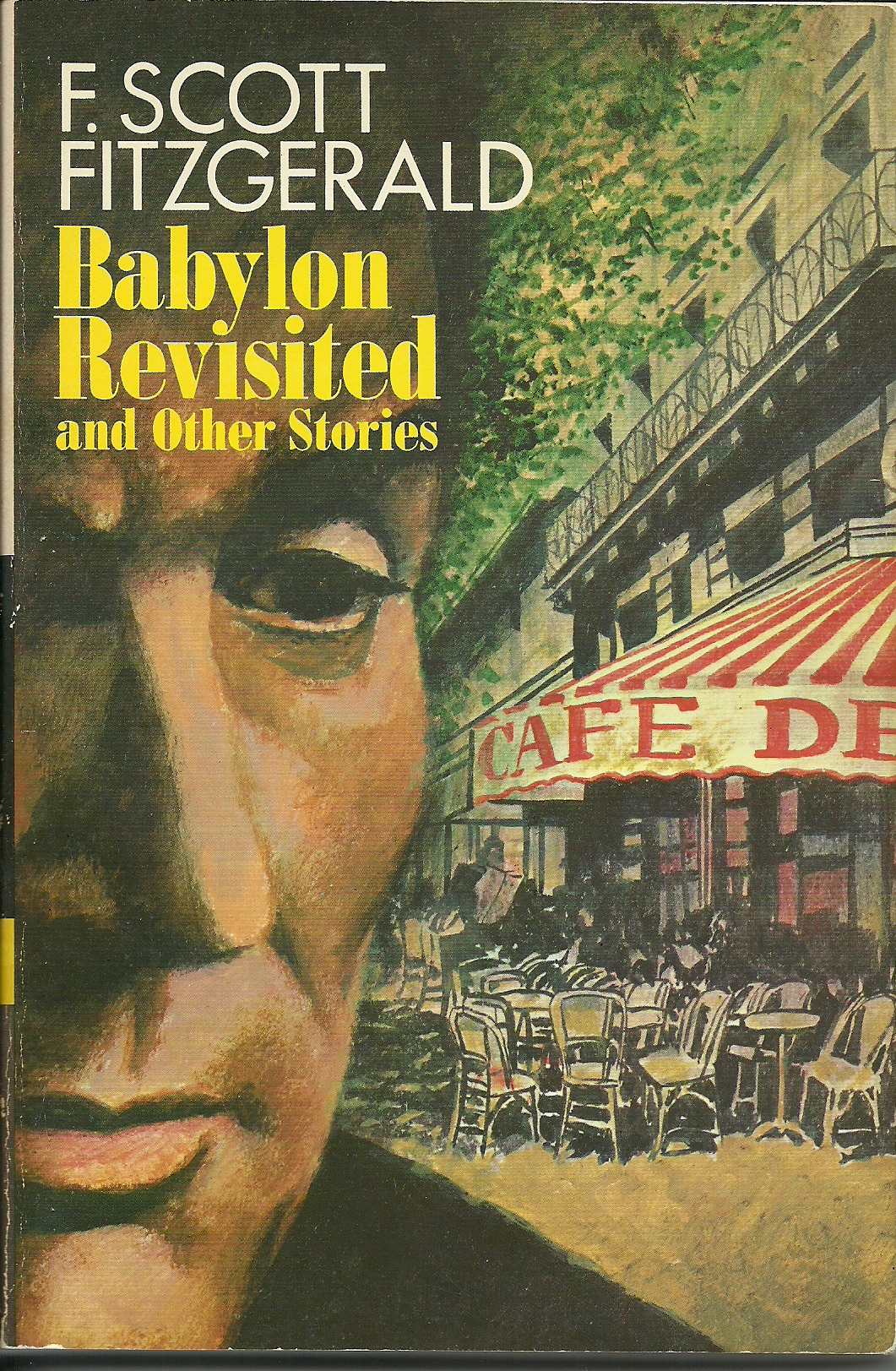
Babylon Revisited and Other Stories ~ A Capsule Book Review

Babylon Revisited and Other Stories cover

Babylon Revisited and Other Stories ~ A Capsule Book Review by Allen Kopp

More than any other American writer, F. Scott Fitzgerald chronicled the age he lived in, especially the 1920s. He coined the term “Jazz Age.” If you want to know what it was like to live in the twenties, with its good times, easy money, Ivy Leaguers, extravagance, sexual freedom and booze in spite of Prohibition, read the writings of F. Scott Fitzgerald. In his relatively short time on earth (44 years), he wrote four completed novels—one of which, The Great Gatsby, is among the three or four greatest American novels of the twentieth century—and dozens of short stories, which were mostly written for magazines.

Babylon Revisited and Other Stories is a collection of ten of F. Scott Fitzgerald’s short stories. Some of the stories in the collection are much longer than conventional short stories, which should run about 5,000 words or less. If a story is much longer than that, I think it technically qualifies as a novella. This collection runs over 250 pages. With ten stories, that’s an average of 25 pages per story. One story in the collection, May Day, is 50 pages. I think the shorter stories are better plotted and more memorable.

The best and most famous story in the collection is, of course, the story for which the collection is named, Babylon Revisited. It was written in 1931 and is about a man, Charlie Wales, who has passed through the 1920s but not unscathed. He is a reformed (or trying to reform) heavy drinker who used to spend money freely when he had it. He had an unhappy marriage to a woman named Helen. Charlie and Helen had a daughter, named Honoria, who is nine years old when the story takes place. Helen has died of “heart trouble” and Honoria lives with her aunt (Helen’s sister, Marion) and Marion’s husband, Lincoln, in Paris, since Charlie is seen as too irresponsible to care for her and give her a proper home. Now that Charlie has a steady job and has his drinking habit under control, he wants to take Honoria back and have her live with him. He must, of course, prevail upon snooty Marion, who doesn’t like him, to give up Honoria. This isn’t going to be easy since Marion has legal custody of Honoria and still sees Charlie as an irresponsible drunkard. When he just about has Marion convinced to give up Honoria, his past catches up with him in the form of two drunken profligates he used to associate with, reawakening Marion’s doubts about him.

Other memorable stories in the collection are The Ice Palace, about a girl from the warm, sunny South who wants (or thinks she wants) to marry a boy from the cold North. When a frightening episode occurs when she’s visiting her boyfriend’s home in the icy North, she calls off the marriage.

A Diamond as Big as the Ritz is the not-so-happy story about the richest man in the world who owns a mountain that is in reality a diamond. He and his eccentric family live in splendor, apart from the rest of the world. When his son takes a classmate from boarding school home with him for vacation, the visiting boy comes to know this family first-hand. What he discovers about them isn’t pretty.

Absolution is about a “beautiful” eleven-year-old boy who comes from a strict Catholic family. He is confused about his religion and believes his sins are much graver than they really are. When he confesses to an old priest—the priest is struck by the “beauty” of the boy’s eyes—he finds the priest is just as confused as he is and isn’t capable of offering him any comfort.

The Freshest Boy is about a boy named Basil Lee who is attends a fancy boys’ prep school. His family can barely afford to send him there and he is very unhappy because he is so unpopular and disliked by the other boys. It seems that everything he does makes him even more hated. On a trip to New York to see a show, however, he has a revelation about his life. When he has a chance to leave prep school forever and live in Europe with his mother, he decides not to take it.

The shortest story (five pages) in the collection is The Long Way Out. It’s about a woman who has had a nervous breakdown and is a patient in a mental hospital. She is waiting for her husband to come and take her on a trip, but he has been killed in an accident on his way there. The nurses don’t want to tell the woman her husband is dead, so every day they tell her he has been delayed one day but will be there the next day. The woman believes that the arrival of her husband is just one day away. Always one day.

Babylon Revisited and Other Stories is a good sampling of F. Scott Fitzgerald’s short fiction. It gives the reader a sense of what he was about as a writer. There are many more stories to be had for those who are interested in delving further and, of course, there’s always The Great Gatsby, which, as a novel, is about as good as it gets.

Copyright © 2013 by Allen Kopp

Prisoners ~ A Capsule Movie Review

Prisoners

Prisoners ~ A Capsule Movie Review by Allen Kopp 

Prisoners is a relentlessly bleak (gray clouds, rain and snow, no bright colors, somber background music) story about two young girls,  Anna and Joy, who vanish in their own neighborhood on Thanksgiving Day. Anna and Joy are friends, as are their families. The two families have just shared Thanksgiving dinner together when they discover the girls are missing. The only thing different that anybody notices that day is a camper truck parked on the street in the neighborhood that doesn’t belong, with sounds coming from inside.

When the police have a suspect in custody, a child-like young man with the mental age of ten years named Alex Jones (played by the ever-strange Paul Dano), they have to release him after 48 hours because they cannot produce any evidence against him. The father of the one of the girls, Keller Dover (played by Hugh Jackman), is outraged that Alex Jones is being released because he feels certain that he at least knows where the girls are. Keller Dover takes matters into his own hands. He abducts Alex Jones and takes him to an abandoned apartment building he owns, where he repeatedly beats him, trying to get him to tell what he knows. If Alex knows anything, he isn’t talking; he barely seems to know what is going on.

The soulful-eyed police inspector on the case, Detective Loki (played by Jake Gyllenhall), investigates every possible lead, trying to make sense of the senseless. What he lacks in fashion sense he makes up for in dedication to his work. He wants to find the missing girls as much as the parents do but is frustrated every step of the way. 

Prisoners is gripping and involving. If it’s not one of the best movies of the year, it’ll have to do until the real thing comes along. It will keep you guessing right up to the end. It might also make you feel like crying when it’s over. The first couple of minutes will probably make you cringe, if you, like me, can’t stand the offensive sight of a deer being shot and killed. I’m assuming, however, that it’s a computer-generated deer since we are told in the closing credits that “no animals were harmed in the making of this picture.” Fake deer or not, I would have liked it a lot better if the bullet had missed and the deer had run off into the woods.

Copyright © 2013 by Allen Kopp

The Next Life

The Next Life image x

The Next Life ~ A Short Story by Allen Kopp 

To those who knew him, he was known simply as Sidney. He lived on the big, wide-open streets of the city. By day (having nothing else to do) he roamed, ostensibly looking for work but more likely looking to snatch a purse or a briefcase. When he was feeling particularly adventurous, he would try his hand at shoplifting—although he was mostly kept out of the shops and stores because of his appearance—or hang around the train station and filch the occasional piece of stray luggage. At night he slept in the park, the cemetery, or any of the countless alleyways that were available to him, staying always one step ahead of the law.

When he heard about a three-day job with a work crew clearing brush in a cemetery, he was somehow able to produce from his pocket the bus fare to go see about the job. He took the wrong bus, though, and ended up in a far-flung suburb of the city. As soon as the bus roared away, he knew he wasn’t in the right place, but there he was, stranded in a world not his own. To find his way back to where he belonged, he would have to prevail upon some kind soul (who wasn’t repelled by his appearance) to give him, not only a little cash for bus fare, but also some directions.

He looked around at the strange neighborhood in which he found himself. The houses were large and beautiful; the trees that graced every spacious lawn graceful and scenic. All was pleasing to the eye, cool, clean and quiet. He imagined living in such a neighborhood but was unable to reckon what it would be like. For a few moments he had the sensation of being in heaven without dying first to get there. Or was he really dead and just hadn’t realized it yet?

A short distance away was a little neighborhood park with benches, many more trees, and picturesque rolling hills. Since it was getting on toward evening and he was feeling tired, he found a cozy spot, soft and dry, underneath a clump of bushes where he might rest without being seen from the street. He was glad to have eaten earlier in the day because the absence of gnawing hunger made his repose all the sweeter.

He ended up sleeping the night away and awoke at dawn to the singing of birds. He was confused at first and thought he was in the cemetery, but after he had stood up and stretched his legs and worked the kinks out of his back, he remembered the bus ride that had brought him to this place and his mind cleared a little. There was something about a job but he couldn’t recall all the details.

He staggered (he hadn’t had a drink in over a week) out of the park back to the street and stood, confused, on the sidewalk. He looked, first one way and then the other, for a clue to tell him which way to go. Nothing looked as he remembered it. He began walking in an easterly direction, toward the rising sun, because it had the advantage of being downhill.

After a few more blocks, he was even more confused. There were so many streets with odd-sounding names (Calderon, Ishmael, Augur, St. Pike) and none of them seemed like the right street to take.

Up ahead on the other side of the street a woman came a few steps out her front door and looked off to her left, in the direction away from him. He started toward her (he would be careful not to alarm her), but when he saw a police car turn the corner at the next intersection, it scared him so much that he ran into the yard of the house behind him and around to the back.

He looked around frantically for a place to hide. He was about to try to conceal himself behind some trash cans when a dog in the next yard spotted him and began barking. Nothing would attract the attention of a police officer faster than the frantic barking of a dog.

Down three steps was a door built into the foundation of the house. He sprang for the door and turned the knob but it was locked. When he gave one hard push with his hip and shoulder, using all his strength, the door sprang open. He entered, closed the door, and knelt down behind it, his heart pounding and his breath coming in painful rasps.

In a little while the dog stopped barking. He stood up partway and lifted the curtain to take a peek out the window in the door. He could see only a small portion of the yard but all was quiet. He seemed not to have aroused the people who lived in the house. He believed he was probably not seen at all. For once in his life he was lucky.

Instead of leaving at once, as he had planned to do, he lingered.  He was in a sort of play room, with pool table, musical instruments (including drums and guitars), TV set, record player, an enormous couch and some comfortable-looking chairs. On the far side of the room was a small bar. He had never known of anybody to have a bar in their own house before and had to take a closer look. He approached it cautiously, all the time listening for footsteps or for the sound of movement somewhere in the house.

Arrayed behind the bar on glass shelves were all shapes, sizes, and colors of bottles, as beautiful as any work of art. There were wines, liqueurs, vodka, tequila, rye whiskey, scotch, bourbon and other bottles that confused him because their labels were in foreign languages. He picked up a small glass from the bar and filled it with vodka and drank it down.

For a minute the room spun around and he thought he was going to be sick. He sat down on the couch that was a deep-red color like the color of wine and put his head forward. When the sick feeling passed, he had another glass of vodka and then a glass of scotch.

With just three small drinks, he was well on his way to being drunk and he knew it was because he hadn’t had any food since the day before. Did he dare go to the kitchen and grab something to eat before he left? Having food in his stomach would make anything that happened to him easier to face.

He sat down on the luxurious couch (he was already in love with the house) and rested. He longed to lay down and kick off his stinking shoes and go to sleep but didn’t dare let down his defenses to that extent.

He heard a clock chime somewhere in the house and jumped to his feet, not realizing at first what he was hearing. There was still no sound, though, of voices, footsteps, or anything else to indicate that anybody was at home. It was still early in the morning, he had to remind himself, and maybe they were still in bed.

The stairs seemed to beckon to him. Come over here and climb us, they seemed to be saying. If you think this room is something, wait until you see the rest of the house. Before he knew what he was doing, he was creeping up the steps, holding on to the wall, his senses on high alert.

At the top of the stairs was a hallway. To the left was the kitchen and to the right the dining room. He paused and held his breath. He took the silence as encouragement and went into the kitchen.

He caressed the immaculate countertop as if it was a religious article and, moving around the room, stopped at the enormous refrigerator. He opened the door and looked over the array of foods inside; he selected a half-full bottle of green olives and began eating them with his blackened fingers. When he had eaten all the olives, he discarded the jar and opened a can of sardines and ate them while standing at the kitchen sink looking out the window.

When he was about to open the refrigerator door again to see what else he might find, he saw a note attached to the door that he hadn’t seen before. The note read: To the maid. My husband and I will be out of the country until the twenty-third. Please be here at 9:00 o’clock on the twenty-fourth to resume your duties. And make sure all the doors are locked before you leave! Mrs. Hester Chuffee.  

He smiled and then laughed at the note. So, that’s the way the cards were stacked! He believed, although he wasn’t entirely certain, that it was the seventeenth of the month, meaning that it would be six days before the owners of the house came back. He didn’t need to be in any hurry to leave. What quirk of fate had put a cockroach like him in such a place?

Feeling confident and almost at home, he began exploring the other rooms. First the downstairs with its living room (comfortable, overstuffed furniture, fireplace, thick carpet), dining room (a table big enough to accommodate fourteen chairs and another fireplace) and den (dark-paneled walls with thousands of books and a collection of guns). Then the upstairs with its five bedrooms, each with its own bathroom. He had never seen a house like it before. To live in such a house and to own such things, one must be very rich.

In the lovely surroundings in which he found himself, he was aware of the smell that was coming off his body and of how filthy his clothes were. He wasn’t able to remember the last time he had taken everything off and washed all over. He went into one of the five bathrooms, the one that seemed to beckon to him the most, and closed the door. The gleaming tub looked as if it had never been used. He turned on the water and, while waiting for the tub to fill, removed his clothes and let them fall in a heap to the floor.

He scrubbed himself thoroughly from top to bottom and when he was finished he refilled the tub with fresh water, this time using a generous portion of bubble bath, and washed again. When he was as clean as he was going to get, he got out of the tub and, standing at the sink with a towel around his middle, shaved off his scrubby growth of beard and cut his hair with a pair of scissors.

Emerging from the bathroom, he went into the bedroom to find something to put on, as his old clothes were nothing more than a pile of smelly rags that he couldn’t stand to touch, now that he was clean. He opened the door to the closet, which was another room in itself. He had never seen so many clothes! There were suits of all colors, evening clothes, casual clothes, shirts, ties, shoes. He selected a pair of pants and a shirt. First, though, he needed undergarments.

The men’s underwear he found in the bureau drawer was so big he could hardly keep it on. Holding up the pants and shirt he had selected from the closet, he saw they were enormously big and he wasn’t going to be able to wear them, either.

Not knowing what else to do, he put on madame’s clothes, which, he found, were just the right size. Wearing a silk blouse and loose-fitting slacks made of a soft, stretchy material and a pair of sandals, he felt better than he had felt in a long time, since taking up the hobo life. He didn’t care that he was wearing women’s clothes. Nobody would ever know it and, if they did, let them laugh. One does what one must.

Through the rest of the day he moved quietly from room to room, sitting in one place in one room for a while and then moving to another place in another room. He drank generously from the bar downstairs and ate whatever was at hand from the refrigerator or pantry. That night he slept on the wine-colored couch in the playroom, more drunk than sober, sleep sweet and untroubled.

The next morning, after another bubble bath, he put on madame’s dressing gown and sat down at her dressing table. He looked at his reflection for a long time in the mirror, disliking the rat-faced thing looking back at him.

He longed to be somebody else, to have a different face. He began applying makeup. He didn’t know what some of the jars and bottles were for, but that didn’t stop him. The powdery stuff covered up the flaws in his skin. A bit of red stuff on the cheeks, flattened out with the fingertips, gave his face some color. A spot of eye shadow on the lids and mascara on the lashes made his beady eyes a little less so. An eyebrow pencil gave his eyebrows clarity and shape. A dab of tangerine-colored lipstick was what was needed for the lips. When he was finished, he laughed at himself because he looked so silly with his face all made up that way and his botched haircut. He was going to take a rag and wipe the stuff off his face when a thought came to him.

He had seen madame’s wigs on the top shelf in her closet. (At first he had thought they were small, sleeping animals.) He selected an auburn wig of medium length and carried it back to the mirror and put it on.  He turned this way and that and was pleased with the overall effect. The best thing about it was that he looked like somebody else, a person he didn’t know.

And he wasn’t able to stop there. He took off the dressing gown and put on madame’s undergarments and stockings, using rolled-up handkerchiefs where padding was needed. He selected a print dress with a full skirt from the closet and put it on over his head and succeeded in zipping it up in the back. He slipped his feet into a pair of madame’s two-inch high heels for casual wear, and the transformation was complete. He was somebody else. A new life had begun. The old life was over.

Feeling exulted, he began delving into madame’s things, careful to not mess them up or overturn them too much. He loved handling her intimate articles of clothing and uncovering things in the bureau drawers that only she had seen or touched. He felt close to her, almost that he and she were the same in some elemental way that he didn’t understand. He knew now why fate had brought him to this house, out of all the houses in the world.

Deep in one drawer he found a stash in bills inside a little wooden box. He counted it out and slipped it inside one of madame’s large shoulder bags that he planned on taking with him when he left. He believed the money had been left there for him. By her. He also put some blank checks and credit cards in the bag, along with a diamond bracelet and earrings that he would be able to pawn somewhere along the line when the money ran out, if it ever did.

Finding a medium-sized suitcase in the back of the closet, he began filling it with clothes: a couple of dresses, a suit, two pairs of slacks, some blouses, several changes of underwear and stockings, a couple pair of shoes, pajamas, dressing gown. What he didn’t have he could get when he got to where he was going.

He took one last fond look again into all the rooms and called a taxi. He left the house through the same door by which he had entered it, picking up a bottle of scotch and another of vodka and stashing them in the suitcase on his way out the door.

When the taxi arrived, he was waiting on the sidewalk in front of the house. The driver, believing he was a woman, got out of the cab and opened the door to the back seat for him. He got into the cab demurely, giving the driver a big smile and folding the skirt modestly under his thighs as he positioned himself on the seat.

“Where to, ma’am?” the driver asked.

“Take me to the New World hotel downtown,” he said, finding in himself the ability to raise his voice a couple of octaves so that he really sounded like a woman.

On the drive downtown, the transformation from male to female was complete. “He” was now “she.”

At the hotel she asked for a room on an upper floor and signed the register Mrs. Hester Chuffee. When the clerk asked her if the fifteenth floor was all right, she nodded her head, took the key from him, and gave him a significant look.

Alone in the room, she took the two bottles from the suitcase and set them on the dresser, labels facing outward. She called room service and asked for some ice. After it was delivered, she locked herself in and took her dress off and hung it carefully in the empty closet. She fixed herself a drink, switched on the TV to hear what they were saying about her, and lay down on the bed in her slip. The new life was about to begin and when it did she planned on being ready for it.

Copyright © 2013 by Allen Kopp

Insidious: Chapter 2 ~ A Capsule Movie Review

Insidious, Chapter 2

Insidious: Chapter 2 ~ A Capsule Movie Review By Allen Kopp 

Insidious, released in 2010, is a solid horror film with some genuinely creepy moments (the “woman” at the ironing board, for one). When a small boy named Dalton Lambert goes into an extended coma for which there is no medical reason, his parents, Josh and Renai Lambert (played by Patrick Wilson and Rose Byrne) call in a psychic. The psychic, named Elise, discovers that Dalton is in a place called “the further,” which is a kind of spirit realm. The spirits in the further like nothing better than to latch on to a living person because they want to “possess” that person. Since they are dead and are not in a very nice place, they covet life. Josh’s mother (Barbara Hershey) reveals that the problem really began when Josh (Dalton’s father) was a child, at which time he was targeted by a spirit from the further. Josh and his mother believe, however, that Josh was rid of the problem forever with Elise’s help. Not so. When Josh goes into the further to bring Dalton, his son, back, he brings back more than he bargained for.

Insidious: Chapter 2 picks up the story a short time after the events in Insidious. It has the same director, writers, and cast as Insidious, so it has the same feel and tone. Ordinarily I’m opposed to sequels on principle, but that didn’t keep me from seeing this one.

When Josh goes into the further to bring back his son, the same terribly twisted sprit that had targeted him as a child latches on to him again, a female spirit who wants him to kill his wife and children. In life, she had forced her own son to act and dress like a girl named Marilyn and she bid him to become a serial killer. (“If she knows you’re here, she’ll make me kill you.”) This mother and son make Norman Bates and his mother look like a Sunday school story.

Josh’s wife, Renai, and his mother, Lorraine, know that he is not the same as he was before he went to the further to bring back Dalton. What are they going to do? They can’t get Elise, the psychic, to help them because she was killed in the first movie. (She is in the sprit world, however, and knows what is going on.)

All in all, Insidious: Chapter 2 is a worthy sequel to the original, if you like this sort of thing. It is completely implausible and absolutely far-fetched, so you will have to “suspend disbelief” to enjoy it. The terribly sophisticated and those who are too grounded in reality aren’t going to like it or be taken in by it. They seem to forget what the movies are for. If movies were exactly like real life and the ugly present, they would be so dreary that nobody would ever want to see them.

Copyright © 2013 by Allen Kopp

The Maid’s Version ~ A Capsule Book Review

The Maid's Version cover

The Maid’s Version ~ A Capsule Book Review by Allen Kopp 

Daniel Woodrell is one of the best current American writers. He is from Missouri and his characters are country people, poor white trash and small-town people. His novels are darkly realistic, spare (averaging about 200 pages), and are so much fun to read because they are so good and so different from a lot of current fiction that is bloated and pretentious. My favorite books by Daniel Woodrell are Tomato Red and The Death of Sweet Mister. I went to one of his book signing events in St. Louis and came away with signed copies of both those books. Daniel Woodrell in person is about what you would expect him to be from his writing. There’s nothing flashy or pretentious about him. You wouldn’t know by looking at him that he’s a celebrated writer.

Daniel Woodrell’s latest book is The Maid’s Version. It is the fascinating story, set in the fictional Missouri Ozarks town of West Table, of an illicit love affair that leads to tragic consequences. The maid of the title is one Alma Degeer Dunahew, an uneducated woman who is employed as a domestic in the home of one of the leading citizens of the town, Arthur Glencross. Arthur lives in a fine house with his wispy wife and two children and is president of the bank.

Alma has a difficult life. She lives in what is described as a shack. Her husband, named Buster, is a drunk and isn’t very reliable. She has to take care of three boys (one of whom, Sidney, is sick) out of her meager earnings. She also has a younger sister named Ruby, a vivacious girl who is popular with the men and who doesn’t much care whether they’re married or not. Ruby’s unlikely love affair with Arthur Glencross forms the emotional core of the novel. Arthur claims to be in love with Ruby but is terribly afraid that people will find out he is carrying on with her. Their meetings are furtive and passionate. Ruby is also in love with Arthur, so the secrecy is fine with her.

We learn at the beginning that Ruby, along with thirty-nine other people, dies tragically in a fire and explosion at a dance at the Arbor Dance Hall in 1929. (The unidentifiable victims, including Ruby, are buried in a mass grave in the town cemetery, marked by a black angel.) For decades people speculate about what, or who, caused the fire. There’s plenty of blame to go around, but nobody seems to know for sure. Was it a hellfire-and-brimstone preacher who wanted to teach people a lesson about the wrath of God, or was it St. Louis gangsters? Any theories that people have are all unproveable.

The Maid’s Version isn’t told in linear style. It moves back and forth in time and from one character to another, making it seem a little disjointed and more challenging to read that it might otherwise have been. (Some of the brief sections throughout the novel are glimpses at the lives of people who died in the fire and of how they came to be at the dance.) All the pieces come together at the end, though, and we learn, finally, the truth of how the fire got started and what made it so much worse than in might otherwise have been. The explanation is ironic but completely plausible.

Copyright © 2013 by Allen Kopp

Ballroom Dance

Ballroom Dance image 2

Ballroom Dance ~ A Short Story by Allen Kopp 

I needed a class for physical education credit. I had always considered myself more the “brainy” than the physical type and loathed the very concept of physical education, the effort, grunting, and humiliation that were a part of it. Of the classes that were available to me, swimming was out of the question. You had to dive from the high dive to pass the course and I’d rather face a firing squad. Archery, I had heard, was no fun at all after you shot your first arrow into the air and, if that wasn’t bad enough, threatening to shoot one of your classmates in the face was grounds for dismissal. Weight lifting class had its charms, I was sure, but it wasn’t for me.

When I heard about ballroom dancing, I knew it was probably as good as I could get. It was held indoors for one thing, but the most attractive thing about it for me was that you could wear your “street clothes.” You didn’t have to change your clothes in a roomful of strangers into “gym clothes” that you would never wear in a million years if you had a choice and then, when the class was over, take a communal shower with the same group of strangers before you could go on to your next class. (This is what hell really is, I’m sure!)

I signed up and hoped they weren’t already filled up. Finally, here was a class that might be a lot of fun where I could actually learn something that might be useful in later life. (If anybody ever needed a person who knew how to do the tango, that person was going to be me.) I found that I was looking forward to the class, a sensation I hardly recognized in myself.

When I arrived for the first class, I was thrilled to discover we had a real “dance studio” in the physical education building. It was an enormous, low-ceilinged room with a gleaming wooden floor like the basketball court. One entire wall was one long mirror with a bar for holding on to. You could dance while seeing what you looked like to other people. (I’m not sure that’s a good thing.)

It was a large class of about eighty people, all looking for an easy physical education credit the same as I was, I assumed. And there was to be no same-sex dancing because we were about evenly divided up (by design) between male and female. None of these girls would be able to dance with other girls because they didn’t like the boys, as they had done in high school. (If you prefer to dance with members of your own gender while people of the opposite gender are standing by, it doesn’t look good and people begin to talk.)

Our teacher’s name was Miss Bobbie Alma. She possessed the warmth and charm of a concentration camp commandant. She was middle-aged, skinny and angular, with no curves anywhere. She wore her hair in a tight roll at the back of her head called a French roll. Her ears stuck out farther than any woman’s ears I had ever seen before. (You didn’t dare laugh.) In her boxy gray skirt with matching jacket and black oxford shoes, she was as graceless as a stevedore. (An older “boy” in the class, who had been in the military, would confide to me later in the semester how he wanted to get Miss Alma alone long enough to remind her she was a woman.)

“All right, now, listen up, you people!” she yelled. “I’m only going to tell you this one time! You are here for one reason and one reason only! That reason is to learn the art of ballroom dancing! This is not a place for cutups or jokesters! If you are not prepared to take this class seriously, then please leave now! Does everybody understand? Are there any questions?”

“What will be on the final?” a tall girl with a receding chin and frizzy hair asked. (I had found that in every class, no matter what it was, somebody always asked about the final on the first day of class. Wasn’t there going to be plenty of time—the entire semester—to worry about that?)

“You will have two tests in the course of the semester that will comprise most of your grade!” Miss Alma said. “You will have a mid-term exam and a final exam! This is one class where you will never wield a pencil! Your tests will be danced! I will be the sole judge of whether or not you have applied yourselves and have learned the steps the way you are supposed to learn them! Do I make myself clear?”

“Yes, ma’am,” the girl said meekly, although she wouldn’t have needed to say anything because the remarks were not addressed to her personally but to the class at large.

“And let me warn you about something!” Miss Alma continued. “This is one class where absenteeism will not be tolerated! You must make every effort to be present at every class! If you miss a class, you will not be able to catch up! If you miss a class, you must meet with me in my office and tell me why you missed! If you miss two classes without a very good reason, I advise you to voluntarily drop the class! If you miss three classes, whatever the reason, you will automatically be dropped from the roll! Do I make myself clear? Are there any questions?”

When nobody said anything, Miss Alma gave her famous rallying cry: “Men on that side, women on this side!” (She said these same words every class.)

Rather clumsily, we gathered according to gender on either side of the room, with an empty column of about fifteen feet separating the male group from the female group. Miss Alma selected an unlucky “volunteer” from among the “men” and proceeded to show us some waltz steps. After about ten minutes of this practical demonstration, she instructed us to “select a partner” and “listen closely to the music.”

It was not a time to select a partner for suitability or desirability. We had about ten seconds. I tapped the nearest girl on the shoulder (anybody would have been all right except Miss Frizz who had asked about the final). The girl turned around, gave me an appraising look, and fell into my arms. I’m sure she felt as silly as I did and as everybody else did.

In this way, we learned the waltz, the foxtrot, the cha-cha, and (my favorite) the tango. After we had done the dances for a while, we became more confident and less self-conscious. I’m sure I was never anything less than solemn and mechanical, kind of like a dancing robot (no joy, no feeling), but I learned the dance steps and performed them with a stolid precision.

I didn’t miss any of the ballroom dance classes. I was afraid to. I was nervous at first about having to dance in front of a lot of other people (I had never danced before), but after a while the nervousness went away. I never deluded myself that I was a good dancer. I was an adequate dancer, which was all that was needed.

I managed to go the entire semester without angering Miss Alma. When I had to come into direct contact with her, I called her bluff and didn’t let her know I was afraid of her, which, I found out, is the only way to deal with her type. I never crossed her, never did anything to attract her attention in a bad way, and tried very hard to do exactly as she said. (If I had put that much effort into all my classes, I would have been a better student.) I somehow wanted ballroom dance to work for me because it was unlike anything I had ever done before. I ended up, not with an “A,” but with the next best thing.

Of course, when the class was over and I no longer needed to know the dance steps, I forgot them. I received the physical education credit I needed for the year, which was all I ever wanted in the first place. I was on my way. To what, I didn’t know. Certainly not a career as a professional dancer.

Copyright © 2013 by Allen Kopp