Dallas Buyers Club ~ A Capsule Movie Review

Dallas Buyers Club

Dallas Buyers Club ~ A Capsule Movie Review by Allen Kopp 

Dallas Buyers Club is set the 1980s and is based on a true story. Hard-living Texas rodeo cowboy Ron Woodruff (played by Matthew McConaughey) finds himself very sick. When he is found to have AIDS as a result of his sexual promiscuity, he is given thirty days to live. He hears about a new drug called AZT that has been proven effective in tests with laboratory animals, but the problem with AZT is that it hasn’t been approved for use by humans. By the time it goes through all the government channels and is finally approved, it will be too late to help Ron and thousands of other AIDS patients who might benefit from it. Ron bribes a hospital employee to provide him with AZT, but after he has taken it for a while he finds it doesn’t do him any good.

From that point on, Ron is more resourceful than we might have given him credit for. He refuses to give up and die in a few weeks. He researches his disease (this is before the Internet) and discovers just what his limited options are. He travels to Mexico, where he might buy certain drugs that are not available in the U.S., and befriends an American doctor there who is willing to help him. He travels to Japan, Canada, Israel, and other countries, where he buys large quantities of the drugs, proteins, and vitamins that might help him and others. He is, of course, operating outside the law.

He establishes what becomes known as the Dallas Buyers Club. Instead of selling drugs to AID patients, he sells memberships that allow patients to draw from his stock of drugs whatever they need. The government is there to thwart him at every turn. If they can’t shut down his operation, they will get him for income tax evasion or any other trumped-up charge they can think of.

Other standout characters in Dallas Buyers Club include Raymond/Rayon (played by Jared Leto), a transsexual who dresses and acts like a woman (though still a man), with AIDS contracted through intravenous drug use. Ron is at first repelled by Rayon’s feminine behavior, but eventually they become friends and business partners of a sort. Eve Saks (played by Jennifer Garner) is a compassionate doctor who helps Ron and in doing so places her job and her standing in the medical community in jeopardy.

Dallas Buyers Club is grim, as stories about sick people who cannot get well always are, but it is a story that demonstrates the value of perseverance and of someone who is willing to operate outside the system. Whether Ron Woodruff is right or wrong in bucking the system, he is able to extend his own life, and the lives of others, far beyond what would have been possible through conventional methods.

Copyright © 2013 by Allen Kopp

The Hobbit: The Desolation of Smaug ~ A Capsule Movie Review

The Hobbit, The Desolation of Smaug

The Hobbit: The Desolation of Smaug ~ A Capsule Movie Review by Allen Kopp 

The epic quest begun in The Hobbit: An Unexpected Journey (released one year ago at this time) is continued in The Hobbit: The Desolation of Smaug, which is part two in The Hobbit trilogy. The third part, The Hobbit: There and Back Again, will be released in December of next year.

As you recall (or maybe you don’t), twelve dwarves are on their way to reclaim their homeland and their gold from a very large, flying, fire-breathing dragon sleeping inside a mountain. They have enlisted the aid of Bilbo Baggins, a hobbit, who is a burglar. Once they get to the mountain, they will need Bilbo to use his skills to get a large white stone, called the Arkanstone, from the extravagant piles of gold and riches the dragon stands guard over inside the mountain. (It seems they need the stone to carry out their plans.) The dragon is sleeping most of the time, but if anybody tries to mess with his riches, he is sure to wake up and be very unpleasant.

On their long journey to the mountain, the dwarves encounter Orcs, a warlike race of creatures who want to kill them. The elves don’t like dwarves, either, but they assist the dwarves because they dislike Orcs even more. (The enemy of my enemy is my friend.) In one standout scene, the dwarves are captured by giant spiders who wrap them in cocoons (presumably to keep them as a snack for a later time). The elves assist the dwarves to escape the spiders, as does Bilbo. Time and again, Bilbo displays unexpected bravery and resourcefulness. When the dwarves are trying to open the door into the mountain where the gold is, which, they are told, will open with a key by the last light of the day, Bilbo figures out that the door will open (after the dwarves have given up) by the light of the moon rather than the sun. Where would they be without Bilbo?

At the end of The Desolation of Smaug, Bilbo and the dwarves have inadvertently unleashed the death-dealing dragon on Middle Earth. As the dragon flies off to wreak all kinds of havoc, Bilbo says, “What have we done?” We’ll have to wait until December 2014 to find out.

The trilogy is based, of course, on books by J.R.R. Tolkien, the premier fantasy writer of the twentieth century. I’m not a big fan of this kind of fantasy, but these movies are beautifully made in 3D and well worth seeing. Even if you don’t care that much for the story and think you have had your fill of hobbits, dwarves, elves, and wizards, there’s no more beautiful place to visit than Middle Earth.

Copyright © 2013 by Allen Kopp

Boardwalk Empire, Season Four ~ A Capsule Review

Richard Harrow image 5

Boardwalk Empire, Season Four ~ A Capsule Review by Allen Kopp 

Boardwalk Empire on HBO is the best show on television. Of course, I might be a little prejudiced in that opinion because it’s the only show I watch. It just completed its fourth season, I’ve seen every episode, and I think it’s better than ever. It’s involving, beautifully written and beautifully played. The characters are well-rounded and believable. For the most part they are not “good” people, but human. We understand their jealousy, greed, hatred, desire, revenge, love, or whatever it is that motivates them. We don’t want to be like them (could any of us get away with it?), but we love watching them, including their killing without remorse. How bad can a person be? Apparently there’s no limit.

And then there’s the “look” of the show. Obviously a lot of research has gone into getting each detail historically accurate for the period. Each scene is beautifully appointed and you wonder how they can create those fabulous sets, some of which are just seen for a few seconds. (Is it all computer-generated illusion?) The music is all from the period and there’s lots of it and it always fits the scene. So, even if you don’t like the story, it’s a feast for the eyes and ears, especially if you, like me, find the 1920s fascinating.

There were some interesting developments in season four. Gillian Darmody, that youthful grandmother, is addicted to heroin. The new man in her life, Roy Phillips (who isn’t what he appears to be), helps her kick the habit. While she is fighting for custody of her grandson, Tommy, a very bad thing that she has done in one of the earlier seasons catches up with her. Nucky Thompson runs a nightclub, The Onyx Club, with his business partner Chalky White (whites only, black performers). Daughter Maitland, a singer at the club, is a protégé of the mysterious Dr. Narcisse, another man who isn’t what he appears to be. Dr. Narcisse and Chalky White are rivals (they both want the same things). When Chalky begins an adulterous affair with Daughter Maitland, it intensifies the dislike between the two men. Nucky has a new love interest, Sally Wheet, whom he meets in Florida when he is there on “business.” His wife, Margaret, has receded into the background with her two children and just plays a minimal part in season four. Nucky’s nephew, Will, accidentally kills a fellow student in college when a prank goes too far. When Will is caught, Nucky uses his considerable influence to get him off. Will doesn’t want to go to school but wants to be a gangster like his father and his uncle.

Among those who meet their ends in season four are Mr. Purnsley, Maybelle White, Agent Knox, Dean O’Banion, Frank Capone, and a host of minor characters. Eddie Kessler, Nucky’s faithful valet, commits suicide when he is bullied by two federal agents into giving an insignificant confession against Nucky. So long, Eddie!

And then there’s Richard Harrow. From the first time he appears in season one in what was supposed to be a minor role, he dominates every scene he’s in with his quiet dignity. After we see him a couple of times, we see beneath the tin mask he wears that hides his horribly disfigured face. He has lived through the horrors of war and returns to a world in which he has no place. For a while he is a hired killer but that isn’t really who he is. He wants nothing more than to have a family and to be normal. When he dies at the end of season four, it’s for love. Not for romantic love—that would be too silly—but for a more profound kind of love. As he’s dying, he sees himself with his handsome face intact, returning “home” to those who love him. A tragic hero in the end. Does TV get any better than this?

Copyright 2013 by Allen Kopp

The Hunger Games: Catching Fire ~ A Capsule Movie Review

The Hunger Games, Catching Fire

The Hunger Games: Catching Fire ~ A Capsule Movie Review by Allen Kopp 

The Hunger Games is a series of books and now a movie franchise. The second movie in the franchise, just out, is The Hunger Games: Catching Fire. It stars Jennifer Lawrence as an extraordinarily resourceful girl named Katniss Everdeen, who has acquired fame and fortune as the victor in the 74th Annual Hunger Games, along with her partner, Peeta Mellark (played by Josh Hutcherson). Katniss and Peeta believe that, as victors, they can live the rest of their lives in peace until they discover that every twenty-five years the participants in that year’s Hunger Games will be drawn from previous victors. So, guess what? Katniss and Peeta will have to participate in the 75th Annual Hunger Games, whether they want to or not.

For those who don’t already know, The Hunger Games is set in a future dystopian society (a country called Panem) where life is not easy. The Hunger Games is a sort of public relations gambit to instill a sense of national pride in people and to take their minds off how terrible their lives are. Since Katniss sees things as they really are and sees through the veil of lies, she is viewed by the political ruling class as a possible danger, as someone who might lead a revolution against them. They believe it is in their best interests to kill her.

Meanwhile, Katniss and Peeta are forced to pretend to be in love to make things more interesting for the masses. While they like each other, there doesn’t seem to be much romance between them. (Or is there?) She has a boyfriend on the sidelines, the handsome Gale Hawthorne (played by Liam Hemsworth), with whom she wants to run away, but they both know it’s no use. If they don’t do what’s expected of them, their families will probably be killed.

The games themselves are held in a huge fake jungle, every aspect of which is controlled by people the participants don’t see. Using their skill, cunning, and physical prowess, the twenty participants must kill each other any way they can. Every time one of them dies, a cannon is fired. When the participants hear the cannon, they know how many are left that must be killed. All kinds of dangers are put in their way (a different one every hour) such as lightning, killer baboons, and floods. As they survive or die, they are being watched by millions of people on television.

If you saw the first movie in the franchise, you will know what to expect from The Hunger Games: Catching Fire. The two movies are much the same. You know from the way the second one ends (no surprise here) that there will be a third. Will Katniss lead a revolution against the evil government? Will she be a sort of Joan of Arc? Will she decide she is really in love with Peeta instead of Gale? Who will live and who will die? If the third movie isn’t any different from the first two, will we even care?

Copyright © 2013 by Allen Kopp

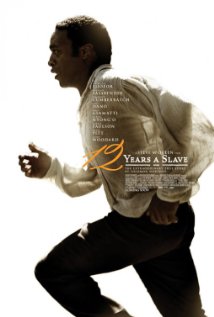
12 Years a Slave ~ A Capsule Movie Review

12 Years a Slave

12 Years a Slave ~ A Capsule Movie Review by Allen Kopp 

Solomon Northup was a real person, a free Northerner, who was kidnapped in 1841, taken to the South and sold into slavery. He wrote a book about his experiences, 12 Years a Slave, and that book has been made into one of the best movies of 2013. It was directed by Steve McQueen (yes, there’s more than one person besides the deceased movie star with that name), who directed the impressive Shame a couple of years ago. In Shame, Michael Fassbender played a sex-addicted New Yorker and in 12 Years a Slave, a sadistic Southern slave owner who has a harpy of a wife as bad as he is.

During the years of his captivity, Solomon Northup (played by Chiwetel Ejiofor), struggles to maintain his identity, his dignity, and his hope. He is the victim of unspeakable cruelty but, even worse, he sees the same cruelty meted out to others. (When a slave girl named Patsy goes to a nearby plantation to get a piece of soap because she wants to be clean, she is beaten savagely.) The only way Solomon can survive as a slave is to not try to rise above his station. If he reveals that he is an educated, cultivated man, he will likely be killed. He wants desperately to get a letter to his wife and children to let them know where he is and to get them to help him, but he isn’t even supposed to know how to write. Simply getting paper and ink to write a letter is impossible for him. Nobody is to be trusted.

Throughout his long ordeal, Solomon Northup admonishes others not to “give in to despair.” Heeding this advice himself is the only way he survives. One never knows when fate—or the hand of Providence—will intervene on one’s behalf.

In 12 Years a Slave a long-dead world is brought back to life and it’s not a pretty world like Gone with the Wind. It’s an ugly place where cruelty and greed are the order of the day. The little bit of kindness that exists is tempered with fear. With the moss hanging from the trees, the heat, the insect sounds, the plantation houses that look lived in, the cane and cotton fields—but most of all with the slaves—you can almost feel what the South was like before the Civil War. Where else can you find this?

Copyright © 2013 by Allen Kopp

One Way

One Way image 1

One Way ~ A Short Story by Allen Kopp 

There she was, Mrs. Velda Millis, age seventy-eight, taking a bus trip on her own. Her hairdo was beauty-parlor fresh and she was wearing a new dress, bought on sale for the occasion. She had her purse, her ticket and her suitcase and was wearing her comfortable shoes. All she had to do was sit and wait for her bus.

The bus station scared her a little. It was too big, there were too many people moving too fast, too much noise. The noise alone set her on edge; every time an announcement was blatted over the loudspeaker, she jumped as if a gun had been fired behind her head. When a woman with a screaming baby sat down near her, she got up and moved to a different seat farther away.

She watched the minutes ticking away on a clock high up on the wall until her vision blurred. She was bored and wasn’t used to being bored. How did people stand to wait for hours in such a place?

Her hand started to cramp and when she looked down she realized she was holding onto her ticket for dear life. She wouldn’t need the ticket until time to board the bus. She slipped it into her purse and massaged her thumb. “Calm down,” she told herself. “You’re going to make it through this.”

Her daughter, Teresa, had given her the ticket and some instructions. What were they? Oh, yes, she was supposed to wait until two-fifteen (or was it three-thirty?) and then make her way over to gate five (or was it gate three?) and wait there until they announced over the loudspeaker that she could get on board. She hoped the announcement was in English. If it was in any other language, she wouldn’t know what they were saying.

It was only eleven-thirty. She still had hours to go. She closed her eyes and took a few deep breaths and thought about her son’s house where she was going to live.

Julian was a successful businessman and had a large house with an upstairs where she could have her own room. She would make herself useful by helping Susie, Julian’s wife, with the housework and by minding the two kids. She hardly even knew her grandchildren and was looking forward to getting acquainted.

She had lived with Teresa for the last two years and Teresa didn’t want her anymore. They got on each other’s nerves and had taken to quarreling over little things. She realized for the first time that she didn’t like Teresa very much and that the feeling was mutual. After one of their fights that lasted several days, Teresa told her she wanted her out of her house and was going to put her in a nursing home. Teresa had a long conversation with her brother Julian that night on the phone, the upshot of which was that they were going to put mama on a bus and send her to him.

“It’s your turn to deal with her,” Teresa had said to him with mama sitting right there. “I’m at the end of my tether. Maybe you can talk some sense into her.”

“Talk some sense into me about what?” she asked when Teresa hung up the phone.

“None of your business!” Teresa snapped. “Oh, to have some privacy again in my own home!”

When Teresa presented her with the bus ticket, she saw right away that it was marked One Way. She was going away from her home and never coming back.

When she was realistic and looked the facts in the face, she knew she wasn’t going to have her own room at Julian’s place and be able to help with the housework and the children. Telling her that was just a trick, she saw now. Julian and Susie would be there to take her off the bus, all right, but they would then whisk her off to one of those places where blank-eyed old people sit in chairs and wait to die, forced to surrender control of their lives to absolute strangers. She was not to be given any choice in the matter.

Now that she knew what they were going to do to her, wasn’t it her last chance to escape? She didn’t have to get on that bus, just because snooty Teresa had bought her a ticket. There was something else she could do.

She picked up her suitcase that sat at her feet and opened it. Underneath the clothes were her Bible and a bulky manila envelope. These were the things that gave her strength and comfort: the Bible because the words in it sustained her in times of trouble and the envelope because it contained one hundred and eighty one-hundred-dollar bills. (She had counted them over and over.)

She found the money in the bottom of one of Teresa’s dresser drawers when she was cleaning and took it as her own. Teresa would say she stole it, of course, while she maintained it was money due her. For what? For keeping herself from slapping Teresa across the room all the times she had wanted to.

Having decided she wasn’t going to take that bus, she couldn’t stand being in the bus station another minute. She went outside, finding herself on an unknown city sidewalk. She followed her nose, as the saying goes, to the old Windsor hotel, which sparked some memories for her of long ago. She went inside and engaged a room, registering under the name of Ann Harding, the name of a long-ago movie actress. Nobody would ever know it was her.

After she was shown to a room by a dwarfish bellboy, she kicked off her shoes and called room service and ordered a steak sandwich and a bottle of beer. When the boy came with her order, she tipped him generously. She had money and money will take you a long way in this world.

Copyright © 2013 by Allen Kopp

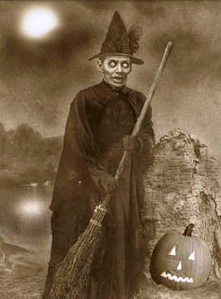
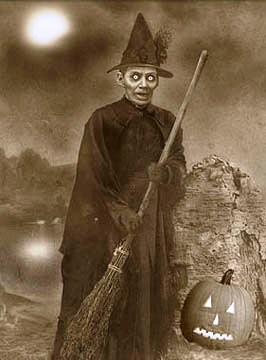
Broomstick

Broomstick image 1

Broomstick ~ A Short Story by Allen Kopp 

She was old and stayed shut up inside her castle high on a lonely mountaintop. There was one night in the year, though, that she had to go out into the world, and that night was Halloween. She wouldn’t be much of a witch if she didn’t fly on Halloween.

As the sun sank behind the mountains in the west, she woke up her old black cat, Lucifer, who was sleeping in front of the fire, and told him to get up and have a snack and wash his face in preparation for leaving.

“I’m not going with you this time,” he said.

“Why not?” she asked.

“I’ve seen enough of the world. I’ve flown with you on countless Halloweens. I just want to be left in peace.”

“Well, suit yourself,” she said. “You’ll be missing a good time.”

“I’ll guard the castle while you’re gone,” he said, going back to sleep.

As she flew off on her broomstick, she realized she hadn’t flown since the previous Halloween. She really needed to get out more. She was a little wobbly at first, as if she might fall off, but soon she hit her stride and did a couple of loop-the-loops and reverse maneuvers to prove to herself that she still could.

After she had flown a good distance away from her castle, she felt an urgent need to do something bad, to cause some mischief and mayhem, as witches do on Halloween. Seeing a church in a village, she threw a ball of fire that caused the steeple to burst into flame. Then, outside the village, she caused some railroad tracks to buckle so that the next train to come along would derail. She turned a cow standing in a field into stone and two small children into white mice. Feeling less than fulfilled, she redirected a creek so that it would flood some farmland. These things were nothing, though, compared to what she did next: Hovering over the roof of a maternity hospital, she cast a spell that would cause the next baby to be born to have two heads. Now there was a fiendish accomplishment!

As good a time as she was having, she felt that something was missing. In the old days of her witchery, she always had somebody with her; if not a victim, then a fellow witch. Doing bad things just wasn’t as much fun if there wasn’t somebody along to tell her how terrible she was. She needed to hunt up the old gang to see what they were up to.

She flew on until she came to the environs of her youth, the place where she got her start as a witch. The forests, mountains, and rivers all looked the same. The village was much the same but had grown shabbier and poorer. The witches’ nightclub, Eye of Newt, was still there, thank goodness! She went inside, carrying her broomstick in her hand.

A hunchback dwarf greeted her at the door. She recognized him at once.

“Raphael, is that you?” she said.

The dwarf squinted up at her in the dim light. “Have we met?” he asked.

“It’s Mignonette, the witch. Don’t you remember me?”

“Oh, yes! Mignonette! Of course, I remember you, but I thought you were dead.”

“Not yet.”

“My eyes are not what they used to be.”

“Any of the old crowd here?”

“I think you’ll find a few of them at the table in the corner.”

As she made her way through the crowd to the last table against the wall, nobody turned to look at her. There was a time when she could command an entire room with her presence.

Two witches and a ghoul were sitting at the table. She recognized the two witches from the long-ago, but she didn’t know the ghoul.

“And who might you be?” one the witches, the one known as Hildegard, asked.

“Why, it’s Mignonette,” she said. “Your old friend.”

“I don’t remember anybody by the name of Mignonette,” Hildegard said stubbornly.

“Why, of course you remember her!” the other witch said. (Her name was Carlotta.) “There was the time that Mignonette was the toast of the town.”

“Oh, yes, I remember now,” Hildegard said. “She tried to kill me once.”

“Only once?” the ghoul asked, standing to hold the chair out for Mignonette as she sat down.

He was Erich, a holdover from the Third Reich. (People always wanted to hear the stories about his association with Herr Hitler.) He wore a top hat and pince nez. With his long, emaciated body, skin the color of ivory and black circles around his eyes, he was every inch the ghoul.

“I’m so happy to make your acquaintance, mademoiselle,” he said in his smooth continental accent, taking Mignonette’s hand in his own and kissing it.

“Likewise, I’m sure,” Mignonette said.

He motioned for the waiter and ordered a round of witches’ brew.

“So, I’m wondering where all our old friends are this evening,” Mignonette said. “Ethelbert, Lulu, Patsy, Lucille, Laverne and the others.”

“Oh, haven’t you heard?” Carlotta asked.

“Heard what?”

“Lucille and Patsy are dead. Ethelbert got married and went back to the Old Country. Lulu’s in a hospital for the criminally insane and, last I heard, Laverne was in jail for something or other.”

“So, it’s just the two of you left in our little coven?” Mignonette asked.

“I’m afraid so.”

“There are lots of new young witches coming along,” Carlotta said, ever the optimist. “I’m thinking we can recruit some of them to join us in our crusade of evil.”

At the mention of young witches, they all turned to look at the crowd that was hemming them in against the wall. The young witches were nothing like the older generation, which included Mignonette, Carlotta and Hildegard. They were sleek and didn’t go in for scary ugliness as the older generation had done. They had done away with the long black dresses, pointed hats, green skin, facial hair, and warts. Some of them didn’t even look like witches. They seemed to be more interested in flaunting their assets than in casting spells and riding around on broomsticks.

“I’m afraid things have changed,” Hildegard said.

“The old ways are still the best,” Mignonette said. “We can still have fun doing what we always did.”

“My motto exactly!” Erich said.

“It’s the one night in the year that witches should be having a good time.”

“Yes, yes, that’s so true,” Hildegard said.

“You’re not going to sit here all evening and drink witches’ brew, are you?”

“Well,” Carlotta said, “Hildegard and I were thinking about kidnapping a couple of teenagers from lovers’ lane and scaring the hell out of them. Make them think we’re going to kill them and then let them go at the last minute.”

“We’ve done all that,” Mignonette said. “Time and again. Maybe it’s time of think of other things to do.”

“Like what?”

“May I make a suggestion?” Erich asked. “Forget your teenagers. Some friends of mine, fellow ghouls, are getting up a party in the Cemetery of the Holy Ghost for around midnight. It’ll be a lot of fun. Skeletons dancing around a fire and that sort of thing. I’d be happy for the three of you lady witches to accompany me. And you won’t have to fly on your broomsticks. I have my car outside.”

“Can you imagine three witches and a ghoul in a car on Halloween night?” Carlotta said. “What do we do if a policeman stops us?”

“You either turn him into a toad or we tell him we’re on our way to a costume ball,” Erich said.

“It really isn’t any of his business,” Hildegard said.

“You three run along,” Mignonette said. “I don’t think I’ll come along.”

“Why not?” Carlotta asked.

“I think my time as a witch has passed. Do you know that I haven’t even left my castle since last Halloween night? My black cat, Lucifer, didn’t feel like coming with me tonight. It just isn’t the same without him.”

“Oh, I haven’t had a black cat for years,” Hildegard said.

“I have another suggestion,” Erich said. “The two of you run along and I’ll stay here with Mignonette. I’ll even lend you my car. You know how to drive, I trust?”

“Well, I like that!” Hildegard said. “She’s still doing it, after all these years! Stealing away all the men!”

“I’m not stealing away anybody,” Mignonette said.

“It’s parked just down the street,” Erich said. “You can’t miss it. It’s a 1932 Cadillac V16 Fleetwood sedan. The keys are in the ignition.”

“Let’s go,” Carlotta said. “I haven’t been to a cemetery party in years. We’ll have the pick of the men there.”

After Hildegard and Carlotta were gone, Erich ordered more drinks and moved his chair over as close to Mignonette as he could get. He put his arm around her waist and whispered in her ear.

“My place is very cozy,” he said. “I have embalming fluid.”

“Why me?” she asked. “I’m just as old and ugly as they are.”

“No, you’re not,” he said. “You’re different.”

“I’m not.”

“Wouldn’t you like to see my collection of Nazi memorabilia?”

“If I go with you, will you tell me all about Herr Hitler?”

“Would you be surprised if I told you I have his body in a trunk in my bedroom?”

“What for?”

“We’re going to try to bring him back to life.”

“Who is?”

“Come along with me and you can meet them.”

She blushed and pulled the brim of her hat down farther so her eyes were hidden. He stood up and took her by the hand.

She hadn’t had a passenger behind her on her broomstick for many years, especially a man. As he leaned forward and put him arms around her waist, she felt a quickening in her blood that she thought was long dead. He was a gentleman, she could see, and a Nazi gentleman at that. It was turning out to be a very fine evening after all.

Copyright © 2013 by Allen Kopp

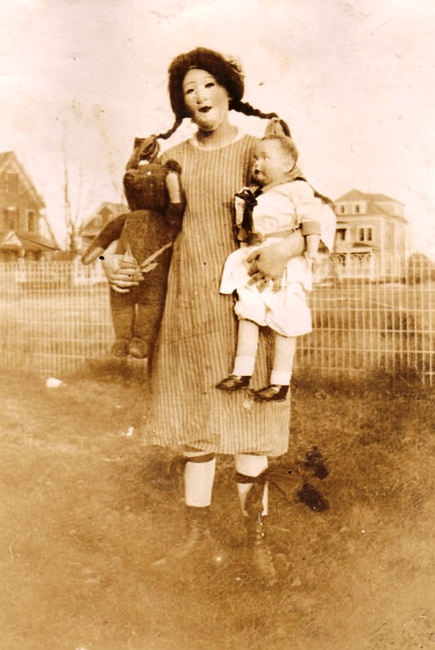
Celeste

Celeste image 1

Celeste ~ A Short Story by Allen Kopp

She owed everything to M and F. They brought her into the world, fed and clothed her, educated her, gave her a wonderful childhood. When the world was against her, M and F were always in her corner.

After she grew up, she married and left M and F. The marriage didn’t last, though, and after it came to its sad end she moved back home. M and F were growing old by then and needed her in the same way she needed them when she was a little girl growing up. She would never leave them again.

She did everything for them. They were helpless without her. She got them up in the morning, dressed them, sat them in their chairs, turned the TV or radio on for them. She read the newspaper to F and helped M with all the housework. She loved them so much that she told them all her secrets, like the time she pushed a girl down a long flight of stairs or the time at the lake when she could have saved a drowning boy but instead let him die.

On a beautiful autumn day, when the leaves were bright colors and the air held that wonderful crispness that can only mean the end of October, she bundled M and F up in their coats. F looked so sweet in the knit cap she made for him and M seemed to glow with the prospect of the fun they were going to have.

With M and F snuggly secured in the back seat, she drove out to the country road that she remembered from her childhood. They used to take long drives on Sunday afternoons in autumn, stopping to pick bittersweet or wild flowers or a few persimmons off a scraggly tree. She laughed to remember how eating a persimmon would make the inside of her mouth so puckery that she would have to spit it out on the ground. Autumn was her favorite time of year.

The road was just as she remembered it, the hills, curves, and sudden dips that made the stomach turn over. In fact, everything was exactly the same. There was the old red barn, there the grain silo and over there the horses grazing in a field behind a fence. The rickety old bridge still spanned the creek and the old country store still sold ice-cold drinks and pumpkins.

She looked away for a moment and when she looked back a porcupine was running across the road in front of the car. Porcupines don’t run very fast. If she had run over it and killed it, she would have been upset for the rest of the day. She swerved the car too much and lost control. The car careened off the road, across a ditch and into a tree.

Her first thought was for M and F. They had slid off the seat onto the floor but were unhurt. After she tended to them, she got out of the car to assess the damage. She had hit the tree squarely; water was dripping out of the radiator. She could not drive the car another inch in its present state.

It was too far to walk to town and, besides, she couldn’t leave M and F in the car alone. She could think of nothing else to do but stand by the side of the road and wait for somebody to come along and help.

There wasn’t much traffic and the few people who went by just stared at her as if she were a lunatic and went on past. Finally a police officer in a patrol car came along and, seeing her and the car smashed into the tree, pulled off onto the shoulder and got out.

“Anybody hurt?” the officer asked.

“No,” she said.

“I’ll call a tow for you.”

“Thank you.”

He spotted M and F in the back seat of the car. “Are they all right?” he asked.

“I think so,” she said.

He went closer to the car and leaned over to get a better look. “Why, they’re wax figures!” he said. “Aren’t they?”

“They’re…my family,” she said.

He straightened up and looked closely at her to see if she was making a joke. “Are you made of wax, too?”

“They’re surrogates.” she said.

“They’re what?”

She was wearing an old coat that belonged to F. She thrust her hands into the pockets and felt in the right-hand pocket a small knife that F used to use for whittling. She brought the knife out and stabbed the officer in the forearm.

He yelped with surprise. When she saw the knife sticking into his arm, she turned and started to run, but he grabbed onto her and wrapped his arms around her to subdue her. He pushed her toward the patrol car, opened the back door and shoved her inside.

“What do you think you’re doing?” she said. “I haven’t done anything wrong!”

“Shut up!” he said.

He slammed the door, locking her inside.

“Let me out of here!” she said. “They need me!”

The officer went over to her car and opened the back door. F tumbled out onto the ground head-first in a very undignified manner. The officer picked him up by the arm and tossed him back inside.

She winced as if she had been struck and then laughed at herself because she knew then that it wasn’t the real F. They—the real F and the real M—were asleep in a big trunk in the basement. Only she knew where they were. Nobody else would ever know. She was so much smarter than she had ever been given credit for.

Copyright © 2013 by Allen Kopp
American Tabloid ~ A Capsule Book Review

American Tabloid cover

American Tabloid ~ A Capsule Book Review by Allen Kopp 

I once met James Ellroy at one of his book-signing events. He is outspoken and some might say outrageous. He greets the audience with something like: “Hey, all you pimps, whores, scumbags, screwheads, weirdos, daddy-o’s, etc…” He isn’t afraid to be what he is and makes no apologies. He is the self-described “white knight of the far right.” I like his style. If you dare to challenge him on political matters, he will cut you off at the knees. (I love seeing that.) Another point that he gets across is that if you want political correctness, you won’t get it from him, so go someplace else. He wrote an interesting inscription in my copy of his novel The Cold Six Thousand concerning the writer Frank McCourt, who wrote Angela’s Ashes. I hope that one day my copy of that book is worth—oh, I don’t know—about six thousand dollars, but I don’t think I would sell it even for that much.

If you’ve ever read any of James Ellroy’s books, you know that he’s probably the only person who writes the way he does. If there are any others, I’m sure they’re imitators. He writes about a shadowy world of crime, of bad people doing bad things, in an age when the world was different. His sentences are short and punchy. You will never have to go back and try to unravel one of his compound-complex sentences to figure out what he’s saying, because he doesn’t write them. Of the books I’ve read by him, my favorite is his only nonfiction book, My Dark Places, which is an account of his mother’s murder in 1958, when he was ten years old, and his lifelong obsession with finding her killer. (He never does.)

His novel American Tabloid is a massive (575 pages) saga of corruption, malfeasance, wiretapping, eccentricity bordering on insanity, union criminality, dirty politics, Mob violence, hypocrisy, ego, hatred and vengeance. It is set in the tumultuous period of the late 1950s and early 1960s, when Castro took control of Cuba and America found a communist dictatorship on its doorstep. It was also the first time that America elected a president based on the way he looks and speaks rather than on his ability to lead.

The action of the book is driven by three main fictional characters—Kemper Boyd, Pete Bondurant, and Ward Littell—who are all involved in some capacity with the CIA, FBI, or Justice Department; their association with these organizations doesn’t mean they are ethical or fair, law-abiding or honest. They also have Mob connections and are involved in clandestine efforts to remove Castro from power.

The three fictional characters (Boyd, Bondurant, and Littell) interact throughout the novel with the real-life characters, including J. Edgar Hoover, Howard Hughes, Jimmy Hoffa, John Kennedy, Robert Kennedy, Jacob Rubinstein (“Jack Ruby”), etc. None of them are presented in a flattering light. John Kennedy (“Jack the Haircut”) is portrayed as a sexually voracious, pretty-boy airhead who will choose political expediency over genuine leadership when the “Bay of Pigs” invasion doesn’t go well. His brother, Robert, is a priggish opportunist, a truly unlikeable man. The novel ends with the Kennedy assassination, which is a Mob hit with a patsy “fall guy.” The Mob despised Kennedy (according to the fictional premise of this novel) because he wouldn’t take decisive action to remove Castro from Cuba, depriving the Mob of its Cuban casino profits.

American Tabloid has so many characters and situations that it’s kind of hard at first to keep them all straight, but the pieces come together in the end. It’s a fast-paced, though long, reading experience; always interesting; at times fascinating; not to be taken too seriously or taken for truth. Read and enjoy.

Copyright © 2013 by Allen Kopp
The Counselor ~ A Capsule Movie Review

The Counselor

The Counselor ~ A Capsule Movie Review by Allen Kopp 

American writer Cormac McCarthy won a Pulitzer Prize for Fiction for The Road. Another of his novels, No Country for Old Men, was adapted into a movie that won Best Picture honors for 2007 at the Oscars. As if those aren’t accolades enough, the 80-year-old writer has written the screenplay for the new movie, The Counselor.

Michael Fassbender plays the title role. He is never known by any name other than “counselor.” He lives in El Paso, Texas, near the Mexican border. He has a pretty girlfriend named Laura (Penelope Cruz), whom he wants to marry. He buys her an expensively ostentatious diamond engagement ring (she doesn’t want to know how much it’s worth). Because he has pressing financial needs (which are never explained), he decides to enter into the business of illegal drug trafficking, where he believes he can make huge sums of money. (He is warned about what he might be getting himself into, but doesn’t heed the warning.) He has a spiky-haired friend named Reiner (Javier Bardem) who lives lavishly from drug-trafficking proceeds. Reiner facilitates the drug deal that the counselor will take part in, and it turns out to be a huge one: twenty million dollars.

Reiner has a creepy girlfriend with a lopsided hairdo and tons of eye makeup named Malkina (Cameron Diaz). Reiner says at one point that all that women want is to be entertained. Malkina apparently wants more than that. She has her own private agenda and doesn’t know the meaning of the word loyalty. She prates on and on about how bad she is. At one point she goes to a Catholic priest to confess her sins, but when she tells the priest she isn’t Catholic, he tells her he can’t give her absolution. When she starts talking dirty to him, he leaves the confessional.

As expected, the drug deal doesn’t go well. The twenty-million-dollars worth of drugs are hijacked and stolen. The counselor, Reiner and another intermediary in the deal (Brad Pitt, with another unflattering hairdo) are all in deep trouble. The men who own the drugs (who we never see) are ruthless and unforgiving. They will not listen to excuses. They will only exact revenge and it won’t be pleasant. There is no way out for the counselor. The people to whom he turns for help are unwilling or unable to assist. He is told: You did this; now you must suffer the consequences.

The Counselor was directed by renowned director Ridley Scott, whose impressive list of credits, going back more than thirty years, includes Alien, Blade Runner, and Gladiator. With all the talent behind and in front of the camera, why isn’t it a better movie? While it’s very slick and pretty to look at, it’s talky and predictable. There are no surprises, other than the fact that the two hours running time seems like it will never end.

Copyright © 2013 by Allen Kopp