Philomena ~ A Capsule Movie Review

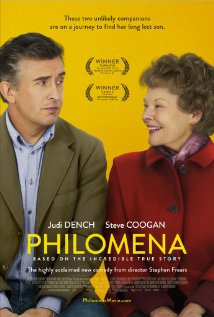
Philomena

Philomena ~ A Capsule Movie Review by Allen Kopp 

In 1950s Ireland, a teenage girl named Philomena Lee has a baby out of wedlock. Her family shuns her so she goes into a Catholic home for unwed mothers. In exchange for the nuns taking care of her and delivering her baby, she must stay in the home for four years and work like a slave, seven days a week. (The nuns believe the unwed mothers should suffer and do penance for their sins.) Philomena is allowed to see her baby, which is kept in another part of the home, for one hour a day. When the baby, whom she has named Anthony, is about two years old, the nuns adopt him out (in other words, “sell” him for a thousand pounds) to an American couple. Philomena has nothing to say about Anthony’s adoption and isn’t allowed to even see him before he goes.

Fifty years later, when Philomena (Judi Dench) is an old woman, she talks about Anthony for the first time and reveals the heartbreak she has endured in silence because of him. A journalist named Martin Sixsmith (Steve Coogan) hears about her case and decides he will do a “human interest” piece on her because he has recently been fired from his job and doesn’t have much else to do. When Martin and Philomena go to the home for unwed mothers, called Rosecrae, where Anthony was born, they are told that all records of adoptions were lost in a fire and there is no way of knowing what happened to Anthony. And, anyway, they remind Philomena, she signed a contract stating she would never attempt to contact Anthony or try to find out what happened to him. Martin is immediately suspicious, pointing out that, while all records were lost, the contract severing any connection between mother and child remained intact through all the years. As Martin and Philomena are to discover, the nuns deliberately throw up a wall of deception to keep Philomena from learning the truth about her son.

With Martin Sixsmith’s help, Philomena embarks on an odyssey, eventually to America, to try to meet the son she gave up for adoption, to find out what kind of a man he has become and to ask him if he remembers anything about her or the country of his birth. Discovering Anthony’s adopted named, Michael Hess, eventually leads Martin and Philomena to the truth, and that truth leads them back to where they started from in Ireland. As Martin says, quoting T.S. Eliot, “We shall not cease from exploration, and the end of all our exploring will be to arrive where we started and know the place for the first time.”

Philomena is based on a true story. Seventy-nine-year-old Judi Dench is superb, as always, as Philomena. It’s a fine movie, with an ending that is completely satisfying, though not a happy one. As we are told at the end of the movie, there are thousands of women like Philomena who try to reconnect with the children they gave up decades earlier. Many times what they uncover they would probably have been better off not knowing, but the truth, for them, no matter how terrible, is better than knowing nothing at all.

Copyright © 2014 by Allen Kopp

The Ruined City

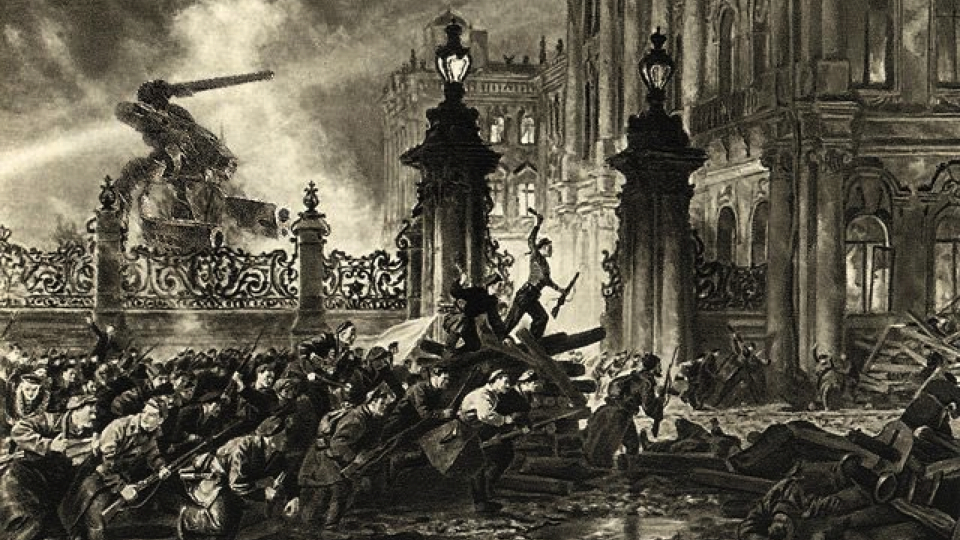
revolution (1)

The Ruined City ~ A Short Story by Allen Kopp

It was a Friday in wintertime. I had to stay late at my job and missed the last train. I wasn’t sure if I had the strength to walk home in the cold but I was going to try. I was alone on the dark street—only one streetlamp in ten was lit—when I heard the whirring of the night patrol transport under the wind. I ducked into an alleyway but I was spotted and before I knew what was happening two men were on me, hitting me with clubs.

“It’s after curfew!” one of the men said. “Show me your identity card!”

My hands were shaking and I began coughing uncontrollably, but I managed to get the card out and thrust it toward his face. “I was just going home,” I said. “I thought I could catch the last train but it was gone.”

“Shut up!” he said. He shone the light on the card and looked at it and then at me. “It’s not valid!” he said, pulling me to my feet. “We’re ordered to shoot on sight any revolutionaries.”

“I’m not a revolutionary,” I said.

“You’ll have to come along with us to the magistrate.”

“But I didn’t do anything!”

When they shoved me into the back of the transport, I couldn’t see anything. The only thing I knew was that I was moving very fast through the city. Ten minutes later, I was pulled out and taken into a building and put into a holding cell with ten or twelve others just like me.

My turn came and I was taken into a small room and put in a chair facing a desk. Behind the desk was a man with reddish hair and a round face. He had a scar running from the side of his mouth to his ear. He grinned at me with a lopsided mouth.

“What do you have to say for yourself?” he said.

“I was on my way home. I didn’t do anything.”

“You know about the curfew laws?”

“Yes.”

“If you are out after curfew, we must assume you are one of the enemy intent on doing us harm.”

“I’m not.”

“Then why were you out after curfew?”

“Some of the machinery broke down at work. I had to stay and fix it to keep production going.”

“You are a mechanic?”

“A factory worker.”

“A factory worker who also fixes machinery?”

“Yes.”

“Your identity card is not valid.”

“I don’t understand. It was valid when it was checked yesterday.”

“Are you saying that someone has sabotaged your identity card without your knowing it?”

“I don’t know. Yes, anything is possible.”

“Do you know what can happen to you when you are out after curfew with an invalid identity card?”

“I was on my way home. If my identity card isn’t valid, I have no explanation.”

“Is that the only excuse you have?”

“Yes.”

“It sounds very weak.”

“Nevertheless.”

“You are not with the revolutionary forces?”

“Absolutely not!”

“Where do you live?”

“Outer sector twenty-three.”

“What are your political views?”

“I don’t have any.”

“Did you vote for Leonhardt in the election?”

“No.”

“Leonhardt received ninety-eight perfect of the vote. Are you telling me you were among the two percent who voted for the opposition?”

“No, I didn’t vote for the opposition. I didn’t vote.”

“Why not?”

“I was in the hospital with fever.”

“You were supposed to vote. Everybody votes in this state.”

“I was out of my head.”

“Things look very bad for you. You were skulking about in the dark after curfew. You have an identity card that isn’t valid. You didn’t vote in the election.”

“I want to speak to someone.”

“Revolutionary forces are trying to take over the city and the state. That’s why we have a curfew. Anybody violating curfew is presumed to be a revolutionary and will be shot on sight. I’m surprised our men even brought you to me. They should have killed you outright.”

“I’ve done nothing!”

“So you all say.”

“You can call my employer. He’ll vouch for me. You can call my wife and son. They’ll swear I’m not a revolutionary. I spend my life working in a factory. When I’m not working, I’m at home resting up to go to work the next day. I have no time or energy to be a revolutionary.”

“I will call no one! Why should I believe anything that anybody said about you?”

“Of what am I being accused?”

“Espionage, sedition, spying, treason, plotting to overthrow the government. All of those things.”

“I’m innocent!”

He took a deep breath and looked into my eyes. “I hereby find you guilty,” he said.

“I’ve done nothing!”

“According to the evidence, you are an enemy of the state. You will be hanged by the neck until dead at six o’clock in the morning.”

“Don’t I have a chance to speak to someone?”

“I am that someone.”

“Don’t I get a trial?”

“You’ve just had it. I’ve examined the evidence thoroughly and have found you guilty. The judgment of the court has been rendered.”

I was removed from the room and thrown into a dark, solitary cell. All that was left for me to do was to wait to die. I was like a fly caught in a spider web.

I lay down on the filthy cot and tried to calm myself. I told myself that dying this way wasn’t such a bad thing. It would be quick and I had heard it was painless. All my problems would go away; my feet and back would no longer bother me. No, I didn’t hate it so much for myself but mostly for my wife and son and my mother and brother who lived far away. They would have a hard time learning the truth of what happened to me. They would know in their hearts, though, that I did nothing wrong and that I went to my death like a man and not a cringing coward.

I heard the steady drip of water somewhere for a couple of interminable hours and after a while I began to hear something else. A low, steady drone like the buzzing of insects that slowly grew louder. Could it be that planes were approaching the city? What did it mean?

When the bombs began to fall, I stood up and began banging on the door of the cell and calling for somebody to come and let me out. I didn’t want to be squashed like a bug if the building was blown to bits, even if it was preferable to having my neck snapped. No matter how much noise I made, though, nobody came.

The first blast that hit the building knocked me to the floor. I crawled under the cot, my only refuge. Other blasts followed and finally the walls came down around me. I was certain I was going to die, but my fear was gone. I was strangely calm. I had seen this all happen in a dream and I knew how it was going to turn out.

When the blasts stopped and I realized I wasn’t dead, I began to try to pull myself free of the rubble. My legs were pinned but not too badly injured, I felt, and, with a great amount of effort, I was able to free them. I pulled myself to a sitting position and rested for a few moments. I figured it was useless to try to dig my way to the outside, though. If I displaced a board here or a chunk of plaster there, it only made more stuff rain down on me. I was buried alive but I still believed it wasn’t as bad as hanging from the end of a rope. A slow death instead of a fast one.

Then I felt something on my face I hadn’t expected: a tiny puff of wind and the smell of the outdoors. It smelled like freedom. I began digging my way toward the smell slowly, so as not to bring everything down on my head.

After what seemed like a very long time but was probably only a few minutes, I pulled myself out a hole in the wall that was just big enough and no bigger—as if the hole was made especially for me. I didn’t stop to question it or wonder why. I only began running.

The city was in chaos. Many buildings burning or reduced to piles of debris. People screaming and running every which way. Dead bodies everywhere, some of them blown to bits. Others who weren’t dead cried out pitifully for help.

As I ran, I realized there were others running with me. I had become part of a group of running men. One of them thrust a rifle into my hands. I took it gladly, if only to have something to hold onto that seemed real.

“We got that bastard pig Leonhardt,” the man who gave me the rifle said.

“What?” I asked.

“Leonhardt is dead. They bombed the presidential palace.”

“Who did?”

“The Northlanders. They’re in it to help us.”

“Who are the Northlanders?” I asked, but he ran on ahead and didn’t hear me.

It seemed as if we had run for miles but finally we came to a place where we could stop and look back on the burning, ruined city. There were about a dozen of us. We were all panting for air. Some of us collapsed on the ground.

“I haven’t run like that since I was twelve years old,” one man said, laughing.

“What’s happening?” I asked.

“We’re taking back the state,” another said. “No more dictators! From now on we’re a democracy again.”

They thought I was one of them, so I didn’t ask any more questions that would give me away. By morning it was as if I had known them all my life. I learned to shoot the gun and became one of them. With my wife and son dead, as I was to learn later, I had nothing else to live for.

Copyright © 2014 by Allen Kopp

Pompeii ~ A Capsule Movie Review

 Pompeii

Pompeii ~ A Capsule Movie Review by Allen Kopp 

In the 79th year of the Christian era, the town of Pompeii, on the Italian Mediterranean not far from Naples, was destroyed and covered over by volcanic ash, mud and lava when scenic Mount Vesuvius erupted, and it wasn’t “re-discovered” until the late 1700s. Today it’s the most popular archaeological site in the world and is visited by two million people a year. The fascination never wanes.

The new movie, Pompeii, has a fictional story attached to a real historical event, as other movies, such as From Here to Eternity and Titanic, have done effectively in the past. Cassia (played by Emily Browning) has just returned to Pompeii after a year in Rome. She is the daughter of wealthy parents (they live in a magnificent seaside villa) but she seems wise beyond her years and is plenty capable of standing up for herself. A muscular slave named Milo (Kit Harrington) catches her eye when he comes to the aid of an injured horse. As her servant girl, Ariadne, says, Cassia didn’t show that much interest in any of the men of Rome.

Milo has not had a happy life. He was from one of the “horse tribes” of Britannia and saw his parents slaughtered by the Romans when he was a child. Seventeen years later he is a slave, a “gladiator” who must fight and kill or be killed by others just like him for the amusement of the sporting crowd. He is naturally bitter against Rome and Romans. He has every reason to hate Cassia and all she represents but is drawn to her as she is to him.

The villain (isn’t there always at least one?) is one Senator Corvus (Kiefer Sutherland with a faux British accent), a snarling bastard who claims to be interested in financing improvements in Pompeii but is more interested in making Cassia his wife. Understandably, Cassia wants nothing to do with Senator Corvus but she may have no other choice but to comply with his wishes since he has threatened to kill her entire family. He personifies all that is vile and corrupt about Rome and its new emperor, Titus.

Looming over everything is the “higher power,” in this case, Mount Vesuvius, which is about to erupt. The people of Pompeii have heard the rumblings coming from the mountain and have felt the earth shake, but, as one character says, “Sometimes the mountain speaks,” so the people have apparently grown complacent and don’t believe the volcano represents any real threat. They are about to find out differently. What fools these mortals be!

There isn’t much depth to Pompeii. The story is simple and you won’t have to strain your powers of deduction to know what’s going on. It’s not Shakespeare or George Bernard Shaw. It’s fast, escapist entertainment with plenty of action and a so-so love story that plays out as expected. The real star of the movie is death-dealing Vesuvius as it spews balls of fire, billowing smoke, and enough lava to bury an entire city, rending the earth and making the ocean turn back on itself as people try to escape by boat. And, as always when it comes to death and destruction, the good people suffer the same fate as the bad.  

Copyright © 2014 by Allen Kopp

Winter’s Tale ~ A Capsule Movie Review

Winter's Tale

Winter’s Tale ~ A Capsule Movie Review by Allen Kopp 

Winter’s Tale is a story that spans a hundred years. In 1895, a young immigrant couple is kept from entering the country because the young man has pulmonary disease. (I take that to mean tuberculosis.) They decide to leave their baby boy behind in America when they are forced to return to their native land. Twenty-one years later, in 1916, the boy, Peter Lake (played by Colin Farrell), is grown into a man and he isn’t living a good life. He is a thief working for a demon named Pearly Soames (Russell Crowe) who takes his orders from Lucifer. (Yes, it’s a fantasy.) Pearly once liked Peter Lake but now is trying to kill him because he apparently believes that Peter has turned on him. When Pearly and his henchmen have Peter cornered and are going to kill him, a magical white horse appears on which Peter escapes. That white horse plays an important part in Peter’s life and helps him to fulfill his destiny.

When Peter is robbing an imposing New York mansion in the daytime, he stumbles upon a girl named Beverly Penn who lives in the house with her younger sister and tycoon father. Beverly is twenty-one years old, is ill with consumption, and probably has only a few months to live. She should be afraid of Peter, seeing he has a gun, but she isn’t. They are inexplicably drawn to each other, as if it was always meant to be. Peter believes that the one miracle he has in him, that will come about only when he meets the person for whom the miracle is intended, is to keep Beverly Penn from dying. What we then expect to happen with Beverly doesn’t happen.

The story jumps almost a hundred years into the future, to present-day New York. Peter Lake looks just as young and as startlingly handsome as he did in 1916, even though he is about 121 years old. (Remember, it’s a fantasy.) For what reason has he been kept alive all those years and looking just the same? He has been waiting to discover his true purpose in life, to meet the one person who will allow him to fulfill his destiny.

Winter’s Tale is based on a massive novel by Mark Helprin. It’s a movie for the romantics in the audience. The terribly sophisticated among us won’t be able to suspend disbelief enough to be able to appreciate it. Isn’t suspending disbelief what going to the movies is about? I for one don’t want to see movies about real life and real people with their cell phones and their four-letter words (you know which one I mean). I’ve had enough of them already. Take me someplace I’ve never been before, to another time and place. Let me escape.

Copyright © 2014 by Allen Kopp 

After You’ve Gone

After You've Gone image 2

After You’ve Gone ~ A Short Story by Allen Kopp

Around midnight Dorothy “Doodles” Plover heard a disturbing sound in the house and went downstairs to investigate. When she saw her husband, Reginald, sitting in the leather wingback chair in the living room, she let out a little scream and jumped back a couple of feet because he had been dead for eighteen months. When she recovered her senses enough to speak, she turned on a light and said, “Just what do you think you’re doing?”

“I’m sitting here,” he said. “What does it look like?”

“Still a smart ass, I see,” she said.

“You’ve put on some weight, haven’t you?” he asked. “And what have you done to your hair?”

“After you died,” she said, “I went in for different things. I changed my hair color. Don’t you like it?”

“I can’t say I have a particular fondness for orange hair.”

“Never mind my hair. I want to know why you’re here.”

“Aren’t you glad to see me?”

“No, I can’t say I am, considering you’re dead. When a person dies, you’re not supposed to see them anymore.”

“You haven’t felt my presence in the house these many months?”

“At first I did.”

“And then you didn’t?”

“I guess I just got used to your being gone.”

“In such a short time?”

“You’re not really here at all. I’m only dreaming.”

“That would explain it, wouldn’t it?”

“If you are here, shall we say that are you a ghost?”

“Use whatever word you feel comfortable with.”

“All right, let’s say you’re a ghost. I’m seeing the ghost of my dead husband. But why? Why are you here? Did you forget something?”

“I’m here because this is my home.”

“Not anymore. Your home is someplace else now.”

“You really don’t know anything about it, now, do you?”

“This is one of those dreams that seems like it’s really happening and you don’t know for sure it’s a dream until you wake up.”

“Whatever you say, dear.”

“I’m going to take my pill and go to sleep and when I wake up I’ll know for sure it was a dream.”

“You already took a pill. Two, in fact. That’s probably why you’re seeing me. Those pills always did funny things to your head.”

“They’re for my nerves. Dr. Renault prescribes them.”

“He’s not a competent doctor. He didn’t go to a school that other doctors go to. You only keep going to him because he reinforces you in all your neuroses.”

“You don’t know anything about it.”

“He’s built up a lucrative practice catering to neurotic housewives who believe they’re ill when in truth they are not. If he gave you a sugar pill you’d think it was a wonderful curative for all that ails you because that’s what you want to believe.”

She opened her bottle of pills and made a show of taking one out and placing it on her tongue and swallowing it. “I’m going to sleep now,” she said, “and when I wake up in the morning I will have forgotten this ever happened.”

“One day you’ll take one pill too many and you won’t wake up at all.”

“You don’t need to worry about that. You’re dead.”

“Dead is a relative term. You don’t really understand what being dead means until you are yourself dead.”

“No offense, but I really hope I don’t see you again. I’m getting along just fine without you. And, quite truthfully, now that it’s been this long, I’m glad you’re gone.”

“But I’m not gone. Not really.”

“Goodbye. Have a safe trip.”

The next time she saw him she was in the supermarket. She picked up a box of donuts and placed them in her cart along with her sweet rolls, candy and ice cream.

“That’s why you’ve put on so much weight,” he said in her ear.

She dropped the donuts into the cart and turned on him. “Why are you doing this to me?” she said, her voice trembling.

“Doing what?”

“It’s bad enough that I’m seeing you in my own home, but now I’m seeing you in public?”

“I’m wherever you are.”

“Don’t I have anything to say about it?”

“Apparently not.”

“Well, I want you to stop it!”

In the checkout line she knew he was right behind her. She would have felt him breathing down her neck if he had breathed. On the way to her car, he was walking along beside her.

“I could find a policeman and tell him you’re bothering me,” she said.

“He’d think you were crazy because he wouldn’t see me.”
“Are you saying that only I can see you?”

“That’s the way it works.”

“Why don’t you go haunt somebody else and leave me alone?”

“I have to tell you I’m hurt that you take that attitude. We were married for over twenty-five years and now you’re willing to turn it off so easily.”

“It turned itself off when you died. I didn’t ask you to die. I didn’t make it happen. It was one of those things over which I have no control.”

“Well, you needn’t take that tone! I haven’t done anything that I need to be scolded for.”

“Why do you want to be here when you can be in heaven? Heaven must be wonderful. You’ll have to tell me all about it some time, but not now. If you’ll excuse me, I have an appointment to see my doctor.”

When she got into the car and drove away, she was relieved that Reginald stayed behind. She didn’t want him interfering with her time alone with Dr. Alonzo J. Renault.

She had to admit she had developed a romantic attachment to Dr. Renault. When she arrived at his office, she freshened her lipstick and brushed her circus clown hair back from her face before going inside. Her knees were shaking and she felt a little short of breath. She was happy to see there were no other patients waiting to see him.

When Dr. Renault knew she was there, he dismissed his nurse and personally escorted her into the examining room. With his thrilling bedside manner, he made her feel as if she was his only patient, the only woman in the world worth anything. He sat her in a chair and pulled his chair around close to her so their knees were almost touching.

“How have you been, dear Doodles?” he asked, leaning forward so his face was just inches from hers. He was as smooth as Charles Boyer ever was.

“Not so good,” she said, sniffling into a handkerchief for effect. “I’ve been having these headaches.”

“Still?”

“Yes, but now they’re even worse. And, if that’s not bad enough, I’m seeing things that aren’t there.”

“What things?”

“I’m seeing ghosts!” She was surprised to find that she was sobbing.

He leaned forward and enveloped her in his arms as though she was a child who had just fallen off her roller skates. “We both know there’s no such thing as ghosts,” he said.

“Tell that to the ghost!” she said.

“Do you want a stronger pill?”

“If you think that’ll help.”

“I’ll give you a pill that I guarantee will make any ghosts go away and leave you alone.”

“While I’m here,” she said, “could you give me another one of those special pick-me-up shots?”

“Of course I will!” he said. “Anything that will make you feel better.”

When she heard that he had recently become divorced from his most recent wife, a woman half his age, she saw the field as being wide open. She called him one afternoon and invited him to come to her house for dinner to get a jump on his other female patients.

The evening alone with him was everything she hoped it would be. He was much more romantic when it was just the two of them. He held her in his arms on her French sofa before the fireplace while they listened to the patter of rain on the window. (Always a gentleman, though, he didn’t try to take advantage of the situation.)

He spoke to her in an intimate way she treasured. He told her all about his life, how he had been raised by his grandmother in a small town and how he struggled to get through medical school by posing nude for painters and picking up odd jobs wherever he could. When he segued from his youth to recent financial reverses, his voice trembled and his brown eyes filled with tears. He took her hand in both of his and faced her solemnly as if to make a confession.

“I don’t know how I dare ask it of you,” he said.

“Ask me what?” she asked.

“I was wondering if you might lend me a hundred and fifty thousand dollars for six months.”

“Of course I will, darling,” she said.

“I promise to pay you back with interest.”

“Are you sure a hundred and fifty thousand will be enough?”

She gave him the money and they began seeing each other frequently. He was attentive and considerate in a way she never believed possible. He lit her cigarettes for her, held car doors, and helped her on and off with her fur coat, like a gentleman of the old school. He took her on little overnight trips to places she had never dreamed of going. And, always, always, he provided her with the pills she needed and pick-me-up shots. She trusted him so completely she never even thought to ask what the shots were.

She reached the dizzying point in her friendship with him where she would do anything he asked of her. One night he called her at midnight when she was sleeping.

“I’m so sorry to awaken you, dearest,” he said, “but I have a favor to ask of you.”

“Can’t it wait until morning?” she asked.

“I’m afraid it can’t. I need you to stop by my office and pick up a little package and deliver it to a patient downtown.”

“I’m afraid to drive downtown by myself at this hour.”

“Nonsense! You’ll be perfectly safe. We can’t go through life afraid of our own shadows, now, can we?”

“Well, all right, if you say so.”

She began delivering packages for him all over the city and then in a fifty-mail radius of the city. Soon she was traveling to other states by airplane, always to pick up or deliver a small package. She didn’t mind these trips because she had always liked to travel and it gave her a chance to see new places and stay in beautiful hotels at somebody else’s expense. She felt as if she was living somebody else’s life, a dream life.

It wasn’t until she went to Mexico City that she thought to question what was in the packages. The first couple of runs went smoothly but on the third trip some men were waiting to pick her up when she landed back in the U.S. They humiliated her by treating her as a common criminal. They went through her baggage and took the package she had gone all that way to pick up. When she professed her innocence, they just ignored her; one of them even made as if to slap her. They took away her clothes, jewelry and money, locked her in a cell and told her she’d better hire herself a good lawyer because she was in plenty of trouble. “But I didn’t do anything!” she wailed. She gave them—or tried to give them—Dr. Renault’s address and phone number. “He can explain everything,” she pleaded, “if you will only call him.”

After several days in jail, she still hadn’t been able to get through to Dr. Renault. She didn’t want to believe he wasn’t willing to come to her aid. There had to be a perfectly logical explanation, she told herself, although, for the life of her, she couldn’t imagine what it was.

One night after lights-out as she lay on her bunk in her jail cell in the almost complete darkness, she realized there was somebody near her, just inches away. When she raised herself on her elbows, she saw Reginald, her deceased husband, looking down at her. He was wearing a cowboy hat and western attire.

“What’s with the getup?” she asked.

“Never mind,” he said. “It’s a long story.”

“He’s not coming to help me, is he?”

“I tried to tell you he was a rat. Worse than that. He wanted your soul and he almost got it.”

“If you hadn’t died, none of this would have ever happened.”

“I didn’t want to die. Nobody asked me.”

“You were the one that was always steady. You always knew what to do. You took care of me.”

“You realize that now.”

“After you died, I couldn’t manage on my own.”

“I thought you were doing pretty well without me.”

“I don’t know what’s going to happen to me now. I’m afraid. I don’t want to go to prison. It seems that just telling people I didn’t know what was going on isn’t going to work.”

“Do you want me to get you out of this?”

“More than anything. I don’t like being in jail.”

“You know what it means?”

“Yes.”

“And you don’t mind?”

“No, as long as I can be with you.”

He reached out and put one hand on her chin and pinched her nostrils together with his other hand. She felt nothing. Her limbs relaxed and in just a minute she stood up and smiled at him. He took her by the hand and they drifted away together like a little puff of cigarette smoke.

In the morning the guard found her dead in her bunk. A doctor examined her, found she had had a heart attack in her sleep, and signed the death certificate. Nobody ever claimed her body, so she ended up in the morgue. It didn’t matter to her, though, because she had gone to a better place.

Copyright © 2014 by Allen Kopp

The Monuments Men ~ A Capsule Movie Review

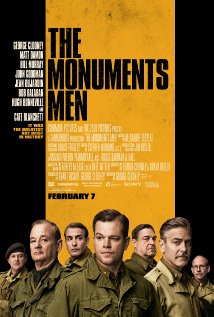
The Monuments Men

The Monuments Men ~ A Capsule Movie Review by Allen Kopp 

In the final months of World War II, a small group of “art experts,” mostly middle-aged men who are as far from being soldier-like as you can get, are tasked with going into the midst of war in Europe and retrieving art masterpieces, mostly paintings but also sculptures, that the Nazis have plundered in their conquest of Europe. (Two pieces that play a prominent role in the movie are the Altarpiece of Ghent and Michelangelo’s Madonna and Child sculpture.) The idea is to make sure the art works are safe and return them to their rightful owners when the war is over and Hitler and Germany have been defeated. Hitler had other plans for the stolen plunder, however. After winning the war, he planned to build a “Fuehrer Museum” in his hometown of Linz, Austria, where the works would be displayed. It was all part of his plan for creating a “Thousand-Year Reich.”

The “art experts” (George Clooney, Matt Damon, Bill Murray, Jean Dujardin, Bob Balaban, John Goodman, Hugh Bonneville), labeled “the Monuments Men,” are museum curators, academics and architects. They get into some harrowing situations but remain jaunty and optimistic. They believe they are on a divine mission to save the culture of the world that Hitler wants to destroy, or at least steal. As is emphasized throughout the movie, when people are wiped out, they will return little by little, but when their heritage and their culture are gone, there is no way it can be restored. Cate Blanchette plays a French woman working for the Nazis in Paris who aids the Monuments Men by giving them detailed records she has kept of the stolen artworks.

The Monuments Men is based on a true story. It has an old-fashioned feel, aided greatly by the retro-sounding music score, and is definitely “light” entertainment. If you see it today, you’ll probably enjoy it but you might forget all about it by the end of the week.

Copyright © 2014 by Allen Kopp

Head in a Bottle

Head in a Bottle image x

Head in a Bottle ~ A Short Story by Allen Kopp

(I posted this story in September 2013 with a different title.)

A girl named Oubliette lived with her grandmother in a remote mountain area in the wildest part of a wild state. The house they lived in was older than anybody could remember and had a hundred or more rooms. Oubliette loved the house, as it was the only home she had ever known. She felt safe and happy there, knowing she never had to venture out into the world. Grandmother had taught her that the world is an ugly and evil place, with myriad dangers waiting to snare the unsuspecting, and those who live apart from it are the luckiest people alive.

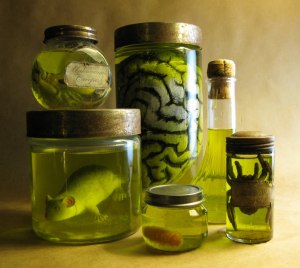
Oubliette didn’t miss going to school the way other children do because she always had plenty to do to keep her body and mind occupied. The house was filled with many interesting things. One enormous room on the top floor was filled with specimens floating in formaldehyde in large bottles. One bottle held a pair of smiling Siamese twins that appeared to be hugging. Oubliette liked to think of them as living in the bottle. She was sure they were as happy in their snug little world as she was in hers. Another bottle that she was always drawn to held the head of a man with his hair floating out from his head like seaweed. His eyes were open wide and his lips were parted as if he had been trying to speak at the moment his head was severed from his body. What exactly had he been going to say? Oubliette liked to put her ear against the cold glass next to his mouth in the hope that she would hear him speak but she never did. It was a tantalizing mystery, though.

Other bottles held a heart, a liver, a brain, eyes, and a set of lungs, not to mention a dodo bird that had been extinct for hundred of years, an octopus, a python snake, side-by-side scorpion and tarantula, a dinosaur egg that was millions of years old, a coelacanth, baby shark and alligator, and on and on. Not in jars but in opposite corners of the room as if they were keeping watch were two complete human skeletons suspended from hooks. The room and everything in it was as familiar and beloved to Oubliette as her own hand.

Another part of the house was filled with departed family members who had walked the earth long before Oubliette was born. One of Grandmother’s sons, the one she didn’t like to talk about very much, had been a taxidermist. His name was Sheridan and he was Oubliette’s great uncle. He had left home many years ago and nobody knew anymore if he was even still alive. Instead of stuffing animals as most taxidermists do, Uncle Sheridan stuffed deceased family members. It had become a sort of tradition in the family that when one died one would be stuffed and mounted instead of being buried in the ground the way most dead people are. And Sheridan prided himself on the lifelike appearance of his subjects: Uncle Julius, for example, was dressed in evening dress, cape and top hat and was just stepping from a carriage as he did so often in life. Baby Margaret sat up in her perambulator, eyes shining and mouth opened slightly in baby laughter, showing tiny, pearl-like teeth.  Grandfather Beauchamp sat in his favorite armchair beside a stock ticker, carefully studying the narrow stream of paper issuing from it. Cousin Grace was dressed in a shimmering gown as Juliet, a part she had triumphed in on the stage. Uncle Cowan, a gifted musician in life (killed by a lightning bolt at age 19), was playing the violin with a look of intense concentration. His sister, Marigold, was sitting at a vanity table brushing her golden hair. Aunt Clytemnestra, Grandmother’s sister, sat at a writing table with pen poised over paper. (She had been a celebrated writer of serials for women.) Eccentric cousin Ludlow, a member of a circus in life, was dressed as a clown with white face paint, a round red nose and a huge grinning mouth. Cousin Melba on Grandfather’s side of the family was on her knees with her hands folded in front of her in an attitude of prayer, asking for forgiveness because she had taken her own life. Melba’s husband, Gustave, having been a doctor, was dressed in a medical gown, with a stethoscope around his neck and a raven on his shoulder (why a raven, nobody could say). Grandmother’s daughter, Meredith (she died on her sixteenth birthday of a brain hemorrhage), was sitting in a rocker beside a birdcage with a book in her hand, looking exactly as she had looked on the day before she died.

Oubliette loved every one of them as if they were alive. She had come to understand at an early age that “dead” is a relative term. Just because you are “dead” in one place doesn’t mean you are “dead” in all places. There are the unseen worlds that living people aren’t supposed to know about. Her only sorrow was that Uncle Sheridan wouldn’t be there to stuff her and Grandmother when their time came. She supposed they would just have to go into the ground the way ordinary dead people do.

She worried sometimes about Grandmother. Nobody knew exactly how old she was, but she had to be over a hundred. Recently she had stopped doing many of the things she loved to do and had taken, about every other day, to staying in bed all day. That wasn’t like her at all. She probably needed a doctor but didn’t like doctors and wouldn’t allow one in the house. She said the only doctor worth anything was nature. When it was her time to go to the other world, she would go, without having any quack doctors fussing around her and expecting to be paid for it.

Oubliette refused to think about Grandmother leaving her. She knew that everybody leaves the corporeal world for the ethereal one, but she somehow believed it wouldn’t happen to Grandmother as long as Oubliette needed her to be there with her. Grandmother was, after all, her only loved one and the only person she had ever spoken to in all her life. They were like two separate parts of the same body. As much as she loved the specimens in the bottles, the skeletons, and the stuffed family members, they were really nothing without Grandmother. She had come to be of the opinion that when Grandmother left the corporeal world, she was going to leave it too.

Grandmother had been thinking along the same lines. One day at tea time she asked Oubliette to come into her bedroom and have tea with her because she had something she wanted to talk to her about.

“I taught you the story of Adam and Eve,” Grandmother said, propped up with a mountain of pillows on her bed.

“Yes,” Oubliette said.

“We all die because of them.”

“Yes.”

“Do you know how old I am?”

“No.”

“The clock is winding down for me, as it does for all of us. The moment we are born, we begin to die.”

“I suppose that’s true,” Oubliette said.

“I’ve given you a good life, haven’t I?”

“Of course.”

“Have you thought about what your life will be after I’m gone?”

“No.”

“Because you are so young, the do-gooders will come and get you.”

“And do what with me?”

“They’ll make you a ward of the state. They’ll put you in a home for children without families where you will have to associate with riff-raff the likes of which you cannot even imagine.”

“Can you explain ‘riff-raff’ to me?”

“Girls with bugs and diseases. Filthy-minded boys who want to take away your innocence.”

“That’s not going to happen.”

“No, indeed, it will not, if I have anything to say about it.”

“You’re not going to die,” Oubliette said. “You’ll still be here twenty years from now when I’m a grown-up person.”

“We both know that’s not true,” Grandmother said. “I’ve already lived longer than any person has a right to live.”

“What can I do about it?”

“In the corner of your medicine cabinet in your bathroom you will find a tiny bottle.”

“What’s in it?”

“Some white powder to be mixed with water and ingested. I’ve been told it is instantaneous and absolutely painless.”

“Oh.”

“It is, of course, completely up to you whether or not you use it. I know you’re a smart girl and will make the right decision.”

“Do you want me to try to contact Uncle Sheridan to come home and do for you what he did for the others?”

“Sheridan’s dead,” Grandmother said. “I saw it in a dream.”

Grandmother lived for a few more months but finally, one day in the spring, she departed this life, in her own bed, with Oubliette beside her holding her hand.

After a period of mourning lasting one day, Oubliette wrapped Grandmother carefully in a pink blanket like a mummy, using large safety pins, and pulled her off the bed onto the wheelchair. She rolled her into the specimen room and dumped her into a large vat of formaldehyde that she had made ready and sealed it shut as fast as she could.

She wasn’t ready to accept that Uncle Sheridan was dead, anymore than she was ready to accept that Grandmother was going into the ground and she would never see her face again. She would find him and make him come home. Since the two of them shared the same blood, she believed that a bond must exist between them, no matter how slight. She would contact him any way she could.

She called every newspaper in the telephone book (five of them) and placed an ad in the “personals” section of each one: Uncle Sheridan, please come home. Grandmother needs you. Signed, Oubliette.

Of the private investigators in the book, she called the one with the nicest-sounding name, Byron Montague, and asked him to conduct an investigation to find Uncle Sheridan, who might be anyplace in the world, if not dead. Byron Montague asked her many questions, most of which she couldn’t answer, but he agreed to explore every avenue and to send her a bill with the results of the investigation as soon as it was completed.

But that wasn’t all. Being a firm believer in the power of the occult, she conducted a séance. She had only a vague idea of what a séance should be, but she did the best she could with what she had. At midnight in the room with the stuffed family members, she sat before a mirror with a lighted candle between her and the mirror. She stared into the flame until it was the only thing that existed for her in the world. Putting both hands to her temples, she willed (a kind of praying) with all her might to enlist the aid of the departed.

“If Uncle Sheridan is there,” she said, “give me a sign. If he’s not there and is still among the living, let him know in any way you can that he’s needed at home.”

The candle went out at that moment in a room that was absolutely airtight, but she didn’t know what it meant. Was it the sign she asked for that Uncle Sheridan dwelt in the land of the dead, or was it an acknowledgment that she was getting through? The results were inconclusive and unsatisfying.

The next night she climbed all the steps in the house with a hundred rooms to the little flat place on the roof that in olden times had served as a lookout. When she was younger, she loved the lookout because it was so secret and private a place and was impossibly high off the ground. She used to spend hours there in agreeable weather reading a book, surrounded by her dolls and stuffed animals, or looking off into the distance, wondering vaguely what the world out there was really like. Whenever Grandmother couldn’t find her, she always looked for her on the lookout.

A light rain was falling but she didn’t mind. She had always liked the rain and, since it had been an especially warm day, it felt cooling on her skin. She looked into the sky and spoke a prayer to God (if God was anywhere, he had to be there) to send Uncle Sheridan home to her. He could stuff Grandmother the way she deserved to be stuffed and he could keep the do-gooders from taking Oubliette to an orphanage with all the riff-raff. It didn’t seem like a lot to ask.

She caught a terrible cold after that, but she didn’t mind very much. She stayed in bed for three days, napping and reading and wishing that Grandmother was there to keep a watch on her temperature and fix her tempting things to eat.

Weeks went by. She recovered from the cold and kept herself busy in the big, silent house, but she missed Grandmother terribly. She had never understood loneliness before. Now nothing was the same. She took to sleeping on a pallet on the floor of the specimen room next to the vat that held Grandmother, with the smiling Siamese twins at her head and the octopus at her feet.

Summer went by slowly and then it was autumn again. Oubliette was as low as she had ever been in her brief life. She couldn’t stand the thought of a winter alone in the house with its howling wind over the mountain and its dark, abbreviated days.

The day came when she didn’t even bother to get out of bed at all. She slept through the day, dreaming pleasant dreams about Grandmother and the way it used to be, and woke up in the early evening to the dark reality of her life. She knew she had reached the end of her tether and it was time to take the powder.

She cleaned herself up, combed her hair and washed her face, and put on her best nightgown that Grandmother made for her and gave her as a Christmas present the Christmas before she died. She filled a glass with water and took the little bottle of powder out of the medicine cabinet and emptied it into the water. She waited for the powder to dissolve and then drank it down.

She didn’t know how long she had so she hurried and got back into bed and pulled the covers up to her chest. Soon she began to feel a pleasant drowsiness and she knew the powder was taking effect. Her last thought before she passed over into that other realm was that it would be years before anybody found her body and when they did she would be a skeleton in the bed, with mice running in and out of her eye sockets. Maybe her ghost would haunt the house and people would be afraid to come anywhere near it, a prospect she found thoroughly enchanting.

She fell into the oblivion of sleep. Hours later (or was it minutes?) when she awoke she knew that something in the room had fundamentally changed but she didn’t know what it was. She sat up in bed and, turning on the light, saw a man standing at the foot of the bed looking at her. He had a black moustache and green eyes, the same color eyes as Uncle Cowan’s. She took that as a very good sign.

“Uncle Sheridan?” she said.

The man took his derby hat off and held it in his hand. “No,” he said.

“Am I dead or am I dreaming?” she asked.

“Any one of us could ask that very same question,” he said.

She pushed back the covers and swung her legs over the side of the bed, caring nothing about modesty. “If you’re not Uncle Sheridan,” she said, “who are you?”

“Does the name Byron Montague mean anything to you?”

“The private investigator?”

“One and the same.”

“Did you find Uncle Sheridan?”

“No, I didn’t. I’m sorry.”

“How did you know where to find me?”

“You gave me your address to send you my bill, remember?”

“You deliver your bill in person?”

“This is the first time.”

“My next question might be to ask why you are in my room in the middle of the night and if you are really here or if I am only imagining it.”

“It’s difficult to explain.”

“Do the best you can.”

“After I spoke to you on the phone, I started thinking a lot about your situation. It wasn’t what you told me that concerned me but what you didn’t tell me. I knew that you needed help and it came to me that I was the one to help. When I tried to put it out of my mind, it always came back to me, as if I was being impelled in some way, but who or what impelled me, I couldn’t say.”

“How did you even get through the front door? It’s always locked.”

“I knocked repeatedly and when nobody came I was about to leave when the thought occurred to me that a key might be hidden somewhere. People very often do that, you know. I started looking around and found a key high up in a tiny niche—more a crack, really—to the right of the door. I had come this far, so I just had to come inside and look around, although I might have been taken for a burglar and shot.”

“You’re not a taxidermist are you?” she asked. “In addition to being a private investigator?”

“Yes, I am,” he said. “How did you know?”

“Have you ever stuffed dead people instead of animals?”

“Well, once or twice,” he said, “but I think as a practice it’s generally looked down upon.”

“I have something I want to show you,” she said.

She put on her dressing gown and took him into the room with the stuffed family members. At first he thought he was looking at wax figures until he put his face up against their faces and sniffed them like a dog.

“This is very good work,” he said. “Quality craftsmanship.”

“I’ll bet you’ve never seen anything like it before.”

“No, indeed, I have not. Who did it?”

“Uncle Sheridan.”

“I get a chill when I look at them. They’re dead yet still they live. They ought to be in a museum.”

“We would never agree to display them in a museum, Grandmother and me.”

“Is she here now?”

“She’s waiting just down the hall. If you come with me, I’ll take you to her.”

Copyright © 2014 by Allen Kopp

Labor Day ~ A Capsule Movie Review

Labor Day

Labor Day ~ A Capsule Movie Review by Allen Kopp

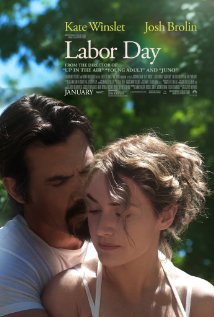
A depressed divorcee named Adele (played by Kate Winslet) lives with her twelve-year-old son named Henry in a small New Hampshire town. Adele has emotional problems and rarely leaves the house. On Labor Day weekend in 1987, when Adele and Henry are out shopping, their lives change unexpectedly when they encounter an injured man named Frank (Josh Brolin). He is bleeding from a wound in his side and is limping. He approaches Henry first, and then Adele, and quietly insists that Adele give him a ride. She is naturally afraid of him but takes him to her home on the condition that he leaves at nightfall.

Adele and Henry learn that Frank is an escaped convict, but the longer they are with him the more they realize they have nothing to fear from him. He was in the hospital for an appendectomy and jumped from a second-story window to escape. There is, of course, an intensive manhunt on for him. We (the audience) are told in little flashbacks what happened to Frank when he was younger that caused him to be in prison. (We are also told in flashbacks how Adele came to be so sad). Even though a convicted murderer, Frank is a good, kind person who knows how to bake pies and wax floors. When the time comes for him to leave, Adele doesn’t want him to go. After about a day, she and Frank are in love. It’s almost as if they were destined to be together. They both know that Frank will eventually be caught if he stays in New Hampshire, so they plan to take Henry and go across the border into Canada and disappear. We know the plan is not going to work out the way they want it to. Will there be bloodshed?

Labor Day is based on a novel by Joyce Maynard. It’s an old-fashioned kind of slice-of-life tear-jerker that is maybe skewed more toward female audiences. It’s entertaining in its way, though, with some good moments (the peach pie, the neighbor boy in the wheelchair, the small-town nosiness, Frank’s kindness). The ending seems a little sappy, rather like a TV movie, but it’s appropriate for the kind of movie it is. If you just wait long enough, things will straighten themselves out and you’ll get what you want, even though you might be too old to appreciate it.

Copyright © 2014 by Allen Kopp
Nebraska ~ A Capsule Movie Review

Nebraska
Nebraska
~ A Capsule Movie Review by Allen Kopp 

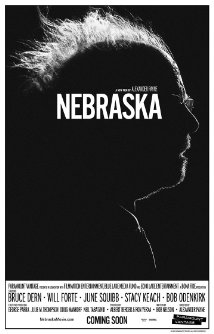
Old-timer Woody Grant (played by Bruce Dern) is badly in need of a shave and a haircut. He’s married to a nagging wife and has always had a drinking problem. (“You’d drink too if you were married to her!”) He has two middle-aged sons named David and Ross. Ross is a TV newscaster. David sells stereos and has an unhappy personal life. When Woody receives a piece of junk mail telling him he has won a million dollars, he takes it literally, not seeing that it’s just a marketing scam to get people to buy magazines. He sets off on foot from his home in Billings, Montana to Lincoln, Nebraska, to claim his million dollars. When the police pick him up walking along the highway and take him back home, his son David decides to drive him to Lincoln so the two of them can spend some time together and stop off and visit relatives.

Woody tells people he has won a million dollars and they believe him. When Woody and David end up in Woody’s old home town of Hawthorne, Nebraska, Woody is something of a celebrity. All the people he knew from long ago are either envious or admiring of his newly acquired wealth. Woody encounters an old business partner who, believing that Woody owes him money from when they owned a garage together, wants part of Woody’s winnings—and threatens legal action if it’s not given willingly. Then certain family members, remembering that Woody borrowed money from them in the distant past and never repaid it, want “reparation.” A pleasant family gathering turns into a brawl.

Nebraska is shot in crisp black and white (the Nebraska landscape is an important element in the movie) and is beautifully written and acted. Bruce Dern is perfect as Woody Grant. His wife, Katy (played by June Squibb, who I remember seeing as Jack Nicholson’s creepy wife in About Schmidt), has some of the funniest lines in the movie. Name somebody from her past and she’s ready to trash-mouth them. (There’s a funny scene in a cemetery where she’s talking about some of Woody’s deceased family members.) Woody’s son, David (played by Will Forte), is sympathetic and patient, the kind of son you would want in your old age. There are no thrills and chills, no big moments, no computer-generated effects, car chases or boudoir scenes, but if you can do without those things, it’s hard not to like Nebraska.

Copyright © 2014 by Allen Kopp
I, Frankenstein ~ A Capsule Movie Review

I, Frankenstein

I, Frankenstein ~ A Capsule Movie Review by Allen Kopp 

In I, Frankenstein, Frankenstein’s Monster, known here as Adam, is a pawn in the ongoing war between demons from hell and a race of beings known as the Gargoyles. The Gargoyles are “good,” having their origins in the Bible, and are fighting to protect the human race. The demons want to get possession of Adam (the story is set two hundred years after he was created) because he is the only one of his kind, assembled from body parts of cadavers and given life by the “mad scientist” Victor Frankenstein. The demons can learn from studying Adam—and also from the two-hundred-year-old notes of Victor Frankenstein—how to reanimate dead tissue. They have been collecting ten of thousands of dead bodies. When the time is right and they learn what they need to know from Adam, they can reanimate the dead bodies and instill them with demons from hell. The demons in their vast numbers will then be powerful enough to take over the world and enslave or kill all humans. The Gargoyles, of course, are trying to protect Adam and keep him from the demons.

The demon faction is personified by one Niberius who, when he takes human form, calls himself Charles Wessex (played by bill Nighy). He is supposedly a legitimate businessman trying to find the secret of reanimating dead tissue for the good of mankind. The people who work for him don’t even know what he’s up to. He has been storing dead bodies for a long time and will command the legions of demons when the time comes. Frankenstein’s Monster, Adam (played by forty-five-year-old Aaron Eckhart), is nothing like Boris Karloff’s flat-headed, bolt-necked, stiff-legged monster. He is a romantic hero with a toned body and a cleft in his chin. (Of course, there’s the obligatory scene where he strips down.) He wears blue jeans and a duster and looks almost normal except for the stitches that sew his various body parts together. When he befriends a pretty, young female doctor who works for Niberius, romantic sparks fly, even though he has no soul and is a monster created in the eighteenth century. Do they never learn?

I, Frankenstein is based on a graphic novel, with all that implies. It’s long on visuals and action and short on subtlety or character development. It’s entertaining, though, and fun to watch in 3D. Its expensive production values, intelligent script, and “name” actors elevate it way past the “schlock” class. 

Copyright © 2014 by Allen Kopp