The Fires of Vesuvius ~ A Capsule Book Review

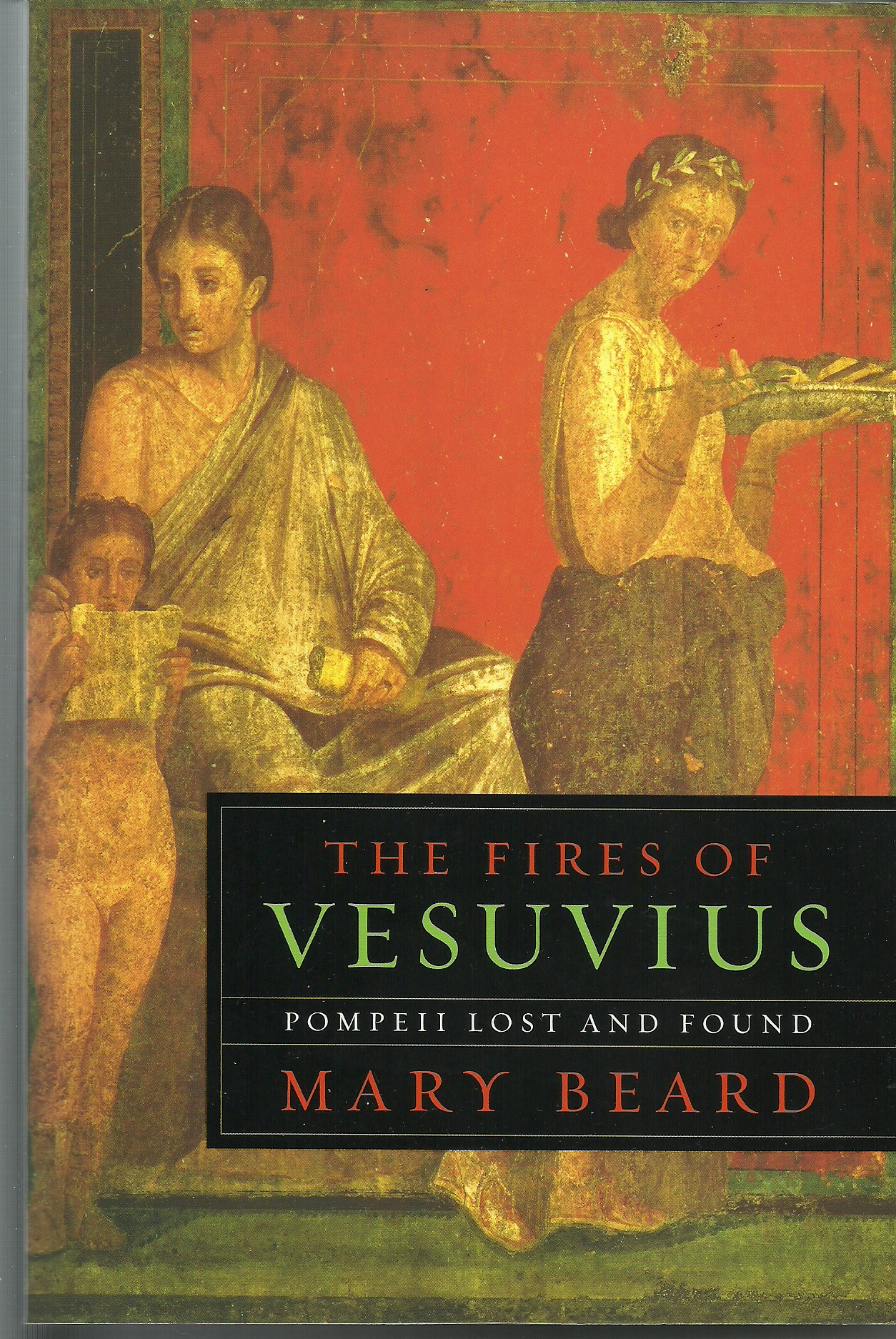
The Fires of Vesuvius cover

The Fires of Vesuvius ~ A Capsule Book Review by Allen Kopp 

During the early Christian era and for hundreds of years before, Pompeii was a thriving seaside town of 20,000 people or so, about 150 miles southeast of Rome. In the year 79 AD (or BCE), the volcanic mount Vesuvius erupted and literally buried the town alive under layers of pumice and volcanic debris. Scholars had known of the existence of Pompeii from written records, but the town itself wasn’t “rediscovered” until the 1700s, at which time archaeologists began the painstaking job of digging it out bit by bit. (Excavation continues to this day, 250 years later.) Since the town hadn’t been touched for all those centuries, its streets, temples, houses, paintings, etc., were remarkably well preserved. It gave the world a chance to know a lot more about a long-lost period in history than had been previously been known.

The Fires of Vesuvius by Mary Beard is an exhaustively detailed account of what the ruins and artifacts teach about what life was actually like in the Pompeii of two thousand years ago: how people lived (bad teeth, no toothbrushes), what their dwellings were like (those made of wood mostly don’t remain except for nails and fittings), how they navigated about town (one-way streets), how they got water into their homes (a fairly sophisticated system of “running” water that not everybody could get), how and what they ate (a fairly healthy diet of fruits and vegetables; cooking utensils and ovens for baking bread remain), how they made a living (farmers in the immediate vicinity around the town; shopkeepers, fullers and small-business owners in the town), what they did for entertainment (plays and gladiatorial games), how and who they worshipped (many gods to choose from; few or no signs of Christianity at the time of the eruption), what their political structure was like (only the rich could stand for office because they were expected to use their money to benefit the public in some way), what they wore (not so many togas), what artwork they admired (phallic symbols carved everywhere, meaning prosperity and good fortune), how they buried their dead (on the roads outside of town, elaborate memorials for the cremated remains of the rich; barely a hole in the ground for the poor), where they went to take a bath (elaborate public baths with little or no sanitation; sometimes turds floating in the water), and in some cases, their private thoughts expressed in “graffiti” that is everywhere in the town. The people of Pompeii were apparently a fairly literate bunch, and they took advantage of the quaint custom of writing their thoughts and feelings on walls or wherever they happened to be, much of which survives. Thankfully this custom has mostly died out. I, for one, don’t want to have to look at scribbled writing on every surface, which, I’m sure, would be unbelievably ugly.

Readers who have more than just a passing interest in Pompeii, or those who plan to go there, will find plenty in The Fires of Vesuvius to recommend it. The casual reader will probably be put off by the dense text (although it isn’t that difficult to absorb) and the wealth of minute detail, more than the average person reading for pleasure is going to want to know. If, however, you are a student of archaeology or are writing a research paper, this book will prove to be a valuable storehouse of information.

A tiny footnote that I found interesting that I hadn’t known before: During World War II, the Allies, in bombing Italy to subdue Il Duce, destroyed parts of the ruins of Pompeii. Whether this was deliberate or accidental isn’t stated. The irony is that some of the ruins had to be reconstructed to make them look the way they did before the bombing.

Copyright © 2014 by Allen Kopp

Oculus ~ A Capsule Movie Review

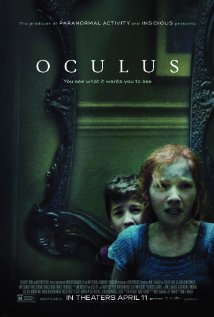
Oculus

Oculus ~ A Capsule Movie Review by Allen Kopp 

An antiques-loving yuppie couple purchase a quaint, old, full-length mirror that hangs on the wall. The couple don’t know it, of course, but the mirror has a history, going back four hundred years, of bringing about violent death to its owner. An evil spirit resides in the mirror and this spirit protects the mirror from destruction as if it (the spirit) and the mirror are the same.

The couple, the Russells, have two children (Kaylie, age 12 and Tim, age 10). The father of these two becomes withdrawn and secretive. He won’t let anybody go into one room in the house that he calls his office. (It’s the room where the mirror is kept.) Kaylie, when she and her brother are playing in the yard, sees a strange woman embracing her father through the window, when she knows there is nobody else in the house except her parents. The man’s wife, the mother of the two children, becomes suspicious of her husband’s activities and begins doing some investigating on her own. This, as one might expect, leads to tragedy. Kaylie and Tim make a vow to each other that, when they are grown, they will do whatever they can to find out exactly what happened and to clear their family of wrongdoing.

Eleven years later, Tim, age 21, is being released from a mental institution, where he has been since he was 10. Kaylie, his sister, is now 23. In the intervening years, she has discovered the history of the mirror and is determined, with the help of Tim, to make good on the vow they made to each other 11 years earlier.

Oculus is an acceptable horror movie with a cast of unknown (at least by me) actors. While it doesn’t have the chills of Insidious or Mama, it’s intelligent and well-made with a few tense moments. It isn’t junk or schlock. If you are a fan of good horror films, like me, you will like it. If you try to dissect it too much, though, you’ll expose the holes in the plot, so just enjoy it without getting too analytical.

Copyright © 2014 by Allen Kopp

Restoration ~ A Capsule Book Review

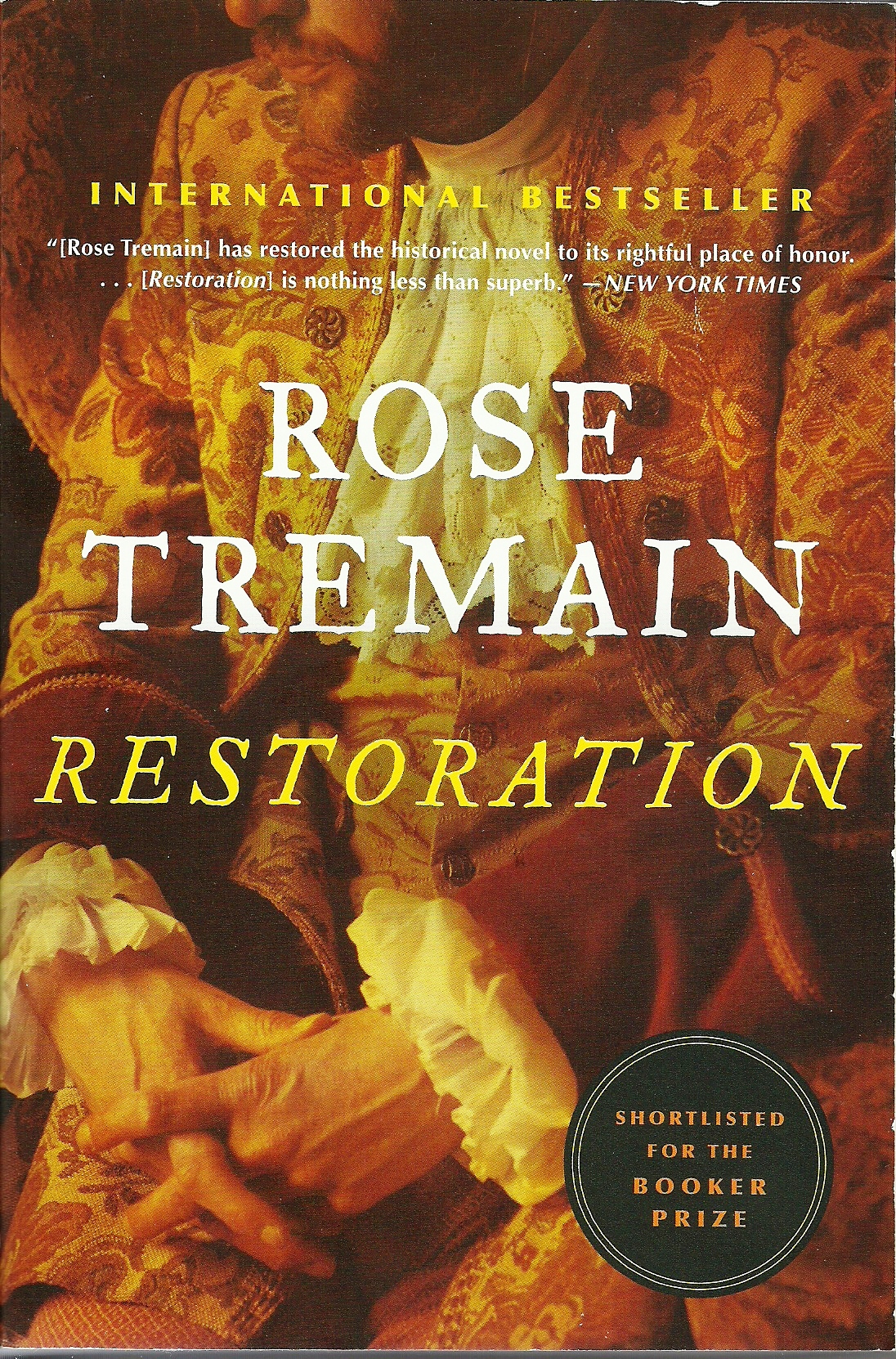
Restoration cover

Restoration ~ A Capsule Book Review by Allen Kopp

From 1649 to 1658 was the period in English history known as the English Interregnum or the English Commonwealth. The country during this period was a de facto republic with Oliver Cromwell as virtual dictator. A political crisis resulting from Cromwell’s death in 1658 led to the restoration of the monarchy with Charles II as king. The period that followed is known as the “Restoration.” It was a time of fashion (plumes, powdered wigs, knee britches with stockings, high-heeled shoes with polished buckles—all for the men), relaxed moral values, hedonism, excesses of every kind, greed and materialism. The historical novel Restoration by Rose Tremain is about this period in English history and about one man in particular, the fictional Sir Robert Merivel.

Merivel is very much a man of his times. He comes from humble beginnings, begins studying to be a doctor as a young man, and is soon caught up in the pursuit of fulfillment of his appetites. He abandons his study of medicine, becomes a sort of courtier in the court of King Charles and, for a brief period, is a favorite of the king. The king, however, is known for his mercurial personality and for his whims, for taking up one person one day and throwing him down the next. Merivel makes the king laugh but the king finds for him another purpose: the king will marry Merivel to the king’s mistress, Lady Celia, a marriage in name only. In return for this marriage, the king sets Merivel up in a magnificent country estate called Bidnold, which has everything an English country gentleman could ask for: lots of servants, a park filled with abundant wildlife, and lots of room to pursue a life of idleness and pleasure. (Merivel takes up painting and playing the oboe but finds he has little talent for either pursuit.) Like Adam and Eve in Paradise, however, Merivel does the one thing he is absolutely not supposed to do: he falls in love with Lady Celia. When the king finds out, he dispossesses Merivel, telling him he needs to go find himself, to “restore” himself to the kind of man he was always meant to be. Suddenly without money or a home, Merivel must embark on a quest to find out who he really is and to fulfill his purpose in life. Fate takes him to a mental hospital run by Quakers in a rural part of England (where he inadvertently finds himself a father) and back to London again where he deals with a plague epidemic and the Great Fire of 1666.

Restoration is not the potboiler one might expect it to be. It elevates the “historical fiction” genre into the realm of “good literature.” It’s beautifully written and contains not a dull or extraneous word. It illuminates a fascinating period in English history without ever being academic or seeming like a history lesson. It brings a remote period of history alive and makes it somehow relevant.

Copyright © 2014 by Allen Kopp 

Noah ~ A Capsule Movie Review

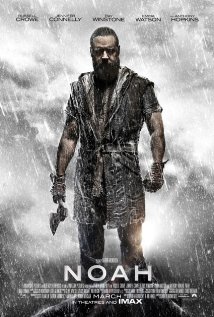
Noah

Noah ~ A Capsule Movie Review by Allen Kopp

The long-awaited Noah is finally in movie theatres. Russell Crowe plays the biblical patriarch for whom God has assigned a special task: build a gigantic wooden boat, an ark, and place on it (or, according to the movie, allow them to come voluntarily onto the boat) one pair, male and female, of every animal on earth (everything that crawls, flies, walks or slithers, including snakes because they serve a purpose). Noah has a wife, Naameh (played by Jennifer Connelly) and three sons (Ham, Shem, and Japheth). God is disappointed in man and is sending a flood to wipe out every living thing on earth. Only Noah, his family (including his sons’ wives), and the animals on the boat will survive, the idea being that they will start afresh after the flood waters have receded. God has chosen Noah because he is a righteous man and hasn’t been “ruined by the world,” as, it seems, everyone else has.

Anyone expecting a faithful adaptation of the biblical story of Noah is going to be disappointed by this movie. While it is a slick and well-crafted piece of cinema, it’s a fictionalized account. Not enough is known about Noah to make a dramatic two-hour-and-fifteen-minute movie, so the filmmakers have had to improvise, creating events and people that never existed. For example, the wicked world is represented by the fictional character, Tubal-cain (Ray Winstone), who wants to live so badly that he stows away on the ark and is aided and hidden by Noah’s son, Ham, who is taking revenge on his father for not saving a girl he liked from the trampling hordes who were storming the ark.

While Noah and his family are on the ark, waiting for the flood waters to recede so they can once again walk upon dry land, tensions arise over the question of whether man will continue after Noah and his family are all dead, or if the world will be another unspoiled Eden in which only animals will live without the wicked and evil man to spoil everything. Noah is all for letting man die out with them, while his wife wants their children to live on in their own descendants. When Shem’s young wife, Ila, who is supposed to be unable to bear children, discovers she is going to have a baby, Noah vows to kill the baby unless it’s a boy.

While Noah is worth seeing, it’s not worth taking seriously. It’s entertaining in its way but no more believable than movies about hobbits. When the “Watchers” (fallen angels, who, as punishment from God, have become huge beings made of rock and mud) first appear early in the movie, you know you are in the realm of fantasy and not in a world that anybody is supposed to believe exists or ever existed.

Copyright 2014 by Allen Kopp 

Hold All Calls

Hold All Calls image 1


Hold All Calls ~ A Short Story by Allen Kopp
 

“Oh, how I hate Monday mornings!” Dakin said as he sat down at his desk.

“The countdown to the weekend has begun,” Christopher said. “Only one hundred and five hours until five o’clock Friday afternoon.”

“It’s too far away,” Dakin said. “I shall perish before then.”

“Well, you’d better look busy. Pinky is already in this morning and he’s not happy. Production is down again or something.”

Dakin took some papers out of the drawer and spread them out. “I hate everybody on Monday morning,” he said, “but I especially hate my parents for bringing me into the world and not providing me with a family fortune.”

“Alas,” Christopher said, “so few of us have a family fortune.”

“If I had even a small fortune, I would blow this place so fast.”

“A couple million would do.”

“I’d travel. I’d have a home on the Riviera and another one in Rome.”

“Only two?”

“Two to start with.”

“I hear somebody coming. Look alive!”

Agnes Simpkins came into the room, wearing a funereal black dress and a scowl on her face. She was looking at the floor and didn’t look at Dakin or Christopher. She walked to the far corner of the room, stood for a moment facing the wall, and went out again without speaking.

“What’s she looking for?” Dakin asked.

“Her soul,” Christopher said.

“Have you ever seen a more hideous woman? Her dress looks like she’s got it on backwards. Her hair looks like it was chewed off by a wolverine. Her lipstick looks like a chimp put it on for her.”

“There’s a rumor going around that she’s really a man.”

“That would explain a lot.”

“I think Pinky sent her in here to spy on us.”

Dakin shuffled some papers, held a pencil in his right hand and made a few squiggles. “I woke up with a headache this morning and a sick feeling in the pit of my stomach. I really should have stayed at home.”

“Why didn’t you?”

“Production is down, you know.”

“Hah!”

“If I collapse at my desk, go get somebody to help me, as long as it’s not Agnes Simpkins.”

“I’m sure she would be more than willing to administer mouth-to-mouth resuscitation.”

“I’d rather die.”

“Really, are you planning on doing any work today at all?”

“Not if I can help it. I’m too sick. I’m fine until I get to work and then after I get here I’m sick. I think it sounds like I need to stay away from work altogether for my health, doesn’t it?”

“It’s a conundrum.”

“I saw these friends on the weekend that I hadn’t seen in years. They own their own yacht. Can you believe it? They were going on a cruise in the Caribbean and they invited me to go along. I would love to have gone with them, but instead I’m here. I am in hell! Why was I even born?”

“Another conundrum.”

“And to top it all off, I’m hungry. I skipped breakfast.”

“I thought you said you were sick.”

“I am sick but that doesn’t mean I don’t desire food.”

“Anytime I’m sick, I…”

“How about if you be a dear and go see if anybody brought any donuts in today?”

“Why don’t you go?”

“I have all this work to do and, truly, I don’t have the strength to walk down the hall and witness the sickening sight of all those frightened little people working themselves into a frenzy just because production is down or something and Pinky is in an uproar. I mean, Pinky is always in an uproar about something or other, isn’t he?”

“I have a candy bar in my drawer if you want it.”

“That’s sweet of you but I really don’t want to eat candy on an empty stomach. It might make me vomit.”

“If you vomit, forcibly—and in front of everybody—you can legitimately go home sick. There’s nothing like a little projectile vomiting to drive home your point.”

“Yes, yes, that’s a good idea and I will keep it in mind.”

“How about if you proofread a report for me and correct any errors?”

“Oh, buddy, not you too!”

“Well, somebody’s got to get some work done around here.”

“I am not in any shape, physically or emotionally, to do any work today.”

“All right, I’ll do it myself.”

“Do you really care if it gets done or not?”

“I don’t care for myself but it would be nice to get it done.”

“’Nice to get it done’. I’m afraid you’re even starting to sound like them.”

“Please forgive me.”

“Where are you going for lunch today?”

“I think I’ll just stay here and get something out of the vending machine.”

“How banal! I’m going to take an extra long one today. I feel like walking down the block to Luigi’s and having some linguini in marinara sauce, a crisp salad, and spumoni for dessert. Would you like to come with me?”

“Somebody’s got to stay here and do some of this work.”

“Will you cover for me if I don’t come back?”

“I’ll say I haven’t seen you and I don’t know where you are.”

“Good thinking.”

Christopher put his head back and closed his eyes. “I can smell Pinky’s cologne!” he said. “He’s within thirty feet! Look busy!”

No sooner than the words were spoken, they spotted the man himself. He came toward them carrying a sheath of papers. He was winded, his face was red and the corners of his mouth turned down.

“Mr. Pinkley!” Dakin said cheerfully. “How lovely to see you! Is that a new toupee you’re wearing? It certainly looks handsome!”

“Humph!” Mr. Pinkley said. “I’ve heard reports that there’s been some hanky-panky going on in this department.” The wattles under his chin quivered with emphasis.

“Hanky-panky, sir?”

“Talking and loafing and not focusing on the work at hand.”

“Not focusing? I don’t know what would give anybody that idea, sir. We’re just as busy as a colony of beavers.”

“I’m warning you that I won’t have any slackers working in this company. If you aren’t prepared to give me a full day’s work, then you might as well leave now.”

“I wouldn’t dream of leaving, sir!”

“Production is down for the third straight quarter! That tells me that a house cleaning is in order, but I believe in giving everybody a second chance. You can consider this your warning. If I have to speak to you again, it’ll be to dismiss you.”

“I understand, sir! I believe I’ll be deserving of any punishment you see fit to mete out.”

“I want a written report from you every day outlining what you are working on and how much you have done that day. Do I make myself clear?”

“As a bell, sir! I only have one question.”

“What is it?”

“Will I be the only one submitting a daily report on my activities?”

“None of your business!”

“Yes, sir! Thank you, sir!”

After Mr. Pinkley left, Dakin and Christopher looked at each other and laughed.

“Who does he think he is, speaking that way to me?” Dakin said. “I have a good mind to call up my lawyer and sue the bastard.”

“I’d like to see that,” Christopher said.

“I don’t have to take that kind of crap from him or anybody else.”

“No, indeed, you do not!”

“I’m ten times smarter than he is. I can outclass him any day in the week and twice on Sunday with one hand tied behind my back. He can’t even write a coherent sentence without some help from a secretary.”

“He is an ignorant son of a bitch,” Christopher said. “It goes with the territory.”

“Now I am completely thrown off my game after being spoken to in such a manner.”

“Some people are just too sensitive for the world of business.”

“Yes, thank you! I’m glad that someone in this rotten, stinking world recognizes that fact.”

“What are you going to do now? It sounds like you’re going to have to show Mr. Pinkley some results or he’s going to fire you.”

“What am I going to do? I’m going to take a long, long lunch and then I’m going home and taking an extended bubble bath to get the stench of this place off my body. After that I’m going to put on a dressing gown and telephone my lawyer. He and I are going to have an illuminating little discussion about how I have been harassed and pressured in the workplace to the point of nervous collapse. Then he will advise me about how we might proceed with a lawsuit. I know a very good doctor who will say on my behalf whatever needs to be said.”

“It sounds like you’ve thought it all out carefully.”

“I have.”

“Just do me one favor.”

“Anything.”

“Don’t mention my name.”

“I don’t even know your name. You are one of the millions of anonymous downtrodden office workers who toil and die. The only way you will ever give your life any meaning is to leave this hellish existence and take control of your own destiny.”

“Those are only words. I don’t know how to do it.”

“Believe me, dear friend, I will pave the way for you and countless others just like you.”

“So, I’ll be hearing from you again?”

“Of course you will!”

“What shall I say to people when they ask me where you are?”

“Tell them to hold all calls, for now I belong to history!”

Copyright 2014 by Allen Kopp

The Grand Budapest Hotel ~ A Capsule Movie Review

The Grand Budapest Hotel

The Grand Budapest Hotel ~ A Capsule Movie Review by Allen Kopp 

The Grand Budapest Hotel was directed by Wes Anderson and is based on the works of author Stefan Zweig (1881-1942). It concerns M. Gustave (Ralph Fiennes), the concierge of the Grand Budapest Hotel, a luxurious mountain hotel that, even in 1932, was the symbol of a vanishing age. New to the hotel is a “lobby boy” named Zero, a wide-eyed “refugee” whose family was murdered and who is smarter than he appears to be. He becomes M. Gustave’s trusted friend and confident and is always by his side in whatever situation he finds himself.

Among the wealthy patrons of the hotel are one Madame M. (Tilda Swinton), an eighty-four-year-old grande dame who enjoys the attentions and even the sexual favors of M. Gustave. (Bedding rich old patrons is something he doesn’t seem to mind doing.) When Madame M. dies, she bequeaths to M. Gustave a priceless painting called Boy with Apple. Her villainous son (Adrien Brody) and her three strange daughters take exception to this bequest, of course. Her entire will, in fact, is so confusing and has been changed so many times that nobody can figure it out. M. Gustave takes the painting that Madame M. wanted him to have and eventually winds up in jail, where he manages to pull off an ingenious escape through a sewer with several of his fellow inmates.

If you are familiar with any of the directorial efforts of Wes Anderson (The Fabulous Mr. Fox, Moonrise Kingdom, among others), you know that he has a distinctive visual style that must be seen to be appreciated. It incorporates elements of the fantastic with whimsy, irony, and subtle humor. The Grand Budapest Hotel is an art film that is not for everybody and will probably not be playing at the multiplex theatre in your neighborhood that shows only mainstream movies. Various adjectives that might be applied to The Grand Budapest Hotel are “quaint,” “eccentric,” “charming,” “unusual,” “quirky.” I know people who would also call it “weird” and “far out” and would be completely flummoxed from first frame to last. If, however, you are one of those who likes things a little off-kilter and oddly tilted and, let us say, “outside the norm,” then you should probably get in line to buy your ticket.

Copyright © 2014 by Allen Kopp

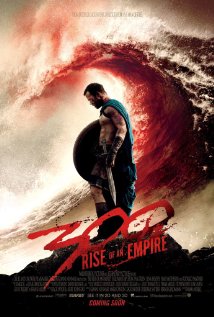
300: Rise of an Empire ~ A Capsule Movie Review

300, Rise of an Empire

300: Rise of an Empire ~ A Capsule Movie Review by Allen Kopp 

In 300: Rise of an Empire, the Persian god-king Xerxes, who we first met in the 2006 movie 300, is still intent on taking control of the city states of Greece. In 300, King Leonidas met the Persian army at the famous battle of Thermopylae in 480 BCE, with 300 Spartan soldiers. The outnumbered Spartans were badly defeated by the Persians, although they put up a valiant fight. Concurrent with the Battle of Thermopylae was the naval battle at Artemisium, led by the Athenian general Themistocles. 300: Rise of an Empire is the story of the battle at Artemisium, which had a different outcome for the Greeks, who were fighting for their freedom and for democracy (a new concept at the time). The story of the two battles is interwoven in 300: Rise of an Empire, which is more another chapter of the same story than a sequel to the earlier movie. The “third act” of 300: Rise of an Empire is what came about after the two battles.

The main character and the hero of 300: Rise of an Empire is the Athenian general Themistocles (played by Sullivan Stapleton). He has a toned body as did King Leonidas (Gerard Butler) in 300 and looks good in leather underwear. In fact, all the Greek soldiers, whether Athenians or Spartans, appear to be at the peak of physical perfection. There’s not a flabby gut in the bunch. Immodestly attired as they are, they are able to give the Persian army a run for its money. Maybe conquering Greece wasn’t such a good idea after all.

There are two strong female characters in 300: Rise of an Empire. Queen Gorgo, the recently widowed wife of the heroic King Leonidas, takes on the roll of warrior queen after her husband’s death. She engages in battle with the Persians the same as the men do. Artemisia is a Greek-born woman who, because she witnessed her family killed at the hands of a Greek army, has gone over to the Persian side. She is an advisor to King Xerxes, something of a military commander, and wants nothing more than to see Greece defeated at the hands of Persia. She cuts men to pieces as easily as she breathes. During a sexual encounter with Themistocles, she offers him a job with her if he’ll come over to her side. He refuses, of course, since he has devoted his life to Greece and to making the army strong.

300: Rise of an Empire (as 300 was before it) is based on a graphic novel and has a kind of other-worldly beauty (a world that exists only in the imagination). There’s lots of action, stylized violence—severed heads and limbs—and a generous use of slow motion. The battle sequences, especially the naval battle, are impressive and engaging. The pounding music score really stood out for me. If you are a fan of 300, as I am, you won’t be disappointed by 300: Rise of an Empire. 

Copyright © 2014 by Allen Kopp  

Write to Woof 2014 ~ Anthology of Stories, Poems, Essays

Write to Woof 2014 cover

(My short story, “Tyrone Power,” is in this collection of stories about dogs.)

Grey Wolfe Publishing is pleased to announce that the generous collaboration of sixty-seven authors from around the globe has produced a spectacular collection of 432 pages containing poetry, prose and personal essay all in tribute to dogs!

100% of the proceeds of the sale of this book are going to support the extraordinary work of Almost Home Rescue League, a no-kill shelter in Southfield, Michigan.

Now Available: $25

May be purchased at this link:

http://greywolfepublishing.wordpress.com/howling-for-authors/the-den-write-to-woof/

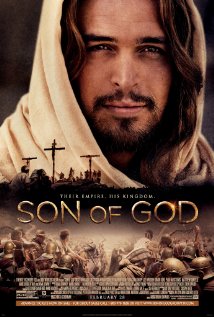
Son of God ~ A Capsule Movie Review

Son of God

Son of God~ A Capsule Movie Review by Allen Kopp 

When I first saw the trailer for Son of God, I expected it to be a parody or something other than what it appears to be. There are so few movies on biblical subject matter that when one does come along you can hardly believe what you’re seeing. It’s been ten years since The Passion of the Christ and, while that movie was a huge hit (over $600 million in world-wide box office receipts), moviemakers don’t seem to be interested in repeating its success, for whatever reason.

Son of God, as the title implies, is a rendering of the life of Jesus Christ, focusing mainly on the last years of his life when he traveled around with his disciples, making himself known by teaching the word of God. People who witnessed the healings and other miracles had no doubt that Jesus was who he said he was. He had a small but loyal band of followers that grew larger every time he spoke. People, tired of Roman rule, hungered for the kind of message that he was delivering. Are things that much different today? We have a greedy, corrupt federal government that lies to us, attempts to take away more of our liberties at every turn, and takes far too much of our money in taxes, an alarming amount of which is wasted by incompetent politicians whose only aim is to maintain the status quo. Jesus promises a better world for those who believe in him. It is still an appealing message.

Son of God is reverent and respectful, without irony or condescension. It is in no way an attempt to revise or modernize the story or make it politically correct by today’s standards. It’s a literal interpretation of the Bible. Either you embrace it or you don’t. Nonbelievers will have plenty to tear apart and scoff at. Isn’t that what they do? Isn’t that the way it has always been?

Copyright © 2014 by Allen Kopp 

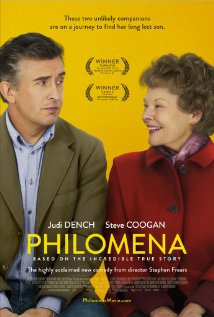
Philomena ~ A Capsule Movie Review

Philomena

Philomena ~ A Capsule Movie Review by Allen Kopp 

In 1950s Ireland, a teenage girl named Philomena Lee has a baby out of wedlock. Her family shuns her so she goes into a Catholic home for unwed mothers. In exchange for the nuns taking care of her and delivering her baby, she must stay in the home for four years and work like a slave, seven days a week. (The nuns believe the unwed mothers should suffer and do penance for their sins.) Philomena is allowed to see her baby, which is kept in another part of the home, for one hour a day. When the baby, whom she has named Anthony, is about two years old, the nuns adopt him out (in other words, “sell” him for a thousand pounds) to an American couple. Philomena has nothing to say about Anthony’s adoption and isn’t allowed to even see him before he goes.

Fifty years later, when Philomena (Judi Dench) is an old woman, she talks about Anthony for the first time and reveals the heartbreak she has endured in silence because of him. A journalist named Martin Sixsmith (Steve Coogan) hears about her case and decides he will do a “human interest” piece on her because he has recently been fired from his job and doesn’t have much else to do. When Martin and Philomena go to the home for unwed mothers, called Rosecrae, where Anthony was born, they are told that all records of adoptions were lost in a fire and there is no way of knowing what happened to Anthony. And, anyway, they remind Philomena, she signed a contract stating she would never attempt to contact Anthony or try to find out what happened to him. Martin is immediately suspicious, pointing out that, while all records were lost, the contract severing any connection between mother and child remained intact through all the years. As Martin and Philomena are to discover, the nuns deliberately throw up a wall of deception to keep Philomena from learning the truth about her son.

With Martin Sixsmith’s help, Philomena embarks on an odyssey, eventually to America, to try to meet the son she gave up for adoption, to find out what kind of a man he has become and to ask him if he remembers anything about her or the country of his birth. Discovering Anthony’s adopted named, Michael Hess, eventually leads Martin and Philomena to the truth, and that truth leads them back to where they started from in Ireland. As Martin says, quoting T.S. Eliot, “We shall not cease from exploration, and the end of all our exploring will be to arrive where we started and know the place for the first time.”

Philomena is based on a true story. Seventy-nine-year-old Judi Dench is superb, as always, as Philomena. It’s a fine movie, with an ending that is completely satisfying, though not a happy one. As we are told at the end of the movie, there are thousands of women like Philomena who try to reconnect with the children they gave up decades earlier. Many times what they uncover they would probably have been better off not knowing, but the truth, for them, no matter how terrible, is better than knowing nothing at all.

Copyright © 2014 by Allen Kopp